FFWD – Leeks Vinaigrette With Mimosa

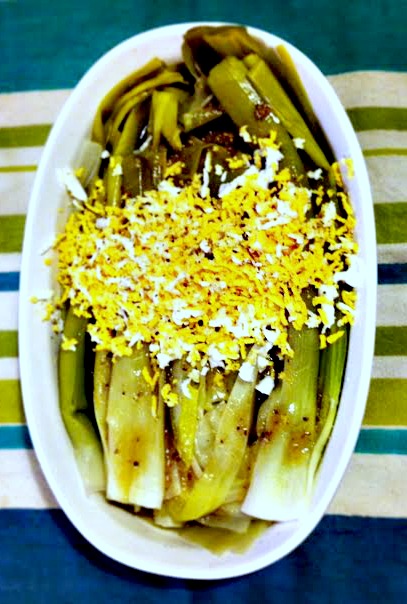
Leeks Vinaigrette

If the vegetable aisle was a high school dance, leeks would definitely be standing with the wallflowers. While the flashier vegetables and their savoury fruit friends are taking centre stage, leeks are quietly intensifying the richness of the dishes they inhabit. It’s unfair, though, because when they are allowed the spotlight, they don’t need supporting players.

Before I mix my metaphors any further, let me give you an example. Leeks Vinaigrette is a classic French dish, with good reason. Poached until tender and tossed in a red wine vinegar and walnut oil dressing, they are delicious. Topped with a ‘mimosa’ of shredded egg, they’re also elegant.

Dorie’s version is quick to prepare and made a perfect light supper, with an extra hard-boiled egg each on the side. Cut to any number of high school movie conclusions – the triumph of the wallflower.

You can find the recipe here.

Find out what the rest of the French Fridays crew thought about this week’s recipe: Leeks Vinaigrette with Mimosa

FFWD – Tuna Rillettes

Rillettes

We’ve done rillettes before, but I’m betting that this tuna version is less challenging for the French Fridays crowd than the ones we made previously. I really enjoyed the sardine rillettes, but not everyone could get behind the idea of a sardine sandwich spread. I expected to enjoy this one, too, and I did.

When I was growing up, my favourite kind of sandwich was tuna. I would have had that every day if my mother had let me. She had strange ideas about feeding us a variety of foods, though, so my argument that fish is brain food didn’t prevail. I’m sure my mercury levels are all the better for it.

This spread reminded me of those sandwiches, though the flavour profile is a little more sophisticated than the elementary school standard of tuna mixed with mayo and chopped celery. There are hints of curry, quatre épices, and lemon in this recipe, along with subtle undercurrents of shallot and crème fraîche. I didn’t have any tuna in oil on hand, so I added a teaspoon or so of olive oil to make up for it.

Though the mixture is whizzed into a smooth, plain-looking paste, the flavour and texture more than make up for its appearance. The rillettes were great with gluten-free almond crackers. They were even better when used to make another Dorista favourite, the tartine. I spread some on soughdough toast, then layered sharp cheddar, Romaine lettuce, and red pepper on top. I’d have that for lunch any day. Which might cause my mother to give me another lecture on a well-rounded diet.

Tartine

You can find many other blogged descriptions of this FFWD recipe here: Tuna Rillettes

Socca From Vieux Nice – A French Fridays Catch Up

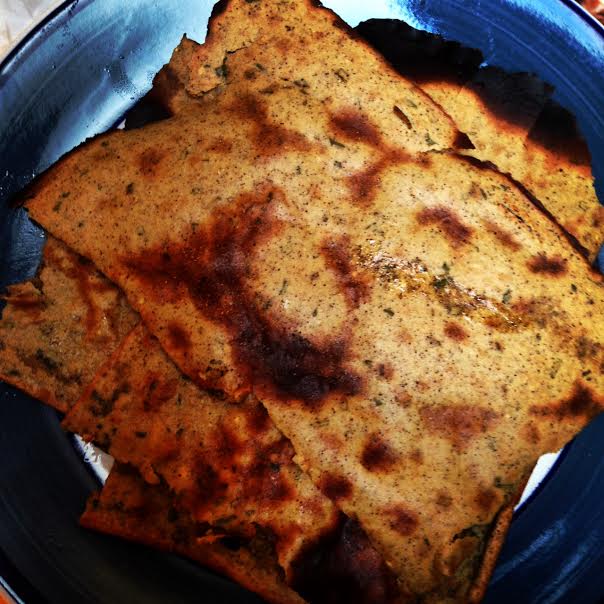
Socca

I won’t be making this week’s French Fridays recipe, Green as Spring Veal Stew, until next week, so I thought I’d throw in a catch up instead. I’m not sure why I didn’t make this when it came up in the rotation, and I’m also not sure why I overlooked this recipe until now. Socca is naturally gluten-free and the chickpea, in whatever form, is one of my partner’s favourite foods.

Unfortunately, I’m out of chickpea flour at the moment, so I substituted garfava flour, instead. It’s a blend of garbanzo bean (chickpea) and fava bean flours that’s a staple in Bette Hagman recipes. I’ve mostly moved on from using it, so I was glad to have an excuse to use up some of what I’ve got left. It wasn’t the greatest substitute – Kevin disliked the flavour of the resulting flatbread, but I thought it wasn’t bad. Next time, I’ll stick to pure chickpea flour.

There will be a next time because I loved the method and the loveliness of the flatbread that came out of the oven, garfava flour or no. I mixed up the batter the night before and was pleased to read that most of the cooking time would be for heating the pan. The bread itself bakes for only five minutes and is then broiled until crispy, and blackened in spots, for another three minutes or so.

It’s traditional to eat it hot, dusted with pepper, but Kevin said he would have liked it better with a dip. I agree. Some yogurt, mixed with lemon and dill, would have been nice with it. I’m looking forward to trying the chickpea version – paired with the yogurt dip, it may become a summer favourite.

You can find many other blogged descriptions of this FFWD recipe here: Socca From Vieux Nice. And you can see what the rest of the French Fridays crew got up to this week here: Green as Spring Veal Stew

FFWD – Baby Bok Choy, Sugar Snaps, and Garlic en Papillote

En Papillote

We’re having a lot of conversations in our house, lately, about what constitutes healthy eating. Kevin is convinced that going vegan is his path, but there has been considerable backsliding. My position is that moderation, in moderation, is the ticket to a well-rounded diet.

This week’s French Fridays recipe is vegan, but it’s also a side dish. I could have continued down that road, but instead, I served it with one of our favourites from Around My French Table, Roasted Salmon and Lentils. All in all, it was a very healthy meal. Low-fat, high fibre, and probably many other buzzwords besides. What stood out for me was the flavour. Like the salmon, these vegetables are simply seasoned, but surprisingly flavourful. The title gives you the recipe, but it’s the subtle addition of fresh mint and orange zest that really brings this dish together. It’s also a versatile dish, which worked as well with the French flavours of the salmon and lentils as it would with Asian cuisine.

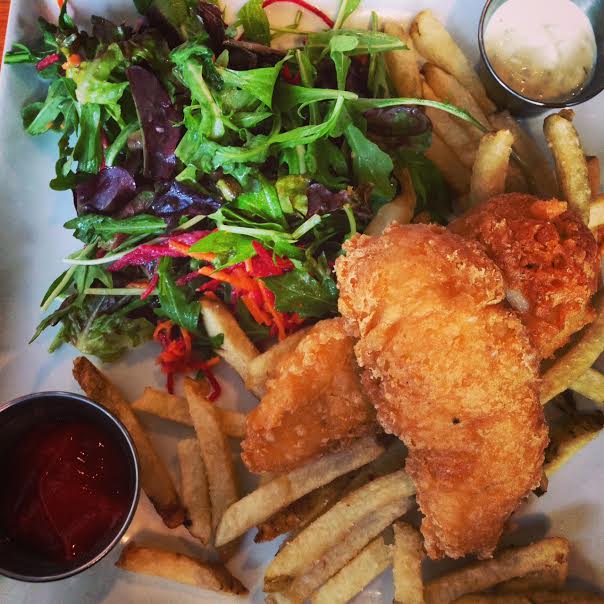
For now, we’ve agreed that increasing the number of meatless meals over time is probably Kevin’s path to success, but tomorrow will definitely be a meatless day. We went out for fish and chips with my parents yesterday and had fish again today. Whatever we end up having tomorrow, there’s still lots of bok choy and snap peas in the refrigerator, so there will be more en papillote cooking involved.

Fish and Chips

You can find many other blogged descriptions of this FFWD recipe here: Baby Bok Choy, Sugar Snaps, and Garlic en Papillote

Quiche Maraîchère & Sablé Breton Galette – A French Fridays Catch Up

Lemon Tart

What we can do without and what we cannot is a line that shifts over time. I spent twenty-four hours thinking I’d lost my smartphone and I felt the loss in a way I wouldn’t have been able to imagine even ten years ago. Then, when a phone was just a phone, all that was necessary was to get the service provider to shut down the number. Now, it’s changing numerous passwords, registering the device as missing, and hoping whoever gets hold of it isn’t interested in the data stored there. Luckily, I found it and I was already in the midst of changing passwords to deal with the Heartbleed problem, so there wasn’t too much time wasted, really. It did make me realize how much I rely on that little piece of technology. It’s a cellphone, sure, but it’s also my mobile office, alarm clock, day planner, magazine rack, and way finder.

It’s debatable whether our reliance on cellphones is good or bad. But something that’s not up for debate, for me at least, is how necessary a good tart dough recipe is in my life. I used to use my mother’s pie crust for most everything, but as I’ve told you before, Dorie’s pâte brisée has made me rethink that. Now, I couldn’t do without it, especially as it works beautifully gluten-free.

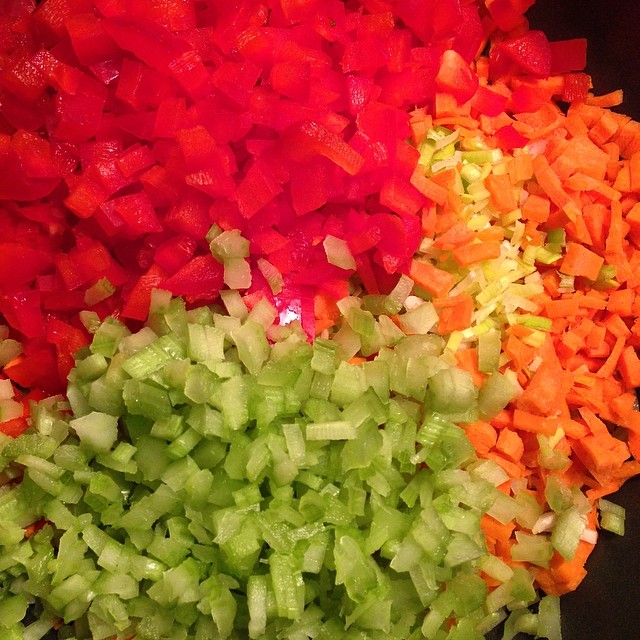
Veggies

This past Friday, our French Fridays recipe was Quiche Maraîchère, which makes good use of pâte brisée to hold a tart so full of leeks, carrots, celery, and red pepper that there’s very little room for the custard that qualifies it as a quiche. There are also very few seasonings, just salt and pepper, because that combination of vegetables creates a complex flavour that needs no embellishment. Mine was slathered with shredded Irish Monastic Cheese, as Kevin’s trying to go vegan and our meals last weekend were meant as a farewell to dairy for him. This quiche was so good it may lead to a setback.

Quiche

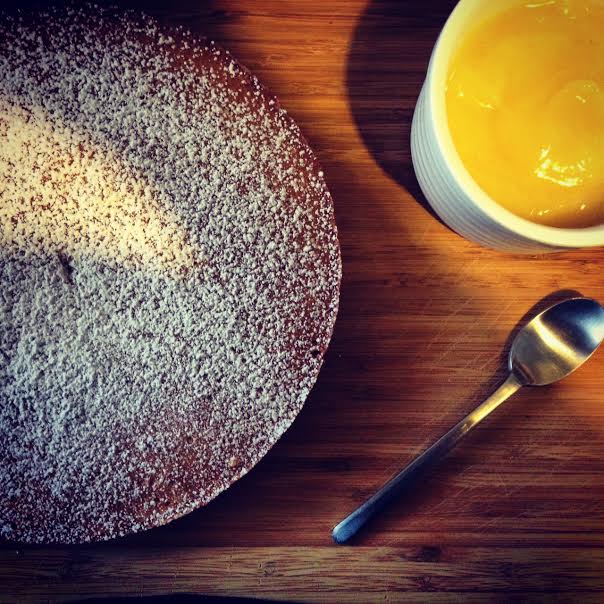
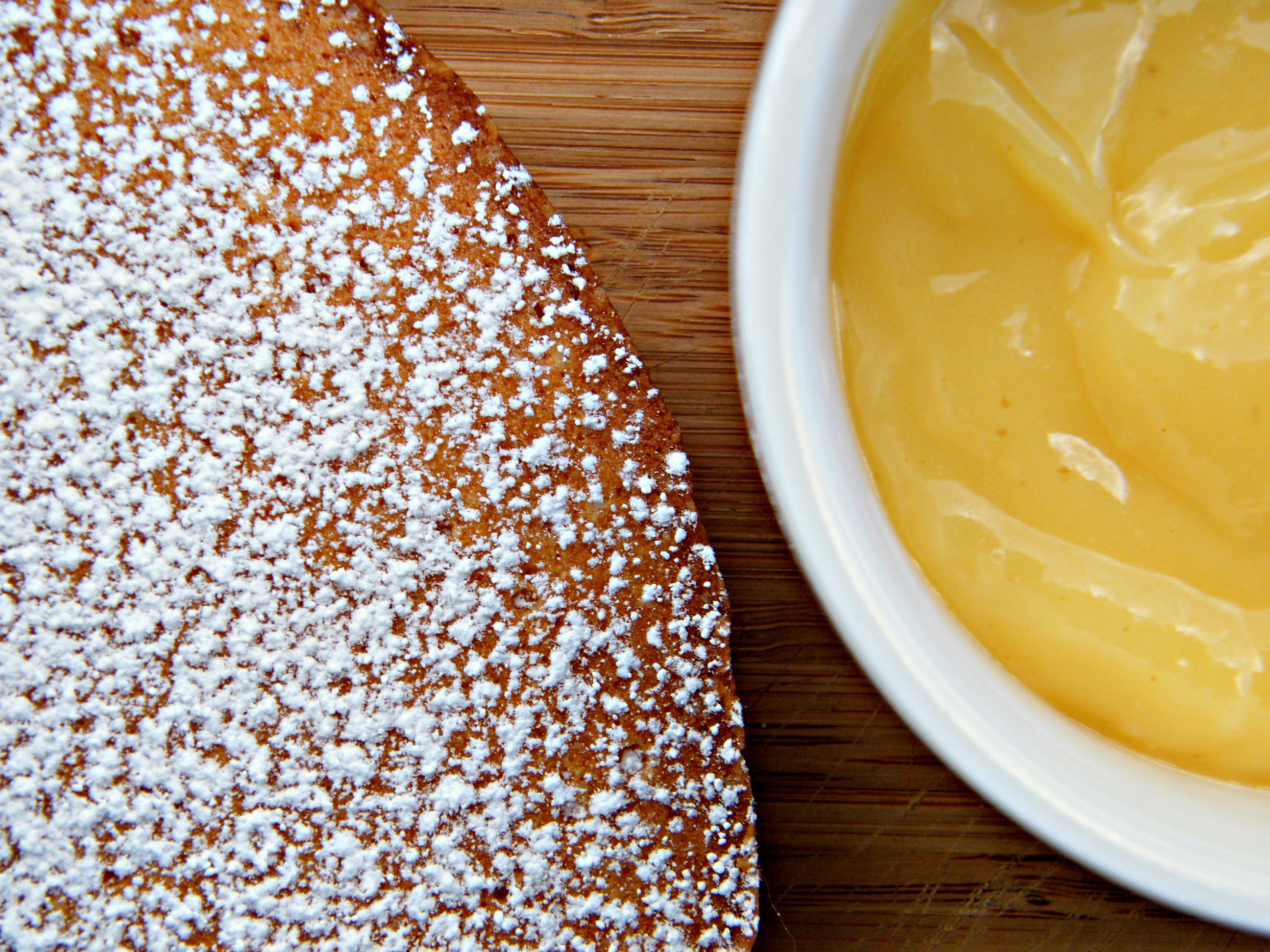
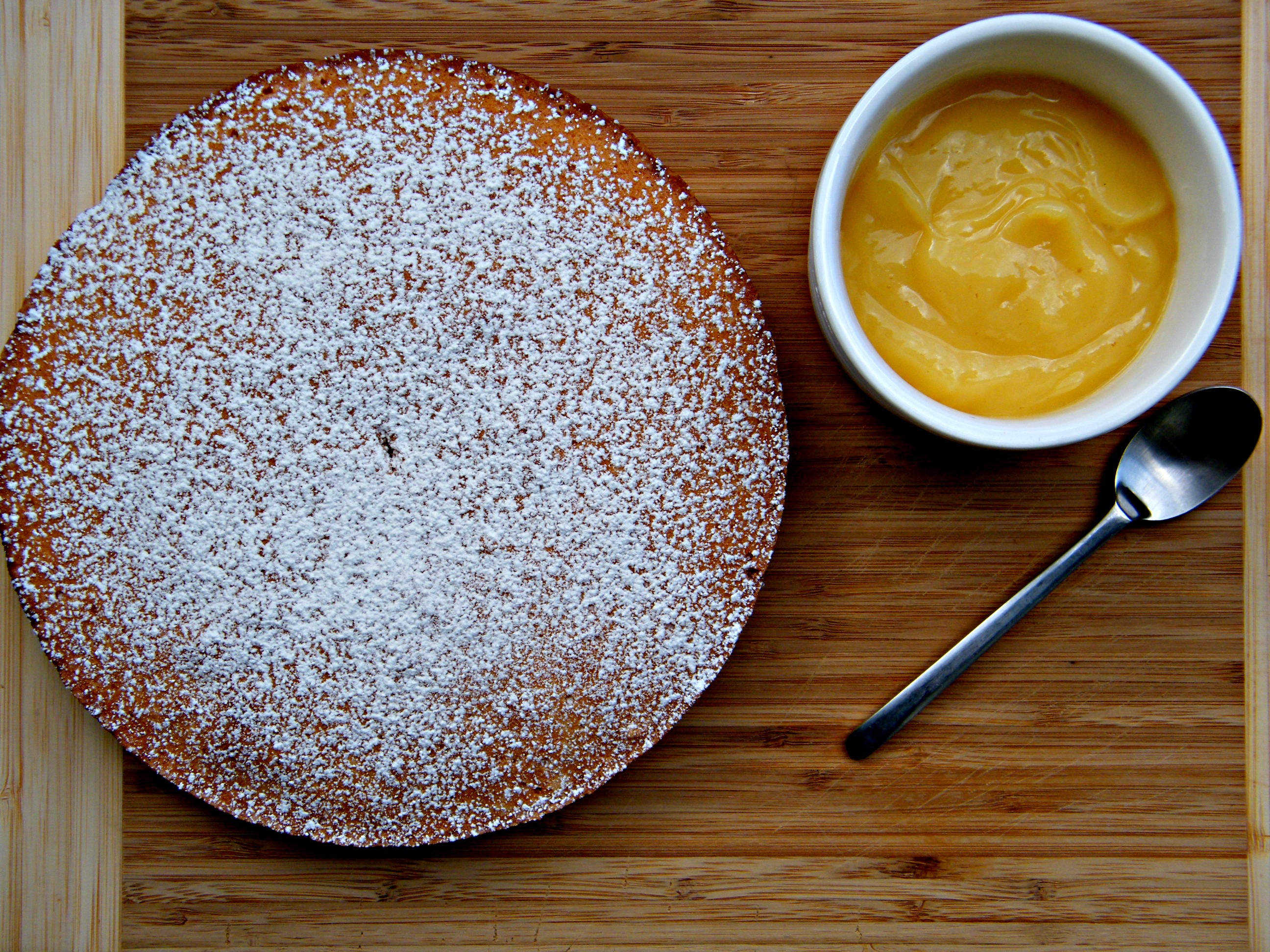
For dessert, we had the Sablé Breton Galette you can see at the top of this post. I used homemade lemon curd on it, but skipped the berries. I’ll be revisiting this recipe again when local strawberries and blueberries make their appearance. This was another dough that worked really well gluten-free (just switch out the flour for an equal weight of an all-purpose gluten-free blend). It’s also another dough that I’ll be making often.

I’ll be interested to see what my list of necessaries looks like in ten years’ time. I expect that a number of the additions will be courtesy of Dorie Greenspan.

Now, I’d love to hear about the things (and recipes) that you can’t do without.

See how the rest of the French Fridays crew liked last week’s recipe here: Quiche Maraîchère and go way back to June of 2013 to see how Doristas fared with their versions of Sablé Breton Galette.

FFWD – Visitandine

Visitandine

Baking attracted me more than cooking when I was a kid. The logic and simplicity of baking’s chemistry provided a calm, reliable oasis in the chaotic landscape of childhood. The playground was a battlefield, but the kitchen was a refuge for a shy, bookish kid. And the results of my baking experiments pleased everyone around me as much as myself.

I cooked, too, according to the instructions my mother left each day for the gap between the end of the school day and my parents’ arrival home, but it was only as a young adult that I really began to blossom as a cook. Even then, baking was what I was known for. It still is, really. Meetings and gatherings are an excuse for me to make cookies and squares, cakes and loaves – they smooth the path toward decision-making and community-building. And social occasions are really all about eating together, aren’t they?

Closeup

I’ve found over the years that people are impressed by elaborate desserts, but it’s the simple ones they remember and ask for again. This week’s recipe is just that sort of dessert, a white cake that relies on whipped egg whites for leavening and bakes into a sturdy shortcake-like round. It’s not heavy, though, the crumb is tender and able to soak up whatever topping you choose to serve with it. In this case, homemade lemon curd. In the summer, the cake makes a perfect vehicle for strawberries and cream. In winter, you could bake two layers, soak them in melted jam, then ice with crème fraîche whipped cream. As Dorie says in her introduction to this recipe, you can pair this cake with almost anything you can think of.

Best of all, it’s one of those recipes that are perfect for clearing the mind, while feeding body and soul.

Cake

You can find a version of this week’s recipe here.

See how the rest of the French Fridays crew served their cake: Visitandine

FFWD – Vegetable Barley Quinoa Soup with the Taste of Little India

Soup

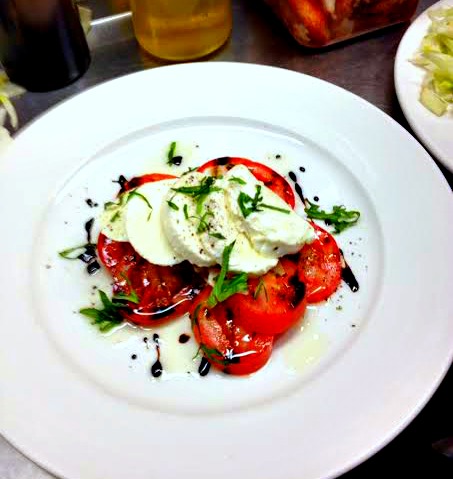
My little brother is a mean, mean man. He’s a chef, working at the sort of locavore, casual-to-fine-dining restaurant that you know I love. The problem is that it’s 50 kilometres away and Sean sends me photos of what’s on the night’s menu, when he knows there’s no hope of me booking a car and heading out deep into the heart of the Fraser Valley. Like I said, mean.

If you don’t believe me, here’s one of the photos he sent me tonight.

Photo by Chef Sean.
Photo by Chef Sean.

Yes, that’s a perfect Caprese staring back at you. Sigh…

Luckily, we have a delicious, vegan soup on our own fresh sheet tonight, keeping me from becoming too morose. It’s flavoured with garam masala, ginger, garlic, and red pepper flakes. It’s also meant to have barley in it, but we went gluten-free and used quinoa instead. It’s the sort of meal Kevin has been working toward, as he eats vegetarian or vegan most of the time now. There’s lots of protein in the quinoa and the soup itself is surprisingly hearty. Meatless meals have always been a big part of my diet, but I might find myself crumbling some bacon on tomorrow’s leftovers, as my brother the chef suggested. Then again, I might not – this soup doesn’t really need it.

Soup too

Judge for yourself. You can find the recipe here, along with interviews with three of our most lovely Doristas.

And you can find out what everyone else thought of this week’s recipe here.

FFWD – Scallop and Onion Tartes Fines

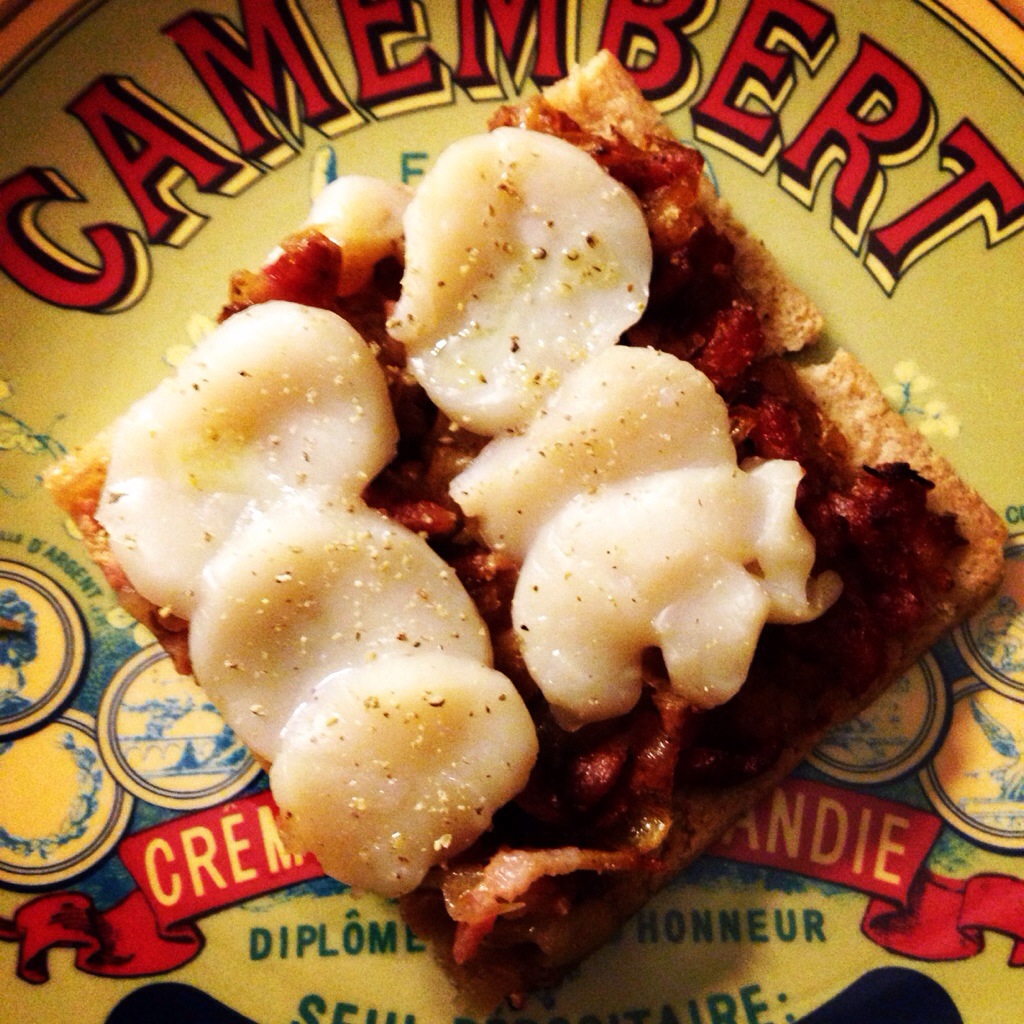
20140321-220942.jpg

We’re going to be finished cooking through Around My French Table in April of next year, approximately, so it’s not surprising that many of the recipes are starting to make me look back as much as look ahead. This week’s dish especially reminded me how close we are coming to the end of the book.

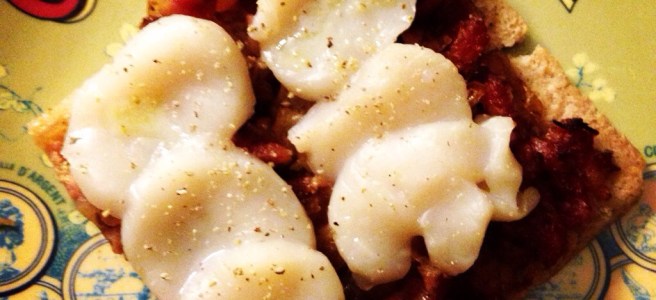
This is our last official scallop dish for the group, save for a bonne idée or two. I’ve told you before that scallops are my favourite seafood, so I’ve been looking forward to tackling this dish.

Tartes fines are usually rounds of puff pastry (or sometimes pâte sucrée for desserts) with finely sliced toppings in a circular design. Though I’ve made
gluten-free puff pastry before, it’s quite an undertaking, so I decided to try out a gluten-free Comensoli Pizza Shell I’d picked up at our local food co-op. It’s a new item there and I managed to get the last package. They went fast and for good reason. This crust is chewy and crunchy, holding its topping without crumbling. I’ll definitely be buying this brand again. It can be hard to find gluten-free pizza shells that don’t fall apart or taste terrible.

Scallop

The only other change I made to the recipe was to add a bit of balsamic to the caramelized onions before I added slivers of bacon. I’d heard from other Doristas over the week that this dish lacked a little something and I decided that the something must be balsamic. It goes so well with all the ingredients.

It was a good decision, as the jammy bacon and onion mixture was the best part about this dish. The scallops themselves were a little flavourless in comparison. They are really just heated through, rather than fully cooked, and I prefer the crunchy, caramelly flavour of seared scallops.

If I were to make this again, I’d leave the scallops off the tart and sear them instead, serving them on greens alongside. I think they would shine more than they did here and it would make a complete meal.

You can find many other blogged descriptions of this FFWD recipe here: Scallop and Onion Tartes Fines

FFWD – Two Tartines from La Croix Rouge

Tartine

When I tell people I’m part of a group that’s cooking through a French cookbook together, I think they imagine the classic dishes set forth by Julia Child or the regional comprehensiveness of Elizabeth David. There are plenty of classic dishes and regional favourites, it’s true, but the book also reflects the diversity of modern France. It’s further inflected by a sort of translation wrought by its American author, who wrote the book with North American kitchens and pantries in mind.

The recipes are transformed, once again, by the time we post our versions each Friday. Each take on the recipe can’t help but be inflected by the individuals who make them, in kitchens across the world – the United States and Canada, yes, but also Argentina, Germany, Malaysia, Australia, and more.
IMG_1642

So, when I tackled this week’s recipes, two tartines from a popular café in Dorie Greenspan’s Paris neighbourhood, it’s not surprising that they ended up with a faint Italian accent. Commercial Drive is still (symbolically, at least) the heart of Vancouver’s Italian community. Many of the cafés, bakeries, and delis have a long family history here, even though the children and grandchildren of their founders have had to move out of the area as housing costs increased.

IMG_1646

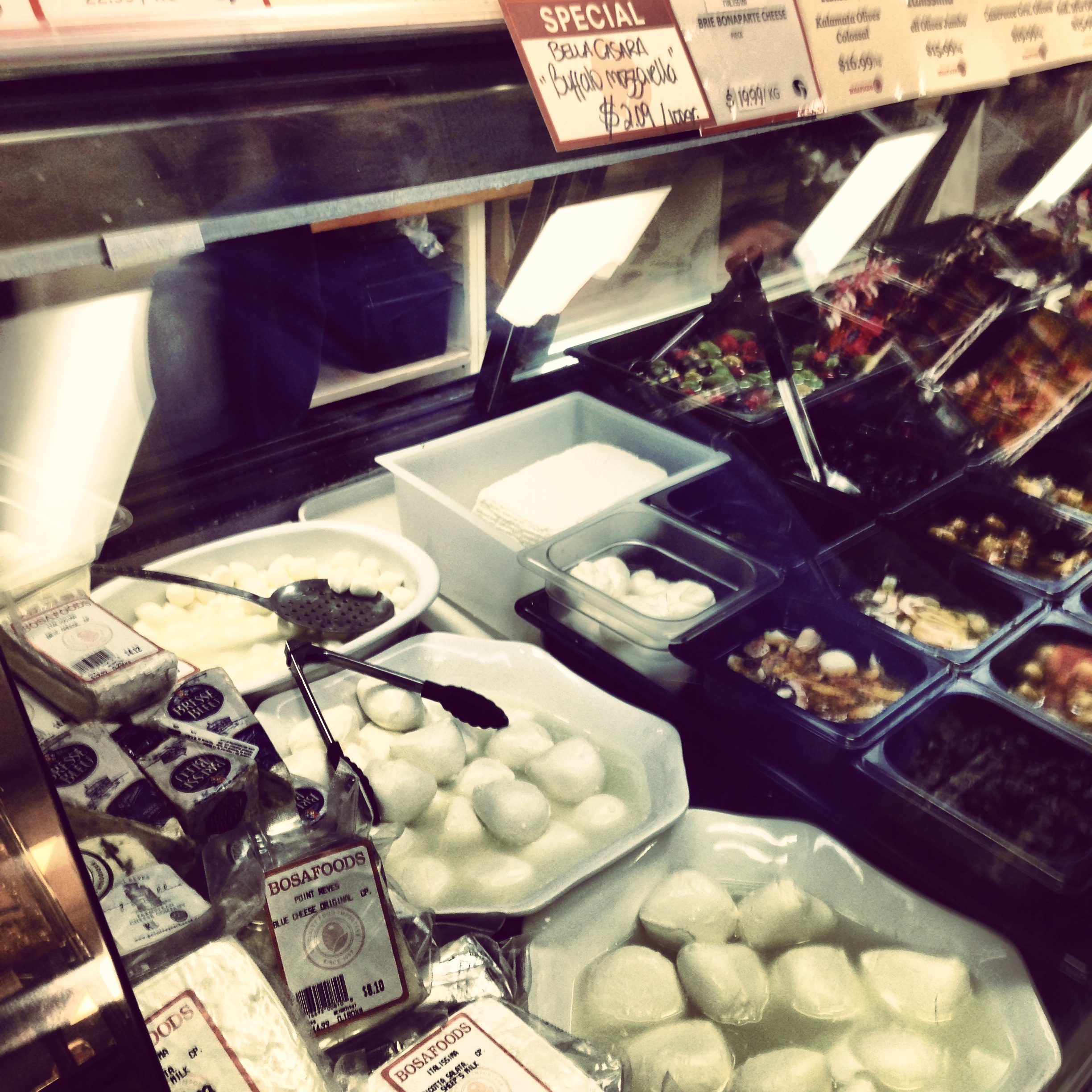
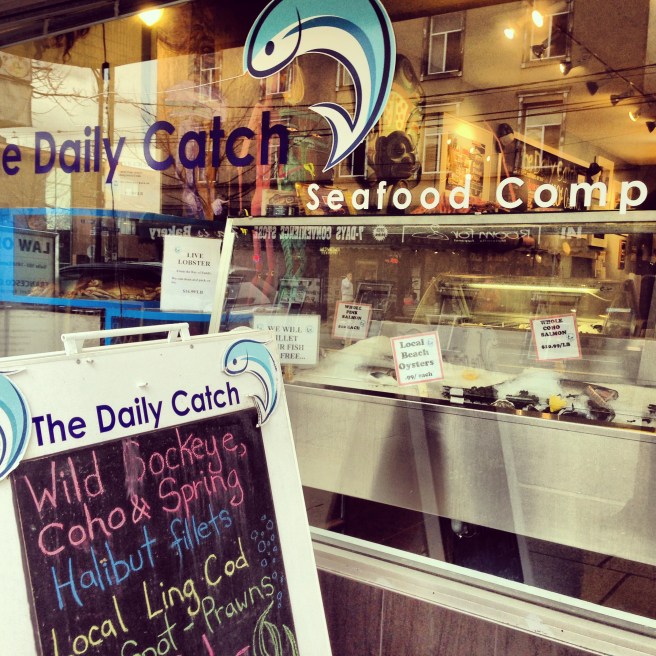
I made two stops in my quest for ingredients for the tartines. First, I went to The Daily Catch to pick up some smoked Sockeye salmon. Then, I headed over to Bosa for the roast beef and bread. Bosa has opened up an enormous Italian grocery store and deli in the furthest eastern regions of the city, but their original location is just a few blocks away and has a great selection in their deli case.

IMG_1648

When I got home, I sliced the whole wheat and millet bread into strips, then toasted them under the broiler.

For the tartine norvégienne, I spread the toast with a bit of mayonnaise, instead of butter, and freshly ground pepper, before layering the salmon and capers on top. I finished them with a squeeze of lemon.

The toast for the tartine saint-germain was spread with a mixture of mayonnaise and Dijon mustard (in hopes the mustard would impart a hint of Paris), then a layer of thinly sliced cornichons, and a generous layer of garlic roast beef.

Roast Beast

The tartines in Around My French Table are a reminder that sandwiches, open-faced or not, can be richly flavoured and sophisticated. I would serve these tartines at a cocktail party or as part of a first course. I’m also counting the days until I can have another Goat Cheese and Strawberry Tartine with local berries.

In the meantime, I’m going to read through the rest of the Doristas’ versions of this week’s tartines, so their personal and regional inflections can inspire my own cooking experiments to come.

You can find many other blogged descriptions of this FFWD recipe here: Two Tartines from La Croix Rouge

A French Fridays Catch Up: Bœuf à la Ficelle and Paris-Brest

Paris-Brest

I haven’t got any beautiful food to share with you today, but I do have some delicious dishes to write about. I’m not in synch with the French Fridays crowd this week; they’re all writing about their adventures in Garbure. Kevin and I are eating vegetarian this weekend, so the luxurious-sounding bean, duck, and sausage stew will have to wait. Instead, I’m doing a catch up for a couple of recipes I missed about a month ago.

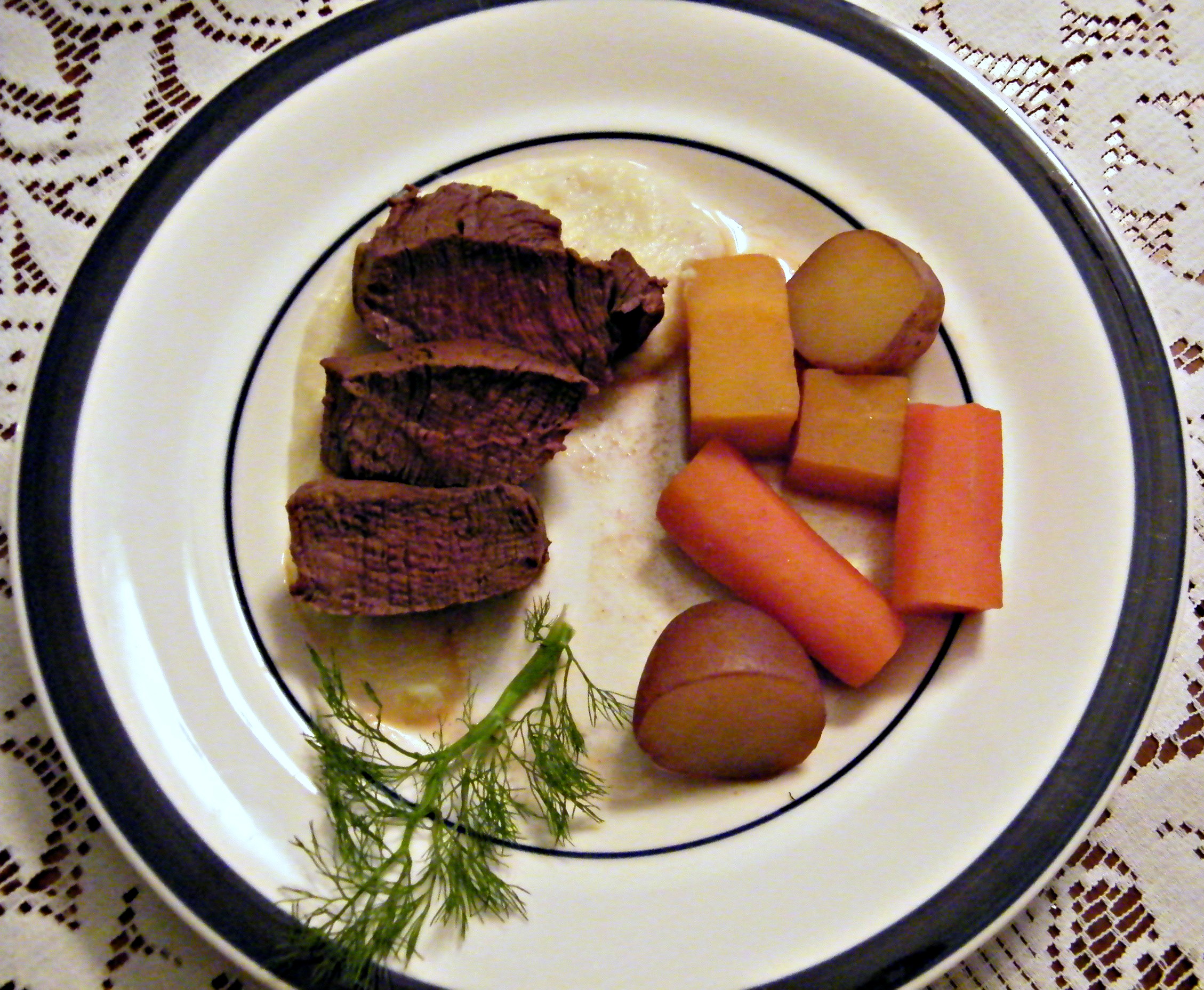
First, bœuf à la ficelle, or in my case, la viande d’orignal à la ficelle. I used moose tenderloin in place of beef. This recipe uses a technique that many of us were skeptical about – poach an expensive cut of meat in beef broth? Madness! In fact, it’s quite the opposite. The gentle bath of beef broth makes the tenderloin perfectly seasoned and perfectly medium-rare. I cheated, opting not to make the oxtail stock, instead infusing beef broth with the aromatics called for in Dorie’s recipe. I think this is a fair trade off, as long as you use a good brand of stock. The moose tenderloins I used were much smaller than beef tenderloin, which surprised me. I only poached them for about seven or eight minutes to get them to rare. Covered with foil, they cooked a little more and were nicely medium-rare when I served them.

I served the moose and vegetables with this Garlic and Fennel Purée from Food and Wine. The garlic and fennel flavour was wonderful, but I prefer a heartier purée, like Dorie’s celery root purée. I think I’d rather use that recipe as a template for fennel purée, but keep the mountain of garlic from Food and Wine‘s version.

Even though I loved the dish, I think the best part of this recipe is the left-over broth. I left it with my mother, who first poached some chicken in it, and then the next day, warmed up some ham. I can’t imagine how much more flavour she’d infused in the broth by the time she used the last of it in a pot of soup. That broth is secret ingredient material.

Unfortunately, my presentation doesn’t do the dish justice. I need a food styling tutor, I think.

Beefy

You can find Dorie’s recipe for Bœuf à la Ficelle here.

You can read about the rest of the Doristas’ experiences with this dish here.

For dessert, there was Paris-Brest, filled with a vanilla and candied almond pastry cream, along with cream puffs filled with leftover Meyer lemon curd from last week’s crêpes. I only wish our assignment had been cream puffs, because those turned out beautifully. Unfortunately, I didn’t pipe the dough for the Paris-Brest into wide enough rings, so it’s not as impressive as it’s intended to be. I also managed to break the top when I was assembling it, so that added to the imperfection. No matter, because it was delicious. Definitely worth brushing up on my pastry piping skills.

To see how the rest of the French Fridays Crew fared with Paris-Brest, head here: Paris-Brest

I’ll be making both these recipes again, even if my presentation skills don’t show them to their best advantage. They may be homely versions of elegant dishes, but that’s easily forgotten once the eating begins.