FFWD – Marengo As You Like It

Marengo

I don’t like to buy into the idea that there’s anything especially unlucky about Friday the 13th. Our brains make sense of the circumstances that lead up to events by attributing them to luck (good or bad) or fate. We reverse engineer meaning into the car accident that happens on Friday the 13th, though the victims of yesterday and tomorrow’s car crashes would consider themselves just as badly off.

But I do embrace the feelings that good fortune brings, even if they are the product of chance. And I have to say that I feel very lucky that when I began thinking about blogging, in order to begin a regular writing practice and to celebrate community wherever I found it, I saw an article that mentioned a blogging group that was just about to begin.

That group was French Fridays with Dorie and now, more than four years later, we’re counting down the last ten recipes in Around My French Table. I’m hopelessly behind, of course, with about twenty recipes in my “catch up” file, but I started this journey on October 1, 2010 – the very first French Friday.

And now we’re in the home stretch, I’m going to try to keep up for the final ten recipes. This week, we’ve got a classic, Veal Marengo. I don’t eat veal, so I used some really beautiful beef, instead.

I quartered the recipe, since M. Kevin was having his favourite vegan, gluten-free pizza for dinner and I’d be eating this alone. Since it was such a small amount, I used cognac in place of wine, with a bit of water. I was also lucky enough to find some beautiful baby cipollini onions, which were perfect in this dish.

I made this in my dutch oven and it worked well, but this recipe is making me wish that I had a good, oven-going skillet with a lid. (I’ve got a great cast iron pan, but it is lidless and a little small, even for a quarter recipe.)

This felt like too indulgently elegant a dish to be eating on my own. In future, I’ll make it for a crowd. On second thought, it was easy enough to make that I may treat myself to another quarter batch again, when I feel in need of a treat. Or, if I want to feel lucky.

You can find links to the rest of the French Fridays crew’s posts on this week’s recipe here: Veal Marengo.

A Very Early Spring

IMG_3462

It’s been an early spring here in Vancouver and despite all the rain that’s come with the Pineapple Express, the early flowers and warmer temperatures have been kind of great. I’ve even heard that some of the cherry trees are already in bloom.

It’s worrisome, too – climate change is set to bring hard times to ski resorts in the south coast temperate zones and a bright future for BC wineries, but whatever else comes with it is much more unpredictable.

For now, though, I’m going to drink in the colour and get an early start on cleaning up and preparing my garden beds. And I’m going to start dreaming my way through the copy of the West Coast Seeds catalogue that just showed up in my mailbox today.

I’m excited that soon enough it will be rhubarb season again and I can get busy making Roasted Rhubarb, Rhubarb Curd, Rhubarb Baby Cakes, and Hungarian Shortbread. I’m also looking forward to finding even more uses for my favourite harbinger of spring.

Whether you’re still snowed in or starting to feel the heat, I’d love to hear what’s in store for you in the coming weeks. Let me know in the comments!

Cottage Cooking Club – January 2015

Early spring

Spring is a few weeks ahead of itself here. The blooms that start popping up in February have been appearing everywhere around the neighbourhood over the last two weeks. It’s a welcome sign of renewal.

I’ve been experiencing renewal in a slightly less pleasurable way since the turn of the year. Our building was completely re-piped over the last few weeks and it was disruptive enough to throw off my blogging schedule (among other things). Half of my kitchen’s contents were piled on the other half and the rest of our place was uneasily accommodating the contents of our storage and coat closets, along with the substantial contents of a big built-in bookshelf.

There are no more holes in the wall and in their place, there are bright new coats of paint. We’re slowly organizing and putting away the things we’re keeping and working on getting rid of the rest. (One of the advantages of this sort of project is that it inspires you to purge unneeded belongings.) One of the disadvantages of work of this kind is that it saps creative energy, so we’ve been existing on some pretty utilitarian cooking lately and writing inspiration was a little hard to come by.

But that’s all over with, so I’m back in the kitchen and at my desk and will be catching up on some promised posts soon. For now, I’m glad I only committed to one Cottage Cooking Club selection this month, though all of them looked like things I’d love to try.

Curried Bubble and Squeak

Bubble and Squeak

Just before the chaos began, I made a big batch of this bubble and squeak. The traditional version has been a comfort food favourite of mine for many years, but one that I don’t often remember to make. This curried vegan version, which uses leftover cooked cabbage and potatoes, is economical and delicious. (And as a bonus, it reminded me that simply sautéed shredded cabbage is a delicious side dish all on its own.) I added chickpeas to the dish, for a little protein and fibre boost, but otherwise followed the recipe. My only quibble is that curry powder is such an imprecise description. I’m going to be playing around with curry spices as I make this dish again, until I get a combination I really love.

I also made the fennel and celeriac soup with orange zest, which was delicious, but that was when the work in our kitchen began and I neglected to get a photo. I love this sort of soup, especially when the weather is cold or rainy. Citrus and fennel have bright notes that help to make up for sunless days and celeriac has the same sort of earthy heft as potatoes, which braces against the cold. A perfect winter soup.

Now, we can move on to February. It’s a cold and dark month in many places, but here in Vancouver, it’s often full of spring.

Here are the links to the rest of the group’s posts for this month. I encourage you to check them out – you’ll meet some wonderful bloggers and get some great inspiration for vegetarian eating.

Cottage Cooking Club – December 2014

tea

One last hurrah from the year that has passed, with some deeply warming winter dishes that were a contrast from the frivolity of much of the holiday food we consumed all month. It’s the time of year for drinking endless cups of tea and thinking about healthy winter eating. These two dishes are great examples of vegan choices that will warm and nourish you.

Curried Sweet Potato Soup

Curried Sweet Potato Soup

This soup was quick and simple, perfect for a month in which I’d bitten off a little more than I could chew, while trying to fit in all the holiday fun I could manage. I usually think about Thai flavours when I use coconut milk, but this soup reminded me that it is equally wonderful with Indian spices. I skipped the yogurt (to keep it vegan) and the cilantro (because the stuff in the store was wan and unappetizing), instead dipping toast into my bowl. Kevin just ate it straight up and loved it, though he’s usually not a fan of sweet potatoes.

The sharpness of the lime and ginger, the smoothness of the coconut milk and pureed sweet potatoes, and the spiciness of the curry and chiles make for a balanced and delicious soup. There’s also a variation listed for curried red lentil soup. I think that one might be on the agenda soon.

Roasted roots

Roasted Roots With Apple and Rosemary

Roasted roots are something I always think I should make more often, so I was glad that this dish was one of the choices. I used carrots, potatoes, sweet potatoes, turnips, and parsnip, but any winter root will do. They are roasted until they are softening and starting to brown, then apple wedges and fresh rosemary are added for the final fifteen minutes or so. The results are as good as a holiday stuffing, but more substantial. It’s meant to be a side, but I ended up making my lunch from the leftovers. I won’t be forgetting about roasted roots for the rest of this winter.

I was also planning on making the Leek risotto with chestnuts, but December just got away from me and there was no more time (nor has there been since). January is going to be another hectic month and then I’m hoping there will be a little breathing room thereafter.

How is your 2015 shaping up so far?

Here are the links to the rest of the group’s posts for this month. I encourage you to check them out – you’ll meet some wonderful bloggers and get some great inspiration for vegetarian eating.

Smoked Salmon Waffles – A French Fridays Catch Up

Waffles

It’s not Christmas dinner I most look forward to, but Christmas brunch. There are fewer rigid expectations and an opportunity for playfulness that you don’t get at the more formal meal. This year, I made a bûche de Noël and smoked salmon waffles. Another year (actually, more than one), I made cardamom bread.

I bought a waffle iron a few months ago, in anticipation of making smoked salmon waffles for Christmas brunch. My brother caught and smoked a salmon himself earlier this year and my mother had some stashed in the freezer. Christmas morning waffles seemed like a great way to use some of the salmon and celebrate the season.

I loved how easy the batter was to put together and the waffles came off the iron without any trouble at all. (I sometimes wonder why people buy boxed mixes for waffles and pancakes, when making them from scratch is so easy and gives you much better results.) The savoury flavours of smoked salmon and green onions made these waffles the perfect accompaniment to our brunch, especially with a little dollop of cream on top.

They could also easily be elevated to cocktail snack or appetizer presentation by making them smaller, as Dorie gives as one option, and topping them with crème fraîche and salmon roe. Then, they would make a nice part of a New Year’s Eve spread.

Happy 2015, everyone! My blogging goals for this year include improving my photography (as you can see above, I’ve been a little complacent of late) and concentrating more on the quality of my writing. What are your goals for this year?

Find links to the rest of the French Fridays crew’s posts on this recipe here: Smoked Salmon Waffles. Then, see how everyone fared with this week’s recipe Simplest Breton Fish Soup.

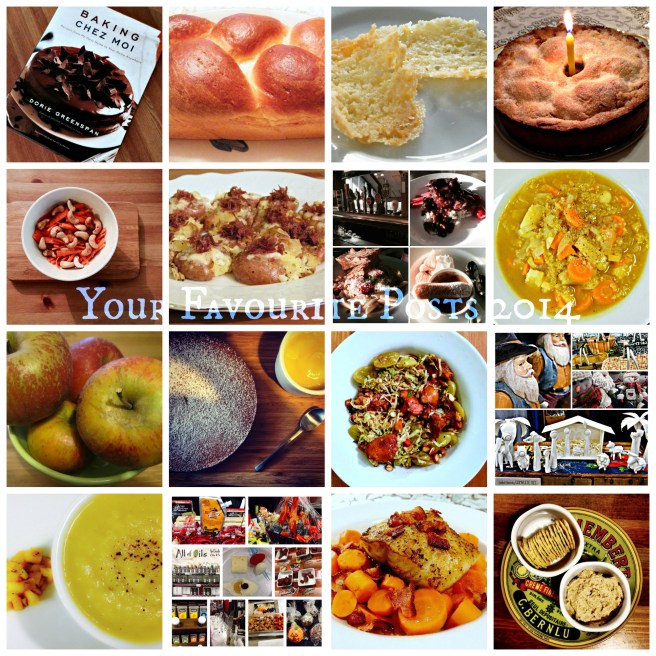
A Year-end Round-up

Favourite Posts

A round up of popular posts on the last day of the year may be a blogging cliché, but it’s nice to look back at what’s resonated with people, especially when some of the top posts of the year reach farther into my blog’s history.

It’s not a surprise that this top 16 draws primarily from my cooking community posts and from posts with a local focus. Those are the twin pillars of my blog, after all.

I’m looking forward to where this blog will take me in 2015, but looking back, I’m quite happy with where I’ve been so far. A very happy New Year to you all. I hope 2015 brings you health, happiness, and adventure.

And so to the list:

16. FFWD – Tuna Rillettes

I’m starting out at the bottom of the list, in true late December countdown fashion. Sixteenth of over 350 posts is still pretty impressive, though. This post is about one of my favourite Dorista snacks of 2014. Tuna rillettes are addictively good, whether used as a dip or a spread.

15. FFWD – Sablefish with Double Carrots

Most of the Doristas who made this came away enamoured with the carrots cooked in carrot juice that anchor the dish. This post also includes a primer on sustainable seafood and a rich, cocktail snack of a quick bread.

14. The Bounty of the Valley

The Fraser Valley isn’t just the place where chefs, bakers, and makers get their ingredients. These days, there are more and more businesses springing up that are making the Valley a destination (or keeping Valley foodies closer to home). The Fraser Valley Food Show has become a showcase for some of the best the Valley has to offer.

13. FFWD – Celery-Celery Soup

The name of this soup piqued my interest, so it makes sense that readers would be curious, too. If you don’t know what to do with the celery root you see in the markets, this would be a good place to start.

12. West Coast Christmas Show

Another event in the Fraser Valley, proving you don’t have to commute to find great, local goods.

11. FFWD – Chanterelles with Cabbage & Nuts

One of my favourite 2014 French Fridays dishes, this is going to appear on my table every fall when the wild mushrooms start showing up in the markets.

10. FFWD – Visitandine

A simple cake and a great way to use up egg whites, especially if you’re making lemon curd. I make sure there’s always one of these in my parents’ freezer in case they need a dessert on the double.

9. FFWD – Marie-Hélène’s Apple Cake

This is one of the very first posts I made on the blog and it’s been in the top ten ever since. The cake has become a favourite in my family and beyond, making rum a more prized commodity around here than it ever was before.

8. Vegetable Quinoa Soup with the Taste of Little India

The photos for this soup are about as Pinterest-y as I get, which is why I think this one made the top ten. Besides, who can resist the promise of the name?

7. Eat Local: Kingfisher’s Waterfront Bar & Grill

I love talking about the local food scene and Kingfisher’s has a great food philosophy – two of the reasons I think this post was popular. The third? You got to meet my brother, Kingfisher’s Executive Chef.

6. Patate Alpino

I’ve been experimenting with working with brands a little bit on the blog and this is a post I’m rather proud of. A recipe inspired by the Italian side of the Alps and some French Fridays leftovers, this dish could become a dangerous habit for anyone in reach of a good Italian deli.

5. Cottage Cooking Club – October 2014

The Cottage Cooking Club, organized by the wonderful Andrea of The Kitchen Lioness has become a highlight of each month for me. Cooking through River Cottage Veg by Hugh Fearnley-Whittingstall gets me out of the rut of my usual approach to vegetarian cooking, which is how I like to eat at least 60% of the time. I think more people are getting interested in meatless meals, so I’m not surprised this post made the top ten.

4. Happy Birthday, Dorie! A French Fridays Celebration

The French Fridays crew is in the last few months of cooking through Around My French Table, so when our fourth anniversary of cooking together lined up with the release of Dorie’s new book and her birthday, we decided to celebrate. With previews of recipes from Baking Chez Moi, birthday wishes, and fond reminiscences, this was part of a very special round up of posts.

3. Almond-Orange Tuiles – A French Fridays Fail

It’s a commonplace that we learn more from our failures than we do from our successes. I think that’s why this post climbed so high into the top ten, along with the fact that we can all relate to less-than-perfect results in the kitchen and everywhere else.

2. FFWD – Brioche and Nutella Tartine

This post from early 2012 has been consistently popular, perhaps because the word Nutella is a magnet or maybe because braided brioche is the cutest bread ever. I know I like the reminder of what a good team brioche, marmalade, and Nutella make.

1. Baking Chez Moi – We Begin!

My post on the kick off of another round of Tuesdays with Dorie was my most popular post of the year. How could it not be? Delicious cookies, a re-energized community, and a visit with Dorie Greenspan – no wonder it’s Number One.

Baking Chez Moi – Bûche de Noël

buche de noel

My mother’s sister, Lorraine, always brought a bûche de Noël to Christmas dinner. They were traditional chocolate logs from a bakery, but I remember them as being rich, delicious, and perfect. She died when I was an adolescent and bûche de Noël was only an occasional part of our holiday celebrations thereafter, but they’ve been a symbol of the season for me ever since.

I’ve always wanted to make one, so I was happy that one of the recipes chosen for our second month of baking through Baking Chez Moi was Dorie’s Gingerbread Bûche de Noël.

There are a lot of steps in making this dish, but some of the most intimidating parts of the process are also surprisingly easy. The pecan praline wasn’t at all difficult, the cream cheese filling was a snap to whip together, and the marshmallow icing was quite straightforward, once I’d braced myself for the task of pouring hot liquid sugar into the bowl of a running mixer.

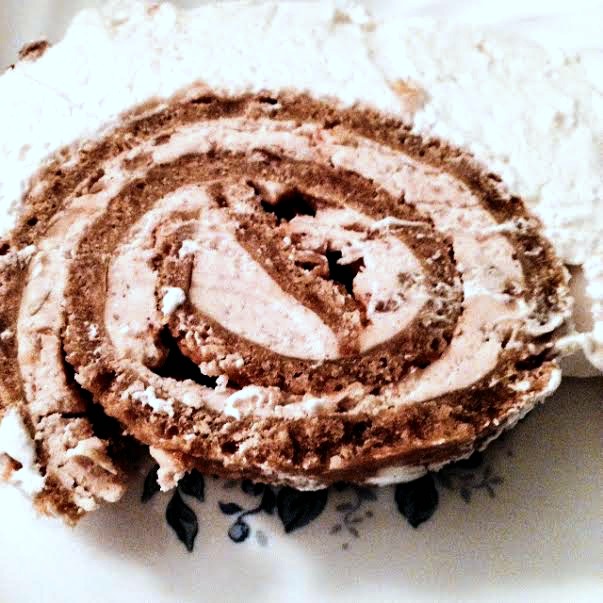
My particular Waterloo on this dessert was the making of the sponge. I can’t seem to get sponge cakes quite right. This one didn’t turn out horribly and was quite tasty, but as you can see in the photo below, the cake is about half the height it should be. The batter deflated a lot more than it should have when I folded the butter mixture in. I guess it’s just a matter of getting some more practice, but I admit I was disappointed.

Slice

Luckily, the filling and icing made the bûche look beautiful, even with the imperfections in the cake. I’m going to try again with sponge cake and I think one of my few resolutions for 2015 will be to conquer the roulade. Next year’s bûche will be looking much prettier, I swear.

You can find the rest of the Tuesdays with Dorie crew’s entries on this recipe here: Bûche de Noël. And you can find more Tuesdays with Dorie catch up posts at this link.

Whipped Shortbread and Sucre à la Crème for French Fridays

Shortbread

For the third year in a row, the French Fridays with Dorie crew has exchanged Christmas cards. In the first two years, a few of us have included recipes along with the cards and this year, we’ve made it into a full-fledged virtual recipe exchange. I’ve been receiving cards and recipes from Doristas from around North America and around the world and it’s been nice to come home to a mailbox stuffed full of good wishes over the last week or two. Thanks to Alice, Christy, and Candy for making this such a special event.

We were asked to share one (or more) of the recipes we were sent, or to share the one we included with our card. Because I sent my cards out a bit late, I chose the latter option.

Most of my mother’s family recipes, handed down to her by her mother in a black, coil-bound notebook, have been in storage since my parents moved. So, for the last two years, we’ve been baking other people’s family recipes at Christmastime. Some of the best have come from my mother’s friend Gina, an incredibly creative person. She gardens prolifically, propagating dahlias and fig trees (both of which are now in my yard, thanks to her), and enough produce to feed her extended family and many of the members of her branch of the Catholic Women’s League, too. She bakes, cooks, volunteers, and does any number of other things well. My mother finally got Gina’s shortbread recipe this year, so I’m passing it on to you.

Whipped Shortbread

Bea Hartel/Gina Alary

1 lb butter
½ cup cornstarch
1 cup icing (confectioner’s) sugar
3 cups flour

Beat all ingredients together until consistency of whipped cream.
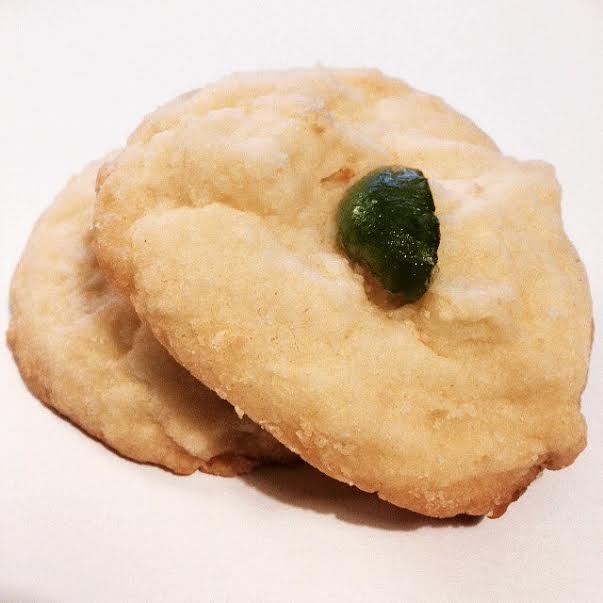
Drop on greased cookie sheet. (with teaspoon) Press down gently, make edges round if too jagged. Red or green cherries on top.
Bake at 350 for 15 minutes.
Makes 5 – 6 dozen.
Enjoy!

Now, when my mother got the recipe, it was much simpler than this. These ladies come from a generation in which they expect you’ll already know how to go about making cookies. My Mom added some instructions, which you can see above.

I want to elucidate just a little bit more. I whip the butter in my stand mixer first, until it’s light and fluffy. Then, I sift the rest of the ingredients into the bowl of the mixer and run the mixer on low for a bit, just so the dry ingredients don’t go flying everywhere, before bringing it up to medium-high until the dough reaches the consistency of whipped cream. If you’re using the cherries, it’s best to halve or quarter them first. If you prefer not to use glacé cherries, decorate them with something with a little more heft than sprinkles or sanding sugar and keep it simple.

There is also an alternative to the drop method of forming the cookie. You can dust your hands with cornstarch, quickly and gently roll teaspoonfuls of the dough into balls, and press them down with a floured fork (just as you would an old fashioned peanut butter cookie). Then, instead of glacé cherries, you can decorate them with dragées, sprinkles, sanding sugar, edible glitter, or sugar stars. They won’t be quite as melt-in-the-mouth, but they’re still delicious.

And, since I wasn’t able to make any of the Dorista recipes I received for this post, I’m going to update a family recipe that I shared in 2011. Sucre à la crème is a French Canadian favourite that my mother’s family has been making for generations. There are as many versions as family members, it seems, and I’ve finally come up with my own favourite formulation. My mother’s family is Franco-Manitoban, so they use brown sugar in place of the maple sugar that’s more common in Québécois versions. Feel free to experiment with maple sugar if it’s easy to come by for you. You can see the versions I shared in my original post here.

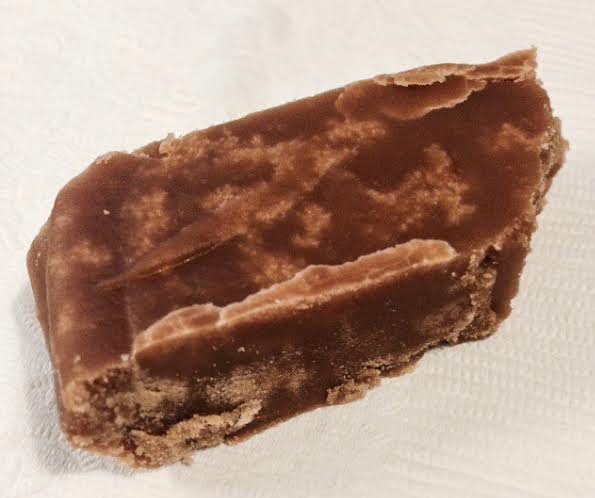
Now, this isn’t the sort of fudge we usually think of in North America, in which you avoid the formation of sugar crystals so that it’s silky smooth. This fudge is more like Scottish tablet, in which the sugar crystals are part of the pleasure. So, you don’t have to worry about sugar crystals forming on the pan and stirring is encouraged.

sucre a la creme

Teresa’s Sucre à la Crème

3 1/2 cups light brown sugar
1/2 cup white sugar
2 cups whipping cream
1 1/2 tsps vanilla

Butter an 11 X 7-inch pan, metal or heat-proof glass work equally well.

Combine the sugars and whipping cream, whisk together until well-blended and cook over medium-low heat, stirring often, until the mixture starts to thicken, sugars the spoon (a metal one is best), and forms a ball when dropped into a dish of cold water. The lower end of the soft ball stage (234-236°F) is just right. Remove the pan from the heat and stir vigourously, adding the vanilla when the candy is just beginning to stiffen. When the scrapings are becoming solid, it’s time to pour the candy into the prepared pan. Chill in the fridge for several hours or overnight, then cut into small squares. It keeps for a week in the fridge or several months in the freezer. Bring to room temperature before serving.

I made some sucre à la crème yesterday, after sharing a Boxing Day meal with my parents. I left most of it there for my Mom to share out with the family and took a small box home to share with a Québécoise friend who hasn’t had the genuine article in some time. There was also a bit for Kevin and me, but that seems to have disappeared. The shortbread is long gone, too, shared at all my parents’ holiday gatherings and even at a cookie swap.

If you try either of these recipes, I’d love to see your results – find me on Facebook, Twitter, or Instagram and share a photo.

I’d like to wish everyone the happiest of holidays and a wonderful 2015. I also want to thank my fellow Doristas for making my weekends brighter with our weekly virtual get-togethers. I’m looking forward to the final few months of Around My French Table with all of you.

You can find the rest of the Dorista recipe exchange fun here: Holiday Card/Recipe Exchange or Makeup.

FFWD – Orange & Olive Salad and Lamb & Dried Apricot Tagine

orange and olive salad

When it comes to the kitchen, December is a weird mix of ambition and ease for me. I make long lists of favourite dishes to make, along with new ones to try that usually involve a new skill to master. There are also many quick and easy meals, most easily forgotten, to accommodate all the rush and bustle (and more complicated works in progress) the holidays bring.

So, I was extra grateful to Santa’s Dorista elves for setting a schedule full of simple, delicious recipes. It’s been a good reminder that quick and easy doesn’t have to mean forgettable.

Orange & Olive Salad

Which brings me to this salad, almost as if I’d planned it. You can see how pretty it is in the photo at the top of the post and you can probably guess how easy it was to put together, too. What the photo won’t tell you is how delicious it was. The idea of orange, olive, and onion in a salad was a bit off-putting for a number of the French Fridays crew this week. But, one by one, almost everybody started posting that they’d loved it.

So, by the time I got around to making it this afternoon, I was pretty confident it was going to be good. Kevin, however, doesn’t get the benefit of Dorista social media chatter, so he was very skeptical when I set it down in front of him. He’s a good sport though. After assuring him that soaking the thinly sliced onion in ice water had rendered it mild and crispy, he dug in. And then ate the whole plateful, making it a hit for both of us. We’ll be having this again and I can hardly wait to introduce it to others. It’s an elegant, surprising dish that would have gone untried if it hadn’t been for this cooking group.

Tagine

Lamb & Dried Apricot Tagine

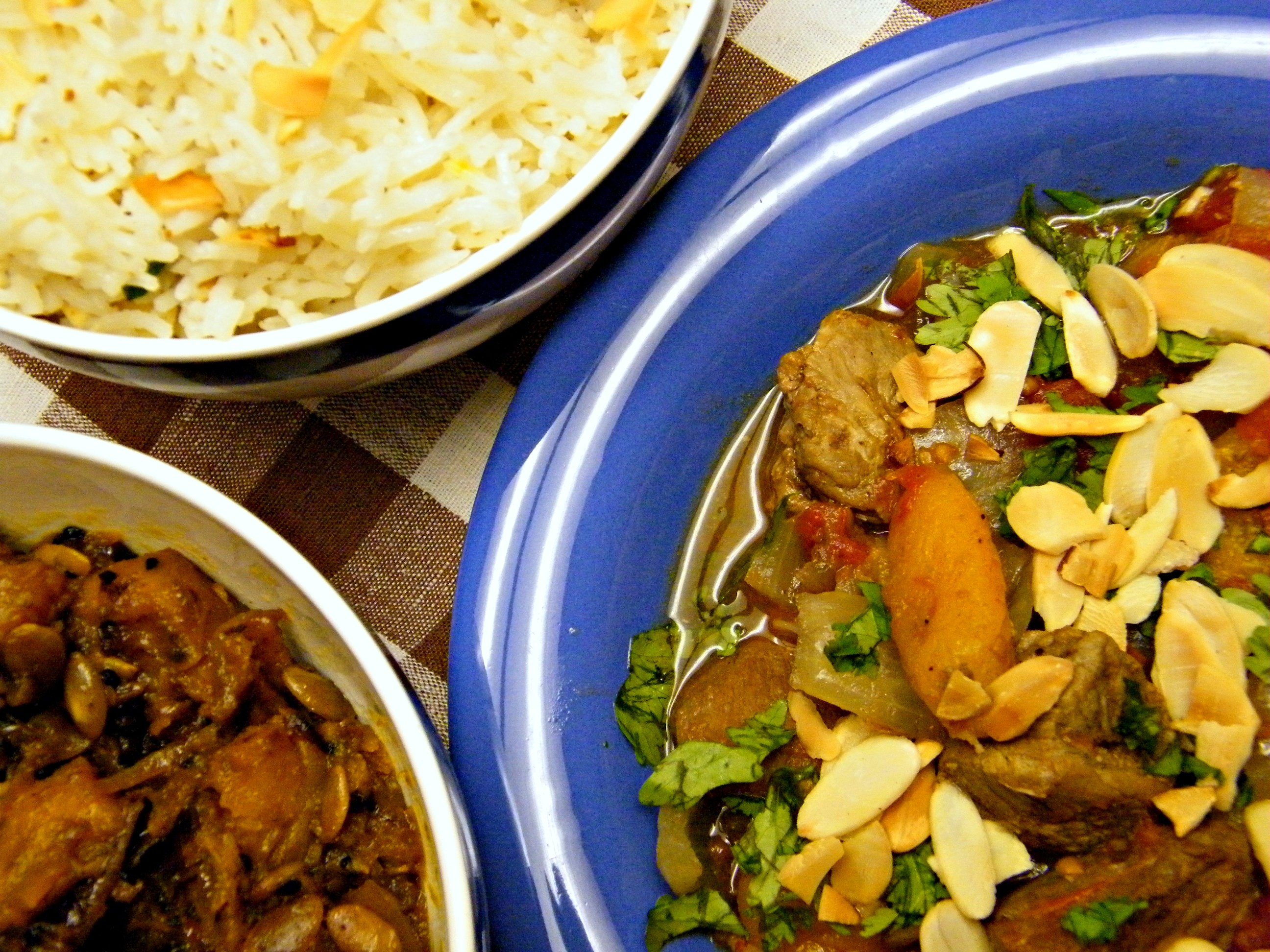
This dish was never in danger of going untried. I’ve loved Moroccan flavours since my university days, when I discovered the recipe for Moroccan Chicken Stew in the copy of Anne Lindsay’s Lighthearted Everyday Cooking that was a moving-out-on-my-own gift from my mother. I did make it a little easier, though, by cooking it in the slow cooker overnight, then letting it rest in the fridge until dinnertime. When I heated it up, I couldn’t believe that it was even more fragrant than when it had come out of the slow cooker. I served it with saffron rice and Ottolenghi’s Roasted Squash with Cardamom and Nigella, both headily aromatic dishes themselves. It made for a fantastic meal.

The next ten days are going to see a lot of cooking and baking, family visits and celebrations. But, if you have time, drop by over the weekend – I have three last minute shopper’s cookbook reviews for you, from Saturday through Monday. And a happy Chanukah to everyone who is in the midst of celebrating it.

Find links to the rest of the French Fridays crew’s posts on this week’s recipe here: Orange & Olive Salad. Then, see how everyone fared with the Lamb & Dried Apricot Tagine.

Patate Alpino

Patate Alpino - roasted creamer potatoes with Italian cheeses and Bresaola

The Little Potato Company provided me with the potatoes used in this recipe. The recipe and all opinions expressed in the post are my own.

I don’t care who knows it. I love potatoes. Roasted, mashed, boiled, smashed, simmered, braised, caked, or scalloped – bring ’em on. So, when I got the opportunity to play around with The Little Potato Company‘s creamer potatoes, I was right on board.

It’s been fun experimenting with these tiny, tender, flavourful potatoes. The recipe I’m sharing with you today was inspired by thoughts of Swiss raclette, but it’s got an Italian twist, since my neighbourhood is famous for its Italian delis and coffee shops.

When I was tracking down ingredients for a dish I made recently with my cooking group, I ended up with quite a lot of Bresaola. Since raclette is often served with air-dried beef and roasted potatoes, it seemed a natural fit for the little red Blushing Belle potatoes I’d been working with. In keeping with the Italian theme, I chose a mix of Asiago and Parmesan cheeses to complete the recipe.

Patate Alpino - roasted creamer potatoes with Italian cheeses and Bresaola

Patate Alpino

Serves 4 as a side; 2 as an appetizer or small plate

12 Little Potato Company Blushing Belle potatoes
1 head of garlic, broken into cloves, unpeeled
1 sprig of fresh rosemary
1 sprig of fresh thyme
1 tablespoon of olive oil
Salt and freshly ground black pepper

15 grams of grated Asiago cheese
15 grams of grated Parmesan cheese
10-15 grams (1-2 very thin slices) Bresaola, shredded

Centre a rack in your oven and preheat to 400°F.

Toss the potatoes, garlic, rosemary, and thyme in the oil and then add several grinds of pepper. Salt lightly, or not at all, as Bresaola is quite salty enough. Roast the potatoes for 30 minutes, stirring around the 20 minute mark.

While the potatoes are roasting, grate the cheeses and mix them together. Shred the Bresaola and reserve separately.

When the potatoes are tender when pierced with a knife, remove them from the oven and preheat the broiler to 500°F. Discard the rosemary and thyme and remove the garlic from the roasting pan.

You have two choices with the garlic. You can keep the cloves warm and serve them with the potatoes, or (my favourite) you can squeeze the cloves out of their skins immediately and spread them on toasted rounds of baguette. (If you have leftovers, add them to your next batch of mashed potatoes.)

Gently crush each potato with a potato masher, taking care to leave them reasonably intact, then give them another grind or two of pepper. Sprinkle each potato with the cheese mixture and then place the potatoes under the broiler until the cheese is melted and bubbly. Carefully move the potatoes to a serving platter, using a metal offset spatula, then top each with a mound of shredded Bresaola.

Patate Alpino - roasted creamer potatoes with Italian cheeses and Bresaola

This dish can serve as a side, but I think it really shines as a snack. With a glass of Italian red wine or a Belgian-style beer, it’s a satisfying way to warm up on a cold winter’s day.

If you’d like to take these potatoes back to the other side of the Alps, substitute Gruyère or Emmental cheese, with viande des Grisons (or Bündnerfleisch) as a topping. In that case, you might want to reach for a French vintage.

I didn’t stop there with my recipe experimentation with my stock of little potatoes. Come back next Thursday and I’ll have one more recipe for you. In the meantime, you can visit The Little Potato Company’s website for more recipes.