FFWD – Roasted Rhubarb

Rhubarb in a field of sugar, with a partly zested lemon and (unsurprisingly) a zester.

It’s not the complicated recipes that evoke sensory memories for me, though I have plenty of other memories about those dishes. My mother’s French Onion soup is inextricably linked with Hayley Mills and The Moon-Spinners, because she once made it for us on a Mother and daughters movie night. Coq au Vin and Angel Food Cake bring to mind special occasions with Tante Leona, my mother’s aunt. Pâte de Cochon and tourtière mean Christmas. But these are associative memories, not strongly sensory.

The memories that transport me to particular periods of my life, rather than specific events, are triggered by simple aromas. Caramelizing sugar brings me back to early childhood, my mother making sucre à la crème on the stovetop. Roasting garlic and lemon are associated with my university years, when my idea of sophisticated home cuisine was 40 Cloves of Garlic Chicken. Rhubarb cooking down is the scent of early summer, reminding me of the building excitement as the school year neared its end. Rhubarb found its way into puffs, crisps and pies, but one of the first things my mother always did with it was to cook some down on the stove with sugar. It would often end up served over ice cream, usually on a hot June day.

Partly roasted rhubard sitting in a melted sugar bath.

We’ve not had many hot days this month, but this afternoon I evoked the memory of warm days with this week’s French Fridays recipe. Instead of cooking it down slowly on the stove, though, this recipe calls for chunks of rhubarb to be tossed with sugar and freshly grated lemon zest (I added a pinch of cinnamon, too) and then roasted in the oven. This method requires almost no attention – no frequent stirring and temperature checks and leaves the pieces of rhubarb soft, infused with the flavour of the sugar. Cooking rhubarb on the stovetop breaks down its fibres, incorporating the sugar syrup, but this method leaves the rhubarb intact, surrounded by a sugary sauce. It’s a lovely variation and just as good with ice cream as the original.

Roasted rhubarb, still warm and melting the ice cream it's accompanying.

What are some of the things that trigger sensory memories for you? Scents, sounds, colours? I’d love to hear.

You can find many other blogged descriptions of this week’s FFWD recipe here: Roasted Rhubarb

FFWD – Cola and Jam Spareribs

Spices, cola and jam.

Ribs and summer weather are a good fit. They bring up thoughts of potato salad, corn on the cob and lemonade. Since summer hasn’t exactly started here, it’s good that ribs are also a good match for sports. The Canucks [Seriously, WordPress, you don’t recognize the word Canucks?] are in the Stanley Cup finals and the whole city is in thrall to its televisions…with some notable exceptions. I’m sure they’ll be commenting to that effect on this post.

Heating the jam with the orange juice.

I’m a fair weather hockey fan. Bring me to a game and I’ll be watching every play. Otherwise, I don’t follow it until the playoffs. Even then, I only pay enough attention to make sure I don’t miss anything exciting. (The Canucks in the finals – exciting.) My family despairs of me. I was raised in a hockey-loving clan. My grandfather cheered for the Canadiens and some of my earliest memories are of three generations of my family crowded around the television in my grandparents’ living room. The decibel level was impressive. I was already a suspect fan; my favourite part of the broadcast was Peter Puck.

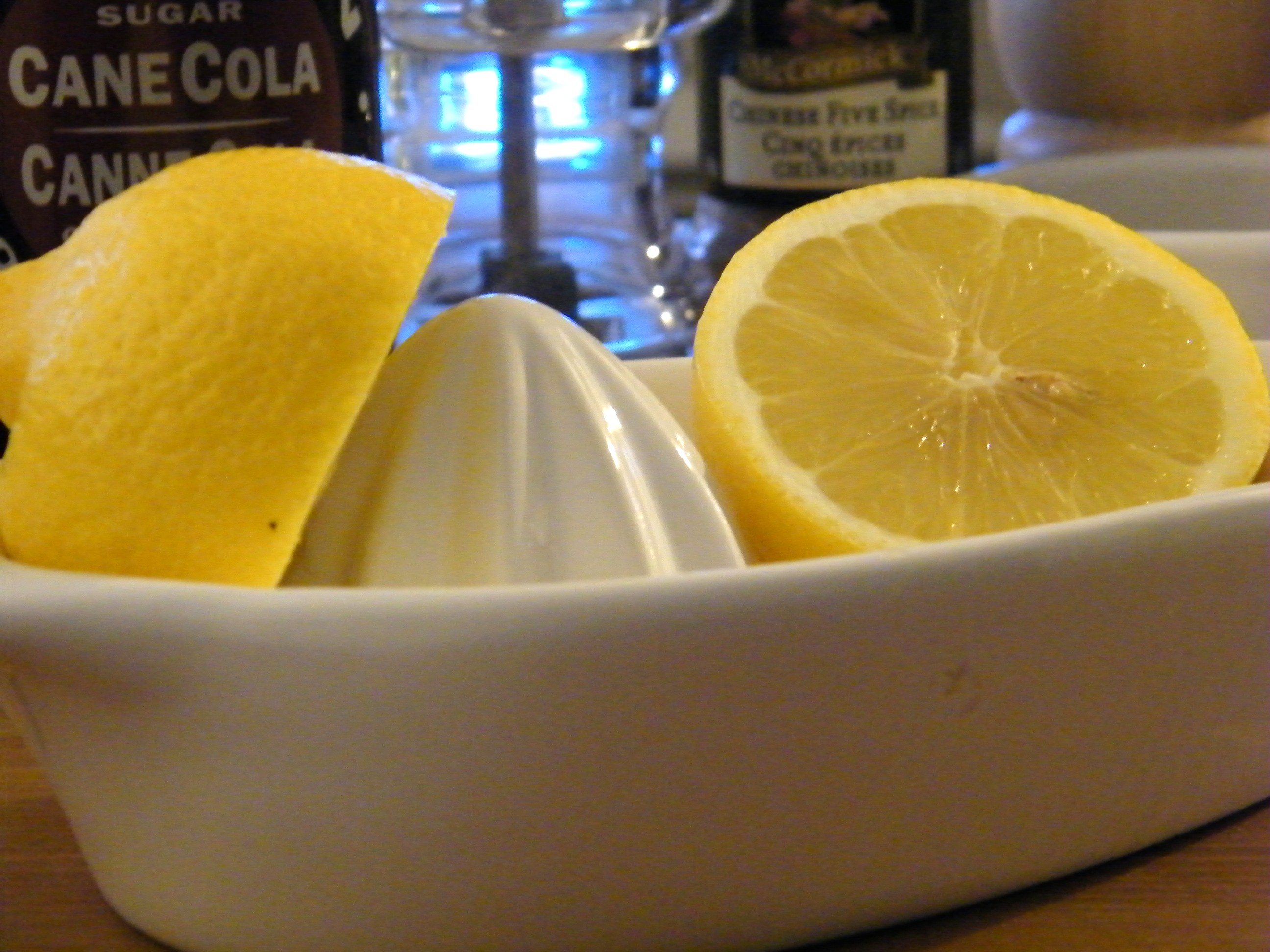
A split lemon resting in the juicer.

All of this is to say that I’m paying attention to hockey right now and this week’s French Fridays recipe is a perfect fit. Cola and Jam Spareribs, steamed bok choy, mashed potatoes and Gewürztraminer, plus a winning home team game. Not bad for a Friday night at home. At least that was the plan. As of this writing, the ribs have just come out of the oven and we’re planning to eat them tomorrow, though we may have a few as a late-night snack, just to make sure they’re acceptable.

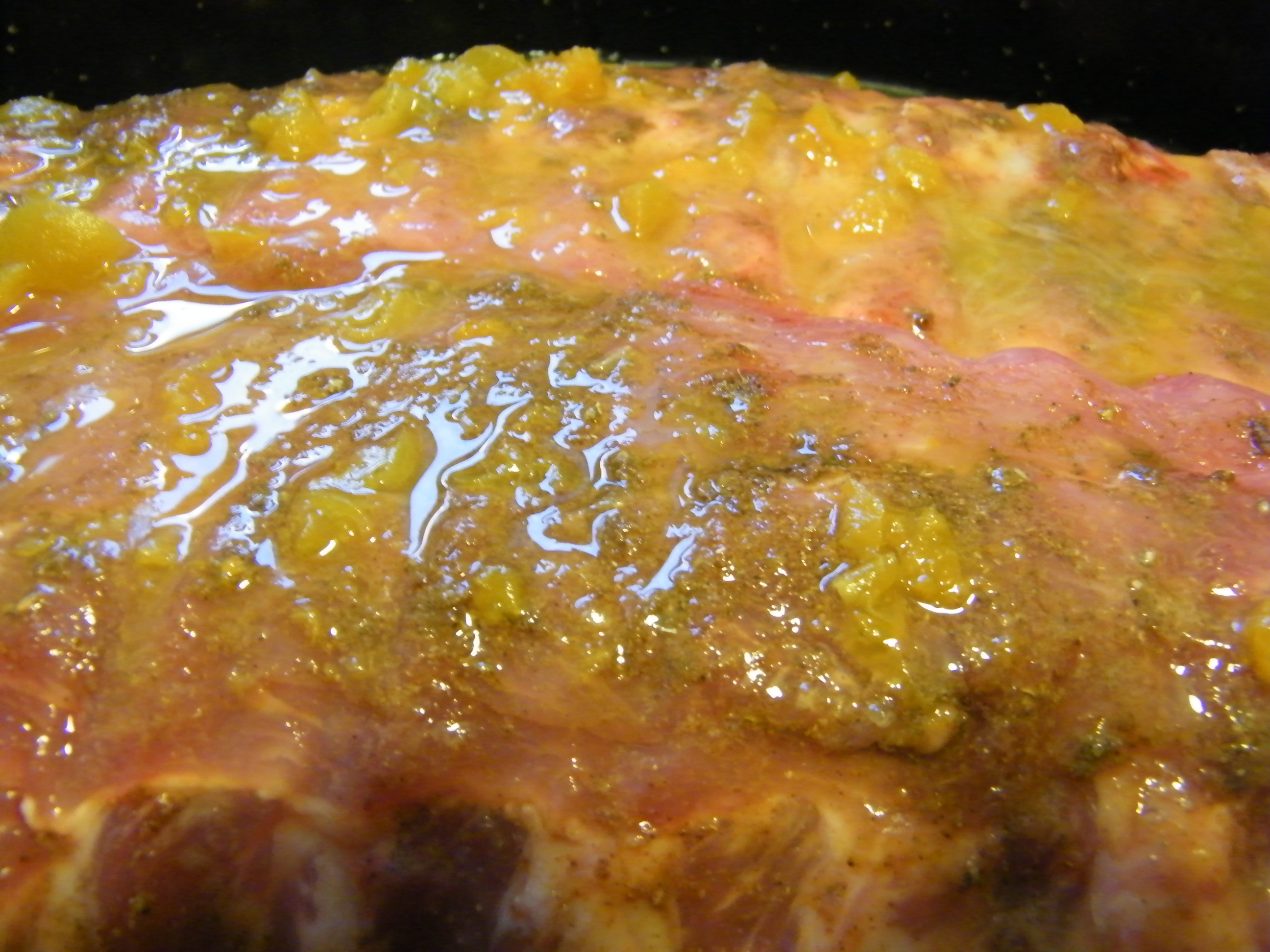
Ribs ready to go in the oven. You can see the jamminess of the marinade.

The aroma from the kitchen certainly promises that they’ll be more than acceptable. This isn’t a typically saucy rib recipe. The meat is rubbed with five spice powder, ground ginger, salt and pepper, then marinated in apricot jam, mixed with orange and lemon juices. Late in the roasting process, cola is added to the pan. It’s a long cooking time, with regular basting, but the meat is awfully tender looking. I’ll let you know in the comments how we liked it.

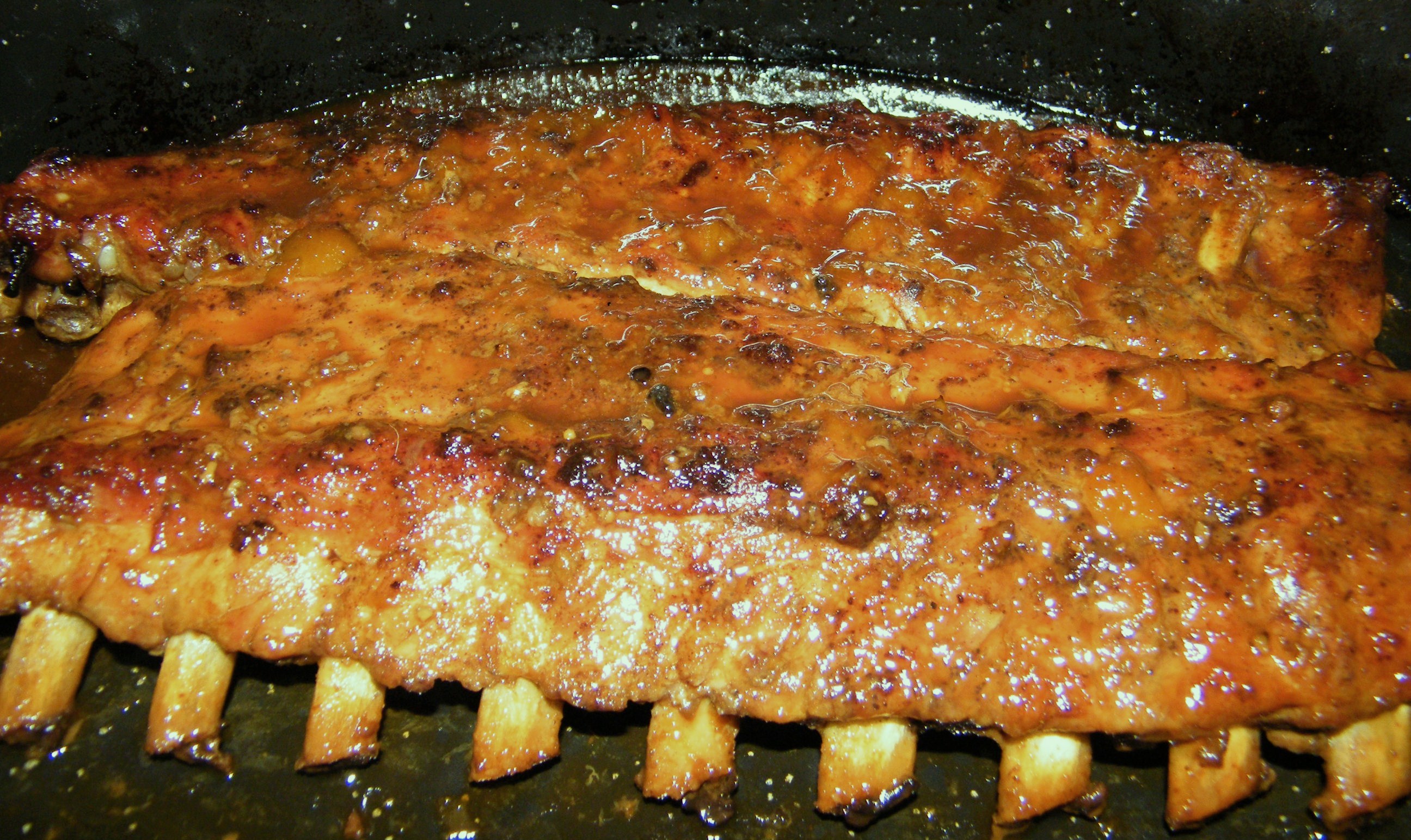
Nicely browned, just out of the oven.

You can find many other blogged descriptions of this week’s FFWD recipe here: Cola and Jam Spareribs

FFWD – Bacon, Egg and Asparagus Salad

Is it just me, or is there a confessional aspect to these French Fridays posts? Not the life-alteringly shocking kind, of course. More in the vein of True Food Confessions. That isn’t a reality television show yet, is it? Anyway, I find myself regularly revealing my food…quirks…in these posts.

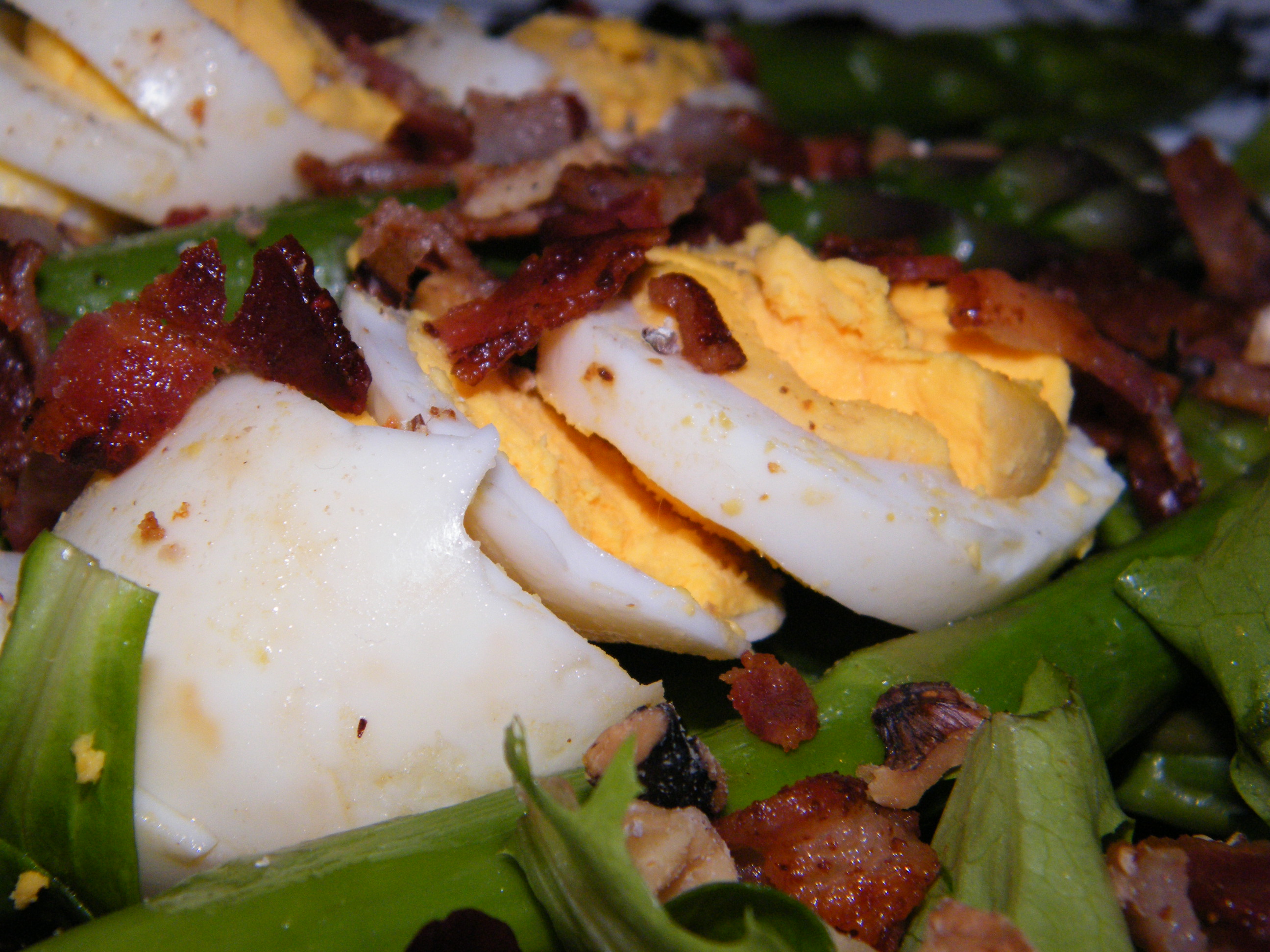
You might have noticed in the photo at the top of this page that the eggs in this salad aren’t quite what Dorie had in mind. She describes the soft-boiled eggs called for in the recipe as having “a yolk that’s runny enough to become a second sauce.” This is where the confession part comes in – I’ve never been able to tolerate an even remotely runny yolk. When I was a little girl, my Grandmother used to say in exasperation, her Northern Irish accent in full force, “Oh that one, she likes her eggs hard as the hammers of Hell.” It took me some time to stop ordering them that way in restaurants. Okay, I still do sometimes.

It’s not that I won’t make eggs with runny yolks – I’m a great believer in making sure everyone gets their eggs the way they like them, not even entirely because I’m trying to build some reciprocity. Had I been eating with anyone who liked their eggs that way, you might never have seen this particular confession, but my partner is not a fan of runny yolks, either. That might be my fault, though I’d prefer to characterize it as influence.

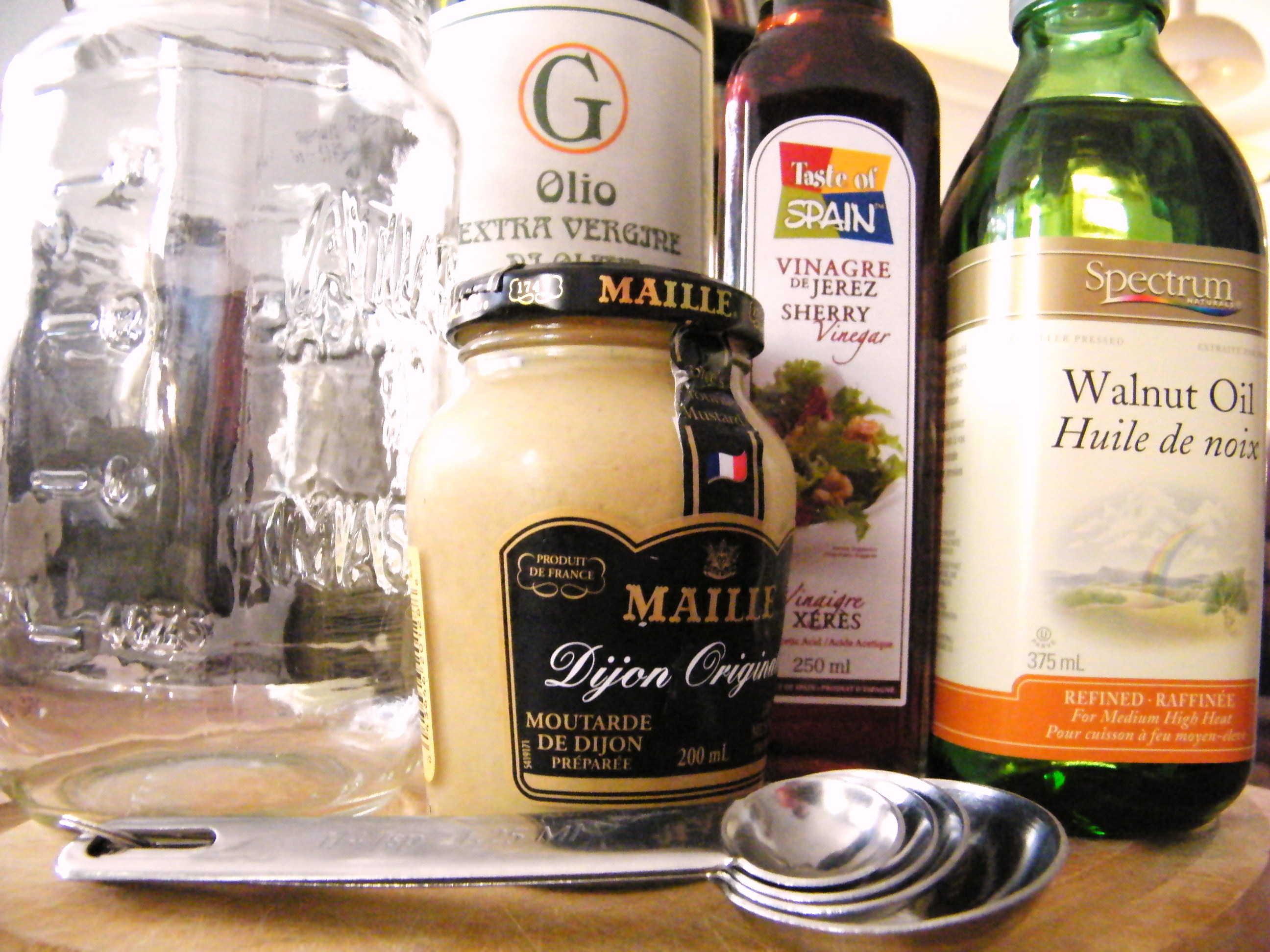
Once the matter of the yolks is set aside, I loved everything about this salad – greens and asparagus spears dressed in a Dijon-walnut oil vinaigrette, the aforementioned eggs re-warmed in bacon fat and broken open (or in my version sliced) over top, with crisp bacon and toasted walnuts to finish it. With so many textures and flavours working together in this salad, I don’t think it suffered at all from missing its second sauce.

You can find many other blogged descriptions of this week’s FFWD recipe here: Bacon, Egg and Asparagus Salad

FFWD – Bistrot Paul Bert Pepper Steak

When I was young, one of my favourite things to order at a restaurant was a steak sandwich, which meant my steak came out on top of a piece of garlic bread. I couldn’t understand why anyone would order it differently, because the garlic bread was perfectly positioned to soak up all the juices. It was hard for me to decide which part of my meal I liked best – the medium-rare steak or the juice-soaked garlic bread. (I appreciated the baked potato, but it was definitely out of the running.) At home, my mother would pile steaks onto a platter, with a plate stacked with brown bread beside it. After everyone chose their steak, we’d all grab a piece of bread and try to soak up as much of the juices as possible. You may detect a pattern here.

I’m a fan of medium-rare, juicy steak and I don’t want it accompanied by anything that will detract from these qualities. A steak needs to be well-seasoned, of course, but beyond that I just want it grilled/fried/broiled to perfection. Which means that I’ve generally left sauces to other cuts of meat.

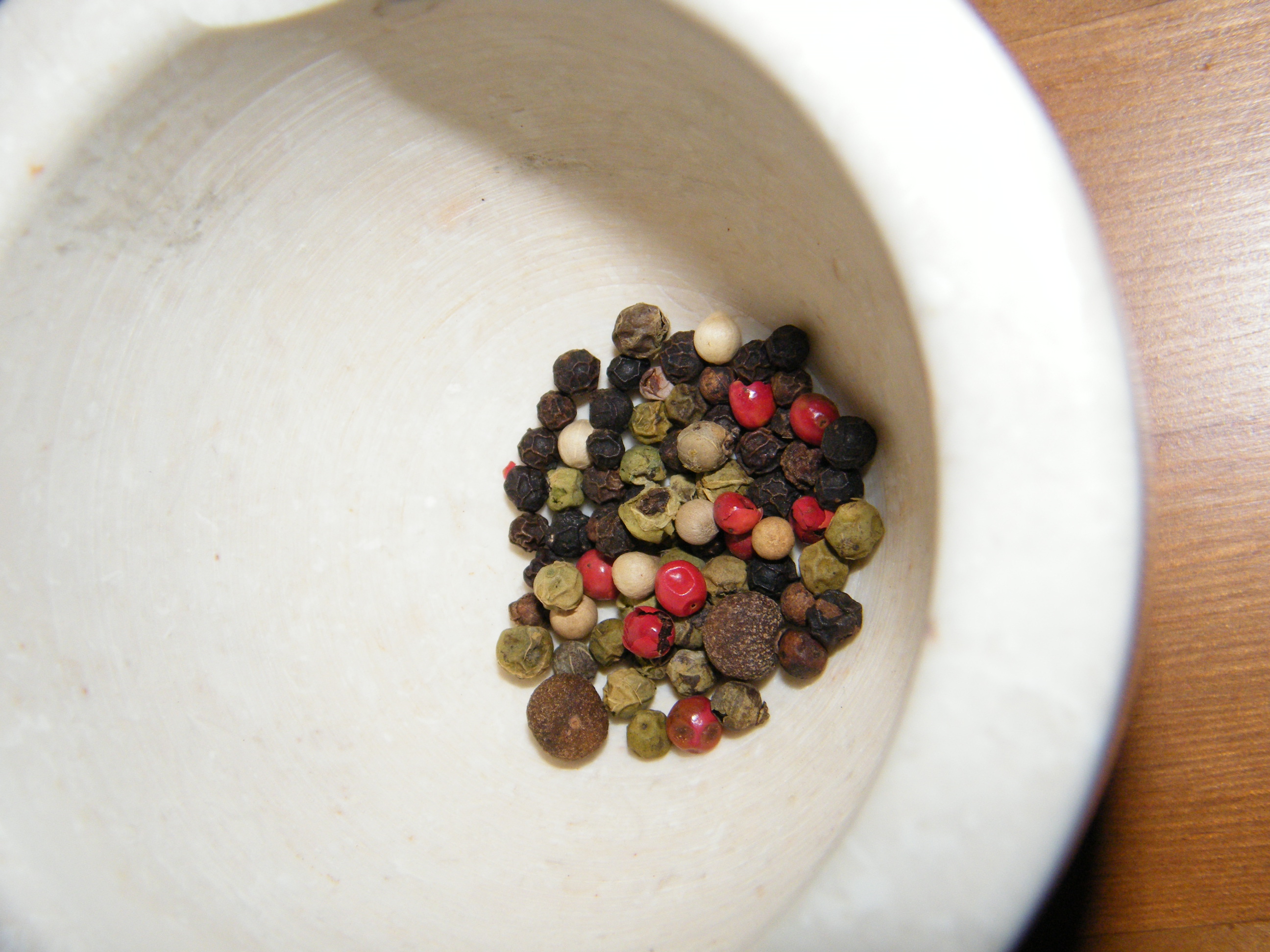
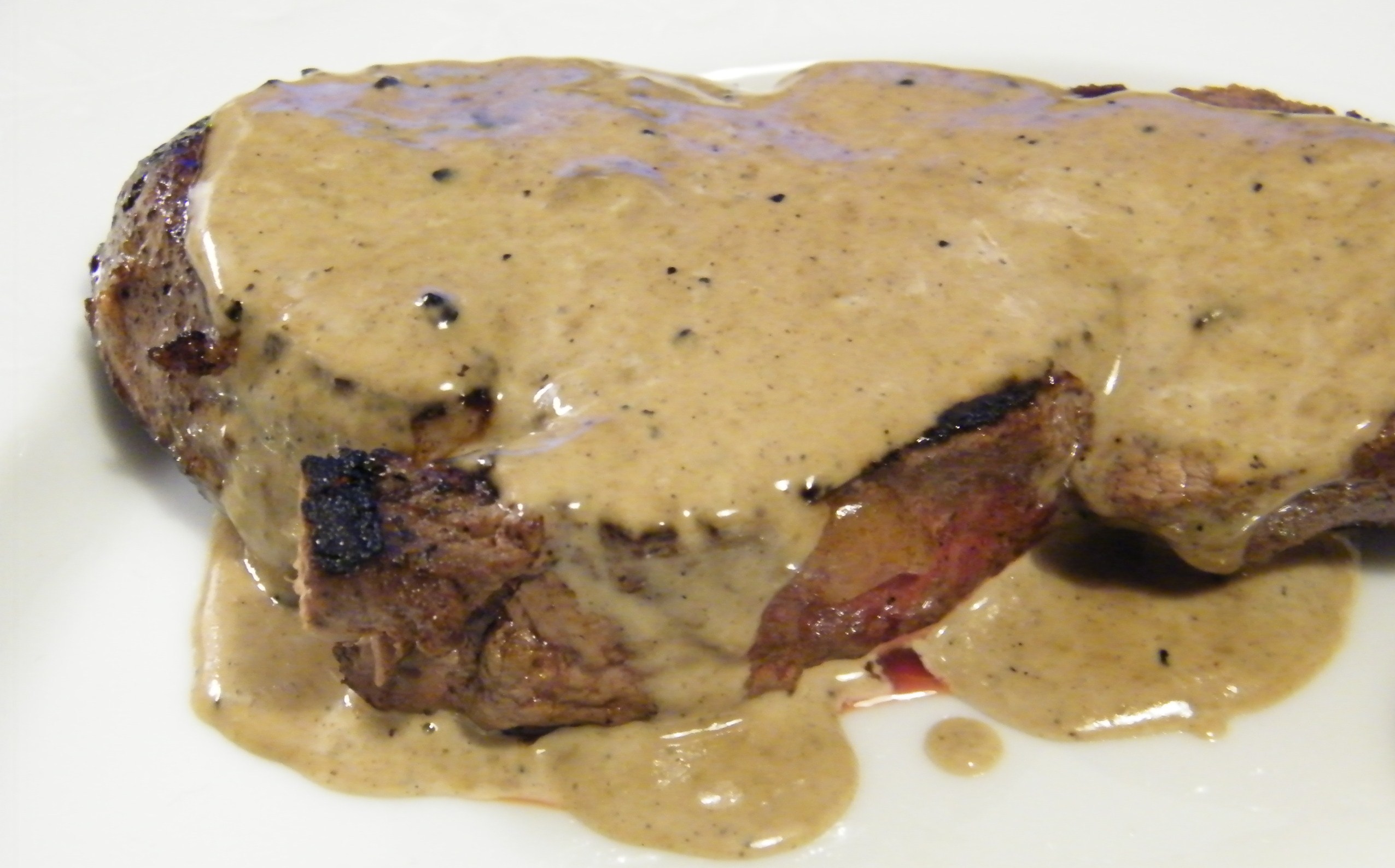
Along comes this week’s French Fridays recipe – a pepper steak, with a cognac cream sauce. Have I mentioned that this cooking group often challenges our food habits and preferences? As it turns out, this is rarely a bad thing. The steak (filet mignon, if you please) is prepared simply enough, dressed with crushed peppercorns and fried at high heat. Once the steak is done, the pan is deglazed with cognac and heavy cream is added to create the sauce.

When the sauce is done, the dish must be served immediately, which isn’t a problem because the aroma makes you want to get on with things quite quickly. The sauce adds richness to the steak, without masking its flavour or overwhelming the juices.

Our side dishes were Garlicky Crumb-Coated Broccoli and another Dorie recipe, broth-braised potatoes. They were wonderful complements to the steak; most importantly, the potatoes soaked up the juices of the steak and the cognac cream beautifully. We’ll be having this again soon, as I have some lovely elk steaks in the freezer.

You can find many other blogged descriptions of this week’s FFWD recipe here: Bistrot Paul Bert Pepper Steak

Grey Skies and a French Fridays Catch-Up

Vancouver has a reputation for rain, but I prefer to describe the weather here as changeable, especially in spring and fall. It’s why Vancouverites are ridiculed (by Torontonians) for dressing in too outdoorsy a fashion – we must dress in layers to cope with the numerous weather conditions we might encounter in a single day.

It’s true that we’ve gone through a long stretch of damp, cold weather lately. The grey skies are beautiful, though. When the afternoon light streams through the clouds, the sky turns a luminous grey, tinged with blue. My Prairie-raised mother doesn’t understand it, but growing up here teaches you to really look at cloudy skies. Look beyond the Vitamin D deficiencies and you might find yourself catching your breath at the loveliness of the sky and the way it brings out the colours in everything else.

I can’t hate this weather, which becomes awkward for me socially, as friends and neighbours expect commiseration when they complain about grey skies. I can always escape to the kitchen, though. It’s definitely not too hot to use the oven.

I’ve been baking salted butter break-up cookies quite often lately. They were the March 18th French Fridays recipe, but I somehow never managed to post about them until now. Maybe it’s because, just writing this, I’m thinking about making them again. The first time I tried the recipe, I ended up with three batches in quick succession – one to sneak into a hockey game to share with my family and two to bring to a community event. After that, I kept finding excuses to make them again.

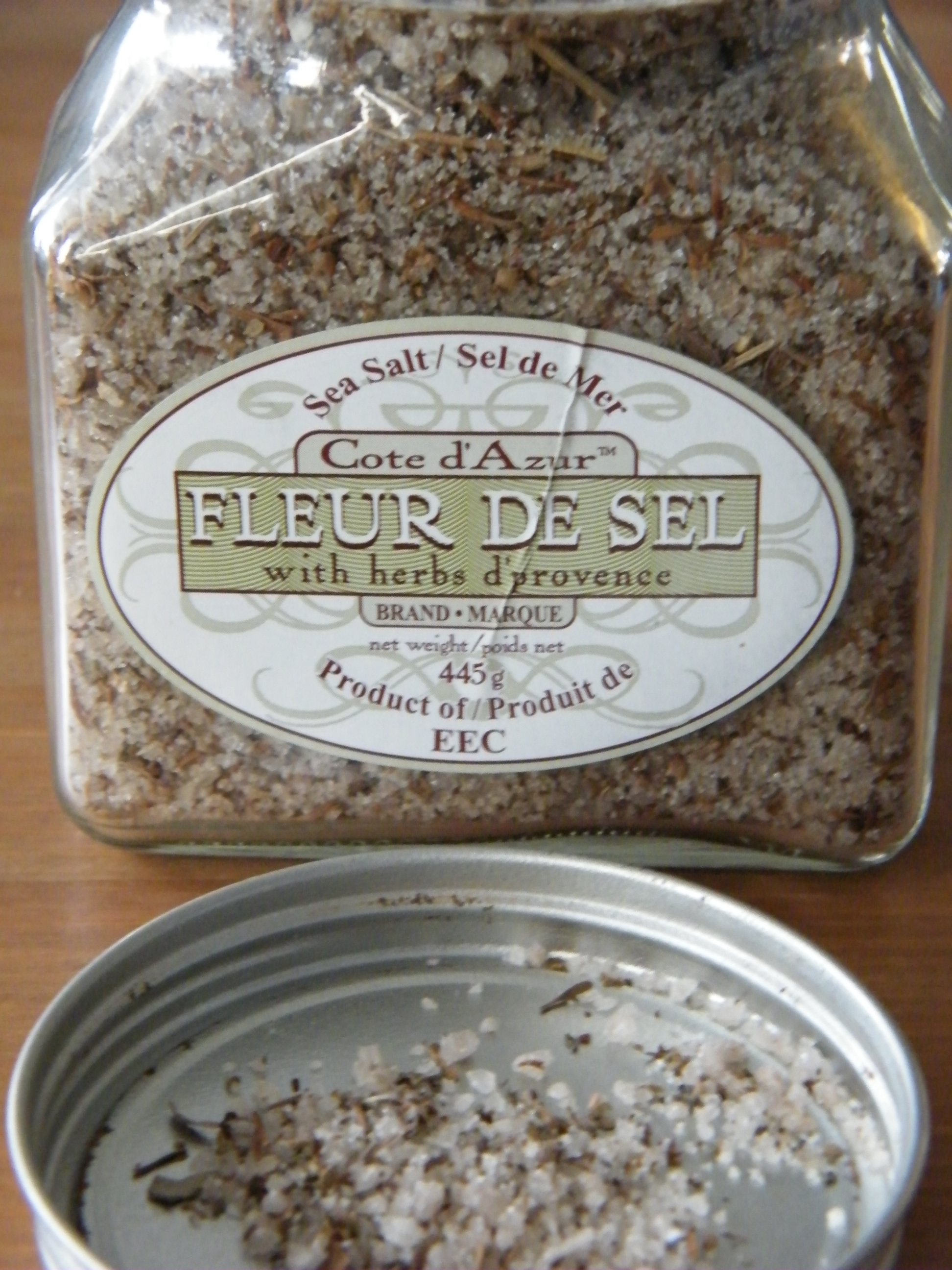
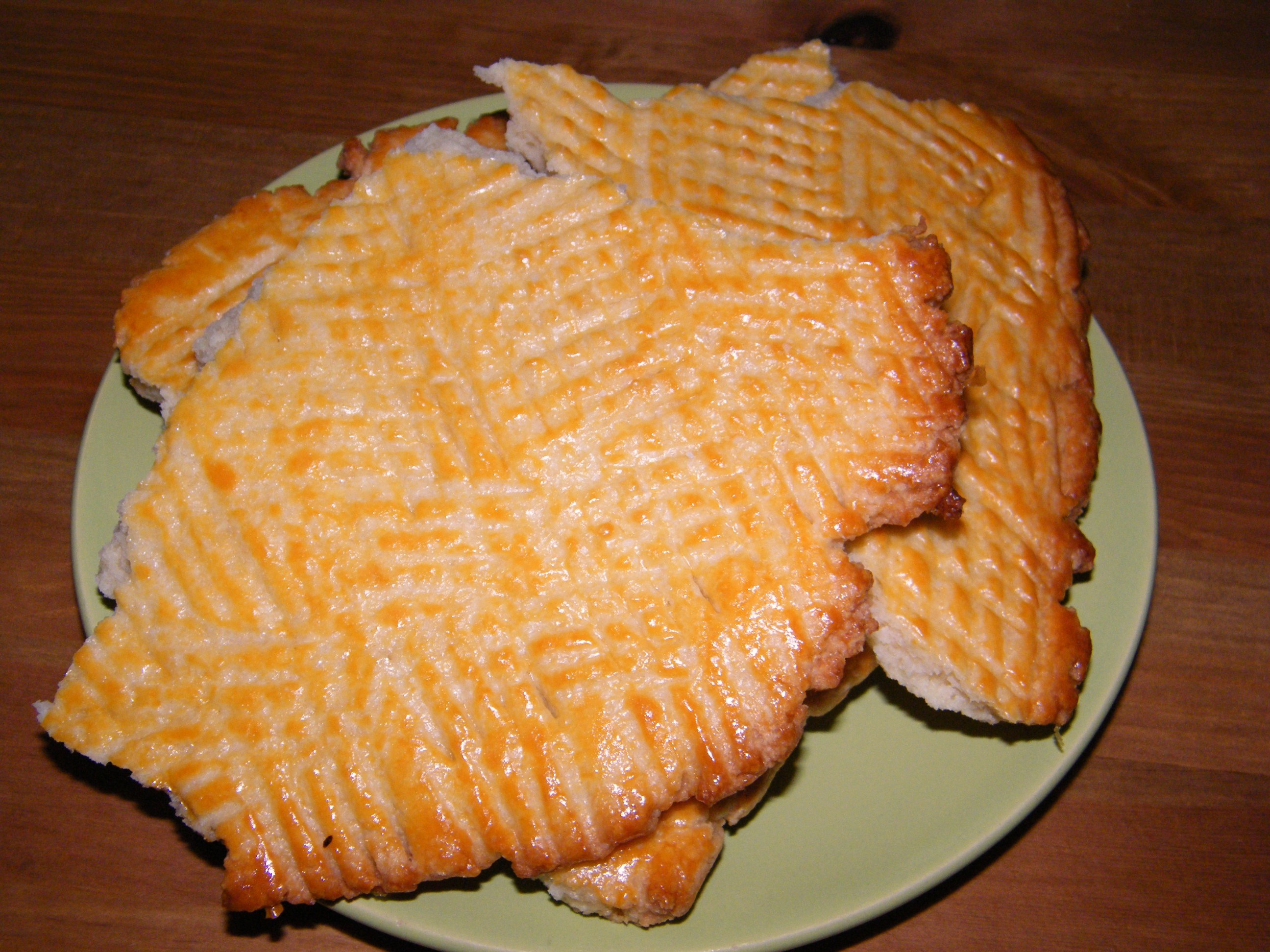
Salted Butter Break-Ups are traditionally made with sel gris, which is a coarse, grey sea salt. I used a coarse kosher salt in some batches and fleur de sel mixed with herbs de provence in others. The taste of salt pushes against the slight sweetness of what is essentially a simple, egg-washed shortbread. The herbs de provence gave the cookie another layer of flavour, too. This cookie could carry off a number of flavours – rosemary, cardamom or even curry. But however nice these variations can be, the plain cookie is enough to satisfy – salty, sweet, chewy and soft all at once.

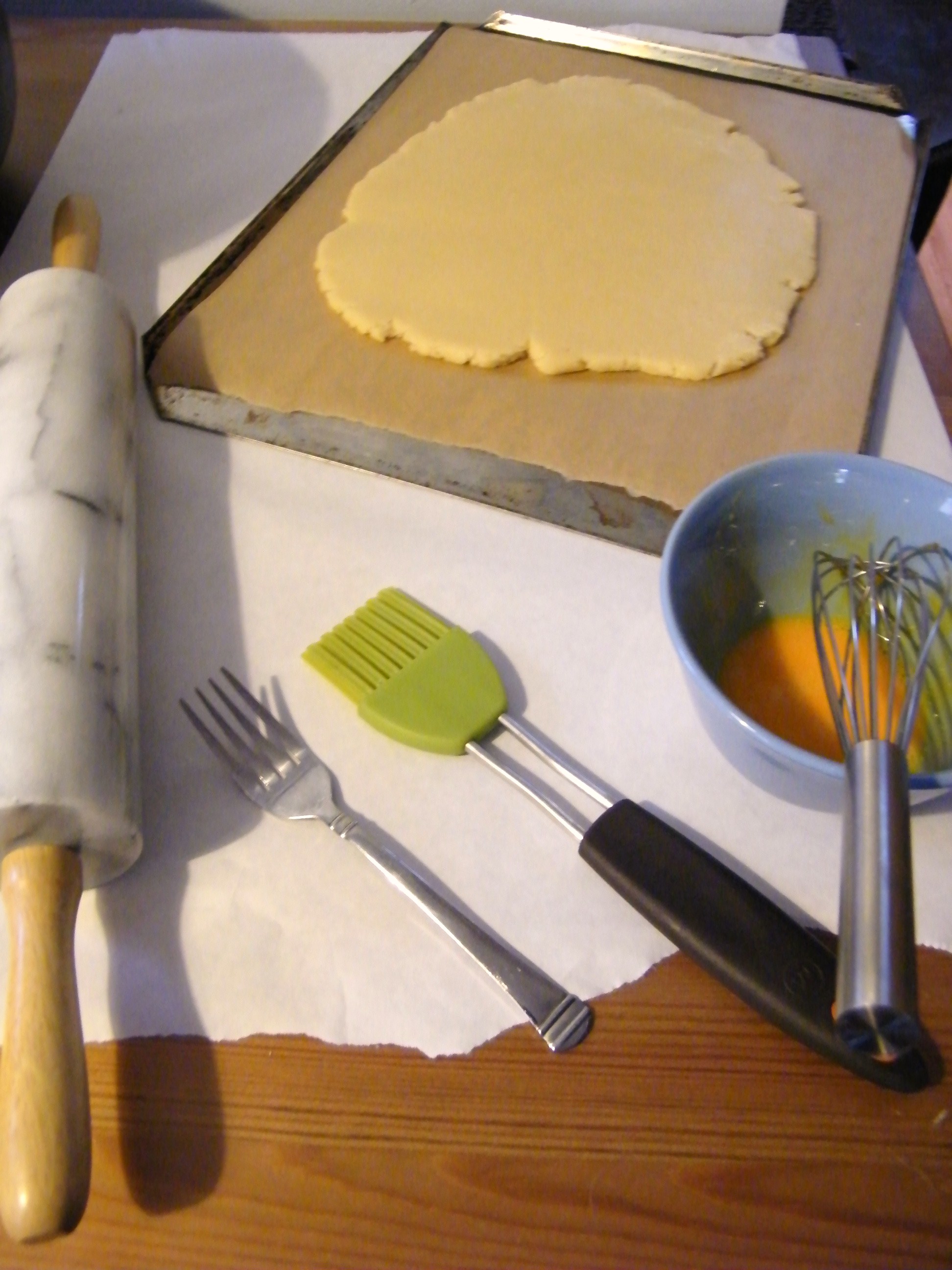
The break-ups are baked in one large, rolled out piece, given an egg wash and then decorated with a criss-cross pattern, using a fork. Once it’s been baked and has cooled to room temperature, it’s served intact, with guests breaking off pieces to serve themselves. I’ve yet to serve it this way, though. I’ve broken them up myself and packed them into cookie tins or paper sacks – much easier to transport.

I’m going to have quite a lot of opportunity to keep baking these, as the weather isn’t set to warm up for some time. As you might have guessed, I don’t really mind.

You can find the recipe here, on Dorie’s blog.

You can find many other blogged descriptions of the salted butter break-ups here: Salted Butter Break-Ups

FFWD – Mustard Bâtons

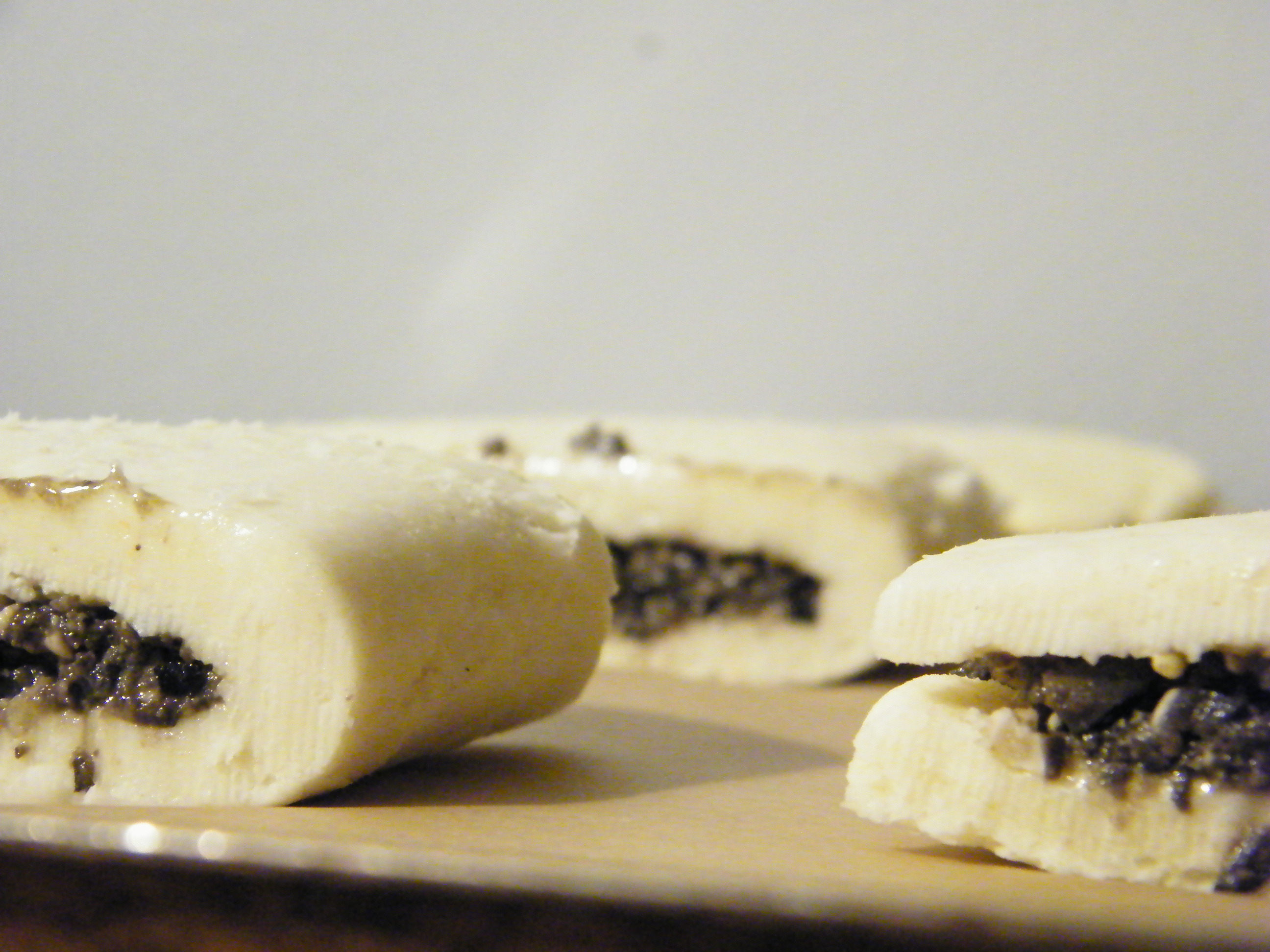
Some treats, in looks and taste, seem decadent out of proportion to the difficulty of their execution. Provided that you have puff pastry on hand, these bâtons fall into this category.

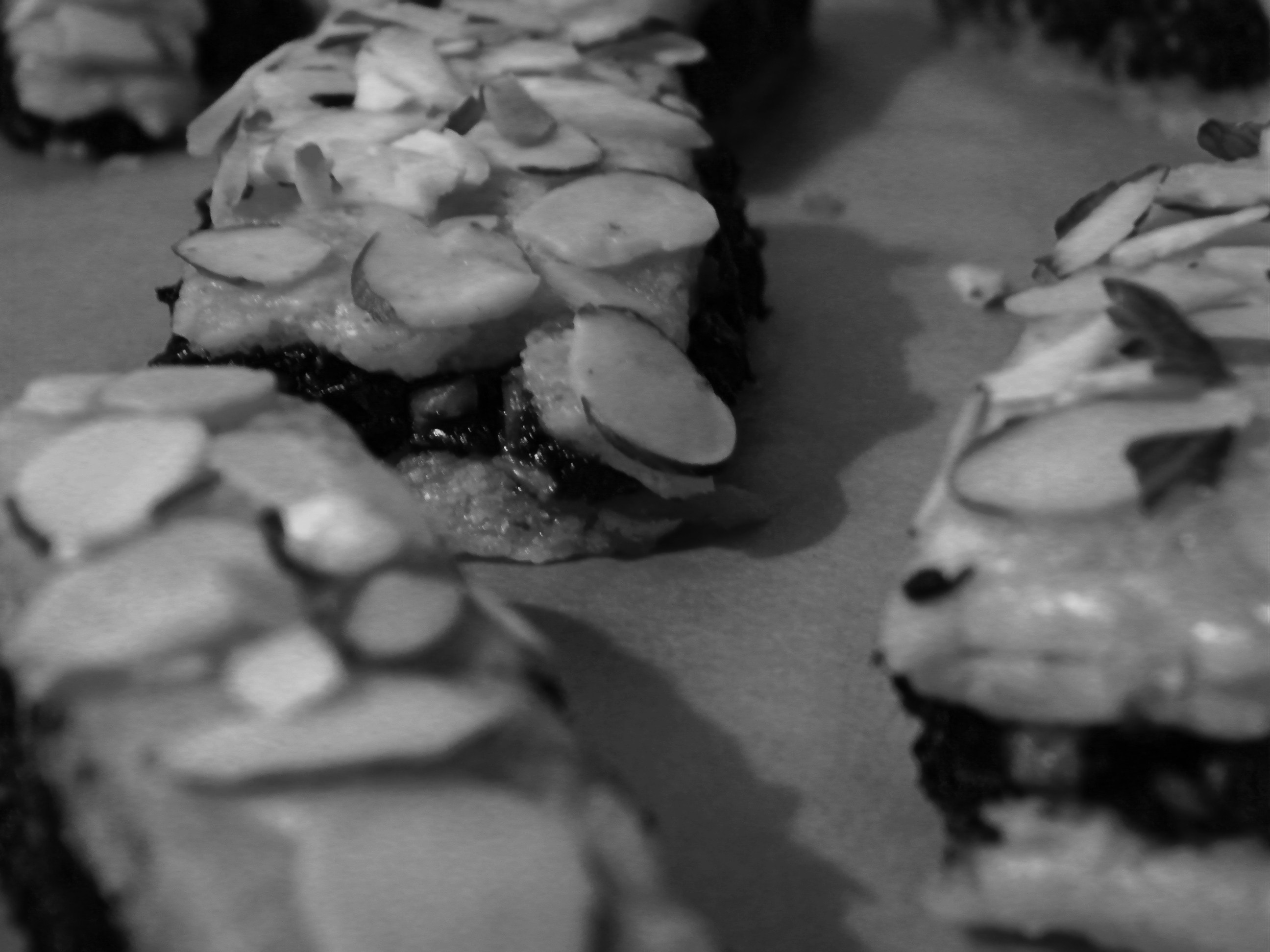
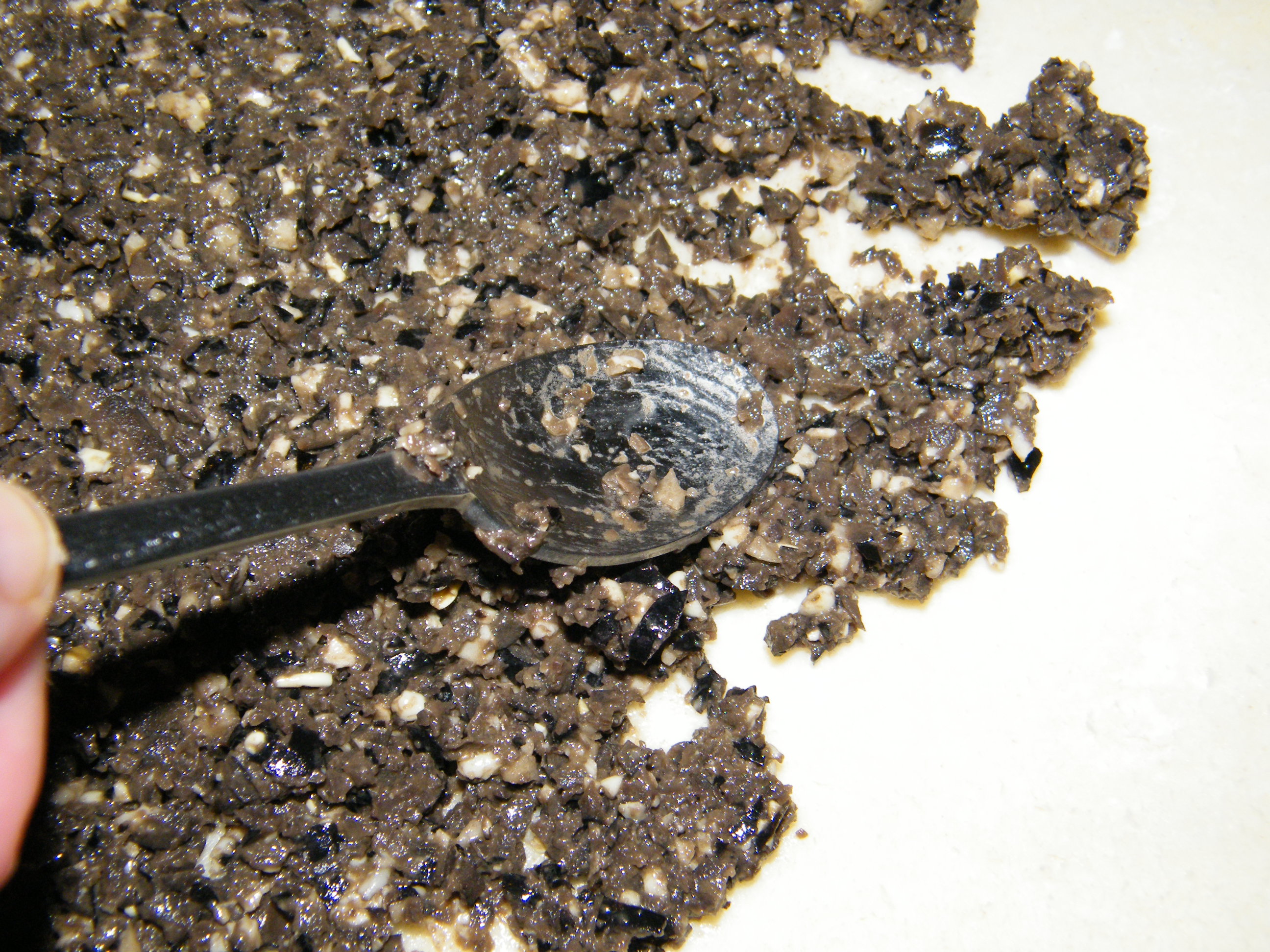
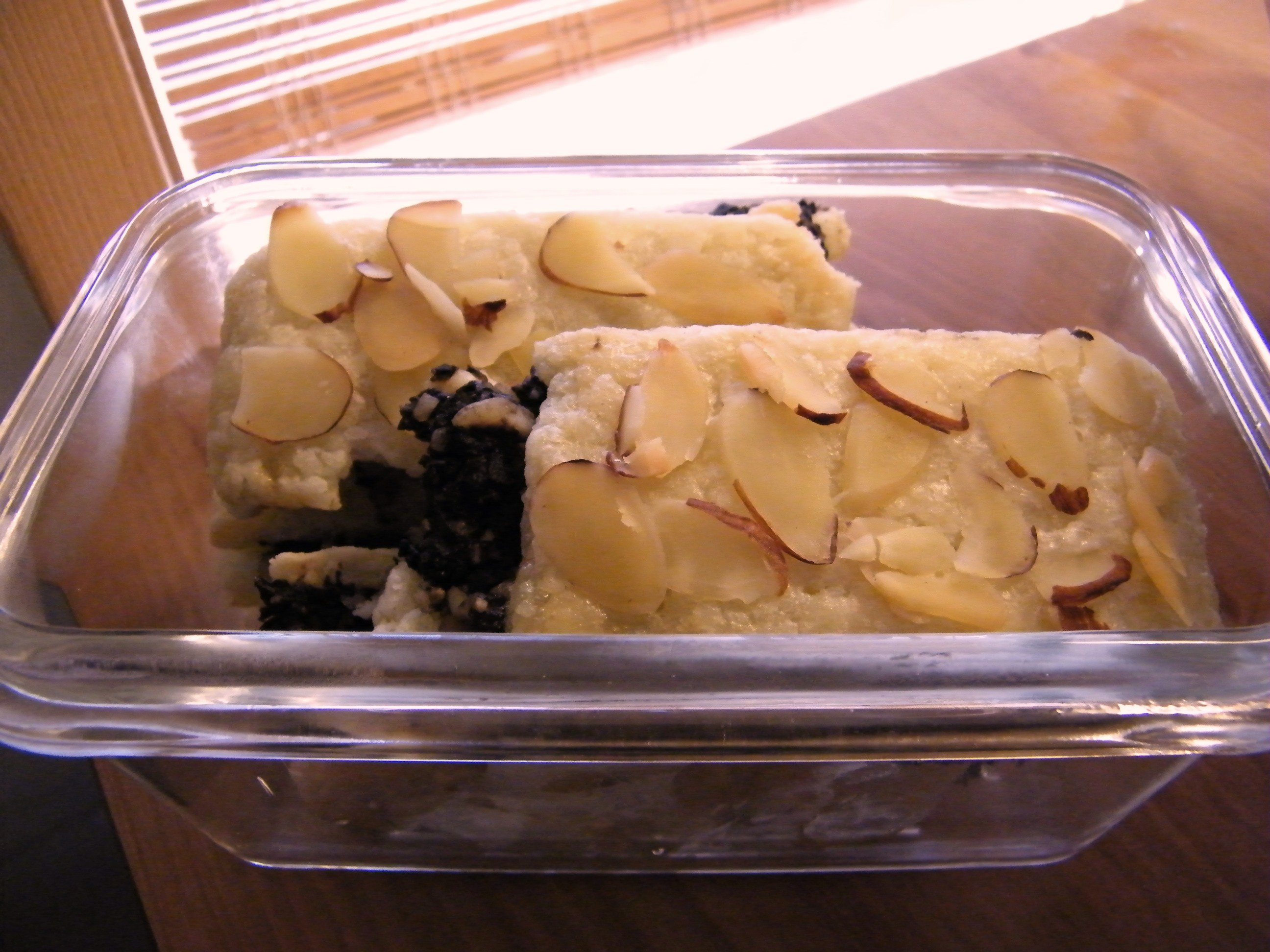
I chose to make the tapenade version of the bâtons, using the Olivada recipe from Moosewood Restaurant Cooks at Home. This recipe uses ingredients I generally have on hand, so it’s become a favourite. As I had leftover gluten-free rough puff pastry in the freezer (from this wonderful French Fridays foray), there was no need for a shopping trip at all. I haven’t tried Dorie’s tapenade yet, but it looks wonderful – I just don’t usually have anchovies on hand. Instead of poppy seeds, I used sliced almonds, which toasted nicely while the bâtons (slices, really, the way I cut them) baked.

We enjoyed these, but they won’t become a staple in our house, unless I find a source for frozen gluten-free puff pastry. I like the rough puff pastry recipe I used quite a lot, but it’s a time-consuming task that I’ll probably only undertake two or three times a year. So, we’ll enjoy these with the pleasure reserved for the very occasional treat.

You can find many other blogged descriptions of this week’s FFWD recipe here: Mustard Bâtons

FFWD – Éclairs

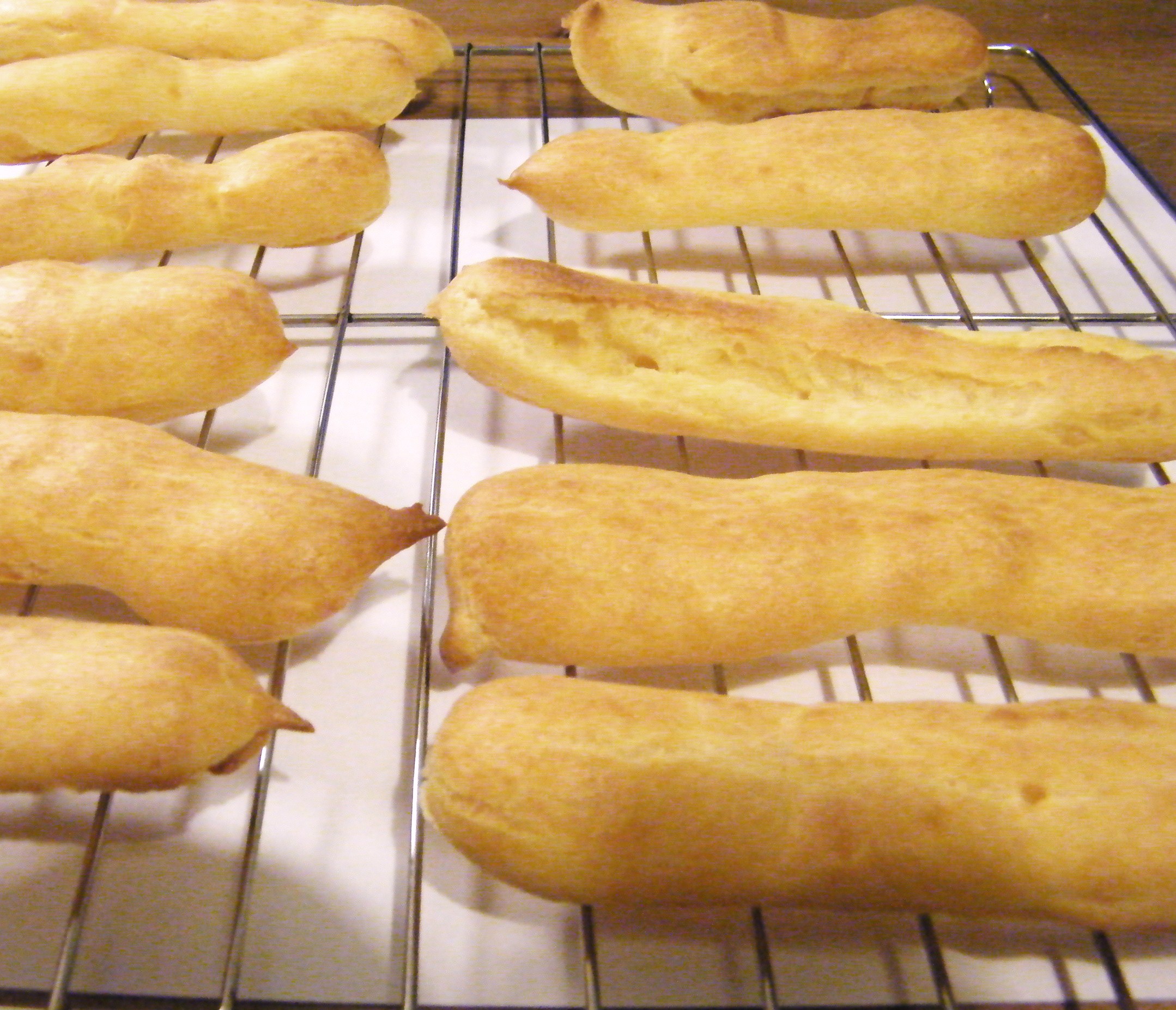
Éclairs are something I associate with bakeries, not with home cooking. But as I first discovered with Dorie’s Gougères, back when we first started French Fridays, choux pastry is much more accessible than the results would suggest. The pastry cream filling and the glaze for the top were equally simple.

I added cinnamon to my pastry cream and ground ginger to the lemony glaze. The flavours really work well together. I’m looking forward to seeing what combinations and variations the rest of the French Fridays crew came up with.

I didn’t make these gluten-free, so only baked a few and froze the rest to pass on to my parents. I am going to try gluten-free choux pastry, though. I recently came across this recipe from Gluten Free Canteen and it looks wonderful. It’s great that there are so many talented gluten-free bakers blogging these days. For now, though, I’m going to go enjoy another of Dorie’s delicious éclairs.

You can find many other blogged descriptions of this week’s FFWD recipe here: Vanilla Éclairs

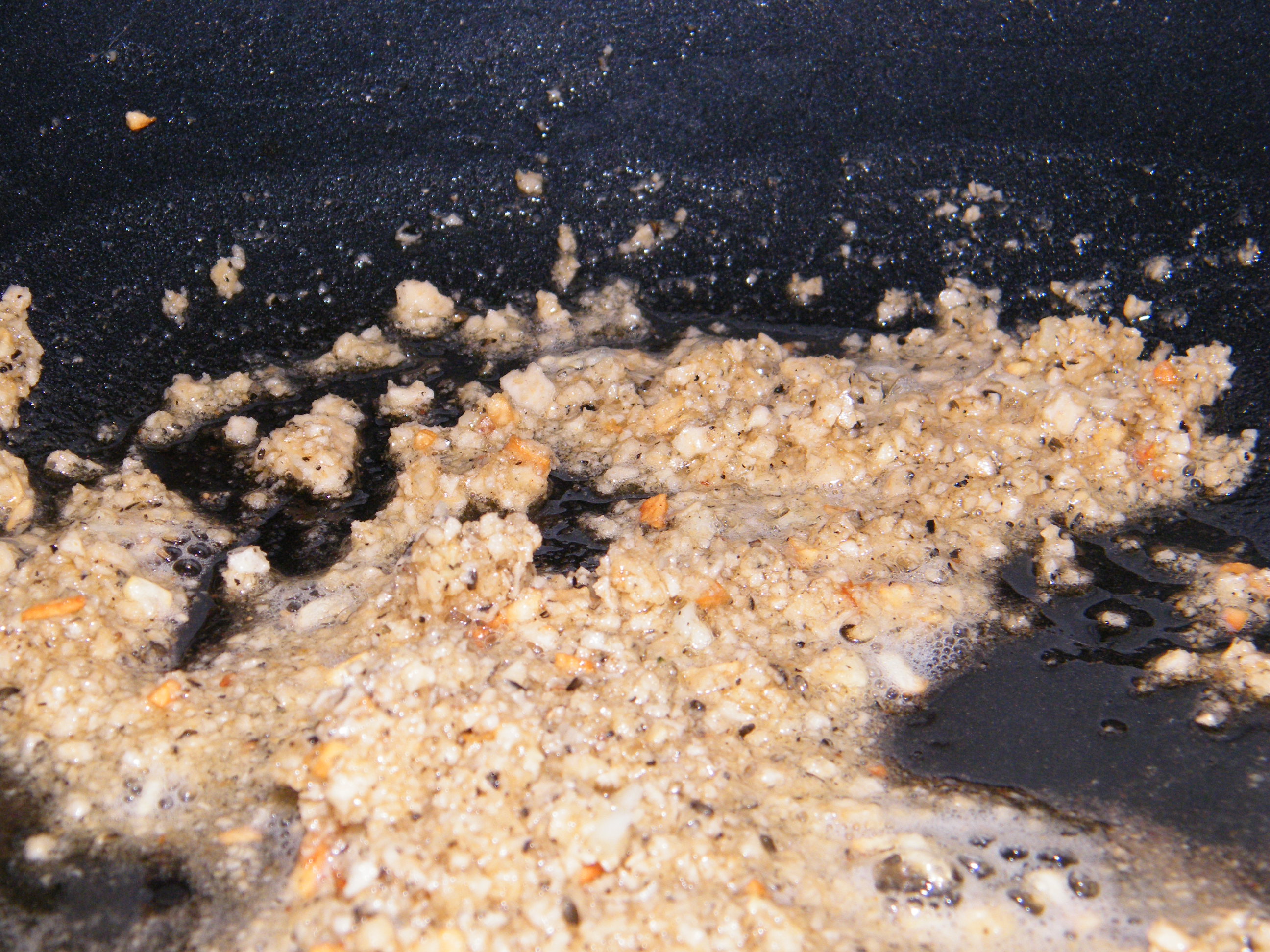
FFWD – Garlicky Crumb-Coated Broccoli

I’ve never been fond of hiding the flavour of vegetables. Lightly steamed and dressed with a little lemon or butter, most vegetables don’t need anything more. I was reminded of this preference by a former roommate of mine recently, who tried to get me to ship her some chocolate chip cookies, as compensation for all the torture she allegedly endured when I used to steam a head of cauliflower for dinner and eat it, plain.

I’m not puritanical on this point, thank goodness, or I might have skipped this week’s French Friday altogether. I’m not fond of breading in general – Schnitzel is wasted on me, but one of the benefits of this cook-a-long is trying recipes outside one’s comfort zone. Since Kevin was eating with me, I substituted crushed (gluten-free) rice crackers for the bread crumbs, but followed the recipe otherwise.

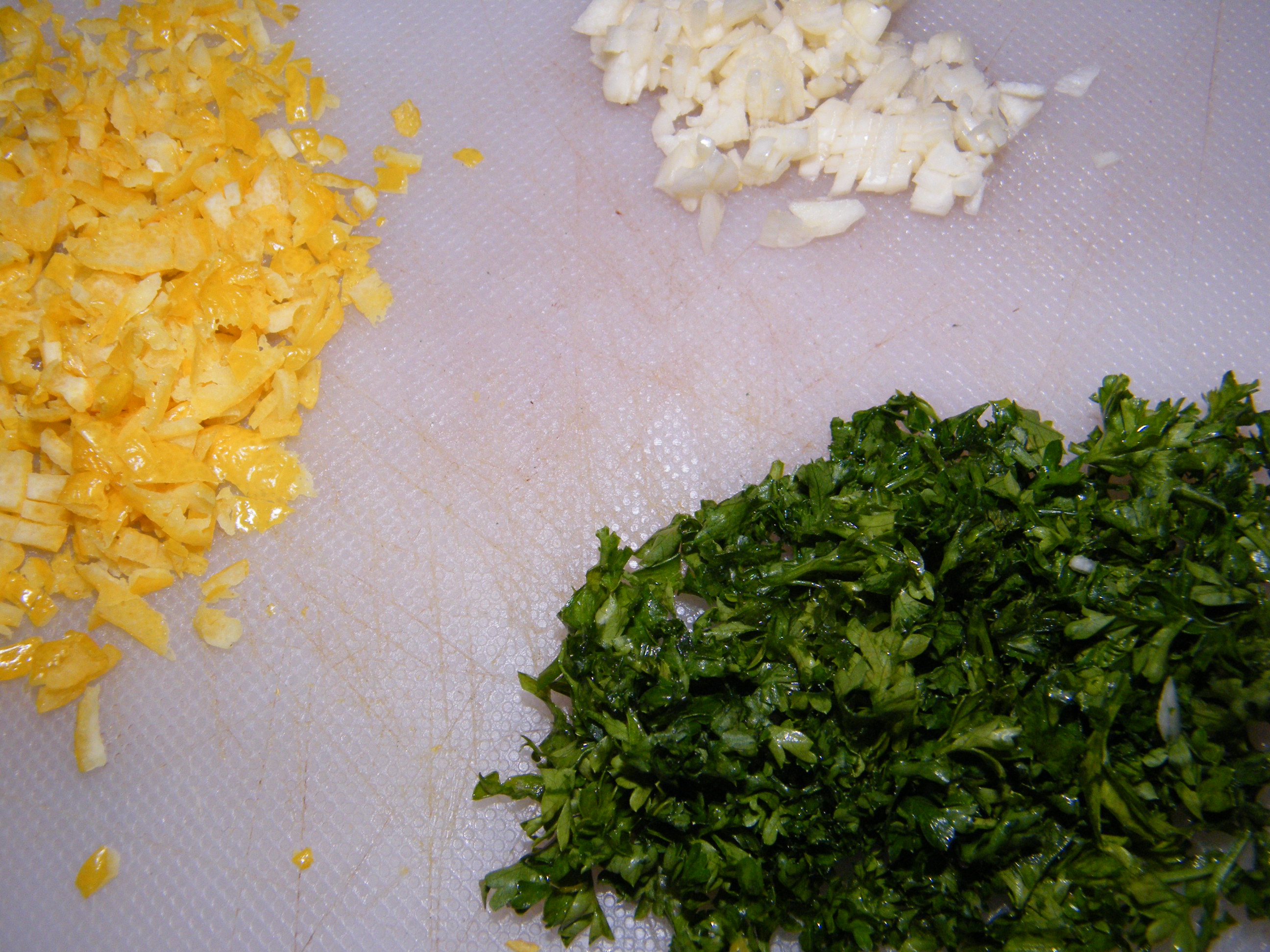
I was surprised at how much I enjoyed this dish. The combination of butter, garlic, lemon zest and parsley stood up well against the crunch of the cracker crumbs and the lightly-steamed broccoli.

We served it with Dorie’s broth-braised potatoes (which haven’t come up yet in our French Friday rotation) and her pepper steak (which you’ll be hearing raves about at the end of this month). It made for a fantastic dinner.

You can find many other blogged descriptions of this week’s FFWD recipe here: Garlicky Crumb-Coated Broccoli

FFWD – Quinoa, Fruit and Nut Salad

The secret to gluten-free eating isn’t really baking with alternative flours. The secret is eating a wide variety of naturally gluten-free foods and leaving the gluten-free baking for treats and special occasions. When my partner was diagnosed with celiac disease, we found that we didn’t have to adjust our lifestyle drastically. We didn’t eat a lot of bread and though I have a bit of a baking habit, it’s something I do for meetings and gatherings, not just for the two of us. Though we had to eliminate couscous, it was a relief to find out that quinoa was on the safe list. It’s easy to prepare, a complete protein and has a great, nutty flavour. I’d have been sad to have to leave quinoa out of our repertoire.

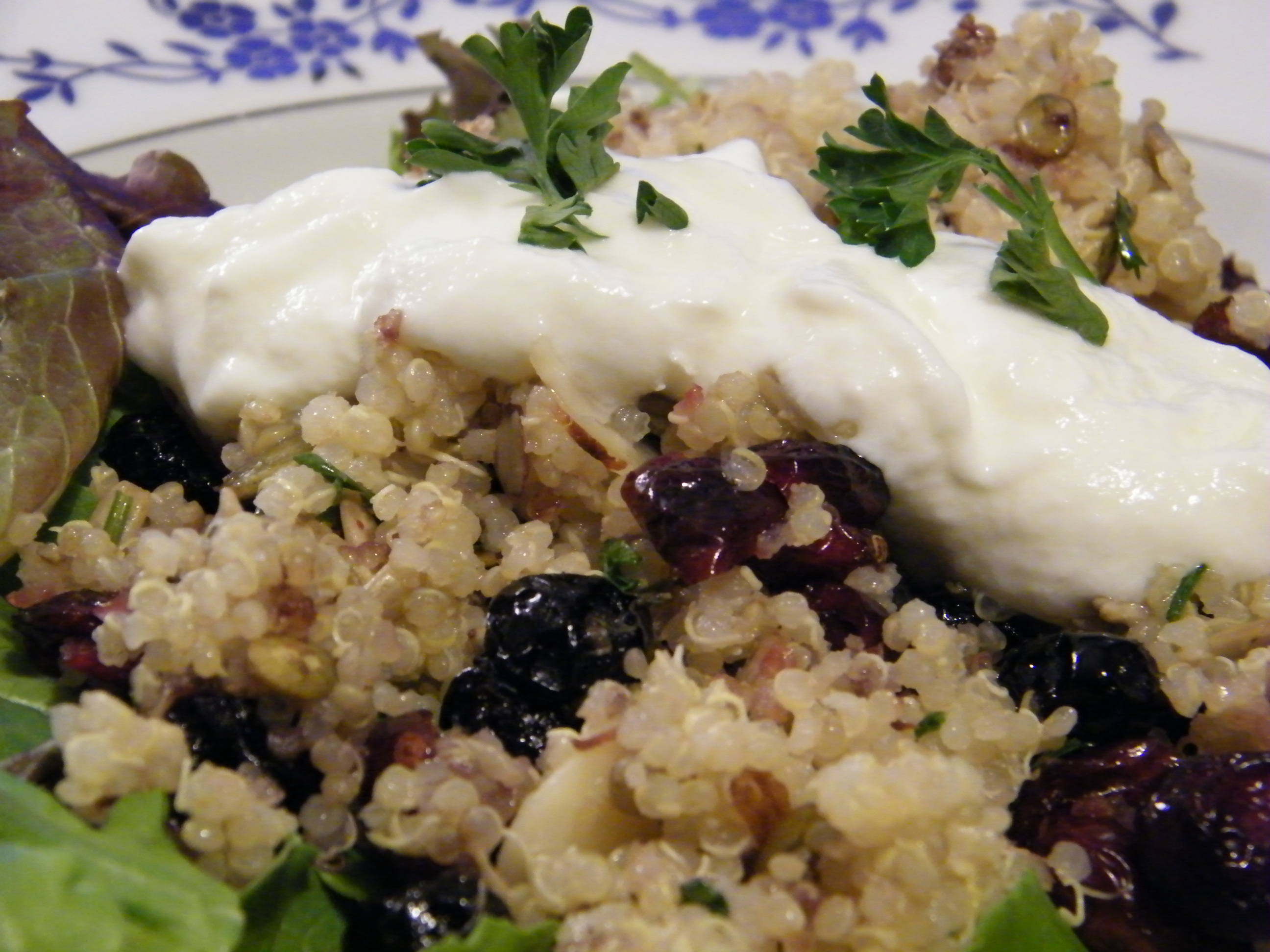
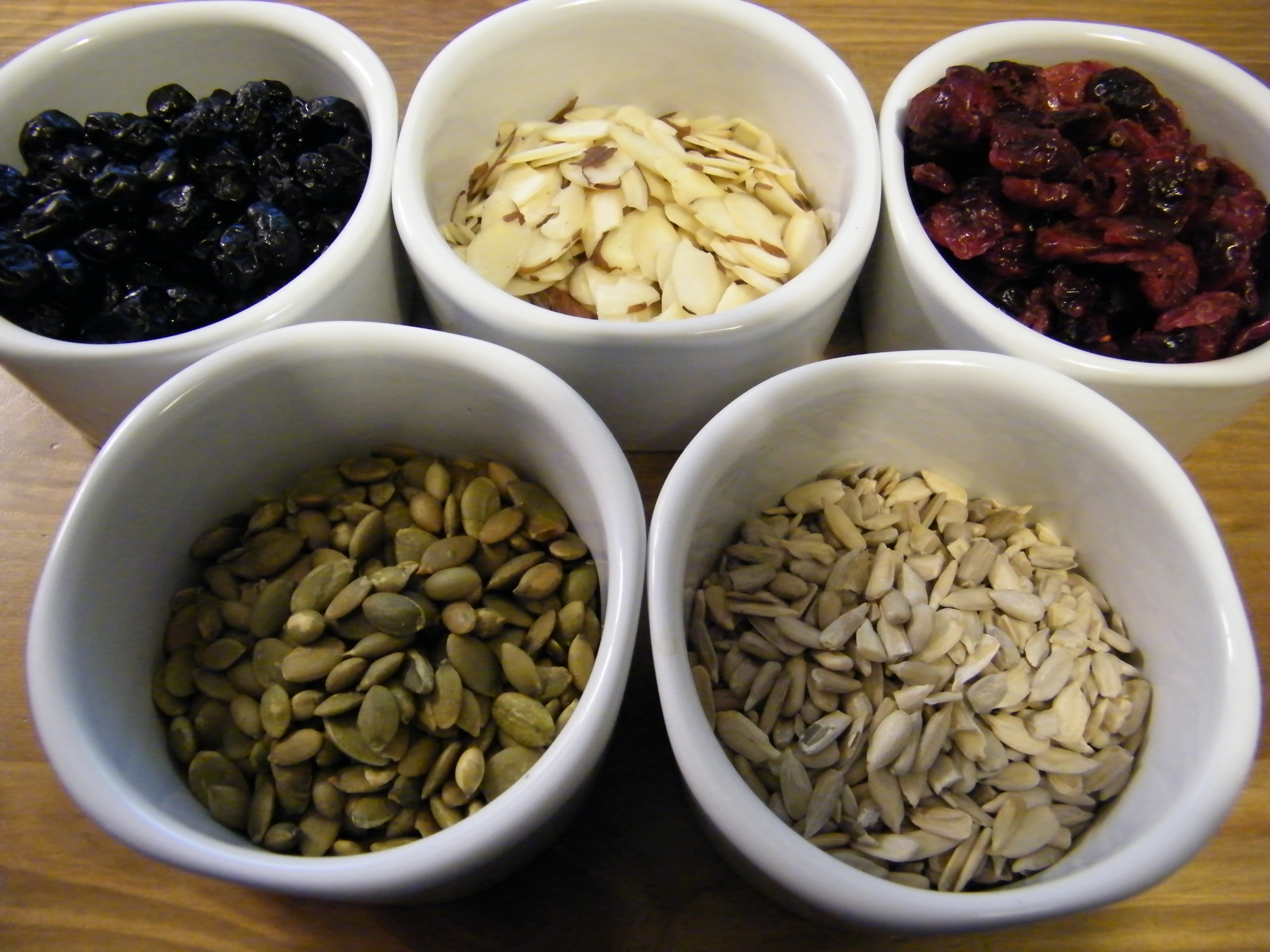
This week’s French Friday recipe is a good example of why we’re so fond of quinoa. It’s prepared much as rice would be, with a fifteen to twenty minute cooking time. Then, the cooked quinoa is mixed with dried fruit, nuts, seeds and herbs before being tossed in a simple lemon-ginger dressing. I used dried cranberries and blueberries, pumpkin and sunflower seeds, sliced almonds, minced basil and parsley. I let the mixture rest for an hour and then, as suggested, served it over mixed greens with a dollop of plain yogurt. A simple, filling supper with a lot of texture and flavour. It’s also great for packed lunches or picnics.

When people find out that Kevin has celiac disease, they often express concern over the expense of gluten-free eating. It’s processed and packaged gluten-free food that’s costly, though. Our food bill hasn’t changed much, because we don’t rely on those products. With recipes like this one, who needs them?

You can find many other blogged descriptions of this week’s FFWD recipe here: Quinoa, Fruit and Nut Salad

FFWD – Scallops with Caramel-Orange Sauce

When I was a student, still living in the Fraser Valley, my friends and I took advantage of student rates to see as many plays, symphony concerts and art shows as we could. Our other obsession was finding places to eat dessert afterward. We all drove; it was a way of life back then, especially if you lived east of Burnaby. We thought nothing of driving an hour into town just for a meal. My self at that time would be horrified that I’d give up car ownership for good only a few years later.

One of our favourite spots was a little bistro on South Granville, where Paul’s Place Omelettery is now. My friends indulged me in the scale I’d developed to rate restaurants, which I called the teapot test. Tin, one-cup pots with lukewarm water rated a D, while two-cup, ceramic pots with piping hot water earned an A from me – A+ if they didn’t drip. I claimed, and still believe a little bit, that the quality of the food could be inferred from the restaurant’s score on the teapot test. That particular bistro (if you remember the name, please let me know) got 100% on the teapot test and its food was exquisite to match. We ate meringues and chocolate cakes, crème caramel and cheesecake, occasionally even stopping in for dinner. What was even better than the tea, the desserts and the entrées, though, was the service. The head waiter there sort of took us under his wing, expanding our palates and gently correcting us if we got the terminology wrong. He was a gay man, probably in his mid-thirties, and he reminded me of my uncle in Montreal, whom we were rapidly losing to the one of the first waves of AIDS.

He taught me that I take my tea clear, not black. He also introduced me to scallops, which they served in a red sauce, encased in a pastry shell. Whenever I’ve had scallops since, I think of that time in my life, and of the waiter that kindly put us through a sort of restaurant etiquette finishing school. My parents took us to restaurants of all sorts when we were young, from burger joints to French bistros, but I don’t know if I’d be the eater (and restaurant patron) that I am today if I hadn’t met him.

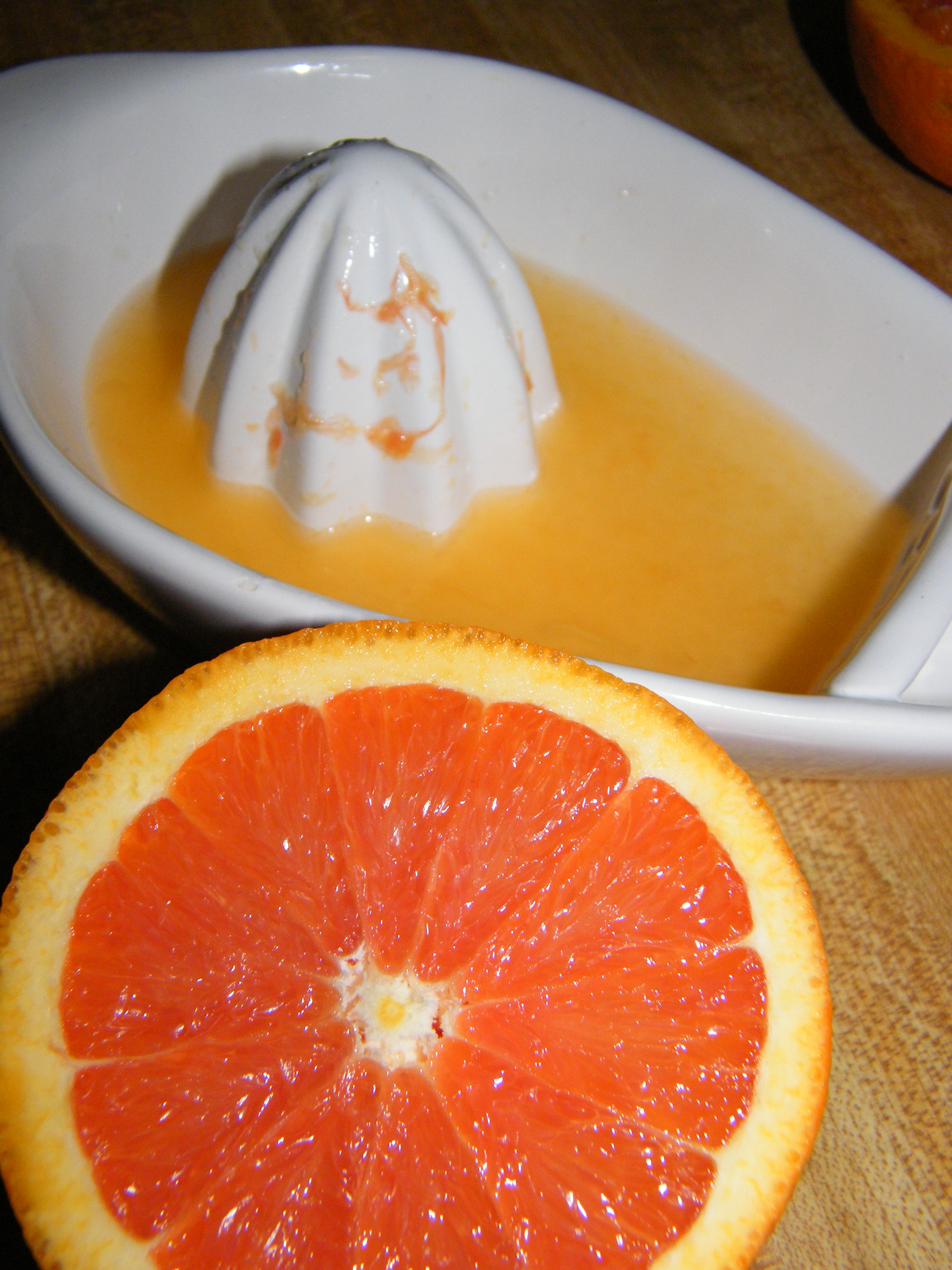
This week’s recipe put me in mind of those other scallops, but the recipes couldn’t be more different. Dorie’s Scallops with Caramel-Orange Sauce recipe is quick to execute, with few ingredients, while the scallops at that long-ago bistro were a fussy marvel of French cuisine. Dorie’s scallops are no less impressive, though. A caramel sauce, reduced with white wine and the juice of an orange (cara cara in my case), is finished with a little butter. This is poured over some seared scallops. Simple, but lovely.

I was lucky enough to get some lion’s paw scallops from The Daily Catch, our local Ocean Wise fishmonger. They were huge, fresh and beautiful. When they were cooked, they were almost crispy on the outside and extremely tender inside. They were so large that I made sure to dip each forkful in sauce, to make sure I got some with each bite. I served them with asparagus (which is finally in season again!) and potatoes roasted in olive oil and oregano. The scallops didn’t need complicated accompaniment.

One of the things I love about food is how its consumption is so wrapped up in memory. The association we make with certain meals or flavours is one of the loveliest ways to revisit our past.

You can find many other blogged descriptions of this week’s FFWD recipe here: Scallops with Caramel-Orange Sauce