FFWD – Zucchini Blossoms

20140712-233427-84867503.jpg

I’m a week behind with French Fridays, once again. Everyone else is writing about their adventures with Coddled Eggs with Foie Gras, but I’m going to tell you about deep-fried zucchini blossoms.

There was a little drama involved in collecting the blossoms for this recipe. I have two zucchini plants in my garden this year, but I wasn’t sure whether they would be ready in time for last week’s posting or not. At the beginning of the week, I could see that there were about six male blossoms getting ready to bloom – I thought I could safely take four and leave two for the bees. I watched them carefully and when they seemed like they’d be ready the next day, I went and got a variety of vegetables to batter and fry with them, along with the ingredients for Hugh Fearnley-Whittingstall’s
chile dipping sauce.

I went down to the garden the next morning and all six blossoms were gone. I don’t know if they dropped off the plants and shrivelled into nothing, or they got harvested by another creature who knew how good they were. In any case, I was disappointed.

Luckily, I only had to wait a few days more before I could try again. I harvested four blossoms, carefully laid them on paper towel and kept them in the fridge until it was time to stuff them. I used an herbed goat cheese to stuff mine, instead of the titular shrimp. I was surprised at how easy the blossoms were to work with – I had them cleaned and stuffed in much less time than it took to prepare the rest of the vegetables. I also substituted an equal weight of gluten-free flour for AP flour and the batter turned out perfectly.

However, I wasn’t quite finished with drama yet. My over-sensitive hard-wired smoke detector went off when I was about halfway through the vegetables I deep-fried along with the blossoms, so I had to abandon my cooking and wrap bags and tea towels around the alarm until it stopped.

All of the blossoms had been cooked and there was a plateful of vegetables for us to dip in the chile sauce, too. It was an enjoyable snack and the blossoms were delicious.

I’m not going to be repeating it, though. I’m not enough of a fan of deep-fried food to wrap towels around the smoke alarm very often at all. And the rest of my zucchini blossoms are being put to work producing enough zucchini to overwhelm me at the end of the summer.

This month, French Fridays is doing something a little different – four Doristas were asked to pick recipes and this perfectly seasonal, perfectly elegant pick was courtesy of Diane, from Simple Living and Eating – drop by and thank her for me, won’t you?

Find out what the rest of the French Fridays crew thought about this recipe: Shrimp-filled Zucchini Blossoms

Guacamole and Tomatoes – A French Fridays Catch Up

Today’s post should be about delicate zucchini blossoms in a tempura-like batter, but I’m not there yet – or rather, my garden is not. I am short on blossoms as yet, but that should correct itself by tomorrow or Sunday, latest.

Instead, I’m catching up on the two previous weeks’ dishes, which were so simple it makes me wonder how I let life get in the way of making them before today. They were perfect for a hot summer’s evening graze, which also included hummus, salsa, and crudités. (Not that it qualifies as hot here by the rest of North America’s standards, I’m aware.)

Guacamole with Tomatoes and Bell Peppers

Guacamole

This recipe came up in the rotation on the last Friday of June and was whipped up in my kitchen in less than fifteen minutes today. The recipe calls for the guacamole to be presented chunky or smooth. I chose smooth and used my food processor to make it, instead of a mortar and pestle, as Dorie does – mine isn’t big enough.

I used a little too much jalapeño for Kevin’s taste, but I enjoyed the bite. The inclusion of the tomatoes and red pepper made this guacamole reminiscent of a green avocado salsa, though I think I like this recipe better. Tomorrow, it’s going to be even spicier than it was today, so I’m going to pick up some sour cream to cut the heat. Along with corn tortillas and some vegetables sautéed in cumin and oregano, I think we’ve got tomorrow night’s dinner covered.

Tomatoes Provençal

Tomatoes

For the month of July, the choices for each week’s assignment were made a little differently than usual. Four of our regular participants were each asked to pick one recipe and to start the month, Kathy of Bakeaway with Me chose Dorie’s Tomatoes Provençal.

Local tomatoes are starting to show up in the markets and roasting them is such a nice way to deepen their flavour. I was especially pleased with the topping – minced garlic with a mixture of herbs from the garden. I love being able to go outside and take as much as I need from the plants in my backyard. It’s one of the many pleasures of summer, isn’t it? I used basil, thyme, oregano, rosemary, and chives. Nothing else was needed but a little salt, pepper, and olive oil.

We loved these tomatoes, so much so that I saved the leftover juices to use for salad dressing or cooking down vegetables for the frittata I’m planning for later this weekend.

If I were you, I’d give them a go and then visit Kathy’s blog to tell her what a great choice she made.

Find out what the rest of the French Fridays crew thought about the Guacamole with Tomatoes and Bell Peppers.

You can find links to everyone else’s posts on last week’s recipe here: Tomatoes Provençal

FFWD – Halibut with Capers, Cornichons, and Brown Butter Sauce

Halibut

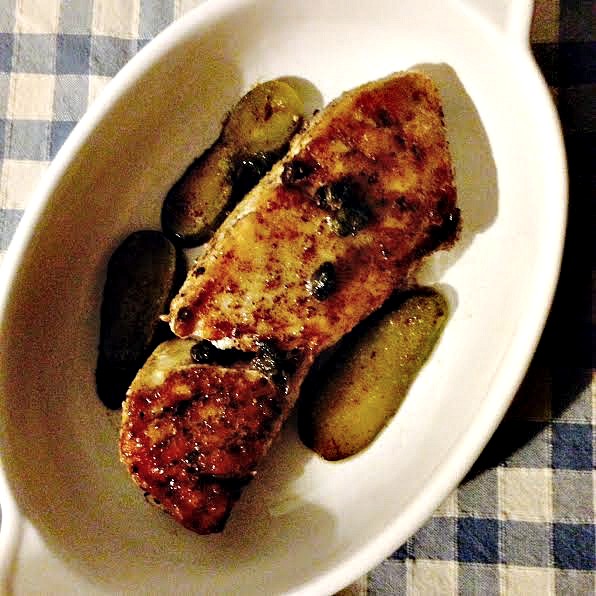
If you follow French Fridays, you might notice that the fish in the dish above isn’t the one called for in this week’s recipe. My local fishmonger is an Ocean Wise establishment, which means they carry only sustainable seafood. It also means there was no skate in sight there, as it’s currently being over-fished worldwide. So instead of skate, I picked up halibut, which is a firm-fleshed recommended alternative. It’s also one of my favourites, so I was pleased to make the substitution.

A lot of conversations about ethical and healthful eating in my house revolve around my partner’s choice to move toward veganism and my philosophy of eating meat less often than I eat vegetarian. But another important part of all this, for me, is where food comes from. Sourcing wild or humanely raised meat is something I strive toward (though I don’t always succeed). I also think the same attention needs to be paid to non-animal food, as well. So, I’ve been following the controversy around Jeanette Winterson and the rabbit with interest. Many of these questions are being discussed in the wake of the Twitter frenzy her photos created. There certainly doesn’t seem to be one answer to the question of what ethical eating looks like.

In the case of this French Friday, the sustainable choice was also a delicious one. If only all ethical decisions had outcomes so rewarding. Halibut was perfect for pan-frying and serving with tangy, brown butter sauce. I couldn’t believe how well the cornichons fit into to the dish – their crunchy tartness was a nice contrast to the tender fish. I usually bake fish, but this dish reminded me that I should get my skillet out more often.

Not much else is needed for accompaniment, as Dorie points out in the head note to this recipe, so buttery rice and steamed vegetables made good companions for the fish – a perfect summer meal.

I cheated and just took a quick snapshot of the dish after saucing it, because I was eager to eat and didn’t feel like letting that beautiful halibut get cold. If you want some gorgeous photos of this week’s dish, you’ll have to go and see what the rest of my French Fridays colleagues got up to: Skate with Capers, Cornichons, and Brown Butter Sauce

FFWD – Crab-Avocado “Ravioli” & Salmon Rillettes

Salmon

This post will have to serve for both this week and last, as I was laid low with a nasty flu over last weekend and into this week, so I’m just catching up on life now.

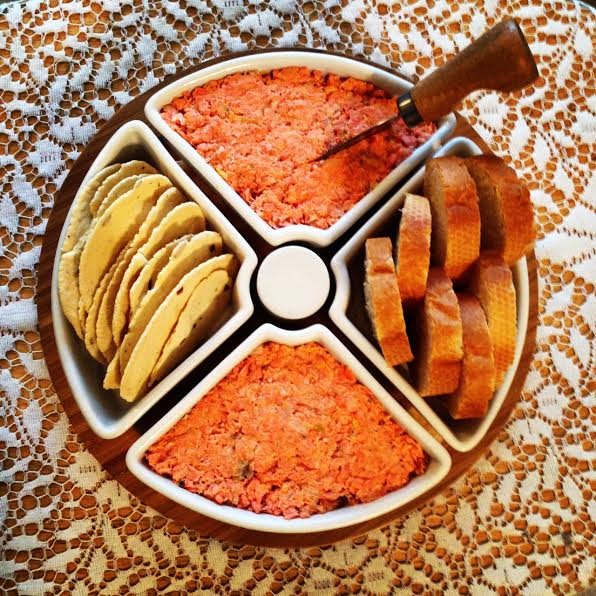
I made the salmon rillettes earlier this week. The combination of poached and smoked salmon is fantastic, especially when combined with chile pepper,spring onion, pink peppercorns, and lots of lemon. I halved the recipe, but it still made quite a bit of this spread. I can see serving half as an appetizer and saving hoarding the rest for sandwiches the next day.

Avocado

The crab-avocado “ravioli” came together in less than half an hour this evening. The fussiest bit is slicing the avocado to make the ravioli, but the one I picked was just barely ripe, so it held together quite well. I couldn’t get fresh crab meat – there is some sort of supply issue right now, according to my fishmonger, but the canned stuff wasn’t bad, I thought. I quartered this recipe, as crab doesn’t keep very well and there’s only two of us. It still made enough for a small plate of “ravioli” with enough left over to put on toast later. I thought the combination of lime, cilantro, and shallot worked well with the crab, but am I a cretin for wishing there had been a little cream or mayonnaise in the mix, too? Probably.

These were both delicious appetizers that I’ll be making again. This group has been a boon to my entertaining recipe repertoire – so many of the light and first course recipes have been winners, haven’t they? So much so, that I keep imagining that if we ever had a Dorista potluck, we could safely cover the table with enough delicious pre-dinner nibbles that we’d never make it to the main course.

Find out what the rest of the French Fridays crew thought about this week’s recipe: Crab-Avocado “Ravioli”

You can find links to everyone else’s posts on last week’s recipe here: Salmon Rillettes

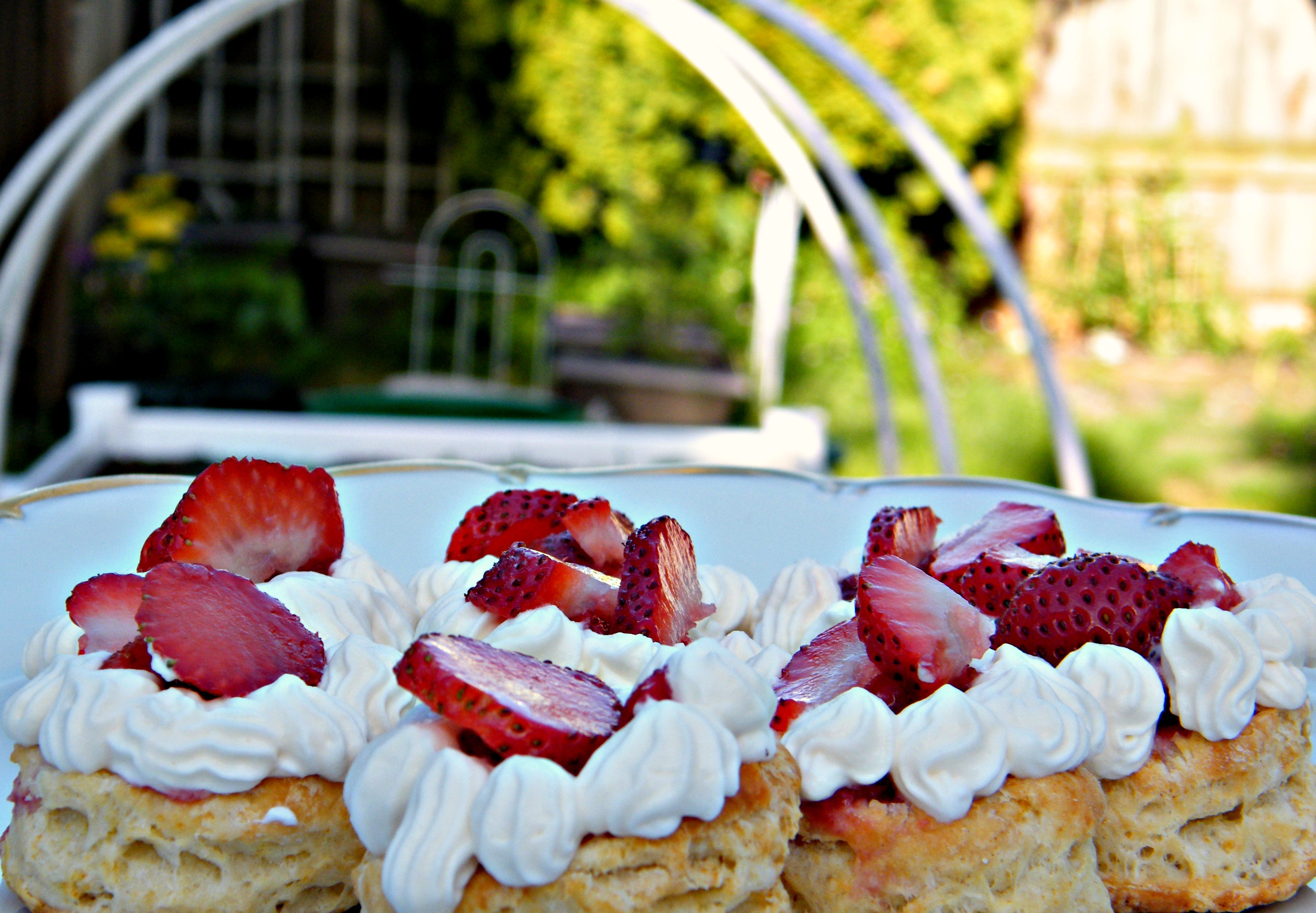
Dorie Greenspan’s Double-Strawberry and Rose Shortcakes

A shortcake

I was provided with a gift certificate by Driscoll’s to purchase ingredients for this recipe and I received a copy of Baking Chez Moi for participating in the Google+ chat. However, all opinions are my own.

For me, the beginning of summer is marked by the beginning of strawberry season. And the best way to celebrate the start of summer is strawberry shortcake. No wonder June 14th has been declared National Strawberry Shortcake Day. (It might be an American holiday, but I’m choosing to apply it to Canadians, too.)

One of the things I love best about strawberry shortcake is that it can be dressed up or down for any occasion. It’s as at home at a family picnic as it is a formal tea. It’s also a dessert that comes in many incarnations, causing arguments amongst those who champion the sponge cake variety and those who staunchly support the sweet biscuit version. Although I’ll gladly accept a plate of sponge cake smothered in whipped cream and berries, it’s the biscuit version that I think of as the real McCoy.

So, I was excited to be invited to join a Google + Hangout on Air a few weeks ago, to join some fellow bloggers to talk about just that sort of strawberry shortcake with baker extraordinaire Dorie Greenspan. If you’re a regular reader here, you’ll know that I’m a big fan of her recipes and have been working through her last cookbook, Around My French Table, with a great group of bloggers for French Fridays with Dorie. I knew the recipe would be stellar, but I was also looking forward to the opportunity to ask Dorie for tips and tricks for making this shortcake as good as could be.

Dorie told us that she invented this recipe after learning that strawberries are closely related to roses. She also enjoys adding an element of surprise to her desserts, so the subtle flavour of rose and the two textures of the strawberries in this recipe add interest, elegance, and a little playfulness to these shortcakes. I also loved the hint of lemon in the biscuits.

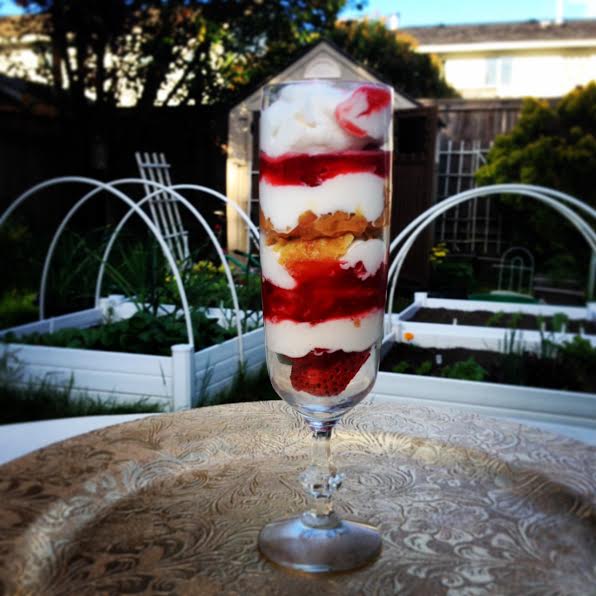
My question for her was whether or not the tops of the biscuits, and the less-than-perfect ones, could be used for a trifle-like dessert. She thought that would work well, layered in a jar, with each layer of biscuit soaked in the juices from the compote. I did a little riff on this idea when I made the shortcakes, layering biscuits, berries, compote, and whipped cream into champagne glasses for a pre-dinner parfait. I even added a layer of rhubarb curd to the middle. It was the best cook’s treat ever.

Parfaits

Here is some more of the advice she shared with us:

  • Rubbing the lemon zest into the sugar releases its oils and helps to distribute the zest’s flavour and aroma throughout the dough.
  • Buttermilk acts with baking soda to make lighter biscuits.
  • Never be forceful with biscuit dough until you begin cutting it. Gently using your hands to mix the ingredients can keep you from overworking the dough, but forceful cutting of the biscuits maintains the layers of butter in the dough that help them rise – use a straight down motion, then twist.
  • Other flavours that complement strawberries are vanilla, black pepper, citrus, or crushed pink peppercorns. Any of these could be used in place of the rose extract.
  • Add a bit of sour cream to whipped cream for an extra layer of flavour and some added stability for piping.


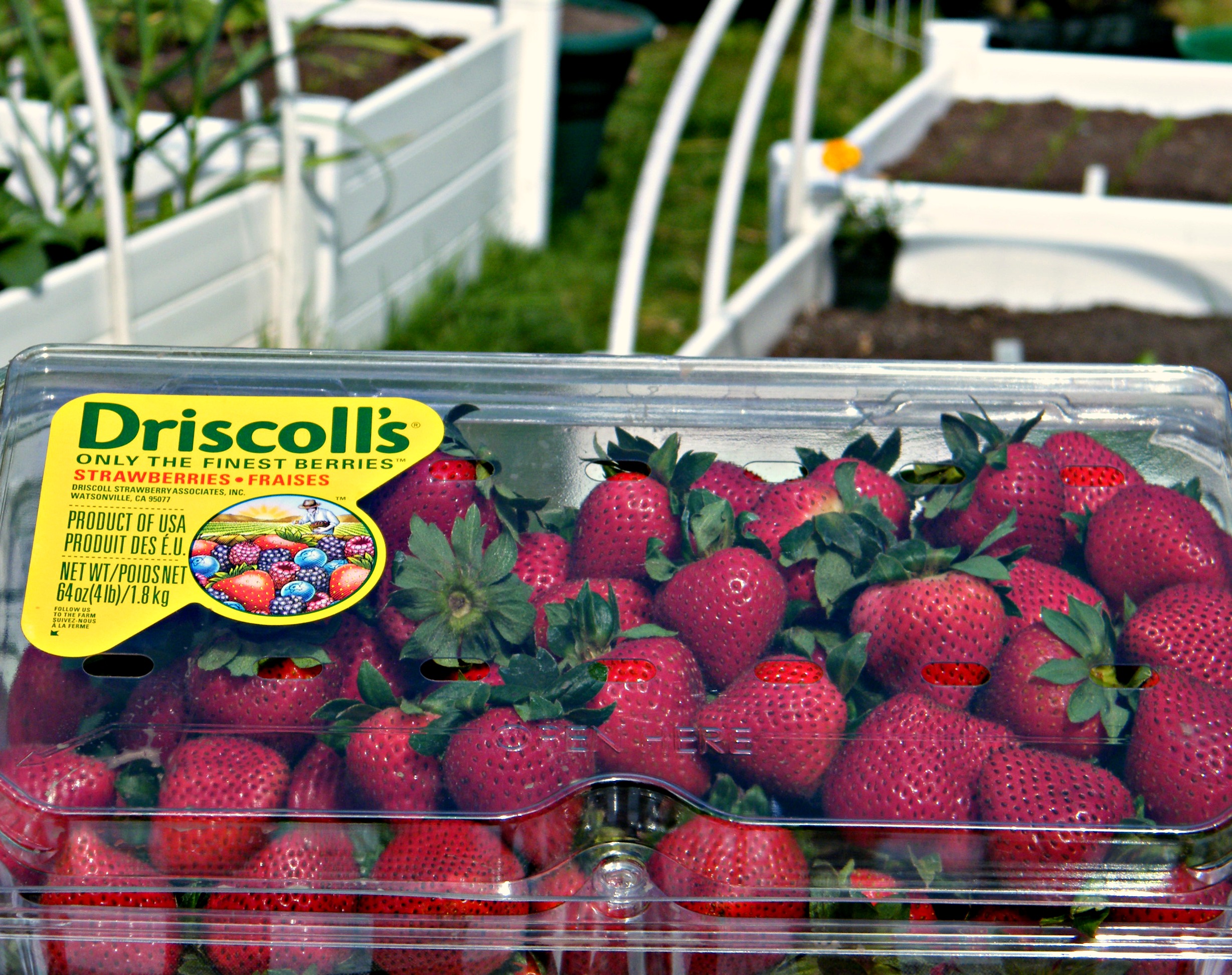
Driscoll’s, the sponsor for our Google + Hangout, kindly provided us with gift certificates to purchase the ingredients for this recipe. Their berries were large, ripe, and incredibly sweet, which sets them apart from most supermarket berries. I would happily buy them again.

Driscolls

I was quite pleased with how this recipe turned out for me, with Dorie’s tips in hand. My shortcakes rose beautifully. I followed the recipe exactly, though my shortcakes were without the candied roses. My roses are only now starting to bloom, so I will be trying my hand at the candied roses soon. Because, of course, I will be making this recipe again. Dorie’s shortcakes were a huge hit with my family.
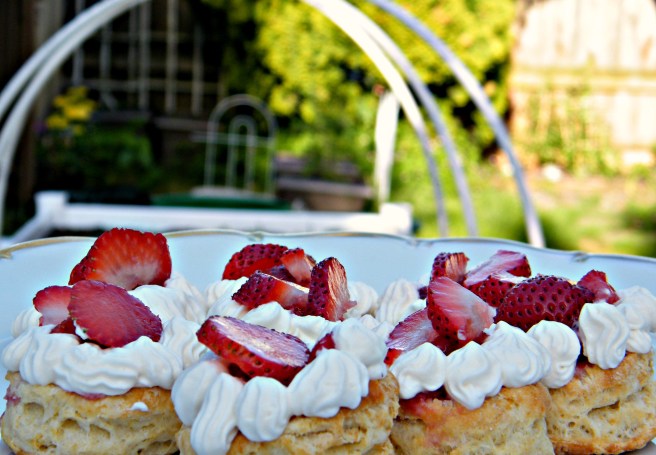
Plateful of shortcakes

You can find the recipe on the Driscoll’s website. They’ve also been kind enough to allow me to share it here.

Dorie Greenspan’s Double-Strawberry and Rose Shortcakes

Shared with permission from Driscoll’s Berries and Dorie Greenspan

INGREDIENTS

Rose petal decoration
3 unsprayed roses
1-2 very fresh organic egg whites
granulated sugar
(or store-bought candied rose petals)
Strawberry compote
3/4 pound (about 3 cups) Driscoll’s Strawberries, hulled
1 1/2 tablespoons sugar
3/4 teaspoon pure rose extract

Lemon-buttermilk biscuits
1 1/2 tablespoons sugar (plus more for sprinkling)
freshly grated zest of 1 lemon
2 cups all-purpose flour (plus more for dusting)
1 tablespoon baking powder
1/2 teaspoon fine sea salt
1/4 teaspoon baking soda
6 tablespoons (3/4 stick) cold unsalted butter, cut into
small cubes
3/4 cup cold buttermilk

Whipped Cream
1 cup very cold heavy cream
2 tablespoons confectioners’ sugar, sifted
1 teaspoon pure vanilla extract
3/4 teaspoon pure rose extract
1 tablespoon cold sour cream, optional
red or pink food coloring

Topping
1/2 – 3/4 pound (about 2 to 3 cups) Driscoll’s Strawberries,
hulled

DIRECTIONS

Rose Petal Decoration
Several hours ahead or the day before, separate the rose petals, rinse them quickly in cold water and pat them dry. Put one egg white in a small bowl and whisk until it’s foamy. (You may or may not need the second white.) Put the sugar in another small bowl and place a sheet of parchment paper or a silicone baking mat on the counter. One at a time, dip a petal into the white and let the excess drip back into the bowl. Drag the petal through the sugar to coat both sides very lightly. Dry the petals on the paper or mat in a cool, non-humid place for at least 6 hours or for as long as overnight.

Strawberry Compote
Coarsely chop the berries and toss them into a small saucepan with the sugar. Put the pan over medium heat and cook, stirring, for 5 to 8 minutes, or until the juices are slightly thickened and syrupy. Scrape the berries and syrup into a bowl, stir in the rose extract and cool to room temperature. (You can make the compote up to 3 days ahead and keep it covered in the refrigerator.)

Lemon-Buttermilk Biscuits
Center a rack in the oven and preheat the oven to 425°F. Line a baking sheet with parchment paper or a silicone baking mat.

Put the sugar and lemon zest in a large bowl and, working with your fingertips, rub the ingredients together until the sugar is moist and fragrant. Add the rest of the dry ingredients to the bowl and whisk to combine. Drop in the pieces of cold butter and, again using your fingertips, crush, rub and blend the butter in. You’ll have flakes of butter and small pieces and this is just right. Pour the cold buttermilk over the mixture, switch to a fork and toss and stir everything together until the milk is absorbed – your dough might look like curds, but that’s fine. Don’t stir too much, too vigorously or for too long and if there are a few dry spots in the bottom of the bowl, ignore them. Reach into the bowl and knead the dough gently, folding it over on itself and turning it over 6 to 8 times.

Dust a work surface lightly with flour, turn out the dough and, still using your hands, pat the dough out until it is 1/2 inch thick. (The thickness is what’s important here.) Using a high-sided 2 inch cutter, cut out biscuits and place them on the baking sheet. Pat the scraps together until they’re 1/2 inch thick and cut out as many more biscuits as you can. (The leftover dough can be cut into biscuits, but they won’t rise as high or as evenly as the others – you can keep them as your baker’s treat). Sprinkle tops with sugar.

Bake for 15 to 18 minutes, or until the biscuits have risen gloriously and their tops and bottoms are golden brown. Transfer the baking sheet to a cooling rack and allow the biscuits to cool until they reach room temperature. (The biscuits can be made up to 6 hours ahead; keep them uncovered at room temperature.)

Whipped Cream
Working with an electric mixer, beat the cream just until it mounds softly. Still beating, add the sugar, followed by the vanilla and rose extracts. When the cream is fully whipped and holds firm peaks, quickly beat in the sour cream, if you’re using it. To tint the cream, beat in just one drop of coloring; continue adding coloring a tiny drop at a time until you get the shade of pink you want. (The whipped cream can be made up to 3 hours ahead and kept tightly covered in the refrigerator; whisk a couple of times before using.)

Topping
Just before you’re ready to put the shortcakes together, stand the berries up and, using a thin-bladed knife, cut each berry into 4 or 5 thin slices.

Assembly
If you’d like to pipe the whipped cream, either spoon the cream into a pastry bag fitted with an open star or plain tip, or spoon the cream into a zipper-lock plastic bag and snip off a corner. Alternatively, you can simply spoon on the cream.

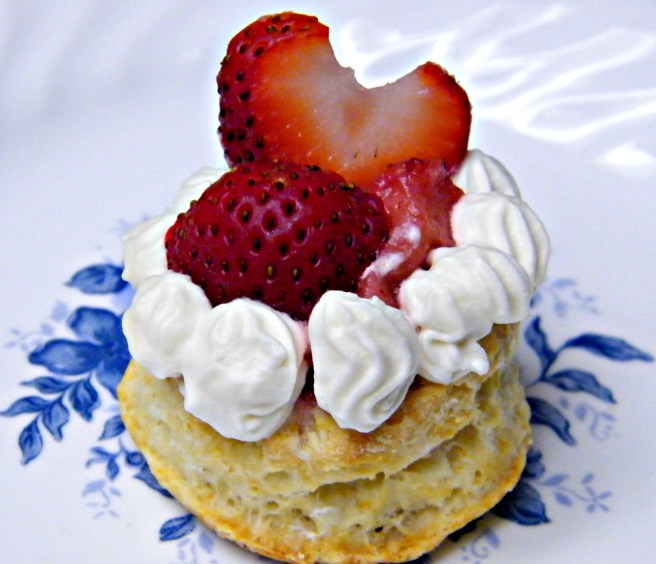
Slice off the top of the biscuit to create an even surface for piping the cream. Save the tops to nibble on later. Put a teaspoonful of strawberry compote and syrup in the center of each biscuit. Pipe (or spoon) a circle of whipped cream around the compote, leaving a bit of compote uncovered. Finish each shortcake by pressing two or three slices of strawberry together, fanning them out a little and placing them, broad side down, in the center of each cake. Add a rose petal for the finishing touch. (If you have any extra compote and/or cream, cover and keep in the refrigerator to enjoy at another time.)

Arrange the shortcakes on a platter. Scatter the remaining rose petals around the platter and serve immediately.

Seasonal Produce Anxiety

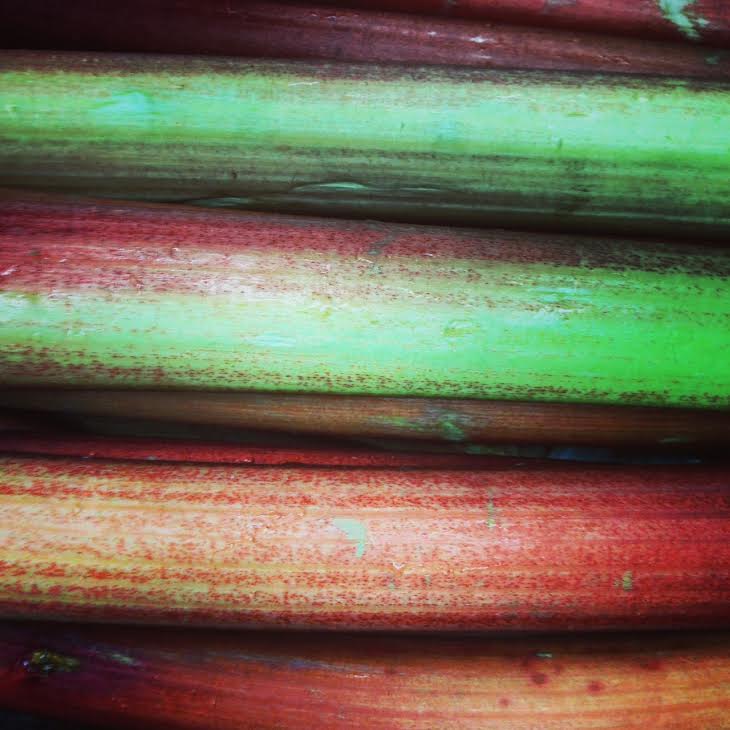
Rhubarb

I don’t know about you, but I don’t spend the winter worrying if I’ve made the best use I could of storage vegetables. As good as they are, the selection is small enough and their shelf life is long enough that I’m ready to move on as soon as spring arrives.

That’s when my anxiety begins, from peas to tomatoes, from rhubarb to peaches, warm weather produce has its short turn on the stage before retreating for another year. Every year, I make grand plans to use each of those fruits and vegetables in multiple recipes and every year my accomplishment consists of not missing them entirely. Bonus points for freezing a bag or two along the way.

I’ve meditated – I know that being present in each moment is a healthier path, but I can’t help feeling a growing sense of panic when I realize that one of my favourites (or that one I keep saying I’m going to try, year after year) is disappearing from the markets. I also seem to manage to make the recipes I’ve loved since childhood more often than experiment with the masses of new ones I bookmark each year.

This year, I’m batting above my average (at least, I think that’s what I’m doing – baseball metaphors are not my forte). One of my mother’s friends gave her an enormous bag of rhubarb and I’m crossing a few of those new concoctions off my list.

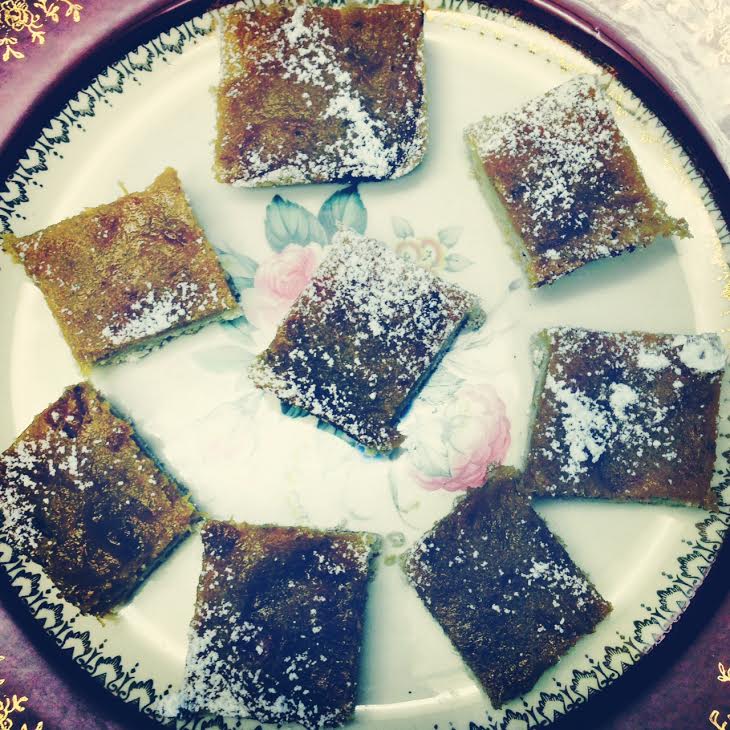
Shortbread

My favourite so far is rhubarb curd. I used Lara Ferroni‘s recipe and went ahead and made the rhubarb bars, too. The shortbread topped with baked curd is heavenly, though I think that next time I’ll have a little beet juice ready when I make the curd, to punch up the colour. The bars only used half the curd, which I’m reserving for some parfaits that are going to show up here soon. If you make this, I recommend baking a visitandine at the same time, as it uses up four egg whites. If you have any ideas for the other two, let me know.

There is still quite a bit of rhubarb left, so there’s definitely some roasted rhubarb and a strawberry-rhubarb crisp in the offing. I might try one of the savoury rhubarb recipes I’ve been eyeing, or I might revisit this recipe or this one. With a bit saved in the freezer, I’d say I’m actually making good use of rhubarb this year.

Now, if I can just stop thinking about all the things I meant to do with spring peas or the fact that strawberry season has arrived.

FFWD – Pipérade Stir-fry

Piperade

Since the Slow Food movement came on the scene, it hasn’t just been fast food that’s come under fire. Those twenty-minute dinners that get you in and out of the kitchen, often relying on pre-prepared ingredients, have lost their credibility, too. But, fast isn’t always a compromise when it comes to flavour or food value. Sometimes quick preparations with fresh ingredients act as healthy flavour-boosters – think quick pickles or quick kimchi. Sure, it’s worth preparing things the long way, for depth of flavour or shelf-stability, but it’s nice to know you can take shortcuts sometimes, too.

This week’s French Fridays dish is one of those shortcuts to flavour. We’ve encountered pipérade before in the group, when we made Chicken Basquaise. This quick version doesn’t have the where-have-you-been-all-my-life quality that the sauce in that recipe possesses, but it’s a healthy, vegan riff on the same sorts of flavours.

I strayed a little from the recipe, choosing to sauté the onions, garlic, and hot pepper (some jalapeño I already had on hand) instead of adding them raw to the sweet peppers, but I think that was a good choice for us this time. I also skipped the green pepper, because the ones in the market today were a little dubious.

The secret to this take on pipérade is caramelizing the sautéed peppers with red wine vinegar. It mimics the flavours created by slow-cooking in the traditional recipe and can serve as a side or condiment alongside any of the traditional proteins that are paired with the real thing. I think it would also make a great accompaniment for barbequed steak. Our leftovers are going to be featuring in scrambled eggs tomorrow, or maybe even a frittata.

After that, I might have to make another batch.

Peppers

Find out what the rest of the French Fridays crew thought about this week’s recipe: Pipérade Stir-fry

Cottage Cooking Club – May 2014

Today brings something new to my blog, which will be happening monthly over the next ten months or so. I’ve teamed up with a few of my favourite bloggers to cook our way through River Cottage Veg. Our little group has been organized by the wonderful Andrea of The Kitchen Lioness and you can join us at the Cottage Cooking Club. Each month, we’ll be cooking up to ten recipes from the book and sharing our versions of the dishes. What we won’t be sharing is the recipes, unless there they’ve been shared online by the author or publisher. Some of us may also provide recipes inspired by the month’s choices.

This group came along at the perfect time for me, as my partner is moving toward vegetarian, and ultimately vegan, eating. I’ve always incorporated a lot of meat-free meals into my life, but it’s great to get some new recipes into my repertoire right now and see which ones appeal to Kevin the most.

This month, I chose six of the recipes to try. I probably won’t make that many of them every month, but there were a lot of favourite ingredients on this month’s list.

Arugula, Fennel, and Puy Lentil Salad

Lentil Salad

First up is a salad so good that I couldn’t help but share it with the group of bloggers who participated in the Canadian Lentils #LentilHunter Twitter chat that happened a few weeks ago. I loved the vinaigrette that was mixed into the lentils and then used to dress the greens. Kevin’s not a salad dressing fan, though, so I just squeezed lemon on his. We were both happy.

This is the sort of recipe I’ll revisit often, changing the ingredients according to the season. I used the organic French green lentils that I always have on hand, but this would be really special with authentic Puy lentils.

Try it for yourself – you can find the recipe here.

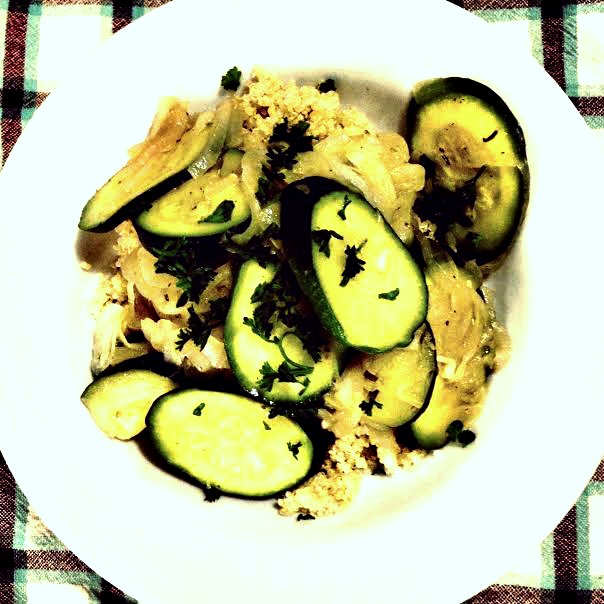
Quinoa with Zucchini and Onions

Zucchini and Quinoa

Not a hit for Kevin. I liked it, but would use less onion and perhaps a wider variety of veggies. I sauteed the garlic in butter before adding it, added a bit of balsamic at the end, and forgot the nuts. I think with a bit more experimentation, this could be a better dish for us.

Radishes with Butter and Salt

This one is a summer tradition for me. The bite of raw radishes is a perfect match for the soothing creaminess of butter. And salt just makes everything better. I did this with the first radishes from my garden and completely forgot to take a picture. I’ll add one the next time I do it. Shouldn’t be long.

Asparagus Pizza

Asparagus Pizza

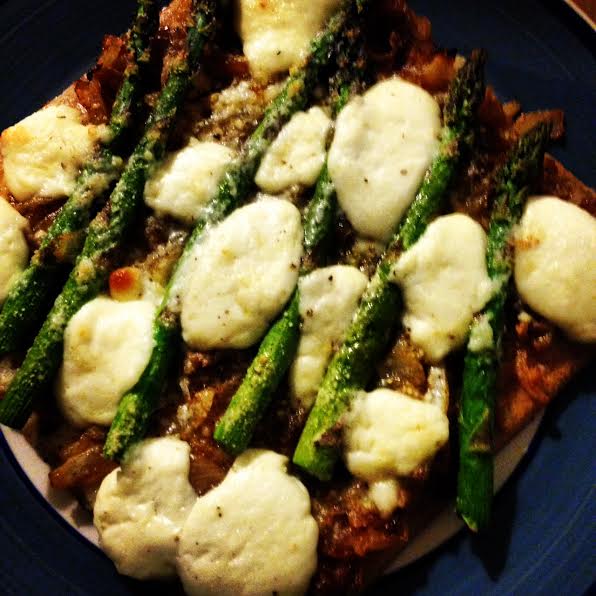
I didn’t get a pretty photo of this one, but I loved it, ugly or not. I used a frozen gluten-free crust instead of the homemade pizza dough made with Hugh Fearnley-Whittingstall’s Magic Bread Dough. Next time, I’ll make it for gluten-eaters and use the dough, as Kevin wasn’t that keen on this dish. He would have preferred a traditional, tomato-based pizza with steamed asparagus on the side.

Roasted Eggplant Boats

Eggplant

I was surprised that Kevin didn’t like this one more – eggplant is one of his favourite vegetables. One of the things we came up against in a lot of the recipes I’ve been trying lately is that he’s not a big fan of sauces or dressings. The plainer the better is his motto. So, I finished this on my own. I enjoyed it, but it won’t be replacing Ottolenghi’s roasted eggplant as my go to any time soon.

Stir-fried Cauliflower

Cauliflower

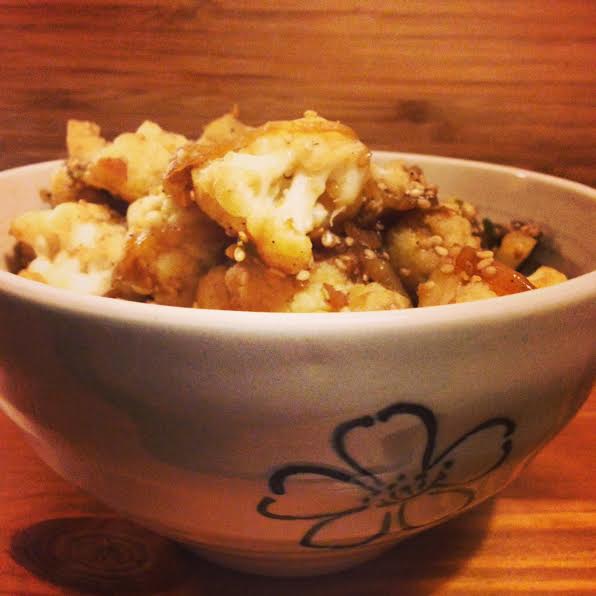
This dish was the winner of this month’s selections. We both loved it. This time, it made a great late night snack. Going forward, I think it will be a nice side for almost any Asian-influenced fare. I skipped the cilantro and added a little five-spice, but I would have been just as happy with the recipe as written. It’s easy to put together and I would be lying if I said I won’t be making this again for a lazy lunch or snack, all on its own.

Intrigued by this month’s recipes? Buy the book and join us.

Here are the links to the rest of the group’s posts for this month. I encourage you to check them out – you’ll meet some wonderful bloggers and get some great inspiration for vegetarian eating.

Green As Spring Venison Stew – A French Fridays Catch Up

Stew

Every eater has limits. It might be something simple, like avoiding raisins in other foods (unless it’s chocolate). It might be something broader, like avoiding whole categories of food for health or ethical reasons.

Though I have a few mild food sensitivities, I don’t talk about them much.They’re boring, annoying, and better kept to myself. I do talk about eating gluten-free, since that’s an absolute necessity for my partner. I’ve also talked a little bit about his movement toward eating vegan or vegetarian most of the time, since that can affect what I post for French Fridays. Some dishes, like the one I’m posting about today, have to wait until I’m cooking for meat-eaters.

Most of my decisions about what I cook and eat are based on some broad parameters, that I adjust as necessary. I try to eat fresh, local, sustainable, in season, and organic as often as I can. I try to shop at locally-owned places more often than I do at large chains. I try to eat meat less often than I eat vegetarian or vegan.

There are always exceptions, of course. There are national brands that I trust. Sometimes I shop for the items I need for a particular recipe, rather than cooking what’s in season. Sometimes a frozen vegetarian pot pie is the best option for a busy night.

There are also a few things I never budge on. Veal is one of them. I just don’t feel right about eating it. So, I don’t. Instead, I usually substitute wild venison wherever it’s called for. I’m lucky enough to have access to wild meat from hunters I trust. That said, I know that my choice is an arbitrary one in a food system that’s often broken. I’m sure that I’m ignoring other food choices I make that are equivalent to veal’s problems. I certainly wouldn’t condemn anyone else for their choices around eating. There are far too many factors that govern where each person’s choices and limits lie.

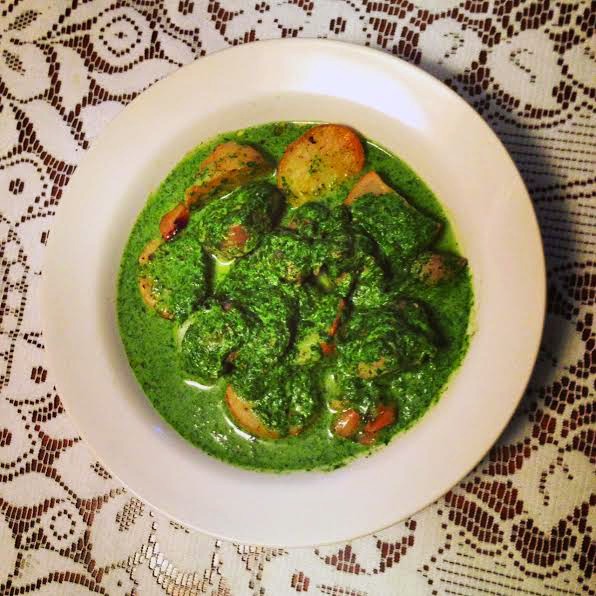
At any rate, this recipe is a winner whatever you choose to feature as your protein. It’s also at least as full of healthy vegetables as it is protein. The secret is in the sauce. The usual aromatics are cooked with the meat, but at the end, cups and cups of fresh arugula, spinach, dill, parsley, and tarragon are added to the broth, along with a little crème fraîche (or in my case, some sour cream I already had in the refrigerator).

The result is a vibrant green sauce that tastes as much of the greens and herbs as it does the broth. We had the stew over potatoes I’d roasted with garlic and rosemary the first night. The next night, the leftover sauce topped simply roasted chicken thighs, with a salad on the side. There was still a little sauce left over after that, so it went into the freezer to be used to flavour a soup some time.

I could see this sauce as an accompaniment for any number of proteins or poured over all sorts of roasted vegetables. It’s one I’m going to come back to over and over again, I can tell. Without reservation.

You can find out what the rest of the French Fridays crew got up to this week here: Smoked Salmon Waffles And here is the link to the rest of the group’s thoughts about this recipe: Green As Spring Veal Stew

(French) Food Revolution Day 2014 – Part 1

salad

Last year, the Doristas participated in Food Revolution Day for the first time. As you may remember, I got my partner to cook and write about a French Fridays recipe. This year’s theme was getting kids excited about food, so we were tasked with choosing one or more recipes from Around My French Table that we thought kids should know how to make. It was a tough task.

I finally decided that a healthy salad was my first choice. Making Wheat Berry and Tuna Salad would involve some ingredients that are familiar to a lot of kids, while introducing some that were likely to be new to them. It’s also one that gives kids some practice with knife skills. And it’s a recipe that’s not too hard, even for a beginning cook.

My second choice was Salted Butter Break-Ups. These cookies have been a hit with everyone I’ve made them for, young or old. Not only is this giant break-apart cookie fun to make, it also introduces many baking fundamentals and is a good first step for a young baker to move on to other doughs like pâte brisée.

The young cook I’ll be working with is my downstairs neighbour, but we can’t get together until the end of this weekend. So, there will be a Part 2 to this Food Revolution Day post, once we’ve made the dishes.

In the meantime, find out what the rest of the French Fridays crew chose to cook with kids: (French) Food Revolution Day 2014.

There is also a wealth of posts across the internet today, celebrating cooking with kids and healthy food. Here are some of the channels where you can find these stories:

Food Revolution Day: http://www.foodrevolutionday.com
Facebook: http://www.facebook.com/foodrevolutioncommunity
Twitter: http://www.twitter.com/foodrev (#FRD2014)
Google+: http://www.google.com/+foodrevolutioncommunity
Pinterest: http://www.pinterest.com/foodrevolution
Instagram: @foodrev (#FRD2014)

Much thanks to Mardi Michels for organizing this for us again this year!