FFWD – Lentil, Lemon, and Tuna Salad

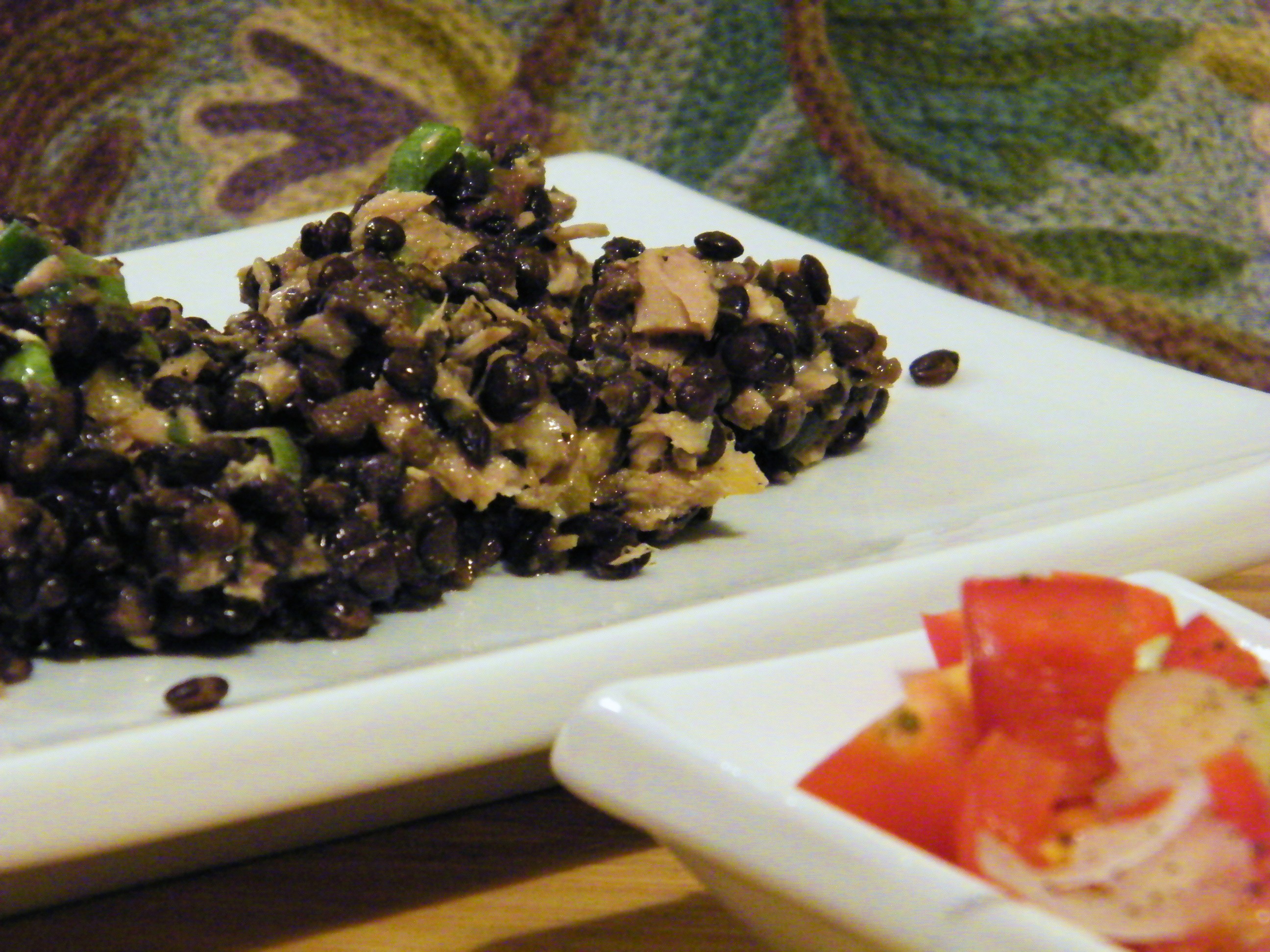
Lentil, Lemon, and Tuna Salad, with a side of tomatoes, red pepper, and green onion.

This week’s recipe is like a harbinger of summer, belying the cool, damp weather we’ve been having in Vancouver. Its salty, lemony-ness makes me think it would be just the thing to bring to a seaside picnic, provided shellfish was also on the menu.

The recipe calls for lentilles du Puy, but I was nearly out of those, so I used some organic black lentils I had on hand. I also used a tapenade based on Moosewood’s Olivada recipe.


My only other variation was an attempt to approximate the preserved lemons I needed for the recipe. I used this recipe, which creates a pretty reasonable substitute in half an hour or so. I used a whole lemon in the salad, but next time I’d reduce it by about half. The diced preserved lemon is added to the lentils along with tuna and chopped scallions, then dressed with a vinaigrette featuring mustard, the tapenade, and red wine vinegar.

Dorie suggests serving this garnished with a tomato and red pepper salad dressed with olive oil and cumin, but I omitted the second dressing and served it with a mixture of chopped tomatoes, red pepper and scallions. I liked the freshness of the vegetables against the salty complexity of the lentil salad.

A closer view of the salads.

It’s not quite time for picnics of any variety quite yet, but I’m keeping this salad in mind for sunnier days to come.

You can find many other blogged descriptions of this week’s FFWD recipe here: Lentil, Lemon, and Tuna Salad

FFWD – M. Jacques Armagnac Chicken

So, everyone else is posting about Lyonnaise Garlic and Herb Cheese today, but I didn’t find an occasion to make it for more than just Kevin and me, so I’m leaving it for (yet another) catch up post. Instead, today’s recipe is from January and one that I’ve made more than once, but haven’t ever gotten around to posting. (There’s definitely a correlation between bad photos and late French Fridays entries for me.)

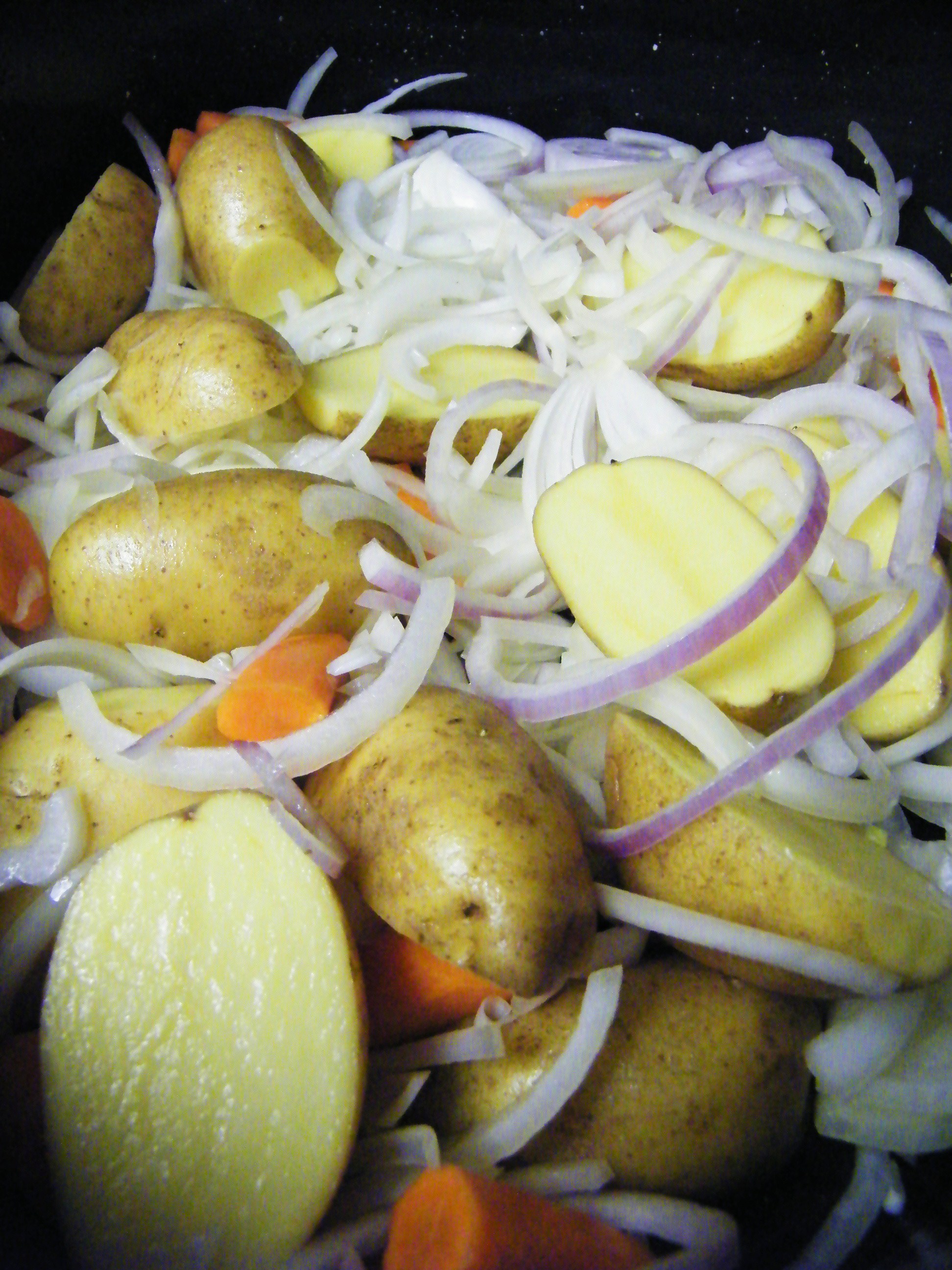
A bed of vegetables for the chicken.

I didn’t buy Armagnac for this recipe, as it was a bit expensive, but I substituted Cognac and was very pleased with the results. Since joining this group, roasting a chicken involves much more decision-making for me – the recipes in Around My French Table are so good, it’s hard to settle on which to use. This recipe’s primary virtue is the bed of vegetables that are roasted with the chicken, particularly the onions, which are delicious all by themselves and lend their flavour to the other vegetables and the chicken. The Cognac helped intensify the sauce, which is made very simply with water, herbs and the juices of the chicken and vegetables.

Basting the bird.

This is a wintry recipe, as many one pot meals are, but it’s also perfect for rainy, cool spring weather. If we get another stretch of that this year, this may be on the menu again soon.

You can find many other blogged descriptions of this FFWD recipe here: M. Jacques Armagnac Chicken

FFWD – Navarin Printanier

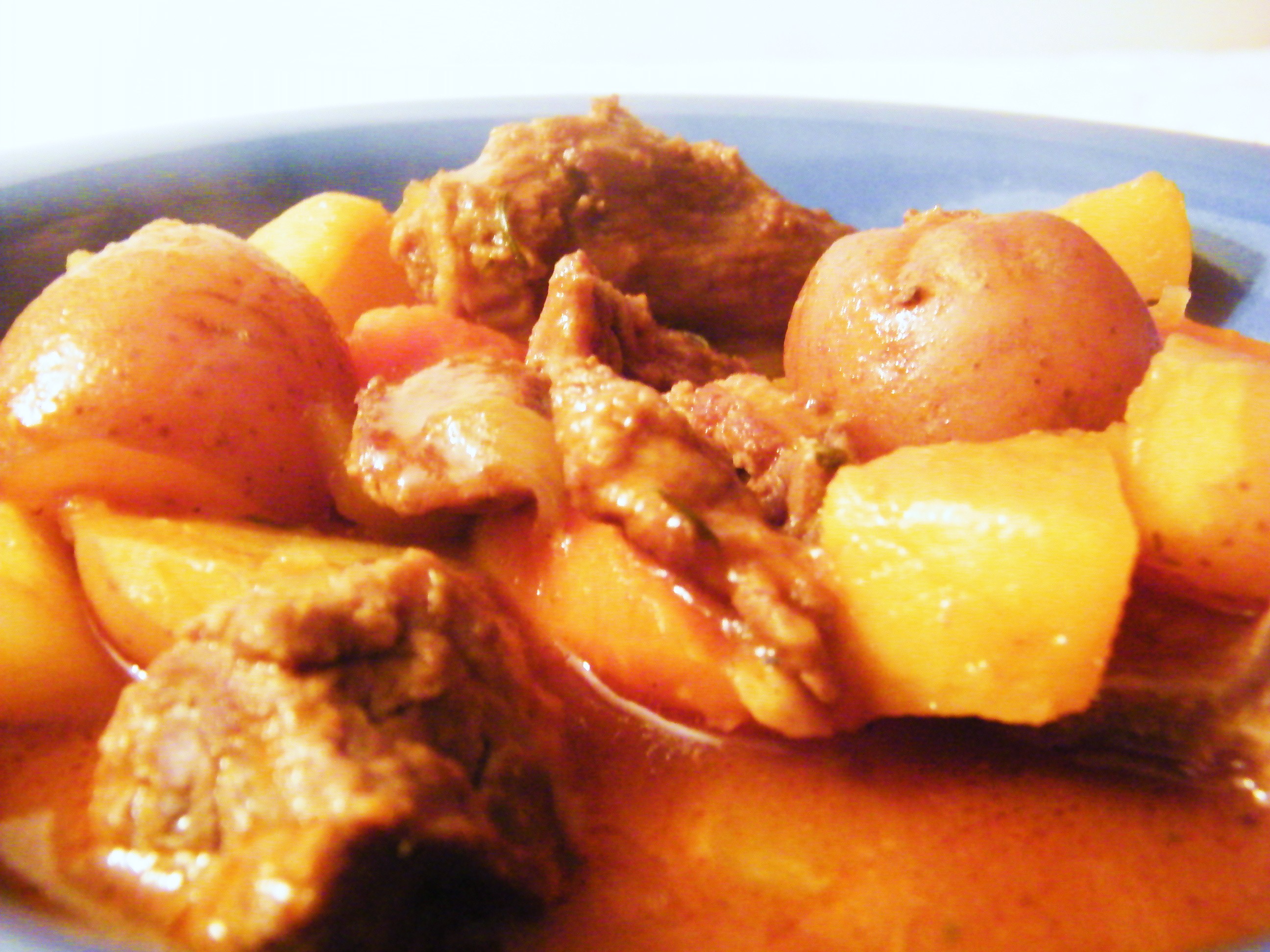
Lovely, rich stew.

Over the next little while, I’m going to try and catch up on a few French Fridays dishes that I’ve made, but haven’t managed to post about. I’m starting with a really good one.

Navarin Printanier is nothing like my mother’s Irish stew. Don’t get me wrong, my mother’s lamb stew is so good that my brother (a chef) adapted it for use on his menus. It’s a traditional, slow-cooked on the stovetop version, light and flavourful. Navarin Printanier is a braise, giving lamb the sort of treatment usually reserved for beef.

I love the methods used in this recipe. The braising itself makes the lamb tender, of course, but it’s not just that. The vegetables are sautéed in butter before being added to the pan and manage to retain the shiny vibrancy the sauté gives them. Beef stock and tomato paste (I used one infused with garlic, which was really nice) make a lovely, rich sauce flavoured with thyme, bay leaf, and parsley.

Beautiful colour on sautéed vegetables.

My mother and I cut up two shoulder roasts for this stew, removing the ribs for use another day. We were able to cut off almost all the fat from the lamb as we cubed it, which meant that the stew wasn’t at all greasy. Labour-intensive, but totally worth it.

I deviated from the recipe here and there, using rutabaga in place of turnip, adding about three times the tomato paste and thyme called for, and forgetting entirely to add the peas. Stews are very forgiving. This stew was delicious enough that I won’t reserve it just for spring, though it’s a worthy showcase for the year’s first vegetables.

You can find many other blogged descriptions of this FFWD recipe here: Navarin Printanier

Photos from a Tiny Urban Desert

I rarely go to Canada Place. Most Vancouverites don’t. It’s a cruise ship terminal and convention centre, primarily. This weekend, though, I went there to attend the EPIC Expo, courtesy of Vancouver Farmers Market. It’s a sustainable living show and there were lots of interesting organizations and products there.

I had my camera with me, but didn’t take any photos of the show. Instead, once I’d worked my way through all of the booths, entering contests I was destined never to win, I wandered outside and took some photos around Canada Place. My primary response was to wonder why such places are designed so that they become tiny deserts, devoid of any of the natural features of the region they’re in. Vancouver is in rainforest territory, yet in Sunday’s sunny weather, Canada Place felt like Nevada, arid and hot. I was glad to escape back into the artificial forest conditions of downtown’s highrises, where it was cool and breezy.

Here are a few of the shots I took.

Tulips, with a cruise ship in the background.

Tree, with incidental view in the background.

Tulips, with odd light standard in background.

Odd light standard

Odd light standard again, with glass building reflections.

Architectural details of the overhang alongside the promenade.

A reflection that reminds me of an abstract painting.

FFWD – Provençal Olive Fougasse

A close shot across the surface of the baked fougasse.

I once knew someone who believed that a restaurant that didn’t bring bread to the table shortly after you were seated didn’t deserve a clientele. I’m not that strict, but a meal started with bread fulfils some deep-seated ideas of sharing and conviviality for me, especially when the bread is homemade.

Bread-making is a satisfying activity, beginning with the tactile pleasures of kneading and shaping the dough. By the time it’s brought to table, all the senses become engaged. Knowing that the bread has been made to share with exactly those people around the table engages the heart, as well.

I made two loaves of this fougasse during the last bakestravaganza with my family. What was planned as a day’s baking stretched into a weekend, as much of what we were making needed time to rise and rest between steps. You can see what we worked on together over here. I also managed to catch up on the Navarin Printanier from a couple of weeks ago (which I’ll post about soon) and this week’s fougasse.

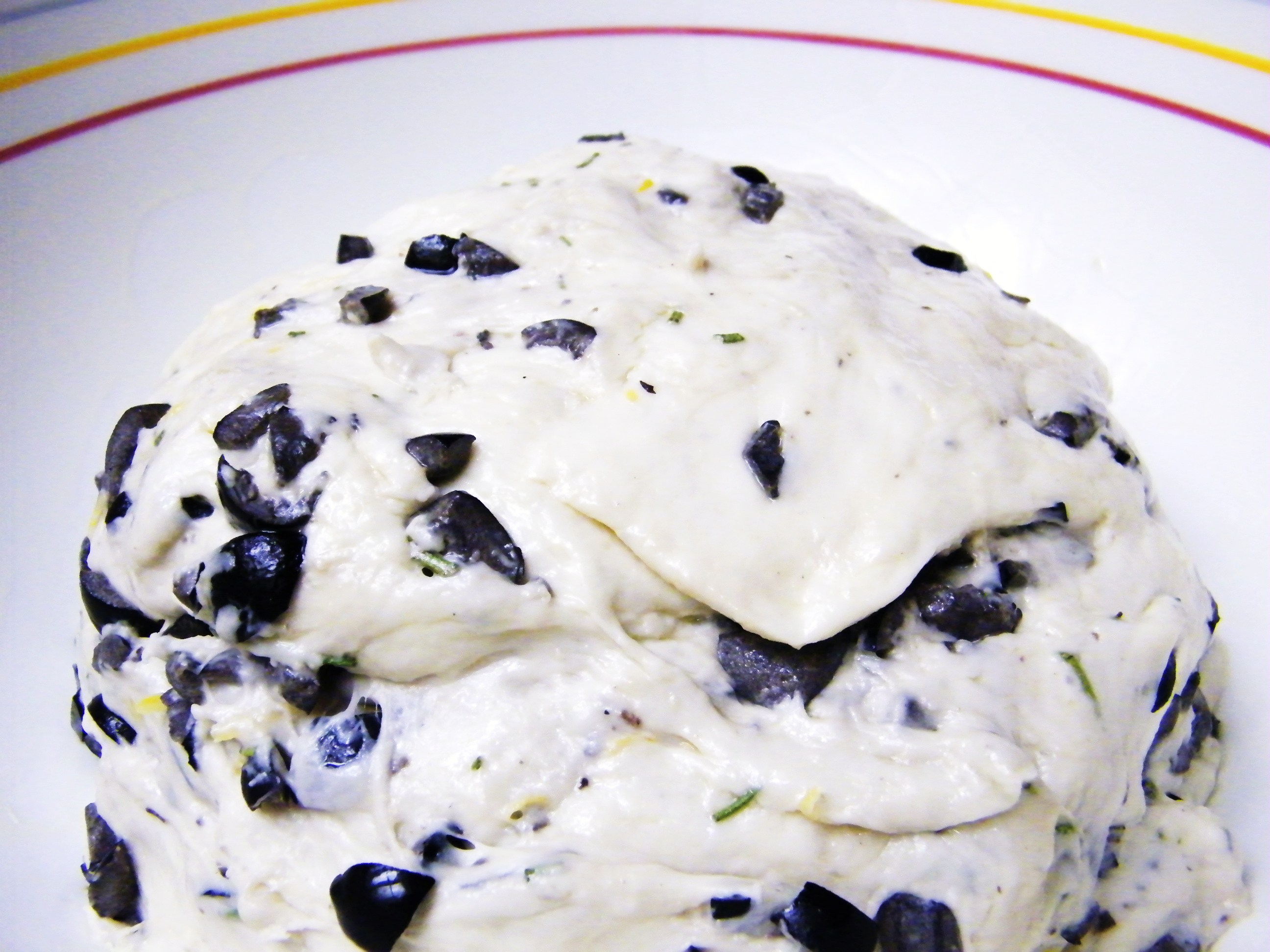
I put together this dough late the second night and baked it between the steps of our other recipes. My niece zested a lemon for me while I chopped olives and rosemary. These were added to the dough at the end of the kneading process (all hail the KitchenAid, once again). Once the dough had risen, it went into the fridge for an overnight rest (right beside the brioche dough we’d prepared for the pecan sticky buns that were going to keep us busy for much of the next day).

Dough before rise.

Dough before rise.


The dough reminded us of pizza dough, a little sticky and stretchy, but ultimately agreeable. It was easy to roll and slash the dough into the traditional leaf shape, but my attempt to make a salmon shape with the second piece of dough turned into an oval of bread with asymmetrical slashes. Not ugly, but not elegant, either. We ate it first.

The finished fougasse, with the second loaf in the background with some cornichons and pickled asparagus.

The first loaf disappeared that afternoon, as people passed through the room where it was cooling, and we shared the second with our dinner of lamb stew. Pulling pieces from the loaves gave us almost as much pleasure as eating it and it was just as good on its own as it was sopping up the gravy of the stew. Sharing one loaf, all hands breaking off their portions, made our meal seem like a feast and a celebration of the cooking and baking we’d done together over the weekend.

You can find many other blogged descriptions of this week’s FFWD recipe here: Provençal Olive Fougasse

A Somewhat Peripatetic Post

Sometimes when I read, I want to lose myself in the prose, for the sentences to simply transmit themselves into the ideas or images they evoke, without the metadata of sentence construction and word choice simultaneously imposing itself on my consciousness. It might be more accurate to say that this is the least I ask as a reader, because bad prose shudders and stalls, making it impossible to enjoy. A greater pleasure comes from writing that makes me stop in wonder at the perfection of its construction and the clarity of its content.

Michael Chabon’s book of essays, Maps and Legends, has had that effect on me. His sentences are worth re-reading, both to analyze their content and their construction. What might seem contradictory (but should not) is that many of the essays in this collection defend genre, pulp, and graphic fiction. So-called popular fiction has been the subject of a vast reclamation project since at least the early ’90s. For feminists of my generation, a subscription to Bitch Magazine and weekly gatherings to pull literary and cinematic references from episodes of Buffy were legitimate exercises for our University educations.

Legitimacy in this arena has taken a more masculinist turn in recent years, with writers like Chabon and Jonathan Letham building wonderful coming-of-age novels from the bricks of their childhood reading and adventures. At the same time, the Twilight Saga has become emblematic of women’s forays into the field. It’s not surprising in an era in which grrl power has been supplanted by princess power, I suppose. What’s interesting to me in all of this is the way in which male adolescence and its relationship to genre fiction, comics, and pop culture have become the ground for retellings of the hero’s journey, while female adolescence in fiction has become grounded in bastardized versions of 19th Century courtship fiction. (Jane Austen is the subject of an almost slanderous misreading presently.)

So what happens when a new series of novels, featuring a young, female, and (complexly) heroic protagonist, becomes wildly popular? Critical acclaim, a blockbuster movie, and this.

I’m aware that Mr. Stein is a satirist, but I think it’s telling that his examples pit Thomas Pynchon and David Foster Wallace against Justin Bieber and Disney castles. The Hunger Games novels don’t fit into our current conception of female adolescence, instead measuring up to the mythos around the male journey into adulthood. Under the guise of championing adult fiction, reactions like Stein’s seek to put female-centred literature back into its secondary, illegitimate status.

Though the prose doesn’t make me stop in wonder, Collins’ books allowed me to lose myself in the story and to appreciate her themes. I hope their popularity inspires more books exploring female adolescence in positive contexts, both within and without genre conventions. I’d also like to see stories from genderqueer and trans perspectives, too. All young people (and those of us who were once young) deserve to have their journeys traced.

FFWD – Coconut Friands

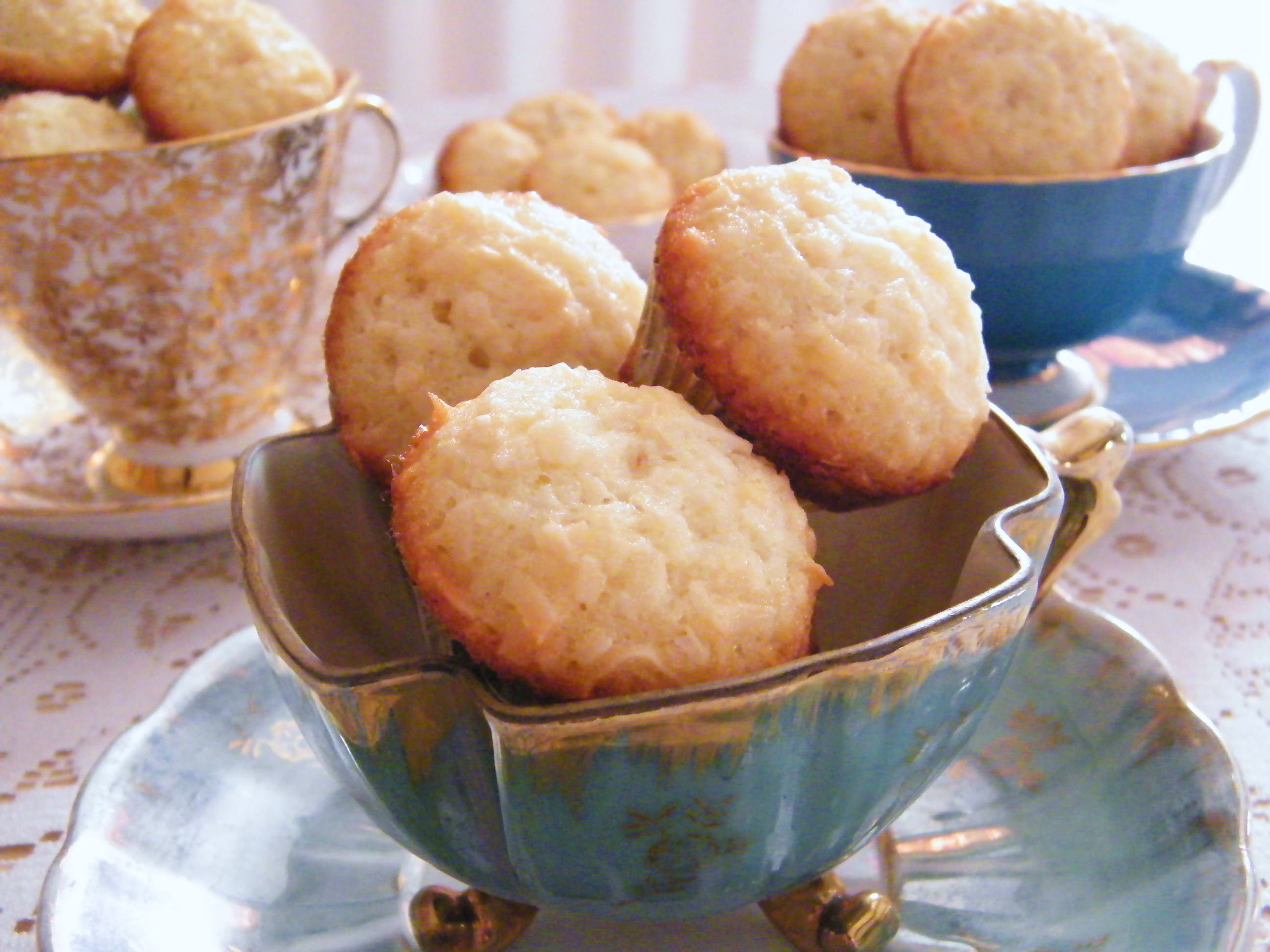
Coconut friands piled in teacups

Tea is sort of my thing, a kind of Jungian response to my first initial, I suppose. I try not to get carried away (so often) with buying tea paraphernalia and I’m also trying to work my way through the loose tea that I have before I buy any more. One of my favourite methods of avoiding these impulses is to go out for tea, whether it’s a formal high tea or an afternoon break at a local tea shop. I can enjoy the cups, pots, and teas without bringing more home to fill my already jam-packed cupboards. What I don’t do often enough is have people over for tea. Cakes and sandwiches are as fun to make as to eat and I certainly have enough pots and cups to accommodate a respectable gathering.

Teacup love, with a side of coconut cakes

I have a few recipes that would fit right in and now I have one more. These delicate coconut cakes are perfect for tea. Friands are usually made with ground nuts, but in this recipe, shredded coconut is used, instead. This is an easy recipe, as long as you have a light hand with the whisk. I had only sweetened coconut on hand, so I reduced the sugar by two-thirds and it seemed to work just as well. Dorie suggests putting a bit of fresh or candied fruit in the centre, but I decided to put a small square of chocolate in each. I love coconut and chocolate together. Next time, I might try a tropical fruit like mango or papaya – I wonder if passionfruit seeds would work? They’d certainly look pretty.

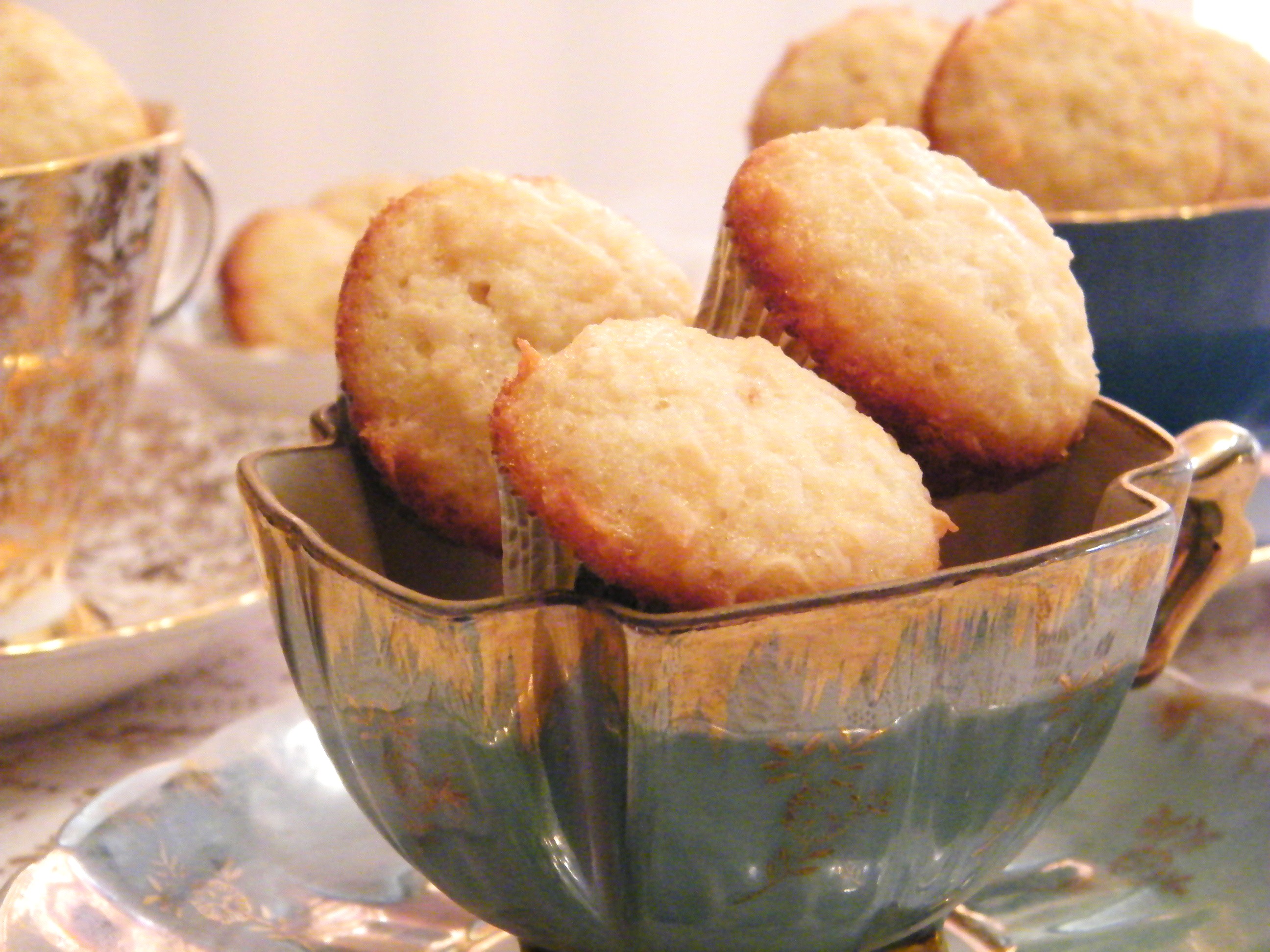
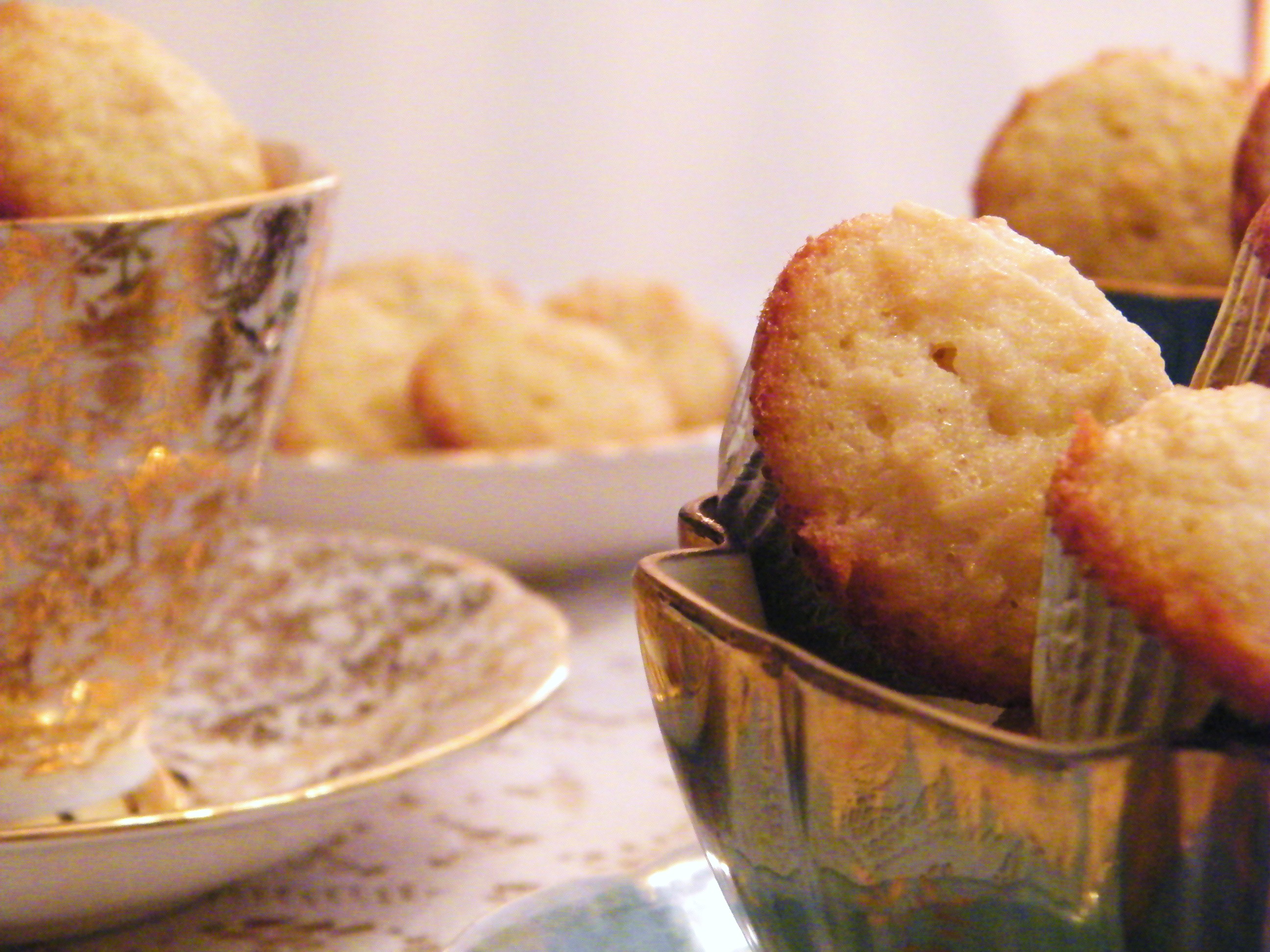
A closer view of the coconut friands

The cakes were both light and dense at once, a property of the coconut, I think. The chocolate worked nicely and neither flavour overwhelmed the other. There’s only a small quantity of flour, so I think they could easily be converted to gluten-free, too. Once the weather gets warmer, these might find themselves on the menu for a garden party or two.

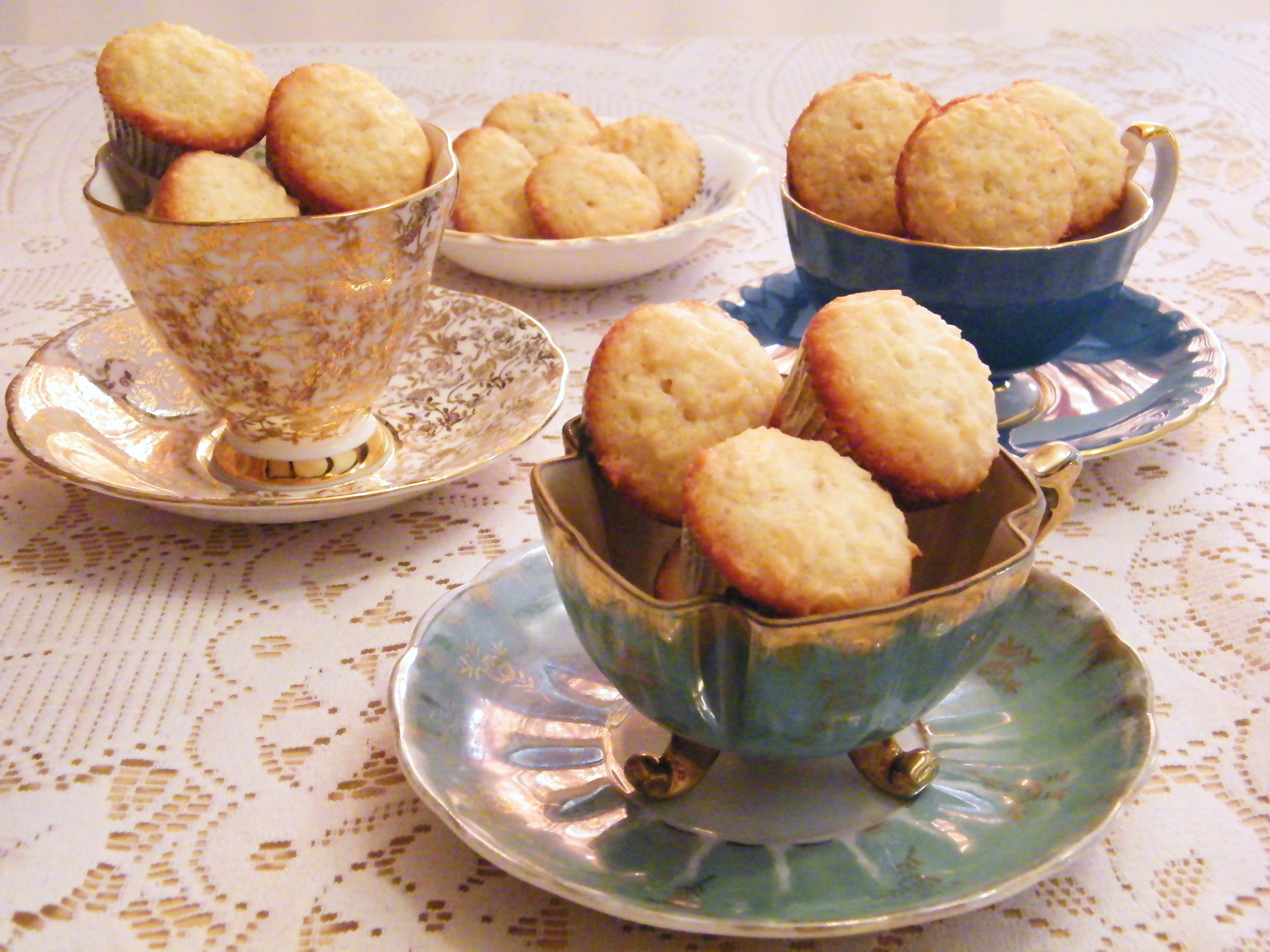
A wider view of the scene

You can find many other blogged descriptions of this week’s FFWD recipe here: Coconut Friands

FFWD – Asparagus and Bits of Bacon

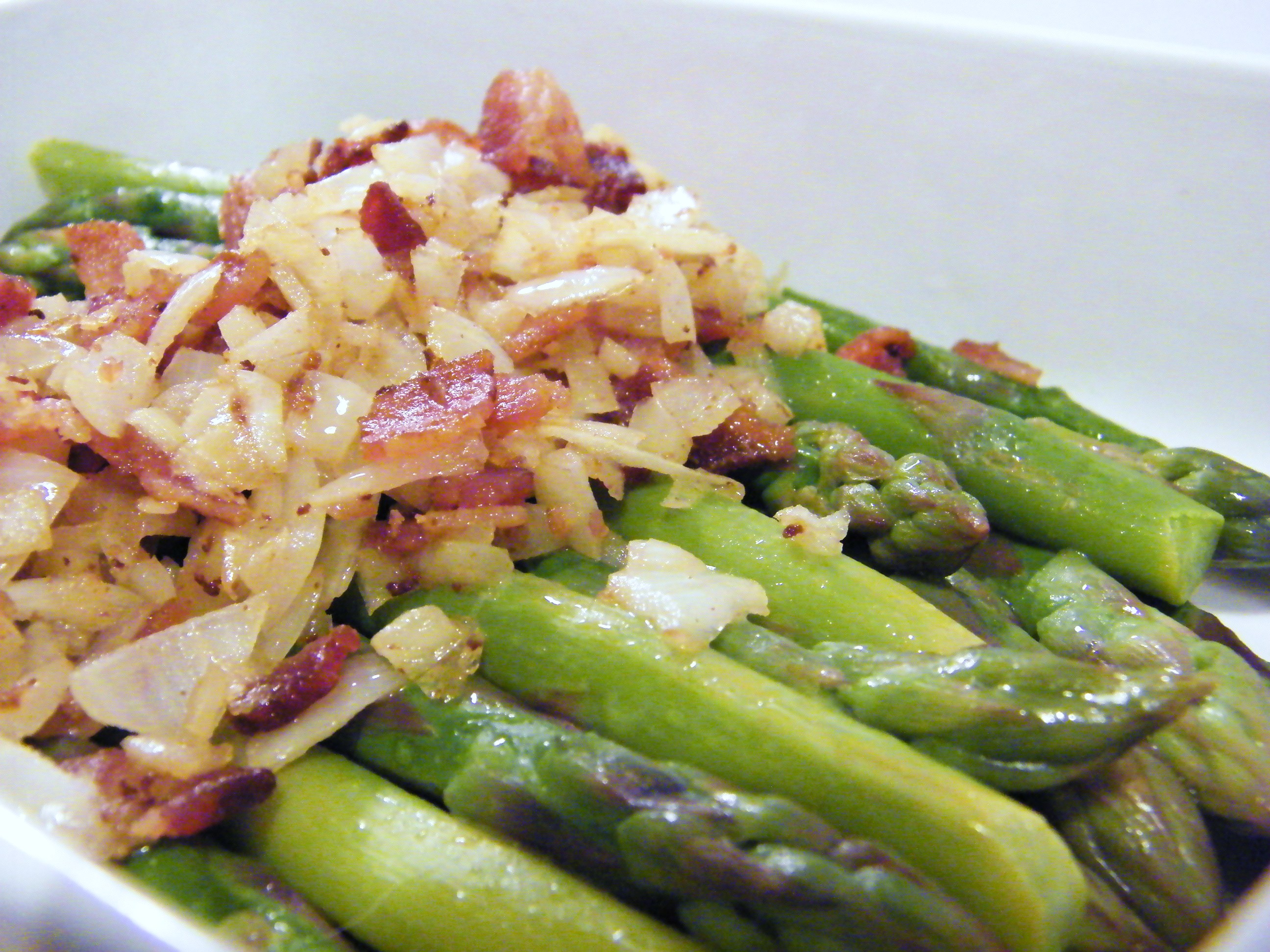
Asparagus with bits of bacon.

I missed posting about this when everyone else did, because my computer was in the shop. I’ve got it back now, a little slower and noisier than it was before, but working. (Sometimes I get tired of the part of me that wants to use things as long as they’re functional, the part of me that doesn’t want to add to the heaps of electronic waste that now litter the world. I hold onto computers and phones until the bitter end and am rarely an early adopter of equipment. There’s another part of me that wishes for things that are shiny and new, but it never wins out.)

So, I’m catching up on April’s first French Friday recipe now. I’m also catching up on reading everyone else’s posts, but I imagine that this was a hit with almost everyone in our group. How could it not be? Bacon cooked ’til crisp, then warmed with slivers of onion, asparagus tossed in nut oil and lemon juice, all in one dish. I have to admit that we made the full recipe and ate it for dinner without accompaniment. It was all we needed. In fact, my partner said the bacon was the best he’d ever had. I think it was the onion, which I allowed to caramelize a little, even though the recipe calls for it to be barely cooked. This recipe will certainly be on the menu again.

You can find many other blogged descriptions of this week’s FFWD recipe here: Asparagus and Bits of Bacon

Next Tuesday, I’ll be back to my regularly scheduled non-cooking posts. For now, I’m busy surfing my way through all the French Friday and Baking with Julia posts I’ve been missing.

I also want to take this opportunity to thank Marilyn of cook reach grow for passing on the Liebster blog award to me. She’s one of the participants in Tuesdays with Dorie and I’ve really enjoyed reading her posts. These two cooking groups have introduced me to so many lovely and interesting folks, I can’t decide on just five bloggers for the award. Instead, I’ll direct you to the roster for Tuesdays with Dorie and also French Fridays with Dorie. You could spend many pleasant hours reading through the blogs in both groups.

FFWD – Sardine Rillettes

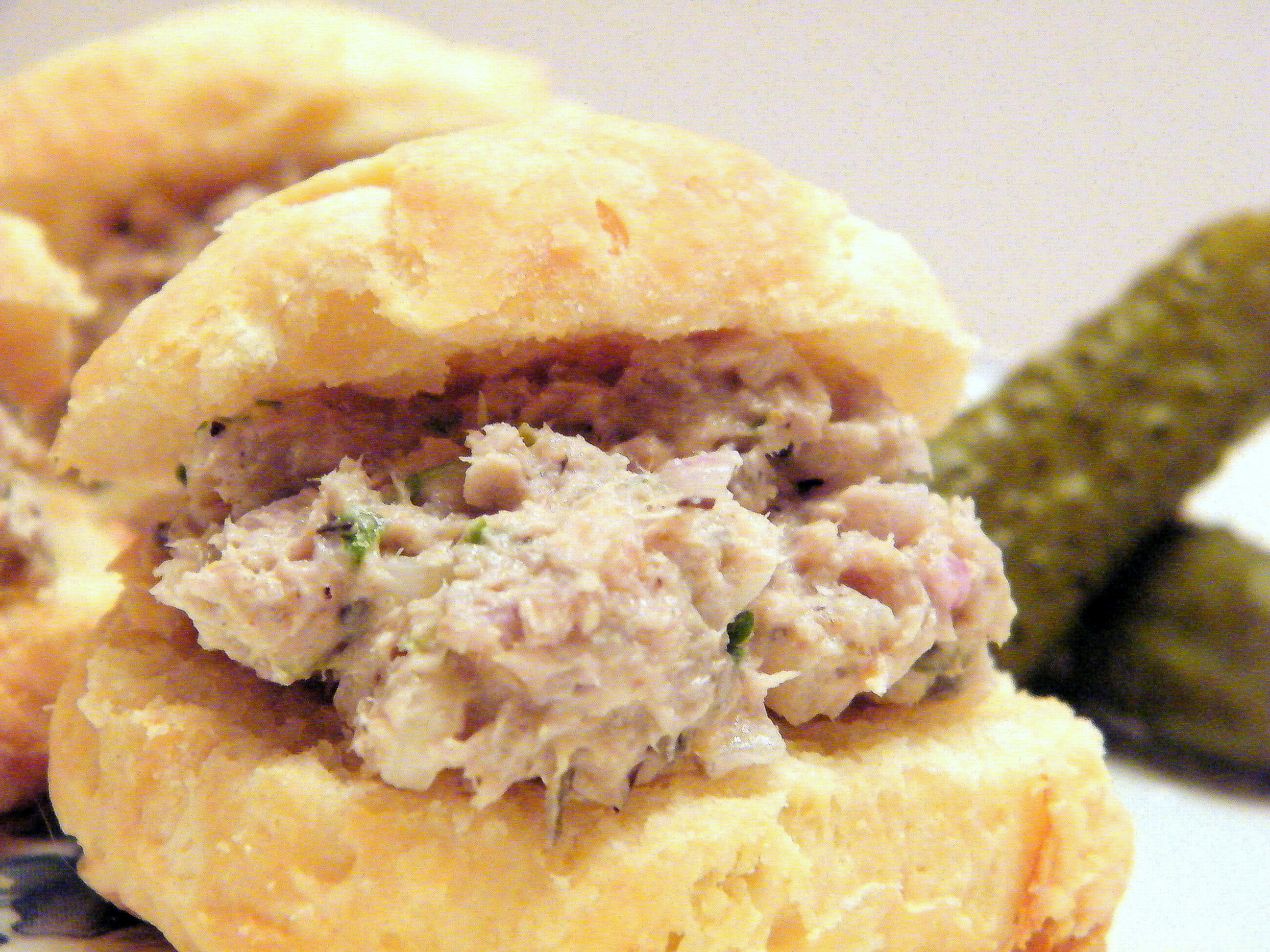
An onion biscuit stuffed with sardine rillettes, with cornichons in the background.

Every summer, my family would go on holiday for the month of August. We’d go “up country” to the lakes north of Kamloops. British Columbia is dotted with freshwater lakes and we visited many of them. We’d stay at one for a while and if the fishing wasn’t good, my Dad would hitch up the Boler trailer and the family would pile back into the car, ready to explore the next forestry campsite. My sister, brother, and I would run through the woods, swim in the lakes, read books by the shore, and at least once a day, we’d go out in the boat to troll for trout. The rule was, If You Catch It, You Clean It and when the fishing was good, we got a lot of practice.

I found myself thinking about these trips the other day, while removing the spine and tail from two tins’ worth of sardines for this week’s recipe. It’s a much easier job than cleaning trout, if a bit fussier. The process is almost as rewarding, though, because rillettes are my new best friend. Forget dip, spread, and stuffing – the only word you need, I’ve found, is rillettes.

A can of sardines, chopped aromatics, and a lime awaiting juicing.

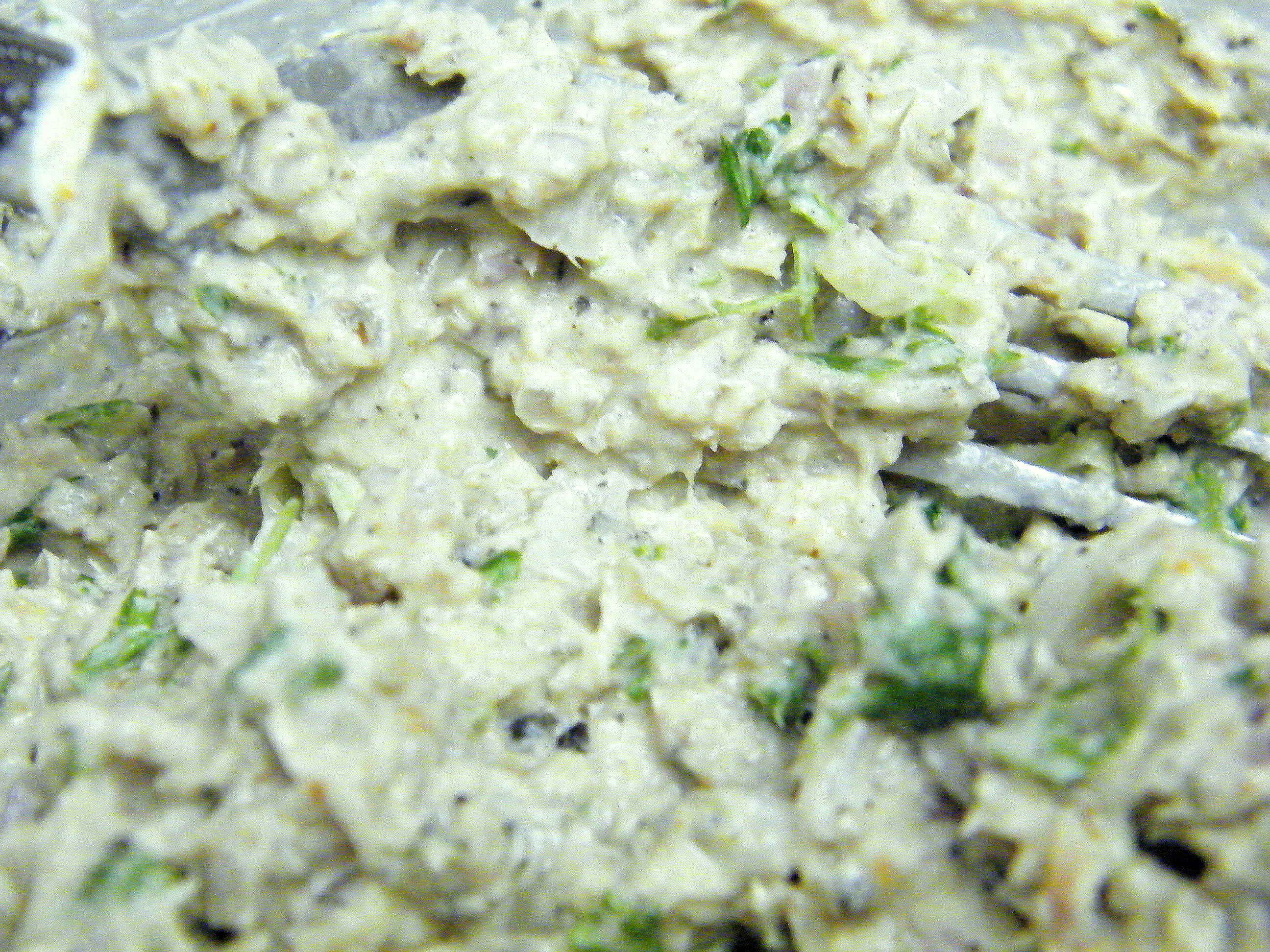
For this recipe, sardines are mashed into a mixture of cream cheese, onions, and herbs, with lime juice and a dash of cayenne for bite. Chilled overnight, the rillettes become a thick, spreadable paste. You might spread it on bread or crackers, use it to stuff eggs or vegetables, or add it to a plate of crudités for dipping.

Sardines mashed into cream cheese, green onions, shallots, herbs and lime.

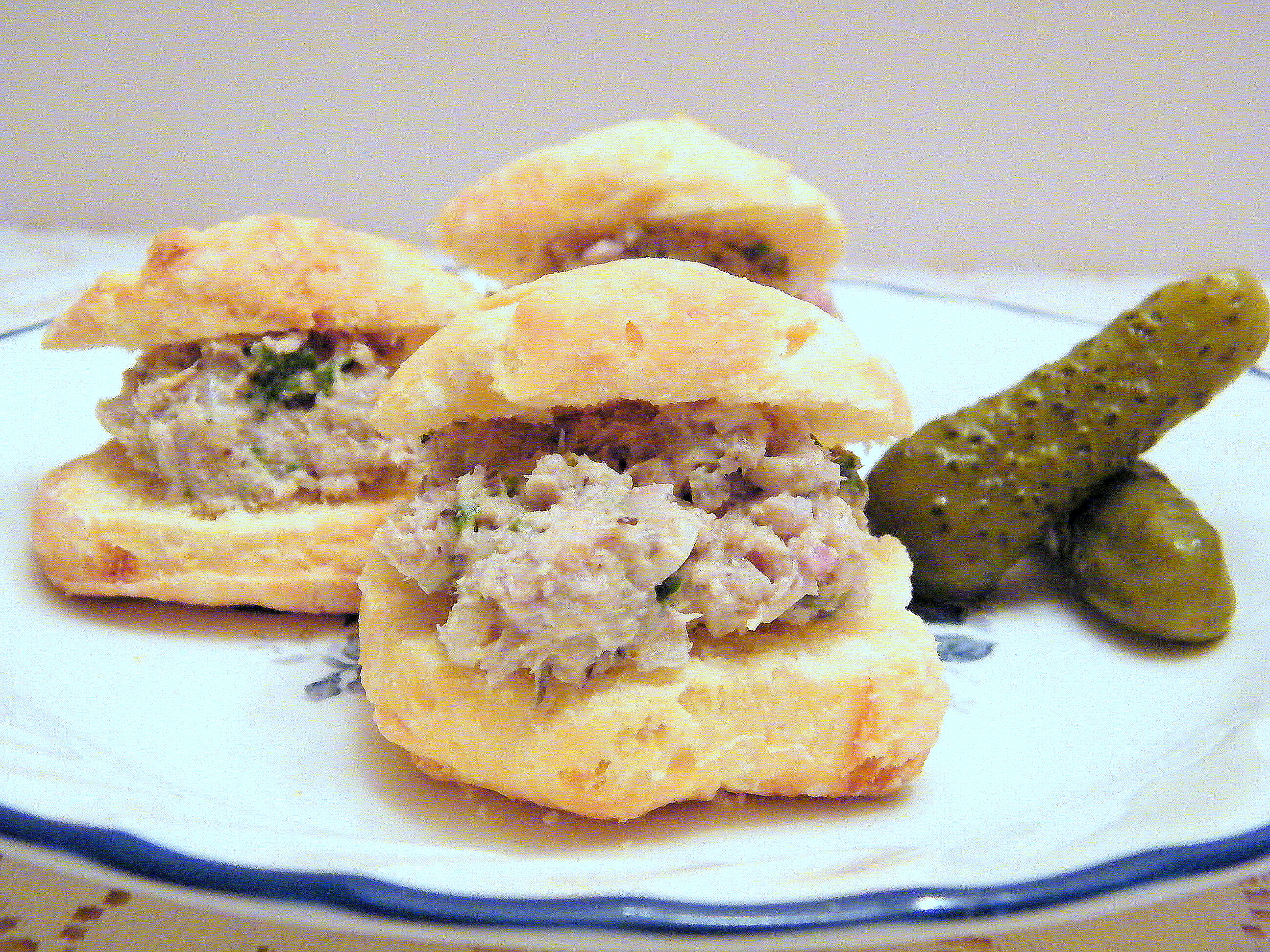
We still had a big bag of Saint-Germain-des-Prés Onion Biscuits in the freezer, so we baked a few and while they were still warm, filled them with rillettes, with a few cornichons on the side. The next day, we did it again. I’m going to have to make another batch if I want to try these rillettes with anything else. I think a thin layer on rye bread would make an excellent condiment for a Montréal smoked meat sandwich. For example. I might have to try Dorie’s recipe for Salmon Rillettes, first, though. And perhaps I’ll have to get my hands on some rainbow trout and work up a version for that, too. Like I said, rillettes are my new best friend.

A plate full of rillettes-stuffed biscuits, with cornichons on the side.

You can find many other blogged descriptions of this week’s FFWD recipe here: Sardine Rillettes

Blossoms & Beds

20120403-180519.jpg

Our computer seems to be malfunctioning, so I’m using the WordPress app on my phone for my post today. It’ll be a short one, as I’m not fond of tap-typing.

There are blossoms appearing everywhere in my neighbourhood, though some of my favourite trees have yet to bloom. I’m also pleased to see that many of my neighbours are converting their front yards to garden beds. We’ve got backyard garden space ourselves and I’m looking forward to getting my vegetable garden planted this weekend or next.

My food gardening guide is Mel Bartholmew’s Square Foot Gardening, but I saw an Urban Farming guide today that I’d like to add to my collection.

I’ll leave you with a shot I took of a neighbour’s yard in which they’ve converted all the available space to gardening beds. I think it’s much more beautiful than a lawn.

I’d love to hear about spring in your part of the world and what your plans are for your outdoor space, whether it’s an acreage or a balcony.

20120403-181629.jpg