FFWD – Two Tartines from La Croix Rouge

Tartine

When I tell people I’m part of a group that’s cooking through a French cookbook together, I think they imagine the classic dishes set forth by Julia Child or the regional comprehensiveness of Elizabeth David. There are plenty of classic dishes and regional favourites, it’s true, but the book also reflects the diversity of modern France. It’s further inflected by a sort of translation wrought by its American author, who wrote the book with North American kitchens and pantries in mind.

The recipes are transformed, once again, by the time we post our versions each Friday. Each take on the recipe can’t help but be inflected by the individuals who make them, in kitchens across the world – the United States and Canada, yes, but also Argentina, Germany, Malaysia, Australia, and more.

IMG_1642

So, when I tackled this week’s recipes, two tartines from a popular café in Dorie Greenspan’s Paris neighbourhood, it’s not surprising that they ended up with a faint Italian accent. Commercial Drive is still (symbolically, at least) the heart of Vancouver’s Italian community. Many of the cafés, bakeries, and delis have a long family history here, even though the children and grandchildren of their founders have had to move out of the area as housing costs increased.

IMG_1646

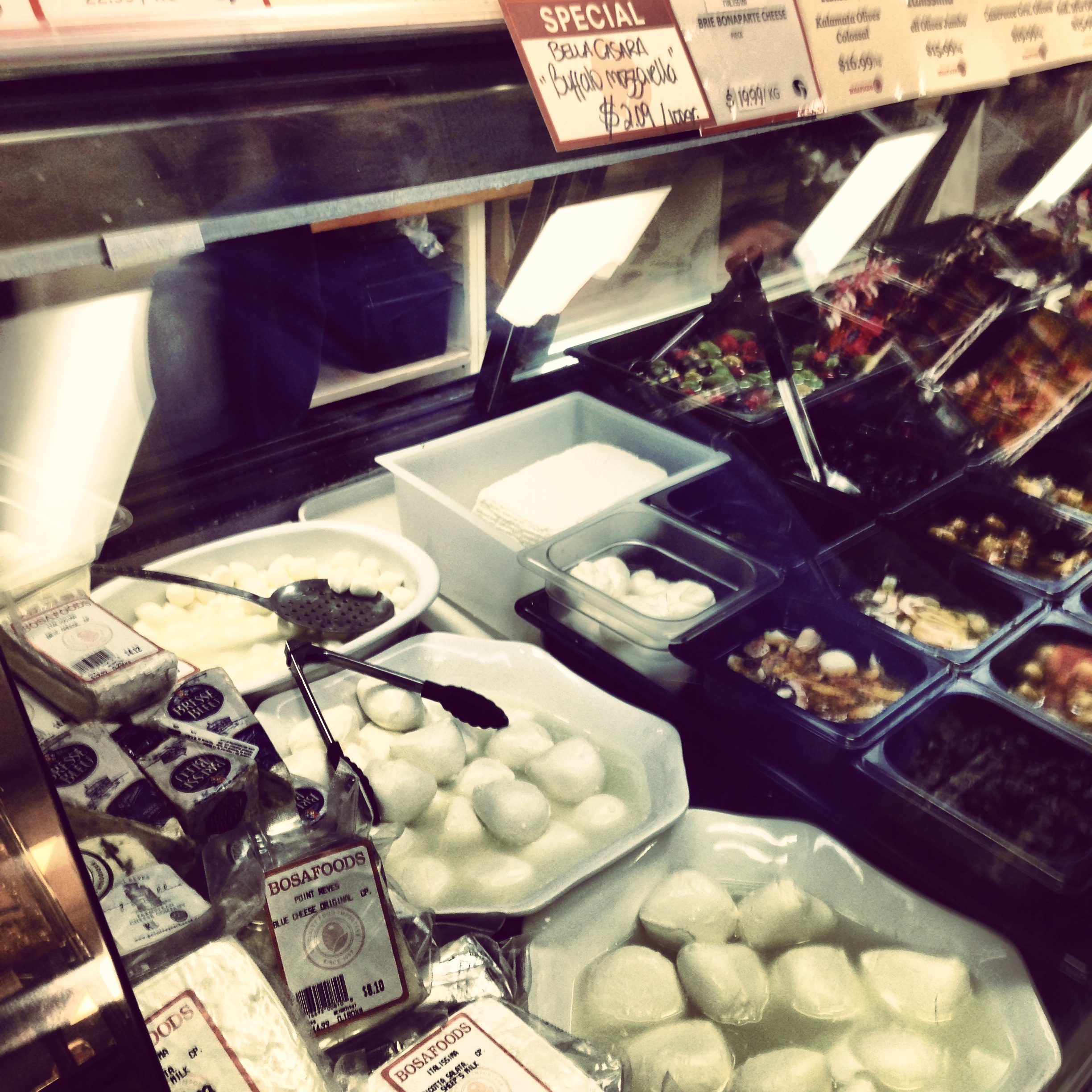
I made two stops in my quest for ingredients for the tartines. First, I went to The Daily Catch to pick up some smoked Sockeye salmon. Then, I headed over to Bosa for the roast beef and bread. Bosa has opened up an enormous Italian grocery store and deli in the furthest eastern regions of the city, but their original location is just a few blocks away and has a great selection in their deli case.
IMG_1648

When I got home, I sliced the whole wheat and millet bread into strips, then toasted them under the broiler.

For the tartine norvégienne, I spread the toast with a bit of mayonnaise, instead of butter, and freshly ground pepper, before layering the salmon and capers on top. I finished them with a squeeze of lemon.

The toast for the tartine saint-germain was spread with a mixture of mayonnaise and Dijon mustard (in hopes the mustard would impart a hint of Paris), then a layer of thinly sliced cornichons, and a generous layer of garlic roast beef.

Roast Beast

The tartines in Around My French Table are a reminder that sandwiches, open-faced or not, can be richly flavoured and sophisticated. I would serve these tartines at a cocktail party or as part of a first course. I’m also counting the days until I can have another Goat Cheese and Strawberry Tartine with local berries.

In the meantime, I’m going to read through the rest of the Doristas’ versions of this week’s tartines, so their personal and regional inflections can inspire my own cooking experiments to come.

You can find many other blogged descriptions of this FFWD recipe here: Two Tartines from La Croix Rouge

Domestic Dreams

IMG_1583

The weekend before last, I was lucky enough to win tickets to the BC Home and Garden Show, courtesy of Tracey from Fashion Forward 40. Thanks again, Tracey, for the tickets!

The show took place on the enormous floor of BC Place, while Portobello West took over the upper concourse.

IMG_1587

There was plenty to see and not all of it was aspirational. I enjoyed talking to the gardening exhibitors and got some contact information for contractors our housing co-op might be interested in.

What struck me, though, was how geared to suburban living the show still seems to be. There were gorgeous indoor and outdoor kitchen displays, backyard living rooms, and everything one could dream of for the kind of single family home that I grew up in. There wasn’t as much for apartment-dwellers like me. I think with the ascendance of condos in this region, that this focus will change.

IMG_1593

In the meantime, there were plenty of lifestyle booths to peruse, with kitchen gadgets being near the top of my list. I had a great day exploring and managed to exit the show without emptying my pocketbook too terribly.

IMG_1602

I’d love to hear what you’re looking for in home and design shows. Or, are there other sorts of trade shows that get you out the door?

A French Fridays Catch Up: Bœuf à la Ficelle and Paris-Brest

Paris-Brest

I haven’t got any beautiful food to share with you today, but I do have some delicious dishes to write about. I’m not in synch with the French Fridays crowd this week; they’re all writing about their adventures in Garbure. Kevin and I are eating vegetarian this weekend, so the luxurious-sounding bean, duck, and sausage stew will have to wait. Instead, I’m doing a catch up for a couple of recipes I missed about a month ago.

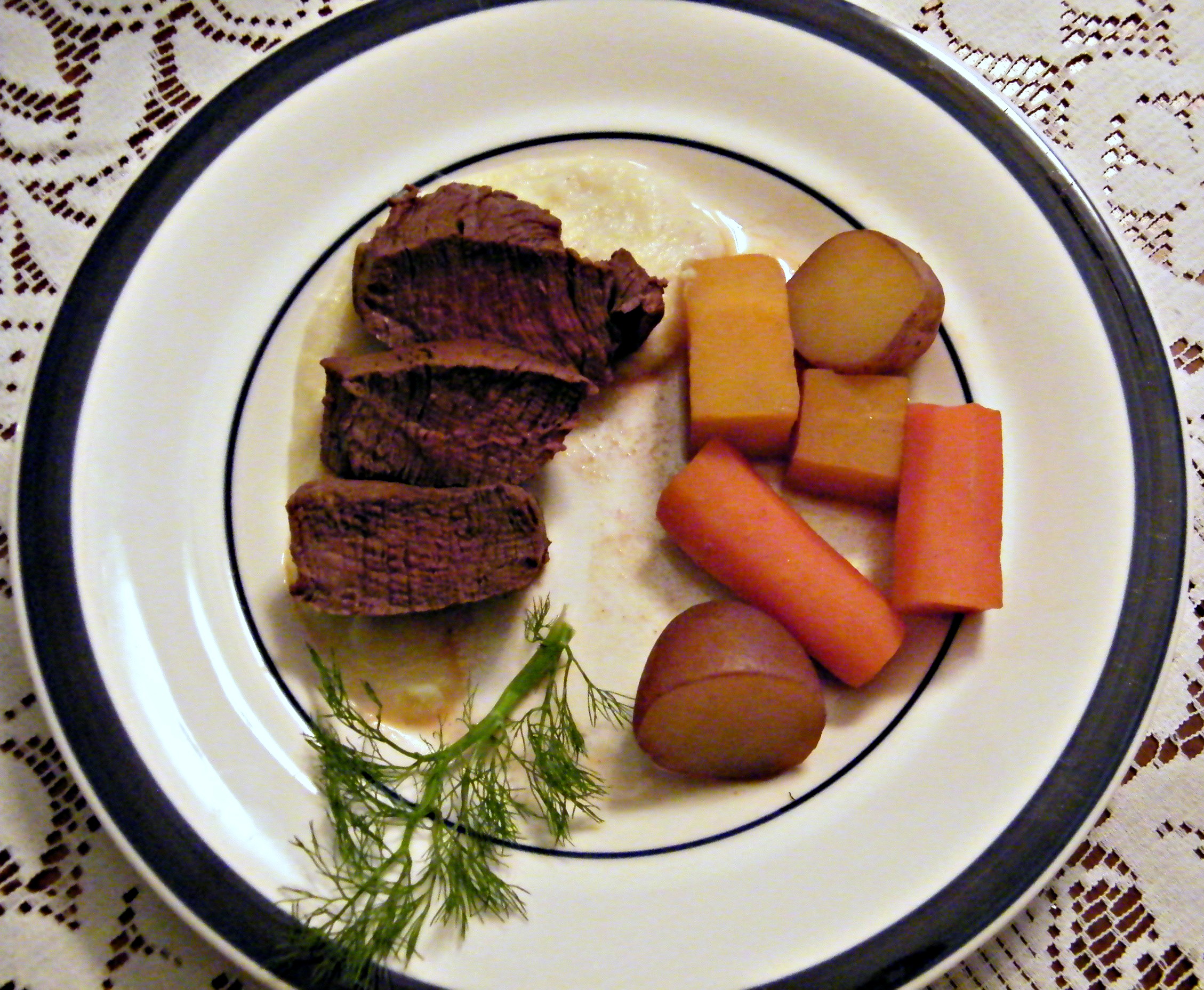
First, bœuf à la ficelle, or in my case, la viande d’orignal à la ficelle. I used moose tenderloin in place of beef. This recipe uses a technique that many of us were skeptical about – poach an expensive cut of meat in beef broth? Madness! In fact, it’s quite the opposite. The gentle bath of beef broth makes the tenderloin perfectly seasoned and perfectly medium-rare. I cheated, opting not to make the oxtail stock, instead infusing beef broth with the aromatics called for in Dorie’s recipe. I think this is a fair trade off, as long as you use a good brand of stock. The moose tenderloins I used were much smaller than beef tenderloin, which surprised me. I only poached them for about seven or eight minutes to get them to rare. Covered with foil, they cooked a little more and were nicely medium-rare when I served them.

I served the moose and vegetables with this Garlic and Fennel Purée from Food and Wine. The garlic and fennel flavour was wonderful, but I prefer a heartier purée, like Dorie’s celery root purée. I think I’d rather use that recipe as a template for fennel purée, but keep the mountain of garlic from Food and Wine‘s version.

Even though I loved the dish, I think the best part of this recipe is the left-over broth. I left it with my mother, who first poached some chicken in it, and then the next day, warmed up some ham. I can’t imagine how much more flavour she’d infused in the broth by the time she used the last of it in a pot of soup. That broth is secret ingredient material.

Unfortunately, my presentation doesn’t do the dish justice. I need a food styling tutor, I think.

Beefy

You can find Dorie’s recipe for Bœuf à la Ficelle here.

You can read about the rest of the Doristas’ experiences with this dish here.

For dessert, there was Paris-Brest, filled with a vanilla and candied almond pastry cream, along with cream puffs filled with leftover Meyer lemon curd from last week’s crêpes. I only wish our assignment had been cream puffs, because those turned out beautifully. Unfortunately, I didn’t pipe the dough for the Paris-Brest into wide enough rings, so it’s not as impressive as it’s intended to be. I also managed to break the top when I was assembling it, so that added to the imperfection. No matter, because it was delicious. Definitely worth brushing up on my pastry piping skills.

To see how the rest of the French Fridays Crew fared with Paris-Brest, head here: Paris-Brest

I’ll be making both these recipes again, even if my presentation skills don’t show them to their best advantage. They may be homely versions of elegant dishes, but that’s easily forgotten once the eating begins.

FFWD: Butter and Rum Crêpes, Plain and Fancy

20140221-222438.jpg

In the early years of my parents’ marriage, my mother went on a quest to find the perfect lemon meringue pie recipe. It was my father’s favourite dessert and he told her he hadn’t had a good slice since he’d moved away from home. He’d never found any that could measure up to his mother’s recipe.

We were living in Winnipeg at the time, surrounded by my mother’s family, and she thought he should have a taste of home, too. So, she asked all the nurses she worked with at the hospital. Some of them brought in pie for my father to try and others passed on their recipes to my mother. Each time he was presented with a new version, Dad said, “It’s good, but it’s not like Mom’s.” Then, she went to her aunts, famously prolific scratch cooks, for their recipes. He thought their lemon meringue pies were pretty good, but they still didn’t measure up to his mother’s.

Finally, my grandparents came out to visit and my mother took my grandmother aside to ask her for her recipe. She told her how many different recipes she’d tried, without success. Grandma replied,”Oh well, dear. I just use Shirriff’s.” That possibility hadn’t occurred to my mother.

So, shortly after that visit, there was one more pie for my father to try. He tried it and said delightedly,”This is it! This is just like Mom’s.” My mother pulled out the box to show him and that was the end of scratch lemon filling in their household for many years to come.

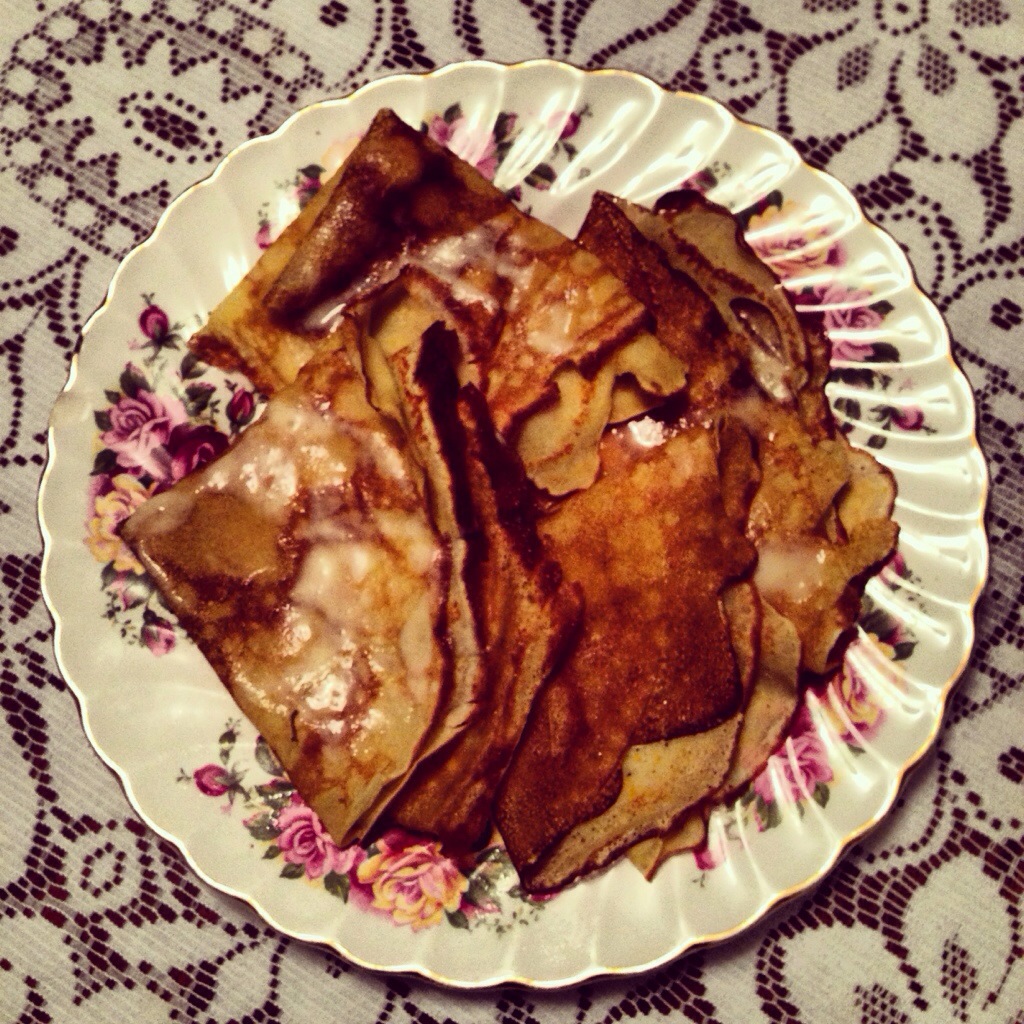
Until now. I’ve made Dorie’s lemon curd before, but not for my parents. One of the options that Dorie presents for this week’s assignment is a lemon curd filling. The crêpes themselves are flavoured with lemon and orange zest, along with rum and orange liqueur (I used Triple Sec). There’s also a buttery orange and lemon sauce that goes on top, so I thought, why not go the distance? It was a good choice. My crêpe-making technique needs a little work – thank goodness for folding, it hides a multitude of less-than-perfectly-round sins. The texture of the crêpes was spot-on, though, and the make-ahead filling and sauce make them the sort of dessert you can “just throw together” to impress.

This dessert was a big hit with my parents. My Dad even said the filling was just as good as Shirriff’s.

You can find many other blogged descriptions of this FFWD recipe here: Butter and Rum Crêpes, Plain and Fancy

Readers Need Sharpening, As Knives Do

20140218-204922.jpg

Literary works may best be seen not as texts with a fixed sense, but as matrices capable of generating a whole range of possible meanings. They do not so much contain meaning as produce it.

Terry Eagleton, from How to Read Literature

Freedom to Read week starts on February 23rd this year and “encourages Canadians to think about and reaffirm their commitment to intellectual freedom, which is guaranteed them under the Charter of Rights and Freedoms.” It’s a time to stand up for works that have been banned or challenged and to speak up for the belief that one’s moral universe will not be shaken or shattered in the face of art that may not be in line with it.

So, it’s with more than a little chagrin that I turn to the topic that I’ve been thinking about for the last week or two. You may have heard that J.K. Rowling has had misgivings about one of the primary relationships in the Harry Potter series. That’s not what I’ve taken issue with; plenty of writers have had second thoughts or regrets about texts that their readers regard as fixed, as this insightful piece from The Millions demonstrates.

What has been bothering me is some of the response to Rowling’s declaration. Particularly the listicles ranking the lousiest matches in literature, with this one being the worst offender. It’s as though the characters from works of literature were lifted out of any contextual relationship to the novels they inhabit and dumped into a plot-driven television drama. It makes me want to confiscate the listicle-assemblers’ copies of the books they refer to and put them into more responsible hands.

Hence, the chagrin.

This isn’t the first time I’ve gone down this road (I know, I never learn). I once got into a scuffle with another reader of Tess of the D’Urbervilles on a reading forum, because she was shocked and disgusted that a woman of such low character could be the heroine of a romance [sic] novel. As I recall, I replied with an impassioned retort that Tess’ approach to the gallows was a profoundly feminist critique of the strictures of Victorian class and gender roles and that the angry reader should probably avoid reading literature in future. I just angered her further, mostly because she hadn’t read to the end of the book before she posted her review and now she knew the ending. That was the end of my online literary discussions.

In my defence, if that’s possible, it’s not that I’m taking issue with what people read, but with how they read it. You don’t need to have the same interpretation of Hardy’s novels as I do, but I wish more people would take the time to read literary novels as a whole, rather than focusing solely on the plot.

But, don’t take my word for it. Terry Eagleton’s latest book, How to Read Literature, is a funny, deft primer on how to approach literature. I read it around the same time those damnable listicles came out and I enjoyed the way he works through various aspects of the novel (nod to E.M. Forster intended), demonstrating the pleasure that can be had from paying closer attention to character, structure, and interpretation. It was a nice corrective. I’d also recommend Francine Prose’s Reading Like a Writer, in a similar vein. Whether they’re reminders or road maps for the reader, they encourage deeper, more thoughtful engagements with reading.

In any case, you’re probably better off with the librarians than you are with me. They will encourage you to read deeply in the directions you choose, without any curmudgeonly grumbling about how you do it.

FFWD – Hélène’s All-White Salad

20140214-221046.jpg

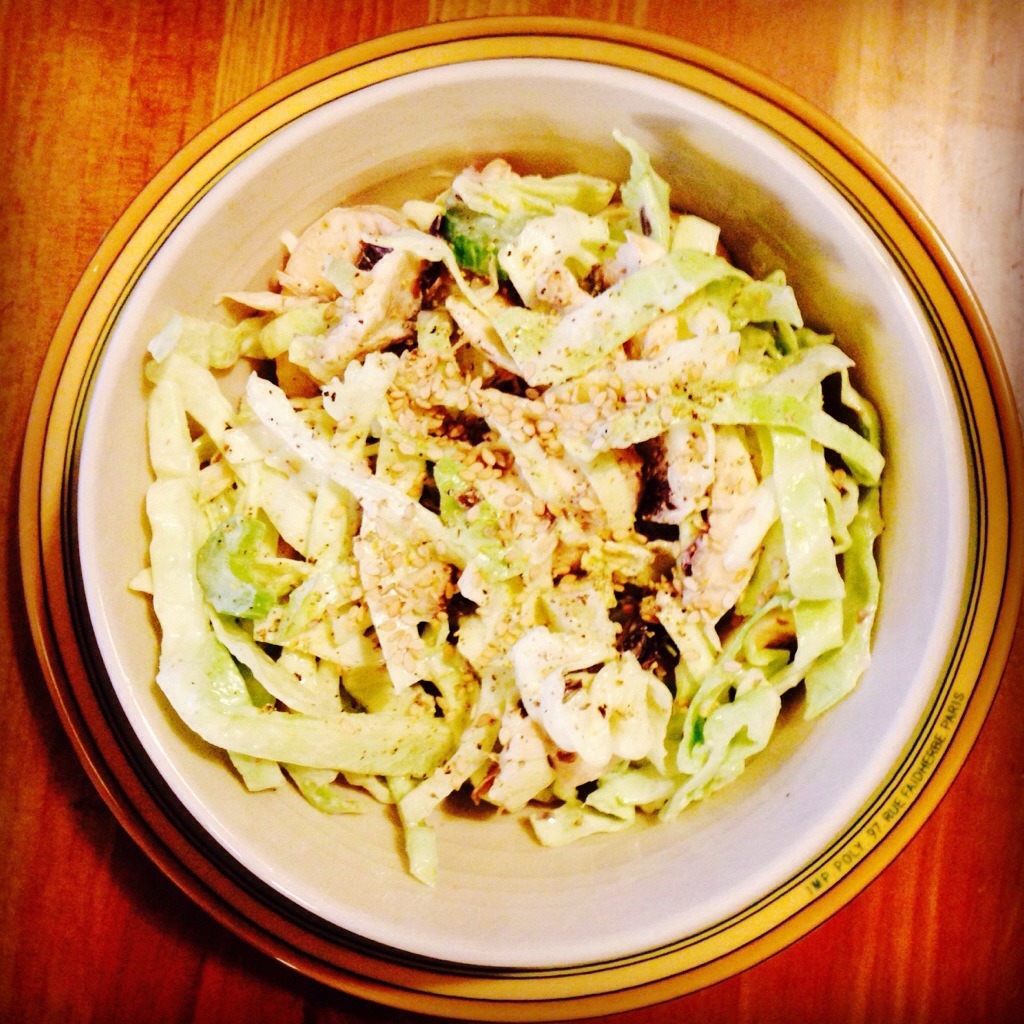
My salad for this week’s assignment wasn’t so much white as spring green, matching the turn of weather we’ve had this week. After a period of cold, damp weather that seeped into the bone, it now feels like time to put away heavy coats and sweaters until autumn rolls around.

20140214-232805.jpg

It’s also that in-between time where there isn’t much produce that’s in season, save for a few brassicas and storage fruits and vegetables. So, salad featuring cabbage and apples is perfect for this time of year. With mushrooms for meatiness and celery for extra crunch, this salad made for a surprisingly filling dinner.

I wasn’t sure about the lemon-yogurt dressing – it was entirely too tart when I tasted it. The sweetness of the apples in the salad transform the taste, though. I think if I make it again, I’ll add in a shot of apple juice to make it a little more versatile.

Kevin skipped the dressing altogether and sprinkled some lemon juice on his, instead. He’s trying to work toward becoming vegan, or at least vegan-ish, so some French Fridays assignments may get put off until I have a meat-eating audience at hand, as last week’s Boeuf à la Ficelle did. Maybe I’ll do a game version of that one for my parents some time.

If you’re looking for a meatless meal that suits this season, you can find the recipe for this week’s dish here.

20140214-221057.jpg

You can check out everyone else’s white-on-white greens here: Hélène’s All-White Salad

Bike City

Bikes

Though the addition of separated bike lanes to the downtown has brought cycling to the fore in civic conversation, the truth is that Vancouver has been a bike city for decades now. It’s been a slow evolution, from inconvenient bike paths set on out-of-the-way streets to today’s emphasis on a safe, connected network.

Until recently, cycling businesses were mostly limited to bike shops, courier companies, and rentals, with a few pioneers like SPUD taking the lead on eco-friendly bike deliveries. Now, there’s a widening array of bike-powered businesses, encouraged by the growing infrastructure, the mainstreaming of cycling culture, and the shrinking demand for bike couriers. The smaller start up costs of bike-based business makes it a creative space, allowing entry to small-scale ideas that might not make a profit if auto transport had to be factored in.

There’s also been an evolution of support services for cyclists as cycle culture has grown. Amenities like bike corrals and air pumps are being installed across the city. Many events and festivals provide bike valet services. The Farmers’ Market also sets up bike valets at some of its markets, along with free bike delivery of groceries at two of their locations. As more Vancouverites give up their cars and focus on cycling, walking, and public transit to get around, this support will continue to grow. It’s not just singles and childless folks getting into the act, either – Velo Family Diaries is a great account of how pedal-powered living can work for the kind of families typically seen in mini vans or SUVs.

Breakfast

Whether it’s brunch from the Breakfast Courier or secure bike parking at the Folk Festival, I’m happy to take advantage of what this bike city has to offer.

Here’s a sampling:

Groceries, Greens, and Grub

Food Pedalers
Nut butters at your door
Eastside dinner service
Lunch at your desk

Forget Food Trucks

Coffee
Ice cream
Popsicles

Heavy Lifting

Shift Urban Cargo
Long Bikes

DIY

Our Community Bikes
Kickstand

Advocacy

HUB
BEST
Momentum
Critical Mass

New Westminster’s Downtown Renaissance

Tugtastic

The trajectory of New Westminster’s historic downtown has embodied a lot of the conversations around downtown renewal over the last few decades. For years, Columbia Street struggled to compete with newer shopping centres, while the surrounding area declined. In the mid-eighties, the construction of the Skytrain and Westminster Quay shopping centre were promised to bring new life to the area, but that didn’t last. After its novelty wore off, Westminster Quay languished through several reincarnations and was largely empty for a long while, while Columbia Street relied on wedding shops for its primary retail strength.

Tea 4

It’s been said that the real estate boom in Vancouver is responsible for New West’s downtown renaissance, along with the construction of many residential towers on redeveloped industrial lands. Independent small businesses are now thriving alongside the wedding shops on Columbia Street and Sixth Avenue, while Westminster Quay has rebranded itself as the River Market at Westminster Quay and focused on food and the creative sector to allow it to become a community hub.

Re Up

I spent the day in the area today, exploring the River Market with my Mom. The cold snap didn’t allow us to wander as far as we’d have liked, but we found more than enough to keep us busy at the Quay and in the surrounding area. The Quay is divided into the “Hungry Floor” (which is just as you’d expect) and the “Curious Floor” (which is dominated by arts organizations and creative sector businesses). We predictably spent most of our time in the food zone. There are a number of Vancouver transplants, anchored by a branch of Donald’s Market and including La Grotta Del Formaggio, Wild Rice, Re-Up BBQ, Longtail Restaurant, and Wally’s Burgers. When you include Fratelli Bakery’s branch farther up Columbia, it’s no wonder people have taken to calling New Westminster East Van East.

Dim Sum 3

Crepes 3

My mother and I limited our tasting today to Dim Sum at Wild Rice and sweet crêpes at Crêpe Des Amis (expertly made by its Parisian proprietor). Unfortunately, after that we had room for no more. It would be fun to go back with a larger group and do a proper tasting tour of all the River Market has to offer.

Growing

Books

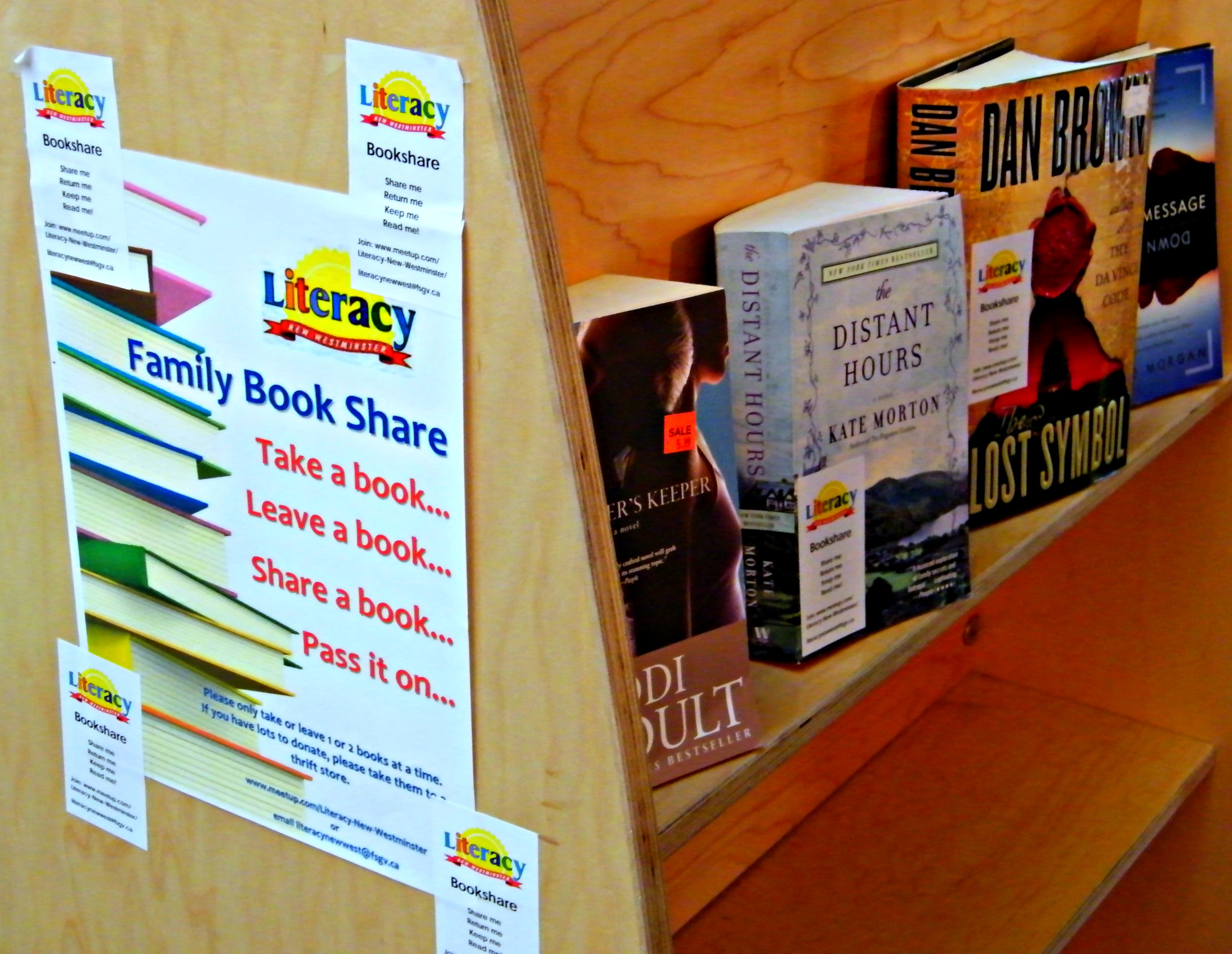
The management has also done a good job of making the Quay a community magnet, with lots of seating, family-friendly events, and initiatives like a book-sharing station. It creates a city square sensibility, provides indoor amenities that connect with the riverside boardwalk and Quayside Park, as well as providing incentive for walkers to move beyond the Quay into the revitalized Columbia Street shopping district. I’m looking forward to going back on a warmer day and exploring further.

View

Deeply Local: Grandview-Woodland’s Citizens’ Assembly

Juxtaposition

These are some of the things I love most about my neighbourhood: I can walk the length of the shopping street as quickly (or sometimes more quickly) than the time it takes for the bus to arrive and carry me from one end to the other; the variety of foodstuffs and staples available within walking distance; the wealth of restaurants and coffee shops; brick and mortar bookstores, record shops, and even a video store; the mix of heritage homes, 1950s walk ups, and affordable apartment buildings, many with room for vegetable gardens; a feeling of engagement with one’s neighbours across the district. The things that I don’t love include the increasing unaffordability of the neighbourhood for both residents and small business owners, the proliferation of condos designed to last little longer than a mortgage cycle, and the increasing feeling that our neighbourhood is destined for suburbification and its attendant disconnection from the deep feelings of community that have been built here.

With all this in mind, I found myself inside on a sunny Saturday along with almost seventy other Grandview-Woodlanders, debating the questions around the construction of a Citizens’ Assembly and the part it will play in crafting the plan that will guide our neighbourhood’s future. The City hired a facilitator who specializes in forms of deliberative democracy like Citizens’ Assemblies and over the course of the afternoon, participants had an opportunity to tackle at least two of the structural questions the City put before us. We met in small groups for half-hour periods, then at the end of the day, there was a summary from each of the tables about the most important ideas that had emerged. All ideas were written up on tear sheets that were taped up around the room and at the end of each session, participants marked their priorities dotmocracy-style.

We were encouraged to choose the discussions we felt most passionate about, but a more accurate assessment for me would be that I chose the discussions I was most worried about. My choices were Composition of the Assembly and Community Engagement. Some of the ideas that came out of the first group included: representing three kinds of tenure – owners, renters, and housing co-op members; reserving seats for aboriginal members, whether or not candidates are identified through the initial call out; using a multi-pronged strategy for recruiting candidates that includes outreach to community groups as well as more passive strategies like mailouts; that twenty Assembly members was probably too few and fifty probably too many; and making sure that there’s representation across the district. The ideas that came out of the second group drilled down a little deeper. Outreach by Assembly members to community groups to capture viewpoints that might not be represented by the Assembly, especially those of vulnerable populations. The three levels of the process (City-led, Assembly, and Community) should not be separate, but should inform each other – community consultation should happen in conjunction with the Assembly and the City, rather than separately; the Assembly’s report should be brought to the public for critique and comment on a regular basis; the City’s plan should be both informed by the Assembly’s proceedings and incorporate the Assembly’s critiques and comments.

I hope that when the City finishes gathering the suggestions from the two sessions and the online consultation, that the information is presented in an unabridged form and that the Assembly is constructed on the most representative basis, not just on the basis of demographic diversity, but also with a socially just distribution that accounts for differences in privilege.

I came away from Saturday’s session with a cautious optimism, not because I believe that this process will be the salvation of my neighbourhood, but because I was engaged with so many people who care about the district as much as I do. I know that a number of people felt the session was too constrained and directed by the City – you can find out more about that here and here. My hope is that the Assembly might help shift the focus of Grandview-Woodland’s future away from developers and toward residents and that through this process, the City will come to value the area as the model of liveability (mixed-income, walkable, diverse, lovely) that it is already.

It’s not too late to comment on the Assembly composition debates. You can find the Discussion Paper here and the link to the City’s questionnaire is here.

FFWD – Dressy Pasta “Risotto”

Pasta

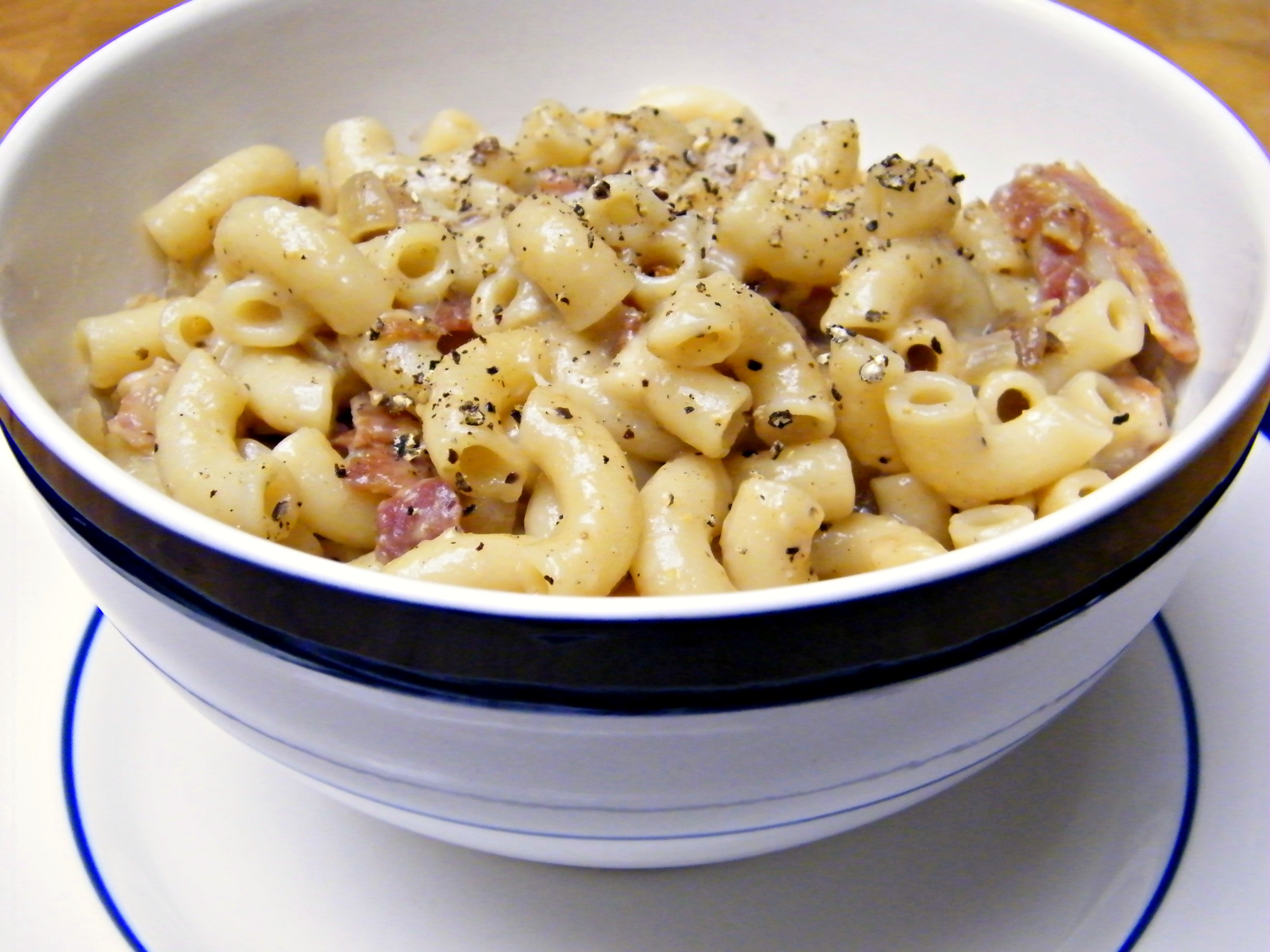
The rest of the Doristas rang in the New Year with this dish, but I’m only getting to it now. I didn’t fancy the idea of simmering gluten-free pasta in broth for twenty minutes or more, so I waited until I had an opportunity to make this for my parents. Even then, I had to modify the recipe – their reaction to heavy cream and mascarpone in the sauce was, “Are you trying to kill us?” I substituted milk and Greek yogurt instead. I stood firm on the Parmesan, though. My less-likely-to-kill-my-parents version worked out beautifully. It didn’t have the creamy ooziness of the original, but the flavour was there, especially because I added bacon to the mix. (This really couldn’t be called a light version, could it? Oh, well.) I used a little of the bacon fat to sauté the onions, then added the chopped bacon to the pasta at the end.

I loved the method for this pasta. Simmering the macaroni in broth adds so much flavour and it’s nice to be able to get on with other things in the kitchen while it’s slowly absorbing the liquid. The milk and yogurt dressing didn’t look as creamy, but it tasted creamy and I enjoyed the lightness with which the sauce coated the pasta. Which is not to say that I’m not looking forward to trying the full version some time. I’ll just save it for a fancier occasion than a weeknight dinner. Besides, I like knowing that I can make a delicious version of decadent dishes with the sort of dairy that I generally have on hand.

If you want to try the full fat version (and then come back here to tell me what I’m missing), you can find the recipe here.

To see what the rest of the French Fridays crowd got up to this week, follow the link to Moules Marinière. Now that I’ve caught up on the first recipe of the month, I need to tackle this one – I’ve been looking forward to it for quite some time.

Close Up Pasta

You can find many other blogged descriptions of this FFWD recipe here: Dressy Pasta “Risotto”