FFWD – Pumpkin Stuffed With Everything Good

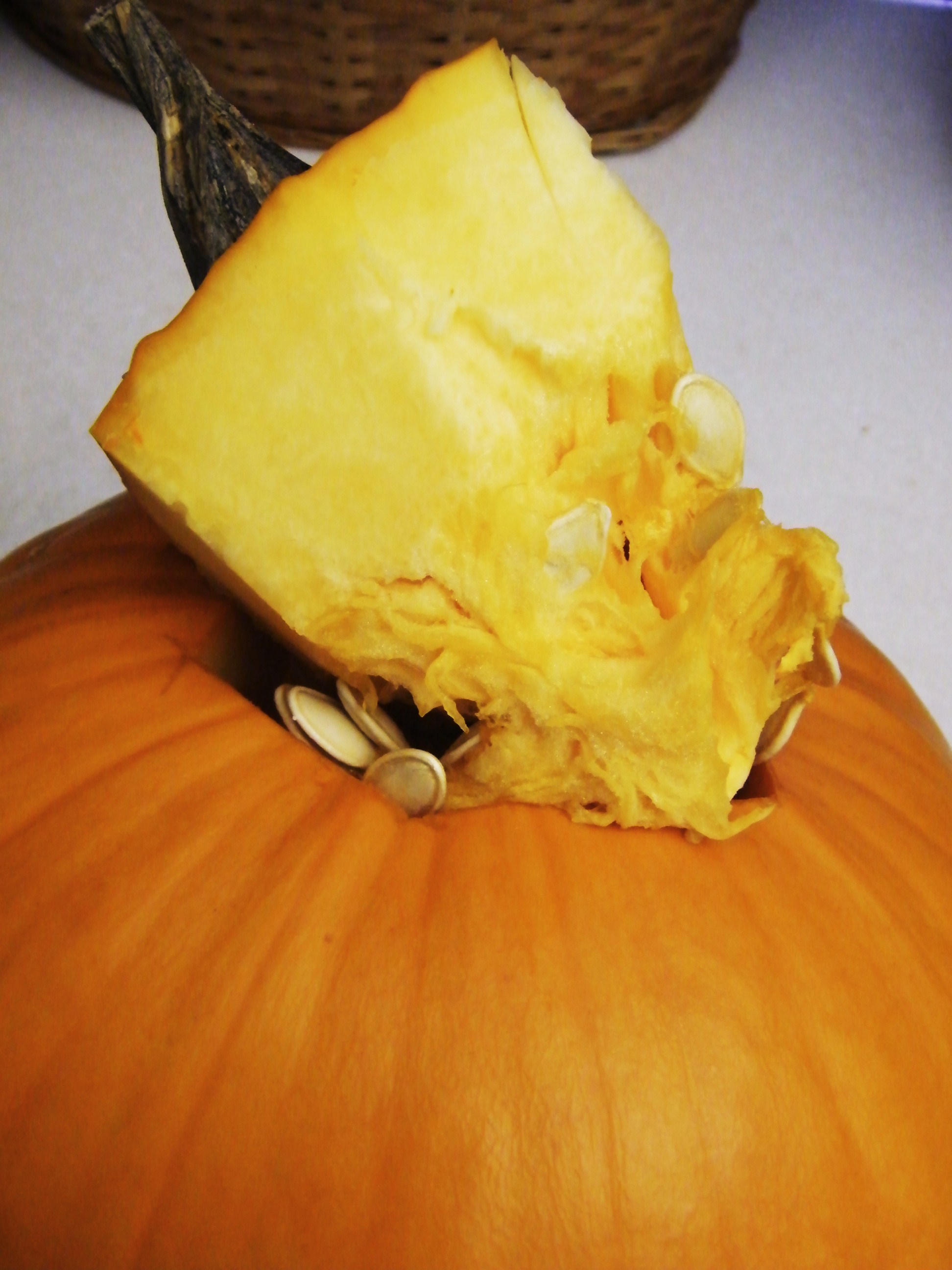
Pumpkin, with lid.

Pumpkin often gets short shrift when it comes to savoury dishes. Pumpkin pie, pumpkin cookies, and even pumpkin cheesecake show up on menus once the weather starts to turn. But pumpkin is as lovely as any other squash when it comes to appetizers, soups, or entrées. Pumpkins roasted whole make for beautiful presentation, too.
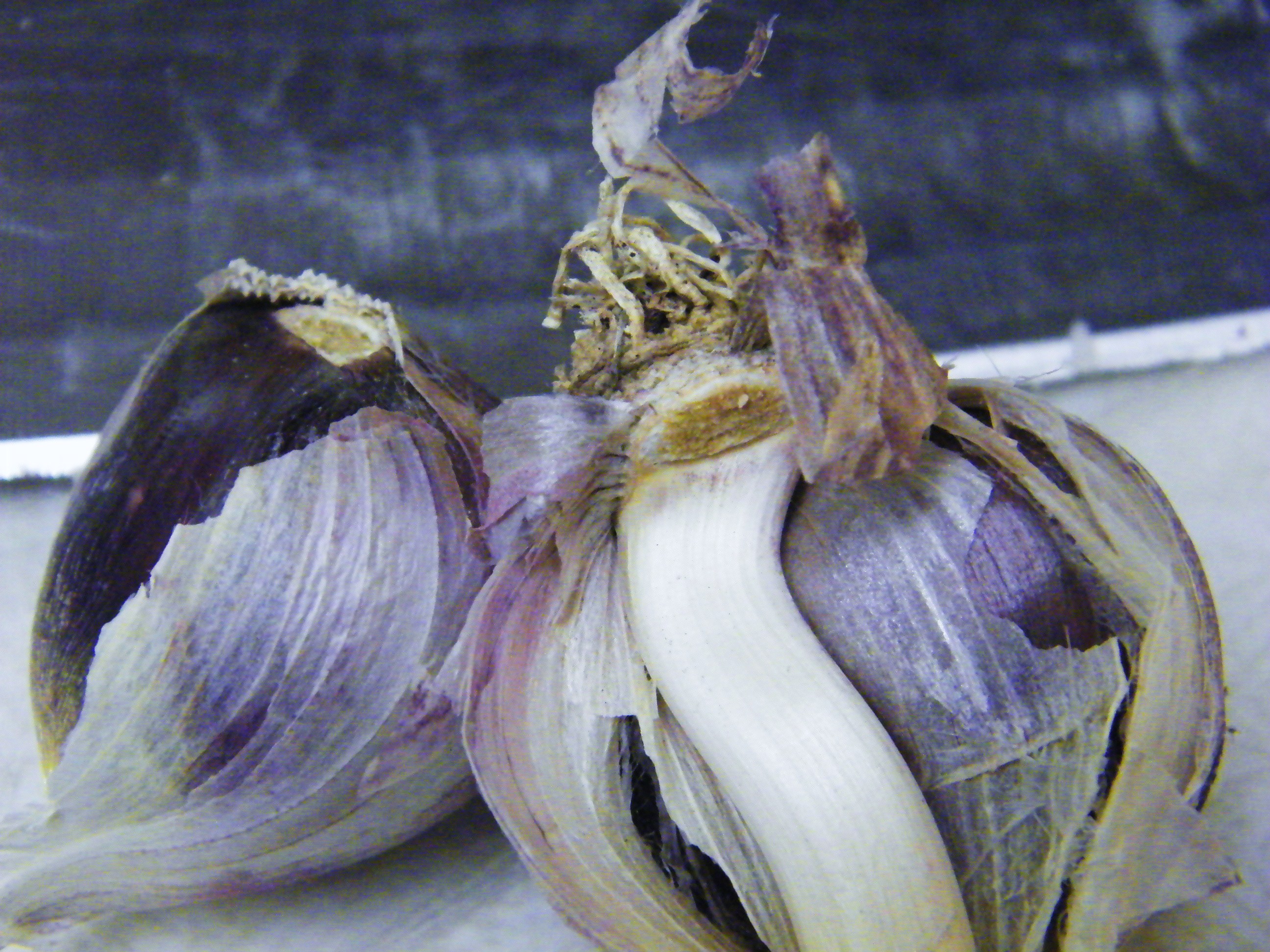
Garlic from my Dad's garden, all purple and white.

This week’s French Fridays recipe is a stuffed, roasted pumpkin that’s both beautiful and delicious. It’s a great choice for a dinner party or holiday meal. Dorie’s recipe includes cream, cheese, and bacon, but would be easy to convert for vegetarian or vegan guests. Or switch the bread cubes for rice and you have a great gluten-free version.
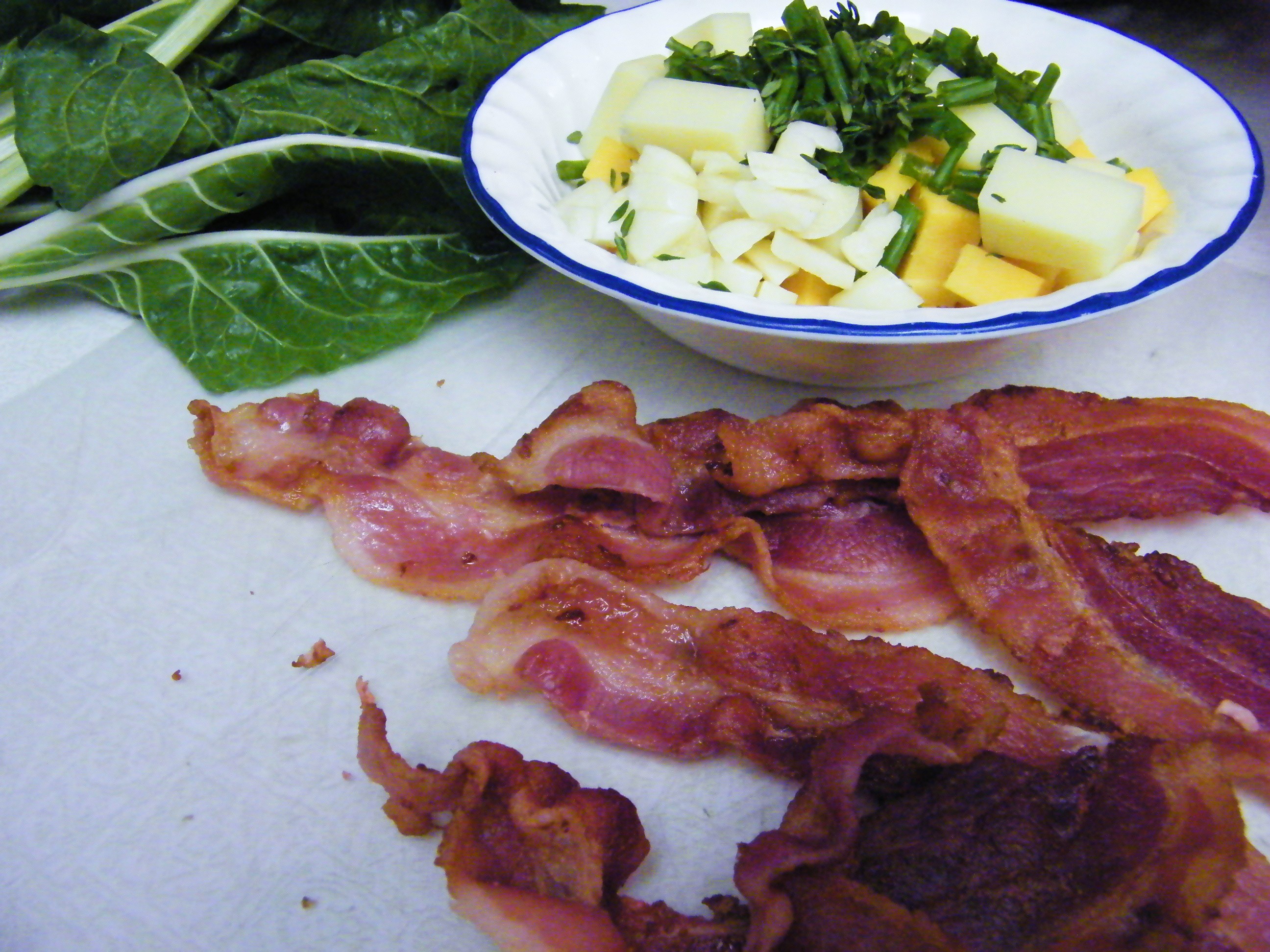
Bacon, Swiss chard, and the rest of the pumpkin filling ingredients.

The hardest part of this recipe for me was finding a small pumpkin. People are on the hunt for Jack O’ Lanterns at this time of year and the markets were filled with giant pumpkins. The smallest one I was able to find was about six pounds, twice the weight called for in the recipe, so I was generous with the filling ingredients. The basic stuffing uses bread cubes, garlic, herbs, bacon, and cheese, which is then covered in nutmeg-spiced heavy cream.
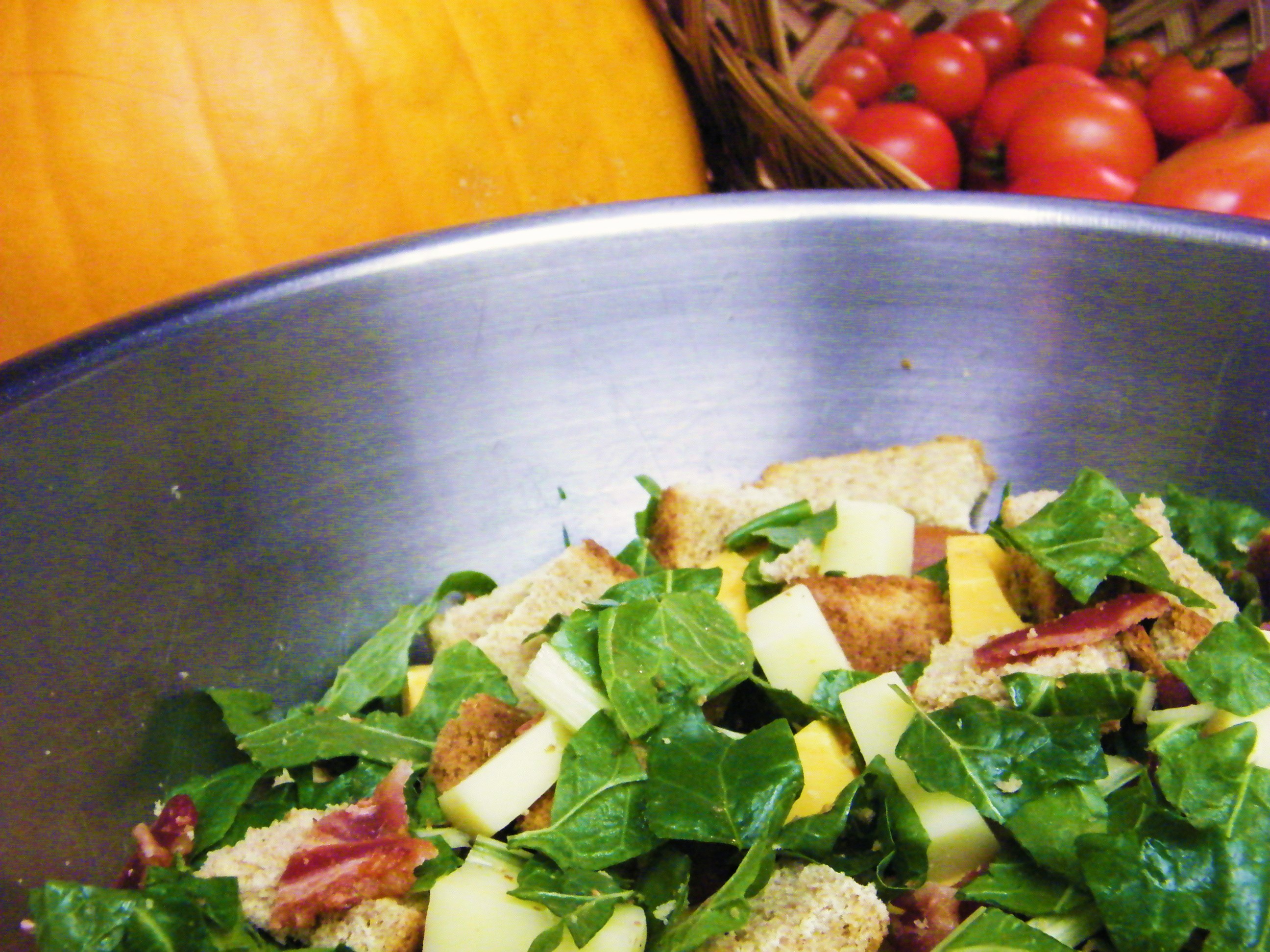
Mixing the pumpkin stuffing, with the pumpkin and some tomatoes in the background.

I was lucky enough to be able to use garlic my Dad grew, along with thyme, chives, and Swiss chard from my mother’s garden. Along with some high-fibre bread, I’m quite sure that this was a healthy dish. (Please ignore the additions of bacon, heavy cream, Emmenthal and old cheddar.)

The stuffed pumpkin, out of the oven.

It made a lovely meal beside some grilled venison steaks, which I’d marinated in oil, red wine, garlic, lemon juice, and some Montreal Steak Spice. Since the pumpkin was so big, I pulled the leftover stuffing out of the pumpkin, chopped the pumpkin meat finely, and mixed it all together. I pan-fried some for a great lunch the next day. Elegant at its first serving and good as leftovers – this recipe will be revisited, though I doubt it will ever be made the same way twice. As Dorie said, it’s more of an outline than a recipe, after all.
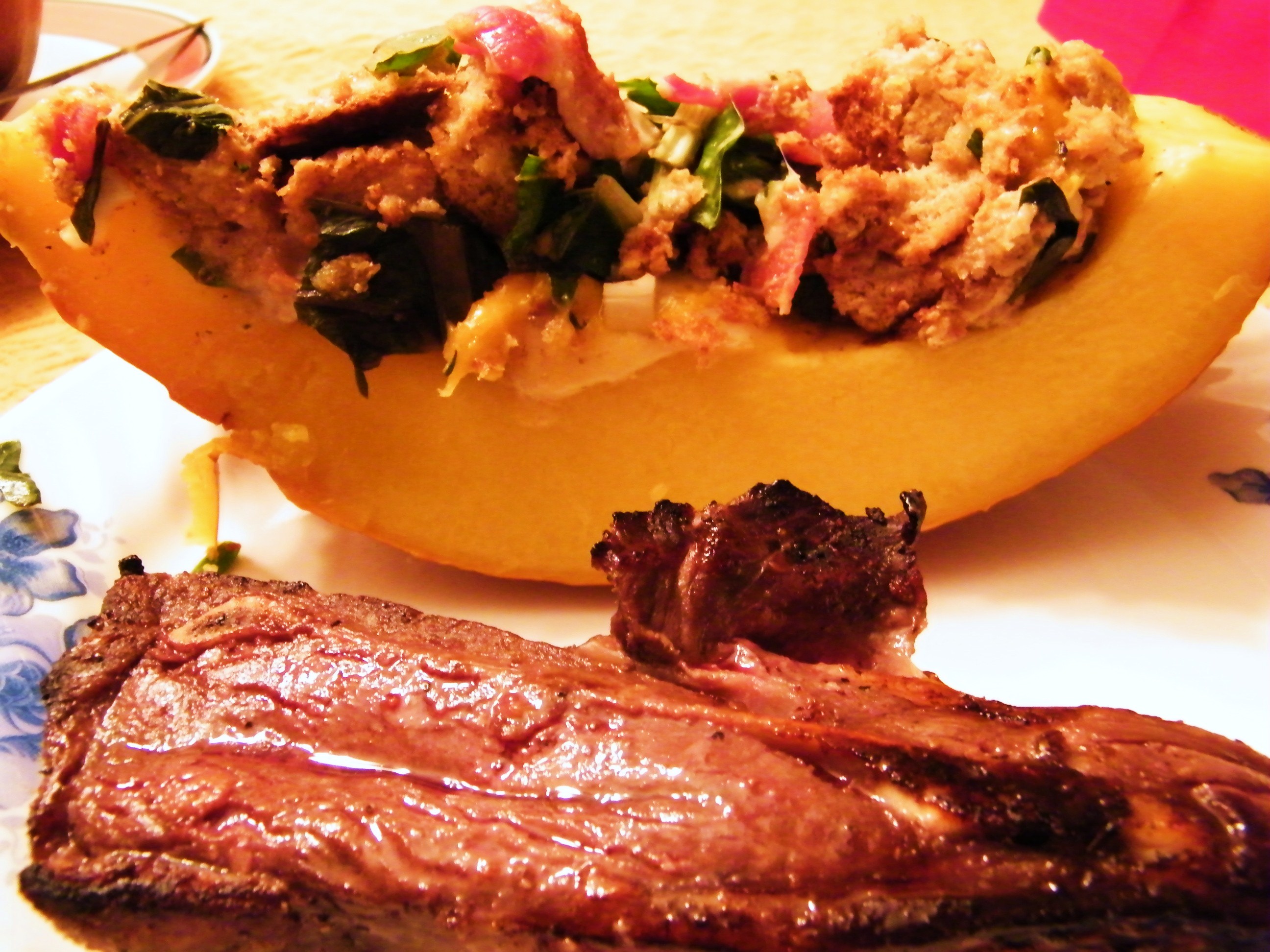
Stuffed pumpkin and venison steak.

You can find many other blogged descriptions of this week’s FFWD recipe here: Pumpkin Stuffed With Everything Good
FFWD – Corn Soup

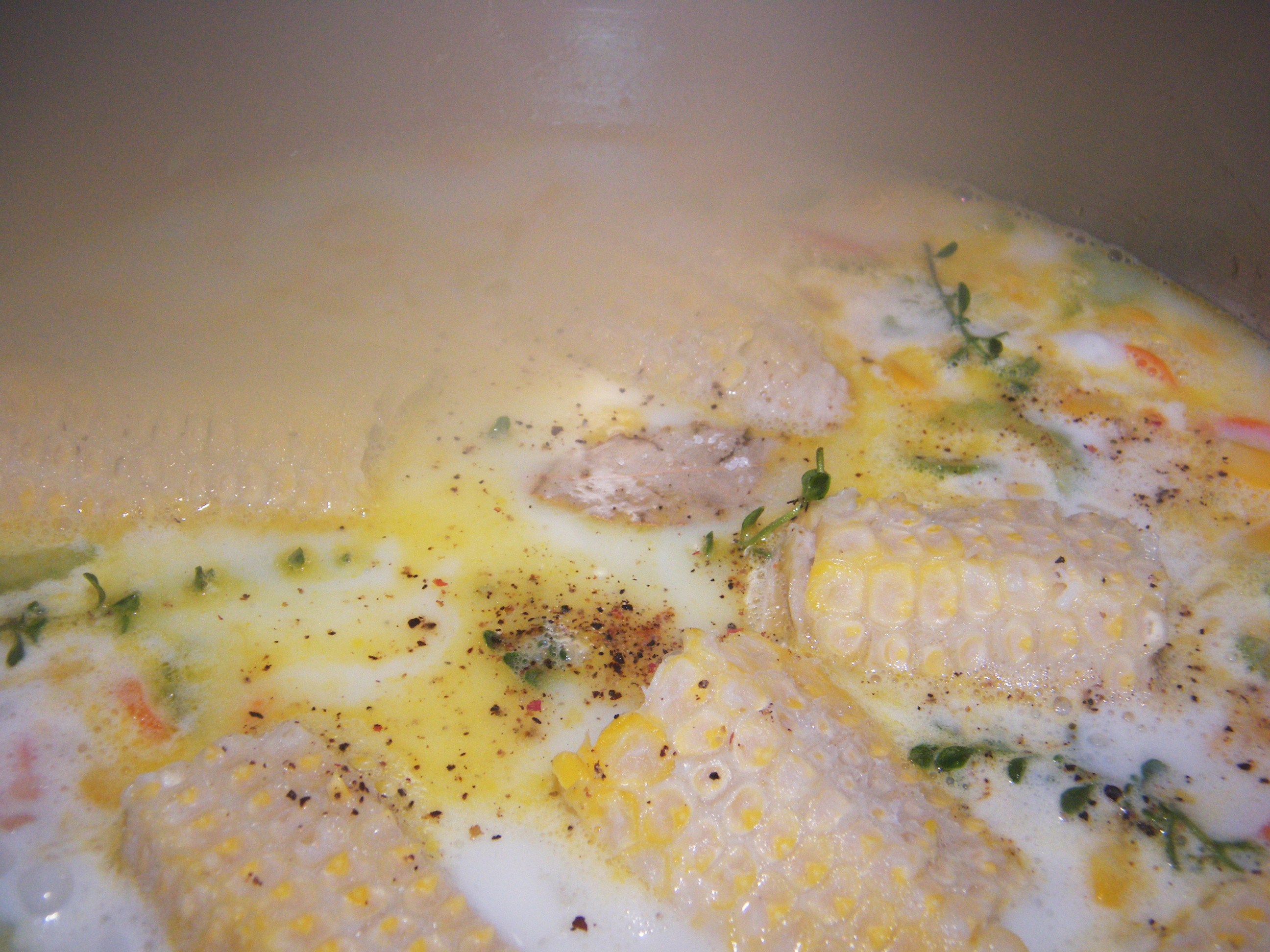
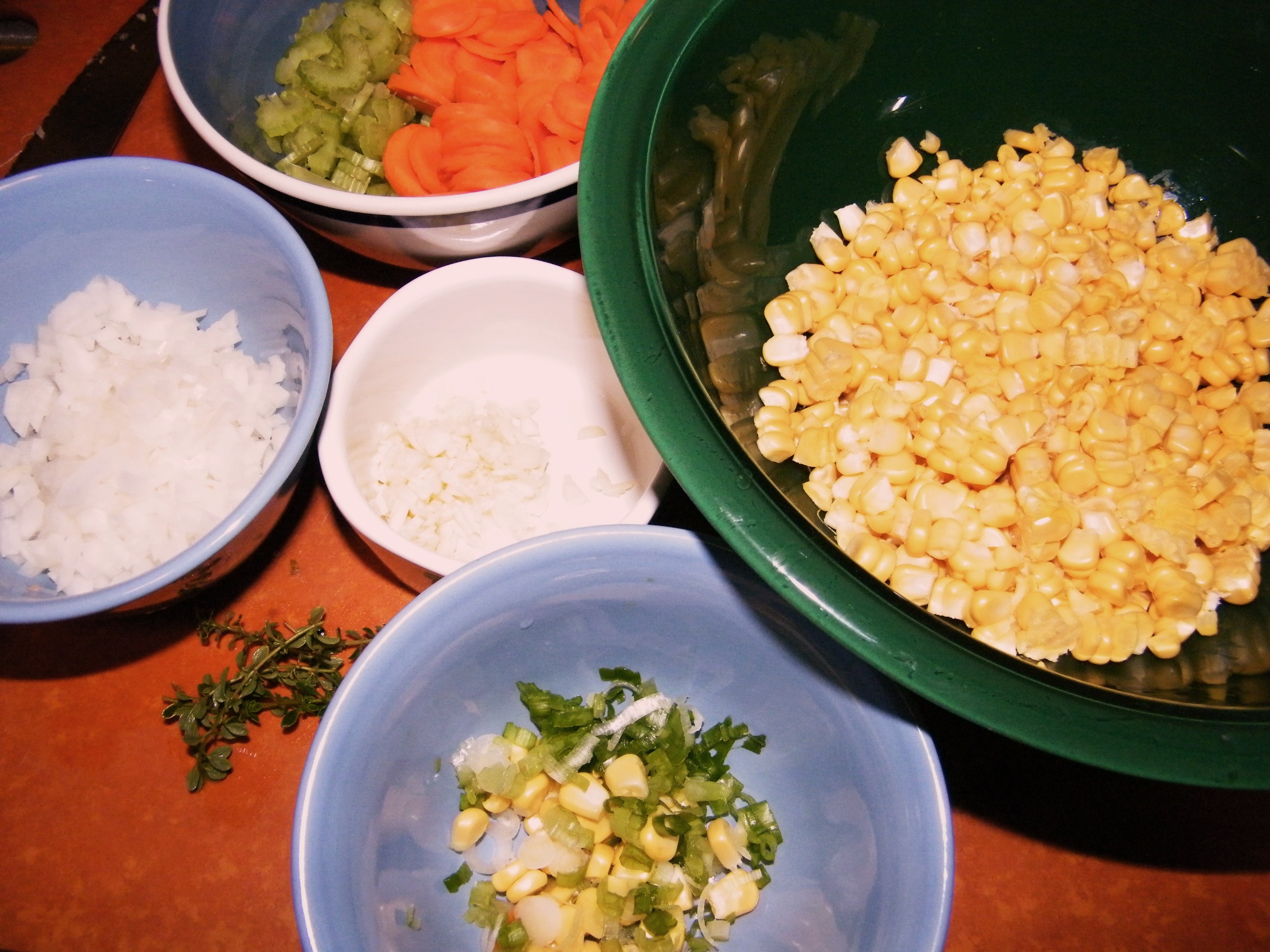
Soon to be soup.

What is the best kind of corn where you live? Here, everyone wants Chilliwack corn. It’s a town far up the Fraser Valley, about an hour and a half drive from Vancouver. Chilliwack corn is famous for its sweetness and every roadside stand claims they’re selling it, regardless of where it was actually grown. I know the corn I used for this week’s French Fridays recipe was organic, but it wasn’t labelled Chilliwack corn. It was perfect though, so it must have been, right?

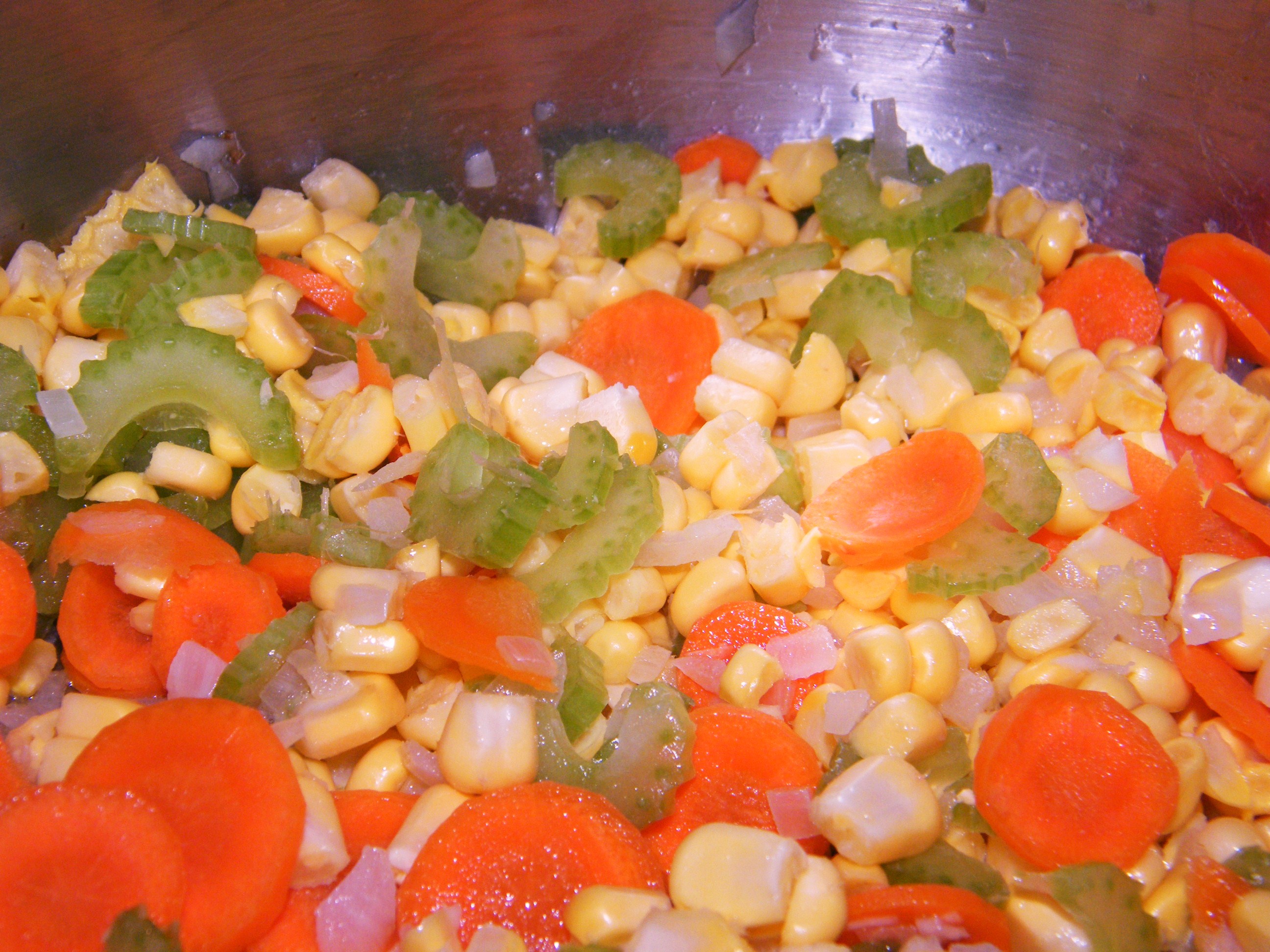
Softening the vegetables.

Dorie’s corn soup is a perfect example of why we should eat seasonally, when we can. I don’t think this soup would have been half so successful if I’d used off season or canned corn. Corn is still at its peak right now and most people are serving it on the cob, boiled or grilled, to take advantage of its sweetness. This soup is worth holding back a few cobs.

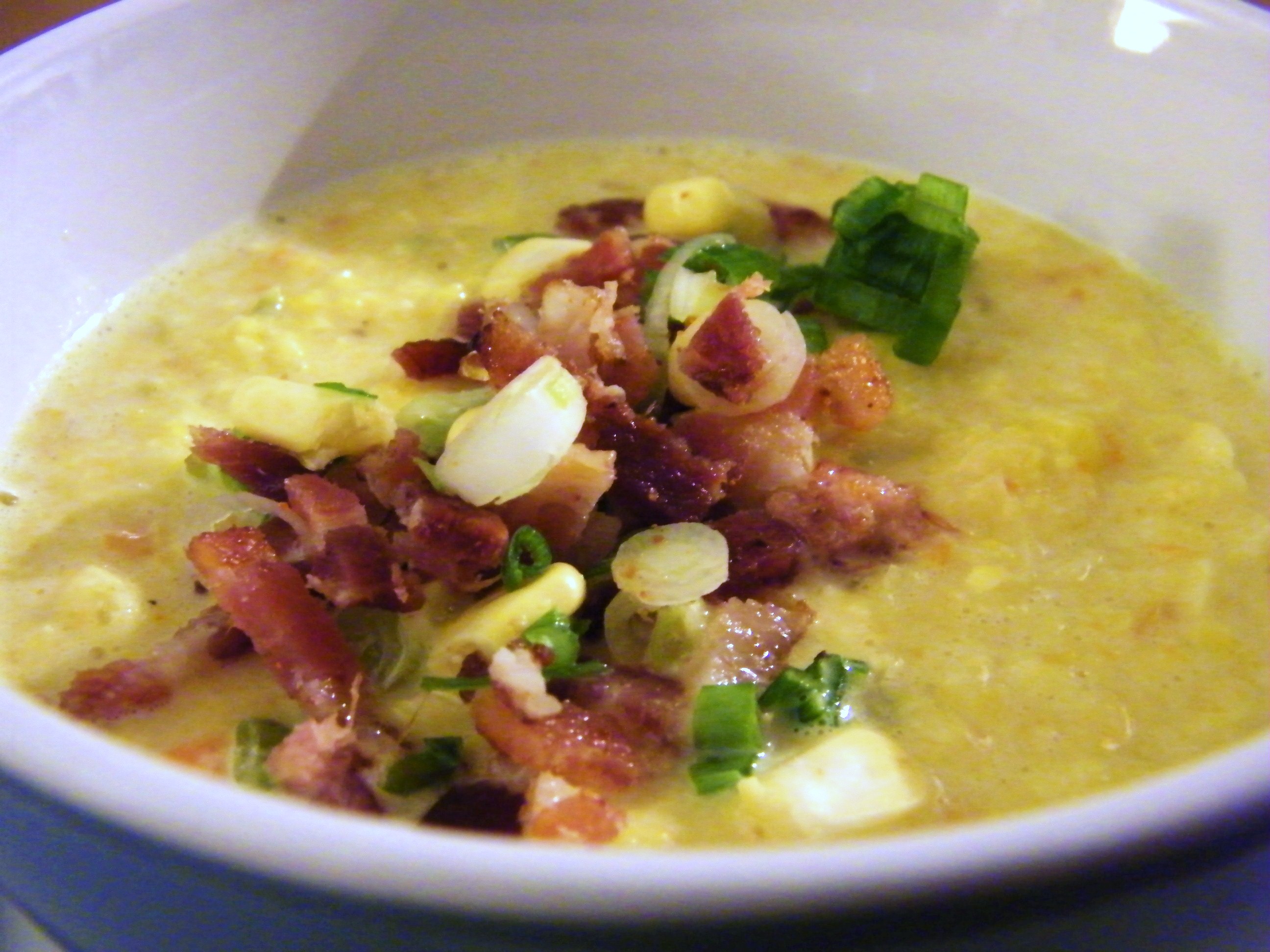
Corn sliced straight off the cob (easier than I thought it would be) is sautéed with onion, garlic, celery, and carrot, while the corn cobs are used to infuse hot milk. Seasoned with herbs, the soup is puréed, then topped with a mixture of reserved corn kernels, chopped scallions, crumbled bacon and hot pepper. You can also add a spoonful of crème fraiche, if you’re feeling decadent.

Yes, those are corn cobs you see, flavouring the soup.

I went for a lighter version, substituting 1% for whole milk and forgoing the crème fraiche altogether. It still tasted quite rich. I can imagine the full version being served in very small bowls (or even shot glasses) before a meal. The flavour of the fresh corn stands out, while complemented by the other ingredients. I suspected I would like this soup, but I was surprised by how much I enjoyed it. I think I’m going to have to put a reminder on the calendar for next year to make this soup when corn is again at its best.

The finished soup, with a garnish of green onion, bacon, corn kernels and a little cayenne.

If corn isn’t a specialty where you live, what is? Are there areas that are more famous for something than others? When I was travelling in Mexico, every ice cream stand claimed its wares were from Michoacán, which is famous for ice cream. And people from Winnipeg always go to New Bothwell for cheese curds. I have a feeling that this is a widespread phenomenon.

You can find many other blogged descriptions of this week’s FFWD recipe here: Corn Soup

Late Summer Garden

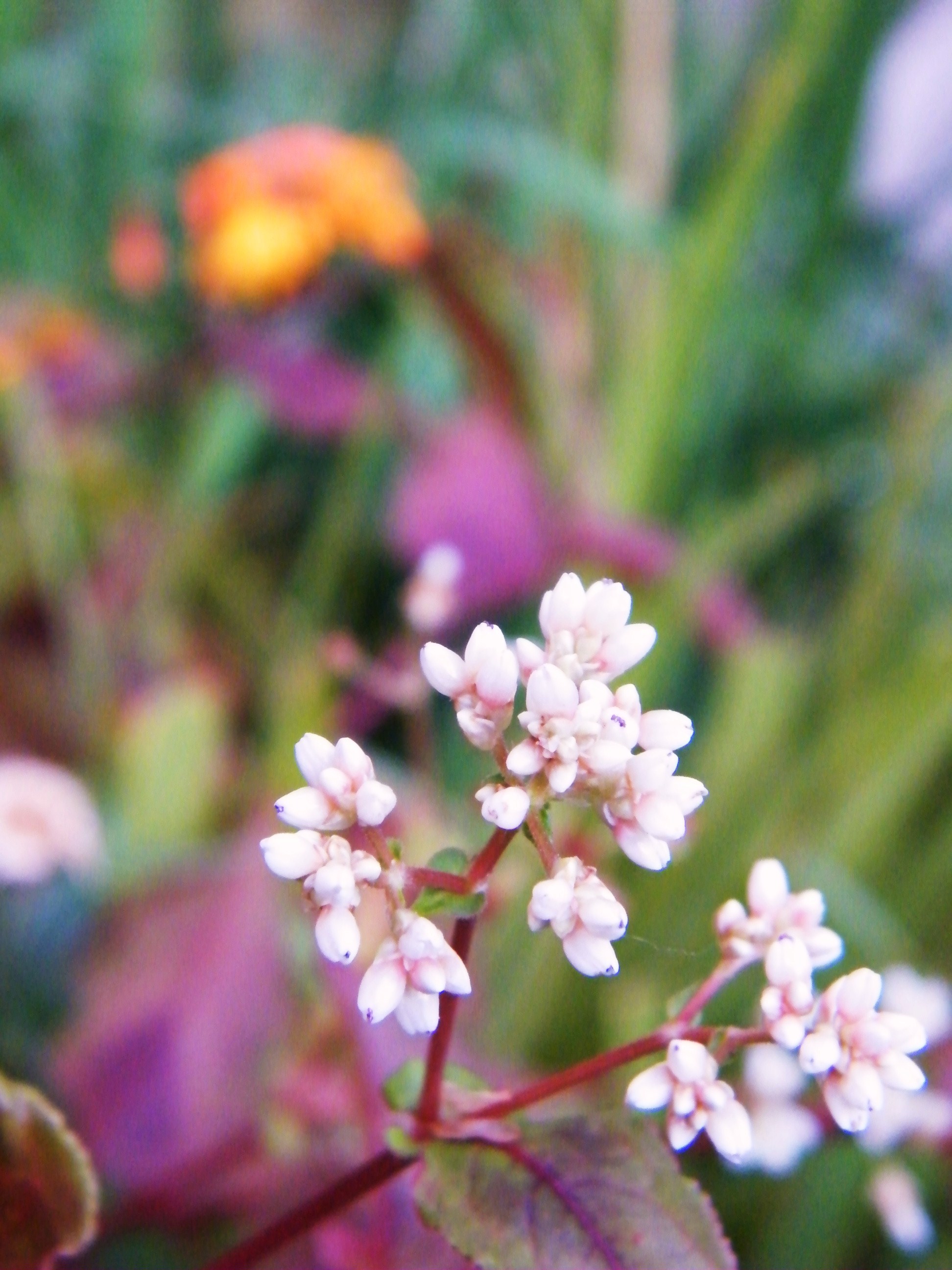
A glimpse of one of the flower beds.

I was a little worried about my garden over the last month. In the middle of July, I sprained my ankle rather badly, managing to damage it about as much as I possibly could without actually breaking anything. (Go, me!) My partner was able to do some watering for me and the weather was fairly mild, so nothing died while I was out of commission, thank goodness. The weeds, being the hardy, prolific, and opportunistic garden dwellers that they are, spread riotously. I was stuck looking out the window and watching their progress. Now that I’m mostly healed, I’m trying to slowly clean up the garden beds. They aren’t so bad, but the yard itself has become a little daunting.

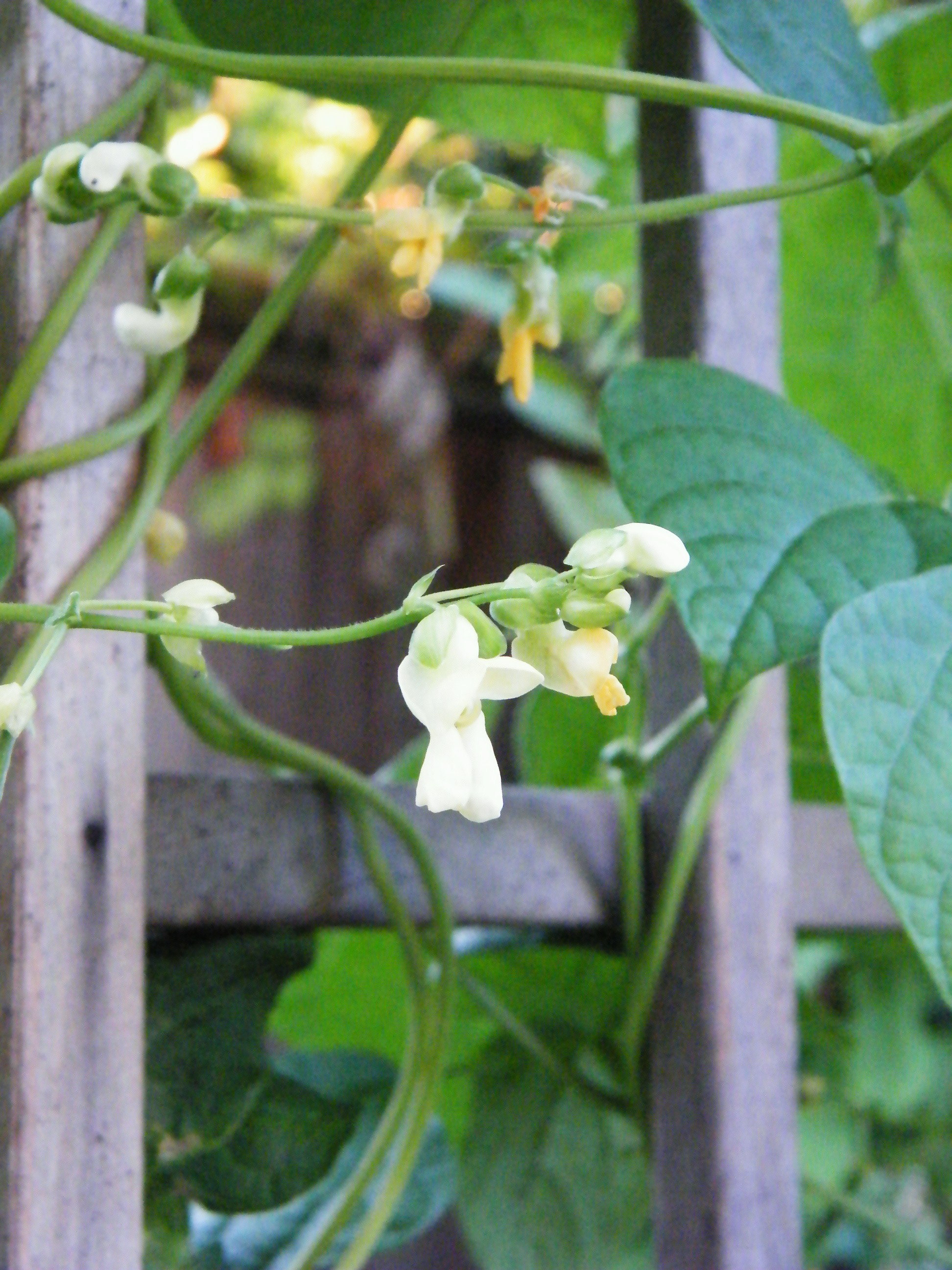
Flowers on my bean vine.

The good news is that I’m finally starting to eat from my garden. First radishes, lettuce and basil; now thyme and carrots; soon beets, Swiss Chard, beans and cucumber. I’m also hoping it’s not too late to put in a few more squares for fall harvest. Not bad for my first season of square foot gardening.

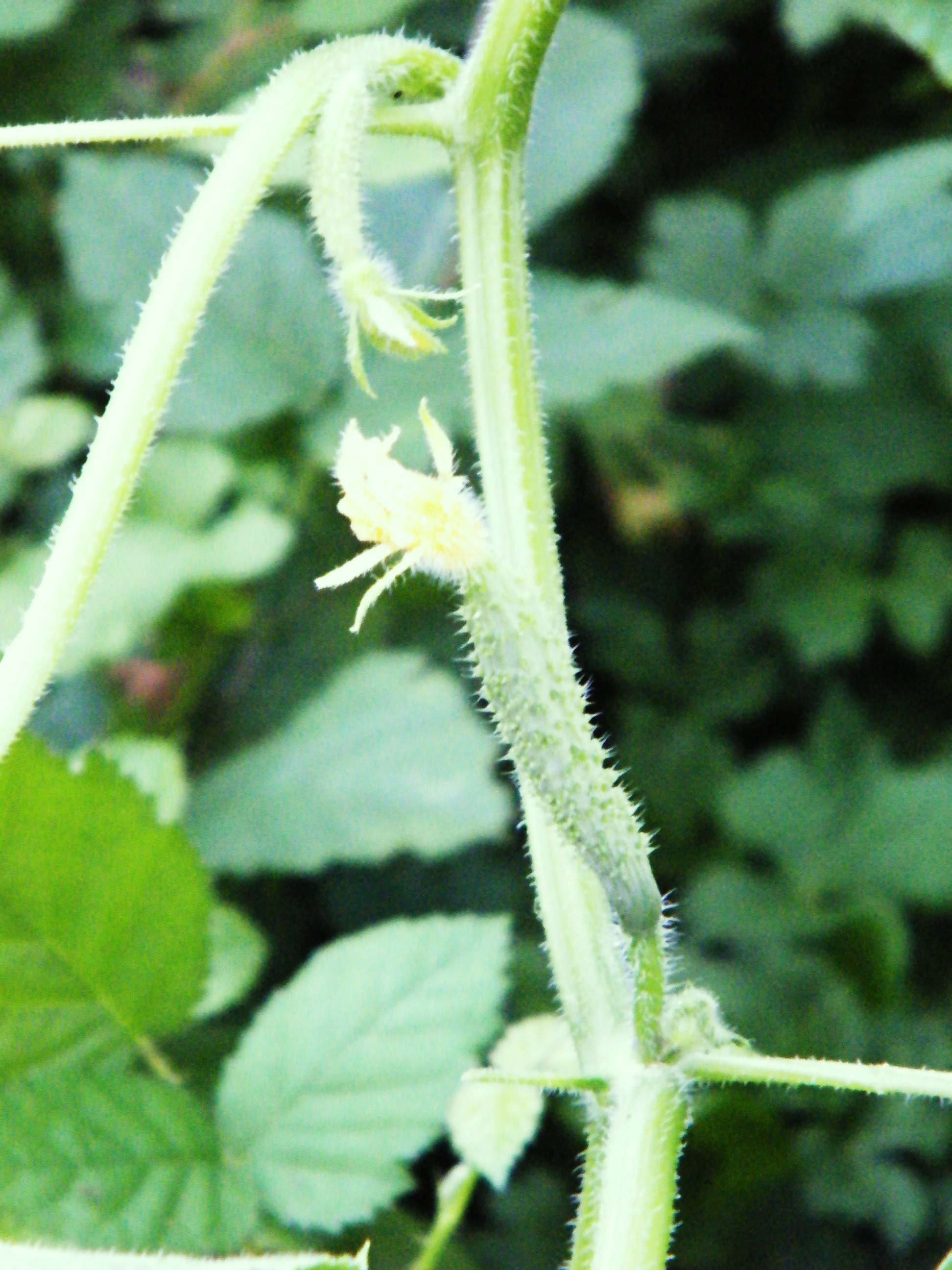
Tiny, growing cucumbers!

I’ve had a few challenges, including aphids, though they haven’t done as much damage as I feared. The cucumber and bean vines are making forays into the yard and up the bay tree, the mixed greens have finally bolted and my sad, little pepper plant may never produce a thing, but I’ve had few failures. The biggest disappointment was finding one whole square of carrots stolen. I’ve dug up the rest, though they could probably have used a little more time in the ground. I’m hoping that the person who took the carrots leaves the rest of my garden alone.

English lavender and in the background, beets and marigold.

I’m working on letting that go, because it’s a futile anger. I’m trying to focus instead on why I want a vegetable garden. It’s a place for experimentation and learning, as well as for growing my own food more cheaply and healthily than I can buy it. It’s also a better use of land than a lawn could ever be. It’s nice to feel, in however small a way, a part of the revival of food production in our culture.

Lettuce, hiding underneath dill. (Lacy vs. Frilly)

Roasted Cherries

A dark green bowl full of cherries, atop a brown cutting board with a small pile of basil sitting in a patch of sun.

I never feel I’ve made the best use of summer fruits. No matter how many stone fruit or berries I eat, cook with or freeze, I feel that I could have done more. This year’s been no exception, especially since I was a little out of commission during the best weeks for berries. I did manage to roast cherries though. I’m going to be doing it again before they disappear for another year.

Roasting fruit brings out the sugars and deepens the flavour, without turning it into mush. It’s also a good way to use fruit that’s just past its peak. Mostly, though, it’s just good. I’ve used it in yogurt, over ice cream, and just right out of the jar. My next plan is to use it as a tart filling, perhaps with custard. If I were the sort of person to make cocktails, the syrup would make a great addition. I suppose you could also stir it into soda water. Something like this salad would be really lovely, too.

I sort of improvised these, based on two sources: the kitchn‘s roasted cherry recipe and 101 Cookbooks‘s roasted strawberry recipe.

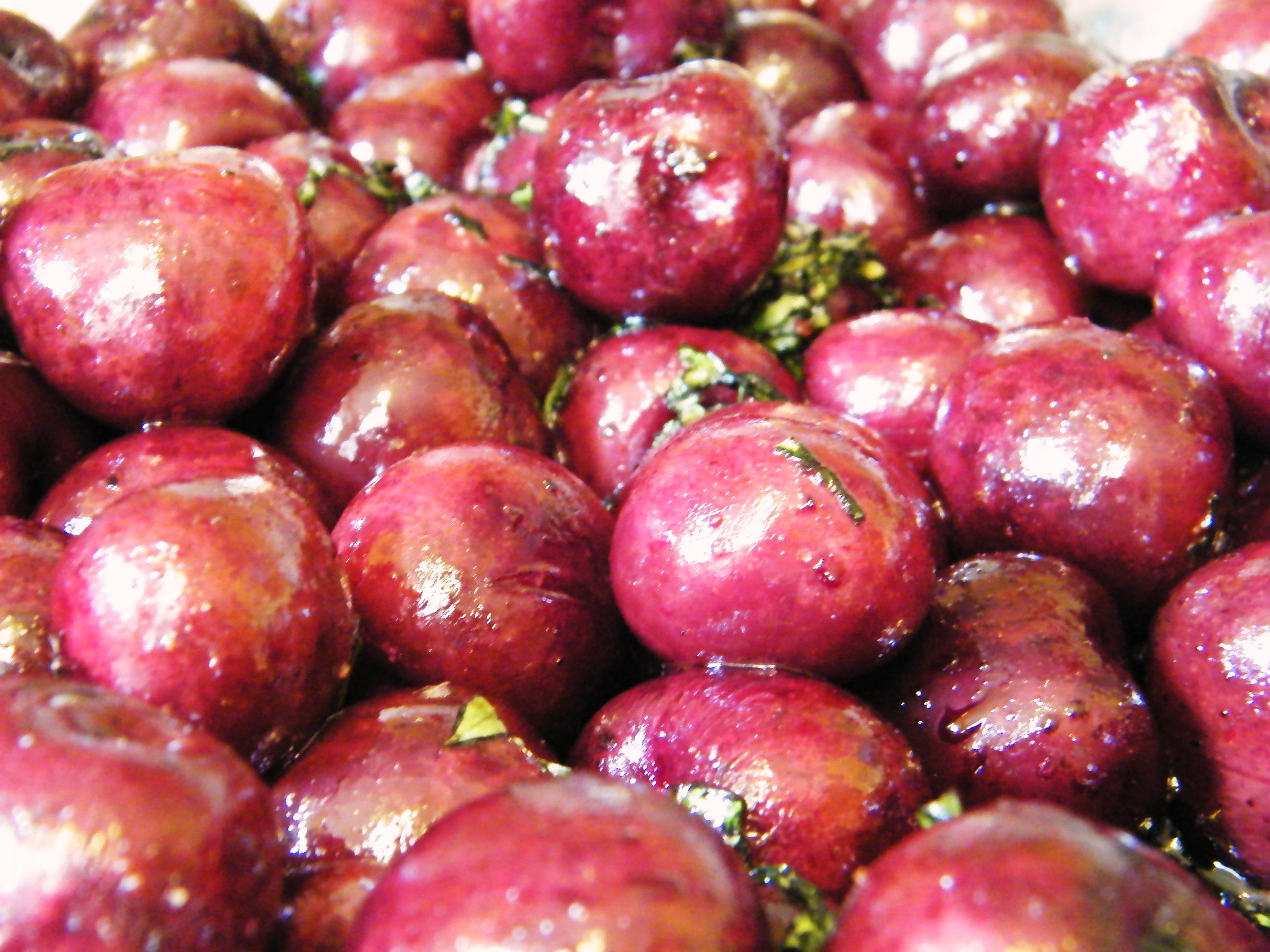
The cherries, roasted.

I whisked together equal parts of maple syrup and olive oil, with a little bit of sea salt. I then added about a 1/8 tsp. nutmeg and four shredded basil leaves. I tossed the cherries in this and then roasted them at 450° for ten minutes, then added a couple of tablespoons of cognac and put them back in for another five minutes. After they’d cooled, I removed the pits. The cherries keep for a few days in the fridge and freeze well. Slow-roasting is another great method for these, too.

I’m sort of curious to see what would happen if instead of basil and nutmeg, I used a little bit of cocoa powder. Maybe I’d leave the nutmeg in. I’d love to hear your ideas for other flavours that would work well with these, or your experiments with roasting other kinds of fruit.

A closer view of the roasted cherries.

FFWD – Slow-Roasted Tomatoes

Chopping tomatoes in the (extremely strong) afternoon light.

The lines between restaurant cooking and home cooking have been slowly blurring for a long time, now. Actually, it’s probably more accurate to say that they converge and diverge over time. Right now, we’re in the midst of a gourmet revival, which seems to happen every generation or so. I direct you to almost any cooking blog for further research. At the same time, there’s also been a revival of interest in home-cooking from a professional perspective. In my town, restaurants like Grub, Burgoo, and The Wallflower have made names for themselves presenting and reinventing comfort food. My brother, a chef, cites not only professionals as mentors, but also my mother. Of course, a professional chef can’t surpass your mother’s famous [insert specialty here] and there are few home cooks who can match the expertise and equipment available to chefs.

One of the fundamental things that separates the two is preparation…though perhaps I mean preparations. At home, the success of a dish is often based on seasoning and the care put into assembling and cooking the dish. An apple pie is the result of a gentle hand with pastry, judicious spicing of the filling and a careful eye on the oven. In a professional kitchen, the Mother sauces provide the springboard upon which a menu is built, but the same care is put into other ingredients. Especially at restaurants that make use of seasonal produce, it’s the preparation of ingredients that can transform a dish. It’s a step beyond what we usually do at home.

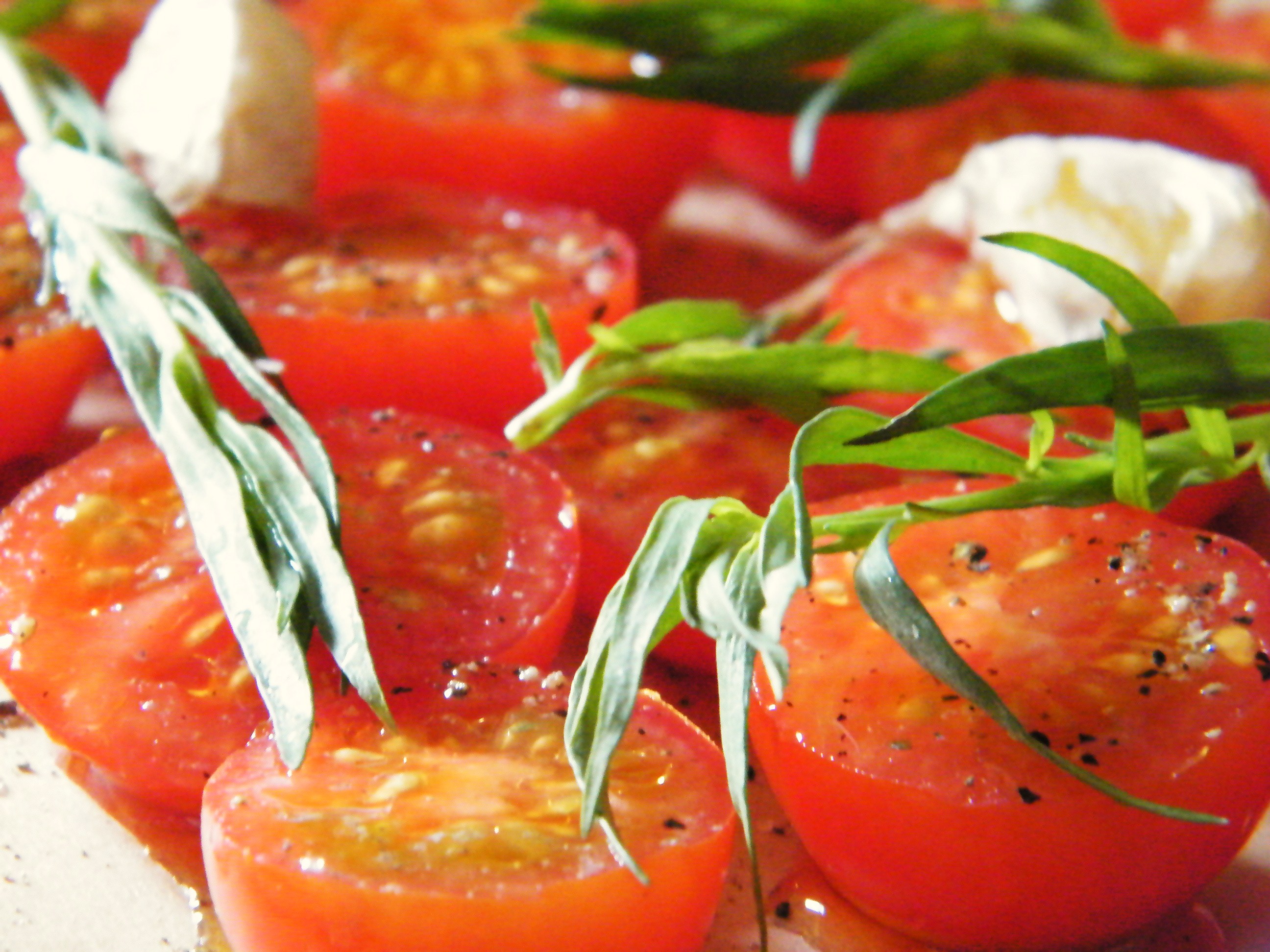
The tomatoes, seasoned with tarragon, garlic, coarse pepper and sea salt, ready to go into the oven.

This is the train of thought that I followed when reading this week’s French Friday recipe for slow-roasted tomatoes. It seems more like a preparation that would be found in a professional kitchen than a home cook’s staple. It should be a staple, though. Slow-roasting is a wonderful, hands-off process for a quiet day at home. It’s also an effective method for concentrating flavour. This summer, I’ve slow-roasted strawberries, rhubarb and now tomatoes. Tomorrow, I’m going to try cherries. I think they’ll be great as a tart filling. But, I digress.

Dorie’s slow-roasted tomatoes can be flavoured with garlic and herbs, or just a little salt and pepper. They can be used immediately or packed in olive oil to use over the course of a few weeks. They can be ground into a paste, added to a dish during cooking, or used as a garnish. It’s this versatility that reminds me of restaurants.

Save for a taste after they were finished, I haven’t used my tomatoes yet. I’ve packed them in olive oil and they’re waiting in the fridge, ready to bring my home cooking up a notch.

You can find many other blogged descriptions of this week’s FFWD recipe here: Slow-Roasted Tomatoes

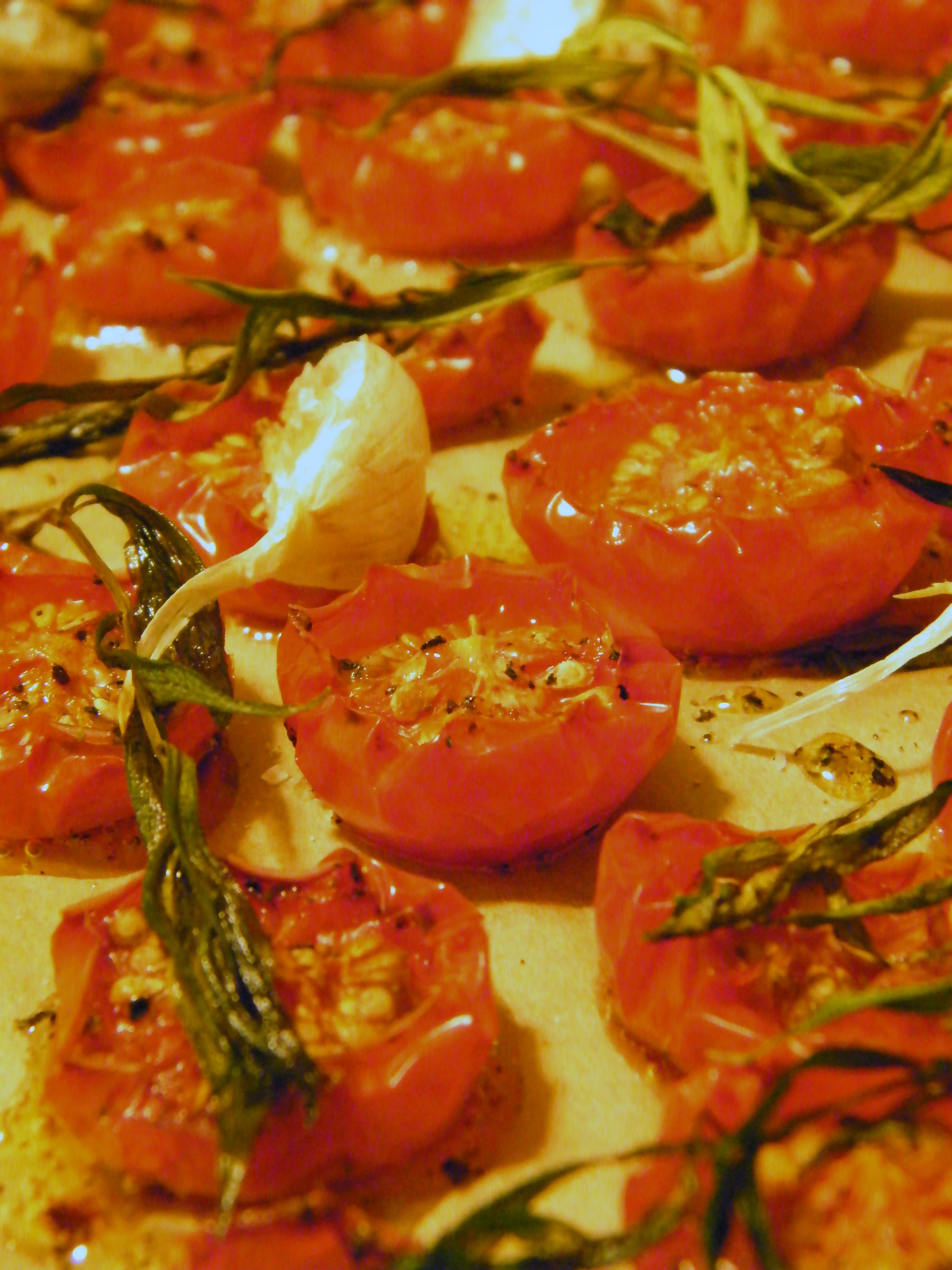
The tomatoes, roasted and cooling.

I’ve just realized today that I’m nearly at my 100th post and am only a few weeks away from my one-year-blogoversary. So, I’m trying to think up a little something to celebrate. As they say in advertising: Watch This Space.

FFWD – Cold Melon-Berry Soup

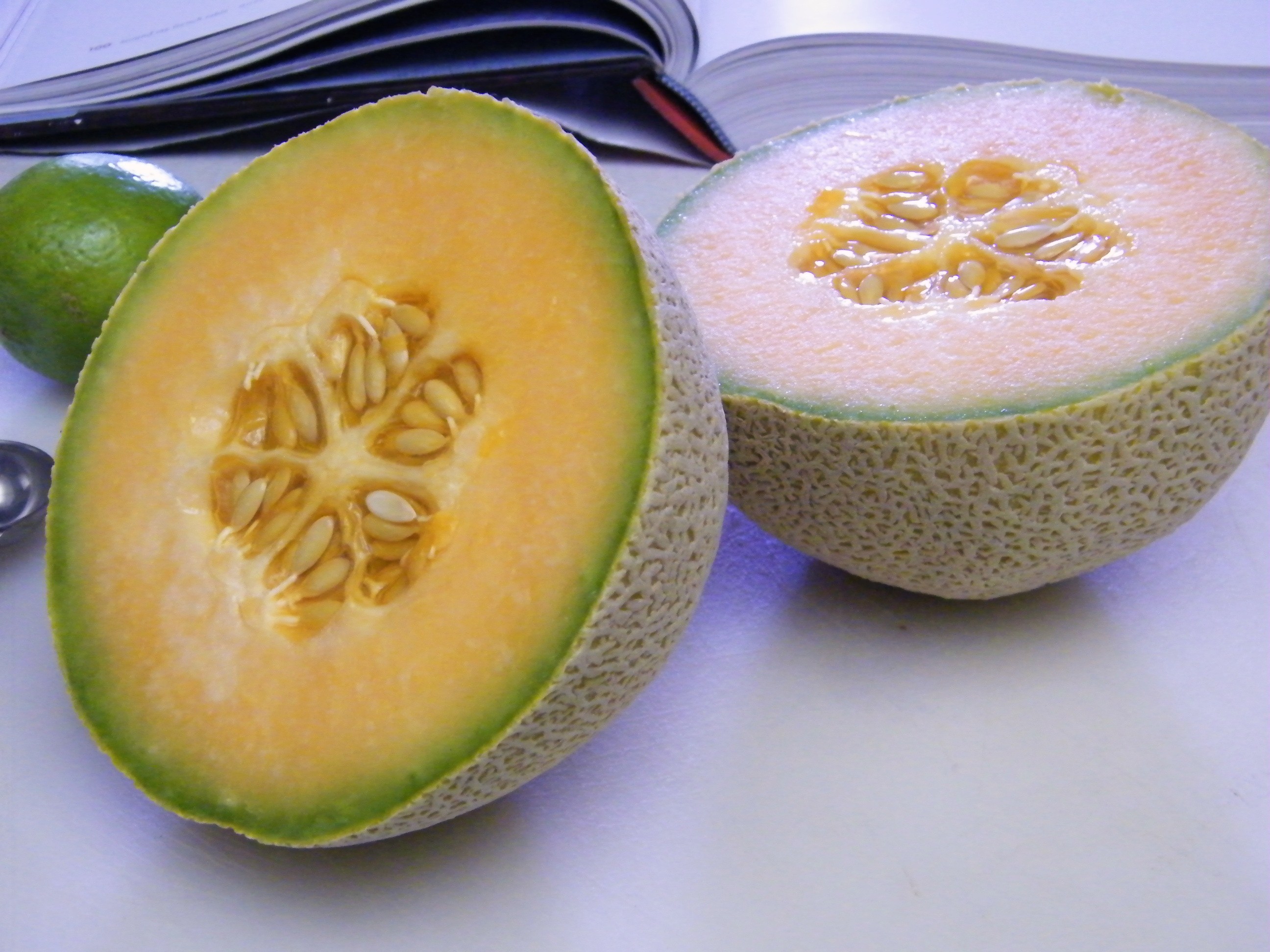
Sliced cantaloupe, with a cookbook, a lime and a measuring spoon visible in the background.

It took me half a cantaloupe to get the hang of making melon balls. They aren’t something that’s ever shown up on the menu chez moi, but I’ve only recently begun to appreciate melons. Melon wedges on a fruit tray, yes. Proscuitto wrapped around a slice of melon, certainly. But in my mind, melon balls are fare for a 1960’s country club buffet, piled in pyramids atop shaved ice in a silver dish. Or a cut glass dish on a silver salver. Something like that.

This probably influenced my thinking when I made this week’s melon-berry soup. I kept imagining it presented as though for a wedding supper or an awards banquet. I settled on some pretty etched glasses. A nod to the elegance I’d imagined, with the practicality required of a dish served in the living room. I was making next week’s Coconut Lemongrass-Braised Pork for dinner and thought that this soup would make a nice prelude to the curried sweetness of the stew.

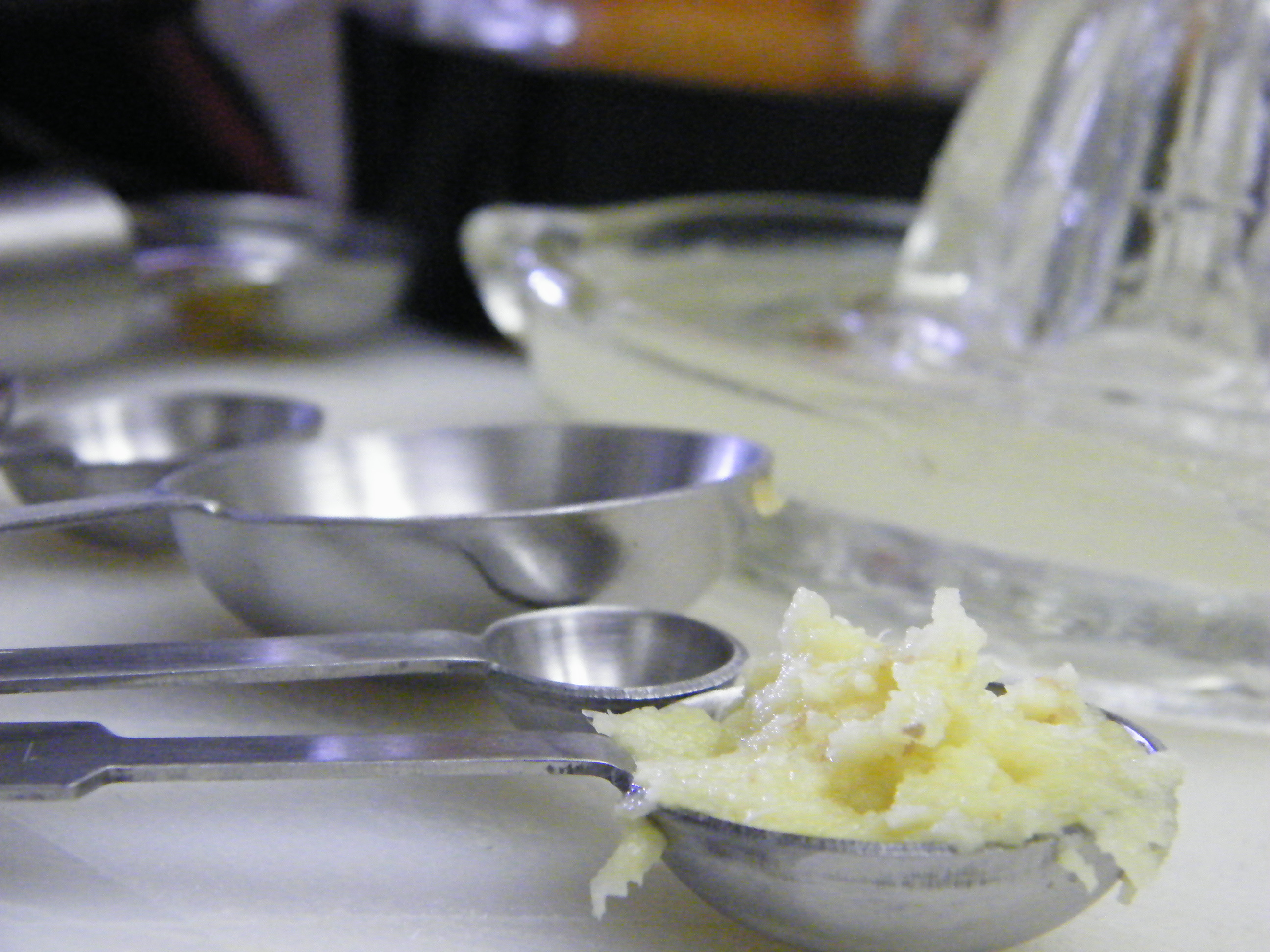
A teaspoon full of ginger, with the rest of the set in view, along with a glass juicer full of lime juice and the bottom of the blender full of melon.

The soup is simply pureed cantaloupe mixed with lime juice and grated ginger, then seasoned with a little salt. After the soup, melon balls and strawberries have chilled for a few hours, the dish is assembled and topped with a sprig of mint. You may add a tablespoon of sweet wine if you like, though I didn’t this time. I think the only thing I’d add to this is a good grinding of pepper. I think that would contrast well with the sweet-tartness of the rest of the dish.

I was at my parents’ house and gave my father his soup while I took photos of the other portions. My mother was playing food stylist/photographer’s assistant, bringing out many of her lovely, eclectic dishes for me to try and then holding up a white piece of card to make the most of the evening light. My Dad came into the kitchen to tell us that he liked the soup so much he’d gladly eat the rest. That’s an excellent endorsement, in my estimation.

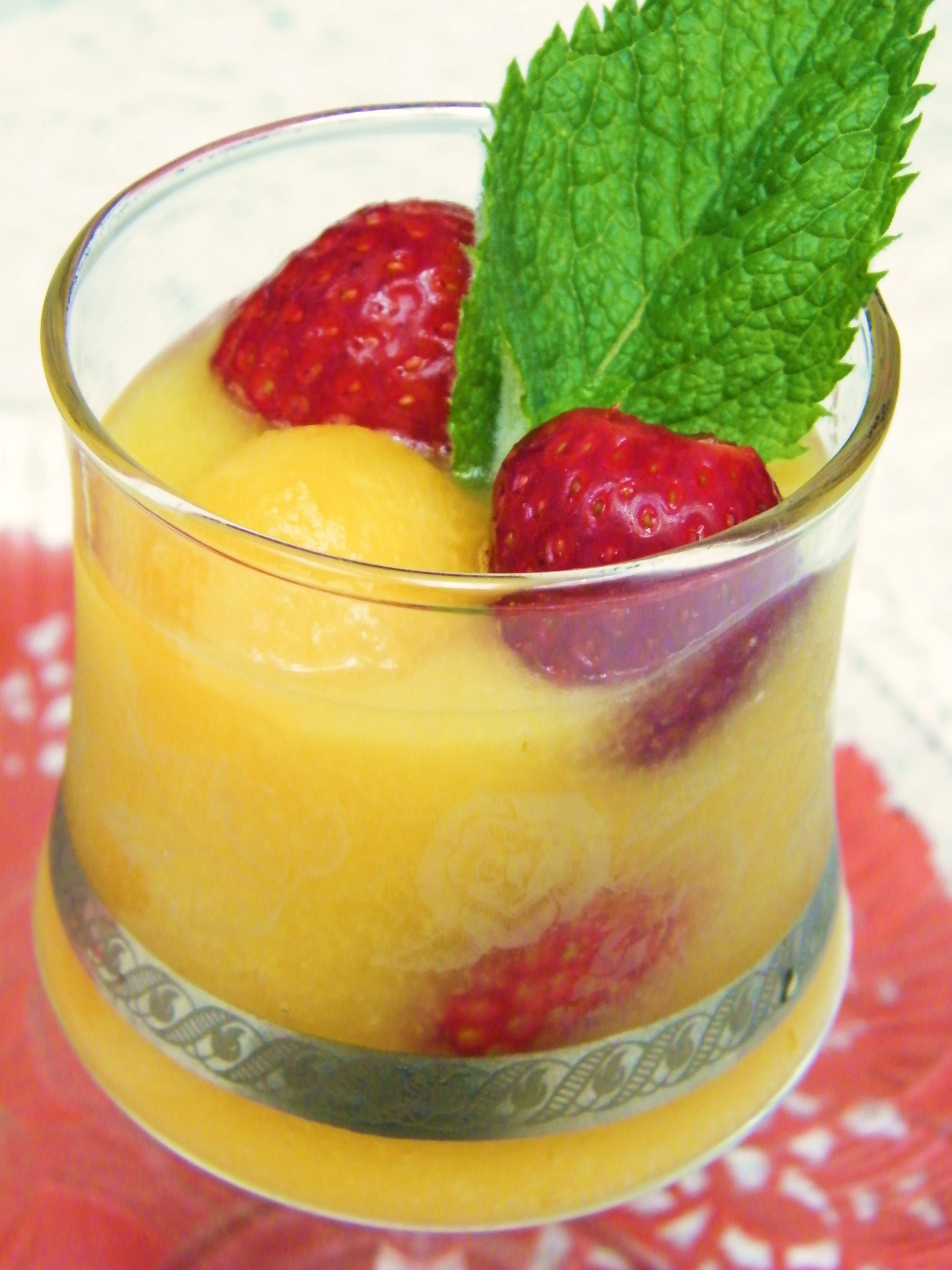
An etched wine glass full of melon soup, with melon balls and strawberries and a sprig of mint. Everything sits on a tray atop a red doily on a white lace tablecloth.

I think there are lots of jumping off points for this recipe: ice pops, cocktails, granitas – just make sure you include the melon balls. They’re the best part.

You can find many other blogged descriptions of this week’s FFWD recipe here: Cold Melon-Berry Soup

FFWD – Mozzarella, Tomato and Strawberry Salad

Raindrops suspended from stems and flowers.

Torrential rain and summer salad aren’t natural companions. This afternoon, while the rain was pounding on the rooftops as loudly as hail, my mind was on quiche, soup and stew. Luckily, I’d already gotten all the ingredients for this week’s recipe, or I might have been guilty of yet another late post. I would have bought entirely different ingredients had I gone shopping today. By early evening, though, the sun was shining and salad became a reasonable dinner option.

The sliced mozzarella, drizzled with oil and sprinkled with crushed pink peppercorns. Flanked on either side by mixed, sliced strawberries and tomatoes, garnished with shredded basil.

Purchasing the ingredients is the hardest part of this recipe. The salad is thrown together quickly, just before serving. Slice the mozzarella, then plate it. Slice and mix the strawberries with the tomatoes. Shred the fresh basil. The rest is just seasoning and drizzling some good olive oil. Add some balsamic to the fruit if you think it needs it and then garnish the mozzarella with crushed pink peppercorns.

Close up of the salad, focusing on a piece of basil atop sliced strawberries and cherry tomatoes. The slices of mozzarella are in the background.

Just as goat cheese and strawberries work together, tomatoes and strawberries are naturally compatible. I didn’t need to use balsamic, as the fruit had a good balance of sweet and acid without it. This worked well with the creaminess of the mozzarella and the tang of the basil. It’s been a cool, wet summer so far and we’ve been waiting a long time for strawberries. This salad was a perfect way to use the first local berries I’ve gotten this season.

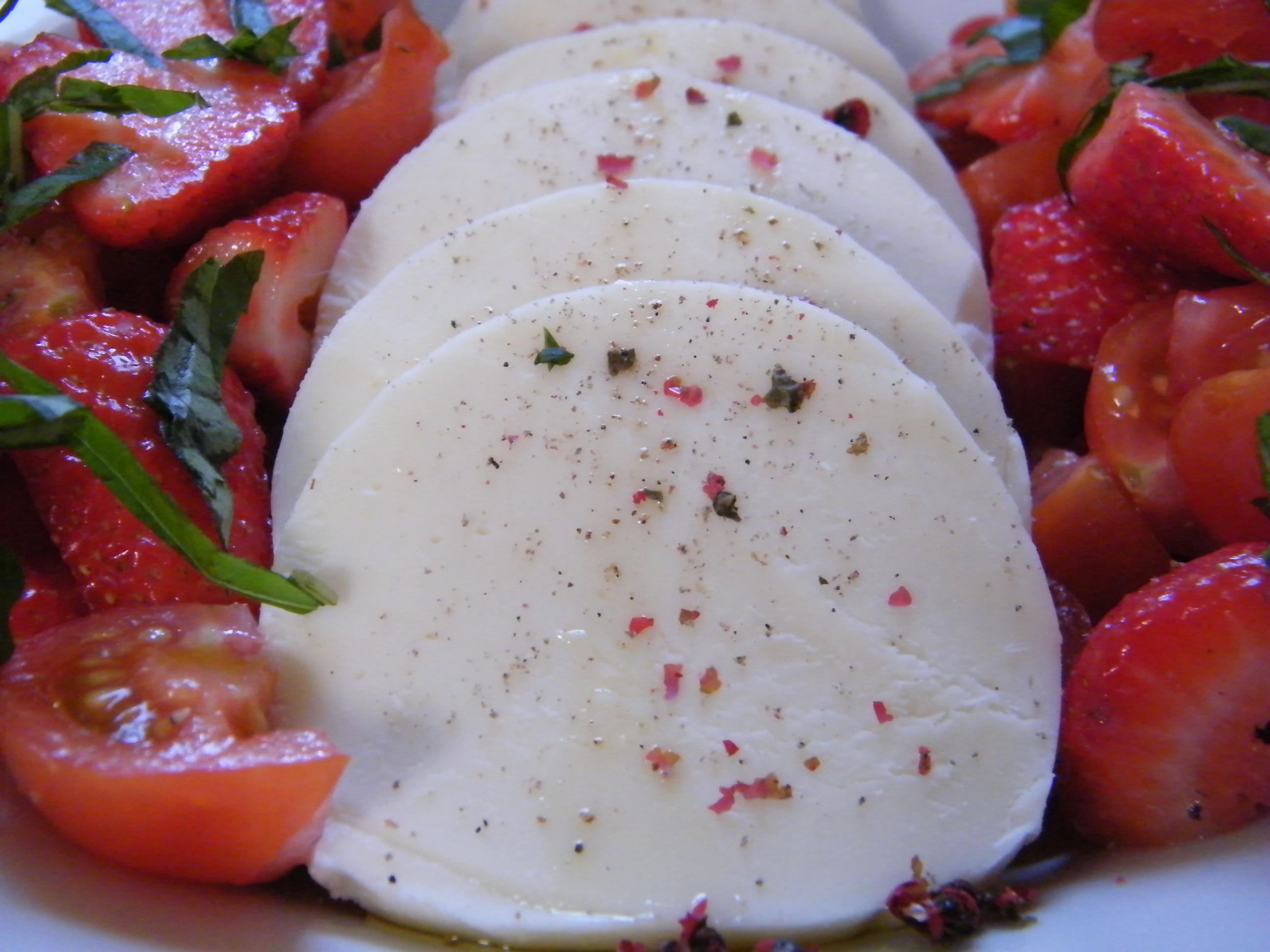
This shot emphasizes the sliced mozzarella, drizzled with olive oil and with crushed peppercorns scatterd across them.

You can find many other blogged descriptions of this week’s FFWD recipe here: Mozzarella, Tomato and Strawberry Salad

Granville Island

I was on Granville Island today, during a mildly blustery spring afternoon. Here’s a few photos:

I hope you’re having a wonderful weekend.

Sprung

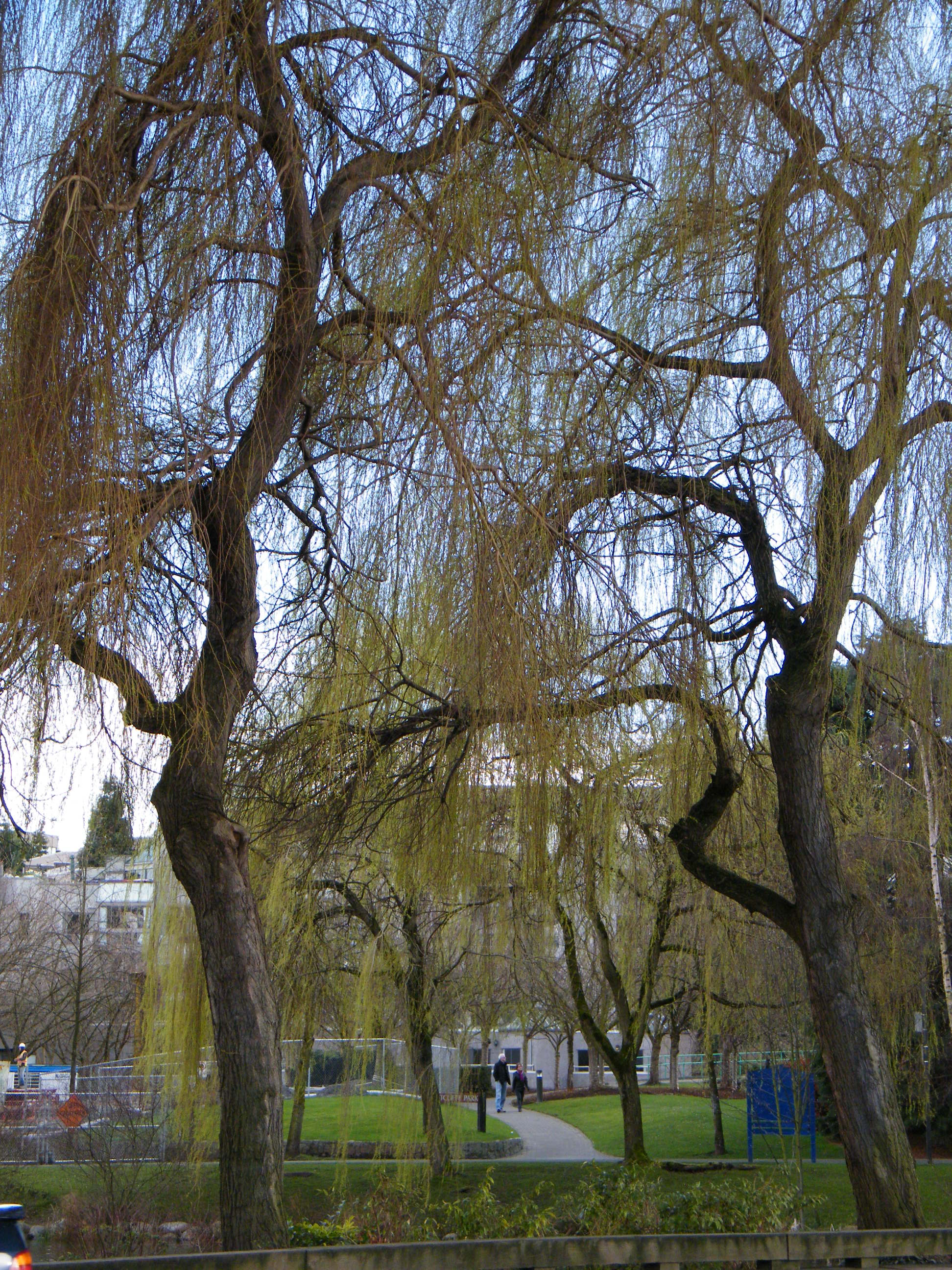
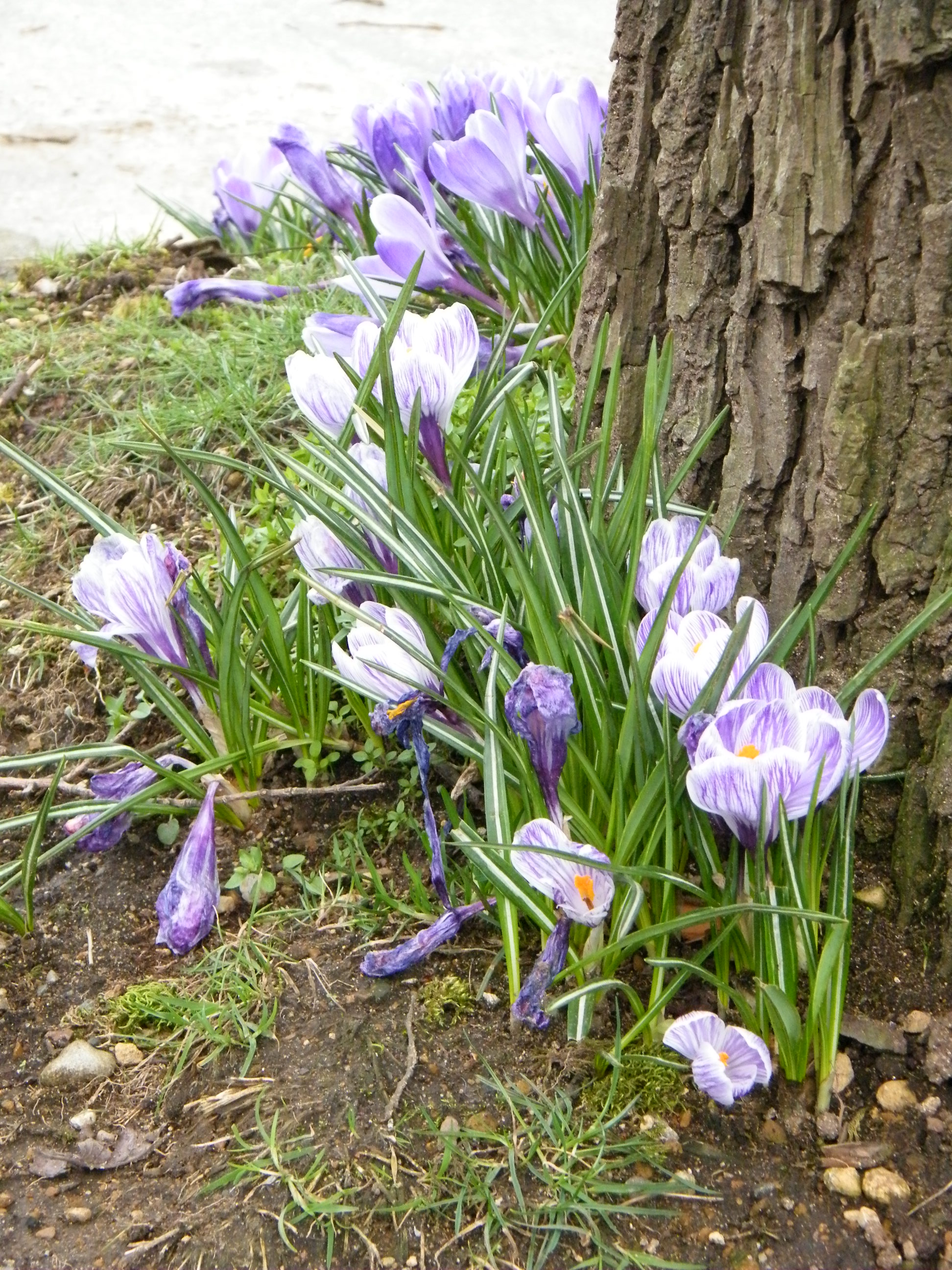
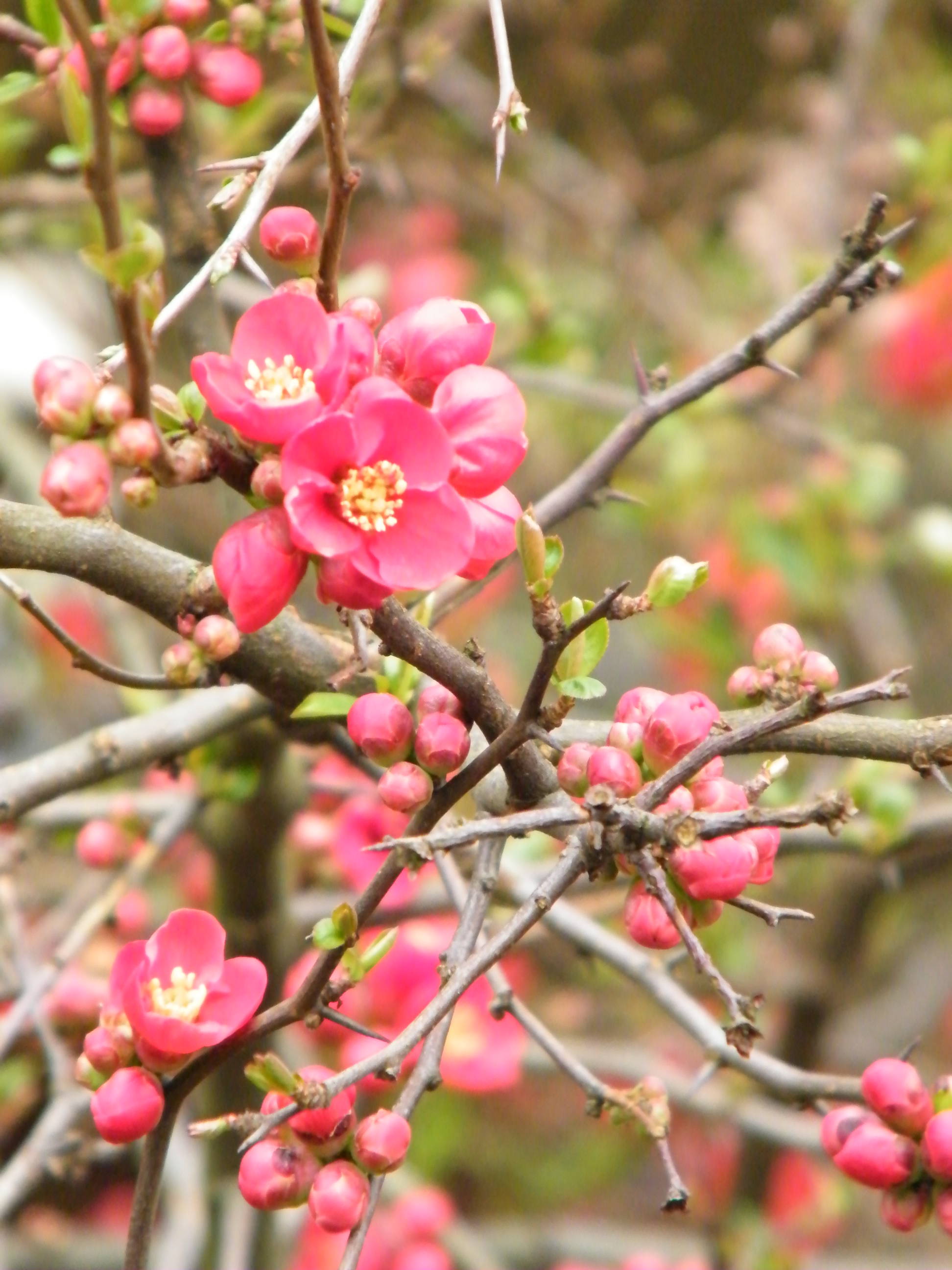
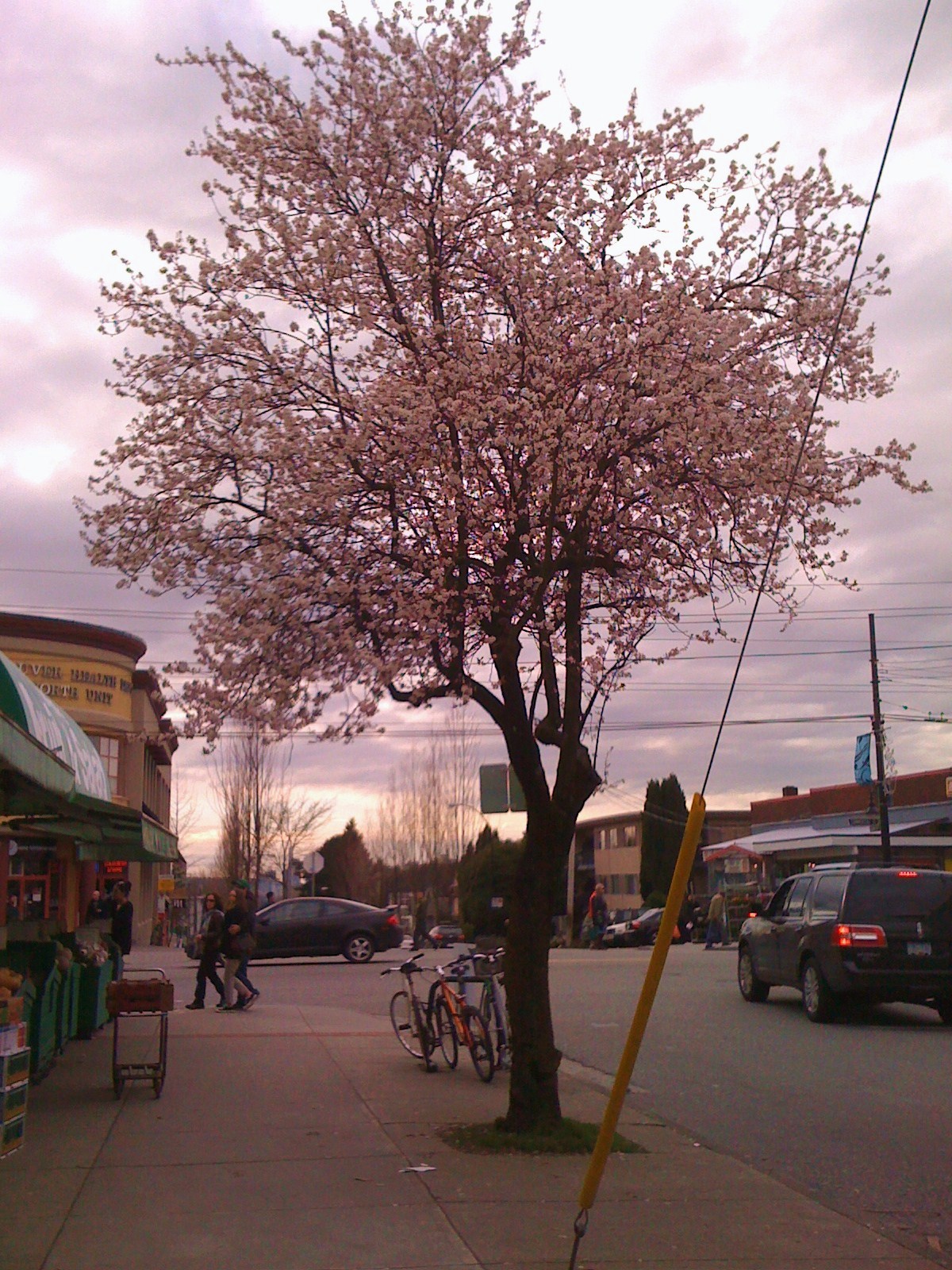
Spring is in full force now. In my garden, the snowdrops are fading away, leaving mysterious clumps of foliage behind. Other bulbs are just starting to poke spears through the soil, while bleeding hearts and rhubarb are beginning to unfurl. Out in the neighbourhood, blossoms are appearing on the trees and the crocuses are still in bloom.

Spring is my favourite season in Vancouver. There’s something about the quality of the air, composed of sea and mountain breezes, along with the early foliage and flowers that makes me feel more alive at this time of year than any other.

The Vancouver Cherry Blossom Festival is taking advantage of all this beauty and is organizing a number of events. My pick is Velopalooza’s annual Bike the Blossoms ride. I’m also excited about Simon Fraser University’s Tales From Terminal City project at Granville Island this coming weekend, in celebration of Vancouver’s 125th year.

That’s not all that’s going on in the City, of course. If the outdoors isn’t your thing, you could always hide inside the CBC Studios for a few hours. The Debaters are taping their television series until April 1st.

I also wanted to mention a couple of events that have been organized to help the relief effort in Japan. This weekend is the Vancouver Japan Relief Walk for Hope. In late April, there will also be a bake sale to raise relief funds for Japan.

That’s just a smattering of what’s going on here in Vancouver. I’d love to hear about how your community is waking up to spring.

It’s Snowing

It’s snowing now. Which is exciting, in the short term, for those of us who were raised in the Lower Mainland. We only see a week or two each year. Those raised in regions with snowy winters rarely share our excitement.

Sadly, it started too late to take any dog-in-snow portraits.