FFWD – M. Jacques Armagnac Chicken

So, everyone else is posting about Lyonnaise Garlic and Herb Cheese today, but I didn’t find an occasion to make it for more than just Kevin and me, so I’m leaving it for (yet another) catch up post. Instead, today’s recipe is from January and one that I’ve made more than once, but haven’t ever gotten around to posting. (There’s definitely a correlation between bad photos and late French Fridays entries for me.)
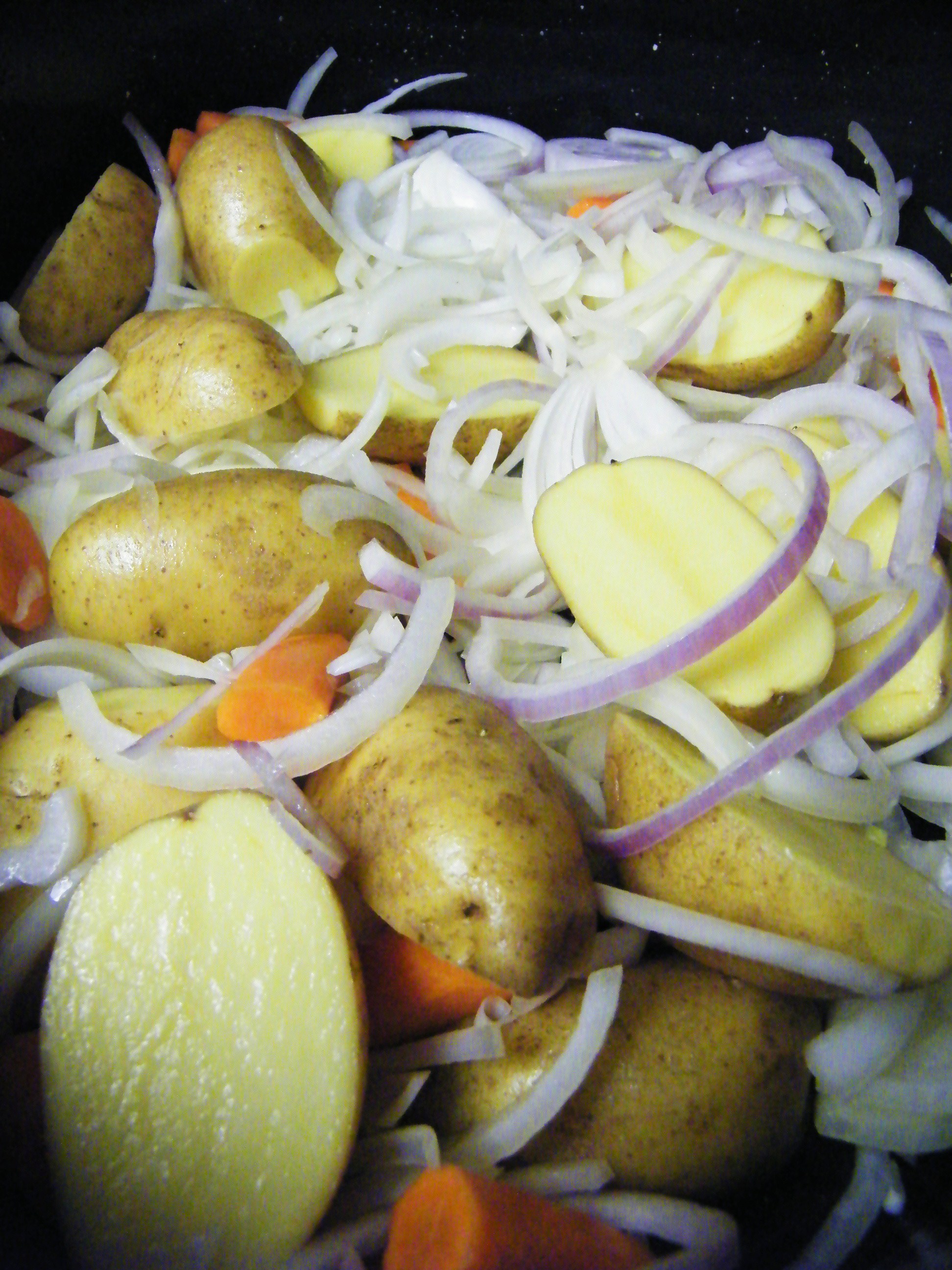
A bed of vegetables for the chicken.

I didn’t buy Armagnac for this recipe, as it was a bit expensive, but I substituted Cognac and was very pleased with the results. Since joining this group, roasting a chicken involves much more decision-making for me – the recipes in Around My French Table are so good, it’s hard to settle on which to use. This recipe’s primary virtue is the bed of vegetables that are roasted with the chicken, particularly the onions, which are delicious all by themselves and lend their flavour to the other vegetables and the chicken. The Cognac helped intensify the sauce, which is made very simply with water, herbs and the juices of the chicken and vegetables.

Basting the bird.

This is a wintry recipe, as many one pot meals are, but it’s also perfect for rainy, cool spring weather. If we get another stretch of that this year, this may be on the menu again soon.

You can find many other blogged descriptions of this FFWD recipe here: M. Jacques Armagnac Chicken
FFWD – Navarin Printanier

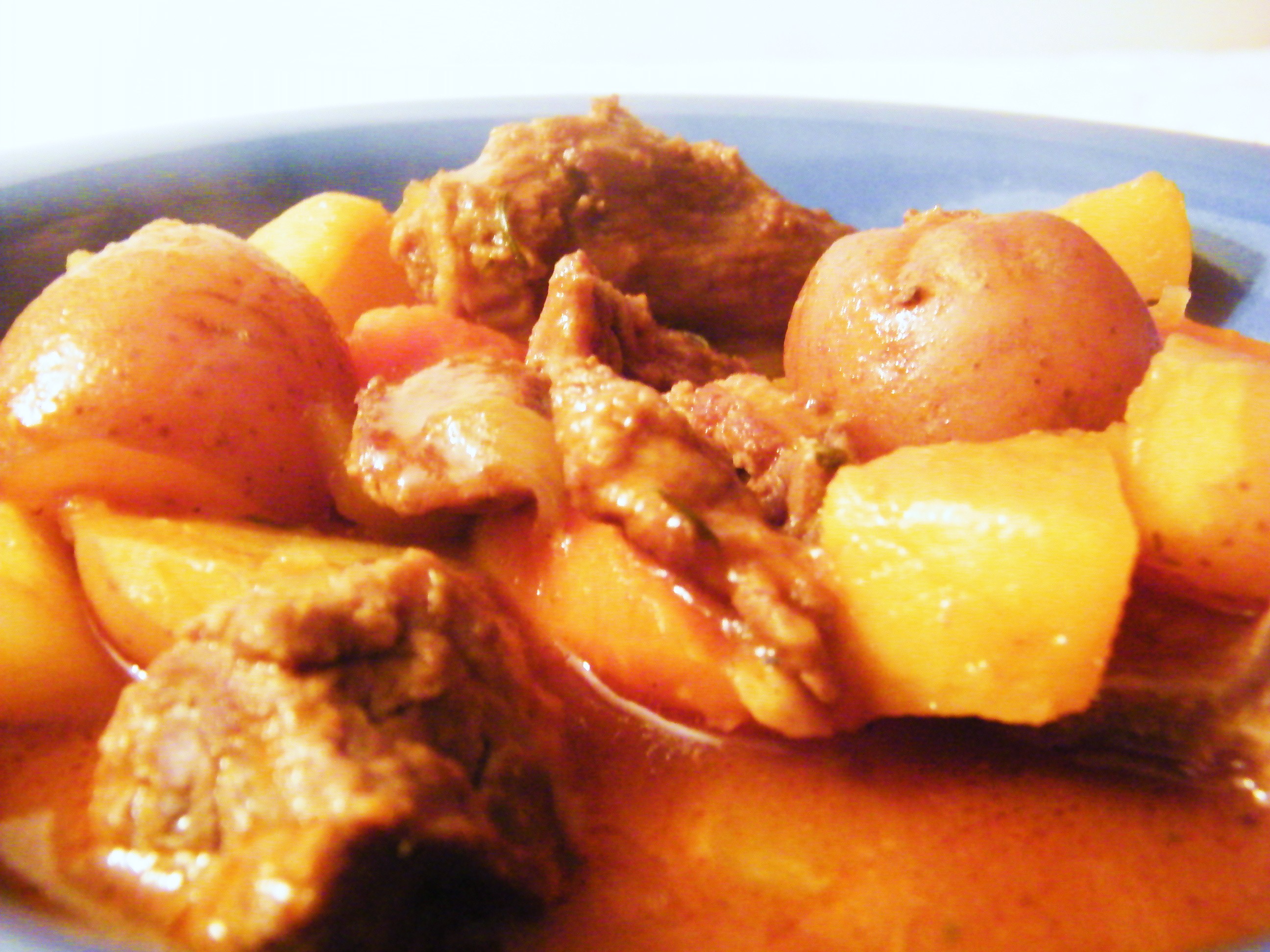
Lovely, rich stew.

Over the next little while, I’m going to try and catch up on a few French Fridays dishes that I’ve made, but haven’t managed to post about. I’m starting with a really good one.

Navarin Printanier is nothing like my mother’s Irish stew. Don’t get me wrong, my mother’s lamb stew is so good that my brother (a chef) adapted it for use on his menus. It’s a traditional, slow-cooked on the stovetop version, light and flavourful. Navarin Printanier is a braise, giving lamb the sort of treatment usually reserved for beef.

I love the methods used in this recipe. The braising itself makes the lamb tender, of course, but it’s not just that. The vegetables are sautéed in butter before being added to the pan and manage to retain the shiny vibrancy the sauté gives them. Beef stock and tomato paste (I used one infused with garlic, which was really nice) make a lovely, rich sauce flavoured with thyme, bay leaf, and parsley.

Beautiful colour on sautéed vegetables.

My mother and I cut up two shoulder roasts for this stew, removing the ribs for use another day. We were able to cut off almost all the fat from the lamb as we cubed it, which meant that the stew wasn’t at all greasy. Labour-intensive, but totally worth it.

I deviated from the recipe here and there, using rutabaga in place of turnip, adding about three times the tomato paste and thyme called for, and forgetting entirely to add the peas. Stews are very forgiving. This stew was delicious enough that I won’t reserve it just for spring, though it’s a worthy showcase for the year’s first vegetables.

You can find many other blogged descriptions of this FFWD recipe here: Navarin Printanier

FFWD – Provençal Olive Fougasse

A close shot across the surface of the baked fougasse.

I once knew someone who believed that a restaurant that didn’t bring bread to the table shortly after you were seated didn’t deserve a clientele. I’m not that strict, but a meal started with bread fulfils some deep-seated ideas of sharing and conviviality for me, especially when the bread is homemade.

Bread-making is a satisfying activity, beginning with the tactile pleasures of kneading and shaping the dough. By the time it’s brought to table, all the senses become engaged. Knowing that the bread has been made to share with exactly those people around the table engages the heart, as well.

I made two loaves of this fougasse during the last bakestravaganza with my family. What was planned as a day’s baking stretched into a weekend, as much of what we were making needed time to rise and rest between steps. You can see what we worked on together over here. I also managed to catch up on the Navarin Printanier from a couple of weeks ago (which I’ll post about soon) and this week’s fougasse.

I put together this dough late the second night and baked it between the steps of our other recipes. My niece zested a lemon for me while I chopped olives and rosemary. These were added to the dough at the end of the kneading process (all hail the KitchenAid, once again). Once the dough had risen, it went into the fridge for an overnight rest (right beside the brioche dough we’d prepared for the pecan sticky buns that were going to keep us busy for much of the next day).

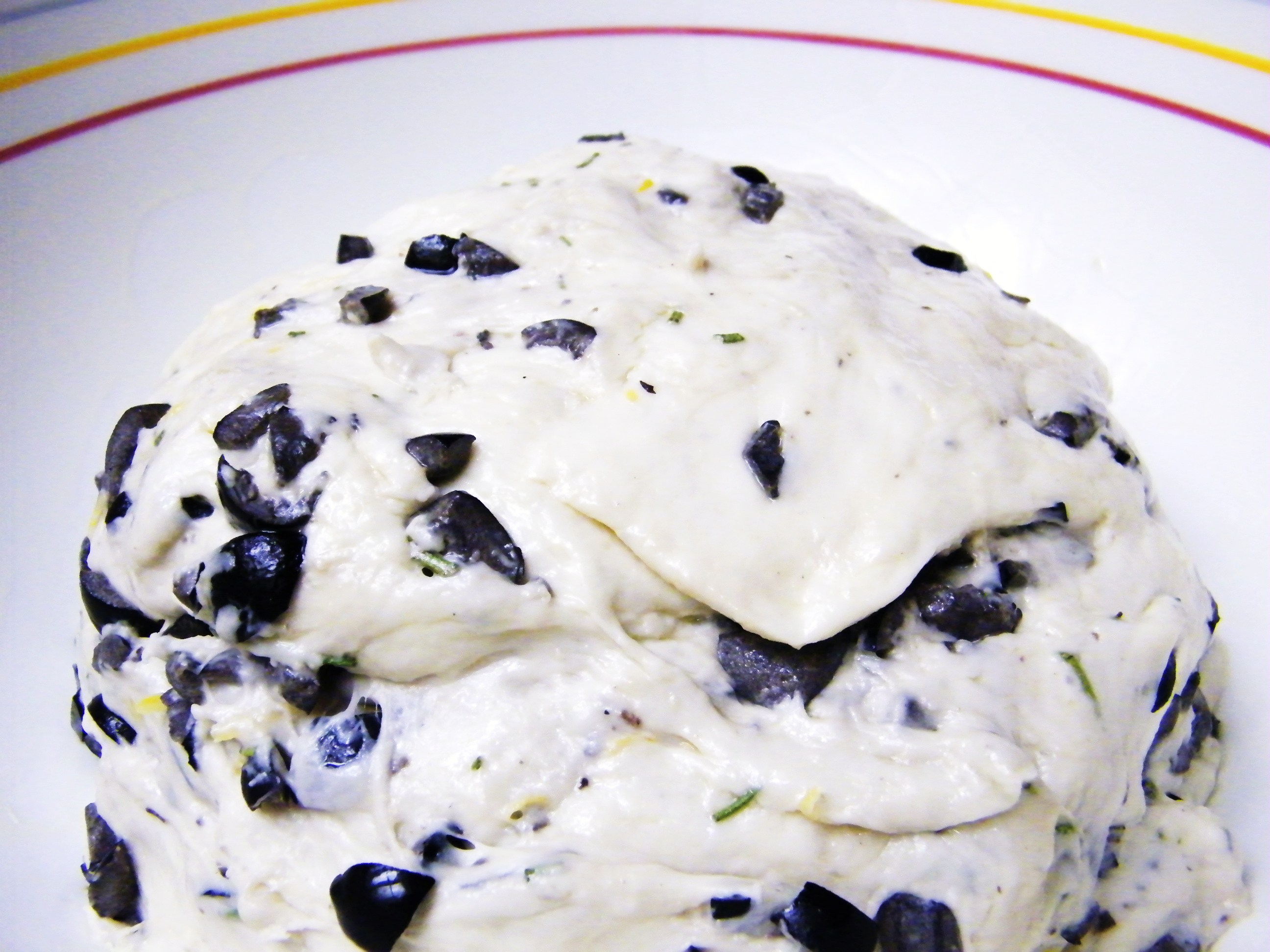
Dough before rise.

Dough before rise.


The dough reminded us of pizza dough, a little sticky and stretchy, but ultimately agreeable. It was easy to roll and slash the dough into the traditional leaf shape, but my attempt to make a salmon shape with the second piece of dough turned into an oval of bread with asymmetrical slashes. Not ugly, but not elegant, either. We ate it first.

The finished fougasse, with the second loaf in the background with some cornichons and pickled asparagus.

The first loaf disappeared that afternoon, as people passed through the room where it was cooling, and we shared the second with our dinner of lamb stew. Pulling pieces from the loaves gave us almost as much pleasure as eating it and it was just as good on its own as it was sopping up the gravy of the stew. Sharing one loaf, all hands breaking off their portions, made our meal seem like a feast and a celebration of the cooking and baking we’d done together over the weekend.

You can find many other blogged descriptions of this week’s FFWD recipe here: Provençal Olive Fougasse

FFWD – Coconut Friands

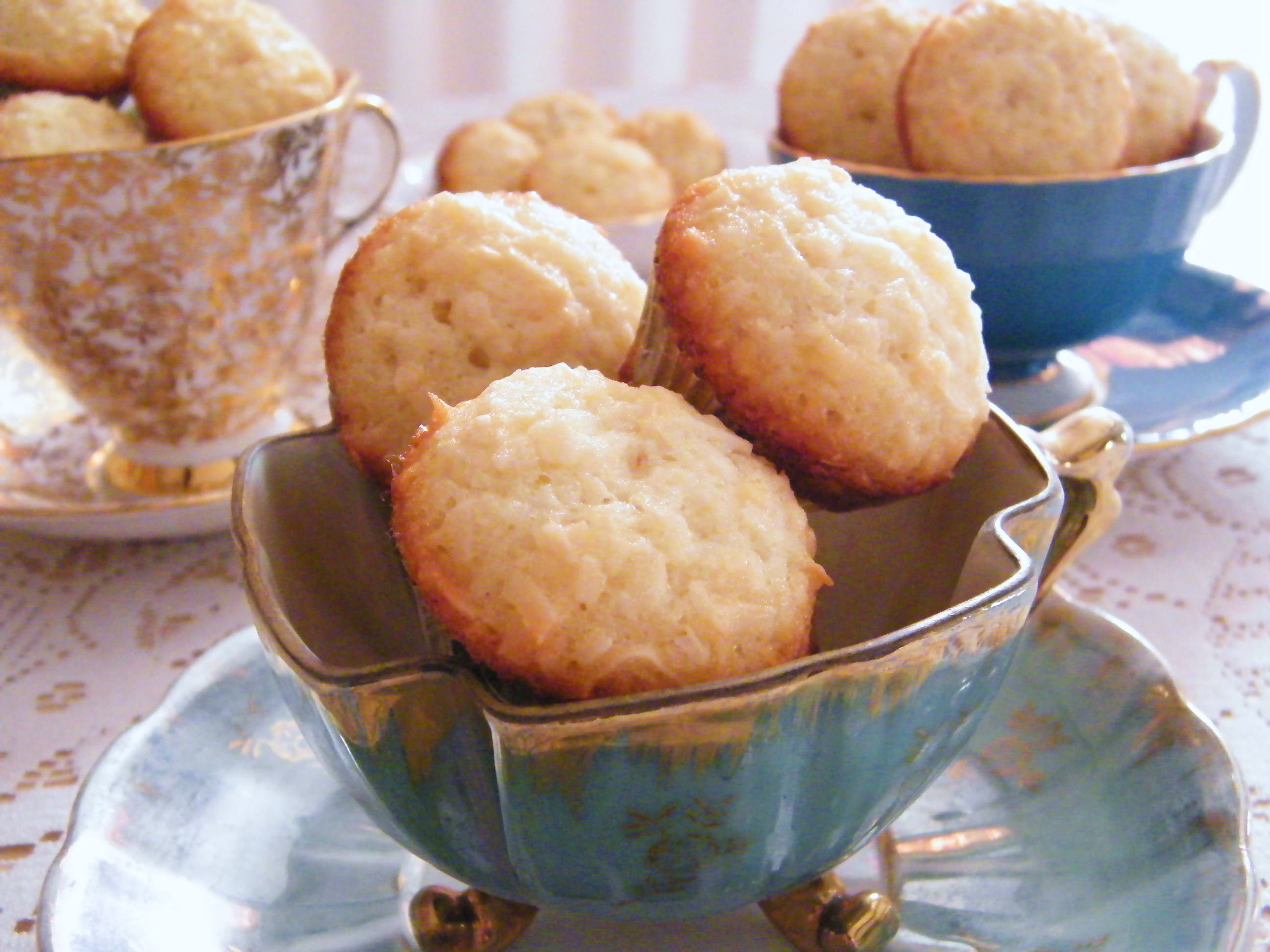
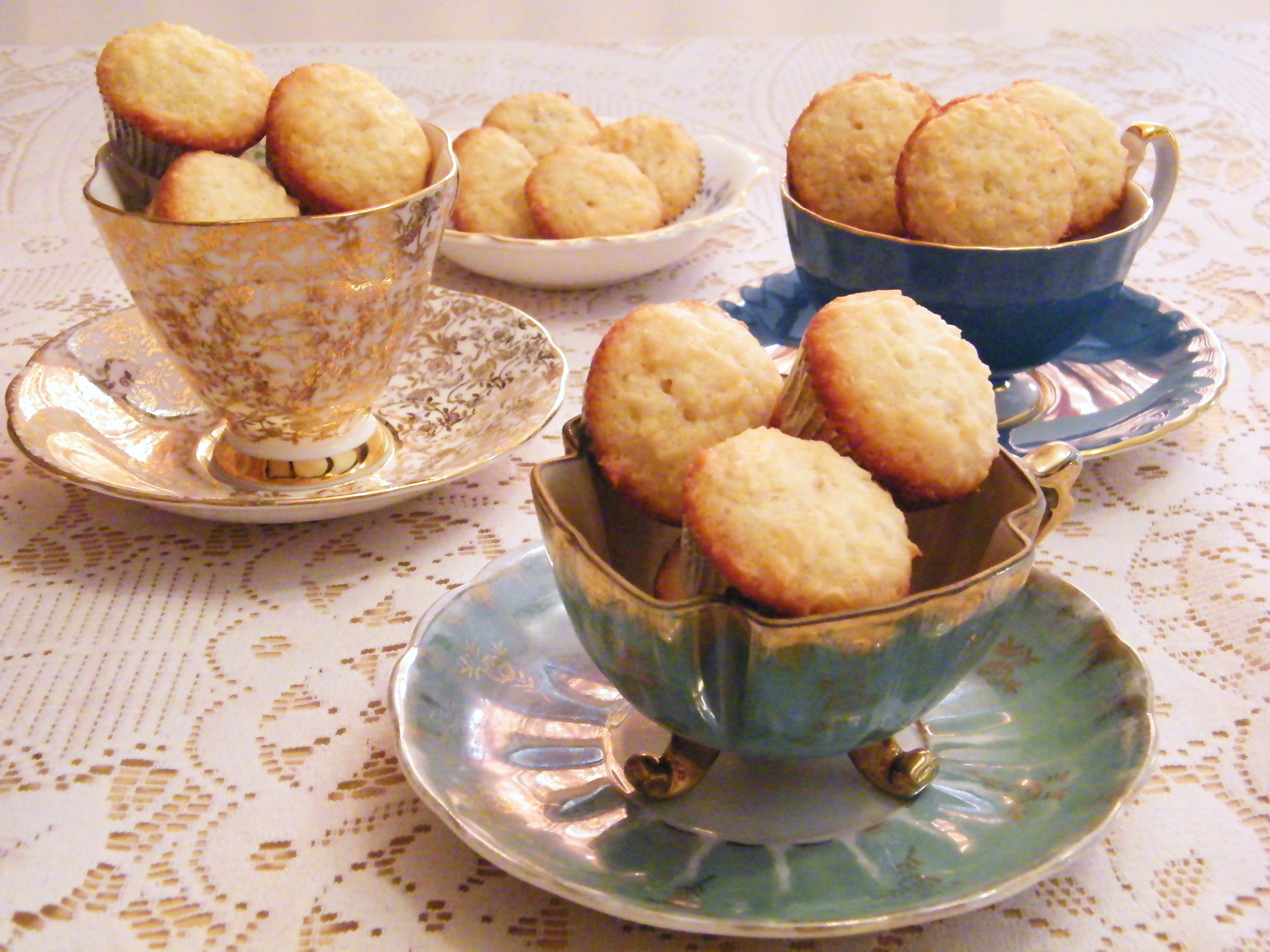
Coconut friands piled in teacups

Tea is sort of my thing, a kind of Jungian response to my first initial, I suppose. I try not to get carried away (so often) with buying tea paraphernalia and I’m also trying to work my way through the loose tea that I have before I buy any more. One of my favourite methods of avoiding these impulses is to go out for tea, whether it’s a formal high tea or an afternoon break at a local tea shop. I can enjoy the cups, pots, and teas without bringing more home to fill my already jam-packed cupboards. What I don’t do often enough is have people over for tea. Cakes and sandwiches are as fun to make as to eat and I certainly have enough pots and cups to accommodate a respectable gathering.

Teacup love, with a side of coconut cakes

I have a few recipes that would fit right in and now I have one more. These delicate coconut cakes are perfect for tea. Friands are usually made with ground nuts, but in this recipe, shredded coconut is used, instead. This is an easy recipe, as long as you have a light hand with the whisk. I had only sweetened coconut on hand, so I reduced the sugar by two-thirds and it seemed to work just as well. Dorie suggests putting a bit of fresh or candied fruit in the centre, but I decided to put a small square of chocolate in each. I love coconut and chocolate together. Next time, I might try a tropical fruit like mango or papaya – I wonder if passionfruit seeds would work? They’d certainly look pretty.

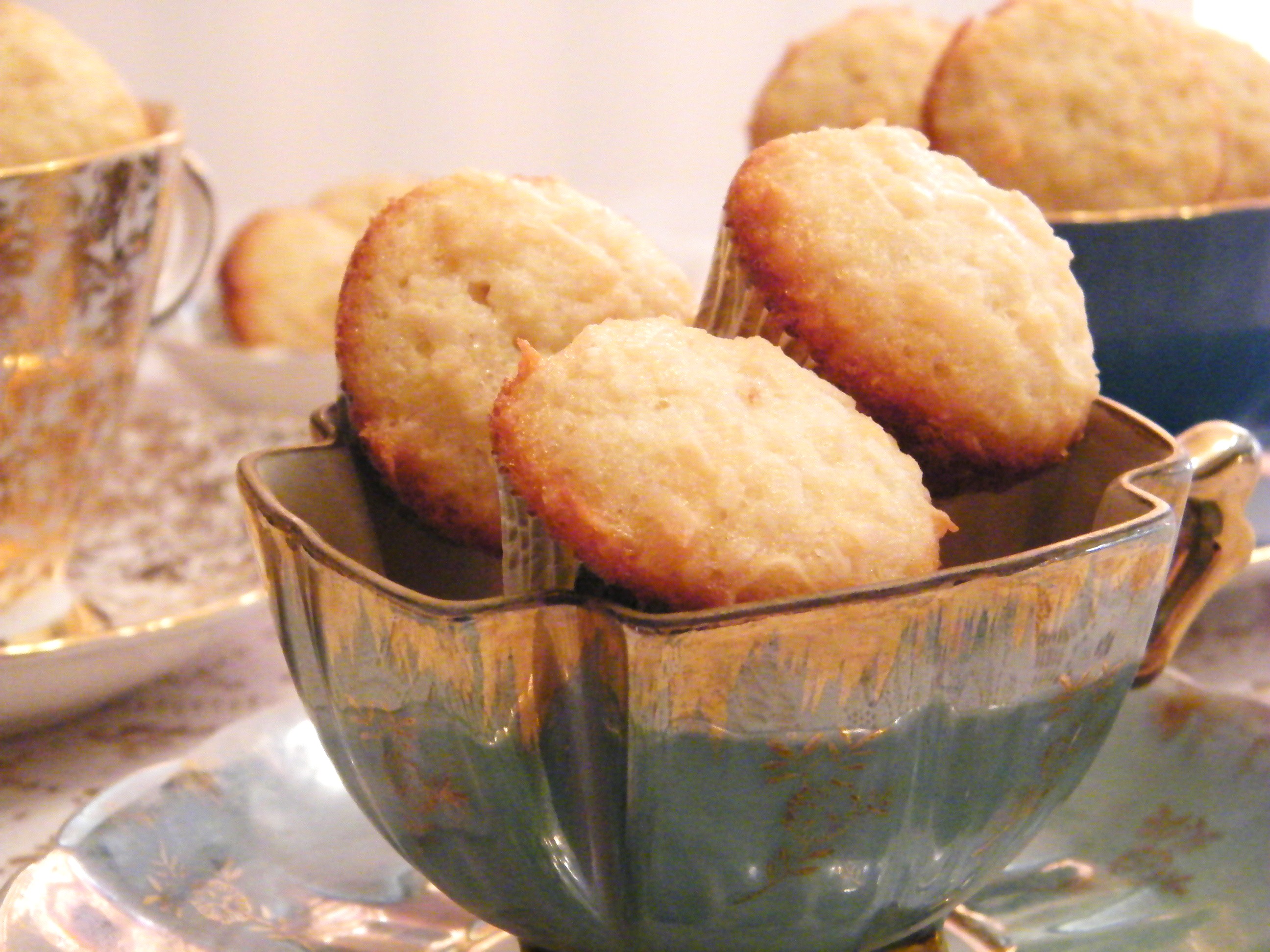
A closer view of the coconut friands

The cakes were both light and dense at once, a property of the coconut, I think. The chocolate worked nicely and neither flavour overwhelmed the other. There’s only a small quantity of flour, so I think they could easily be converted to gluten-free, too. Once the weather gets warmer, these might find themselves on the menu for a garden party or two.

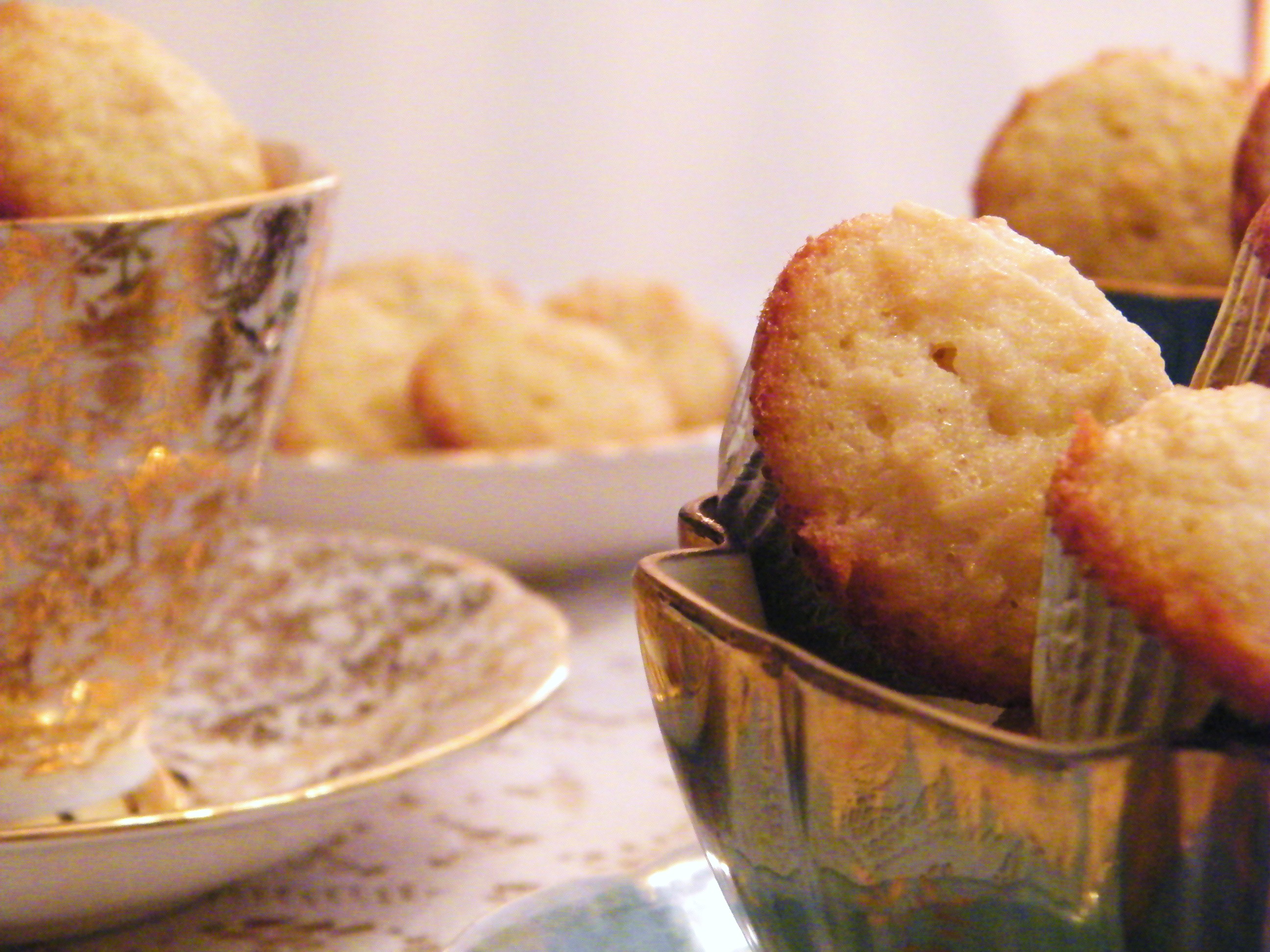
A wider view of the scene

You can find many other blogged descriptions of this week’s FFWD recipe here: Coconut Friands

FFWD – Asparagus and Bits of Bacon

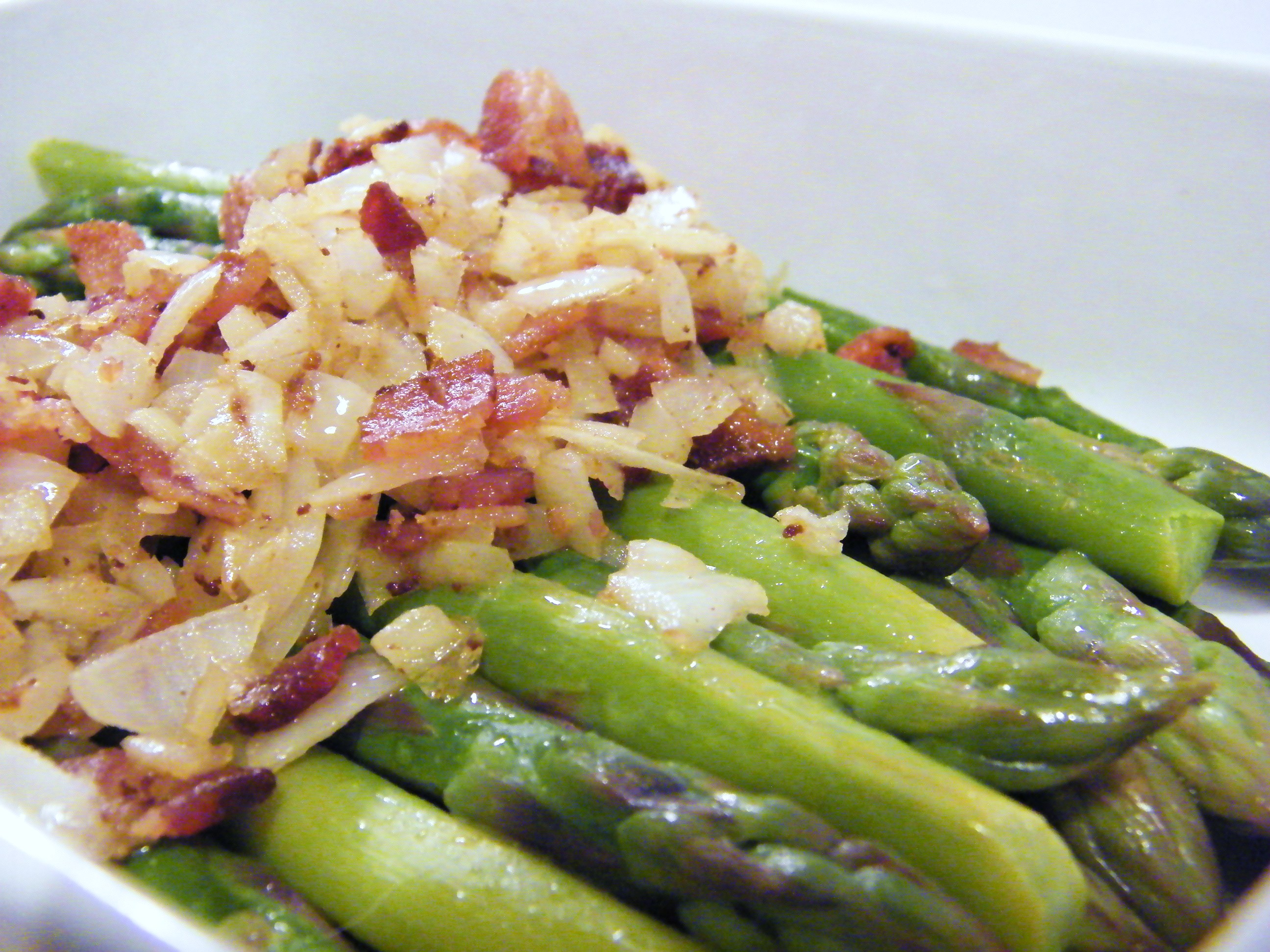
Asparagus with bits of bacon.

I missed posting about this when everyone else did, because my computer was in the shop. I’ve got it back now, a little slower and noisier than it was before, but working. (Sometimes I get tired of the part of me that wants to use things as long as they’re functional, the part of me that doesn’t want to add to the heaps of electronic waste that now litter the world. I hold onto computers and phones until the bitter end and am rarely an early adopter of equipment. There’s another part of me that wishes for things that are shiny and new, but it never wins out.)

So, I’m catching up on April’s first French Friday recipe now. I’m also catching up on reading everyone else’s posts, but I imagine that this was a hit with almost everyone in our group. How could it not be? Bacon cooked ’til crisp, then warmed with slivers of onion, asparagus tossed in nut oil and lemon juice, all in one dish. I have to admit that we made the full recipe and ate it for dinner without accompaniment. It was all we needed. In fact, my partner said the bacon was the best he’d ever had. I think it was the onion, which I allowed to caramelize a little, even though the recipe calls for it to be barely cooked. This recipe will certainly be on the menu again.

You can find many other blogged descriptions of this week’s FFWD recipe here: Asparagus and Bits of Bacon

Next Tuesday, I’ll be back to my regularly scheduled non-cooking posts. For now, I’m busy surfing my way through all the French Friday and Baking with Julia posts I’ve been missing.

I also want to take this opportunity to thank Marilyn of cook reach grow for passing on the Liebster blog award to me. She’s one of the participants in Tuesdays with Dorie and I’ve really enjoyed reading her posts. These two cooking groups have introduced me to so many lovely and interesting folks, I can’t decide on just five bloggers for the award. Instead, I’ll direct you to the roster for Tuesdays with Dorie and also French Fridays with Dorie. You could spend many pleasant hours reading through the blogs in both groups.

FFWD – Sardine Rillettes

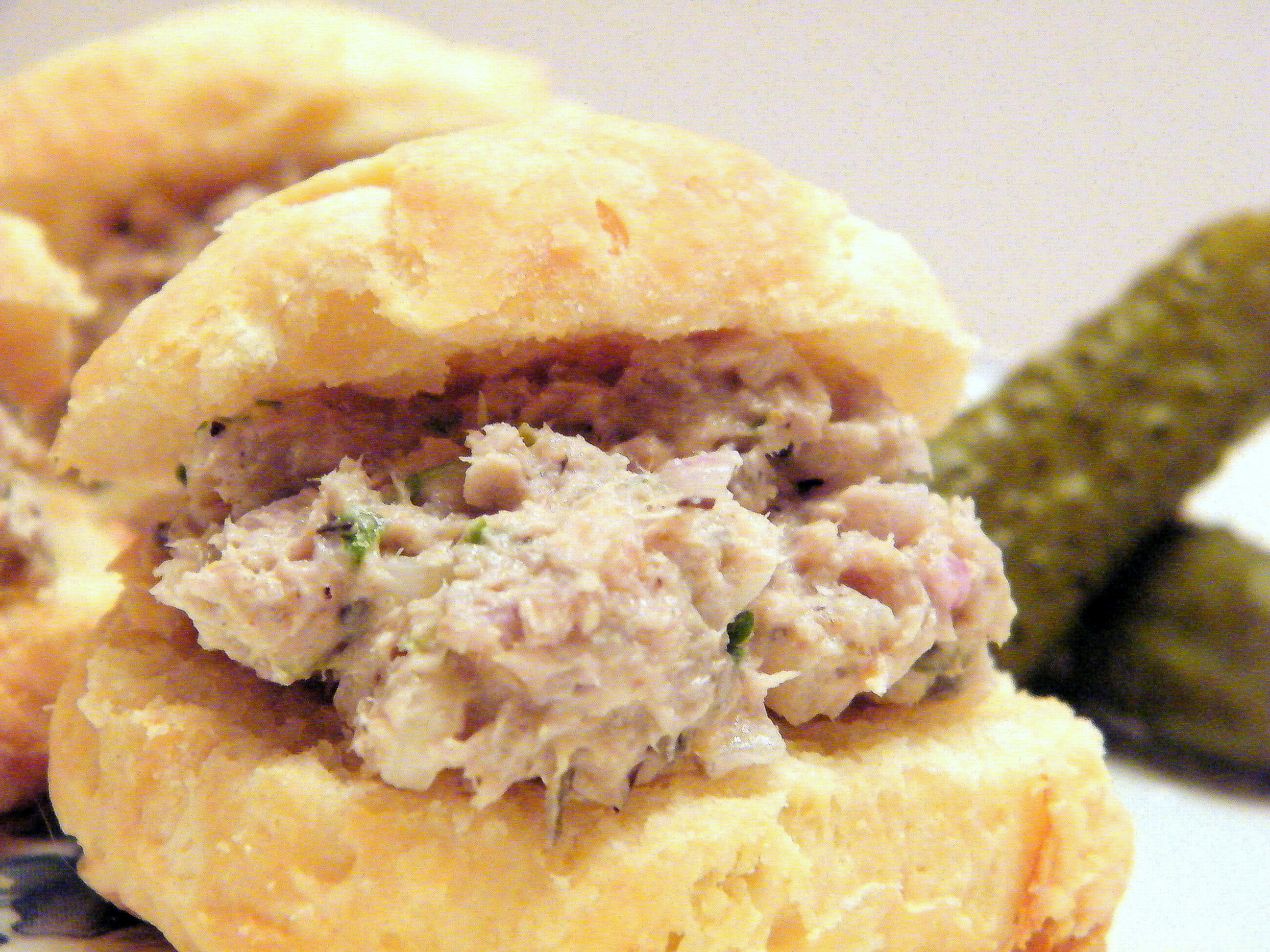
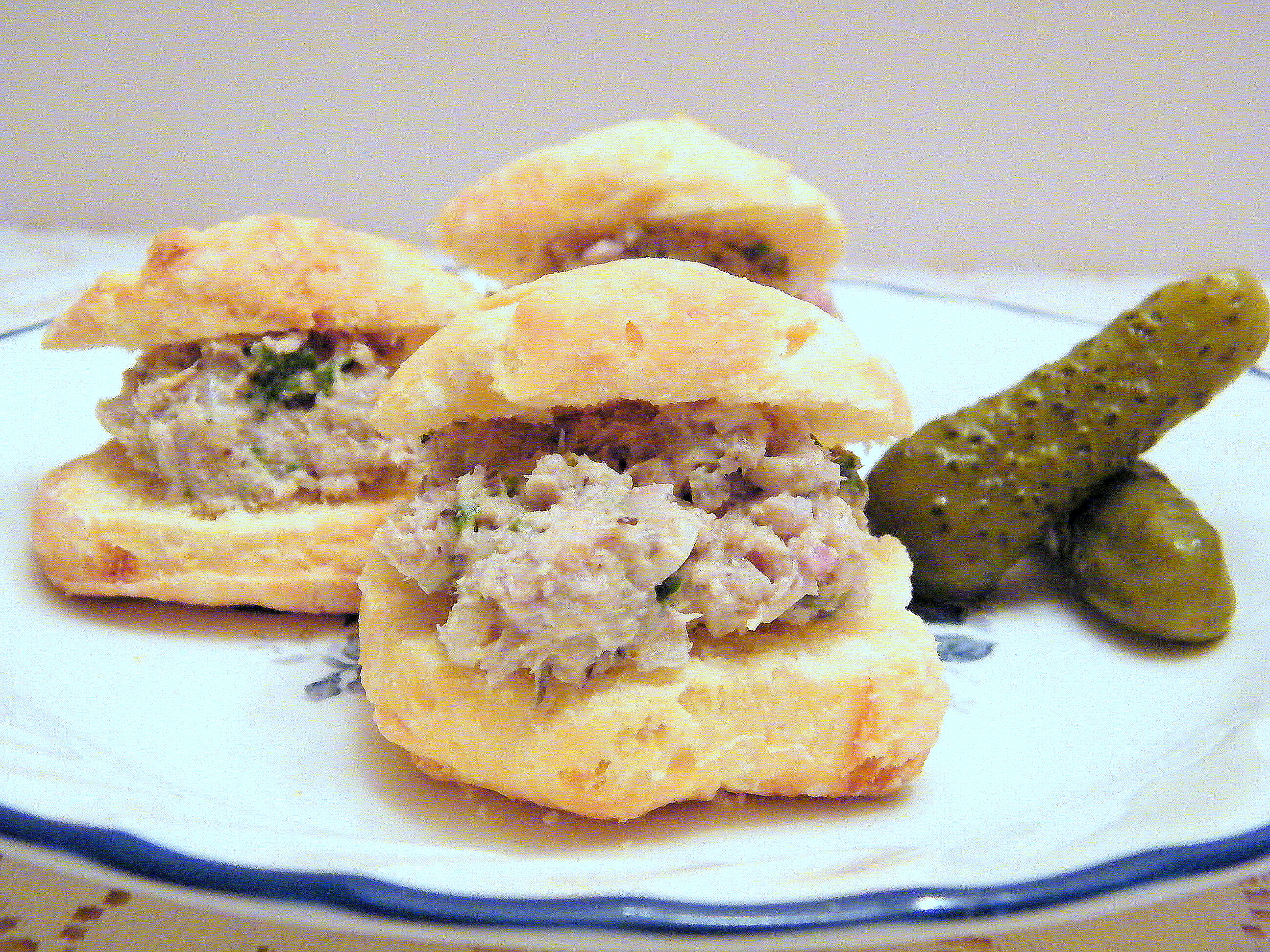
An onion biscuit stuffed with sardine rillettes, with cornichons in the background.

Every summer, my family would go on holiday for the month of August. We’d go “up country” to the lakes north of Kamloops. British Columbia is dotted with freshwater lakes and we visited many of them. We’d stay at one for a while and if the fishing wasn’t good, my Dad would hitch up the Boler trailer and the family would pile back into the car, ready to explore the next forestry campsite. My sister, brother, and I would run through the woods, swim in the lakes, read books by the shore, and at least once a day, we’d go out in the boat to troll for trout. The rule was, If You Catch It, You Clean It and when the fishing was good, we got a lot of practice.

I found myself thinking about these trips the other day, while removing the spine and tail from two tins’ worth of sardines for this week’s recipe. It’s a much easier job than cleaning trout, if a bit fussier. The process is almost as rewarding, though, because rillettes are my new best friend. Forget dip, spread, and stuffing – the only word you need, I’ve found, is rillettes.

A can of sardines, chopped aromatics, and a lime awaiting juicing.

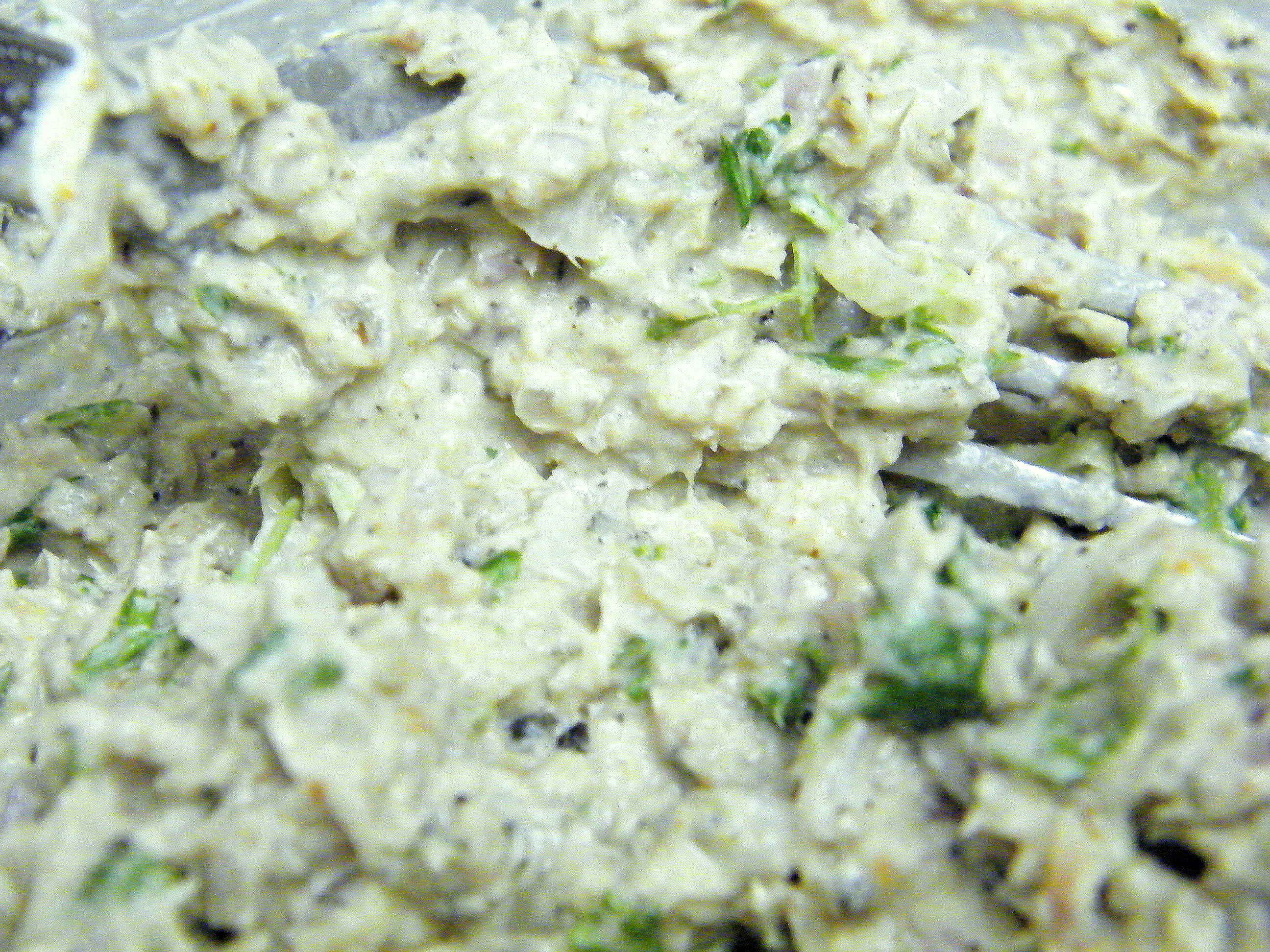
For this recipe, sardines are mashed into a mixture of cream cheese, onions, and herbs, with lime juice and a dash of cayenne for bite. Chilled overnight, the rillettes become a thick, spreadable paste. You might spread it on bread or crackers, use it to stuff eggs or vegetables, or add it to a plate of crudités for dipping.

Sardines mashed into cream cheese, green onions, shallots, herbs and lime.

We still had a big bag of Saint-Germain-des-Prés Onion Biscuits in the freezer, so we baked a few and while they were still warm, filled them with rillettes, with a few cornichons on the side. The next day, we did it again. I’m going to have to make another batch if I want to try these rillettes with anything else. I think a thin layer on rye bread would make an excellent condiment for a Montréal smoked meat sandwich. For example. I might have to try Dorie’s recipe for Salmon Rillettes, first, though. And perhaps I’ll have to get my hands on some rainbow trout and work up a version for that, too. Like I said, rillettes are my new best friend.

A plate full of rillettes-stuffed biscuits, with cornichons on the side.

You can find many other blogged descriptions of this week’s FFWD recipe here: Sardine Rillettes

FFWD – Crab & Grapefruit Salad

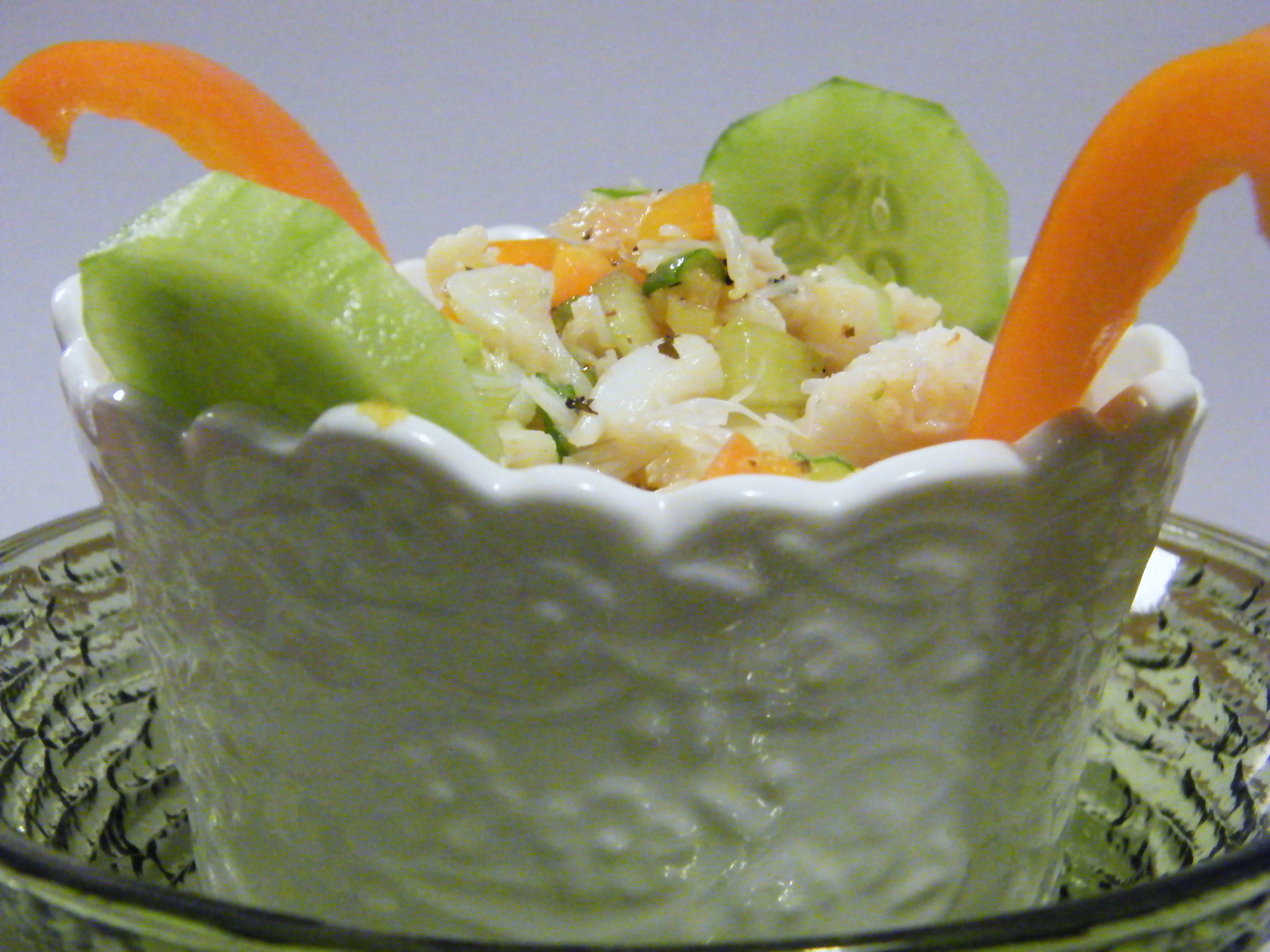
The finished salad

This is the time of year that I start getting excited about the upcoming growing season. In a few weeks, the Farmers’ Market will be moving back to its summer locations, one just a short walk away from my house. Last weekend, we got a load of soil for our garden beds and this weekend, we’re picking up some compost. I’m sketching out my square-foot gardening rotation for the vegetable beds and thinking about which herbs I’ll plant this year in containers.

One side effect of this excitement is that I have a harder time buying out-of-season vegetables and herbs from the store. This summer’s crop is so close, now. So, I didn’t buy fresh mint for this week’s recipe, but added some dried mint to the dressing, instead. I couldn’t find any ruby red grapefruit, either, so had to settle for a yellow-fleshed variety.

Mise en place

I went to our local fishmonger to pick up some real crab. It’s a little expensive, but it’s sustainable, delicious, and (unlike fake crab) gluten-free. This salad justified splurging a bit. Cucumber, grapefruit, orange pepper, and green onion complement the flavour of the crab, as does the olive oil-grapefruit dressing. I added a little cayenne to the dressing along with the mint.

I can’t decide if this salad is more reminiscent of country club fare or the sort of treat you might find on a beach holiday buffet table. Either way, it’s welcome on my plate.

A closer view

You can find many other blogged descriptions of this week’s FFWD recipe here: Crab & Grapefruit Salad

FFWD – Cocoa Sablés

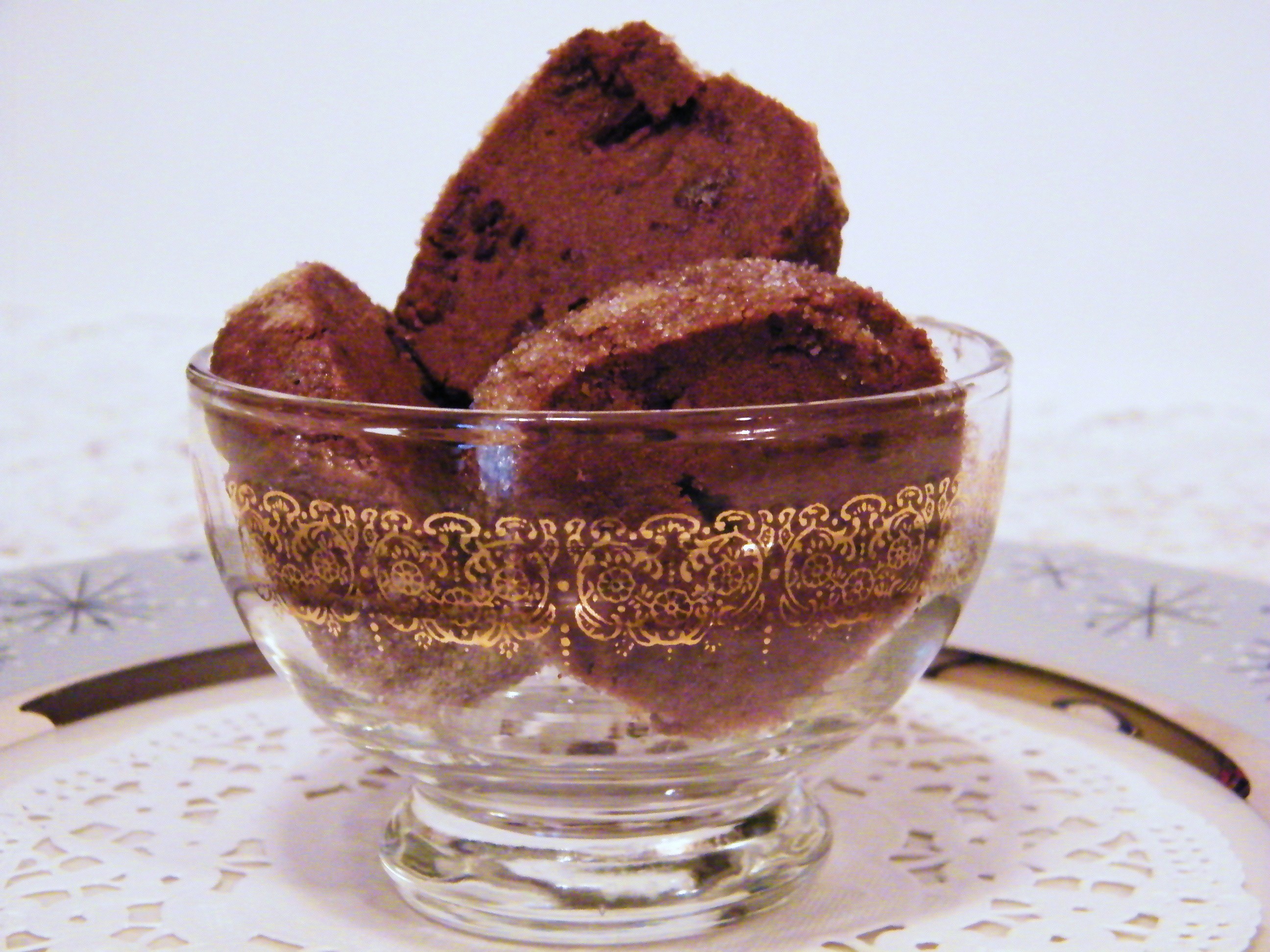
The finished cookies, in a glass dish with a gold stencil, on a doily atop a grey and silver plate.

Something I’ve been appreciating now that I’ve been participating in French Fridays for the last year-and-a-half are the benefits of taking my time. Not that I always manage it. There have been many rushed dishes, quickly photographed so that I can get a post up in time for the deadline. But, when I do take my time, it’s worth it.

This is particularly true when it comes to butter doughs. What starts as a crumbly mess turns into something rich and pliable. The flavours develop, too, when you wait. Don’t get me wrong, I love baking things that you can turn out on a whim (like this week’s Irish soda bread over at Tuesdays with Dorie), but I have a growing appreciation for the recipes in which time is one of the ingredients.

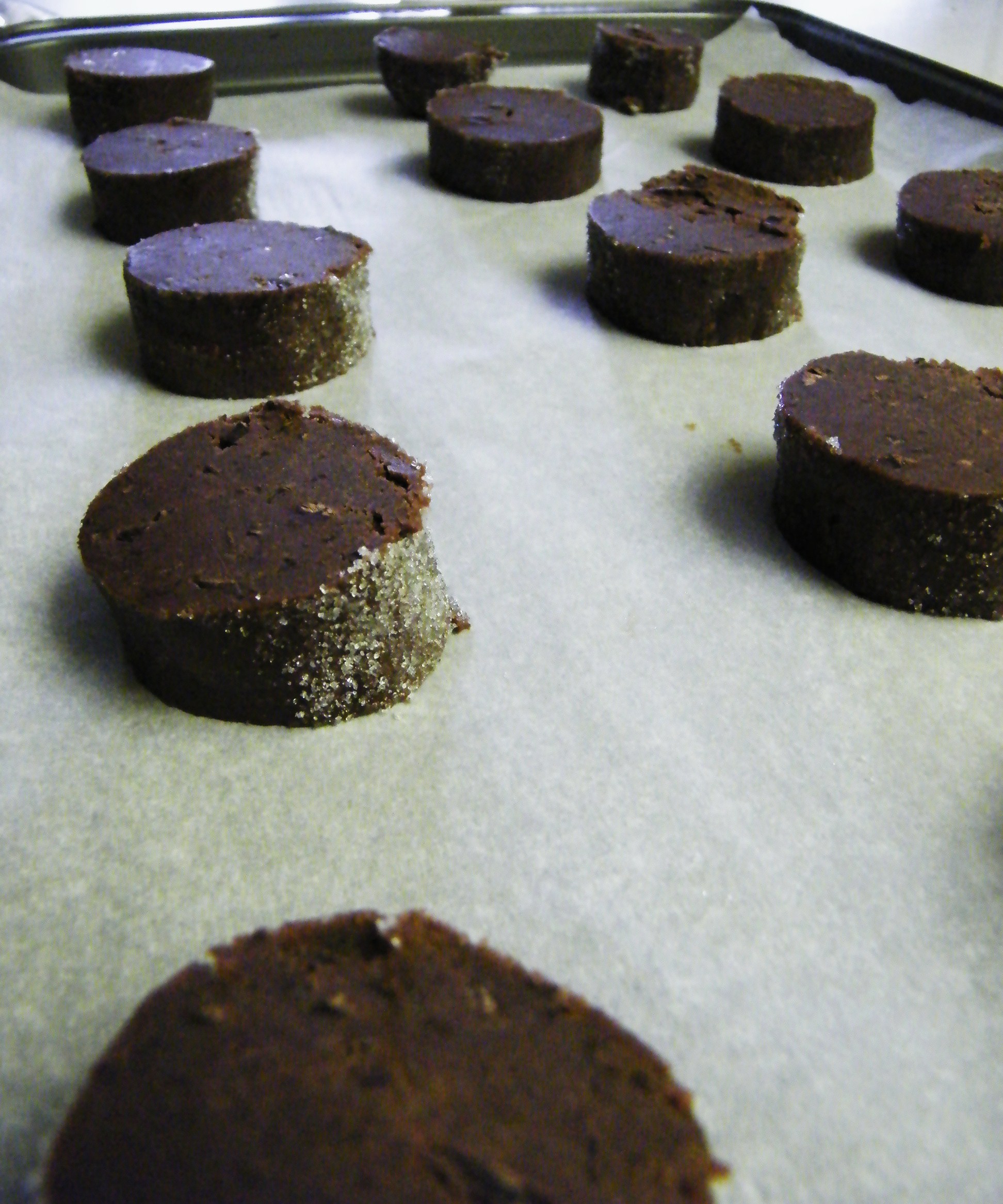
These sablés are just that sort of thing. The night before the big bake-a-thon (bake-o-rama? bakestravaganza?) with my family, I made the dough for these cookies and rolled them, with difficulty, into logs. The dough was truly sandy and I was worried that I might overwork it while trying to get the logs to stay together. But after a night in the refrigerator, the dough was fine. Easy to cut and not crumbly at all, with a denseness that made me want to get them into the oven as soon as possible. Baked, they had a lovely crumb and a satisfying thickness. They’re pretty, too. A perfect vehicle for cocoa and chopped chocolate.

Life lessons aside, I’m more willing now to explore recipes that don’t provide immediate gratification. They’ve got their own rewards.

Sliced dough on parchment paper.

You can find many other blogged descriptions of this week’s FFWD recipe here: Cocoa Sablés

FFWD – Cheese Soufflé

It rose! It rose!

I spent yesterday with my mother and my nieces, baking and cooking all day long. We started with next week’s chocolate sablés, moved on to two sorts of Irish soda bread (which you’ll be able to read about here on Tuesday), then chicken stew, and finished with this week’s French Fridays recipe, cheese soufflé.

Soufflés make a meal into a command performance. No one bakes one without requiring everyone to be at the table and ready to witness its brief apotheosis. It comes back to Earth too quickly. It’s also usually the centrepiece of a meal, or at least a course. Yesterday, I flouted that a bit. We had a sort of Franco-Irish mash-up of a meal, with Irish-style chicken stew that had been made with the leftovers of Cognac chicken (a French Fridays catch up that I’ll post about some time soon), two sorts of Irish soda bread, and this soufflé. I used aged Irish cheddar (Cahill’s Irish Monastic) in place of Gruyère or Emmenthal, in consideration of the rest of the menu. It fit right in. We ended the meal with the sablés. I have to say it was one of the best takes on both sides of my heritage that my family’s ever attemped.

Soufflé dish, buttered and crumbed.

I’m also happy to finally be in on the secret of soufflés. They’re dead easy. As long as you are scrupulous about following the steps of the recipe, only the weather or a slammed oven door can let you (or it) down. Just make sure you have witnesses. They’ll love how it tastes, but it’s important that they’re awed by its height, too.

My nieces want to try a soufflé now. Of course, they’d like to make a chocolate one. I’m going to suggest this. A meeting between chocolate and tea sounds like another great combination.

The soufflé, with a preview of Tuesdays with Dorie's Irish soda bread assignment.

You can find many other blogged descriptions of this week’s FFWD recipe here: Cheese Soufflé

FFWD – Saint-Germain-des-Prés Onion Biscuits

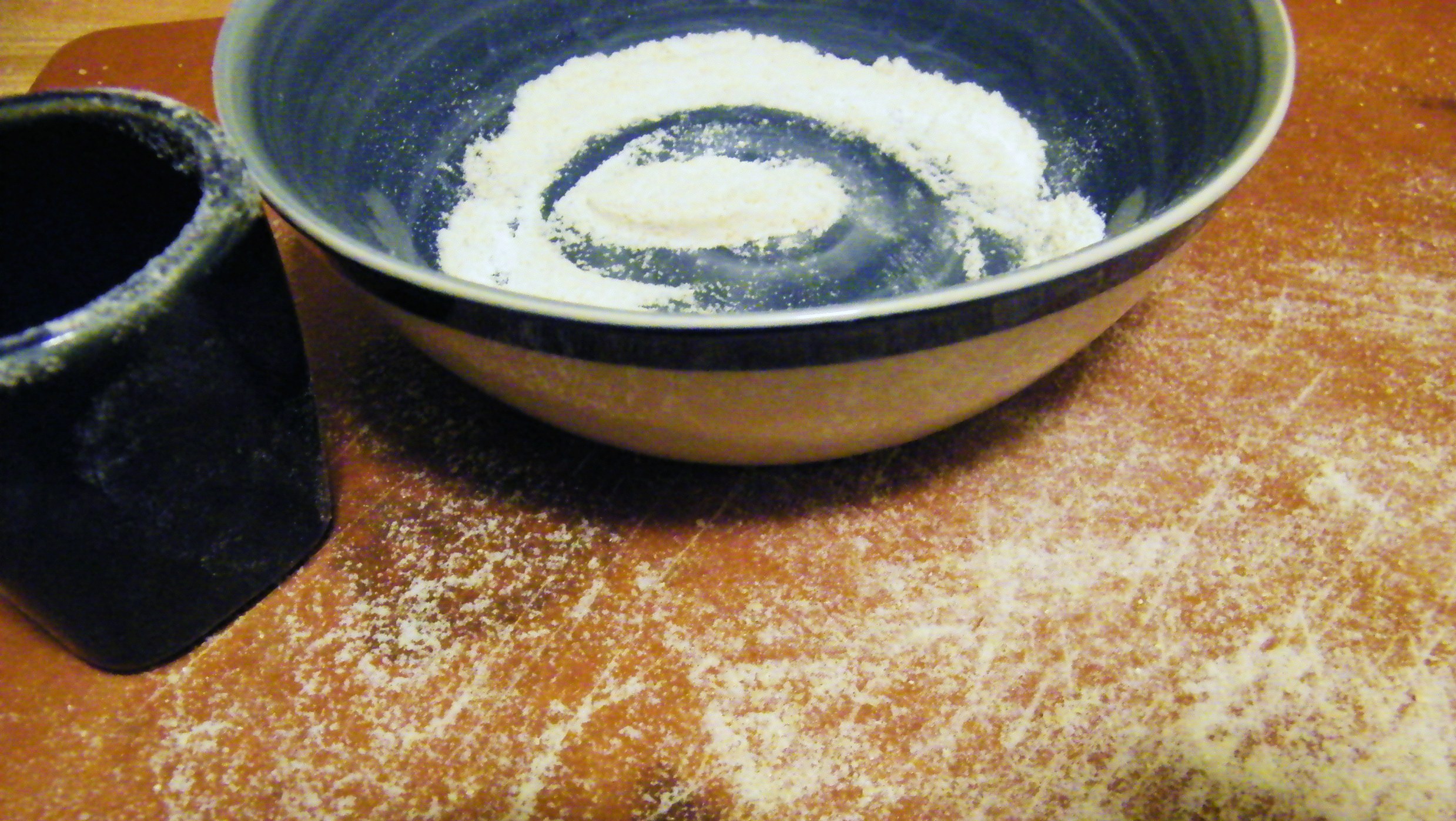
A floured board, a blue-and-white bowl with flour in it, and a Japanese tea cup subbing as a biscuit-cutter

I’ve made these biscuits three times this week. The first time, I followed the recipe exactly. The second, I replaced the milk with Greek yogurt and doubled the amount of baking powder (my niece actually did most of the work on this batch). The third time, I used gluten-free flour and added some minced garlic along with the onion.

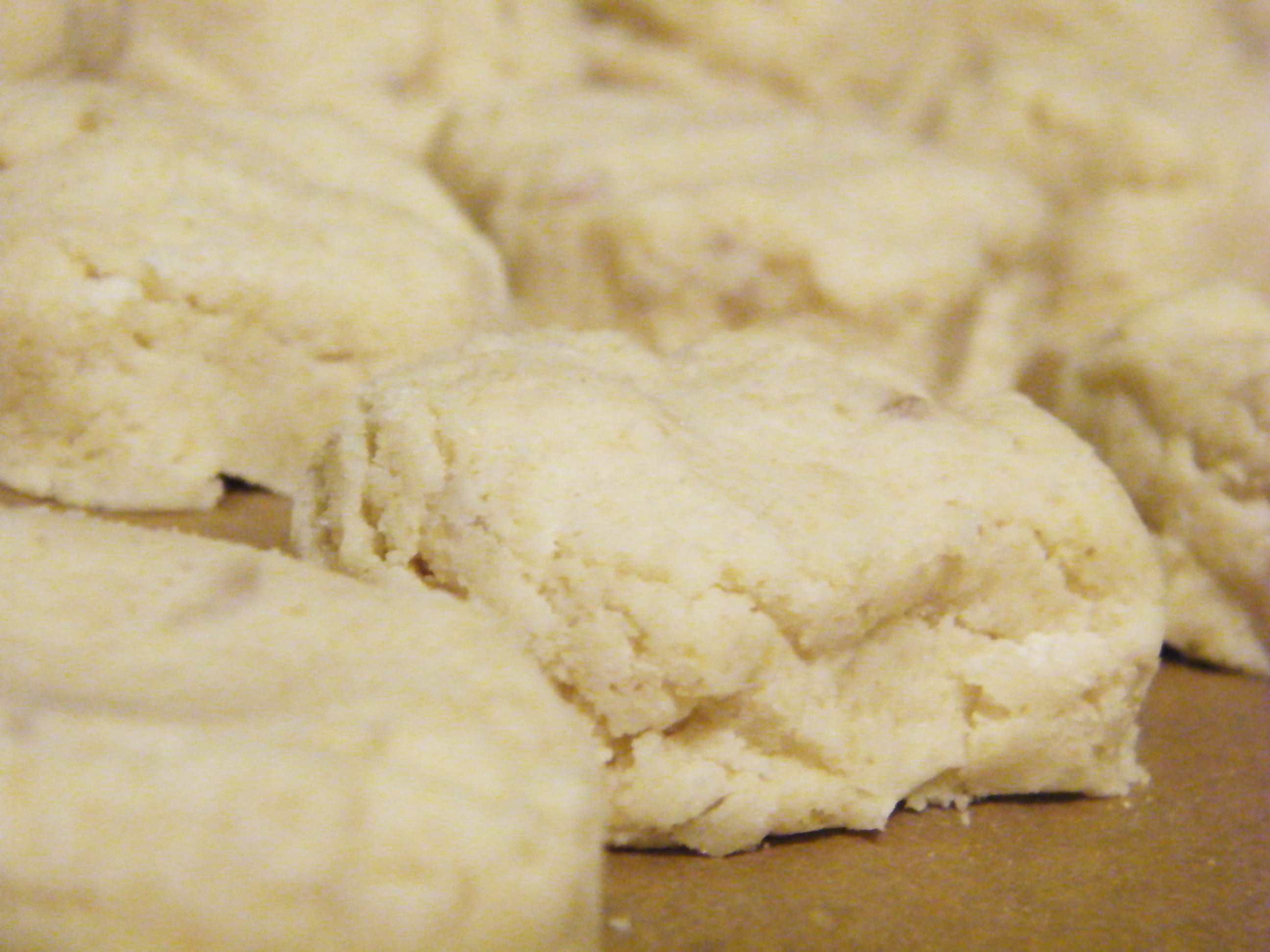
Biscuit-cutting.

As you’ve probably guessed, I enjoyed these biscuits. I’d forgotten how much I like the process of biscuit-making and it was a pleasure to rediscover that, especially when the results were so good. Most of the biscuits have been frozen, to be pulled out a few at a time. As much as I like biscuit-making, it’s lovely to be able to pull out just what you need at a moment’s notice.

Biscuits on parchment paper, ready for freezing.

These biscuits are bite-sized, so I had to improvise when looking for something to serve as a cutter. It turns out that one of the cups from a Japanese tea set I’ve got was the perfect size and sturdy enough to rap on the board, if the biscuit was a little reluctant to remove itself.

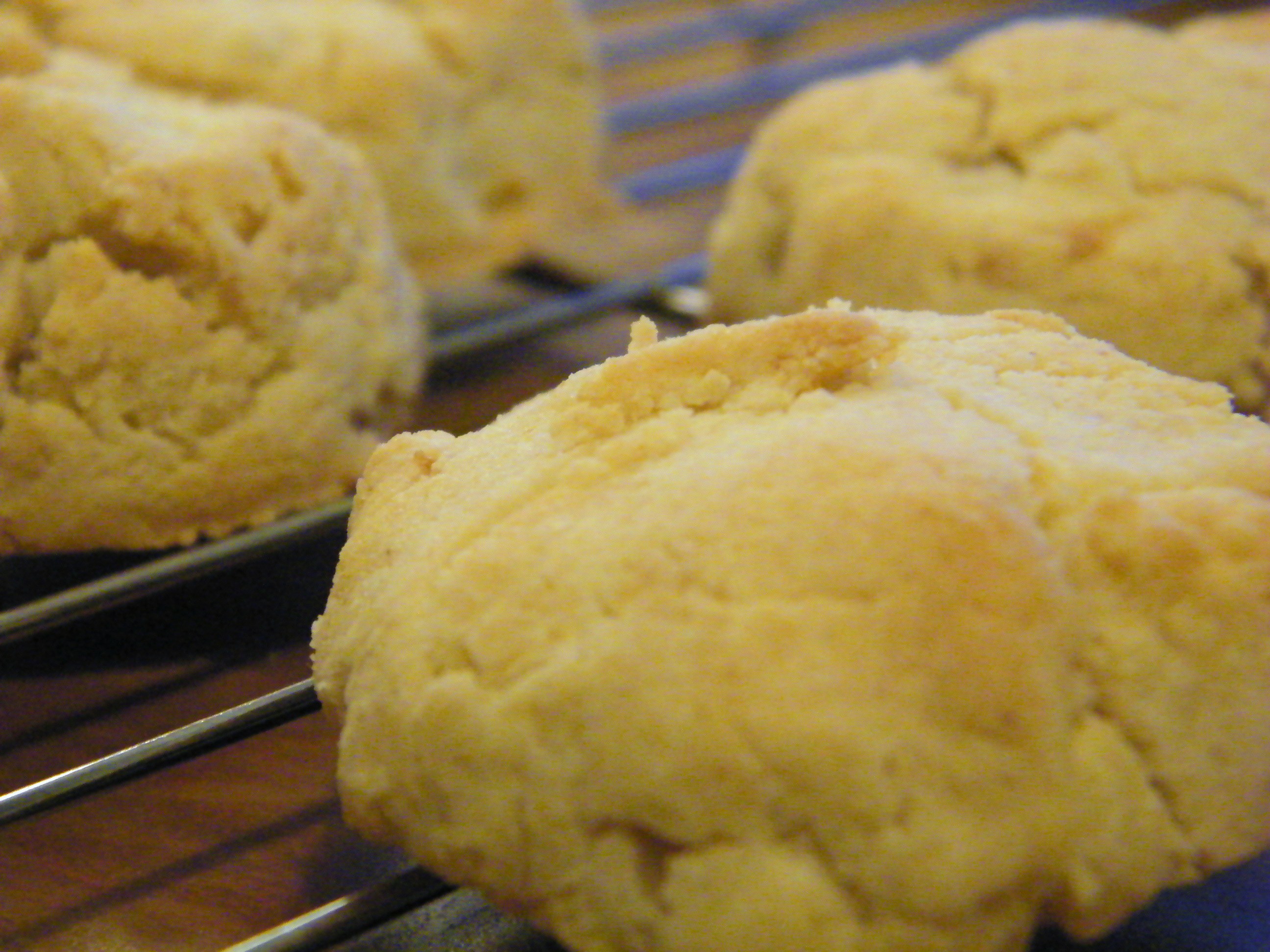
The gluten-free version, cooling.

The second batch was my favourite version – the yogurt gives the biscuits a lovely texture and richness. The gluten-free version was a little disappointing, not in taste, but in texture. They were a bit sandy and I’m beginning to understand why some folks re-grind their gluten-free flours in a Vitamix, to make them finer. Perhaps I should have used only white rice flour mixed with a little potato starch and tapioca flour, rather than my usual all-purpose mix. Next time.

I have an all-day workshop tomorrow and I think I’ll get up early and bake another batch of Version Two. It’ll be a good start to the day for the group.

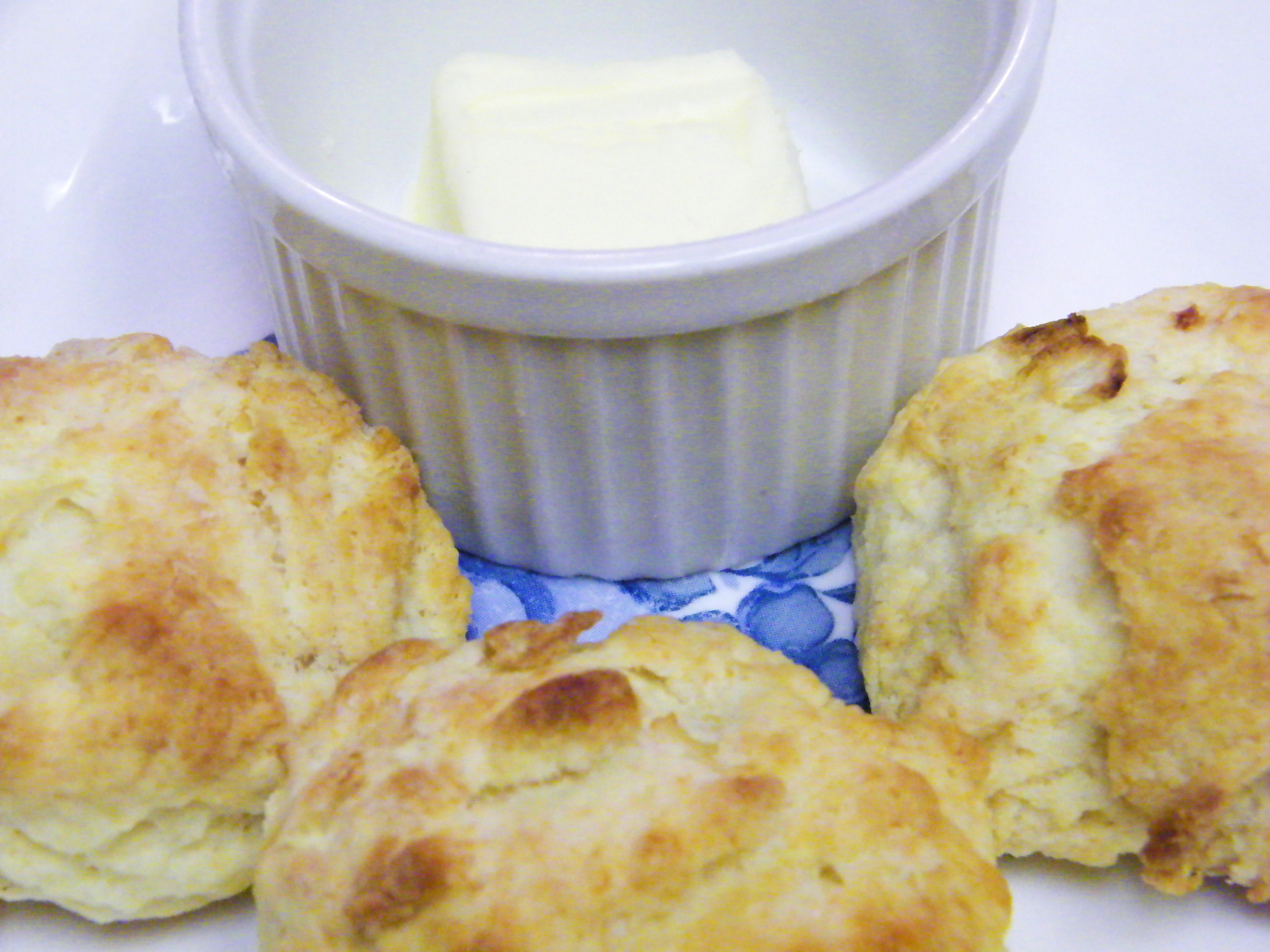
Three biscuits on a white and blue plate, with a bit of butter in a ramekin.

You can find many other blogged descriptions of this week’s FFWD recipe here: Saint-Germain-des-Prés Onion Biscuits