After a summer of salads comprised of whatever the garden’s got on offer, it seems like time to examine the shelves and stalls at the market a little more closely. There are still some remnants of the summer’s harvest on the shelves, but now there are also apples upon apples, winter squashes, root and cruciferous vegetables – things that speak of roasting or stewing, not the quick-dressed freshness of hot-weather meals.
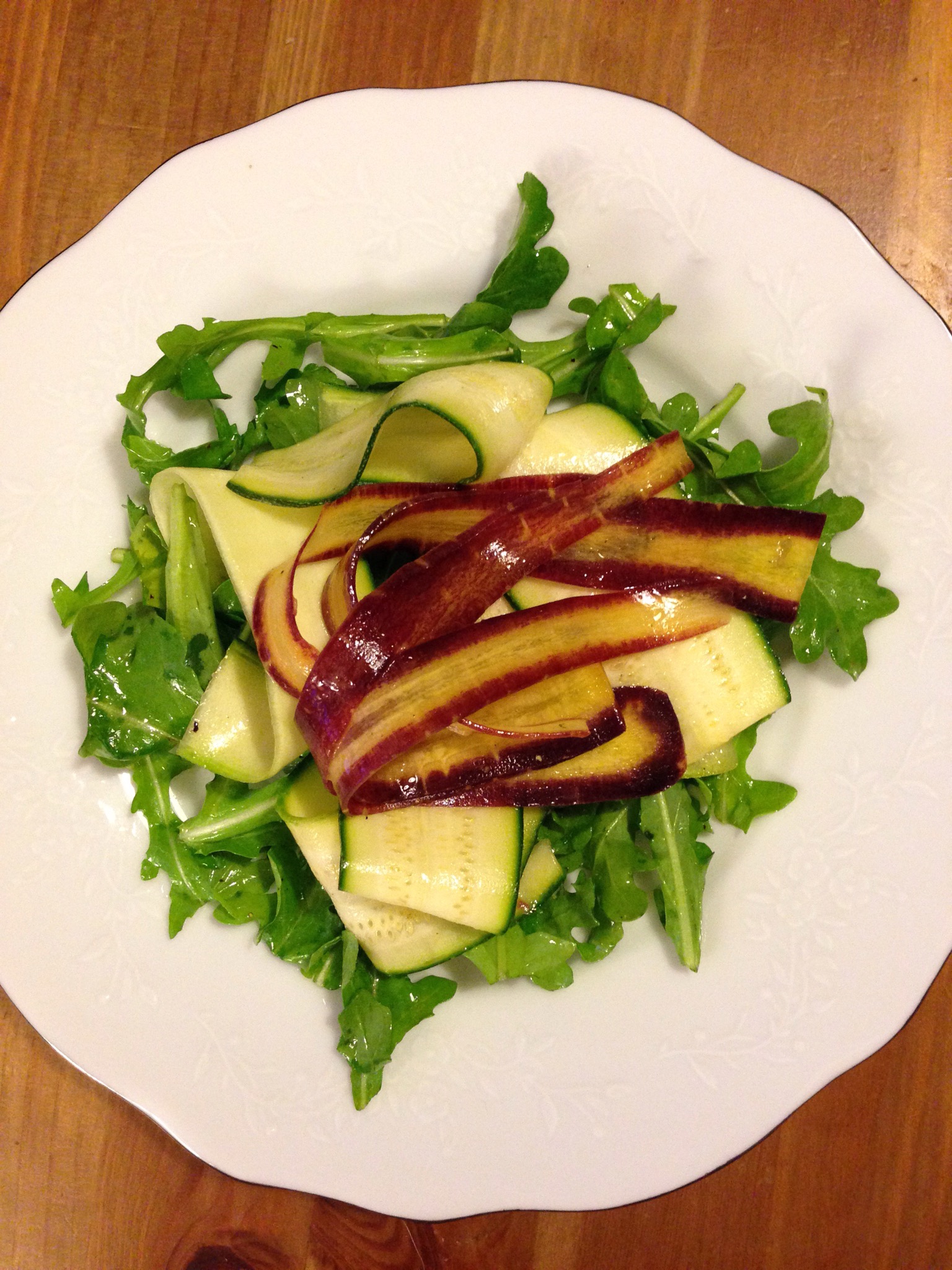
Still, there’s one last summer salad for French Fridays and luckily the markets easily yielded the ingredients. Well, more or less. I haven’t seen a yellow zucchini for a few weeks now, so I opted for a small green one. And since the colour scheme was already in flux, I picked up some heirloom purple carrots in place of orange. For the greens, I chose an herby mix that I thought would counterbalance any dissonance I might experience from the vanilla in the dressing.
Yes, vanilla. There’s a lot of olive oil and lemon in this dressing, with only a touch of vanilla extract, but the flavour is transformed by it. I made the dressing by eye, since I was halving the recipe, so I may have been a bit conservative with the amount of vanilla I used, but the flavour was definitely there. My first taste was surprising – I didn’t even register whether I liked it or not. It was just something new to me. Then, I simply enjoyed it. Kevin told me that he liked it, but didn’t love it. (He’d eat it again, so I consider it a win for him.)
I’d love to try this dressing in a salad that’s already a mix of sweet and savoury, one with strawberries or figs, perhaps. There’s still a little time before cold-weather eating fully sets in.
There are certain advantages to being an omnivore who lives with a vegan. I will happily eat the meals I cook for Kevin, but there is now an undercurrent of “more for me” when I’m making French Fridays dishes. Though there are lots of dishes – more than you might guess – that work for vegans in Around My French Table, there are many glorious meals that are decidedly not vegan-friendly.
This ceviche is one of them. I’m getting lots of practice in minification à la Mardi, because even a dedicated omnivore can’t be expected to finish meals meant for four, especially when they’re as perishable as ceviche. For this recipe, I decided to make enough for a generous appetizer for one. I headed down to the local sustainable seafood store for 100 grams of Ahi tuna and made about one-quarter of the recipe.
Dorie’s ceviche is sweet with mango, creamy with avocado, tart with lime, and rich with tuna. There is crunch from the onions and heat from the hot sauce. There’s just as much going on visually, too. Though I didn’t really want to share, I wished I did have someone there to admire it. (Not Kevin, because giving up sushi was quite a sacrifice for him and I didn’t want to torture him.) No matter, I’m filing this away for a dinner party idea someday. This dish would look gorgeous in a pretty bowl, set inside another pretty bowl filled with ice. Whatever followed would have to be absolutely smashing, though, to compete.
If you’re worried about making ceviche at home, Hunter Angler Gardener Cook will set your mind at ease, give you some tips and a recipe you can try, too. You can find Dorie’s version in Around My French Table. It’s yet another recipe that’s worth the price of the cookbook.
I’m in a peripatetic state of mind, it seems. Right now I’m in the middle of several books, including Cheryl Strayed’s Wild, The Paying Guests by Sarah Waters, Seed to Seed by Suzanne Ashworth, and Rebecca Solnit’s latest book of essays, Men Explain Things to Me (if you’re not familiar with her, this might be a good place to start). I’m also re-reading Tamar Adler’s Everlasting Meal, as the easiness of summer garden eating is about to wane and I feel in need of a refresher on the simple, thrifty, respectful way she approaches food and eating.
One of the things I need to remember is that making more food than you’re going to eat for your next meal, in both quantity and variety, is one of the best ways to make sure you’re eating well at every meal.
This basic recipe for French lentils is exactly the sort of thing I want to have in the refrigerator when I’m wondering whether I really want to get into the kitchen and cook. The lentils are gently cooked in broth or water, infusing themselves with the flavours of the vegetables that are along for the ride. You can add cognac and shallots at the end, or not. You can chop up the vegetables and stir them back into the finished lentils, or not. You can serve them with another protein, sprinkle them with cheese, chill them and use them for a lentil salad later. Or, you can tuck into them just as they are.
I used vegetable broth in this batch, which makes them a nice vegan treat, though I sprinkled some with cheese, for me. Unfortunately, I didn’t notice that I only had about a half cup of French green lentils left, so I substituted brown lentils. The brown worked well, but I prefer the green – they are both gorgeous and delicious. Time to go back to the food co-op and stock up, since this is one of the recipes from Around My French Table that I make often, especially in the colder months.
For some reason, a lot of my friends were kicked out of Brownies for rebellious behaviour. Not me, though. I went through the whole Girl Guide system and then jumped over to Scouts when I’d exhausted the camping possibilities that the oldest level, Rangers, had to offer. I knew a good thing when I saw it. Weekends away in the woods, longer in the summer, were a haven worth wearing a uniform for during the rest of the year. Besides, there were the badges – even one for reading. Yes, I know, I’ve never been the James Dean type.
One of the highlights of the year was often a trip to Camp Olave, a beautiful oceanside retreat on BC’s Sunshine Coast.
What does any of this have to do with this week’s recipe? Well, the en papilotte method of cooking evokes a very particular memory of a multi-district camp I attended at Camp Olave when I was almost ready to leave Guides for the next level up. We were amongst the oldest girls there, so we were seconded by the leaders for all sorts of minor supervisory jobs – which mostly translated into babysitting the Brownies. It also meant that we were considered ready for more adult behaviour.
So, we were told we’d be the last to be fed when a plan to cook foil dinners in solar ovens failed – the leaders hadn’t factored cloud cover into their planning, even though the “Sunshine Coast” is as rainy as MetroVancouver. The packets were dumped around hastily constructed fires and I didn’t eat until around midnight. I don’t remember what else was in the packet, but I do remember that the chunks of potato were only about half-cooked.
That turned me off cooking in foil completely until I was in my twenties. Cooking fish in foil – in an electric oven only – was one of the tricks I learned to make it look like I actually knew what I was doing in the kitchen.
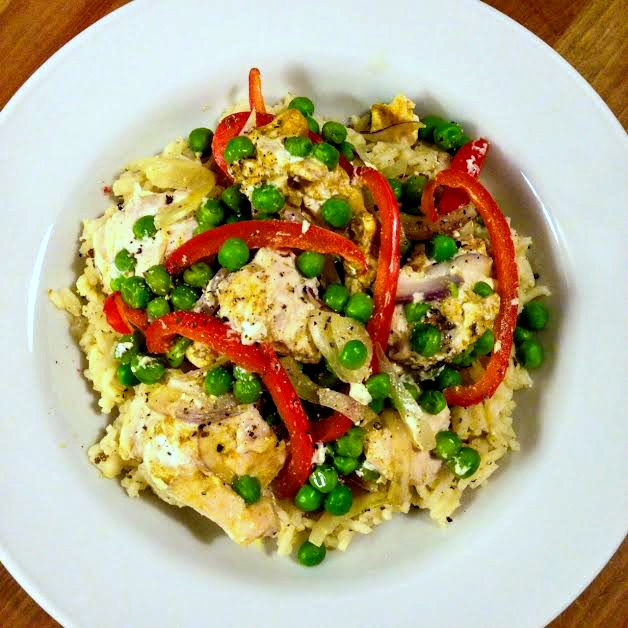
The three en papillote recipes we’ve done so far in French Fridays have been fabulous, not to mention customizable. This fourth foray into foil (or more elegantly, parchment paper) was no exception. I cooked half the vegetables on their own, so that I could serve them with slices of tofu sautéed with Indian spices for Kevin. The rest I cooked with a half portion of chicken, for me.
I was worried that the ingredients were too simple – just curry powder, salt, and pepper against chicken, onions, peas, and red pepper. It comes out just right, though, steamed in its own juices. I served it with a recipe we tackled way back in 2011, Cardamom Rice Pilaf. It’s the side dish Dorie recommends for the curried chicken and it’s one I’m always looking for an excuse to make. The two make a great combination. One that chases out any memories I might have of half-cooked potatoes in the woods.
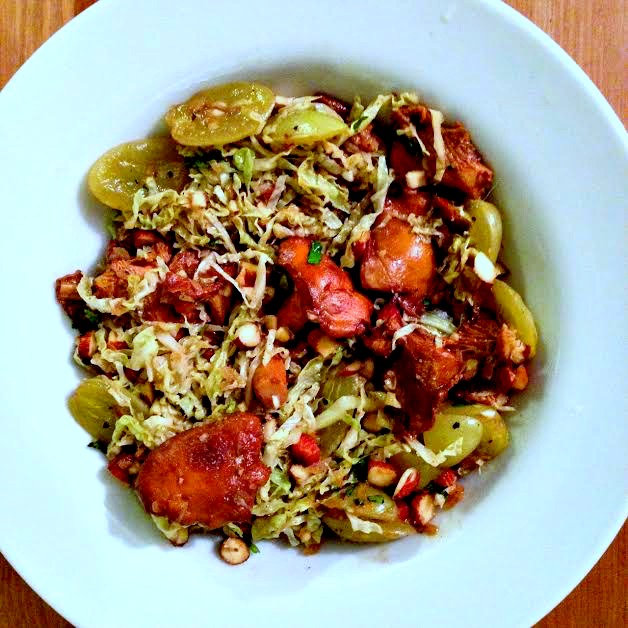
It’s easy to think of disincentives for being late: a tapping foot, the flustered greeting, that feeling of being out-of-step with everyone else. But sometimes there are advantages, too. I couldn’t make it to last week’s Farmers’ Market, so I don’t know if they had chanterelles for sale, but I do know I couldn’t find them anywhere else all week. This afternoon, though, there were several baskets of the beautiful fungus sitting front and centre on Wild Foraged‘s table. I scooped up a box, but I admit I almost gave up on the idea of this week’s dish when I found out they also had Chicken of the Woods on hand.
My better angel prevailed and here we are, with an appetizer that is sweet and savoury, meaty and vegetal, all at once. I made a small portion of the dish for the two of us to share, substituting savoy cabbage for the napa and using some vegetable stock in place of bouillon. I’d forgotten to pick up hazelnuts on the way home, so I used chopped almonds instead. I think they were as nice as hazelnuts would have been. I also took Dorie’s bonne idée and threw in some green grapes, which added another lovely layer of flavour to the dish.
The hardest thing about this dish is obtaining the mushrooms. The easiest thing is deciding to make this again before chanterelle season is over. See for yourself, here.
And because we’re heading into the home stretch of Around My French Table, I’m trying to do at least one catch up a week until I’m up-to-date:
Lyonnaise Garlic and Herb Cheese
I’m sort of glad I waited so long to make this one, or else it might have become a staple item in my refrigerator. Fromage blanc (or in my case, ricotta drained overnight until thick) mixed with alliums and herbs makes a wonderful spread for crudités, breads, or crackers. I loved it with oatcakes and slow-roasted tomatoes. If Kevin wasn’t adhering to his vegan diet of late, I’d have filled tomatoes with the stuff for him. I’ve still got quite a bit left and I’m thinking it might find its way into a savoury tart very soon.
The drops of rain on this dahlia mark the end of our sunny streak in Vancouver and possibly an early end to summer here. The recipes for this month’s Cottage Cooking Club inhabit the transitional space between summer and fall, as well.
Chard and New Potato Curry
Swiss chard is one of those amazing vegetables that shows up in the spring and keeps on producing right through until winter’s almost begun. Along with some potatoes picked when they’re small and a sauce that’s lightened with yogurt and heightened with Indian-inspired spices, this is a stew that’s welcome in any season. We both loved this curry, eating it without accompaniment on the first night and warming up the leftovers to serve over rice. It’s also one of those recipes that can serve as a template, allowing you to use whatever’s freshest or on hand. We’ll be having this one again and again.
Tahini-Dressed Courgette and Green Bean Salad
This dish hearkened back to my first experiments with vegetarian dishes, when I was in university. We all had jars of tahini in our refrigerators and Moosewood cookbooks on our shelves. Nowadays, I’m more likely to use tahini in Mediterranean or Middle Eastern cooking, but I enjoyed this slightly hippyish salad, especially with the addition of salad greens and tromboncino squash from my garden. The harvest from my first set of green bean vines is over and I’m awaiting more from the second set I planted, so I substituted snap peas, instead. They worked well. I can see myself making variations of this salad for myself (just me – unfortunately, Kevin wasn’t a fan) or using the dressing to marinate vegetables, lamb, or chicken before grilling or baking.
Caramelized Carrots with Gremolata
I couldn’t resist buying some heirloom carrots to use for this dish. These carrots were a deep purple on the outside, with a core of orange – we ate them up too quickly for me to get a shot of that, though. This is another dish I think I’ll be making often, using whatever root vegetables I have on hand. The freshness of the gremolata against the caramelization of the roasted carrots was lovely.
Asian-inspired coleslaw
And lastly, there’s this salad that’s almost like a quick pickle. We loved the combination of flavours in this salad – sweet, tart, earthy, spicy. It felt summery, but the cabbage, carrots, and onions can be obtained at almost any season – this would be a wonderful way to brighten up a late winter meal, too.
Next month, we’ll be exploring vegetarian flavours to pull us into the cooling of the year. I’m eating as much of summer’s bounty as I can, but I admit that autumn’s flavours are on my mind more and more.
Intrigued by this month’s recipes? Buy the book and join us.
Here are the links to the rest of the group’s posts for this month. I encourage you to check them out – you’ll meet some wonderful bloggers and get some great inspiration for vegetarian eating.
I’m a rather mediocre meditator. If I go to a sit or even a day-long retreat, I can meditate successfully and feel as though I’ve gotten a lot out of it (which is entirely the wrong attitude, I know). But, on my own, it doesn’t happen. At least not in that formal, sit and allow your thoughts to pass through, focusing on your breath, kind of way.
My true meditative practice happens when I’m out in the garden or chopping vegetables in the kitchen. It’s in those moments, or in the in-between spaces like a quiet bus ride or a long walk, that I truly reach for a meditative state. The demonstration of this kind of practice is one of the reasons I love the film How to Cook Your Life.
And yes, this week’s French Fridays assignment put me in mind of this, as I cubed or thinly sliced a heaping plateful of vegetables today. Now, I should let you know that the recipe for this week wasn’t actually quinoa salad, it was couscous salad. But, since the other half of the household can’t have gluten, I decided to change it up a bit. It’s a Moroccan-inspired take on a grain and vegetable salad that didn’t suffer at all from the substitution. In fact, I loved the colour the tumeric and other spices lent to my plain quinoa.
You can find the recipe on Epicurious, along with the suggested accompaniment, lemon chicken. Because quinoa is packed with protein, we were able to make a vegan supper of it, along with some corn on the cob.
And as an added bonus, Kevin declared this the best recipe I’ve tried recently. Now, that’s something to contemplate.
Find out what the rest of the French Fridays crew thought about their Couscous Salad
It’s peak harvest time in the garden now and many of us are focused on eating and preserving as much as we can. But it’s also time to think about next year’s garden, so leaving a few fruits and vegetables to fully mature so that you can harvest the seeds can be part of the plan, too. As I’ve told you before, I’ve been successful saving seeds from the heirloom beans my family grows, but I’m trying to expand those skills.
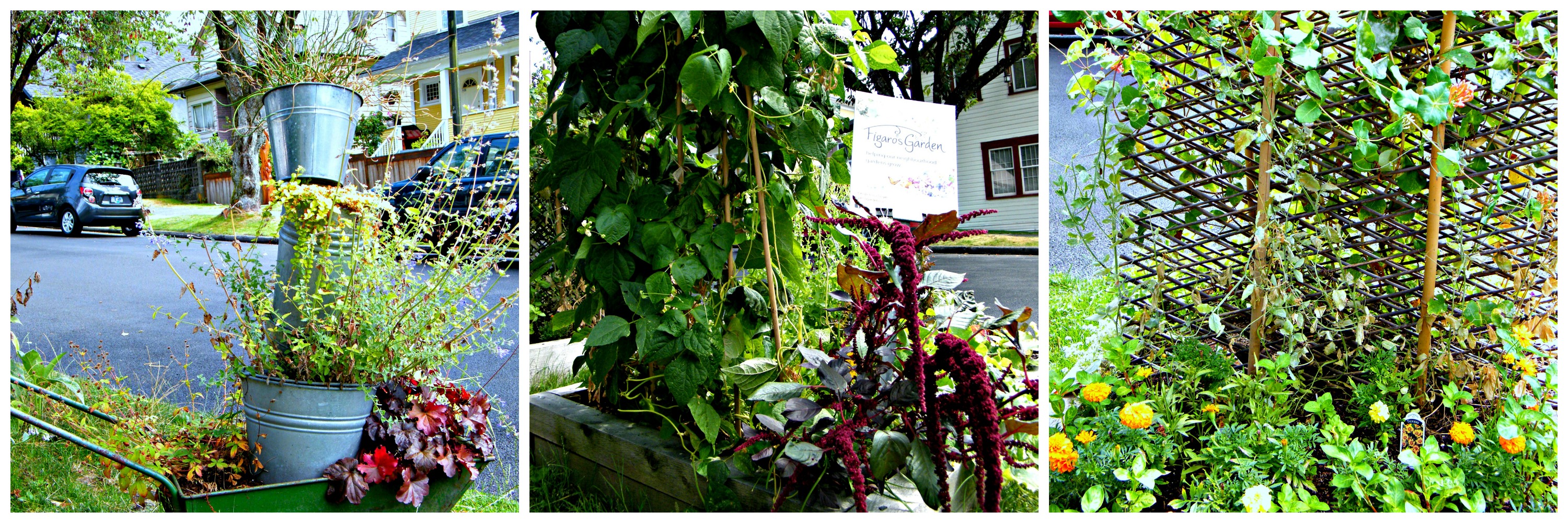
With that in mind, I headed over to Figaro’s Garden on Sunday to attend their Intro to Seed Saving workshop. The owners are committed to becoming a centre for our neighbourhood’s organic gardening needs and they’ve been providing regular workshops to share skills and build community. They’ve also got a strong connection with Environmental Youth Alliance, which works with young people to build skills and connections with the natural world. One of the owners is the Executive Director of EYA and EYA’s Volunteer Co-ordinator, Katrina Sterba, is also Figaro’s Event Co-ordinator. This crossover has meant that there is a strong grassroots ethos at the garden centre, along with a deep knowledge base for teaching and community outreach.
Sterba led the workshop, allowing some folks from around the neighbourhood to benefit from her expertise. We all had various levels of experience and success with seed-saving, from complete novice to regular experimenter. The workshop led us through a primer on which seeds are the most viable for seed-saving – open pollinated, self-fertile plants are easiest for beginners, while hybrids and some heirloom seeds won’t necessarily grow to resemble the plants they came from. Each of us got a pamphlet with a run down of the concepts she covered and a resource guide for further exploration.
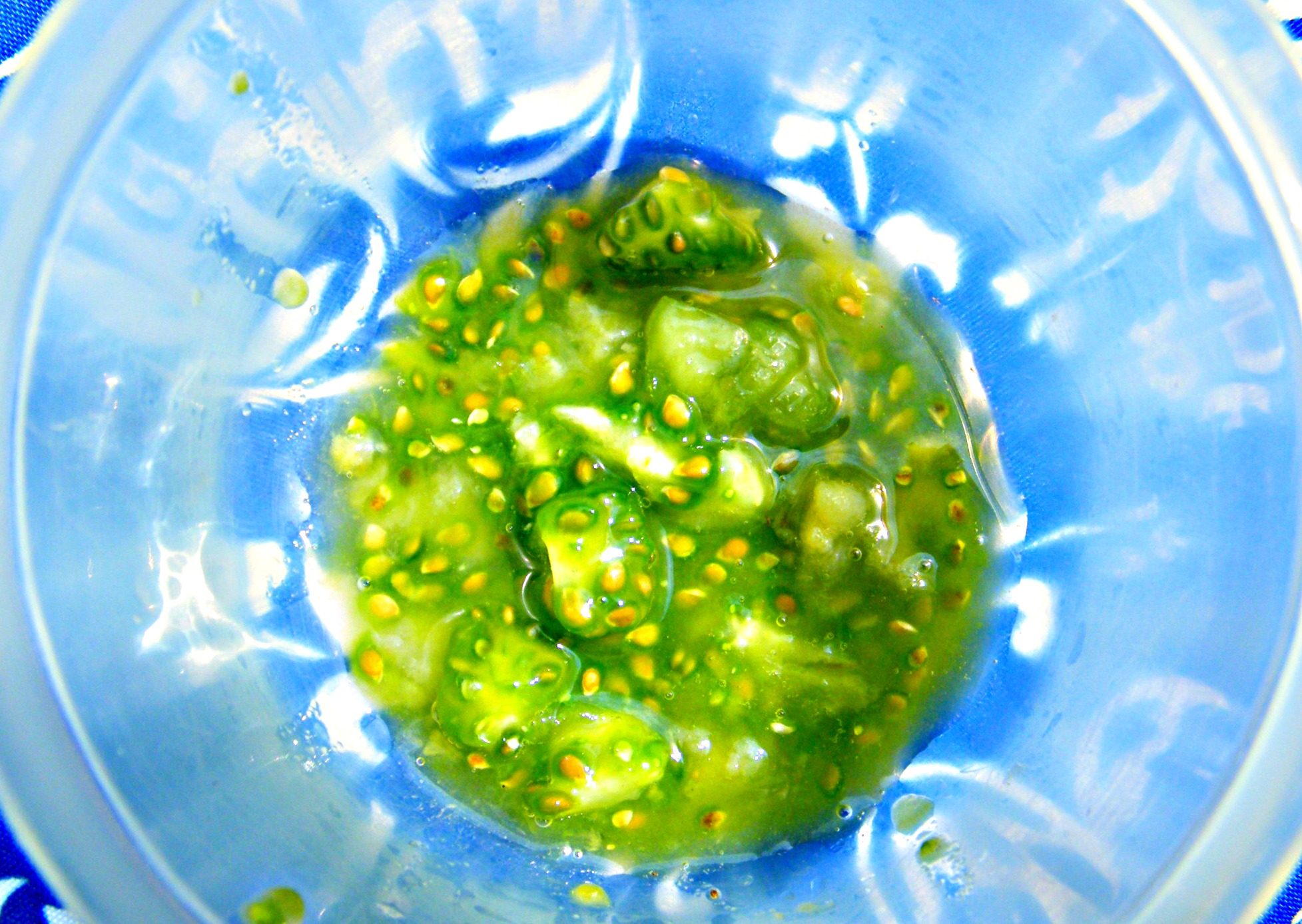
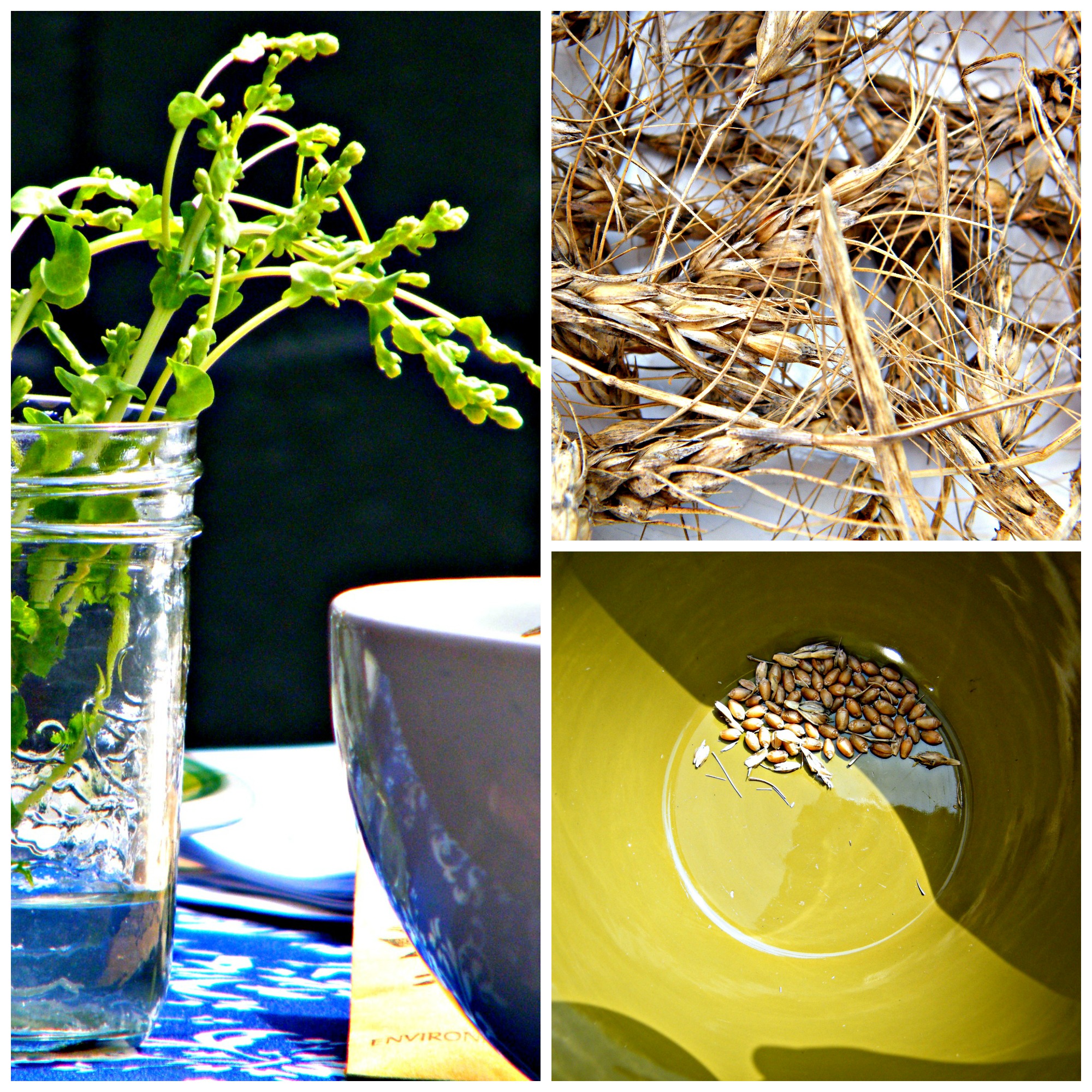
Next, we had a demonstration of the two most common methods of seed-saving: dry and wet. Katrina gave us hands on experience of threshing and winnowing some spring wheat that had been grown right here in East Van. Then, she demonstrated the wet method with one of the most luscious-looking Green Zebra tomatoes I’ve seen.
We also learned from each other. I now have a plan in mind for starting tomato seeds indoors next winter – no small feat in a two-bedroom apartment. There was also a spirited discussion of how to rescue sunflower seeds from hungry birds, or whether we even should.
If you’re in Vancouver, I recommend stopping by Figaro’s Garden for a look at their demonstration gardens or a chat with their staff about your gardening needs. I’ve gotten a number of plants from them over the years, from a dogwood bush for my parents’ (late, lamented) farm to a flat full of annuals for my flower baskets. I’m also going to keep an eye out for more workshops, like the Mason Bee primer they’ll be hosting on September 27th – I think I might become a regular student. In the meantime, I’ve already expanded my seed-saving to the sage plant that flowered abundantly this summer and the peas I grew from seed I got at a seed swap this spring. I’m also keeping an eye on the nasturtiums I picked up from the Kensington-Cedar Cottage Seed Sharing Library so that I can return some to them and keep some for next year’s garden.
Maybe someday, if I keep up the learning, I’ll be able to stop calling myself a beginning gardener.
Hello French Fridays, we’ve got a lot of catching up to do. I’ve missed you, but I got hit with a nasty sinus infection last month that took away much of my sense of taste and smell, along with almost all of my cooking mojo. I’m coming back on an easy one, so I added in a couple of catch ups, too.
Roasted Red Peppers
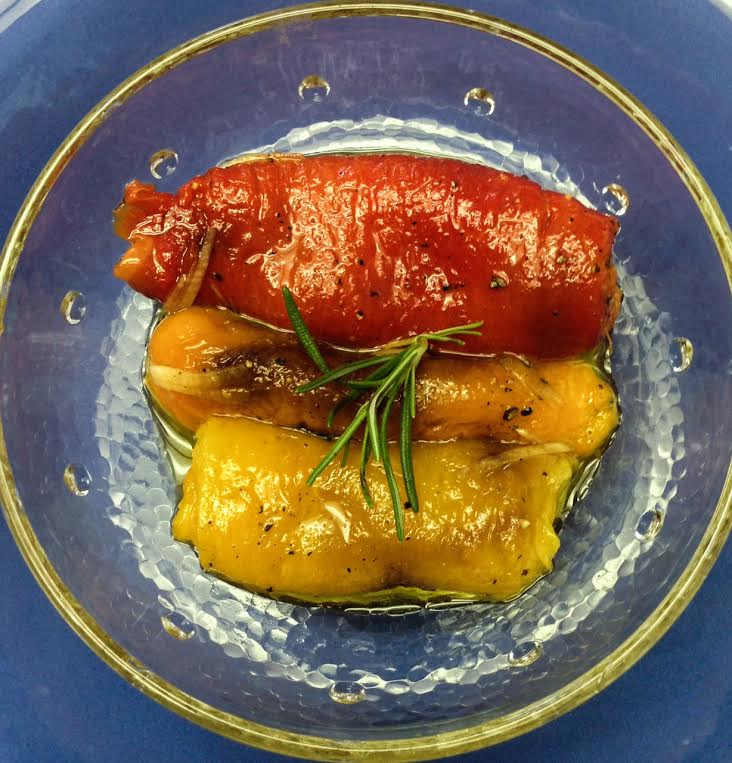
I’ve never been a fan of commercial roasted bell peppers – they’re usually a little slimy and the best part of the flavour is in the oil they’re packed in. Homemade roasted peppers, though, are an entirely different matter. Dorie’s recipe has you roasting the peppers in the oven, making it easy to cook them until they blacken and collapse. Once they’ve cooled down enough to peel, it’s just a matter of layering them with seasonings and marinating them in the fridge for at least a couple of hours. I made mine last night and they were wonderful as an appetizer. Unlike the ones out of a jar, they weren’t without texture and they certainly weren’t slimy. Instead, they had a light coating of good olive oil and they were covered in garlic and herbs. I also took a quarter cup of the oil and a slice of pepper, as Dorie suggests in her bonne idée, and made a vinaigrette. I used balsamic instead of sherry vinegar and it was a perfect dressing for salad this evening. Even better, there are still plenty of peppers in the fridge for me to work my way through Mary’s list of roasted pepper ideas.
Gâteau Basque
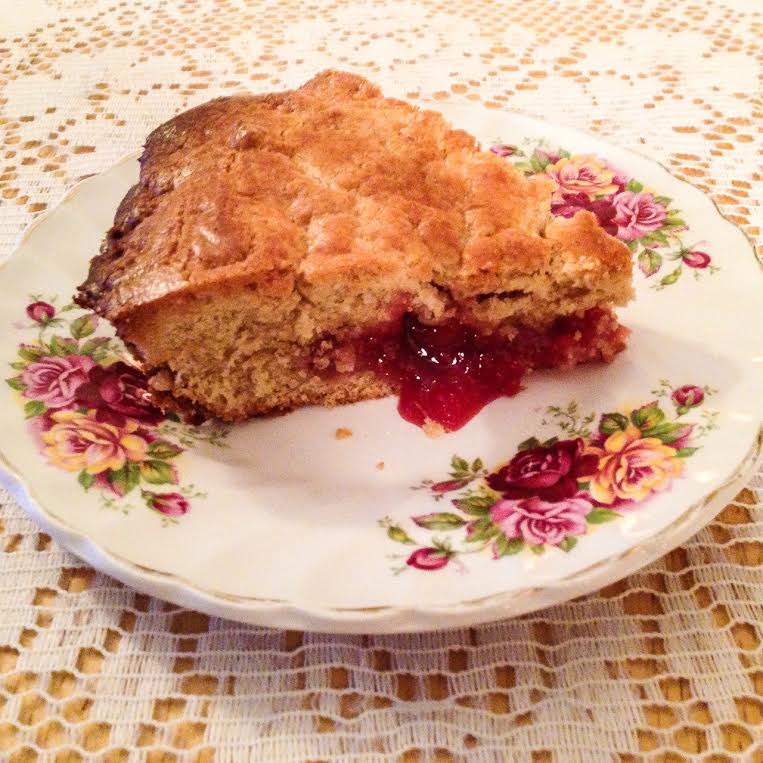
There has been some disagreement amongst my fellow Doristas as to whether this dessert is a cake or a giant cookie. I don’t really care, because it’s delicious. I used my mother’s homemade cherry jam to fill the gâteau, which isn’t really traditional, but it was wonderful all the same. It’s quick and uncomplicated to make, as long as you leave yourself enough time to chill the dough. I enjoyed this as a summer treat, but I think it will be even better in the wintertime, when a jam-filled treat will bring welcome reminders of the sun.
Olive Oil Ice Cream
Now, I’m not the kind of person that would throw out a cake just because it was made a couple of days ago, but they do tend to get a little drier over time. Since I still had some leftover Gâteau Basque today, I thought a little ice cream might be just the thing to freshen it up. I didn’t have an ice cream maker when the group made Olive Oil Ice Cream, so I decided to tackle one more catch up this week. I was skeptical, I have to say, about olive oil in my ice cream. But this recipe produces a very adult vanilla flavour. The oil cuts the sweetness and enhances the vanilla, while adding a layer of savoury fruitiness all its own. It paired really well with the gâteau, but I would have been just as happy to have it alone, or with some summer fruit.
So, I think I’ve managed a fairly respectable return, don’t you? Once I catch up on the rest of July’s recipes, I’ll be almost on track again. I have to say it’s been good to see you, French Fridays. We shouldn’t wait so long again.
Find out what the rest of the French Fridays crew thought about their Roasted Peppers
You can find links to everyone else’s thoughts about cherry-jam-filled-goodness here: Gâteau Basque
Nairn’s Oatcakes provided me with samples of their products for review. However, all opinions in this post are my own.
I think there’s something both a little homey and a little elegant about oatcakes. They put me in mind of tea and not-too-sweet biscuits with my Irish grandmother. They are also at home on an hors d’oeuvre table, the earthy nuttiness of oats being a perfect foil for dips and spreads, and a nice change from wheat crackers.
So, I was pleased when Nairn’s gave me an opportunity to review their Canadian line of oatcakes. They’re just the sort of thing I like to keep in the cupboard for a snack or light lunch.
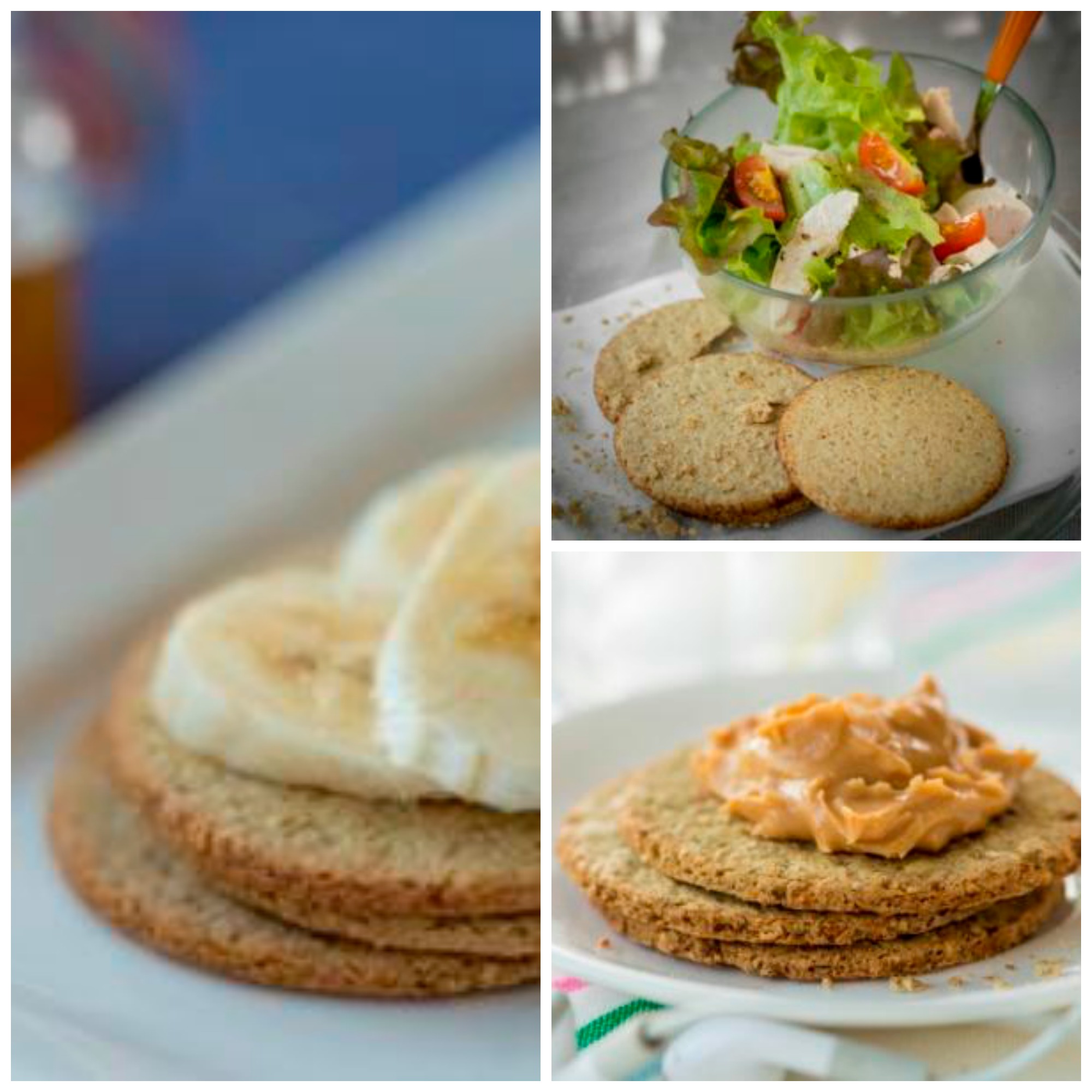
Image provided by Nairn’s Oatcakes.Image provided by Nairn’s Oatcakes.
I’ve been eating the oatcakes they sent me all week. The sweet variety are perfect for snacking, but they’re not the North American sugar bombs you might associate with the word cookie. Think of them as biscuits, in the British tradition, instead. Then you’ll be on the right track. I especially like the mixed berry and the ginger flavours with a cup of tea, but the dark chocolate chip flavour is just made for dipping in your coffee. The savoury ones are delicious on their own, but I prefer to make tiny tartines of them, topping them with soft cheeses and berries. They’d also be great with rillettes.
Nairn’s provides lots of recipes and serving suggestions on their website, examples of which you can see in the photos here.
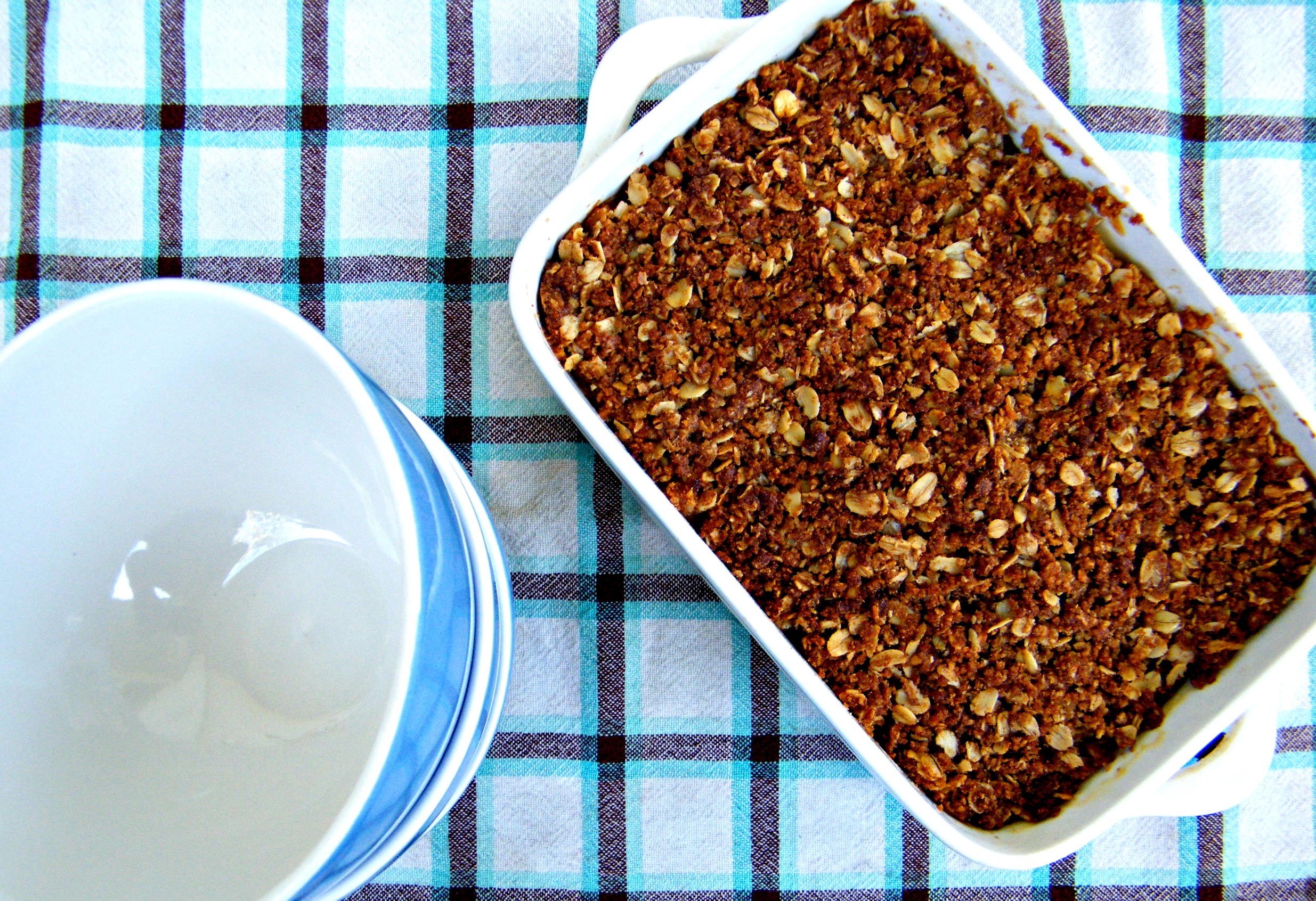
I decided to take the ginger cookies for a spin in the oven, because their spiciness reminded me that I had a bag of ripe Okanagan peaches in the fridge, waiting to be made into a crisp. I used them, crushed, to replace the flour in the topping for the crisp and they worked really well.
I’ve been making variations of this recipe since I was in elementary school. I haven’t actually looked at a recipe for a crisp in years – I use taste and touch to determine when the topping is just right. So, you should think of the recipe below as more of a guideline than a strict set of instructions. If your topping is moist and crumbly, and as sweet as you’d like it to be, it’s ready to top your fruit. I like my topping traditional, but you can add chopped nuts, seeds, or dried fruit to the mix. You can also add dried fruit to the bottom of your crisp. And if your fruit is sweet and juicy, you really don’t need to add any sugar to the bottom. Especially if you’re going to serve your crisp warm, with ice cream. (Yes, that’s a hint.)
5 Nairn’s Stem Ginger Oat Cookies
1/3 – 1/2 cup brown sugar
1/2 cup rolled oats
1/8 – 1/4 cup softened butter
Preheat your oven to 375°F.
Peel and chop the peaches into bite-sized chunks. Stir in the ginger, tarragon, and vanilla sugar (if using) and leave the peaches to marinate for ten minutes or so.
Crush the ginger oat cookies to a fine consistency. I used our mini food processor, but you can use a mortar and pestle or a ziplock bag and a rolling pin, too. Combine the crushed cookies with the brown sugar and oats, then work the butter in with your fingers until you have a moist, crumbly mixture.
Put the peaches into the baking dish, then cover them with the oat topping.
Bake for 25 – 35 minutes.
Image provided by Nairn’s Oatcakes.
You can find a list of retailers of Nairn’s oatcakes near you on their website. Thanks to Nairn’s for the opportunity to review their oatcakes.













 One Wet Foot