Made With Love

Chili

Not long after his 60th birthday, my Dad was getting ready for work and told my mother he had to sit down for a minute before leaving. Luckily, my Mom recognized the signs of a heart attack and got him to the hospital so quickly that they were able to stabilize him before it was too late. He’d always congratulated himself on marrying a nurse, who could help him with whatever ailed him, and now she’d saved his life.

When he got home, there were exercise regimens and eating restrictions to follow. And my father counted himself lucky once again, because my mother is not only a fabulous cook, but she is also one of the most determined people on earth when she puts her mind to it. He was going to eat a healthy diet if it – well, even if it pained him.

She came up with an arsenal of heart-healthy recipes so delicious that the rest of the family started hoping some of the leftovers would show up at our doors. My Dad recovered, then thrived.

Ten years later, my partner Kevin started on his own path to better health and decided that veganism was going to be a big part of it. My mother started sending over freezer containers full of the chili she’d developed for my Dad. It’s vegan and gluten-free, but more importantly, it’s one of Kevin’s favourite meals.

It took a while for her to share the recipe with me, not because she’s secretive, but because she’s always busy – volunteering, meeting with friends old and new, or spending time with her grandchildren.

When I finally had the recipe, I whipped up a batch of the chili and immediately realized that my chili powder had much, much more cayenne pepper in it than the brand my mother uses. Her chili has a warming burn, while mine was five-alarm fiery. Taste, don’t trust is a good motto for adding chili powder. Lesson learned. I’ve amended that line of the recipe accordingly – it’s a range now, not the 6 tablespoons that she uses. (I think her chili powder must be mostly cumin.)

Tonight, I brought a whole batch to a meeting of our housing co-op. I came home with only one small bowl’s worth. Not quite enough for a meal, but enough to remind me to make it again soon.

And now you can share it with those you love, too, whether it’s your family or a community you care about.

Jeannine’s Spicy Vegetable Chili

By Jeannine McCarthy

Serves a crowd

1 tbsp olive oil
4 large garlic cloves – sliced
1 large onion – sliced and quartered
2 carrots – sliced into medium coins
2 small stalks of celery – sliced
1 cup water

1 can diced tomatoes 28 oz – low salt
1 can tomato sauce 680 ml – low salt

1 small green pepper – sliced into chunks
1 small red pepper – sliced into chunks
1 small orange or yellow pepper – sliced into chunks

1 can organic tomato paste 5.5 oz
2 cans red kidney beans 28 oz each – low salt
1 can black beans 19oz – no salt
1 can romano beans 19oz – no salt

1-4 tbsp chili powder*
1 tbsp cumin
3 tbsp white vinegar
1 tsp black pepper
1 tsp salt

  • Coat bottom of a large soup pot with olive oil. On low heat, add garlic and onions; cook until starting to look translucent. Add carrots, celery, and water. Cook until carrots are slightly tender.
  • Add tomatoes and tomato sauce. Add chili powder, cumin, vinegar, pepper and salt, then stir. Continue cooking on medium heat for 5 minutes.
  • Add tomato paste, kidney beans, black beans, and Romano beans. Cook for 5 minutes, then add green, red, and yellow peppers.
  • Cook on medium heat for 45 minutes to 1 hour.

This is a large recipe. After the first meal, ladle left-overs into freezer containers (enough for one meal) and freeze.

*Start on the low range when you add the chili powder and then add a little at a time until you reach the level of heat you like. There can be a lot of variation in strength amongst chili powders. 1 1/2 tablespoons seems about right for us, with the brand we use.

FFWD – Waffles and Cream & Pork Roast with Mangoes and Lychees

Three kinds of caramel

Last week, I took some time to go visit my parents, with every intention of making a smoked salmon version of last week’s French Fridays assignment, but ending up with all sorts of other dishes, instead. I was defeated by our inability to locate the balance of the salmon my brother had smoked, which my mother was sure was in the left-hand chest freezer in their garage. There are many good things in that freezer, but no smoked salmon, as far as I can tell.

So, I found myself slowly cooking chicken thighs in saffron-scented broth and arranging butter-soaked sheets of phyllo pastry in a cake pan. The first time I made Chicken B’Stilla, I used homemade gluten-free puff pastry and it was wonderful. I’d always wanted to make it with phyllo, though. The proper version is just as delicious, but so much prettier.

Chicken Bstilla

Then, I made three kinds of caramel.

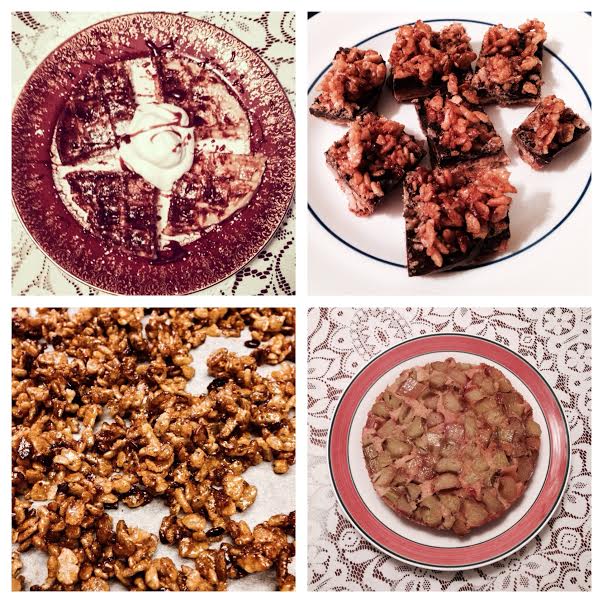
Once for the Crispy-Topped Brown Sugar Bars that Tuesdays with Dorie tackled in March. These were fantastic, though the caramelized Rice Krispies that top the bar are so addictive that it was hard to keep everyone from eating them all by themselves.

Crispy Topped Brown Sugar Bars

The second was a warm caramel sauce for the Waffles and Cream that Doristas blogged about two weeks ago. I’d left my waffle iron at my parents’ house at Christmastime, since it’s not going to get any use at my house (too great a risk for gluten cross-contamination). Dorie’s caramel sauce is simple and delicious. I let mine get a little thick, for extra gooeyness when it’s used on ice cream (which it may have been). But warmed, it flowed beautifully when strewn across the waffles. I think Dorie’s waffles, which use beaten egg whites rather than whole eggs, are the tastiest I’ve had. With a little whipped cream, this was a perfect dessert.

Waffles and Cream

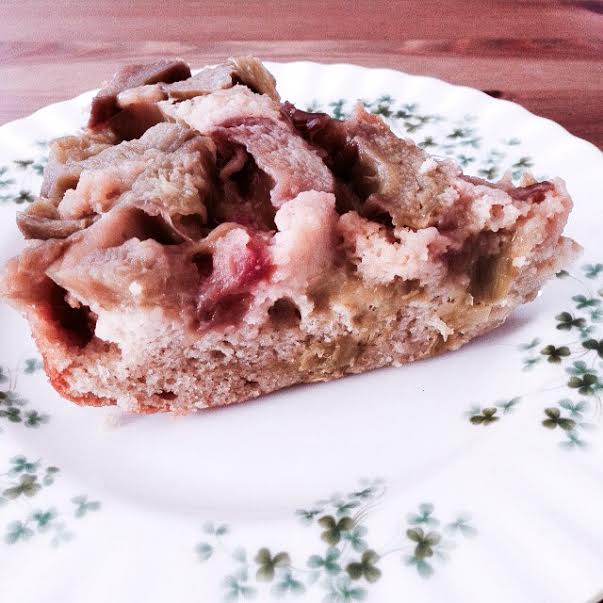
The third batch of caramel was to top a rhubarb upside-down cake that hasn’t come up in the Tuesdays with Dorie rotation yet. I’ll be making it over and over again until rhubarb disappears for the year. Brown sugar and butter make a fine topping for an upside down cake, but this caramel is even better – so worth the extra step or two.

Rhubarb Cake

Then, finally, I got to this week’s recipe. I had to drive almost twenty kilometers to get canned lychees, which I’d have only had to go a few blocks to get if I’d remembered to pick them up from home. This is my excuse for not realizing that the roast needed red wine vinegar and white wine, rather than the other way around. By the time I read over the recipe again, there was no way I was going back out on another trek to the store. Which might help to explain the alarming colour of my sauce. (It doesn’t excuse the presentation – just know it was prettier in person.)

Pork Roast with Mangoes and Lychees

Though the sauce looked scary, this dish was delicious. My pork loin was a little larger than the one called for in the recipe, so by the time it was fully cooked, the mangoes had disappeared into the sauce. Next time, I’ll cut them in larger chunks. The canned lychees worked very well in this dish, even though I’d prefer fresh ones when they’re in season. I loved the sweet and sour sauce against the perfectly tender pork. It’s a dish with Dominican roots, created by a French-trained chef, which is how it came to be in the book. I served this with the citrus version of my favourite Dorie rice recipe, along with some simply steamed vegetables.

Next week, we’re back to fish. Maybe I’ll even get to that salmon tartare, as a bonus. It sounds too delicious to skip altogether.

You can find links to the rest of the French Fridays crew’s posts on this week’s recipe here: Pork Roast with Mangoes and Lychees. And you can see what everyone thought of the waffles here: Waffles and Cream.

Spring Book Reviews – Bob’s Red Mill Everyday Gluten-Free Cookbook

Amaranth Soup

I received a review copy of Bob’s Red Mill Everyday Gluten-Free Cookbook from Robert Rose Inc. Nevertheless, all opinions in the following post are my own.

A diagnosis of celiac disease can seem like an imposition of broad limitations on one’s diet. And that used to be quite true, in the days when white rice flour was made to stand in for everything from bread flour to cake flour.

These days, though, there are so many great gluten-free alternatives available to people with celiac disease or gluten intolerance. Gluten-free grains and seeds like quinoa have become widely available, along with a wide range of flours. Ingredient lists are starting to shift, too. Where once wheat or barley might be used as a filler, now products like stocks, sauces, and spice-blends are eliminating them when not necessary, or other companies are jumping into the market with their own gluten-free varieties.

Bob’s Red Mill has been a reliable source of gluten-free products for years, dedicating separate production lines to many of their gluten-free grains, seeds, and flours to avoid cross-contamination. I’ve been a fan since my youth, when I was introduced to plenty of crunchy granola vegans and vegetarians. Potluck survival meant mastering veggie cuisine and Bob’s Red Mill provided many of the grains we used.

I’ve never been completely vegan or vegetarian, but eat that way much of the time, especially since my partner has committed to veganism. He’s also the member of the family with celiac disease, so alternatives to wheat, barley, and the rest of the gluten-rich grains are a big part of our daily meals.

I’ve become very familiar with gluten-free alternatives over the years. But like many of us, I’ve got quinoa down and could use a little help making the most of the rest. Amaranth? Teff? Sorghum? Millet? I’ve made a little use of these, but not often enough. Even familiar grains like oats or buckwheat become trickier when they are ground into flours.

So, I was excited to get my hands on a copy of Camilla V. Saulsbury’s Bob’s Red Mill Everyday Gluten-Free Cookbook. It’s full of whole-grain, gluten-free recipes, but just as importantly, it includes a primer with details on how to prepare and store gluten-free grains and flours, what their nutritional properties are, and what other healthful items belong in the gluten-free pantry.

The recipes themselves range from breakfast to dessert and travel across cuisines, many of which can become off-limits to gluten-free eaters. Amaranth Tabbouleh or Sorghum Minestrone satisfy cravings for old favourites, while naturally gluten-free dishes like Persian-Spiced Lentils and Millet make use of less familiar grains to delicious effect.

Many of the recipes are vegetarian or vegan, or easily adaptable, so there are plenty for me to choose from when eating with my partner. I’m especially looking forward to trying the recipe for vegan Nanaimo bars, as I noticed that one of the grocery stores nearby sells popped amaranth.

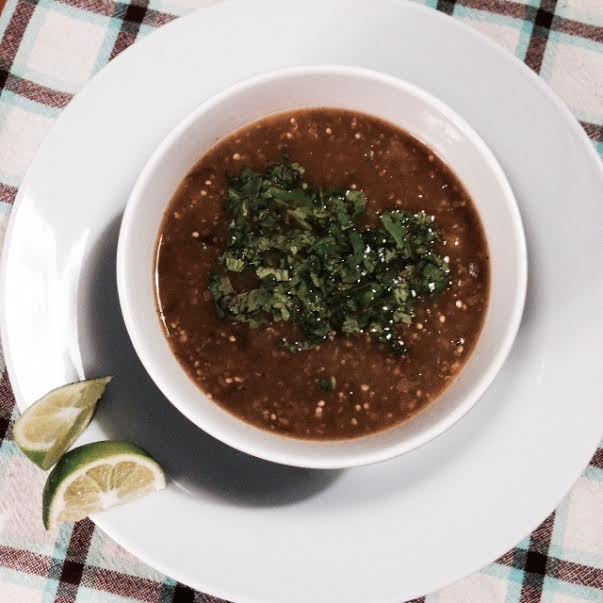
Today, though, I’ve got permission to share a recipe for a hearty, vibrant soup that reminds me of a pozole verde. It can be served with queso fresco, but we skipped that in favour of lime wedges and found it perfectly satisfying.

Tomatillo, Black Bean and Amaranth Soup

Makes about 6 servings

Equipment: Food Processor

2 cans (each 12 oz/340 mL) whole tomatillos, with juice
1 tbsp/15 mL olive oil
4 cloves garlic, minced
1 tsp/5 mL chipotle chile powder
3/4 cup/175 mL amaranth
2 cans (each 14-19 oz/398-540 mL) black beans, drained and rinsed
3 cups/750 mL ready-to-use GF vegetable or chicken broth
1 cup/250 mL packed fresh cilantro leaves, chopped
Crumbled queso fresco (optional)
2 tbsp/30 mL freshly squeezed lime juice
Lime wedges (optional)

  1. In food processor, purée tomatillos and their juice. Set aside.
  2. In a large pot, heat oil over medium-high heat. Add garlic and chipotle powder; cook, stirring, for 1 minute. Stir in tomatillo purée; cook, stirring for 2 minutes.
  3. Stir in amaranth, beans and broth; bring to a boil. Reduce heat to low, cover and simmer, stirring occasionally, for 15 to 20 minutes or until amaranth is very tender. Stir in cilantro and lime juice. Serve sprinkled with queso fresco (if using), with lime wedges on the side, if desired.

I predict this cookbook will have you stocking your pantry with more grains, seeds, and flours, whether or not you need to follow a gluten-free diet. Variety is the spice of life, but it’s also a good practice for health and a delicious one, at that.

Come back next Thursday for a review of a book that will help you make the most of each season’s bounty.

A Promising Month

IMG_3635

Just a short post tonight, with an update on what you can look forward to in April on the blog, including the Roasted Squash and Shallots with Merguez Chickpeas from River Cottage Veg that you see at the top of the post.

Every Thursday this month, I’ll have a cookbook review for you. And next Tuesday, I’ll let you know how your local supermarket can help you make better decisions about your health and the way you eat.

Along the way, there will be more of the dwindling store of French Fridays recipes, a Cottage Cooking Club update, anticipation of summer farmers’ markets, and an exploration of the Vancouver Biennale.

Who knows what else this month may hold in store?

Vegan Easter Dinner with a Ricardo Cuisine Recipe

IMG_3621

I was provided a subscription to Ricardo Magazine for review, but received no other consideration for this post.

The best part of any holiday is sharing food with family and friends. Sometimes, that means making sure that family favourites are on the table (like my mother’s five cup salad). Sometimes, it means experimenting with new dishes that may just become favourites for the next generation. In my house, it always means making sure that everyone has enough food to enjoy, no matter what their dietary restrictions or aversions.

That can get a little tricky these days, with so many folks suffering from allergies, while others follow diets restricted for health reasons or ethical considerations. It’s not impossible, though, and today’s table offers people much better fare than that dished out when I was growing up.

Back then, a vegetarian was lucky if they got a baked potato with some vegetables on the side, unless they brought their own meal. Now, greater awareness ensures that there are staple dishes to satisfy vegetarians, vegans, and gluten-free folks, with no one thinking twice about it. Some of them are even favourites for everyone at the table.

When I was asked to review Ricardo Cuisine‘s Easter recipe collection, my thoughts naturally turned to finding ones that would work for my gluten-free and vegan partner. He has celiac disease and has recently begun eating a completely vegan diet, as well. So, finding holiday dishes that satisfy his requirements and are enjoyable for everyone is always a priority.

Right away, I landed on Ricardo’s Roasted Fennel and Fingerling Potatoes recipe. It’s the kind of dish that’s likely to become a yearly tradition, because it’s more interesting than the usual starch and vegetable sides. This roasted vegetable combination relies on the onions and fennel for flavour as well as fibre. So, it makes a good complement to other dishes at Easter dinner, then the leftovers become a great base for more meals. I like to make this sort of recipe in larger quantities than I need, for just that reason.

IMG_3623

This dish will satisfy the vegetarians, vegans, and gluten-free, but it’s also a nice choice for diabetics, because it combines the starch of potatoes with the fibre of onions and fennel, while avoiding the heaviness of many butter and milk rich potato dishes. And the unrestricted omnivores at the table will be happy it’s so delicious.

Combined with other dishes, like Ricardo’s Asparagus with Lemon Gremolata or a vegan version of his Maple-Braised Endives, you’re well on your way to happy guests. Just add a protein – like a really good slice of lentil loaf – and you’ve got a complete meal for those who aren’t partaking in the Easter ham or roast.

IMG_3622

You can find more of Ricardo’s Easter recipes here. You’ll find some to suit any of your Easter guests, from the appetizer course through dessert.

I’ve been a big fan of Ricardo since my Francophone mother introduced me to his French language television program years ago. Though I can follow along with the French instructions reasonably well, I’m happy that he’s expanding his English language presence, too.

Ricardo Cuisine was kind enough to let me reproduce their recipe here. Once you’ve tried it, I predict it’s going to become a staple at your holiday table and perhaps year-round, too.

Roasted Fennel and Fingerling Potatoes

Preparation time: 25 min
Cooking time: 1 h
Output: 6 to 8 servings

INGREDIENTS

  • 675 g (1 ½ lb) fingerling or baby potatoes
  • 2 bulbs fennel, each cut into 8 wedges
  • 60 ml (¼ cup) olive oil
  • 3 small onions, cut into 1.5 cm (½-inch) thick slices
  • Salt and pepper

PREPARATION

  • With the rack in the middle position, preheat the oven to 200 °C (400 °F).

  • In a large pot of salted boiling water, cook the potatoes until cooked but still slightly firm, about 15 minutes. Drain and set aside.

  • In a non-stick skillet, brown the fennel in half of the oil (30 ml / 2 tbsp). Set the fennel aside in a baking dish. In the same skillet, brown the onions for about 2 minutes. Add to the fennel with the potatoes and the remaining oil. Toss well. Season with salt and pepper.

  • Bake for about 30 minutes or until the fennel and potatoes are cooked tender. Serve with the Pork Roast with Maple Sauce.


FFWD – Next-day Beef Salad

IMG_3614

I’ve never really understood the aversion some people have toward leftovers. I suppose if you’re talking about a week’s worth of dry casserole, you’d have something to complain about. But, it’s so easy to make a great meal when you’ve got leftovers in the fridge. Soups and stews can be eaten as is, while other mains and side dishes can be turned into sandwiches, salads, soups, or frittatas. All the flavour of the original dishes, with only a little more work.

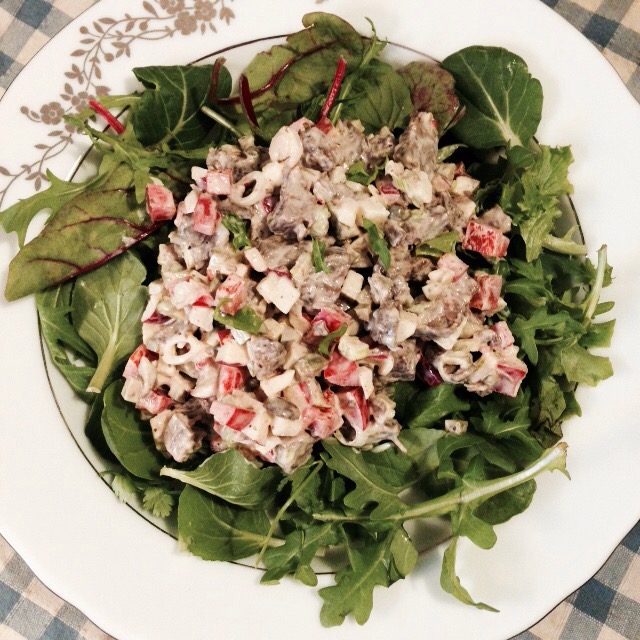
I wonder if it’s that leftover label that kept the French Fridays crew from tackling this week’s recipe until almost the end? It shouldn’t have, because this salad is the opposite of that stereotype – it’s full of great flavours and textures and though it doesn’t photograph very well, it’s colourful and vibrant on the plate.

The salad is more properly made with Bœuf à la Ficelle or roast beef, but I had leftovers from a beef daube in the fridge, so set aside some of the cubed meat and garlic cloves, instead.

Dorie’s dressing is simply mayonnaise with one or two French mustards. I added some of the garlic from the daube to mine, as well. And then I started chopping – cornichons, olives, capers, red pepper, green onions, and more. I especially liked Dorie’s addition of a little bit of finely chopped hot pepper and I suspect you could use a tiny bit of shaved horseradish in its place, for a more English take on heat.

Dorie takes classic accompaniments for beef and transform leftovers into a salad that’s interesting enough to serve to guests for lunch or a light dinner. Add a glass of wine and there will be no discussions of leftovers to be had.

You can find links to the rest of the French Fridays crew’s posts on this week’s recipe here: Next-day Beef Salad.

Cottage Cooking Club – March 2015

Stir fry

We’ve reached the halfway point of the Cottage Cooking Club’s exploration of River Cottage Veg and the group is taking this month to catch up on recipes they may have missed in previous months. As for me, I’m just glad my new copy of the book has arrived. Inexplicably, my first copy of the book disappeared during the great re-piping project in January and no amount of looking has turned it up. I suspect that I will find it, now that I’ve got another copy. At least I hope so, because I have a lot of notes in the margins of the original.

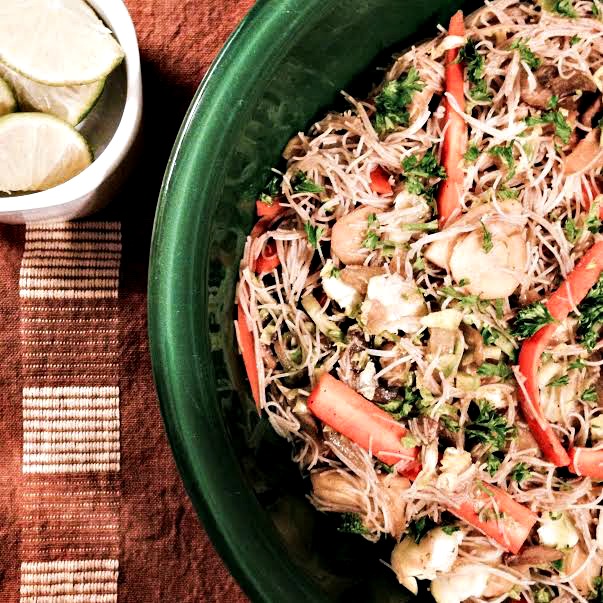
As a result, I missed last month and this month I’ve only got one recipe on deck – Winter Stir-fry with Chinese Five-spice. This is the sort of recipe I’d like to say that I make regularly, but really need a reminder to undertake. I used to make stir-fries all the time in my youth. Now I spend so much time exploring new recipes, that I forget about the kitchen skills I’ve carried for years. To be fair, in those days I also spent a lot of time on political marches, taking university courses, and dancing in clubs.

Things change, though perhaps we shouldn’t leave so much behind. There are political matters that are just as urgent today, life-long learners get more satisfaction from their lives, and those who dance into their twilight years seem happier than the rest of us. Stir-fries, too, shouldn’t become just the stuff of dinners out – they are the epitome of the healthy, well-seasoned home cooking that’s being encouraged by food advocates everywhere.

Seasoning is the key, along with paying attention to how much cooking each vegetable requires. Some of my youthful attempts at stir-fry were a little ham-fisted and needed a little more care than the lashings of soy sauce and lemon they suffered. It took time and practice to get the hang of it and I think that helped me to become a better cook overall.

This stir-fry is simple, relying on five-spice powder, soy sauce, and rice wine for flavour, with a finish of fresh lime juice. It’s also a good choice for that in-between season when spring gardens are only just being planted. Carrot, parsnip, and mushroom give substance to the dish, while shredded Brussels sprouts are nice alternative to the usual wilted greens.

Easter

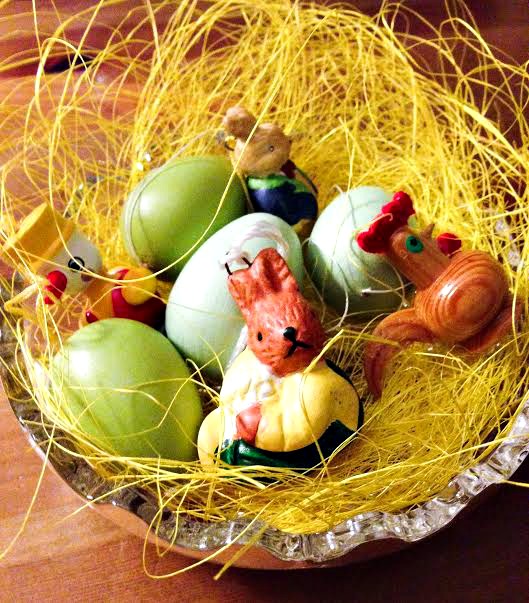
I’d also like to say thank you to Andrea, our fearless and talented leader, who blogs at The Kitchen Lioness. She was kind enough to send participants an Easter gift and you can see some of the lovely ornaments she included, above. This group has been a wonderful way to connect with more talented and interesting bloggers. It’s also been a great way to explore my partner’s newly-vegan diet with him. We choose from each month’s offerings together and the group’s recipes have become staples in our everyday eating.

I’m looking forward to cooking through the rest of the book, barring any more disappearing cookbooks.

Here are the links to the rest of the group’s posts for this month. I encourage you to check them out – you’ll meet some wonderful bloggers and get some great inspiration for vegetarian eating.

Eat Local: Kin Kao

Kin Kao

Every neighbourhood has spaces that are just crying out for the right restaurant. Places that have had a history of good tries or also rans. When you live close to one of these rooms, it becomes a local topic of discussion, as everyone shares their ideas for what they hope the next venture will bring.

Which meant that when the paper went up over the windows of a failed sandwich shop near Venables and Commercial, there was a lot of speculation. And when signs followed, announcing a Thai restaurant would occupy the space, locals started to get excited. As the restaurant started to take shape, the care taken with the physical design suggested equally considered food and the neighbourhood started to get impatient.

In February, Kin Kao opened and justified that impatience. They experimented with their menu for the first few weeks. We were a bit apprehensive to go during this period, as my partner has celiac disease and is also vegan, which can be hard to work around. But, they were able to modify some dishes for him beautifully and now there are permanent selections on their menu that are great for vegans and gluten-free folks.

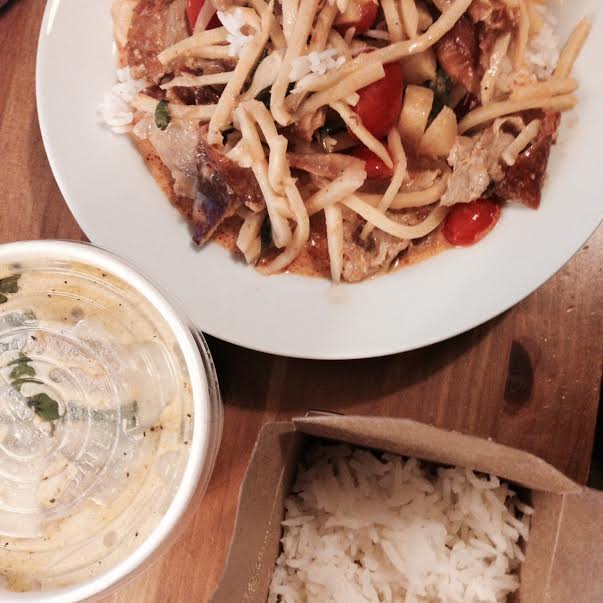
We’ve been back more times than I care to admit, for lunch, dinner, and takeout and we’ve tried a number of dishes across their menus. Omnivore that I am, the red curry with duck is my favourite, but I’ve been happy with every dish I’ve tried. For Kevin, the green curry with tofu has become his go to dish, with the vegetarian Phat Thai running a close second. They’ve also got a very well chosen drinks list, with the beers from local brewers 33 Acres and Strange Fellows making particularly good accompaniments to their meals.

Take out

I have to warn you, though, Kin Kao is not a Drive North secret – people from all around the city are lining up nightly to enjoy the space. It’s worth the wait, but if you live close by, don’t overlook their take out menu. Their food is just as enjoyable at home. And lunch is a particular pleasure, starting out with soup and moving on to satisfying one plate meals. It’s also not quite as hectic, so it makes a good start to a day on the Drive.

Kin Kao is just the right addition to the north side of the Drive. I think it will boost the business for the lesser known gems around Kin Kao, while acting as an anchor to attract more interesting businesses. It’s also another feather in the cap of our neighbourhood, which is attracting excellent iterations of specific cuisines, like the perfect Neopolitan fare at Via Tevere.

On a more selfish note, we’ve wanted a restaurant of this calibre on this side of the Drive for some time now. And it does Thai food better than most places in the city. They’re going to keep seeing a lot of us.

Kin Kao on Urbanspoon

FFWD – Côte d’Azur Cure-All Soup

  My mother’s homemade soup could cure anything but the schism between my sister and me when it came to what starch she should put in it. I loved rice in my soup and my sister preferred noodles. So, often the soup would have both. It would also have whatever needed using up in the refrigerator, along with stewed tomatoes to bring everything together. I loved to make it spicy with black pepper, a trick I learned from my grandfather. My mother couldn’t stand this habit, because she’d spent so much time balancing the flavours.

While her soup was simple in the sense that it was made with whatever was on hand, it was also complex. It developed slowly, simmering on the back of the stove, with many small additions being made along the way.

My adult life doesn’t include a chest freezer full of containers of soup ready to soothe me when I’m sick. Freezer space in my refrigerator is at a premium (I mean, who doesn’t need to keep the bowl of the ice cream maker ready at all times, just in case?), so a quick cure is a blessing.

A garlicky soup that’s ready in a little over thirty minutes seems like a promising alternative. So what if it’s also full of cheese and egg yolks, they’re there to fortify you. And you can add chicken stock if you like, which has proven curative clout. Anyway, I think food is best for existential ills and cheesy, eggy, garlicky goodness could jolt me out of even my most pessimistic mood.

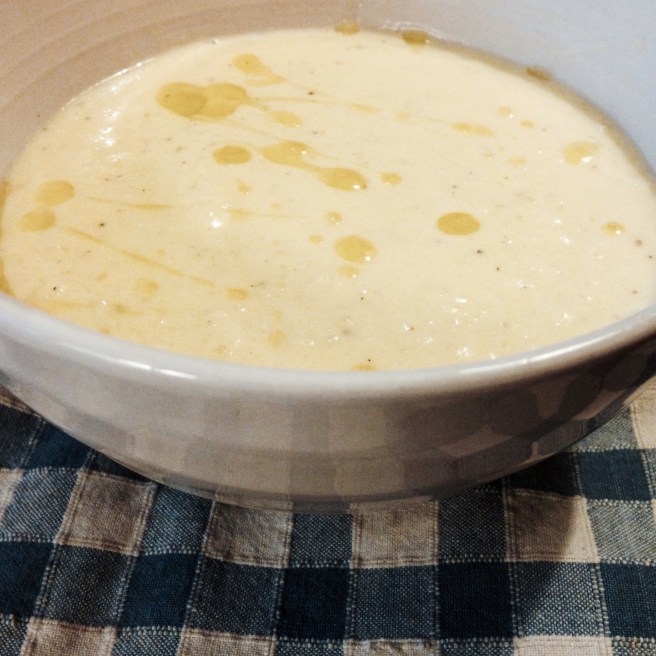
I didn’t bother to purée my soup – I thought the thin slices of garlic looked quite pretty and they gave the soup an interesting texture. If I were serving it for company, I probably would purée it for presentation’s sake.

This soup took a long time to make it onto the French Fridays schedule, but I don’t think it will be long before I make it again. It’s simple, but it’s also rich and delicious – well worth using your best ingredients to make it shine. And the half recipe I made left me with three egg whites, so I made a Visitandine. Whatever the soup doesn’t cure, the cake surely will.

Try it for yourself – you can find Dorie’s recipe here.

And you can find links to the rest of the French Fridays crew’s posts on this week’s recipe here: Côte d’Azur Cure-All Soup.

FFWD – Marengo As You Like It

Marengo

I don’t like to buy into the idea that there’s anything especially unlucky about Friday the 13th. Our brains make sense of the circumstances that lead up to events by attributing them to luck (good or bad) or fate. We reverse engineer meaning into the car accident that happens on Friday the 13th, though the victims of yesterday and tomorrow’s car crashes would consider themselves just as badly off.

But I do embrace the feelings that good fortune brings, even if they are the product of chance. And I have to say that I feel very lucky that when I began thinking about blogging, in order to begin a regular writing practice and to celebrate community wherever I found it, I saw an article that mentioned a blogging group that was just about to begin.

That group was French Fridays with Dorie and now, more than four years later, we’re counting down the last ten recipes in Around My French Table. I’m hopelessly behind, of course, with about twenty recipes in my “catch up” file, but I started this journey on October 1, 2010 – the very first French Friday.

And now we’re in the home stretch, I’m going to try to keep up for the final ten recipes. This week, we’ve got a classic, Veal Marengo. I don’t eat veal, so I used some really beautiful beef, instead.

I quartered the recipe, since M. Kevin was having his favourite vegan, gluten-free pizza for dinner and I’d be eating this alone. Since it was such a small amount, I used cognac in place of wine, with a bit of water. I was also lucky enough to find some beautiful baby cipollini onions, which were perfect in this dish.

I made this in my dutch oven and it worked well, but this recipe is making me wish that I had a good, oven-going skillet with a lid. (I’ve got a great cast iron pan, but it is lidless and a little small, even for a quarter recipe.)

This felt like too indulgently elegant a dish to be eating on my own. In future, I’ll make it for a crowd. On second thought, it was easy enough to make that I may treat myself to another quarter batch again, when I feel in need of a treat. Or, if I want to feel lucky.

You can find links to the rest of the French Fridays crew’s posts on this week’s recipe here: Veal Marengo.