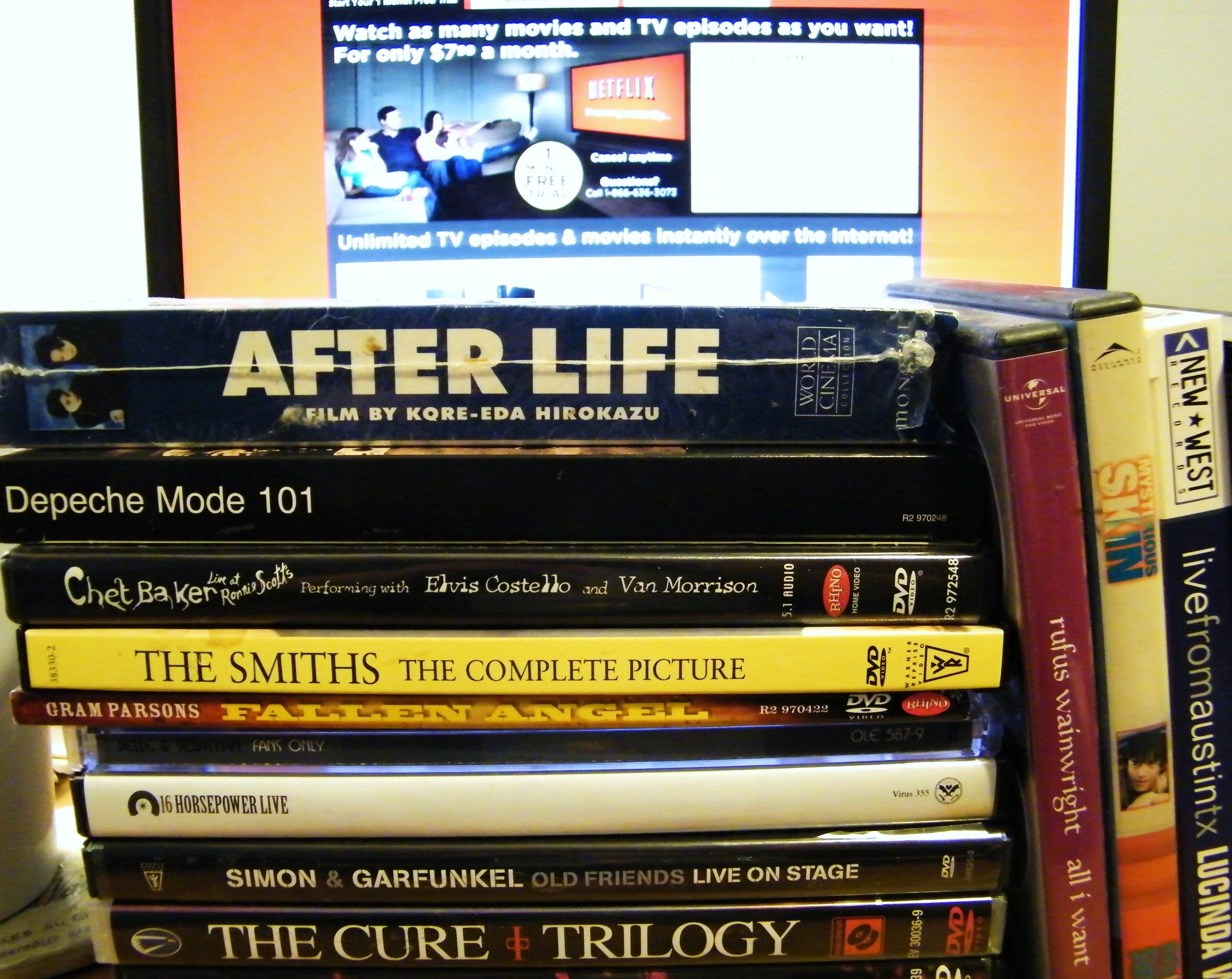
Hard copy, please

I’ve been thinking about the word fugitive, lately. Not the Dr. Richard Kimble variety, but fugitive in the fine arts sense. Sometimes these effects are unintentional. Works that don’t use lightfast pigments can change colour or fade completely, while poorly produced paper can suffer damage even from a reader’s breath. Of course, sometimes the artist’s purpose is to create something temporary, as in Richard Long‘s environmental sculptures. What’s been bringing the word to mind lately, though, is the thought that we’re moving into a fugitive age, spurred by the digitization of cultural production.

Call me a Luddite, but I don’t believe that having music, books, film and television available for download or streaming can take the place of record stores, bookstores and video stores. The Amazon glitch that caused them to delete all gay and lesbian titles is an example of why I’m cautious. A more important consideration for me is my reliance on the idiosyncracies of the people who staff brick and mortar stores. Their recommendations and conversation can lead to amazing discoveries. But regardless of my objections, the tide is turning.

On May 5th, the owners of Videomatica, possibly the best video store in Canada, announced that they will be closing by the end of the summer. They’ve probably found a home for their massive collection, but it’s still a loss to our community. Don’t take my word for it, though, when you can read this eloquent piece by Darren of my local video store, Black Dog.

Not even libraries are reliable repositories for cultural production any more, as Nicholson Baker raged over in his book Double Fold. The deaccessioning craze that’s taken hold of libraries seems to be in the same vein as the narrowing of focus found in big box bookstores and online video providers. When most people want only a small portion of the newest productions, what incentive is there to carry the old, the obscure and the rare?

I’m going to continue to support the independent stores as much as I can, for as long as they last. I don’t want to think about a world in which I can’t spend time in my favourite shops, browsing through stacks of books, thumbing through cds and records, or scanning the back of dvd cases.

And that’s Ms. Luddite, to you.

A little something to heal the spirit

It’s the day after our federal election and I’m in need of a lighthearted post – it was an extremely dramatic election night.

So, here’s a small round up of some of the things that are happening in this neck of the woods:

On Thursday, the Museum of Vancouver opens its Bhangra.me exhibition, about the history of Bhangra in Vancouver. Their programming has become absolutely stellar, both in the museum itself and in the ways it takes its exhibitions beyond that space.

This coming weekend, the Ederlezi Balkan Brass Festival puts on a bunch of high-energy shows. Or, if crafts are more your thing, you can go to Got Craft? and do some last-minute Mothers’ Day shopping.

The next weekend, the 2011 Northern Voice Personal Blogging and Social Media Conference is happening. I’m looking forward to the photo workshops, especially as the conference is on the same weekend as this.

I’m happy the Vancouver Farmers’ Market summer season is beginning again soon – I’ve been missing the convenience of going to the Trout Lake site.

Throughout much of May, you can check out emerging artists at Emily Carr University’s Degree Exhibition.

That’s only a smidgeon of what’s going on, of course. Here are a few links to sites that can tell you about even more:

BeeVancity

Vancouver is Awesome

Georgia Straight

I’d love to know what’s happening where you are. Or, if you’re from here, anything I’ve missed that you’d like to share.

Sprung

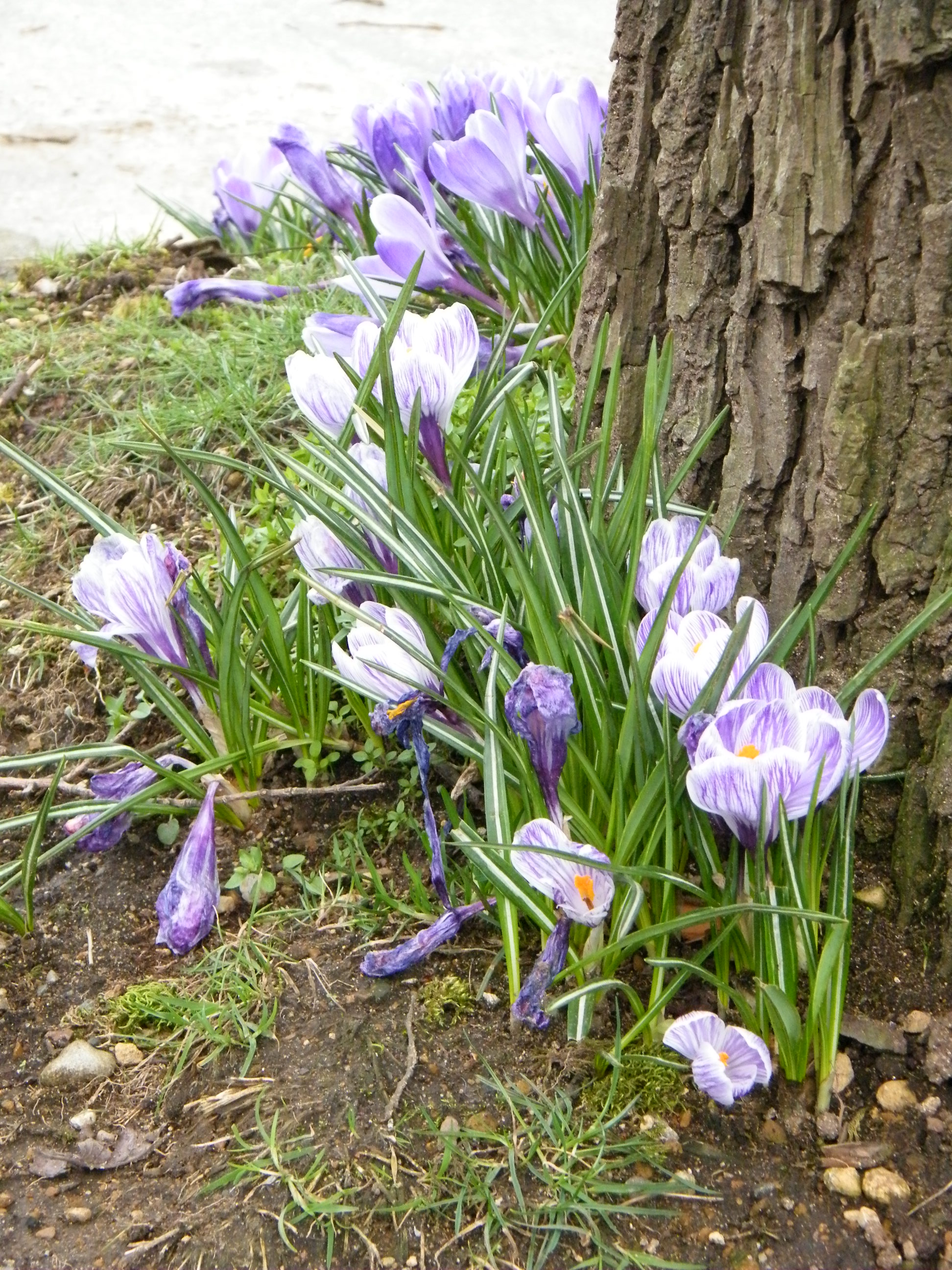
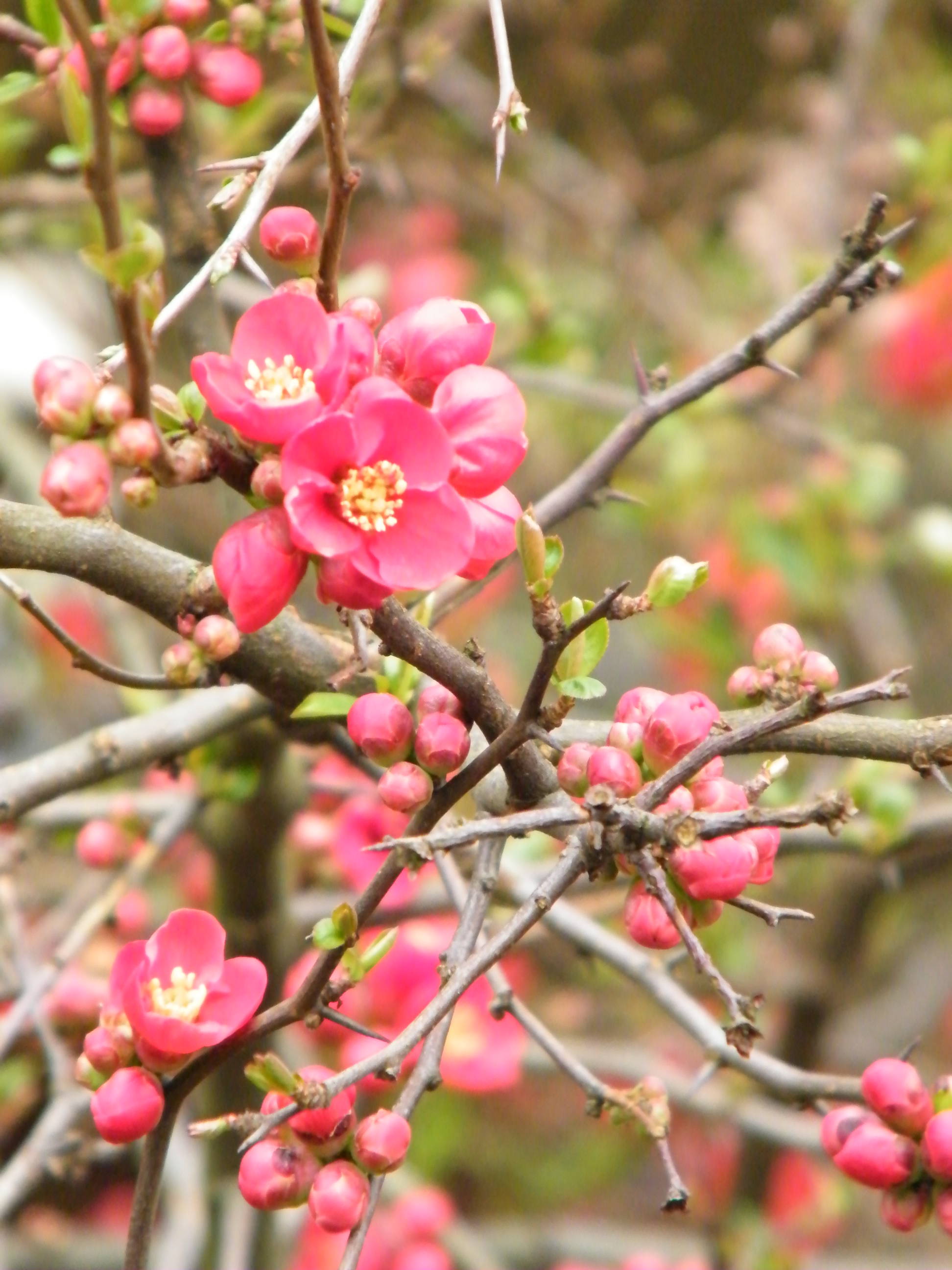
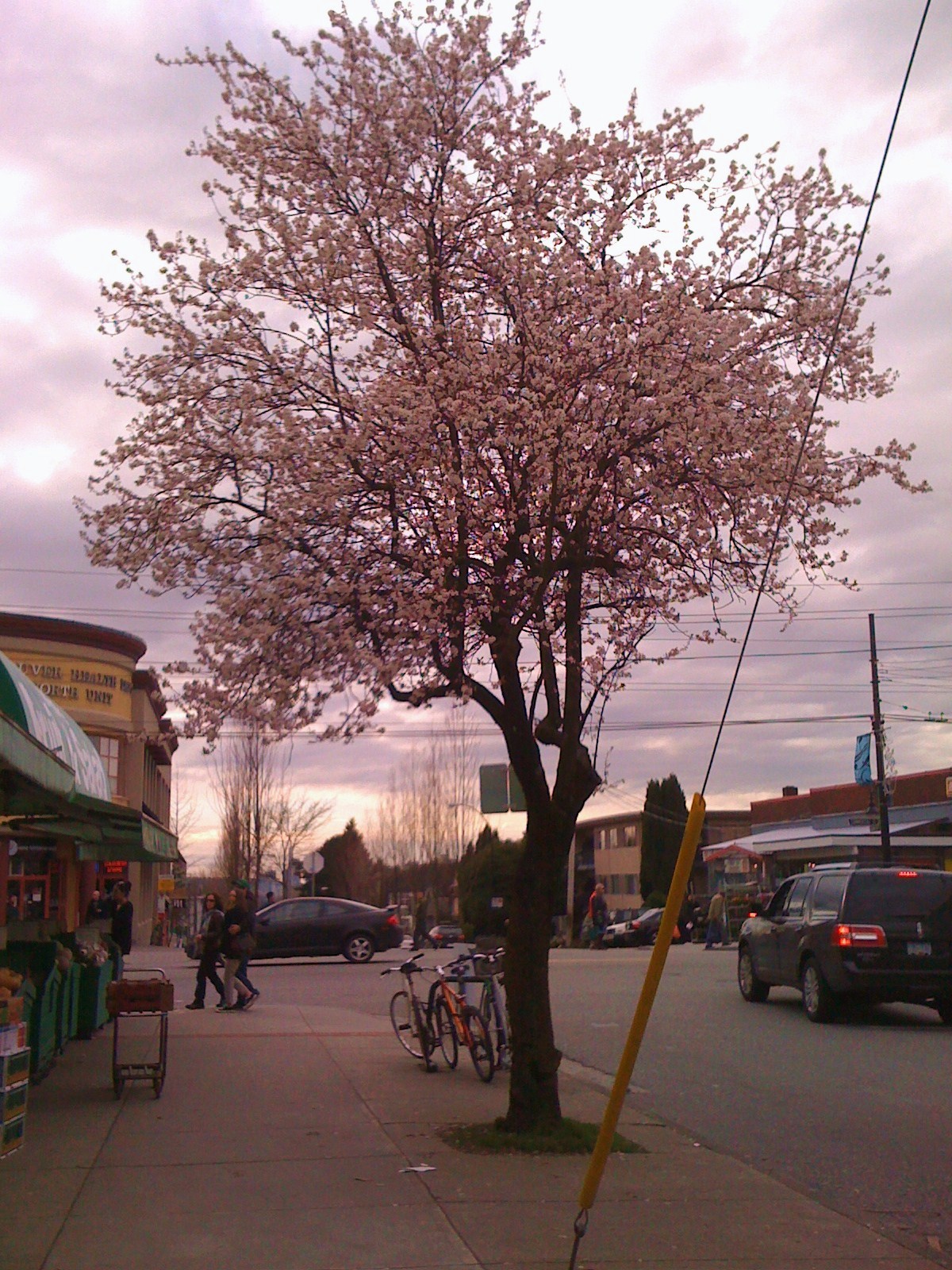
Spring is in full force now. In my garden, the snowdrops are fading away, leaving mysterious clumps of foliage behind. Other bulbs are just starting to poke spears through the soil, while bleeding hearts and rhubarb are beginning to unfurl. Out in the neighbourhood, blossoms are appearing on the trees and the crocuses are still in bloom.

Spring is my favourite season in Vancouver. There’s something about the quality of the air, composed of sea and mountain breezes, along with the early foliage and flowers that makes me feel more alive at this time of year than any other.

The Vancouver Cherry Blossom Festival is taking advantage of all this beauty and is organizing a number of events. My pick is Velopalooza’s annual Bike the Blossoms ride. I’m also excited about Simon Fraser University’s Tales From Terminal City project at Granville Island this coming weekend, in celebration of Vancouver’s 125th year.

That’s not all that’s going on in the City, of course. If the outdoors isn’t your thing, you could always hide inside the CBC Studios for a few hours. The Debaters are taping their television series until April 1st.

I also wanted to mention a couple of events that have been organized to help the relief effort in Japan. This weekend is the Vancouver Japan Relief Walk for Hope. In late April, there will also be a bake sale to raise relief funds for Japan.

That’s just a smattering of what’s going on here in Vancouver. I’d love to hear about how your community is waking up to spring.

Transition City, Part III

I’m (finally) wrapping up my series of posts about Moving Through. After the walks were finished, the groups convened at the new Woodward’s Building for a wrap-up moderated by Gordon Price.

The various tour leaders gave summaries of the three mini-walks and were then asked to identify what they would like to see addressed in the conversations around Vancouver’s future development.

Here are a few of the ideas were raised:

Michael Green kicked things off by asking why the most successful neighbourhoods were the least developed. He also spoke about the need to incorporate the street in the used or “activated” space of neighbourhoods.

– Rather than simply building concentrations of dense residential buildings, create nodal communities, with amenities, residential, retail and office space in walkable sectors around transit nodes and cycling infrastructure.

– Extend the principals used in laneway housing zoning to create infill office and retail space.

This discussion, and the MOV project of which it is a part, are very timely. Vancouver residents are starting to demand to be part of the conversation around future development, because it’s our existing neighbourhoods that are being targeted. What we value about this city is at stake.

MOV recorded the speakers during each of the walks, along with the wrap-up discussion. You can find the podcasts here.

Transition City, Part II

Last week I wrote about development trends in Vancouver and the Moving Through walking tours arranged Museum of Vancouver (MOV) as part of their Not an Architectural Speaker’s Series. As promised, here’s a little more about Moving Through.

Three different mini-walks took place in the morning, with a wrap-up discussion for everyone afterward. One walk focused on the role of the viaducts in the evolution of downtown Vancouver, another (using Commercial/Broadway station as a jumping off point) explored the role of transit hubs in shaping the city and the third looked at the impact the Cambie Line has had on those neighbourhoods’ development.

I chose the first walk, which was called “The Path(s) Not Taken: Viaducts, Expressways, and Almost Vancouvers.” The walk was led by architect Michael Green, one of the instigators of MOV’s Not an Architectural Speaker’s Series, along with Brandon Yan and Demian Rueter of Vancouver Public Space Network .

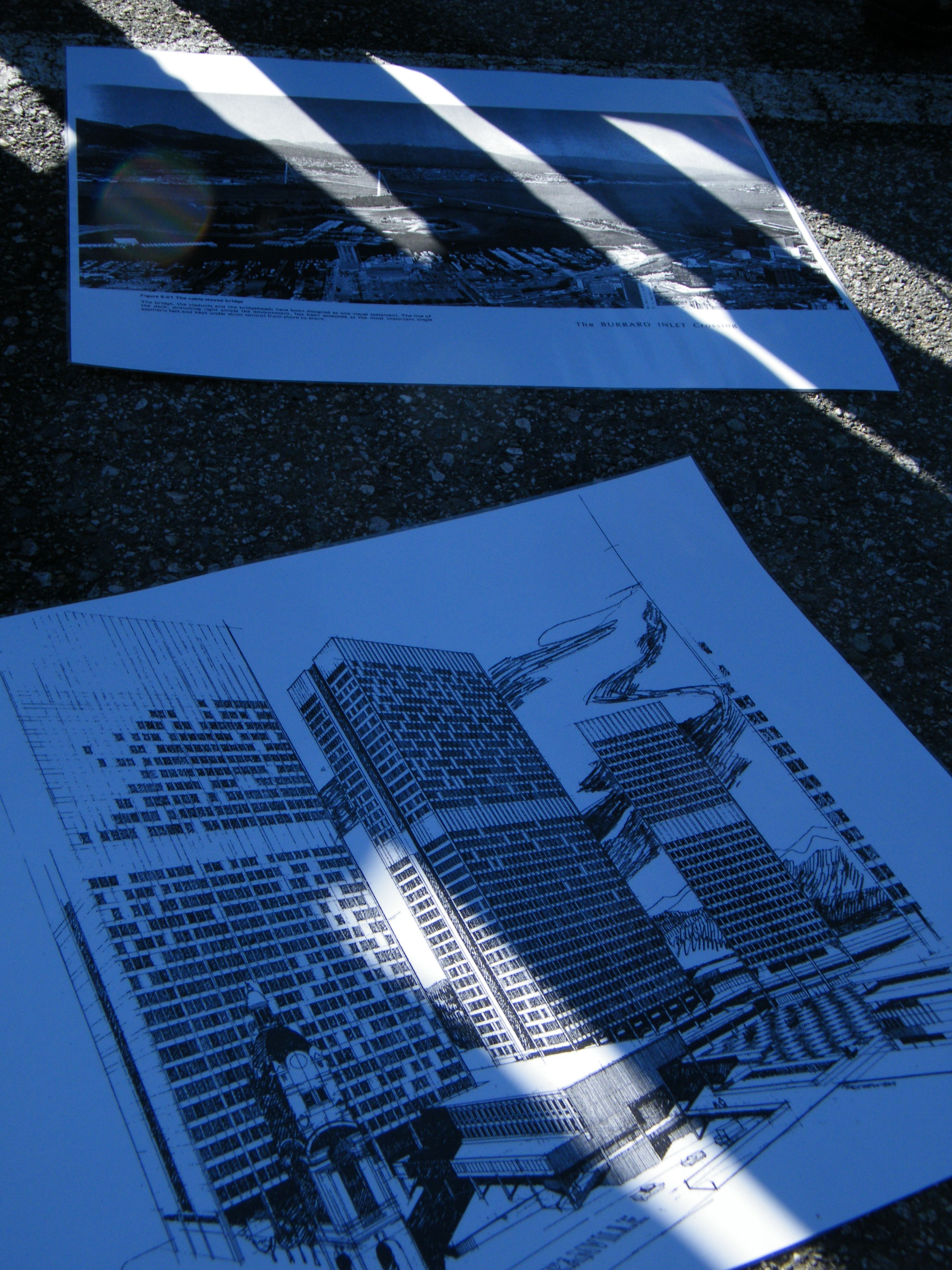
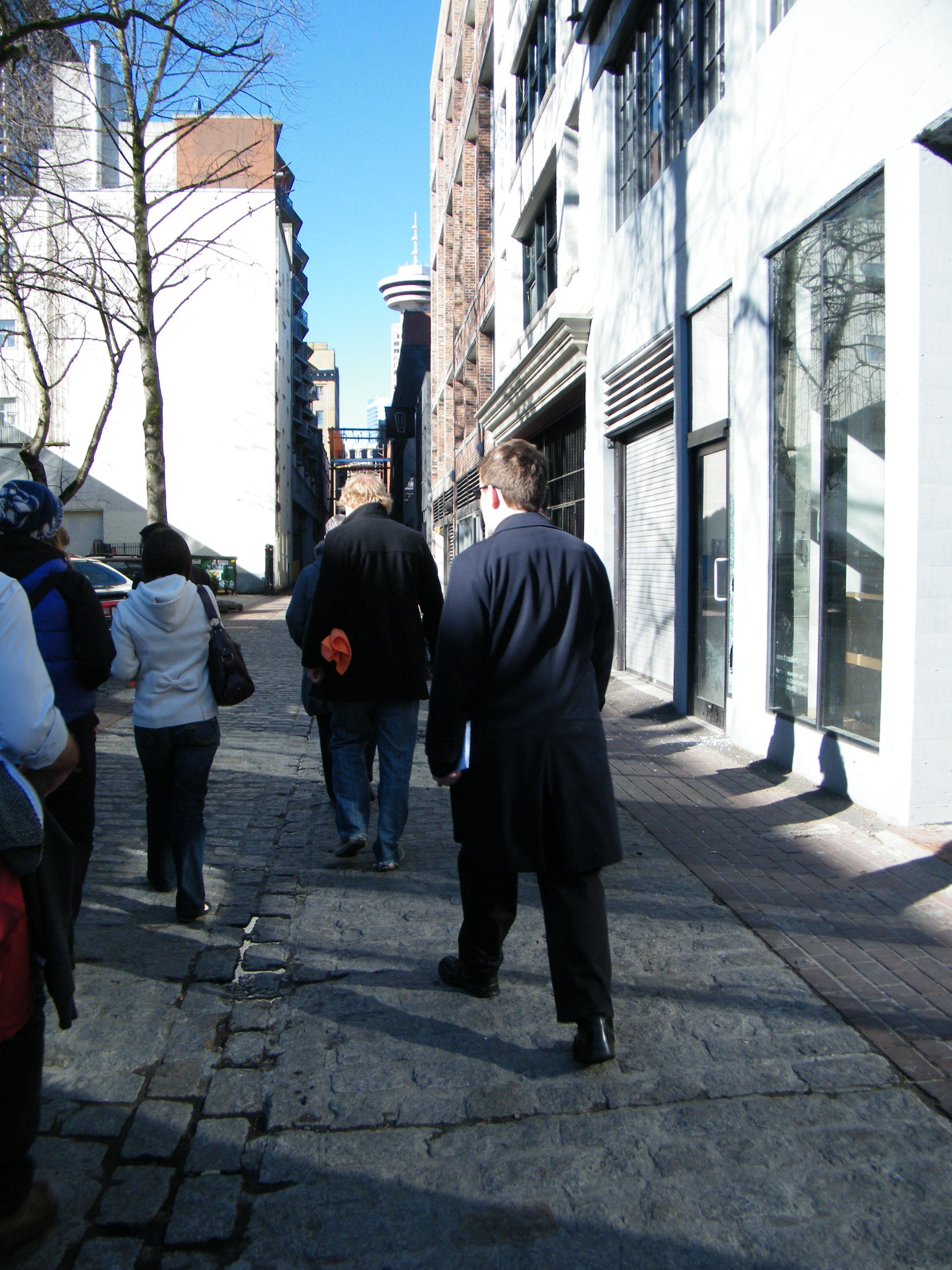
This walk started underneath the viaducts, near the stadiums downtown. The viaducts were built in anticipation of a larger freeway network that was planned in the 1950s and 1960s. A thriving black community, Hogan’s Alley, was destroyed to make way for the viaducts. Project 200 would have also razed Chinatown and Gastown and replaced them with (mainly) office towers. Brandon and Demian of VPSN showed us artists’ renderings of what might have existed if the plans had gone through, then as we toured the neighbourhood, our hosts led a discussion on how Vancouver has developed, what might have been and the changes that are on the horizon. We were supposed to move through Chinatown, the Downtown Eastside and Gastown, ending at Granville Square (the only Project 200 building that was actually erected). The discussions were too interesting, so we only got as far as Gastown.

As we walked through Chinatown, Michael Green discussed the ways in which the heritage low-rise buildings interact with the street, which many newer buildings don’t successfully achieve. He spoke about the architectural challenge of making the street usable, active space, rather than being solely concerned with what happens inside buildings.

Green also pointed out that the stadiums and viaducts have acted as a physical barrier to density moving east. There is talk of removing one or both viaducts, which will open up space for more development and erase any clear density boundary between downtown and the eastern neighbourhoods. Near the end of our walk, in Gastown, Green discussed the neighbourhood’s mix of social housing and social services co-existing with market housing and mid to upscale business.

This walk illustrated the tensions between planning departments, developers and existing neighbourhoods. It also brought up a number of questions:

What makes a successful neighbourhood?

What role should citizens have in neighbourhood development and preservation?

What are the criteria local governments should follow when redeveloping existing neighbourhoods?

I have one more post for you on this subject. I’ll be posting a short piece about the wrap up discussion after the walks.

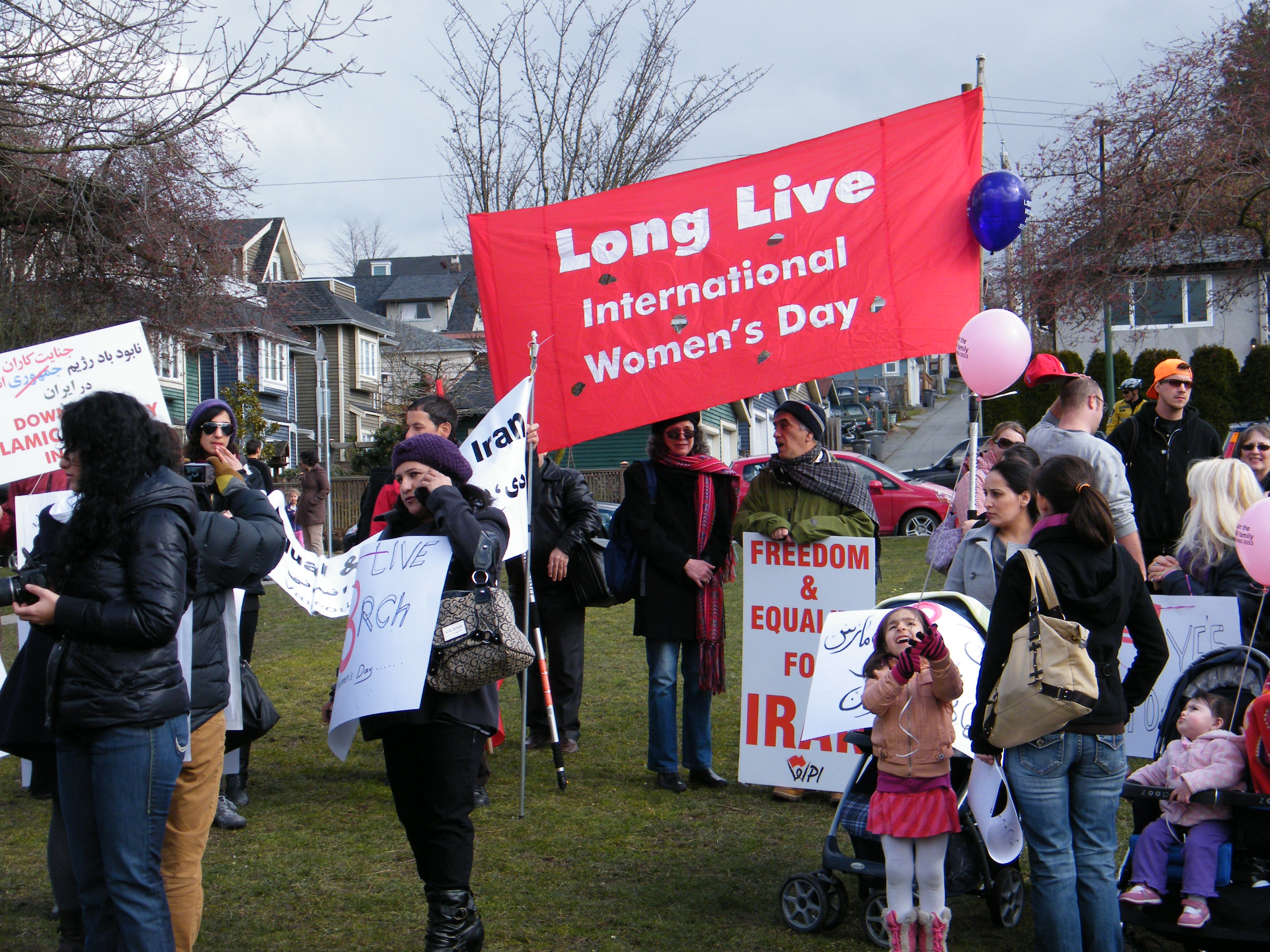
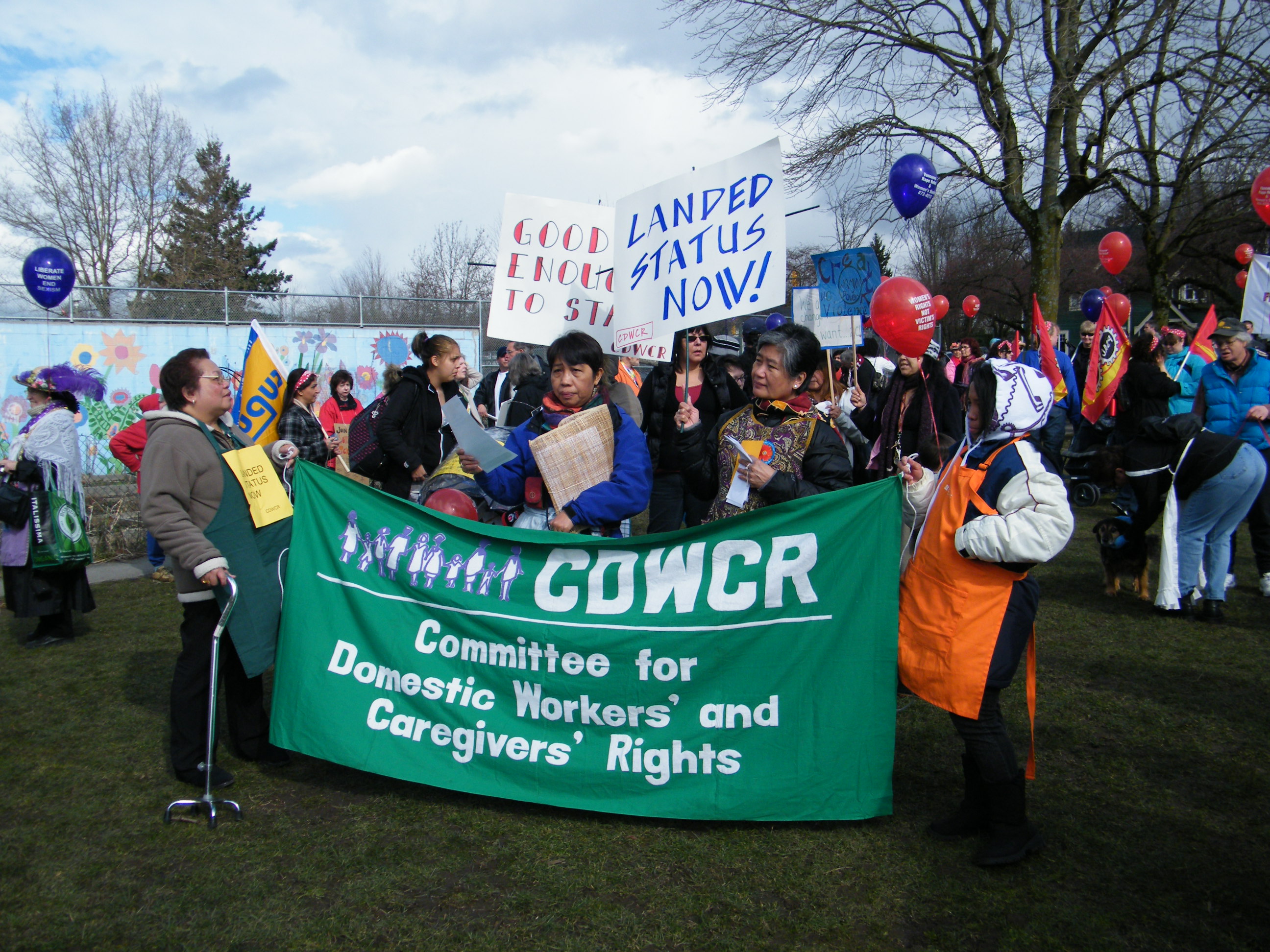
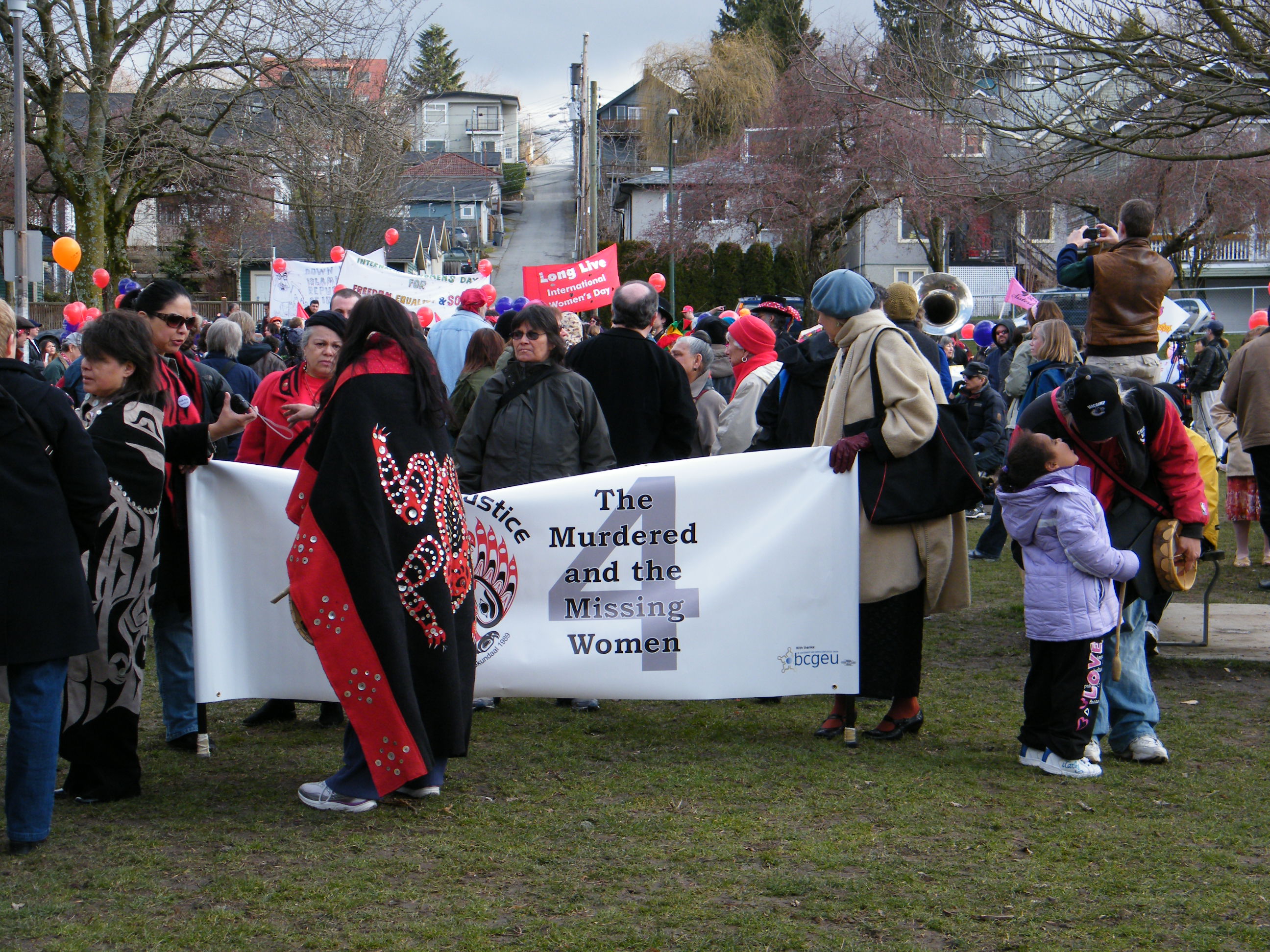
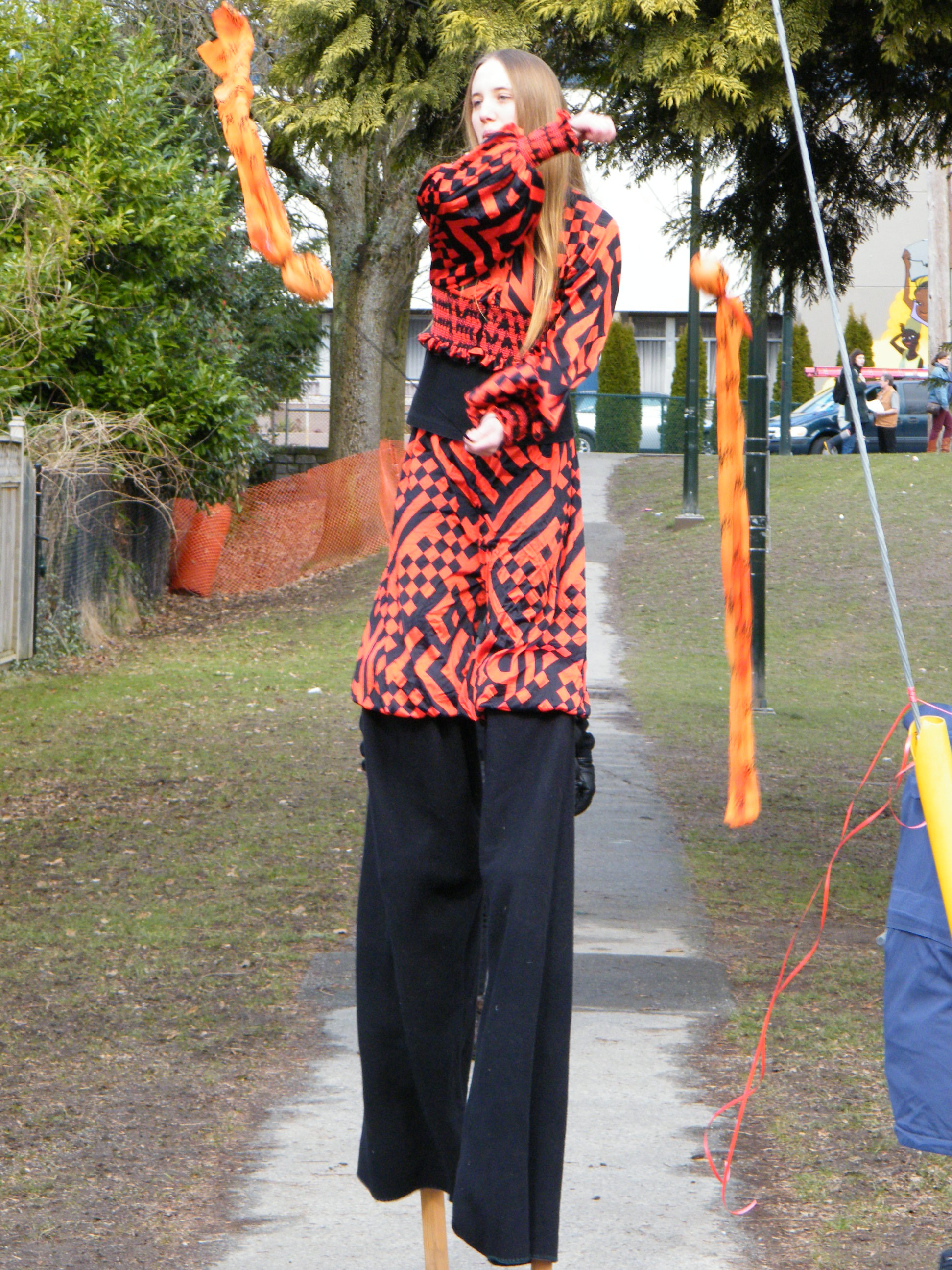
100th Anniversary of International Women’s Day – Vancouver Parade & Festival

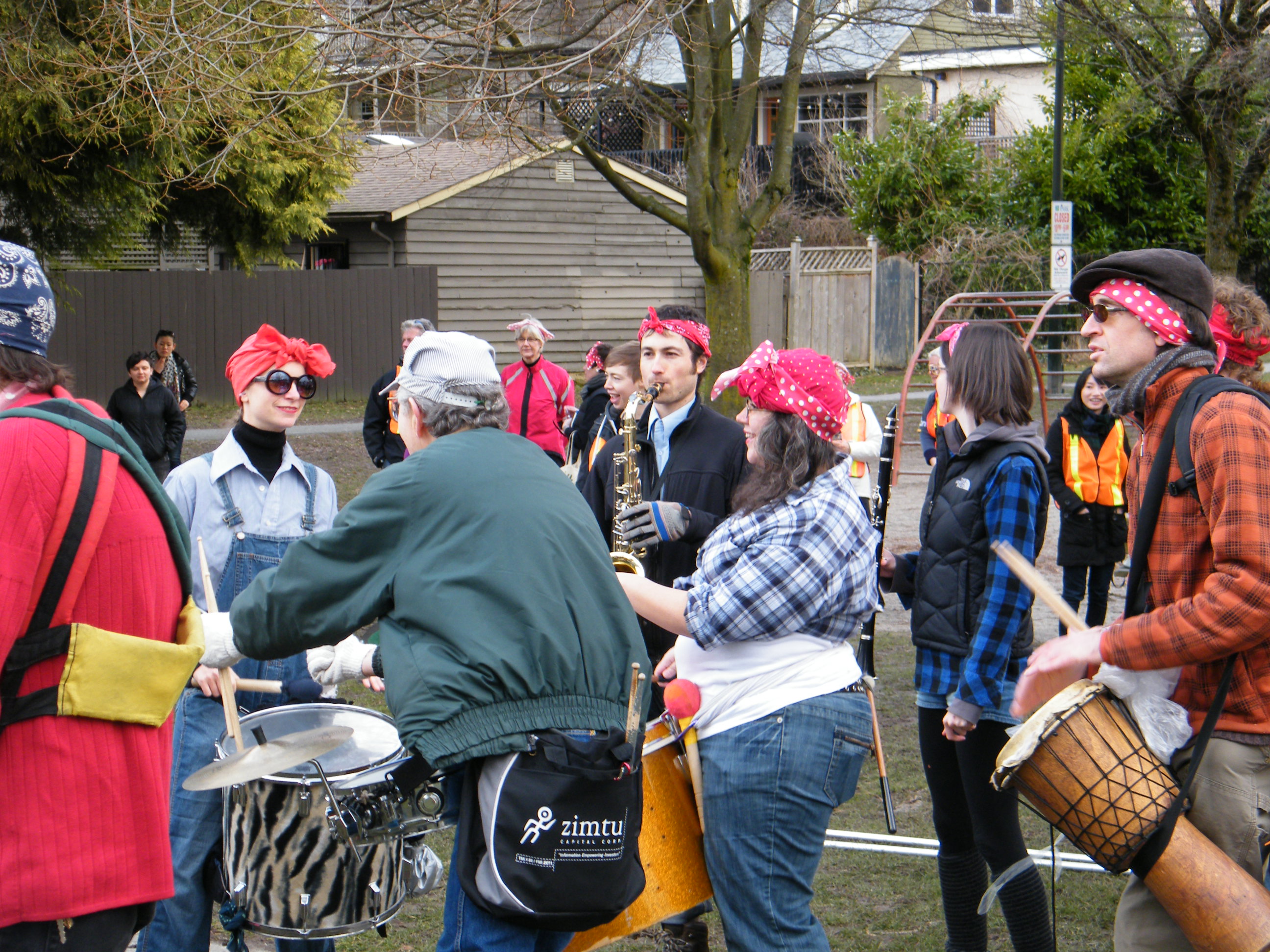
It felt good to march in the International Women’s Day parade today – great energy and a wide spectrum of participants. The march ran from McSpadden Park down Commercial Drive and up Adanac Street to the WISE Hall. I skipped the community festival, as the little dog had had enough by that point, but the crowd was amazing, filling the hall and spilling out onto the street.

Here are some pre-march photos for you:

Transition City, Part I

A couple of weekends ago, I took part in one of the Museum of Vancouver’s Moving Through walking tours, part of the Museum’s Not an Architectural Speaker’s Series. The three tours explored aspects of Vancouver’s built environment, topics that are especially fraught now, as the city is in a period of significant transition.

The downtown core of Vancouver has been transformed over the last twenty-five years, particularly in the last decade. What were once business districts, light industrial zones and commercial waterfront properties have become residential towers, retail districts and entertainment zones. The City has embraced the concept of EcoDensity, which is meant to create a walkable live/work cityscape that limits the environmental impact of an increasing population by concentrating utility use and reducing the distances that residents travel for work and shopping. The reality is that more lucrative residential development has eliminated much of the office space downtown and has reversed commuting patterns, as downtown residents travel to and from jobs outside Vancouver proper. This new urban environment has been described as a vertical form of the dormitory suburb.

Now that much of the development downtown is complete, the City has begun looking beyond its core. The Cambie corridor, the West End and Vancouver’s eastern neighbourhoods are all areas targeted for increased density. The eastern neighbourhoods are particularly attractive, as they’re directly adjacent to the city’s core. As I’ve described elsewhere, the travel time from downtown to my East Vancouver neighbourhood is about an hour by foot, past the viaducts and through the Downtown Eastside (DTES), Chinatown and Strathcona. Though the distance is relatively short, the character of each neighbourhood is distinct. The DTES and Chinatown, along with Gastown, have some of the oldest buildings in the city. Strathcona has the character of an old-fashioned city suburb, with houses, walk ups and corner stores. Between Strathcona and my Commercial Drive neighbourhood, there’s a light industrial zone, which is also home to the artists’ district that comes alive for the yearly Eastside Culture Crawl. Commercial Drive is like a younger version of Strathcona’s mix, with some mid-rise apartments thrown in, and anchored around one of Vancouver’s major thoroughfares. What you don’t see, with a few very visible exceptions, are high-rises in much of Chinatown or most of Strathcona and Commercial Drive.

All of these neighbourhoods have seen waves of change. The DTES, which has been described as Canada’s poorest postal code, is being transformed into a mix of residential tower development alongside social housing. Gastown was until recently primarily a tourist zone, but is now home to condominiums and upscale dining and shopping. Chinatown is becoming a hotbed for new restaurants and stores, along with controversial plans for condo development. Strathcona is now famous for its renovated houses, many of which carry heritage designations, while Commercial Drive has been transformed from a working-class neighbourhood into a mixed income cultural district. It’s not as if this is the first time that Vancouver’s neighbourhoods have dealt with demographic change. For good or ill, this is part of urban life.

What’s different about this wave of development is that the neighbourhoods targeted are already residential, the pace of change is likely to be much faster and the form of development is much more invasive than in previous shifts. In the DTES, it’s feared that social housing reform is being pushed aside in favour of expensive condominiums. In Chinatown and eastward, the fears are that mixed income housing and affordable retail space are going to be lost, along with the character of each neighbourhood’s built environment.

It’s in the context of these changes and anxieties that the Moving Through walks took place. Next week, I’ll tell you more about the walk I took part in and the discussion that took place afterward.

Canada Winter Games

I’m a proud aunt right now. My niece is competing at the Canada Winter Games and today she won a silver medal. Here’s a link to an interview with her (and her teammate, Erin) after their win today: Team BC Newsletter. The Games take place every four years and have launched the careers of many professional athletes. Unlike the Olympics, though, they seem more inclusive, with less damaging impact on the communities in which they take place. Many of the sports that appear in the Games aren’t part of the international sports scene and are thus truly amateur sports, pursued for the love of it.

Amateur sports are a big part of many kids’ lives, either through school or (if their families are lucky enough to afford it) as an evening or weekend activity. When I was a teenager, my sport was curling. I didn’t have any pretensions that I would ever play at the elite levels, but practices and bonspiels were an important part of my high school years. Even though curling has an international following and it’s now an Olympic sport, it has never had the flashy appeal of sports like hockey or skating. It’s one of the things I liked about it. Though it was a team sport, and competitive, manners mattered as much as precision on the ice. I thought of it as a sport for the quiet, studious kids. A kind of playground for underdogs, if you will. A place where atypical athletes can experience the kind of community that’s usually reserved for the jocks.

I think the Canada Games accommodate more kinds of athletes than the Olympics, or many of the international competitions, and for that I’ve always loved them. If you’re interested, you can watch some of the Games live online.

The Roots of Homelessness

Two weeks ago, I wrote about an investigative series that CTV British Columbia was conducting on the subject of homelessness. Today, I want to follow up on that post. The series, called Off the Streets, covered a number of issues, including drug and alcohol addiction, as well as the special problems faced by homeless youth and single mothers. Mi-Jung Lee and Jon Woodward explored a number of solutions as well, focusing on supportive housing, sobering centres and programs to keep single mothers and youth off the streets.

Throughout the series, we heard that youth who had been through the foster care system, single mothers and First Nations people are particularly at risk of becoming homeless. What wasn’t mentioned is that these groups also face a higher risk of poverty or that as poverty increases in this country, so does homelessness.

It’s not easy to discuss poverty without running up against political and ideological differences. It can be safer to stick to the necessary work of finding strategies to help the people who have already found themselves disenfranchised.

Discussions about poverty in Canada are happening though, in the context of homelessness, but also in relation to poverty’s other consequences, like the toll poverty takes on the health care system and societal productivity levels. Here are a few links to some of these discussions:

Housing and Homelessness – CCPA
Child Poverty Statistics – CCRC
Poverty in Canada – The Economist

I hope that we can, as a culture, really commit to eradicating poverty and reducing income disparity, thus attacking the roots of problems like homelessness, crime and illness.

More, not Less

When we think of community, it’s usually in the context of what the members of a community have in common. It can be more difficult to remember that none of the communities we belong to are monolithic.

How do we make our communities accessible, whether they are communities of interest, identity or geography? What makes a neighbourhood/event/discussion safe and accessible?

Defensiveness is often the response to these questions. But this defensiveness only serves to break down community. Being open to critique and change can only strengthen it.

Curb cuts and bike lanes are hard-won concessions that increase everyone’s ability to get around a neighbourhood. Providing precise accessibility information for events lets people know if it’s possible to attend and also leads to the awareness needed to plan more inclusively in the future. Identifying our areas of privilege can help us to stop erasing or ignoring the experiences and contributions of others. Stepping back when asked to by people whose experience of privilege is different from your own doesn’t diminish community; it widens it.