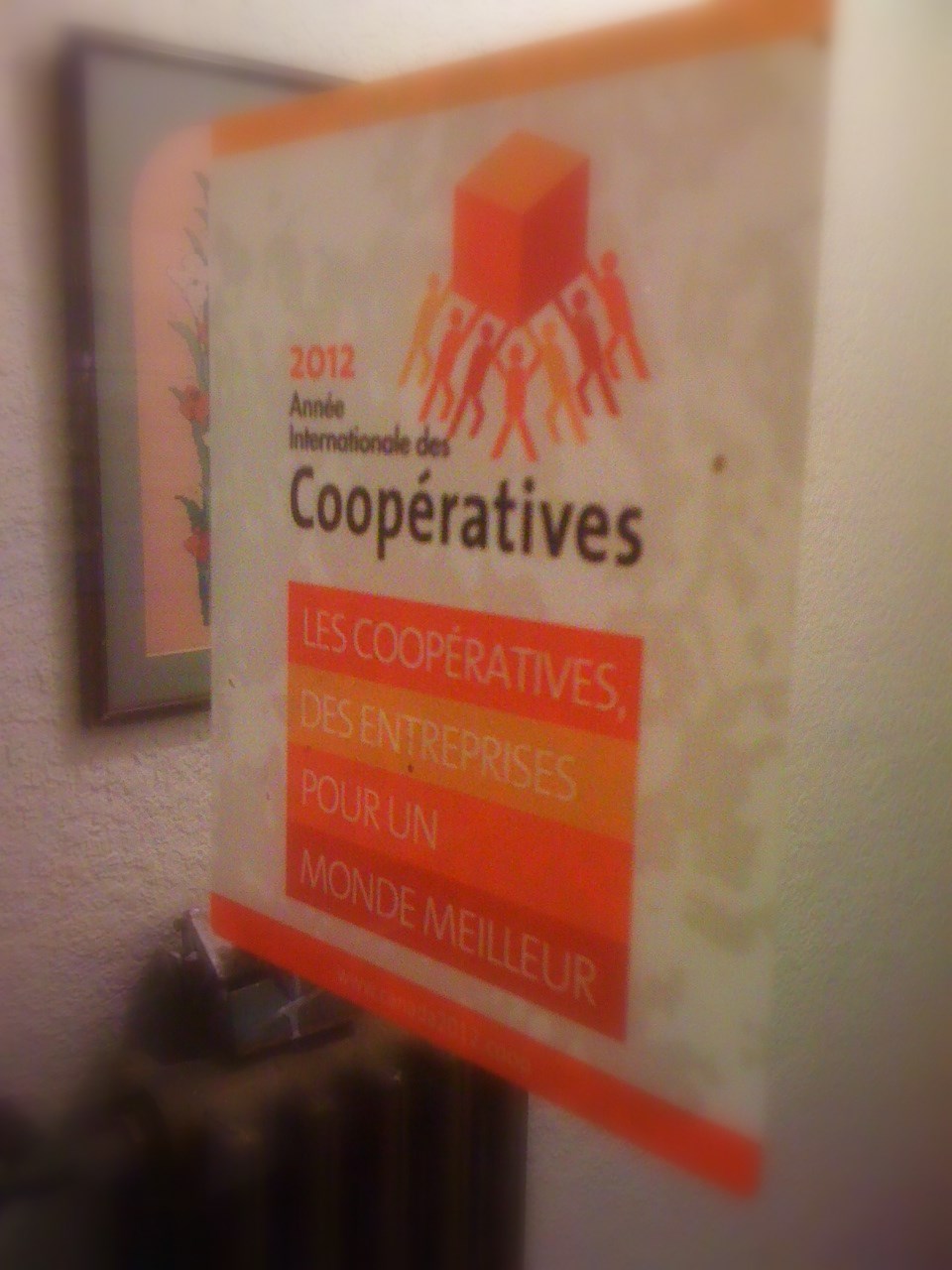
2012 – the International Year of Co-operatives

International Year of Co-ops sticker

I write about community-building here, well, when I’m not showing you photos of my dinner.

When you live in a city, even one that’s the size of Vancouver, community can be elusive. Your social circle emerges from the web of your identity and affiliations, but connecting across these lines can be challenging. Co-operatives can be a great way of making these connections. Co-ops can be specific or broad-based, economically-focused or centred around information and education. Most have a sense of social justice built into their structure and when they connect with each other, there’s potential for a movement that supports community-building across interests, identities, and status.

In practice, it doesn’t always work that way. Housing co-ops in popular neighbourhoods can become dominated by white, middle-class people; some small co-operatives can become cliques of like-minded hobbyists. But, at its best, the co-operative movement stands as an alternative to the atomized consumer-culture that many of us find so alienating.

As I’ve mentioned before, we live in a housing co-operative, which gives us a sense of connection across our neighbourhood, and more broadly, our region. We belong to a number of other co-ops, too. They enrich our lives and have the benefit of also being easy on our pocketbooks.

The United Nations has declared 2012 as the International Year of Co-operatives. Throughout 2012, there are going to be events across the world to celebrate the co-operative movement. Here’s a link to the official page and another that’s specifically for Canada:

IYC International

IYC Canada

And here’s a list of some of the co-operatives operating in Vancouver. It’s amazing how many needs the co-operative model can serve, isn’t it? There’s even a motorcycle repair co-op in Vancouver now.

CHF BC

The Vancouver Tool Library

modo – the car co-op

Vancouver Media Co-op

Co-op Radio

People’s Co-op Bookstore

MEC

East End Food Co-op

I’d love to hear about your experience with co-operatives. I’d also encourage you to check out co-ops in your area. You might be surprised at how many you find.

It’s All About Love

It's all about love, really - painted on a car window.

I saw this car window painting today and it got me thinking about the things that I celebrate in my community and the things that make me angry. At the risk of sounding reductionist, it really is all about love. The things we advocate for, fight over, and try to bring into being; those are the things that make our lives and communities worthwhile.

So, for a little beginning of the year perspective, tell me: what do you love, what’s worth fighting for, and what would you mourn if it disappeared?

(I know this is categorized as a Tuesday Topic. The holidays got me a little out of synch, it seems.)

Bourgeois Populism

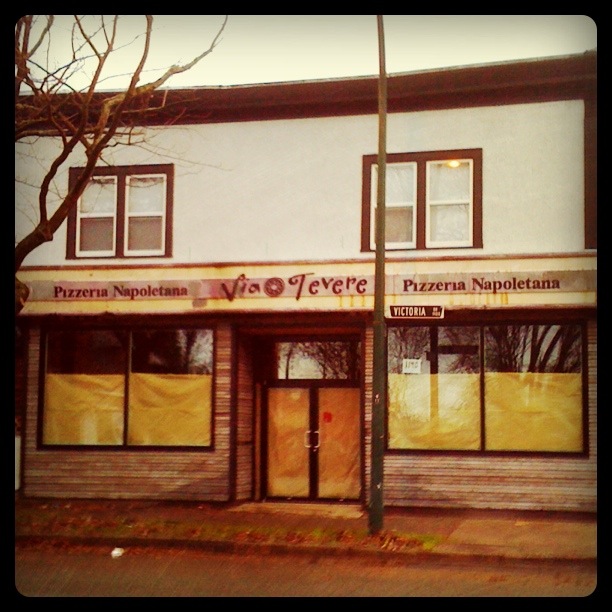
New pizza place opening soon on Victoria Drive.

I was telling a friend today that I’m a mixture of the bourgeois and the populist. Well, neither of those words is a perfect match for me, but that’s what I came up with today. My blog reflects this, with my definition of community encompassing everything from social justice issues to local shopping. One must embrace the contradictions of one’s nature, I suppose.

Sometimes though, the mixture can be a little hard to handle.

Today, I took the photo at the top of the post. I always have contradictory feelings when I see a new restaurant starting up in the neighbourhood. I like the expansion of food choices within walking distance, but fear the trend these openings represent. Right now, we have a number of produce vendors, food markets, and small merchants along the Drive. These are the sort of businesses that get pushed out with gentrification.

Our neighbourhood also seems to have been promised to developers for mid-rise, suburban-style condos. The number of rezonings approved by council is rapidly increasing. Long-time residents, who support independent businesses, are being pushed out of the neighbourhood. I suspect they will be replaced with folks with a suburban perspective, along with greater demand for chain stores and restaurants.

I like my mixed-income, (somewhat) diverse neighbourhood, that’s still able to support a video store, an old school diner, and a walkable street culture. Decrying the expensive, car-centric housing developments that are slated for this area gets one dismissed as an out-of-touch NIMBY. But what about the community that exists here? Surely there’s a way to preserve it, one of the most functional neighbourhoods in the city, while making room for new businesses that add to the ambiance?

I suppose not.

A Day for Remembrance

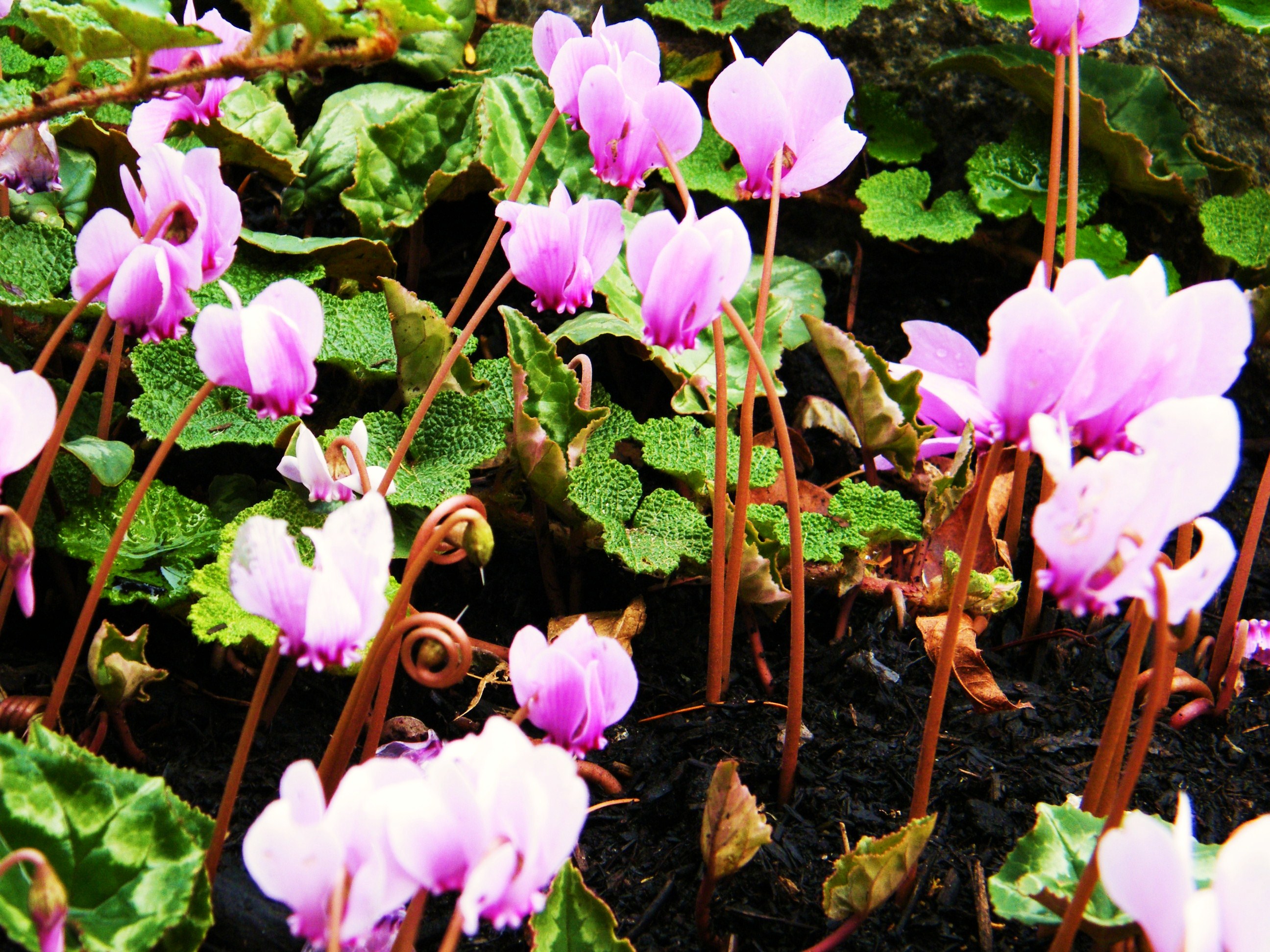
Fall flowers.

Today is All Saints Day in some places, Día de los Muertos in others. It was also knows as All Hallows, which is where Hallowe’en came from (All Hallows Eve). It’s a day of remembrance for those who have passed and I’ve also always thought of it as a good day for broader reflection on the impermanence of everything around us. Reflecting on impermanence gives us space not just for letting go, but also for honouring what’s lost to us.

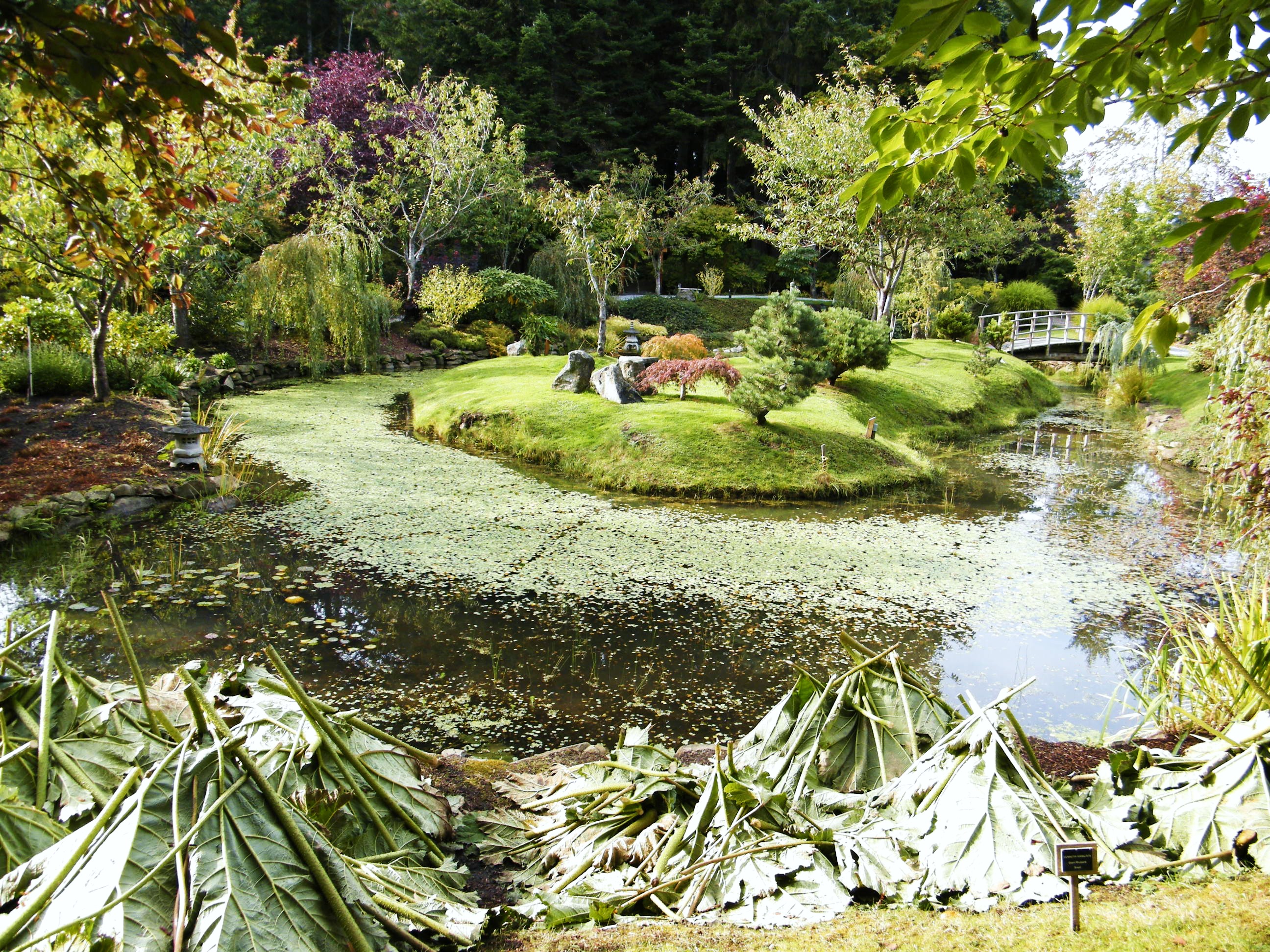
In that spirit, I’d like to share some photos that I took on a recent trip to Mayne Island at the Japanese Garden. It was built by residents to acknowledge the loss of one-third of their community to internment in World War II and to honour the history of those Japanese Mayne Islanders. The garden, uncoincidentally, is a beautiful place for reflection.

A small bridge.


Running water leading down to the pond.


A view across the central pond.


A waterfall among the foliage.


A bell along the forest path to Mayne Island's Japanese Garden.

The First Year

It’s been a year since I started this blog. My intention was to write mostly about community, in all its forms (well, the ones that occurred to me, anyway). Around the time I was setting up the blog, I learned that French Fridays With Dorie was beginning that October and I joined. I have a mild food blog obsession and had run across some Tuesdays With Dorie posts. I liked the idea of cooking through a whole cookbook and the comments sections of TWD posts were very lively. French Fridays sounded like it would be fun and challenging, so I couldn’t resist.

I worried that having two separate post streams might be annoying or confusing for people who were interested in one subject or the other. What I found, though, is that my French Fridays posts have become community-building in action. Participants read each other’s French Fridays posts, but often read and comment on the rest of one another’s blogs, too. We’ve even gotten to know each other a little. Somehow, what I thought would be an entirely different stream has come to be an exemplar of what I’ve been trying to explore here.

I knew this anniversary was coming up and I wasn’t sure what I was going to write about. Then, Elaine of California Living tagged me in the Seven Links Game. It sounded like a perfect structure for a little retrospective.

So, here goes:

The Family You Choose

Photographic tiles against a grey wall.

Who are the people you call when you’re in need, elated, or down? Chances are, not everyone you’d name would be family. For some people, there wouldn’t be a single family member on that list.

I’m lucky. I’ve got a relationship with my family of origin. No matter the challenges, we’re there for each other. It’s not true for everyone, especially for people whose families refuse to acknowledge their identities. Though estrangement can happen for many reasons, queer and trans folks are more likely to have families that don’t accept them. It’s from these communities that the concept of chosen family arose.

A chosen family is one that you create, made up of people who love you through everything – difference, distance, and disagreement. The members of my own chosen family have subtly imprinted themselves onto the DNA of my soul. I’ll be celebrating those folks at the Chosen Family Picnic later this month. There are so many days of the year given over to celebrating our families of origin, it seems fitting to dedicate one to this less visible expression of family.

I’ll never understand how someone can look at a child, sibling, or parent and reject them for their sexual orientation or gender identity. (Maybe that’s because my own coming out processes passed almost unremarked by my family. As I said, I’ve been lucky.) Humans are resilient and connection surpasses biology, so people can forge new bonds with people whose love shows them no limit. It’s a matter of finding those folks when you need them.

If you’d like to see a really beautiful expression of Chosen Family, there’s still time to see the Chosen Family Portraits project at the Museum of Vancouver – the exhibit closes September 30th.

Check out my 100th post, too – I’ve got a little giveaway happening.

Connection Isn’t Always Direct

Neighbourhood Book Exchange

I had an analogue childhood: records, cassette tapes, letters in the mailbox, and getting up from the couch periodically to change the channel on the television. The Encyclopedia Britannica, in its two-shelf bookcase, took up a corner of the living room. It was our equivalent of Google. I’m pretty sure the Encyclopedia Britannia is entirely electronic these days, but not all these things have disappeared. Records (and even cassette tapes) are being produced for new music and we occasionally get a card in the mail.

Certainly print books haven’t disappeared yet, though e-readers are becoming more and more popular. There’s something irreplaceable about the heft of a book, the texture of the paper, and the quality of light against the page. The history of a particular copy is also something that gets lost when we turn to electronic versions. The experience of reading a book is enhanced by marginalia, inscriptions, forgotten bits of paper, even creases and stains. Perhaps not always stains.

It’s also hard to share books, unless you’re passing the e-reader to your partner. It limits the potential of a single copy of a book. One of the things I love about travelling is how books end up taking their own journeys. When I’m away, I like to bring copies of things that I want to read, but don’t want to keep. Once finished, they’re exchanged for another from the bookshelves wherever we’re staying. (Not in private homes – in hostels, hotels, or bed and breakfasts, where this sort of thing is encouraged. Honestly.)

Helpful information.

I remember being on one long journey, thinking about the trajectory a book I’d just finished and really enjoyed might take. Considering the destinations of the other people staying at the hostel, I thought it might make it to Europe or South America and I wished I could somehow track its progress. A few years later, I heard about BookCrossing, which does exactly that.

BookCrossing is the sort of thing that I love about this new(ish) electronic world, because it is also rooted in tactile experience. The words real and virtual have had their meanings blurred, but in these cases they merge. Projects like this (and similar ones like Postcrossing or many iterations of mail art) are enacted in virtual space as they travel in real time. Eventually the trail stops and the book is never heard from again, though it might turn up unexpectedly, years later.

It’s not just the progress of the books that interests me, it’s also the generosity of spirit inherent in sharing with strangers. Like the sharing economy formed at Burning Man, looking out for strangers is an important part of creating community. Free boxes, extra umbrellas purposely left in cafés, community bookshelves – all these make a neighbourhood more liveable. It doesn’t replace socially just policies, but it helps enhance an atmosphere of neighbourliness.

The bottom shelf is all kids' books.

The electronic component of this process isn’t necessary, though it’s fascinating. The physical location is what’s important. I was thrilled to discover this Neighbourhood Book Exchange a few blocks from where I live. There are similar shelves in coffeeshops around town, but this structure is freestanding and free to visit, 24 hours a day. Another reason to love the Neighbourhood Small Grants project.

It’s exciting to see this sort of creativity and well, friendliness, at work. It’s something that makes me happy to live here. I’d love to hear about the things that make you happy to live in your neighbourhood. I’d also love to hear about instances of virtual community that excite you, or that you’ve followed into the real world.

My next post will be my 100th and I’ll be doing a little something to celebrate. Come back on Thursday to see what’s happening.

Travelling at Home

Looking east over the rail tracks from Vancouver Lookout.

This summer seems especially full of community events. Part of it is Vancouver’s125th Birthday, with events like this past weekend’s Summer Live. Another part of it is that there’s been a groundswell of community creativity around public events that’s been supported by the current City government. Organizations like Vancouver Public Space Network, websites like Vancouver is Awesome, and initiatives like Car-Free Vancouver are helping to drive this movement. Public Dreams pioneered such community-making, espousing a grassroots ethos that includes making these events free of charge.

A view toward the west from Vancouver Lookout.

I think this atmosphere is inspiring traditional institutions like Tourism Vancouver to follow suit. This May, they ran a promotion of local attractions called Be a Tourist in Your Own Town, which was open only to residents of Greater Vancouver. Each day of the promotion, residents could download coupons good for a range of destinations around Greater Vancouver, ranging from the well-known to the obscure.

I managed to take advantage of two of the offers, admission to Vancouver Lookout and Dr. Sun Yat Sen Chinese Garden. The first was one I’d never considered, while the second was a chance to re-visit one of Vancouver’s treasures.

Looking from the top of the Vancouver Lookout over the rail lines and cruise ship dock.

Vancouver Lookout sits atop Harbour Centre’s tower, which was Vancouver’s tallest building until 2009. It still gives a clear 360° view, looking out over downtown, the west and east ends of town, and toward the North Shore. Even on a rainy day, the views were compelling. It made for a nice exercise – trying to identify our neighbourhood from that height and distance; seeing the roofs of most of the downtown’s buildings; getting an aerial view across the water.

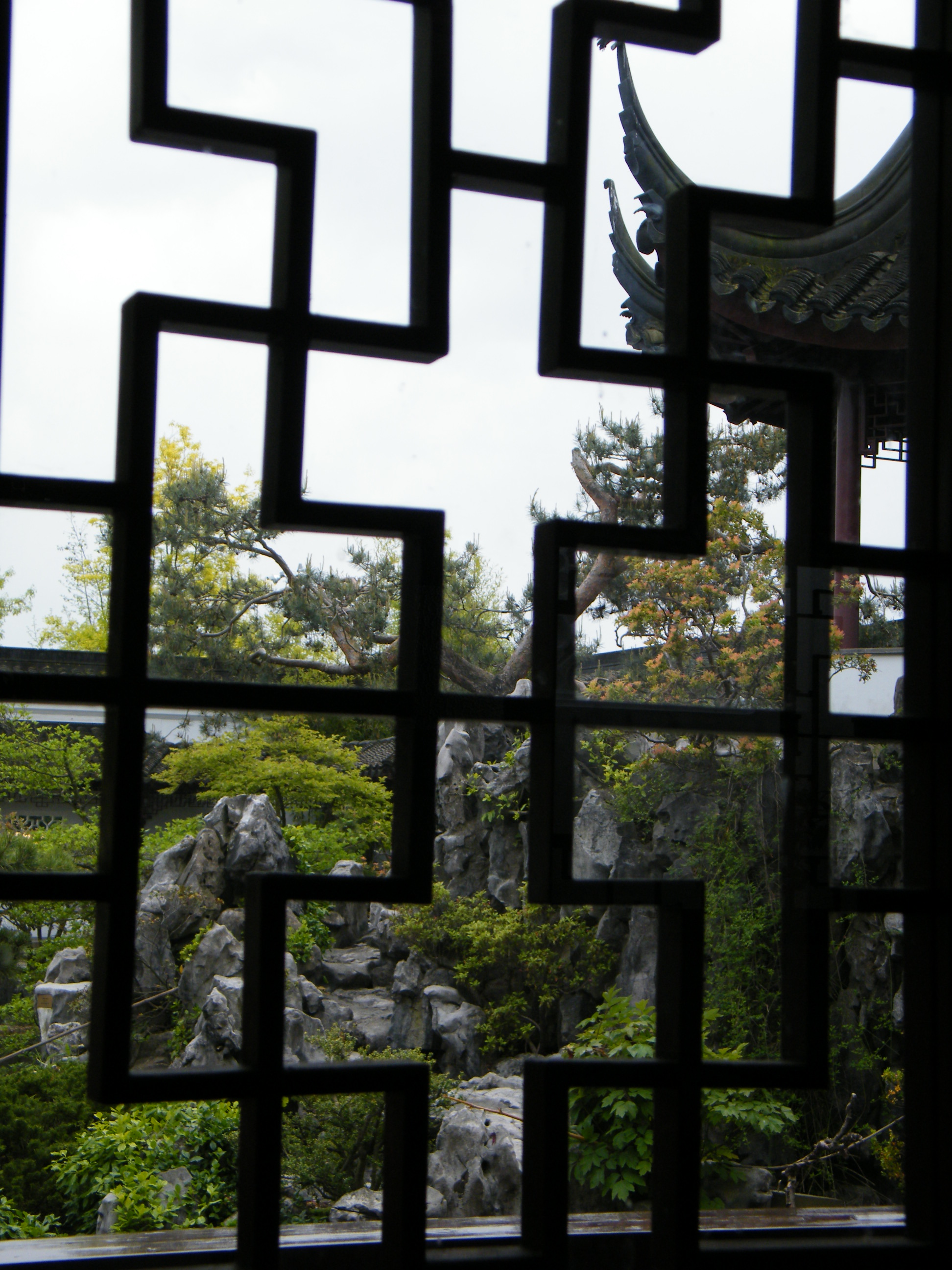
Through a window onto the garden.

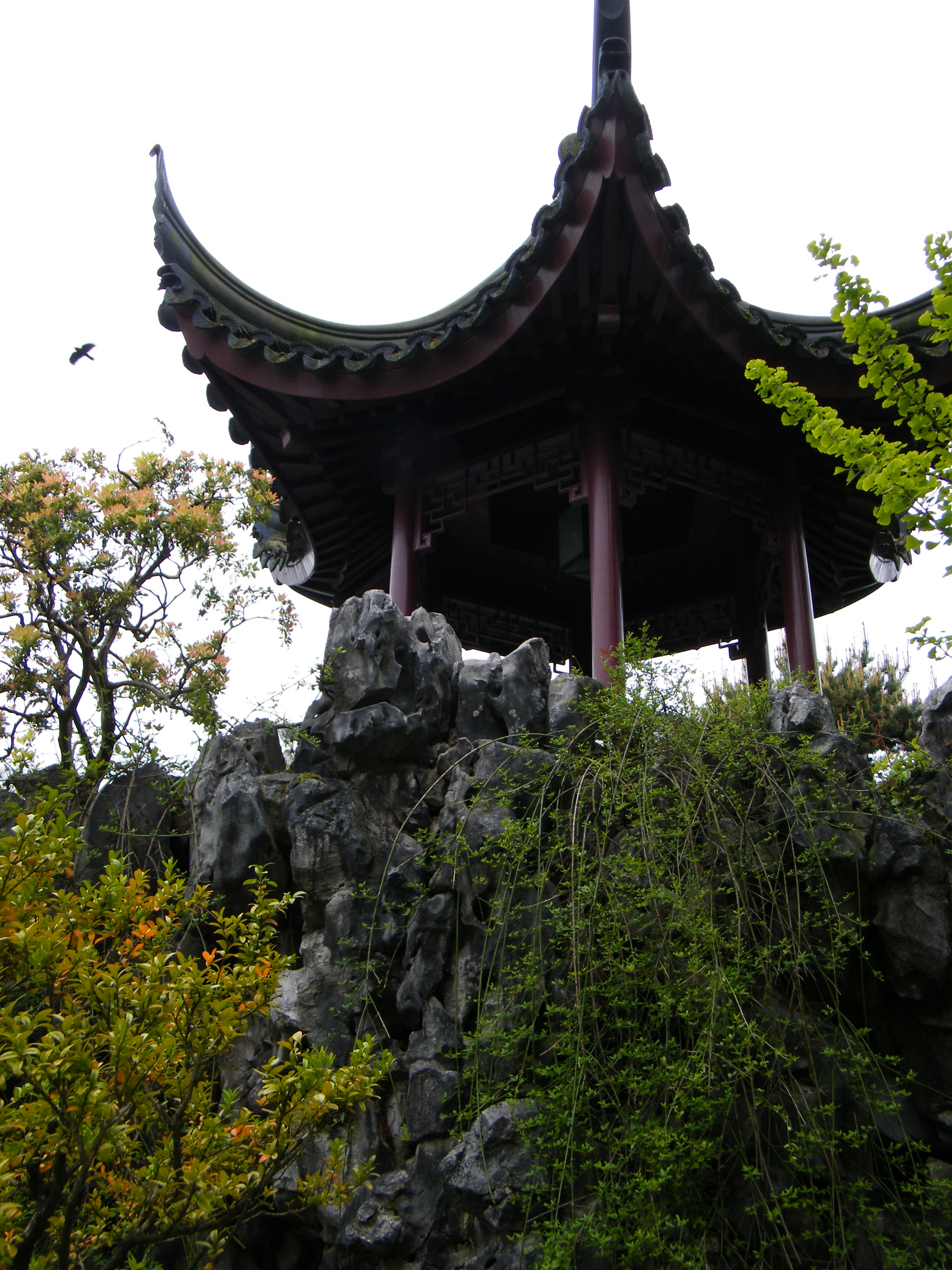
I went to Dr. Sun Yat Sen Gardens on another grey day, but the rain held until near the end of my visit. The Vancouver Tourism offer coincided with the garden’s 25th Anniversary celebration, so we were treated to tours, activities and goodies. I loved watching the koi feed, hearing the history of the garden, and contemplating the symbolism of elements in the scholar’s garden. The garden is not just a contemplative space, providing a venue for theatre, music and conferences.

Orangy koi fish coming up for food.

Mottled, mostly white koi fish grabbing a snack.


I try to approach living in this region, where I grew up, in the same way I do unfamiliar places. Looking at one’s home through traveller’s eyes means trying to discover both the surprising and delightful, along with what’s most authentic. But tourism has its rewards, too. Thanks Tourism Vancouver, for reminding me of that.

Looking up toward the pavilion.

Creating Community, Car-Free

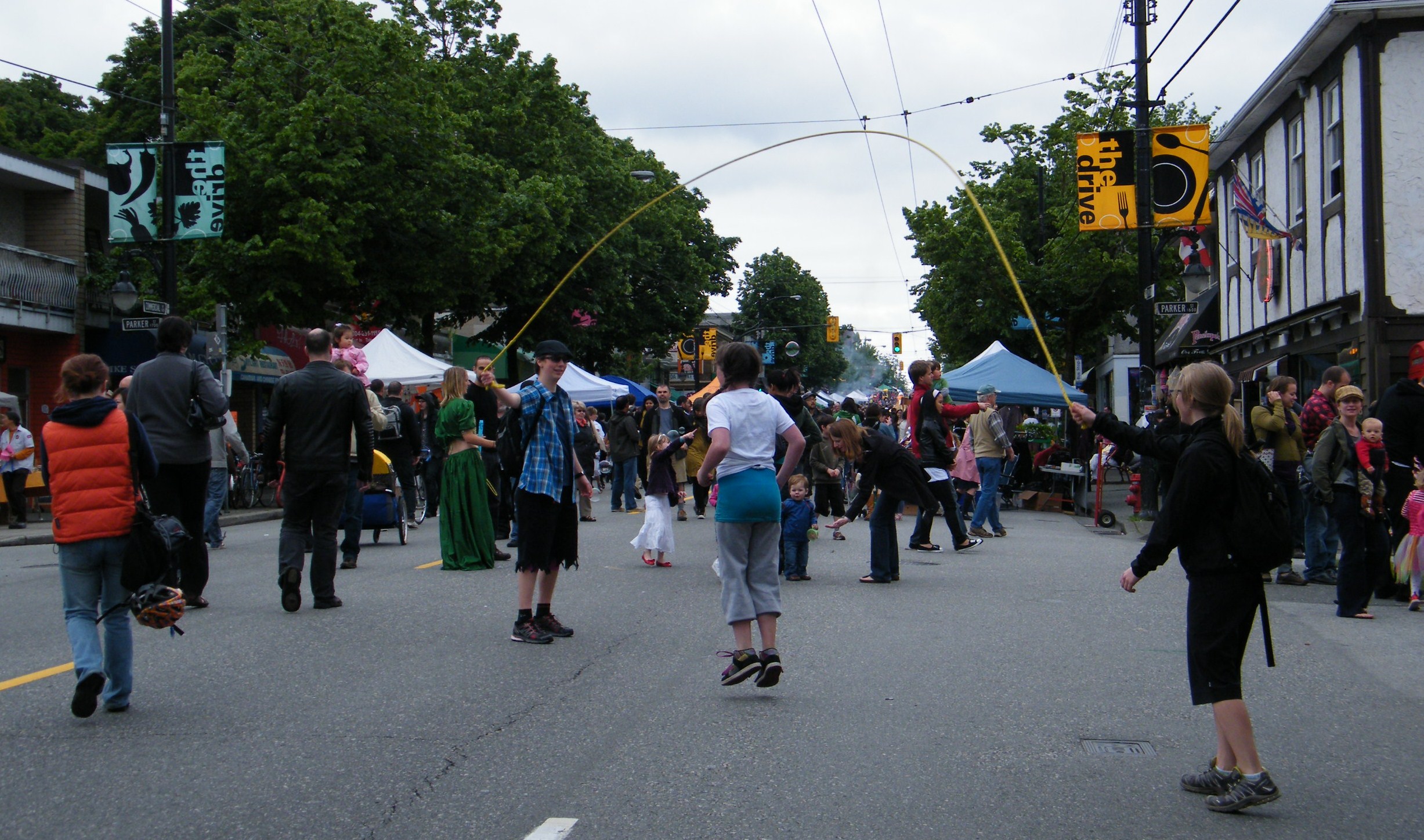
Jump rope in the street, on the Drive.

It’s often been said that Vancouver lacks a civic centre. We have no town square or any pedestrian malls. For many years, the closest thing to a city gathering place has been the steps and courtyard of the Vancouver Art Gallery. Many protests and celebrations have wound up there over the years, but it doesn’t replace the street-level culture that exists when there is a dedicated public space.

Community groups set up along the street, including No One is Illegal.

Travelling to Europe or Latin America (or even Montréal) shows us what we’re missing here. Even the smallest town in Mexico seems to have a zócalo where cafés line the perimeter and couples promenade in the evenings. For the traveller, it can provide an anchor from which to spin out one’s explorations; for the resident, it’s the centre of public life.

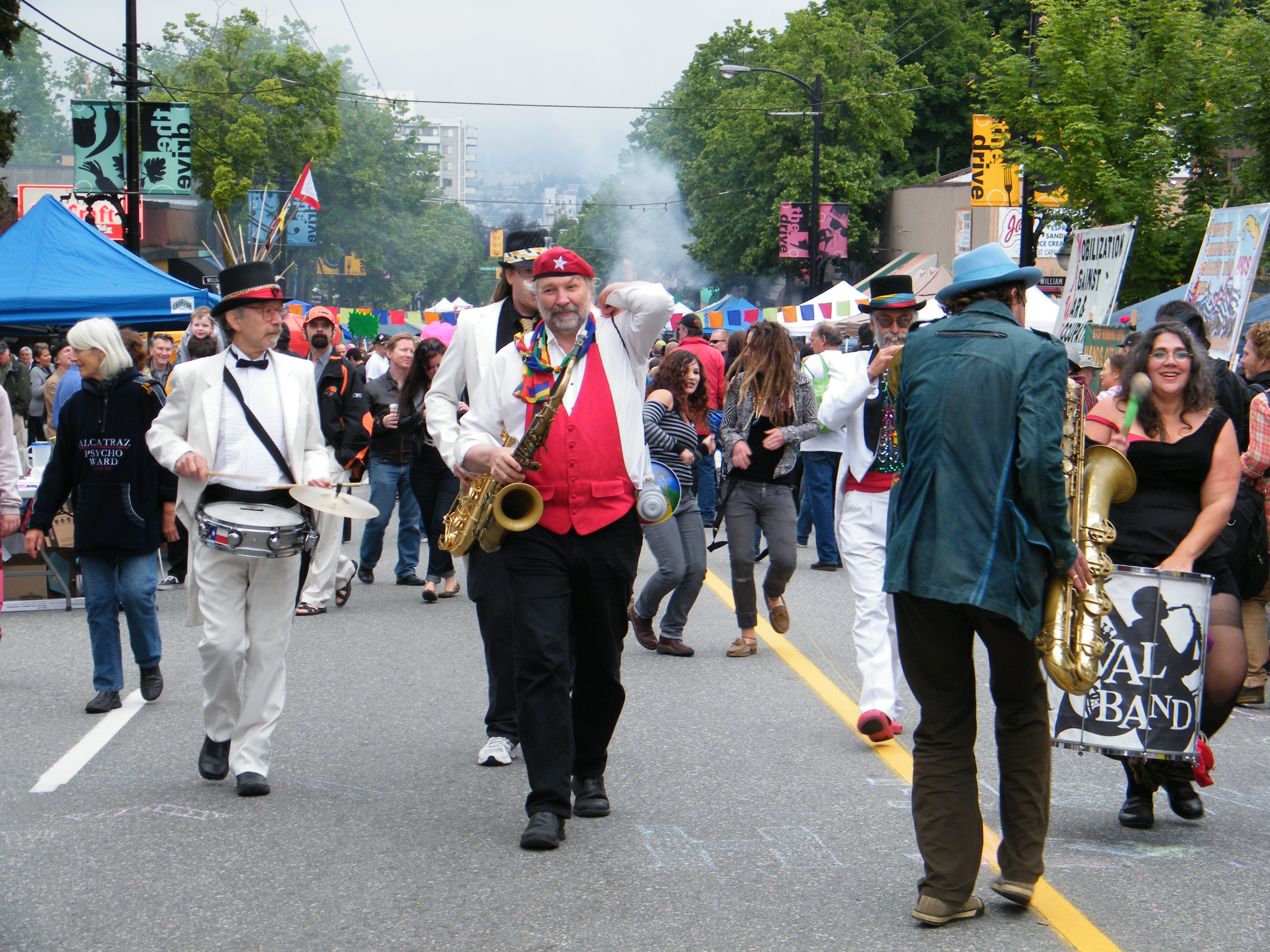
A band sets up in the street.

Vancouver gets a small taste of what this can be like when the annual Car-Free Day closes down streets in several neighbourhoods across the city. Street hockey, dance parties, roller derby and jump rope are just some of the activities folks were able to engage in, once the traffic was re-routed and pedestrians flooded the street.

The Carnival Band promenading through the crowd, down the centre of the street.

This model temporarily assuages the city’s need for an outdoor public life, but it’s not enough. The temporary nature of the squares means that the permanent architecture of city squares can only be approximated. Street parties can also be an able-bodied only affair, with buses re-routed as well as private cars. A permanent city square would be physically accessible, as transit would be built around it, not diverted from it. Vancouver Public Space Network has been arguing for a public square in the city for some time now. They’ve got a number of posts on the subject, which I encourage you to explore.

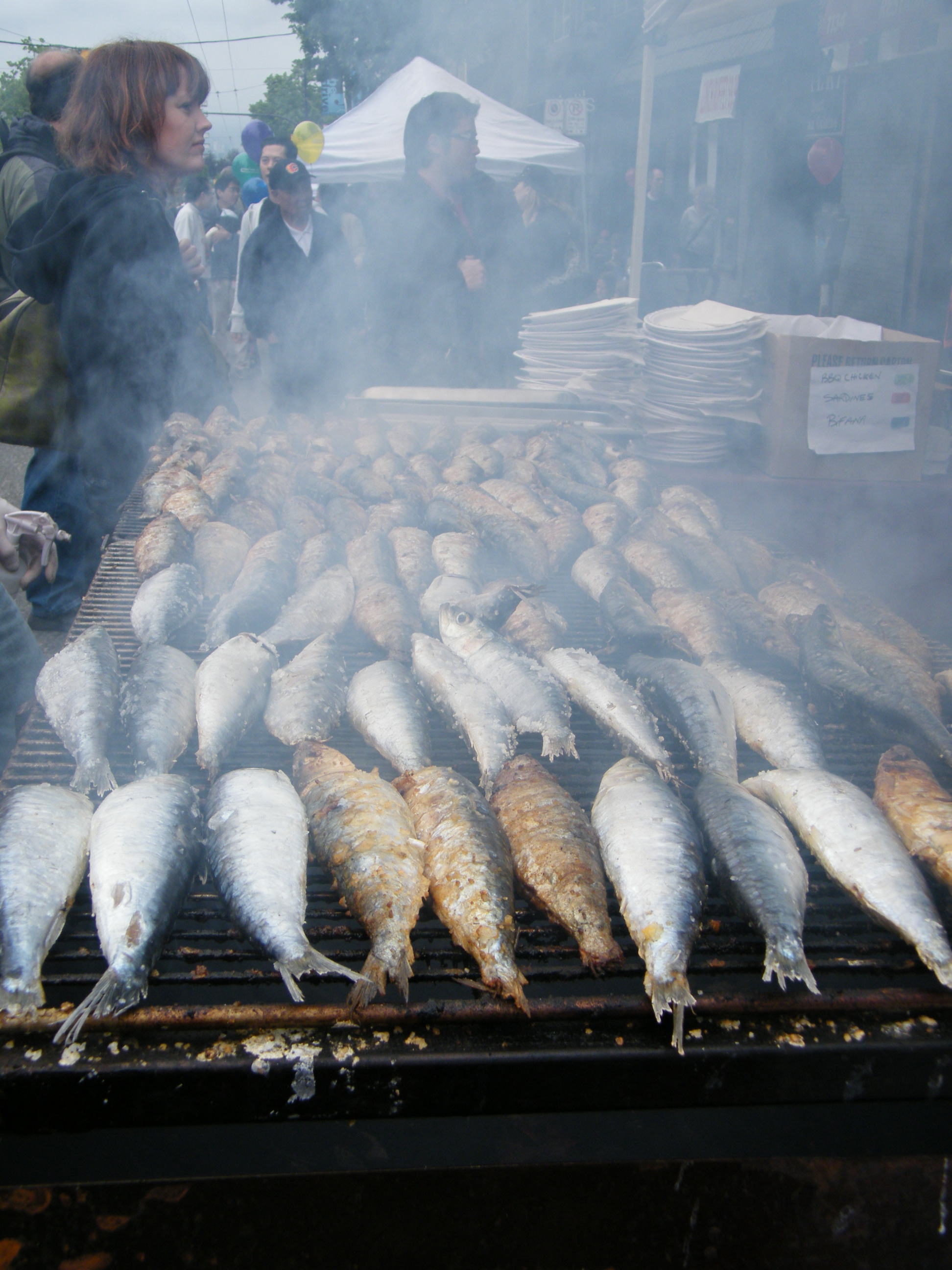
Smoking grill full of fish, with hungry festival-goers waiting.

This isn’t to say that I don’t love and support Car-Free Day, it’s just that it’s a tantalizing, fleeting experience of what our city should have every day. Beyond the vision of a public square for Vancouver, Car-Free Day also suggests some other interesting possibilities – what about closing Commercial Drive to traffic altogether, while running accessible light rail along its length? The Drive is already famous for its café culture; wouldn’t it be lovely if the city turned the street into a sort of plaza, where people could enjoy our mild weather for much of the year? Extended awnings would of course be necessary in our rainforest climate zone, but that’s no barrier.

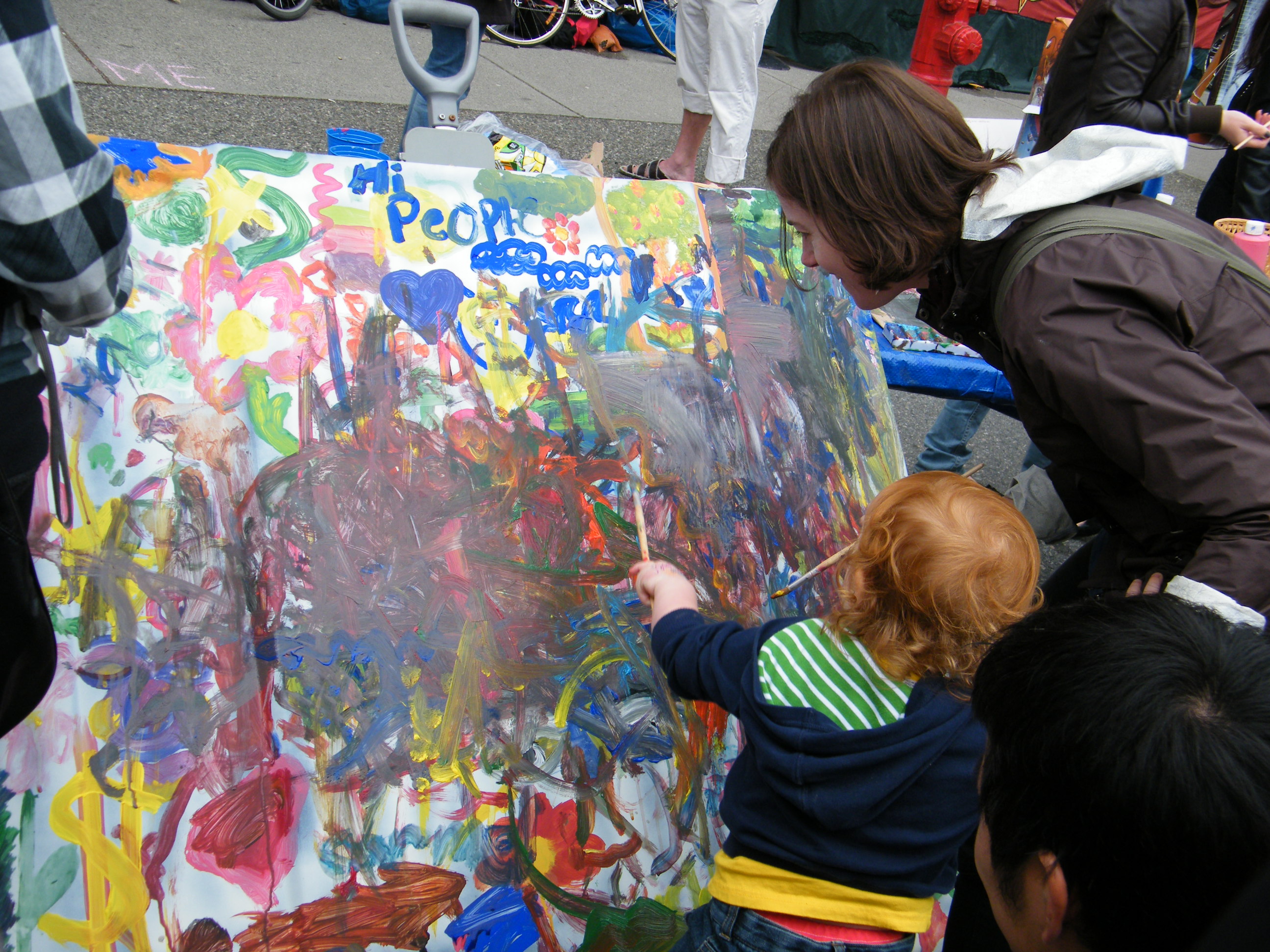
Kids collaboratively paint a picture, where cars usually are.

Car-free day every day? I’m in.

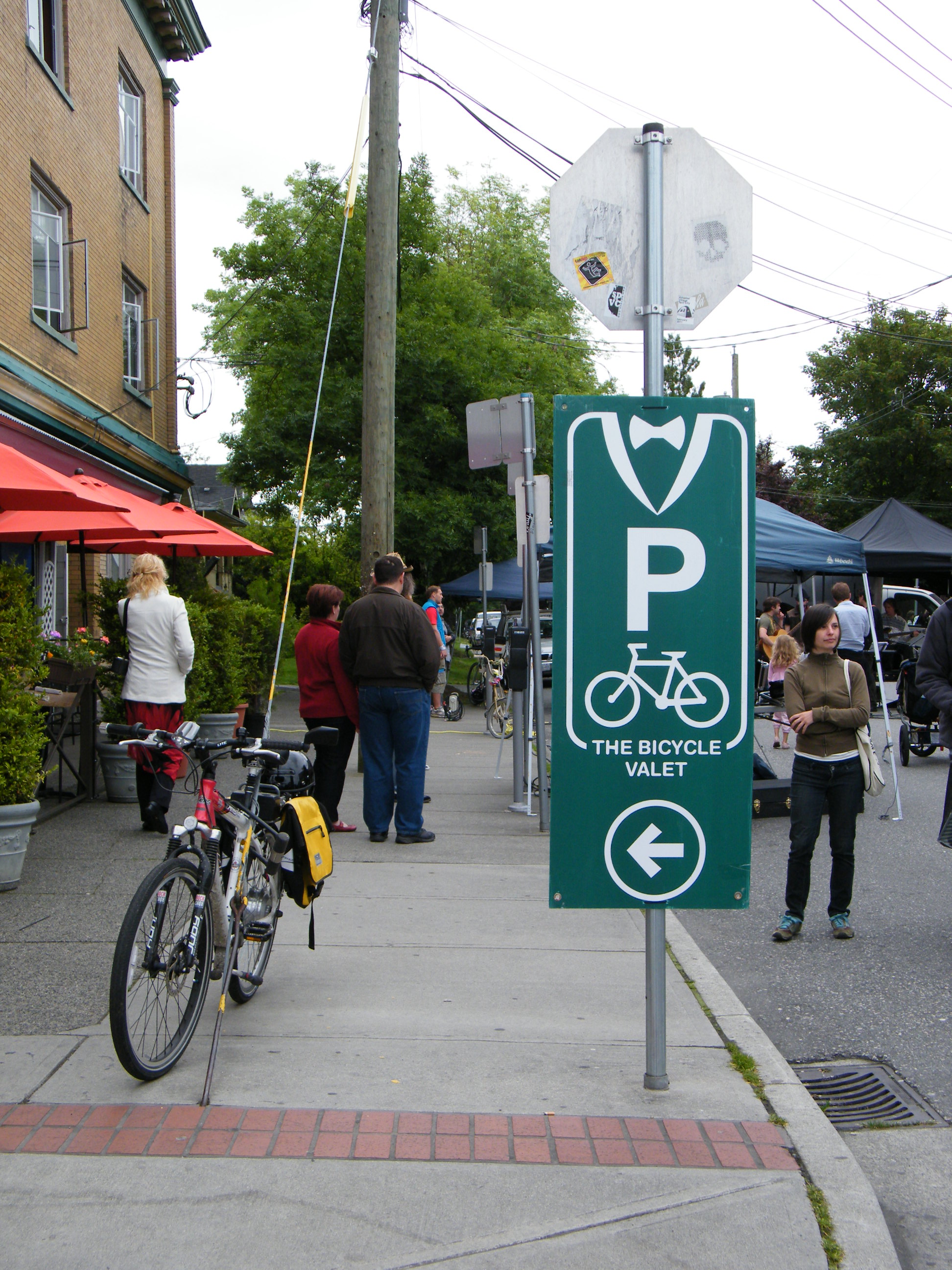
A valet bike parking sign.

The Car Free Vancouver booth.

From the Ground Up

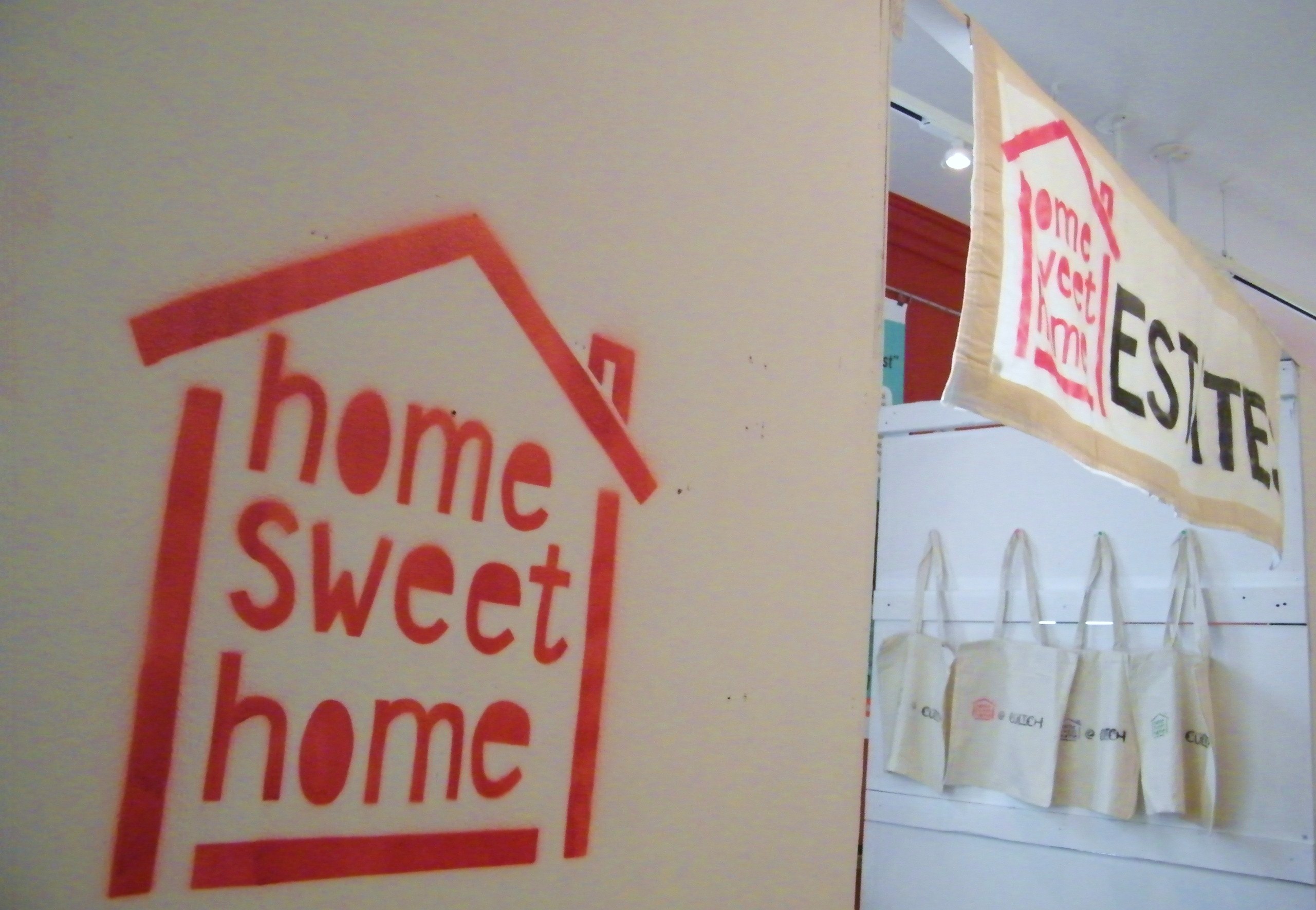
The Estate Agent/Souvenier shop.

Plotting out the future can be a daunting task, whether it’s for a book club or a neighbourhood. Conflicting personalities, differing goals and incompatible world views can all get in the way. It’s why generating participation is the bane of any planning process. When it’s as high-stakes as public consultation about neighbourhood development, it’s easy to get discouraged by bureaucracy and lobbyists. Things can get discouraging enough, even, to make folks dream of moving to a new place, to avoid the changes that are taking the shine off their current home and to build something that better reflects their own desires. Unfortunately, one neighbourhood’s fleeing resident can become another community’s damaging interloper.

A letter from "Walmart" left on a neighbourhood doorstep, ominously promising to move into the neighbourhood.

There’s really no such thing as building a community from the ground up, at least not in the real world. But last week, the Vancouver East Cultural Centre presented an opportunity to do so imaginatively, with their home sweet home installation. This piece was created by Subject to_change, a British theatrical company that specializes in breaking down the boundaries of artistic production and putting the spectator into the centre of its pieces. Home Sweet Home has been travelling to sites world-wide since 2007.

A cardboard business, ready to put together, tied up with a welcome message, instructions and suggestions.

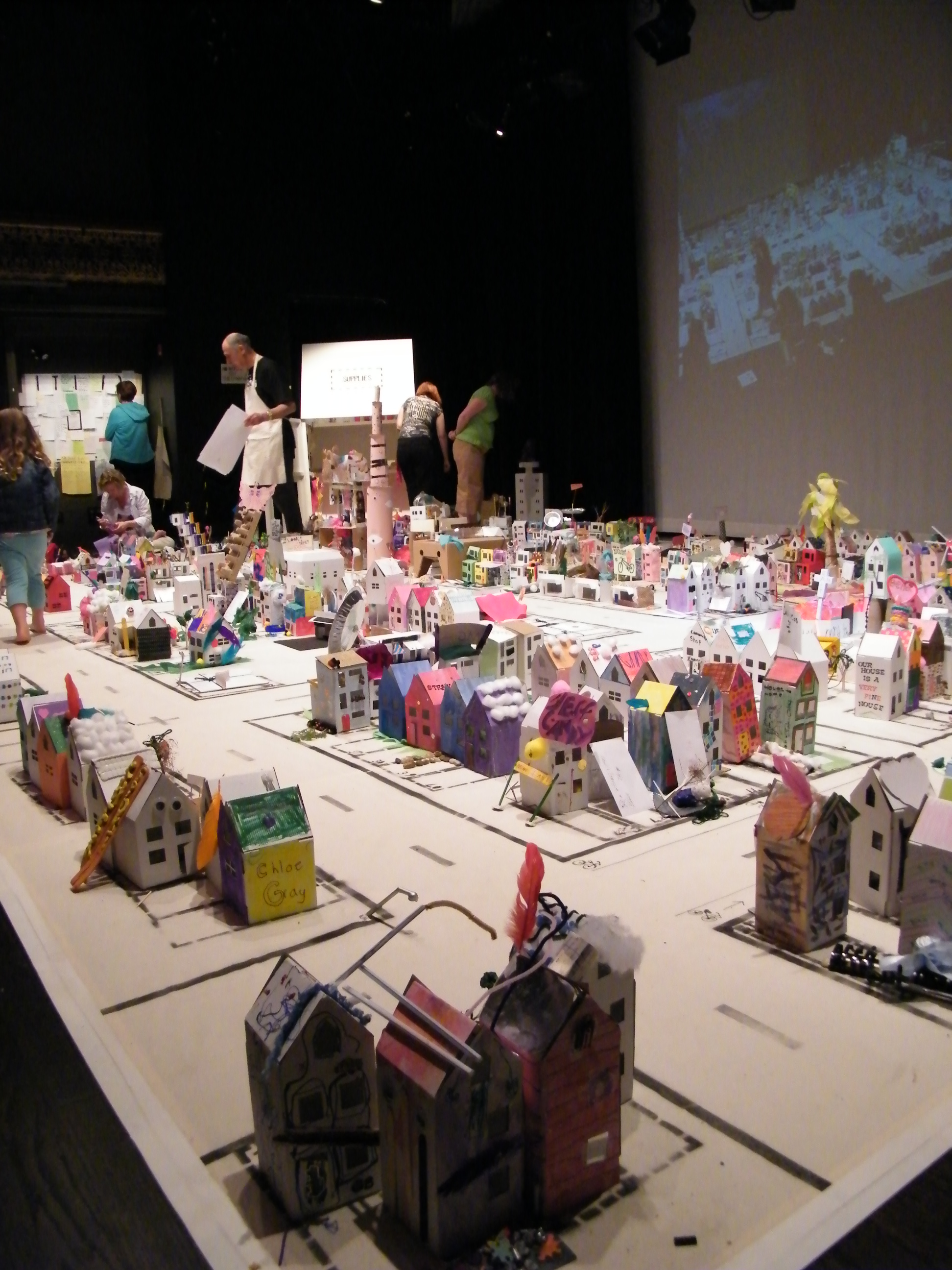
The piece begins as a planned community would, with lots marked out and construction materials at hand. Participants could choose to build residences, businesses or community amenities. Over the course of the installation, residents could also become involved with the community’s radio station and council or simply interact with other residents.

The community bulletin board, with lots of notes about zombies and the elusive Councillor Bob.

There were elements of the fantastical involved in the community that developed, like unicorn corrals and zombie warnings…actually the radio station and bulletin board seemed to really run with the zombie theme. But what I noticed, having arrived late in the process, was that the little village seemed to be an ideal version of the real-life neighbourhood outside. There were dog parks, community kitchens, bike shops and co-ops of all kinds. There were very few outsized developments and at least one of these was a seniors’ residence. A number of houses were given over to Canucks playoff fever and there was even a tiny East Van sign.

The tiny East Van sign - you can't tell in this photo, but it lit up like the real one.

This little East Van also reflected our neighbourhood’s anxieties – the biggest threat wasn’t really zombies (or the ongoing campaign against someone called “Councillor Bob”), but the letters delivered to residents promising an enormous Walmart development. In a neighbourhood where long-time residents are worrying about a future filled with chain stores and cookie-cutter condos, the installation encompassed what we love about this place, what we want for it and what we fear is on its way.

Anti-Walmart signs that started to appear once the ominous letter was delivered.

By leaving participants a blank slate, Subject to_change manages to make each iteration of this piece a social commentary, a learning environment and a kind of community carnival all at once. It also allows for artistic expression on a playing field that’s levelled across age groups – there were interesting and provocative structures from kids and adults alike.

A tiny version of a real place (Melk) beside an imaginary one (Beatlemania).

I’d like to adapt this concept to some of the organizations I’m involved with – a day long retreat, complete with paper, glue and decorations, might do more to foster dialogue than any number of meetings.

The village, with one of the installation workers in the background. To the right, you can see the screen where the goings-on were projected.