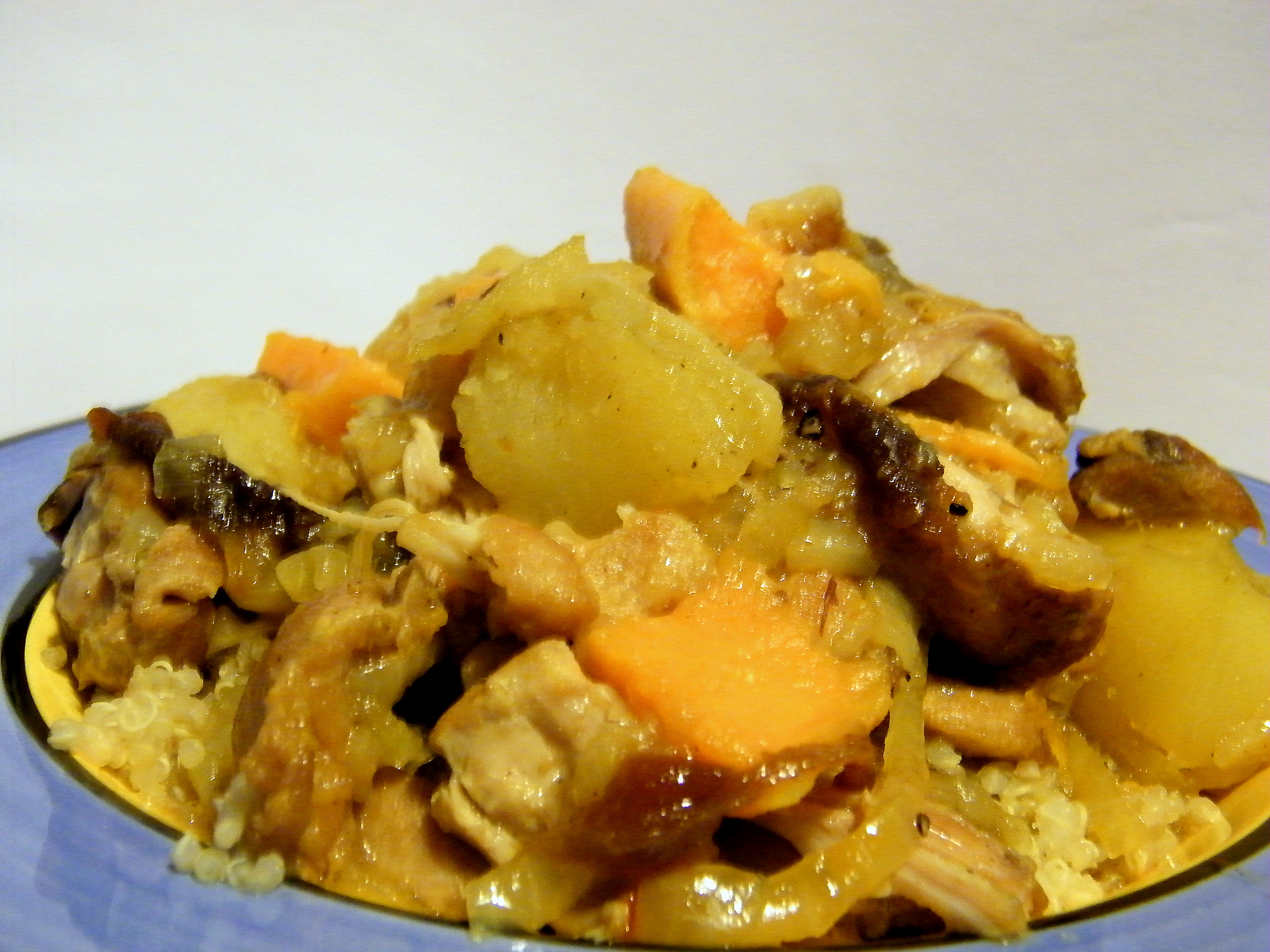
FFWD – Chicken Tagine with Sweet Potatoes and Prunes

Tagine, ready to eat.

A last-minute post for this week’s dish. It’s been a busy few weeks and I’ve been home less than I’ve been away. I’m looking forward to having time to read and comment on other folks’ posts, as well as getting back to my Tuesday posts. I’ve really appreciated how easy our French Fridays picks have been lately, so I can at least keep up with the group.

This tagine was simple to put together and full of subtle sweetness – saffron, honey, and prunes, spiced with star anise, cinnamon, and a little cayenne for equally subtle heat. My just-before-dinner snapshot doesn’t do it justice, but it’s a lovely dish, too – the colours look beautiful on the plate.

I was happy to hear Dorie suggest that quinoa makes the best accompaniment for the tagine, as it’s my usual gluten-free go to for Moroccan-inspired recipes. I cooked mine in a mixture of water and chicken broth this time.

I’m looking forward to leftovers tomorrow. It’s the sort of dish that’s even better the second day.

You can find many other blogged descriptions of this week’s FFWD recipe here: Chicken Tagine with Sweet Potatoes and Prunes

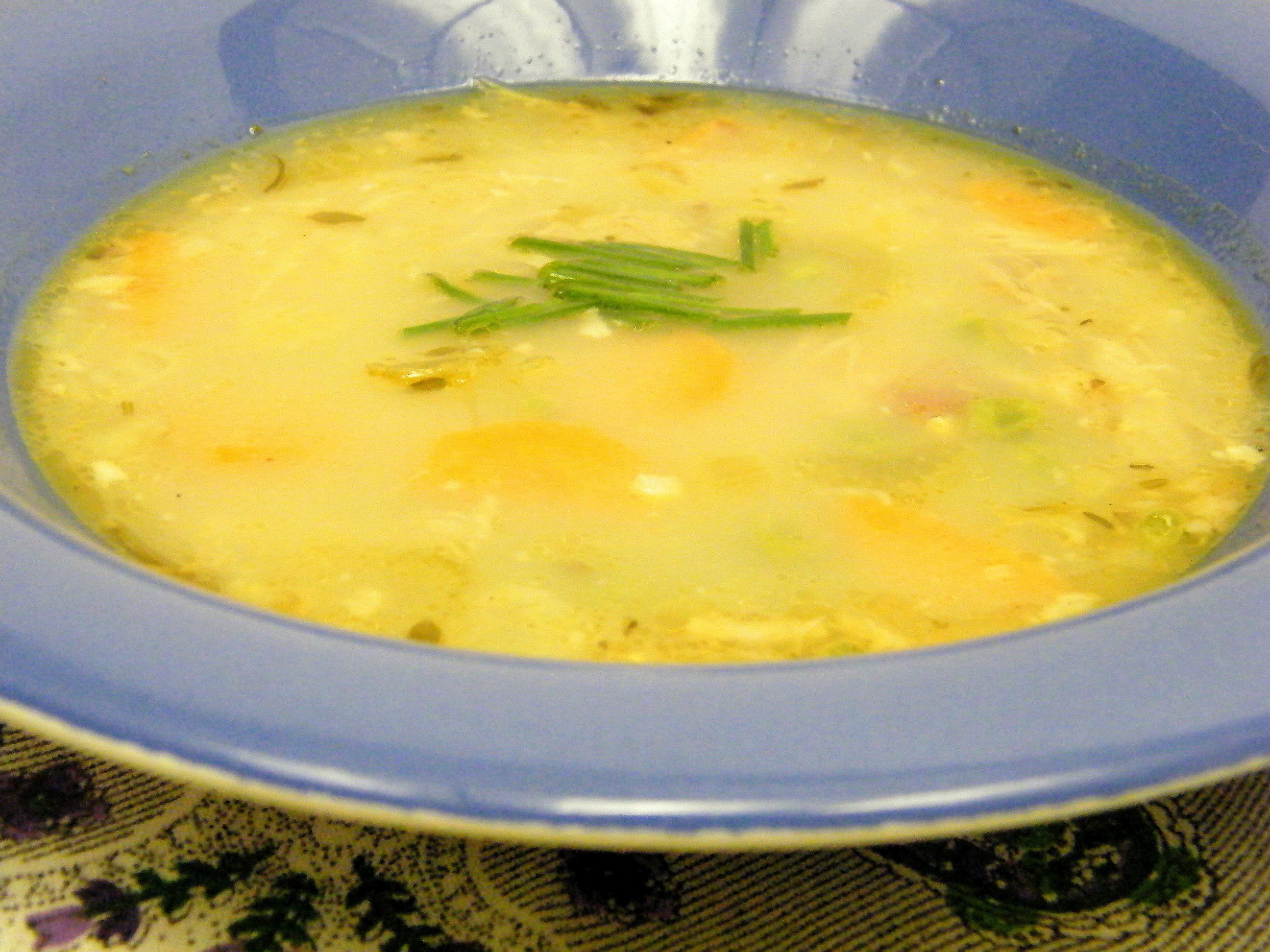
FFWD – Spur-of-the-Moment Vegetable Soup (or, Turkey-Bacon Post-Thanksgiving Soup)

Post-Thanksgiving Soup

This simple recipe reminds me why I like Around My French Table so much. There are complicated recipes (with clear, reliable instructions) that appeal to seasoned cooks, but there are also basic recipes that would be invaluable to the novice cook, too. When you’re starting out, it’s important to have a guide for proportions, even for something as simple as a stone soup like this one. When the rest of my nieces and nephews move out of their parents’ houses, I’ll be giving them each a copy of this cookbook, in the youth household survival kits that I’ll put together for them.

But, back to my version of this week’s recipe. You may have noticed that it doesn’t look much like vegetable soup. I think it’s still in the spirit of the recipe, though, since this recipe is meant for what’s available in the kitchen.

I started with turkey stock, carrots, celery, garlic, and onion. But there was also a bag of leftover turkey saved from Thanksgiving weekend, along with a bag of leftover peas and sliced carrots. Better use those, too. Then, there was bacon for breakfast, so why not fry a few extra slices for the soup? Cooking down the onion in the bacon fat seemed like the next logical step. There wasn’t quite enough liquid, so in goes some chicken stock, too. Salt and pepper, of course, but a little smoked paprika in with the rosemary and thyme could tie all the flavours together nicely and some brown rice would make it a complete meal. Adding in the crisp bits of bacon right at the end just makes things perfect.

It's spur-of-the-moment, but I wouldn't call it vegetable soup.

That’s the essence of soup-making for me. If you ask my mother what her recipe for soup is, she can’t tell you. It often has tomatoes in it, almost always rosemary and thyme, usually some noodles, rice, or barley in the mix, but everything else just depends. It’s always good. As was this soup. It had travelled a long way from the original recipe, but it was delicious and I didn’t have to go out to buy a single ingredient.

You can find many other blogged descriptions of this week’s FFWD recipe here: Spur-of-the-Moment Vegetable Soup

The Power of We

This year’s Blog Action Day
theme is The Power of We, which is particularly appropriate for this blog, because one of my focuses here is community.

This theme brings to mind vast social movements. When change happens, it often seems to have sprung out of nothing – a zeitgeist that moves inexplicably through a population. In fact, the sweeping changes of civil rights, social or environmental movements usually begin with small groups of people, acting locally.

It’s this scale of activism and community that interests me. Local organizing and community-building is the most accessible level of change-making, but it’s also the most invisible. National and regional politics and lobby groups are well-represented in the media, but our understanding of municipal politics, local government, and small-scale activism suffers.

A good example of this is the issue of separated bike lanes in Vancouver. For folks in the outlying suburbs and even for some in the city itself, the bike lanes were a shocking surprise. But, they were the result of years of work by organizations like HUB (formerly the Vancouver Area Cycling Coalition) and BEST. These groups arose because cyclists found themselves travelling the same, unsanctioned bike routes, encountering the same dangers and frustrations, and began to organize. They connected with others in more established cycling cities and slowly began to educate citizens and city officials about best practices for cycling. It’s taken years to get cycling integrated into transportation plans and separated bike lanes are part of that.

The same can be said for the establishing of community gardens, changes to municipal rules around where food can be grown, and bans on pesticide use in city limits. These changes, along with the establishment of neighbourhood farmers’ markets have helped to shift our city’s focus on food production and land use. We can thank groups like Vancouver Farmers Market, Farm Folk City Folk, and SPEC for this.

I’m lucky to live in a place where there is so much involvement by community groups. We’ve got strong neighbourhood associations, an active heritage foundation that works to preserve our built environment, and a wealth of organizations that connect community members across abilities, class, and race.

My challenge to you for this day of action is to look at your local issues and discover the groups that have been working on them. Perhaps you’ll find one that motivates you to get involved and to experience the ‘power of we’ firsthand.

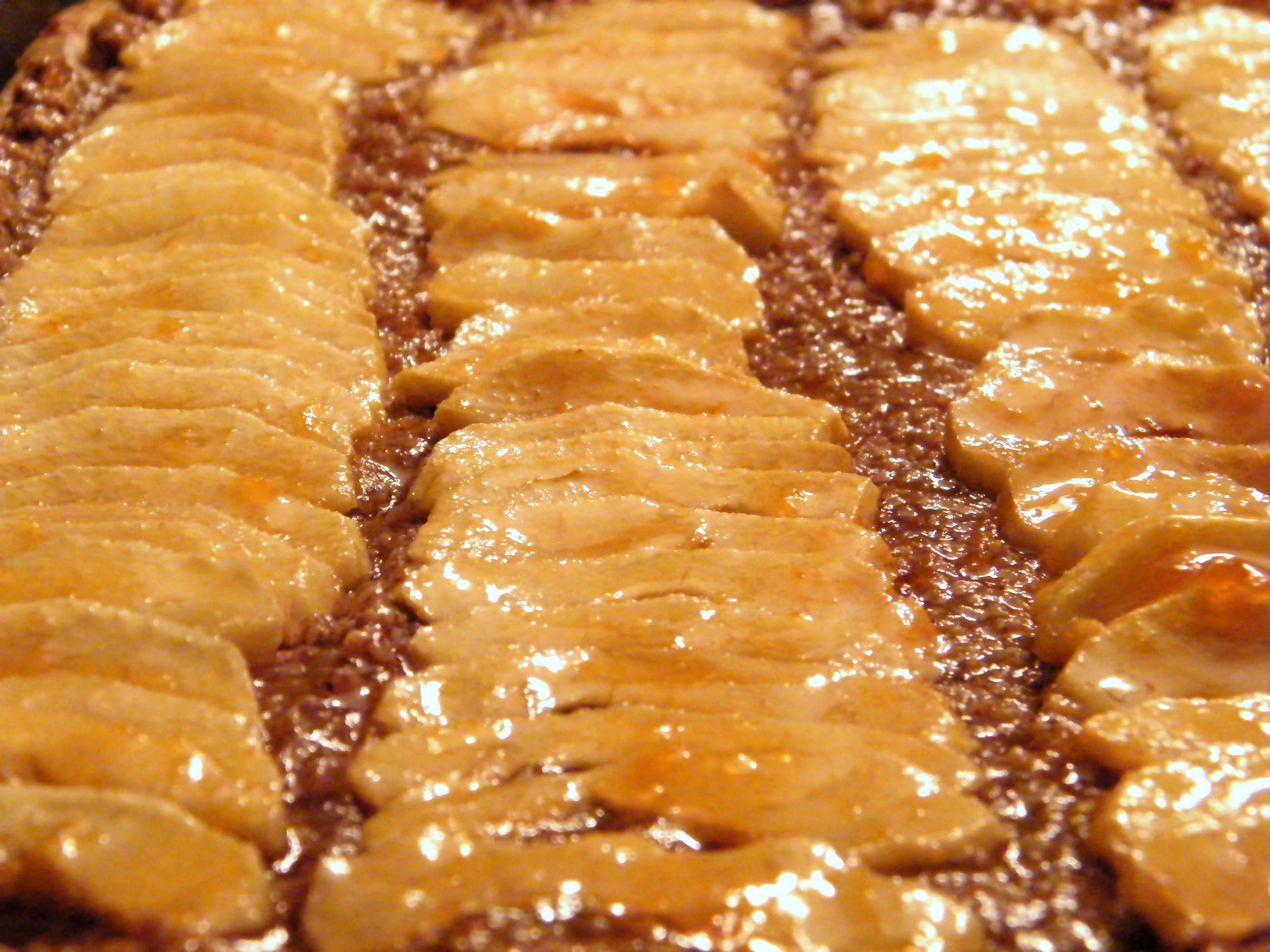
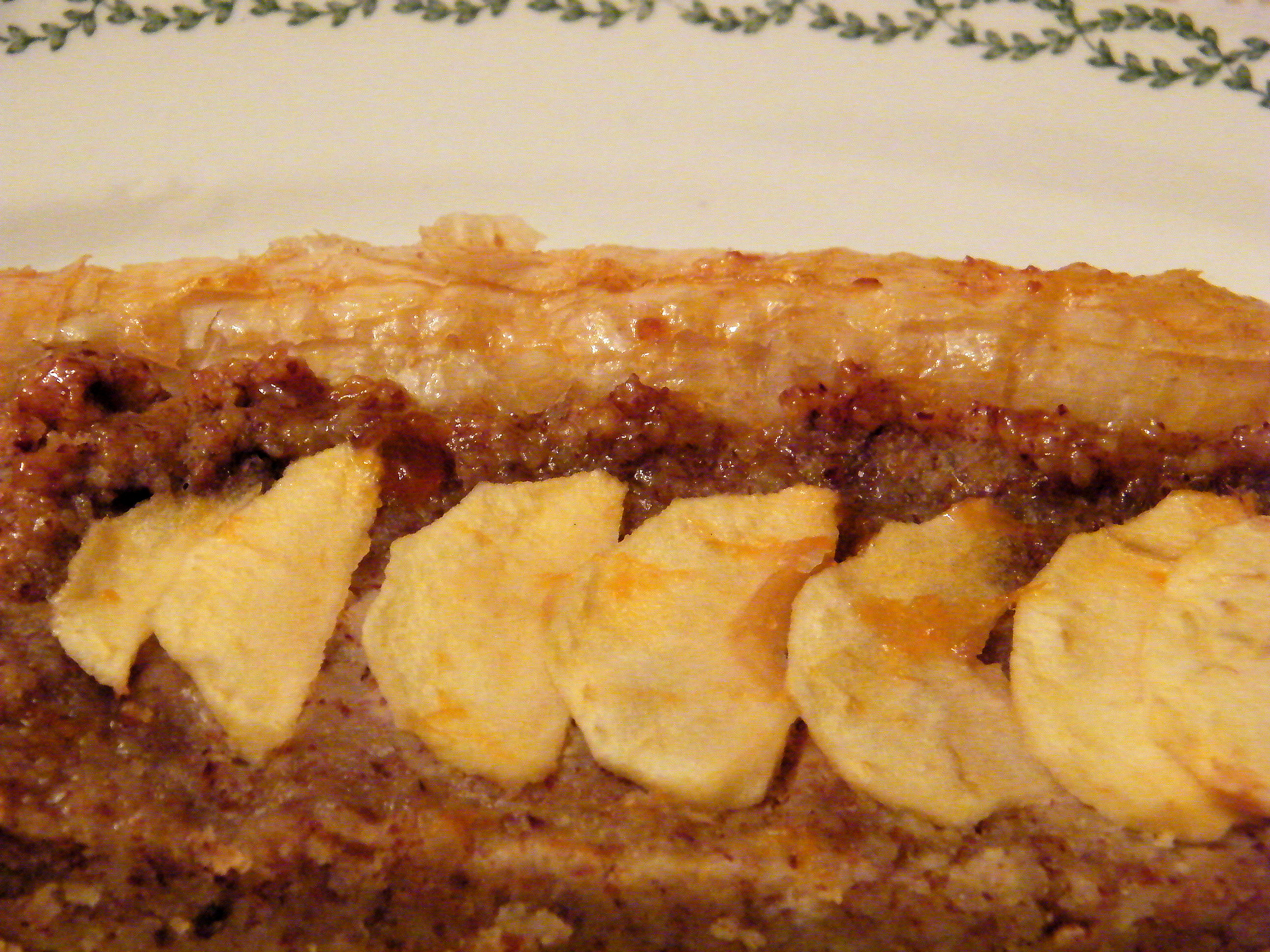
FFWD – Crispy-Crackly Apple-Almond Tart

The tart, about to go into the oven.

My mother’s rule has always been, make the recipe as written the first time, then improvise from there. You get a sense of what the recipe’s author meant the dish to be and can adjust it to your own taste, if necessary, another time. It’s a good practice and one which helps me avoid recreating the flavours I already know I like.

Sometimes, though, the ingredients that are on hand take precedence over the recipe. When I made the Apple-Almond tart for this week’s post, I wanted to use up some ground almond that I’d had for a little too long. There was also some Greek yogurt in the fridge, so I didn’t go to the store for heavy cream. The resulting tart filling wasn’t exactly an almond cream, but it was awfully good.

It was thicker and a little less puffy than almond cream would have been, but it complemented the butter-soaked phyllo and tart apples very well. I sliced this up into small pieces, froze some and then sent most of the rest off with my parents on their yearly weekend away with several other couples. It was a hit, I hear. It certainly was at home, too.

Next time, I’ll follow the recipe more closely and use almond flour and heavy cream, but I’m happy to know that this tart is amenable to a little improvisation.

A slice of tart.

You can find many other blogged descriptions of this week’s FFWD recipe here: Crispy-Crackly Apple-Almond Tart

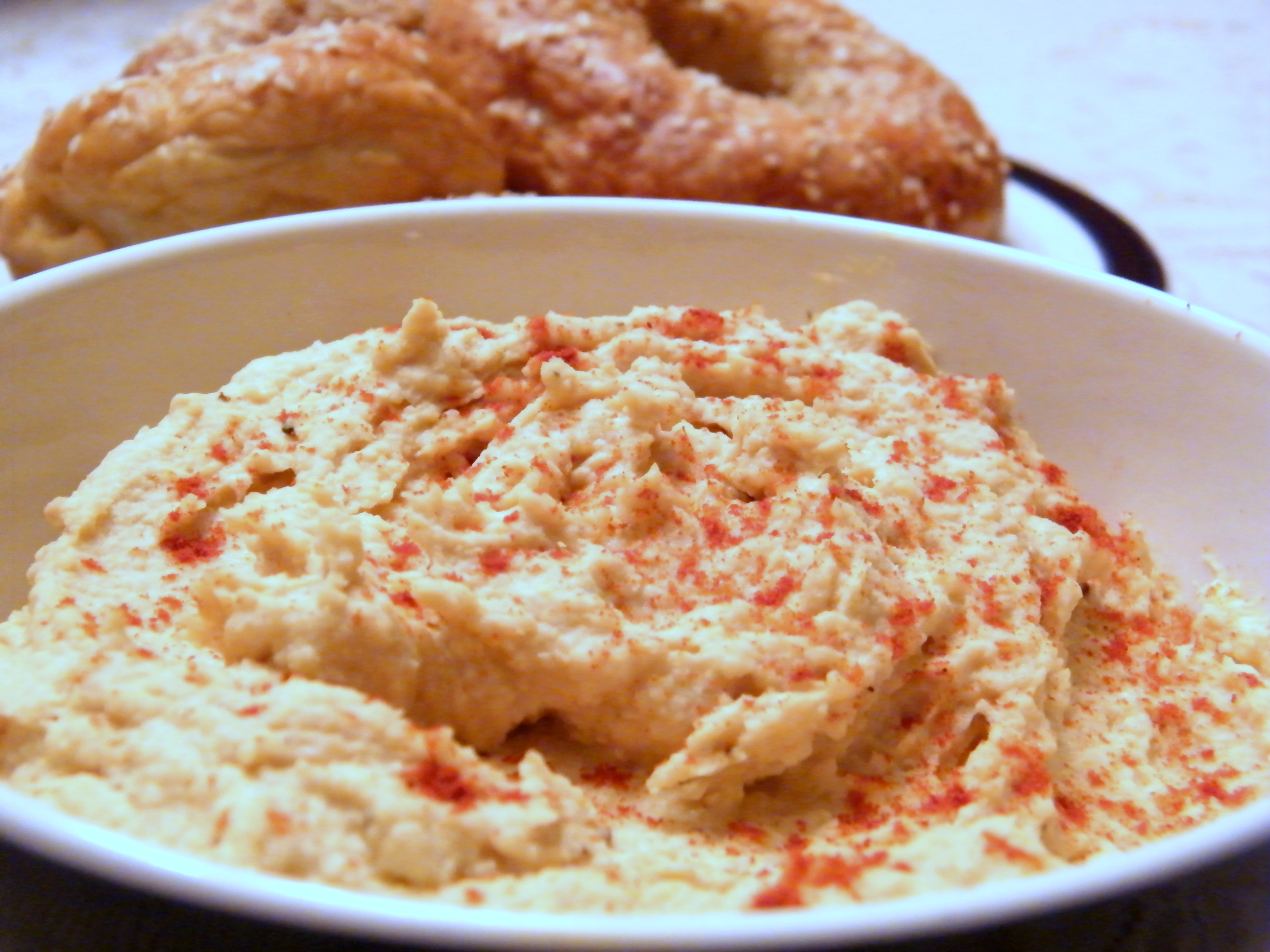
FFWD – Hummus

Hummus, with home-made bagels in the background.

We’re beginning our third year of French Fridays with something simple, which in typical Dorie fashion, can be experimented with until you find your favourite version(s). Hummus is something most of us can find at the supermarket, but it’s easy enough to make at home. Chickpeas, tahini, lemon juice, and garlic – those are the basics. I even made the tahini myself this time. The ratio is about 1 cup of toasted sesame seeds to 1/4 cup olive oil, more or less, depending on how thick you want it. Dump it all in the food processor and in a few seconds, it’s done. In this case, I just left the amount of tahini needed for the hummus in the processor and added the rest of the ingredients.

Dorie adds a bit of cumin to her hummus and I like adding a bit of chile flakes, cayenne, or hot sauce, too. A sprinkle of smoked paprika on top is both a predictable garnish and also delicious. I stuck close to the recipe this time, but you can add any number of flavours to hummus. Herbs or pesto are lovely, but even just bumping up the lemon or garlic can make a great variation. But, you probably know that already. I’ll just add that in the photo, you get a little preview of the next Baking with Julia assignment. Bagels and hummus make a great combination.

We started our first year of French Fridays with something quintessentially French, Gougères. Our second year began with a recipe that gently led (most of) us through new, even intimidating techniques in the kitchen – Olive-Olive Cornish Hens. Our third year’s begun with a bit of a softball, but one that reminds us how easy it is to replicate store-bought staples cheaply, easily, and deliciously at home. They’ve all been very much worth our time.

You can find many other blogged descriptions of this week’s FFWD recipe here: Hummus

FFWD – Endives, Apples, & Grapes

A close up of the finished dish.

This post is so late that it qualifies as an almost-the-next-French-Friday post. We had this week’s dish for dinner last night with steak, potatoes, and a mixture of beans from my garden and my mother’s. After a slow start, summer’s hung on a little. We have fresh Okanagan peaches awaiting pie-making tomorrow and I used a beautiful Honeycrisp from the same region in this recipe. It’s always nice when the line between summer and fall produce blurs a little bit.

This side dish blurs some lines, itself – a mixture of bitter endive, along with sweet apples and grapes, slowly cooked in butter with sprigs of rosemary. When it’s done, the juices from the fruit have caramelized so much that strings of dark brown sugar pull from the pan when you plate the dish. Add a little water and those caramelized bits left over cook down into a scant sauce that brings all the flavours together.

In the pan, ready to slowly cook and caramelize.

We liked it with the meal we had, but it would be even better as an alternative to apple sauce with pork chops or roast. Dorie’s bonne idée for this recipe is a version with squash and chestnuts and I’m tempted to try it this coming long weekend.

In the meantime, I must get on with our next recipe, which will mark the beginning of the third year of cooking together from Around My French Table.

Endive, Apples, and Grapes

You can find many other blogged descriptions of this week’s FFWD recipe here: Endives, Apples, & Grapes

FFWD – Chicken Basquaise

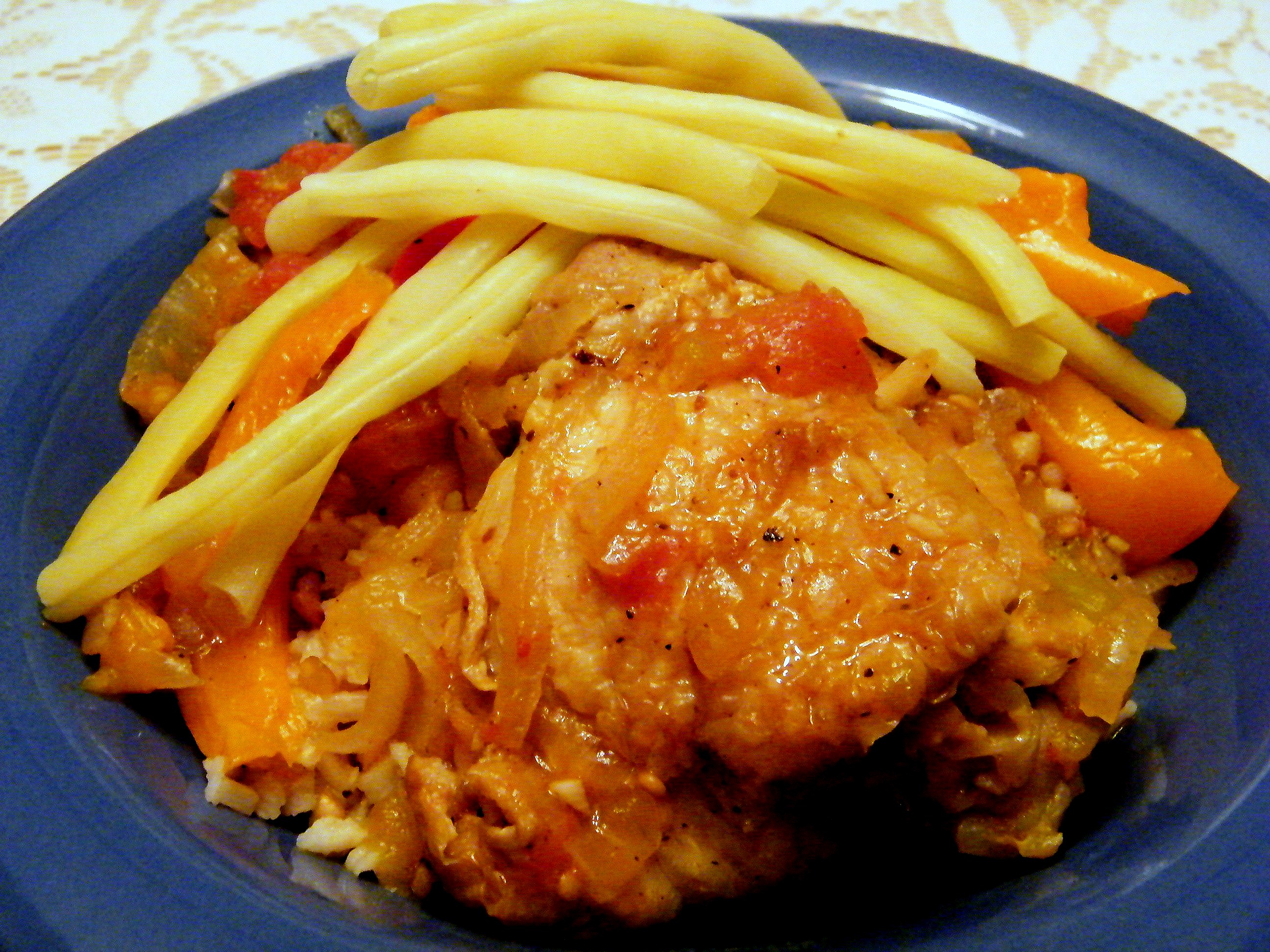
Chicken Basquaise garnished with yellow bush beans.

Chicken Basquaise is the opposite of convenience food. The pipérade alone cooks for about an hour, once all the chopping of vegetables is done. When the chicken is added, dinner is still forty minutes away. All that time is worth it and not just because you can get most of the dishes done while you’re waiting for the chicken to slowly stew in the pipérade.

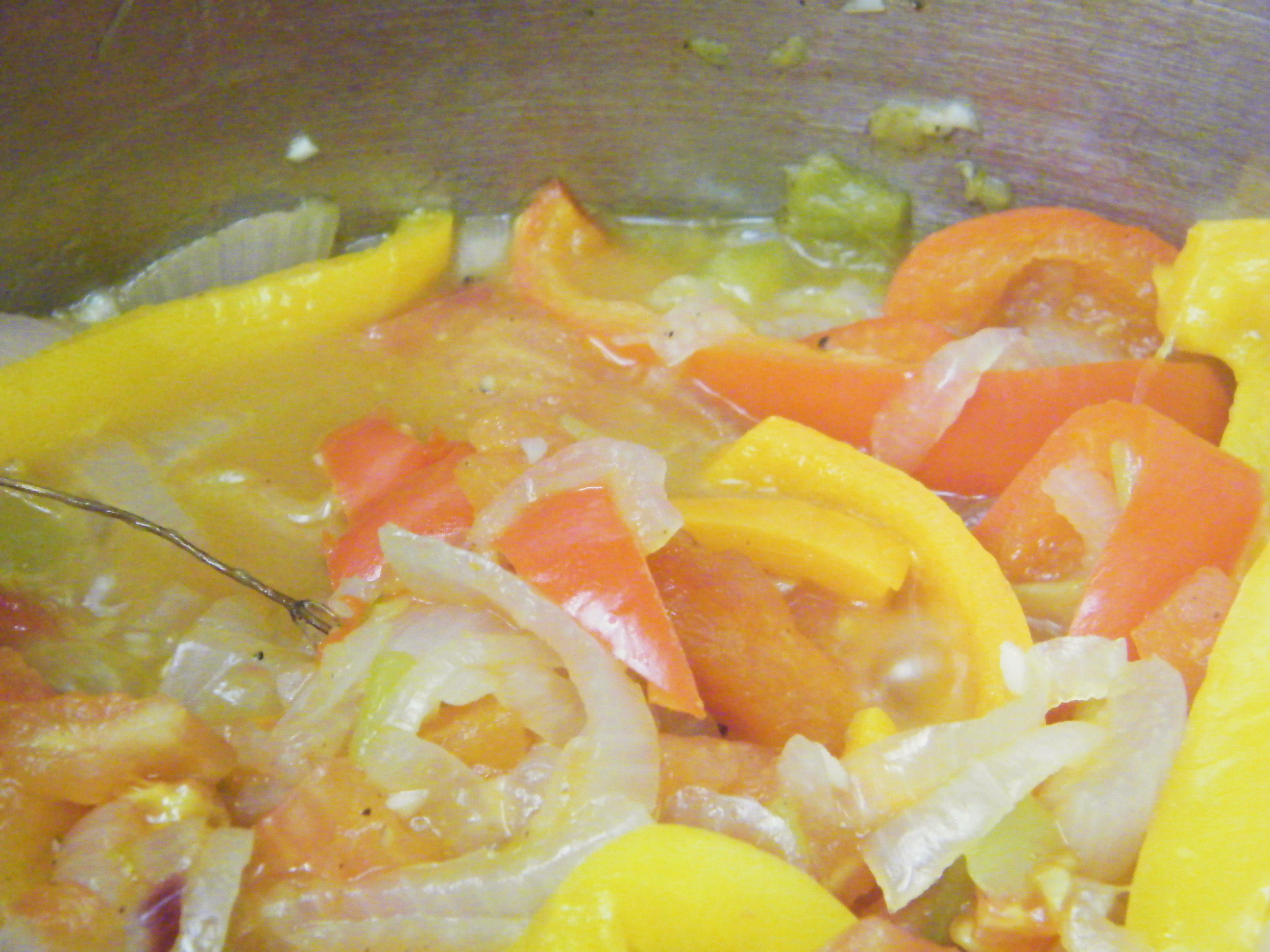
Simmering the pipérade

The flavours intensify over those two hours, creating a broth that no packaged food could hope to match. When you slowly cook peppers and onions, tomatoes and even chiles, you create sweetness that’s not cloying against the richness of the chicken and its juices.

I skipped the green peppers in favour of red, yellow, and orange. I also substituted a quarter cup of sherry for the white wine and a less exalted chili powder for the piment d’Espelette. I think the end result was still quite faithful to the original.

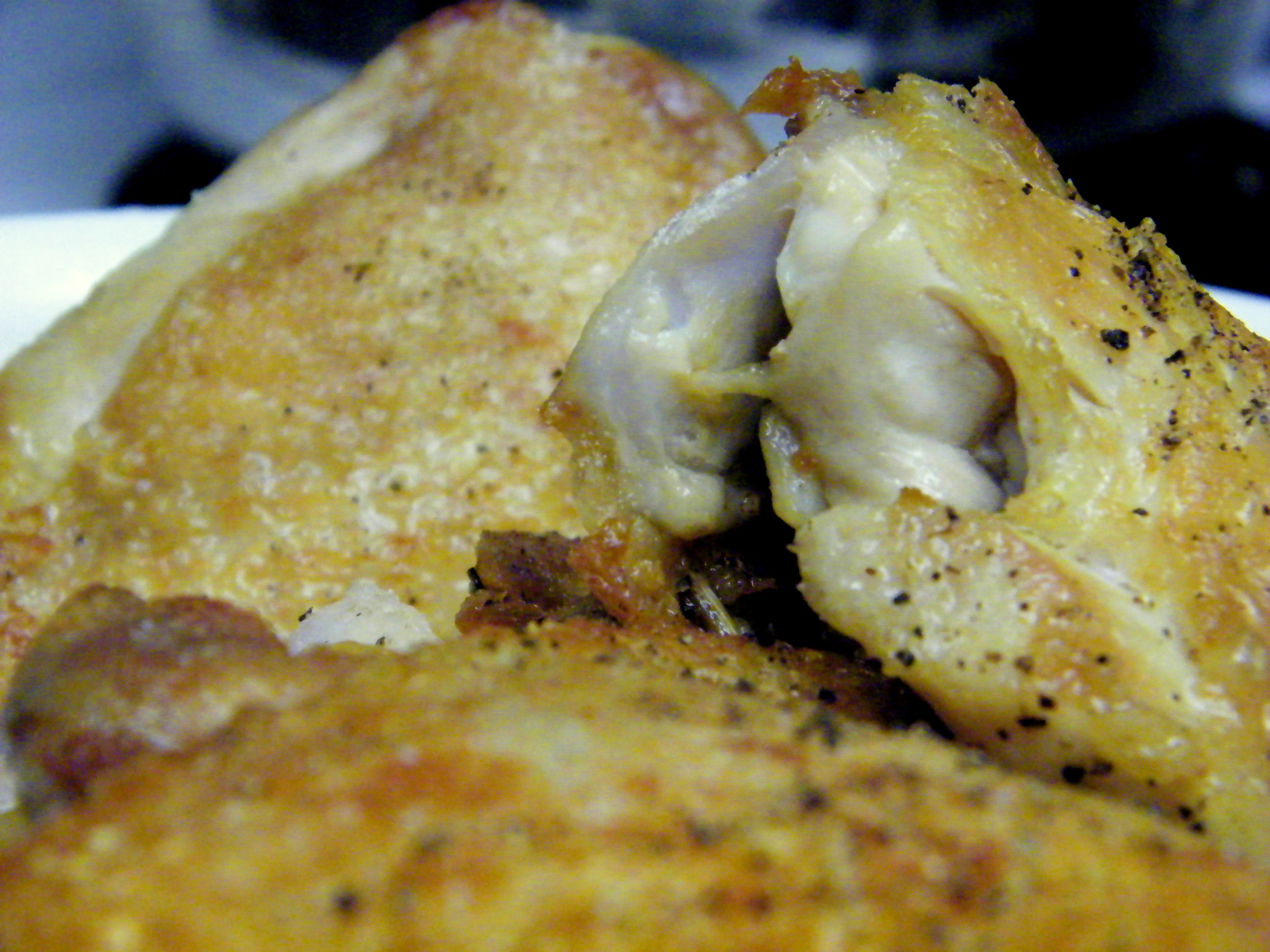
Browning the chicken thighs.

I also set aside two cups of the pipérade to use with scrambled eggs at breakfast, as Dorie suggests in her Bonne Idée. The sauce was just as delicious with eggs as it was with chicken. With turkey bacon on the side and a stack of toast (a toasted gluten-free bagel, in Kevin’s case), it might be my new favourite breakfast.

Pipérade and eggs.

You can find many other blogged descriptions of this week’s FFWD recipe here: Chicken Basquaise

Nearly Fall in the Garden

Beans ripening

Canada is generally thought of as the land of ice and snow, but that’s not true all year ’round, even in the North. Vancouver is especially an exception to this rule. We generally get about a week of snow each year, which sends our road systems into a tailspin. (We’re infamous here for not being able to drive in the snow.) All this is to say that my garden is still going strong, though I’m looking up recipes for green tomatoes, as I know a lot of them aren’t ever going to fully ripen this year.

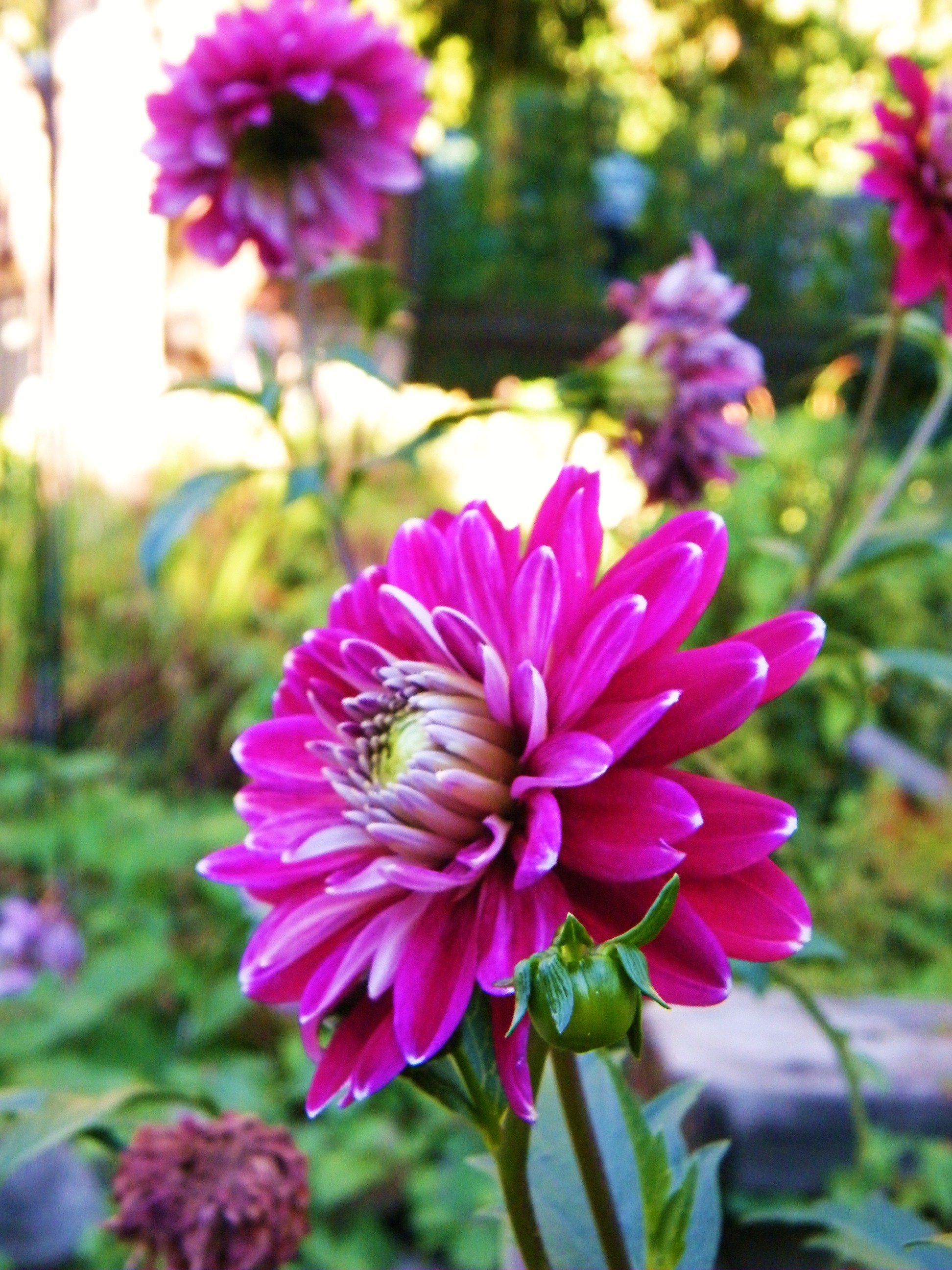
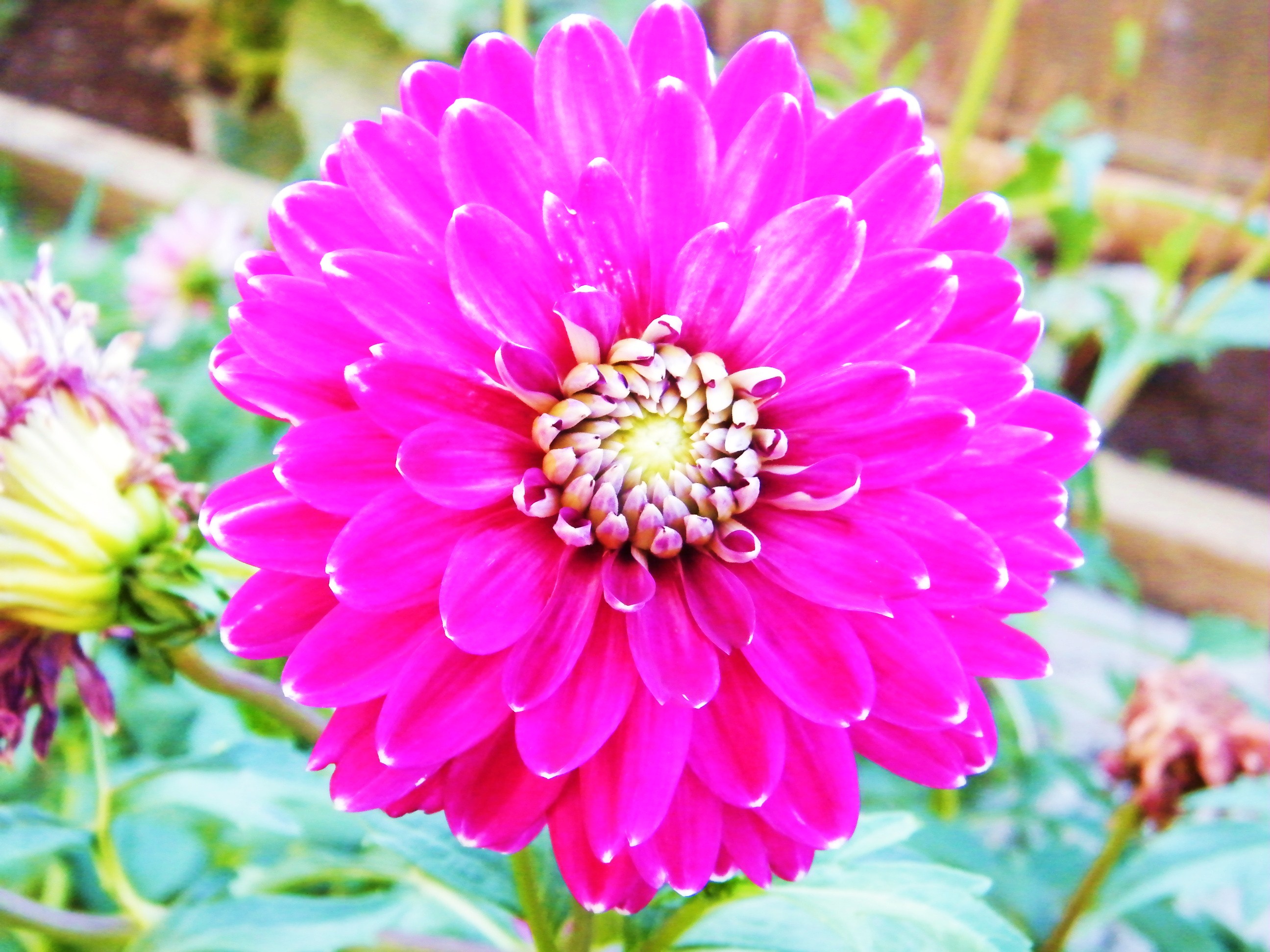
Enormous dahlia

We’re in the last few weeks of the summer growing season. If we’re lucky, the good weather will last into the first few weeks of October. I’ve planted some winter garden vegetables, but I’m mostly reflecting on what worked and what didn’t this season. I won’t be growing tomatoes in the backyard next year and am going to invest in some big tubs so that I can grow them on my south-facing balcony, instead. I think they’ll ripen much faster there. I’m also going to build some new vegetable and herb beds this fall, for next year. The flowers mostly take care of themselves, but I want to add plants that will extend colour through the seasons. These are my reflections so far.

Petite dahlias

So tell me, what did you love about your outdoor space this summer? What would you change? I’ll leave you with some more of the photos I took yesterday afternoon, out in the garden.

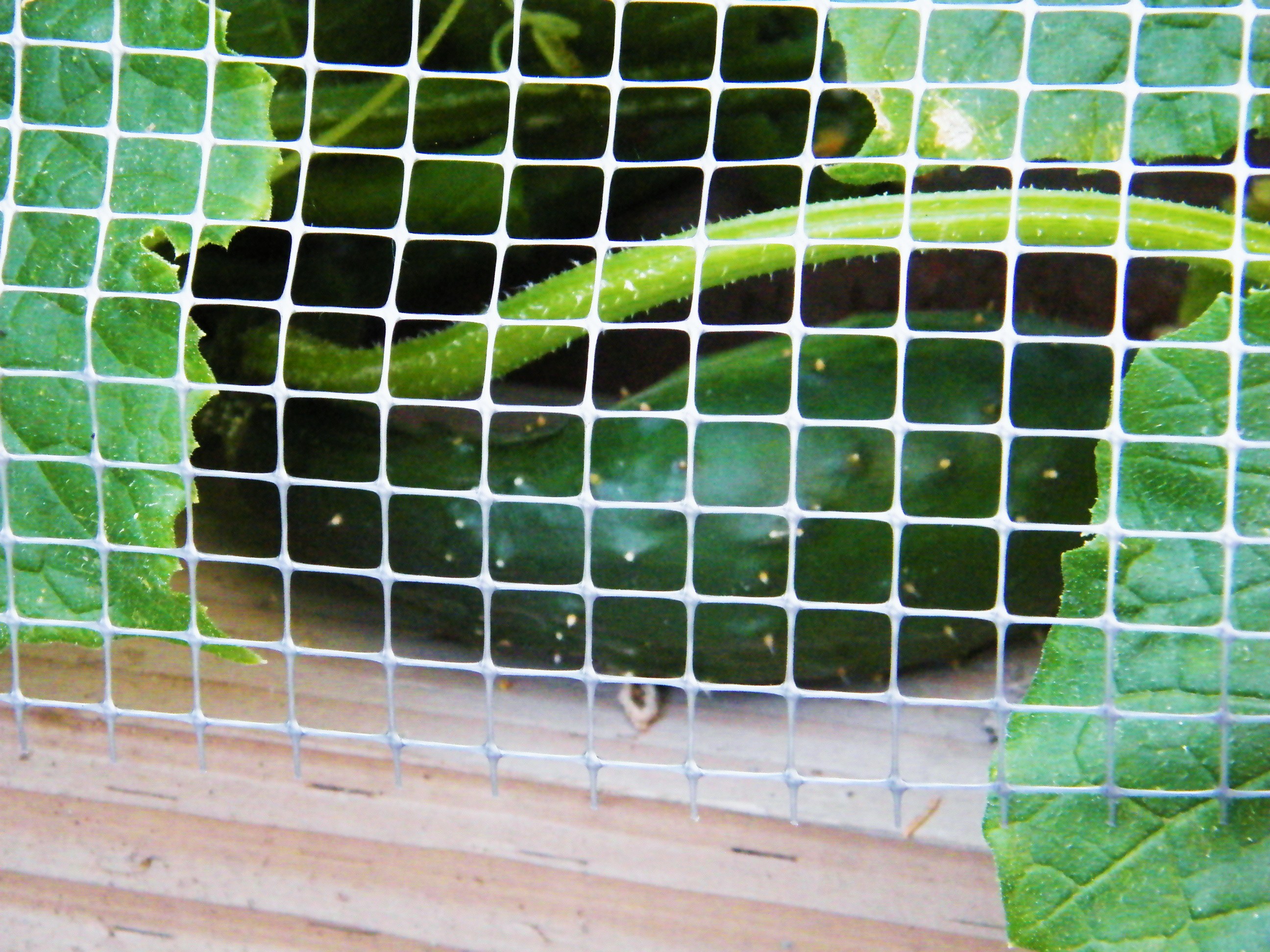
A cucumber, behind garden netting

A blaze of purple

Purple flowers

Gorgeous, leafy dahlia

FFWD – Spice-Poached Apples or Pears

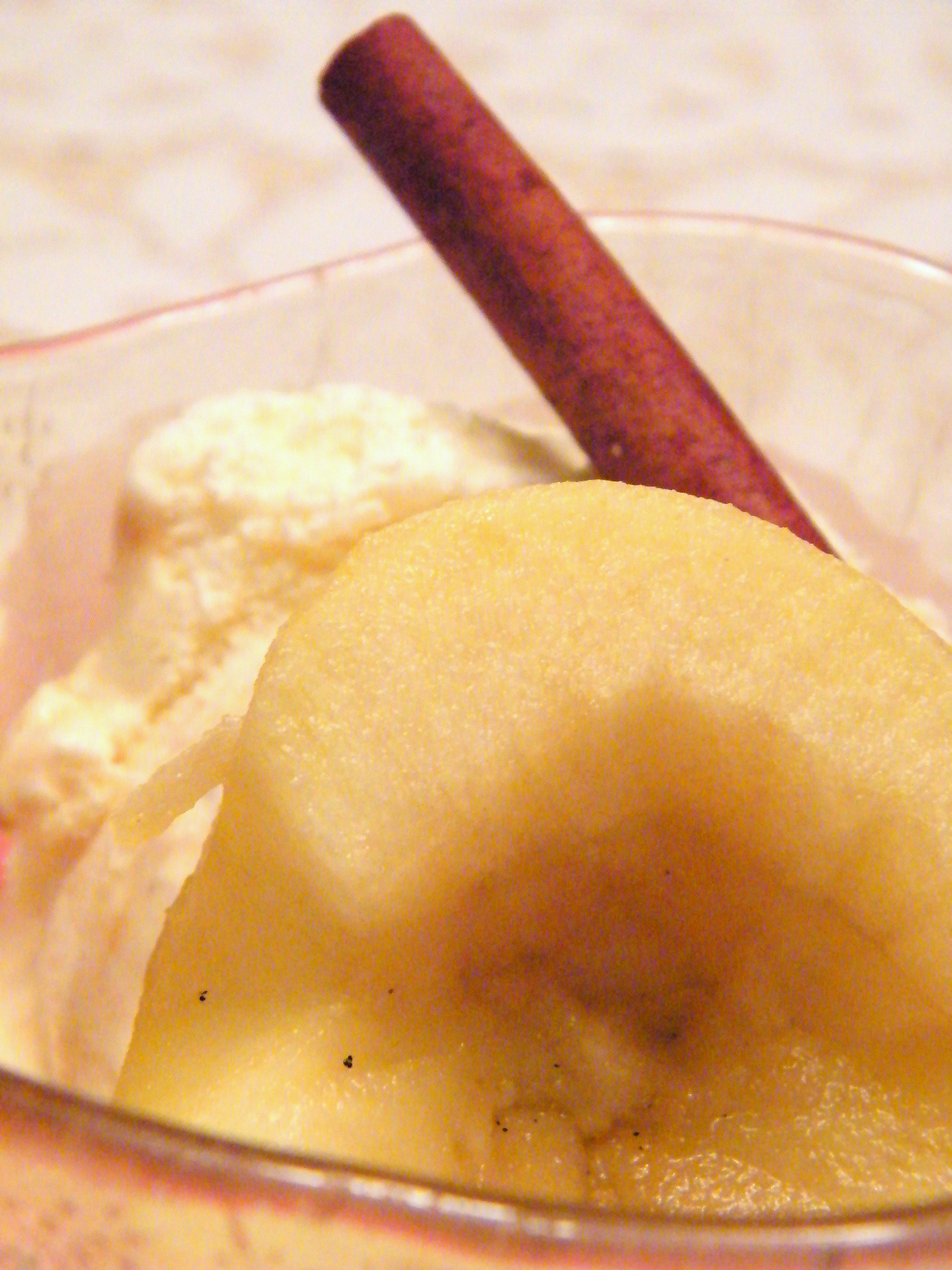
Poached apple, with Pralines and Cream Ice Cream and a garnish of cinnamon stick.

I spent a few days out at my parents’ place, picking blueberries and blackberries and contemplating the sheep. Sheep are a perfect vehicle for contemplation, since they don’t have a whole lot going on. They drift from one field to another, in search of something succulent. These sheep only run when they see someone approach with kitchen scraps or garden trimmings. They know a good thing when they see it. The llama rarely joins in, preferring to search out potential breaches in the fence, so that he can get into the vegetable garden or the orchard. He knows a better thing when he sees it.

People aren’t that different, sometimes. We cast about for things to satisfy us, occasionally hitting on a course of action that will bring bigger rewards. A steady stream of small pleasures can help reduce the casting about and help keep us focused on the the bigger picture. It’s one of the things that I like about French Fridays – a regular dose of learning, writing, and (above all) good eating. It’s a habit that’s grounding and creative at the same time.

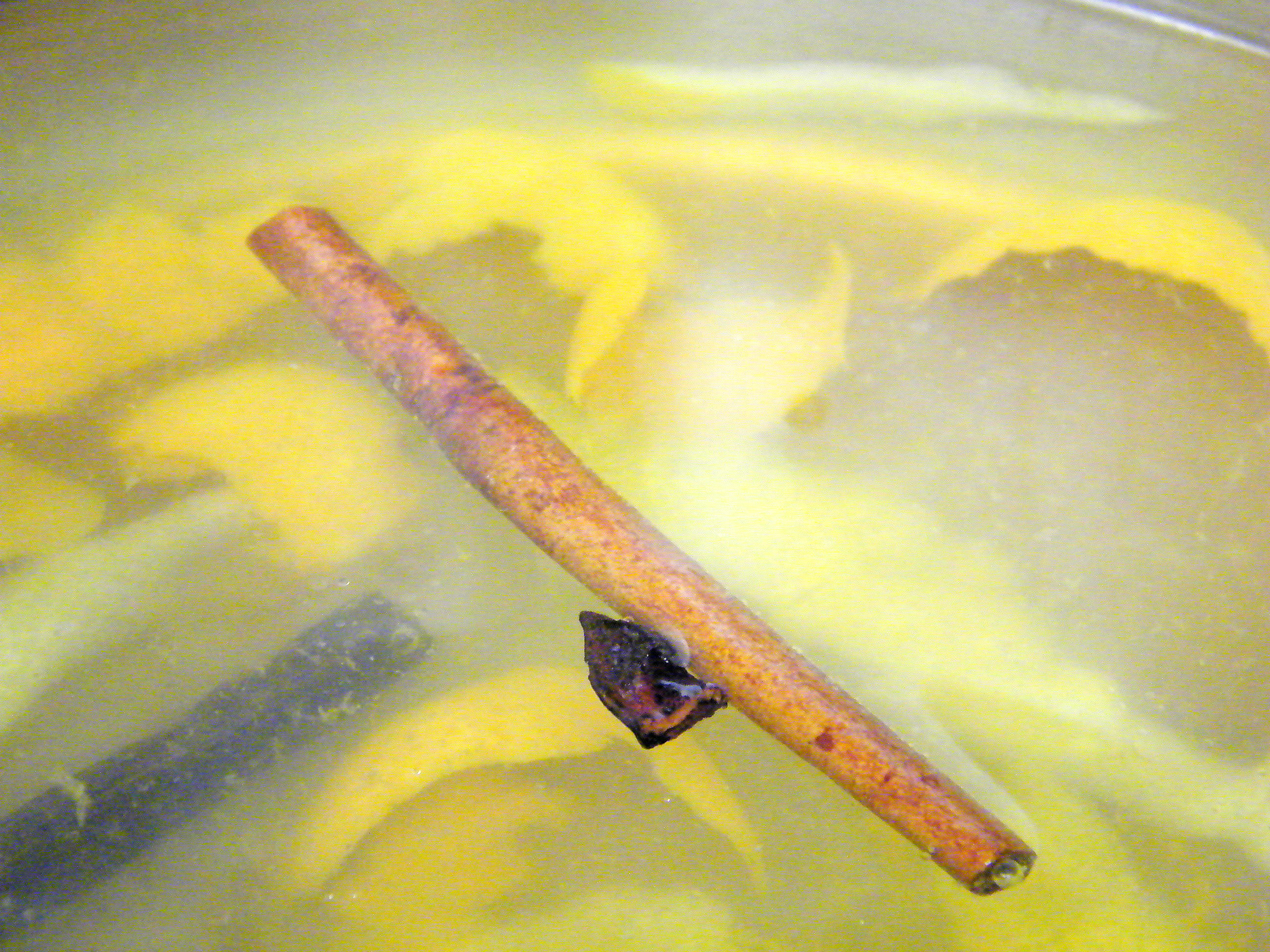
Steeping the poaching liquid.

This week’s recipe isn’t particularly complicated, but it’s very satisfying. Apples or pears (or whatever fruit you’d like, really) are poached in a honeyed bath of spices, flecked with vanilla seeds. You could even add a splash of something stronger, if you’d like. It reminds me of a rosewater sauce I like to serve with rice pudding. The leftover poaching liquid in this recipe could easily be reduced in the same way.

The leftovers this time won’t last long enough to do that – there’s too much ripe fruit around. In fact, my parents’ pear trees are overladen with fruit. I might just have to go and pick some very soon.

Time for dessert!

You can find many other blogged descriptions of this week’s FFWD recipe here: Spice-Poached Apples or Pears

FFWD – Eggplant “Tartine” with Tomatoes, Olives, and Cucumbers

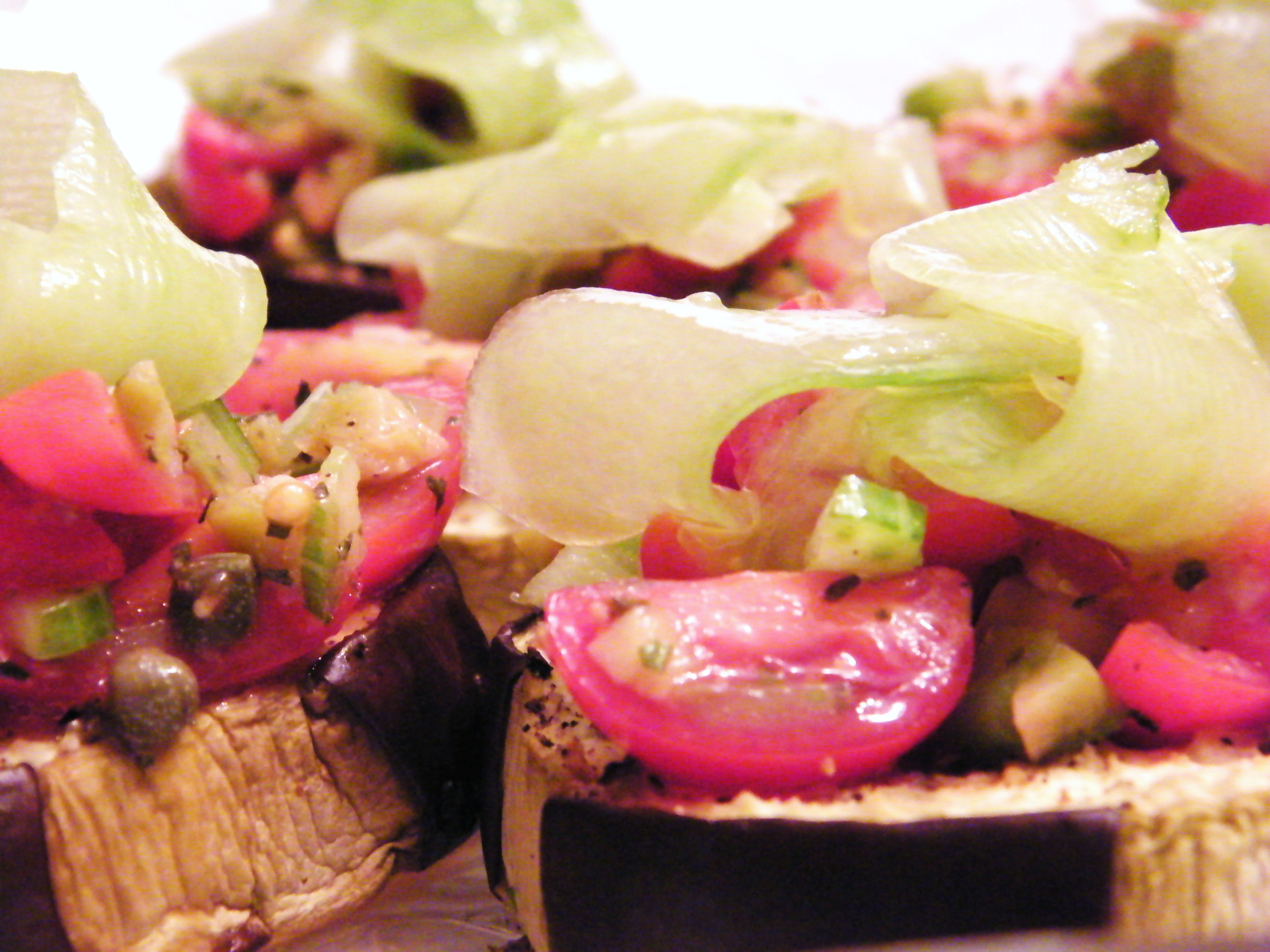
Close up of the eggplant "tartines"

It’s been a good couple of weeks for eggplant dishes. I went to a friend’s birthday dinner recently and the appetizer was a thick, roasted slice of eggplant topped with goat cheese and ribbons of bell pepper. Today’s French Fridays recipe is another delicious take on roasted eggplant. This time, the eggplant is topped with a tomato salad and ribbons of cucumber.

It’s a “tartine” because the roasted eggplant stands in for bread, making it both a great way to enjoy summer produce and a good option for gluten-free eating. The salad is tossed in a red wine vinegar-oregano vinaigrette and balances the sweetness of the tomatoes with the sharpness of onions and celery and the saltiness of olives and capers. The flavours are well-balanced and the textures are varied and interesting.

A trayful of eggplant "tartines"

We had these “tartines” as a side dish alongside steamed bush beans and spaghetti with homemade pesto. It made for a lovely summer meal. I think I’ll also keep this in mind for the next time Kevin and I have a party – I think it will please our gluten-loving and gluten-free guests alike.

In the meantime, I’m going to use this dish as inspiration to use the remaining weeks of garden season to experiment with summer produce – it’s often too easy to just pop veggies into the steamer and be done with it. I love steamed vegetables, but there really is so much more.

Roasted slice of eggplant, loaded with tomato salad and topped with ribbons of cucumber.

You can find many other blogged descriptions of this week’s FFWD recipe here: Eggplant “Tartine” with Tomatoes, Olives, and Cucumbers