I’m a week behind, but that might not be such a bad thing. While everyone else has been struggling with these, I’ve been working my way through a mountain of homemade goat cheese.
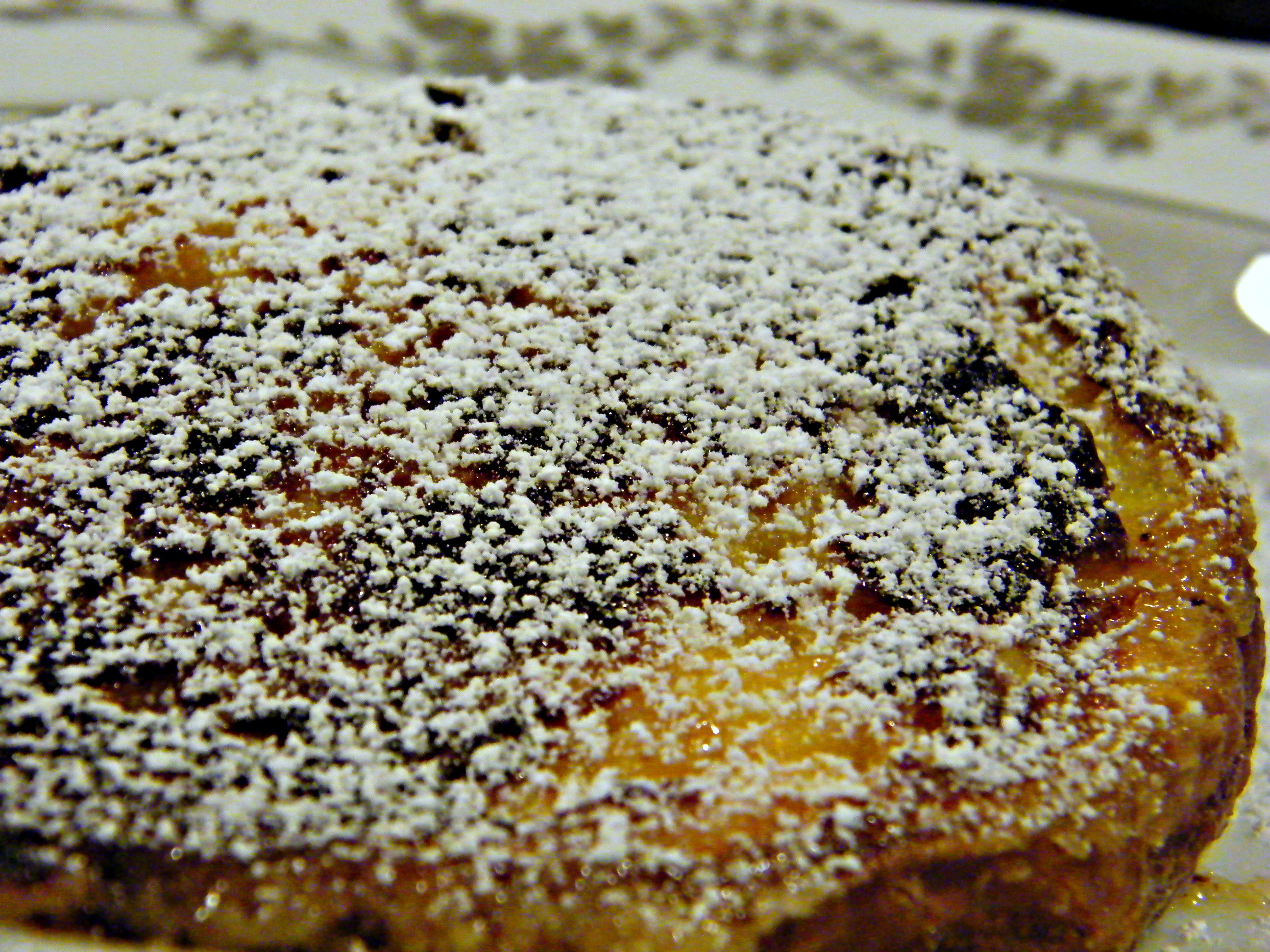
I actually made these on Sunday last, but am just getting around to posting about them now. I wasn’t one of the industrious souls who used their own challah for this recipe, but I did stop in at East Village Bakery and picked up a brioche bun, on my way to Make It. It was meant for a burger, but once I sliced off the crown and the bottom crust, it was perfect for French toast. As a bonus, I got to munch on the scraps. I think I might use this sort of bun again, even when I’m making French toast for more than just myself. I loved the little rounds of toast I got – so pretty!
This recipe is a nice simple one, but has an extra step that finishes it perfectly. When you’re ready to cook the toast, you sprinkle a thin layer of sugar across the pan. Then, when you’re ready to flip it, you sprinkle another thin layer of sugar across the toast. You end up with a beautifully caramelized surface and a little extra sweetness, to boot. As you can see, it’s quite lovely, too.
Update: I had to come back and add this – I made a variation, rather than the straight-ahead recipe. (This is what happens when you wait almost a week to write about something.) Dorie’s recipe is flavoured only with vanilla, a typically French approach. I decided to do something a little different and picked up a bottle of Vancouver’s famed Avalon Dairy eggnog to use in place of the milk and cream. It was so good! It had extra eggy richness and I loved the subtleness of the eggnog spices in the French toast. I’d definitely recommend this, but make sure you get the good stuff.
I appreciated the treat, after having spent the afternoon exploring the unbelievably varied offerings of one of the best craft shows of the year. I even got to go for free, as Vancouver East Village was running a little contest and I won one of the passes. I love craft shows that include the making of products as well as the finished ones and Make It never disappoints. I especially loved the little craft table that Spool of Thread set up, with easy instructions and a range of materials for making pinwheel brooches. Here’s a collage of some of the cooler things I saw there this year:
I’m looking forward to more craft shows and treats through December. I hope this month brings you some of your favourite things, too. And I hope that those of you who just finished celebrating Hanukkah had a lovely and peaceful holiday.
I received a review copy of 200 Easy Homemade Cheese Recipes from Robert Rose Inc. Nevertheless, all opinions in the following post are my own.
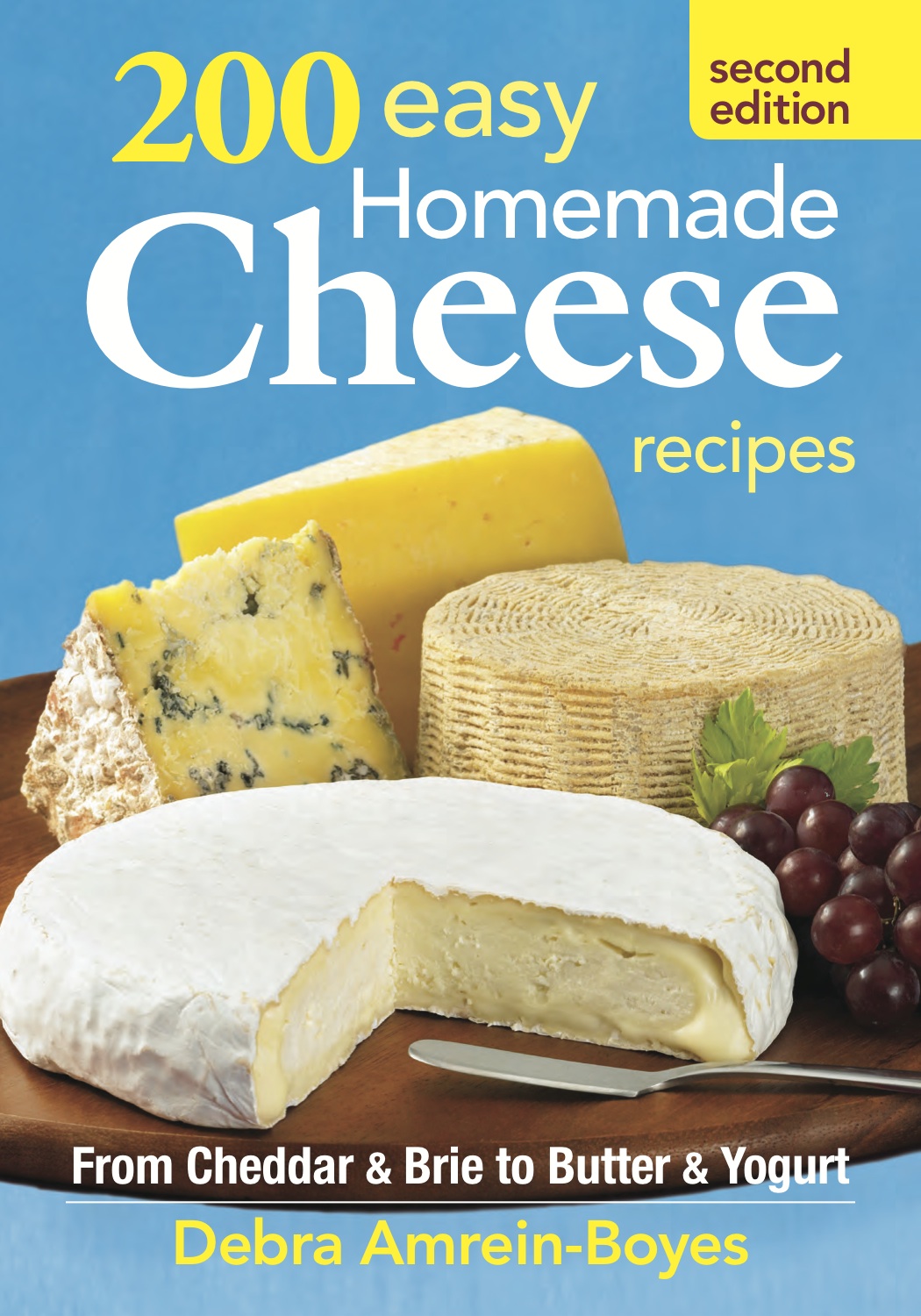
Image courtesy of Robert Rose, Inc.
Robert Rose, Inc., a publisher based in Toronto, asked me if I’d like to review any of their new releases and the first one that caught my eye was the second edition of this book. Like a lot of folks these days, I’ve been fascinated with the rediscovery of homemade foods, from preserves to charcuterie and beyond. Cheesemaking seems to be a natural for the fermenting, pickling, curing set. In the case of this book, I was curious to see how many different sorts of cheese could reasonably be made at home and I also wanted to see how well I’d fare trying my hand at it. I was tempted to try Mozzarella or Halloumi, but I decided to stick with a fresh cheese, as suggested by the author, as they’re the easiest and fastest to tackle. Besides, making chèvre doesn’t require anything beyond the active agents, a place to rest, and some cheesecloth. Some of the other cheeses are considerably more involved and I wanted to start slow.
I found the mesophilic culture and liquid rennet that I needed at Gourmet Warehouse and picked up four liters of goat’s milk at our local food co-op. I sterilized all the equipment, and followed the instructions as closely as I could. I have to admit I felt a little frightened at the idea of leaving a pot of milk out for twenty-four hours, then the curds for another six or seven. I read the troubleshooting section for fresh cheeses over and over that evening, just to prepare for the worst.
But, for the most part, everything went exactly as planned. My cream cheese turned out a little softer than it should have been, but not much. Otherwise, in taste, texture, and aroma, it’s exactly what I expect from chèvre. What I wasn’t prepared for, even though I knew the expected weight of the finished cheese would be about two pounds, was just how much chèvre I’d just made. Enough to fill a large mixing bowl. After the delight I felt at discovering I’d been successful, next came the fear that I’d never be able to figure out what to do with all that highly perishable cheese. I figured it out and now there’s just about three-quarters of a cup left in the fridge, ready to be mixed with herbs and spices and used as a spread.
So much for my experience, now on to the review.
This cookbook is comprehensive, not just in its range of recipes, but also in coverage of technique. There are photo guides for each stage of the process for all the categories of cheeses in the book, along with troubleshooting guides and overviews of ingredients, equipment, techniques, safety, and sanitation. As long as you read Amrein-Boyes’ instructions carefully and follow them exactly, I don’t think you can go very wrong.
However, the quantities produced for many of the recipes can be a little overwhelming for the home cook. For instance, her Halloumi recipe requires ten liters of goat’s or sheep’s milk and results in two pounds of cheese. I understand why, as the active ingredients for smaller batches would be miniscule and probably impossible to get right. As a result, I think some people will stick to some of the easier recipes, which produce smaller quantities, like her yogurt and flavoured butter recipes. I suggest getting together with friends or family to tackle some of the larger recipes, both to share ingredient costs and split the cheese.
The other problem with this book for home cooks who live in small spaces is lack of correct conditions for many of the aged cheeses. As much as I’d like to have a cheese cellar, I think my neighbours in the suite below me might have something to say about that. I also think certain categories of these cheeses are really semi-professional. Those are small quibbles, though, and if you were thinking about a career in cheesemaking, this book could serve as your apprenticeship.
Overall, I’m really happy with this book. There are many recipes that I can work my way through even if I can’t try the aged cheeses. There are also a number of recipes for using the cheeses you’ve made, which is a nice feature. I also love the huge variety of recipes Amrein-Boyes provides across all categories of cheeses. It makes for interesting reading.
The second edition of 200 Easy Homemade Cheese Recipes came out in October of this year and I think it might make a great present for the cook in your life who is ready to start experimenting beyond baking and dinner-making. You can find more details here, along with a link to purchase the book.
The publisher is kindly allowing me to share this recipe with you, so that you can try it for yourself. However, I’d strongly recommend buying the book first, or doing a good deal of research before you start, because the safety precautions are very important in cheesemaking.
4 quarts (4 litres) goat’s milk
1/4 tsp (1.25 mL) mesophilic culture
1 drop liquid rennet
Pickling (canning) or kosher salt
1. Sterilize all equipment. In a large stainless-steel pot over medium heat, warm milk to 77°F (25°C), stirring gently to prevent scorching. Remove from heat.
2. Sprinkle culture over surface of milk and let stand for about 5 minutes to rehydrate. Using skimmer and an up-and-down motion, gently draw culture down into milk without breaking surface of milk.
3. Dilute rennet in 1 tbsp (15 mL) cool water. Add to milk and, using the same up-and-down motion, draw rennet down into milk until well blended. Cover and let set at room temperature in a draft-free location for 24 hours.
4. Tip pot slightly to drain off collected whey. Using skimmer, ladle curd into a draining bag or cloth-lined colander. Let drain for 6 to 7 hours or until desired thickness is reached. Keep in mind that the cheese will firm up further once refrigerated.
5. Remove cheese from bag and place in a bowl. Weigh cheese, then add 1% of the weight in salt. Store in the refrigerator for up to 2 weeks.
Tip: Fresh cheeses are highly perishible. Store them in the coldest part of the refrigerator for up to 2 weeks.
Just to reiterate, please do some research on sterilization, safety, and troubleshooting before you attempt this recipe. It’s a simple cheese to make, but you’ve got to do it right.
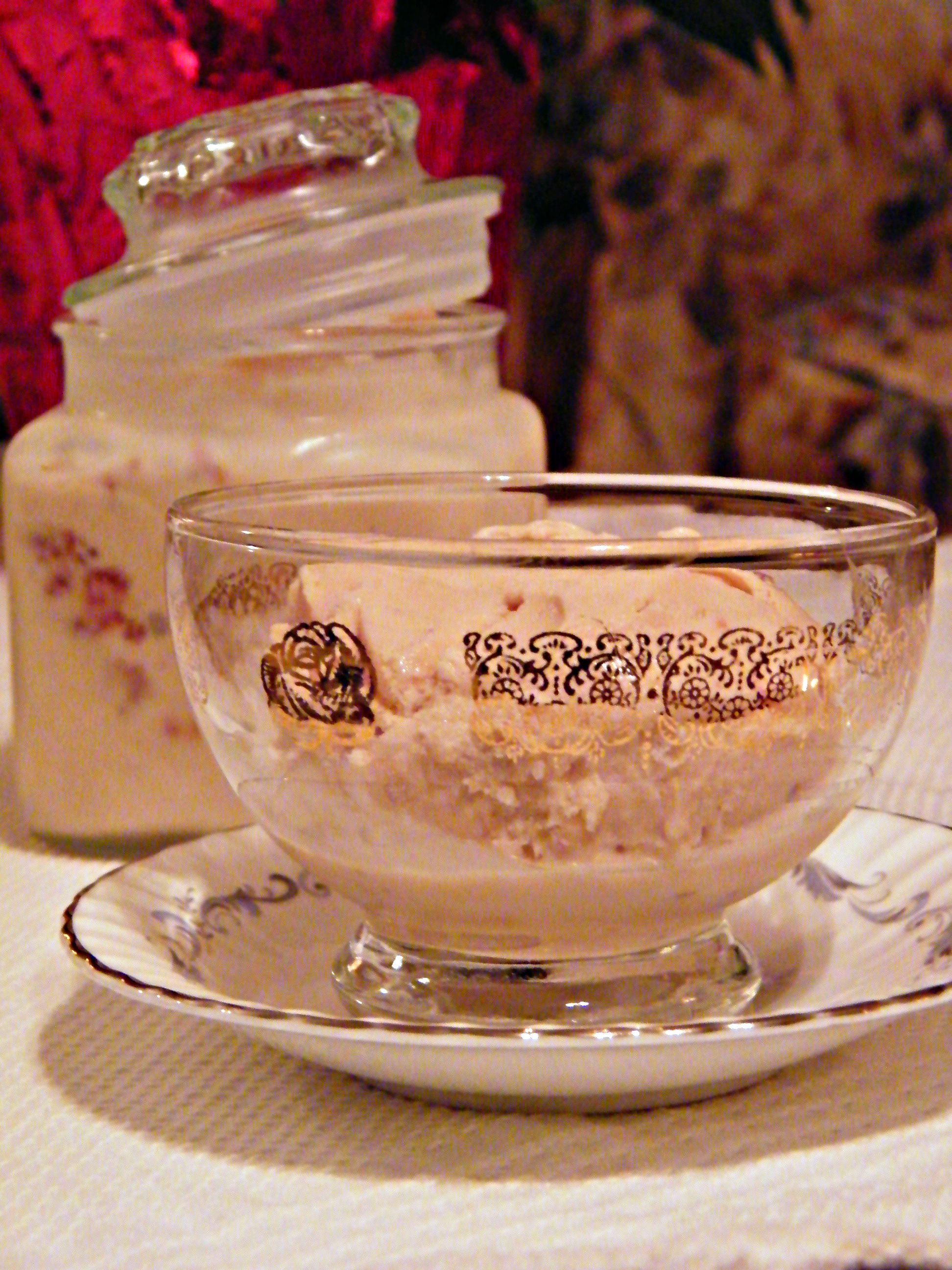
And now you’re probably wondering, what did she do with all that chèvre? I made ice cream, of course! And a few other things, which I’ll share with you another time.
I improvised the following recipe with help from several sources. I learned the proportions of milk to yolk and the method from Dorie Greenspan. (I’d buy a copy of Around My French Table if I were you.) Inspirations for honey chèvre ice cream are here, here, and here. Last but not least, my brother the chef gave me some advice on balancing tart, sweet, and acidic flavours for the best result.
Some notes: I happened to have this awesome honey on hand, but you could use plain honey and add some candied ginger instead, or heat plain honey over gentle heat and add some ground ginger yourself. Obviously, traditional ice cream is made with heavy cream and whole milk, but I had some half-and-half to use up and it worked well. I went for a very subtle sweetness, but you could easily amp up the sugars in this recipe. You could use a vanilla bean or vanilla extract in the custard and plain sugar for the strawberries. You could also add a bit of balsamic in place of the lemon juice, too. And you could easily replace the frozen berries with fresh ones (it’s winter here) or change out strawberries for blackberries, blueberries, or stone fruits like peaches.
Ginger-Honey and Strawberry Chèvre Ice Cream
4 cups half-and-half
6 egg yolks
100 g ginger honey
5 oz chèvre
1/2 cup frozen strawberries, mashed with 1/4 to 1/2 cup vanilla sugar and a squeeze of fresh lemon juice
Whisk the egg yolks and honey together.
Bring the half-and-half to a boil in a heavy pot over medium heat, then temper the egg mixture with some of the hot milk before whisking the two together completely.
Stir the mixture with a wooden spoon over medium heat (don’t stop stirring!) until it has thickened a little and coats the spoon sturdily. Remove from the heat and stir in the chèvre a little at a time, letting each addition incorporate before adding the next. Then, strain the custard into a heat-proof bowl. Stir in the strawberries and chill in the fridge or a bowl filled with ice. Once it’s cold, you can finish it in your ice cream maker, according to the manufacturer’s instructions.
I’ll have some more chèvre dishes and another Robert Rose cookbook review for you on Thursday, December 19th. Next Thursday, I’m hoping to have a bit of a surprise for you.
I attended an event preview of FlyOver Canada’s Christmas Plaza and presentation as a media guest. Nevertheless, all opinions in the following post are my own.
No matter how much you love the place you live in, there will always be parts of it that visitors are better informed about than you. I was reminded of that one summer several years ago, when my Ontario-born partner and I decided to take a touristy staycation, and then again in 2011, when Tourism Vancouver ran a promotion for locals in celebration of Vancouver’s 125th anniversary.
Canada Place is one of the parts of Vancouver where locals are far outnumbered by visitors. So it’s nice that the businesses in the district are working together this Christmas to get the locals down there. The Winter Waterfront District includes a tree lighting celebration on December 6th, holiday lights, Christmas at Canada Place, and Christmas at FlyOver Canada.
Though FlyOver Canada has been open since June of this year, I’ve only had a vague awareness of what it’s all about. So, when I actually experienced it, I was going in without any preconceptions. The pre-show reminded me of the pavilions at Expo ’86 (yes, I was there), four walls of beautifully shot scenes meant to gear up the audience for the main event. In between, we were led into a staging area, where the safety video introduced the holiday theme. The ride itself isn’t jarring, but I don’t think I was the only one who felt like they were suspended in mid-air, cruising over mountains and valleys. Even though I knew that in reality we were on a platform in front of an enormous concave screen, I found myself hanging onto the seat grips at some points as though I was really flying. The multi-sensory aspects of the experience are mostly successful, especially when the audience is spritzed with a little mist as the film takes us through areas of high cloud. And the holiday add-on, which asks the audience to help Santa find his missing reindeer, thrilled the kids at the performance I attended.
Overall, I was impressed by the experience and a little embarrassed that I didn’t know more about it before. They’ve also made the most of their setting atop Canada Place, creating an outdoor festival area with food stands, performances, and ice sculpture displays. It’s a great way to cap off a visit to Christmas at Canada Place, but be sure to buy your tickets online – there’s a discount, which adds up for families. There’s also a holiday deal that’s worth checking out, which includes treats from the outdoor vendors. And be sure to enjoy the views – they’re some of the best downtown.
I attended a media tour and event preview of Christmas at Canada Place as a guest of Port Metro Vancouver. Nevertheless, all opinions in the following post are my own.
This time of year can get a little expensive, especially for families. It’s not just gift-giving and holiday feasts that can strain the wallet, but also the events and activities that pop up just in time for the school break. Even taking a family of four to a Christmas movie can run to nearly $100.00, if you include a trip to the snack bar.
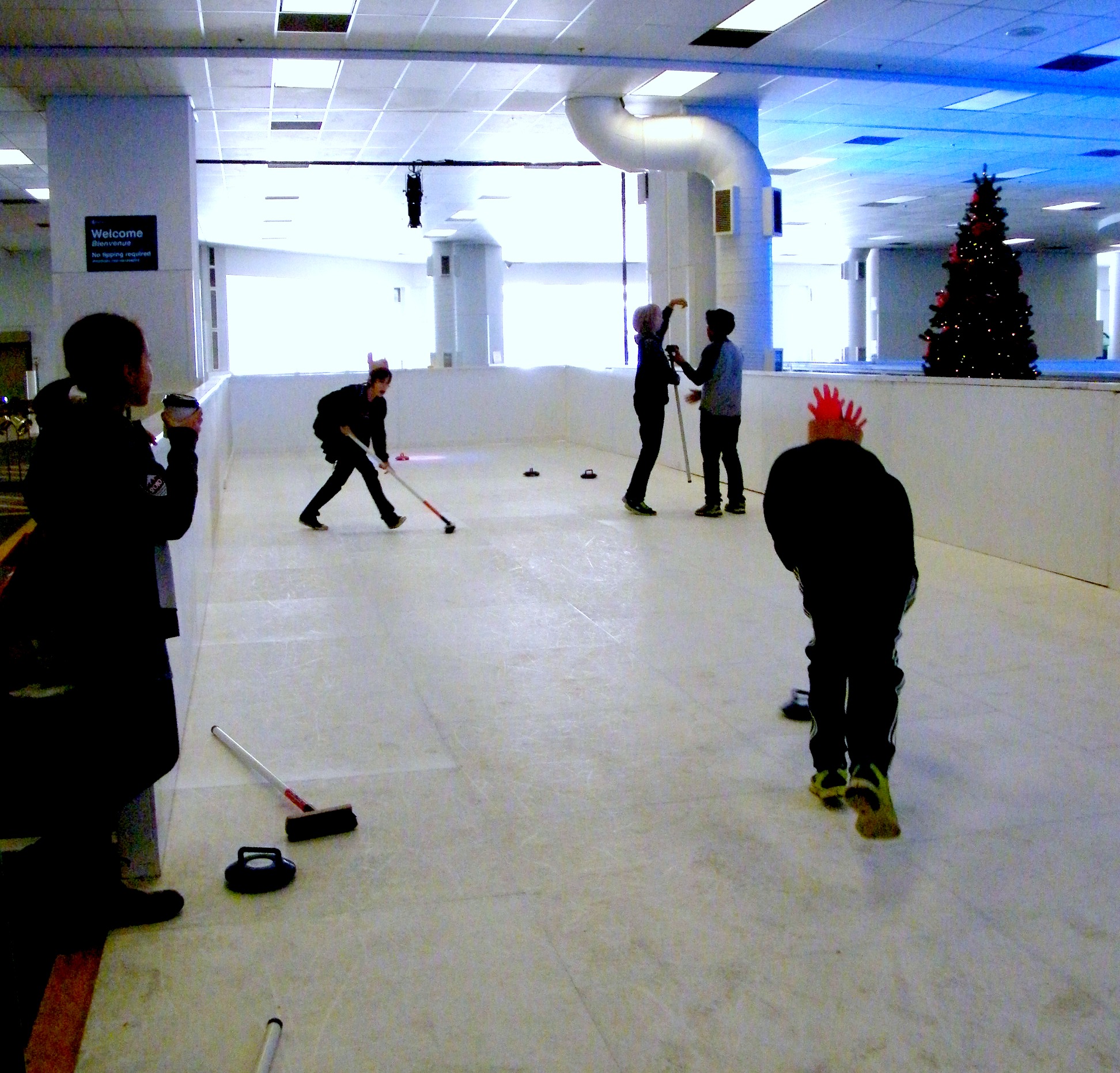
Christmas at Canada Place is a welcome antidote to the premium prices that families face with many other holiday activities – it’s free! For the 26th year of festivities there, they’ve expanded their offerings considerably. Along with the display of Woodward’s iconic Christmas window displays, there’s a range of activities that could keep a family engaged for hours. The theme this year is Christmas in Canada and they’ve provided both curling and skating rinks (with artificial ice on loan from Park Royal Shopping Centre), miniature train rides (provided by CN and staffed by wonderful volunteers from the West Coast Railway Association), and an interactive virtual tour of the Northwest Territories. There’s also a craft area, featuring different holiday crafts each day, a #ChristmasinCanada photo booth, and visits from Santa on weekends. Food and drink will be available, with food trucks showing up mostly on the weekends, featuring Canadian foods – think bearclaws and poutine.
What most impressed me about how this event’s been organized is how much planning has gone into making this a low cost affair for attendees. Though you can purchase food there if you’d like, folks are also encouraged to bring along their own meals to share at the gift-wrapped picnic tables. You can purchase professional photos with Santa, with packages ranging from $10.00 to $20.00, but staff will also take photos for you with your own camera. There’s a suggested donation of $2.00 for activities, which goes directly to Strathcona Community Centre’s Backpack Program, supporting food security for kids. In the case of the train ride, the funds are split between the backpack program and the West Coast Railway Association, another worthy recipient. There is also free entertainment at two stages throughout the month. When I spoke to Gillian Behnke of Port Metro Vancouver, this year’s lead presenter at Canada Place, she told me that making the event financially accessible was a planning priority for the event. This thoughtfulness makes this event a model for corporations and institutions wanting to connect with the community around them.
Speaking of community, the entire district has come together for the first time this year to provide activities and festivities for the public throughout the month of December. I’ll tell you a little bit more about the Winter Waterfront District tomorrow, when I talk about my trip to FlyOver Canada. In the meantime, don’t forget to bring some non-perishible goods with you when you head down to Canada Place, as they’re aiming to fill a shipping container with donations to the Greater Vancouver Food Bank. You can’t miss it – it’s the enormous gift-wrapped container on the plaza.
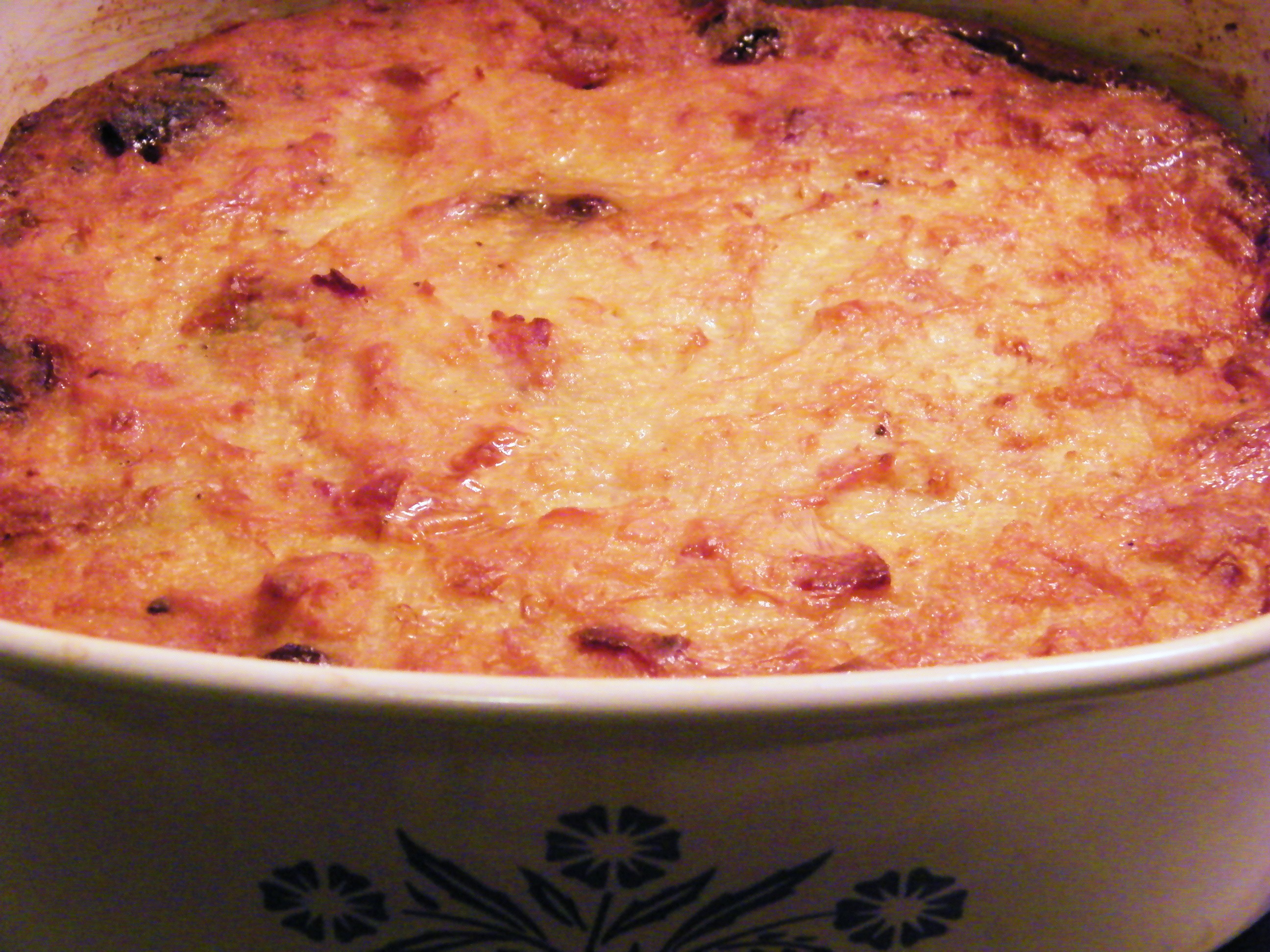
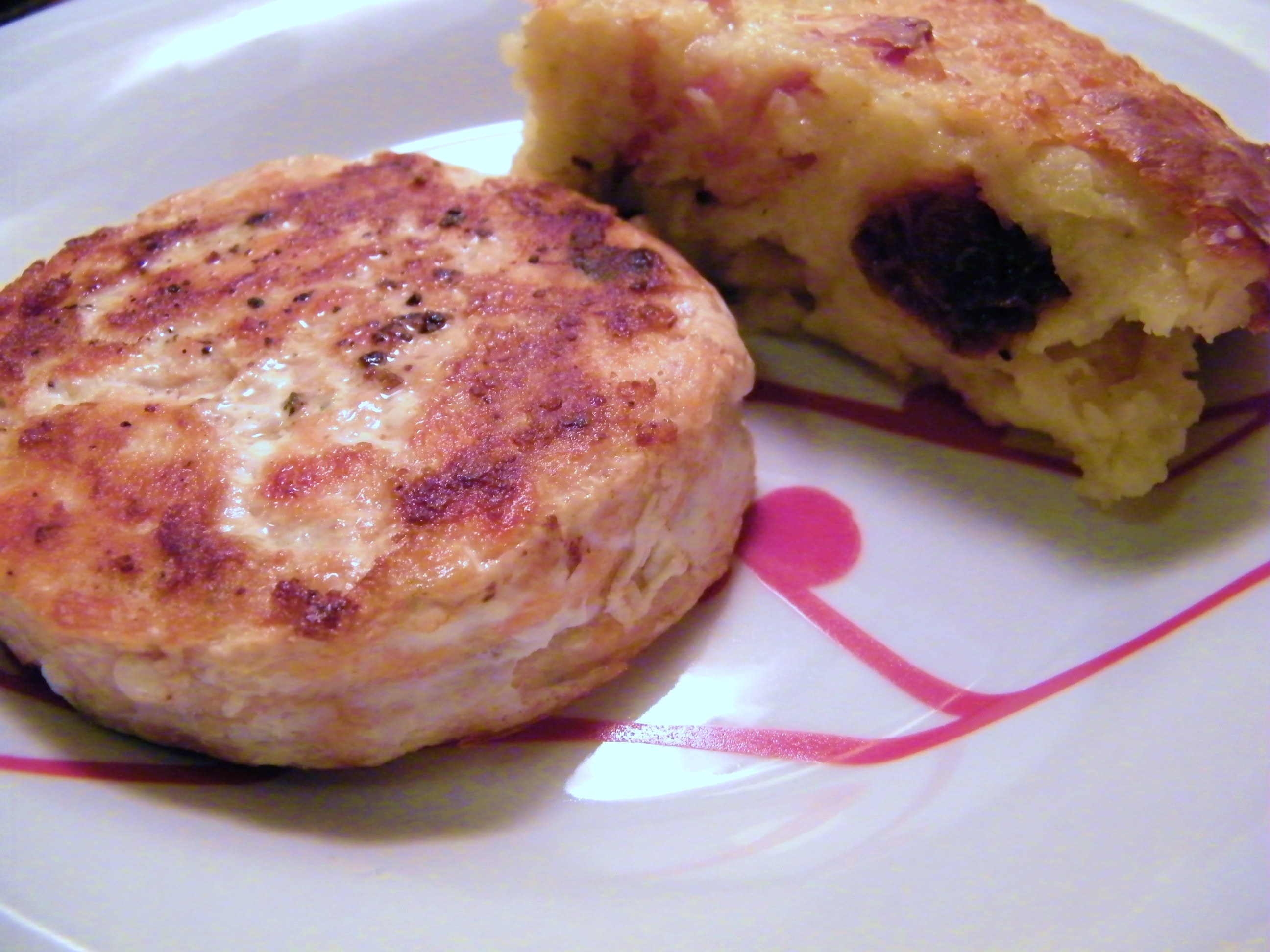
I’m a little (okay, a lot) late with this week’s post (well, last week’s). I finally managed to make this Breton classic today. My version was gluten-free and wasn’t bad. I skipped the raisins, doubled down on the prunes, and added Emmentaler (after reading Mardi and Betsy’s exchange on the French Fridays site). The cheese was a good addition. I ate it with a salmon cake and some greens, but I think the leftovers are going to be treated in a more brunch-like fashion.
Will I finish it? Yes. Will I make it again? Probably not, unless it wows Kevin when he tries it tomorrow.
Next Tuesday, I’ll tell you about what December has in store for folks around here. But before that, I’ll see you for French (Toast) Friday.
You can find many other blogged descriptions of this FFWD recipe here: Salty-Sweet Potato Far
This week’s recipe is Chestnut and Pear Soup, but that’s not what I have for you today. Instead, I’m going to tell you about a recipe the gang did earlier this month, a roast chicken with an unusual twist. I’ll also tell you a bit about what I was getting up to instead of sourcing chestnuts and making soup.
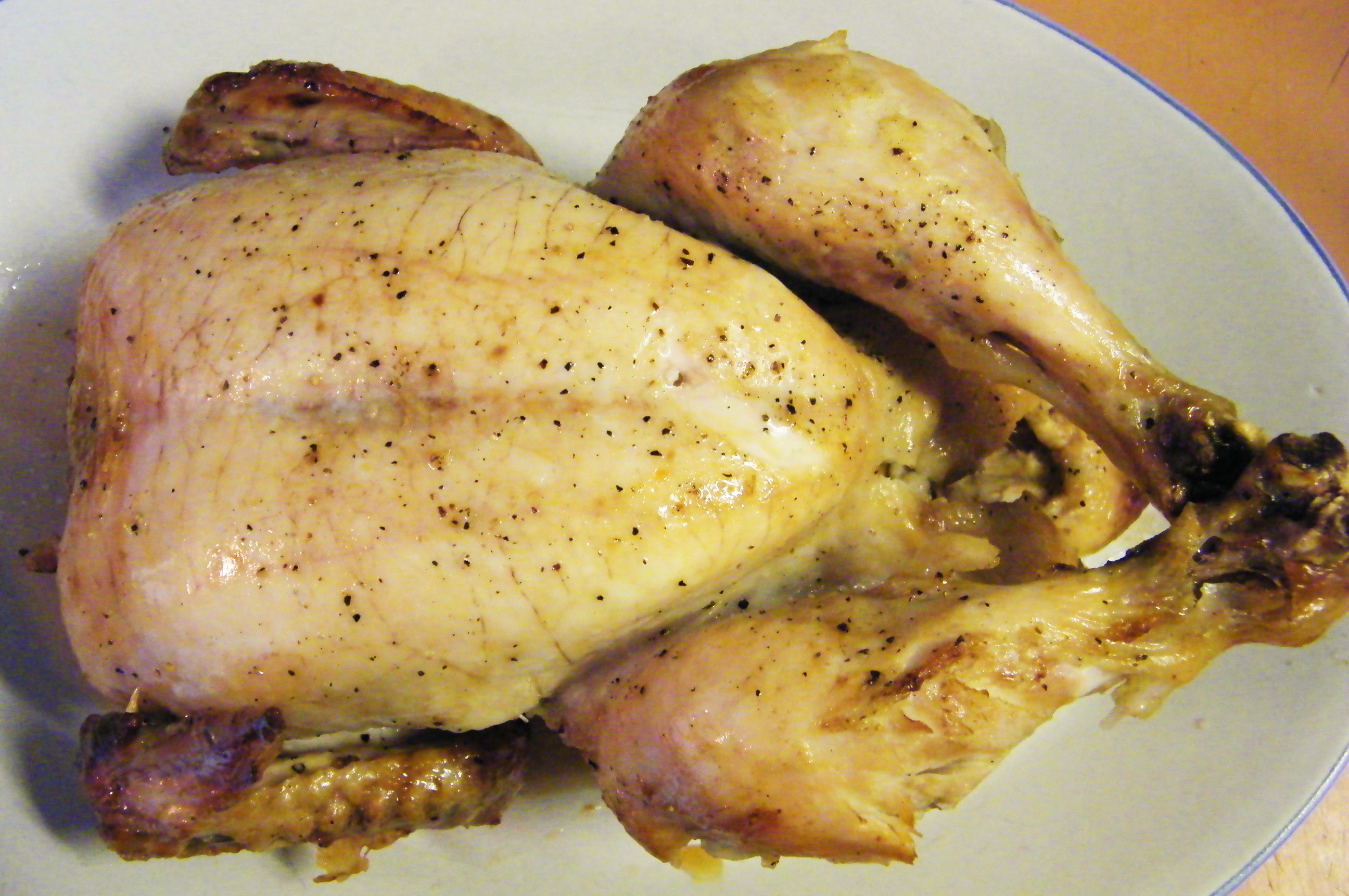
Hurry-Up-and-Wait Roast Chicken is cooked for about an hour on high heat, starting on one side and then flipped to the other mid-roast. I used carrots, potatoes, and a few cloves of garlic to prop up my bird and stuffed it with half an apple and half an onion. Along with a cup of white wine (courtesy of the Doristas who attended IFBC), there was about two cups of jus, even it was boiled and thickened a bit, while the bird was resting (on an angle) under a foil tent. This method makes for a tender, juicy bird and no leftovers. The vegetables were cooked perfectly, too. It was a perfect one pot meal.
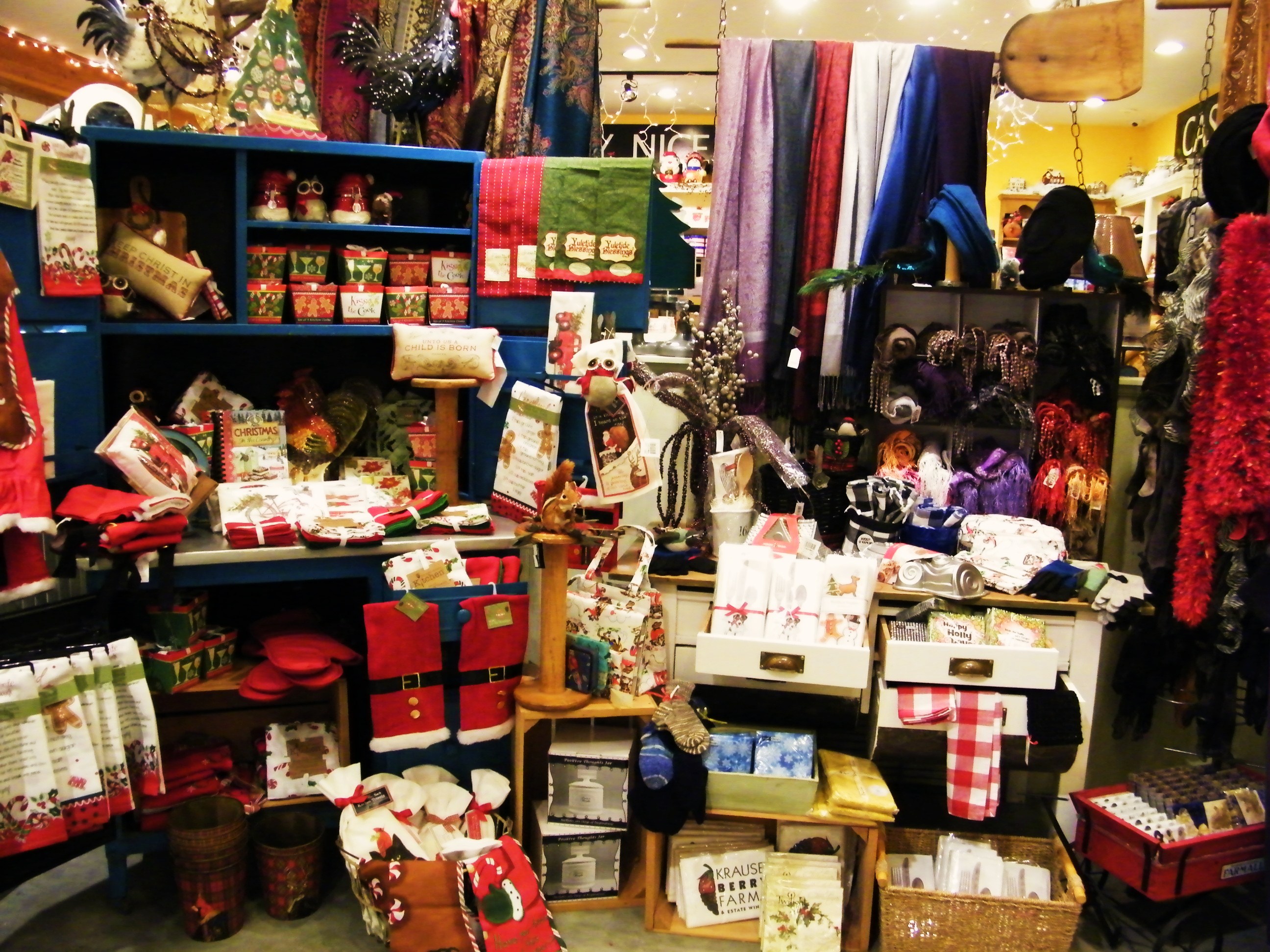
Now for the reason I’m not going to be tackling this week’s recipe until Sunday. Post-harvest season has traditionally been a little lacklustre for some of the agricultural vendors of the Fraser Valley. So, the farmers have gotten creative. This Wednesday, my mother and I headed over to Krause Berry Farms for their customer appreciation night. It included bakery samples and wine tastings and a first look at this year’s Christmas food and craft offerings. Each year it seems the Krause family expands their retail complex, allowing the farm to offer their produce in new ways. Now, you can enjoy meals, cooking classes, wine tastings, and more throughout the summer, fall, and holiday seasons. It’s a survival strategy in a market with a narrow margin, but it’s also enriching the cultural landscape out in the Valley.
The next day, we visited Campbell’s Gold Honey Farm to pick out (and taste) some honey wines for upcoming holiday meals. They’re taking part in the Abbotsford Circle Farm Tour‘s Passport to Christmas, which offers substantial prize draws to visitors of six or more of the farms on the list. It’s a great way to promote off-season visits to farm retail outlets and allows for some great early Christmas shopping, too. I’ll be back to visit some more of the participants before Christmas, for sure.
I admire the way that farmers are finding ways to survive in this economic climate, while making the Valley a much more interesting place than I remember it being when I was growing up there. I also like the opportunity to see where all the local food I’m touting comes from. It’s grounding in the most literal of senses.
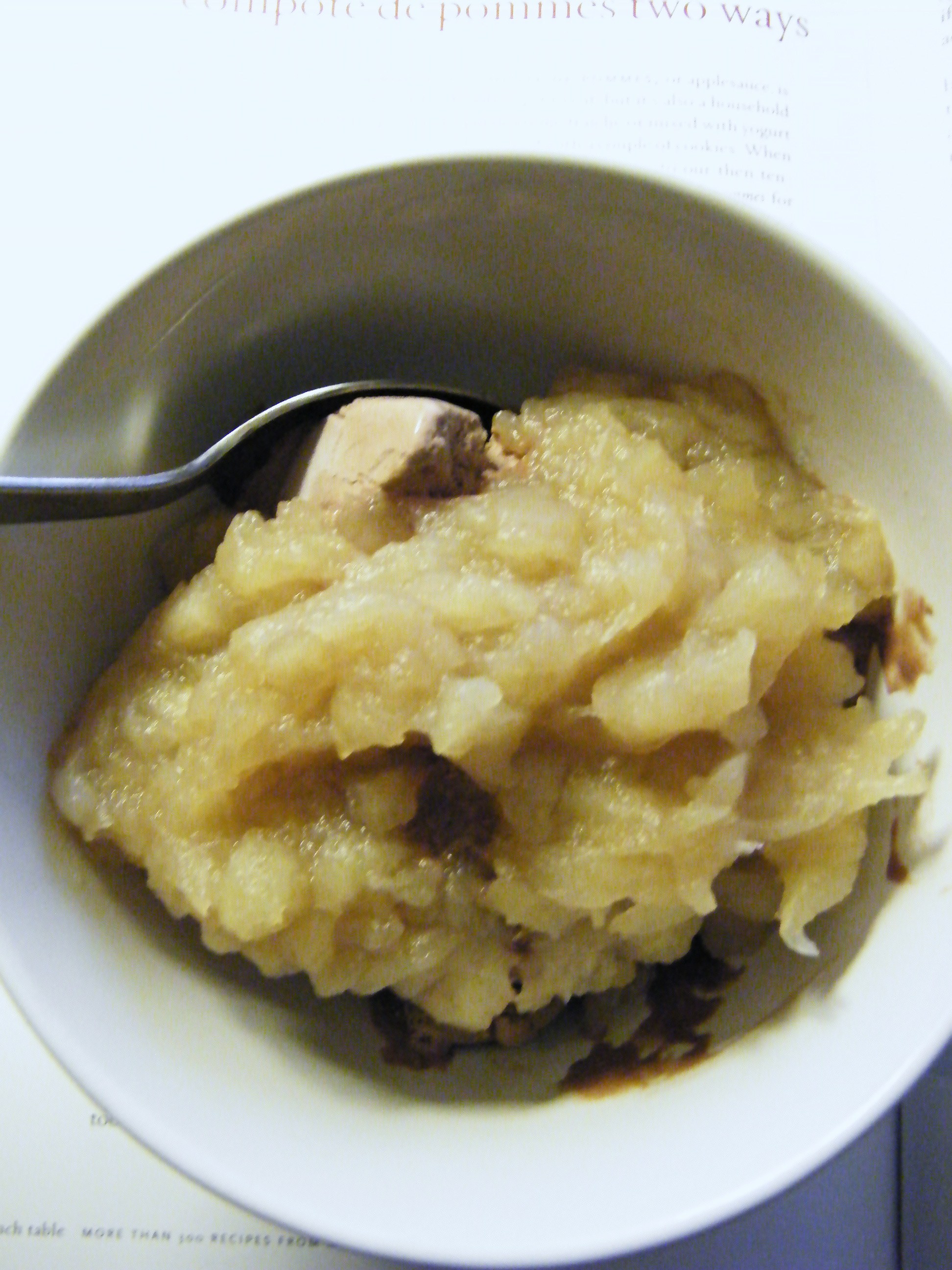
One thing I appreciate about these French Fridays is the way Dorie’s French take on familiar recipes forces me out of my flavouring habits. Usually, my apple sauce is full of warm apple pie flavours – cinnamon, nutmeg, ginger, cardamom. This compote de pommes relies on vanilla, instead, to bring out the flavour of the apple.
We’re well into autumn here, so much so that I’m going to have to pull out the rake this weekend and start on the fallen leaves, spreading them over the vegetable garden, once I finish its fall clean up. My flower garden is still going strong, though, especially the dahlias, which are continuing to bloom. Nothing feels urgent outside now. These tasks are simply waiting for me, unlike the weeds of spring and summer, who wait for no one.
Fall and winter cooking doesn’t feel urgent either, the worry that I’m not making the most of something before it’s gone just doesn’t apply to storage fruits and vegetables. The process of cooking slows down, too, with soups and stews and compotes like this one warming the kitchen and the belly.
I made enough of this compote to enjoy of ice cream (or rather, Coconut Bliss) tonight, with lots left over to stir into yogurt tomorrow morning. Next time, I think I’ll make a bigger batch. I haven’t made an applesauce cake in far too long.
I live in a housing co-operative, a mixed-income community with deep roots in our neighbourhood. Living in a co-op usually mean built-in community, but our co-op is scattered across several sites throughout our neighbourhood, which makes community a little more challenging. To help with this, we organized a co-op crawl, funded in part by the Vancouver Foundations’s Neighbourhood Small Grants program.
Our members took an afternoon and visited each of our six sites, sharing food, games, music, and stories. We invited illustrator Sam Bradd along, whose work you can see at the top of this post. He created a kind of co-op map for us, showcasing our buildings and choosing features that help define each of our sites.
We were led from site to site by one of our members, a musician who played the fiddle as we walked along. Travelling the entire distance our co-op spans, stopping and spending time with each other at each site along the way, created a sense of cohesion in our community that I hadn’t felt before, for all of the hours we’ve spent together in meetings.
Each of our members will get a copy of the map and we hope to also use it to amplify our presence with our neighbours, many of whom don’t realize that our sites are part of a co-op.
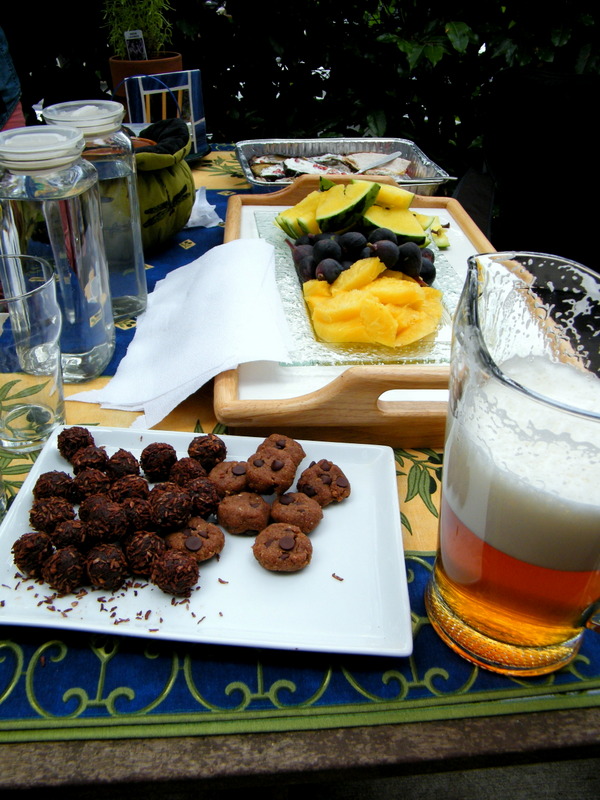
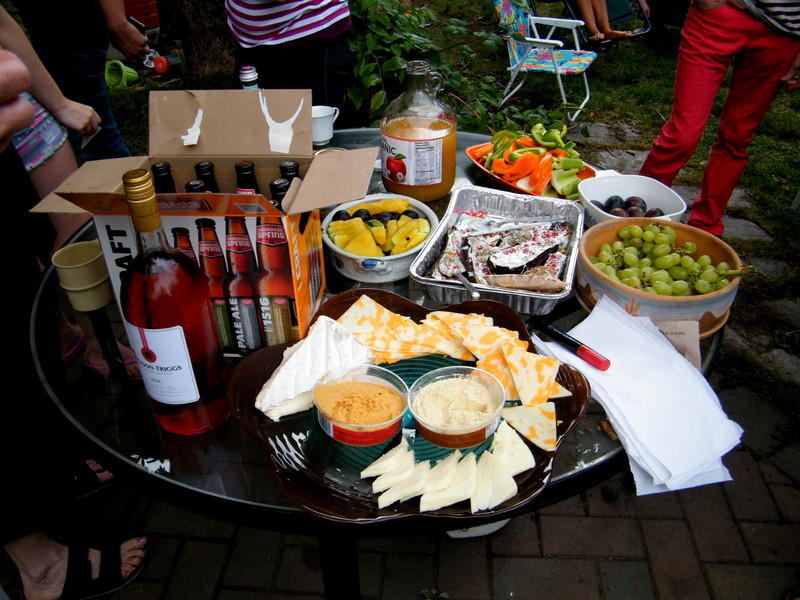
Most of my photos show the food we shared (including Ottolenghi’s fabulous Eggplant with Buttermilk Sauce), which is particularly appropriate for our co-op, as nourishment is written into our values:
“MISSION
VEHC exists to provide affordable and sustainable housing that nurtures a diverse community.
VALUES
Accessible:
We aim to prevent physical, financial, social and other barriers to housing and participation. We always consider the diverse and changing needs of our members.
Inclusive:
We aim to maximize participation of all Co-op members and to encourage individuals to find their own distinct way of contributing.
Sustainable:
We maintain a healthy community that takes into account future needs and is committed to ecological, social and financial balance.
Diversity:
We recognize and value the range of skills, experiences and perspectives that each member contributes to the Co-op community.
Nourishing:
We aim to build a healthy community that provides an environment for individuals to thrive.
Participatory Democracy:
All members have the right and the opportunity to express their views respectfully and to directly participate in the decision-making process of the Co-op.
Affordable:
We are committed to minimizing the cost of housing for members in need, including those with lower incomes. We believe that affordable shelter is a basic human right and
aim to contribute to affordable housing in the wider community.”
Those of you who’ve been reading my blog for a while will know why I choose to live in a co-operative, as the values above reflect my worldview quite well, and building community is something that’s important to me. I think housing co-operatives have an important role to play in helping to maintain diversity in cities, especially ones that are becoming increasingly unaffordable, like Vancouver. They’re also a model for how community can be created in our neighbourhoods, combating the disconnection many city-dwellers experience. For me, the committee meetings are a small price to pay for the connections we’ve built with one another.
Today’s French Fridays recipe is actually Muenster Cheese Soufflés, but I didn’t join in, because soufflé is something I reserve for the gluten-eaters in my life and I haven’t had an opportunity to cook for any of them in some time. I have also been neglecting my blog lately, too. I can’t believe it’s been a month! It was a busy one, but I’m back.
Today, I’m sharing something I made when the rest of the group did, but didn’t have an opportunity to post. Boeuf à la Mode is pot roast really, braised in a beautiful burgundy wine that the Doristas who attended IFBC sent to me in an amazingly generous care package last month.
They also sent Cher and her husband Joe to deliver it. I was sad to miss the conference, but meeting Cher more than made up for it. She and Joe are really lovely people and I’m happy I got a chance to meet them. Cher let me know that Susan and Betsy ran around to all the sample tables picking up treats for me. Thank you so much! Kevin was thrilled with all the gluten-free treats, especially. I’m just glad that Cher and Joe didn’t get a customs bill for all the IFBC gear they brought over the border! Thanks to all of you for the treats. I especially loved the note from Susan and John and have been showing off the Trevor-designed button proudly.
As for the pot roast, I cooked it one day and served it the next. With its long marinade at the beginning, it became a weekend project, really. The results were worth it. Very rich, especially with the addition of a couple of anchovies. I halved the recipe (which left me with some wine for drinking), and it worked really well. The photo above doesn’t do it justice. The edges were actually perfectly browned, though they seem black in the photo. I’ll be making this one again.
I also want to wish Dorie a happy belated Birthday. Several of the gang posted special birthday greetings for her yesterday. I’ll be making the rosemary and olive oil version of her French Yogurt Cake from Baking From My Home to Yours this weekend and will have a slice in her honour.
See you all next week. In the meantime, I’m going to be catching up on everyone’s blog posts.
You can find many other blogged descriptions of this FFWD recipe here: Boeuf à la Mode
Living vicariously can only be so satisfying. I’ve been glued to my Twitter and Facebook feeds this weekend, as many of our most beloved Doristas attended IFBC in Seattle. I languished at home, nursing my “Last-Minute McCarthy” moniker, because I couldn’t commit. While I pouted, Trix, another NON-attendee, drank wine and floated the hashtag #suckitDoristas on Twitter to drown her sorrows. I think Mardi wins for most mature, as she stuck to compliments and encouragements on the conference attendees’ social media channels.
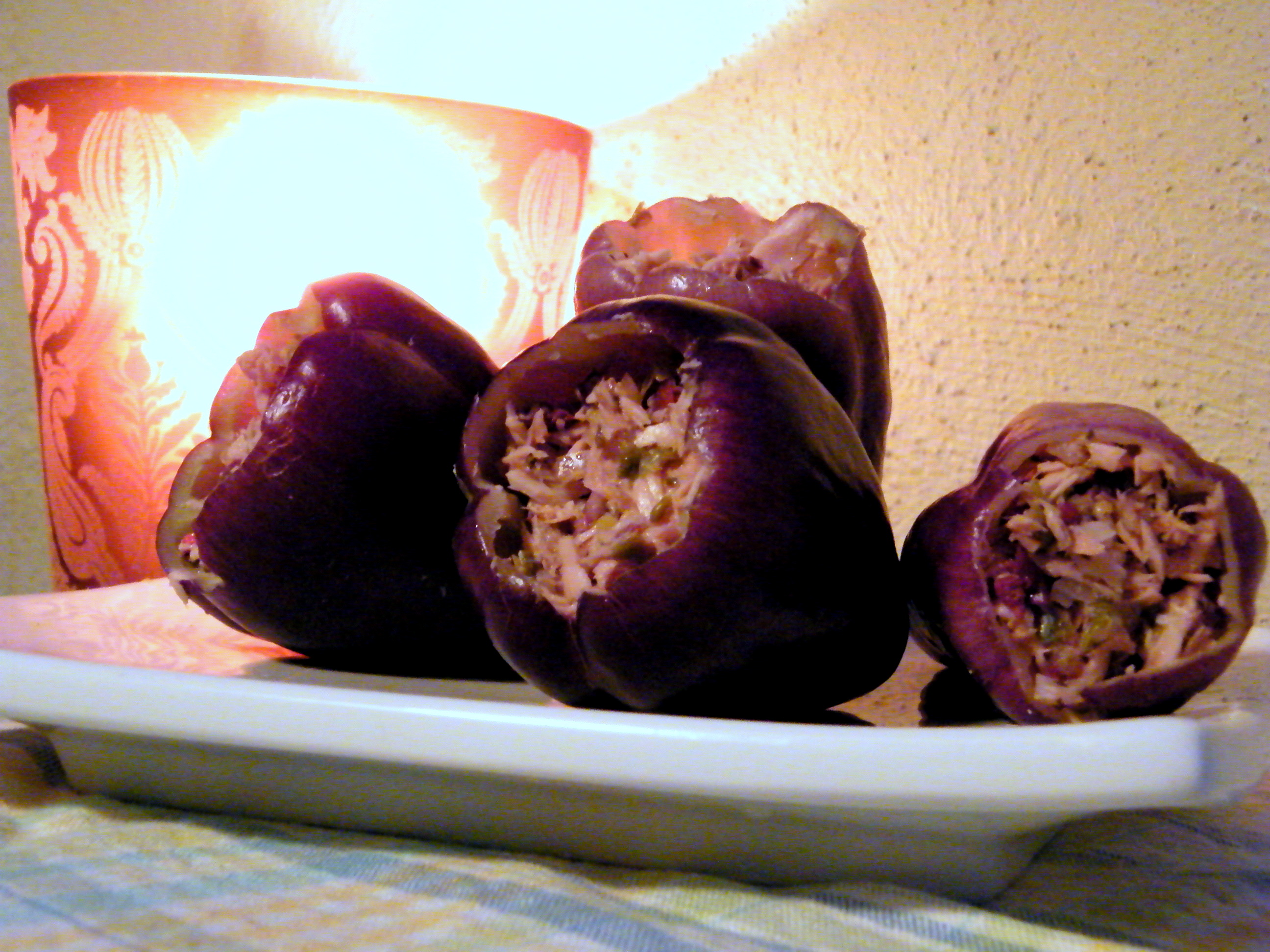
Even in my funk, I managed to make this week’s recipe, though there were no piquillo peppers in sight. I was seduced at the Food Co-op by some pretty little organic purple peppers, which I substituted for the intended star of the show. I want to prolong that summer freshness for a little while longer, so the crunch of sweet, raw pepper was more appealing than the wintry-seeming jarred variety. I kept to the recipe otherwise, though our dog claimed a little bit of the tuna meant for the filling.
These were a hit – sweet, hot, salty, tangy, and minty – hard to go wrong, right? There may or may not have been some Okanagan red involved in the meal, but you should just put that down to my sour grapes (the Okanagan ones weren’t, though; they were just right).
Tomorrow there’ll be a little balm for my wound – I get to meet Cher, one of our most stalwart Doristas. I’m looking forward to it!
And just so you know, I did make the chops from last week – twice, in fact. Both times, though, I neglected to take pictures. I think it just went out of my head, once I saw how perfectly cooked they were. My chops were venison, so I modified the herbs a bit, using a mix of rosemary and sage. I marinated them for a day (which really draws out the gaminess – though these chops were from a young buck which, according to my Dad, is as sweet as candy). I also made the rosemary butter ahead, too. The herbs were from my garden, we served them with the last of the green beans from the garden, and the rosemary butter that topped the chops also went into some lovely smashed potatoes. All you’ve got is my word for it though, because I forgot all about my camera for those meals.















 One Wet Foot