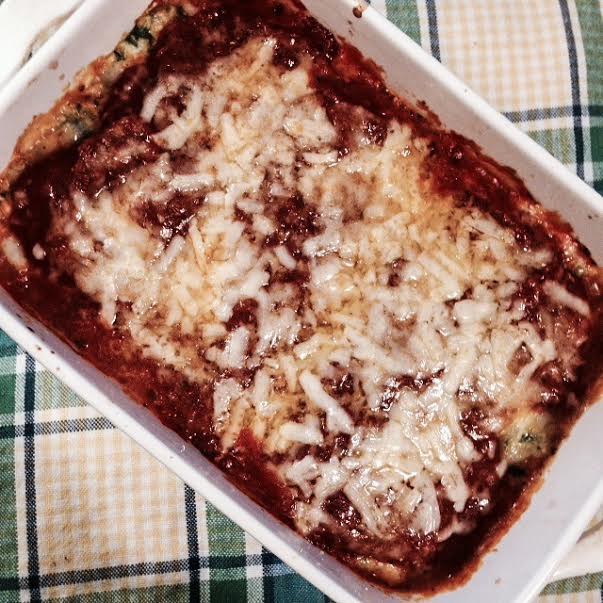
FFWD – Marengo As You Like It

Marengo

I don’t like to buy into the idea that there’s anything especially unlucky about Friday the 13th. Our brains make sense of the circumstances that lead up to events by attributing them to luck (good or bad) or fate. We reverse engineer meaning into the car accident that happens on Friday the 13th, though the victims of yesterday and tomorrow’s car crashes would consider themselves just as badly off.

But I do embrace the feelings that good fortune brings, even if they are the product of chance. And I have to say that I feel very lucky that when I began thinking about blogging, in order to begin a regular writing practice and to celebrate community wherever I found it, I saw an article that mentioned a blogging group that was just about to begin.

That group was French Fridays with Dorie and now, more than four years later, we’re counting down the last ten recipes in Around My French Table. I’m hopelessly behind, of course, with about twenty recipes in my “catch up” file, but I started this journey on October 1, 2010 – the very first French Friday.

And now we’re in the home stretch, I’m going to try to keep up for the final ten recipes. This week, we’ve got a classic, Veal Marengo. I don’t eat veal, so I used some really beautiful beef, instead.

I quartered the recipe, since M. Kevin was having his favourite vegan, gluten-free pizza for dinner and I’d be eating this alone. Since it was such a small amount, I used cognac in place of wine, with a bit of water. I was also lucky enough to find some beautiful baby cipollini onions, which were perfect in this dish.

I made this in my dutch oven and it worked well, but this recipe is making me wish that I had a good, oven-going skillet with a lid. (I’ve got a great cast iron pan, but it is lidless and a little small, even for a quarter recipe.)

This felt like too indulgently elegant a dish to be eating on my own. In future, I’ll make it for a crowd. On second thought, it was easy enough to make that I may treat myself to another quarter batch again, when I feel in need of a treat. Or, if I want to feel lucky.

You can find links to the rest of the French Fridays crew’s posts on this week’s recipe here: Veal Marengo.

FFWD – Chicken Couscous

IMG_3482

I have an electric wok, which was one of the first presents I got when I moved out of my parents’ home. I have it still and it’s always been a welcome addition to any household I’ve been a part of, save for one.

As I was moving into one of the countless shared apartment situations that make up young adulthood, my roommate seized upon the wok as the funniest object I owned. Apparently, her ex had been given one, and after getting rid of it as quickly as possible, made it into a running joke about déclassé appliances.

Well, maybe there’s no place for an electric wok in the vast suburban kitchens we grew up with, but in the tiny urban apartments of our present, I loved it. I’ve never used it for stir-frying, though it would work perfectly well. For me, it was just the thing for a party.

I loved throwing buffet-style potluck dinners and my stovetop and oven would be full of dishes simmering, stewing, baking, and steaming. The wok would be over on the dining room table, filled with Anne Lindsay’s Moroccan Chicken Stew or a fish stew from the same cookbook, happily simmering unattended.

I used to make the same stew in vast quantities when I was one of the only ones in my university crowd who knew how to cook. It would keep us all going for a week, and when the chicken ran out, I’d sauté cubes of tofu in the same spices and add them to the pot. At the end of the week, if there was any broth left over, I’d use it as the base of a clean-out-the-fridge soup.

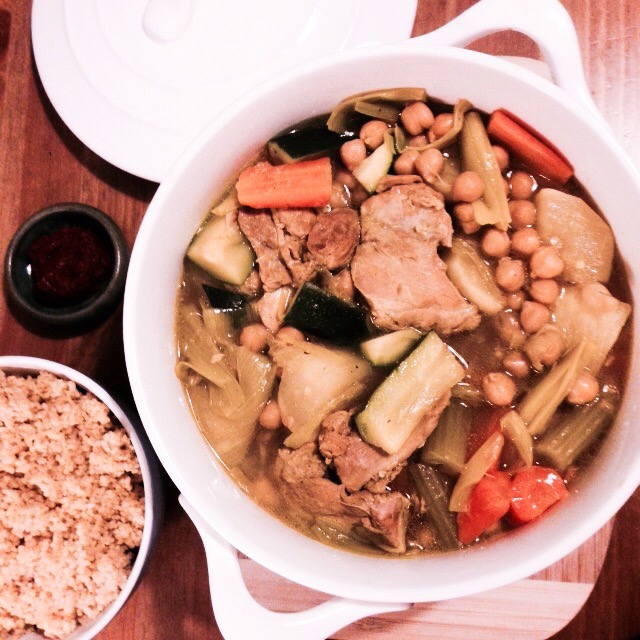
This week’s recipe put me in mind of that stew, just as Dorie’s Lamb and Dried Apricot Tagine did a few months ago. Her take on these flavours includes harissa, which wasn’t on my radar way back then, but brings a welcome heat. I also enjoyed the turnips in this dish, instead of the sweet potatoes that I’d usually reach for with these spices.

I often add dried apricots or currants to a dish like this, but am out of both, so instead stirred in a small spoonful of apricot jam just before serving. It balanced the flavours almost as well as the fruit would have done. It also added another lovely note to the stew’s aroma, which included hints of saffron, ginger, and cinnamon, too.

Since it was just me eating this dish, I halved the recipe and made couscous to go with it. I’ll still be eating my way through the leftovers for a day or two, which is okay, since the flavour keeps improving with time. I won’t be stretching it out with tofu, though. I think I’ll save that for a vegan version I can eat with Kevin, and serve it with quinoa.

Though I didn’t need it this week, I’m hanging onto my electric wok, in anticipation of gatherings to come. And for the record, I’m also awfully fond of my stand alone steamer.

You can find links to the rest of the French Fridays crew’s posts on this week’s recipe here: Chicken Couscous.

FFWD – Croquants

Croquants

Hello Doristas – I’ve missed you! I can’t believe this is my first French Fridays post since the beginning of the month, but it’s been hectic around here.

This week’s recipe is one of my favourite sweet treats from this book, one that I’ve made often when I’ve had extra egg whites in the kitchen. (Although its place as my favourite egg-white-using dessert may now have been usurped by Dorie’s Cranberry Crackle Tart.)

I’ve even made these cookies when I didn’t have egg whites to use up, which reminds me – I’d love it if cookbooks had an index section for egg yolk recipes, as well as one for egg white recipes. Pavlova lovers will agree with me, I’m sure.

I love croquants with any kind of nuts, but my favourite version uses a mix of different nuts – our co-op sells a ‘fancy nut mix’ that’s perfect for these cookies. I’ve tried them with unsalted nuts, but found the cookies were then too sweet, so I stick with salted nuts now.

These cookies are perfect with a cup of tea and keep quite well in a cookie tin. I brought a big batch of these to a training a few months back and the Chair took the leftovers home, as we had another meeting scheduled for the next night. He showed up to that meeting empty-handed, explaining that “a couple of friends dropped by last night and, uh, we ate all the cookies.”

I think that’s a ringing endorsement.

You can find David Lebovitz’ version of croquants here (or even better, you can get yourself a copy of Around My French Table). And you can find links to the rest of the French Fridays crew’s posts on this week’s recipe here: Croquants.

Smoked Salmon Waffles – A French Fridays Catch Up

Waffles

It’s not Christmas dinner I most look forward to, but Christmas brunch. There are fewer rigid expectations and an opportunity for playfulness that you don’t get at the more formal meal. This year, I made a bûche de Noël and smoked salmon waffles. Another year (actually, more than one), I made cardamom bread.

I bought a waffle iron a few months ago, in anticipation of making smoked salmon waffles for Christmas brunch. My brother caught and smoked a salmon himself earlier this year and my mother had some stashed in the freezer. Christmas morning waffles seemed like a great way to use some of the salmon and celebrate the season.

I loved how easy the batter was to put together and the waffles came off the iron without any trouble at all. (I sometimes wonder why people buy boxed mixes for waffles and pancakes, when making them from scratch is so easy and gives you much better results.) The savoury flavours of smoked salmon and green onions made these waffles the perfect accompaniment to our brunch, especially with a little dollop of cream on top.

They could also easily be elevated to cocktail snack or appetizer presentation by making them smaller, as Dorie gives as one option, and topping them with crème fraîche and salmon roe. Then, they would make a nice part of a New Year’s Eve spread.

Happy 2015, everyone! My blogging goals for this year include improving my photography (as you can see above, I’ve been a little complacent of late) and concentrating more on the quality of my writing. What are your goals for this year?

Find links to the rest of the French Fridays crew’s posts on this recipe here: Smoked Salmon Waffles. Then, see how everyone fared with this week’s recipe Simplest Breton Fish Soup.

Whipped Shortbread and Sucre à la Crème for French Fridays

Shortbread

For the third year in a row, the French Fridays with Dorie crew has exchanged Christmas cards. In the first two years, a few of us have included recipes along with the cards and this year, we’ve made it into a full-fledged virtual recipe exchange. I’ve been receiving cards and recipes from Doristas from around North America and around the world and it’s been nice to come home to a mailbox stuffed full of good wishes over the last week or two. Thanks to Alice, Christy, and Candy for making this such a special event.

We were asked to share one (or more) of the recipes we were sent, or to share the one we included with our card. Because I sent my cards out a bit late, I chose the latter option.

Most of my mother’s family recipes, handed down to her by her mother in a black, coil-bound notebook, have been in storage since my parents moved. So, for the last two years, we’ve been baking other people’s family recipes at Christmastime. Some of the best have come from my mother’s friend Gina, an incredibly creative person. She gardens prolifically, propagating dahlias and fig trees (both of which are now in my yard, thanks to her), and enough produce to feed her extended family and many of the members of her branch of the Catholic Women’s League, too. She bakes, cooks, volunteers, and does any number of other things well. My mother finally got Gina’s shortbread recipe this year, so I’m passing it on to you.

Whipped Shortbread

Bea Hartel/Gina Alary

1 lb butter
½ cup cornstarch
1 cup icing (confectioner’s) sugar
3 cups flour

Beat all ingredients together until consistency of whipped cream.
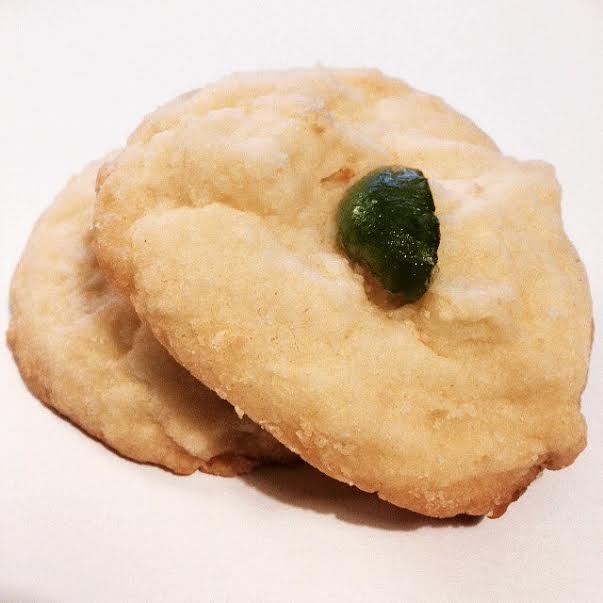
Drop on greased cookie sheet. (with teaspoon) Press down gently, make edges round if too jagged. Red or green cherries on top.
Bake at 350 for 15 minutes.
Makes 5 – 6 dozen.
Enjoy!

Now, when my mother got the recipe, it was much simpler than this. These ladies come from a generation in which they expect you’ll already know how to go about making cookies. My Mom added some instructions, which you can see above.

I want to elucidate just a little bit more. I whip the butter in my stand mixer first, until it’s light and fluffy. Then, I sift the rest of the ingredients into the bowl of the mixer and run the mixer on low for a bit, just so the dry ingredients don’t go flying everywhere, before bringing it up to medium-high until the dough reaches the consistency of whipped cream. If you’re using the cherries, it’s best to halve or quarter them first. If you prefer not to use glacé cherries, decorate them with something with a little more heft than sprinkles or sanding sugar and keep it simple.

There is also an alternative to the drop method of forming the cookie. You can dust your hands with cornstarch, quickly and gently roll teaspoonfuls of the dough into balls, and press them down with a floured fork (just as you would an old fashioned peanut butter cookie). Then, instead of glacé cherries, you can decorate them with dragées, sprinkles, sanding sugar, edible glitter, or sugar stars. They won’t be quite as melt-in-the-mouth, but they’re still delicious.

And, since I wasn’t able to make any of the Dorista recipes I received for this post, I’m going to update a family recipe that I shared in 2011. Sucre à la crème is a French Canadian favourite that my mother’s family has been making for generations. There are as many versions as family members, it seems, and I’ve finally come up with my own favourite formulation. My mother’s family is Franco-Manitoban, so they use brown sugar in place of the maple sugar that’s more common in Québécois versions. Feel free to experiment with maple sugar if it’s easy to come by for you. You can see the versions I shared in my original post here.

Now, this isn’t the sort of fudge we usually think of in North America, in which you avoid the formation of sugar crystals so that it’s silky smooth. This fudge is more like Scottish tablet, in which the sugar crystals are part of the pleasure. So, you don’t have to worry about sugar crystals forming on the pan and stirring is encouraged.
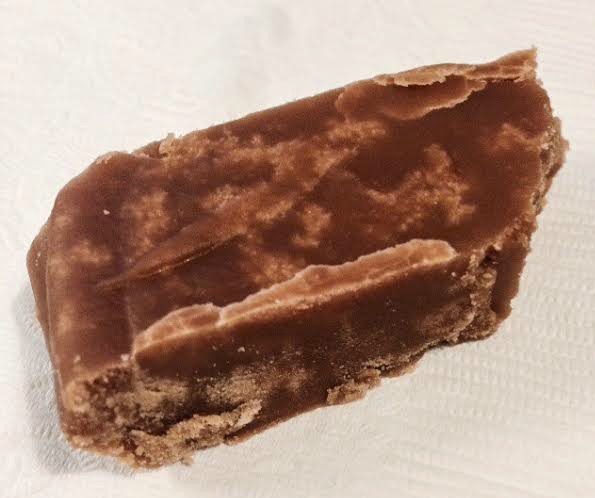
sucre a la creme

Teresa’s Sucre à la Crème

3 1/2 cups light brown sugar
1/2 cup white sugar
2 cups whipping cream
1 1/2 tsps vanilla

Butter an 11 X 7-inch pan, metal or heat-proof glass work equally well.

Combine the sugars and whipping cream, whisk together until well-blended and cook over medium-low heat, stirring often, until the mixture starts to thicken, sugars the spoon (a metal one is best), and forms a ball when dropped into a dish of cold water. The lower end of the soft ball stage (234-236°F) is just right. Remove the pan from the heat and stir vigourously, adding the vanilla when the candy is just beginning to stiffen. When the scrapings are becoming solid, it’s time to pour the candy into the prepared pan. Chill in the fridge for several hours or overnight, then cut into small squares. It keeps for a week in the fridge or several months in the freezer. Bring to room temperature before serving.

I made some sucre à la crème yesterday, after sharing a Boxing Day meal with my parents. I left most of it there for my Mom to share out with the family and took a small box home to share with a Québécoise friend who hasn’t had the genuine article in some time. There was also a bit for Kevin and me, but that seems to have disappeared. The shortbread is long gone, too, shared at all my parents’ holiday gatherings and even at a cookie swap.

If you try either of these recipes, I’d love to see your results – find me on Facebook, Twitter, or Instagram and share a photo.

I’d like to wish everyone the happiest of holidays and a wonderful 2015. I also want to thank my fellow Doristas for making my weekends brighter with our weekly virtual get-togethers. I’m looking forward to the final few months of Around My French Table with all of you.

You can find the rest of the Dorista recipe exchange fun here: Holiday Card/Recipe Exchange or Makeup.

FFWD – Orange & Olive Salad and Lamb & Dried Apricot Tagine

orange and olive salad

When it comes to the kitchen, December is a weird mix of ambition and ease for me. I make long lists of favourite dishes to make, along with new ones to try that usually involve a new skill to master. There are also many quick and easy meals, most easily forgotten, to accommodate all the rush and bustle (and more complicated works in progress) the holidays bring.

So, I was extra grateful to Santa’s Dorista elves for setting a schedule full of simple, delicious recipes. It’s been a good reminder that quick and easy doesn’t have to mean forgettable.

Orange & Olive Salad

Which brings me to this salad, almost as if I’d planned it. You can see how pretty it is in the photo at the top of the post and you can probably guess how easy it was to put together, too. What the photo won’t tell you is how delicious it was. The idea of orange, olive, and onion in a salad was a bit off-putting for a number of the French Fridays crew this week. But, one by one, almost everybody started posting that they’d loved it.

So, by the time I got around to making it this afternoon, I was pretty confident it was going to be good. Kevin, however, doesn’t get the benefit of Dorista social media chatter, so he was very skeptical when I set it down in front of him. He’s a good sport though. After assuring him that soaking the thinly sliced onion in ice water had rendered it mild and crispy, he dug in. And then ate the whole plateful, making it a hit for both of us. We’ll be having this again and I can hardly wait to introduce it to others. It’s an elegant, surprising dish that would have gone untried if it hadn’t been for this cooking group.

Tagine

Lamb & Dried Apricot Tagine

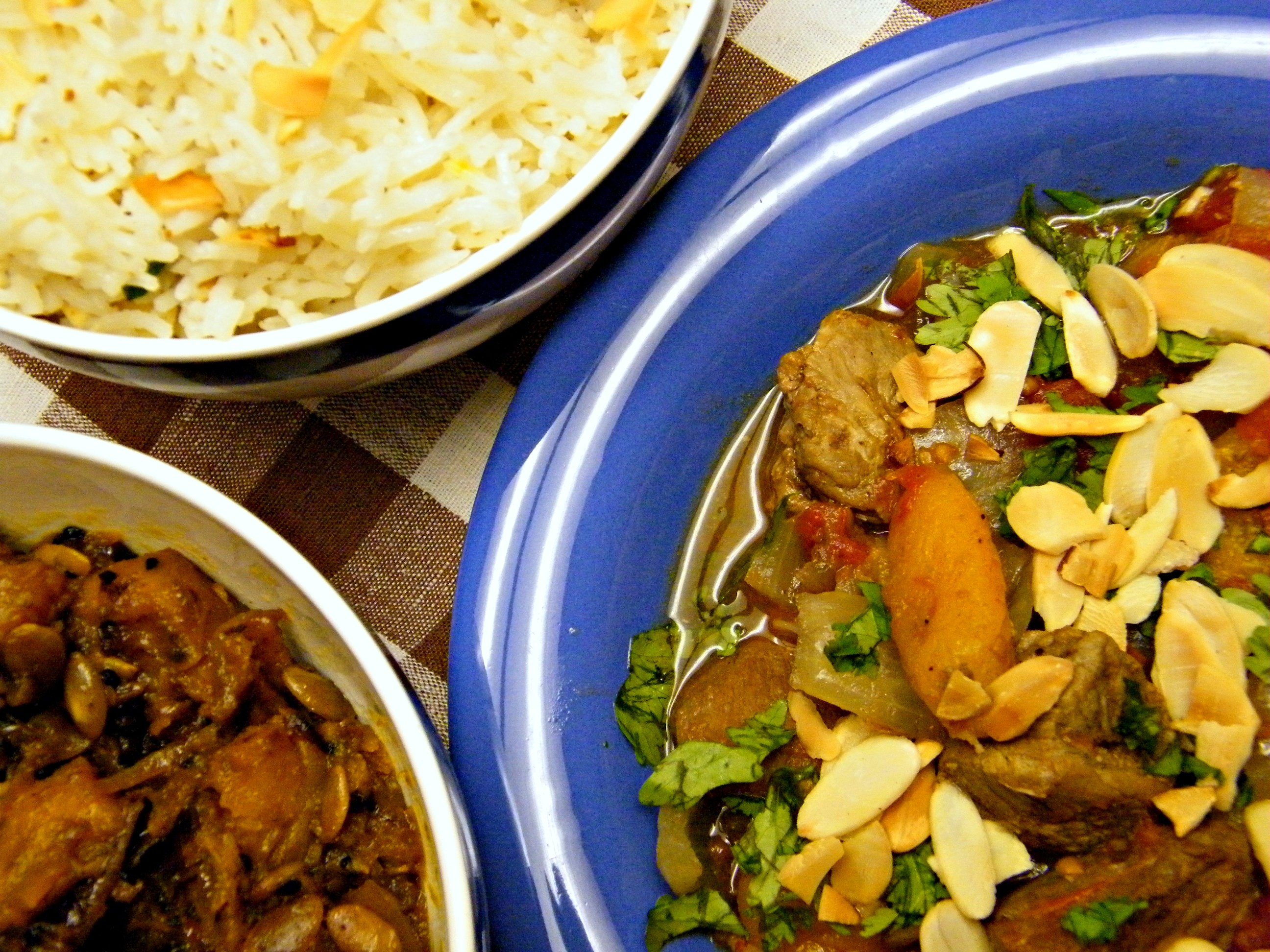
This dish was never in danger of going untried. I’ve loved Moroccan flavours since my university days, when I discovered the recipe for Moroccan Chicken Stew in the copy of Anne Lindsay’s Lighthearted Everyday Cooking that was a moving-out-on-my-own gift from my mother. I did make it a little easier, though, by cooking it in the slow cooker overnight, then letting it rest in the fridge until dinnertime. When I heated it up, I couldn’t believe that it was even more fragrant than when it had come out of the slow cooker. I served it with saffron rice and Ottolenghi’s Roasted Squash with Cardamom and Nigella, both headily aromatic dishes themselves. It made for a fantastic meal.

The next ten days are going to see a lot of cooking and baking, family visits and celebrations. But, if you have time, drop by over the weekend – I have three last minute shopper’s cookbook reviews for you, from Saturday through Monday. And a happy Chanukah to everyone who is in the midst of celebrating it.

Find links to the rest of the French Fridays crew’s posts on this week’s recipe here: Orange & Olive Salad. Then, see how everyone fared with the Lamb & Dried Apricot Tagine.

Mme. Maman’s Chopped Liver – A French Fridays Catch Up

IMG_3189.JPG

Do you ever have one of those days? You know, the kind that finds you doing everything but the one thing you’d set as a goal?

Well, today was one of those days for me. I made succotash, and rugelach dough, a cranberry crackle tart and extra tart dough. But I didn’t manage to get the lamb stew that was today’s French Fridays assignment into the oven. The lamb languishes in the refrigerator, the apricots wait patiently on the counter. Tomorrow will be their day.

Today, I ate ribs coated with a sauce that my mother made up on the spot, which somehow paired perfectly with butternut squash roasted with cinnamon, nigella, pumpkin seeds, and cardamom. And I dug into this chopped liver, which is humble-looking, but delivers on flavour.

I think it’s the crispy onions and the quatre épices that really make this version of chopped liver special. The onions were almost crispy when they were done. I was worried they’d be too dry, but once mixed with the liver, hard-boiled egg, and some oil from the pan, and left to rest overnight, they melted into the mixture.

This was an unequivocal hit and will be showing up on my buffet table, humble-looking or not.

See how the Doristas fared with this recipe last year, when it came up on the rotation: Mme. Maman’s Chopped Liver. And here’s where you can find links to the rest of the French Fridays crew’s posts on this week’s recipe here: Lamb and Dried Apricot Tagine.

FFWD – Bresaola and Walnut Tartine

IMG_3105.JPG

Don’t you find this is a bittersweet time of year? The holidays are full of fun, friends, and family, but I also find my thoughts turning to those who are no longer here and the experiences that have passed. On melancholy nights like this one, I want comfort and simplicity from my kitchen.

Thank goodness for simple, delicious dishes like this week’s French Fridays selection. And thank goodness for miscalculating how much bresaola I needed to make it. The indescribably fragrant and delicious squash dish I made for supper ended up gracing the kitchen floor. Thank goodness I’ve had many years to become accustomed to my clumsiness.

The extra bresaola did not go to waste. I munched on tartines and another dish inspired by the Viande des Grisons that was the intended ingredient in this week’s French Fridays foray. If I can keep my clumsiness in check, I’ll tell you about that second meal on Monday.

As for the tartine, I toasted a light rye bread from a bakery down the street, slathered it with butter and covered it with thin slices of bresaola. I massaged, rather than drizzled, a little good olive oil into the dry meat, sliced it into soldiers, and arranged some walnut halves on each. Simple. Really good, too, although in future, I might sneak a thin spread of mustard onto the toast along with the butter.

IMG_3101.JPG

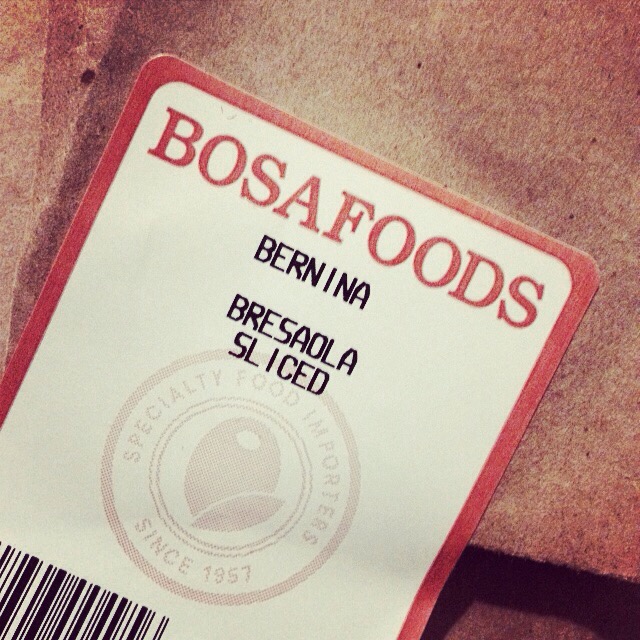
I didn’t go hunting for the Viande des Grisons, as my neighbourhood’s Italian roots meant that Bresaola was only a few blocks away. I’m curious to try it some time though, whether in this tartine or in one of the salads or raclettes that Dorie describes in the header note for this week’s recipe.

In the meantime, I’m going to raise my cup of tea to the past and leave the bustle of the holidays until tomorrow.

Find links to the rest of the French Fridays crew’s posts on this week’s recipe here: Tartine de Viande des Grisons.

FFWD – Béatrix’s Red Kuri Soup & Chestnut-Pear Soup

Soups

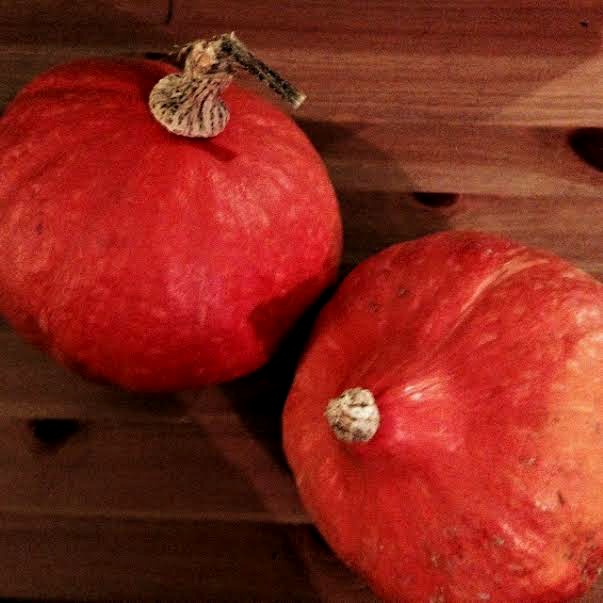
A few weeks ago, red kuri squash arrived at my local food co-op, so I snapped two up right away. At the same time, I picked up some pears and some vacuum-packed chestnuts so that I could catch up on another fall soup.

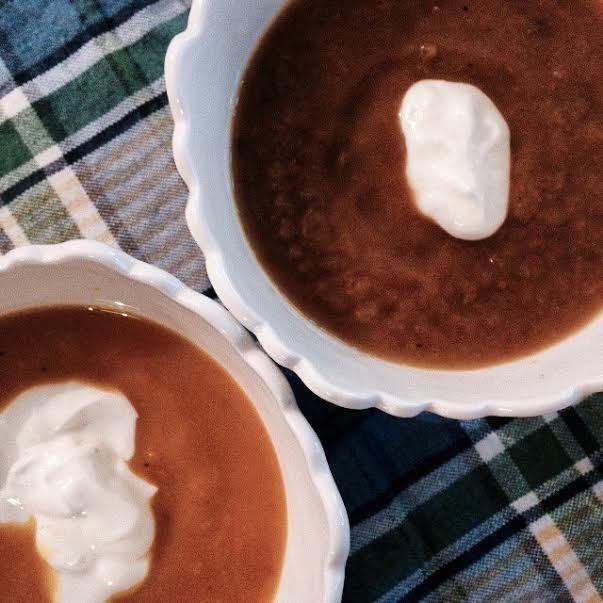
I served the red kuri soup and the chestnut-pear soup together, in small bowls, as we did Christine’s Simple Party Soups. The two soups complemented each other well. I put a dollop of sour cream in each of the bowls, but these soups are lovely without any garnish at all, as well.

Béatrix’s Red Kuri Soup

red kuri squash

I used one of the squash in this soup, cooking it down with the rest of the ingredients, and roasted the other. It’s in the freezer, waiting for an opportunity to make this soup again. I’m interested to see how the roasted version compares to the traditional soup.

I split the soup with my parents, who enjoyed it as much as I did. Kevin’s not a big squash fan, but he didn’t mind this soup at all. I’ll be making it again, while there’s still red kuri squash in the store, but I also want to try red kuri in dessert recipes. I have it on good authority that it makes a terrific variation on pumpkin.

You can find the recipe for this soup on Dorie’s website.

Chestnut-Pear Soup

I didn’t give half this soup away and it’s a good thing, because Kevin absolutely loved it. Usually, he’ll eat soup without much comment, but he raved about this one and happily helped me eat through a full recipe’s worth. He was happy that I’d made it vegan, using vegetable stock and replacing the butter with olive oil. The ingredients for this soup are available throughout the fall and winter, so we’ll be revisiting it often.

You can find the recipe for this soup here.

Find links to the rest of the French Fridays crew’s posts on this week’s recipe here: Béatrix’s Red Kuri Soup. Then, see how everyone fared with the Chestnut-Pear Soup.

FFWD – Storzapretis

Inside

It’s not often that I come across a dish that’s relatively unknown on the Internet – in this case, I mean the English-speaking internet. Until the flood of French Fridays posts today, I could only find a handful of references to this week’s dish in English – there are plenty of recipes for it on French sites. (As an aside, it pleases me that I can read French relatively well, even though no one should ever be subjected to me speaking it.)

Storzapretis, not to be confused with the Italian pasta called strozzapretis, are a sort of Corsican gnudi, as Betsy pointed out in her post today.

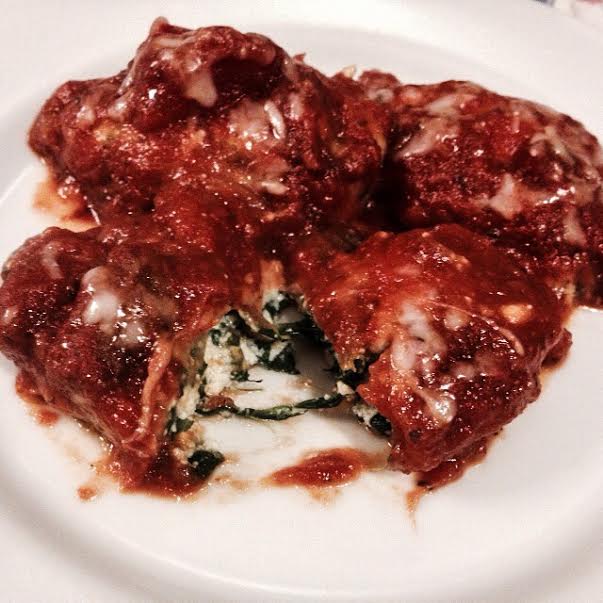
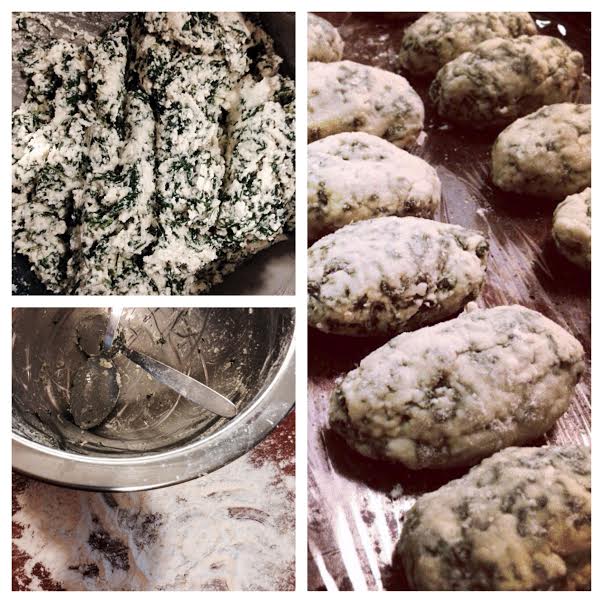
They are properly made with Brocciu cheese, but thick ricotta makes a good substitute. The ricotta is mixed with spinach, grated cheese, minced mint or marjoram, an egg, and a very small amount of flour. It’s then formed into quenelles, lightly tossed in a little more flour and set to rest in the fridge or freezer. When it’s time to finish them, they’re gently poached in simmering water, carefully dried, then put in the oven covered with tomato sauce and grated cheese.

Process

It’s the last two steps that caused our crew so much trouble this week, resulting in one of the longest P & Q sections we’ve had in some time. Reading the comments saved me from disaster and also led me to experimenting with cooking them in two different ways.

Many Doristas found their storzapretis disintegrating as they poached, so Adriana tried skipping that step and cooking them in the oven only. She preferred that method and when I tried it, the night I made the storzapretis, I cooked a few that way and stowed the rest in the freezer.

Today, I tried the poaching method and though they kept their shape, I found their texture to be a little too soft for my liking, even after baking them for a bit longer than called for in the recipe. The ones I’d stuck straight into the oven were tender and fluffy, but firm. In future, I’ll skip the poach.

Though these dumplings were a bit time-consuming to make, I will be making them again. They’re worth the effort. And this week’s experience just reinforced my love of this cooking community – we truly help each other along each week.

Baked

Find links to the rest of the French Fridays crew’s posts on this week’s recipe here: Storzapretis.