Baking Chez Moi – Rice Pudding with Spiced Hibiscus Syrup

Vanilla bean rice pudding with blueberries and spiced hibiscus syrup

I’ve had Dorie’s rice pudding before, with lemony caramel apples. It’s different from the rice pudding I grew up with, which was all about making leftover rice delicious. (Though even that kind of rice pudding can put on some party clothes.)

Dorie’s rice pudding uses arborio rice, which is simmered in whole milk and flavoured with a little sugar and half a vanilla bean. It’s simple, rich and delicious, the perfect backdrop for flavours in every season.

In summer, she recommends spiced hibiscus syrup and fresh strawberries. We’re well into blueberry season here, so I used those instead. They’re just as nice a pairing for hibiscus as strawberries and they’re what was freshest at the market today.

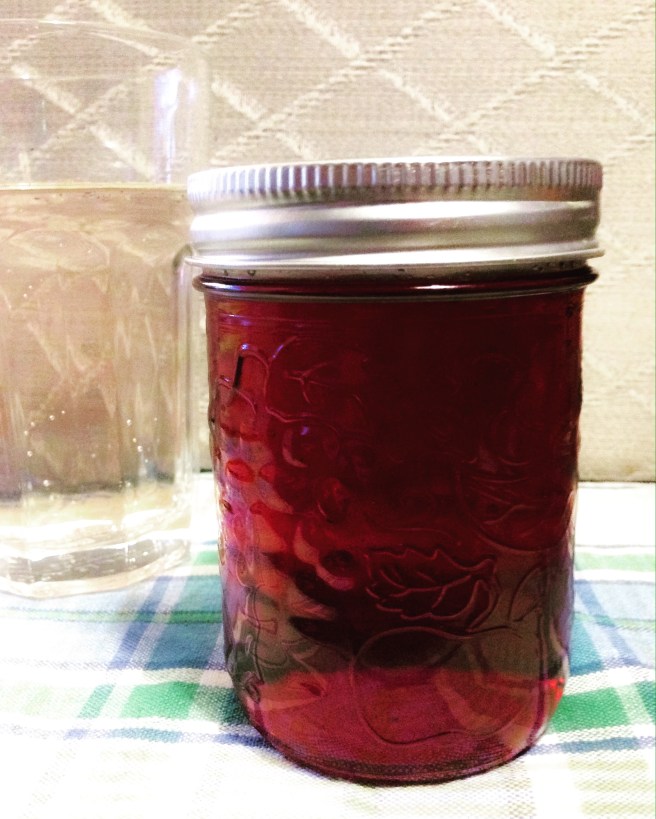
Spiced Hibiscus Syrup

As a bonus, there is plenty of leftover hibiscus syrup. I mixed a tablespoonful into some cold Pelligrino earlier today, but there are endless cocktail and mocktail possibilities for this jar of simple syrup. Or, I could just spend the rest of the week drizzling it over ice cream.

You can find the rest of the Tuesdays with Dorie crew’s entries on this recipe here or here, along with posts about this month’s other selected recipe, Rose Frasier.

“Line them up right here.”

East Van Foliage

It’s been quite a week, with the implications of Brexit to decipher, Vancouver developers making the most of the perfect spin on our housing crisis, and the end of that most perfect corner of the Internet looming.

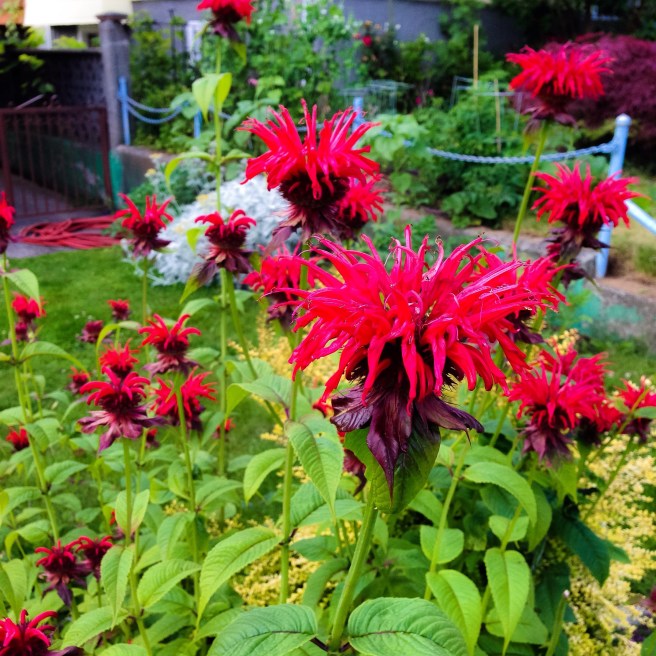
East Van Flowers

Next week, it’s all cookbook clubs all the time, but I’ll have a little something more for you the week after that.

East Van Corn

In the meantime, enjoy a few photos of my neighbourhood’s gardens. I’m going to return to watching my way through the Thin Man movies. Nick and Nora’s cocktail-fuelled shenanigans are a welcome oasis in a complicated world.

Cook the Book Fridays – Poulet Crapaudine

Spatchcocked chicken

This chicken took a circuitous route into my kitchen. I don’t cook a lot of meat at home, to spare the vegan and because I’ve always been comfortable with a mostly vegetarian diet. So, when this dish came up in the rotation for Cook the Book Fridays, I decided to hand off the cooking to my parents. They have some beautiful chickens in their freezer that they got from a friend’s farm. This recipe adapts perfectly to the barbecue, which they’ve already got fired up for the summer season. I thought I’d send my mother home with the harissa paste in my freezer and enjoy this dish vicariously through their photos and descriptions.

But things didn’t go as planned. First, I completely forgot about the harissa paste, so my mother settled on sambal oelek instead. My brother spatchcocked the chicken for her and she put together the marinade, bagged the chicken, and refrigerated it.

Spatchcocking and marinating the chicken

And then she remembered she was going away to a conference, so she brought the chicken over to me. It needed another day in the refrigerator, which brings us to today. I put it into my Dutch oven, weighed it down with some Corningware, and cooked it on the stovetop. I lost some of the skin, but it worked rather well. Then, I transferred it to the oven, where it took about half an hour to finish. I was happy with how it turned out in the Dutch oven, but I think I’ve got to invest in a larger cast iron frying pan. I think it would have been easier to work with and the chicken wouldn’t have taken quite so long to finish.

The results were tender and juicy, a little spicy, and very flavourful. I only had a taste tonight, but I’m looking forward to having some more tomorrow, with coleslaw and roasted potatoes. The rest is going into the freezer, so that it can travel back to my parents’ house. It wouldn’t be right to exclude them from enjoying this chicken, would it?

I’ve titled this post Poulet Crapaudine, which is French for spatchcocked chicken, but David Lebovitz calls it Chicken Lady Chicken, in honour of the woman who inspired the recipe. I hope if you try this dish, your chicken doesn’t have to commute quite as much as mine did.

You can read through everyone’s posts here. And consider joining this community of wonderful cooks and lovely people, as we work our way through David LebovitzMy Paris Kitchen.

Honey Dijon Lamb Meatballs

Lamb meatballs with rosemary roasted potatoes and sauteed greens

Mustard does something magical to lamb. Slather it on a leg of lamb before roasting and it forms a beautiful crust. Add some to a shepherd’s pie and it will marry the flavours of all the seasonings. Dollop a tablespoonful into a meatball mixture and it will add tenderness along with flavour. I enjoy the pairing so much that I sometimes forget that there are other flavours that can complement lamb. I suppose it’s not surprising that when Maille Canada kindly sent me a sample of their famous Honey Dijon mustard, I started making plans for the ground lamb in my freezer.

Maille’s Honey Dijon is already a favourite of mine, but their squeeze bottle packaging was new to me. It’s meant for outdoor eating, so I wanted to make something that would showcase the flavour of the mustard, but would also translate easily to the barbecue.

Our weather has been a little spotty of late, so I roasted these meatballs in the oven. But, they will roast just as beautifully in a grill pan on the barbecue. I make my meatballs with rice, which means I don’t have to exclude gluten-free eaters. You could easily replace the rice with another grain or quinoa. I cooked the rice in a tomato-rich vegetable broth, but you could use chicken broth, lamb broth, or plain water, instead.

These meatballs get their tenderness from the mustard and a bit of yogurt, with a tiny bit of extra piquancy from some finely diced cornichon (a trick I picked up from Dorie Greenspan). They’re great on their own, or with a bit of tomato sauce. They’re lovely in soup and I suspect they’d elevate a meatball sandwich, especially if you served them on a baguette with cultured butter and a generous slathering of honey Dijon.

Honey Dijon Lamb Meatballs

Makes 15-20 meatballs

  • 1 lb ground lamb
  • 1/2 cup cooked basmati rice
  • 1 egg
  • 1 tbsp plain French-style yogurt
  • 1 tbsp Maille Honey Dijon Mustard
  • 1/4 cup chopped fresh flat-leaf parsley
  • 1 cornichon, finely diced
  • 1/4 cup diced onion
  • 2 cloves garlic, minced
  • 1 tsp fresh rosemary (or 1/2 tsp dried)
  • zest of 1/4 lemon, grated
  • 1/2 tsp salt
  • a good grinding of black pepper

Preheat oven to 400°F. Line a rimmed baking sheet with parchment paper. Or, use a grill pan and cook on the barbecue with the lid closed.

In a large bowl, gently but thoroughly mix all ingredients. Shape into balls of 2-3 tablespoons of the mixture and place on lined baking sheet.

Bake for about 25 minutes, until nicely browned and cooked through. (If you’re using a meat thermometer, cook to 160°F.)

Serve immediately. Leftovers can be gently reheated in broth or tomato sauce, or added to soup. Or, place them on a tray and freeze them, then transfer to an airtight container or freezer bag. They’ll keep for 3-6 months.
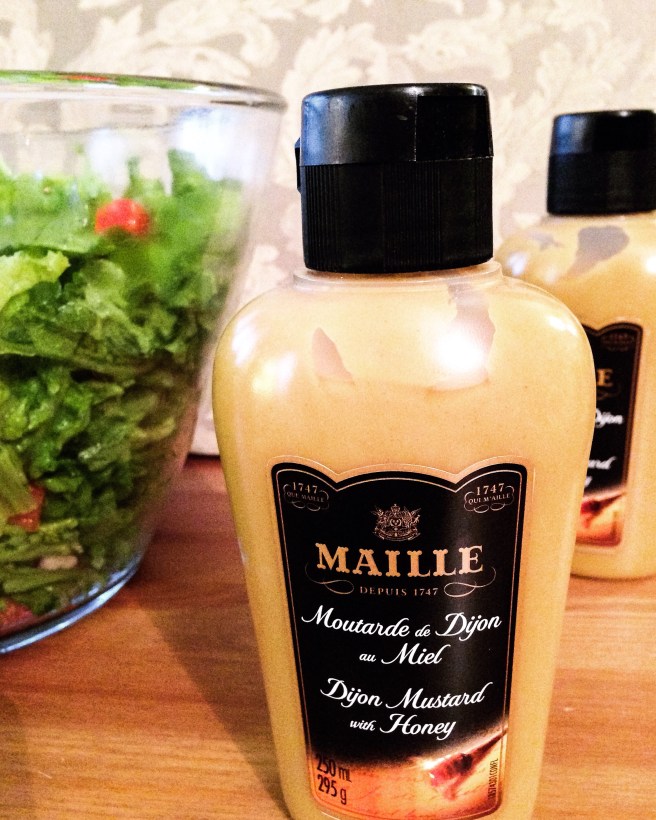
Maille Honey Dijon Mustard

Maille sent me two squeeze bottles of their Honey Dijon mustard. I’ve been working my way through one of the bottles, using it for sandwiches, salad dressings, and marinades. And now that summer’s about to begin in earnest, I’m glad to have a container of gourmet mustard that’s picnic-safe. The other bottle was sent home with my mother. My parents grill all summer long and they were eager to add it to their condiment arsenal.

I think this packaging is going to be a hit. People are seeking out higher quality sausages and cured meats for their al fresco meals these days. It makes sense that they’d want to elevate their condiment selection, too. Maille is certainly confident that’s the case – beginning this month, you’ll be able to find their honey Dijon in supermarkets, as well as gourmet stores. Barbecue culture is growing up.

I received two bottles of Maille’s Honey Dijon Mustard from Maille Canada, but received no other consideration. All opinions are my own.

A Late Start

A fig sprouting

It’s been so long since I’ve written about my garden. Perhaps that’s because I’ve hardly been able to attend to it until now. Three days after our annual soil delivery, I sprained my ankle rather badly and lost five weeks of backyard time. Luckily, I had planted tomatoes and strawberries in containers on the balcony, along with pineapple sage and tarragon, so I’m not as behind as I’d otherwise have been.

Yellow Brandywine tomato flowers

It’s only this week that my ankle has been strong enough to do some real gardening. Much of my time is spent battling morning glory, blackberry cane, buttercups, and nightshade – so much so that it’s almost become a refrain as I work. I’d cleared the worst of it in March, but by the time I got back to the garden properly, they’d all made riotous progress.

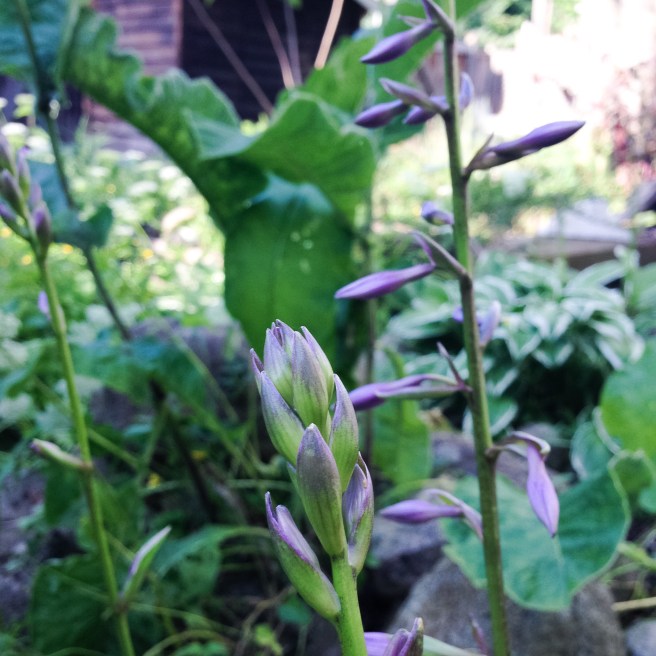
The hostas are flowering

I spent a day clearing blackberry cane and morning glory, pulling blooming shoots from the centre of the long-suffering bay tree at the corner of my yard. Then, I finally tilled the soil in my vegetable garden with a claw and a new-fangled hoe that my father found that looks more like a weapon for the zombie apocalypse than it does a garden tool. It was very satisfying. All I’ve got to do now is top up and mix the soil, mark off my square foot sections and plant. I’ve got lettuce, peppers, celery, and cucumbers waiting in pots, but I’m also going to take my chances late-sowing radishes. It’s perfect timing for my Tante Vivienne’s beans, which have been saved over generations, and I’m looking through my stash of seeds to see what else I can manage this year.

Wild carrot, with pollinators

Then, I’ll tackle the flower beds, though I’m leaving as many wild carrot plants intact as I can. I know they’re considered weeds, but I’ve seen at least eight different species of pollinator feasting on them. Maybe that makes me a bad gardener (along with the dandelions I leave in place in early spring, for similar reasons). Perhaps I’ll think of myself as a good host, instead.

Cook the Book Fridays – Fattoush

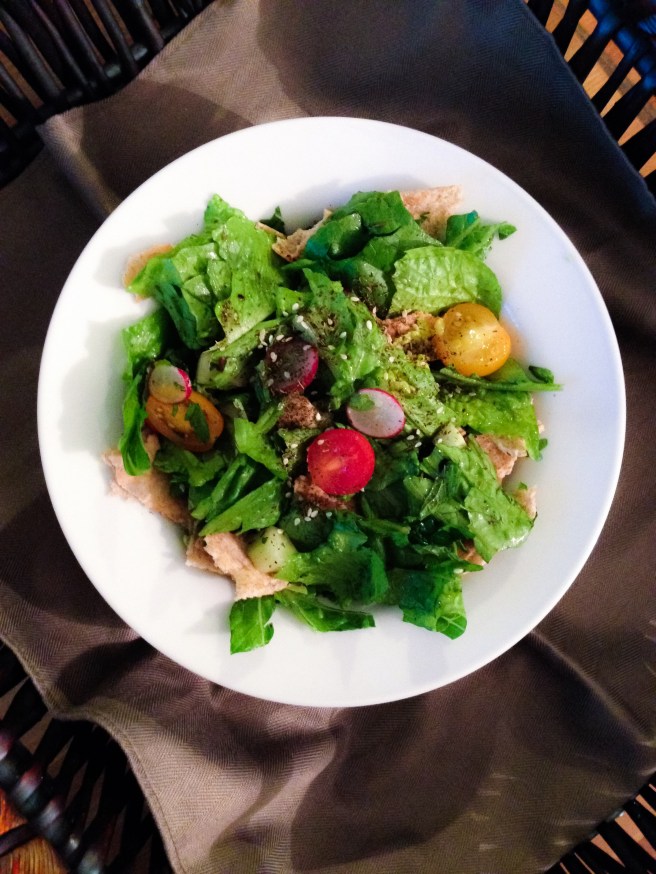
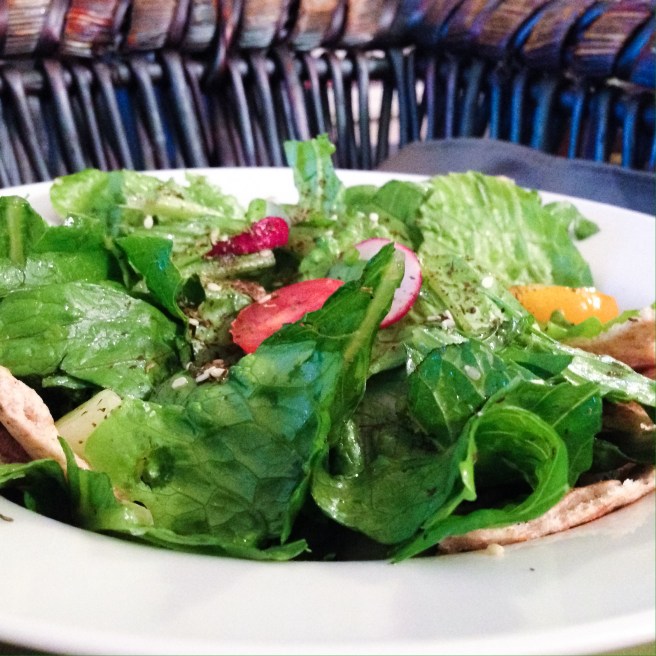
Fattoush

I don’t think of salads as diet food. It’s what I was raised to do, but the days of wan supermarket lettuce, with its limp produce aisle cohorts are long gone. These days, lettuce is early summer fare, along with freshly-dug radishes and scallions. It’s not quite time for tomatoes and cucumbers, but today’s fresh market offerings are better than the supermarket fare of yore (yore being the late 20th Century).

Salads are a broader category for me now, too. Shaved Brussels sprouts or cabbage might go into a winter salad, roasted tomatoes and eggplant into a high summer version. But right now, salads look a lot like the ones in my elementary school picture books – lettuce, tomatoes, cucumbers, peppers, radishes, carrots – they’re all fair game.

Fattoush with za'atar

Tonight’s salad is fattoush, which adds a healthy dose of flat-leaf parsley and mint to a mix of romaine, onion, radishes, and cucumbers. It’s tossed in a lemony, garlicky, mustardy vinaigrette and finished with grindings of black pepper and a sprinkling of sumac. I’m out of sumac, so I substituted za’atar. I’m glad I did, because there’s lots of sumac, but it also adds a burst of thyme and sesame.

My bowl included pieces of pita that had been brushed with olive oil and crisped in the oven. The gluten-free version included crispy rice crackers instead. Both were full of flavour.

There will be many more summer salads this year, but I’ll be revisiting this one regularly, perhaps as soon as tomorrow.

Fattoush on a wicker tray

You can read through everyone’s posts here. And consider joining this community of wonderful cooks and lovely people, as we work our way through David LebovitzMy Paris Kitchen.