A Wishlist For a Rainy Friday Night

Poppies in bloom

These poppies got a battering from today’s rain showers. I hope they survived it. We’re having a quiet evening in tonight, all the better to avoid a rain-battering ourselves.

It’s left me with lots of time to think on what I’d like to see happen in my community and beyond.

Here are a few wishlist items:

I’d like the City of Vancouver to give housing co-operatives a break on property taxes. They provide the kind of mixed income, diverse housing that the current council wants to see. And while we’re at it, let’s have the federal government provide grants to co-operatives who want to expand, especially in underserved categories like one bedroom, three and four bedroom, and accessible suites.

Oh, for some walkable, bikeable, human-scale development in the Fraser Valley. Langley’s Brookswood neighbourhood is being eyed by real estate developers, who’ll likely replace the quiet grid of half acre lots with condo blocks, shopping malls, and eight lane arterial roads. Instead, they could use subdivision to create density, then line the busier streets with midrise buildings that encourage the kind of businesses and street life that are being lost in the Vancouver neighbourhoods threatened by condo tower annihilation.

And then, a restructuring of our transit system might be in order, with low cost light rail serving neighbourhood hubs and fare structures that encourage drivers to abandon their cars, while ensuring youth, seniors, students, and the poor can get where they’re going.

I’d also like a patisserie to go into the vacant storefront at the end of my block, in case any entrepreneurs are feeling malleable.

What’s on your wishlist?

img_7108

Food Revolution Day 2016

Food Revolution 2016

Since 2013, I’ve been celebrating Food Revolution Day with a group of bloggers that met when we worked through Dorie Greenspan’s Around My French Table. We’ve all moved on to other projects, together and separately, and added new blogging colleagues along the way.

Today, we’re convening again to contribute our voices to Food Revolution’s mission: to talk about how “children access, consume and understand food” and to ensure they have “access to good, fresh, nutritious food for generations to come.”

Our celebration is taking place across two cook-along groups started by alumni of French Fridays with Dorie: Cook the Book Fridays and The Cottage Cooking Club. We have one Food Revolution Ambassador in each group, Mardi of eat. live. travel. write and Andrea of The Kitchen Lioness, and each had a unique take on this year’s Food Revolution Day theme, which is #FeedtheFuture. Jamie Oliver released ten recipes to learn and share that he believes can teach you all the skills you need to feed yourself for the rest of your life. Using this as a template, each of our Food Revolution Ambassadors came up with challenges appropriate to the book their group is working with.

Cook the Book Fridays: Ham, Blue Cheese, and Pear Quiche

Ham, Blue Cheese, and Pear Quiche

Mardi has taken the lead on Food Revolution Day, first in French Fridays with Dorie and now in Cook the Book Fridays. She chose David LebovitzHam, Blue Cheese, and Pear Quiche from My Paris Kitchen for the group to prepare this week, as a “must know” recipe. Quiche is almost infinitely variable, and can accommodate gluten-free, vegetarian, and even vegan diets, with some simple ingredient substitutions.

It’s a dish that highlights a skill that’s just as important for a healthful diet as the ones covered in Jamie Oliver’s “starter pack” of healthy recipes – baking. Knowing how to make your own crusts, breads, and pastries can empower you to choose the best ingredients and use them in delicious and healthy proportions.

Quiche is also a great dish to help you avoid food waste – nearly anything in your fridge that needs using can be put into a quiche. And if you get into the habit of keeping savoury tart doughs in your freezer, it’s easily a weeknight meal option or a last minute potluck solution. I’m exemplifying this tonight – the quiche is in the oven while I’m writing this post.

I decided to follow Mardi’s lead and “minify” this recipe. I made muffin-tin servings of quiche, which are easy to share. I made the full recipe of tart dough, freezing half. My quiche crust is an interesting colour – I used organic blue cornmeal in place of yellow cornmeal, as that’s what I had on hand. It’s ground to a fine texture, which is a plus for a crust. Cornmeal can often lend a gritty texture to doughs like this.

I halved the quiche filling, though. I’ve only got so many taste-testers available this weekend. I didn’t vary David’s recipe and I’m glad. This is a rich, sophisticated quiche. Ham, blue cheese, and pear are classic flavour partners. That said, I’ll use this quiche recipe as a jumping off point whenever I have some cream cheese hanging out in my refrigerator. As I said before, a world of possibilities can be contained in the crust of a quiche.

You might notice there aren’t any photos of my quiches. It was dark by the time I finished my post, so I’ll add some tomorrow, so you can see them at their best.

Three mini quiches

You can read through the Cook the Book Fridays crew posts for this Food Revolution Day here. And consider joining this community of wonderful cooks and lovely people, as we work our way through David LebovitzMy Paris Kitchen.

The Cottage Cooking Club

Since we just wrapped up cooking our way through Hugh Fearnley-Whittingstall´s River Cottage Veg, Andrea took a different route for this group’s challenge. She asked us to choose up to ten recipes from the book that qualify as “must know” dishes and to share the techniques and skills we learned in making them.

My mind turned to categories, rather than specific dishes, so I’ll share a few of the things that River Cottage Veg helped improve in my own kitchen.

Roasting deepens flavour

Roast until fabulous

If you were brought up the way I was, most vegetables got roasted alongside cuts of meats or as a part of stews. Otherwise, they received a stove top or steamer treatment. But, roasting brings out the best in many vegetables and several of Hugh’s recipes are oven-roasted improvements on stove top staples.

Oven Roasted Roots Frittata

Oven Roasted Ratatouille and Roasted Tomato Sauce

Roasted Roots with Apple and Rosemary

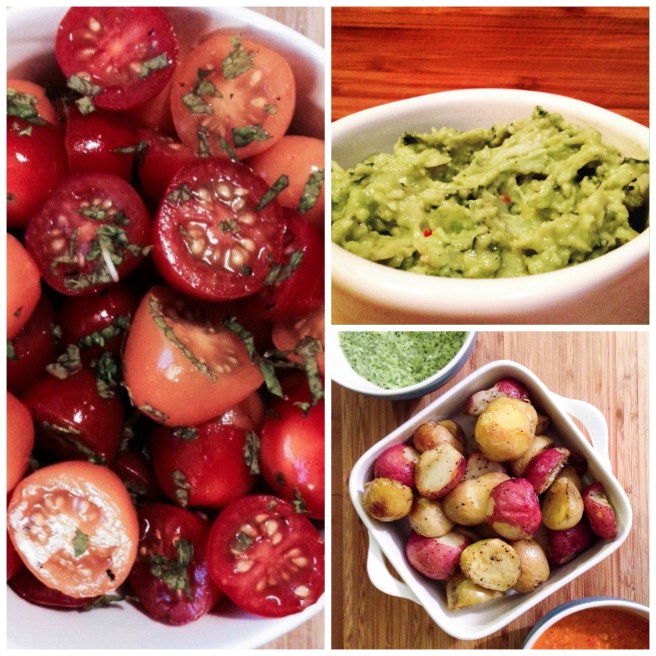
Homemade sauces and condiments are easy and delicious

Dressings and Condiments

You really don’t know how good something can be until you’ve eaten it fresh out of the kitchen. Condiments and dressings are easy to make and so much better than the ones you can buy at the supermarket. Besides, you’ll improve your knife skills when you process all those beautiful aromatics.

Lemony Guacamole

Mojo Sauces

Tomatoes with Thai Dressing

Great flavour starts at the base

Depth of flavour

When you work at creating a delicious flavour base, whether that’s a scratch curry paste or an infusion of dried mushrooms, your dish will be more than the sum of its parts. It doesn’t take long to add flavour, so there’s no reason to skip steps.

Eggplant and Green Bean Curry

Mushroom “Stoup”

Over the last two years, our group picked up or refined cooking skills, encountered new ingredients, and learned new approaches to familiar ones. However, the greatest gift that working through this cookbook gave us was to reinforce the truth that vegetarian and vegan eating can be flavourful, varied, healthy, and more than enough. I think that qualifies as a Food Revolution, don’t you?

You can find the rest of the group’s Food Revolution posts, here. I encourage you to check them out – you’ll meet some wonderful bloggers and get some great inspiration for healthy, delicious eating.

And you can join in on the Cottage Cooking Club’s next adventure, cooking through one or both of Hugh Fearnley-Whittingstall´s River Cottage Every Day and Love Your Leftovers – you can find the details, here.

World food waste statistics

I believe that people need access to safe, affordable, whole foods; access to the skills and techniques to prepare foods; and access to the housing, income, and safety that will allow them to cook. This will ensure the health of future generations and the planet, reducing the waste of food, packaging materials, human potential, and environmental resources that an industrial, processed food system can enable. Participating in initiatives like Food Revolution Day can only help those goals along.

You’ll find plenty of posts, photos, videos, and more if you search the #FeedtheFuture and #FoodRevolution tags on your social media channels, encompassing a huge range of perspectives on what it means to bolster food security for coming generations.

A Loaf of Bread

Old Fashioned Oatmeal Bread

Sometimes it’s when my pantry is almost empty that the urge to bake is strongest. At the moment, I’m almost completely out of sugar (both brown and white), there are only a few cups of all-purpose flour left in a cut-down 5 kilogram bag, my store of eggs is dwindling, and I’ve just enough butter to grease a pan or two.

So of course, my head is full of cakes and cookies, muffins and breads. I took stock and realized I had plenty of molasses and a brick of shortening. I reached back to memories of childhood baking and one of the first breads I learned how to make.

No knead bread is quite sophisticated these days, based on sourdough artisan loaves, but when I was a kid it was a simple, old fashioned recipe. My go to baking book back then was Betty Crocker’s New Good and Easy Cook Book, which I pulled down when I wanted to make Snickerdoodles, Chocolate Crinkles, Brownies, or Blondies.

But I also ventured into the savoury baked goods section and the “Easy Oatmeal Bread” was a great confidence-builder for a young baker. My mother made wonderful breads and I often helped her with the measuring, mixing, and kneading. It was a while before I had the confidence to make those breads on my own. This no knead bread was easy enough for me to make after school and have ready before supper.

My mother’s copy was a reprint of the 1962 edition. I found two copies of the same edition at a library sale long ago, kept one for myself, and gave the other to my sister. So, when I’m feeling nostalgic, or when my pantry stores are reduced to the levels of a more frugal era, I pull mine off the shelf.

Tonight, I revisited that oatmeal bread, making some substitutions and additions that helped bring it a little closer to the 21st Century. When you make it, feel free to use butter in place of the shortening. But if you find yourself short of butter, as I did tonight, you might be surprised at how much you enjoy this bread with an old school dose of shortening.

Oatmeal bread ready for the oven

Old Fashioned No Knead Oatmeal Bread

  • 3/4 cup boiling water
  • 1/2 cup rolled oats
  • 3 tbsp. shortening, softened
  • 1/4 cup fancy molasses
  • 2 tsp. salt
  • 1 pkg. active dry yeast
  • 1/4 cup warm water (100°C)
  • 1 egg
  • 1 1/4 cups all-purpose flour
  • 1/2 cup whole wheat flour
  • a pinch of nutmeg
  • 2 tbsp. sliced almonds
  • 1 tbsp. flax seeds

Grease a 9″X5″X3″ loaf pan with butter. Set aside.

Put all-purpose flour into a medium-sized bowl. Then, sift whole wheat flour into the bowl, adding any bran that’s left in the sifter afterward. Lightly whisk the flours together. Set aside.

Fit the paddle attachment onto a stand mixer. Add the boiling water, rolled oats, shortening, molasses, and salt to the bowl of the mixer. Stir together on low, then allow to cool until it’s lukewarm.

Meanwhile, cool 1/4 cup of boiled water to 100°C, then add yeast, stirring until dissolved.

Add yeast, egg, and half the flour to the bowl of the stand mixer. Beat for two minutes on medium speed.

Add the rest of the flour, along with a pinch of nutmeg, and stir until almost completely incorporated. Add sliced almonds and flax seed, then stir until all ingredients are incorporated.

Spread the dough into the prepared loaf pan, making sure the top is even and smooth. Allow the loaf to rise in a warm place for about 1 1/2 hours.

Once the dough has risen, preheat the oven to 375°F. Bake 40-50 minutes. The loaf is done when it is well-browned and sounds hollow when knocked. Remove the loaf from the pan, place on a wire rack, and if you like, brush with melted butter. Cool completely.

Adapted from Betty Crocker’s New Good and Easy Cook Book (1962 edition)

Sliced oatmeal bread

How to Cook a Book

Cookbooks I love

If you’re like me, you have shelves full of cookbooks, many of which look as pristine as the day you bought them. Even those of us who love to cook get distracted by busy lives and rely on the same handful of recipes, when we’re not getting take out. We all have dog-eared, bedraggled cookbooks that are full of stains, notes, and barely attached pages. We’ve learned the rhythms of the author’s techniques, stocked our pantry with the book’s basics, and have grown confident enough to improvise or adapt when needed.

It can be hard for new books to compete. Though they may be full of bookmarks from the first read through, they’re often neglected after the first one or two recipes, probably because there’s another new cookbook to peruse on the night stand. Cookbook clubs, online or off, offer a way to ensure you’re making the most of a cookbook while helping create a community of like-minded cooks.

I’ve been blogging through cookbooks since 2010 and it’s built community for me along with kitchen chops. If you’re considering joining a cook-along group, here are a few things to keep in mind:

Be True to Yourself

There’s no right way to write a cook-along post. Some people chart their experience with each recipe step-by-step. Others connect their assignments to stories and memories. You might be interested in writing about the roots of ingredients, recipes, or cuisines. Another blogger might weave these meals into an ongoing record of their lives. It’s not just structure that makes a blogging group work, it’s creativity.

Pros: Finding your voice is an enormous part of what makes blogging worthwhile.

Cons: If you’re struggling to find an angle, you won’t connect with your project or your readers.

Be Consistent

Make a commitment, whether that’s to cook every single recipe in the book or to participate every second month. Whether your goal is to make better use of your cookbooks, get into the kitchen more often, or begin a writing practice, you’ve got to have some structure. Your schedule doesn’t need to be precisely the same as your cook-along group’s schedule, you just have to find what works for you and stick to it.

Pros: Finding a schedule that works for you takes things from whim to project.

Cons: When things get tough, the tough get writer’s block.

Be Flexible

Illness, vacation, or work crunches can cause your cook-along to take a back seat. Don’t worry – that’s what ‘catch up’ lists are for. Your family’s health restrictions or food preferences might not fit with every recipe. Adapt the recipe, make one or some of the components, or skip it altogether. There’s no such thing as a cookbook that’s tailored to your needs and tastes precisely, unless it’s your own. If you can’t make a project work with your life, it’s not going to work at all.

Pros: If you’re too rule-oriented, you might not enjoy yourself.

Cons: If you’re too flexible, you just might find you’ve stopped.

Be Accessible

It can be frustrating to read through a post and find out that the only way to comment is to sign up for a third party commenting system – consider relaxing your restrictions a little and rely on spam filters or moderation a bit more. If it’s too hard to comment, your fellow cooks may give up trying. In a similar vein, when you’re posting your link for an assigned recipe, make sure it’s a link to the post itself, not your blog. If you’re not getting comments, it could be that folks got frustrated trying to find the right blog entry.

Pros: Being part of the conversation is what makes cook-along groups tick.

Cons: Managing spam can be time-consuming.

Be Generous

Comment on everyone’s blog, whether their following is large or small, even if you think you’d never cross paths in your offline lives. When done well, every exchange is a gift, allowing participants to learn from each other, have fun, and even form real-life friendships. Don’t be the person who doesn’t reciprocate – in the end, you’ll be the one who won’t want to stick around.

Pros: This is how you build online community.

Cons: If you’re part of a big cook-along, you’re going to have to schedule time for commenting, as well as cooking, photography, and writing.

Be Open

What started as a cook-along project for you might morph into developing your own recipes, writing reviews of cookbooks or restaurants, or spur your creative urges in another direction entirely. There’s value in participating in one of these groups from beginning to end, but there’s also much to be gained from joining mid-stream, or letting go of the group when your interests change.

Pros: Following the direction of your creative energies will keep your output fresh.

Cons: When you’re ready to move on, you’ll have to work harder to maintain the community you’ve created.

After all of that, you might be wondering, where do I sign up? There are a wealth of cook-along groups out there. Search by cookbook, cuisine, or meal and you’ll be sure to find some. To get you started, here are links to the groups I’m currently participating in:

And if the idea of joining an online cook-along just doesn’t appeal to you, don’t despair. That’s not the only way to cook a book.

Want to go your own way?

Chart your own course through your cookbook shelves, like Ei, of the Cookbook Immersion Project. Make your blog into a record of your hits and misses, what you’ve learned, and what you’ve yet to master. With no deadlines or requirements, you can visit and re-visit the books on your shelves as you see fit.

Pros: Explore your cookbook library at your own pace, according to your own tastes.

Cons: If you’re not a self-starter, you might be back at square one.

Not online? No problem!

Cookbook clubs are the new potlucks, according to a wave of recent media trend watching. Recruit a cadre of home cooks and plan regular dinners, with each participant bringing a dish from a cookbook you’ve chosen. Unlike other book clubs, the meat of the discussion is right on the table.

Pros: A delicious, multi-course meal, made by many hands. Conversation, conviviality, and analysis. No pressure to document each dish photographically or otherwise.

Cons: People are coming over! If a meal isn’t documented on the internet, did it really happen?

Once you’ve found your way, you’ll be a more skilled, more creative, more adventurous cook. Just don’t neglect those old favourites completely. Never repeating a recipe can be as much of a fault as making the same ones over and over.

Dispatches from the Chesterfield

Strawberries in the balcony box

Hanging out on the couch has put a damper on my recreational activities. Gardening has been limited to watching the strawberries on my balcony grow, cultural outings are virtual ones, and my culinary endeavours are just a little pinch-hitting with chopping aromatics. 

At least I can catch up on my reading.

Most of my immediate stack is non-fiction:

No Such Thing as a Free Gift
Storm Warning: Water and Climate Security in a Changing World
Where I’m Reading From: The Changing World of Books

I’ve also got a pile of cookbooks to read through:

The Violet Bakery Cookbook
Honey & Co.
True North: Canadian Cooking from Coast to Coast
Food52 Baking
Mamushka

I’ll be back in action soon, but until then, do you have any reading recommendations?

Cook the Book Fridays – Salted Butter Caramel-Chocolate Mousse

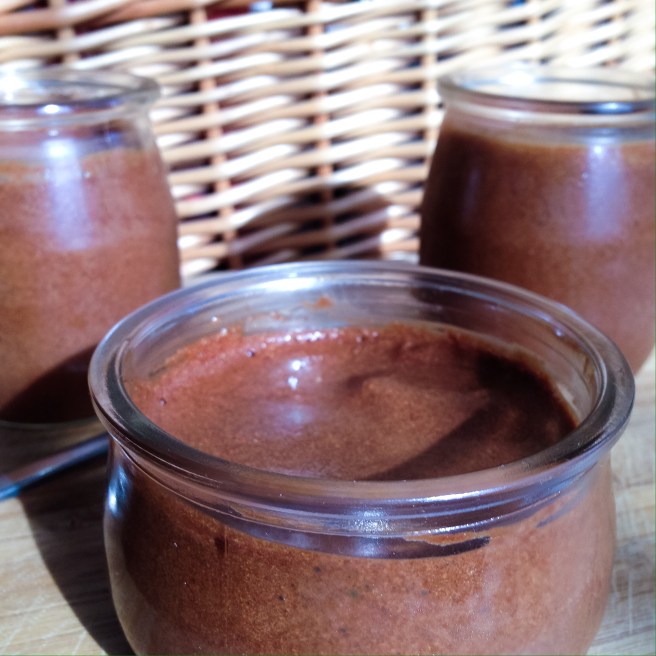
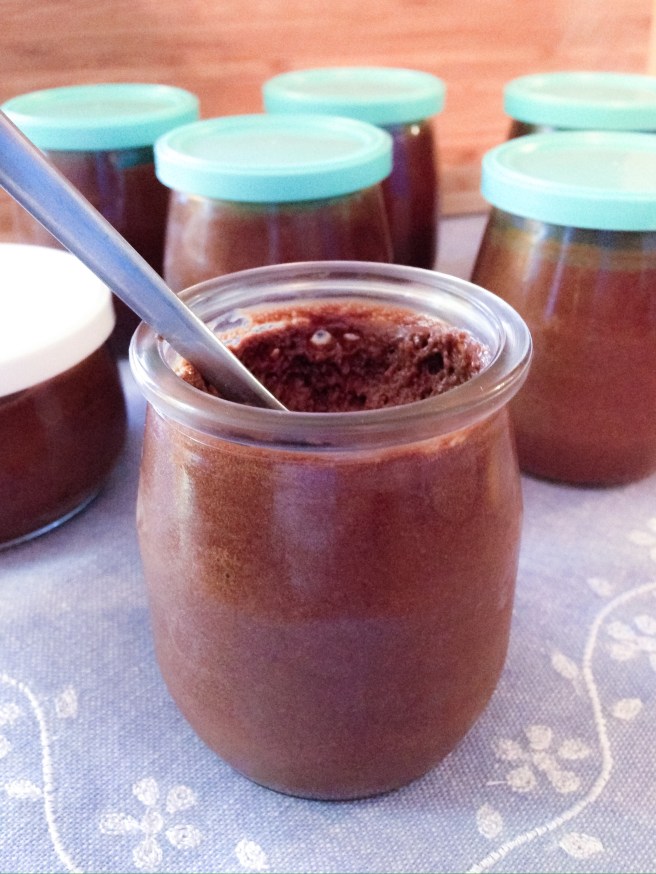
Salted Butter Caramel-Chocolate Mousse

It’s ironic that the phrase ‘piece of cake’ signifies something that’s dead easy, as our cultural image of a piece of cake is based on the layer cake, which requires multiple steps, a light touch, and at least a little bit of decorative talent. Chocolate mousse on the other hand, associated with restaurant meals and special occasions, is a piece of cake to make.

This mousse is complicated by the addition of caramel, but even that is easy, once you’ve learned the trick of it. In fact, making caramel is a lot like making brown butter. When you know how to make it, you want to add it to everything. And once you’ve added caramel to chocolate mousse, I suspect you’ll want it that way every time.

Salted Butter Caramel-Chocolate Mousse

The only thing that’s not easy about this recipe is having to wait eight hours for the mousse to set. I solved that issue by making it before bed last night. If I’d made it during the day, I wouldn’t have waited nearly that long. As it was, it took a lot of will-power not to eat it for breakfast. Which wouldn’t have been a bad idea, save for the fact that I wanted to wait for some brighter afternoon light for photographs.

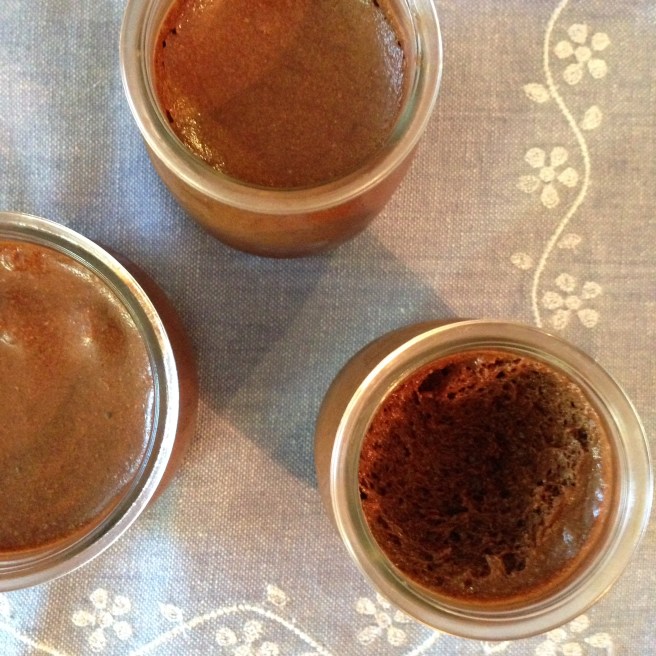
Salted Butter Caramel-Chocolate Mousse

I’m so glad we’ve posted about this recipe – I’ll never have to wait for good light again. Now that I know how delicious it is, I don’t think I could have the forbearance. This mousse is wonderfully balanced in its elements – salt, sweet, bitter, and rich. It’s the sort of thing you could bring out in cocktail glasses at a dinner party, but I don’t recommend waiting for an occasion. Spoon it into little pots and enjoy it as a mid-week treat. It will look just as charming and it will be even more satisfying.

Salted Butter Caramel-Chocolate Mousse

Surprisingly, I’ve still got some in the refrigerator to enjoy tomorrow. This recipe could be halved, easily, but I recklessly made an entire batch. At least it gave me the opportunity to use the cute little lids for my Riviera Petit Pot jars. More importantly, I’ll have a decadent treat to distract me from another long day of elevating my sprained foot – an enforced rest is not as relaxing as you might think.

Luckily for you, this is one of the recipes from My Paris Kitchen that’s posted online. Head over to Epicurious and then run to the store for any of the ingredients you don’t have on hand. It takes eight hours to set, so the sooner you get started, the sooner you’ll be enjoying it.

You can read through everyone’s posts here. And consider joining this community of wonderful cooks and lovely people, as we work our way through David LebovitzMy Paris Kitchen.

Cottage Cooking Club – April 2016

Cherry Blossom Snow

It’s hard to believe we’ve come to the end of our time with River Cottage Veg. Collectively, the bloggers of The Cottage Cooking Club have worked through every one of the 200 recipes included in the cookbook.

This cook-a-long came at a fortuitous time for me. My partner was moving toward veganism and I wanted to build some plant-based cooking into my blogging routine to support him. We’ve always eaten a lot of vegetarian and vegan meals, but ensuring variety is a great incentive to keep going when you’re changing the way you eat.

It was also a chance to keep cooking alongside one of the talented bloggers I’d met through French Fridays with Dorie. Andrea of The Kitchen Lioness posts wonderful recipes with gorgeous photography, in a blog full of family adventures, travel tales, and explorations of her city and region. She’s been a terrific leader, from the structure she devised that allowed the group as a whole to complete the book in two years, to her always supportive comments on every participant’s blog.

My last month didn’t go as planned. I’d promised to blog about three recipes this month, but only managed two – one of which was the wrong variation of the dish. I guess it goes to show that improvisation is as much of a kitchen skill as any of the others that everyday cooks perform.

Oven-Roasted Ratatouille

Oven-Roasted Ratatouille

I made this recipe in March, as I’d gotten a great deal on eggplant and bell peppers and was looking for a tasty way to use them. As luck would have it, this dish was due to come up in our very last rotation.

This is one of the dishes I hadn’t noticed while paging through the cookbook and it’s another one that Kevin wishes I’d made much sooner and often. Oven-roasting brings out the flavour of all the vegetables beautifully. We’ll be making this one as often as we can get our hands on good eggplants – I can hardly wait to try it again in high summer.

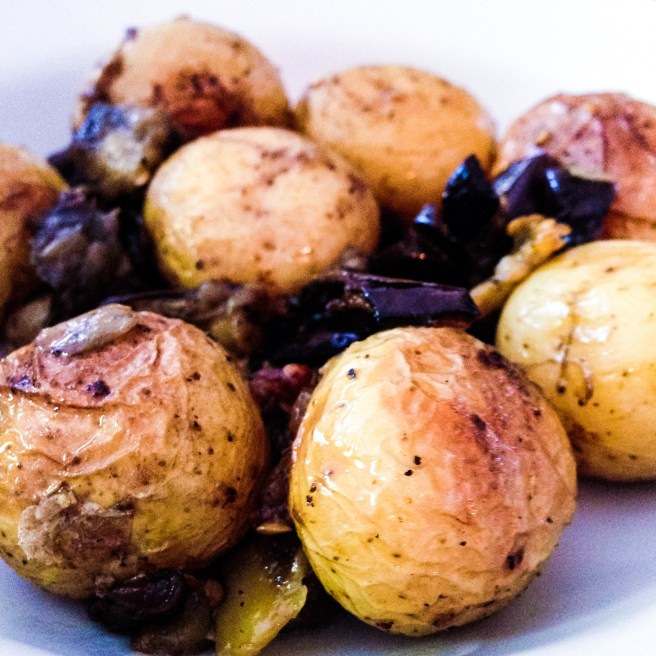
Roasted Potatoes and Eggplant

Roasted Potatoes and Eggplant

Another eggplant dish and another recipe in Kevin’s Favourites column. I was supposed to make the spiced eggplants with chickpeas, but when it came time to make my shopping list, I looked at the wrong recipe. We’ve got more eggplant in the refrigerator, so I’ll probably correct this error soon. At least it was a delicious mistake.

Quinoa with Zucchini and Onions

Quinoa with Zucchini and Onions

Speaking of delicious mistakes, this dish was supposed to be quinoa with leeks and squash, but once again, I looked at the wrong recipe. Kevin was pleased with this mistake in particular – he loves zucchini and tolerates squash. I’m happy with either. I skipped the nuts and doubled down on the lemon in this dish. It makes a great side, but a bowlful made a satisfying lunch, too.

That’s it for this month’s selections – I was supposed to make Spiced Spinach and Potatoes as well, but every time I set aside some cooked potatoes for the dish, they ended up being used for something else. I suppose I’ll have to plan to make another dish that uses leftover potatoes, then perhaps I’ll make this dish instead.

The rest of the recipes I tackled this month were from previous months’ selections. I go through periods of focusing more on ingredients than recipes I’ve undertaken to make. It always leads me to recipes I might have overlooked otherwise.

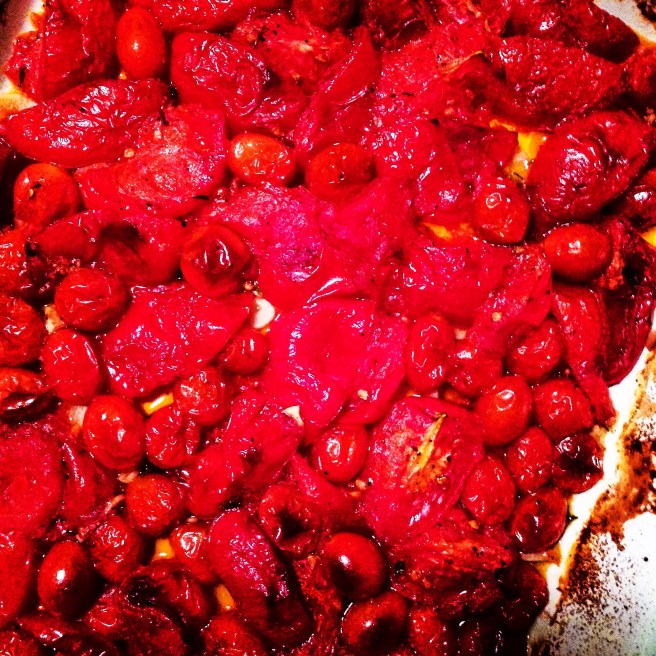
Roasted Tomato Sauce

Oven-Roasted Tomato Sauce

This sauce is a component of several of Hugh’s recipes, so when I picked up a big bag of hothouse tomatoes, I decided to give it a try. Hothouse tomatoes need help and roasting is the best way to get the most flavour out of them. I added some grape tomatoes I had on hand, as well. The sauce is seasoned only with garlic, thyme, salt, and pepper, but it is rich and delicious on its own and even better as the base for soups or stews.

You’re supposed to seed and skin the tomatoes when they’re roasted, but I threw them into the food processor whole. I like using the whole vegetable when I can and there’s pectin in the skins, which helps to thicken the sauce. I know it’s less refined, but for my purposes it worked beautifully. I used it in two more of Hugh’s recipes and had enough left over to enjoy on its own.

Eggplant and Green Bean Curry

Eggplant and Green Bean Curry

It’s been an eggplant kind of month around here, hasn’t it? This dish would be good even with store-bought sauce, but Hugh’s roasted tomato sauce made it fantastic. I especially appreciated that the dish included a homemade curry paste – that’s often the difference between delicious and mediocre with Indian-inspired dishes.

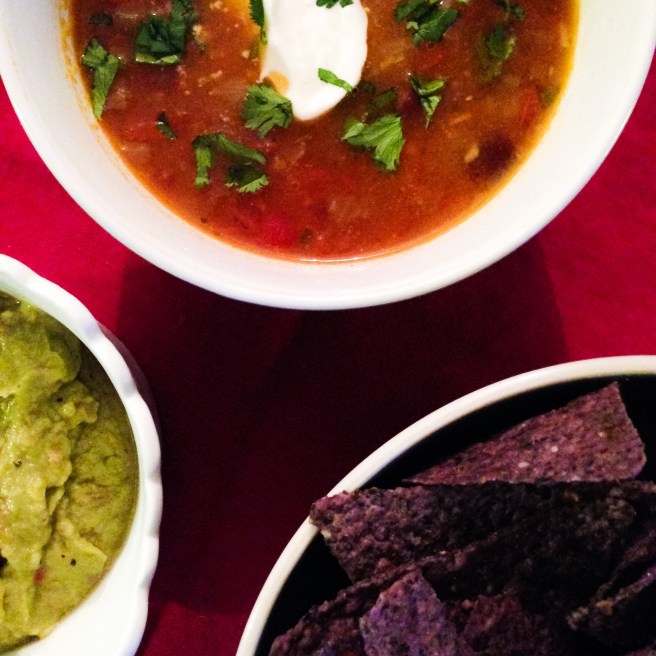
Mexican Tomato and Bean Soup

Tomato and Bean Soup

Hugh’s sauce went to good use in this soup, too, a Mexican-inspired dish that is just fiery enough to wake up the palate without drowning out the other flavours. It should be called double tomato and black bean soup, because there is quite a lot of fresh, diced tomato along with the roasted tomato sauce. This one was a hit at home and then again for my parents. Their only complaint was that the container I’d sent home with my mother was too small.

Cambodian Wedding Day Dip

Cambodian Wedding Dip

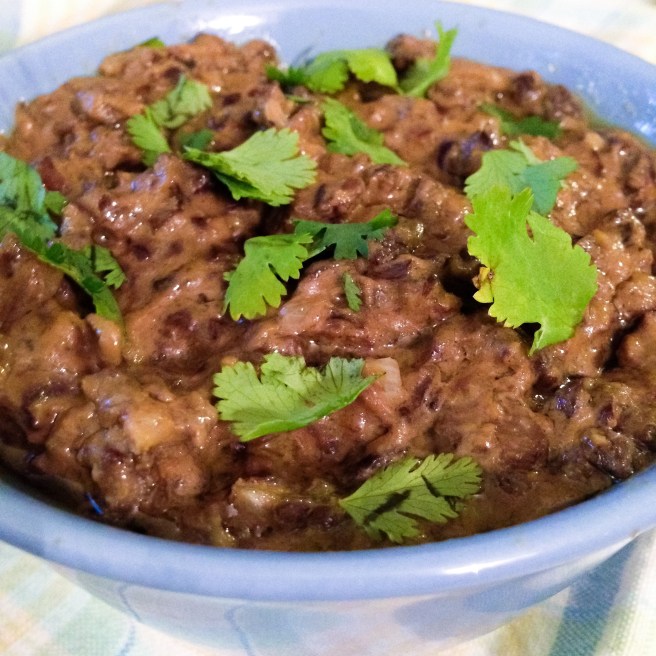
This is a recipe that I’ve been meaning to make since I got the book, but I’ve not gotten around to it until now. The combination of cremini mushrooms, coconut milk, curry, and peanut sounded intriguing. Kevin said it put him in mind of a vegan version of chopped liver. It’s certainly meaty enough to use as a sandwich filling, as well as a dip. I’d like to serve it at a tapas party. I think it would be one of the dishes that gets everyone talking.

So that’s it – the last of my posts for this cookbook. While our group may be finished with River Cottage Veg, our household certainly won’t be leaving it on the shelf. There are too many pages marked with notes, variations, and exclamation marks. And there are plenty of bookmarks for recipes we haven’t yet gotten around to trying.

I am excited to see what Hugh has on offer in River Cottage Every Day. I’ll continue cooking along with the group, but I’m going to stick to vegetable-based selections, as I’ve found that this monthly date with plant-based cooking has been great for our diets and palates.

You can find the rest of the group’s wrap up posts, here. I encourage you to check them out – you’ll meet some wonderful bloggers and get some great inspiration for vegetarian eating.

And you can join in on the Cottage Cooking Club’s next adventure, cooking through one or both of Hugh Fearnley-Whittingstall´s River Cottage Every Day and Love Your Leftovers – you can find the details, here.