Sprung

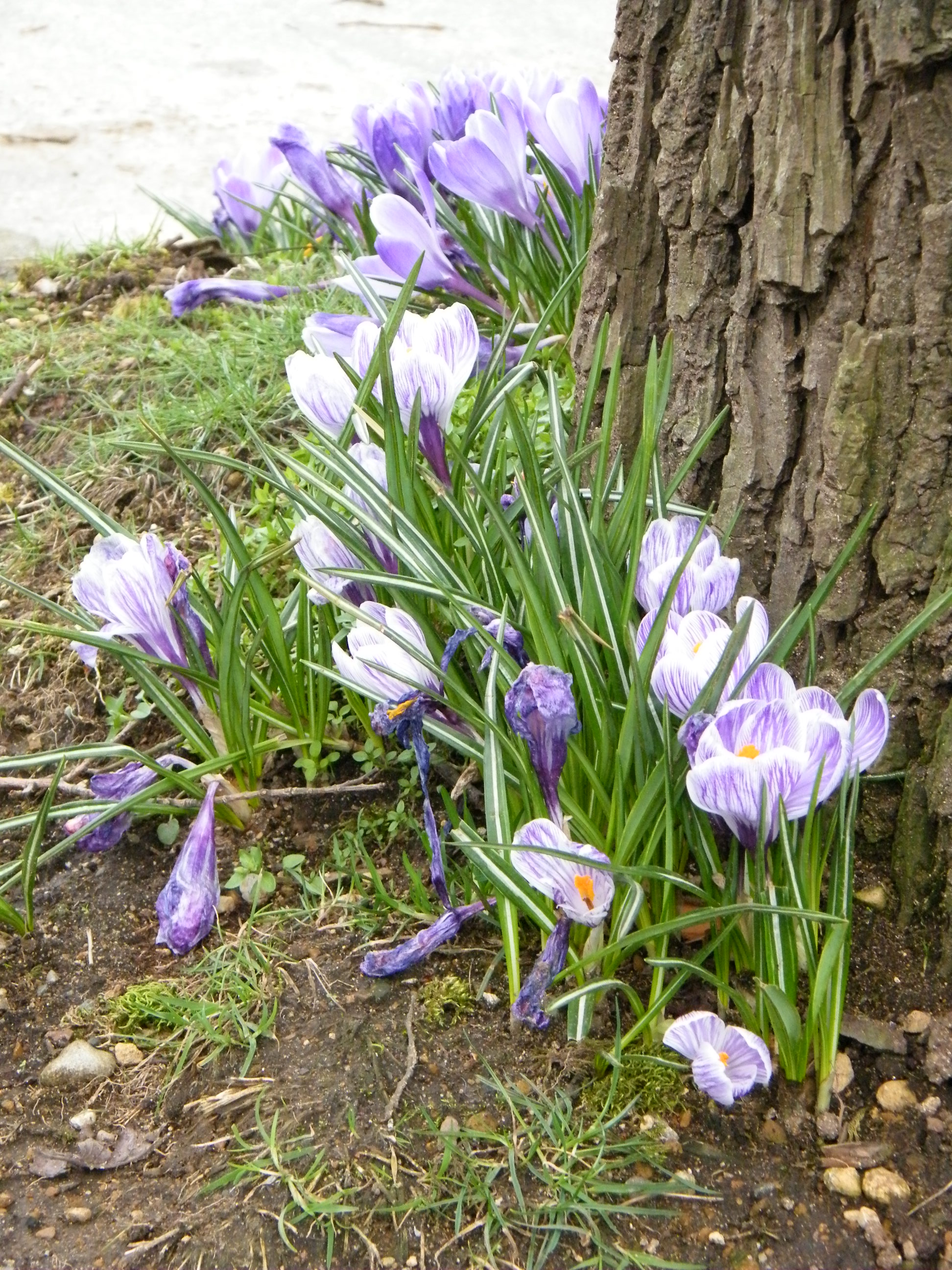
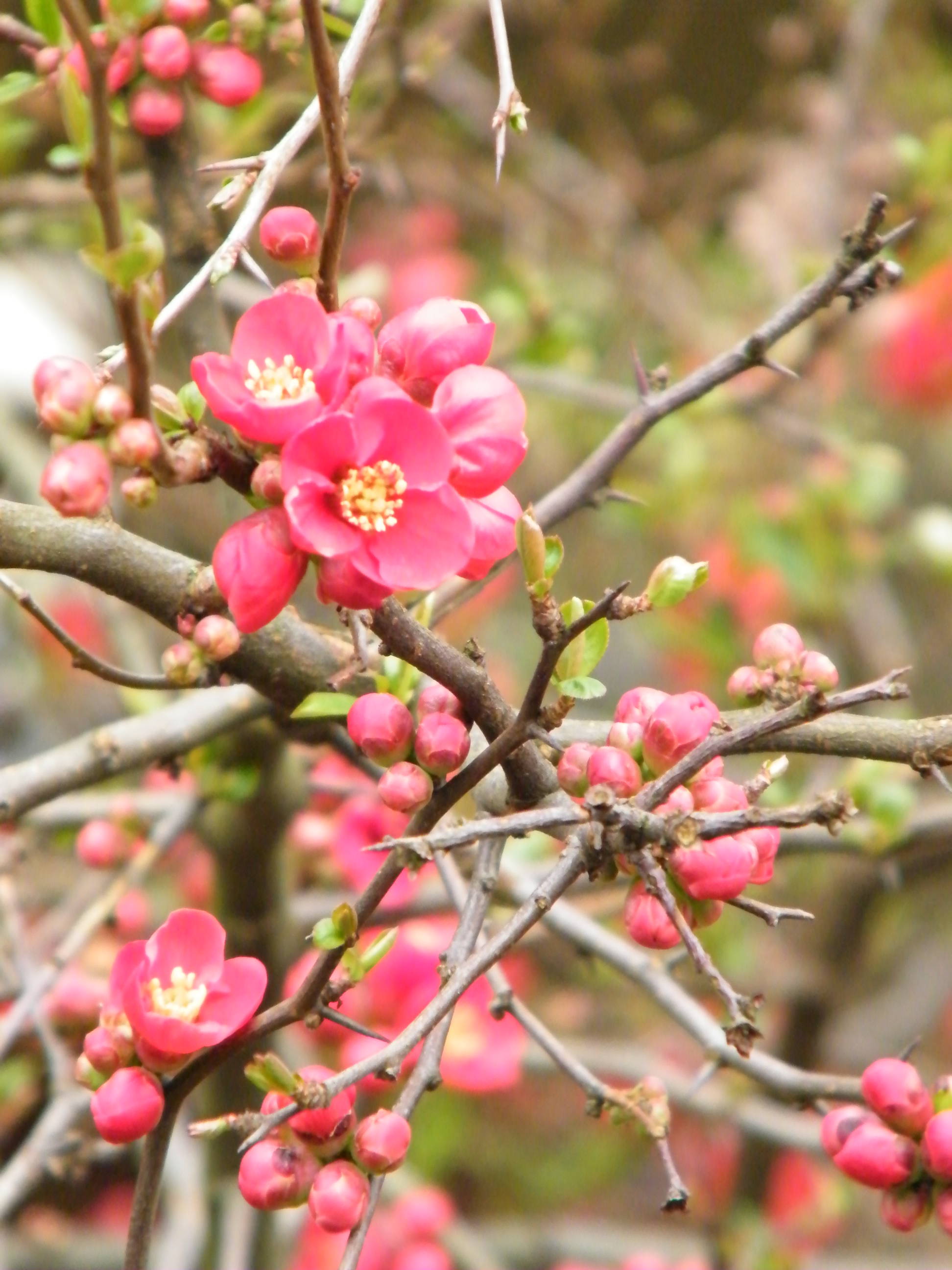
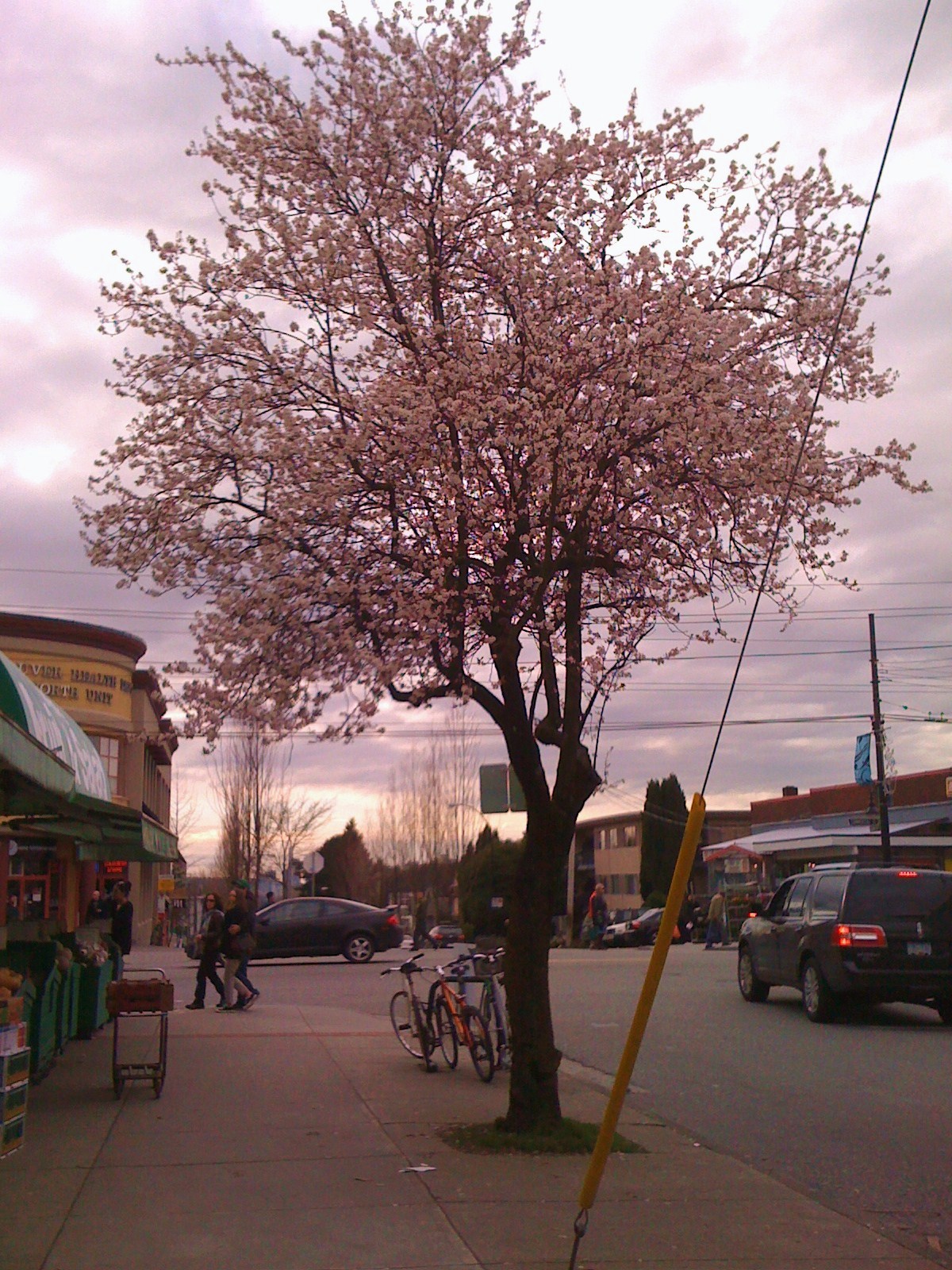
Spring is in full force now. In my garden, the snowdrops are fading away, leaving mysterious clumps of foliage behind. Other bulbs are just starting to poke spears through the soil, while bleeding hearts and rhubarb are beginning to unfurl. Out in the neighbourhood, blossoms are appearing on the trees and the crocuses are still in bloom.

Spring is my favourite season in Vancouver. There’s something about the quality of the air, composed of sea and mountain breezes, along with the early foliage and flowers that makes me feel more alive at this time of year than any other.

The Vancouver Cherry Blossom Festival is taking advantage of all this beauty and is organizing a number of events. My pick is Velopalooza’s annual Bike the Blossoms ride. I’m also excited about Simon Fraser University’s Tales From Terminal City project at Granville Island this coming weekend, in celebration of Vancouver’s 125th year.

That’s not all that’s going on in the City, of course. If the outdoors isn’t your thing, you could always hide inside the CBC Studios for a few hours. The Debaters are taping their television series until April 1st.

I also wanted to mention a couple of events that have been organized to help the relief effort in Japan. This weekend is the Vancouver Japan Relief Walk for Hope. In late April, there will also be a bake sale to raise relief funds for Japan.

That’s just a smattering of what’s going on here in Vancouver. I’d love to hear about how your community is waking up to spring.

FFWD – Scallops with Caramel-Orange Sauce

When I was a student, still living in the Fraser Valley, my friends and I took advantage of student rates to see as many plays, symphony concerts and art shows as we could. Our other obsession was finding places to eat dessert afterward. We all drove; it was a way of life back then, especially if you lived east of Burnaby. We thought nothing of driving an hour into town just for a meal. My self at that time would be horrified that I’d give up car ownership for good only a few years later.

One of our favourite spots was a little bistro on South Granville, where Paul’s Place Omelettery is now. My friends indulged me in the scale I’d developed to rate restaurants, which I called the teapot test. Tin, one-cup pots with lukewarm water rated a D, while two-cup, ceramic pots with piping hot water earned an A from me – A+ if they didn’t drip. I claimed, and still believe a little bit, that the quality of the food could be inferred from the restaurant’s score on the teapot test. That particular bistro (if you remember the name, please let me know) got 100% on the teapot test and its food was exquisite to match. We ate meringues and chocolate cakes, crème caramel and cheesecake, occasionally even stopping in for dinner. What was even better than the tea, the desserts and the entrées, though, was the service. The head waiter there sort of took us under his wing, expanding our palates and gently correcting us if we got the terminology wrong. He was a gay man, probably in his mid-thirties, and he reminded me of my uncle in Montreal, whom we were rapidly losing to the one of the first waves of AIDS.

He taught me that I take my tea clear, not black. He also introduced me to scallops, which they served in a red sauce, encased in a pastry shell. Whenever I’ve had scallops since, I think of that time in my life, and of the waiter that kindly put us through a sort of restaurant etiquette finishing school. My parents took us to restaurants of all sorts when we were young, from burger joints to French bistros, but I don’t know if I’d be the eater (and restaurant patron) that I am today if I hadn’t met him.

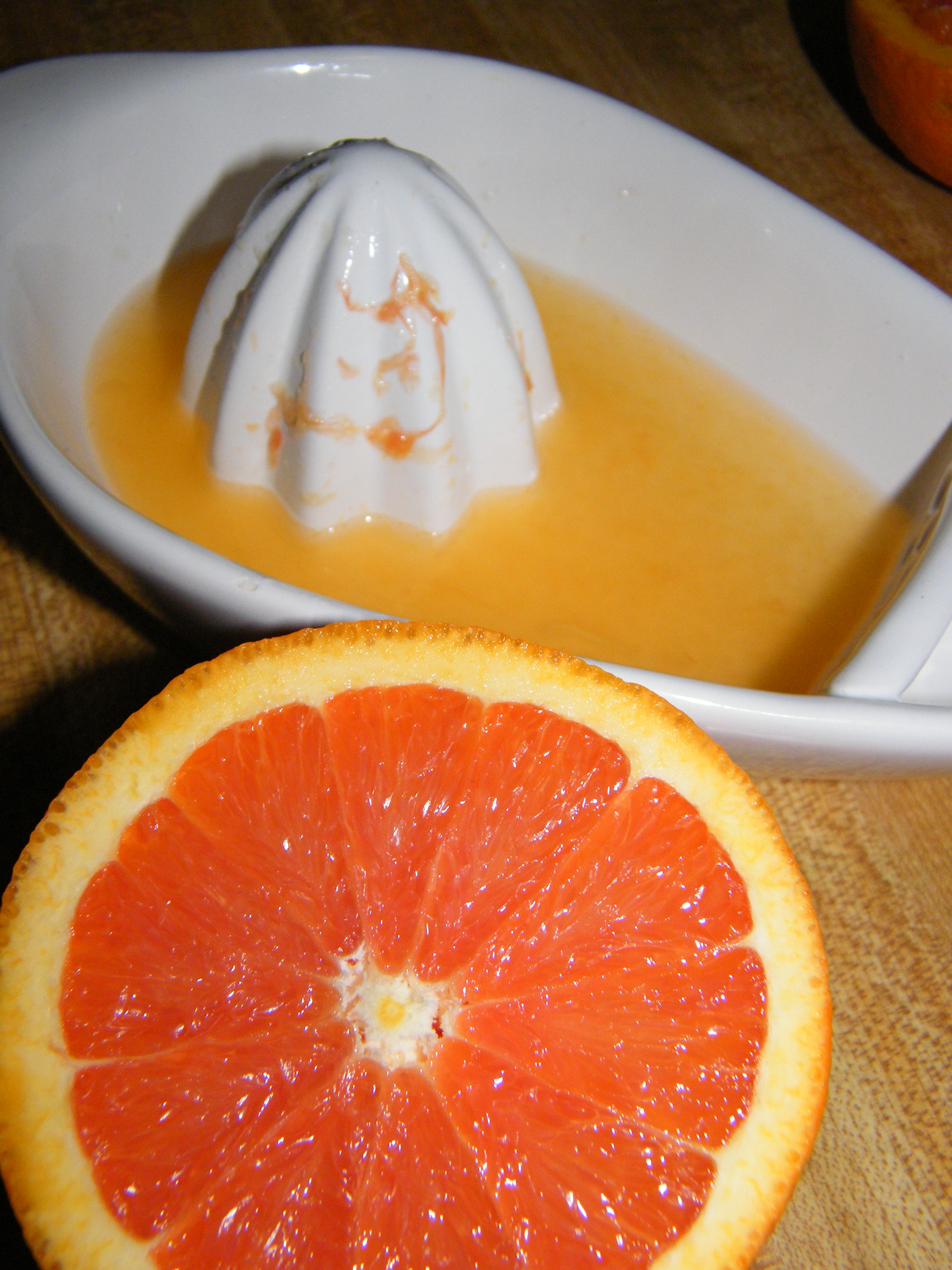
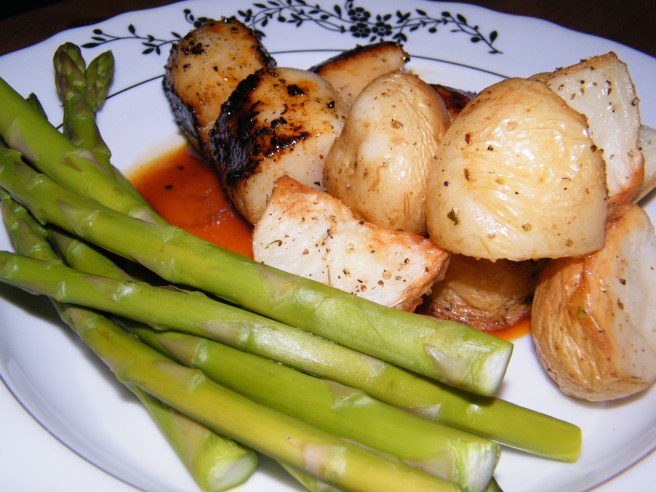
This week’s recipe put me in mind of those other scallops, but the recipes couldn’t be more different. Dorie’s Scallops with Caramel-Orange Sauce recipe is quick to execute, with few ingredients, while the scallops at that long-ago bistro were a fussy marvel of French cuisine. Dorie’s scallops are no less impressive, though. A caramel sauce, reduced with white wine and the juice of an orange (cara cara in my case), is finished with a little butter. This is poured over some seared scallops. Simple, but lovely.

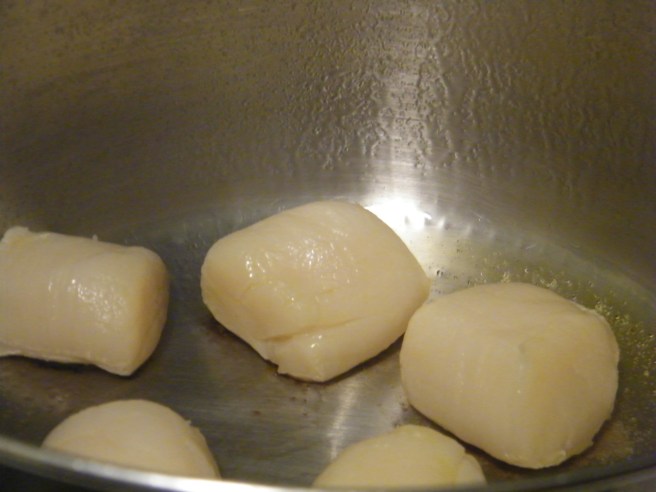
I was lucky enough to get some lion’s paw scallops from The Daily Catch, our local Ocean Wise fishmonger. They were huge, fresh and beautiful. When they were cooked, they were almost crispy on the outside and extremely tender inside. They were so large that I made sure to dip each forkful in sauce, to make sure I got some with each bite. I served them with asparagus (which is finally in season again!) and potatoes roasted in olive oil and oregano. The scallops didn’t need complicated accompaniment.
One of the things I love about food is how its consumption is so wrapped up in memory. The association we make with certain meals or flavours is one of the loveliest ways to revisit our past.
You can find many other blogged descriptions of this week’s FFWD recipe here: Scallops with Caramel-Orange Sauce

Transition City, Part III

I’m (finally) wrapping up my series of posts about Moving Through. After the walks were finished, the groups convened at the new Woodward’s Building for a wrap-up moderated by Gordon Price.

The various tour leaders gave summaries of the three mini-walks and were then asked to identify what they would like to see addressed in the conversations around Vancouver’s future development.

Here are a few of the ideas were raised:

Michael Green kicked things off by asking why the most successful neighbourhoods were the least developed. He also spoke about the need to incorporate the street in the used or “activated” space of neighbourhoods.

– Rather than simply building concentrations of dense residential buildings, create nodal communities, with amenities, residential, retail and office space in walkable sectors around transit nodes and cycling infrastructure.

– Extend the principals used in laneway housing zoning to create infill office and retail space.

This discussion, and the MOV project of which it is a part, are very timely. Vancouver residents are starting to demand to be part of the conversation around future development, because it’s our existing neighbourhoods that are being targeted. What we value about this city is at stake.

MOV recorded the speakers during each of the walks, along with the wrap-up discussion. You can find the podcasts here.

FFWD – Beggar’s Linguine

It’s going to be an unforgivably short post today, I’m afraid.

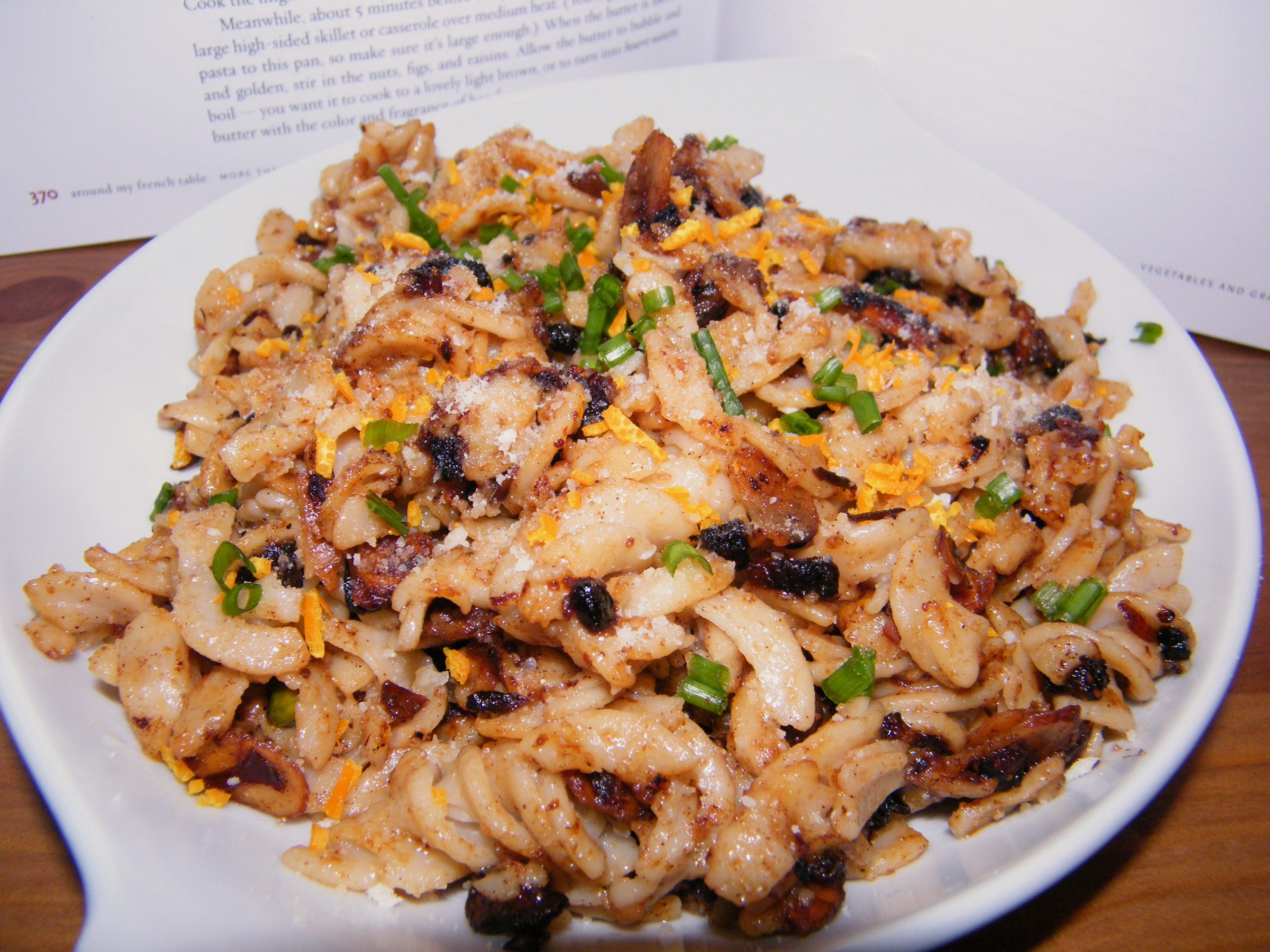
Dorie Greenspan tells the tale of Beggar’s Linguine here and includes the recipe. I substituted dates for the raisins and used gluten-free rotini in place of the linguine, but followed the recipe otherwise. It’s not my favourite recipe for French Fridays, but I didn’t hate it. It’s good to stretch the taste buds a little and I can see playing with the recipe in future to suit myself a little better. It certainly looked lovely on the plate, though.

You can find many other blogged descriptions of this week’s FFWD recipe here: Beggar’s Linguine

Transition City, Part II

Last week I wrote about development trends in Vancouver and the Moving Through walking tours arranged Museum of Vancouver (MOV) as part of their Not an Architectural Speaker’s Series. As promised, here’s a little more about Moving Through.

Three different mini-walks took place in the morning, with a wrap-up discussion for everyone afterward. One walk focused on the role of the viaducts in the evolution of downtown Vancouver, another (using Commercial/Broadway station as a jumping off point) explored the role of transit hubs in shaping the city and the third looked at the impact the Cambie Line has had on those neighbourhoods’ development.

I chose the first walk, which was called “The Path(s) Not Taken: Viaducts, Expressways, and Almost Vancouvers.” The walk was led by architect Michael Green, one of the instigators of MOV’s Not an Architectural Speaker’s Series, along with Brandon Yan and Demian Rueter of Vancouver Public Space Network .

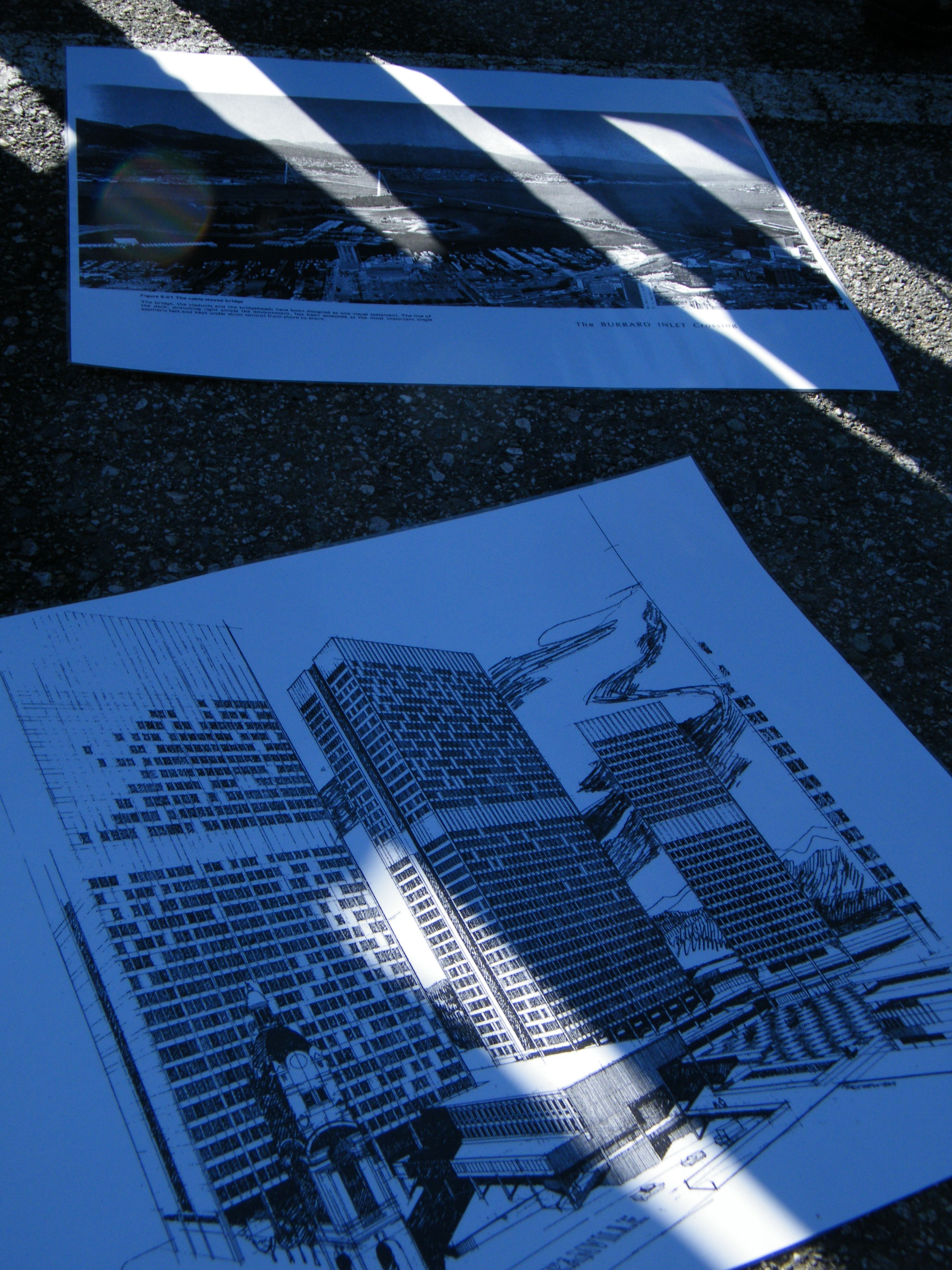
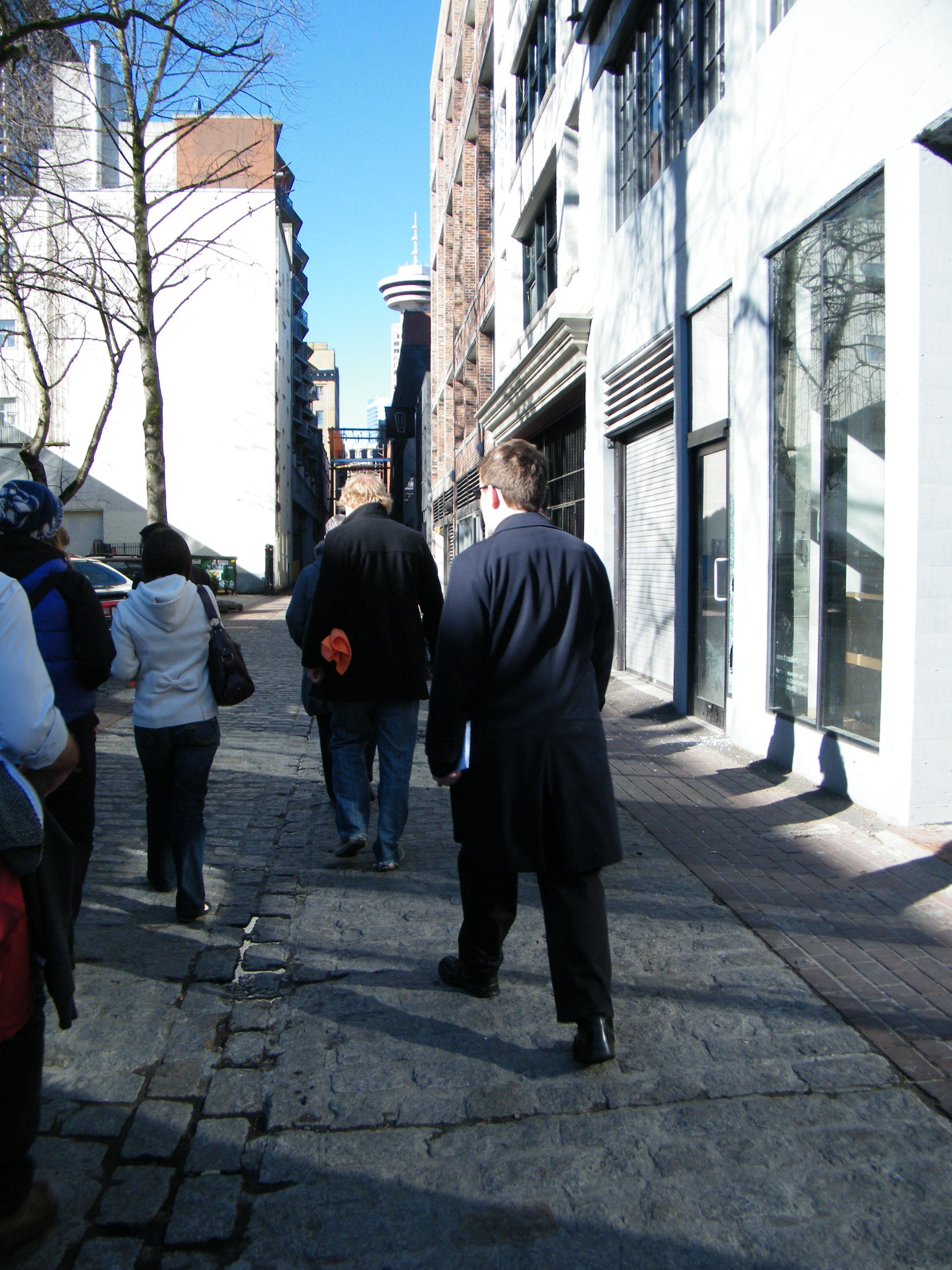
This walk started underneath the viaducts, near the stadiums downtown. The viaducts were built in anticipation of a larger freeway network that was planned in the 1950s and 1960s. A thriving black community, Hogan’s Alley, was destroyed to make way for the viaducts. Project 200 would have also razed Chinatown and Gastown and replaced them with (mainly) office towers. Brandon and Demian of VPSN showed us artists’ renderings of what might have existed if the plans had gone through, then as we toured the neighbourhood, our hosts led a discussion on how Vancouver has developed, what might have been and the changes that are on the horizon. We were supposed to move through Chinatown, the Downtown Eastside and Gastown, ending at Granville Square (the only Project 200 building that was actually erected). The discussions were too interesting, so we only got as far as Gastown.

As we walked through Chinatown, Michael Green discussed the ways in which the heritage low-rise buildings interact with the street, which many newer buildings don’t successfully achieve. He spoke about the architectural challenge of making the street usable, active space, rather than being solely concerned with what happens inside buildings.

Green also pointed out that the stadiums and viaducts have acted as a physical barrier to density moving east. There is talk of removing one or both viaducts, which will open up space for more development and erase any clear density boundary between downtown and the eastern neighbourhoods. Near the end of our walk, in Gastown, Green discussed the neighbourhood’s mix of social housing and social services co-existing with market housing and mid to upscale business.

This walk illustrated the tensions between planning departments, developers and existing neighbourhoods. It also brought up a number of questions:

What makes a successful neighbourhood?

What role should citizens have in neighbourhood development and preservation?

What are the criteria local governments should follow when redeveloping existing neighbourhoods?

I have one more post for you on this subject. I’ll be posting a short piece about the wrap up discussion after the walks.

100th Anniversary of International Women’s Day – Vancouver Parade & Festival

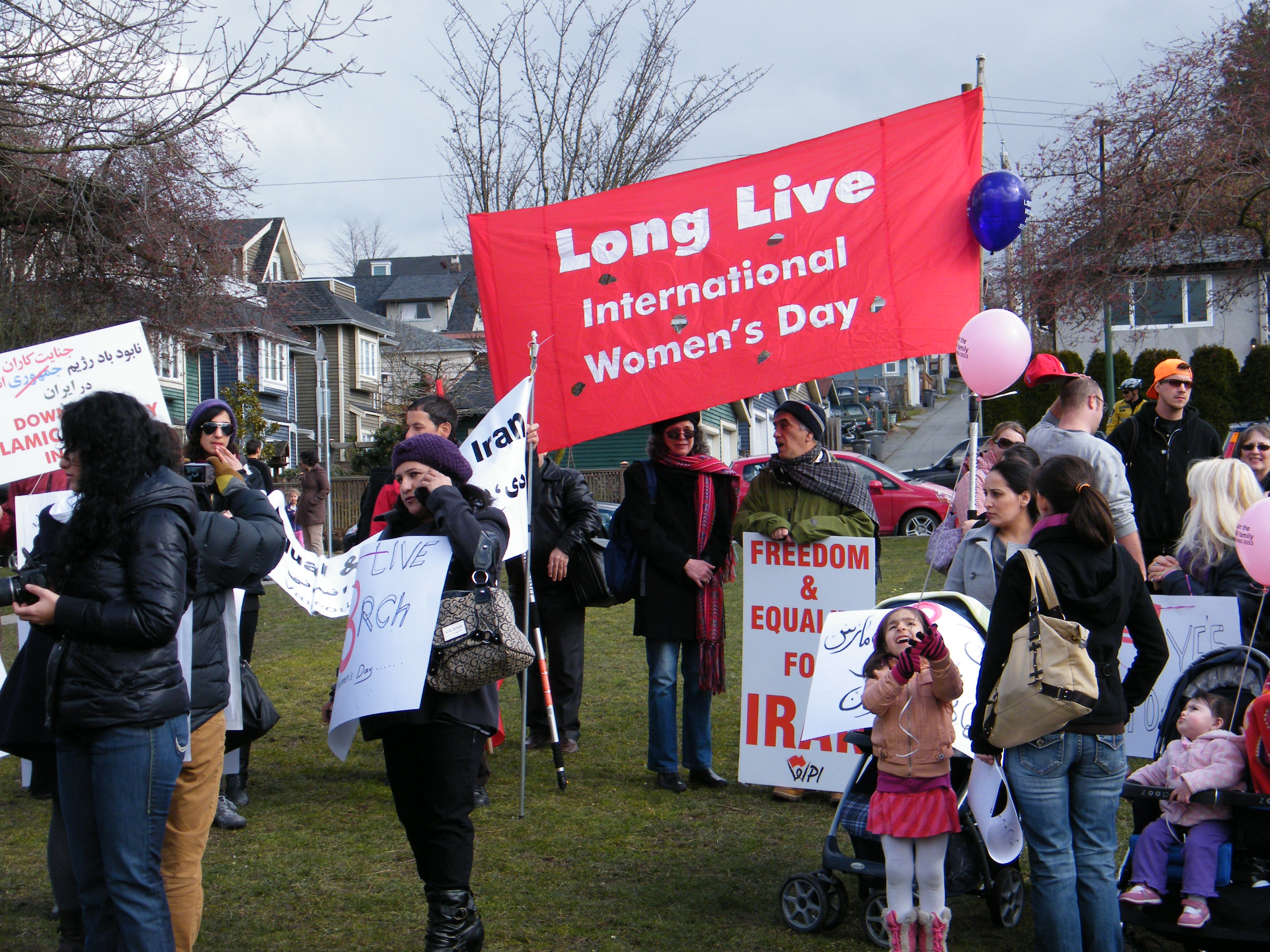
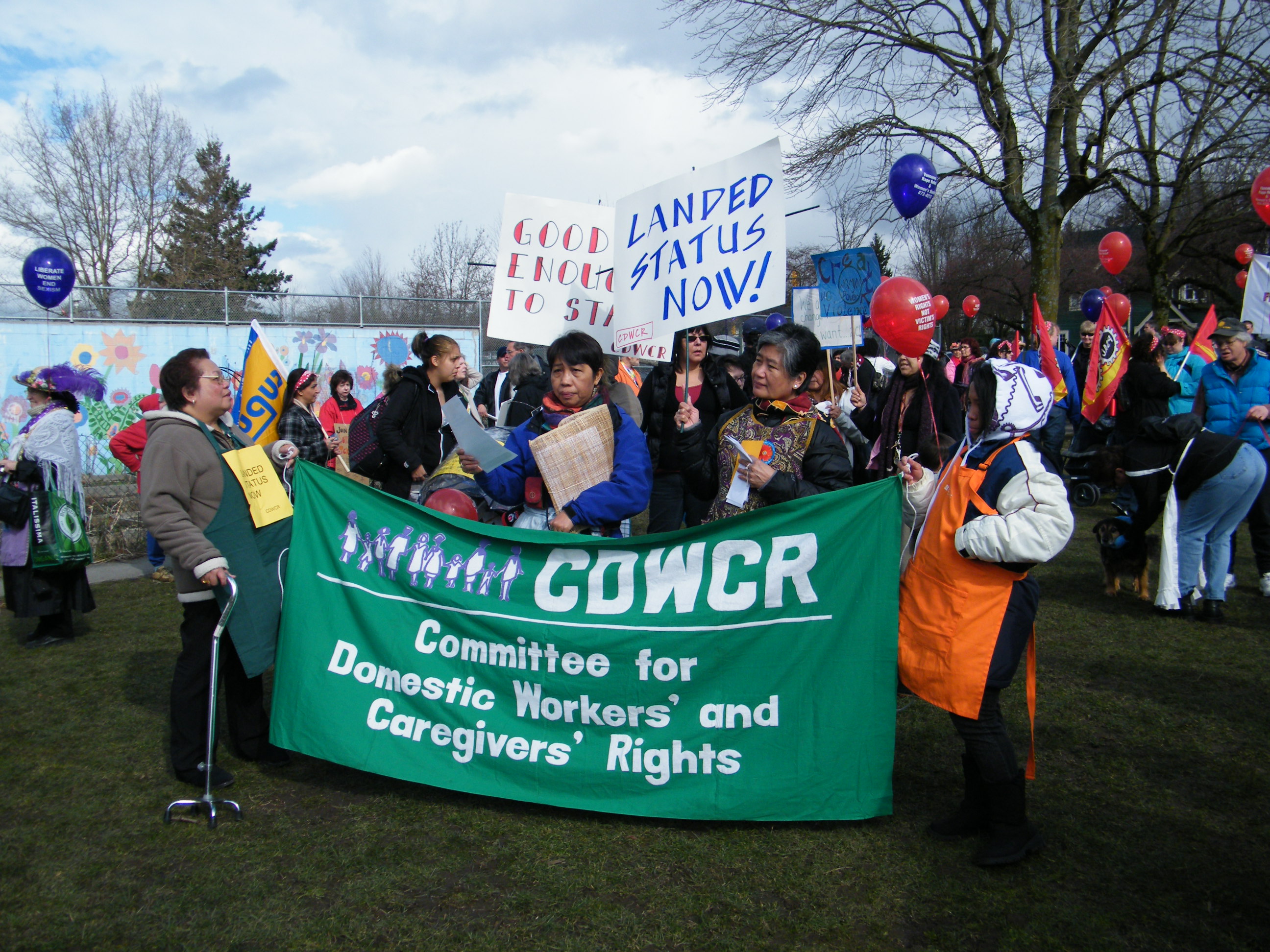
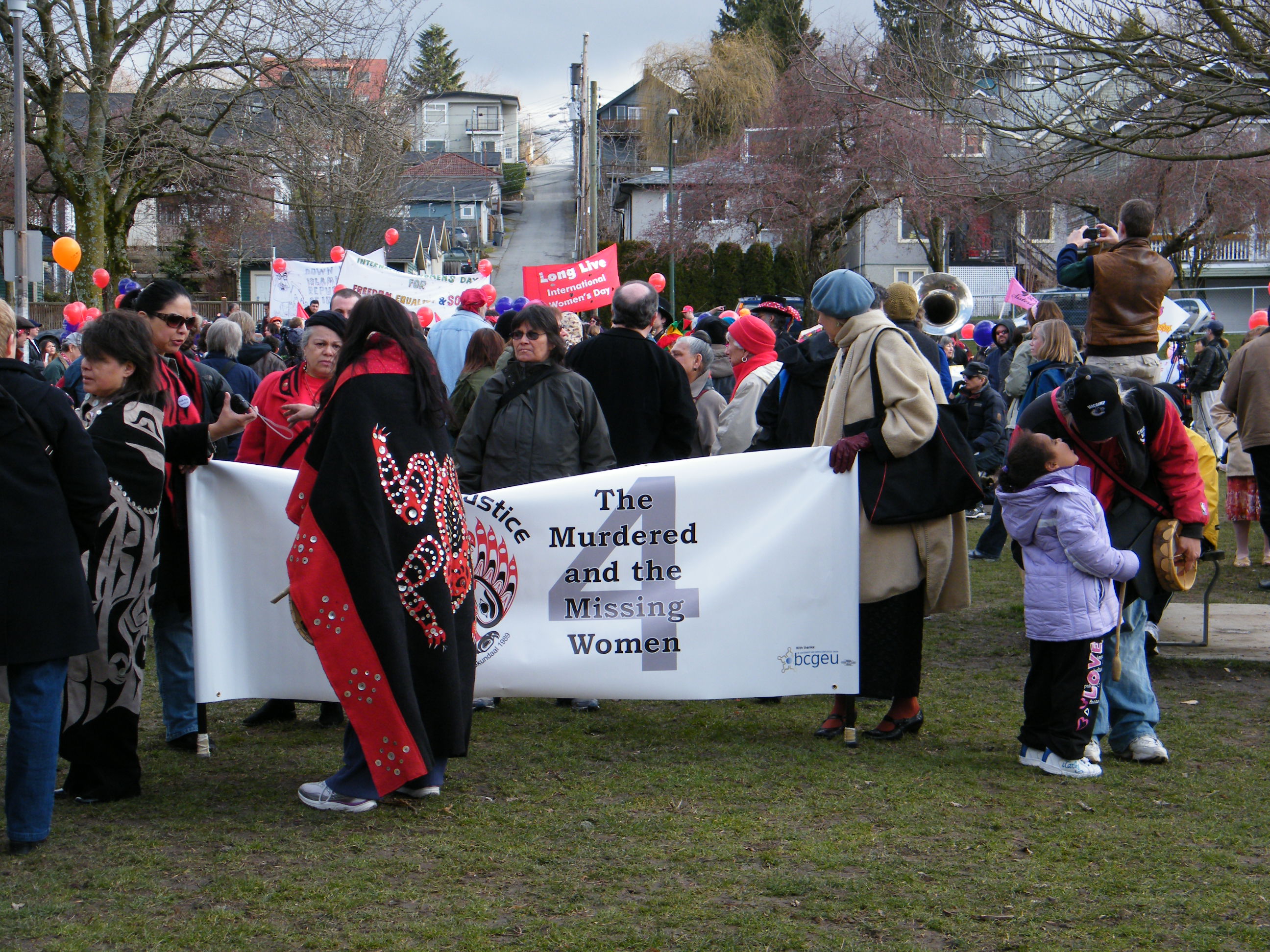
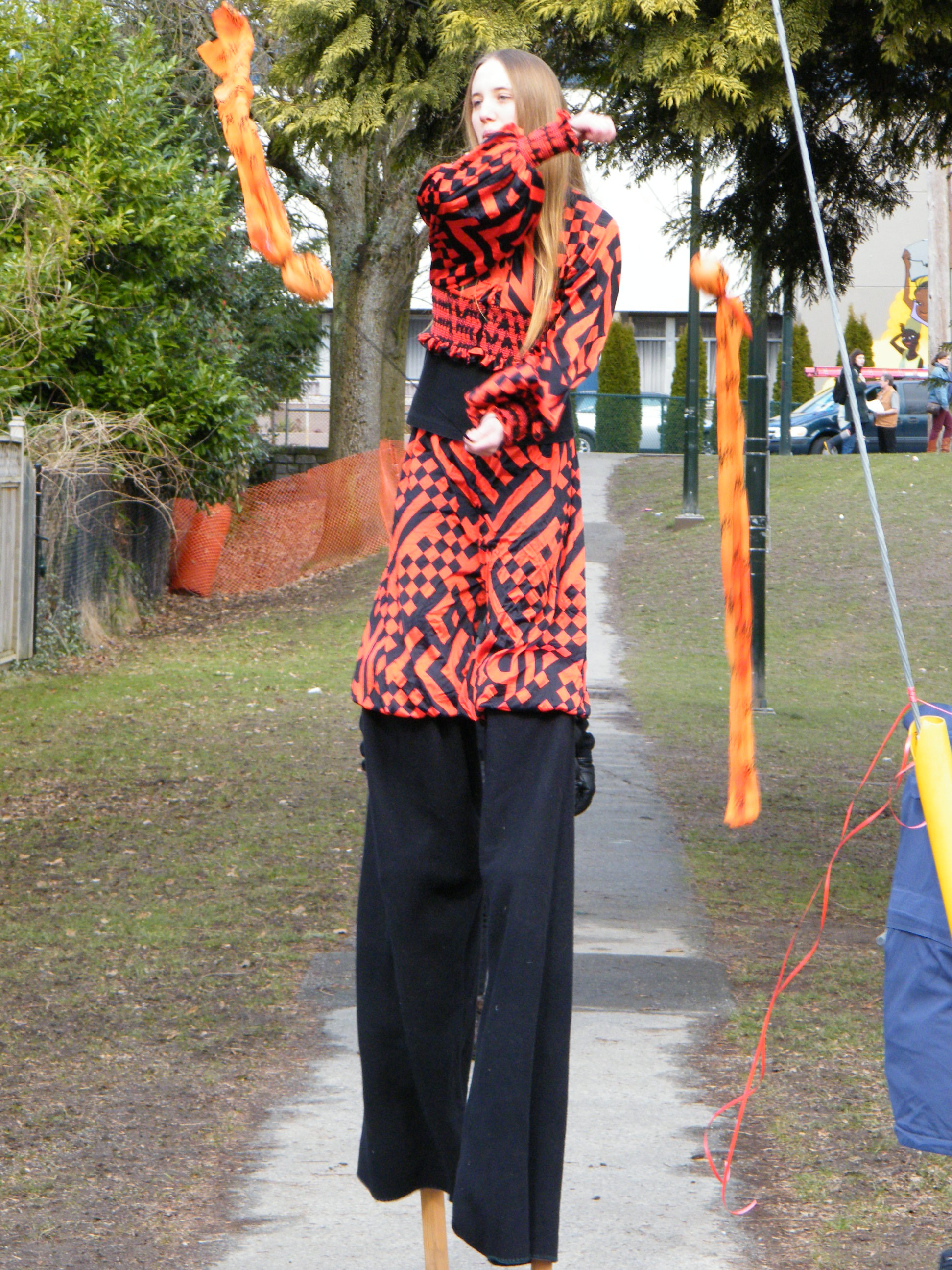
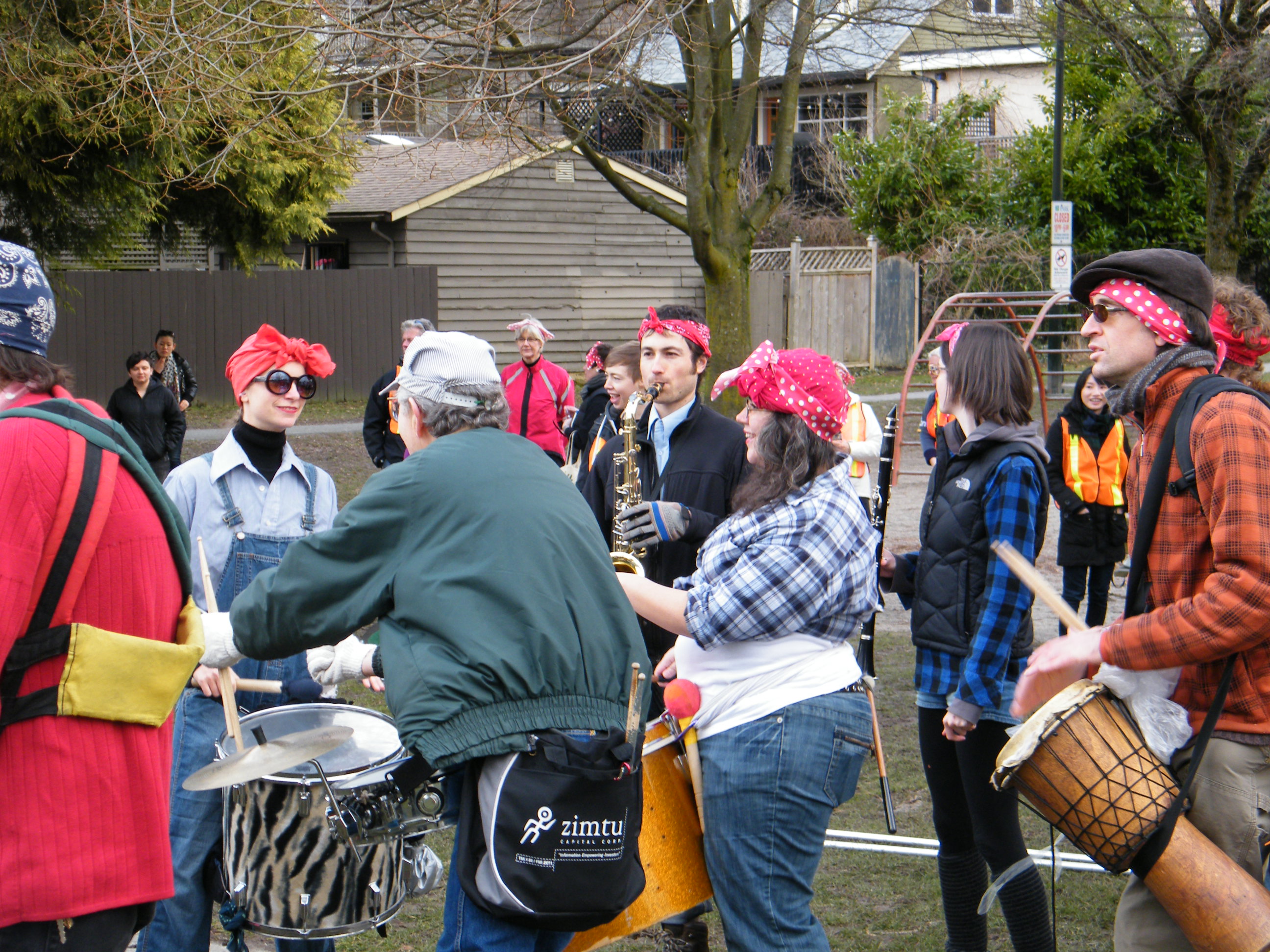
It felt good to march in the International Women’s Day parade today – great energy and a wide spectrum of participants. The march ran from McSpadden Park down Commercial Drive and up Adanac Street to the WISE Hall. I skipped the community festival, as the little dog had had enough by that point, but the crowd was amazing, filling the hall and spilling out onto the street.

Here are some pre-march photos for you:

FFWD – Savoury Cheese and Chive Bread

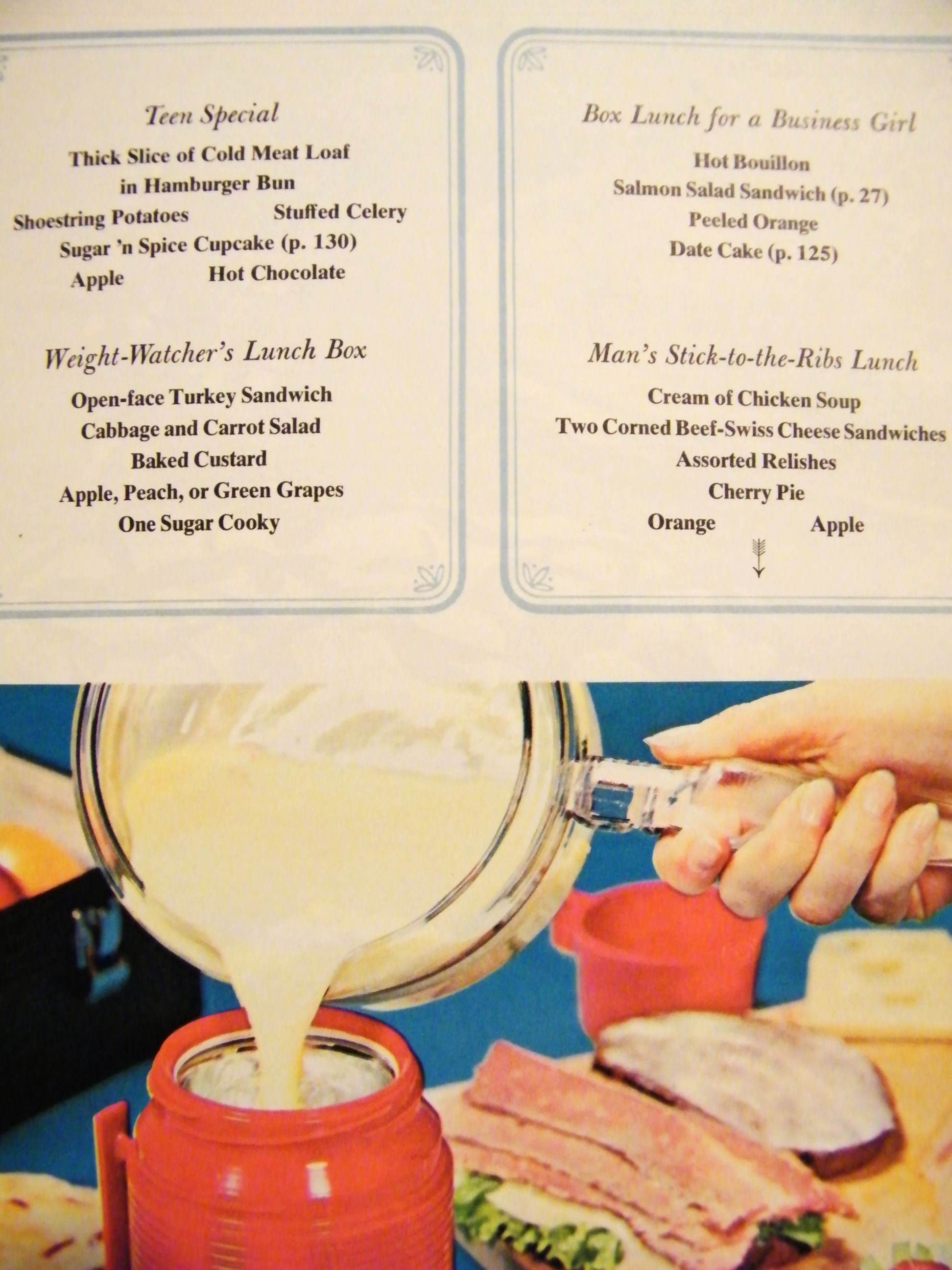
The first cookbook I cooked from when I was a child was Betty Crocker’s New Good and Easy Cook Book. That’s not entirely true, of course, because I used to help my mother with recipes before I started to cook on my own. She had (and still has) a black-bound spiral notebook of her mother’s recipes, a number of different cookbooks on the shelf and a head full of recipes that she never wrote down. When I was ready to start making things on my own, though, I chose the Betty Crocker. I was mostly interested in baking and there were plenty of simple recipes to work my way through. My first brownies (regular and golden), snickerdoodles, Nanaimo bars and chocolate crinkles were made with recipes from this book. I delved into cakes and quick breads, too, eschewing the recipes that used boxed mixes, but embracing the Bisquick ones.

This week’s French Fridays recipe reminds me of the simplicity of the recipes I made when I was a kid, but with a sophisticated twist. The Gruyère alone makes this bread stand head and shoulders above the cheese bread I made with generic cheddar back then. Still, it’s a recipe that a child could make, once they’re ready to start baking on their own. That’s what I love about quick breads; they’re simple to make, with lovely results. When I made one loaf gluten-free, I didn’t even have to worry about over-mixing the dry ingredients, as it’s gluten that can make quick breads tough.

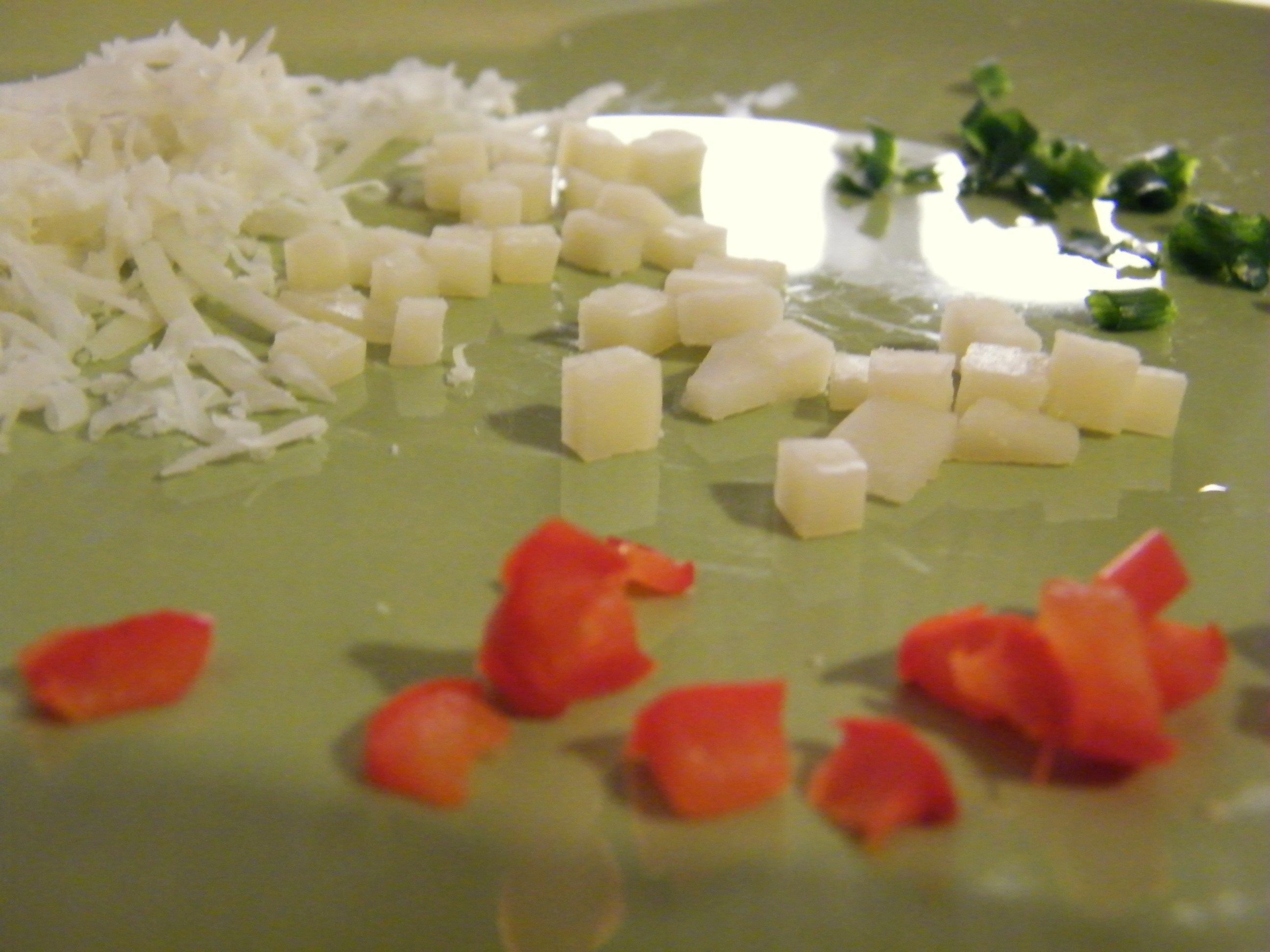
I’ve actually made this recipe twice. The first time, back in October when I first got Around My French Table, I made it with standard flour and a sharp, good cheddar cheese. I was at my parents’ house and baked it for them to use for lunches. I didn’t have the opportunity to taste it, but I heard that everyone enjoyed it. This week, I made it with a gluten-free all purpose flour and used Gruyère. I also added some tiny cubes of red pepper along with the chives. (Before I added the peppers to the mixture, I dried them out a little in a skillet over low heat on the stovetop.) Gluten-free breads can often have a very dry and crumbly texture, but not so for this bread. Though it was a little denser than the standard flour version, it was very moist and not at all gritty. I think this would be a good recipe to use a g-f flour mix that has teff in it, which might make the texture a little closer to the standard flour version. I’m also looking forward to trying some of Dorie’s bonnes idées for this recipe – it lends itself to a lot of variation.


Since there’s only two of us and because gluten-free bread doesn’t have a very long shelf life, I think I’m going to use the rest of the loaf to make a savoury bread pudding. There are some great ideas here.

I’m going to leave you with a shot of one of my favourite pages from my Betty Crocker cookbook. (I found two copies at a library book sale years ago, bought them both and gave one to my sister.) It shows lunch suggestions for various family members and it reminds me that we live in a very different era from the one in which that book was created. Thank goodness we have Dorie to update home cookery for us today.

You can find many other blogged descriptions of this week’s FFWD recipe here: Savoury Cheese and Chive Bread

Transition City, Part I

A couple of weekends ago, I took part in one of the Museum of Vancouver’s Moving Through walking tours, part of the Museum’s Not an Architectural Speaker’s Series. The three tours explored aspects of Vancouver’s built environment, topics that are especially fraught now, as the city is in a period of significant transition.

The downtown core of Vancouver has been transformed over the last twenty-five years, particularly in the last decade. What were once business districts, light industrial zones and commercial waterfront properties have become residential towers, retail districts and entertainment zones. The City has embraced the concept of EcoDensity, which is meant to create a walkable live/work cityscape that limits the environmental impact of an increasing population by concentrating utility use and reducing the distances that residents travel for work and shopping. The reality is that more lucrative residential development has eliminated much of the office space downtown and has reversed commuting patterns, as downtown residents travel to and from jobs outside Vancouver proper. This new urban environment has been described as a vertical form of the dormitory suburb.

Now that much of the development downtown is complete, the City has begun looking beyond its core. The Cambie corridor, the West End and Vancouver’s eastern neighbourhoods are all areas targeted for increased density. The eastern neighbourhoods are particularly attractive, as they’re directly adjacent to the city’s core. As I’ve described elsewhere, the travel time from downtown to my East Vancouver neighbourhood is about an hour by foot, past the viaducts and through the Downtown Eastside (DTES), Chinatown and Strathcona. Though the distance is relatively short, the character of each neighbourhood is distinct. The DTES and Chinatown, along with Gastown, have some of the oldest buildings in the city. Strathcona has the character of an old-fashioned city suburb, with houses, walk ups and corner stores. Between Strathcona and my Commercial Drive neighbourhood, there’s a light industrial zone, which is also home to the artists’ district that comes alive for the yearly Eastside Culture Crawl. Commercial Drive is like a younger version of Strathcona’s mix, with some mid-rise apartments thrown in, and anchored around one of Vancouver’s major thoroughfares. What you don’t see, with a few very visible exceptions, are high-rises in much of Chinatown or most of Strathcona and Commercial Drive.

All of these neighbourhoods have seen waves of change. The DTES, which has been described as Canada’s poorest postal code, is being transformed into a mix of residential tower development alongside social housing. Gastown was until recently primarily a tourist zone, but is now home to condominiums and upscale dining and shopping. Chinatown is becoming a hotbed for new restaurants and stores, along with controversial plans for condo development. Strathcona is now famous for its renovated houses, many of which carry heritage designations, while Commercial Drive has been transformed from a working-class neighbourhood into a mixed income cultural district. It’s not as if this is the first time that Vancouver’s neighbourhoods have dealt with demographic change. For good or ill, this is part of urban life.

What’s different about this wave of development is that the neighbourhoods targeted are already residential, the pace of change is likely to be much faster and the form of development is much more invasive than in previous shifts. In the DTES, it’s feared that social housing reform is being pushed aside in favour of expensive condominiums. In Chinatown and eastward, the fears are that mixed income housing and affordable retail space are going to be lost, along with the character of each neighbourhood’s built environment.

It’s in the context of these changes and anxieties that the Moving Through walks took place. Next week, I’ll tell you more about the walk I took part in and the discussion that took place afterward.