Half Your Plate

IMG_5038

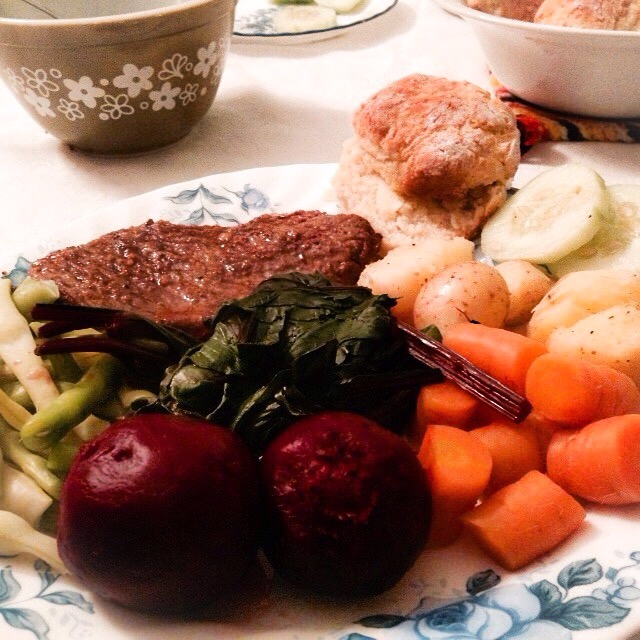
It might seem as though I’ve got a shortcut when it comes to healthy eating – living with a vegan should make that simple, right? Well, there’s a growing selection of vegan (and gluten-free!) processed, snack, and prepared foods, folks. Just because a meal is meatless doesn’t make it balanced and omnivores like me have to think about more than eating fewer animal products.

IMG_4962

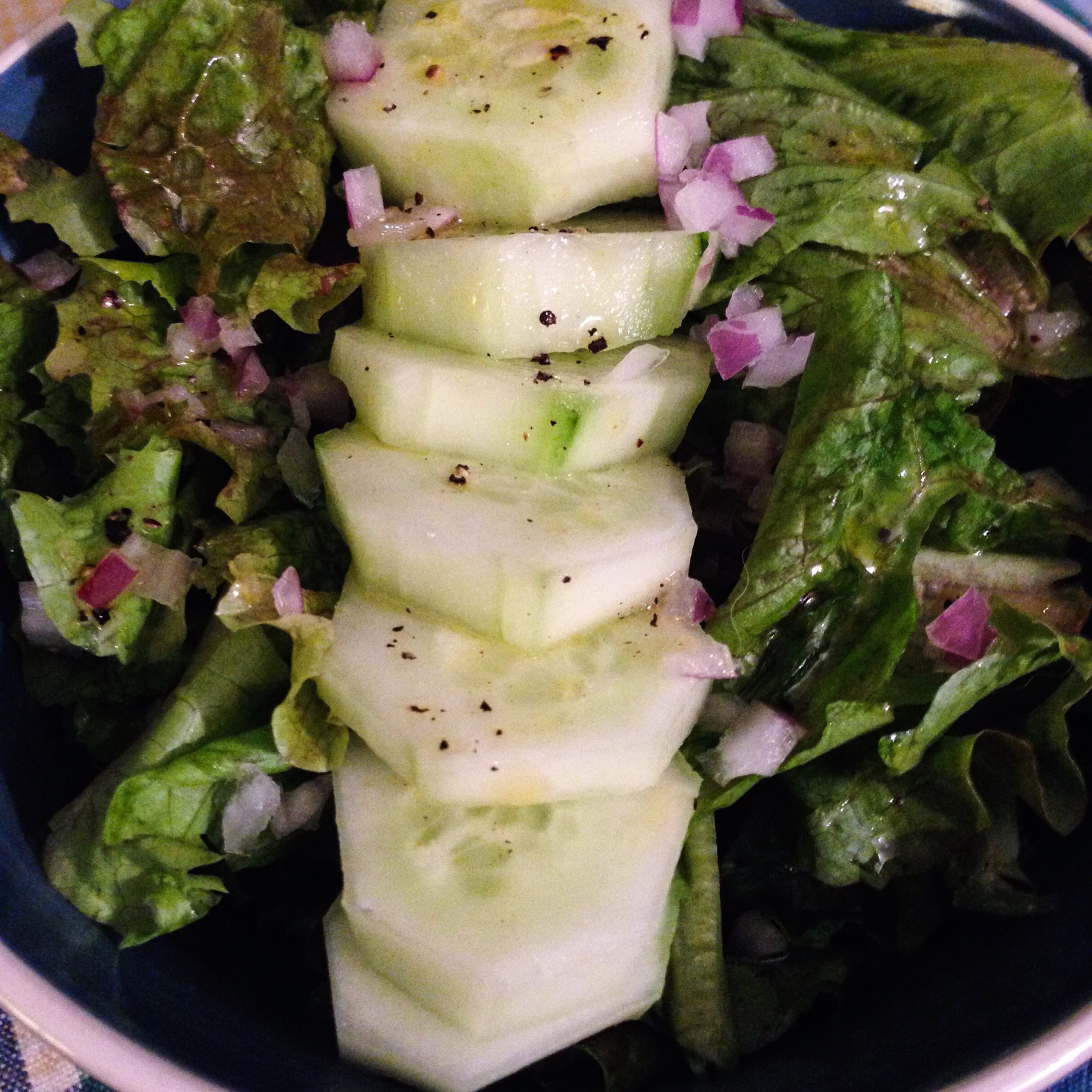
Now, we do try to keep balance in mind across our meals, but it can take a little planning and some inspiration. Initiatives like Half Your Plate can help in both departments. Their site has guidelines, advice, and recipes to motivate you to fill half your plate with fruits and vegetables.

IMG_5060

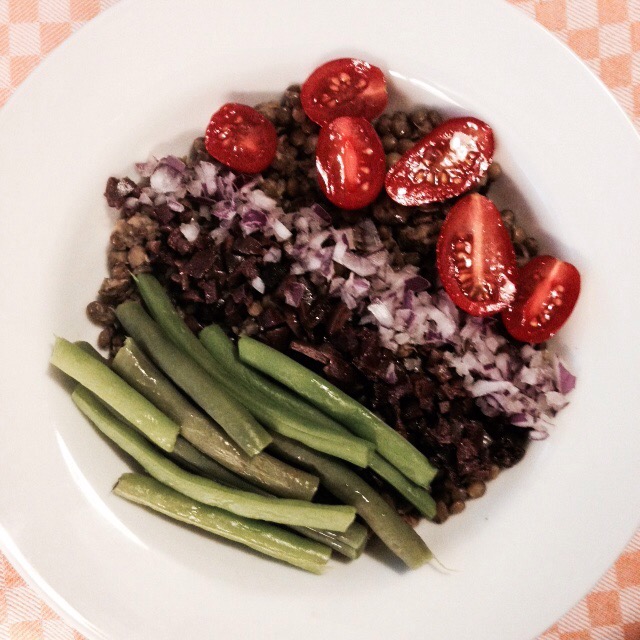
I became aware of their campaign when they partnered with Food Bloggers of Canada for a blogger contest on Instagram, inspiring me to share some of my less-than-perfectly-lit meals. (Sorry, Instagram.)

IMG_5015

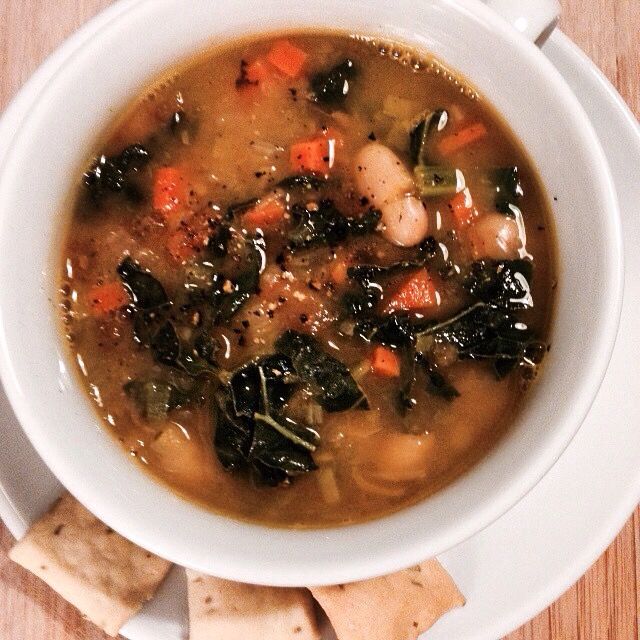
For me, it served as a reminder that a wide range of meals qualify as Half Your Plate meals, which makes healthy eating feel a lot more attainable. It’s variety and moderation that count – a kale-stuffed ricotta tart tonight; a vegan Ribollita last week; an almost entirely locally-sourced chicken dinner the week before. Fill in the gaps with salads, smoothies, and roasted veg from whatever is at its peak at the fresh markets – maybe you don’t have to worry about that frozen vegan (and gluten-free!) pizza you had for movie night on the weekend.

IMG_4972

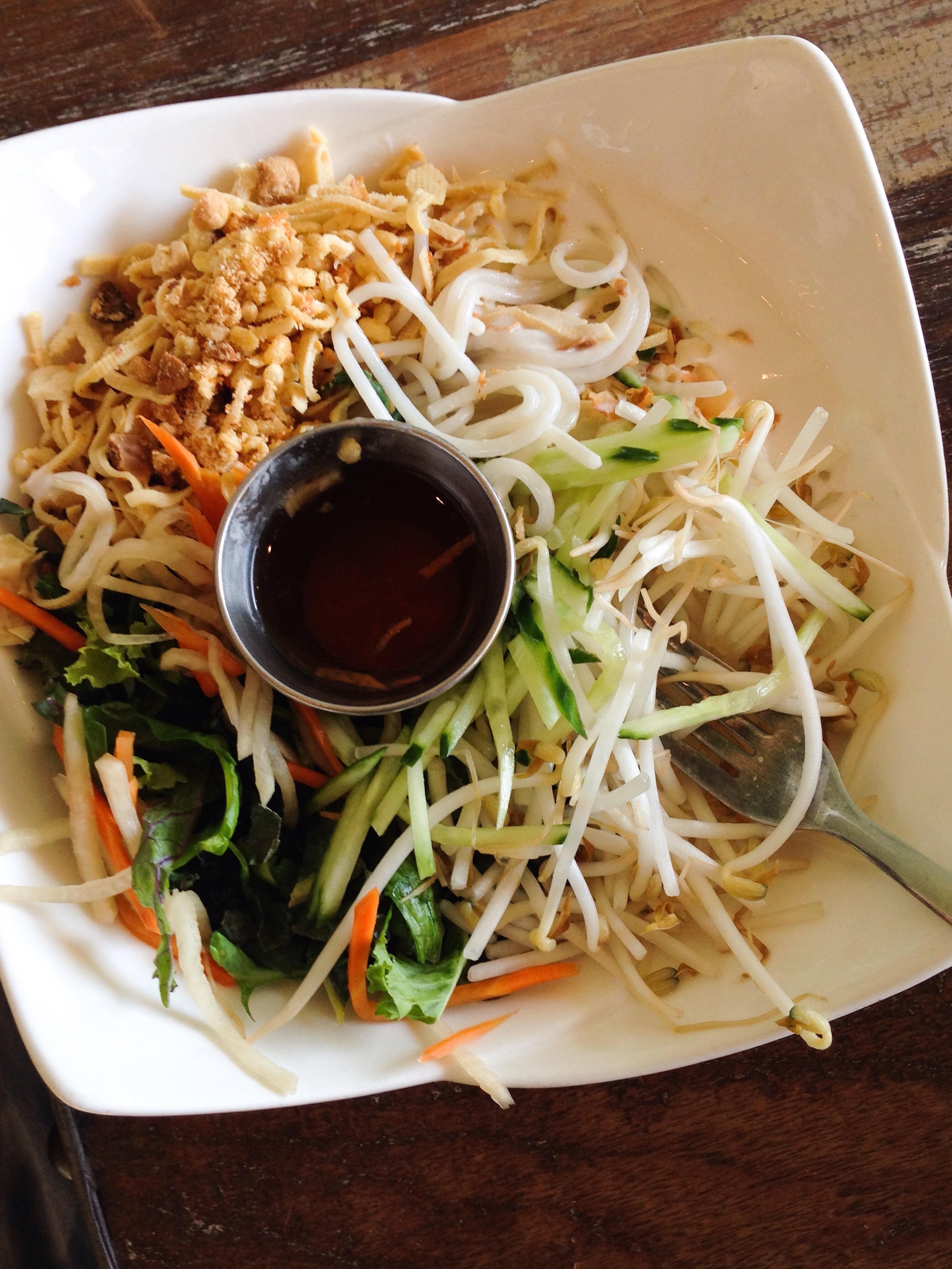
I’d like to hear how you fill half your plate: Do you steam big bunches of spinach and throw them in a stirfry? Are green smoothies your thing? Do you, like me, secretly feel that jam-filled sandwich cookies should count?

Cottage Cooking Club – August 2015

IMG_4706

May I say that I’m glad this summer’s coming to an end? We’re expected to get more rain over the weekend than we’ve gotten all summer long. It’s a relief. Drought doesn’t look good on Vancouver. At any rate, autumn is harvest time, so there’s a lot to celebrate. I’m looking forward to cooking with squash and root vegetables again.

In between bouts of languishing in the heat this month, I managed a couple of warm-weather dishes for August’s Cottage Cooking Club.

Tomatoes with Thai Dressing

IMG_4780

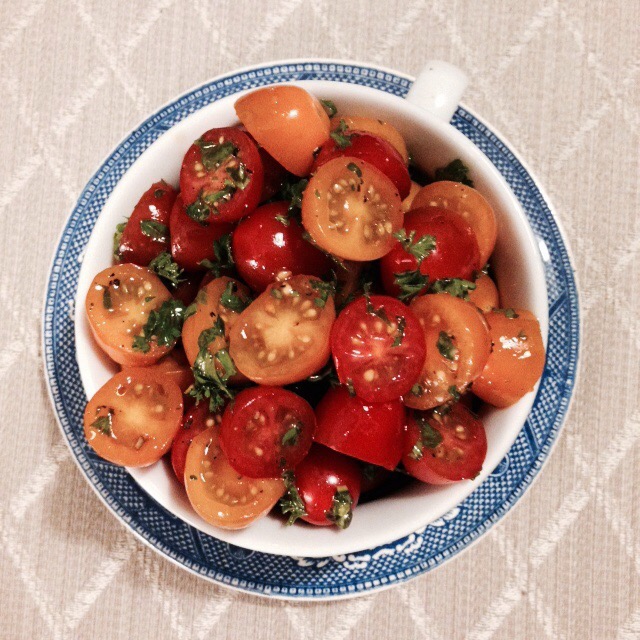
I made these at the same time I made Tomatoes with Herbs. It’s hard to know which of these was my favourite. I just know that both are lovely ways to celebrate summer tomatoes. This version, with its Thai flavour profile, would make a nice addition to a rice or noodle bowl, or a side for a coconut curry.

Summer Garden Lentils Niçoise

IMG_4925

I learned to love French green lentils while participating in French Fridays with Dorie. There wasn’t much learning to do, to be honest, as I fell in love with them immediately. I use proper lentilles du Puy on occasion, but the Canada-grown French green lentils that I can buy at my local food co-op are organic and delicious. They’re what I use regularly. Is it wrong to say that I don’t notice the difference? Please don’t tell France.

Okay, so I’m not totally over summer. I’m happy to eat my way through the abundance of tomatoes, cucumbers, beet greens, peppers, and everything else that’s on offer right now. Really, I’m just glad it’s finally raining.

Here are the links to the rest of the group’s posts for this month. I encourage you to check them out – you’ll meet some wonderful bloggers and get some great inspiration for vegetarian eating.

Eat Local: Chau Veggie Express

IMG_4860

I love telling you about what my neighbourhood has to offer, but it’s not good to stick to your favourite haunts all the time. There are too many neighbourhoods across the city and region to explore, with their own characteristic offerings. Part of being a savvy urbanite is not just knowing where to find what you need close to home, but also knowing when what you’re looking for is elsewhere.

I’m good at travelling the east/west axes of the city, but I need to spend more time looking north and south. North Van is just a short trip away by transit and the next neighbourhood to the south of us, Kensington-Cedar Cottage, is full of restaurants, delis, and fresh markets.

Victoria Drive is one of the anchor streets in the area and it’s known for having good food from a number of cuisines along its length, attracting foodies from across the city. We found ourselves near 33rd and Victoria a few days ago, so we decided to check out a restaurant that’s been on our list for a long time.

Chau Veggie Express has become famous amongst vegans in Vancouver for serving a fresh, delicious take on Vietnamese classics. Their menu is vegetarian and vegan, but there is nothing on the menu that feels like it’s a substitute for dishes that normally contain meat. Instead, their bowls, soups, and salads seem like welcome extensions of Vietnamese flavours, complete in themselves.

IMG_4859

This is because they’ve worked so hard to develop broths and sauces that balance flavours in the same way as traditional ones, while making the most of their vegetarian ingredients. The food arrives at your table as quickly as it would at a casual food stand, but the layering of flavours and the attention to presentation bring a fine dining sensibility to their dishes. The room splits the difference, with welcoming communal wooden tables and light, charming decor.

I had the Rickety Rickshaw Bowl, which was deeply filling and flavourful – with shredded bean curd and tofu, yams, and spring rolls, even a meat-eater couldn’t have complained that the dish was too light. At the same time, the fresh vegetables and salad and the lemon vegan fish sauce kept the dish from feeling heavy. It’s the kind of meal that leaves you invigorated.

My partner tried the Tropical Rainstorm Bowl and may not ever try another dish. The toasted coconut sauce is everything he’s been looking for since he became vegan. He also appreciated the heartiness of the thicker noodles in this bowl. The best part is that much of the menu is gluten-free, or can be easily adapted. He didn’t think he’d get to have good spring rolls again, but he tried one from my dish and he was grinning. He may order a separate plate of them next time and we’ll be buying some lemon vegan fish sauce to take home. We’ve been looking for a good vegan, gluten-free version and this is it.

The fish sauce isn’t the only thing you can take home, either. Many of their inventive broths and sauces are for sale, along with pints of their famous vegan ice creams.

Come early, as there’s often a line. You can get great meals all day, but you can also stop in for coffee and treats, or bring a crowd for drinks and snacks.

If you’re lucky enough to come at a time that’s not busy, the staff is knowledgeable and enthusiastic about their menu – we enjoyed hearing about their dishes, their philosophy, and their practices almost as much as our meal.

Chau Veggie Express is going to become a regular stop for us, but I’m also planning to explore more of the neighbourhood. I want to know what else we’ve been missing.

Click to add a blog post for CHAU VeggiExpress on Zomato

Hot Weather Eating – A Cottage Cooking Club Catchup

IMG_4846

I’ve been eating simple meals all summer – we’ve had dry, hot weather and it’s been hard to contemplate using the oven or the stove much. Next year, I think I’m going to add a small grill to our outdoor equipment, because cooking outside is all I’ve been wanting to do.

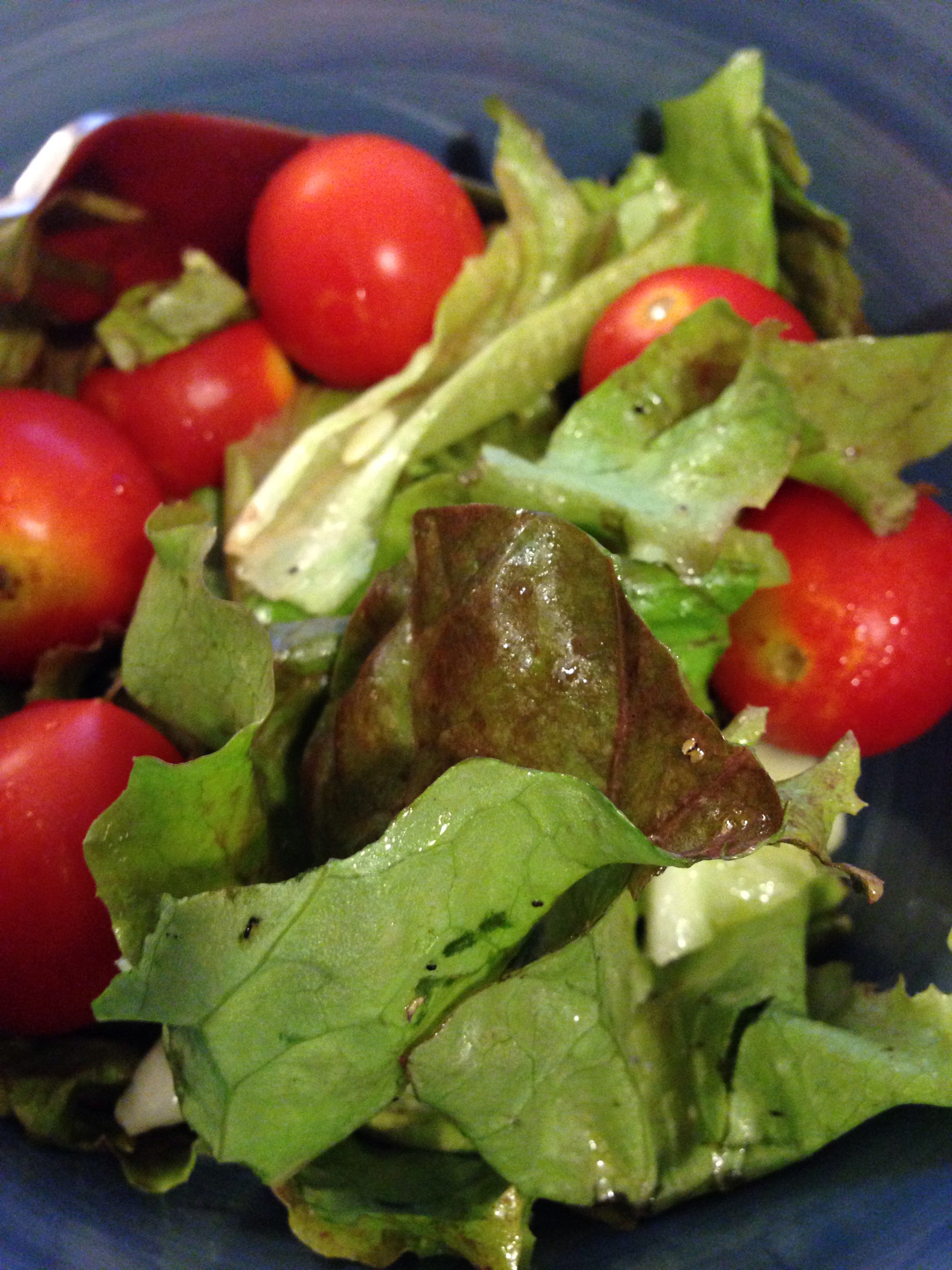
Luckily, summer is full of fruit and vegetables freshly harvested and perfect for simple preparations. The salad at the top of this post is typical of what I’ve been eating lately, along with some very lightly prepared accompaniments.

New Potato Salad “Tartare”

IMG_4700

One of my favourites this summer has been this salad, which gets away from the mayonnaise-soaked version you so often get in Canada and the U.S. Instead, it relies on herbs, cornichons, and a mustardy vinaigrette for flavour. It’s refreshing to have a bracing sourness underlying the dressing on a hot day.

Tomatoes with Herbs

IMG_4777

I had so many cherry tomatoes that I made this two ways, one of which I’ll tell you about at the end of the month. This is the simplest way to enjoy tomatoes, with fresh herbs from the garden, a little balsamic, and a good olive oil. I had enough to satisfy us, share with our neighbours, and still had some to spare. I slow-roasted those and froze them. They’ll be brightening up my winter meals.

Tomorrow is going to be cloudy and mild (fingers crossed for some much-needed rain). I’m going to take the opportunity to put my oven and stovetop to work. So, you’ll be seeing a few more catch up recipes on the 28th of this month, along with August’s Cottage Cooking Club selections.

I’ve missed cooking along with all my CCC colleagues and I’m looking forward to catching up on your blogs.

Spring Book Reviews – Preservation Society Home Preserves

Canned

I received a review copy of Preservation Society Home Preserves from Robert Rose Inc. Nevertheless, all opinions in the following post are my own.

Canning and preserving aren’t what they used to be. It’s a lost art for many, only some of whom have memories of parents or grandparents putting up dilly beans or pickled beets, strawberry freezer jam or orange marmalade. Those recipes seemed preserved in amber themselves, passed down from one generation to the next without variation.

Not that that’s a bad thing – I love the taste of old fashioned pickles, jams, and preserves. But now, there’s been a a revival of the preservation arts and it’s come with a lot of experimentation. I may love those old school tastes, but it’s the modern flavours that inspire me to get into the kitchen and fire up the canner.

If you feel the same way, Camilla Wynne’s Preservation Society Home Preserves is the book for you.

Her whimsically heart-shaped pickled beets have a juniper berry and peppercorn kick. Her strawberries mingle with currants and rose petals or tequila and triple sec. And her marmalades travel the road from purity to downright decadence.

Many of her recipes are inspired by cocktails and she brings the same kind of attention to flavour and inventiveness that you’d see in a bar that specializes in handcrafted drinks. The range of recipes is nice, too, including syrups, refrigerator preserves, and dishes that use some of the products of the earlier recipes in the book.

Jamming

This book isn’t a comprehensive guide to canning, though. There is a chapter up front that covers canning basics clearly, but if you’re new to it you might want to have a canning reference guide (or even better, an experienced canner) by your side.

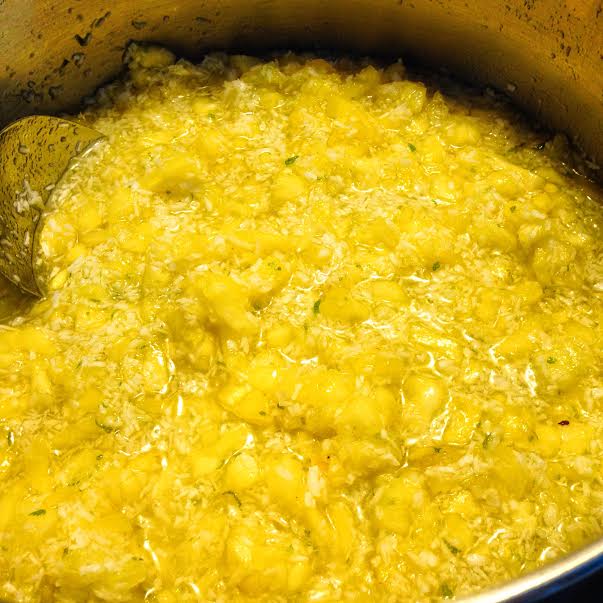
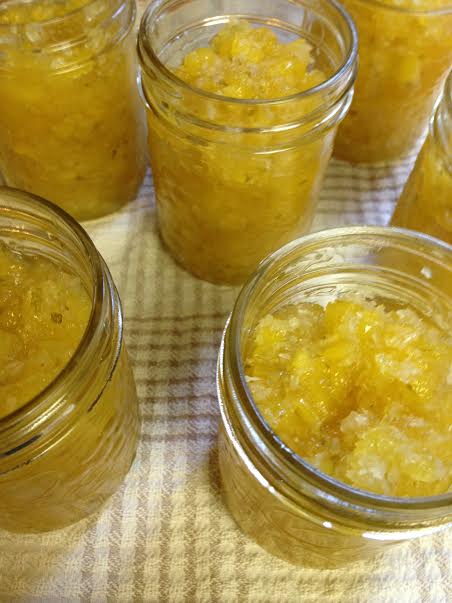
I made Wynne’s Piña Colada Jam yesterday and it filled the kitchen with the most wonderful tropical aromas. I tasted it today and it was delicious. Wynne recommends using it as a cake filling, an ice cream topping, or swirled into mascarpone. I could also see it as a surprise at the bottom of a crème brûlée or a tart like this one. To be perfectly honest, it’s great on its own. I sort of ate a small…ish quantity of it with a spoon while I was supposed to be photographing it.

Robert Rose Inc. has been kind enough to allow me to share the recipe with you. If you make it, promise me you’ll follow safe canning guidelines (you could start here, for instance) and read up about how to determine the setting point for jam.

Piña Colada Jam

Makes about five jars (8 oz/250 mL each)

2.9 lbs (1.3 kg) pineapple flesh (from 2 pineapples)
2-1/2 cups (500 g) jam (gelling) sugar
1-2/3 cups (100 g) unsweetened flaked coconut
Grated zest and juice of 2 limes
6 tbsp (90 mL) dark rum, divided

  • Chop the pineapple into fairly small dice.
  • In a large pot or preserving pan, combine the pineapple, sugar, coconut, lime zest and juice and about half the rum. Cover and let stand to macerate for 30 minutes.
  • In the meantime, prepare the jars and lids.
  • Bring the pineapple mixture to a boil over medium-high heat, stirring often. Boil hard, stirring often, until the setting point is reached. Remove from heat and let rest for 5 minutes, stirring occasionally. Stir in the remaining rum.
  • Ladle jam into the hot jars to within 1/4 inch (0.5 cm) of the rim. Remove any air bubbles and wipe rims. Place the lids on the jars and screw the bands on until fingertip-tight. Process in a boiling water canner for 10 minutes.

Canning

For me, the best cookbooks are ones that send me in directions I’d never imagined, whether it’s techniques, cuisines, or ingredients. In this case, it’s combinations and juxtapositions of flavours. Having a pantry full of these homemade ingredients will lead to a more delicious life.

Tasting

Come back next Thursday for the last book in this season’s review series. You’ll be dreaming of Paris and you’ll also have a chance to win one of two copies of Jill Colonna‘s latest book.

Spring Book Reviews – Mrs. Wheelbarrow’s Practical Pantry

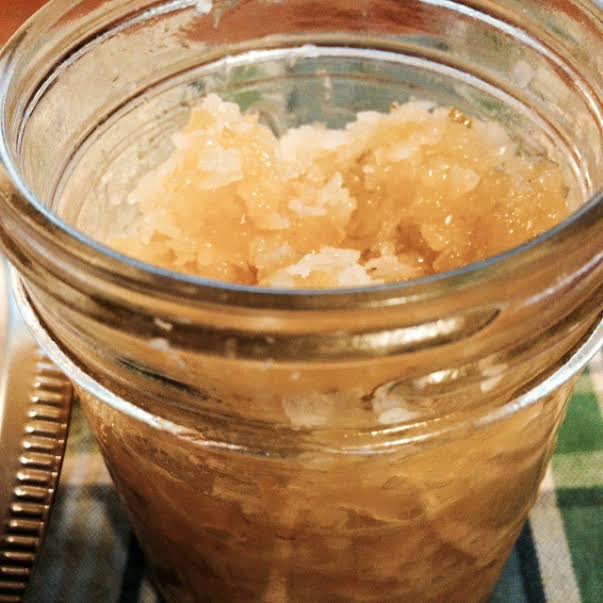
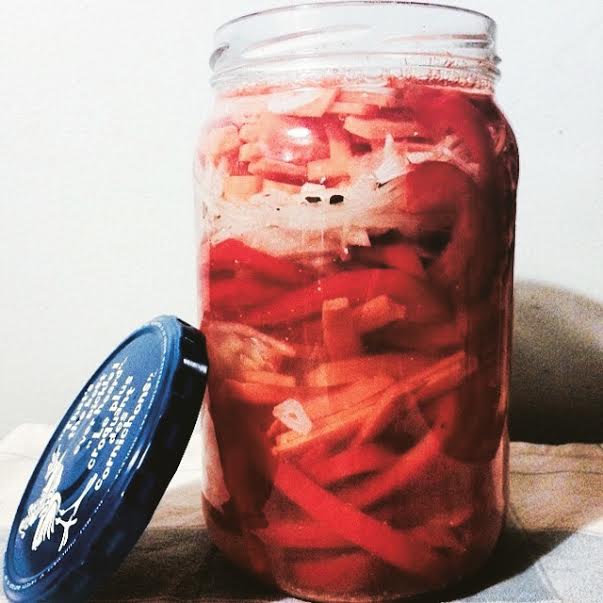
Quickles

Today’s review is for a cookbook from my own shelves, Mrs. Wheelbarrow’s Practical Pantry, and no consideration was received for this post.

I first came across Cathy Barrow’s blog when she started Charcutepalooza with Kim Foster. I followed along, fascinated by the accomplishments of the group of bloggers working their way through Michael Ruhlman’s Charcuterie: The Craft of Salting, Smoking, and Curing. There’s no way meat-curing is going to happen in this apartment, between the tiny dog and M. Vegan, so experiencing charcuterie-making vicariously was just my speed.

I was particularly happy to find Cathy’s blog, Mrs. Wheelbarrow, because she makes better use of the best of each season than just about anyone else. Charcuterie might be the high-wire act of home preserving, but she also engages in earthier pursuits like canning, baking, and cheese-making – well, cheese-making is a bit on the wild side for most of us, too. I know it was pretty exciting territory for me, when I tried it.

I especially liked the way she demystifies home preserving and cooking for people who didn’t grow up with those traditions. My mother made pickles and jams, but home cheese-making and meat-curing weren’t on the radar of anyone we knew. The most exotic thing she made was canned trout, with my grandmother. Reading Mrs. Wheelbarrow made all these things seem possible and even part of a routine in the kitchen. This sensibility follows in Cathy Barrow’s cookbook, too.

In her introduction, she explains that it was a growing concern with food systems, waste, and health that led her first to canning, then to home preserving on a broader scale. Preserving has become a part of her everyday life and her cookbook is filled with the kind of information that makes it seem possible to accomplish that, too.

There are sections on safety, technique, and troubleshooting, but what really makes me want to get into the kitchen are her bonus recipes and her suggestions for using the preserves, pickles, cheeses, and charcuterie you’ll produce. There’s nothing worse that looking at a shining row of freshly canned preserves and wondering what you’re going to do with it all now.

Her base recipes for jams and pickles are worth the cost of the book, alone – they aren’t merely repeats of traditional ones. And once you have the book in hand, who knows? You may work through the meat-curing and cheese-making sections eventually. The gorgeous photos and intriguing descriptions might have you experimenting with gravlax and ricotta, then finding yourself setting up a smoker out back or creating a cheese cave.

At the very least, you can get some nice bacon from the butcher’s and try her Bacon-Onion Jam.

I’m looking forward to trying more of her jams, preserves, and pickles over the course of the summer. And I know I’ll try a simple recipe or two from the other sections. For now, though, I’m anxiously awaiting tomorrow, when I can start dipping into the jar of carrot, red pepper, and onion Quickles I made tonight (a version of which you can find here).

Come back next Thursday, May 7th for a review of a book full of heavenly aromas.

Made With Love

Chili

Not long after his 60th birthday, my Dad was getting ready for work and told my mother he had to sit down for a minute before leaving. Luckily, my Mom recognized the signs of a heart attack and got him to the hospital so quickly that they were able to stabilize him before it was too late. He’d always congratulated himself on marrying a nurse, who could help him with whatever ailed him, and now she’d saved his life.

When he got home, there were exercise regimens and eating restrictions to follow. And my father counted himself lucky once again, because my mother is not only a fabulous cook, but she is also one of the most determined people on earth when she puts her mind to it. He was going to eat a healthy diet if it – well, even if it pained him.

She came up with an arsenal of heart-healthy recipes so delicious that the rest of the family started hoping some of the leftovers would show up at our doors. My Dad recovered, then thrived.

Ten years later, my partner Kevin started on his own path to better health and decided that veganism was going to be a big part of it. My mother started sending over freezer containers full of the chili she’d developed for my Dad. It’s vegan and gluten-free, but more importantly, it’s one of Kevin’s favourite meals.

It took a while for her to share the recipe with me, not because she’s secretive, but because she’s always busy – volunteering, meeting with friends old and new, or spending time with her grandchildren.

When I finally had the recipe, I whipped up a batch of the chili and immediately realized that my chili powder had much, much more cayenne pepper in it than the brand my mother uses. Her chili has a warming burn, while mine was five-alarm fiery. Taste, don’t trust is a good motto for adding chili powder. Lesson learned. I’ve amended that line of the recipe accordingly – it’s a range now, not the 6 tablespoons that she uses. (I think her chili powder must be mostly cumin.)

Tonight, I brought a whole batch to a meeting of our housing co-op. I came home with only one small bowl’s worth. Not quite enough for a meal, but enough to remind me to make it again soon.

And now you can share it with those you love, too, whether it’s your family or a community you care about.

Jeannine’s Spicy Vegetable Chili

By Jeannine McCarthy

Serves a crowd

1 tbsp olive oil
4 large garlic cloves – sliced
1 large onion – sliced and quartered
2 carrots – sliced into medium coins
2 small stalks of celery – sliced
1 cup water

1 can diced tomatoes 28 oz – low salt
1 can tomato sauce 680 ml – low salt

1 small green pepper – sliced into chunks
1 small red pepper – sliced into chunks
1 small orange or yellow pepper – sliced into chunks

1 can organic tomato paste 5.5 oz
2 cans red kidney beans 28 oz each – low salt
1 can black beans 19oz – no salt
1 can romano beans 19oz – no salt

1-4 tbsp chili powder*
1 tbsp cumin
3 tbsp white vinegar
1 tsp black pepper
1 tsp salt

  • Coat bottom of a large soup pot with olive oil. On low heat, add garlic and onions; cook until starting to look translucent. Add carrots, celery, and water. Cook until carrots are slightly tender.
  • Add tomatoes and tomato sauce. Add chili powder, cumin, vinegar, pepper and salt, then stir. Continue cooking on medium heat for 5 minutes.
  • Add tomato paste, kidney beans, black beans, and Romano beans. Cook for 5 minutes, then add green, red, and yellow peppers.
  • Cook on medium heat for 45 minutes to 1 hour.

This is a large recipe. After the first meal, ladle left-overs into freezer containers (enough for one meal) and freeze.

*Start on the low range when you add the chili powder and then add a little at a time until you reach the level of heat you like. There can be a lot of variation in strength amongst chili powders. 1 1/2 tablespoons seems about right for us, with the brand we use.

Spring Book Reviews – Bob’s Red Mill Everyday Gluten-Free Cookbook

Amaranth Soup

I received a review copy of Bob’s Red Mill Everyday Gluten-Free Cookbook from Robert Rose Inc. Nevertheless, all opinions in the following post are my own.

A diagnosis of celiac disease can seem like an imposition of broad limitations on one’s diet. And that used to be quite true, in the days when white rice flour was made to stand in for everything from bread flour to cake flour.

These days, though, there are so many great gluten-free alternatives available to people with celiac disease or gluten intolerance. Gluten-free grains and seeds like quinoa have become widely available, along with a wide range of flours. Ingredient lists are starting to shift, too. Where once wheat or barley might be used as a filler, now products like stocks, sauces, and spice-blends are eliminating them when not necessary, or other companies are jumping into the market with their own gluten-free varieties.

Bob’s Red Mill has been a reliable source of gluten-free products for years, dedicating separate production lines to many of their gluten-free grains, seeds, and flours to avoid cross-contamination. I’ve been a fan since my youth, when I was introduced to plenty of crunchy granola vegans and vegetarians. Potluck survival meant mastering veggie cuisine and Bob’s Red Mill provided many of the grains we used.

I’ve never been completely vegan or vegetarian, but eat that way much of the time, especially since my partner has committed to veganism. He’s also the member of the family with celiac disease, so alternatives to wheat, barley, and the rest of the gluten-rich grains are a big part of our daily meals.

I’ve become very familiar with gluten-free alternatives over the years. But like many of us, I’ve got quinoa down and could use a little help making the most of the rest. Amaranth? Teff? Sorghum? Millet? I’ve made a little use of these, but not often enough. Even familiar grains like oats or buckwheat become trickier when they are ground into flours.

So, I was excited to get my hands on a copy of Camilla V. Saulsbury’s Bob’s Red Mill Everyday Gluten-Free Cookbook. It’s full of whole-grain, gluten-free recipes, but just as importantly, it includes a primer with details on how to prepare and store gluten-free grains and flours, what their nutritional properties are, and what other healthful items belong in the gluten-free pantry.

The recipes themselves range from breakfast to dessert and travel across cuisines, many of which can become off-limits to gluten-free eaters. Amaranth Tabbouleh or Sorghum Minestrone satisfy cravings for old favourites, while naturally gluten-free dishes like Persian-Spiced Lentils and Millet make use of less familiar grains to delicious effect.

Many of the recipes are vegetarian or vegan, or easily adaptable, so there are plenty for me to choose from when eating with my partner. I’m especially looking forward to trying the recipe for vegan Nanaimo bars, as I noticed that one of the grocery stores nearby sells popped amaranth.

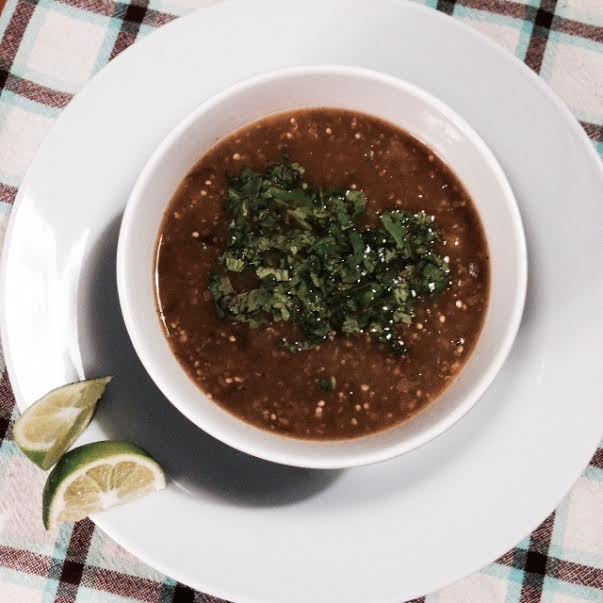
Today, though, I’ve got permission to share a recipe for a hearty, vibrant soup that reminds me of a pozole verde. It can be served with queso fresco, but we skipped that in favour of lime wedges and found it perfectly satisfying.

Tomatillo, Black Bean and Amaranth Soup

Makes about 6 servings

Equipment: Food Processor

2 cans (each 12 oz/340 mL) whole tomatillos, with juice
1 tbsp/15 mL olive oil
4 cloves garlic, minced
1 tsp/5 mL chipotle chile powder
3/4 cup/175 mL amaranth
2 cans (each 14-19 oz/398-540 mL) black beans, drained and rinsed
3 cups/750 mL ready-to-use GF vegetable or chicken broth
1 cup/250 mL packed fresh cilantro leaves, chopped
Crumbled queso fresco (optional)
2 tbsp/30 mL freshly squeezed lime juice
Lime wedges (optional)

  1. In food processor, purée tomatillos and their juice. Set aside.
  2. In a large pot, heat oil over medium-high heat. Add garlic and chipotle powder; cook, stirring, for 1 minute. Stir in tomatillo purée; cook, stirring for 2 minutes.
  3. Stir in amaranth, beans and broth; bring to a boil. Reduce heat to low, cover and simmer, stirring occasionally, for 15 to 20 minutes or until amaranth is very tender. Stir in cilantro and lime juice. Serve sprinkled with queso fresco (if using), with lime wedges on the side, if desired.

I predict this cookbook will have you stocking your pantry with more grains, seeds, and flours, whether or not you need to follow a gluten-free diet. Variety is the spice of life, but it’s also a good practice for health and a delicious one, at that.

Come back next Thursday for a review of a book that will help you make the most of each season’s bounty.

Spring Book Reviews – The Soup Sisters and Broth Brothers Cookbook

Tom Yum Soup

I received a review copy of The Soup Sisters and Broth Brothers Cookbook from Appetite by Random House Canada. Nevertheless, all opinions in the following post are my own.

It’s safe to say that soup season is a year-round phenomenon in Vancouver, even though we get long stretches of sunshine in the summer. There are gazpachos and chilled soups for hot weather, but there are also always rainclouds in our future, so stocking the freezer with comforting soups is a good practice.

One of the best ways to do that is to make a big batch of your favourite soup and then organize a soup swap with friends and neighbours. It’s a fun way to build community while providing one another with at least six meals’ worth of nourishing, delicious food.

(Inter)National Soup Swap Day is held in late January each year, but they provide great information and advice no matter what time of year you decide to hold your own swap. Next year will be the tenth anniversary, so I expect they will have even more recipes, stories, and advice to share.

Our co-op has been holding soup swaps for a number of years now. The regular participants enjoy it so much that we’re even talking about having them twice a year – once at harvest time and another in the coldest part of the year. One to celebrate late summer’s bounty and another to cheer us through winter’s last weeks.

Since I’ve been sharing soup with the same group of people over the years, I’m always on the lookout for new recipes that are delicious, reliable, and out of the ordinary. When I was given the opportunity to review The Soup Sisters and Broth Brothers Cookbook, I knew it was a book that I’d be making good use of for years to come.

The Soup Sisters and Broth Brothers Cookbook is full of flavourful soups borrowed from many cuisines and encompassing such a wide variety of ingredients that it could keep a soup swap group excited for years. The 114 soups are organized by season and the book includes stock recipes and advice on techniques and basics. The recipes come from the organization’s staff and volunteers, along with food writers, chefs, and even a sitting Mayor. Many of the recipes include stories about the soups, just as a soup swap gathering would.

But it’s more than a cookbook. It also tells the story of an organization that shares soup to help heal lives and to show support for people in crisis. The soups that Soup Sisters and Broth Brothers make together go to feed women and children who have suffered domestic abuse, or to youth exiting street life. It takes the concept of building community through sharing food beyond our personal networks and turns it into something that can be transformative.

It’s an inspiring thought. If you’d like to join them in their work, they have branches across Canada and even one in California.

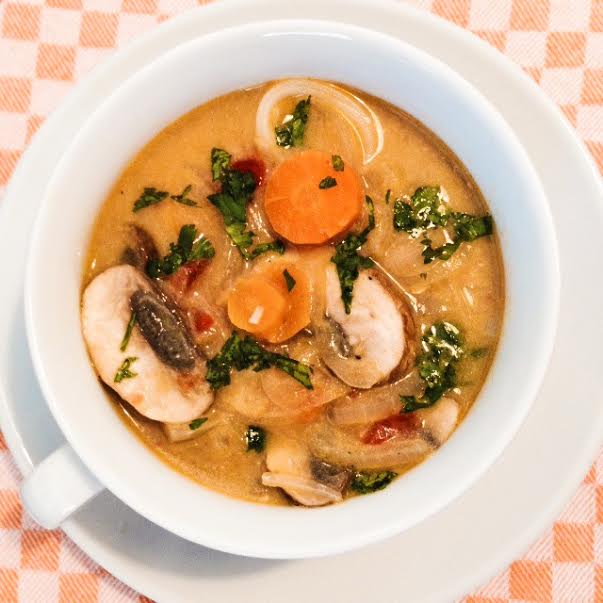
In the meantime, they’ve been kind enough to let me share with you a soup for Spring, fragrant with lemongrass, galangal, makrut, and coconut milk. This Thai classic comes together quickly, but is richly flavoured. I made a vegan, gluten-free version for my partner, so traded fish sauce for a little gluten-free tamari and skipped the meat. I also used a vegan tom yum paste, versions of which are becoming more widely available now.

This soup was so good I wished I’d doubled the recipe. The only change I would make would be to add a dried chili pepper or two, for a little heat.

Tom Yum Soup

Sharon Hapton, Founder, Soup Sisters and Broth Brothers

Makes about 4 servings

4 cups (1 L) chicken or vegetable stock
2 large onions, thinly sliced
2 carrots, peeled and thinly sliced
1 shallot, thinly sliced
2 thick slices fresh ginger
2 thick slices galangal (optional)
1 stalk lemongrass, trimmed, gently bashed with a rolling pin and cut into quarters crosswise
1 to 2 tsp (5 to 10 mL) tom yum paste
3 to 4 kaffir lime leaves
1 clove garlic, minced
20 large raw shrimp, peeled and deveined, or 1 lb (500 g) cubed or diced boneless, skinless chicken (optional)
1 can (14 oz/398 mL) unsweetened coconut milk, well shaken
8 oz (250 g) cremini or white button mushrooms, sliced
2 plum tomatoes, diced
2 to 3 tsp (10 to 15 mL) fish sauce (according to taste)
1 lb (500 g) rice noodles, soaked in cold water for 2 hours then drained (optional)
Finely chopped cilantro for garnish

1. In a large pot, combine the stock, onions, carrots, shallot, ginger, galangal (if using), lemongrass, tom yum paste, lime leaves and garlic. Bring to a boil.

2. Reduce the heat and simmer, uncovered, for 10 minutes for the flavors to develop.

3. Add the shrimp or chicken (if using). Simmer, uncovered, until the shrimp are no longer pink (about 3 minutes) or until the chicken is no longer pink inside (about 10 minutes).

4. Add the coconut milk. Bring the soup back to a simmer.

5. Add the mushrooms and tomatoes. Bring the soup back to a simmer.

6. Remove the ginger, galangal (if using) and lemongrass. Season with fish sauce to taste.

7. If using rice noodles, plunge them into a pot of boiling water to heat through, then drain well.

8. Divide the noodles among the soup bowls, then ladle the soup over the top. Garnish with a flourish of cilantro.

Come back next Thursday for a review of a book that will have you stocking your pantry with long-neglected ingredients.

Vegan Easter Dinner with a Ricardo Cuisine Recipe

IMG_3621

I was provided a subscription to Ricardo Magazine for review, but received no other consideration for this post.

The best part of any holiday is sharing food with family and friends. Sometimes, that means making sure that family favourites are on the table (like my mother’s five cup salad). Sometimes, it means experimenting with new dishes that may just become favourites for the next generation. In my house, it always means making sure that everyone has enough food to enjoy, no matter what their dietary restrictions or aversions.

That can get a little tricky these days, with so many folks suffering from allergies, while others follow diets restricted for health reasons or ethical considerations. It’s not impossible, though, and today’s table offers people much better fare than that dished out when I was growing up.

Back then, a vegetarian was lucky if they got a baked potato with some vegetables on the side, unless they brought their own meal. Now, greater awareness ensures that there are staple dishes to satisfy vegetarians, vegans, and gluten-free folks, with no one thinking twice about it. Some of them are even favourites for everyone at the table.

When I was asked to review Ricardo Cuisine‘s Easter recipe collection, my thoughts naturally turned to finding ones that would work for my gluten-free and vegan partner. He has celiac disease and has recently begun eating a completely vegan diet, as well. So, finding holiday dishes that satisfy his requirements and are enjoyable for everyone is always a priority.

Right away, I landed on Ricardo’s Roasted Fennel and Fingerling Potatoes recipe. It’s the kind of dish that’s likely to become a yearly tradition, because it’s more interesting than the usual starch and vegetable sides. This roasted vegetable combination relies on the onions and fennel for flavour as well as fibre. So, it makes a good complement to other dishes at Easter dinner, then the leftovers become a great base for more meals. I like to make this sort of recipe in larger quantities than I need, for just that reason.

IMG_3623

This dish will satisfy the vegetarians, vegans, and gluten-free, but it’s also a nice choice for diabetics, because it combines the starch of potatoes with the fibre of onions and fennel, while avoiding the heaviness of many butter and milk rich potato dishes. And the unrestricted omnivores at the table will be happy it’s so delicious.

Combined with other dishes, like Ricardo’s Asparagus with Lemon Gremolata or a vegan version of his Maple-Braised Endives, you’re well on your way to happy guests. Just add a protein – like a really good slice of lentil loaf – and you’ve got a complete meal for those who aren’t partaking in the Easter ham or roast.

IMG_3622

You can find more of Ricardo’s Easter recipes here. You’ll find some to suit any of your Easter guests, from the appetizer course through dessert.

I’ve been a big fan of Ricardo since my Francophone mother introduced me to his French language television program years ago. Though I can follow along with the French instructions reasonably well, I’m happy that he’s expanding his English language presence, too.

Ricardo Cuisine was kind enough to let me reproduce their recipe here. Once you’ve tried it, I predict it’s going to become a staple at your holiday table and perhaps year-round, too.

Roasted Fennel and Fingerling Potatoes

Preparation time: 25 min
Cooking time: 1 h
Output: 6 to 8 servings

INGREDIENTS

  • 675 g (1 ½ lb) fingerling or baby potatoes
  • 2 bulbs fennel, each cut into 8 wedges
  • 60 ml (¼ cup) olive oil
  • 3 small onions, cut into 1.5 cm (½-inch) thick slices
  • Salt and pepper

PREPARATION

  • With the rack in the middle position, preheat the oven to 200 °C (400 °F).

  • In a large pot of salted boiling water, cook the potatoes until cooked but still slightly firm, about 15 minutes. Drain and set aside.

  • In a non-stick skillet, brown the fennel in half of the oil (30 ml / 2 tbsp). Set the fennel aside in a baking dish. In the same skillet, brown the onions for about 2 minutes. Add to the fennel with the potatoes and the remaining oil. Toss well. Season with salt and pepper.

  • Bake for about 30 minutes or until the fennel and potatoes are cooked tender. Serve with the Pork Roast with Maple Sauce.