FFWD – Quinoa, Fruit and Nut Salad

The secret to gluten-free eating isn’t really baking with alternative flours. The secret is eating a wide variety of naturally gluten-free foods and leaving the gluten-free baking for treats and special occasions. When my partner was diagnosed with celiac disease, we found that we didn’t have to adjust our lifestyle drastically. We didn’t eat a lot of bread and though I have a bit of a baking habit, it’s something I do for meetings and gatherings, not just for the two of us. Though we had to eliminate couscous, it was a relief to find out that quinoa was on the safe list. It’s easy to prepare, a complete protein and has a great, nutty flavour. I’d have been sad to have to leave quinoa out of our repertoire.

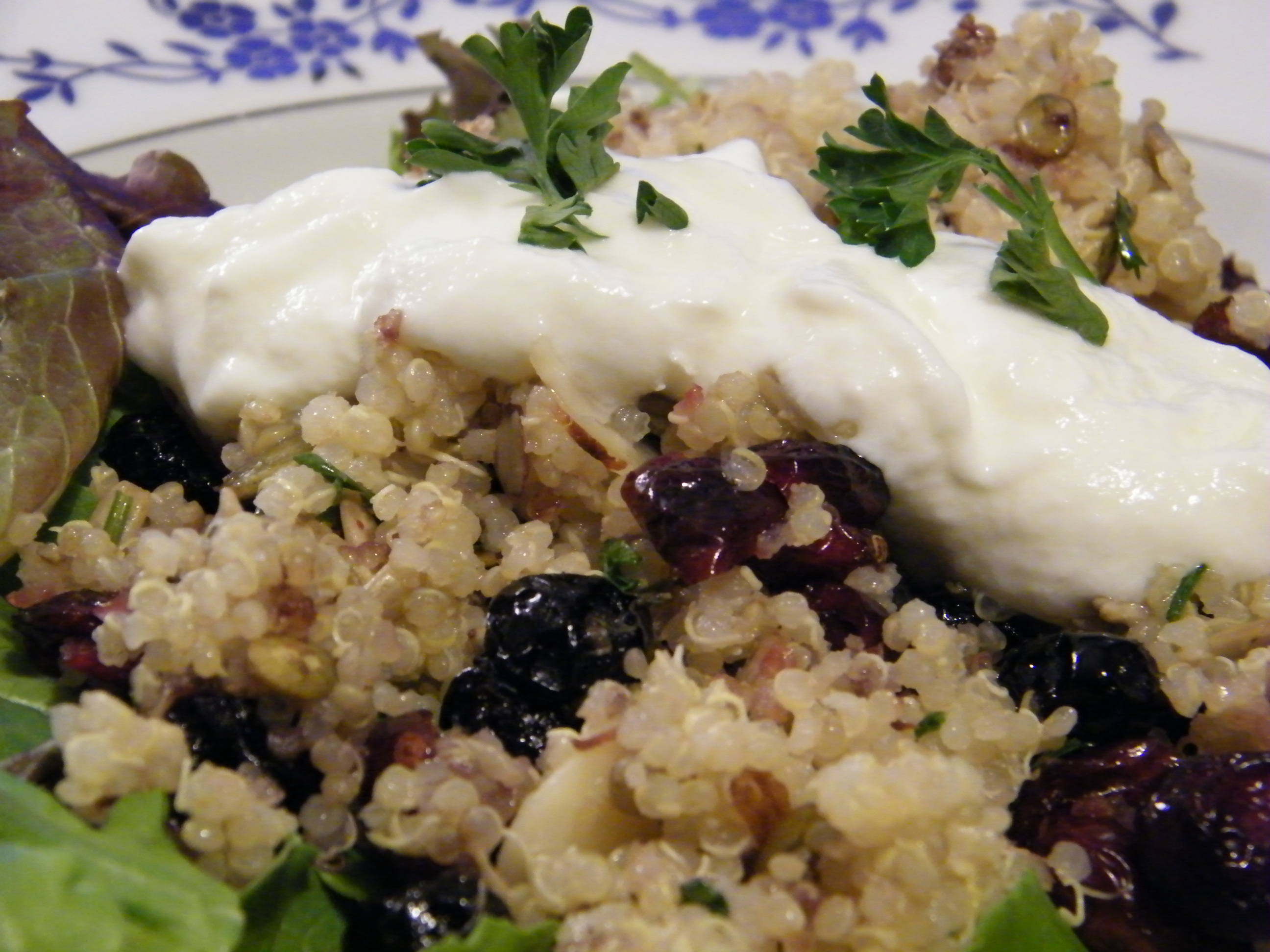
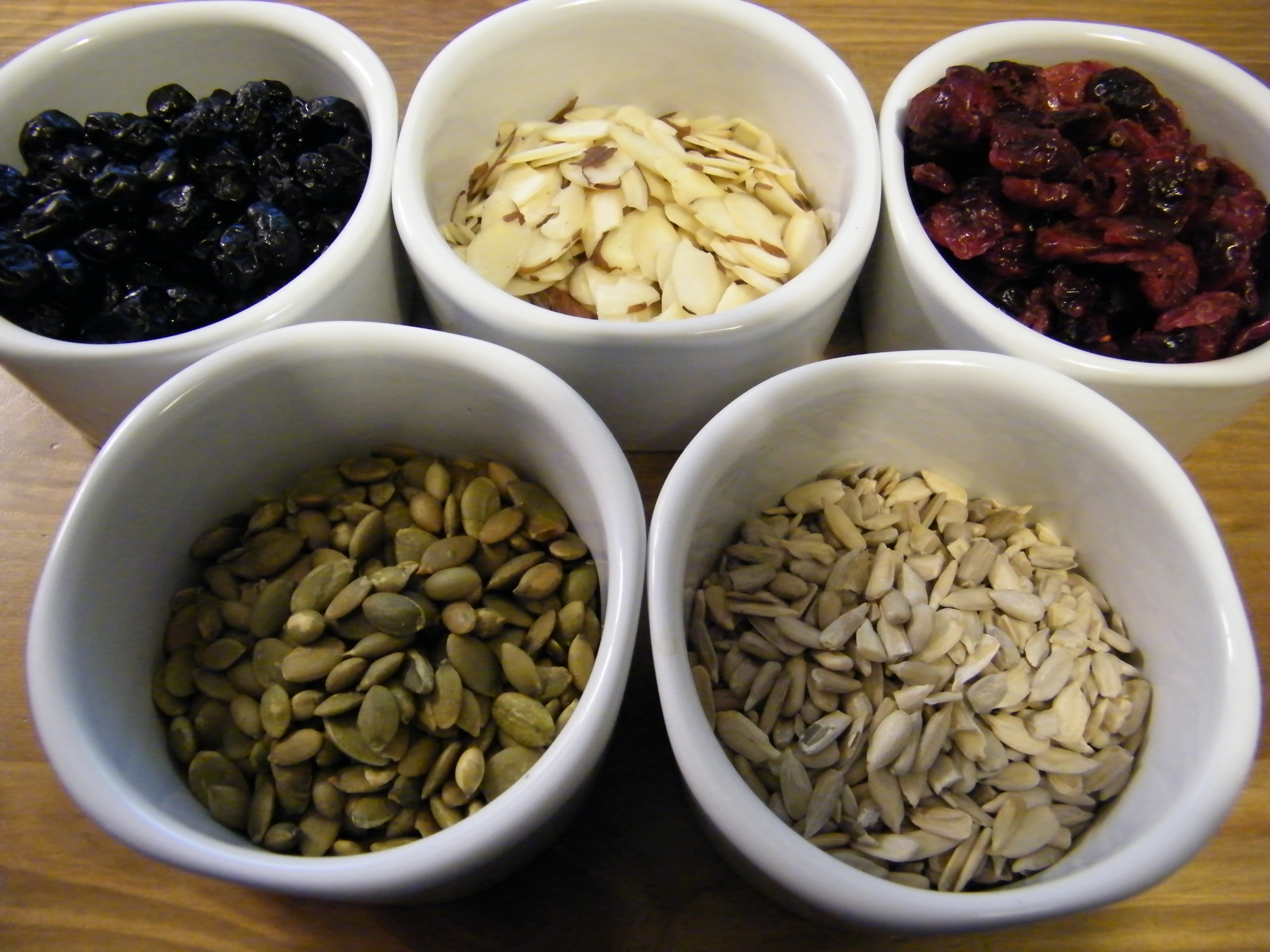
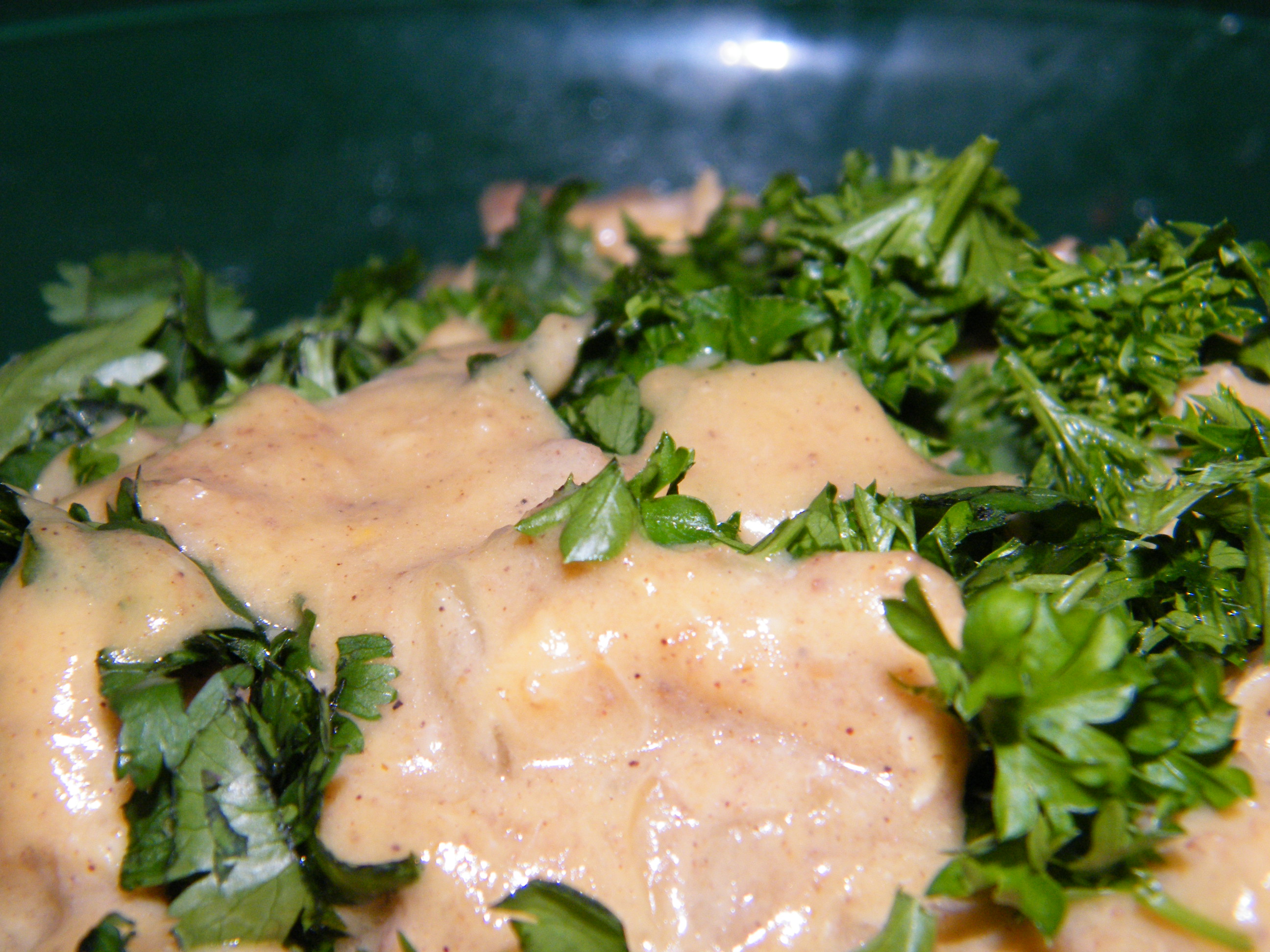
This week’s French Friday recipe is a good example of why we’re so fond of quinoa. It’s prepared much as rice would be, with a fifteen to twenty minute cooking time. Then, the cooked quinoa is mixed with dried fruit, nuts, seeds and herbs before being tossed in a simple lemon-ginger dressing. I used dried cranberries and blueberries, pumpkin and sunflower seeds, sliced almonds, minced basil and parsley. I let the mixture rest for an hour and then, as suggested, served it over mixed greens with a dollop of plain yogurt. A simple, filling supper with a lot of texture and flavour. It’s also great for packed lunches or picnics.

When people find out that Kevin has celiac disease, they often express concern over the expense of gluten-free eating. It’s processed and packaged gluten-free food that’s costly, though. Our food bill hasn’t changed much, because we don’t rely on those products. With recipes like this one, who needs them?

You can find many other blogged descriptions of this week’s FFWD recipe here: Quinoa, Fruit and Nut Salad

FFWD – Beggar’s Linguine

It’s going to be an unforgivably short post today, I’m afraid.

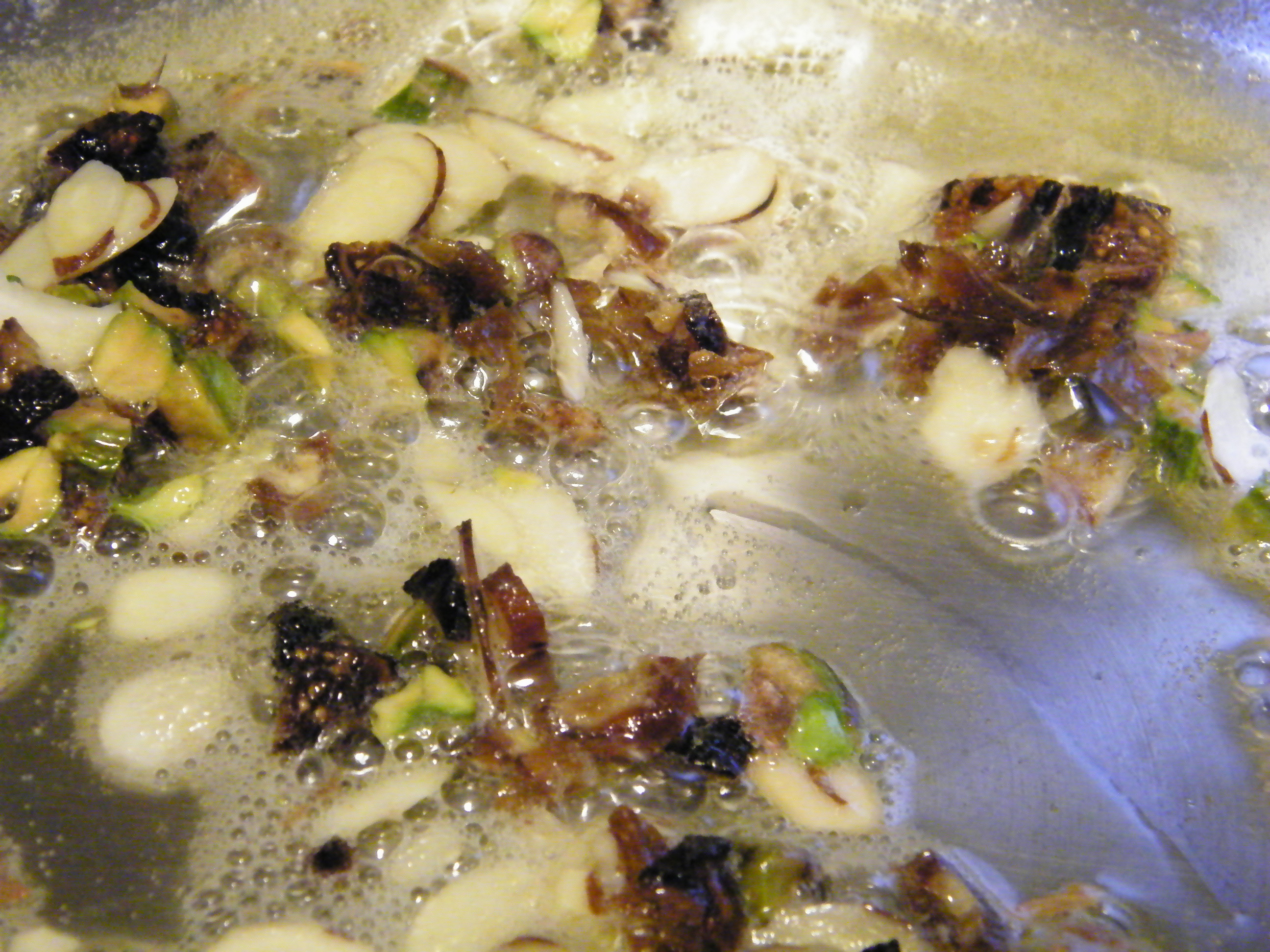
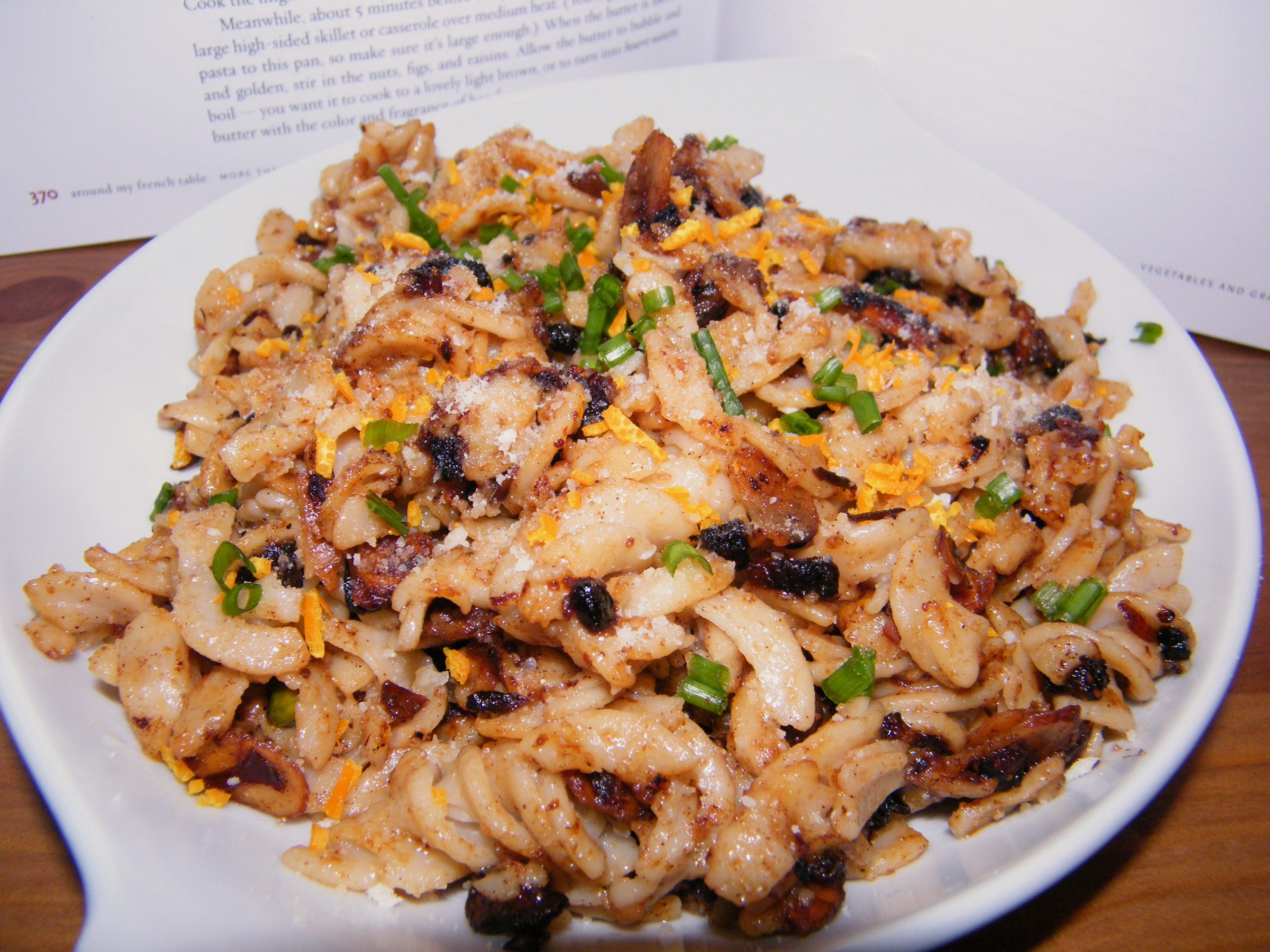
Dorie Greenspan tells the tale of Beggar’s Linguine here and includes the recipe. I substituted dates for the raisins and used gluten-free rotini in place of the linguine, but followed the recipe otherwise. It’s not my favourite recipe for French Fridays, but I didn’t hate it. It’s good to stretch the taste buds a little and I can see playing with the recipe in future to suit myself a little better. It certainly looked lovely on the plate, though.

You can find many other blogged descriptions of this week’s FFWD recipe here: Beggar’s Linguine

FFWD – Savoury Cheese and Chive Bread

The first cookbook I cooked from when I was a child was Betty Crocker’s New Good and Easy Cook Book. That’s not entirely true, of course, because I used to help my mother with recipes before I started to cook on my own. She had (and still has) a black-bound spiral notebook of her mother’s recipes, a number of different cookbooks on the shelf and a head full of recipes that she never wrote down. When I was ready to start making things on my own, though, I chose the Betty Crocker. I was mostly interested in baking and there were plenty of simple recipes to work my way through. My first brownies (regular and golden), snickerdoodles, Nanaimo bars and chocolate crinkles were made with recipes from this book. I delved into cakes and quick breads, too, eschewing the recipes that used boxed mixes, but embracing the Bisquick ones.

This week’s French Fridays recipe reminds me of the simplicity of the recipes I made when I was a kid, but with a sophisticated twist. The Gruyère alone makes this bread stand head and shoulders above the cheese bread I made with generic cheddar back then. Still, it’s a recipe that a child could make, once they’re ready to start baking on their own. That’s what I love about quick breads; they’re simple to make, with lovely results. When I made one loaf gluten-free, I didn’t even have to worry about over-mixing the dry ingredients, as it’s gluten that can make quick breads tough.

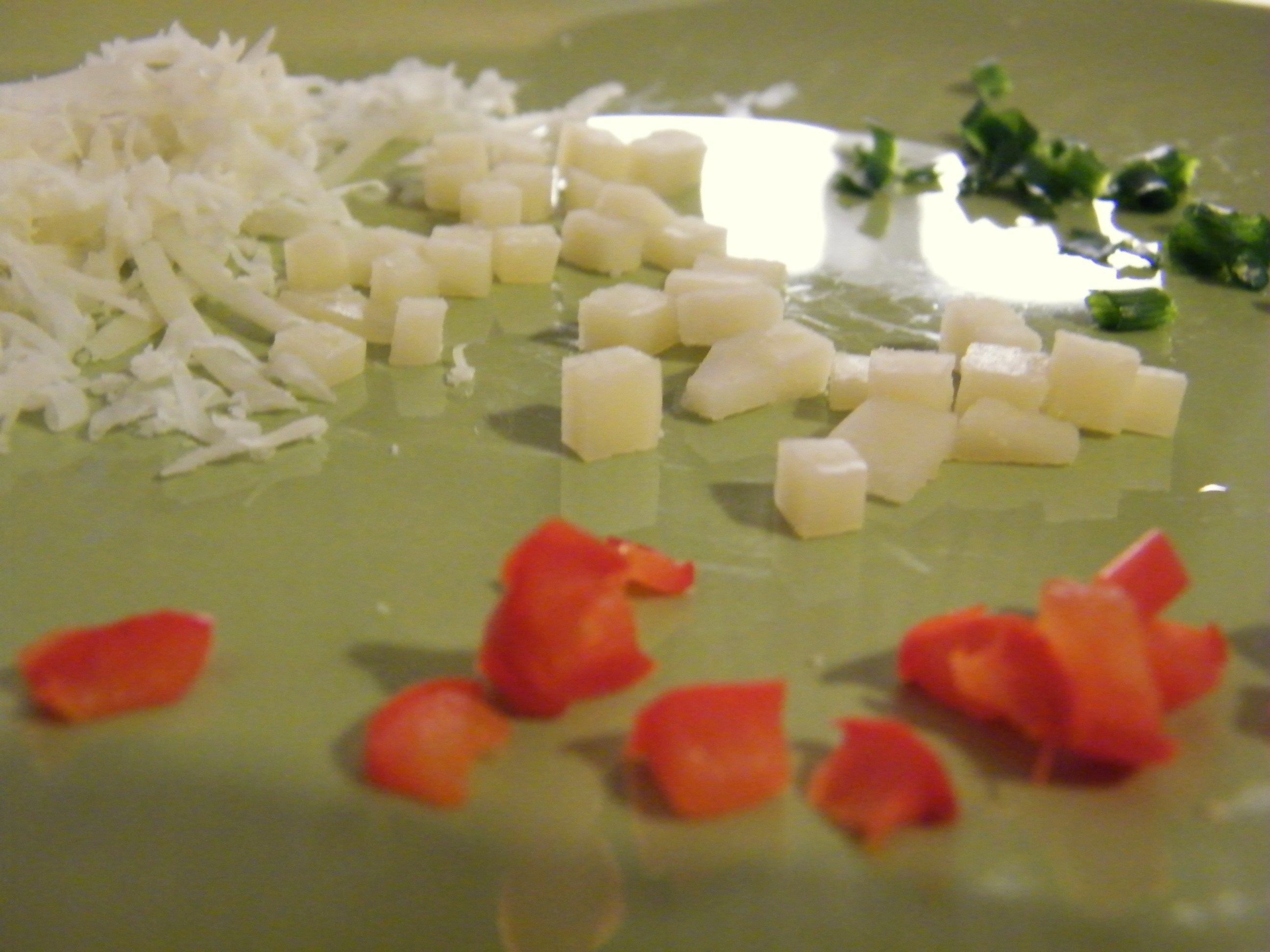
I’ve actually made this recipe twice. The first time, back in October when I first got Around My French Table, I made it with standard flour and a sharp, good cheddar cheese. I was at my parents’ house and baked it for them to use for lunches. I didn’t have the opportunity to taste it, but I heard that everyone enjoyed it. This week, I made it with a gluten-free all purpose flour and used Gruyère. I also added some tiny cubes of red pepper along with the chives. (Before I added the peppers to the mixture, I dried them out a little in a skillet over low heat on the stovetop.) Gluten-free breads can often have a very dry and crumbly texture, but not so for this bread. Though it was a little denser than the standard flour version, it was very moist and not at all gritty. I think this would be a good recipe to use a g-f flour mix that has teff in it, which might make the texture a little closer to the standard flour version. I’m also looking forward to trying some of Dorie’s bonnes idées for this recipe – it lends itself to a lot of variation.


Since there’s only two of us and because gluten-free bread doesn’t have a very long shelf life, I think I’m going to use the rest of the loaf to make a savoury bread pudding. There are some great ideas here.

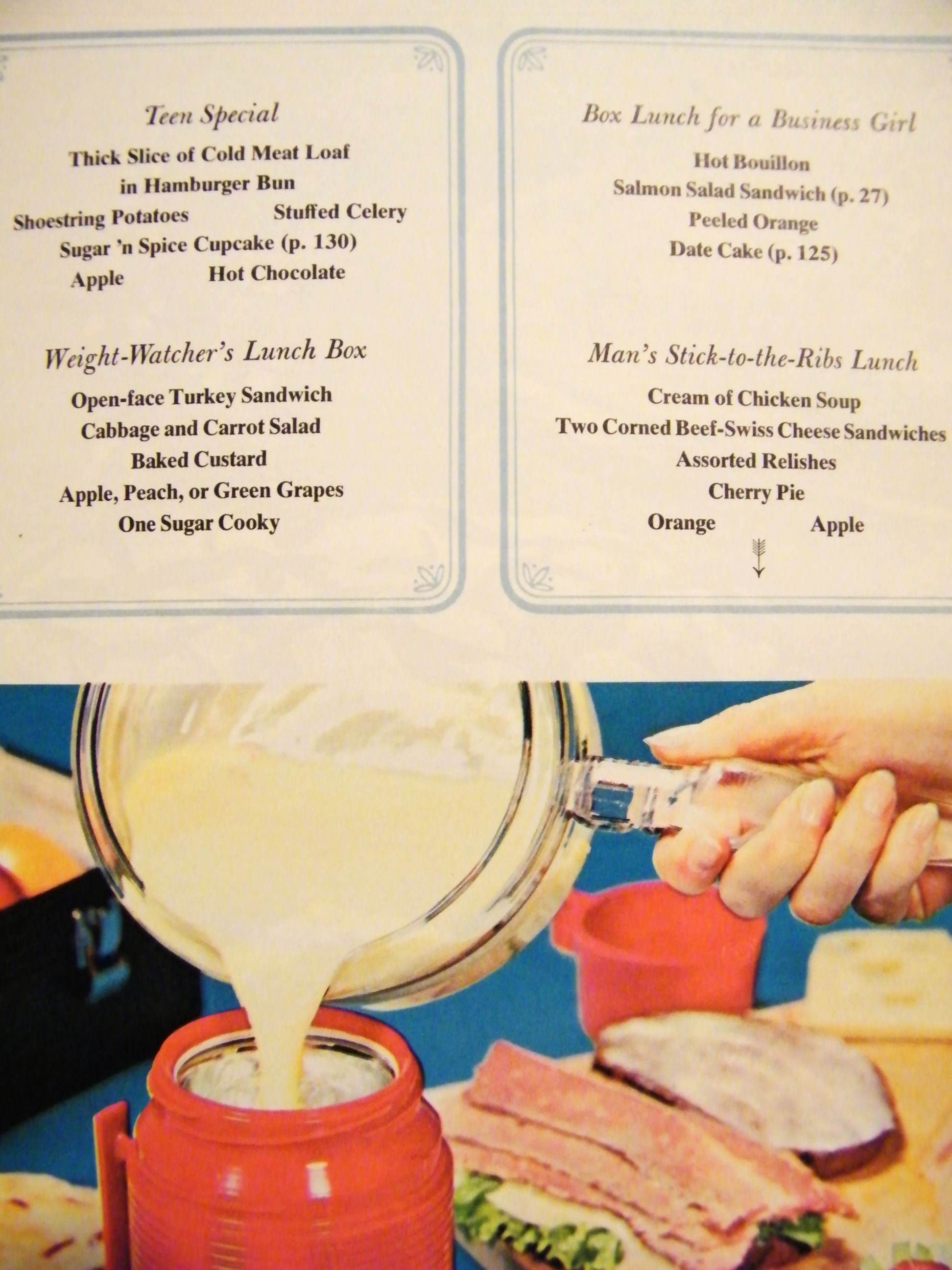
I’m going to leave you with a shot of one of my favourite pages from my Betty Crocker cookbook. (I found two copies at a library book sale years ago, bought them both and gave one to my sister.) It shows lunch suggestions for various family members and it reminds me that we live in a very different era from the one in which that book was created. Thank goodness we have Dorie to update home cookery for us today.

You can find many other blogged descriptions of this week’s FFWD recipe here: Savoury Cheese and Chive Bread

FFWD – Orange-Almond Tart

Just a quick post today, as it’s been a busy week.

Gluten-free baking can be a little tricky, especially when converting standard flour recipes. In converting the recipe for the sweet tart dough for the Orange-Almond Tart, I chose to use an all purpose mix made of white rice flour, potato starch and tapioca flour. It’s one that they sell at my local food co-operative and I’ve had really good results with it. In this recipe, though, the dough was ultimately too crumbly, with a slightly sandy taste that detracted a little from the shortbread flavour the dough is meant to have. Next time I try this, I’ll use a different combination of flours – one that doesn’t rely so heavily on white rice flour. (For the record, I’ve made this sweet tart dough recipe as written, with conventional flour, and it turned out beautifully. The problem was my choice of flours, not a fault in the recipe. I think I should have used a touch more xantham gum, too.)

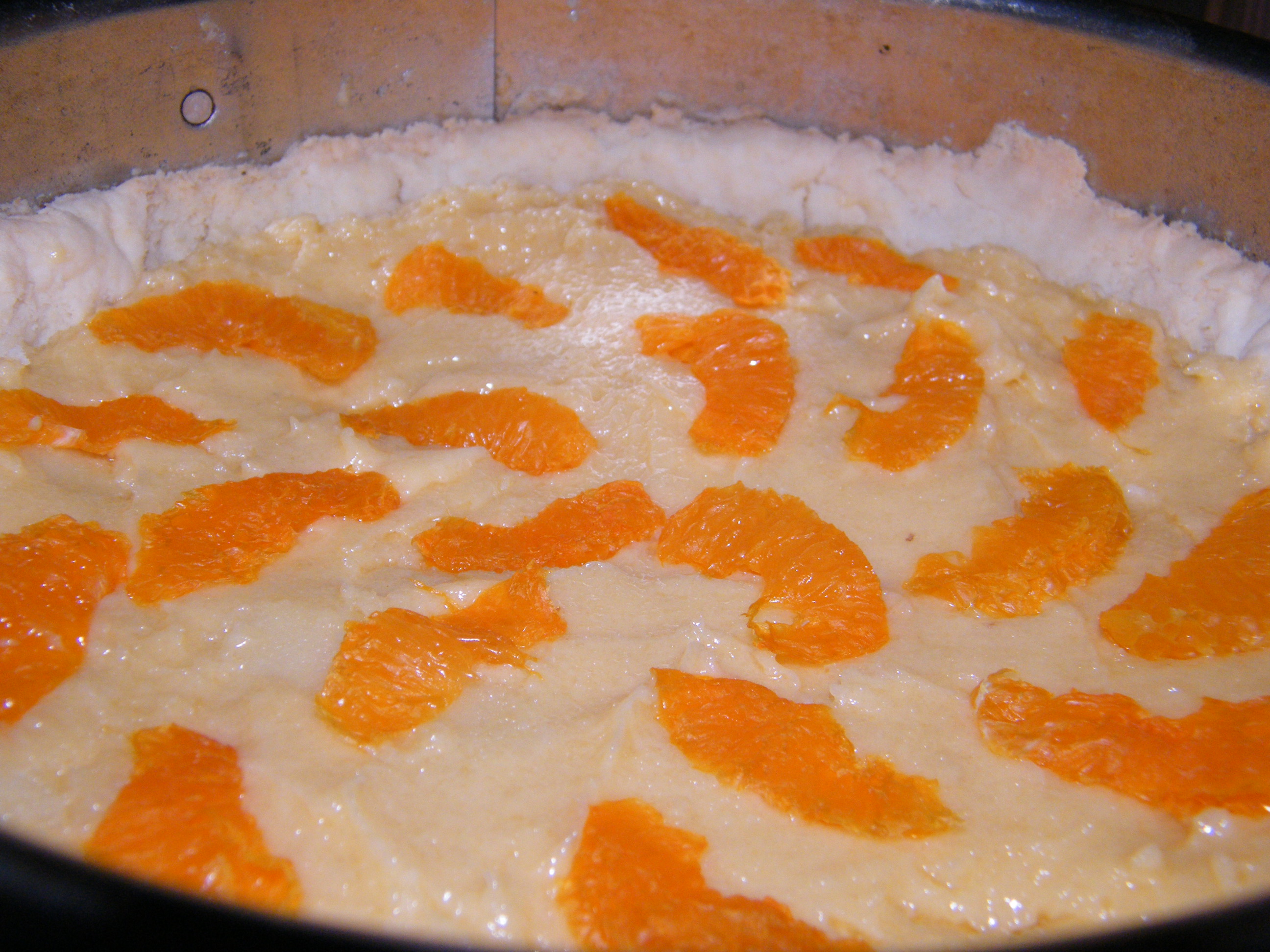
My intention was to make a tangerine version of this tart, but sectioning the tangerines did not go well. The fruit was quite soft and my knife was not quite sharp enough. In the end, I sectioned some nice, firm oranges instead, which worked out quite well.

The almond cream turned out beautifully and the same gluten-free flour mix that failed in the pastry worked really well for the filling.

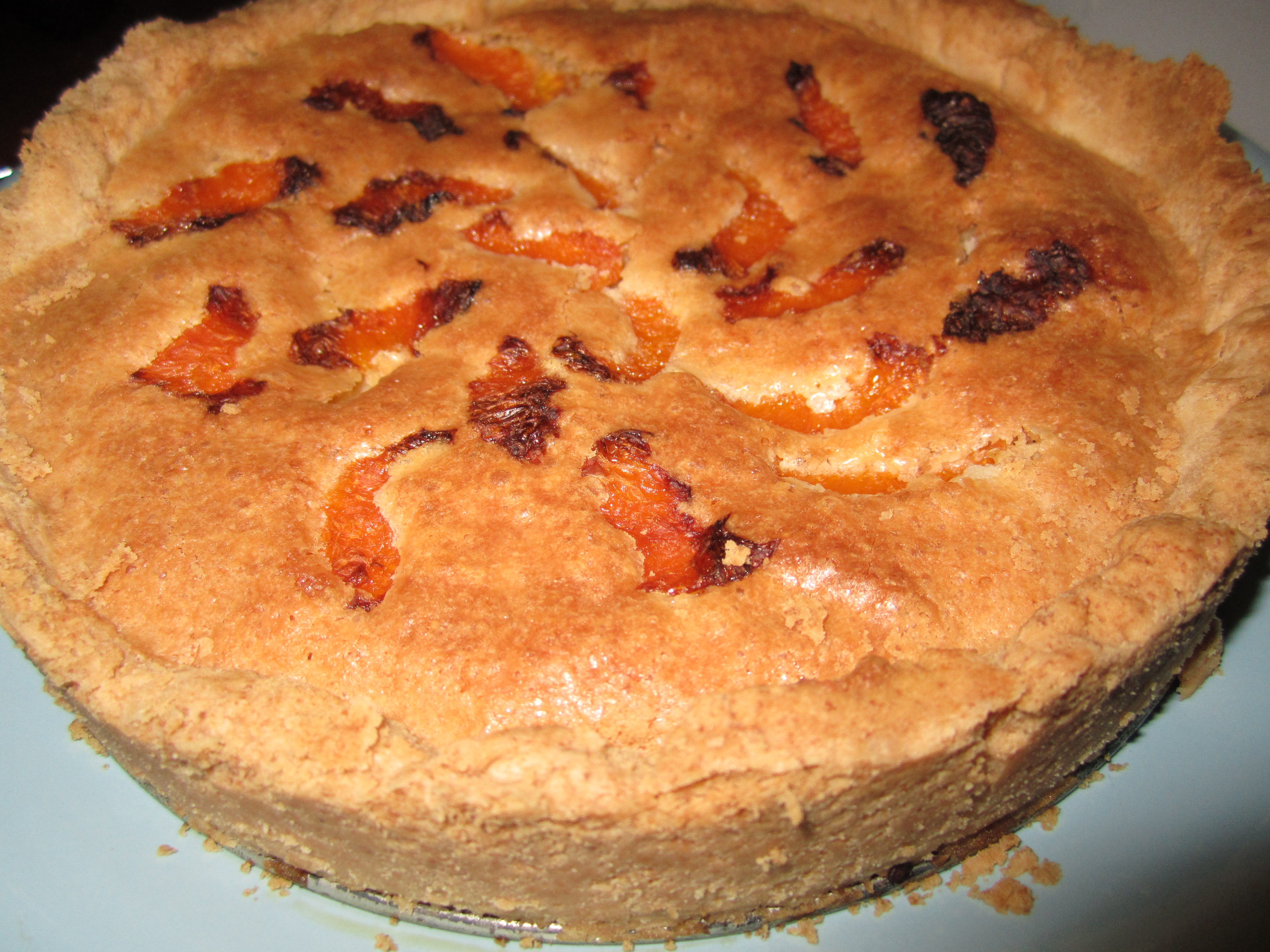
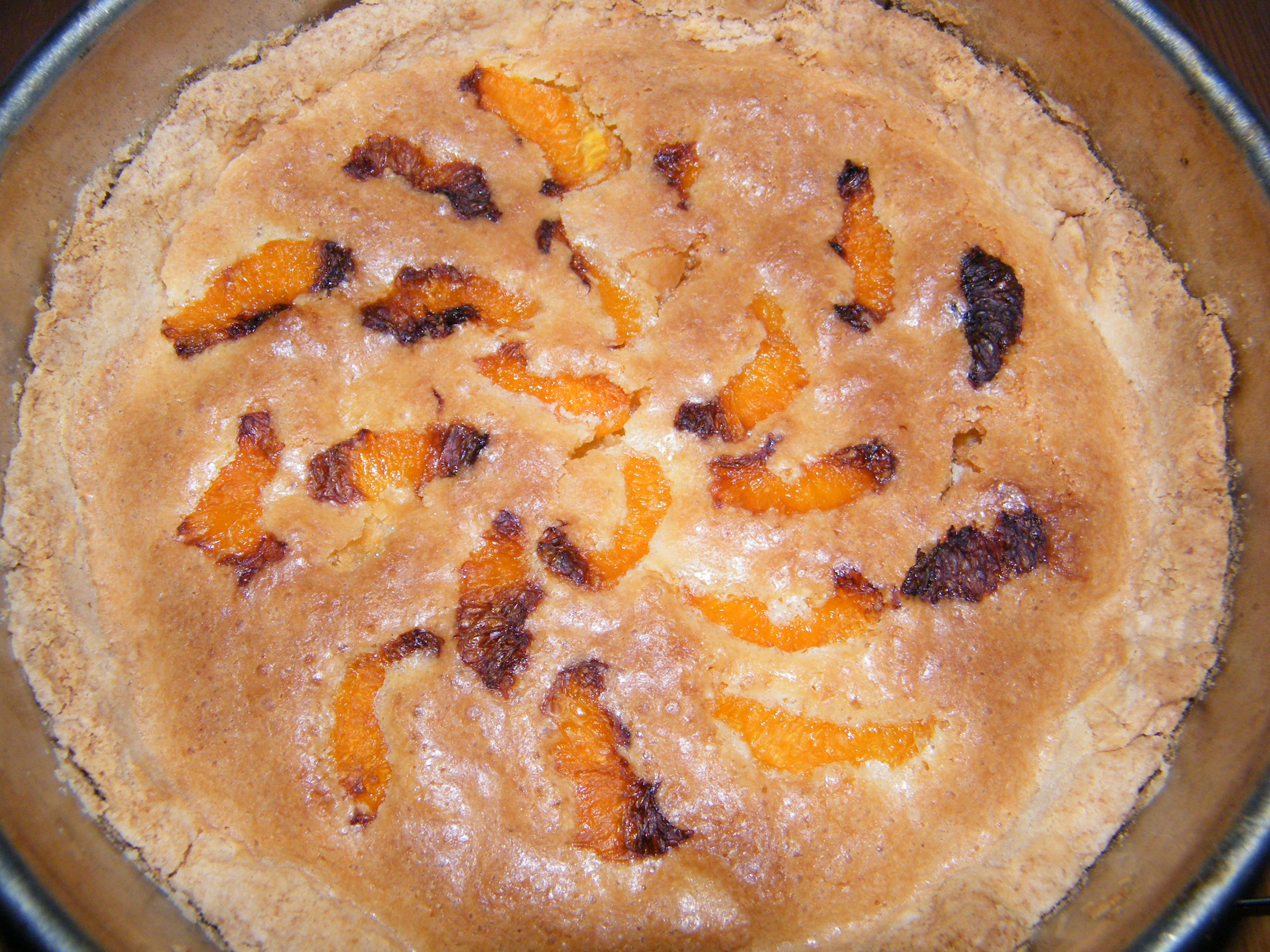
The finished product was tasty, if crumbly and with a few inexplicably over-browned oranges. The oranges also were a little swallowed by the almond cream, I think because my pan was smaller than called for. I’ll make this again, once I’ve sorted out a gluten-free version of the tart dough that works well. I hope that the next time I make this, too, that the finished product looks a little prettier. Check out the other French Friday participants if you want to see more attractive versions!

UPDATE – February 18/11 – I sent a big slice home with my parents, the day after I made it. I apologized in advance because I didn’t think they’d like my version of the crust much. Turns out, though, that they loved it. My mother phoned back to tell me so. I tried another piece and was really pleased. Refrigerated overnight, the crust had improved immensely. It was no longer crumbly and was very flavourful. The filling was still just as good as it had been the first day. When I make this again, I’ll make it ahead.

You can find many other blogged descriptions of this week’s FFWD recipe here: Orange-Almond Tart

FFWD – Basque Potato Tortilla

February is a busy month for us this year, in no small part because it’s my partner’s 40th birthday next week. We’ve got a big party lined up for the weekend at one of our favourite gluten-free-friendly restaurants, but for his actual birthday I’m making a rice pasta spinach lasagna. I’m also going to attempt a gluten-free version of next week’s FFwD recipe, Orange-Almond Tart. So, I was happy the month was starting off with a relatively easy dish. One which is naturally gluten-free, to boot. No substitutions needed.

Basque Potato Tortilla is more akin to what North Americans would describe as an omelette than what we think of as a tortilla. It’s started on the stove and finished under the broiler, requiring a close eye, but little intervention. I resisted the urge to add cheese (it’s good to break the habit of always cooking eggs with dairy), but added mushrooms, red pepper, thyme and ham to the base recipe.

Tonight, we ate slices at room temperature with lemon-dressed steamed Swiss Chard on the side. I’m curious to taste it cold tomorrow. I certainly see the appeal of slicing it into cubes or squares and serving it as an appetizer – it would go well with a red pepper salsa, I think. Though I enjoyed the tortilla, I don’t think it will be making a regular appearance in our kitchen. I’m keeping it in mind for those times when you need a simple, visually impressive main or appetizer, though, especially because it uses ingredients you’re likely to have on hand.

It’s also one of those dishes that’s infinitely variable. The Swiss Chard could have just as easily gone into the tortilla as on the side. It’s good to have a few variations on workhorse egg recipes in hand.

Thanks, Kevin, for the loan of your camera – the batteries in mine died today. Apologies to everyone for the darkness of this week’s shots. I’m not as handy with his camera.

You can find many other blogged descriptions of this week’s FFWD recipe here: Basque Potato Tortilla

FFWD – Chicken B’stilla

Slow is underrated, especially when it comes to food. I don’t just mean this kind of slow, though that’s definitely important. I’m talking about taking time with a dish, letting flavours meld and working through the steps to make something truly delicious. We’re so inundated with recipes for 30 minute, 15 minute and even 10 minute meals, that it’s hard to remember that setting aside time for cooking can have enormous rewards. Obviously, in our culture, few of us have the ability to put long hours into every dish that we make, so it’s important that when you do, the recipe is worth it. Dorie Greenspan’s recipe for Chicken B’stilla is a wonderful example of what happens when you put time into making your food.

In this French take on a traditional Moroccan dish, chicken is marinated in spices, then simmered in broth until very tender. The broth is cooked down into a rich sauce, made even richer by adding eggs and honey. Finally, everything is combined, put into a phyllo pastry crust and baked. Since my partner would be eating this with me, I substituted gluten-free rough puff pastry for the phyllo, using Gluten-Free Girl’s recipe (which you can find here). I’d researched gluten-free phyllo pastry, but didn’t find a recipe I trusted. I need to do a little more exploration and some test batches, I suppose. I recommend this puff pastry recipe wholeheartedly – it comes together like magic, though you’ll likely have sore biceps the next day.

Even though you must take a little time to make this dish, none of the steps are particularly difficult. The most difficult part of this recipe is resisting the aroma of the food at the various stages of cooking. While the shredded chicken was cooling, my dog sat in front of the stove, hoping for a handout. My partner repeatedly came in asking if he could have some. I was busy with the sauce, but adding the honey and eggs just added to the wonderful smell. Anticipation ran high.

Once the B’stilla was assembled and baked, it was difficult to wait for it to cool enough to cut. It was worth the work and the wait. Kevin rarely enjoys pie, savoury or sweet, but even before we were finished our first serving, he asked when I would be making it again. I’ll be making this often for Kevin, but I think I’ll also go over to my parents’ place and make the conventional phyllo version for them, too. Not that I’m looking for excuses to make this again…

And, speaking of slow, this was actually the January 28th recipe for French Fridays with Dorie. Instead of writing this post on Friday as I’d planned, I went to a hockey game with my mother instead. I’ve finally found time to catch up today.

You can find many other blogged descriptions of this week’s FFWD recipe here: Chicken B’stilla

FFWD – Michel Rostang’s Double Chocolate Mousse Cake

Almost five months after buying Around My French Table, there’s still a little bit of the scent of new book about it, but that’s fading fast. It’s now starting to look like some of the most-used cookbooks in my collection. One page has a drop of braising liquid and on another there’s a tiny stain from Valrhona chocolate. I’m sure that there’s also some gluten-free flour mix dusted throughout. At least I don’t dog-ear the pages (shudder).

Ultimately, I think those stains are the markers of a successful cookbook. Though I try to keep my cookbooks safe from my culinary adventures, I inevitably put a chocolately finger on the page or spatter some too enthusiastically stirred broth over the book. I’ve a few that are still pristine; those are likely to end up in a box at a yard sale someday. Those that I enjoy most are no longer so pretty.

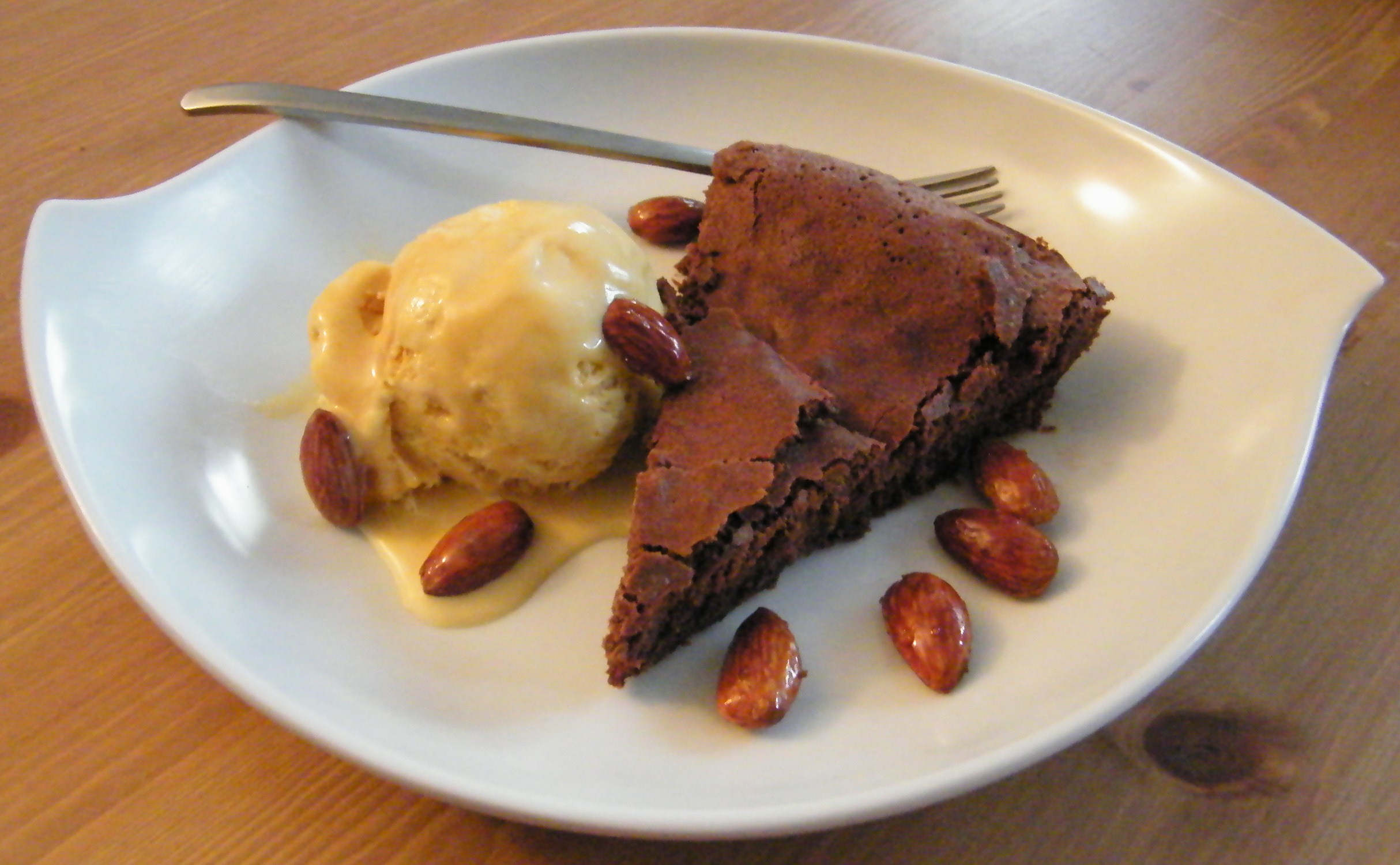
It’s safe to say that I’m enjoying cooking from Around My French Table. Learning from Dorie Greenspan and from each other, the group has made some delicious dishes so far. This week’s recipe has inspired me to do a little learning beyond the AMFT classroom. Since the double chocolate mousse cake almost cries out for ice cream, I pulled out my (brand new) copy of David Lebovitz’ Ready for Dessert and looked for a suitable match. I don’t have an ice cream freezer, but that wasn’t too much of a barrier. I used his frozen caramel mousse recipe, along with salted almonds (both of which are meant to be served with sherry-glazed pears and chocolate, but those will have to wait for another time).

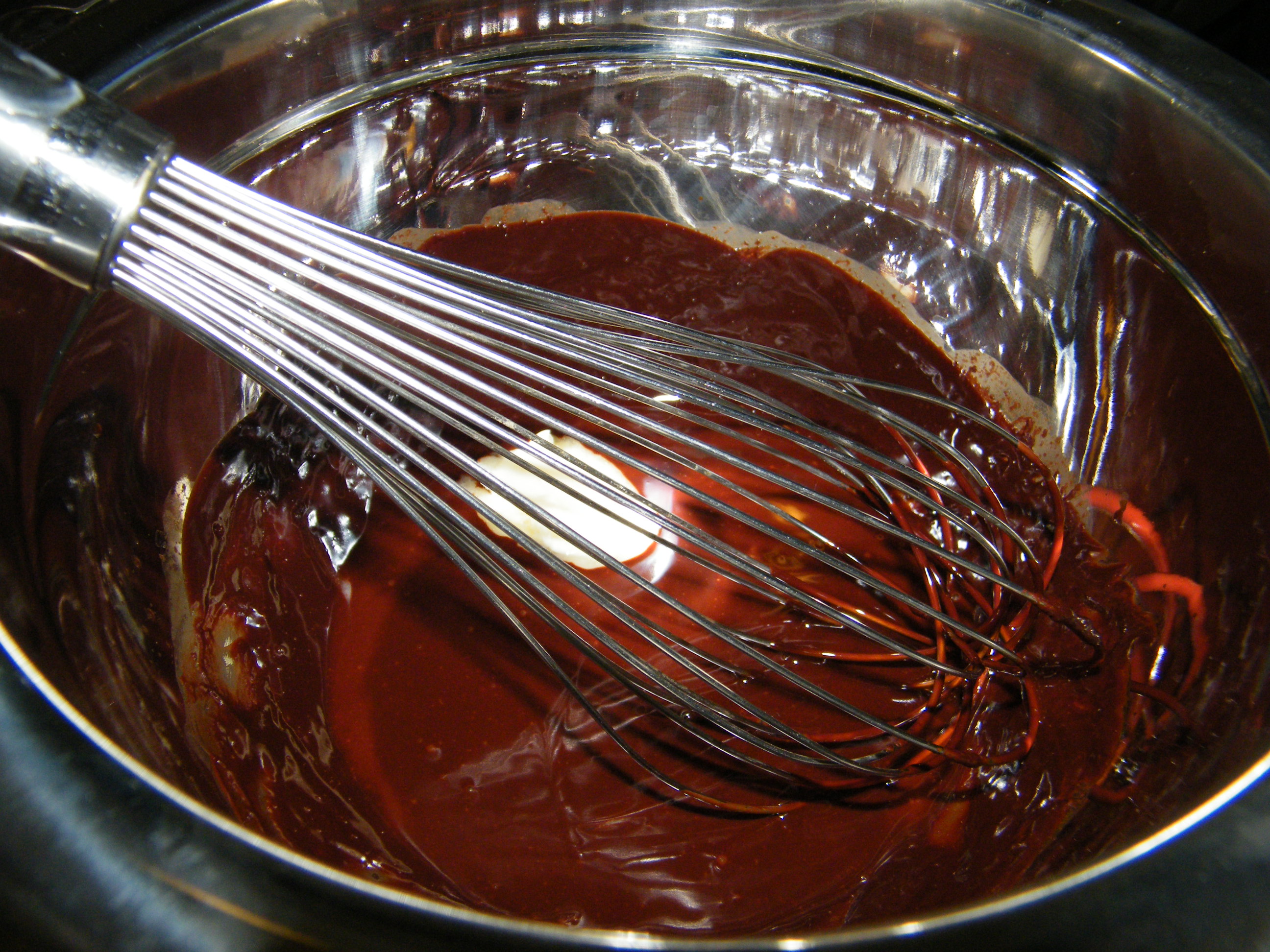
The cake itself is mostly a matter of stirring. Once the chocolate is melted, the rest of the ingredients are incorporated bit by bit, save for the egg whites, which are folded in at the end. The most time-consuming part of the process for me was walking down the block to the corner coffee shop, Bump N Grind, to pick up the espresso. I don’t usually drink coffee at home (I’m a mildly obsessive tea drinker) and my neighbourhood is known for very good espresso, so there’s little reason for me to keep coffee on hand. I used to have a fantastic chocolate cake recipe (which I’ve sadly lost) that used a long Americano. I lived closer to Continental Coffee then and entertained enough that they knew exactly what I was up to when I came in. It brought back memories when I walked into the shop yesterday and asked for a third of a cup of espresso.

I chose to bake the cake twice and serve it cold, which is Dorie’s favourite version. You can also bake it once and serve it with chilled chocolate mousse on top or bake it twice and serve it warm. I think there’s some experimentation called for, to make sure I identify my favourite version of this cake. I don’t think I’ll manage it all at once, though.

What I can tell you is that the cake is dense and delicious, reminiscent of a brownie, but much more sophisticated. The hint of espresso works really well with the bittersweet chocolate. Adding caramel mousse and salted almonds? Amazing.

You can find many other blogged descriptions of this week’s FFWD recipe here: Michel Rostang’s Double Chocolate Mousse Cake

A Childhood Favourite, Improved

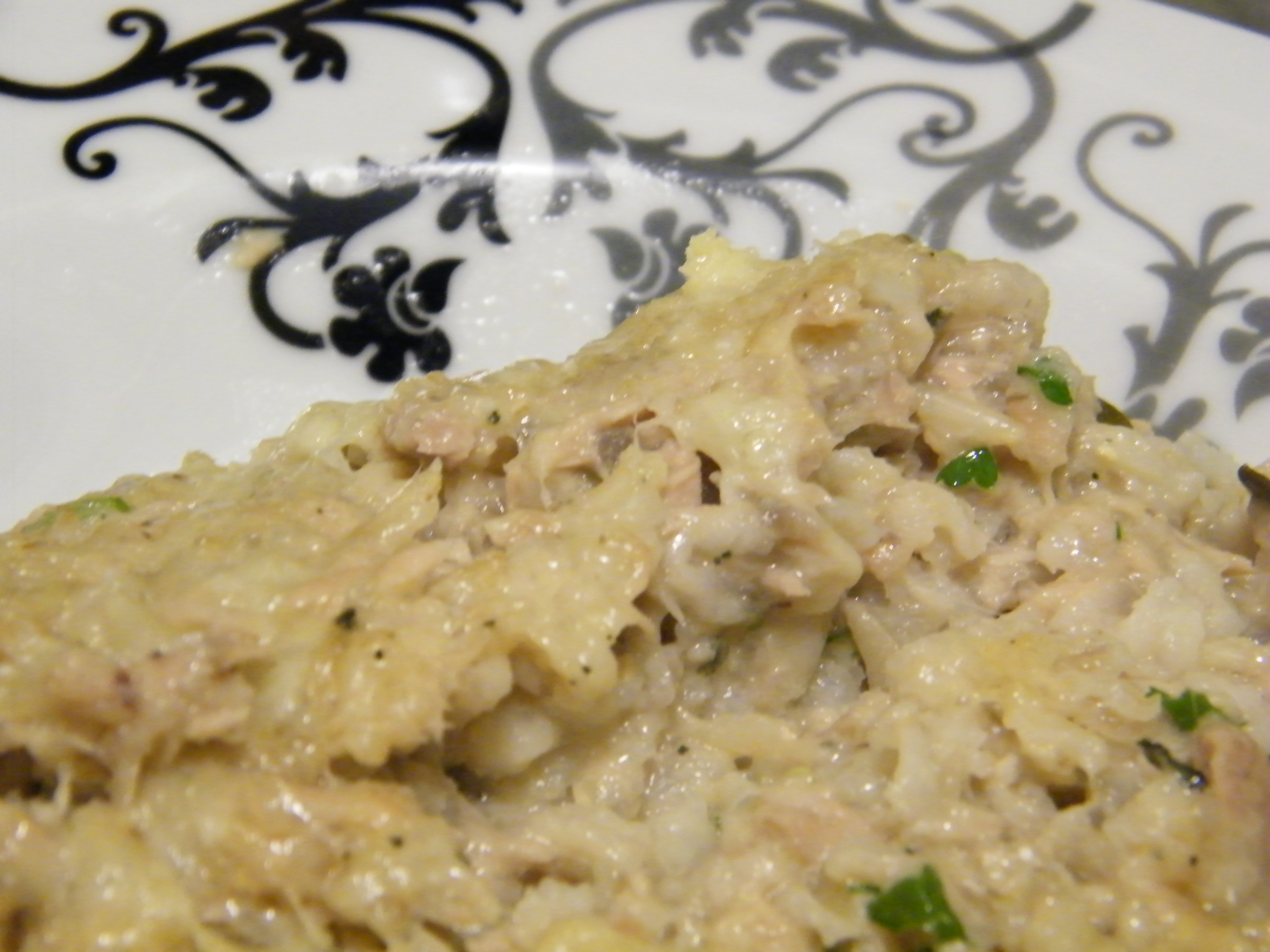
Once I’d tasted the Paris Mushroom Soup from last week’s French Fridays With Dorie assignment, I realized that my previous experiences with canned mushroom soup had unfairly prejudiced me against all mushroom soups. Then, my thoughts turned to the one mushroom dish that I could tolerate when I was small, Tuna Rice Casserole. Though it was made with canned mushroom soup, I loved it. Which started me wondering how much better this casserole could be, if it were made with the leftovers of a really good mushroom soup.

I’d cooked a full recipe of the soup, thinking we’d have enough for two meals and another meal’s serving to freeze. Instead, I came up with this recipe:

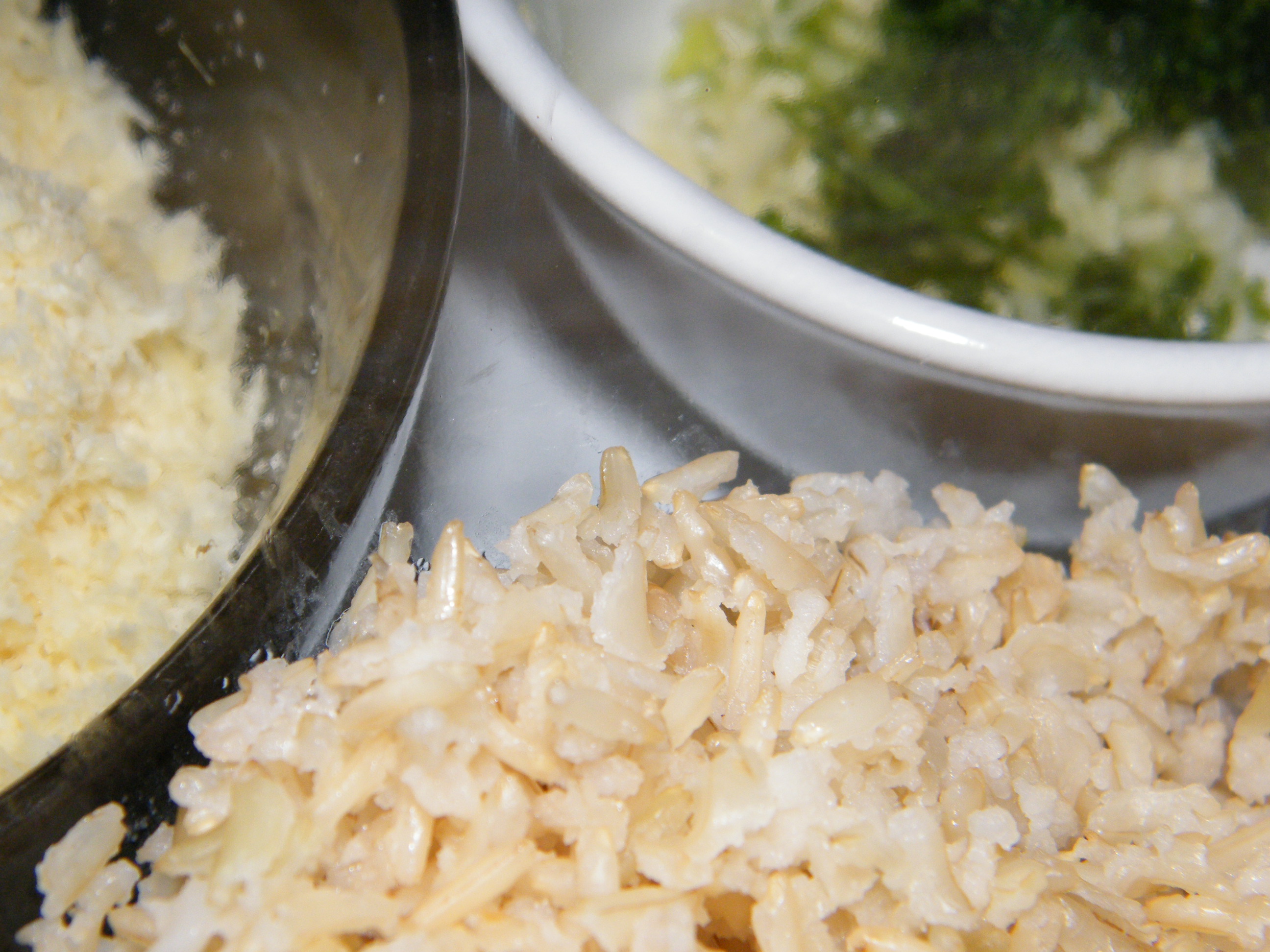
Tuna Rice Casserole

4 cups cooked brown rice
2 cups grated aged Cheddar (I used Dubliner) mixed with ¼ cup grated parmesan
2 thinly sliced scallions (all but dark green parts)
2 tablespoons finely chopped parsley
1 clove finely chopped garlic
2 cans tuna (in water), drained
2 cups homemade mushroom soup (I used Dorie Greenspan’s Paris Mushroom Soup)
2 tablespoons crème fraiche
1 teaspoon crumbled dried sage leaves
Salt and pepper to taste

Set aside a ½ cup of the cheese. Butter an 8X8 baking dish.. Preheat the oven to 350 °.

Mix the scallions, parsley, garlic and tuna with the rice. Then, stir in 1½ cups of cheese.

In a separate bowl, whisk the crème fraiche into the soup, then stir in the crumbled sage leaves. Stir the soup mixture into the rice mixture. Season with salt and pepper and give the mixture a final stir, then pour into the baking dish and smooth with a spatula. Top the casserole with the reserved cheese and bake for 30 minutes. If you like, you may run the casserole under the broiler for a minute or so to brown the cheese.

Variations: If I’d had more mushrooms on hand, I would have browned some more sage in butter, then sautéed a ½ cup of sliced mushrooms to add to the casserole. You could omit the scallions and sauté some finely chopped shallots with the mushrooms instead. You could also add bread crumbs (gluten-free or no) to the topping, if that’s your thing. Or you could use different herbs or cheeses. And of course, you could substitute another sort of dairy for the crème fraiche (or leave it out altogether).

It’s been at least a decade since I’ve had this dish, but I’m positive that this version is an improvement on the original. I suppose it’s ironic that I gave the Paris Mushroom Soup this treatment, since many people in the cooking group have been remarking what a healthful, low fat antidote the soup has been to all the excesses of December. But, I just had to make it. You could serve it with a salad, though, it pairs nicely.

FFWD – Sweet and Spicy Cocktail Nuts

I’ve always loved baking, in an old-fashioned way. When I was a child, I started out as my mother’s helper in the kitchen and then slowly started to master the recipes in her cookbooks. At University, I became known for bringing brownies, cookies and cakes to parties and people would be disappointed if I didn’t. I’ve been doing it ever since.

It’s only been in the last ten years or so that I’ve encountered people who disdain dessert. In one particular circle, I’d bring a basket of cookies to a party and go home with them all untouched. I’d bring the cookies to work the next day and they wouldn’t last a half hour. I was baffled, until I asked the friend who’d introduced me to that crowd. She told me that no one wanted to indulge in unhealthy treats and that a party was no excuse for over-eating.

So, I began bringing cheese plates instead. Blocks of brie, camembert, blue cheese and aged cheddar disappeared, along with the savoury dips and spreads that lined the table. It’s enough to break a baker’s heart. Clearly, the injunction against indulgence really only applied to desserts and baked goods.

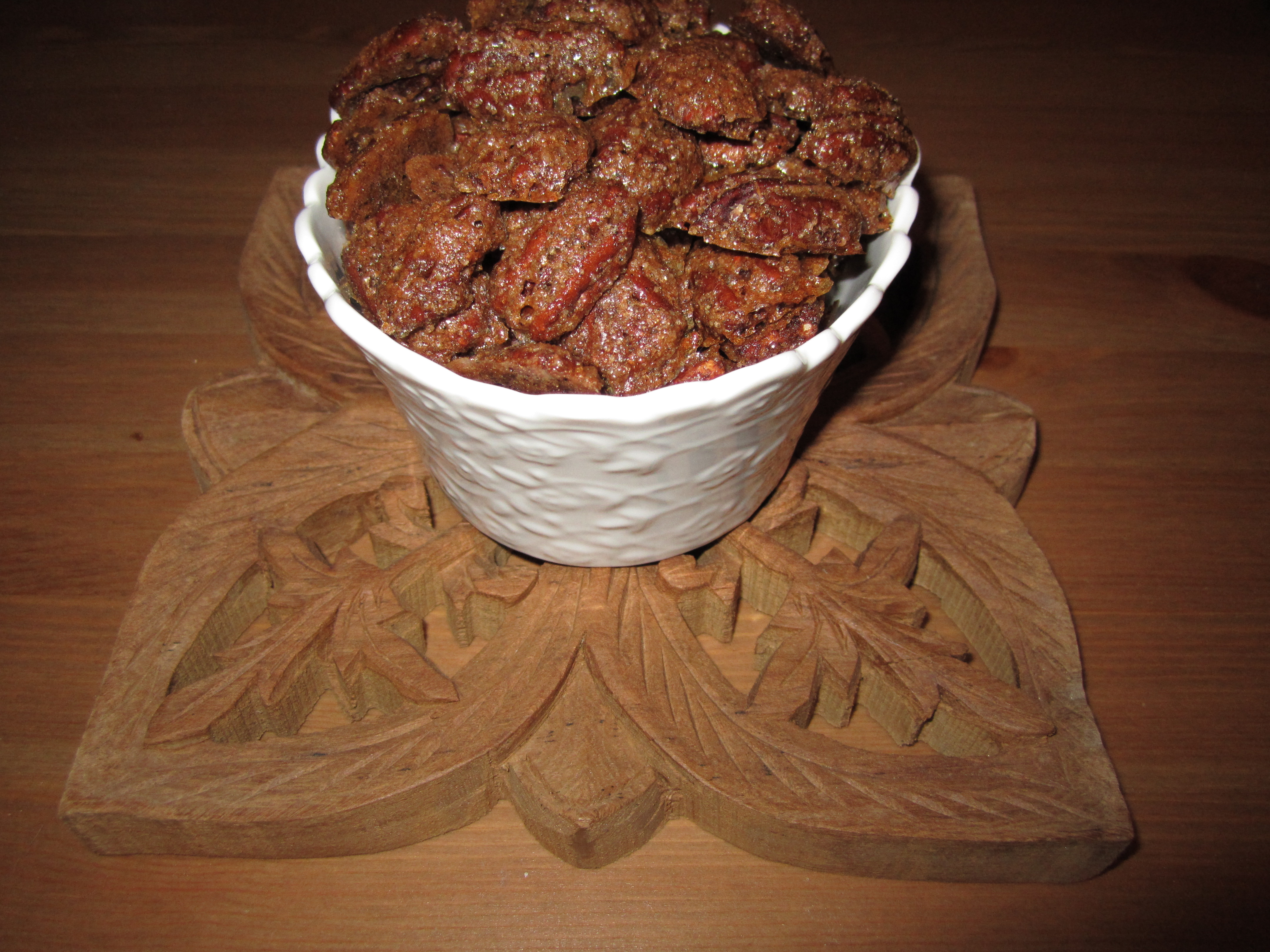
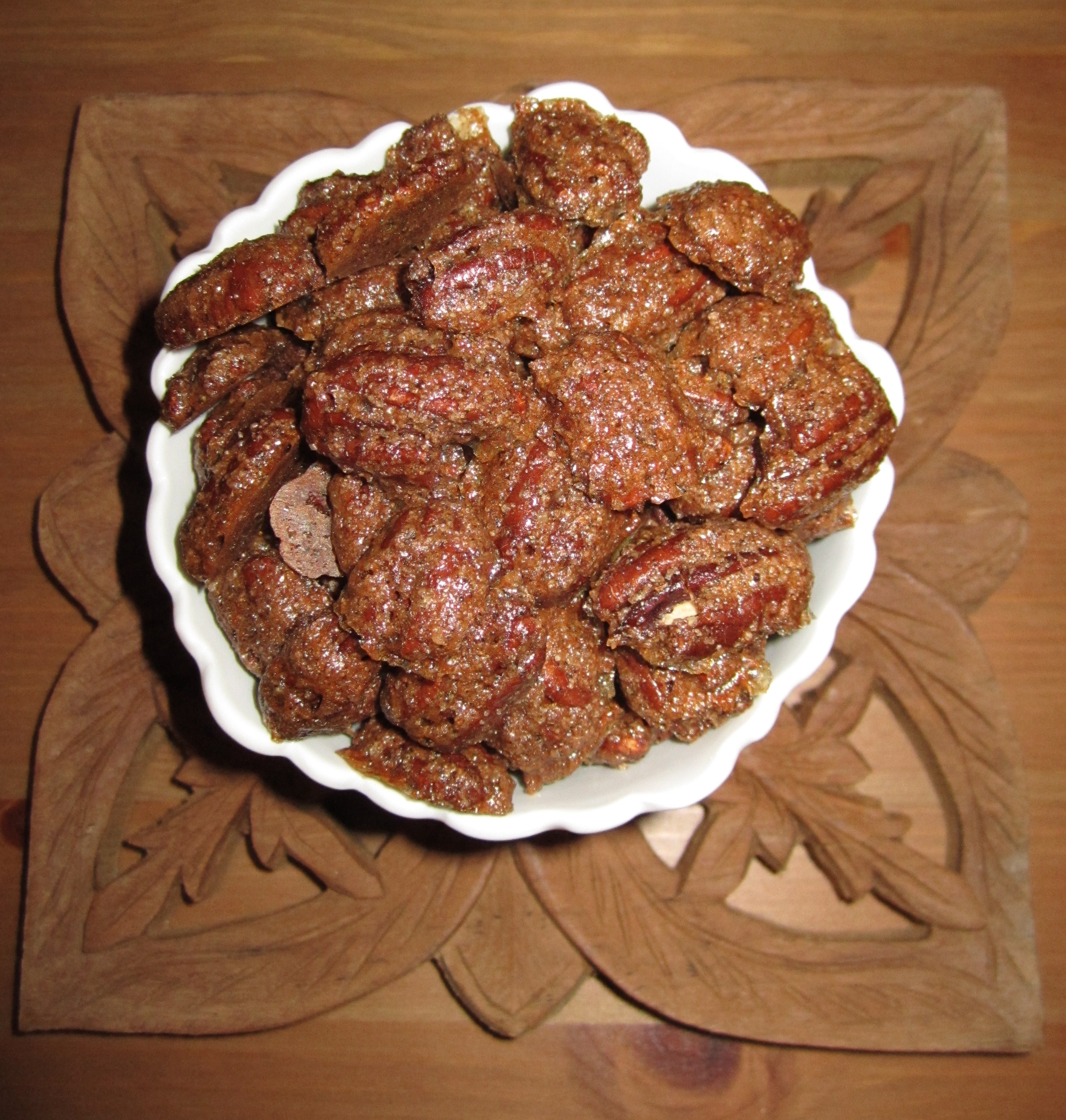
I’ve got another one of these gatherings coming up, but I have a solution that’s going to satisfy my baker’s urge and shouldn’t leave me with untouched offerings at the end of the night. Dorie Greenspan’s Sweet and Spicy Cocktail Nuts.

These are a lot like a brittle, with a spicy bite of cayenne and chilli, instead of the usual caramel. I added a touch of smoked paprika to mine and am pleased with the result. The only thing I’d change is the sugar I used. Next time, I’ll pick up some granulated sugar – the slightly coarse cane sugar I had on hand produced a bubbly, brittle texture that isn’t as visually pleasing as I’d like.

I’m going to present them with a variety of salted nuts. I predict they’ll be popular.

We’re doing things a little differently again for the month of December. We’re still posting weekly, but people are free to post this month’s recipes in any order. You can find many other blogged descriptions of this month’s FFWD recipes here: LYL: December 3

Cinnamon-Cardamom Rice Pudding with Honeyed Rosewater Sauce

I’ve mentioned before that eating out can be challenging for people with celiac disease. But it’s not only restaurants where you might run into problems. Eating at the homes of your friends and family can be tricky, too. It’s hard enough to keep a house gluten-free when someone with celiac disease lives there.

Even when you’ve explained what needs to be avoided, there can be gaps in communication. One friend told me that she’d arranged to go to someone else’s home for dinner and had several phone conversations about her food restrictions, including her gluten-intolerance. My friend is a very thorough and clear communicator. She was assured that her host had educated herself on avoiding gluten and that she had nothing to worry about. During the meal, my friend asked again, just to be sure, and was told that there was definitely no gluten in any of the dishes. When they’d finished, the host turned to my friend and told her that she’d been sure to use only whole wheat flour in the gravy, as she understood that my friend couldn’t have processed white flour. Several days of illness followed.

These sorts of misunderstandings can be compounded when family food traditions are added to the mix. I know that my family’s holiday dinners are very gluten-heavy affairs, from my mother’s delicious gravy to the pies, cookies and cakes for dessert. When my partner comes to these family dinners, adjustments must be made. I’m lucky that my family gets how serious celiac disease can be, since my father’s aunt had it, so the adjustment is painless. That’s not true for many people, though.

Often, the easiest solution for me is to prepare interesting and seasonal dishes that naturally don’t contain gluten. My partner’s not fond of baked goods, anyway, so I get to experiment with other things. This also has the advantage of avoiding complaints from conventional eaters that a modified dish doesn’t taste the way they expect it to taste.

Here’s a recipe for rice pudding that would fit in at any fall or winter celebration. It relies on Middle Eastern flavours, but I added some cranberries and increased the cinnamon for a seasonal flair. You can try other dried or fresh fruits, as well as chopped nuts. Dried apricots and pistachios work well, especially if you concentrate on cardamom as the main spice.

Rice Pudding with Honeyed Rosewater Sauce

Makes eight servings

The rice pudding was inspired by this New York Times article.

The honeyed rosewater sauce was adapted from The Healthy Gourmet Cookbook.

For the Pudding:

3 cups cooked brown rice
4 cups whole milk
¼ to ½ cup organic cane sugar
1 tsp. cinnamon
½ tsp. ground cardamom
2 to 3 points star anise
1 tsp. rosewater

Combine rice, milk and sugar and bring to boil, then lower the heat to a simmer. Add rosewater and star anise points. Continue to simmer, stirring occasionally, until thick and the milk has been almost completely absorbed. Many people like to add the spices at the end, but I add them in a little into the simmering time, as it seems to infuse the rice with their flavour more. When it’s done, set it aside to cool a little, then spoon into serving dishes and put those into the refrigerator to chill.

Notes:
The ratio of cooked rice to milk is generally 1 cup rice to 1½ cups milk. I use a little less milk than that when I’m making a big batch. Adjust the other ingredients and cooking time accordingly. I used a scant ¼ cup of sugar, as I was also using the honeyed rosewater sauce. Use sugar to taste. Any sweetener and any milk will work in this recipe, so try it with whatever you’d normally use.

For the Sauce:

2 cups water
¼ cup honey
2 tablespoons rosewater
1 teaspoon lemon (or orange juice, for a sweeter taste)
1 cinnamon stick
2 or three strands of saffron

Bring the water and honey to a boil, then reduce the temperature to a simmer. Add the rosewater, lemon, cinnamon stick and saffron. Simmer for about 30 minutes, or until the mixture has a slightly syrupy texture.

Allow to cool and then chill in the refrigerator.
.
To put it together, drizzle a little of the sauce on each serving of pudding and garnish with chopped dried fruits and/or nuts.

I’m adding this recipe to Gluten-Free Girl and the Chef’s recipe round up, which can be found here: Gluten-Free Thanksgiving 2010. They’ve gathered recipes from well-known food bloggers, along with a tonne of recipes from more bloggers in the Comments. So, whether you celebrate Thanksgiving, or have misgivings about its colonialist roots, you should check this out. It’s an amazing resource of recipes for gluten-free celebrations. And your gluten-eating friends and family will be too full to notice. If you contribute a recipe, or even a comment, you’ll also be eligible for some great prizes!