Sucre à la Crème

Sucre à la Crème

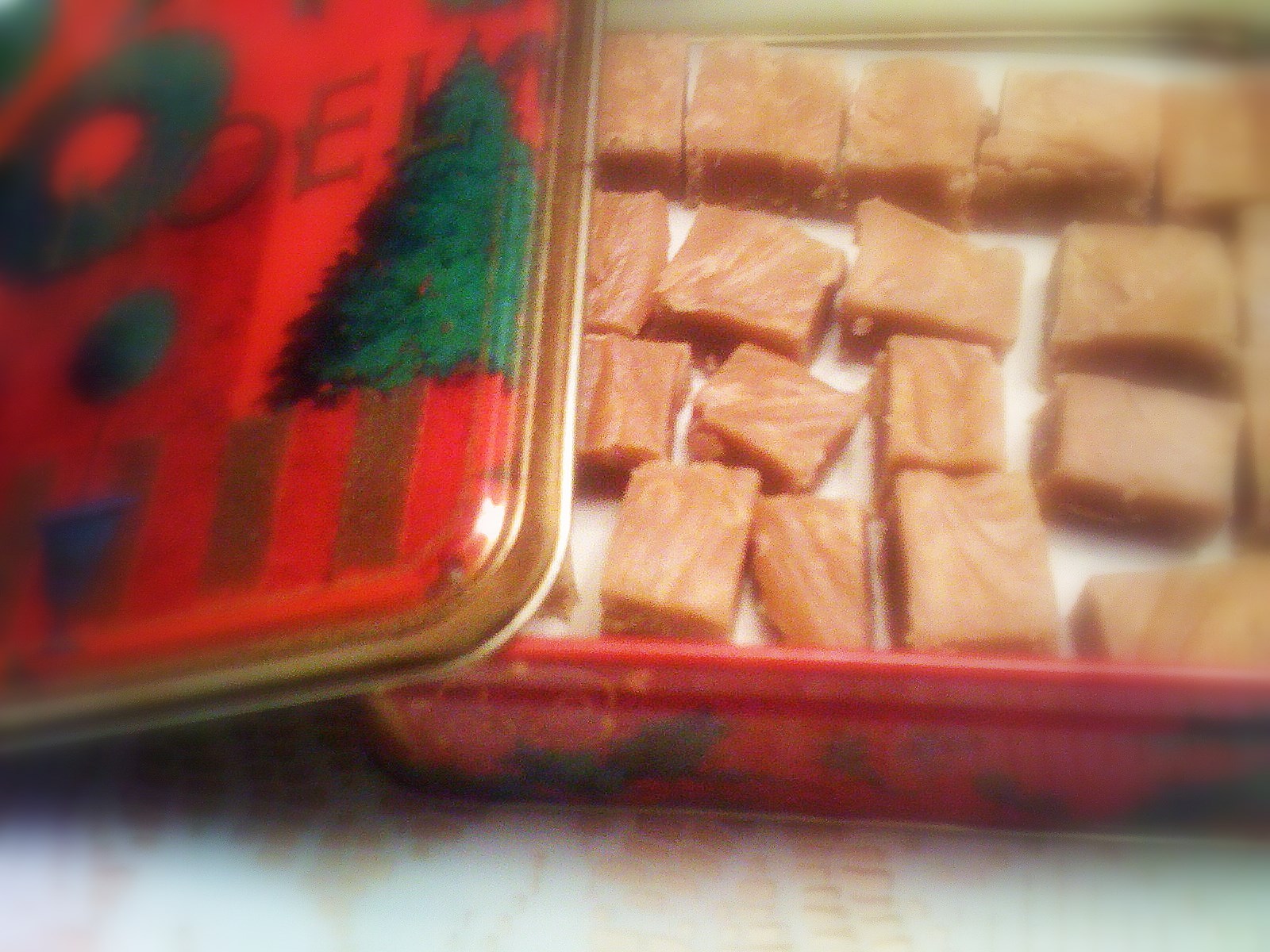
I just returned from a lovely visit with a couple of friends this afternoon. I gave them each some sucre à la crème, as one is Québécoise and the other is Scottish and misses having tablet (a very similar confection). We talked about having a little get together so that I could teach them how to make it – it’s much easier than telling, especially since in my family’s tradition there are no candy thermometers involved. I spoke to my mother about it and as it happens, she’s been looking up resources on the internet since we made our last batch. The recipes vary widely and the methods are very different, too. In our family, we use heavy-bottomed soup pots when we make this candy, but most of the videos we found show smaller pots being used. The consistency varies a lot, too, especially when maple syrup or corn syrup are used.

Here are two videos that can give you an idea of how sucre à la crème is made, though the method is a little different than the one we use. They’re both in French, though Ricardo has English recipe resources out there, too. Madame Quintin is the perfect French-Canadian Mémère, don’t you think?

I might have to make a video of my mother making her version. Maybe in time for next Christmas.

A French Fridays Catch Up: Matafan and Chard-Stuffed Pork Roast

The week between Christmas and New Year’s Day is often one full of leftovers and small pleasures. One of my favourite things to do this week is the Globe and Mail’s holiday crossword. Amidst the year-end lists and celebrity tributes, it’s also a good week for reflection on what’s past and what’s to come.

One of the things I’ve enjoyed most this year has been participating in French Fridays and I’m looking forward to reading what the new year brings to all the group’s participants. I also have a bit of catching up to do with this month’s recipes. The two dishes I’m writing about today went together very well and might make a lovely New Year’s Eve supper.

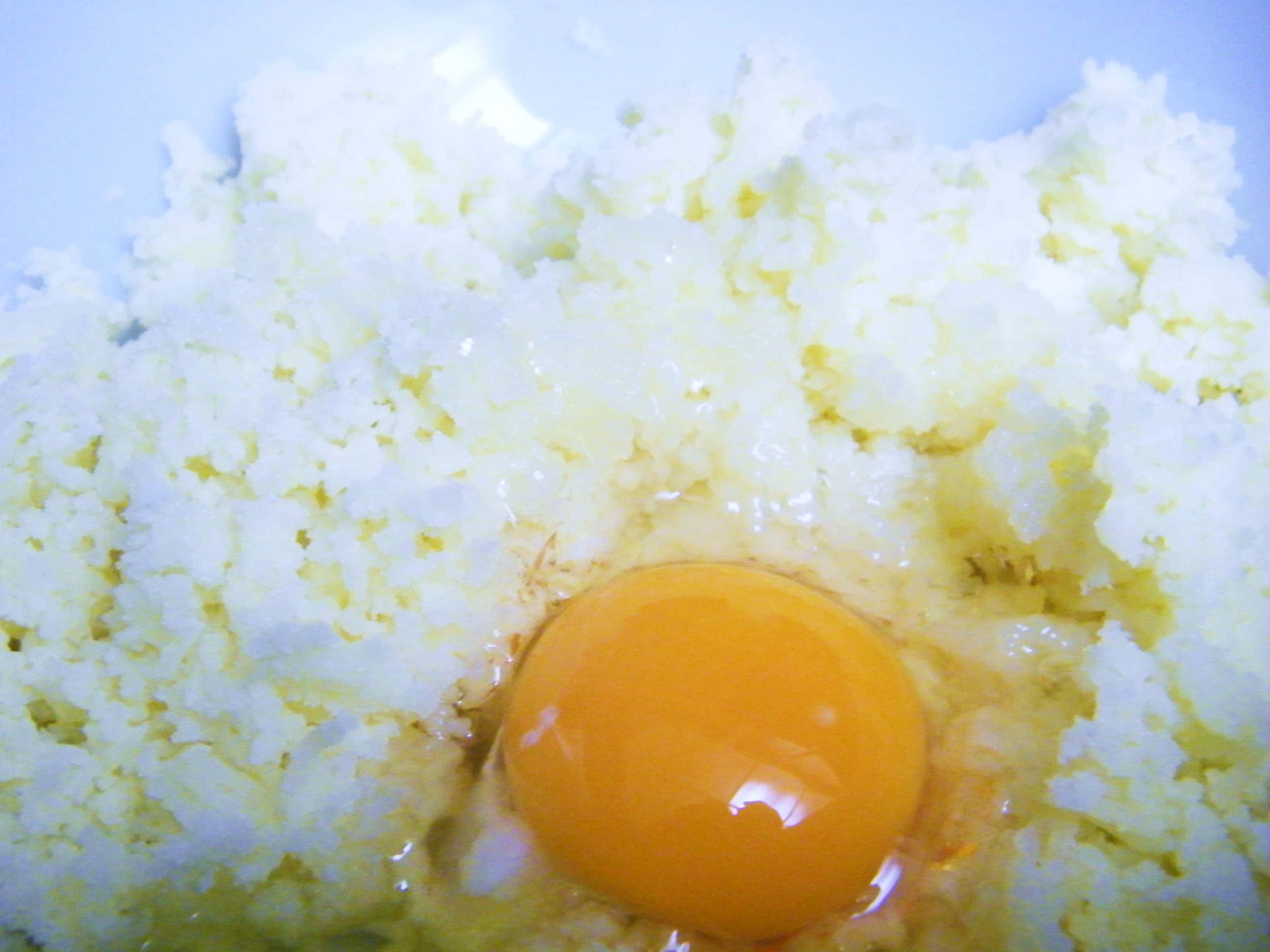
Adding the egg yolk to the potato.

Adding the whipped egg whites to the matafan batter.


Matafan are traditionally a mid-morning snack (or possibly even part of Second Breakfast, if you happen to be a Hobbit). Dorie describes them as “fluffy mashed potato pancakes” and they are exactly that. I used them as the starch at dinner when I served pork roast as the main. They soaked up the pan juices nicely and stood up well to the roast and its stuffing. The hardest part of making these for me was pushing the baked potato through a sieve, as we couldn’t locate my mother’s ricer. I only used one potato; my father had grown a variety that got quite big and I found one that was easily 1 1/2 pounds. Once I’d finished with the potato, the rest was easy. The batter takes four eggs in total, but two are separated and the whites are beaten stiffly and added after the whole eggs and yolk are incorporated. Riced potatoes and whipped egg whites bring the fluffiness to the batter.

Pork shoulder roast.

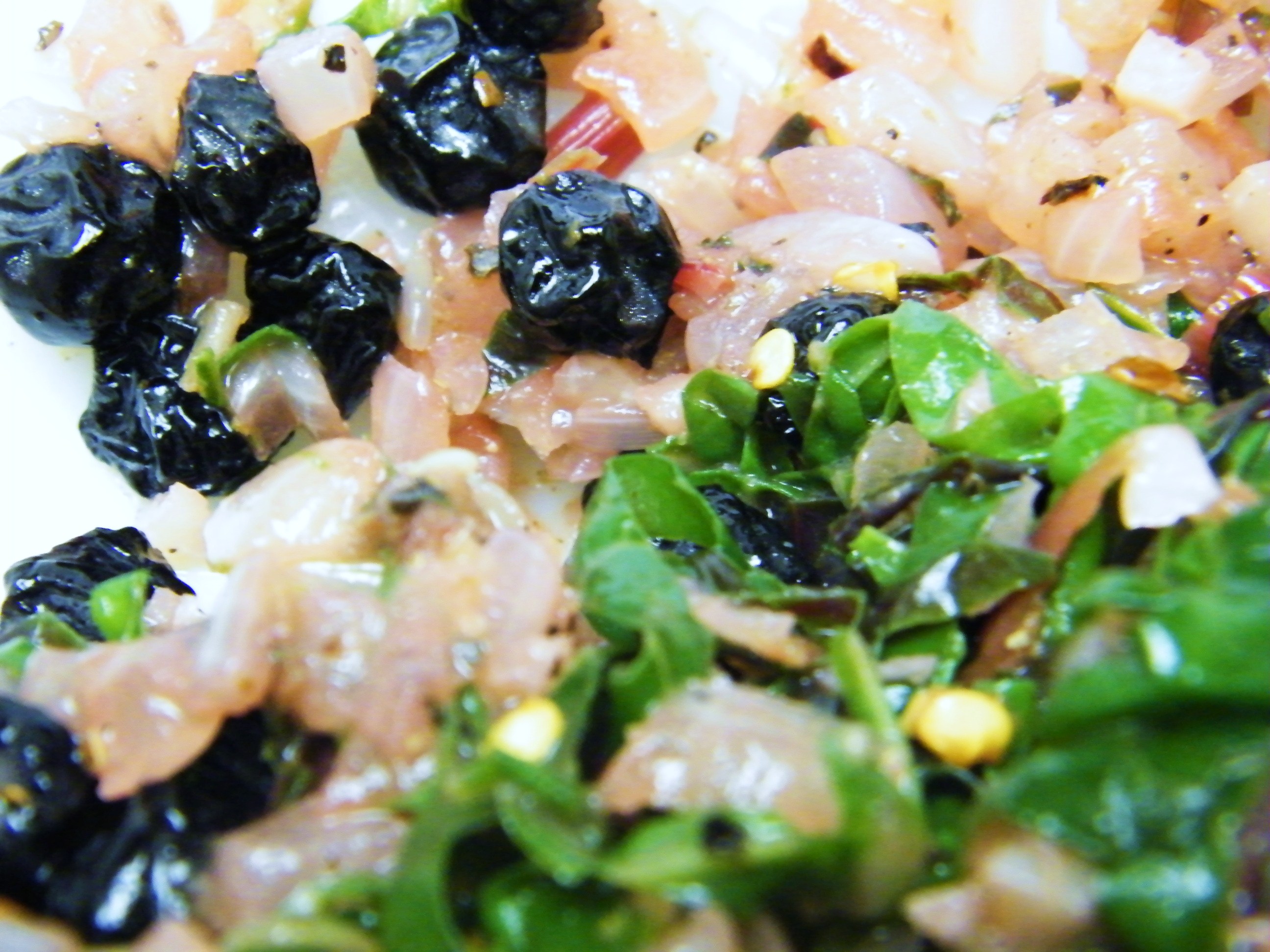
The pork stuffing.


As I cooked the matafan on the stove top, the pork roast was in the oven. The recipe calls for pork loin roast, but I used a shoulder and it seemed to work just as well. My knife skills have improved quite a bit since working through the recipes in Around My French Table, as anyone who participated in our spatchcocking adventure would agree. The meat is sliced almost through along its length and a stuffing of sauteed chard, garlic and onion, raisins (dried blueberries in my case), and red pepper flakes is placed inside, as though between the pages of a book. The whole thing is tied with kitchen twine and the pork is rubbed with olive oil, salt, crushed peppercorns, and crushed coriander seeds. It doesn’t take long to cook in a moderately hot oven – the resting time is nearly as long as the roasting time. It’s a tender roast that picks up the flavours of both the stuffing and the coating. It also looks lovely on the table. Unfortunately, my photo doesn’t do it justice. Sometimes, the hardest part of this group is taking decent photos before taking a dish to table. Sometimes, I just don’t want to keep dinner waiting. C’est la vie.

Pork roast.

Matafan.


I hope that your reflections on the year that’s soon to end and the one that’s just around the corner are satisfying and full of hope in turn.

You can find many other blogged descriptions of these recipes here: Chard-Stuffed Pork Roast and Matafan

A Very Merry Christmas

I hope you’re having a peaceful, happy day today.

I’d like to share the recipe for one of my favourite Christmas treats – sucre à la crème. When I was growing up, my mother and I would make trays and trays of desserts for the big family Christmas meal my parents used to host, along with their Boxing Day open house. Cookies, squares, cakes, and candies, but of them all, we looked forward to sucre à la crème the most, especially if we were lucky enough to have a batch from one of my mother’s aunts back in Manitoba.

My mother is French-Canadian, but her family comes from the francophone communities anchored by St. Boniface. Our Christmas meals have always reflected this and it just wouldn’t be the same if we didn’t have tourtière, boulettes, and sucre à la crème. We’ve even occasionally had a réveillon after Midnight Mass, with goose, then had an anglophone Christmas dinner with my father’s Irish family in the evening.

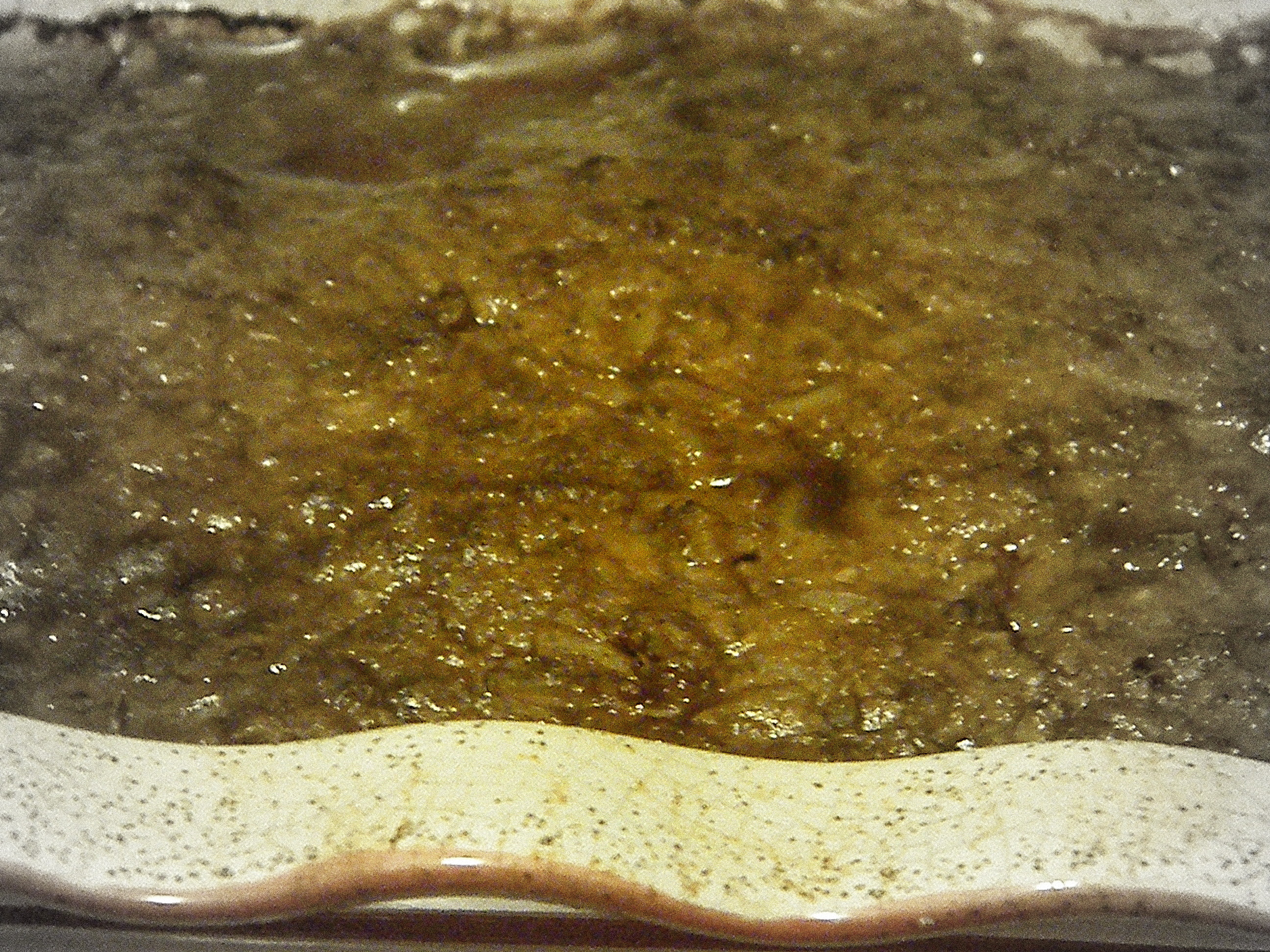
Cooking the sugar.

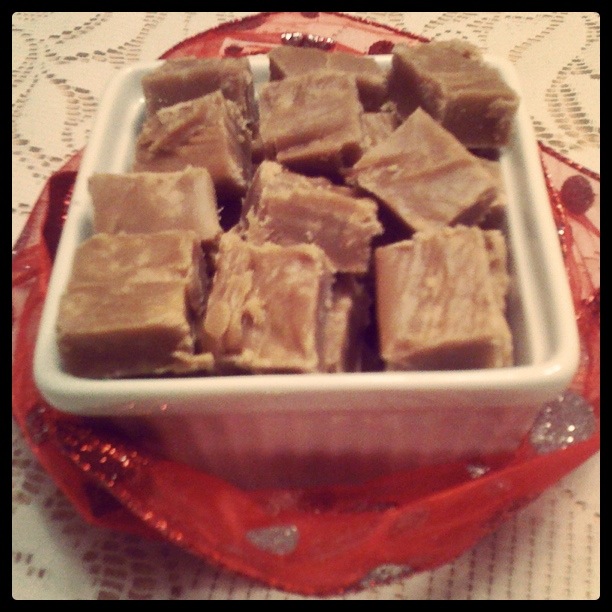
Sucre à la crème is a sort of fudge, but it’s nothing like what you’d find in a candy store or market stand. It’s a simple affair of sugar and cream (obviously), versions of which pop up around the world. In Scotland, they’ve got tablet, in Mexico there’s dulce de leche, Italy has penuche, and India has burfi. There are probably tonnes of other examples, too.
The Québécois version uses maple sugar, but those trees are a little rarer on the Prairies, so my family’s recipes use mostly brown sugar. My mother’s aunts were famous for their versions, though my Tante Pauline’s was undisputedly the best, with my Tante Leona’s coming a close second. My mother and I went through their recipes for sucre à la crème recently and realized that they were all a little different and that the versions evolved over the years. When I was a teenager, I learned to make it with two cups of brown sugar, one cup of whipping cream, and a teaspoon of vanilla. When we were looking at the other recipes my mother has, this was what we found:

Tante Pauline’s Version

2 cups brown sugar (1/2 c white)
1 cup heavy whipping cream
1 tsp vanilla
walnuts

Sauce

1 cup brown sugar
1 cup whipping cream

Tante Leona’s Version

3 cups brown sugar
1 cup white sugar
2 cups whipping cream

Mom’s Version

2 cups brown sugar (1/2 c white)
1 1/4 cups whipping cream
1 tsp vanilla

In all cases, combine the sugar and whipping cream, whisk together until well-blended and cook over medium-low heat, stirring often, until the mixture sugars the spoon (a metal one is best) and forms a ball when dropped into a dish of cold water. Remove from heat and stir vigourously, adding the vanilla when the candy is just beginning to stiffen. When the scrapings are becoming solid, it’s time to pour the candy into a buttered square pan. Chill in the fridge for several hours or overnight, then cut into small squares. It keeps for a week in the fridge or several months in the freezer.
Sucre à la Crème

I lost my sucre à la crème making mojo for a few years; for some reason I just couldn’t get it to set. When I went to my mother’s house this year, we made three batches, using my mother’s recipe. All but one was perfect and the imperfect one wasn’t bad. I think what made the difference was the two of us working together, just as we did when I was a child.

What are your favourite holiday traditions?

Roxy under my parents' Christmas tree.

FFWD – Crème Brûlée

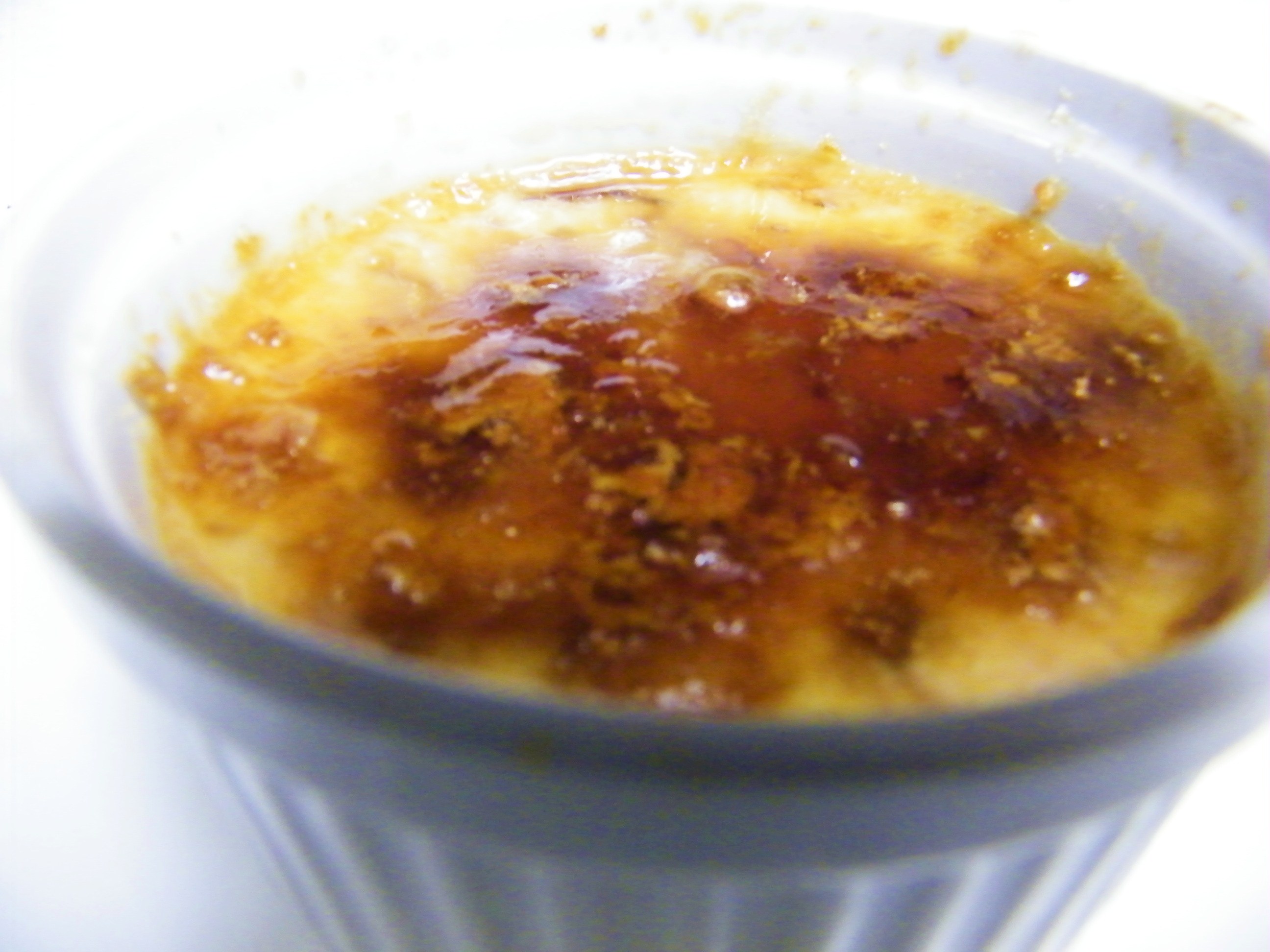
Finished crème brûlée.

It’s Christmas Eve, and if you celebrate Christmas, it’s a time for relaxing with family or friends…or last-minute panicking. I hope it’s the former for you. I’m a little last minute myself, only now writing a post for this week’s French Friday. I couldn’t pass up the opportunity to write about Crème Brûlée, though. My attempt wasn’t beautiful, but it was delicious.

Dorie’s version has a thin layer of jam at the bottom and is cooked at a low temperature. I’m not sure if the two things contributed to the problems many people had getting their brûlées to set, but after hearing on Twitter that this was a problem, I decided to cook mine at a higher temperature. This caused the jam to bubble up a bit, but my custards set well. The recipe calls for the oven to be set at 200° F, but I set it to 325° F and kept an eye on it. I left them in the refrigerator overnight, finishing them in the evening.

Crème Brûlée, just out of the oven.

I don’t have a kitchen torch, so caramelized the brown sugar under the broiler, which worked well, though the crust was a little uneven. Next time, I’ll push the sugar through a strainer, so that it falls a little more evenly across the custard. I’m also not sure about resting the brûlées on a bed of ice – they were slipping and sliding under the broiler.

Brown sugar on the brûlées, ready to caramalize under the broiler.

No matter, they tasted great.

Now, if you don’t mind, I’m off to join my partner for some more Modern Family and possibly even It’s a Wonderful Life. Have a great holiday.

You can find many other blogged descriptions of this week’s FFWD recipe here: Crème Brûlée

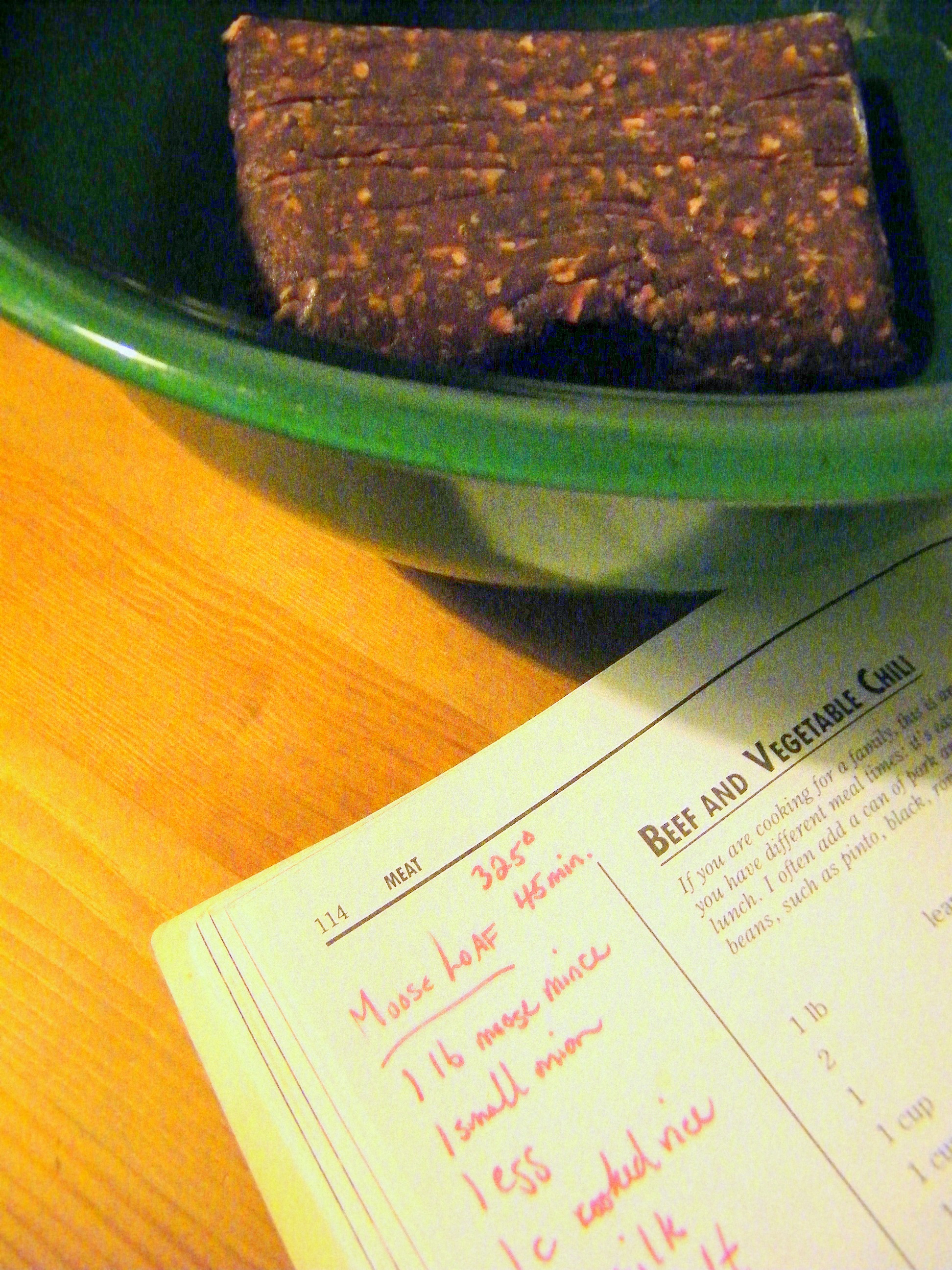
Moose Loaf

Moose Loaf

It’s been a while since I’ve posted and I’ve been mostly neglecting the blogosphere for the past few weeks. I did manage to read Hank Shaw’s thoughtful post on hunting and it inspired me to share a recipe that I’ve been making for years. Though I don’t hunt myself, wild game has always been a part of my diet. My father started hunting as a young man and he’s passed on his skills to my brother, my nieces, and my nephews. When I buy meat, I try to choose organic, humanely raised meat as often as possible, but between the game my family provides and the meat from my parents’ hobby farm, I don’t have to shop for it very often.

Moose meat is one of my favourites, especially when it’s ground. It’s lovely wherever you’d use ground beef, and as I’ve said before, it’s not as scary a proposition as commercial ground beef can sometimes be.

Think of the recipe below as a starting point – I’ve varied it many times over the years. The last time, I used HP Sauce in the mix and then glazed the top with a little more before popping it in the oven. Sage, thyme, and summer savoury made lovely herbal additions to this particular loaf. The rice and milk are important (I used brown rice this time), because moose meat is very lean. The mixture might seem a little wet, but the excess moisture gets absorbed nicely by the rice and allows the loaf to have a nice jus when it’s just out of the oven. That jus will disappear, though, if you have any leftovers – the loaf will reabsorb it, keeping your next servings tender.

Ready to bake.

Moose Loaf

1 lb ground moose meat
1 cup cooked rice
1 small onion
1 cup milk
1 egg
3-5 tsps dried herbs
1 Tbsp Worcestershire sauce or 3 Tbsps HP Sauce
salt and pepper
a clove (or three) of garlic (optional)

Combine ingredients, place in a greased loaf pan, and cook at 325° F for 45 minutes to an hour.

Out of the oven.

I count myself lucky that I’ve had more than my share of humanely raised and wild meat. I think it’s helped me avoid the disconnect between food and its origins that is so ubiquitous in this culture. I know that not everyone has access to food from the sources I’ve had and that for many, ethical eating means vegetarian or vegan eating. I do believe that choosing to eat meat responsibly can be an ethically sound choice and Hank Shaw’s essay is a great explication of how that may be.

Spiced Squash, Fennel, and Pear Soup

Pears, peeled and unpeeled.

This week’s French Friday’s theme is Cook’s Choice and I chose to catch up on a recipe I’d missed this month.

Squash soup is so ubiquitous at this time of year that it risks becoming boring. At last year’s co-op soup swap, we joked that we were all worried that we’d go home with six kinds of squash soup, though we’d have been disappointed if there had been none.

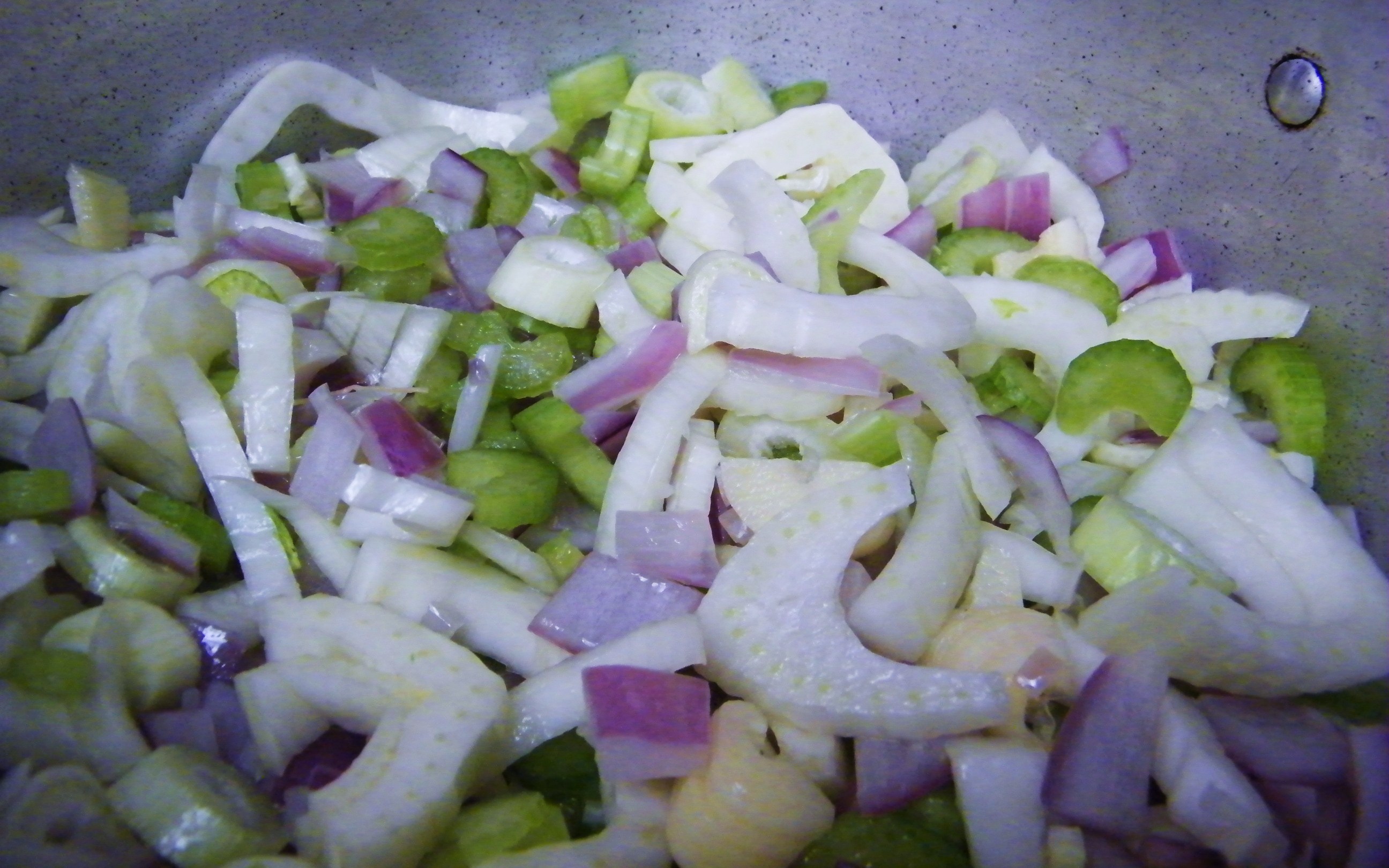
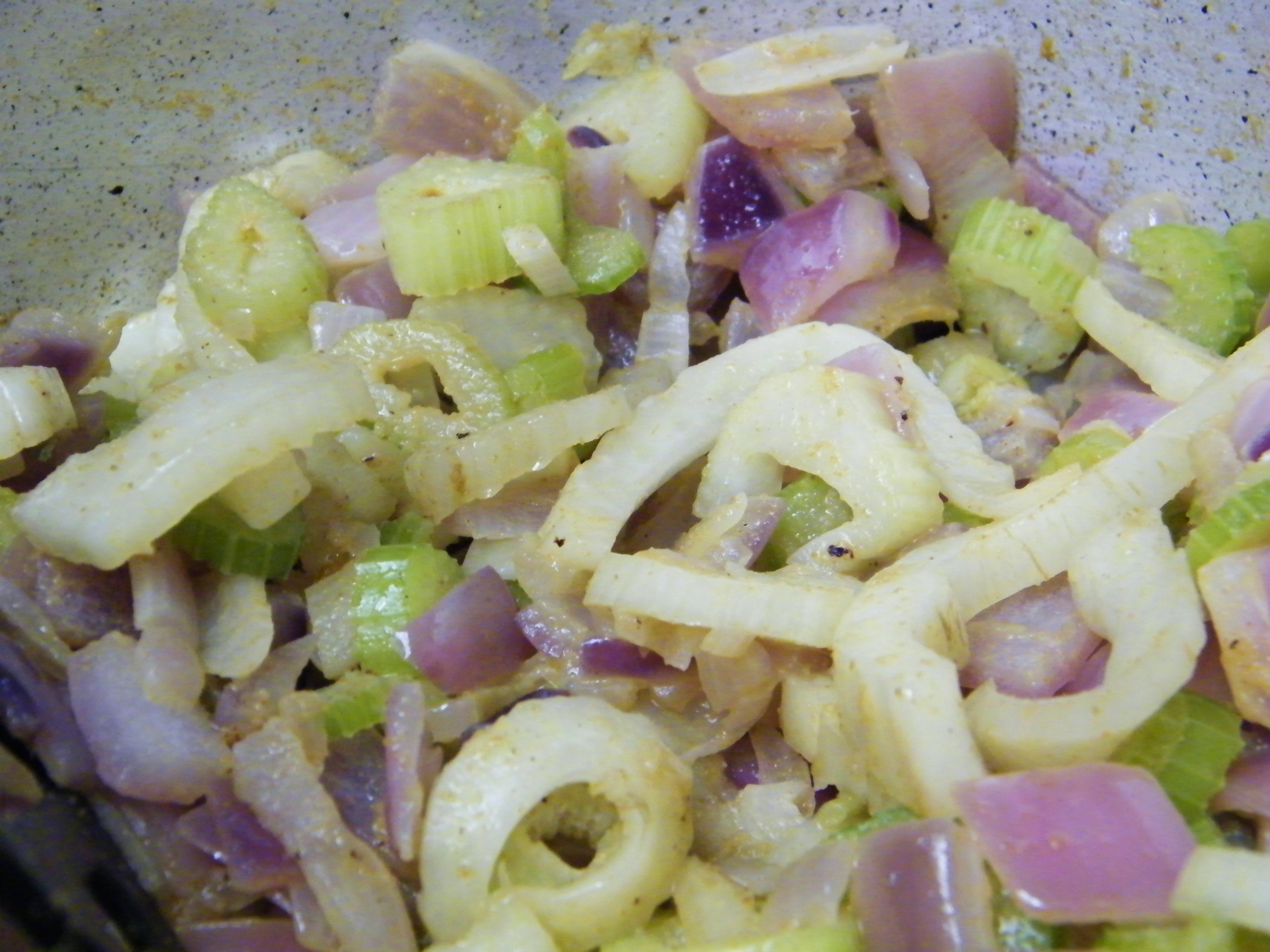
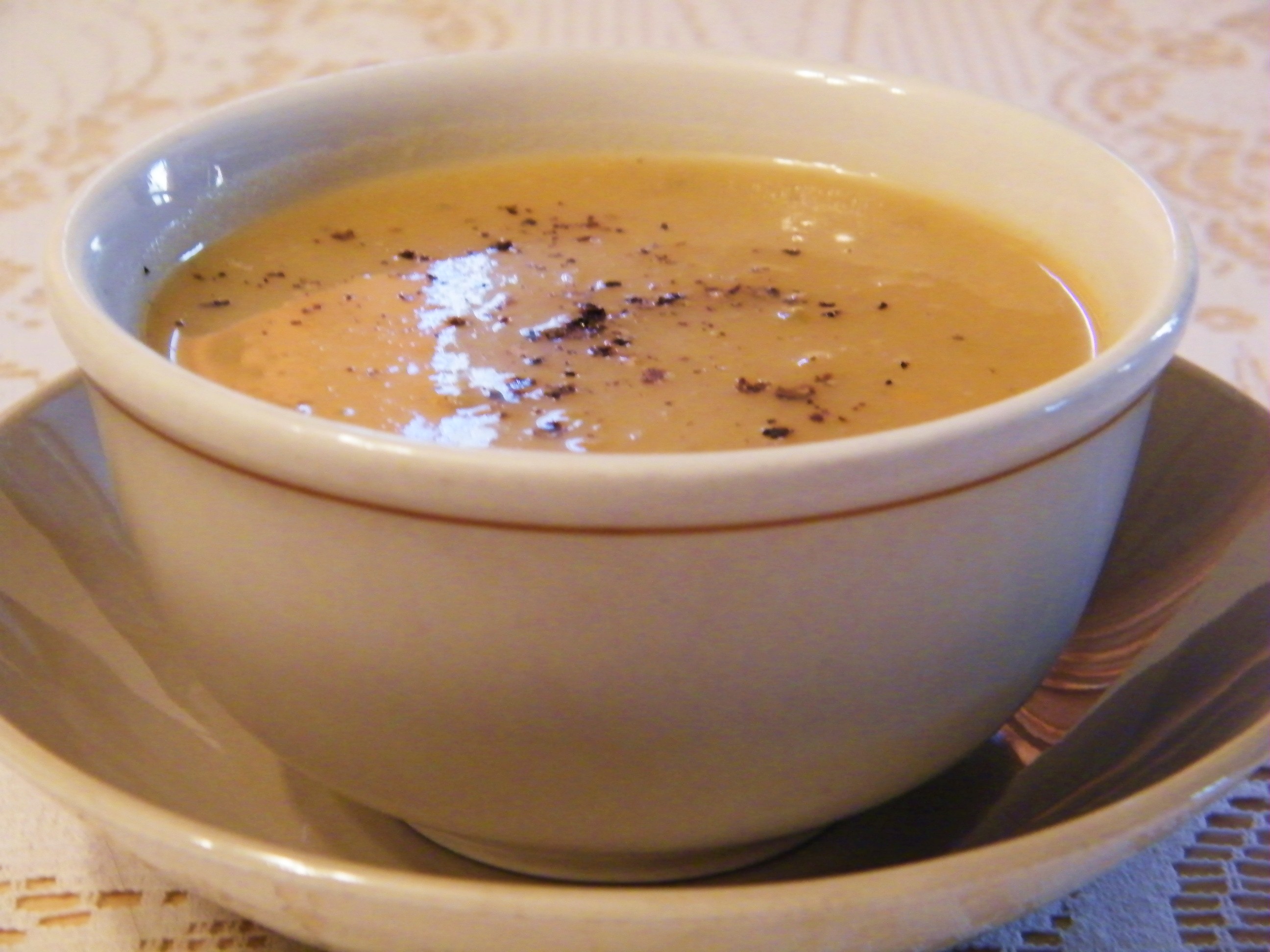
When I think of squash soup, I think of the nuttiness of butternut squash, with a mirepoix and chicken stock base, perhaps mixed with some cream, and seasoned with thyme and nutmeg. This squash soup is a little different. Onion, garlic, celery, and fennel form the base of the soup and are seasoned with ginger, cumin, and nutmeg. Roasted squash, pears, and orange peel finish the soup. Once it’s puréed, it looks like any other squash soup, but it’s sweet and subtly spicy. It’s a soup that improves with age, too, so I’d even recommend making it the day before you serve it. The sweetness is better balanced by the other flavours when the soup has rested 24 hours or more.

Ingredients into the pot.

Softened ingredients.


I served it simply, with a grind of pepper, though the suggested toppings are crème fraîche and toasted pumpkin seeds. It was a hit across my family, even with my squash-leery partner.

I’m looking forward to reading about the recipes chosen by the other Doristas this week. Click the link at the top of the post and browse – I predict there will be a wide range of dishes to read about this week.

Spiced Squash, Fennel, and Pear Soup.

FFWD – Braised Cardamom-Curry Lamb

Stirring the ingredients.

I’ve been reminded recently that I’m very lucky to have had access to free, organic meat for twenty years. My parents have a hobby farm and have kept chickens, sheep, ducks, and pigs over the years. My father’s also a hunter and fisher, so I’ve had access to wild game and fish, too. I think I’ll come to appreciate just how lucky I’ve been once my parents sell the farm, which they’re getting ready to do. So, I kept that in mind while making this stew, knowing that the lovely shoulder roast I was using for this meal is part of a now finite stock. I hope I’m able to find local lamb of such quality once the last of my parents’ lamb is gone.

v

I removed the meat from the bones myself, including a small rack of ribs. We boiled the ribs with the other bones and fat, adding herbs, onion, and garlic. My mother then baked the ribs with herbs and barbeque sauce, while the rest simmered into a lovely lamb stock. (Making several things at once gives me a sense of resourcefulness that’s probably unearned.) Cutting the meat away from the bone, then chopping it into one-inch chunks is really the most difficult part of this recipe.

The second-most difficult part of the process for me was picking mint in the snow after dark. It felt quite adventurous, though, as we don’t usually get snow this early in the season and it actually stuck around until the next afternoon. The rest of the ingredients were easy to assemble and prepare.

Adding the apples and potatoes.

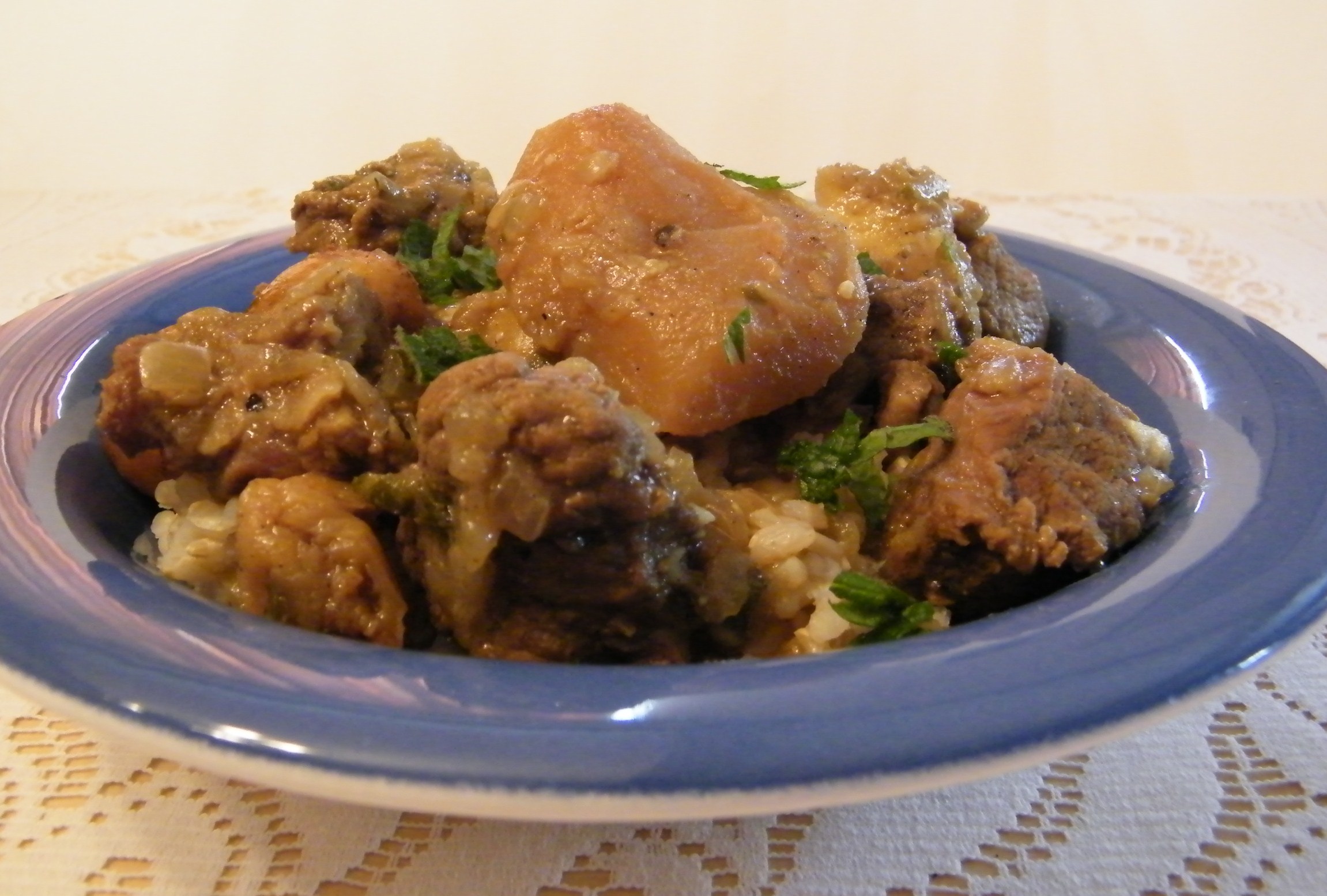
This stew is a mixture of Indian and North African flavours, which work remarkably well together. Mint, curry, cardamom, honey, and figs flavour slowly braised lamb, while potato and apple slices steam on top. I served mine atop a slice of country bread the first night and rice the next. Both soaked up the lovely jus beautifully.

This dish was worth chopping up a shoulder roast and would work really well with pork, too. It would also be easily translatable to crock pot cooking – I can imagine using thickly-cut pork chops, in that case. But lamb, that would still be my first choice, even after my parents’ supply runs out.

The finished stew, in a blue soup plate, on a lace tablecloth.

You can find many other blogged descriptions of this week’s FFWD recipe here: Braised Cardamom-Curry Lamb

Something Simple – A French Fridays Catch Up

Cardamom Rice Pilaf, decorated with parsley, with a salmon cake and green salad.

This week, the rest of the French Fridays crew will be serving duck, but I’ll have to leave that for another time. Instead, I’m going to write about a dish I missed posting about when it came up in the recipe rotation in May – Cardamom Rice Pilaf. It’s another of Dorie’s back-pocket recipes that are perfect for making weekday cooking a little more interesting. It’s simply rice cooked with onion, cardamom, and stock, then seasoned with a little lemon zest and pepper. It’s flavourful without overwhelming anything else on the plate, works as well with fancy food as it does plain, and is almost as easy as cooking plain rice.

I’ve made it a few times, now, without really having changed it. I like it as it is. The leftovers, though, make for inspiring fried rice or rice casseroles. The photos show one of my favourite meals for a busy weeknight. Salmon cakes (from an Ocean Wise approved producer), mixed greens, and this rice.

Sometimes, this cooking group isn’t about learning new techniques or using unfamiliar ingredients. Sometimes, it’s about remembering that the simplest foods can be made interesting, without difficulty and with great results.

Cardamom Rice Pilaf, decorated with parsley, with a salmon cake and green salad.

You can find many other blogged descriptions of this week’s FFWD recipe here: Cardamom Rice Pilaf

FFWD – Pumpkin Stuffed With Everything Good

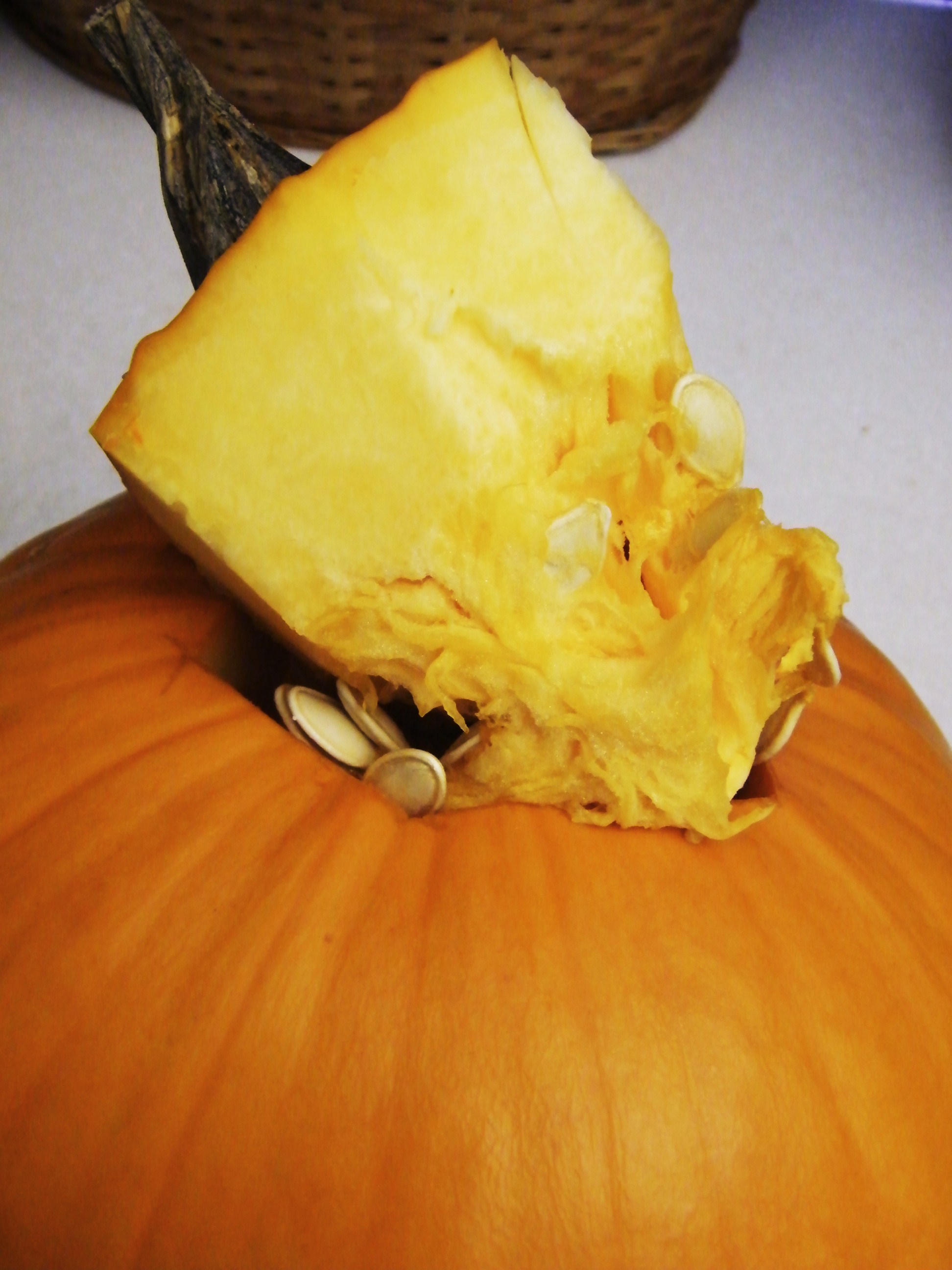
Pumpkin, with lid.

Pumpkin often gets short shrift when it comes to savoury dishes. Pumpkin pie, pumpkin cookies, and even pumpkin cheesecake show up on menus once the weather starts to turn. But pumpkin is as lovely as any other squash when it comes to appetizers, soups, or entrées. Pumpkins roasted whole make for beautiful presentation, too.

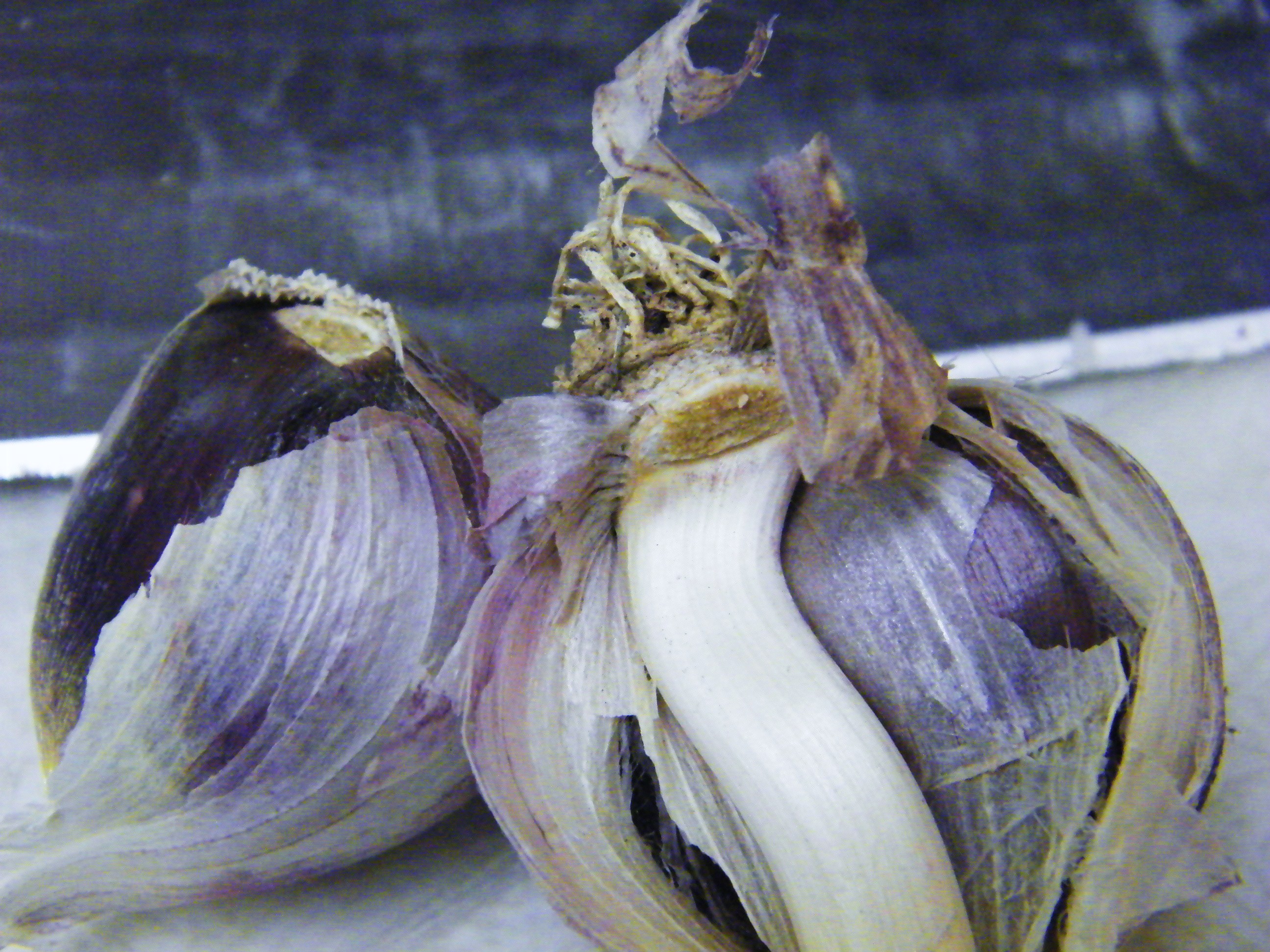
Garlic from my Dad's garden, all purple and white.

This week’s French Fridays recipe is a stuffed, roasted pumpkin that’s both beautiful and delicious. It’s a great choice for a dinner party or holiday meal. Dorie’s recipe includes cream, cheese, and bacon, but would be easy to convert for vegetarian or vegan guests. Or switch the bread cubes for rice and you have a great gluten-free version.

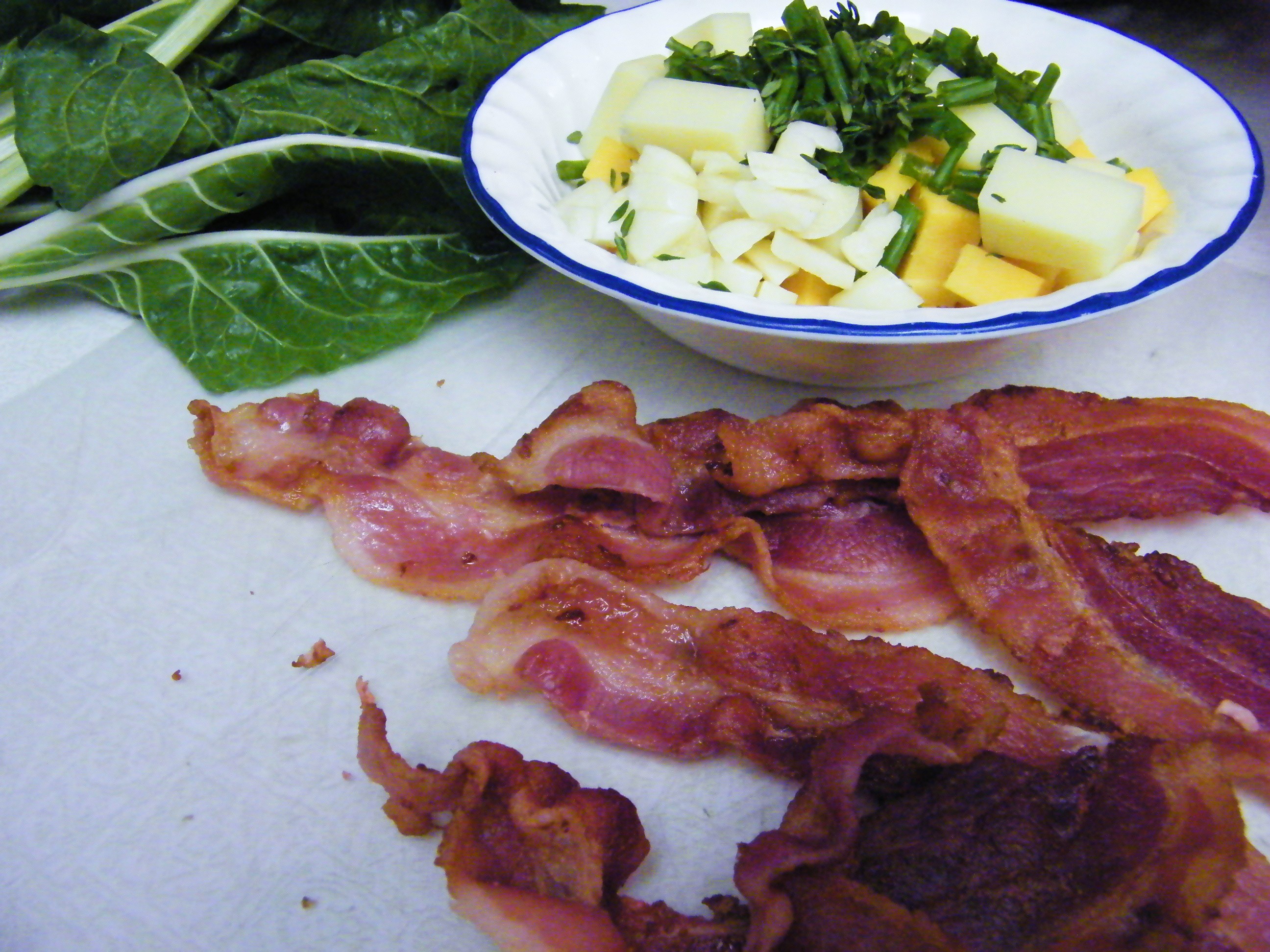
Bacon, Swiss chard, and the rest of the pumpkin filling ingredients.

The hardest part of this recipe for me was finding a small pumpkin. People are on the hunt for Jack O’ Lanterns at this time of year and the markets were filled with giant pumpkins. The smallest one I was able to find was about six pounds, twice the weight called for in the recipe, so I was generous with the filling ingredients. The basic stuffing uses bread cubes, garlic, herbs, bacon, and cheese, which is then covered in nutmeg-spiced heavy cream.

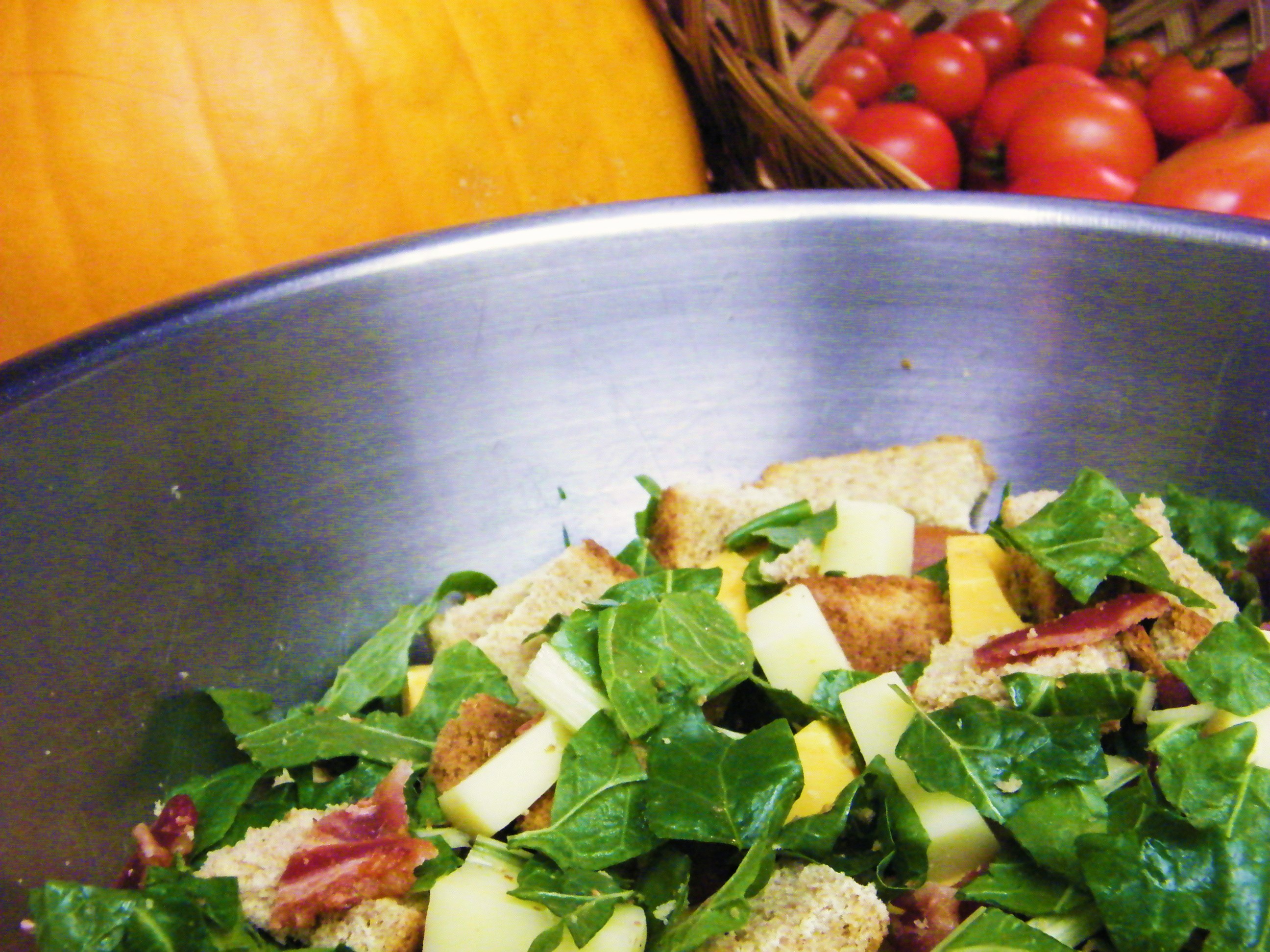
Mixing the pumpkin stuffing, with the pumpkin and some tomatoes in the background.

I was lucky enough to be able to use garlic my Dad grew, along with thyme, chives, and Swiss chard from my mother’s garden. Along with some high-fibre bread, I’m quite sure that this was a healthy dish. (Please ignore the additions of bacon, heavy cream, Emmenthal and old cheddar.)

The stuffed pumpkin, out of the oven.

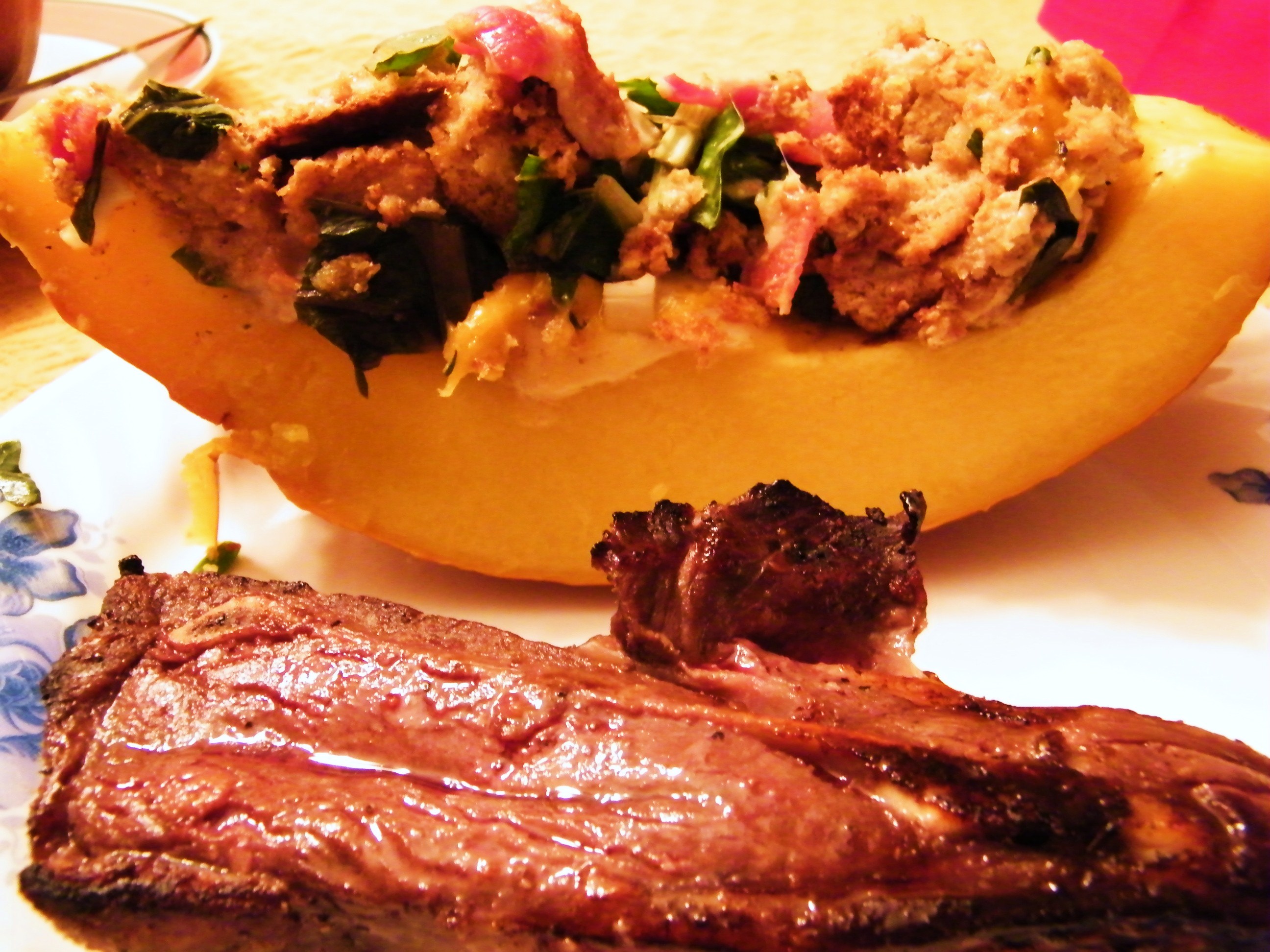
It made a lovely meal beside some grilled venison steaks, which I’d marinated in oil, red wine, garlic, lemon juice, and some Montreal Steak Spice. Since the pumpkin was so big, I pulled the leftover stuffing out of the pumpkin, chopped the pumpkin meat finely, and mixed it all together. I pan-fried some for a great lunch the next day. Elegant at its first serving and good as leftovers – this recipe will be revisited, though I doubt it will ever be made the same way twice. As Dorie said, it’s more of an outline than a recipe, after all.

Stuffed pumpkin and venison steak.

You can find many other blogged descriptions of this week’s FFWD recipe here: Pumpkin Stuffed With Everything Good

FFWD – Pissaladière

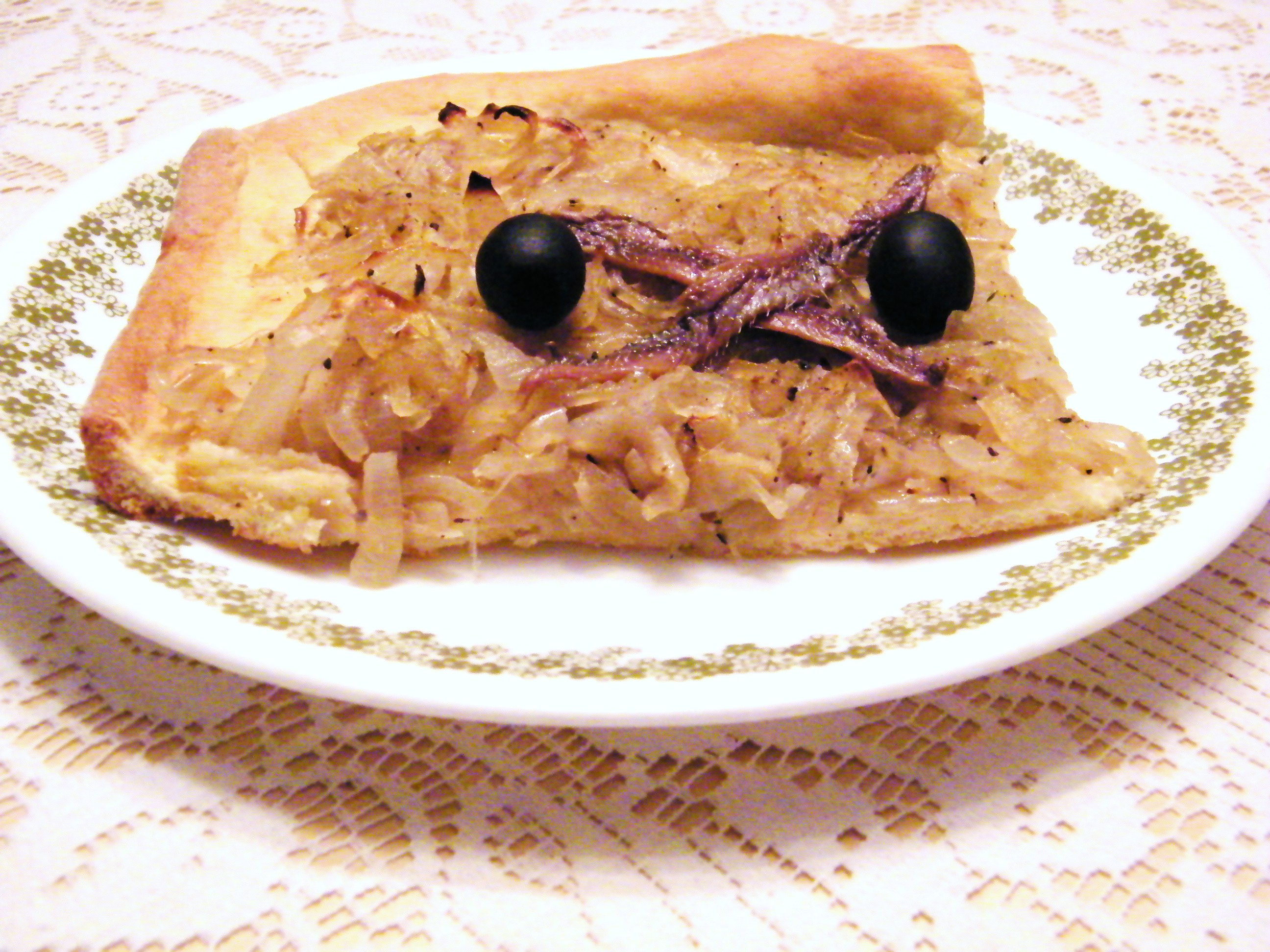
A corner slice, ready to eat.

This week, I’ve been re-reading Adam Gopnik’s Paris to the Moon, in preparation for seeing him speak at the CBC Book Club this weekend. Almost as good as going to the Massey Lectures themselves. In the opening essay, he asserts that “[t]here are two kinds of travelers. There is the kind who goes to see what there is to see and sees it, and the kind who has an image in his head and goes out to accomplish it. The first visitor has an easier time, but I think the second visitor sees more. He sees with his mind, and maybe even with his heart, or tries to.” I’m not sure that it’s entirely fair to the first sort of traveller, who may simply be keeping an open mind, but I think most of us have constructed imaginary versions of places we want to visit.

Kneading the dough.

In particular, I think French Fridays participants might be guilty of cooking a version of France into existence. I know that many of the recipes feed my fantasies of Paris bistros or countryside picnics. This week’s recipe, Pissaladière, has me imagining travelling through Mediterranean sunshine on a Vespa and picking up a slice of this French pizza before heading to the beach. Not that I would drive my scooter one-handed. Really.

Opening the can of anchovies.

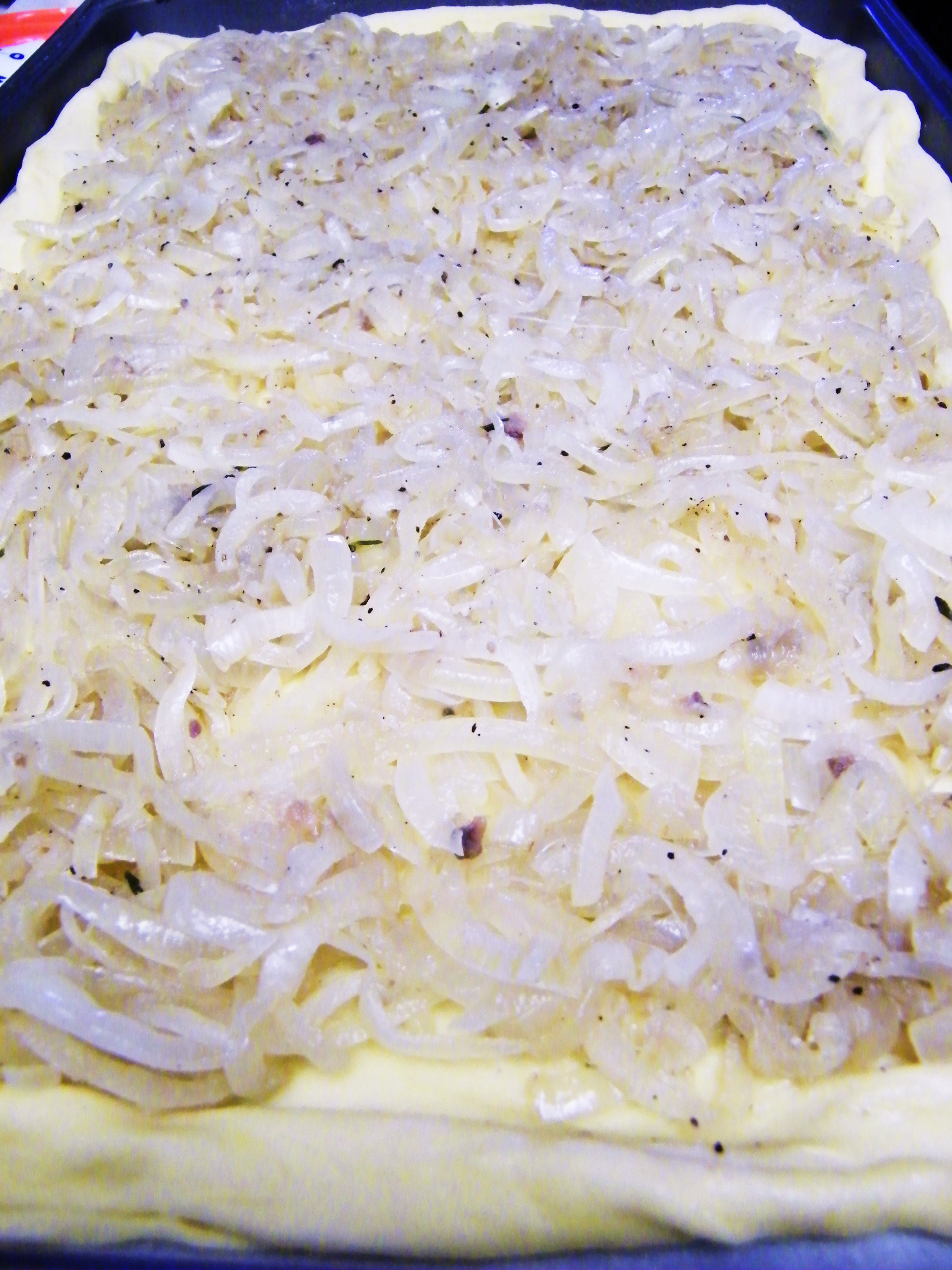
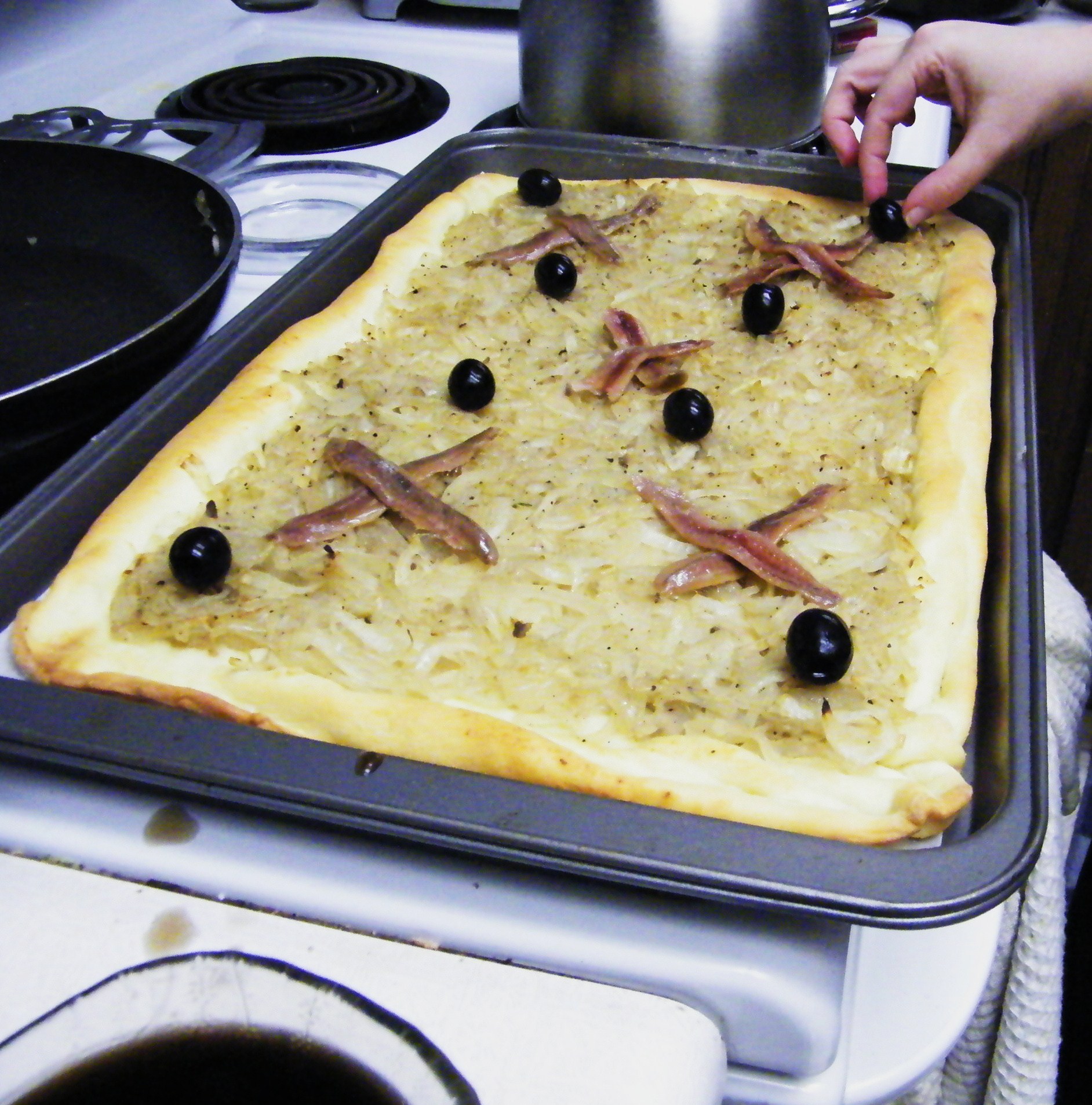
This fantasy only works if there’s someone else doing the cooking. The reality of this recipe is more like a weekend in the country, than a whirlwind trip to the beach. (Not that I’m speeding in my imagined Mediterranean trip, either.) The process of making this dish is meditatively slow. The thinly sliced onions are cooked at low temperature, so that they caramelize without colouring much. While that’s happening, the dough is mixed and set to rise in a warm room. When it has risen, it’s rolled into an extremely thin rectangle and covered with the cooked onions. Things speed up considerably here – the Pissaladière is baked for twenty minutes, then the olives and anchovies are added before sliding it into the oven for a final five minutes.

Spreading the slowly-cooked onions onto the unbaked crust.

It might seem a lot of work for a snack, but it’s worth it. The onions are meltingly sweet, which is balanced by the salt of the anchovies and onions. The plain crust is shatteringly crisp at the edges, but sturdy enough to hold the toppings. I might not be able to afford a Mediterranean vacation at the moment, but this dish provides a little compensation. It’s certainly safer eating it here, than trying to eat it while steering a Vespa on twisty Mediterranean roads at high speed.

Adding the olives and anchovies.
Photo by Jeannine McCarthy

Tell me, what sort of traveller are you? Have you taken a trip to a place you’ve fantasized about? How did it measure up?

You can find many other blogged descriptions of this week’s FFWD recipe here: Pissaladière