Labyrinth of Light

A labyrinth is not a maze. While a maze is devised to confound you, a labyrinth leads you into its heart and out again.

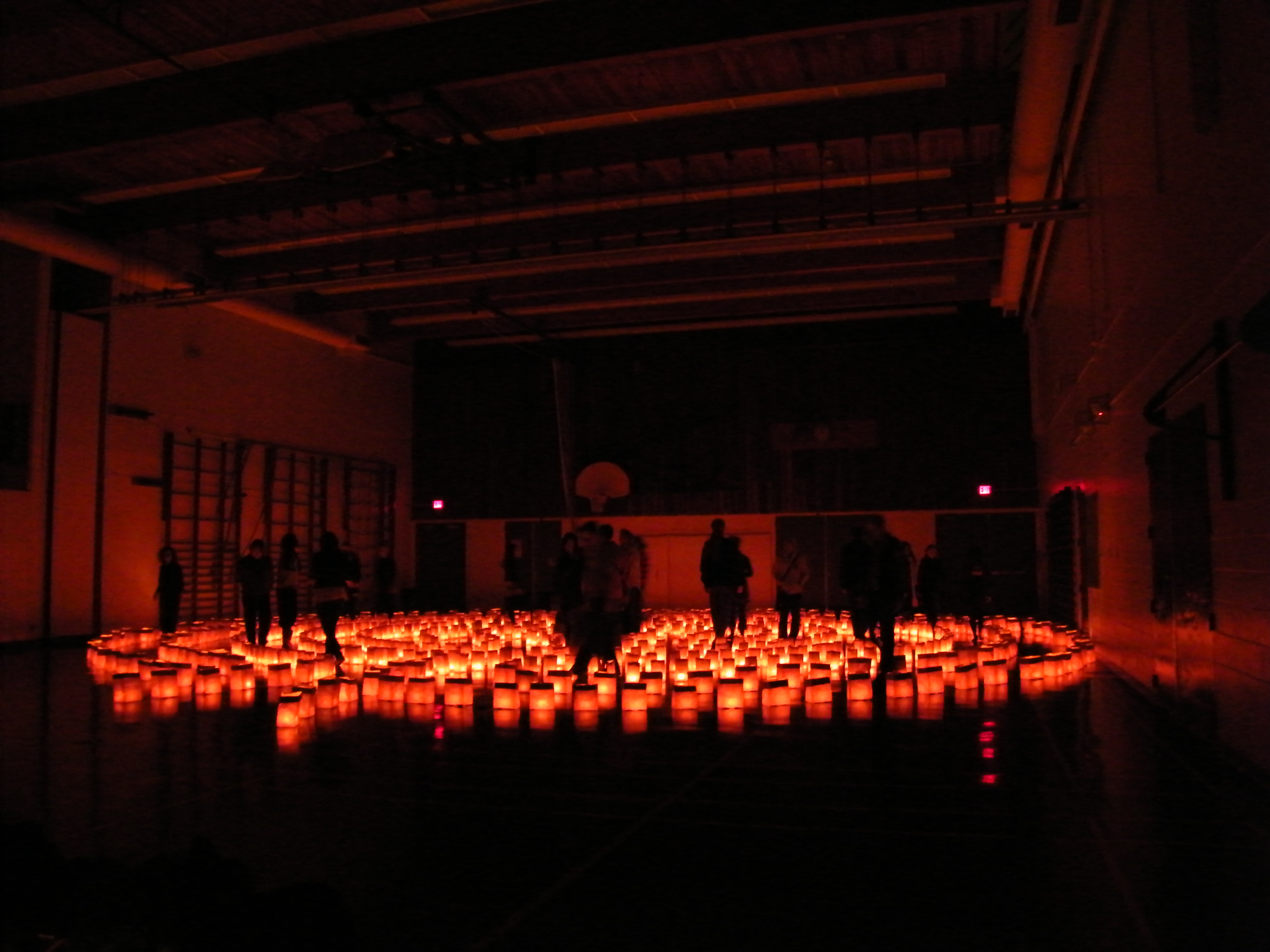
For seventeen years now, The Secret Lantern Society has marked the longest night of the year with its Winter Solstice Lantern Festival. This year, the festival included processions, dances, drumming circles and more across five Vancouver neighbourhoods. At Britannia Community Centre and The Roundhouse, the Society also hosted Labyrinths of Light, for walking meditation and contemplation.

According to the website:

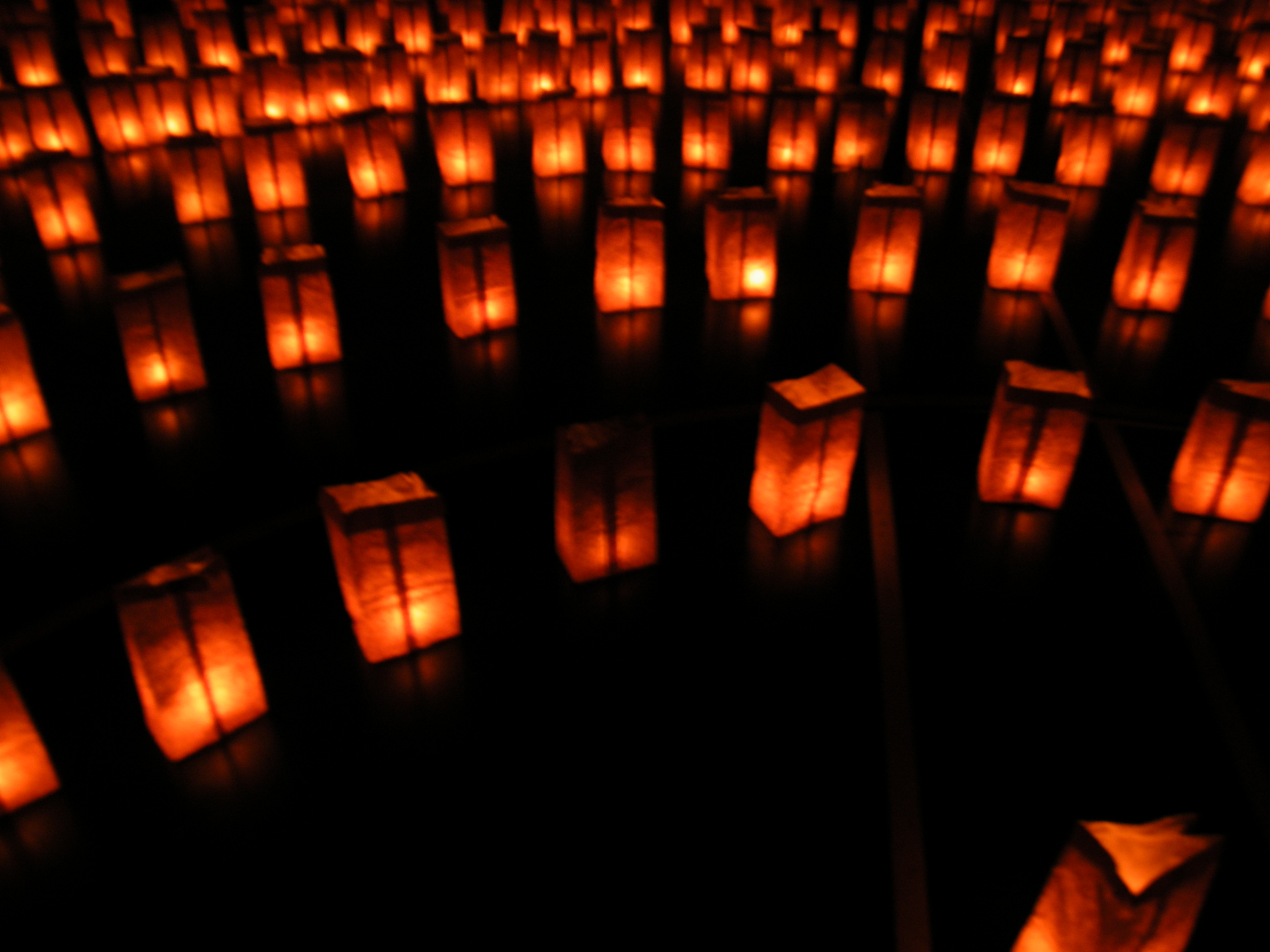
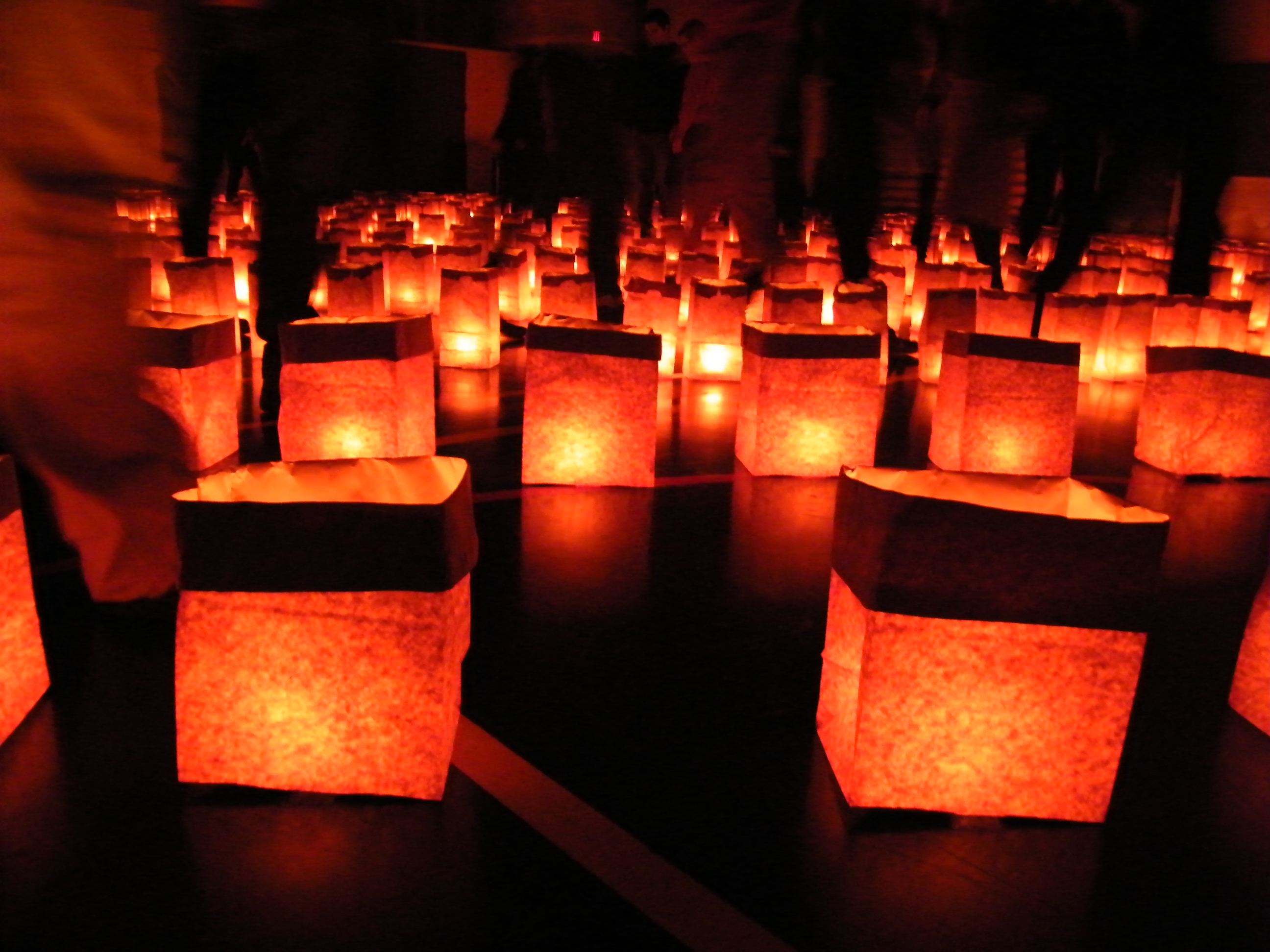
“The labyrinth has long been used for meditation, prayer and sites of ritual in various cultures around the world. Created with over 700 pure beeswax candles, the winter solstice labyrinth invites you to warm yourself in a self-guided ceremony intended to help release old attachments and envision new possibilities as the darkest night of the year births a new season.”

The labyrinth at Britannia was held in a darkened gymnasium. On one side of the room, a stereo played sacred music, including plainsong and Buddhist chants. On the other, didgeridoos sounded quietly. Low benches were set up a short distance from the labyrinth for contemplation.

Walking the labyrinth meant negotiating the narrow spaces defined by the paper sacks which held the candles providing most of the room’s light. The way into a labyrinth is also the way out, so polite shuffling became a part of the experience. The design led you far inside and then back to the outer edges of the labyrinth again and again before you truly reached the centre. Then, after some contemplation, it was time to wind slowly out again. The heat from the candles, the music and the darkness helped to create a solemn atmosphere, but many people moved through the labyrinth with joy and one young woman danced back and forth through its passages.

It is a beautiful way to honour the year’s end, acknowledging grief and joy while opening oneself to the new year’s offerings.

If you’d like to experience labyrinth walking meditation, the World-Wide Labyrinth Locator can help you find one near you.

In the Bleak Midwinter

In the bleak midwinter
Frosty wind made moan,
Earth stood hard as iron,
Water like a stone

Christina Rossetti

Though rain haunts our region more than snow for most of winter, it’s still rough going for those who sleep outside. Blankets, warm clothes, mittens, hats and scarves are all needed to stay as healthy and dry as possible. The City of Vancouver has opened emergency shelters again for the winter, but inevitably, not everyone finds accommodations every night. People need to stay warm during the day, too.

If you can make, buy or give up warm items, there are a number of options for donation. Baaad Anna’s held their annual Knit-a-thon this past weekend, with items going to the Downtown Eastside Women’s Centre and there are some ongoing clothing drives happening in the city. Here’s a great list compiled by Miss 604 of locations accepting donations. Coastal Health is also running its Sox in the City campaign again this year. Finally, warm clothing can be dropped off at the Info Booth at the Vancouver Farmers’ Market Winter location for donation to Lookout Emergency Aid Society. (Just remember that the Market won’t be running December 25th or January 1st.)

December is also the traditional month for food drives. The Vancouver Food Bank accepts donations of non-perishable food items. So does A Loving Spoonful, which helps people living with HIV/AIDS. Quest Food Exchange also accepts donations of fresh produce, which can make a real difference in the diets of the people they serve.

Remember too, that six months from now, when the sun is shining, there will still be people in the city sleeping rough and many more needing the services that food banks provide. It might then be time to consider another round of donations.

What Lies Ahead

It is a commonplace that those who reach middle age lament the world that has passed and rail against the one that is coming into being. I keep that in mind when I feel curmudgeonly, but I don’t let that stop me from making my mind up about the rights and wrongs of our time.

I come from the generation whose grandparents experienced life in Canada without universal medicare or unemployment insurance. Our parents came of age here in the era of the greatest prosperity and the narrowest class gap of all time. Now, the gap between rich and poor is widening at a frightening rate and medicare is hardly likely to survive into my old age. In the face of these pressures, communities are engaging in discussions about food security and re-discovering techniques for self-sufficiency. Others are discussing the impacts of unchecked development, both within cities and on agricultural land.

I don’t mean to suggest that we return to a mythical golden era; we’ve certainly made strides in human rights and equality since then. I just believe that much is being lost right now that puts the best of our culture at risk.

This post is the introduction to a series of occasional posts about my neighbourhood and region, where I’ll explore my thoughts and fears about the suburbanization of the city, the loss of agricultural land and the growing economic gap that will affect city dwellers and outliers alike.

Art Anchors the Eastside – Culture Crawl Weekend

The place where you live can be an anywhere or it can be somewhere very specific, especially in Canada and the United States. It’s very easy, even in cities, to replicate the experiences you can find across the continent; there are the same chain stores and restaurants in every city and town. Or, you can populate your mental map with places that are unique to your location. It’s the second map that makes someone a real resident, I think. Knowing where to find gluten-free ice cream sandwiches, a stationery store with its own letterpress, or a shop where you can learn how to tune up your bike yourself. Such places add up to home.

Every place also has its rites of passage. I know someone who started to identify as a Vancouverite long before she moved here, because she flew across the country each year to attend the Vancouver Folk Music Festival. She has the same stories as I do, of attending in years of torrential rain, heat waves or unseasonably cold weather at the Festival, along with stories of the amazing performances that happen there.

What’s interesting about all of this, for me, is that the same place is really many places. There are certainly several Vancouvers. Your Vancouver depends on who you are. It can include the Folk Festival or Under the Volcano, both, or neither. Whole neighbourhoods may not exist in Vancouver as you experience it. I used to work in a corporate office, where many of my co-workers drove in from places farther up the Fraser Valley. For them, it was as if the east side of the city didn’t exist. Which is a shame, because some of the best things about Vancouver occur east of Kitsilano and downtown.

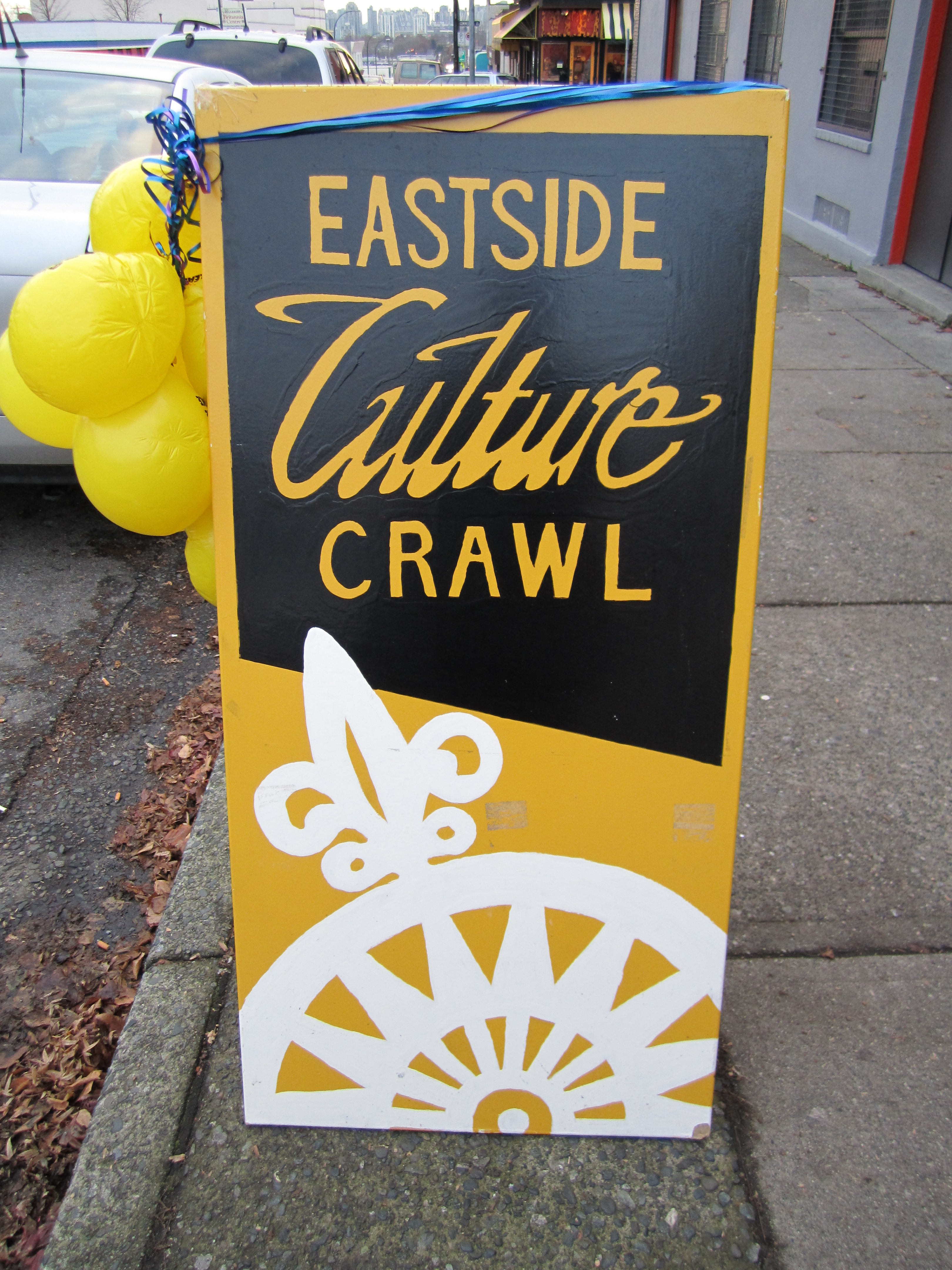
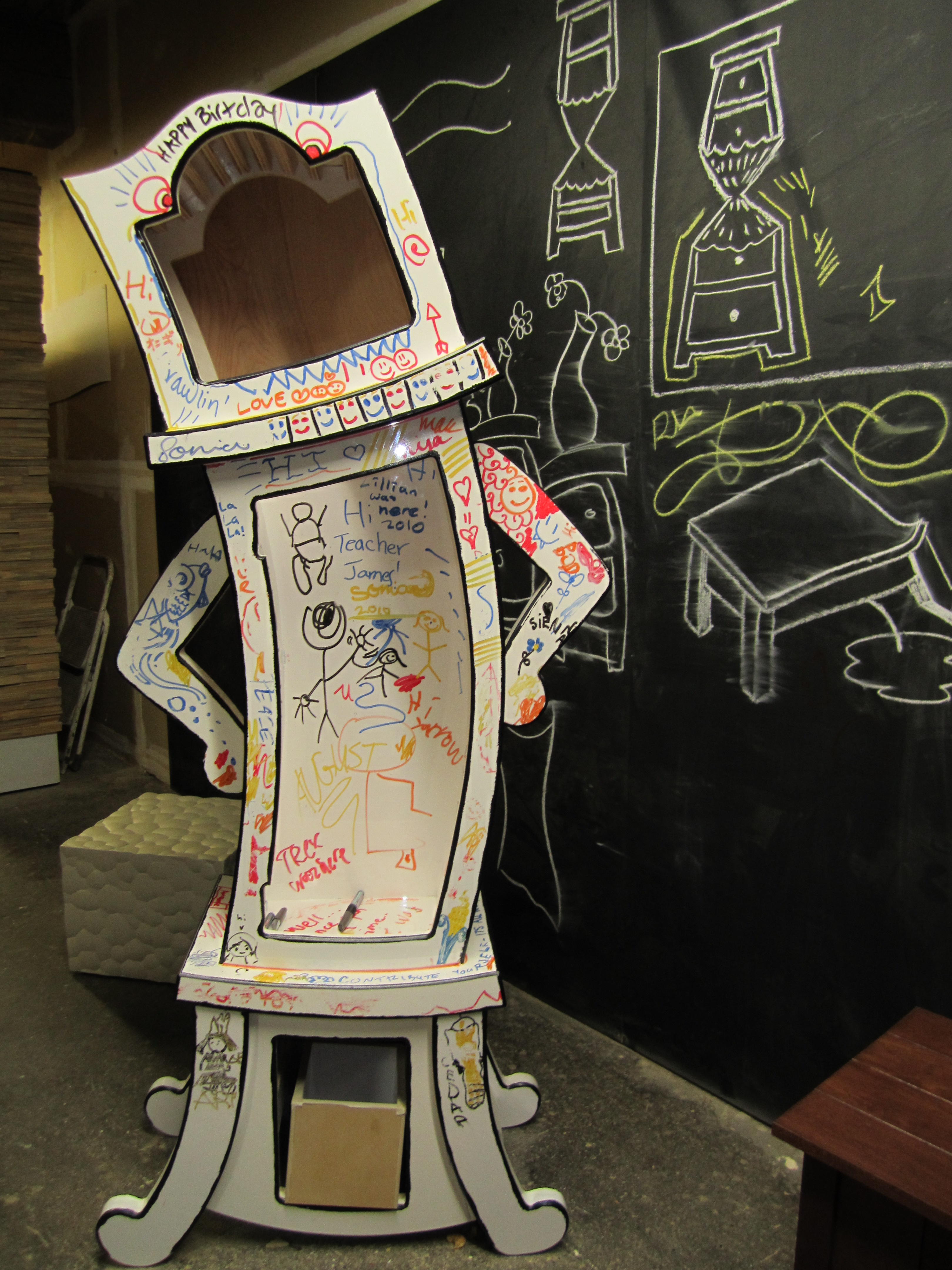
The Eastside Culture Crawl is definitely part of my Vancouver. Thousands of people tour hundreds of artists’ studios that are thrown open to the public one weekend a year. This past weekend was Crawl weekend and the weather was milder and drier than it has been since I can remember. There’s been snow, sleet and rain in the past and it doesn’t stop people from climbing up makeshift warehouse stairways or into backyards and basements in search of art.


I didn’t get very far off the beaten track this year, concentrating my one free afternoon along Venables, Clark and Parker. I saw some beautiful pottery at posAbilities on Venables, great jewellery at the Onion studios and then I wandered over to the Mergatroid Building and Parker Street studios.

Some of my favourites this year included:

Melk’s burned bamboo and etched steel pieces;
Arleigh Wood’s new series;
Su Foster’s delicate filigree work in her twistedandhammered line;
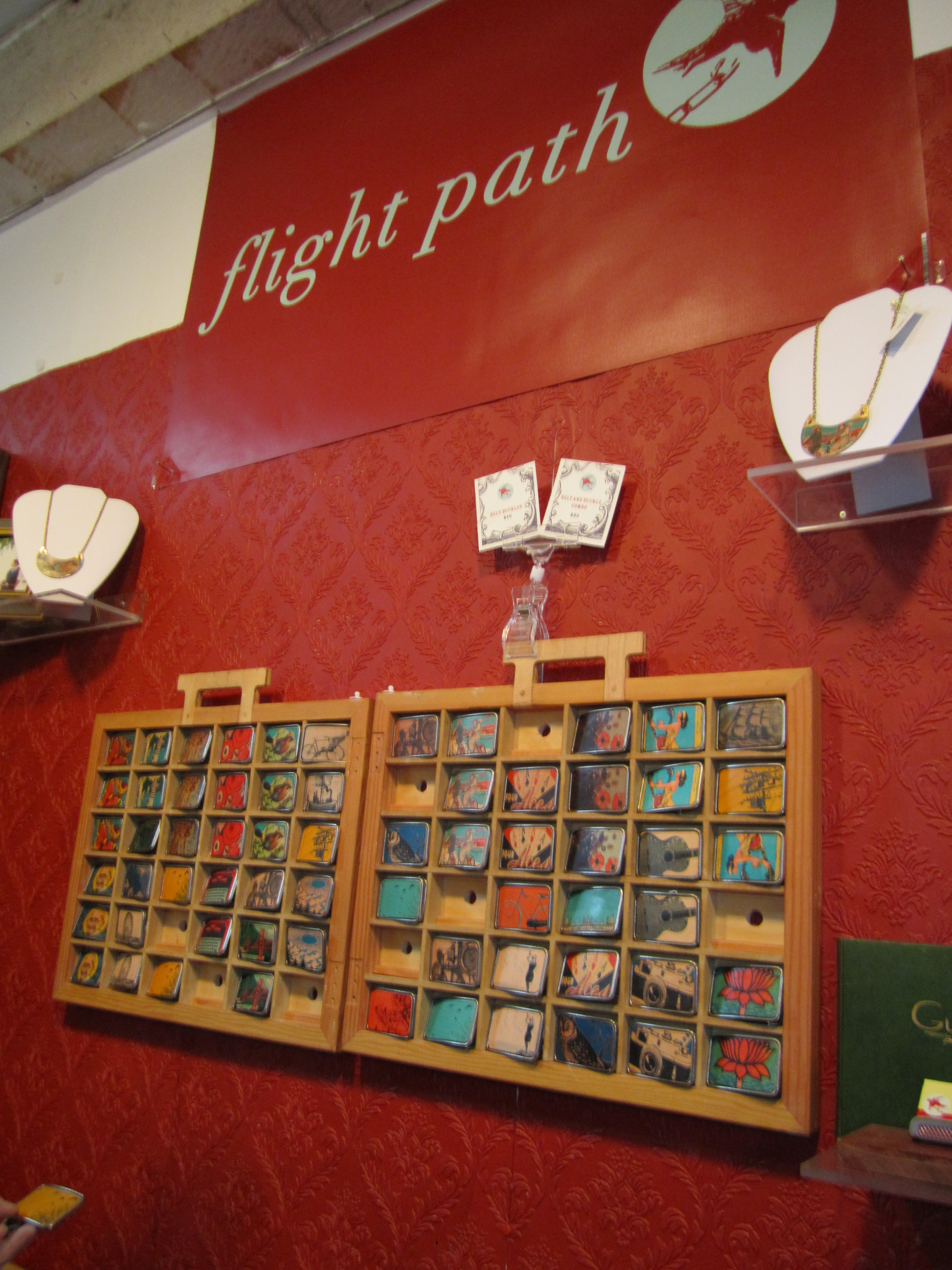
Flight Path’s leather accessories;
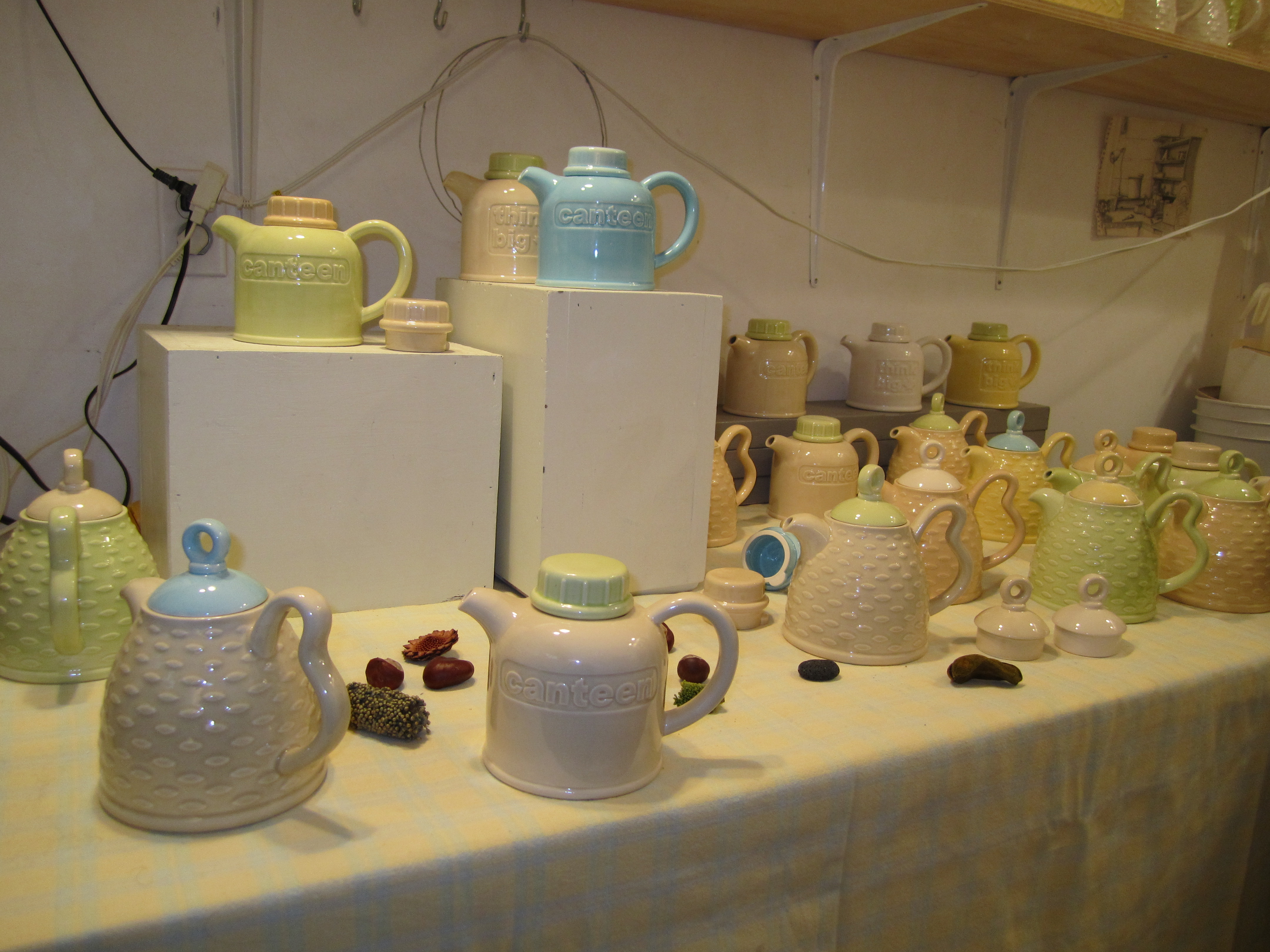
Russell Hackney’s amazing teapots;
Sonia Iwasiuk’s paintings;
and Silvia Dotto’s crows.

There’s much more, of course. Browse the website and you’ll get a virtual taste of the Crawl. What you’ll miss by doing that, and why you should make sure you attend next year, is the ambience of the Crawl, along with the opportunities to talk to artists and other Crawlers. It was worth going just to see the beautiful branches hanging from Melk’s ceiling and to have a conversation about photography with a jewellery-maker. Also, seeing so many works, in so many mediums, really helps to pin down what you’re looking for when you buy art.

The best part of attending the Crawl, for me, is the knowledge that I carry through the rest of the year – everywhere I walk in my neighbourhood, there is something being created.

A New Home for the Winter Farmers’ Market, with Digressions

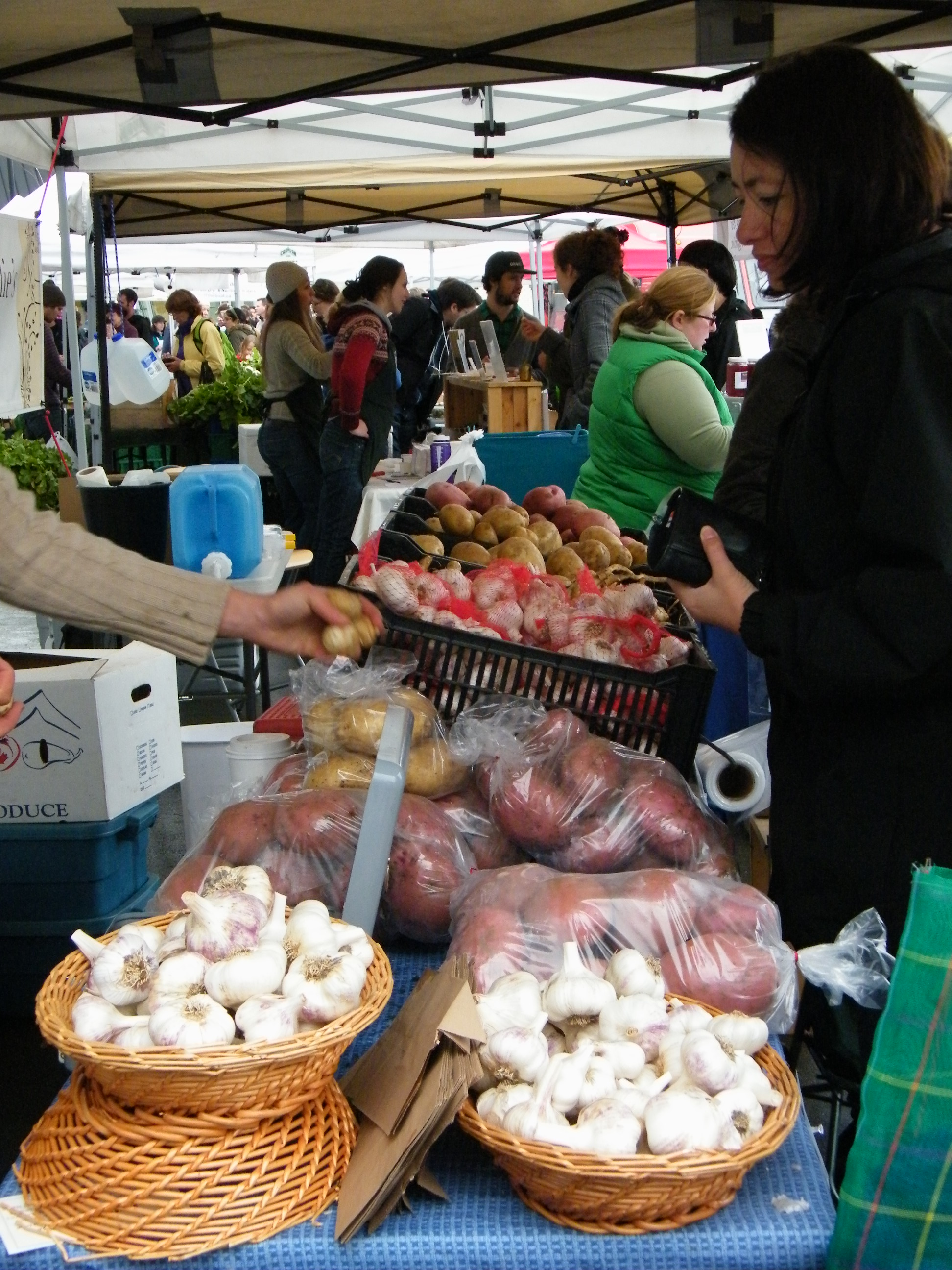
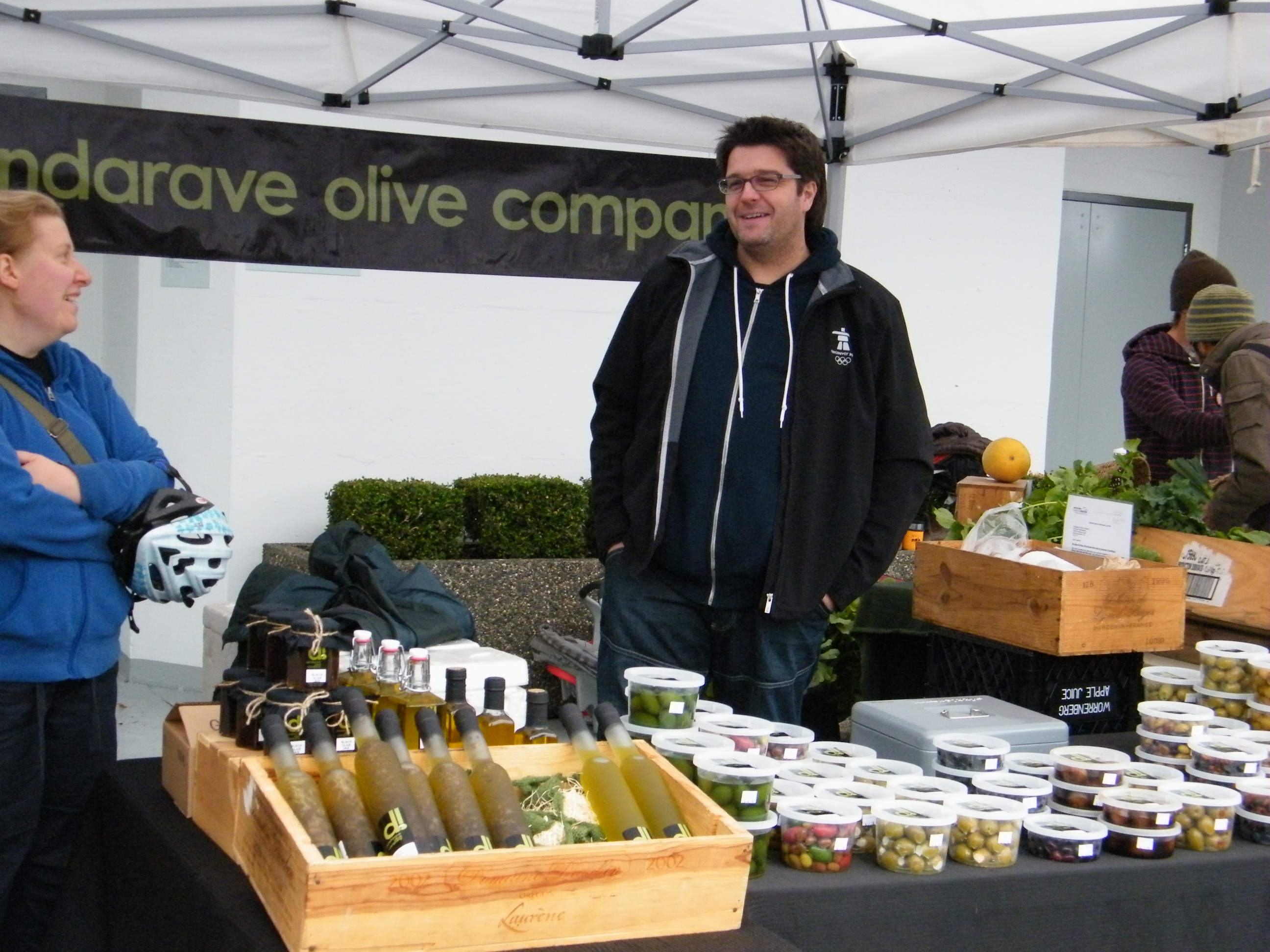
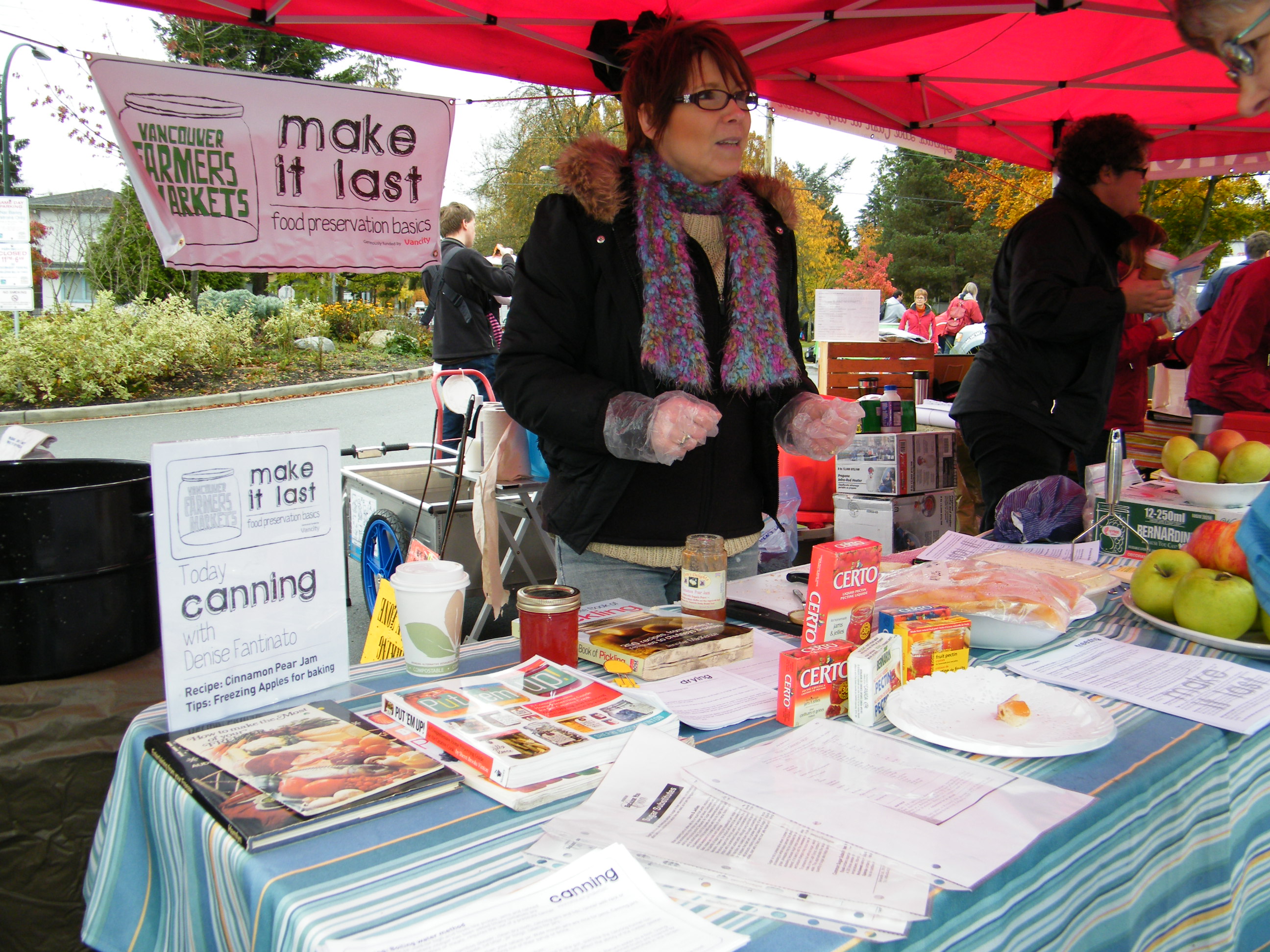
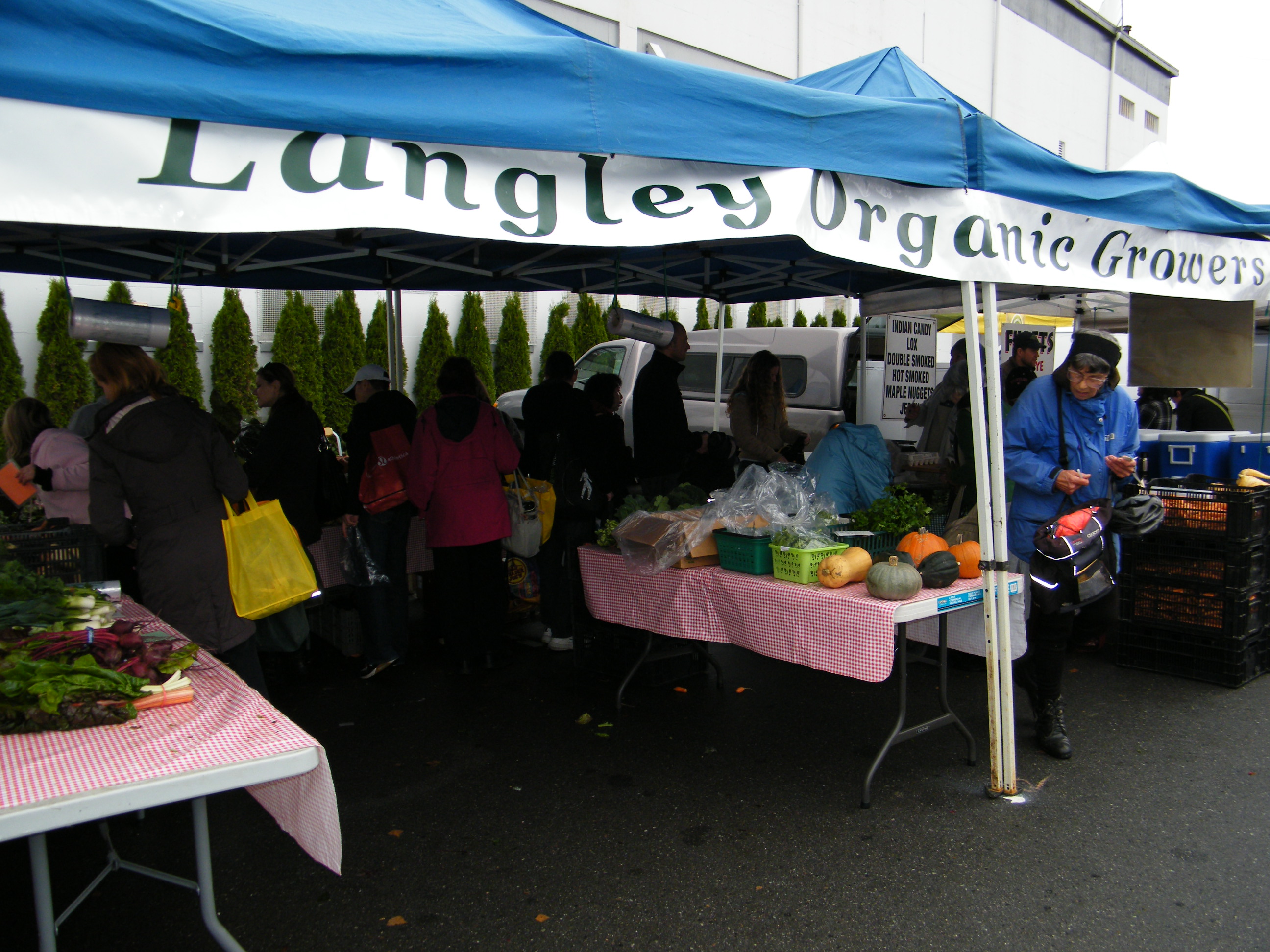
This past Saturday, the Vancouver Farmers’ Market had their first winter market of the season. It was a bittersweet occasion for me, because until this year the winter market was almost literally a stone’s throw away from where I live. (If I had a better arm, it would have been.) But, the market had long outgrown its winter home at the WISE Hall and this year the city gave permission for the move to the parking lot at Nat Bailey Stadium.

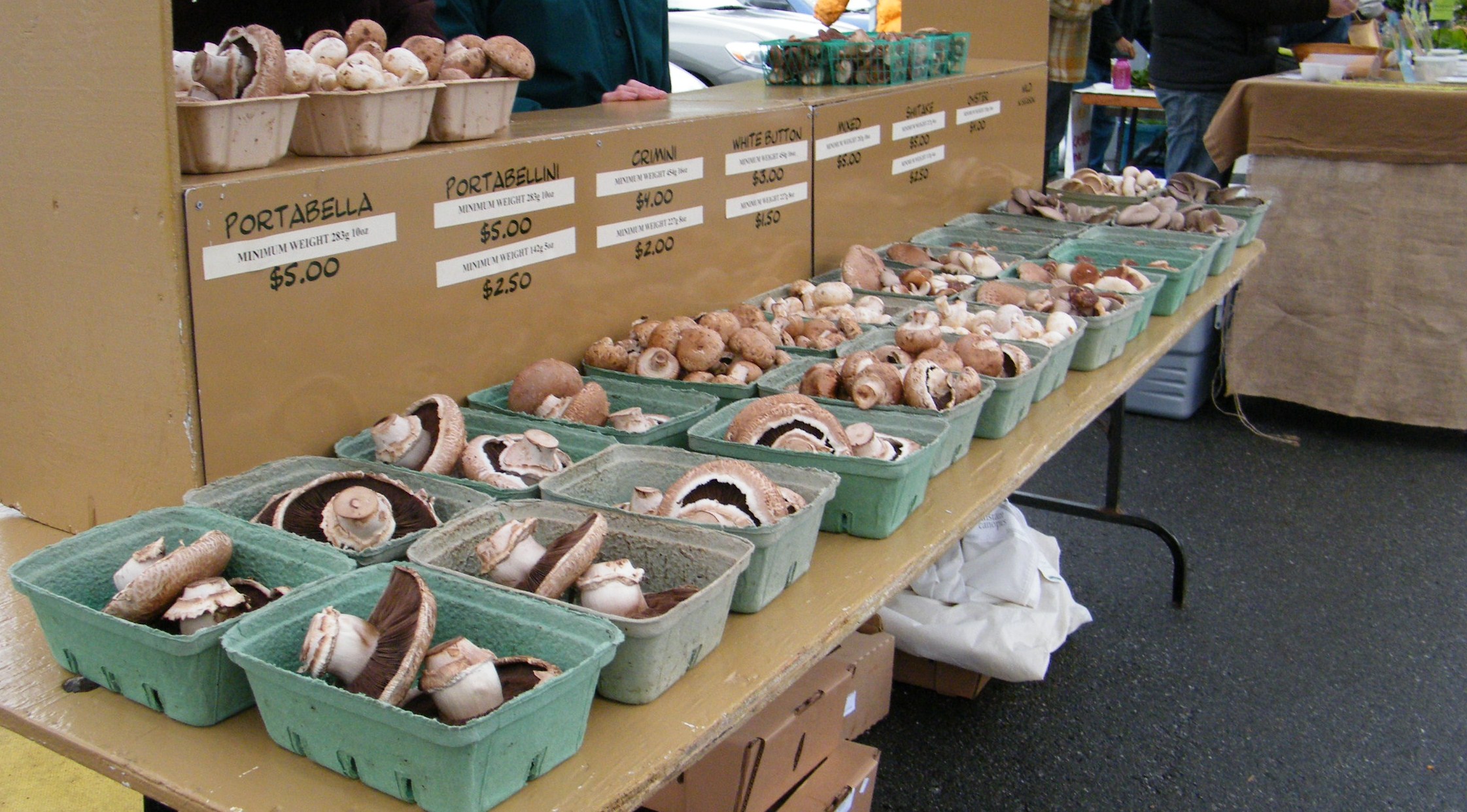
I’ve told you the bitter, but there’s definitely some sweet. The winter market can now happen weekly and is much larger than it was in its old incarnation. Since the scattered summer markets are now closed for the season, there’s also an advantage in having it in a location that’s nearer the centre of the city. It’s reasonably accessible by transit and there are good cycling routes available, so it’s possible to avoid the congestion and competition for parking spots that driving there causes. Once again, the east side has served as an incubator for something that benefits the whole city. And local, organic food is definitely beneficial.


Though it seems like awareness of food miles and the benefits of eating locally has sprung up out of nowhere in the last few years, the Vancouver Farmers’ Market has been running for fifteen years now. The dominant culture can take quite a while to catch on to a good thing.

I first heard someone talk about eating locally in the mid-eighties. He was one of the most interesting professors I ever had. His course was ostensibly about the geography of weather, but he made sure to give us some life lessons along the way. For instance, he talked to us about geographical and weather considerations for house-hunting, which I think of often when looking at the suburbs running up the North Shore Mountains. (Hint: it’s very bad to cut into a natural slope in a rainforest climate zone.) He’s also responsible for politicizing me around water rights, and by extension, all natural resources and genetic materials. It’s always amazed me how much taking that one course helped me to solidify my political and ethical ideas.

Eating locally was one of those ideas. In the class discussion, we focused on the farm stands that dotted the Fraser Valley, where I grew up. The farms behind those stands grew a variety of vegetables, with much less need of pesticides than industrial mono-culture farms. They could also grow more varieties than industrial farms, since transportation-hardiness and shelf life weren’t considerations for local sales. We learned that we were lucky to have so much access to good food. As the years went by and as development skyrocketed in the Valley, I wondered how long this access would last.

Enter the organic and local food movements.

Now, not only do we have a vibrant system of farmers’ markets across our region, but people are also looking for local, organic produce in grocery stores. I think this bodes well for our health and also for the health of our farmlands, which have been under threat of development even when they’re part of the Agricultural Land Reserve .


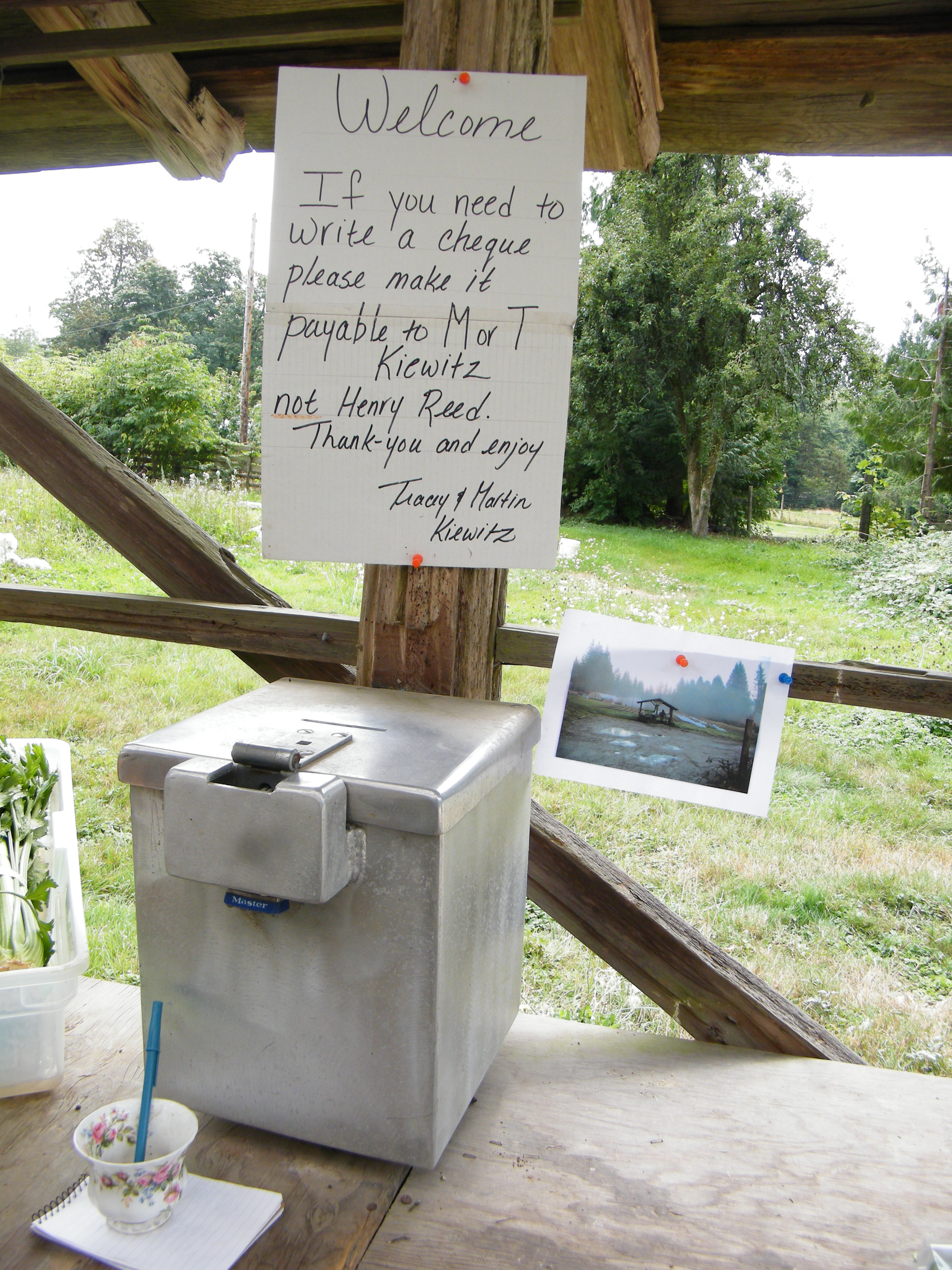
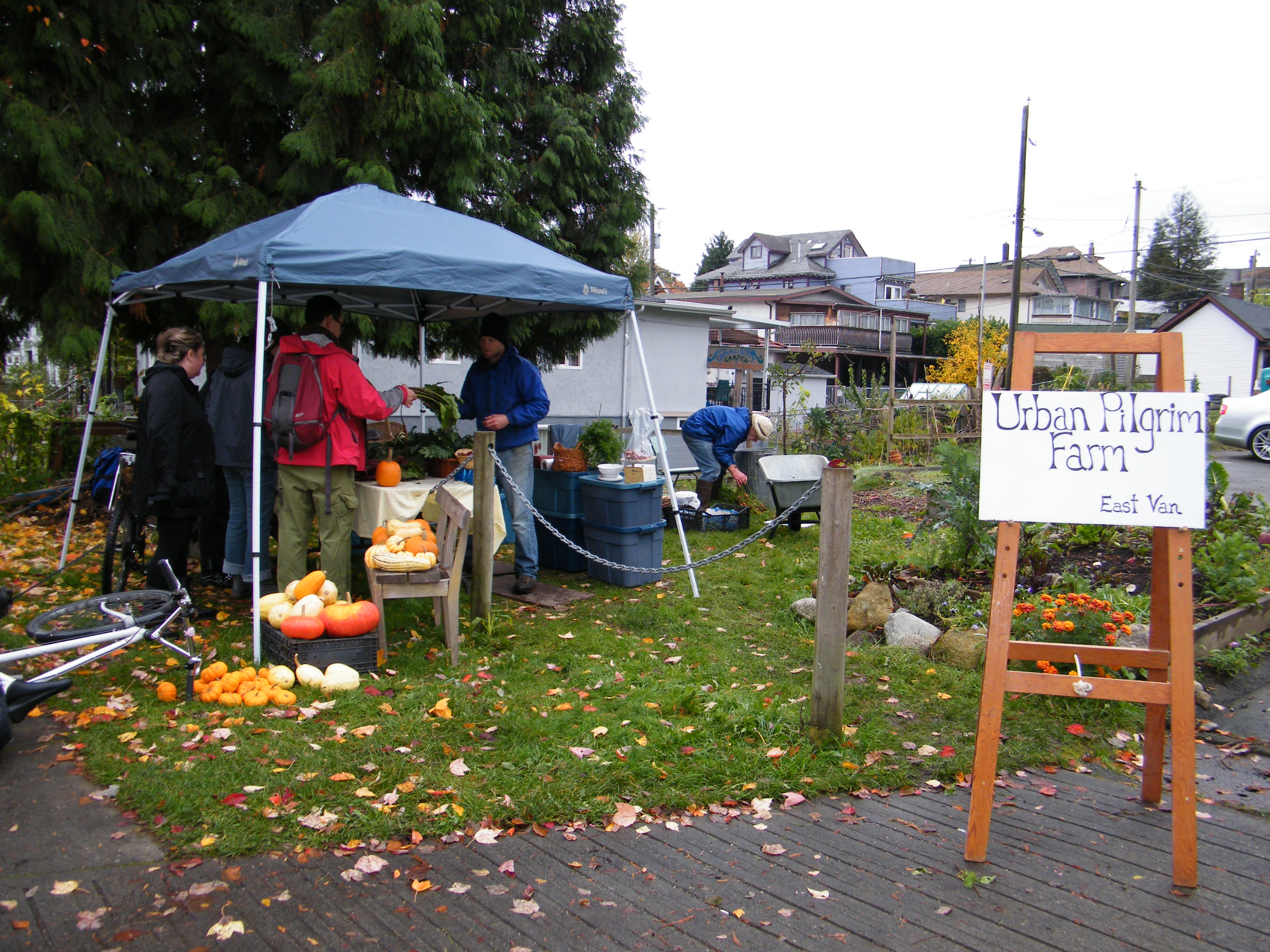
Farm stands have even been experiencing something of a renaissance. When I’ve visited farm stands on the Sunshine Coast, I’ve felt like they are lovely, nostalgic throwbacks. Especially since some of them leave their produce unattended, with a price list and a strongbox for you to leave payment. With the rise of urban farming, though, the Farmers’ Market is no longer the only game in town. There’s even a small farm and stand in a vacant lot at Victoria and First.

Extremely local eating is becoming more and more organized here. Neighbours are co-ordinating garden plots together; urban farmers are leasing back (and front) yards; the Vancouver Fruit Tree Project harvests surplus and unwanted fruit; and chicken houses, aquaculture systems and apiaries are springing up around the city. I hope our food culture continues along this trajectory, because our future food security will depend upon it.

Secret Souls, Public Dreams

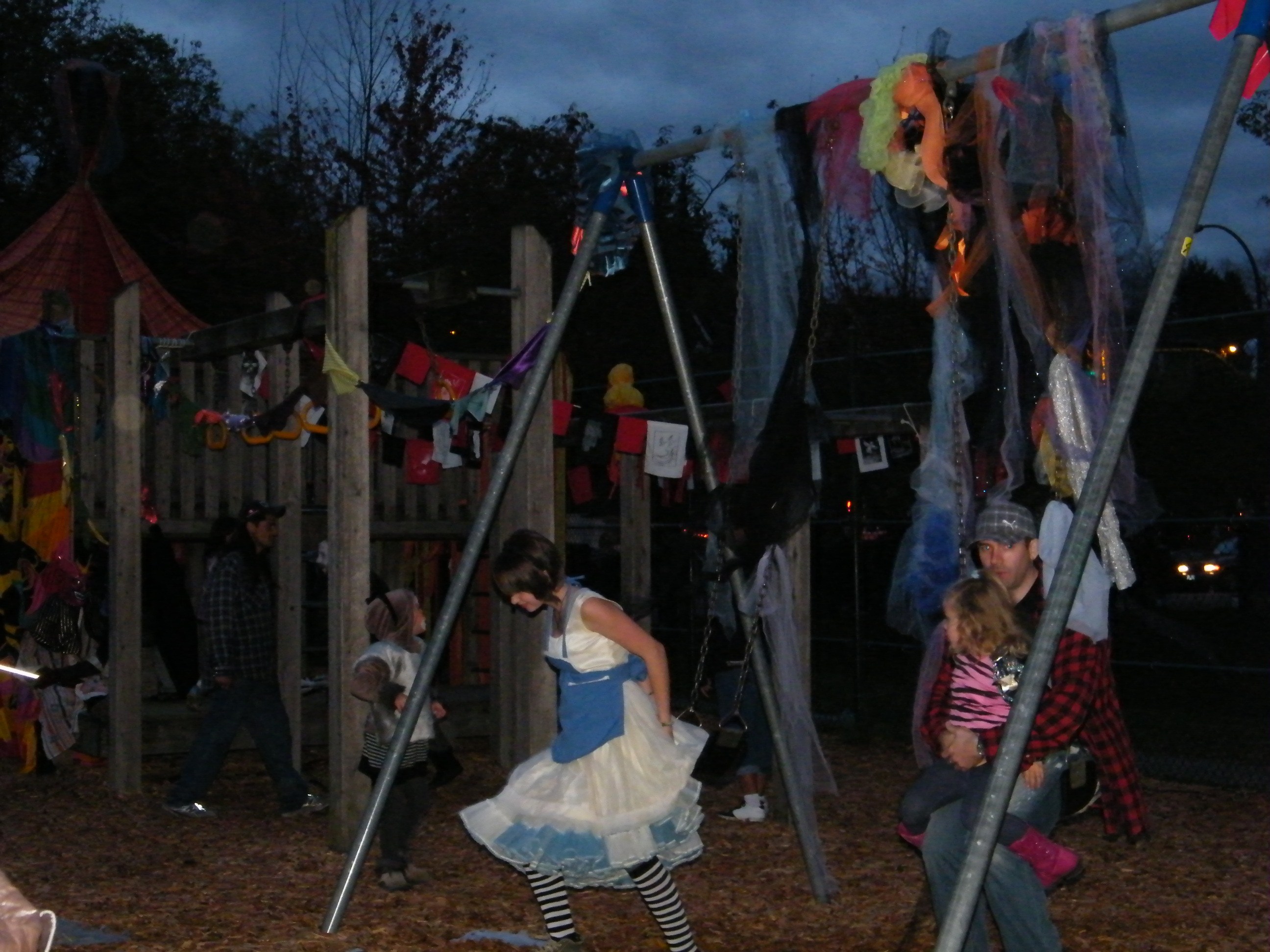
The Parade of Lost Souls has been a yearly fixture in my neighbourhood since the mid-90’s. Public Dreams Society created an event that mixed Mexican Day of the Dead traditions with Celtic Samhain rituals, throwing in Hallowe’en costumes and a circus aesthetic for good measure. In the beginning, it was almost a neighbourhood secret, with artists and queers, students and stilt walkers proclaiming our difference from the rest of the city. In those days, the Drive was the also the home of Vancouver’s Fringe Festival and the Illuminares Lantern Festival (another Public Dreams project). Commercial Drive felt like the seat of countercultural expression, even as we realized that we were really just the harbingers of gentrification. Still, it was exciting to wind our way around the neighbourhood, with decked out houses and alleyways, knowing that new ways of making art (and old ways rediscovered) were being worked out in front of us.

The Parade grew each year, becoming so big that it made the major news reports and more and more people from around Greater Vancouver came to participate. Eventually, the costs for permits, clean up and policing grew to over $100,000.00, while government funding was cut by an estimated 90%. This led to the cancellation of last year’s parade. For a good discussion of the issues around funding cuts to the arts in BC, go here. (Funding cuts to social programs were also deep and devastating.)

This year, Public Dreams revived the parade, in a smaller form that reminds me of its roots. Calling the scaled-down celebration the Secret Souls Walk, Public Dreams didn’t release the route until the day the walk happened, though the accompanying Carnival was advertised earlier.

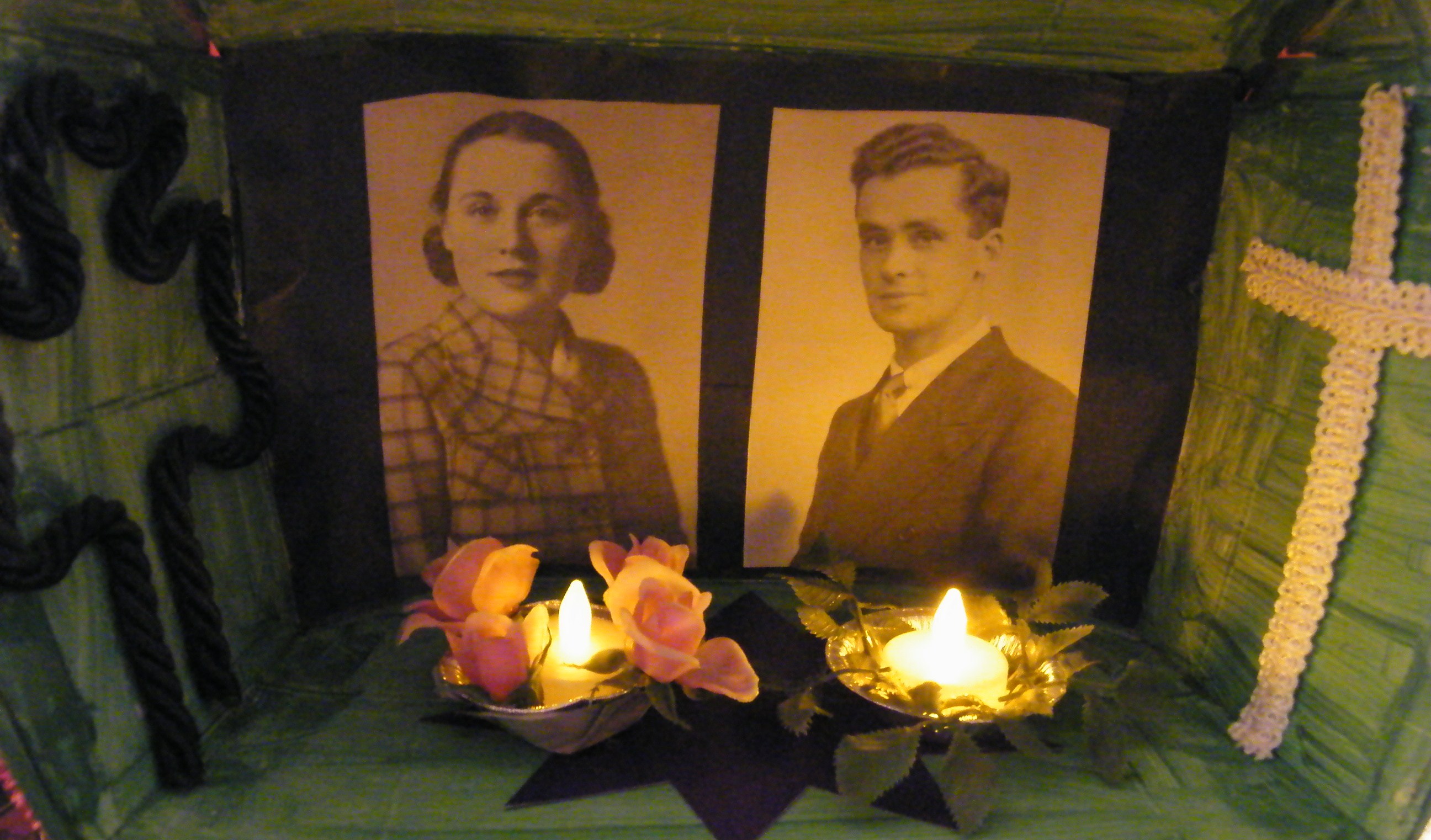
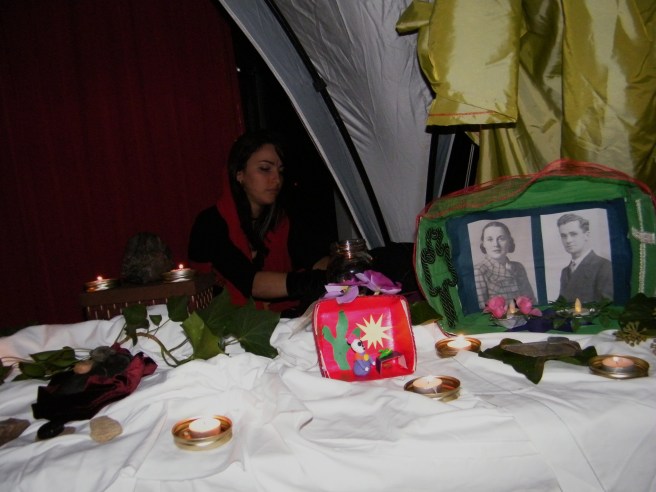
I was lucky enough to win passes to the preparation workshops for the Walk and was able to attend one of the shrine-making workshops. I decided to make a shrine in honour of my grandparents, as my Grandma died only a few months ago and my Grandpa died the year before.

I’m not an artist. Even my stick figures are almost unidentifiable. So, when I thought about what I wanted to do for my shrine, I just printed out lovely photos of each of my grandparents and hoped that I would find some inspiration at Public Dreams’ studio. I needn’t have worried. The Public Dreams space is like a five-year-old’s ideal craft area. There are materials everywhere, in every shade and texture. Even someone as artistically challenged as I am can fake it there. They’ve also got an amazingly talented cadre of staff and volunteers. The workshops this year were sadly under-attended. If you ever get the chance to go to one, for any of their events, jump at it. Really.


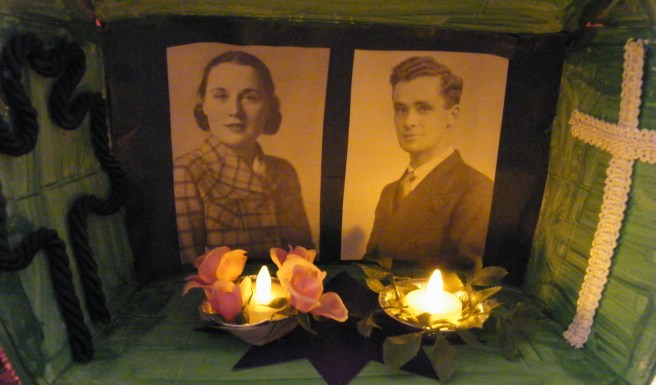
My grandparents met during the Second World War, in England, where my grandfather was stationed and my grandmother was working as a nurse. She was Irish, he was Canadian. He married her and brought her back to Canada. It sounds simple, but it wasn’t. Whose story is? Theirs included a vow to marry a girl spotted through a restaurant window; an injured soldier’s plea to Vincent Massey to allow his Irish Catholic wife to have their child on her home soil, even though the Irish Sea was closed to passage; and a train journey across a continent with a baby born Canadian in Ireland. All stories for another time.

I thought about these things while making my shrine, but what concerned me most was trying to represent them correctly. I played with the idea of making fishing rods and rosaries, cups of tea and cribbage boards, but I knew that no one would know what they were but me. In the end, I tried to make it simple. Two of the strongest themes in their lives were their shared Irish heritage and their devout Catholicism. My grandfather had been raised Anglican, but converted wholeheartedly later in life and church was a constant in their lives.

So, I decided to make a shamrock and a cross, on a background of Kelly green. Not even I could go wrong with that. I cobbled together a structure made of milk cartons and construction paper, pasting their photos at the back with more construction paper for frames. I painted the rest green, made a sort of purple star as a base for the candle holders and hot-glued cord on either side to represent a shamrock and a cross. I made candle holders out of plastic roses and leaves and finished the thing with a strip of crimson netting. I think it turned out all right, mostly because Bridie and Fred were so beautiful in their youth.
I brought the shrine, along with a small Mexican-themed one that I’d made, to the starting point of the Secret Souls walk on Saturday. One of the volunteers at the shrine station told me later that everyone who came by wanted to know about my grandparents and their story. I really want to thank Public Dreams for the opportunity; it’s a very meaningful process and it’s wonderfully healing to honour one’s dead.

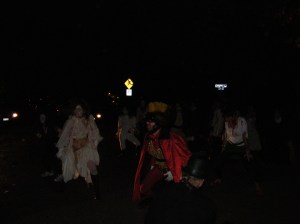
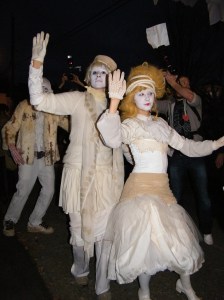
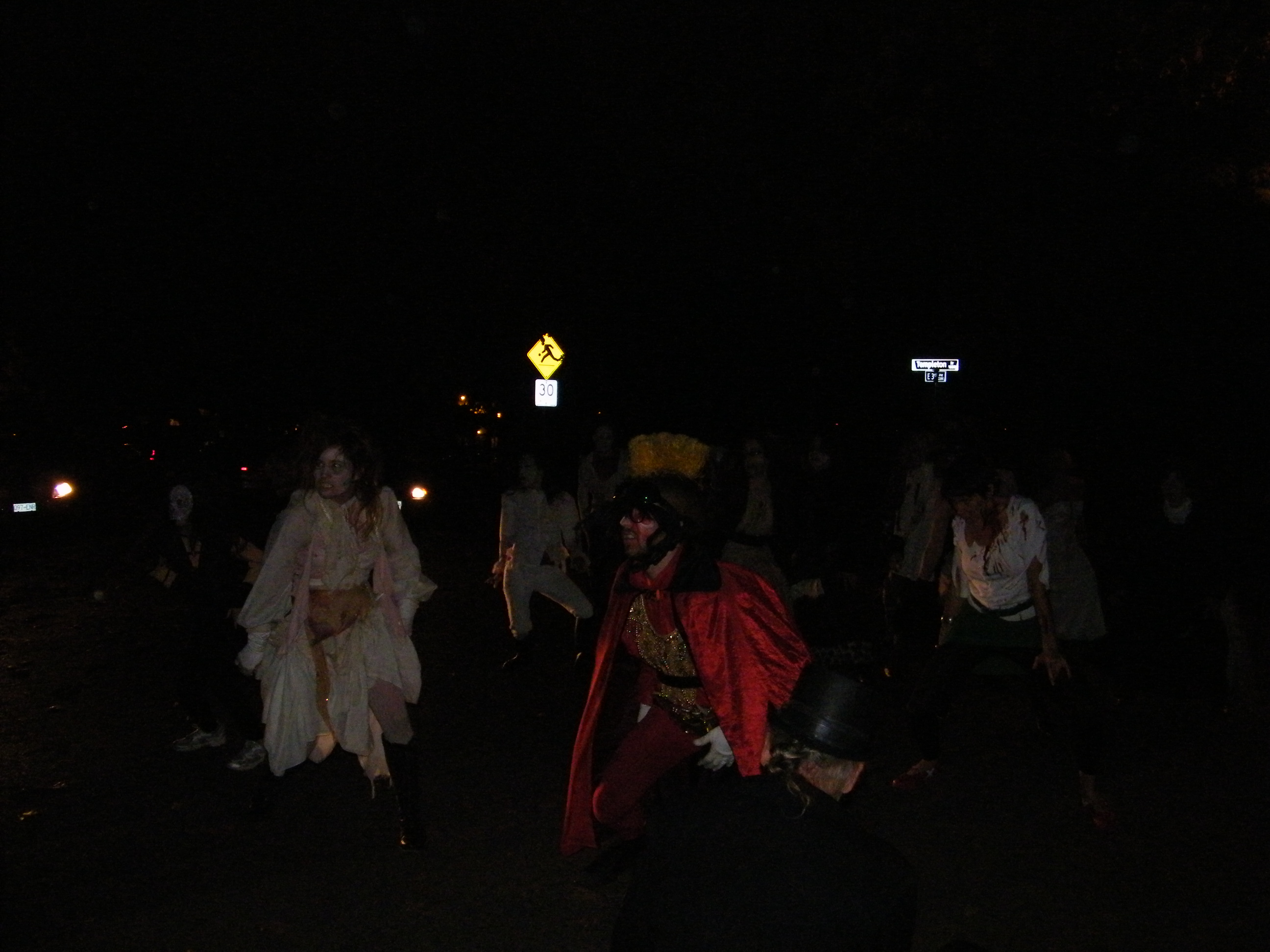
My partner and I went on the walk together, which wound through the alleyways above McSpadden Park. There was a carnival atmosphere present, as there has been during past walks, but it was more subdued. We had to go looking for smaller spectacles, rather than being hurtled past larger ones. I really liked this aspect of Secret Souls. Some of the highlights for me: Thriller zombies at Templeton & East 3rd, the court of Queen Victoria, the still, pale ghosts in the alley and the music of various performers wafting across the neighbourhood.

My only complaint is that the steep alleyways aren’t very accessible and I hope that the organizers take this into account for next year. Everyone should have the opportunity to celebrate the death and renewal of the year and the self.

I’ll end with a few pictures. It was impossible to capture everything that was going on, but these will give you a taste. If you like what you see, please consider a donation to Public Dreams, so they can continue producing such beautiful events.



En Souvenir

My mother and I have done the AIDS Walk together for five years.  We do it in memory of my Uncle Gerry, her younger brother, and we wear t-shirts that my mother had printed with his photo.  I find these shirts both geeky and moving.  We’ve been ridiculously lucky, as the weather has never been horrible, though in some years it’s been very hot.  The Walk runs along the Stanley Park Seawall for ten gorgeous kilometres, at least it did until the windstorm of 2006, when post-storm reconstruction shortened the route somewhat.  We’re among the slowest of the walkers and usually miss quite a bit of the entertainment along the way – the Vancouver Men’s Chorus is always packing up by the time we reach their station.  It doesn’t bother us, though; we spend the time talking about Uncle Gerry, our family, our sorrows and our joys.  I tease her, telling her that it is the one day in the year when she has nothing to do but just walk and be.  She’s an incorrigibly busy person.  Afterward, we go for lunch, and then ice cream at La Casa Gelato.
This year, though, I was on my own.  My parents were on vacation in the Maritimes with friends and this was the only time that worked for everyone.  The route of the Walk changed this year, too, and is much shorter.  The Walk now runs up the sidewalk from Sunset Beach almost to English Bay, then sharply turns onto the seawall running in the opposite direction.  The route was so short that there wasn’t time for everyone to pass me.  I was in the middle of the pack for the entire walk and even got to hear the Vancouver Men’s Chorus perform.  They were set up near the AIDS Memorial, which was filling up with red carnations as each group of Walkers passed.  My uncle’s name is not there, but that doesn’t matter; it’s a good place for remembrance.

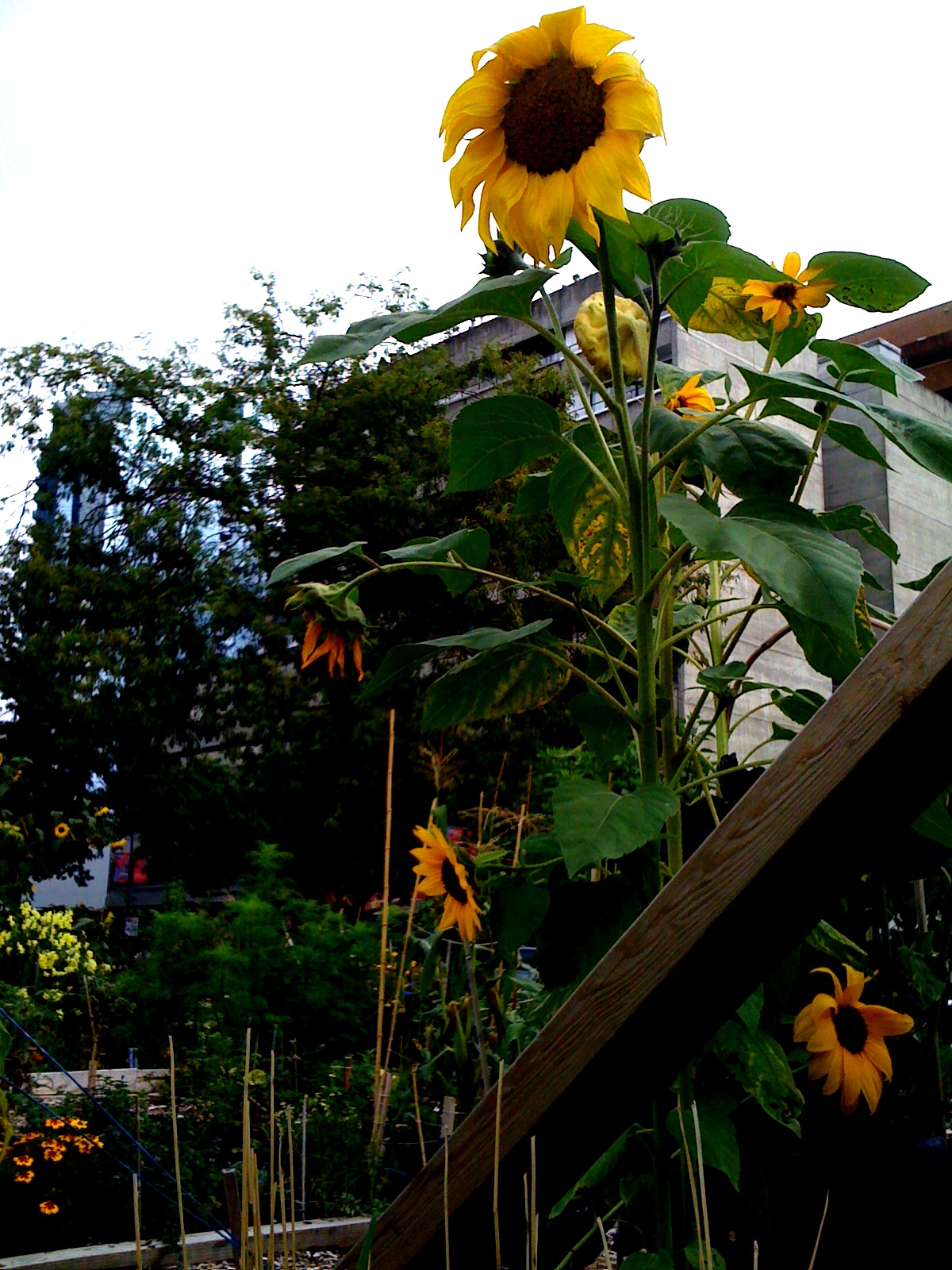
Afterward, I walked back up to Davie, got myself some brunch and decided to walk home, which would bring me close to ten kilometres for the day.  The forecasted rain never materialized and the cool, cloudy day was perfect for walking.  My plan was to walk from the West End past Yaletown, through downtown and Chinatown until I reached Strathcona, where I thought I might take a break at the Union Market.  Walking down Davie, I stopped to take some pictures at the community gardens and I found myself thinking that my Uncle Gerry would have fit very well into the current renaissance of DIY culture.  He renovated spaces, cooked inventively and gardened prolifically in the ‘70s and ’80s.  And that reminded me of all the potential we’d lost to AIDS, along with the people.

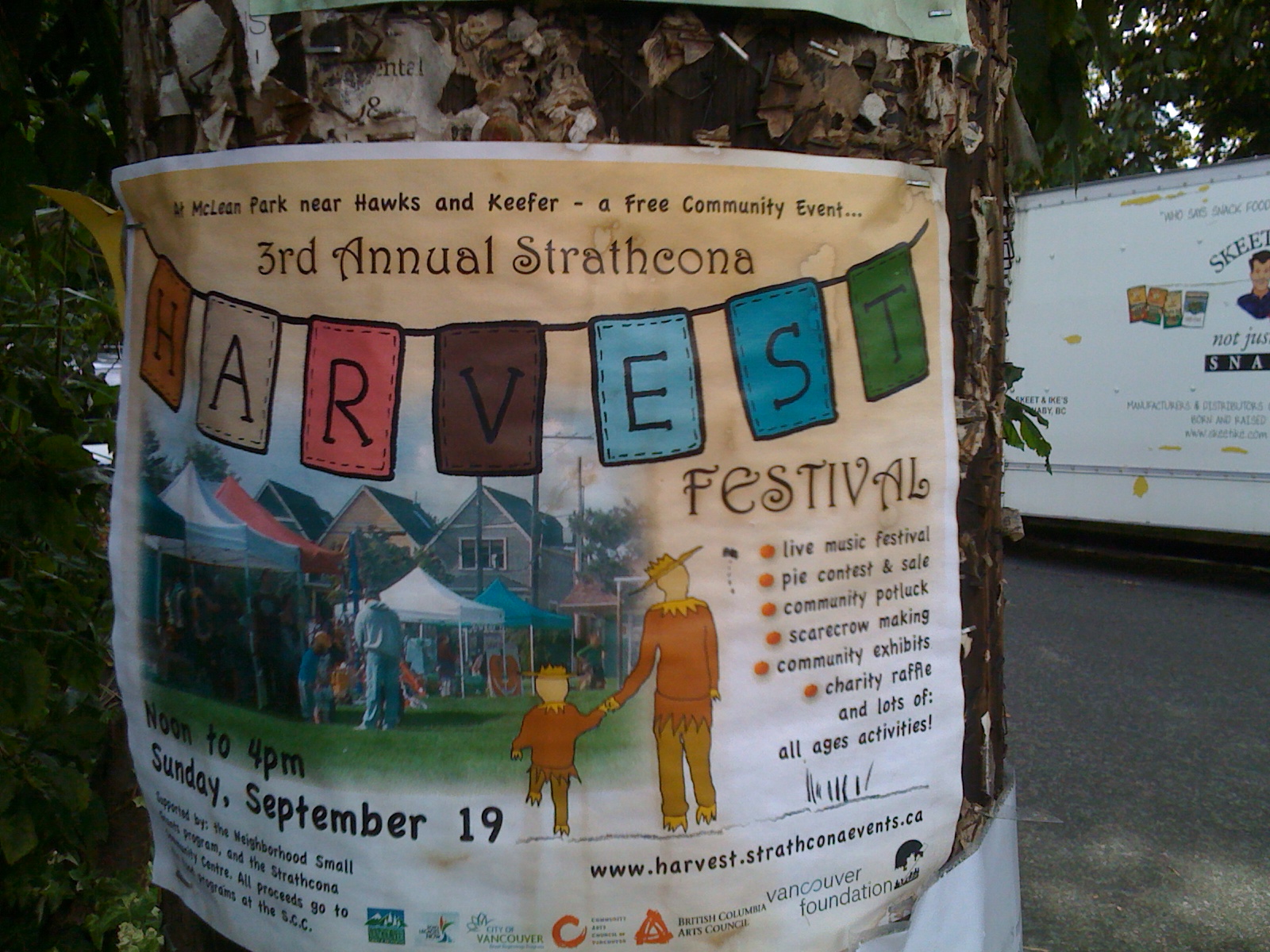
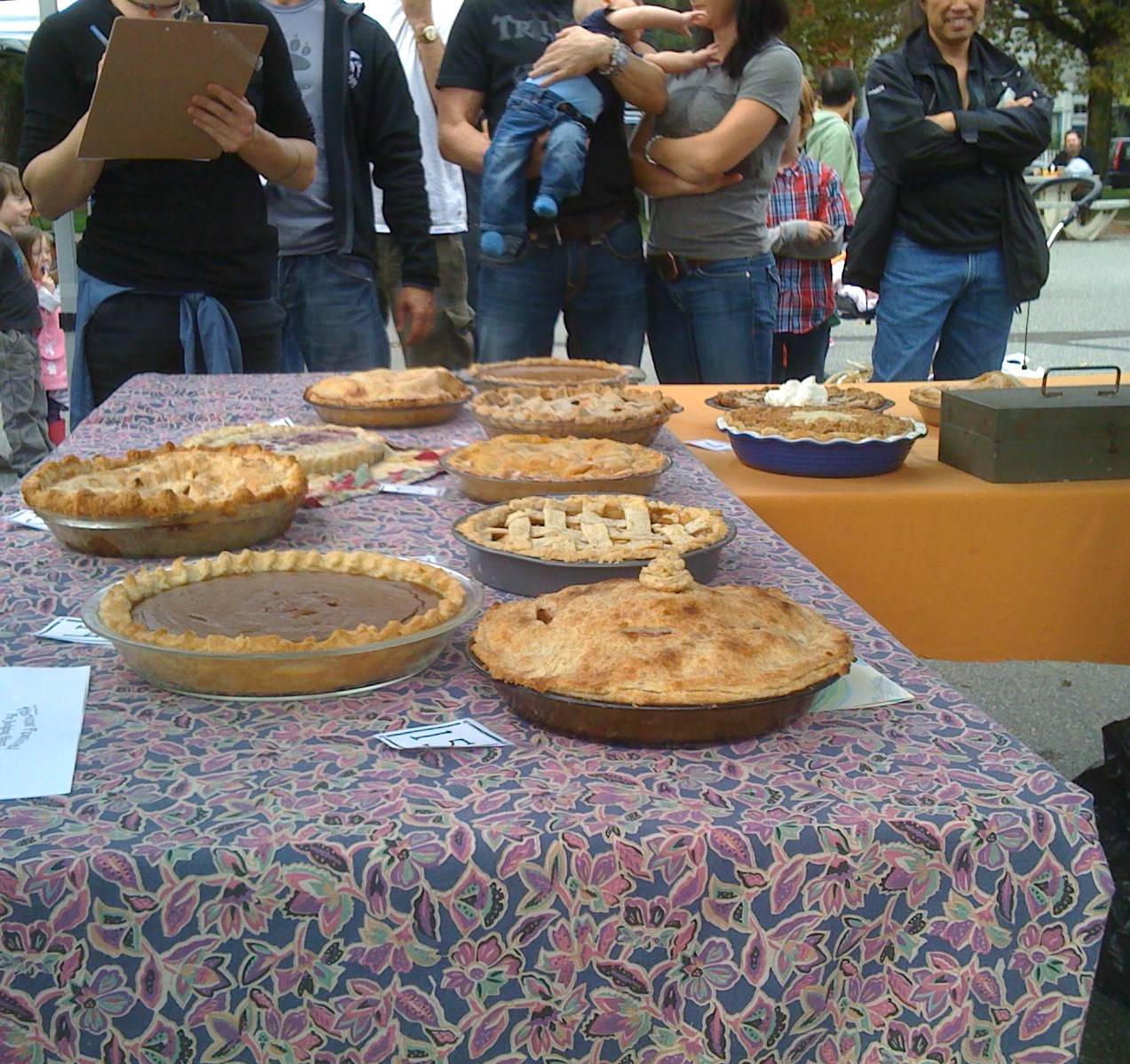
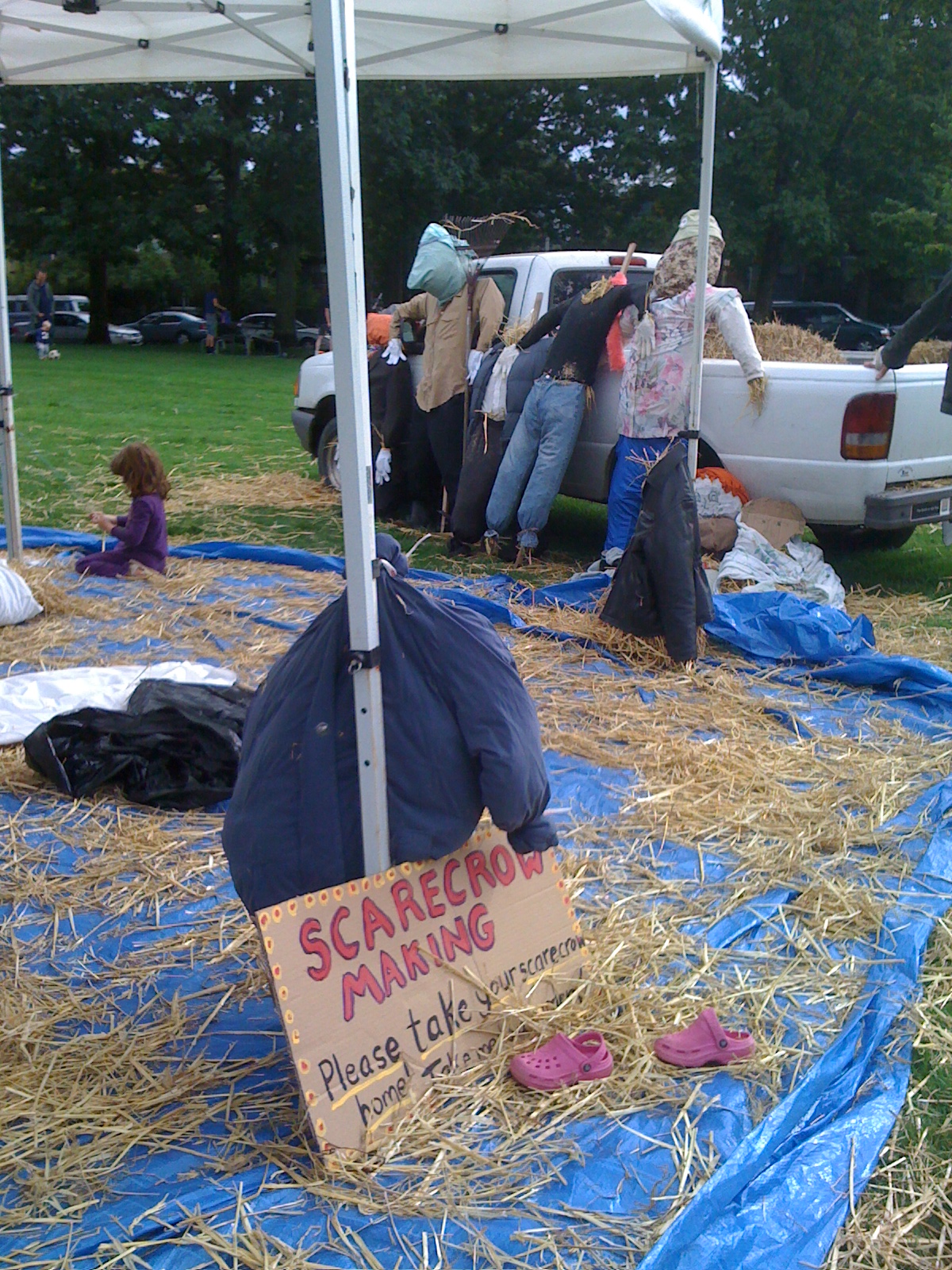
I kept walking according to plan, but I never made it to the Union Market. Instead, I sat in McLean Park where the Strathcona Harvest Festival was taking place. It was the pie contest that drew me in. The judging had begun and there were young people with clipboards, cheerfully examining each of the entries. I loved the inventiveness of this festival, with its scarecrow-stuffing station, city chickens on display and pretty handmade banners. There was a powerful feeling of neighbourliness there, which isn’t surprising for Strathcona. Whenever I walk or ride down the bike path that cuts through the area, I have the sense that everyone knows each other. And that they do things together.


Incidentally, I think the Vancouver Foundation’s Neighbourhood Grants Program, which funded this festival, is spectacular. Since these grants became available, there have been canning workshops, block parties, small festivals – every year brings something new.

After a while, I felt rested and went over to The Wilder Snail to pick up a tea for the last leg of my walk home. I’m glad I stumbled upon the festival; our yearly ritual has always ended in a celebration.