FFWD – Creamy, Cheesy, Garlicky Rice with Spinach

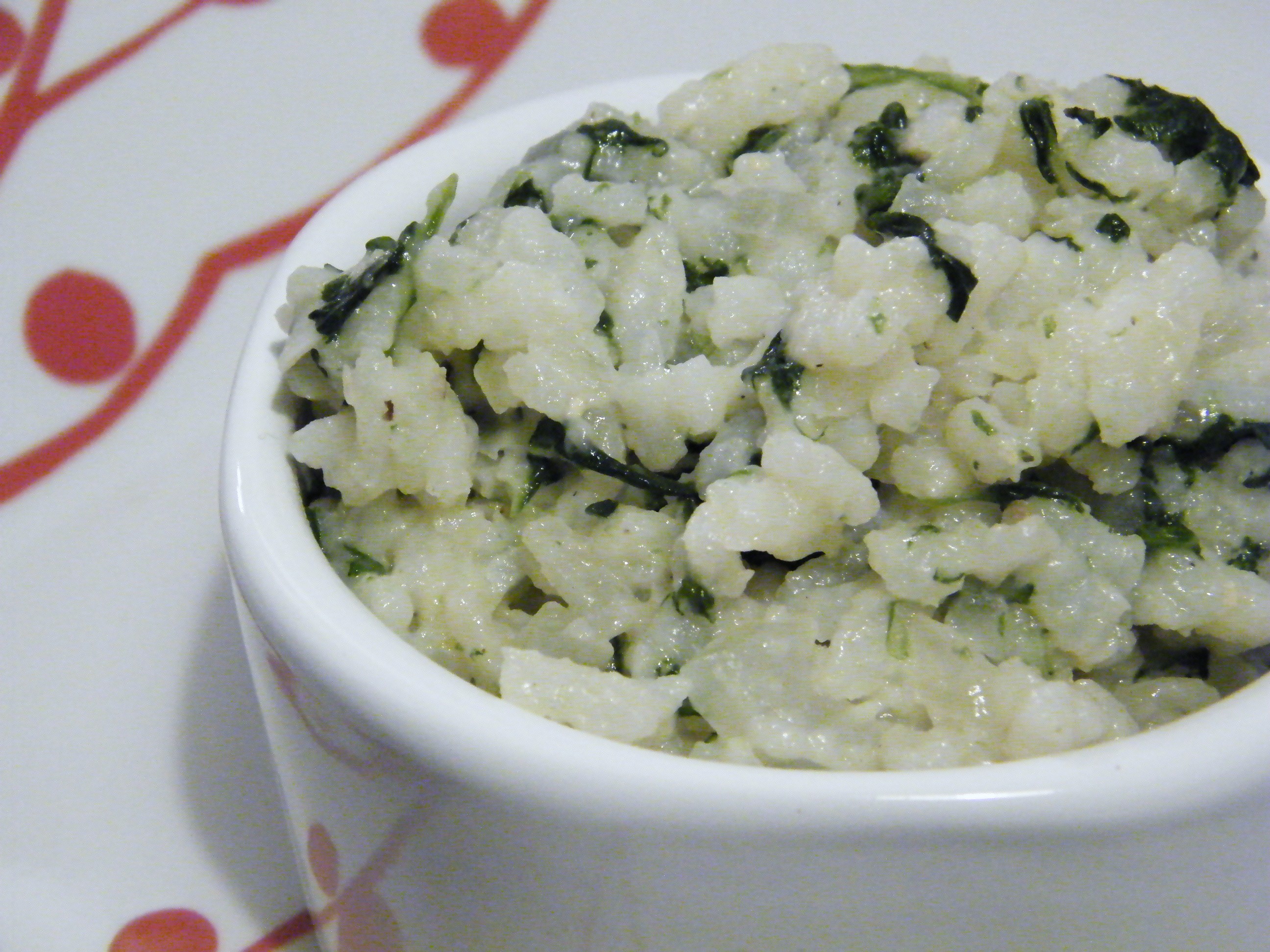
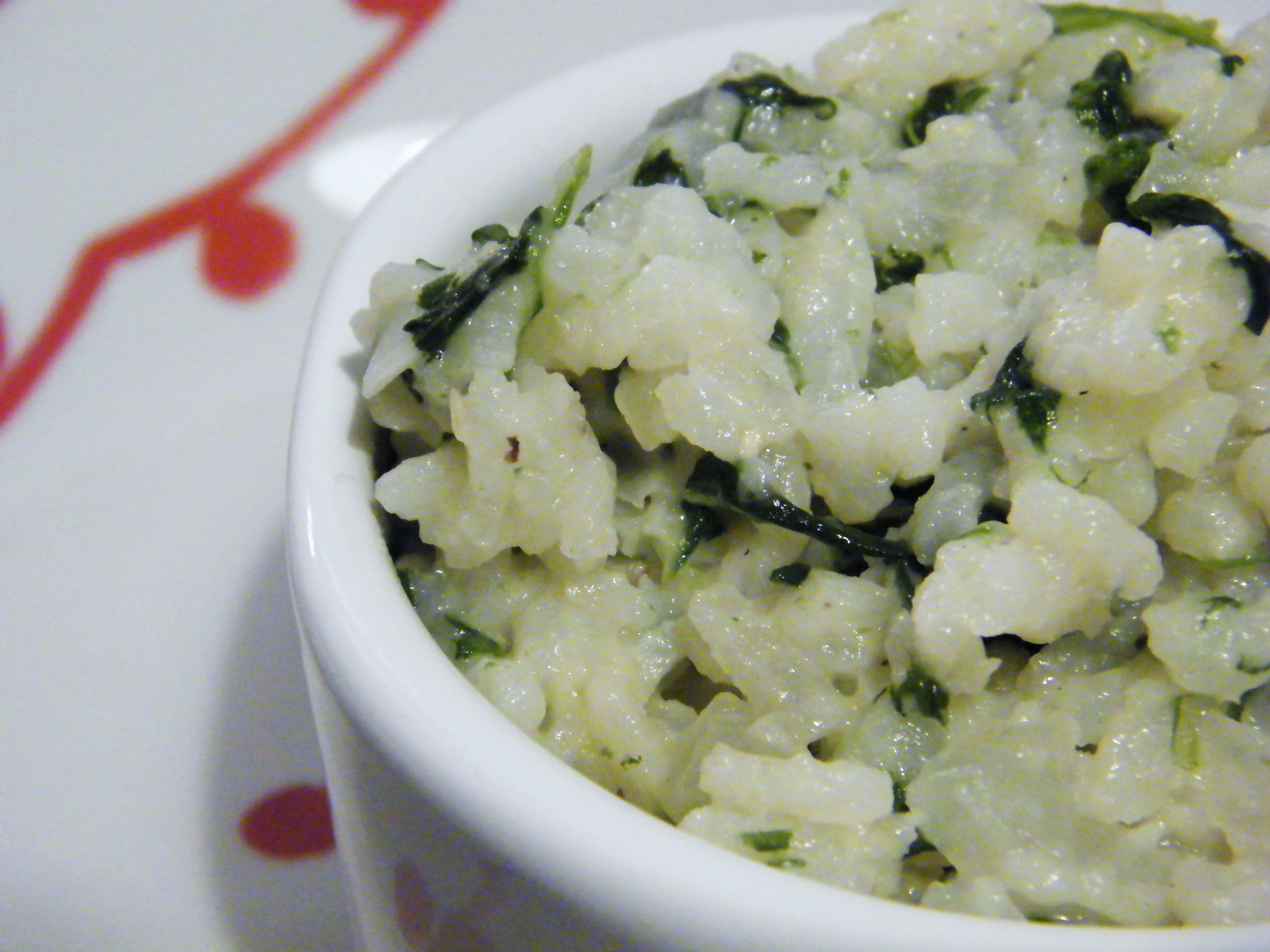
A closer view of the rice.

Comfort food is usually associated with cold winter days. Casseroles and stews, carbohydrate-rich for warmth, protein-laden for energy, meant for eating in a warm, bright room that keeps the cold and dark out. This week’s French Fridays recipe would be perfect for that sort of meal. But, it was also surprisingly good as a late summer main dish alongside some beans from the garden.

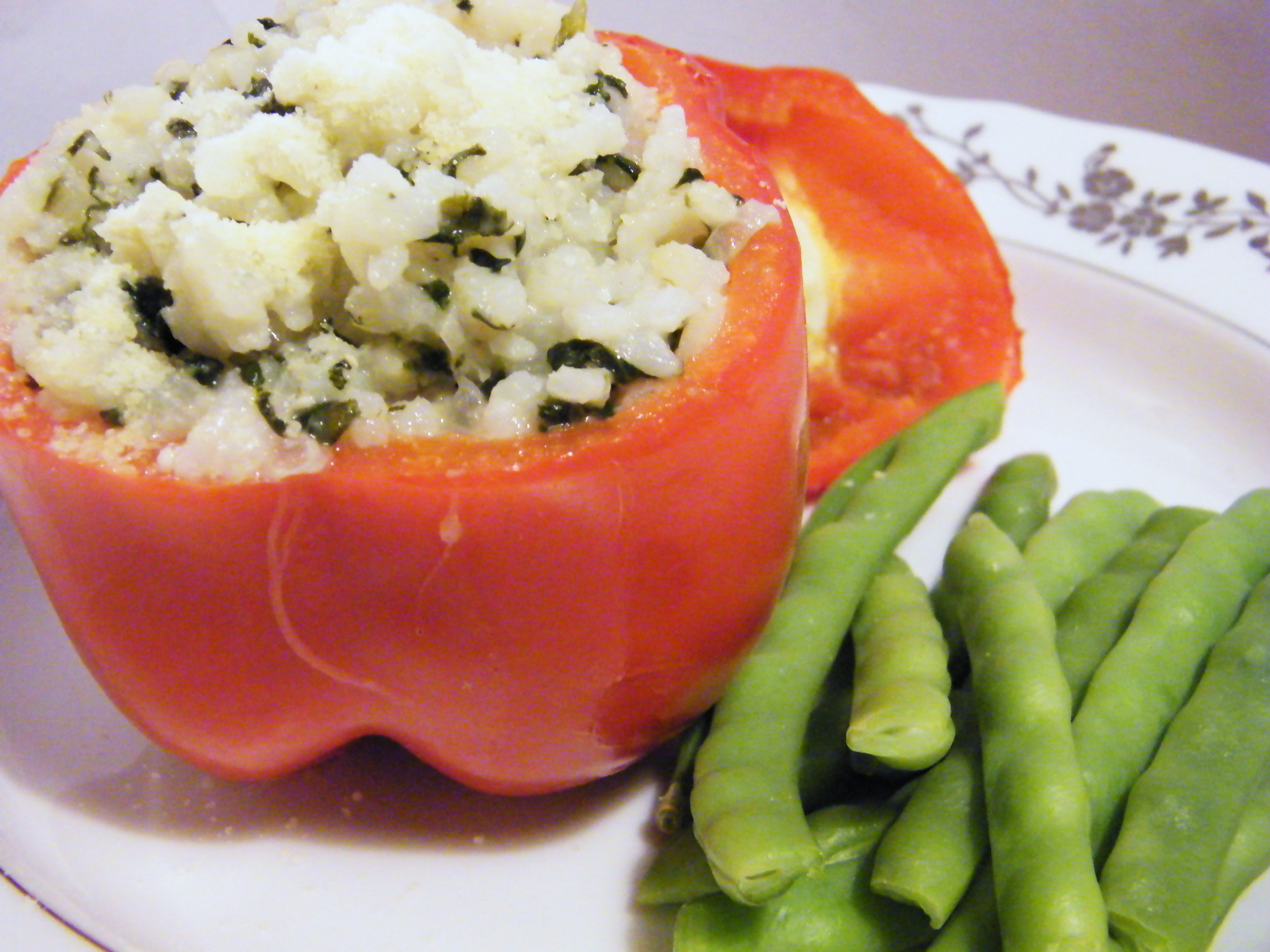
I made Dorie’s bonne idée version of the recipe, first cooking the rice as directed, then stuffing it into peppers for a nice, long stint in the oven.

A red pepper stuffed with the rice, accompanied by green beans.

The rice itself is reminiscent of risotto, though Dorie is quick to tell us that it is really a faux version. It’s certainly creamy enough to pass for risotto (even though I used 2% milk in place of cream) and it doesn’t suffer from the blandness that sometimes plagues true risottos. I don’t really need to describe the flavour to you – the title of the recipe takes care of that. I will tell you that the sweetness of bell peppers suits this rice very well.

I made a full batch, but only made a half batch of the stuffed peppers. I think we’ll have the leftovers with a little fish tomorrow night. I’ve got more beans, some cucumbers and some beets, too. I think it will make as nice a summer side dish as it did a main.

Rice, studded with pieces of spinach, in a small bowl atop a plate with red decorations,

You can find many other blogged descriptions of this week’s FFWD recipe here: Creamy, Cheesy, Garlicky Rice with Spinach I’ve also just had my 100th post and am doing a little giveaway to celebrate.

A Little Celebration of a Small Accumulation

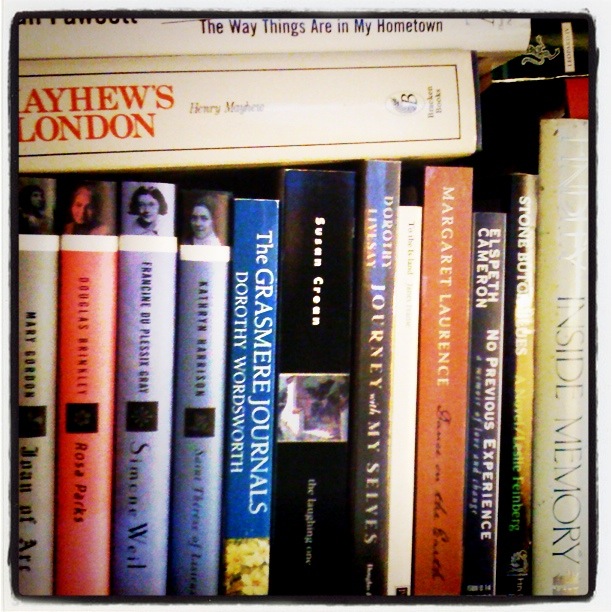
A Shelf of Books

I’m not so much a collector as I am an accumulator. When we were kids, my mother thought that my siblings and I should all collect something. I didn’t see the appeal, as I was too busy trying to read as many books as possible, so she ended up choosing something for me. Somewhere in my storage space is a box of thimbles that I got from various relatives, mostly as part of a Christmas or birthday present. When I run across them, I enjoy the associations and memories they bring up, but I don’t have any desire to add to the collection. As an adult, I can better understand the appeal of collecting. My budget doesn’t allow for art collection and my accumulation of teapots doesn’t really count, but there are a few book series that I buy.

The Massey Lectures, published by Anansi Press, is the series that I’m trying to complete. I’m missing some of the earlier lectures. I also really like the Canongate Myths series, though I’ve been a little lackadaisical about keeping up with the new releases. The rest of my book collection is quite scattershot – a little biography, a mixture of mostly Canadian, Commonwealth, and British fiction, as well as a lot of non-fiction on a bunch of different topics. It’s nice to have a little coherence added to the mix.

My other growing collection is a significant number of cookbooks. My partner and I have had to move our cookbooks from a small bookcase to a larger one, as they mysteriously go on multiplying. There’s even a series of books that bridges the gap between my cookbooks and my other book collections. Penguin’s Great Food series reprints food writing ranging from Samuel Pepys and Brillat-Savarin to Elizabeth David and Alice Waters. I think the entire series will be taking up some shelf space here before long. The books themselves are beautiful, with some of the best cover design I’ve seen in some time. The writings promise to enlighten, amuse and even offend. I think I officially have a new book (set) crush.

Since I’ve been accumulating quite a lot of posts here, one-hundred today in fact, I thought I would do a little something to celebrate and show my appreciation for those of you who’ve visited over the past year. I’ve loved your comments and even feel as though I’ve got to know some of you a little bit. I bought two of the books from the Great Food series and I’m going to give them away. As it’s also my one-year blogoversary (again, that is too a word!) on September 20th, I’ll announce the winners then. All you have to do is leave a comment, letting me know what you like to collect and which of the two books you’d prefer. (If the winners pick the same book, the person drawn first will get their choice.)

The books are these: Charles Lamb’s A Dissertation upon Roast Pig and Agnes Jekyll’s A Little Dinner Before the Play. I have to confess that I didn’t choose them because they’re my favourites of the series, but because – of the titles available at the bookstore I visited – these were the two with the prettiest covers. I do have my moments of superficiality.

A Dissertation upon Roast Pig

A Little Dinner Before the Play

Connection Isn’t Always Direct

Neighbourhood Book Exchange

I had an analogue childhood: records, cassette tapes, letters in the mailbox, and getting up from the couch periodically to change the channel on the television. The Encyclopedia Britannica, in its two-shelf bookcase, took up a corner of the living room. It was our equivalent of Google. I’m pretty sure the Encyclopedia Britannia is entirely electronic these days, but not all these things have disappeared. Records (and even cassette tapes) are being produced for new music and we occasionally get a card in the mail.

Certainly print books haven’t disappeared yet, though e-readers are becoming more and more popular. There’s something irreplaceable about the heft of a book, the texture of the paper, and the quality of light against the page. The history of a particular copy is also something that gets lost when we turn to electronic versions. The experience of reading a book is enhanced by marginalia, inscriptions, forgotten bits of paper, even creases and stains. Perhaps not always stains.

It’s also hard to share books, unless you’re passing the e-reader to your partner. It limits the potential of a single copy of a book. One of the things I love about travelling is how books end up taking their own journeys. When I’m away, I like to bring copies of things that I want to read, but don’t want to keep. Once finished, they’re exchanged for another from the bookshelves wherever we’re staying. (Not in private homes – in hostels, hotels, or bed and breakfasts, where this sort of thing is encouraged. Honestly.)

Helpful information.

I remember being on one long journey, thinking about the trajectory a book I’d just finished and really enjoyed might take. Considering the destinations of the other people staying at the hostel, I thought it might make it to Europe or South America and I wished I could somehow track its progress. A few years later, I heard about BookCrossing, which does exactly that.

BookCrossing is the sort of thing that I love about this new(ish) electronic world, because it is also rooted in tactile experience. The words real and virtual have had their meanings blurred, but in these cases they merge. Projects like this (and similar ones like Postcrossing or many iterations of mail art) are enacted in virtual space as they travel in real time. Eventually the trail stops and the book is never heard from again, though it might turn up unexpectedly, years later.

It’s not just the progress of the books that interests me, it’s also the generosity of spirit inherent in sharing with strangers. Like the sharing economy formed at Burning Man, looking out for strangers is an important part of creating community. Free boxes, extra umbrellas purposely left in cafés, community bookshelves – all these make a neighbourhood more liveable. It doesn’t replace socially just policies, but it helps enhance an atmosphere of neighbourliness.

The bottom shelf is all kids' books.

The electronic component of this process isn’t necessary, though it’s fascinating. The physical location is what’s important. I was thrilled to discover this Neighbourhood Book Exchange a few blocks from where I live. There are similar shelves in coffeeshops around town, but this structure is freestanding and free to visit, 24 hours a day. Another reason to love the Neighbourhood Small Grants project.

It’s exciting to see this sort of creativity and well, friendliness, at work. It’s something that makes me happy to live here. I’d love to hear about the things that make you happy to live in your neighbourhood. I’d also love to hear about instances of virtual community that excite you, or that you’ve followed into the real world.

My next post will be my 100th and I’ll be doing a little something to celebrate. Come back on Thursday to see what’s happening.

FFWD – Corn Soup

Soon to be soup.

What is the best kind of corn where you live? Here, everyone wants Chilliwack corn. It’s a town far up the Fraser Valley, about an hour and a half drive from Vancouver. Chilliwack corn is famous for its sweetness and every roadside stand claims they’re selling it, regardless of where it was actually grown. I know the corn I used for this week’s French Fridays recipe was organic, but it wasn’t labelled Chilliwack corn. It was perfect though, so it must have been, right?

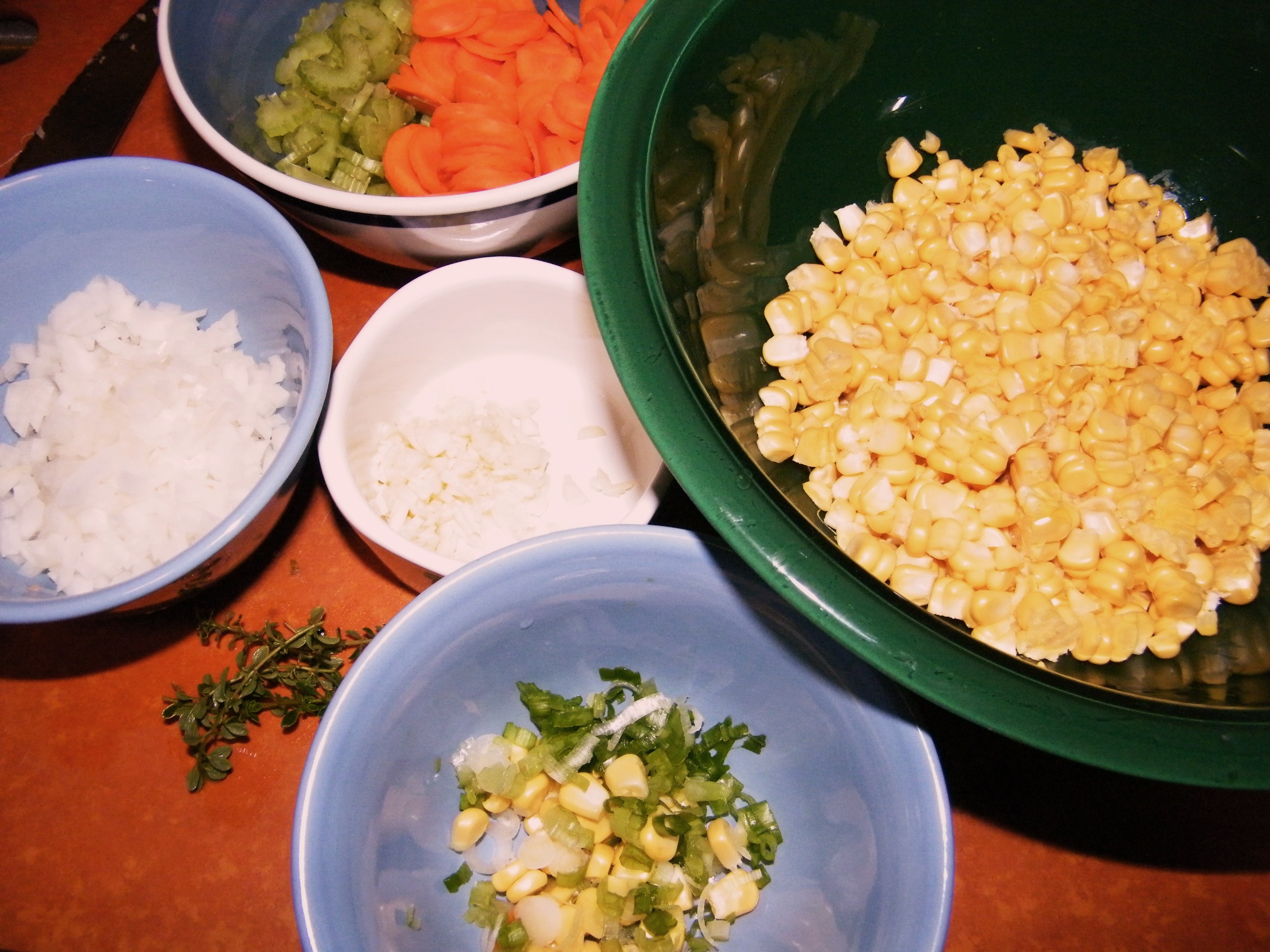
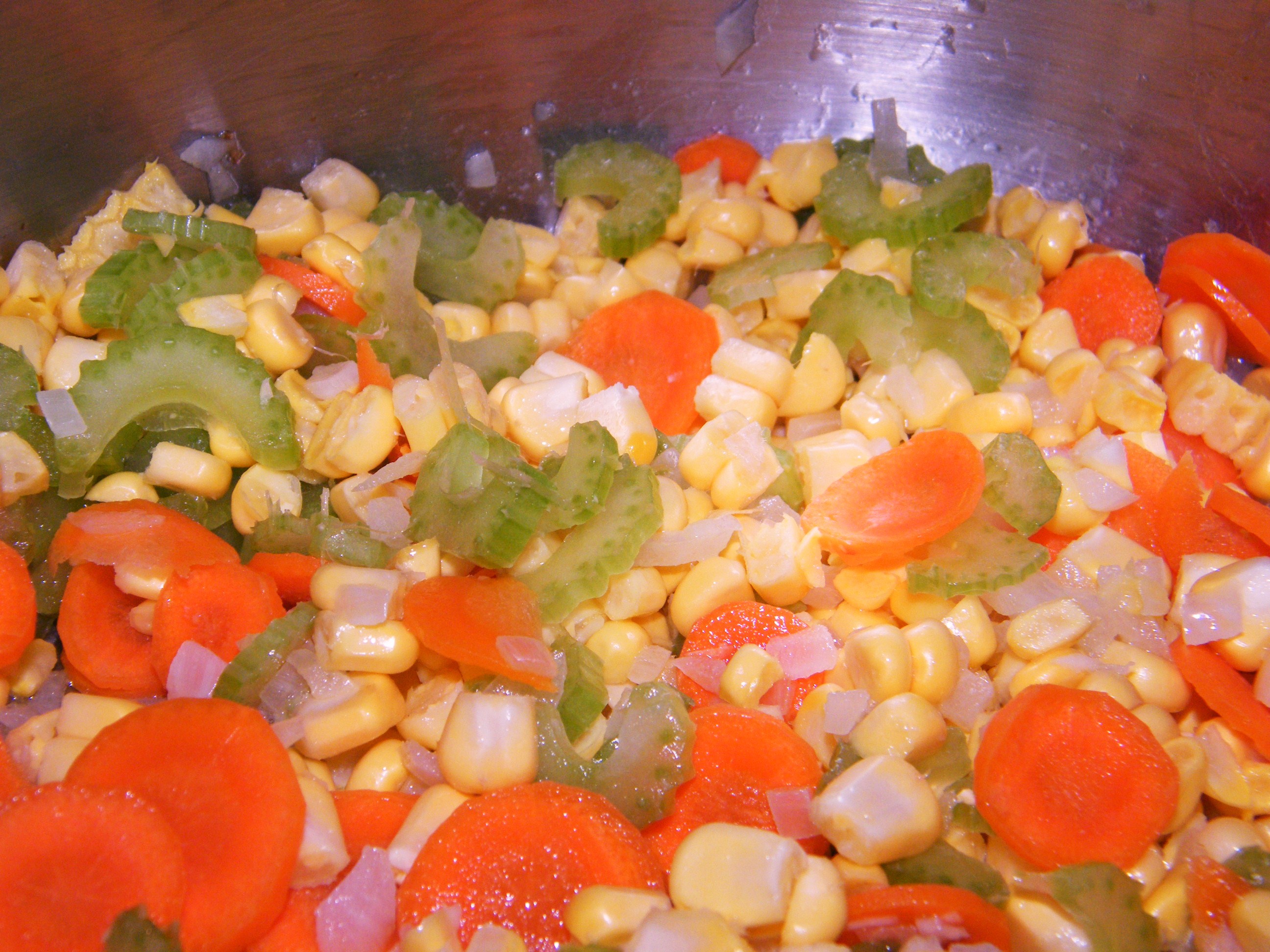
Softening the vegetables.

Dorie’s corn soup is a perfect example of why we should eat seasonally, when we can. I don’t think this soup would have been half so successful if I’d used off season or canned corn. Corn is still at its peak right now and most people are serving it on the cob, boiled or grilled, to take advantage of its sweetness. This soup is worth holding back a few cobs.

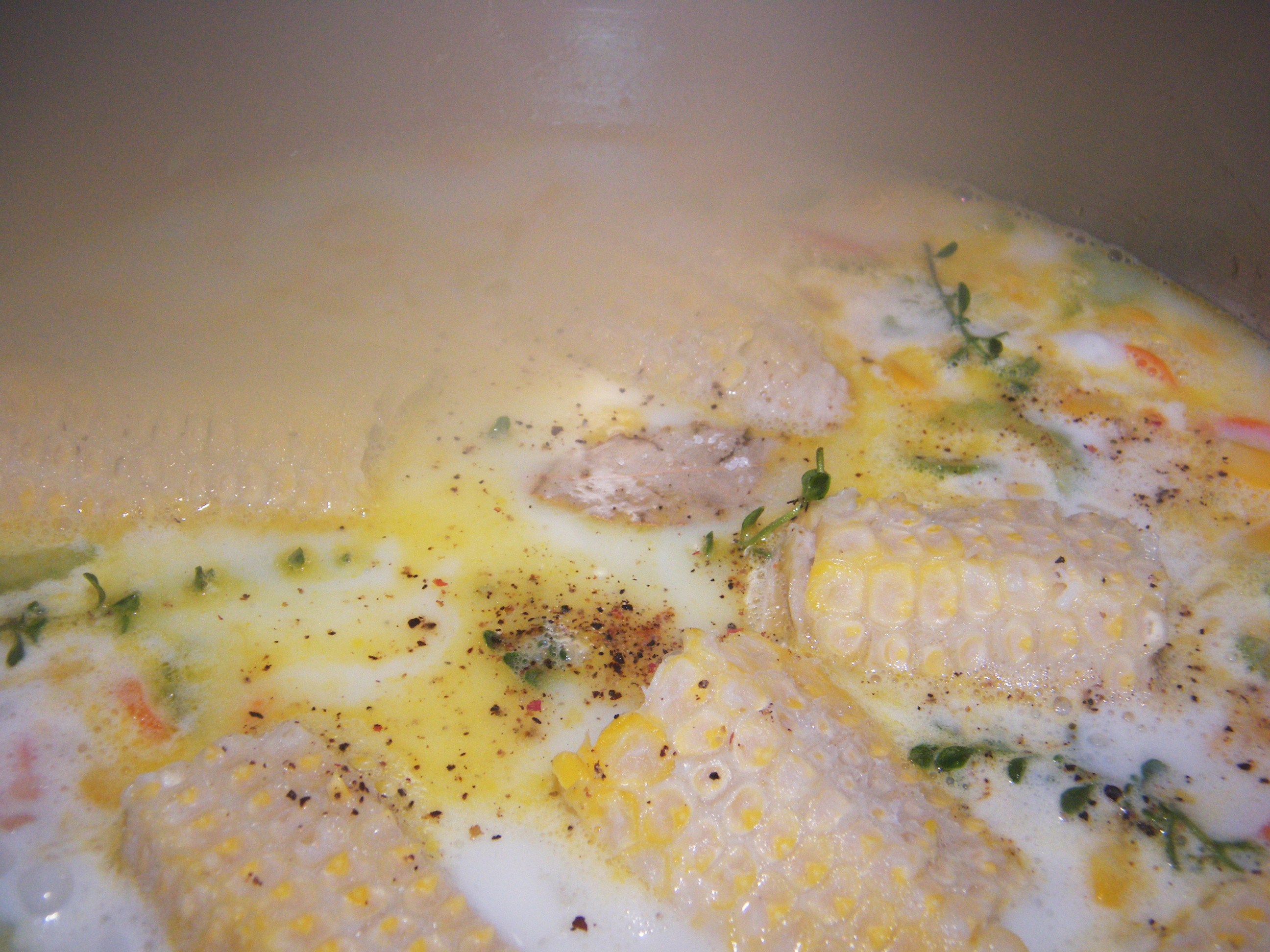
Corn sliced straight off the cob (easier than I thought it would be) is sautéed with onion, garlic, celery, and carrot, while the corn cobs are used to infuse hot milk. Seasoned with herbs, the soup is puréed, then topped with a mixture of reserved corn kernels, chopped scallions, crumbled bacon and hot pepper. You can also add a spoonful of crème fraiche, if you’re feeling decadent.

Yes, those are corn cobs you see, flavouring the soup.

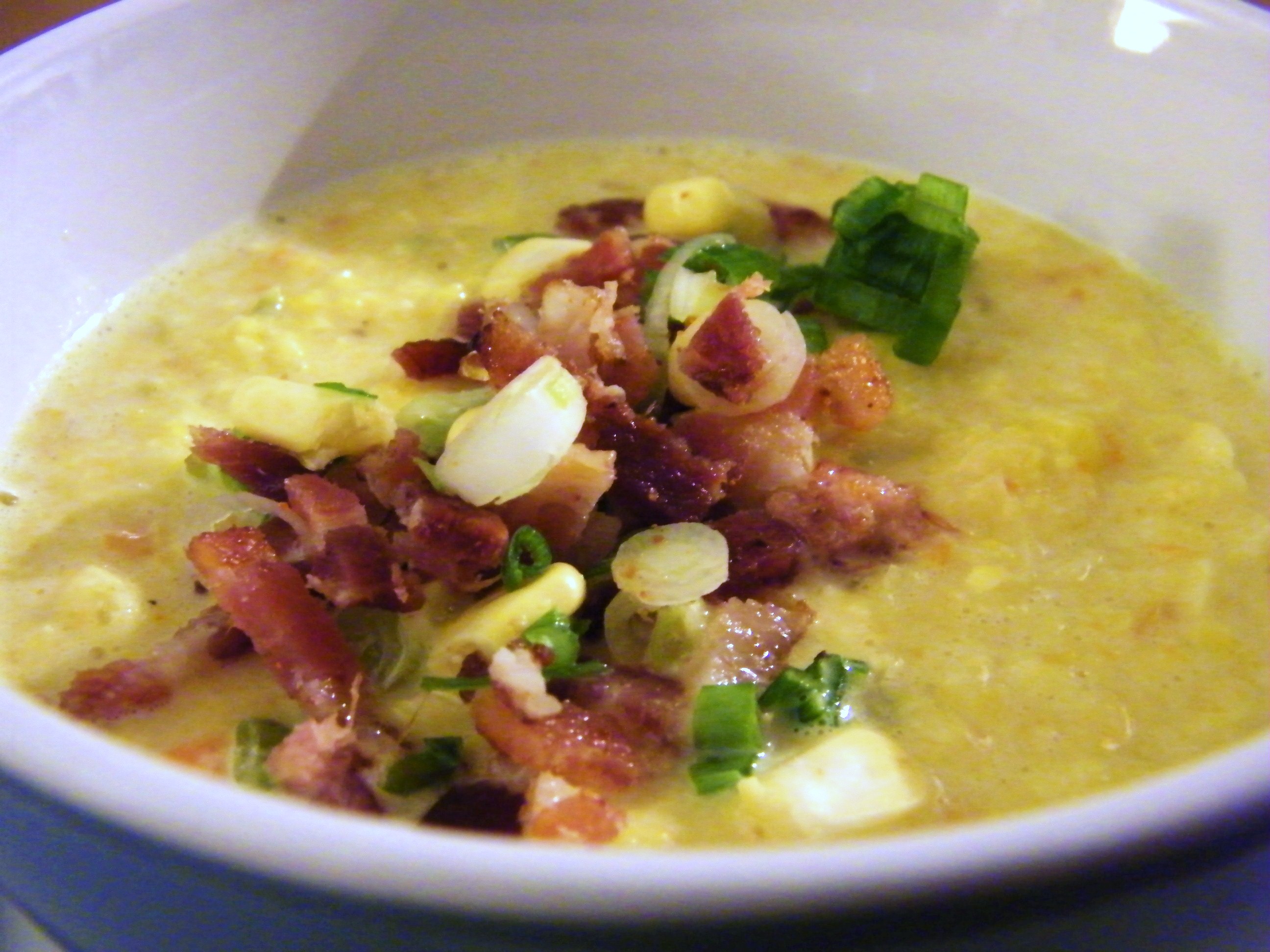
I went for a lighter version, substituting 1% for whole milk and forgoing the crème fraiche altogether. It still tasted quite rich. I can imagine the full version being served in very small bowls (or even shot glasses) before a meal. The flavour of the fresh corn stands out, while complemented by the other ingredients. I suspected I would like this soup, but I was surprised by how much I enjoyed it. I think I’m going to have to put a reminder on the calendar for next year to make this soup when corn is again at its best.

The finished soup, with a garnish of green onion, bacon, corn kernels and a little cayenne.

If corn isn’t a specialty where you live, what is? Are there areas that are more famous for something than others? When I was travelling in Mexico, every ice cream stand claimed its wares were from Michoacán, which is famous for ice cream. And people from Winnipeg always go to New Bothwell for cheese curds. I have a feeling that this is a widespread phenomenon.

You can find many other blogged descriptions of this week’s FFWD recipe here: Corn Soup

FFWD – Café Salle Pleyel Hamburger

Moose mince, rather than beef, for the burgers.

I’ve eaten two hamburgers this summer, which has to be a record for me. Honestly, given the choice between a burger and a steak, I’ll choose steak every single time. Growing up, we had hamburgers at home occasionally, mostly in the summer when my Dad was in a grilling mood. (I’m leaving aside the ubiquitous fast food experience of most children of my era and location. I certainly enjoyed going to those burger joints as much as the next kid.) Since leaving home, though, I’ve rarely bought ground beef, mostly out of concern for food processing and contamination issues. Another big reason is that my parents often give me game and their own farm-raised lamb and pork. These meats easily surpass supermarket meats in taste and in healthfulness. I’ve been really lucky in that respect.

I happened to have a package of ground moose in the freezer, which I’d been planning to use in a shepherd’s pie once the weather got cooler. (I suppose purists would say I was planning a hunter’s or cottage pie, really.) Instead, I used it to make these burgers. I thought the flavours of the seasonings would go well with moose, with its slight gaminess.

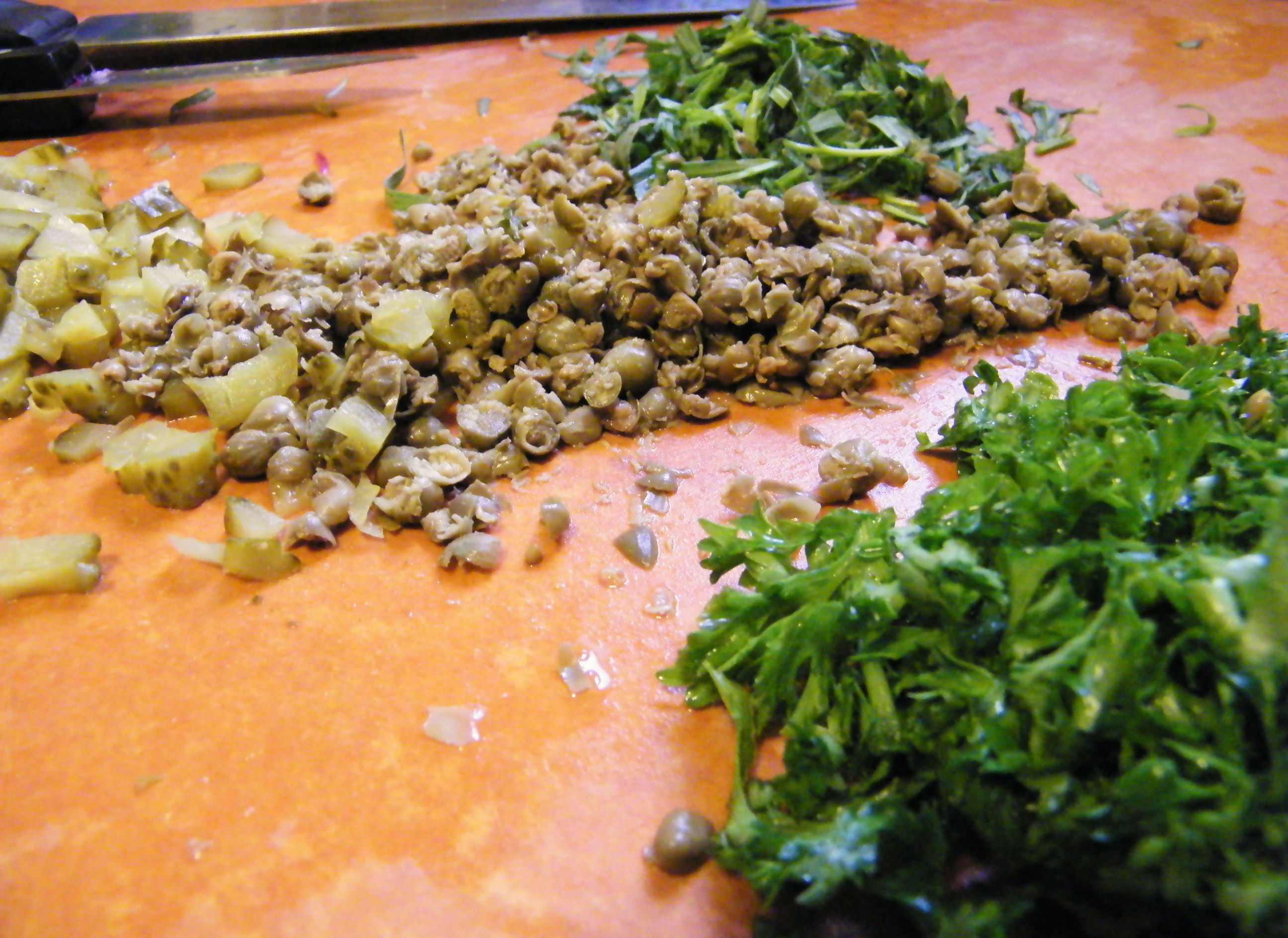
Chopping the ingredients for the burgers.

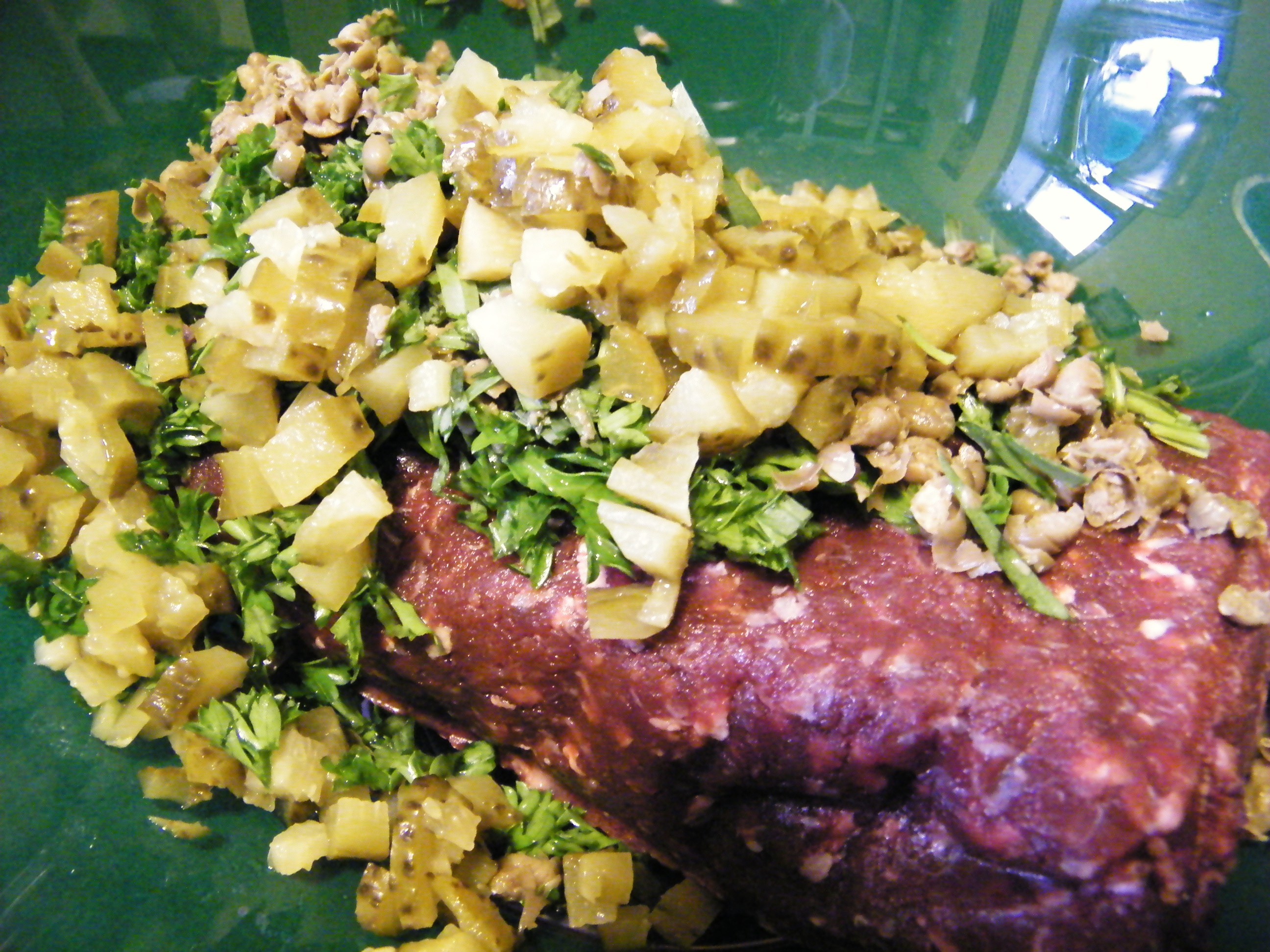
The recipe calls for tarragon, parsley, capers, and cornichons (small, crunchy, cucumber pickles) to be chopped up and mixed with the meat. Sun-dried tomatoes are also called for, but I skipped those this time. I ground some pepper into the mixture, but omitted salt, as I thought the cornichons and capers would make the burgers more than salty enough for us.

Mixing the seasonings into the moose mince.

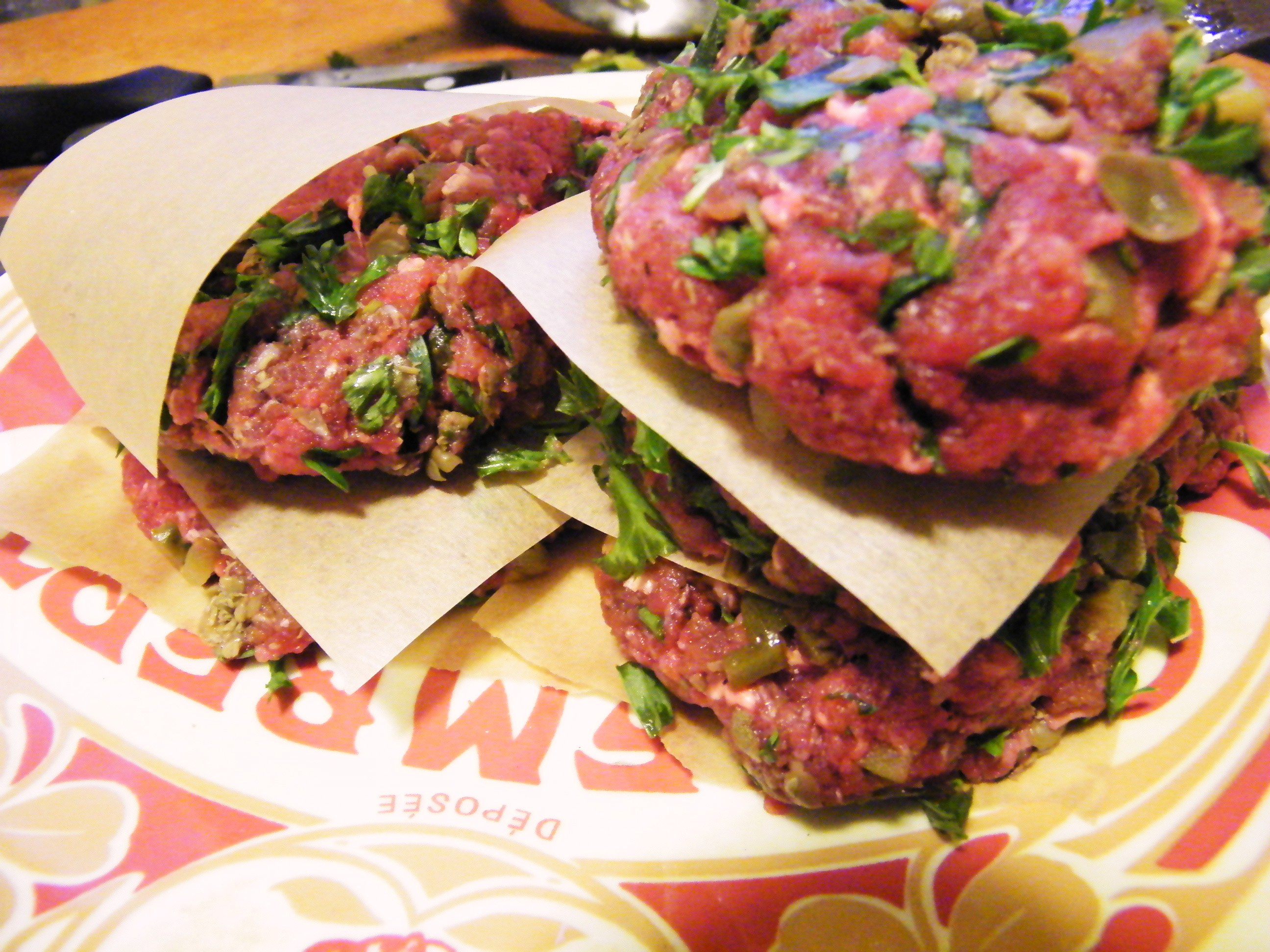
Moose meat, like most game, is very lean, so I was a little worried that it might not hold together well. If it hadn’t, I’d have added a little oil or butter. It wasn’t a problem, though I was careful to be gentle with the patties, just in case. I got seven small patties out of the recipe, kept two aside for us to eat immediately, then froze the rest.

Extra patties ready for the freezer.

Another advantage of game is that I feel much more comfortable cooking the ground version to medium rare than I do with store-bought ground meat. My parents use a small, meticulous butcher for their meat processing and I trust that there’s no contamination danger from their equipment. This is another reason I avoid hamburgers – I always cook them to well done, though I prefer medium rare. [By now, you may have realized I’m a little fearful of meat-borne illnesses.] The moose burgers were perfect at medium rare, with a nice sear on the surface and a melting, juicy tenderness in the centre.
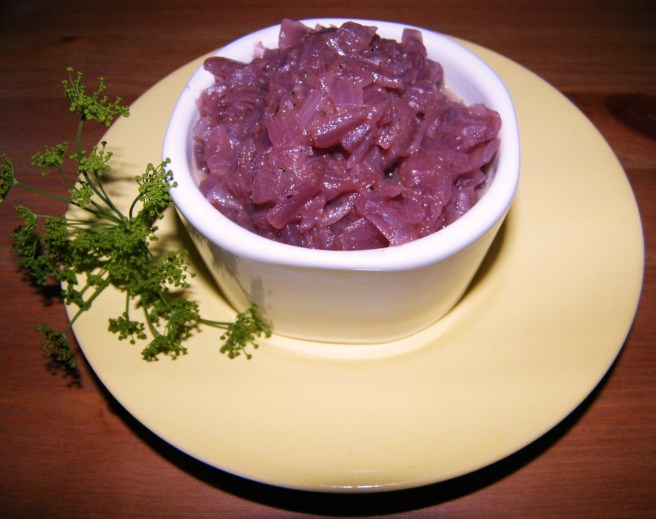
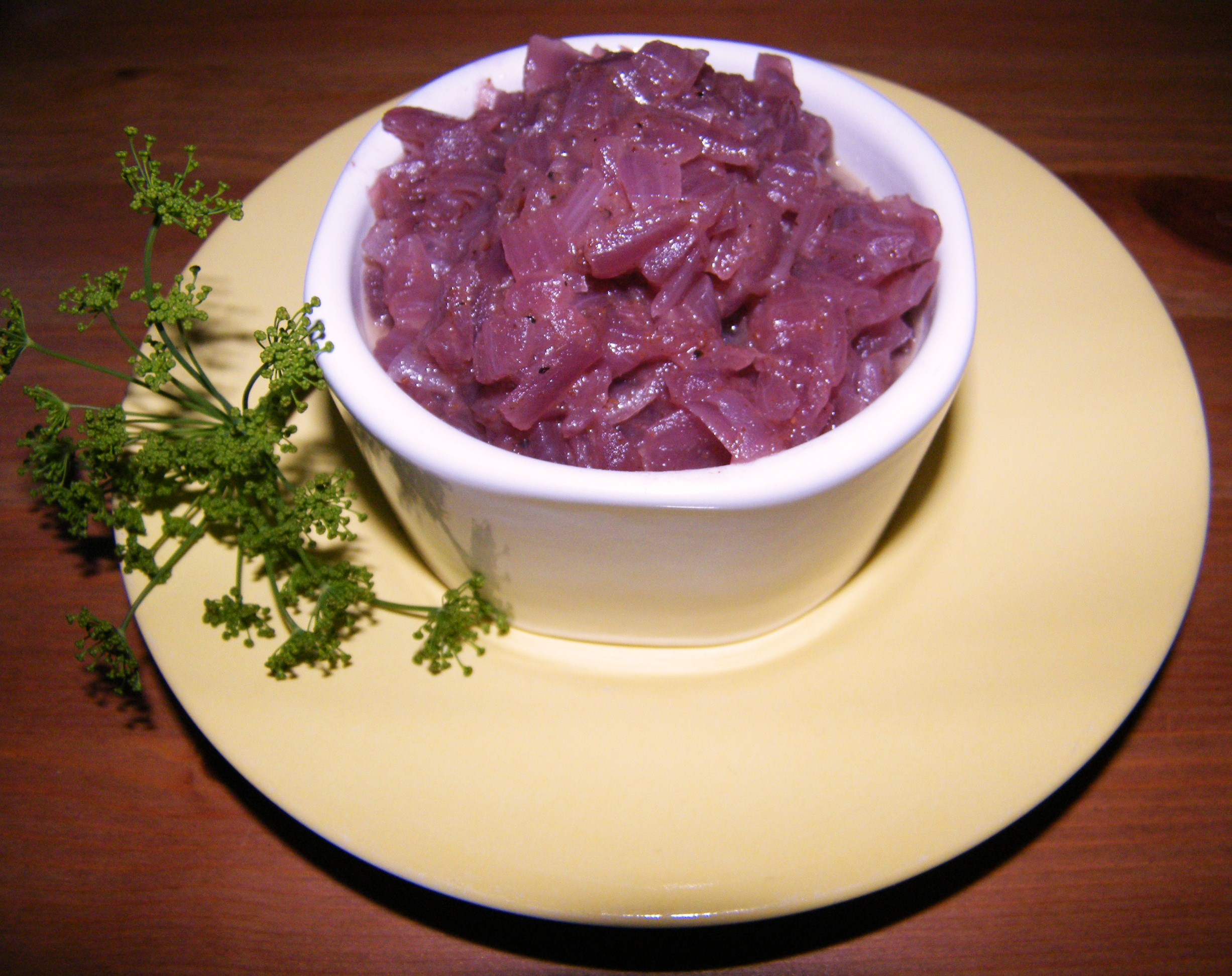
The onion marmalade.

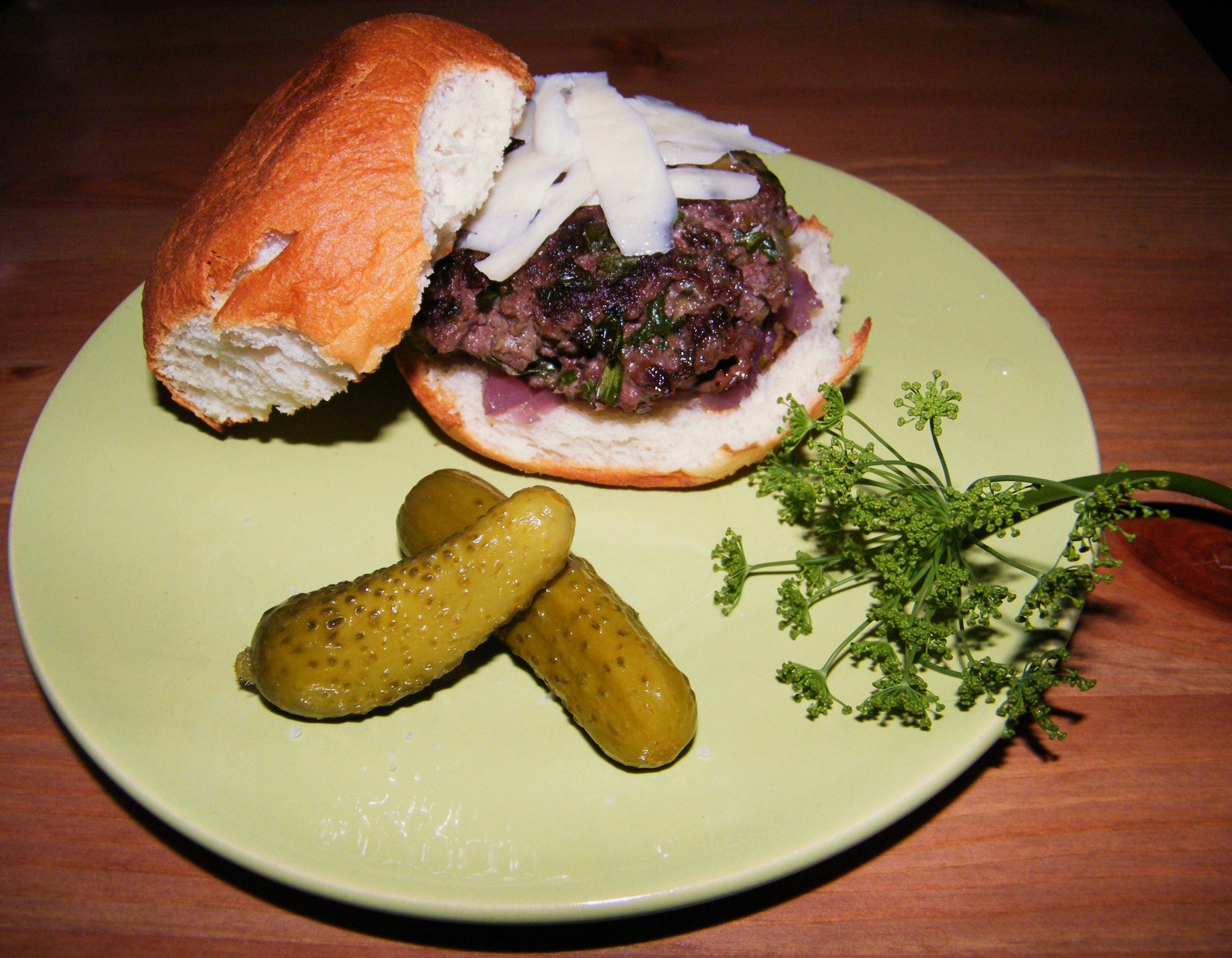
The burger is dressed with an onion marmalade, which is made by slowly cooking down minced red onion with coriander, butter and black pepper. The recipe calls for ribbons of Parmesan to top the burger, but I used Asiago instead. These dressings are more subtle than the usual mustard, mayonnaise, and ketchup, which allows the seasonings used in the burgers themselves to shine. The final touch was Udi’s gluten-free hamburger buns. I’d not tried them before, but they’re great. They’re tasty, but more than that, they don’t crumble or fall apart. It was such a treat, knowing that we could enjoy our burgers, gluten-free and without any compromise.
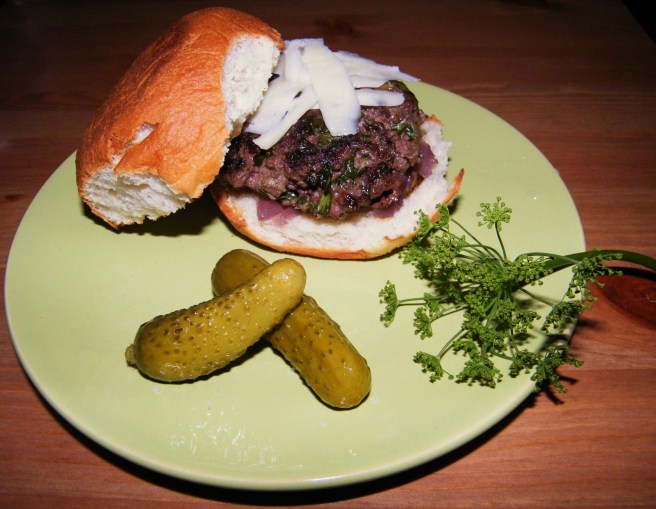
The finished burger, with cornichons and a dill flower for garnish.

I’m happy that we have some more of these moose burgers waiting for us in the freezer. Once they’re gone, I’m hoping that the organic meat store near my house will have opened. This recipe might mean that burgers make it onto my plate more than twice a year.

You can find many other blogged descriptions of this week’s FFWD recipe here: Café Salle Pleyel Hamburger

Late Summer Garden

A glimpse of one of the flower beds.

I was a little worried about my garden over the last month. In the middle of July, I sprained my ankle rather badly, managing to damage it about as much as I possibly could without actually breaking anything. (Go, me!) My partner was able to do some watering for me and the weather was fairly mild, so nothing died while I was out of commission, thank goodness. The weeds, being the hardy, prolific, and opportunistic garden dwellers that they are, spread riotously. I was stuck looking out the window and watching their progress. Now that I’m mostly healed, I’m trying to slowly clean up the garden beds. They aren’t so bad, but the yard itself has become a little daunting.

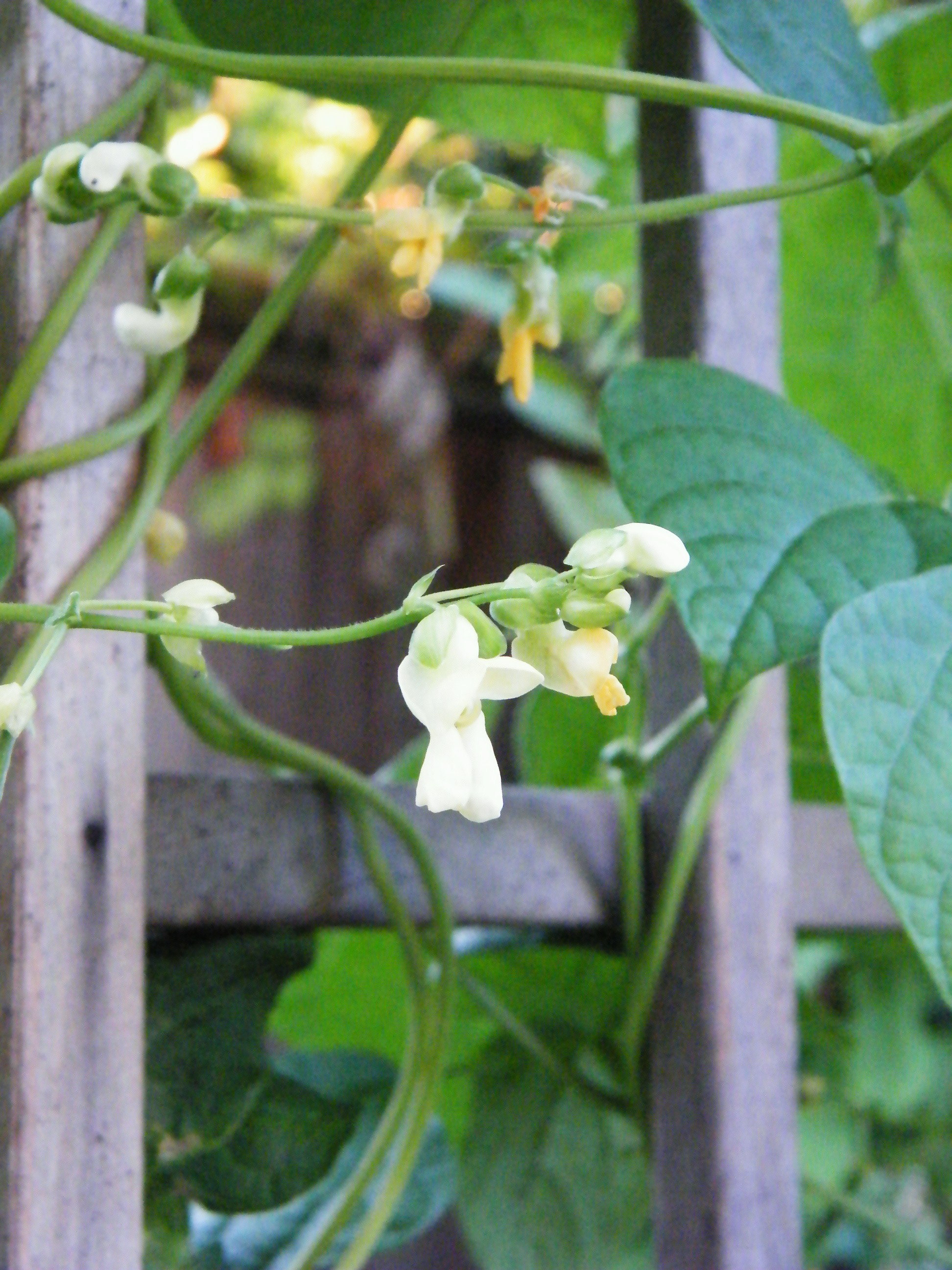
Flowers on my bean vine.

The good news is that I’m finally starting to eat from my garden. First radishes, lettuce and basil; now thyme and carrots; soon beets, Swiss Chard, beans and cucumber. I’m also hoping it’s not too late to put in a few more squares for fall harvest. Not bad for my first season of square foot gardening.

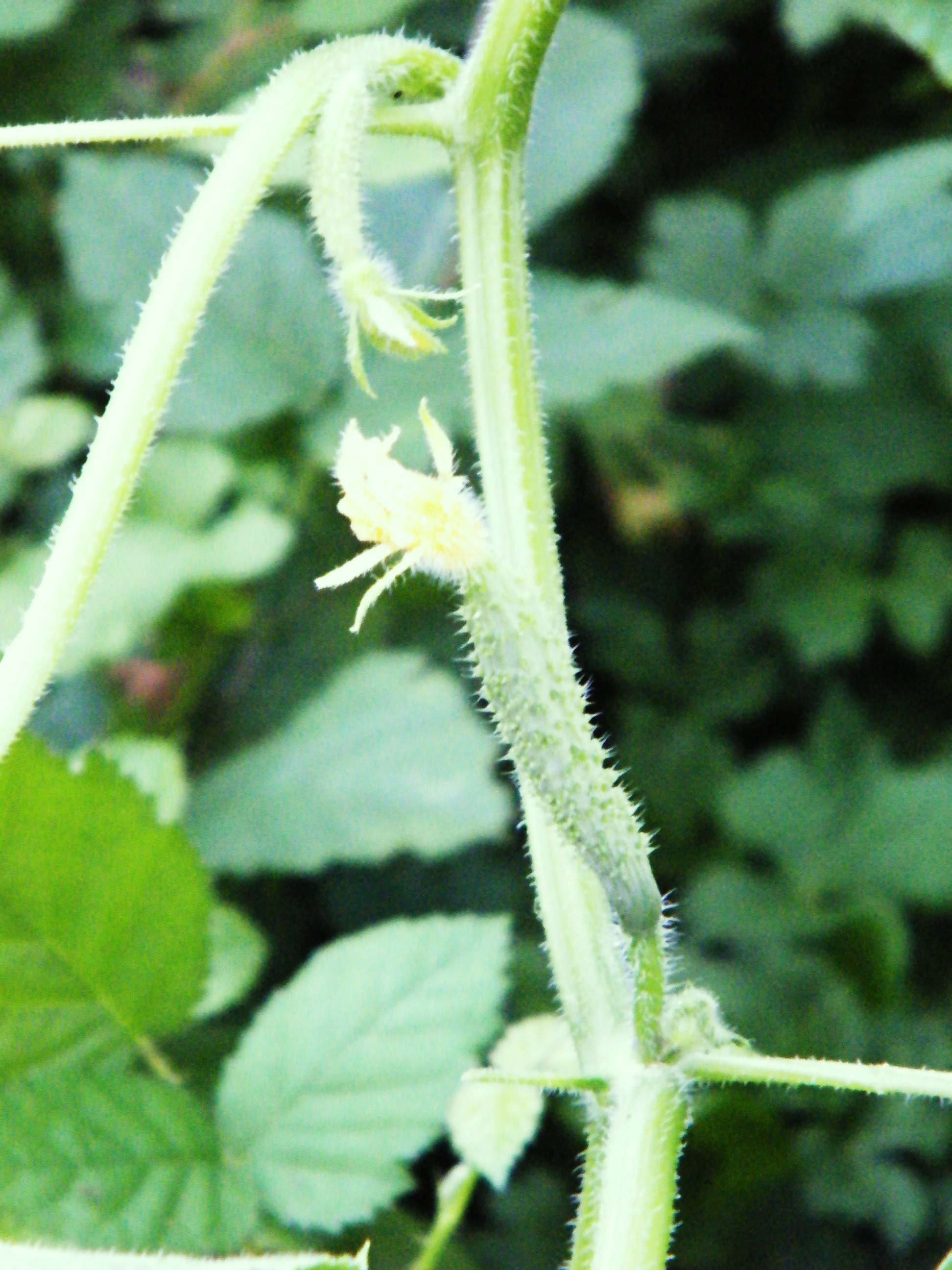
Tiny, growing cucumbers!

I’ve had a few challenges, including aphids, though they haven’t done as much damage as I feared. The cucumber and bean vines are making forays into the yard and up the bay tree, the mixed greens have finally bolted and my sad, little pepper plant may never produce a thing, but I’ve had few failures. The biggest disappointment was finding one whole square of carrots stolen. I’ve dug up the rest, though they could probably have used a little more time in the ground. I’m hoping that the person who took the carrots leaves the rest of my garden alone.

English lavender and in the background, beets and marigold.

I’m working on letting that go, because it’s a futile anger. I’m trying to focus instead on why I want a vegetable garden. It’s a place for experimentation and learning, as well as for growing my own food more cheaply and healthily than I can buy it. It’s also a better use of land than a lawn could ever be. It’s nice to feel, in however small a way, a part of the revival of food production in our culture.

Lettuce, hiding underneath dill. (Lacy vs. Frilly)

FFWD – Eggplant Caviar

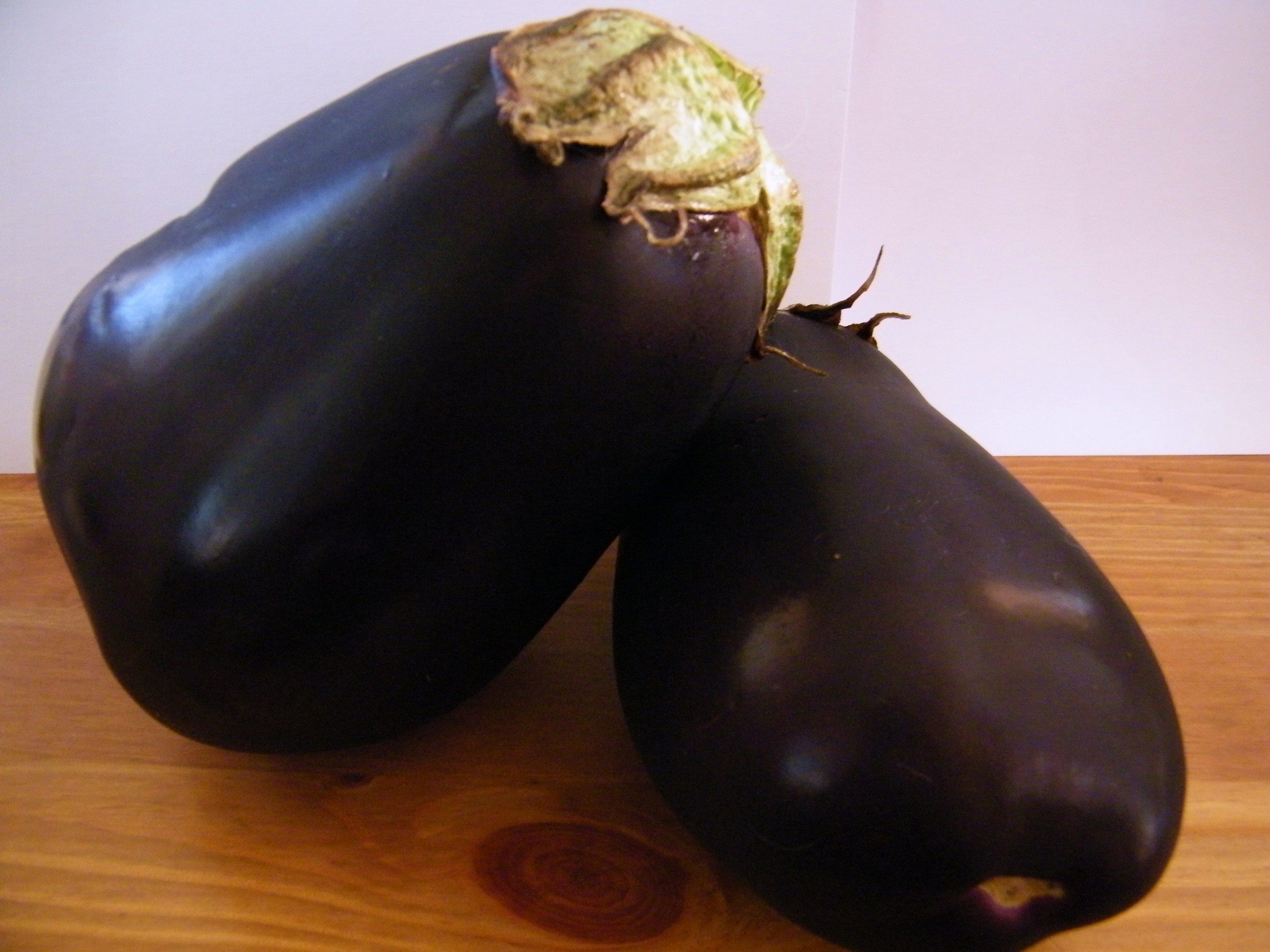
Eggplants

Roasting eggplants puts me in mind of our mortality, or at least, aging. The skin of a good eggplant is so beautiful, shining with health. Once roasted, though, it’s all crags, wrinkles and uneven tones. Sort of like what happens to us. Roasting deepens the flavour of eggplant and I hope that aging does the same for character. I think I’ll end the metaphor there.

Eggplants after roasting

All this eggplant sacrifice was in service of this week’s French Fridays recipe, Eggplant Caviar. A high-falutin’ name for a very quick and easy dip (or spread, depending on how you use it). Roasted eggplant mashed with garlic, onion, lemon, herbs and spices. Dorie recommends Piment d’Espelette, but I substituted cayenne. You may add chopped, fresh tomatoes if you like, though I didn’t. It has a bite and works well as a sandwich spread or a dip for crudités. This evening, I spread it on rye bread and added thin slices of cucumber. Tomorrow, I think I’ll use it in a chicken sandwich, on Quejos, which are gluten-free, so Kevin can have some, too.

Eggplant caviar, with rye bread in the background.

This is another recipe that would make great picnic food. It’s making me want to take a trip to the Westside beaches with a picnic basket and some sparkling lemonade.

You can find many other blogged descriptions of this week’s FFWD recipe here: Eggplant Caviar

FFWD – Salmon and Potatoes in a Jar

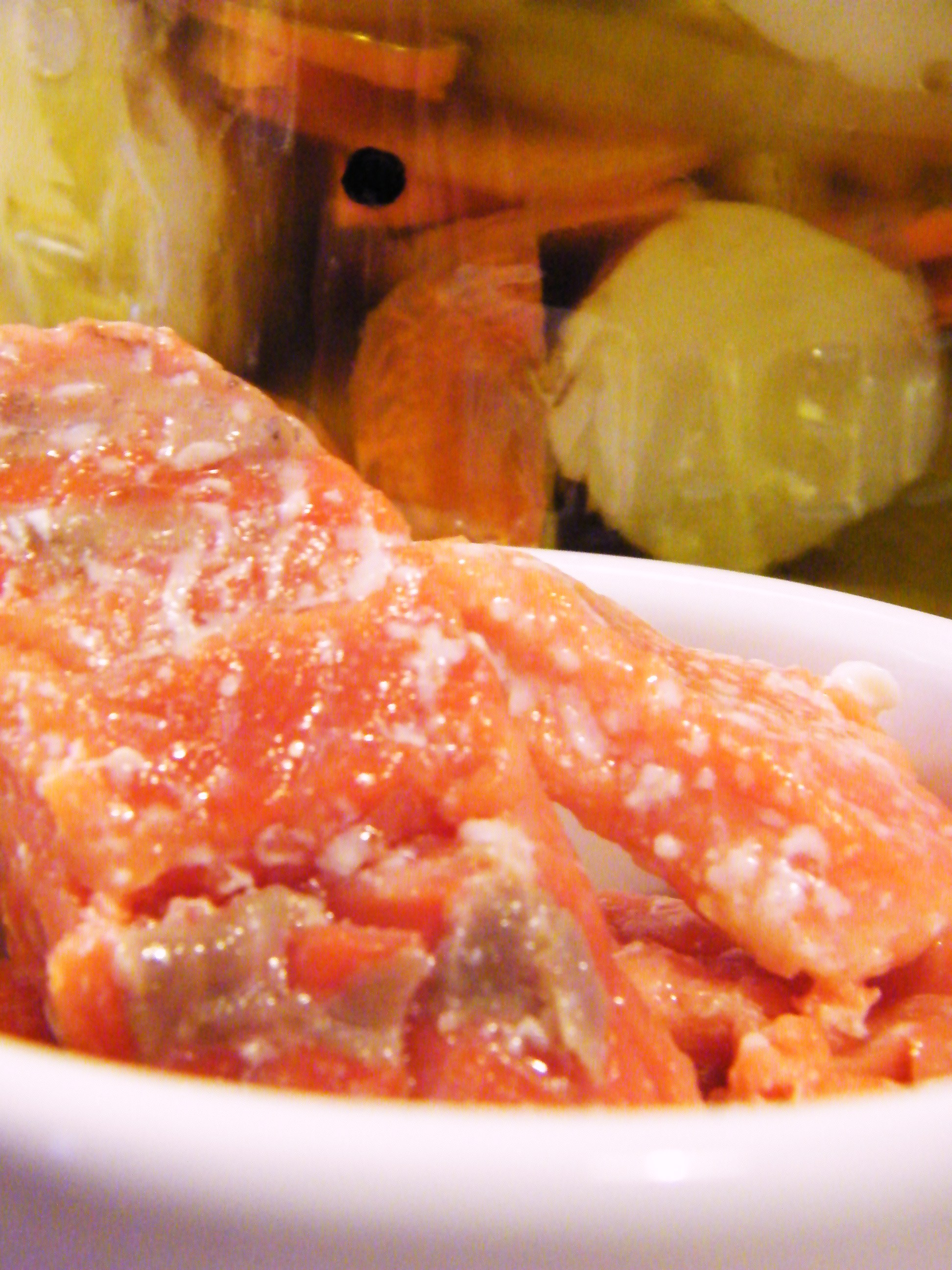
The cured, baked salmon, with the jarred potatoes in the background

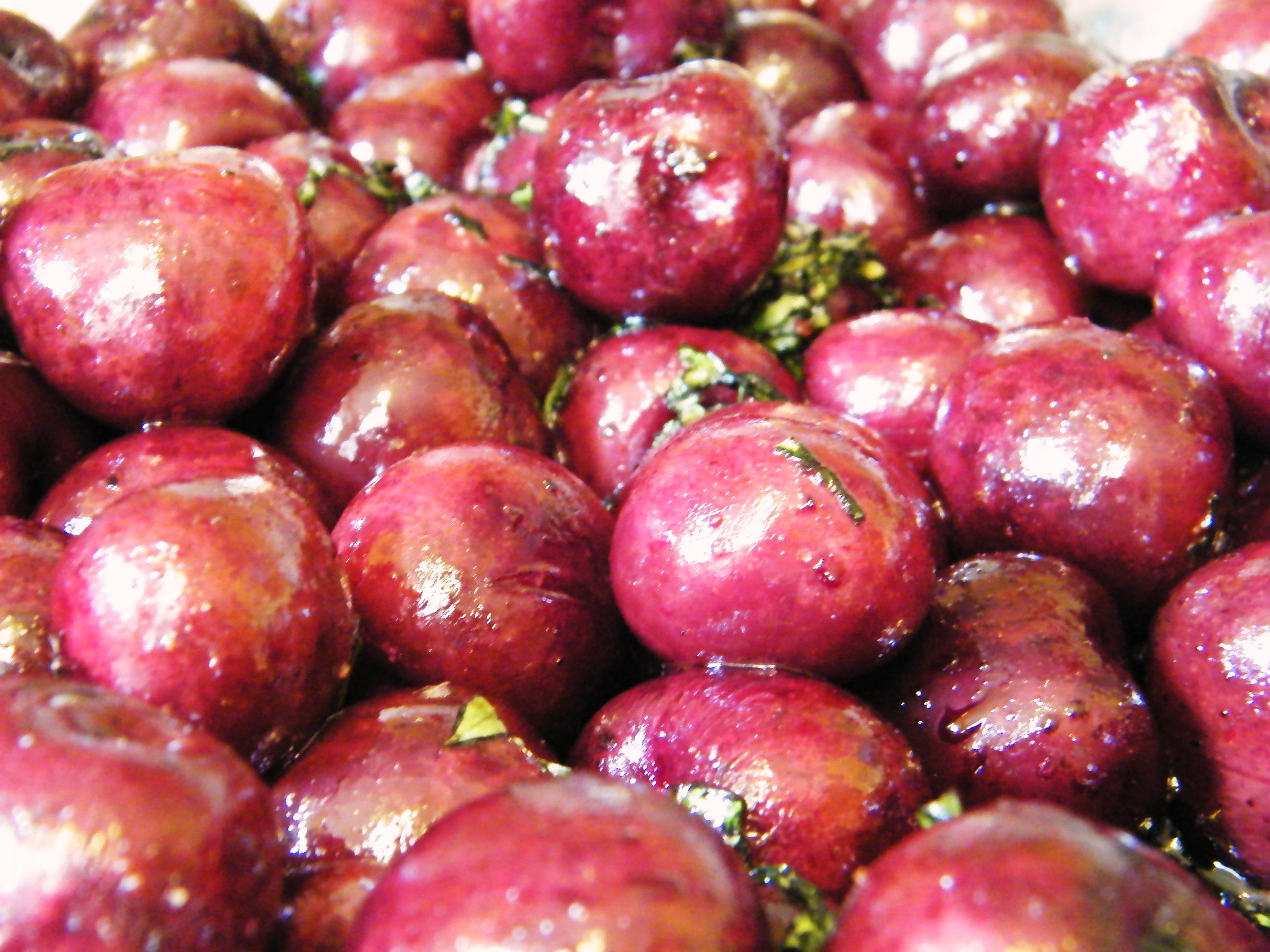
I took the low road on last Friday’s recipe – I made the bonne idée version of the salmon, though I did follow through and put the potatoes into a jar. I don’t regret it, though. Cured and briefly roasted sockeye salmon is a lovely treat. Salty, but not enough to be off-putting, perfect for stirring into scrambled eggs or crumbling over salad greens. The potatoes make a great side for those eggs and if you spoon them over the greens before you add the salmon, no other dressing is needed.

Salmon, ready for baking

I love the slight crunch that’s left in the thin slices of uncooked carrot and onion that are added to the marinade, along with boiled new potatoes. Herbs and spices infuse everything with their flavours, especially after a couple of days. The onion loses its sharpness, which allows me to enjoy it much more.

I intend to try the salmon in a jar someday, but I’ll save it for a time when we’re picnicking with others. It seems like a dish to share. The potatoes, though, I’d gladly keep for myself.

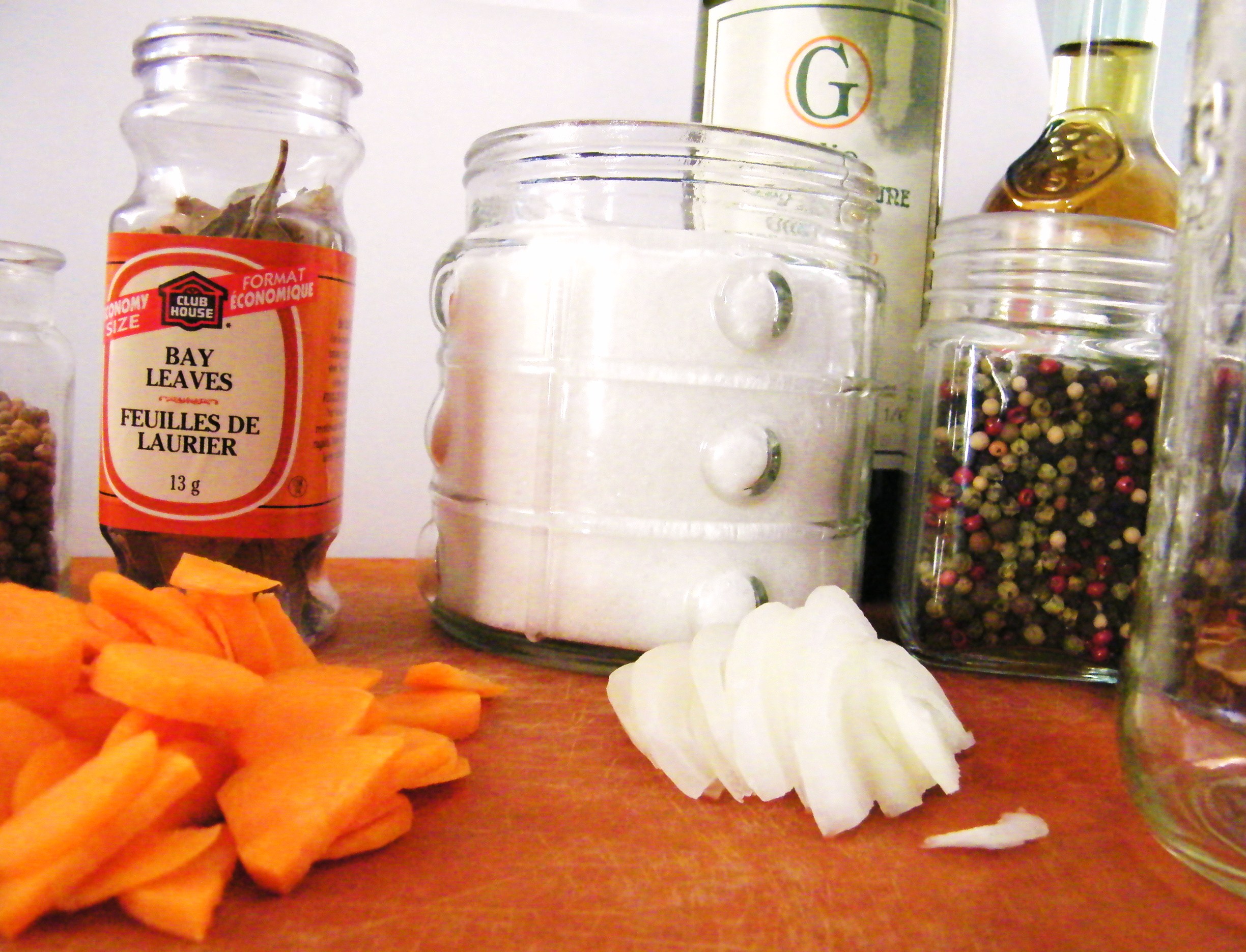
Ingredients for the potatoes in a jar

Tomorrow, I’ll be blogging on schedule for this week’s recipe, Eggplant Caviar.

You can find many other blogged descriptions of this week’s FFWD recipe here: Salmon and Potatoes in a Jar

Roasted Cherries

A dark green bowl full of cherries, atop a brown cutting board with a small pile of basil sitting in a patch of sun.

I never feel I’ve made the best use of summer fruits. No matter how many stone fruit or berries I eat, cook with or freeze, I feel that I could have done more. This year’s been no exception, especially since I was a little out of commission during the best weeks for berries. I did manage to roast cherries though. I’m going to be doing it again before they disappear for another year.

Roasting fruit brings out the sugars and deepens the flavour, without turning it into mush. It’s also a good way to use fruit that’s just past its peak. Mostly, though, it’s just good. I’ve used it in yogurt, over ice cream, and just right out of the jar. My next plan is to use it as a tart filling, perhaps with custard. If I were the sort of person to make cocktails, the syrup would make a great addition. I suppose you could also stir it into soda water. Something like this salad would be really lovely, too.

I sort of improvised these, based on two sources: the kitchn‘s roasted cherry recipe and 101 Cookbooks‘s roasted strawberry recipe.

The cherries, roasted.

I whisked together equal parts of maple syrup and olive oil, with a little bit of sea salt. I then added about a 1/8 tsp. nutmeg and four shredded basil leaves. I tossed the cherries in this and then roasted them at 450° for ten minutes, then added a couple of tablespoons of cognac and put them back in for another five minutes. After they’d cooled, I removed the pits. The cherries keep for a few days in the fridge and freeze well. Slow-roasting is another great method for these, too.

I’m sort of curious to see what would happen if instead of basil and nutmeg, I used a little bit of cocoa powder. Maybe I’d leave the nutmeg in. I’d love to hear your ideas for other flavours that would work well with these, or your experiments with roasting other kinds of fruit.

A closer view of the roasted cherries.

Income Inequality and Unrest

In the midst of all the news about the riots in England, I couldn’t help but think about the growing gap between the rich and the rest of us. I grew up in a time of relative prosperity (for white, middle-class kids like me, anyway) and the gap between the wealthy and most of us was much, much less. University was a given for many of us and it was affordable. Canada’s Medicare system was so much the status quo that it never occurred to us that it could be challenged or eroded.

Now, I realize my nieces and nephews have grown up into a world where none of this is guaranteed or even expected. In Britain, where class and race inequality are even more entrenched, I can’t imagine what it would be like to be a youth today.

There’s been a lot of good analysis of both the English riots and the growth of income inequality. Rather than re-hashing their points, I’d like to share some links with you.

While Alternet can always be relied upon for good analysis, one of the best posts I’ve seen about the riots in London comes from the blog Penny Red: Panic on the Streets of London

Here in Canada, The Canadian Centre for Policy Alternatives has come out with a number of reports and multimedia tools on the subjects of income inequality and poverty:

Canada’s Income Gap

The Cost of Poverty in BC

And finally, another article from Alternet, pointing out the awful absurdities that occur in a culture committed to widening the income gap:

$230,000 for a Guard Dog