Seasonal Produce Anxiety

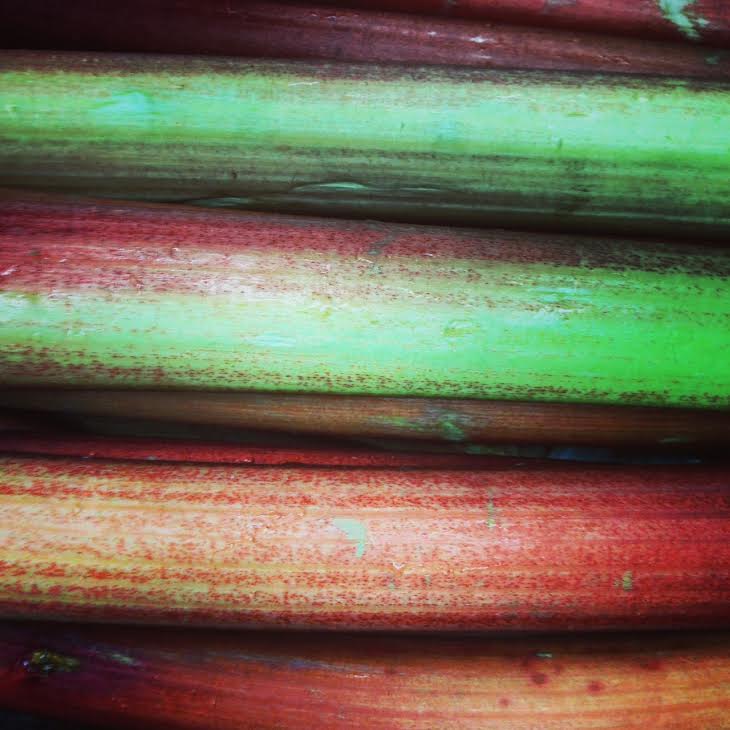
Rhubarb

I don’t know about you, but I don’t spend the winter worrying if I’ve made the best use I could of storage vegetables. As good as they are, the selection is small enough and their shelf life is long enough that I’m ready to move on as soon as spring arrives.

That’s when my anxiety begins, from peas to tomatoes, from rhubarb to peaches, warm weather produce has its short turn on the stage before retreating for another year. Every year, I make grand plans to use each of those fruits and vegetables in multiple recipes and every year my accomplishment consists of not missing them entirely. Bonus points for freezing a bag or two along the way.

I’ve meditated – I know that being present in each moment is a healthier path, but I can’t help feeling a growing sense of panic when I realize that one of my favourites (or that one I keep saying I’m going to try, year after year) is disappearing from the markets. I also seem to manage to make the recipes I’ve loved since childhood more often than experiment with the masses of new ones I bookmark each year.

This year, I’m batting above my average (at least, I think that’s what I’m doing – baseball metaphors are not my forte). One of my mother’s friends gave her an enormous bag of rhubarb and I’m crossing a few of those new concoctions off my list.
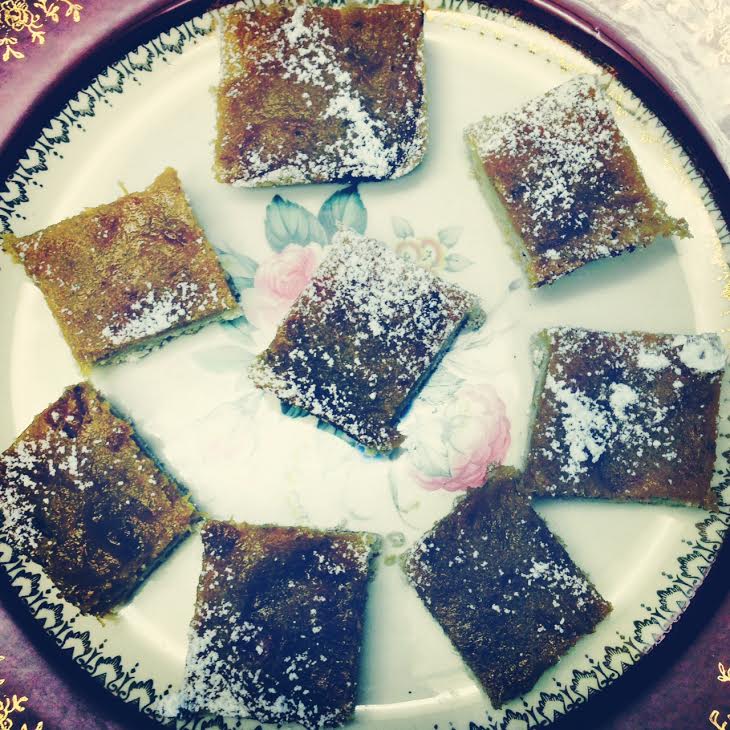
Shortbread

My favourite so far is rhubarb curd. I used Lara Ferroni‘s recipe and went ahead and made the rhubarb bars, too. The shortbread topped with baked curd is heavenly, though I think that next time I’ll have a little beet juice ready when I make the curd, to punch up the colour. The bars only used half the curd, which I’m reserving for some parfaits that are going to show up here soon. If you make this, I recommend baking a visitandine at the same time, as it uses up four egg whites. If you have any ideas for the other two, let me know.

There is still quite a bit of rhubarb left, so there’s definitely some roasted rhubarb and a strawberry-rhubarb crisp in the offing. I might try one of the savoury rhubarb recipes I’ve been eyeing, or I might revisit this recipe or this one. With a bit saved in the freezer, I’d say I’m actually making good use of rhubarb this year.

Now, if I can just stop thinking about all the things I meant to do with spring peas or the fact that strawberry season has arrived.
My Ever Changing Moods

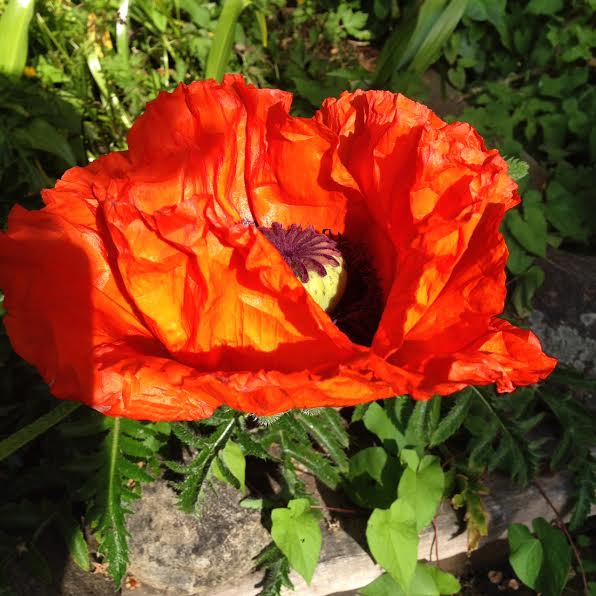
Poppy

I’m going through one of my periodic blogger identity crises. I keep reading that the most important thing to do as a blogger is to narrow focus – if you want anyone to read your blog, that is.

It’s also the one thing I can’t really bring myself to do. I love cooking along with the French Fridays crew and I’m interested in all sorts of questions that fall under the rubric of food – food systems, vegetable gardening, restaurants, cookbook reviews, along with food security and justice. But I’m at least as interested in writing about things that I’ve classed under the broad category of community. How people connect is endlessly fascinating to someone who never really left their childhood shyness behind. Drilling down into what’s offered locally is one of my favourite ways of demonstrating what my hometown is about. It’s also my way of trying to connect with my readers’ sense of what’s similar and different about the places they live. And the ways in which ideas around community are changing, for better or worse, seem important to explore, too. As a Gen Xer with roots in social justice movements, the shifts we’re seeing in income equality, affordability, and inclusiveness seem inextricably wound up in what community is coming to mean in the 21st Century.

All of which is to say that I don’t think I’ll be narrowing my focus any time soon. I suspect that my blog will continue to be as imperfect as my garden can be, with the occasional beautiful bloom to distract from the ever-encroaching weeds.

Thanks for sticking it out with me.

Artistic Exploration – A Round Up of Public Art in Vancouver

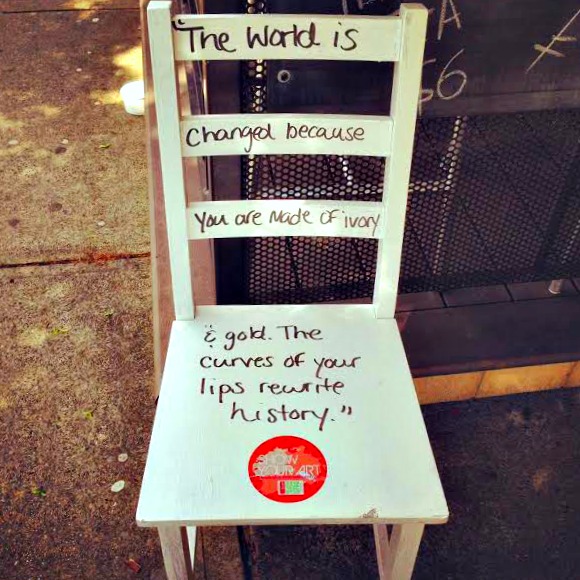
Chair

Public art can be controversial or beloved, corporate or community-driven. At its best, it focuses the viewer’s attention on the space it occupies, contextualizing it in a new way. Now that spring is turning into summer, it’s the perfect time to explore the city, looking for these interventions along the way.

Here are a few places to start you off:

The City of Vancouver’s map of public art installations

Our City. Our Art.

Vancouver Biennale

100 in 1 Day

Tight City

The Year of Reconciliation art project

The Dude Chilling Art Exchange

Now, tell me what I’ve missed in Vancouver if you live here, or if you don’t, let me know what the public art scene is like where you live.

The chair in the photo at the top of the post was part of the Chair Project YVR project, which took place this spring.

Room to Run

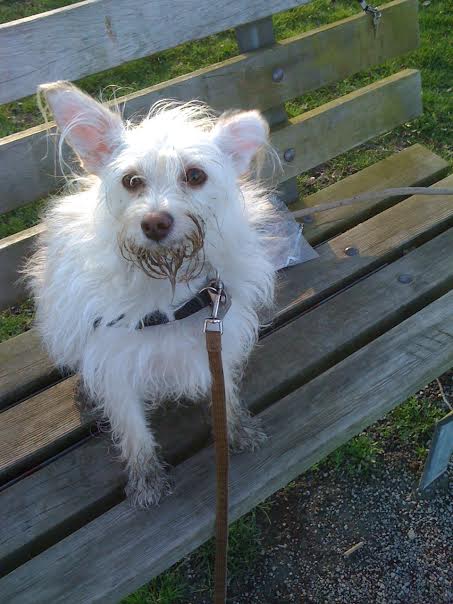
Muddy dog

This is one of my favourite photos of my dog, Roxy. Not because it’s a good photograph, not because she looks her best (obviously not), but because it’s at the end of a good play session at one of her favourite parks. She’s tired out and ready to go home, no mean feat for a feisty terrier cross.

Trout Lake, or John Hendry Park as it’s officially known, has been an east side institution for dog owners for many years now. Though most of the park requires dogs to be on leash and there are sections where dogs are not allowed at all, there is also a big off leash area that includes access to the lake, a large green space, and shady treed areas. There is plenty of room for dogs to run and play there. There’s also enough room that small dogs like mine can run in areas away from the rougher play of larger dogs. People bring their dogs to Trout Lake from all over East Vancouver, as there’s a dearth of off leash areas on the east side and across the city, really.

Unfortunately, this resource is under threat from the Vancouver Park Board. The proposal before the Board aims to reduce the off leash area by 80%. Though it’s being touted as being the size of a football field, the layout would amount to a narrow strip that includes boggy terrain, a steep slope, and deep water. An 80% reduction would also lead to crowded conditions, which would prevent many of us from allowing our dogs to play there. Though dog owners use the park 365 days a year, rain or shine, the Park Board seems to be privileging those who use the park lightly and only in good weather, those who also have most of the park in which to picnic, play, and swim dog-free.

The Park Board’s lack of support for off leash areas seems counter-intuitive, as regular users of parks, like dog owners, should be natural allies for the Park Board’s goal of increasing green space for residents. It’s also strange, given the City of Vancouver’s commitment to building a Healthy City. The off leash area of Trout Lake has become a community hub, for dog owners and lovers alike, which is in line with the City’s goal of cultivating connections in a place that’s famously alienating. Another of the Healthy City strategy’s pillars is to promote active living and getting outside – Trout Lake provides regular exercise for dog owners alongside their pets.

The Park Board’s stance on off leash areas is being implemented across the city, with reductions and restrictions being proposed for many of the most popular destinations for dog owners. There are plenty of overdeveloped, groomed park spaces in Vancouver – surely there’s room for natural spaces and room to run for the dogs that improve the quality of life for many urban dwellers?

If you’d like to take a stand against these proposed changes, Dog Lovers of Trout Lake is a good place to start. You can also let the Park Board, City Council, and the Project Manager know how you feel at the following addresses:

debra.barnes@vancouver.ca
mayorandcouncil@vancouver.ca
pbcommissioners@vancouver.ca

What Eclipse?

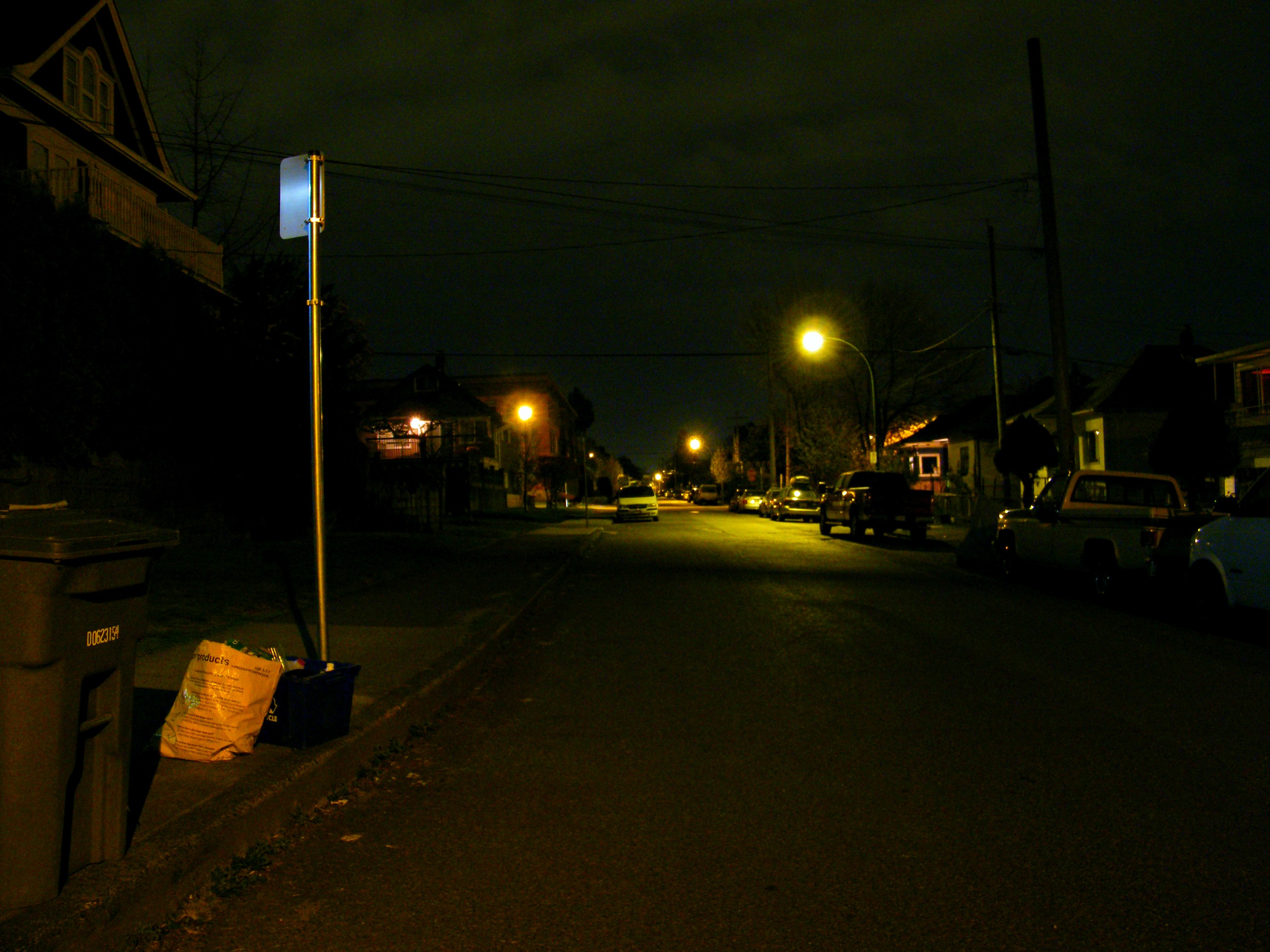
Night Street

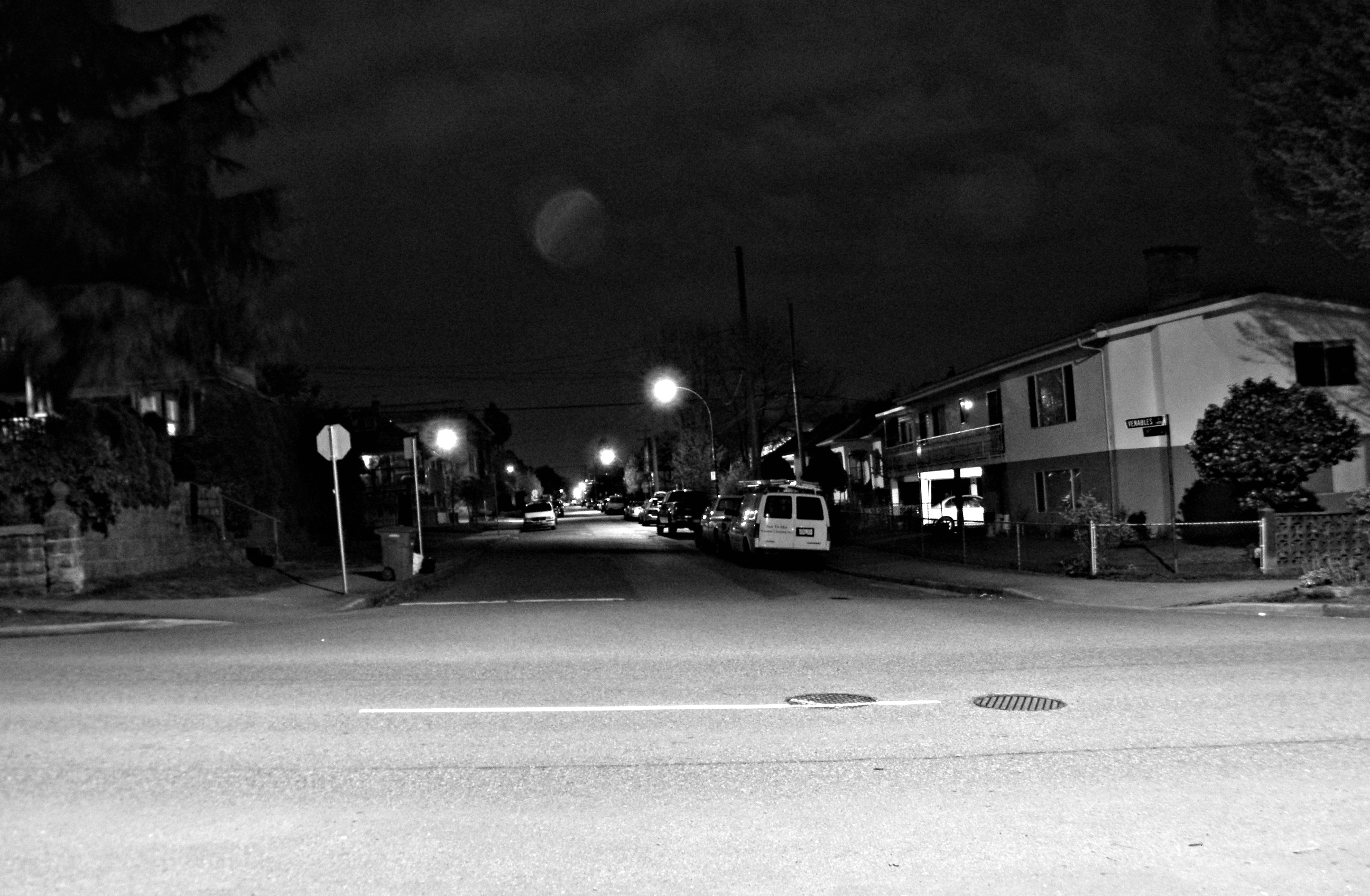
Last night there was a total eclipse of the moon, also known as a Blood Moon. As is most often the case, you wouldn’t have known it in Vancouver. Our stretch of sunny weather ended just in time for cloud cover to gather along with the darkness, making this celestial occurrence a non-event here. I went out with my camera and a tripod anyway, hoping for a break in the clouds. None came.

I took some photos anyway.

Dust on the lens
Dust on the lens, in place of the moon.

Fire truck
A fire truck passes.

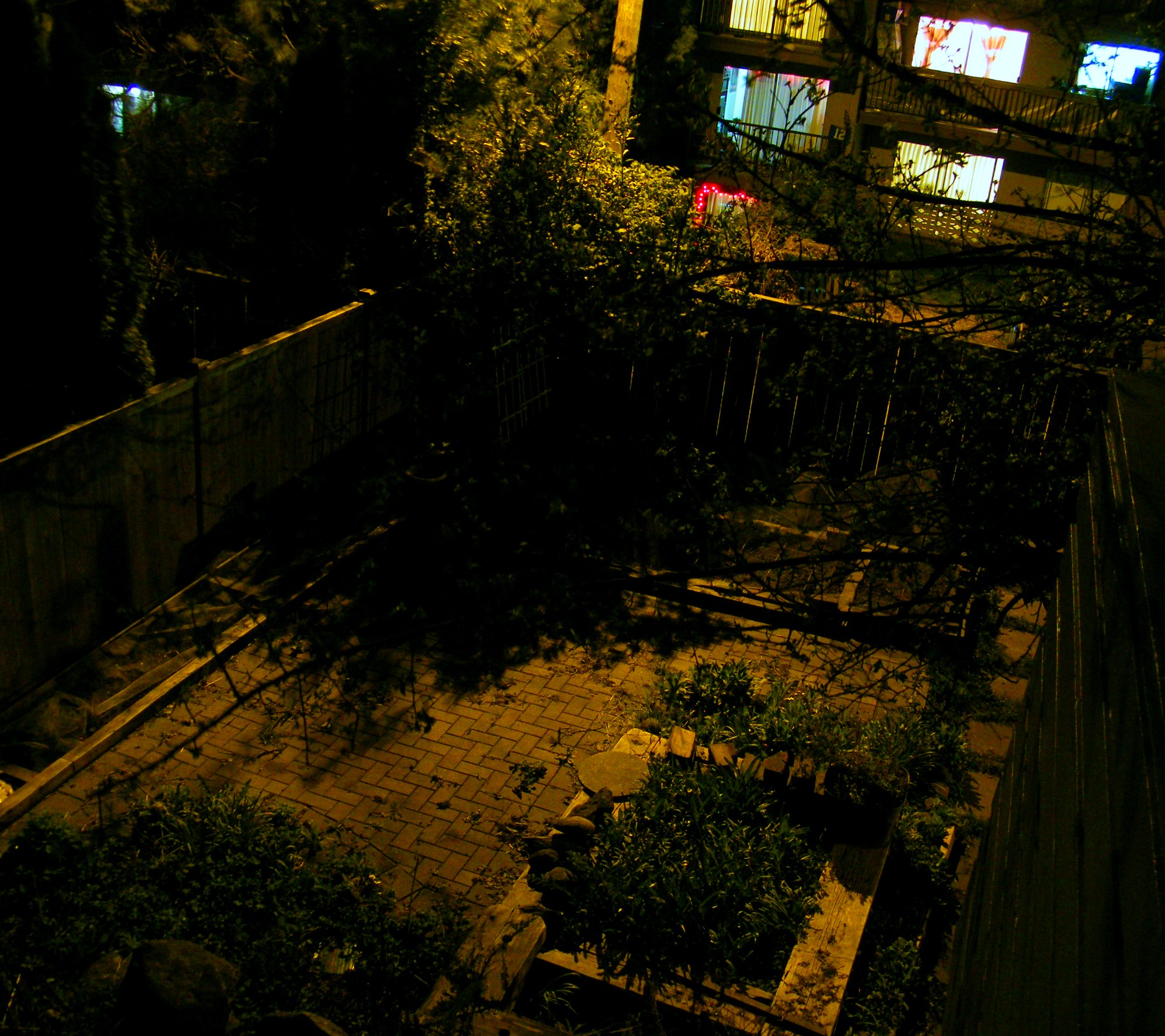
Gardening at Night
My garden at night.

We’ll have a few more chances to see a lunar eclipse over the next year. Perhaps the weather here will co-operate for at least one of them. Probably not. But, I think I might try my hand at night photography again and see if I can improve my results. I rather enjoyed running around the neighbourhood in the middle of the night with a camera and a tripod.

Seedy Saturday

Library

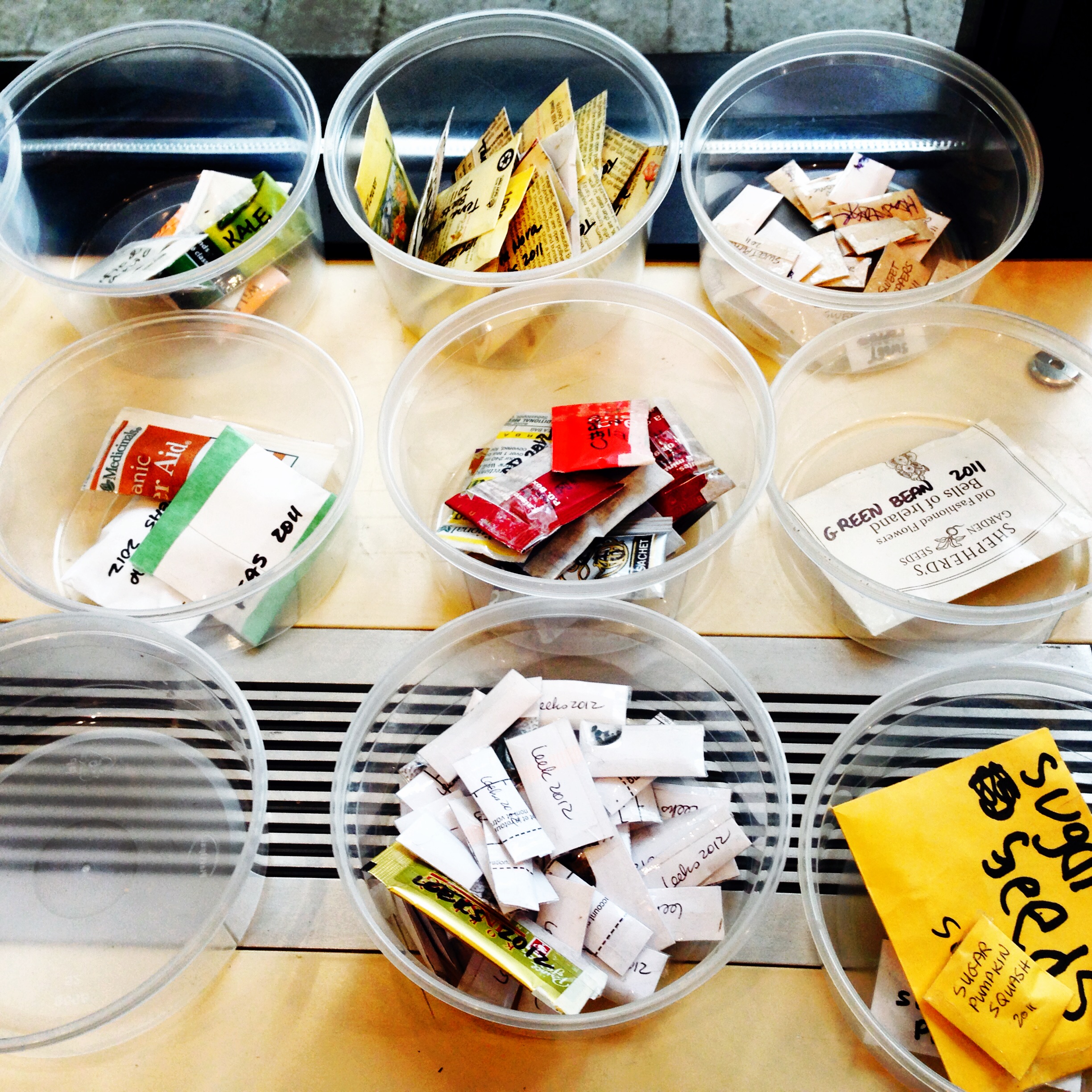
At summer’s end, I like to pass along some of the seeds I’ve saved from my favourite beans to other gardeners. I originally got them from my Great-Aunt Vivienne, whose family brought them from Belgium generations ago. They’ve been sharing them ever since. Gardeners have always shared seeds in this way, promoting varieties that they like or that show some genetic advantage in the area in which they’re being grown. Over generations, farmers and home gardeners alike would save seeds from the plants that showed the most promise, or cross varieties with different strengths until they came up with a new strain that held the desirable qualities of both and bred true.

Seed libraries are a formalization of this process, in a world in which the competencies of seed-saving and plant breeding are disappearing. They provide a place to house and lend out seed stock, along with providing public education and outreach, just as a traditional library does.

Seeds

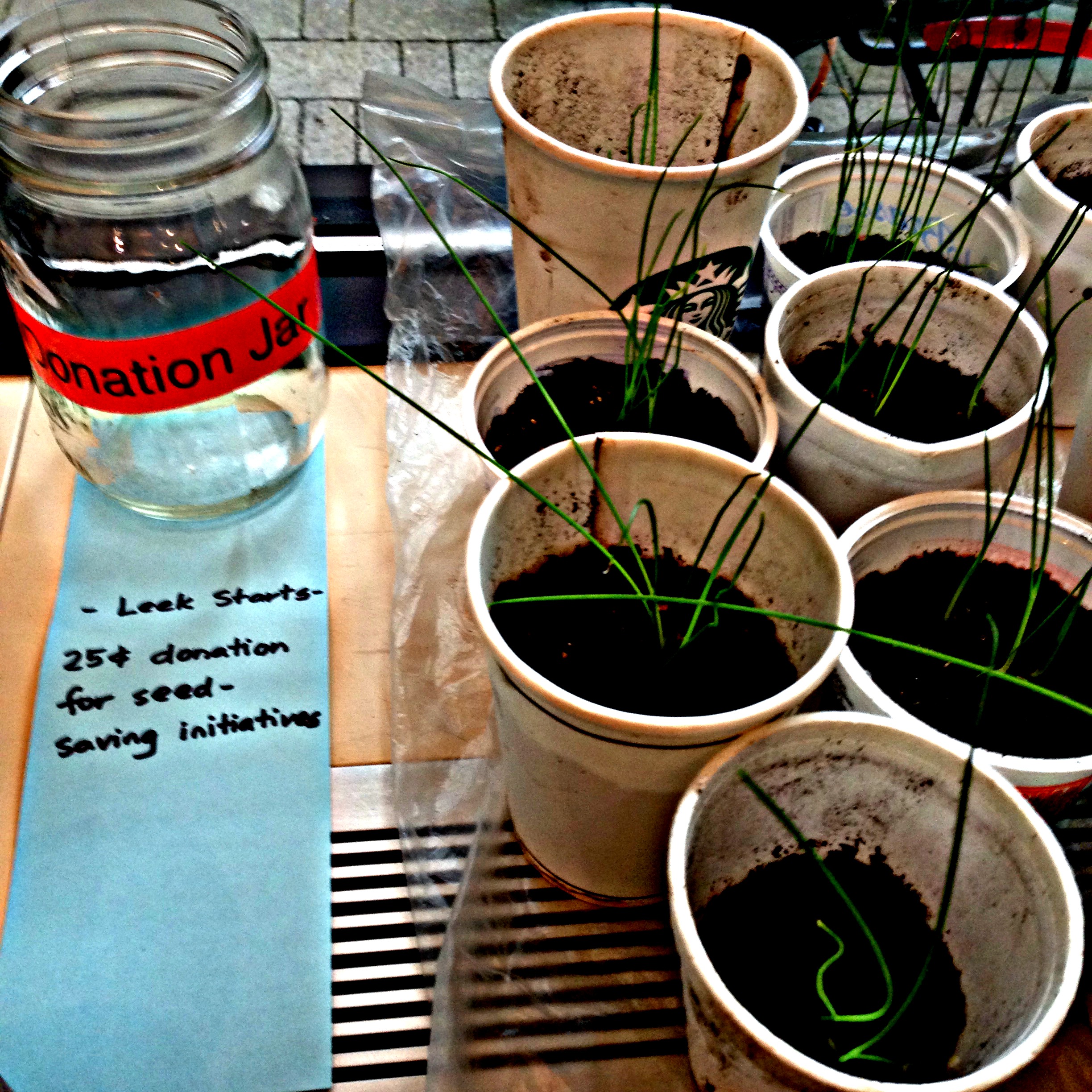
I got to experience this first-hand this past weekend, when I attended a Seedy Saturday event hosted by the Kensington-Cedar Cottage Seed Sharing Library. A guest speaker gave a lecture on permaculture and companion planting, we had a hands-on seed starting workshop, and we ended with a seed swap and an opportunity to check out seeds from the seed library. I chose nasturtiums and a “Bee Blend” of wildflowers, as one of my goals this year is to make my garden more pollinator-friendly. The idea is that at the end of the season, I’ll collect and dry seeds from these plants and then return them, so that they can be passed on to another patron. It is a library, after all.

Hands

I’m confident in my ability to do so with the nasturtiums, but I’m a little worried about some of the wildflowers – their seeds came in a wide variety of sizes. I’ll be watching them carefully to see what sort of seeds they produce and try and come up with some strategies for collecting them.

If you live in the Vancouver area, there’s another seed swap this coming weekend, at Strathcona Community Garden. I may stop by, to see if I can find some heritage seeds to fill in the holes in my planting schedule for the year. If you don’t have any physical seed swaps in your area, don’t despair. Like almost everything else these days, seed swapping has gone digital. You can join sites like this one and have access to a world of different plants and varieties. Just make sure the seeds you’re asking for are suitable for your growing region.

I’m still a novice at seed-saving, which limits my seed swapping activities. So this year, I’m reading up on seed-saving, so that I can expand my own end-of-season activities beyond poppies and beans. I’d like to plant a heritage variety of tomato this year, so that I can try the method of seed-saving I learned from Janisse Ray’s The Seed Underground. I’d also like to see what results I can get from plants like cucumber and squash. I’ll save the biannuals like beets and carrots for the future, when I have a little more practice.

Leeks

Here are a few selections from my reading list:

Seedswap
Seeds
And a gem from 1977, which was send to me by the wonderful Cher of my French Fridays crew, Vegetables Money Can’t Buy, But You Can Grow

So, now it’s your turn. What are you growing on your balcony, patio, or garden? Do you save and share seeds? What resources would you recommend to a novice seed-saver?

Let me know in the comments.

Spring Into It

Blossoms

I’m looking forward to spending more time outdoors, now that the blossoms are out, though it looks like the weather won’t be cooperating for the next week, at least. There’s a lot of rain in the forecast. I hope it lets up soon, because there are plenty of events on the horizon here.

In Bloom

March and April are Vancouver’s most beautiful months, in large part because we have so many blossoming trees at this time of year. The Cherry Blossom Festival takes full advantage of their beauty and celebrates with events all month long. Here are a few highlights:

Sakura Days Japan Fair
Plein-Air Blossom Painting
Bike the Blossoms

Crafty Sales

Spring is a time for clearing out the old, but that just makes way for the new. So, it seems natural that craft and fashion sales are making a reappearance at this time of year:

Nifty for Fifty
Great Canadian Craft Show
Blim
Got Craft?

Foodie Fun

It might be time to start the garden, but that doesn’t mean you have to stay at home to taste and talk about food:

Bakers’ Market
Slow Food Vancouver’s Olive Oil Tasting
Food For Thought, a governance conference focusing this year on food security, sustainability, and sovereignty
EAT! Vancouver

Art Attack

Food may be a creative outlet for many, but there are plenty of ways to experience more traditional artistic expressions this spring, too:

Discuss public art, immerse yourself in FUSE’s mix of performance and music amidst the Vancouver Art Gallery’s current exhibits, and get in there and root for artists making art at Art Battle Canada.

Or, go DIY and head out to Vancouver’s Mini Maker Faire, instead.

Kicking It Up a Notch

Roller Derby is high-energy and a lot of fun. Fitting for a sport that takes off as the weather gets warmer. Terminal City Rollergirls’ Season Opener is on April 5th. If you want to make your own mayhem, you might want to show up for Pillow Fight Club 9.0 instead. Or perhaps a perfect storm of “wibbly wobbly… sexy wexy… stuff” is more your speed – Geekenders have got you (at least) covered. But maybe you’re more of a hardcore nerd – thank goodness for Fan Expo Vancouver.

As for me, I’m going to be spending a lot of time planting, weeding, and rearranging the garden over the next six months. I think that’s a good enough reason to reward myself for my hard work with at least some of these less labour-intensive forms of fun.

Dirt

Seedtopia

Seeds

My gardening goals for this year are concentrated on learning more about seed saving and increasing the variety of foods I grow in my vegetable garden. I’d also like to keep extending my perennial flower collection across seasons, eventually having colour in the garden year-round.

I’ll be replacing a few plants, like the thyme that died mysteriously last summer and perhaps building a vertical squash structure if I’m feeling ambitious. Mostly, though, I’m going to try and take advantage of some of the workshops and seed swaps that are happening in the next few weeks. I think it would be great to connect with some Vancouver gardeners.

Here are some of the things on offer around here this growing season:

Garden Basics

Village Vancouver offers gardening workshops across the city

VanDusen Botanical Garden has a range of courses for the budding horticulturalist

City of Vancouver workshops are affordable, basic skill-builders

The World in a Garden has great workshops throughout the season

Farm Folk City Folk‘s Knowledge Pantry is full of wonderful resources

A little farther afield, North Van has GardenSmart Workshops

There are a number of neighbourhood-specific workshops that are tied to food security and food justice: Grandview Woodland Food Connection, Renfrew-Collingwood Food Security Institute, the Edible Garden Project, and Cedar Cottage’s Seedy Saturday and Planting Workshop are a few examples

Victory Gardens’ workshops are well-regarded

Getting the Goods

Treekeepers provides $10 fruit and decorative trees to Vancouver residents

West Coast Seeds is a great source for organic seeds and their website is full of information – they also offer workshops

Salt Spring Seeds focuses on heritage and heirloom seeds

Sharing the Wealth

Plant a Row – Grow a Row

Vancouver Fruit Tree Project

Sharing Backyards

Advanced Adventures

City Farm Boy is for the ambitious urban farmer

Vancouver Urban Farming Society is a great resource if you want to make growing your business

Beekeeping courses

UBC’s Landscape & Garden Design Programs

Extending the Season

UBC Botanical Gardens’ Year Round Harvest Workshop

Winter Harvest resources

There’s a lot more, but that gives you a sense of the Vancouver gardening landscape. Now, tell me, what’s happening where you live? Are there plenty of resources, workshops, and community connections? Or do you rely on online resources to find what you need?

Wild City

Raccoon prints in our backyard.

About ten years ago, when I lived on the other side of town, I did something to offend the crows that lived on my block. Perhaps I got too close to a nest or they resented my windowsill gardening activities. All spring and into the summer, gangs of two to five crows would follow me, swooping angrily, as I ran errands or waited at the bus stop. Even worse, they’d follow me on my regular long walks, once for more than five kilometers. I won’t say that it was the primary motivation for moving back into this neighbourhood, but I was certainly glad to move away from that mob of angry birds.

Those crows weren’t the only animal neighbours I left behind. There was a squirrel that kept digging up and eating the flowers in my window box, until I filled the planters with nicotania. I’d also built an uneasy truce with the skunk that lived near my bus stop. We gave each other a wide berth and things were fine.

Around the same time, I had a tenser encounter with a skunk when I was waiting for a bus late at night, after visiting a friend. The bus stop seemed to be in its path and I had to walk down the pavement half a block or so before it would move through. Across the street from the bus stop, a pair of raccoons were trying to break into a derelict corner store. None of that was as startling as realizing that the dog I saw trotting down the sidewalk at the corner was really a coyote. It stopped and stared at me for a few seconds, then crossed the street and continued on its way.

There is wildlife all around us in the city and many species have found it to be a hospitable place to live. This is even more obvious as suburban developments move farther and farther up the mountains in places like North Vancouver and Coquitlam. Bears rummaging through garbage bins or cars, cougars in backyards, and deer staging garden raids are common occurrences these days.

The problem is that the more we notice wild animals, the worse it is for them. There has been a bit of a frenzy in Vancouver over coyote sightings and aggressive raccoons, but it’s human behaviour that’s at the root of the problem. People feed animals, then lash out when they lose their fear of humans. Better that we keep our distance and keep our cats inside.

We’re writing a new contract with the wild animals that live in cities, as they adapt and thrive here. If we can find ways to manage our encounters with them, they can become part of healthier, greener urban landscapes. Our cities might even play some small part in the wildlife corridors that are being developed to compensate for the habitats lost to development. With respect and a wide berth, we might be able to negotiate a settlement beneficial to all.

Domestic Dreams

IMG_1583

The weekend before last, I was lucky enough to win tickets to the BC Home and Garden Show, courtesy of Tracey from Fashion Forward 40. Thanks again, Tracey, for the tickets!

The show took place on the enormous floor of BC Place, while Portobello West took over the upper concourse.

IMG_1587

There was plenty to see and not all of it was aspirational. I enjoyed talking to the gardening exhibitors and got some contact information for contractors our housing co-op might be interested in.

What struck me, though, was how geared to suburban living the show still seems to be. There were gorgeous indoor and outdoor kitchen displays, backyard living rooms, and everything one could dream of for the kind of single family home that I grew up in. There wasn’t as much for apartment-dwellers like me. I think with the ascendance of condos in this region, that this focus will change.

IMG_1593

In the meantime, there were plenty of lifestyle booths to peruse, with kitchen gadgets being near the top of my list. I had a great day exploring and managed to exit the show without emptying my pocketbook too terribly.

IMG_1602

I’d love to hear what you’re looking for in home and design shows. Or, are there other sorts of trade shows that get you out the door?