A New Home for the Winter Farmers’ Market, with Digressions

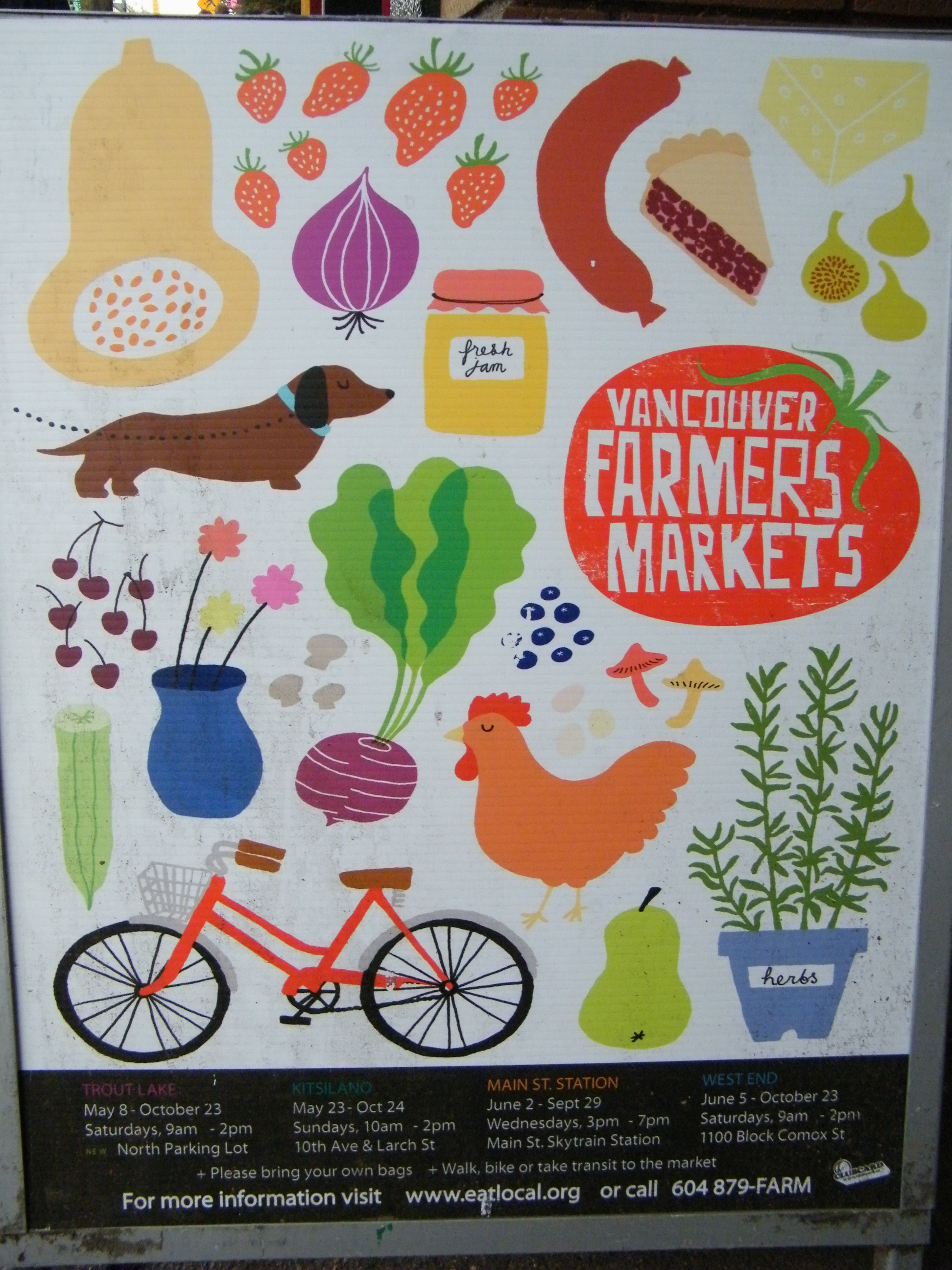
This past Saturday, the Vancouver Farmers’ Market had their first winter market of the season. It was a bittersweet occasion for me, because until this year the winter market was almost literally a stone’s throw away from where I live. (If I had a better arm, it would have been.) But, the market had long outgrown its winter home at the WISE Hall and this year the city gave permission for the move to the parking lot at Nat Bailey Stadium.
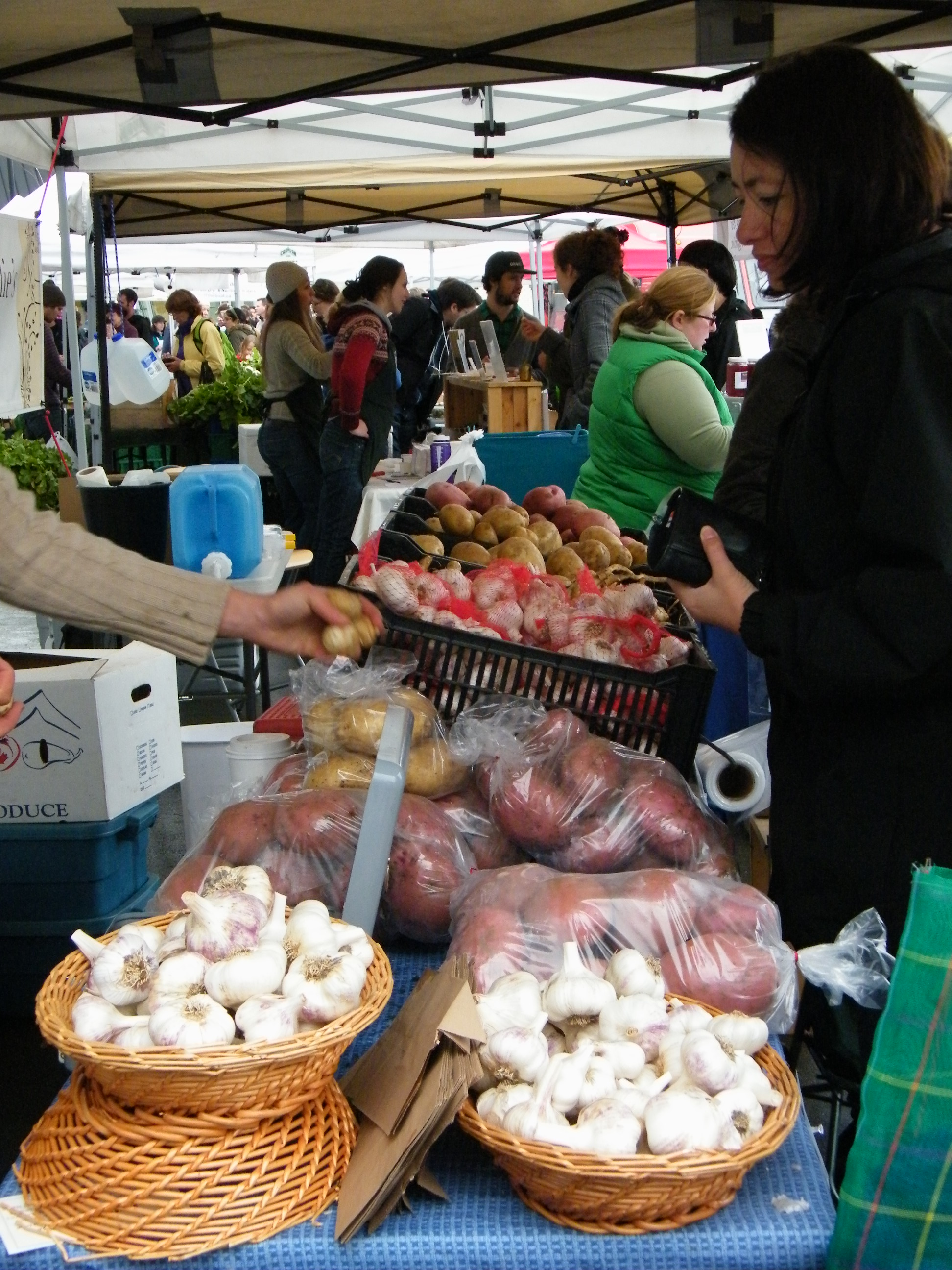
I’ve told you the bitter, but there’s definitely some sweet. The winter market can now happen weekly and is much larger than it was in its old incarnation. Since the scattered summer markets are now closed for the season, there’s also an advantage in having it in a location that’s nearer the centre of the city. It’s reasonably accessible by transit and there are good cycling routes available, so it’s possible to avoid the congestion and competition for parking spots that driving there causes. Once again, the east side has served as an incubator for something that benefits the whole city. And local, organic food is definitely beneficial.
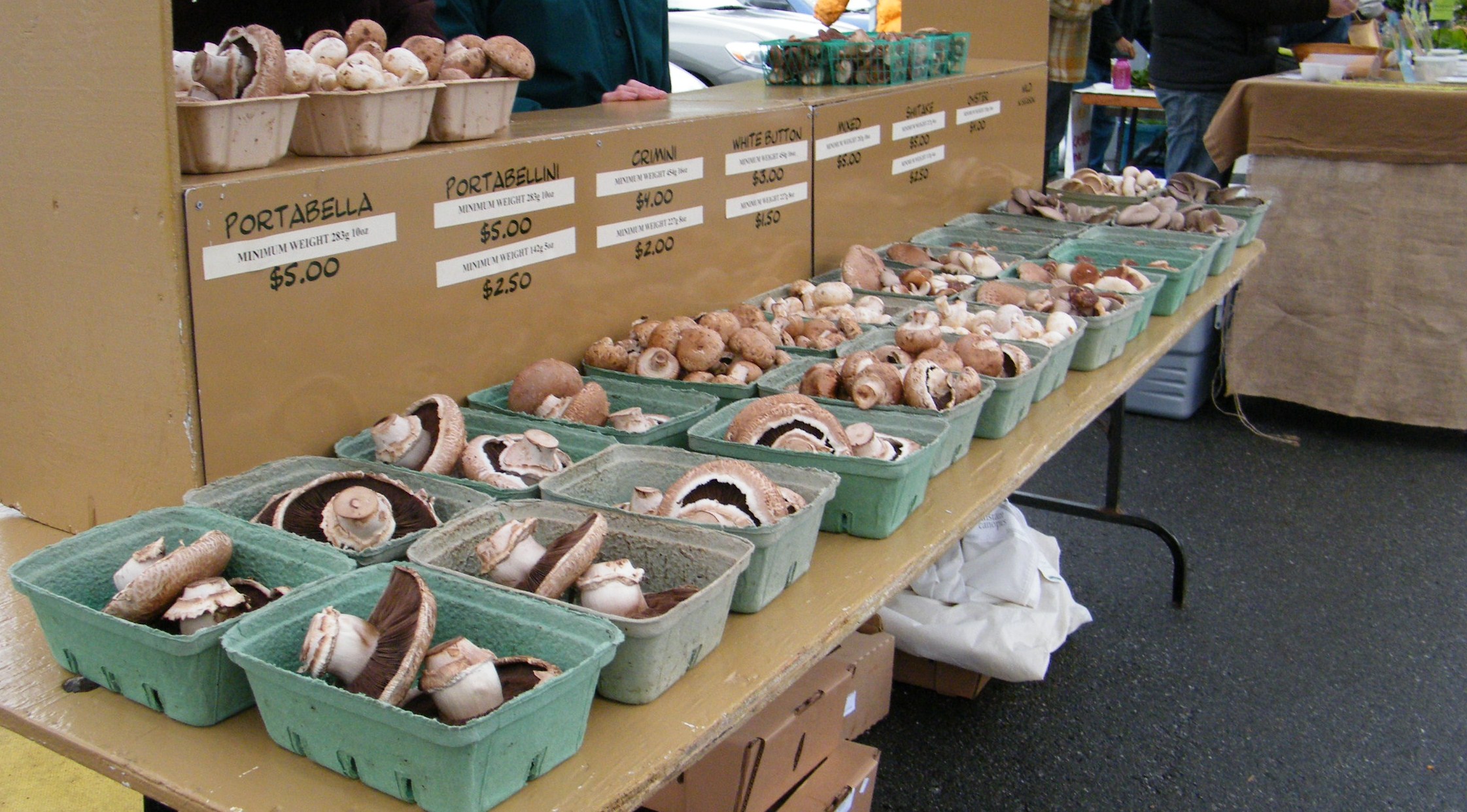
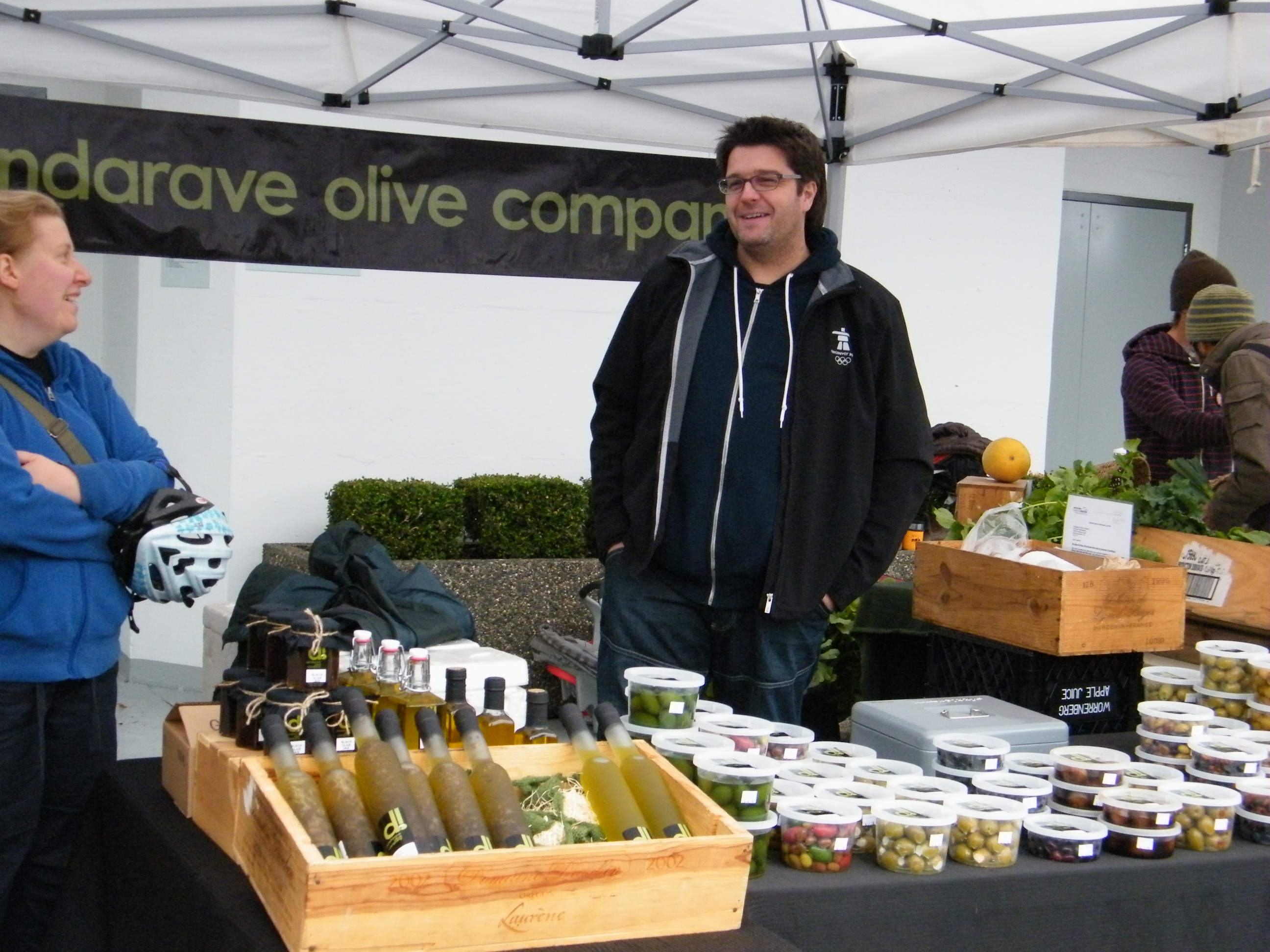


Though it seems like awareness of food miles and the benefits of eating locally has sprung up out of nowhere in the last few years, the Vancouver Farmers’ Market has been running for fifteen years now. The dominant culture can take quite a while to catch on to a good thing.
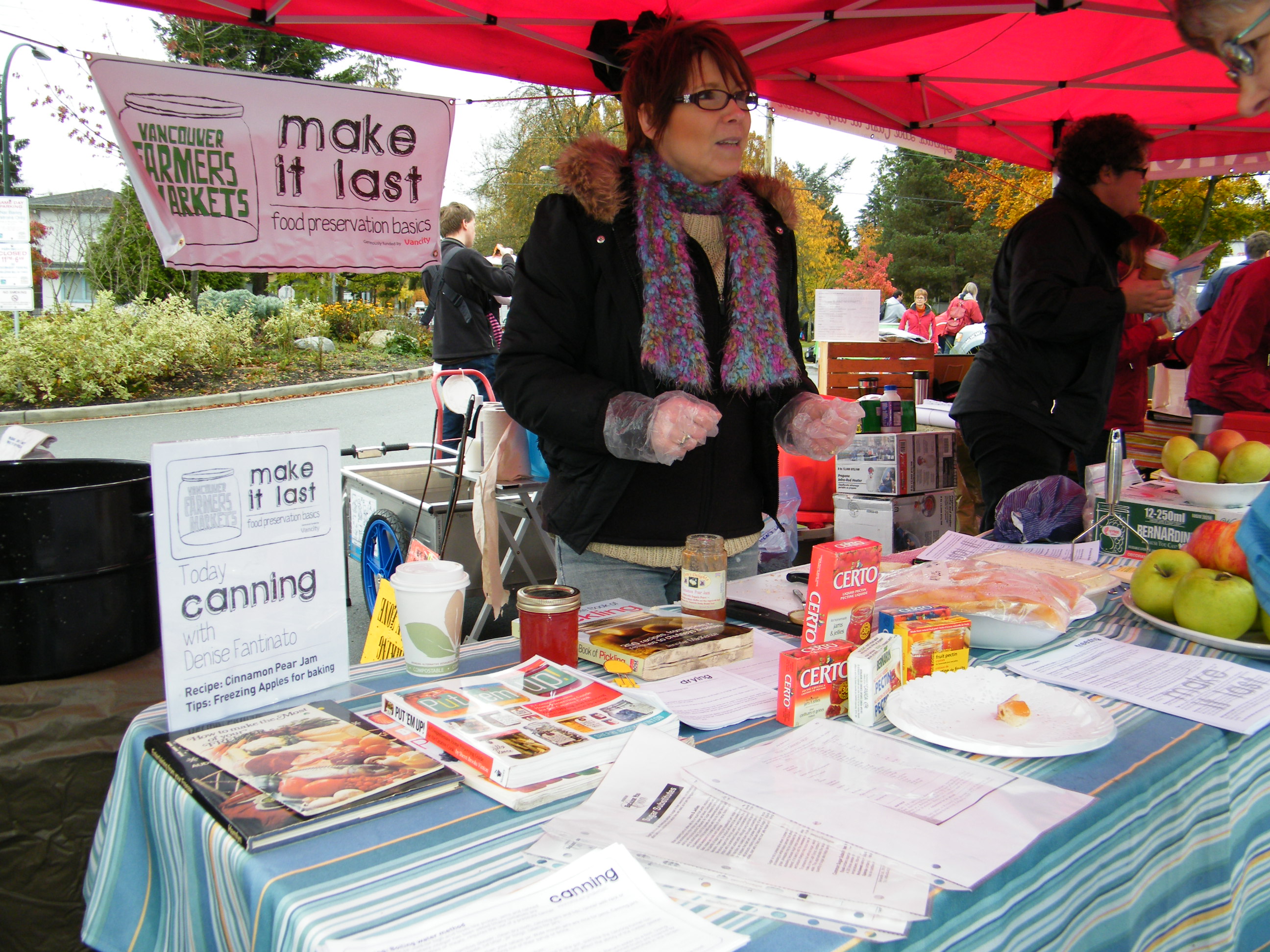
I first heard someone talk about eating locally in the mid-eighties. He was one of the most interesting professors I ever had. His course was ostensibly about the geography of weather, but he made sure to give us some life lessons along the way. For instance, he talked to us about geographical and weather considerations for house-hunting, which I think of often when looking at the suburbs running up the North Shore Mountains. (Hint: it’s very bad to cut into a natural slope in a rainforest climate zone.) He’s also responsible for politicizing me around water rights, and by extension, all natural resources and genetic materials. It’s always amazed me how much taking that one course helped me to solidify my political and ethical ideas.

Eating locally was one of those ideas. In the class discussion, we focused on the farm stands that dotted the Fraser Valley, where I grew up. The farms behind those stands grew a variety of vegetables, with much less need of pesticides than industrial mono-culture farms. They could also grow more varieties than industrial farms, since transportation-hardiness and shelf life weren’t considerations for local sales. We learned that we were lucky to have so much access to good food. As the years went by and as development skyrocketed in the Valley, I wondered how long this access would last.
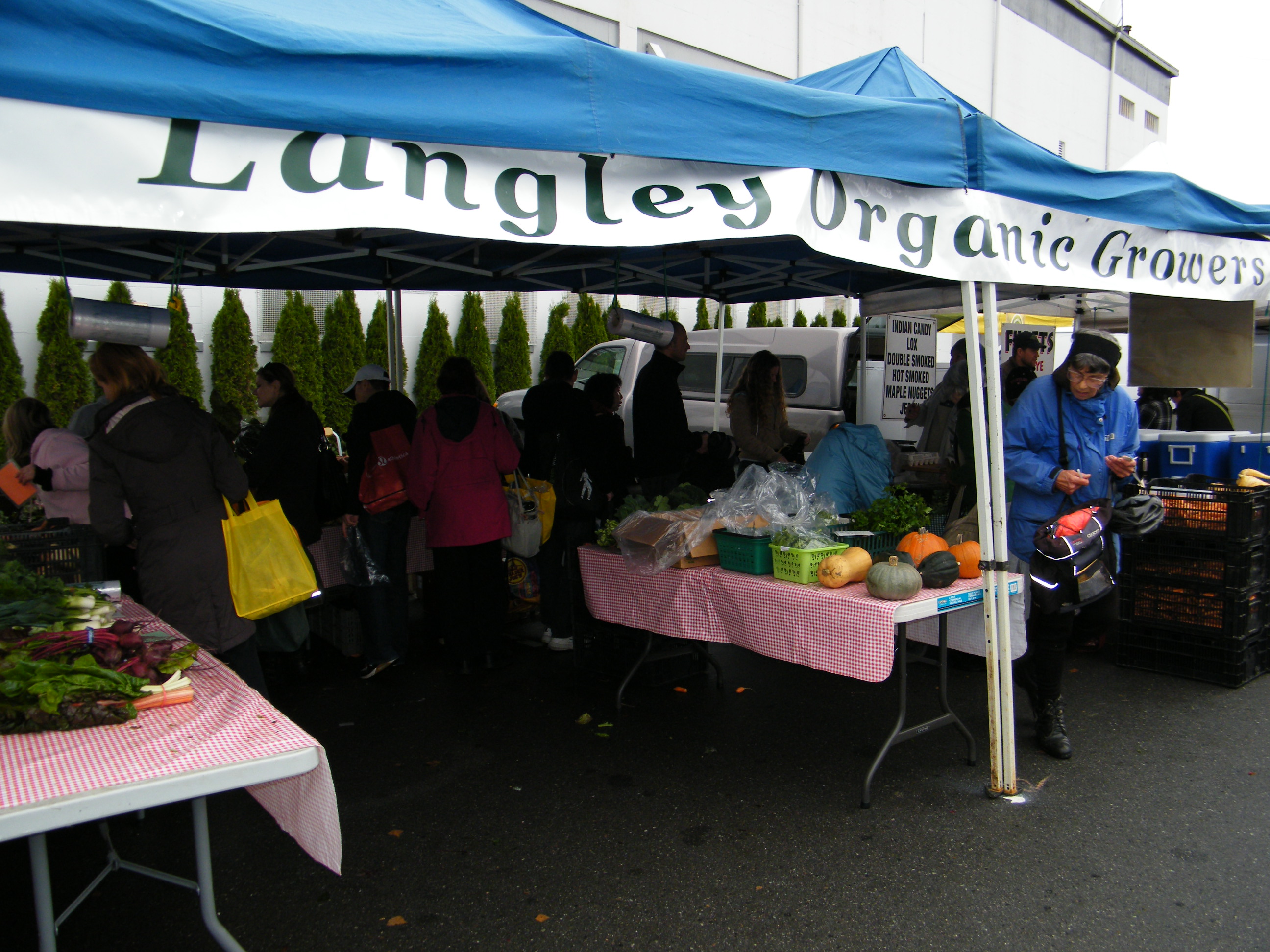
Enter the organic and local food movements.

Now, not only do we have a vibrant system of farmers’ markets across our region, but people are also looking for local, organic produce in grocery stores. I think this bodes well for our health and also for the health of our farmlands, which have been under threat of development even when they’re part of the Agricultural Land Reserve .

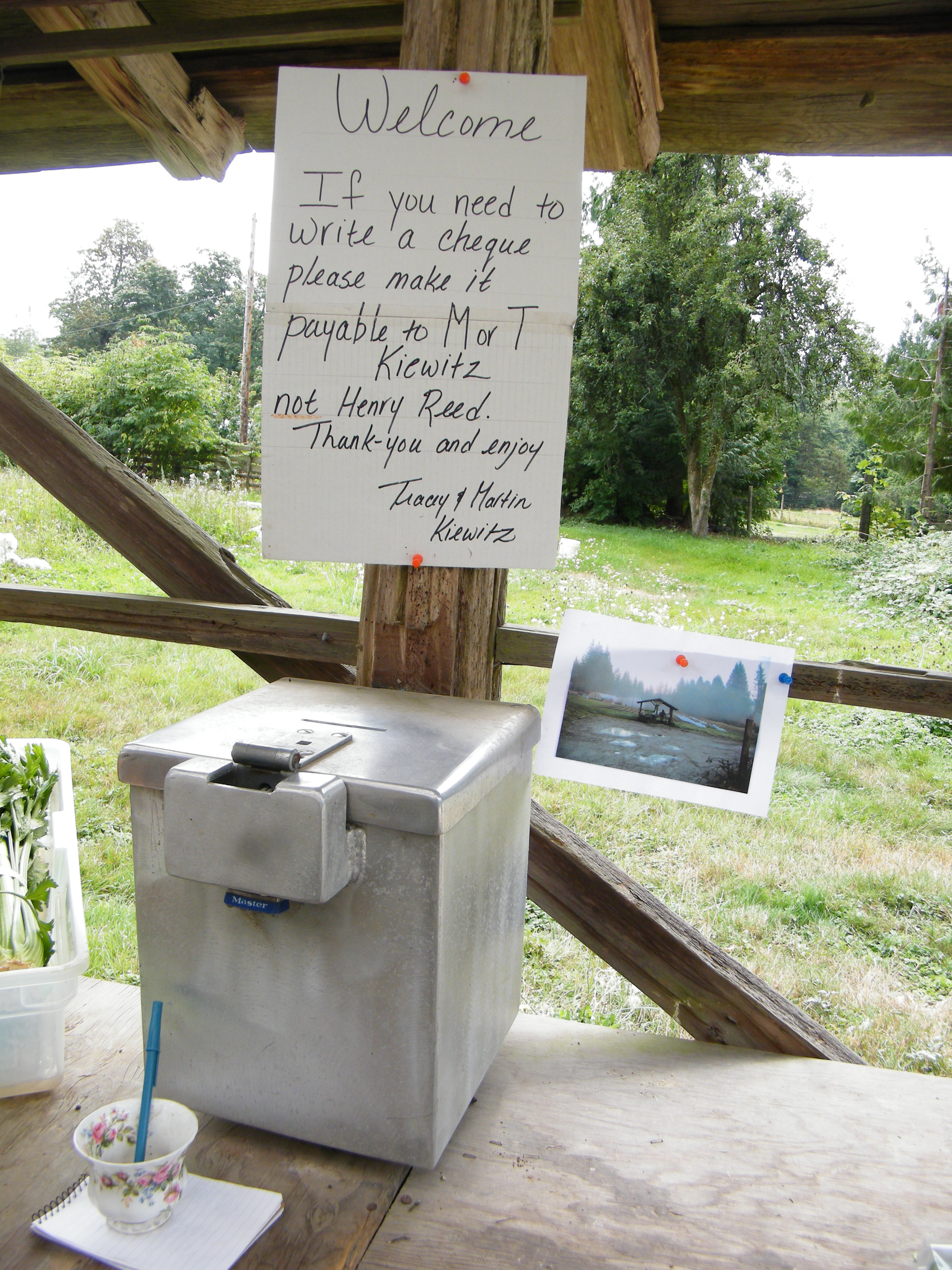


Farm stands have even been experiencing something of a renaissance. When I’ve visited farm stands on the Sunshine Coast, I’ve felt like they are lovely, nostalgic throwbacks. Especially since some of them leave their produce unattended, with a price list and a strongbox for you to leave payment. With the rise of urban farming, though, the Farmers’ Market is no longer the only game in town. There’s even a small farm and stand in a vacant lot at Victoria and First.
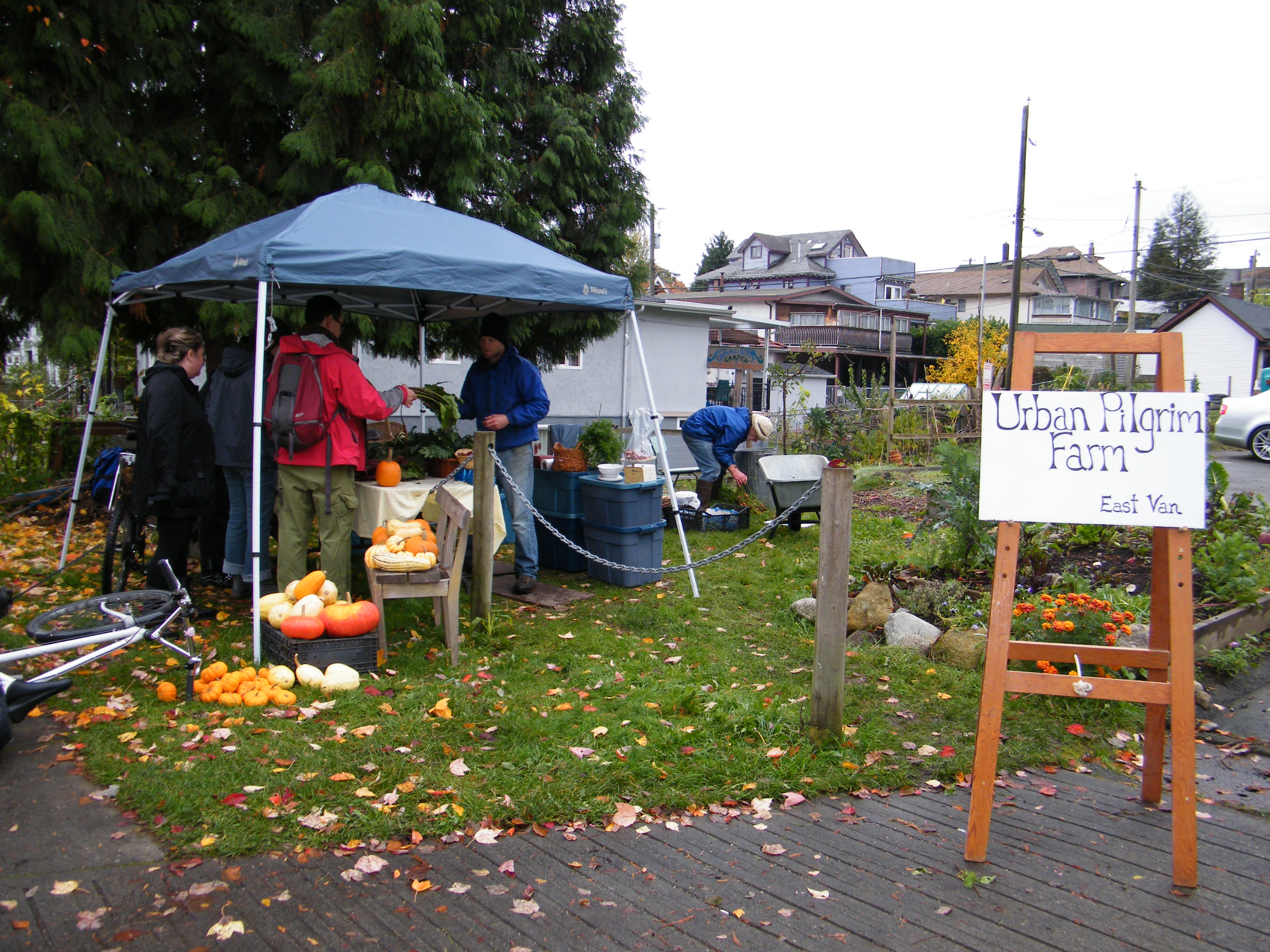
Extremely local eating is becoming more and more organized here. Neighbours are co-ordinating garden plots together; urban farmers are leasing back (and front) yards; the Vancouver Fruit Tree Project harvests surplus and unwanted fruit; and chicken houses, aquaculture systems and apiaries are springing up around the city. I hope our food culture continues along this trajectory, because our future food security will depend upon it.

Secret Souls, Public Dreams

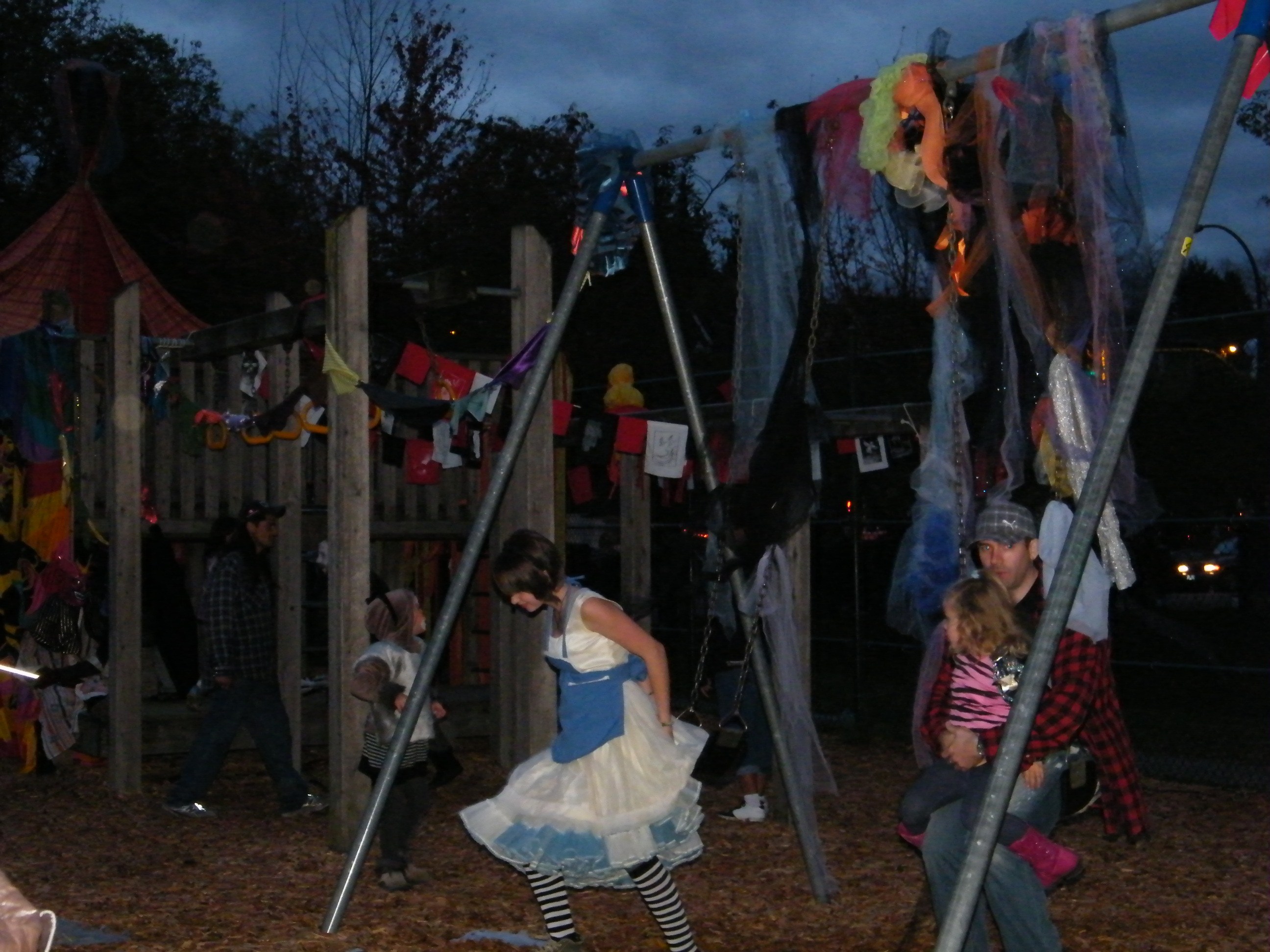
The Parade of Lost Souls has been a yearly fixture in my neighbourhood since the mid-90’s. Public Dreams Society created an event that mixed Mexican Day of the Dead traditions with Celtic Samhain rituals, throwing in Hallowe’en costumes and a circus aesthetic for good measure. In the beginning, it was almost a neighbourhood secret, with artists and queers, students and stilt walkers proclaiming our difference from the rest of the city. In those days, the Drive was the also the home of Vancouver’s Fringe Festival and the Illuminares Lantern Festival (another Public Dreams project). Commercial Drive felt like the seat of countercultural expression, even as we realized that we were really just the harbingers of gentrification. Still, it was exciting to wind our way around the neighbourhood, with decked out houses and alleyways, knowing that new ways of making art (and old ways rediscovered) were being worked out in front of us.

The Parade grew each year, becoming so big that it made the major news reports and more and more people from around Greater Vancouver came to participate. Eventually, the costs for permits, clean up and policing grew to over $100,000.00, while government funding was cut by an estimated 90%. This led to the cancellation of last year’s parade. For a good discussion of the issues around funding cuts to the arts in BC, go here. (Funding cuts to social programs were also deep and devastating.)

This year, Public Dreams revived the parade, in a smaller form that reminds me of its roots. Calling the scaled-down celebration the Secret Souls Walk, Public Dreams didn’t release the route until the day the walk happened, though the accompanying Carnival was advertised earlier.

I was lucky enough to win passes to the preparation workshops for the Walk and was able to attend one of the shrine-making workshops. I decided to make a shrine in honour of my grandparents, as my Grandma died only a few months ago and my Grandpa died the year before.

I’m not an artist. Even my stick figures are almost unidentifiable. So, when I thought about what I wanted to do for my shrine, I just printed out lovely photos of each of my grandparents and hoped that I would find some inspiration at Public Dreams’ studio. I needn’t have worried. The Public Dreams space is like a five-year-old’s ideal craft area. There are materials everywhere, in every shade and texture. Even someone as artistically challenged as I am can fake it there. They’ve also got an amazingly talented cadre of staff and volunteers. The workshops this year were sadly under-attended. If you ever get the chance to go to one, for any of their events, jump at it. Really.


My grandparents met during the Second World War, in England, where my grandfather was stationed and my grandmother was working as a nurse. She was Irish, he was Canadian. He married her and brought her back to Canada. It sounds simple, but it wasn’t. Whose story is? Theirs included a vow to marry a girl spotted through a restaurant window; an injured soldier’s plea to Vincent Massey to allow his Irish Catholic wife to have their child on her home soil, even though the Irish Sea was closed to passage; and a train journey across a continent with a baby born Canadian in Ireland. All stories for another time.
I thought about these things while making my shrine, but what concerned me most was trying to represent them correctly. I played with the idea of making fishing rods and rosaries, cups of tea and cribbage boards, but I knew that no one would know what they were but me. In the end, I tried to make it simple. Two of the strongest themes in their lives were their shared Irish heritage and their devout Catholicism. My grandfather had been raised Anglican, but converted wholeheartedly later in life and church was a constant in their lives.

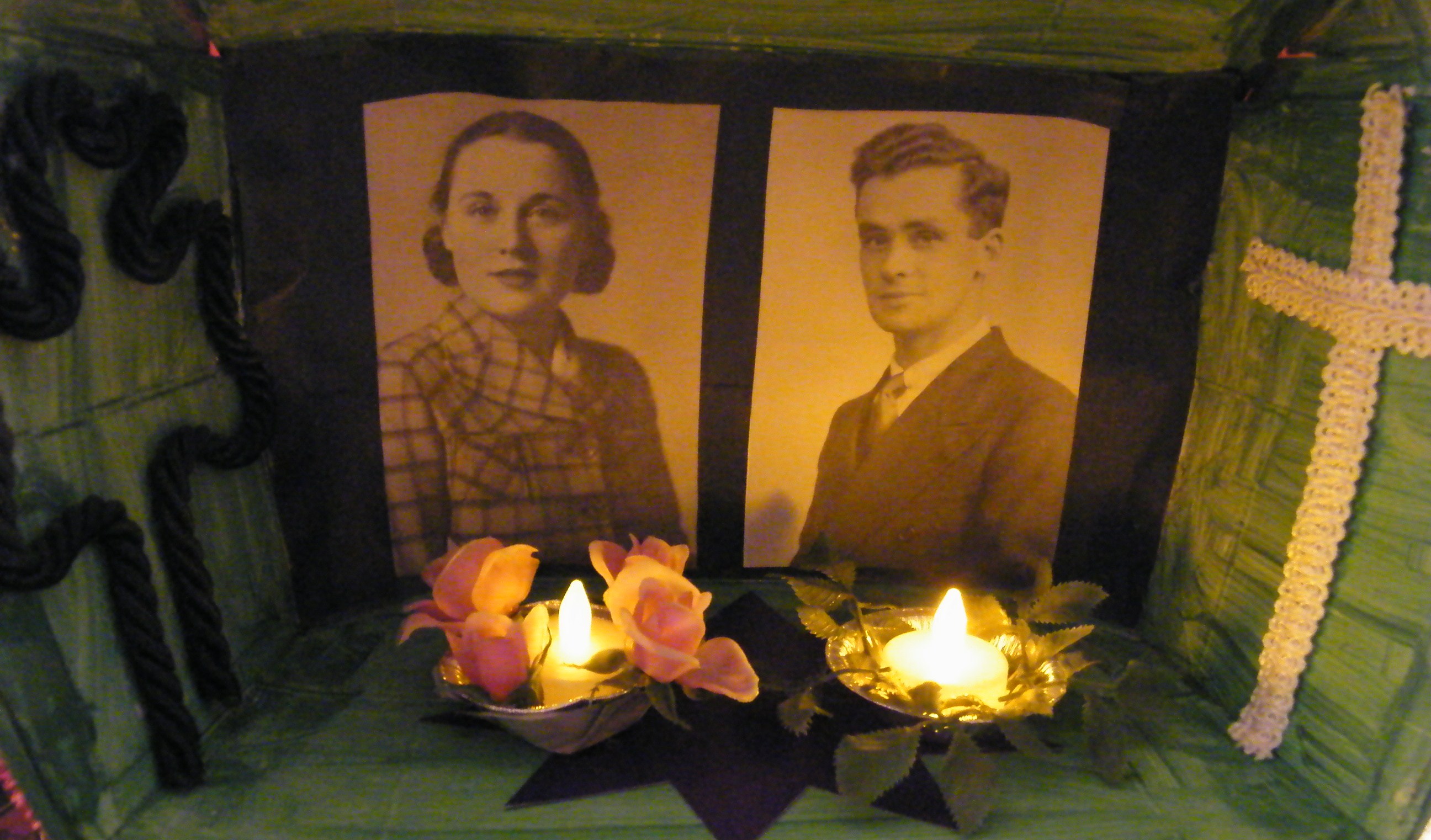
So, I decided to make a shamrock and a cross, on a background of Kelly green. Not even I could go wrong with that. I cobbled together a structure made of milk cartons and construction paper, pasting their photos at the back with more construction paper for frames. I painted the rest green, made a sort of purple star as a base for the candle holders and hot-glued cord on either side to represent a shamrock and a cross. I made candle holders out of plastic roses and leaves and finished the thing with a strip of crimson netting. I think it turned out all right, mostly because Bridie and Fred were so beautiful in their youth.

I brought the shrine, along with a small Mexican-themed one that I’d made, to the starting point of the Secret Souls walk on Saturday. One of the volunteers at the shrine station told me later that everyone who came by wanted to know about my grandparents and their story. I really want to thank Public Dreams for the opportunity; it’s a very meaningful process and it’s wonderfully healing to honour one’s dead.

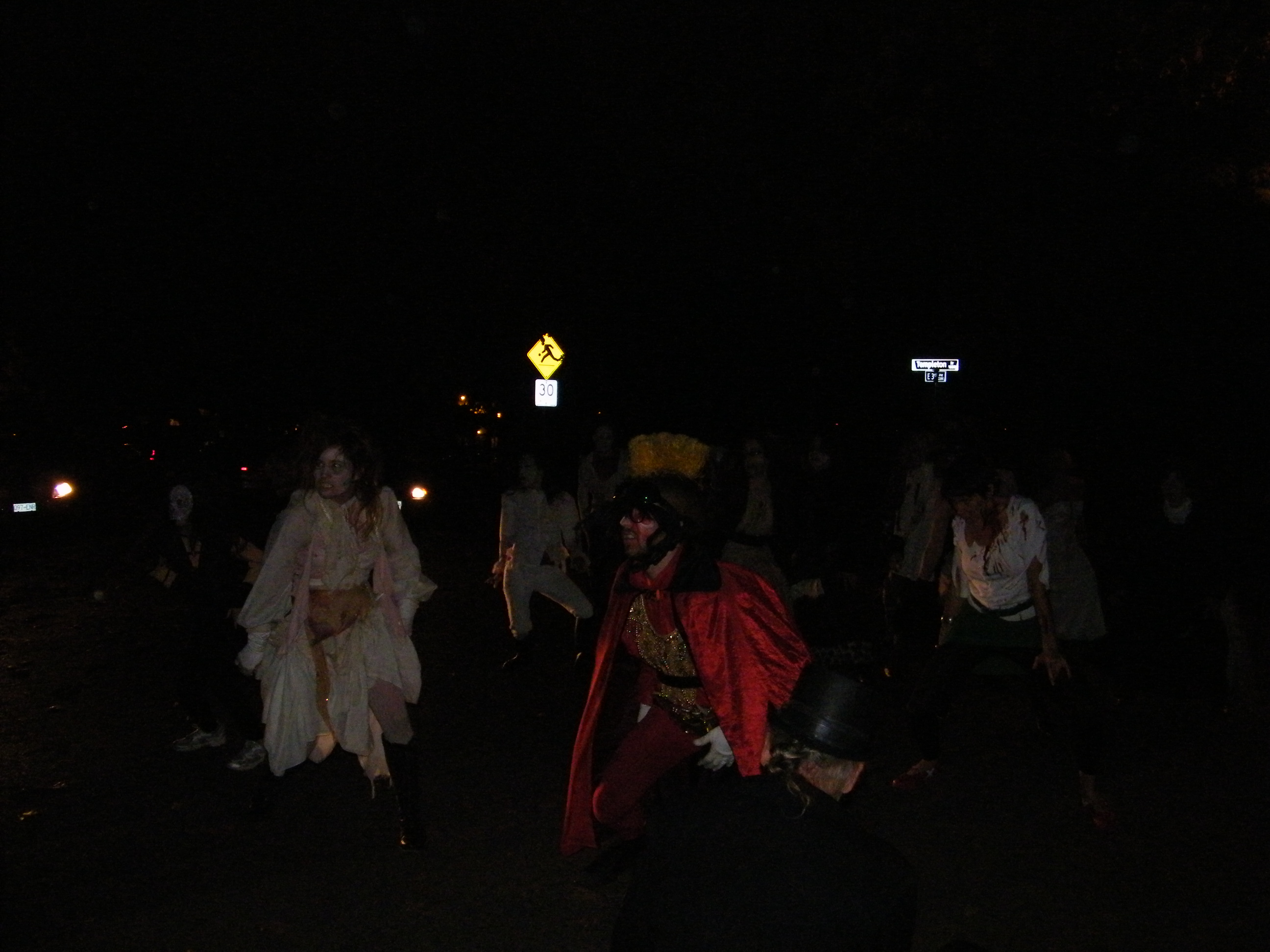
My partner and I went on the walk together, which wound through the alleyways above McSpadden Park. There was a carnival atmosphere present, as there has been during past walks, but it was more subdued. We had to go looking for smaller spectacles, rather than being hurtled past larger ones. I really liked this aspect of Secret Souls. Some of the highlights for me: Thriller zombies at Templeton & East 3rd, the court of Queen Victoria, the still, pale ghosts in the alley and the music of various performers wafting across the neighbourhood.

My only complaint is that the steep alleyways aren’t very accessible and I hope that the organizers take this into account for next year. Everyone should have the opportunity to celebrate the death and renewal of the year and the self.

I’ll end with a few pictures. It was impossible to capture everything that was going on, but these will give you a taste. If you like what you see, please consider a donation to Public Dreams, so they can continue producing such beautiful events.


Swapping Soup and Building Community

Making soup can be a long, slow process, best done on a day when you want to stay home all morning or afternoon. The good thing about soup-making is that you’re generally not tied to the stove continuously, so you can use the time it’s cooking to do other things. This changes when you quadruple the recipe, turning your kitchen into an assembly line of sorts.


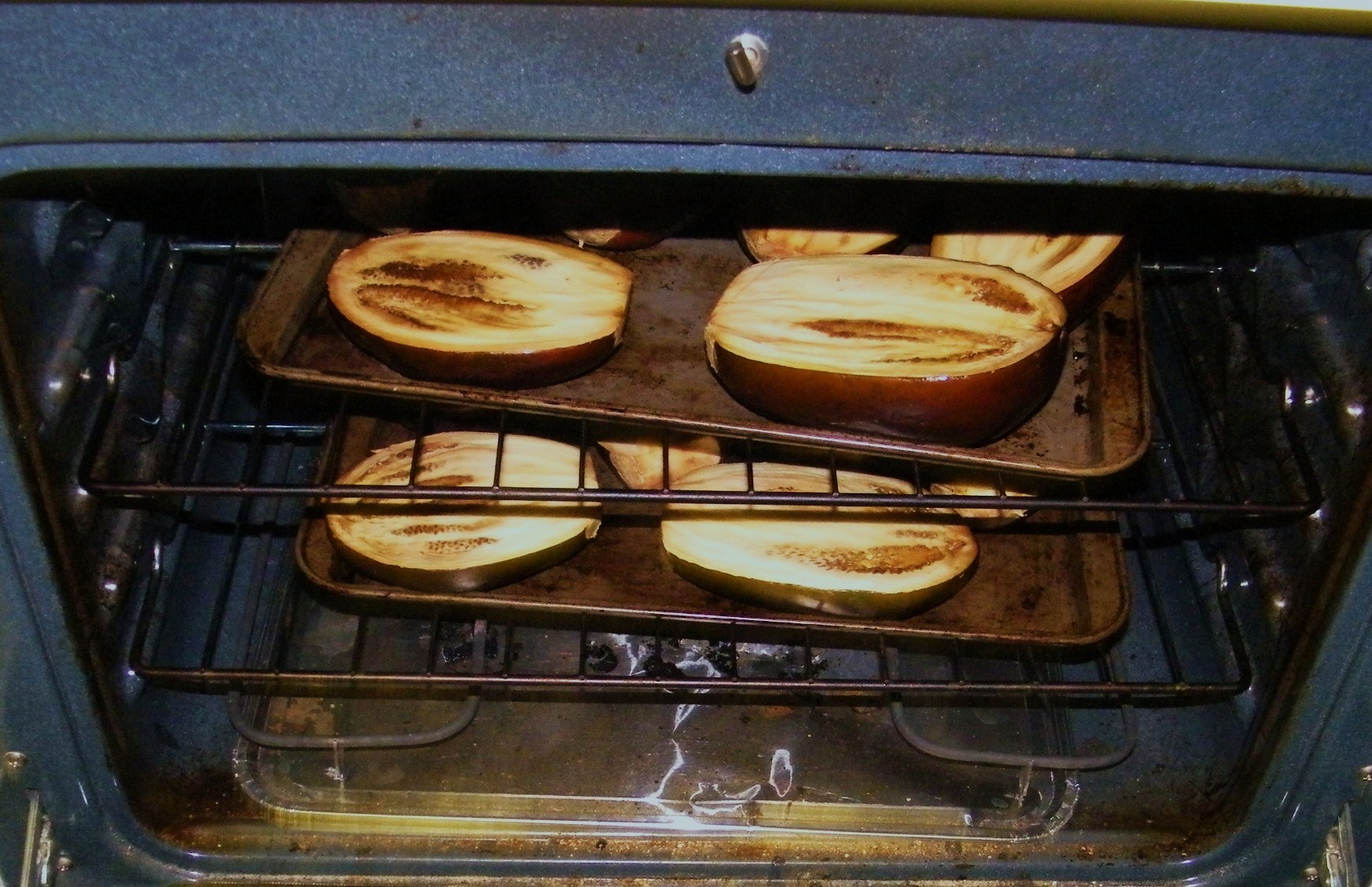
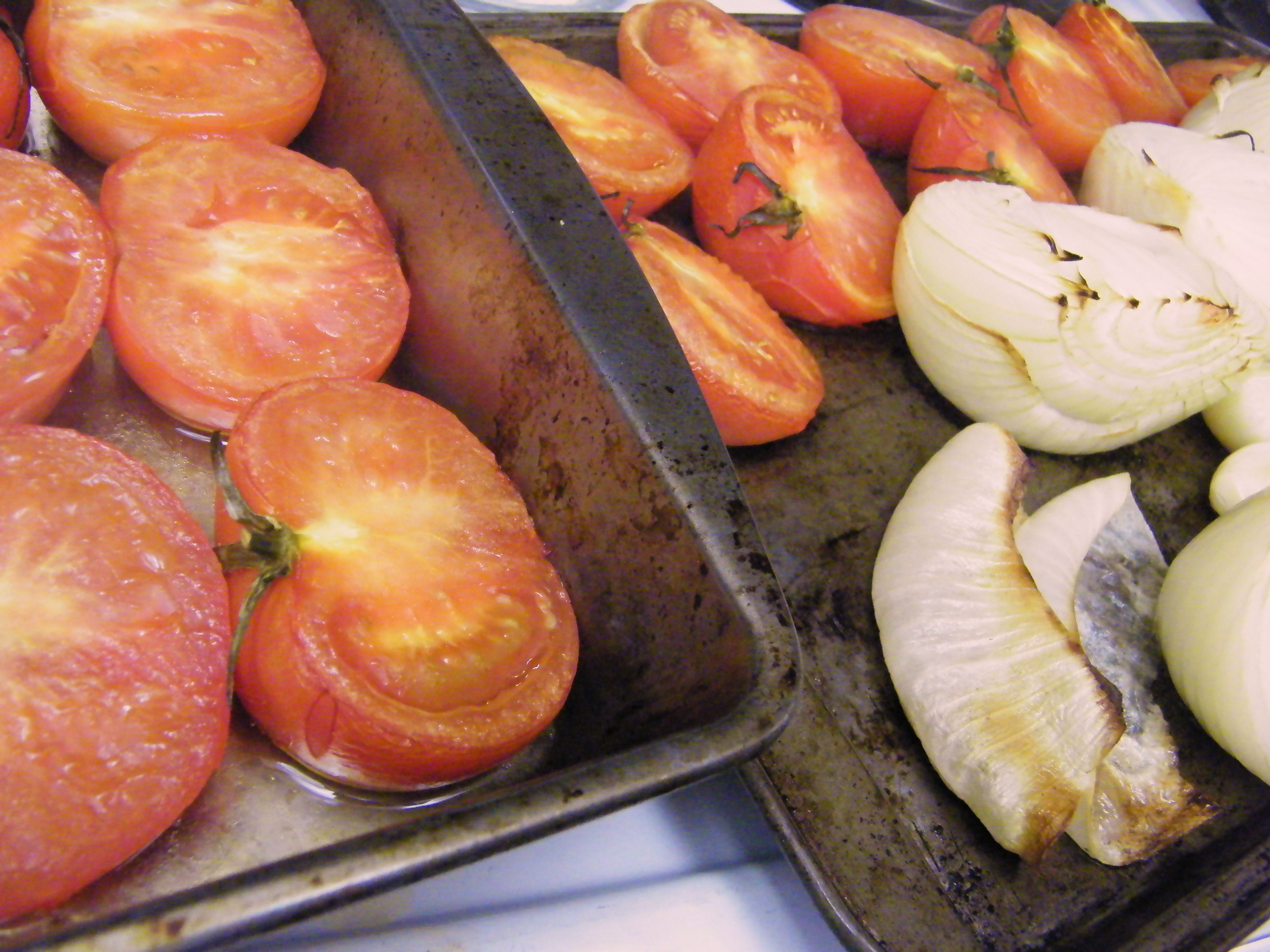
That’s not something I’d usually do, as I have a very small freezer. But, our housing co-op had a soup swap this past Saturday, so quadruple I did. I made Smitten Kitchen’s Roasted Eggplant Soup, which caused me to fill the kitchen counters with smashed garlic cloves and halved eggplants, tomatoes and onions. Thank goodness the recipe didn’t call for any chopping. I roasted the vegetables in shifts, then worked the roasted eggplant free of its skin and plucked off the leaves of the tomatoes. I split the ingredients into two pots, added the stock and the seasonings and then was finally able to let the soup cook itself down. While I started on the dishes.


At the end of the day, I had eight litres of soup, six of those ear-marked for the swap. I gave the extra soup to my parents and left the rest in my fridge overnight, so that the flavours could meld a little.

We met on Saturday afternoon, exchanged stories and snacked before we distributed the soup. Kids ran around while the adults chatted. There were exactly six households that could make it, so we all went home with a litre of our own soup, along with a litre from each of the other participants.

We live in a scattered co-op, which means that we have smaller properties around the neighbourhood, rather than one property with larger buildings and townhouses. Our smaller properties have more character than an apartment complex or concentrations of townhouses would, but it means that we have to work a little harder at building cohesiveness in our community. Events like this one bring us together as a co-op.

Holding events that involve sharing food also reinforces the idea that food security starts within our social circles and immediate communities. Once we start sharing food, skills and produce with our family, friends and neighbours, we’re on a path that has the potential to mitigate our reliance on industrial food streams. It’s also a path that creates the kind of networks that can support individuals and families through difficult times.

The larger issues aside, we’ll be having another soup swap in the new year and I’m hoping to organize a canning workshop for next summer. Maybe along with a community picnic.

Eating out gluten-free gets less complicated

Sadly, Perch is no more, but it had a wonderful run. El Barrio has morphed into X-site Grill & Bistro, but I hear they still know how to take care of their gluten-free customers.

What could be better than living in a city with a diverse and affordable restaurant scene? Going out to eat is more common than home-cooked meals for a lot of city dwellers, and although I love to cook, I have to admit that eating out has always been one of my regular habits. But these days, eating out isn’t as easy for me as it once was, at least when I’m dining with my partner. He has celiac disease, which means that anything containing gluten is harmful to him. It’s much easier to make sure food is gluten-free at home, especially when you cook with whole foods. Restaurants, on the other hand, are gluten minefields for people with celiac disease.

Gluten itself is poorly understood, even by food professionals. It’s amazing how many misconceptions there are about what gluten is, what foods contain it and how to safely prepare gluten-free food. Since it doesn’t kill you on the spot, as an allergy may, celiac disease has often been taken less seriously by restaurateurs. Even when there is truly gluten-free food available, cross-contamination is difficult to avoid in most professional kitchens, since there are limited surfaces for food preparation.

We still go out, but there’s always a risk of gluten or cross-contamination, unless we go to a gluten-free establishment, like Panne Rizo or Quejos, both of which specialize in sandwiches and baked goods. We also have some favourite, trusted restaurants that do a great job of making sure that there are at least a few items on the menu that Kevin can eat. Still, there are foods he’s despaired of ever eating again, especially diner food and almost anything billed as comfort food.

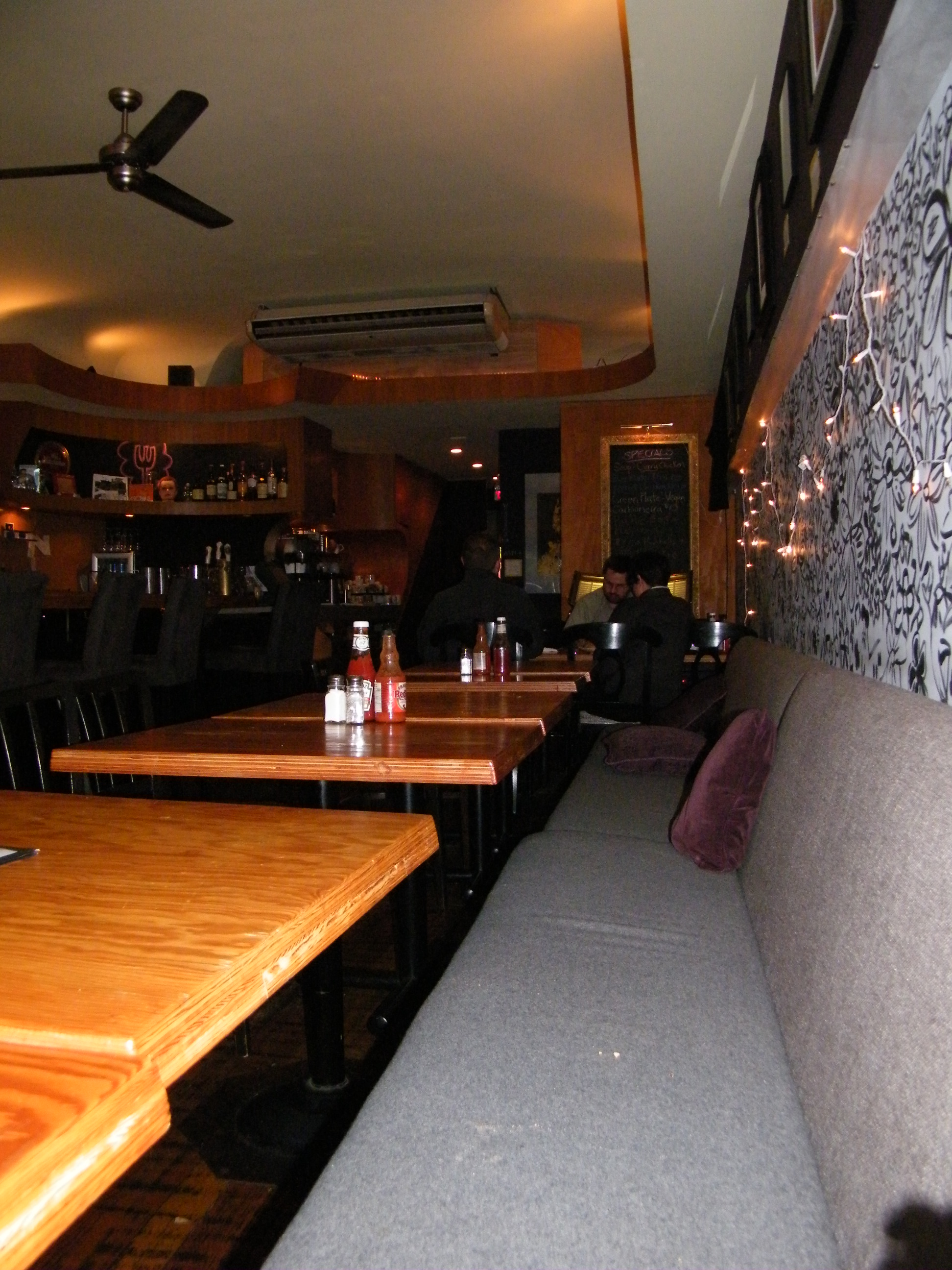
But then he went out to dinner a couple of weeks ago, with another fellow who has celiac disease. They met at The Wallflower for pizza and beer. A gluten-free miracle, if you will. It certainly wasn’t a meal that Kevin was ever expecting to have again. If you’re not familiar with the gluten-free beer world, you’re generally pretty lucky. The ones that are available here are, for the most part, watery tasting. As for pizza, even when the pizza is gluten-free, the oven it’s baked in usually isn’t.

The owners of The Wallflower found a brand of beer that’s a great approximation of a pale ale and they bake their thin crust pizza in a celiac-safe way. They have a gluten-free menu (along with a vegan one), in addition to their regular menu. They even had their kitchen and cooking procedures assessed to ensure that their gluten-free food was truly celiac-safe. If you haven’t guessed, this is extremely unusual and really, really impressive. There’s only one other restaurant I know of in Vancouver that’s gone to such lengths for their gluten-free customers, El Barrio. It’s a favourite of ours, too.

There's a wheelchair accessible entrance at the back.

The owners of The Wallflower have extended their food philosophy to their new location, Perch. This is good news for us, because Perch is just down the road from where we live. Perch takes its pizza even more seriously than The Wallflower, baking it in an authentic pizza oven. And yes, there are shelves in that oven which have never known gluten, so their gluten-free pizzas are baked right on the stone. The food at both restaurants is good comfort fare, done very well. We’ll be eating there often.

If you have recommendations for celiac-safe restaurants, I’d love to hear about them in the comments.

Wallflower Modern Diner on Urbanspoon
Eat, Drink & Perch at the ARC Cafe on Urbanspoon

A Long Journey (with sugar at the end)

When I had my first car, a steel-blue Ford Granada, I used to spend a lot of time exploring the roads in the Fraser Valley. Instead of going straight home from University, I’d take random rights and lefts, just to see where they would take me. Almost always, I’d end up on one stretch or another of River Road, with the muddy Fraser appearing here and there past the trees. River Roads run up and down both sides of the Fraser and I’ve never decided whether I think that was practicality or uninventiveness on the part of all those municipalities.

I don’t drive that way anymore. I gave up my last car many years ago and have mostly relied on walking, cycling and transit ever since. A few years ago, we joined the local car co-op, which makes trips out to the Valley easier, along with bulk buying errands and weekends away. Even if I did own a car now, my environmental consciousness has developed enough that I couldn’t just drive for the sake of driving again. I also think that development has really changed the Valley and that if you did try to explore in this way, you’d be more likely to get stuck in a rabbit-warren subdivision or industrial park than you would be to reach the river.


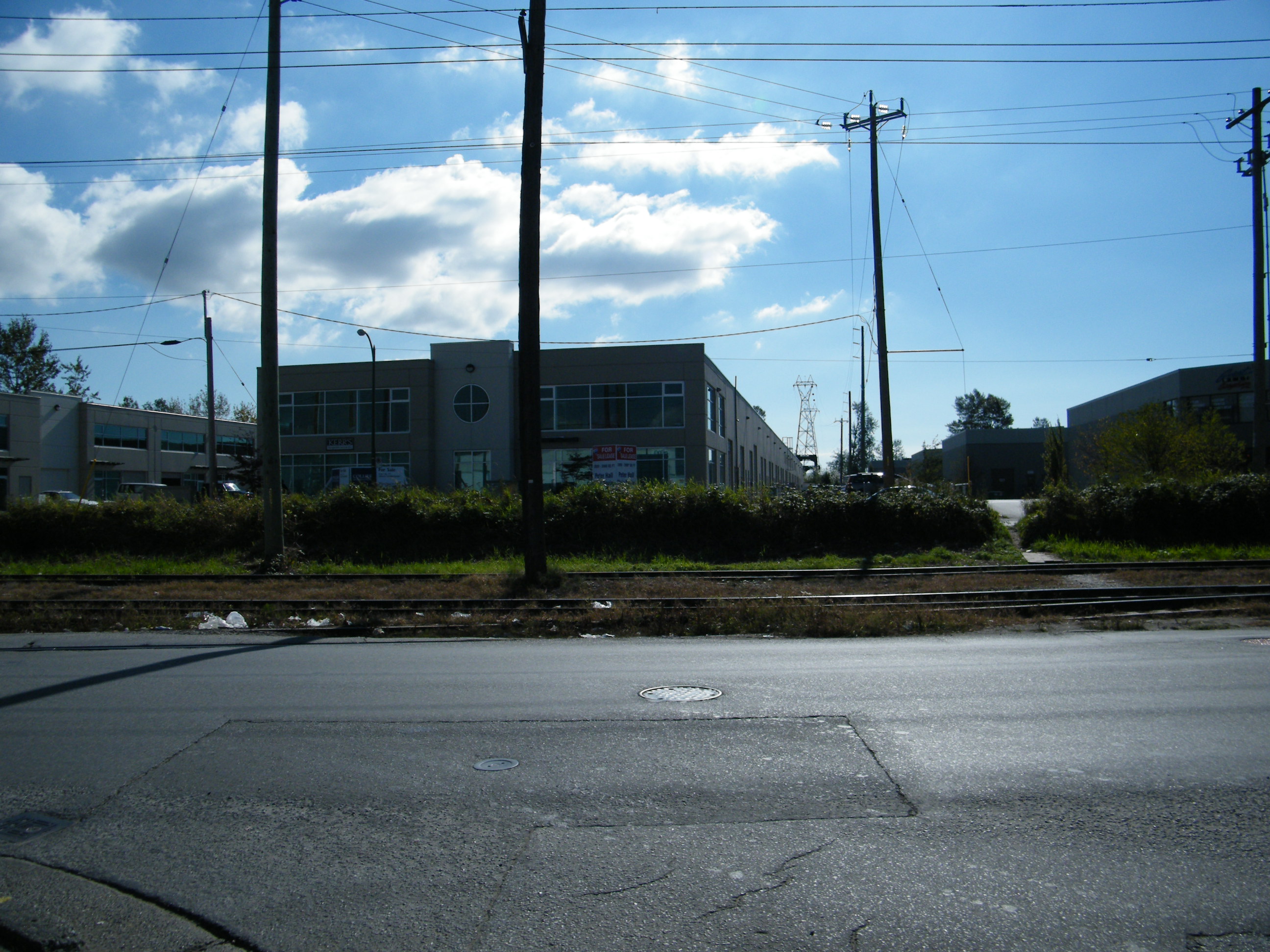
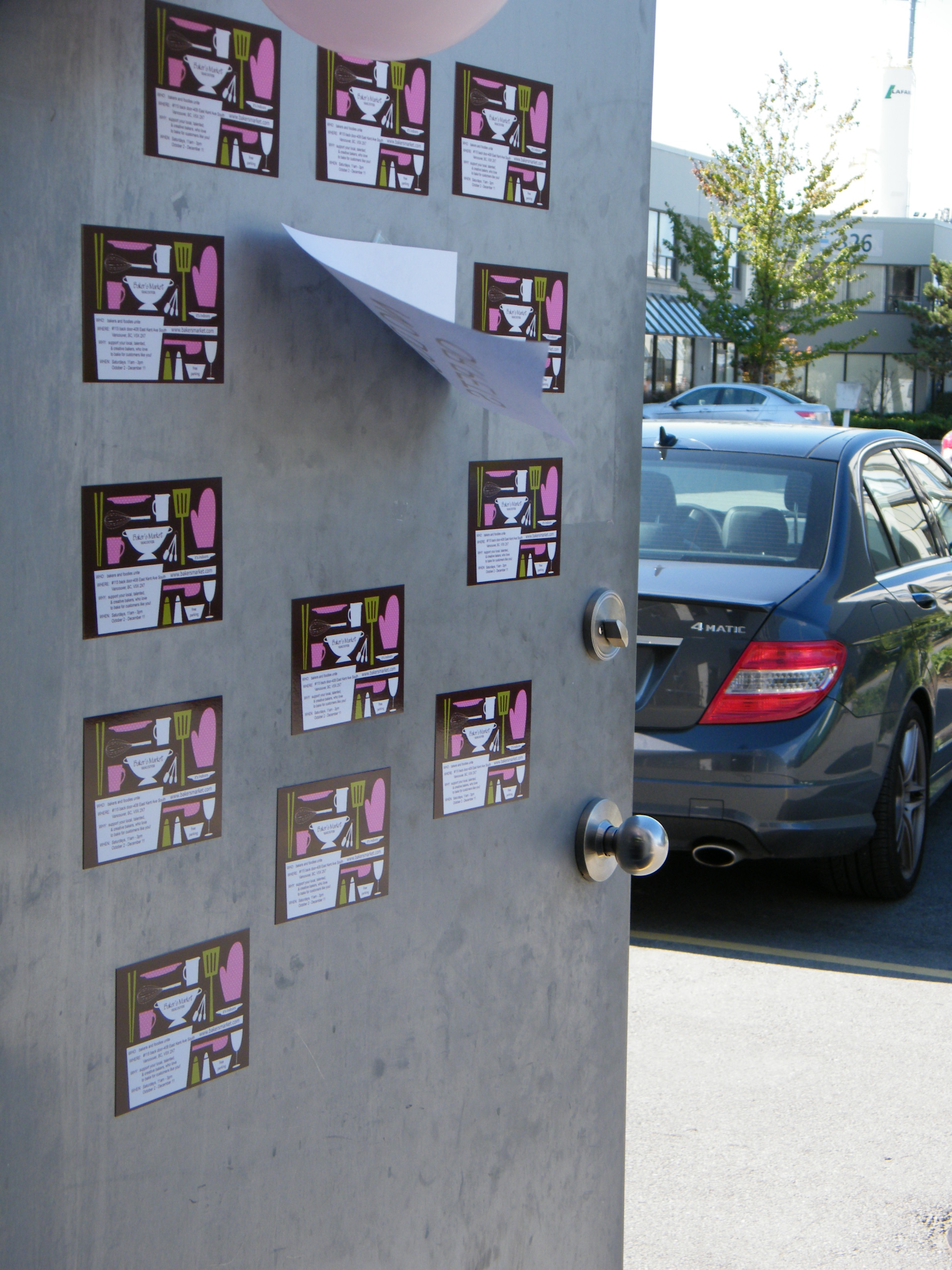
I was reminded of my old habit this past Saturday, when I decided to go to the Bakers’ Market for the first time. It’s located near Main Street and southeast Marine Drive, a very long bus ride from my neighbourhood. The area is industrial and I made my way through parking lots and across railway tracks to get there. It felt almost illicit, like trying to find a warehouse party.

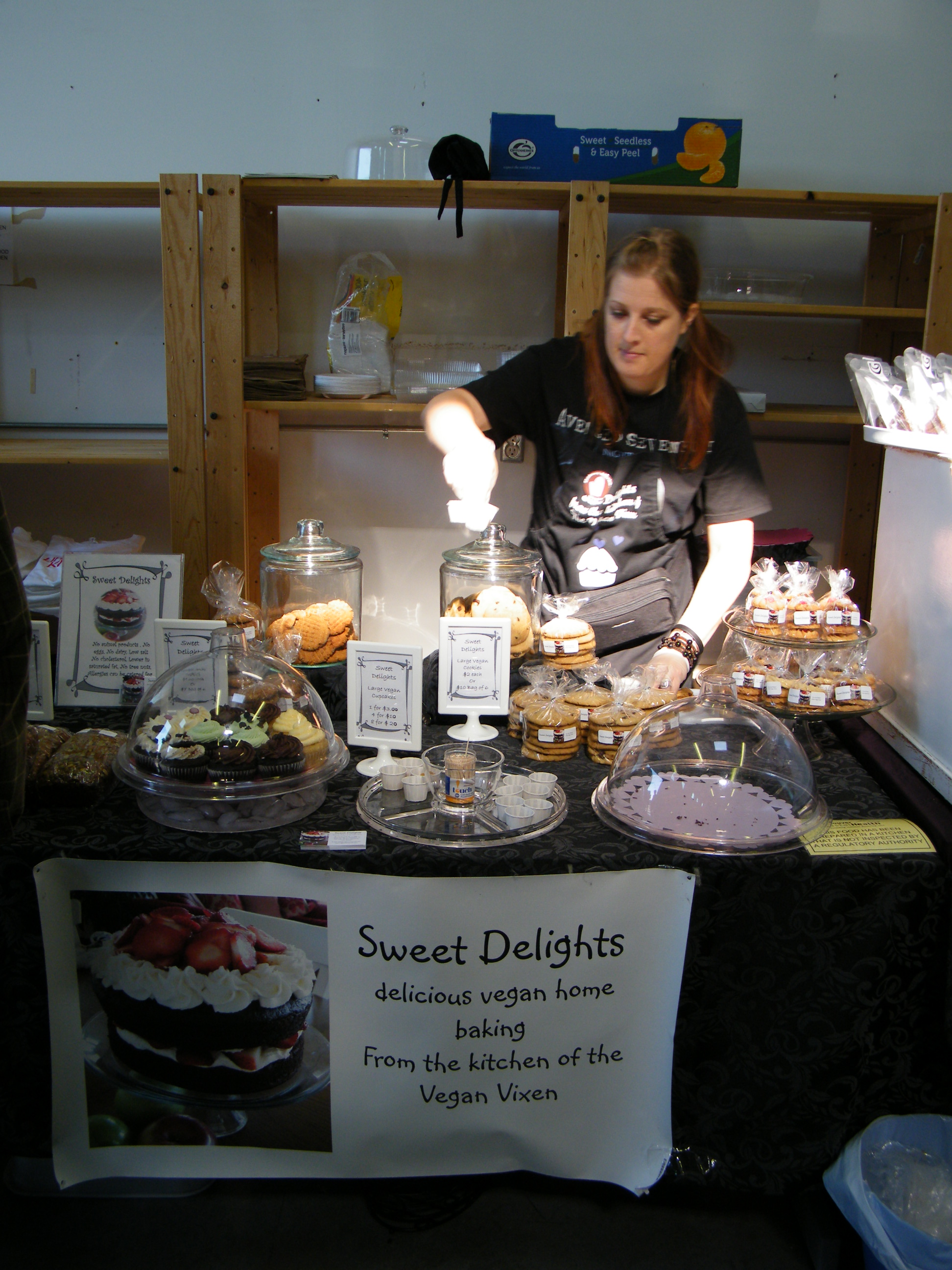
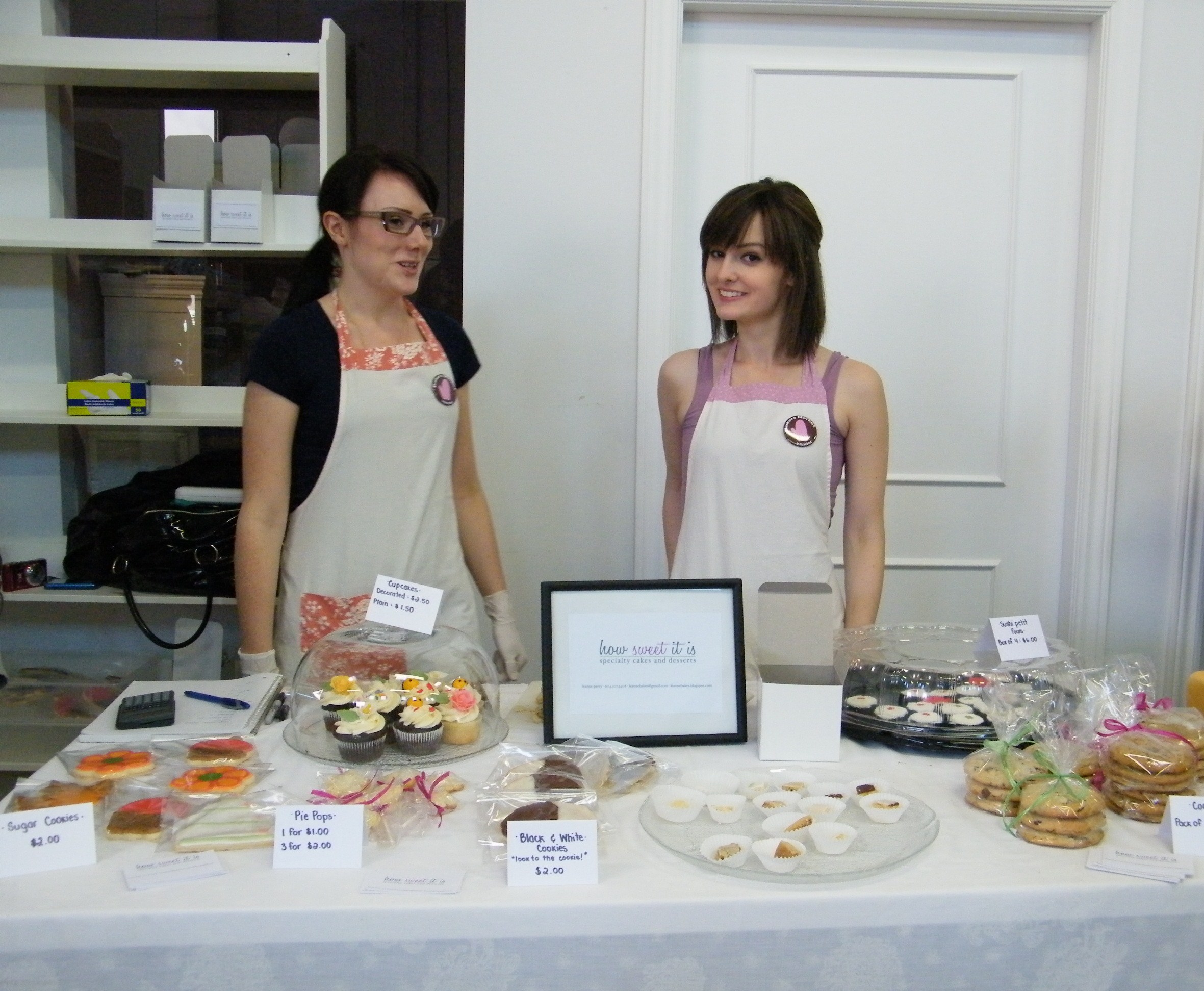
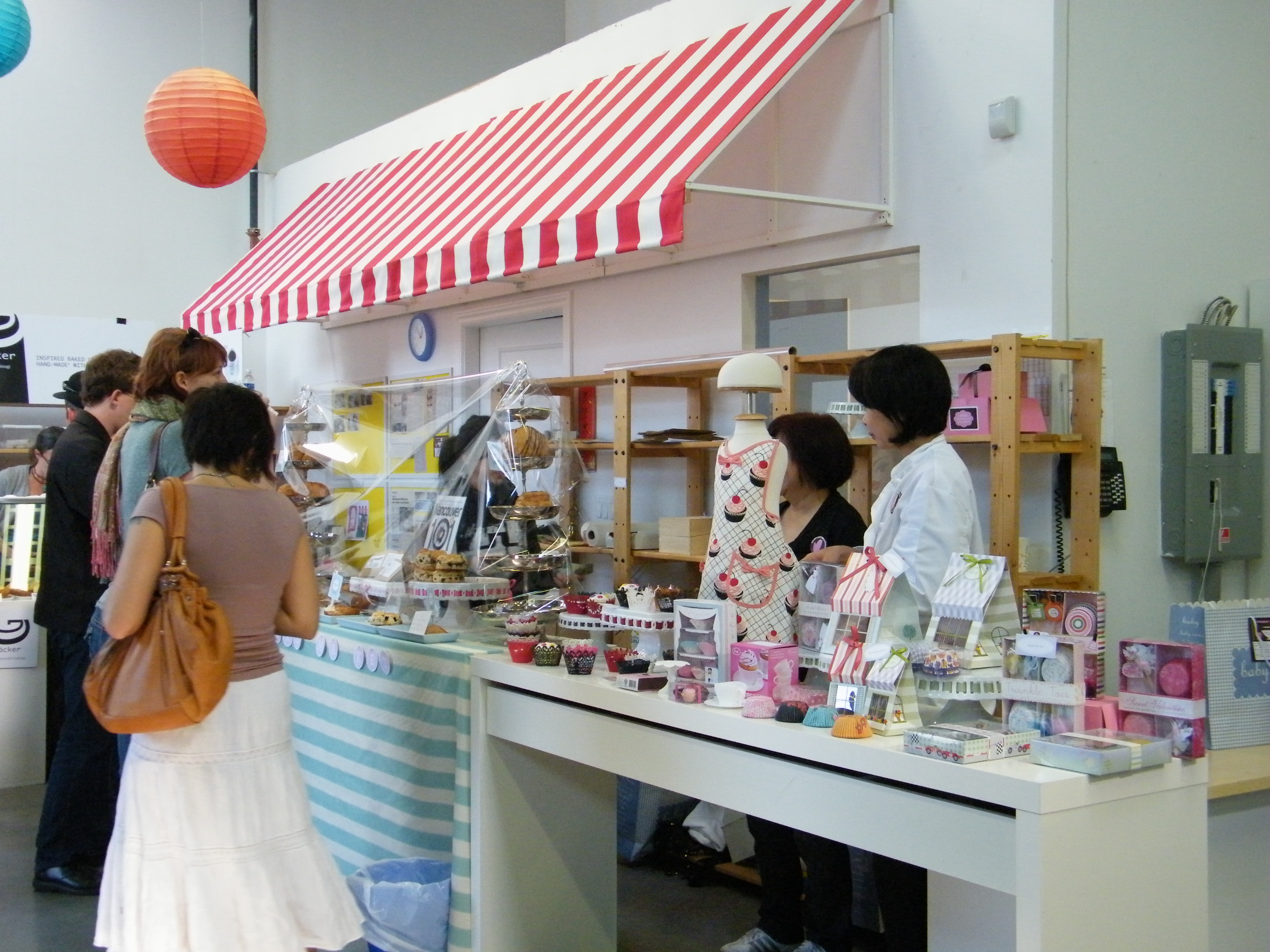
The destination was definitely worth the journey, though. The Market takes place in a warehouse-like room at the back of a commercial park. Even so, they’ve made their space inviting and pretty once you get inside. I arrived at around 12:30 p.m., but many of the bakers had sold out by then. I could understand why. There were some hobbyists there, along with the professional bakers, but absolutely everything on display was beautiful. There were even vegan and gluten-free options available at some tables.


What struck me, aside from the beautiful baked goods everywhere, was how friendly and happy both the sellers and patrons were. Perhaps it was the (inevitable) sugar rush. I think, though, that it was more a matter of people sharing their exquisite artisanry with an appreciative audience.


I went home with ginger-marzipan cookies from Chef Kev, a mint chocolate vegan cupcake from Sweet Delights, an apple loaf from bäcker, tartlettes from sweetypie and some (unfortunately crushed) macarons from another vendor. I would have loved to bring home more. Next time, I’m going to go earlier. And although I appreciated my contemplative bus ride, I think I’ll book a co-op car.


Nourishing Community

If you Google the term care circle, you’ll come up with two different things: websites to help you form giving circles, which pool individuals’ donations for philanthropic goals; and, groups of friends and family that form to help someone who is living with health challenges. I’m writing about the second sort today.

I have a friend who has been living with a serious illness for many years now. She’s one of the busiest, most social people I’ve ever met, but there have been times when she’s been worn down by her illness. That is what’s happening for her right now. So, she’s asked for a care circle. That way, she can expend as little effort as possible on preparing food and arranging to spend time with people, leaving her able to concentrate on taking care of herself. A good friend of hers set up the circle on the Lotsa Helping Hands website, which makes the whole process easier. Each of us joined her care circle on the website and can sign up for meals using a calendar on the site. It’s easy to see what dates are available and there’s little hands on co-ordination needed.

What’s left is the important stuff – cooking good food, eating together and spending time with friends. Maybe it’s my upbringing (actually, it’s definitely my upbringing), but for me there isn’t a lot that’s more meaningful than cooking for someone you care about. Choosing a recipe, buying and preparing the ingredients, improvising along the way and then, finally, sitting down and watching someone enjoy the food you’ve made; all of that adds up to caring. I think this attitude is unnecessarily gendered and subsequently trivialized, as most “female” pursuits have been. I’ve been on both sides of this food equation and people of all genders can create this kind of…well, let’s face it…love.

Food IS love! At least, it’s an expression of love, for oneself and one’s communities. I’m aware that’s a dangerous sentiment to express in a fatphobic culture, but the evidence is all around us. People are increasingly interested in cooking for themselves and their loved ones, facilitated by the accessibility of food websites and blogs. Communities are forming around issues like food security and safety. Here in Vancouver, the only movement rivalling the growth of food culture has been bicycle culture. Often, the two go hand in hand – Farmers’ Markets are some of the best-used Bicycle Valet locations.


I don’t think it’s a surprise that so much community-building effort is going into food issues. We’re moving into an era where people are looking for connection and community, moving away from the suburban separateness that marked the last half of the twentieth century. Food issues are also an unthreatening entry into social justice for a lot of people. This isn’t just an upscale phenomenon, like Growing Chefs fundraisers or foodie tours of the Okanagan. It’s also Quest Food Exchange’s canning workshop this summer, which cost only $5.00, including some canned peaches to take home. People are connecting up and down the economic scale on these issues. I hope this community-building will extend beyond food issues, as I think there’s potential for this energy to open up into other social justice issues, like housing and economic security.

Bringing us back where we started, I wanted to share a recipe with you that I made for my friend – it’s nourishing without being taxing on the digestive system and it’s flavourful without being spicy. You can also easily modify it to suit whatever ingredients you have on hand.

Swiss Chard and Cabbage Soup

10 cups low sodium chicken stock
15 oz. Swiss Chard, washed and chopped
3 cups cabbage leaves, washed and chopped
1 small onion, finely diced
3 cloves of garlic, finely diced or pressed
½ a lemon, juiced
½ a cup finely chopped parsley
1 small bunch fresh basil, or 1 tsp dried basil
3 tbsp extra virgin olive oil
1 cup short grain rice (if you use brown rice, parboil it ahead of time and finish cooking it with the soup)
1½ tbsp unsalted butter
½ cup grated Asiago cheese

Heat the chicken stock, keeping it at a simmer. If you’re using dried basil, add it now.
Heat the oil in a large saucepan or wok and add the onion. Cook gently until golden and then add the garlic and cook for a minute or two longer.
Add the cabbage, turn up the heat and cook for a minute or two. Add the Swiss Chard and cook for another minute more.
Add a ½ cup of the hot stock, turn the heat down, cover and simmer for five minutes.
Add the rest of the stock, bring the soup to a boil and stir in the rice, boiling gently for 10-15 minutes.
Add the lemon juice.
Remove from heat, stir in butter (and fresh basil, if that’s what you’re using).
Set the parsley and cheese out for guests to sprinkle on themselves, along with salt and pepper.

(adapted from ifood.tv – you can find the original recipe here: Swiss Chard and Cabbage Soup)

En Souvenir

My mother and I have done the AIDS Walk together for five years.  We do it in memory of my Uncle Gerry, her younger brother, and we wear t-shirts that my mother had printed with his photo.  I find these shirts both geeky and moving.  We’ve been ridiculously lucky, as the weather has never been horrible, though in some years it’s been very hot.  The Walk runs along the Stanley Park Seawall for ten gorgeous kilometres, at least it did until the windstorm of 2006, when post-storm reconstruction shortened the route somewhat.  We’re among the slowest of the walkers and usually miss quite a bit of the entertainment along the way – the Vancouver Men’s Chorus is always packing up by the time we reach their station.  It doesn’t bother us, though; we spend the time talking about Uncle Gerry, our family, our sorrows and our joys.  I tease her, telling her that it is the one day in the year when she has nothing to do but just walk and be.  She’s an incorrigibly busy person.  Afterward, we go for lunch, and then ice cream at La Casa Gelato.

This year, though, I was on my own.  My parents were on vacation in the Maritimes with friends and this was the only time that worked for everyone.  The route of the Walk changed this year, too, and is much shorter.  The Walk now runs up the sidewalk from Sunset Beach almost to English Bay, then sharply turns onto the seawall running in the opposite direction.  The route was so short that there wasn’t time for everyone to pass me.  I was in the middle of the pack for the entire walk and even got to hear the Vancouver Men’s Chorus perform.  They were set up near the AIDS Memorial, which was filling up with red carnations as each group of Walkers passed.  My uncle’s name is not there, but that doesn’t matter; it’s a good place for remembrance.

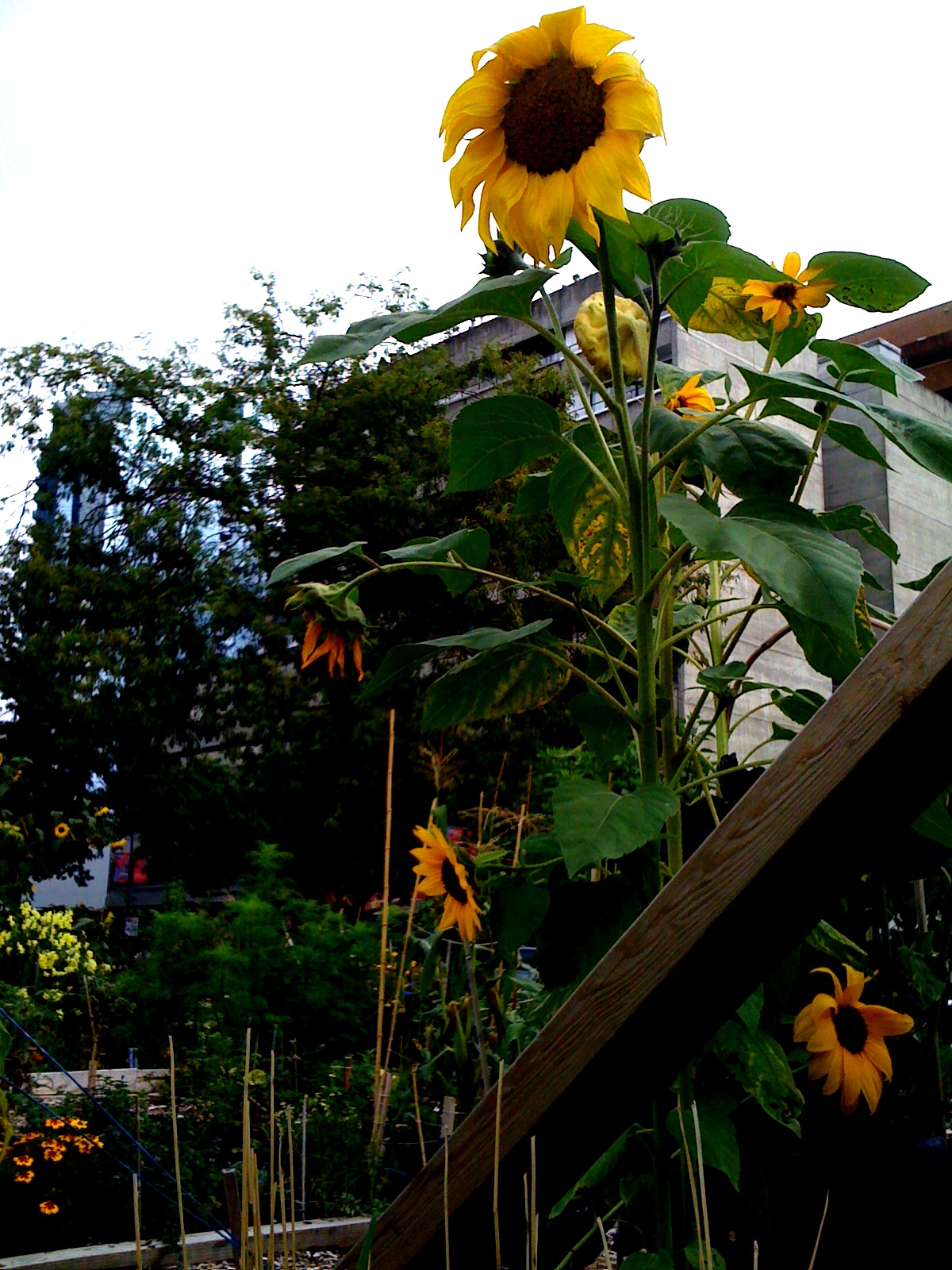
Afterward, I walked back up to Davie, got myself some brunch and decided to walk home, which would bring me close to ten kilometres for the day.  The forecasted rain never materialized and the cool, cloudy day was perfect for walking.  My plan was to walk from the West End past Yaletown, through downtown and Chinatown until I reached Strathcona, where I thought I might take a break at the Union Market.  Walking down Davie, I stopped to take some pictures at the community gardens and I found myself thinking that my Uncle Gerry would have fit very well into the current renaissance of DIY culture.  He renovated spaces, cooked inventively and gardened prolifically in the ‘70s and ’80s.  And that reminded me of all the potential we’d lost to AIDS, along with the people.

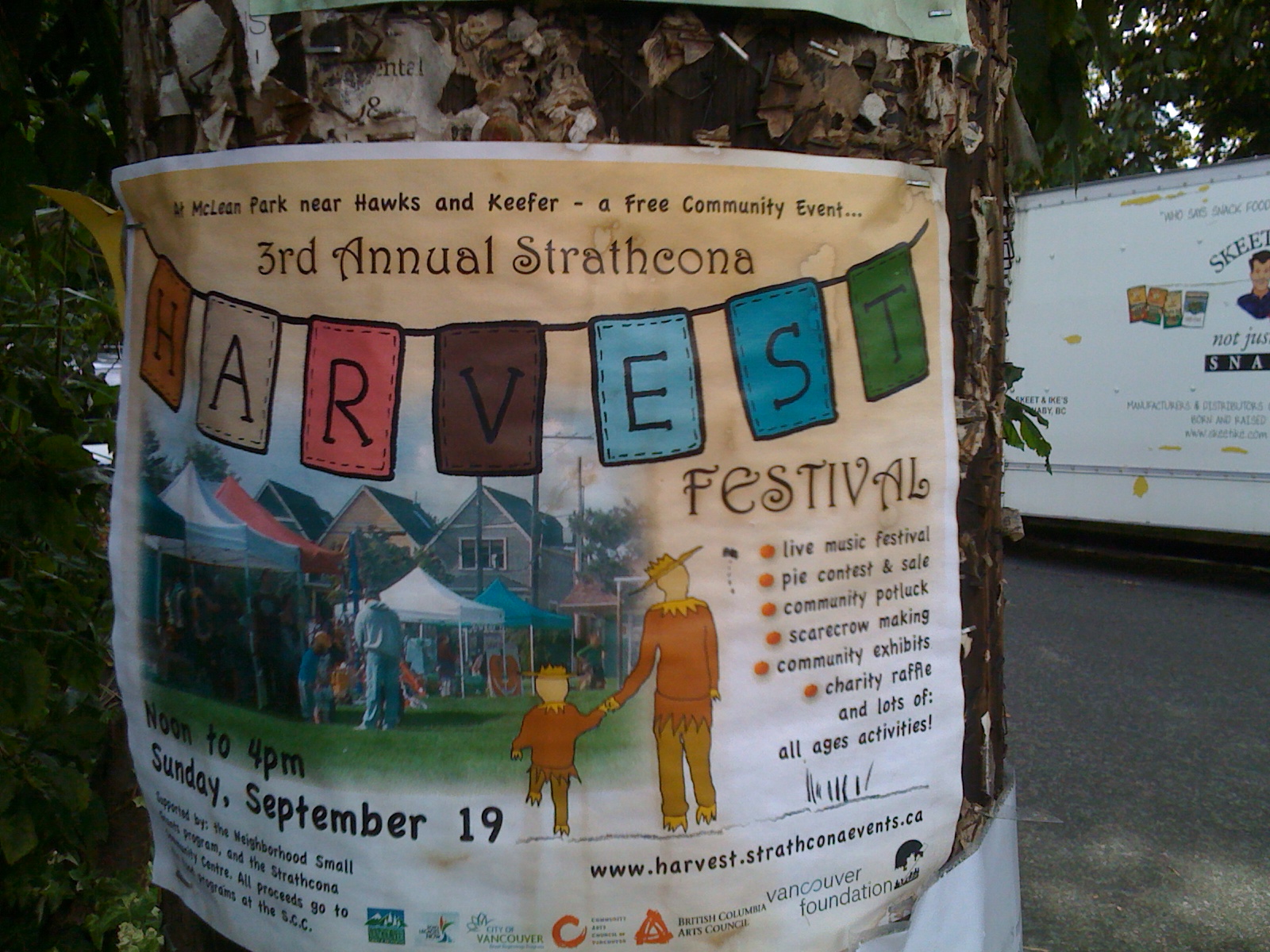
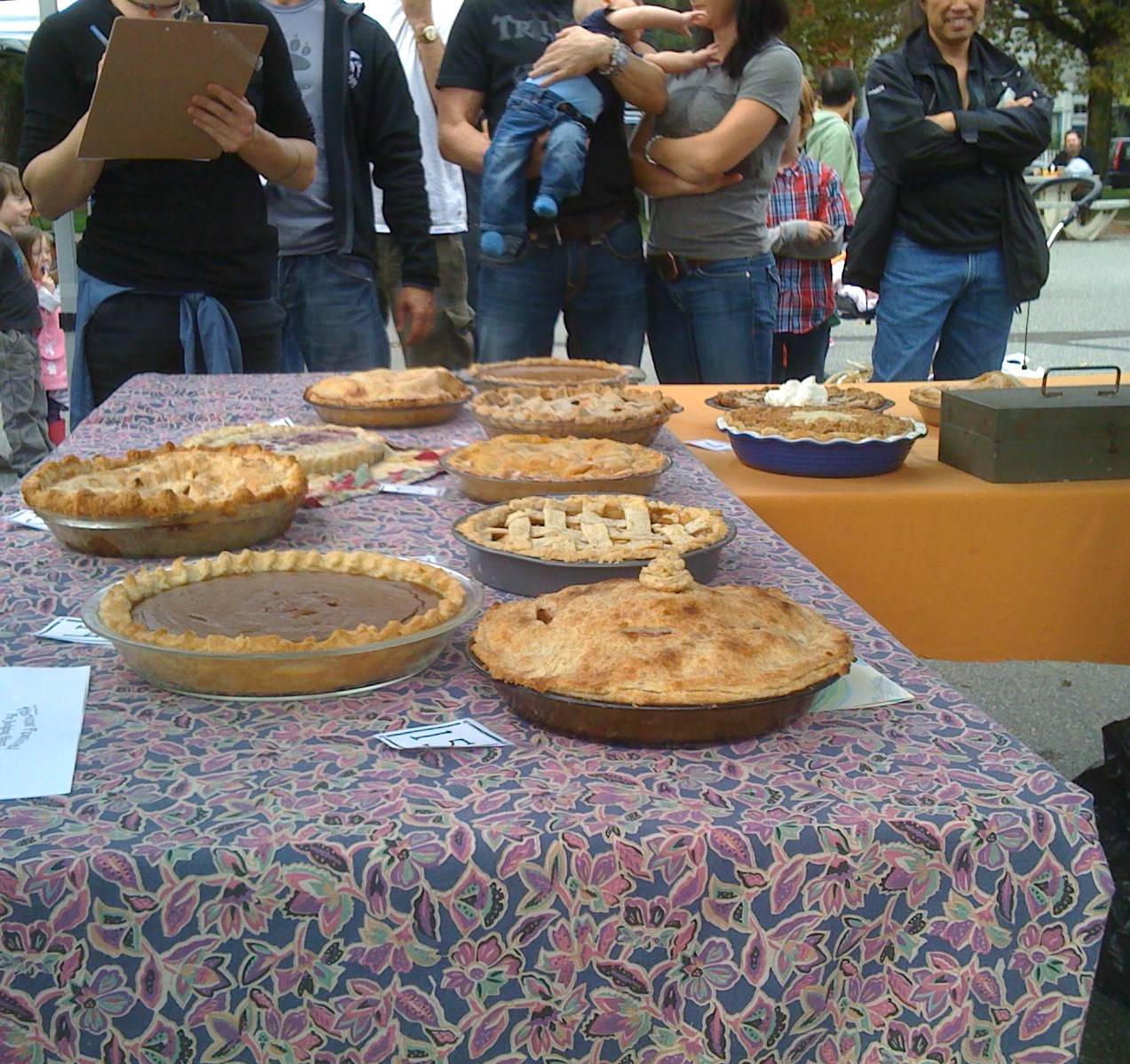
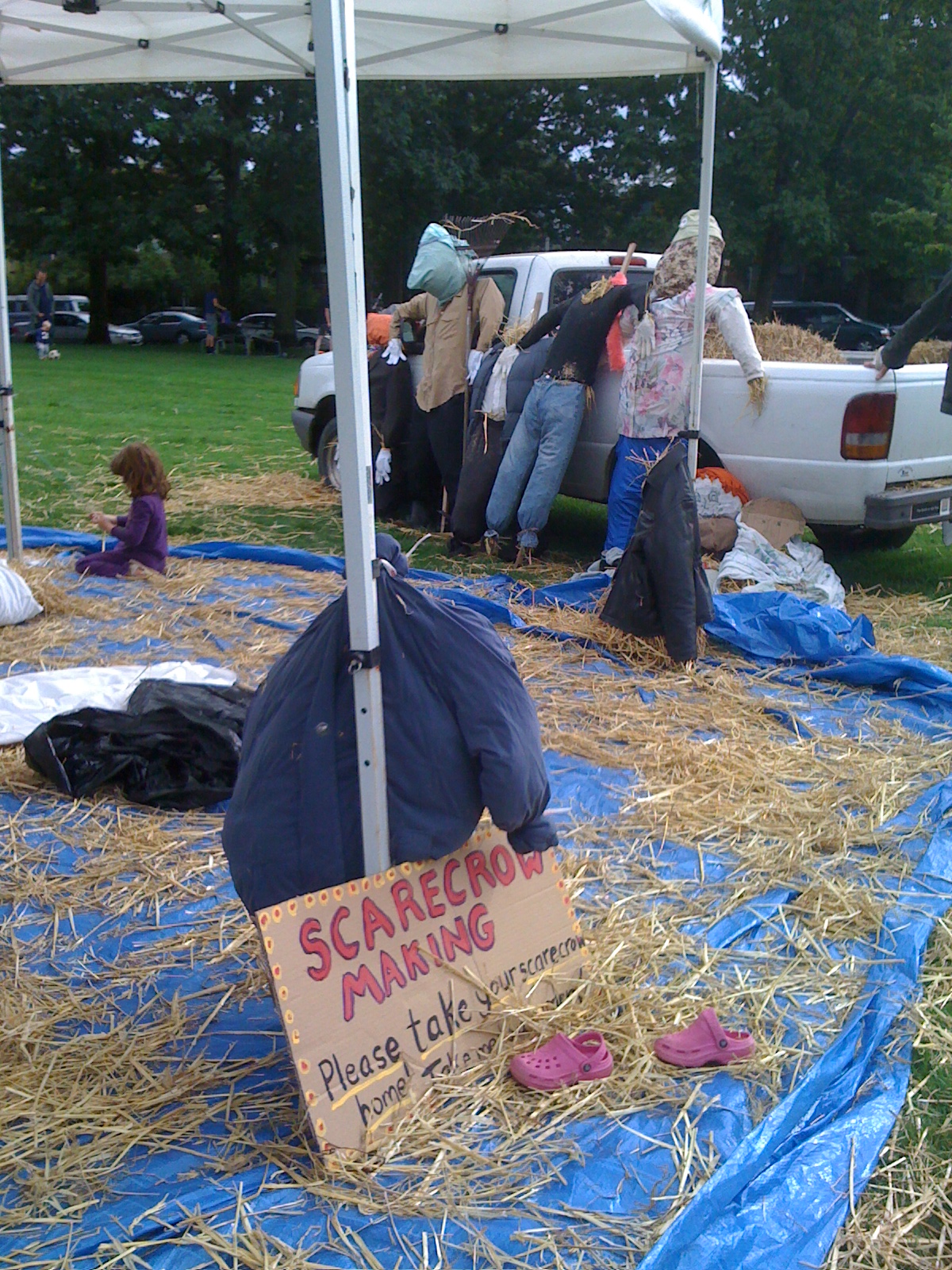
I kept walking according to plan, but I never made it to the Union Market. Instead, I sat in McLean Park where the Strathcona Harvest Festival was taking place. It was the pie contest that drew me in. The judging had begun and there were young people with clipboards, cheerfully examining each of the entries. I loved the inventiveness of this festival, with its scarecrow-stuffing station, city chickens on display and pretty handmade banners. There was a powerful feeling of neighbourliness there, which isn’t surprising for Strathcona. Whenever I walk or ride down the bike path that cuts through the area, I have the sense that everyone knows each other. And that they do things together.


Incidentally, I think the Vancouver Foundation’s Neighbourhood Grants Program, which funded this festival, is spectacular. Since these grants became available, there have been canning workshops, block parties, small festivals – every year brings something new.

After a while, I felt rested and went over to The Wilder Snail to pick up a tea for the last leg of my walk home. I’m glad I stumbled upon the festival; our yearly ritual has always ended in a celebration.