FFWD – Pissaladière

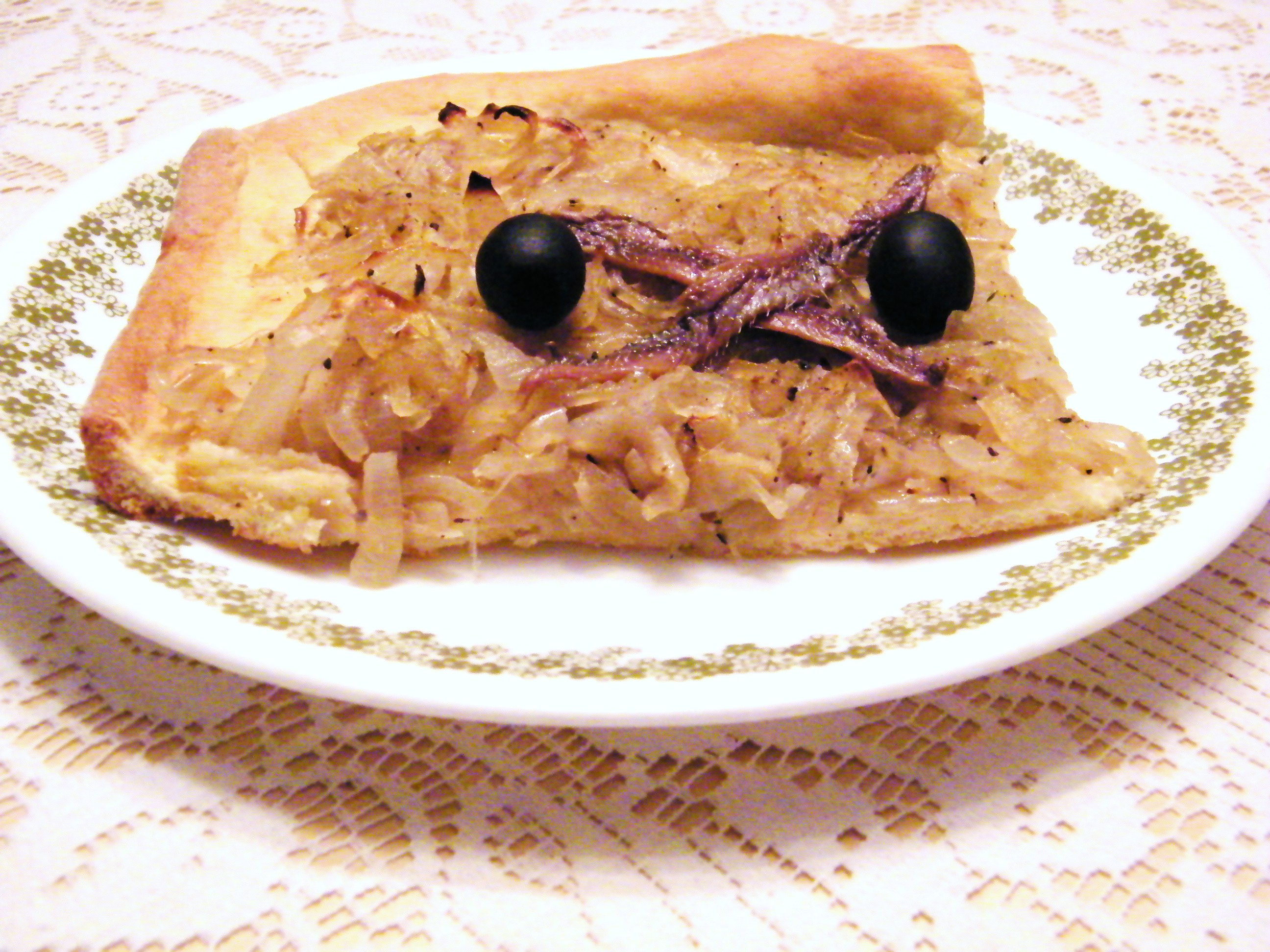
A corner slice, ready to eat.

This week, I’ve been re-reading Adam Gopnik’s Paris to the Moon, in preparation for seeing him speak at the CBC Book Club this weekend. Almost as good as going to the Massey Lectures themselves. In the opening essay, he asserts that “[t]here are two kinds of travelers. There is the kind who goes to see what there is to see and sees it, and the kind who has an image in his head and goes out to accomplish it. The first visitor has an easier time, but I think the second visitor sees more. He sees with his mind, and maybe even with his heart, or tries to.” I’m not sure that it’s entirely fair to the first sort of traveller, who may simply be keeping an open mind, but I think most of us have constructed imaginary versions of places we want to visit.

Kneading the dough.

In particular, I think French Fridays participants might be guilty of cooking a version of France into existence. I know that many of the recipes feed my fantasies of Paris bistros or countryside picnics. This week’s recipe, Pissaladière, has me imagining travelling through Mediterranean sunshine on a Vespa and picking up a slice of this French pizza before heading to the beach. Not that I would drive my scooter one-handed. Really.

Opening the can of anchovies.

This fantasy only works if there’s someone else doing the cooking. The reality of this recipe is more like a weekend in the country, than a whirlwind trip to the beach. (Not that I’m speeding in my imagined Mediterranean trip, either.) The process of making this dish is meditatively slow. The thinly sliced onions are cooked at low temperature, so that they caramelize without colouring much. While that’s happening, the dough is mixed and set to rise in a warm room. When it has risen, it’s rolled into an extremely thin rectangle and covered with the cooked onions. Things speed up considerably here – the Pissaladière is baked for twenty minutes, then the olives and anchovies are added before sliding it into the oven for a final five minutes.
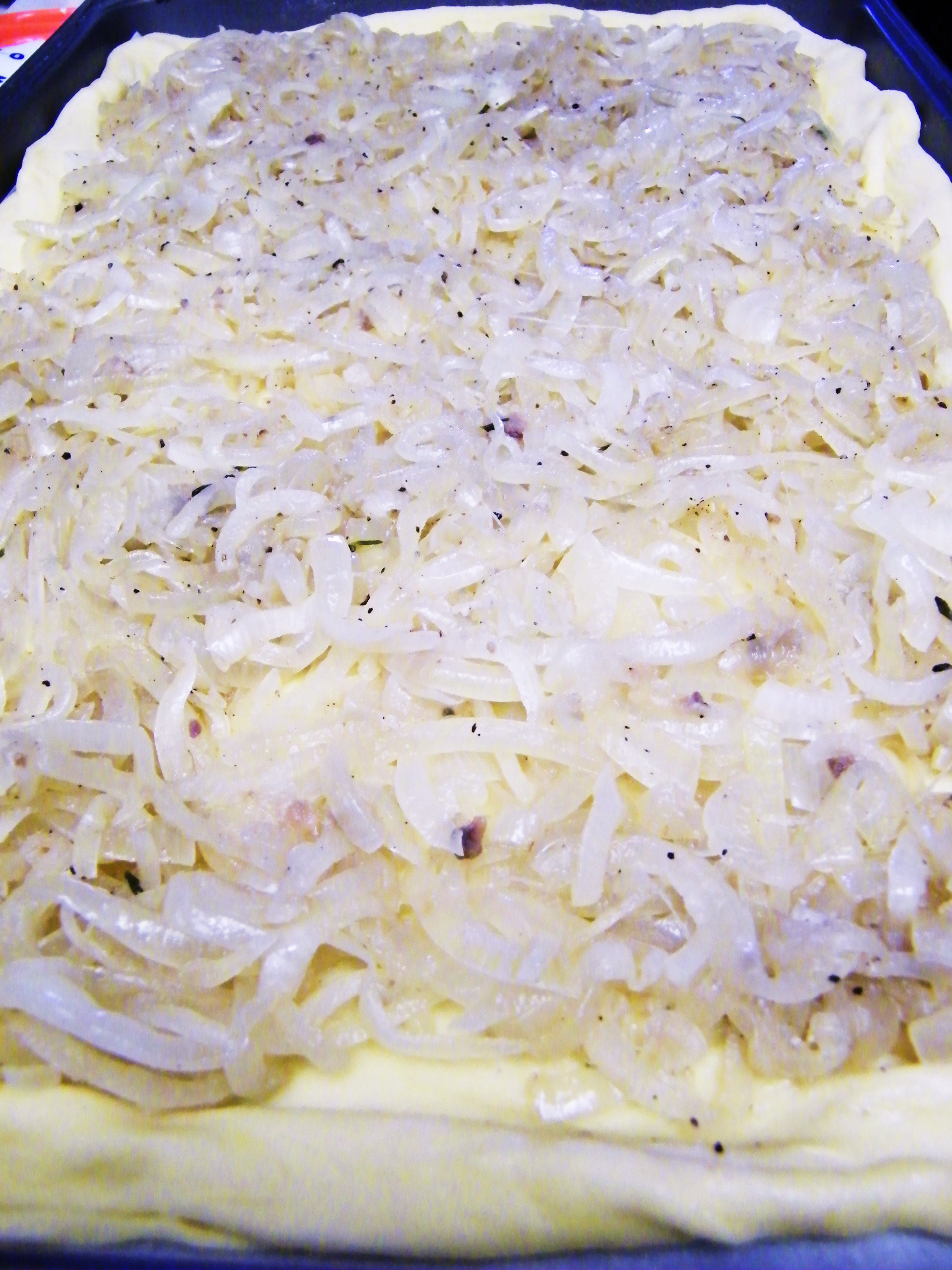
Spreading the slowly-cooked onions onto the unbaked crust.

It might seem a lot of work for a snack, but it’s worth it. The onions are meltingly sweet, which is balanced by the salt of the anchovies and onions. The plain crust is shatteringly crisp at the edges, but sturdy enough to hold the toppings. I might not be able to afford a Mediterranean vacation at the moment, but this dish provides a little compensation. It’s certainly safer eating it here, than trying to eat it while steering a Vespa on twisty Mediterranean roads at high speed.
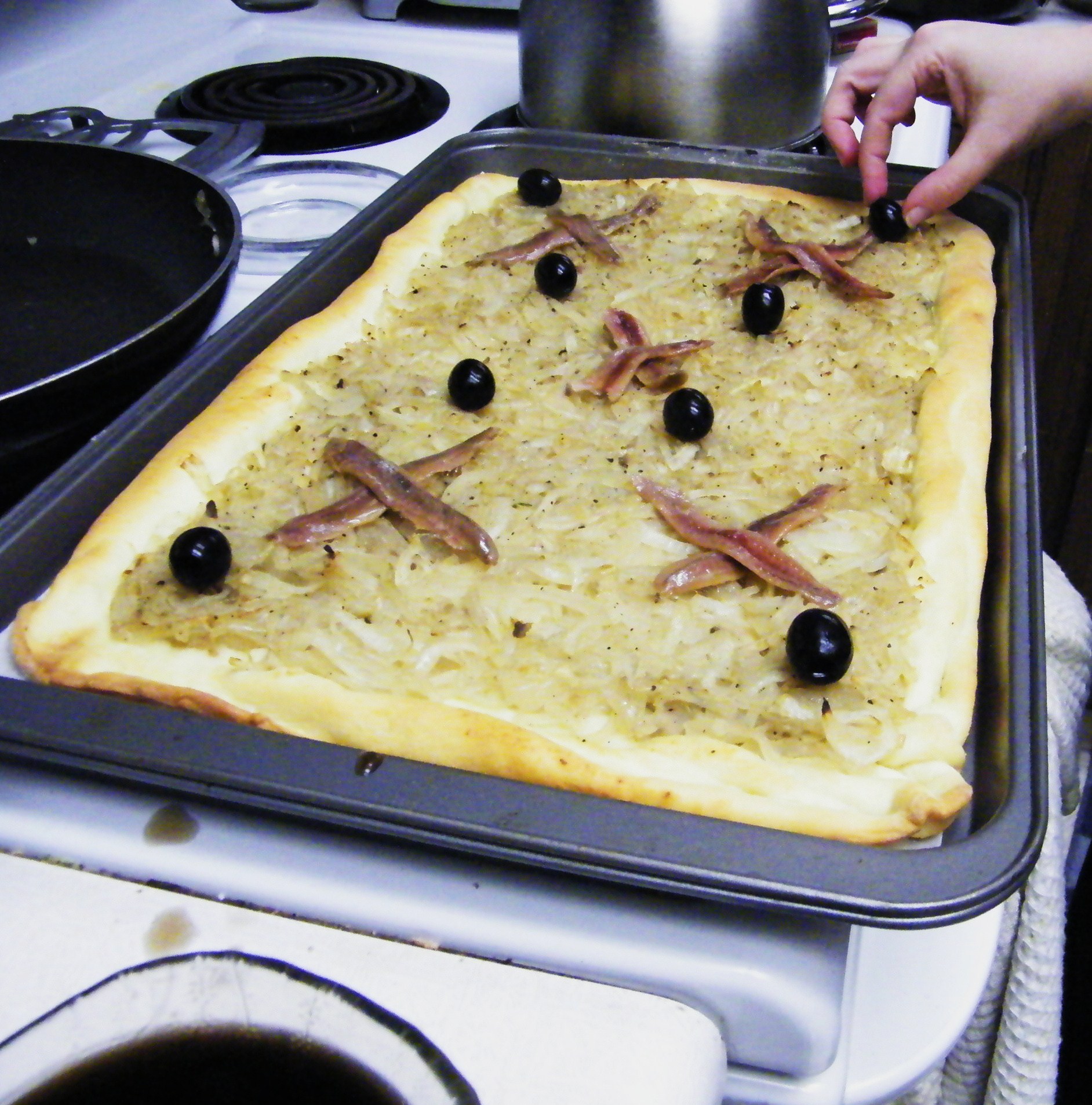
Adding the olives and anchovies.
Photo by Jeannine McCarthy

Tell me, what sort of traveller are you? Have you taken a trip to a place you’ve fantasized about? How did it measure up?

You can find many other blogged descriptions of this week’s FFWD recipe here: Pissaladière

FFWD – Buckwheat Blini with Smoked Salmon and Crème Fraîche

Hello crème fraîche and smoked salmon!

Blini are small, yeasted, buckwheat pancakes that provide a platform for sumptuous toppings. Think Russian caviar and thick sour cream. This week’s recipe is a French take on this Eastern European classic. I made this for my parents, as I wanted to try the standard version before attempting a gluten-free version that I can serve at home. They have a gas fireplace in the family room and it made the room the perfect place to leave the batter to rise. We’ve has some wet, chilly weather lately and I’m not sure it would have risen anywhere else in the house.

Stirring the blini batter.

Regular pancakes rely on baking powder for a little lift, but puffy, airy blini batter relies on yeast. The smell is reminiscent of bread, but the buckwheat adds adds a nuttiness to the aroma. In the pan, though, the batter looks and acts like standard pancake batter. I used a wide frying pan, but I’d love to have a stovetop grill for these. It would be nice for party appetizers if they were all done at once, so that they could be quickly topped and served hot, without resorting to reheating.

Blini in the frying pan.

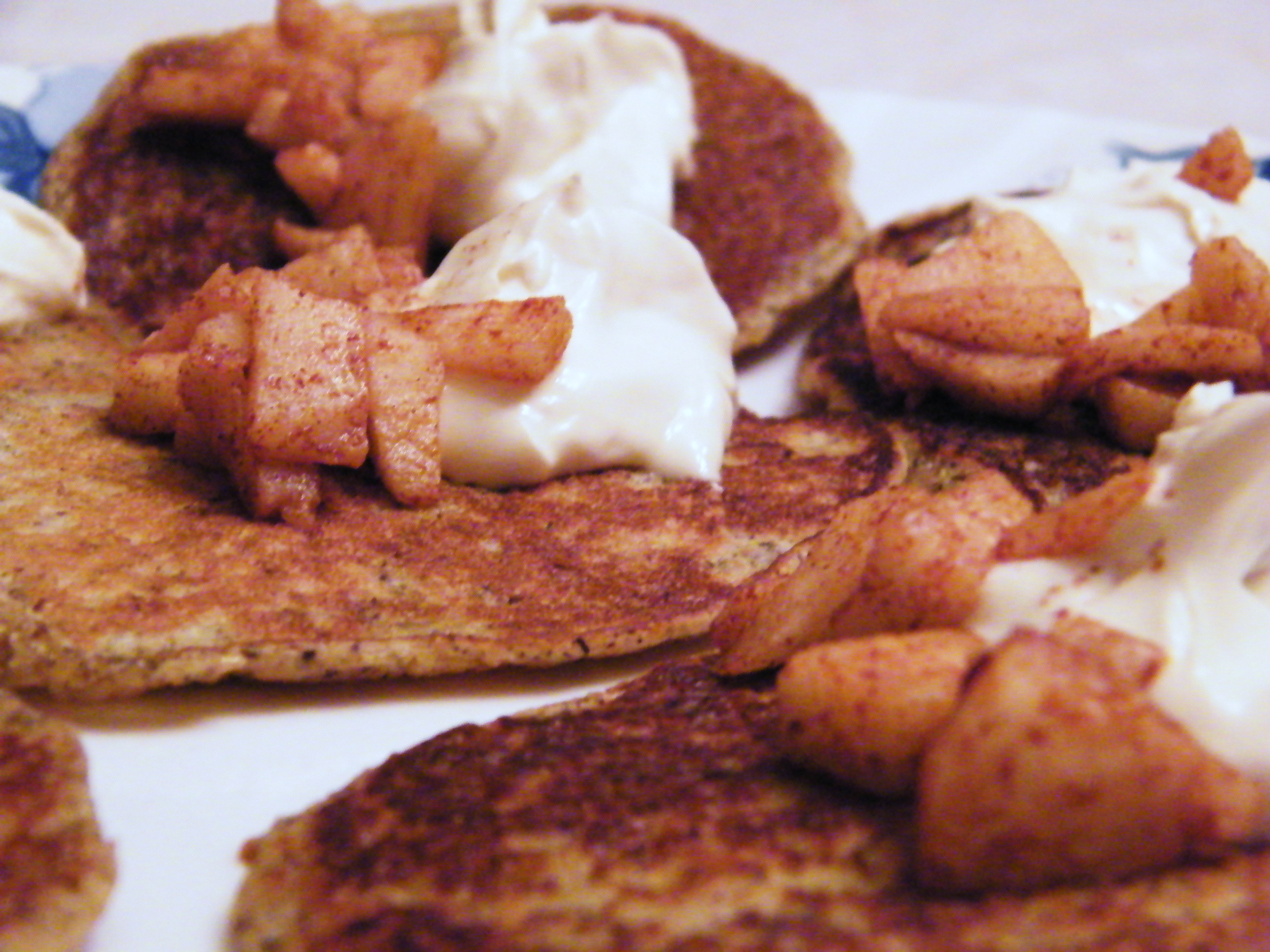
I served about a third of them as an appetizer, with smoked salmon on a dollop of crème fraîche. Another third went into the fridge, and the last of the blini were reheated, topped with more crème fraîche (this time with brown sugar whipped in) and apples that I’d sautéed in butter and cinnamon. It was a perfect dessert.

The cooked apples, with brown-sugared crème fraîche.

You can find many other blogged descriptions of this week’s FFWD recipe here: Buckwheat Blini with Smoked Salmon and Crème Fraîche

FFWD – Olive-Olive Cornish Hens

Finished bird.

I’ve always agreed with Linus – happiness really is a warm blanket. In fact, when we were teenagers, if my sister wanted something of me, she’d often put a blanket in the dryer and then bring it to me. If she really wanted something, she’d bring me a cup of tea, too.

Spatchcocking in action.
Photo by Jeannine McCarthy

I’ve recently revised this opinion, though – happiness can also be someone else’s kitchen equipment. This week’s French Fridays recipe would have been a lot more difficult if I hadn’t had the use of my mother’s kitchen shears. Her mini food processor came in handy, too. The Cornish hens in this recipe are spatchcocked, which entails removing the backbone and flattening or removing the breast bone, so that the bird will lie flat and cook more quickly. Though Dorie’s instructions were good, I also watched a video, just to make sure that I was doing it correctly. (I love that there are videos available online for cooking techniques, home improvement skills, dance steps, or almost anything else you might want to learn.)

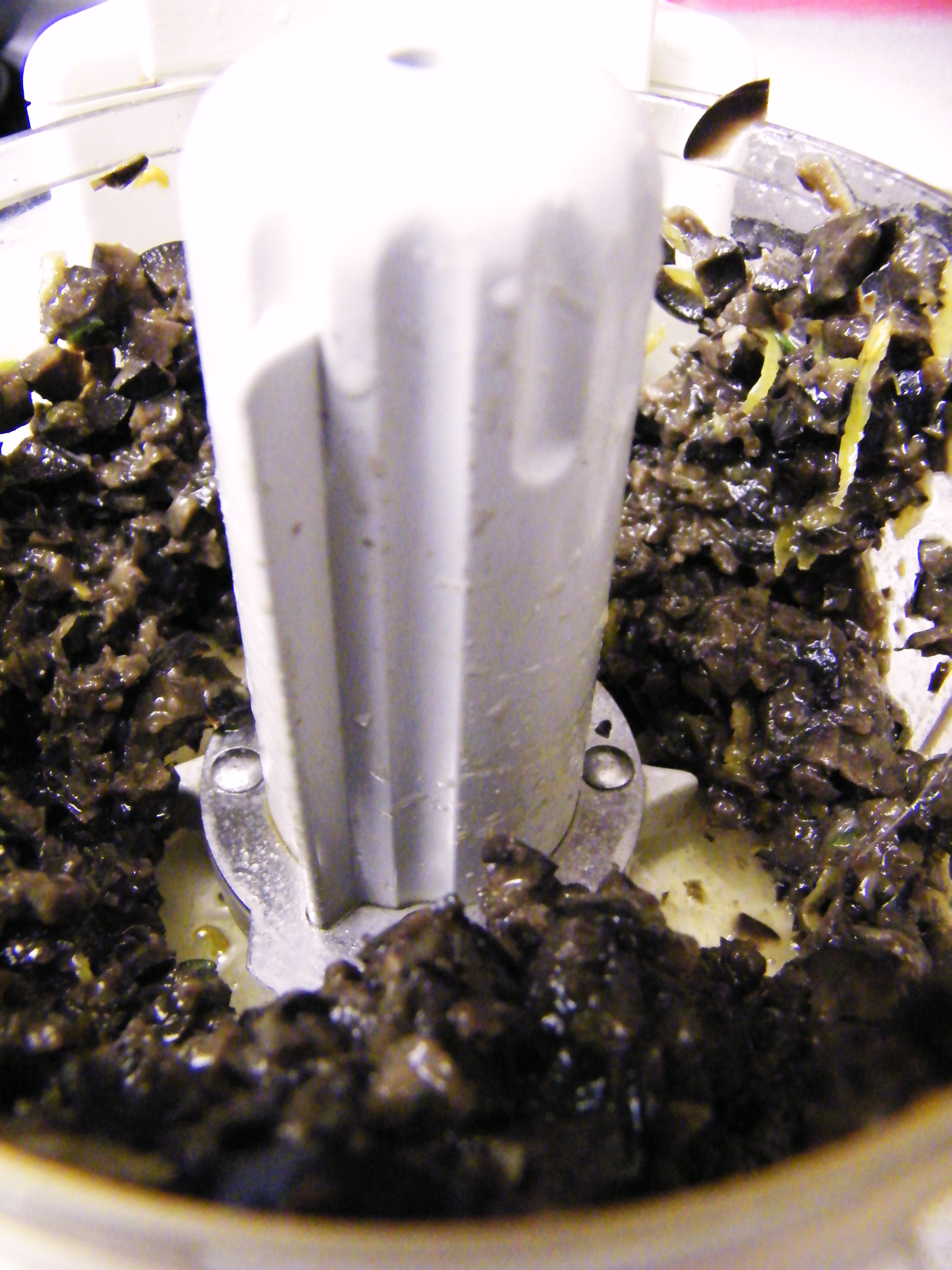
Once the birds are spatchcocked (you could also say that they were butterflied, but spatchcock is a much better word, don’t you think?), black olive tapenade is worked under the skin. The outer skin is rubbed with olive oil and seasoned with salt, pepper, and a little lemon juice. Now you can see why the double olive is not a typo. I used Dorie’s tapenade recipe, which is lemony, salty and lovely.

Black olive tapenade in the food processor.

The birds cook quickly at high heat, but the half-an-hour in the oven allows the flavour of the tapenade to permeate the meat. I served the hens with steamed vegetables, which needed no more dressing than the juicy birds provided. This dish would be perfect for a dinner party. It’s easy, but very impressive.

You can find many other blogged descriptions of this week’s FFWD recipe here: Olive-Olive Cornish Hens

FFWD – Deconstructed BLT and Eggs

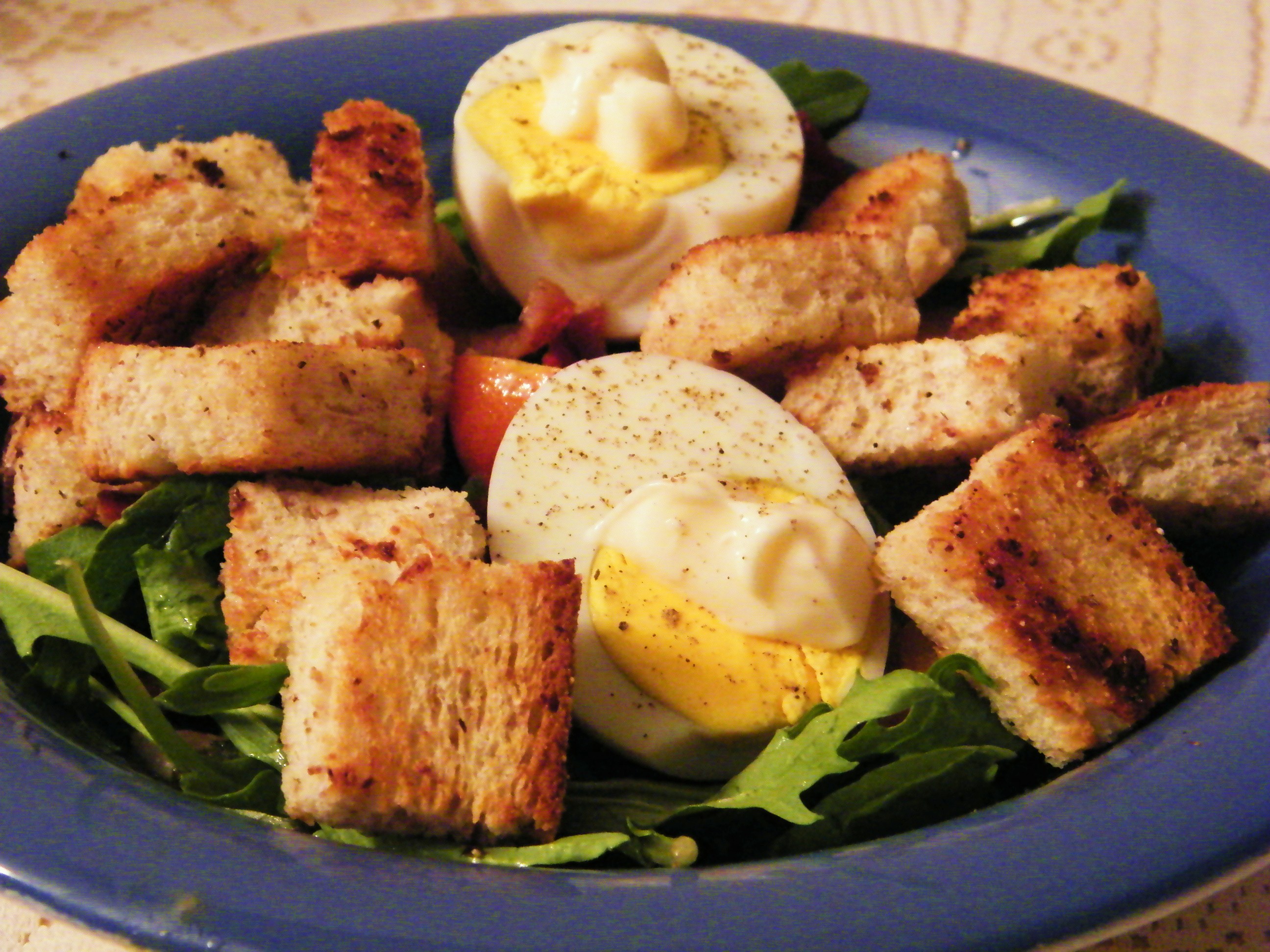
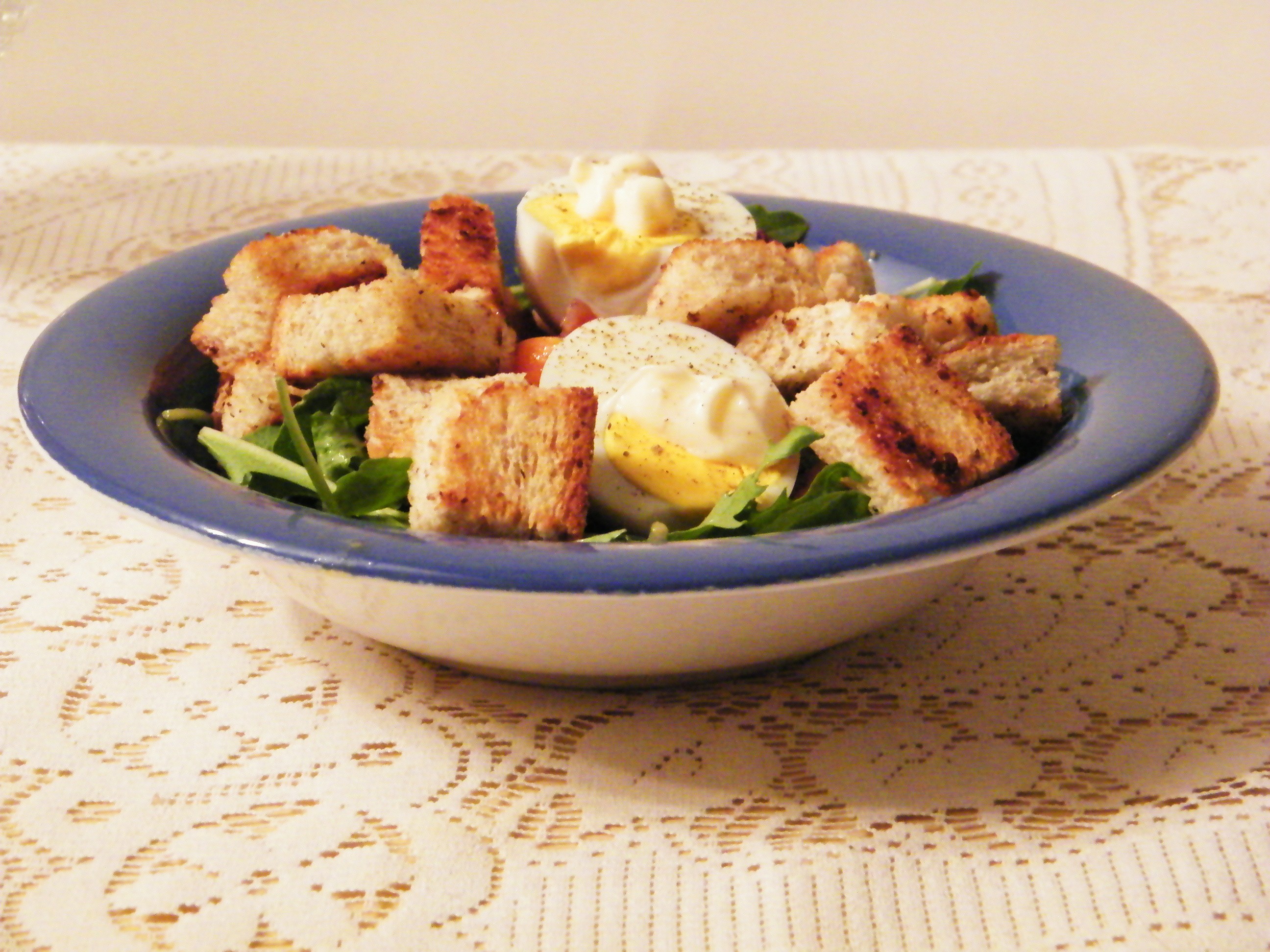
The finished salad, with greens on the bottom and bacon, croutons and mayonnaise-dolloped eggs on top.

Your perfect greasy spoon may be someone else’s idea of the eighth circle of hell. Opinions on the best breakfast spot can cause nearly friendship-rifting arguments. For some reason, the short-order grill menu evokes loyalty to an ideal that is broadly agreed upon, though the details are fiercely contested. Think about your favourite lunch counter sandwich – you know exactly how your grilled cheese (or maybe it’s a tuna melt, Monte Cristo, clubhouse, or Reuben) should be made. So, deconstructing the BLT – the ultimate greasy spoon sandwich – is a daring undertaking.

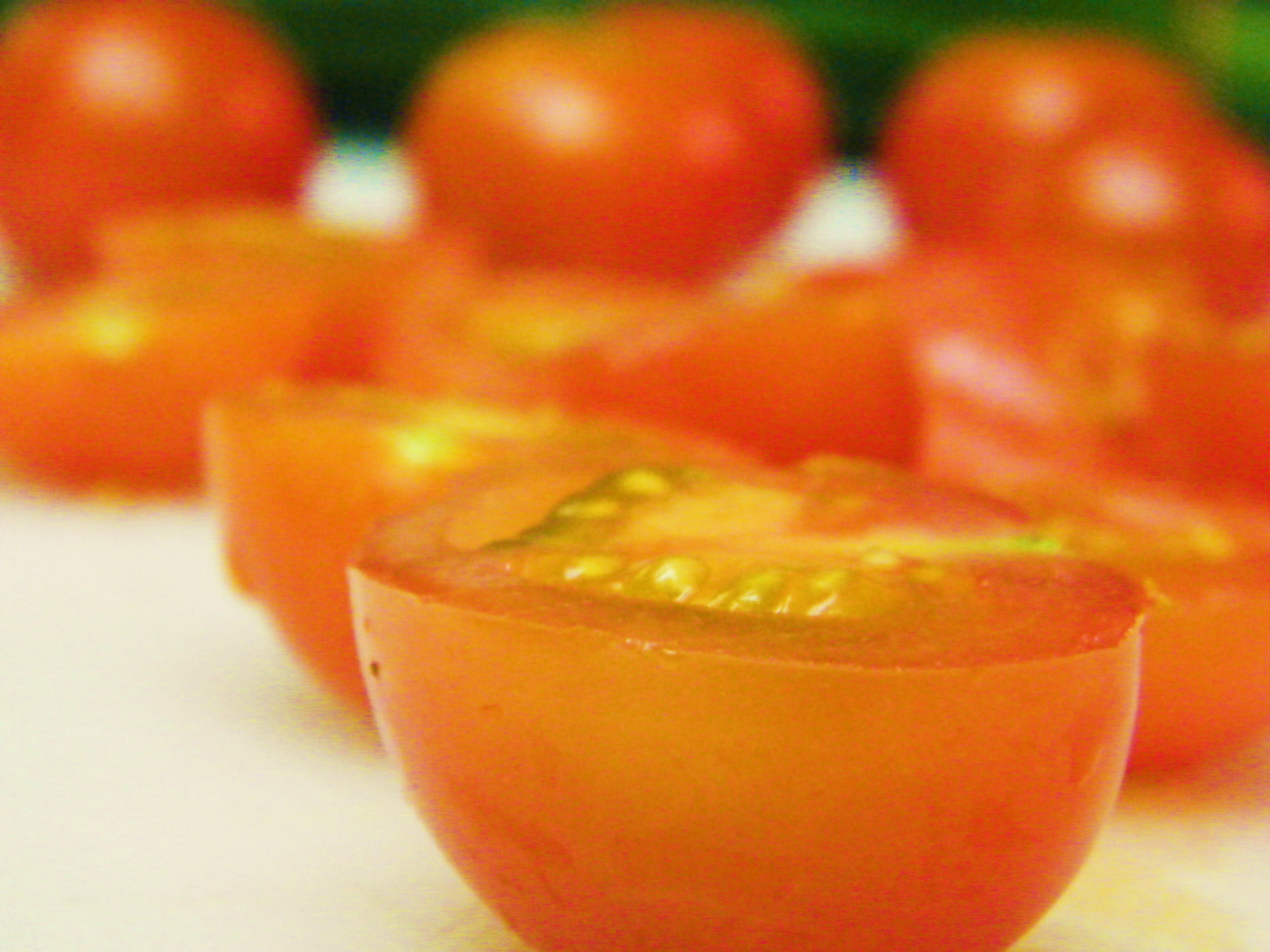
Cherry tomatoes from my mother's garden, halved and whole.

This week’s French Fridays recipe turns the sandwich into a salad, adding oeufs mayonnaise for some extra protein. Nothing about the recipe is difficult, but it’s a multi-step process that can take some time to complete. Hard-boiled eggs, crisp chunks of bacon, cubes of country bread browned in bacon fat, halved cherry tomatoes and chopped sun-dried tomatoes – once these ingredients are prepared, it’s almost meal time. Once the greens and tomatoes have been tossed in vinaigrette (I used Dorie’s Everyday Vinaigrette recipe, as suggested), the rest of the ingredients are scattered on top and the dish is complete.

Chunks of bread ready for their transformation into croutons.

I followed the recipe almost exactly, only straying when I found myself adding dried parsley, ground rosemary and garlic powder to the bread cubes as they cooked. It was a nice addition. The salad divided nicely into three generous dinner portions and was a surprising hit. I enjoyed it more than I’ve ever liked an authentic BLT. (Feel free to start vilifying me now, Team BLT.)

The bacon, in the pan and ready to be cooked.

So tell me, what is the most important thing that makes a greasy spoon great? What changes would make your favourite dish there inauthentic or disappointing? What would make you take a road trip to find out if a breakfast joint was as good as advertised? And lastly, what was the name of your long-lost favourite cheap eats spot? I know there is one; so many have disappeared over the last few decades.

The finished salad, in a blue bowl on a white lace tablecloth.

You can find many other blogged descriptions of this week’s FFWD recipe here: Deconstructed BLT and Eggs

FFWD – Honey-Spiced Madeleines

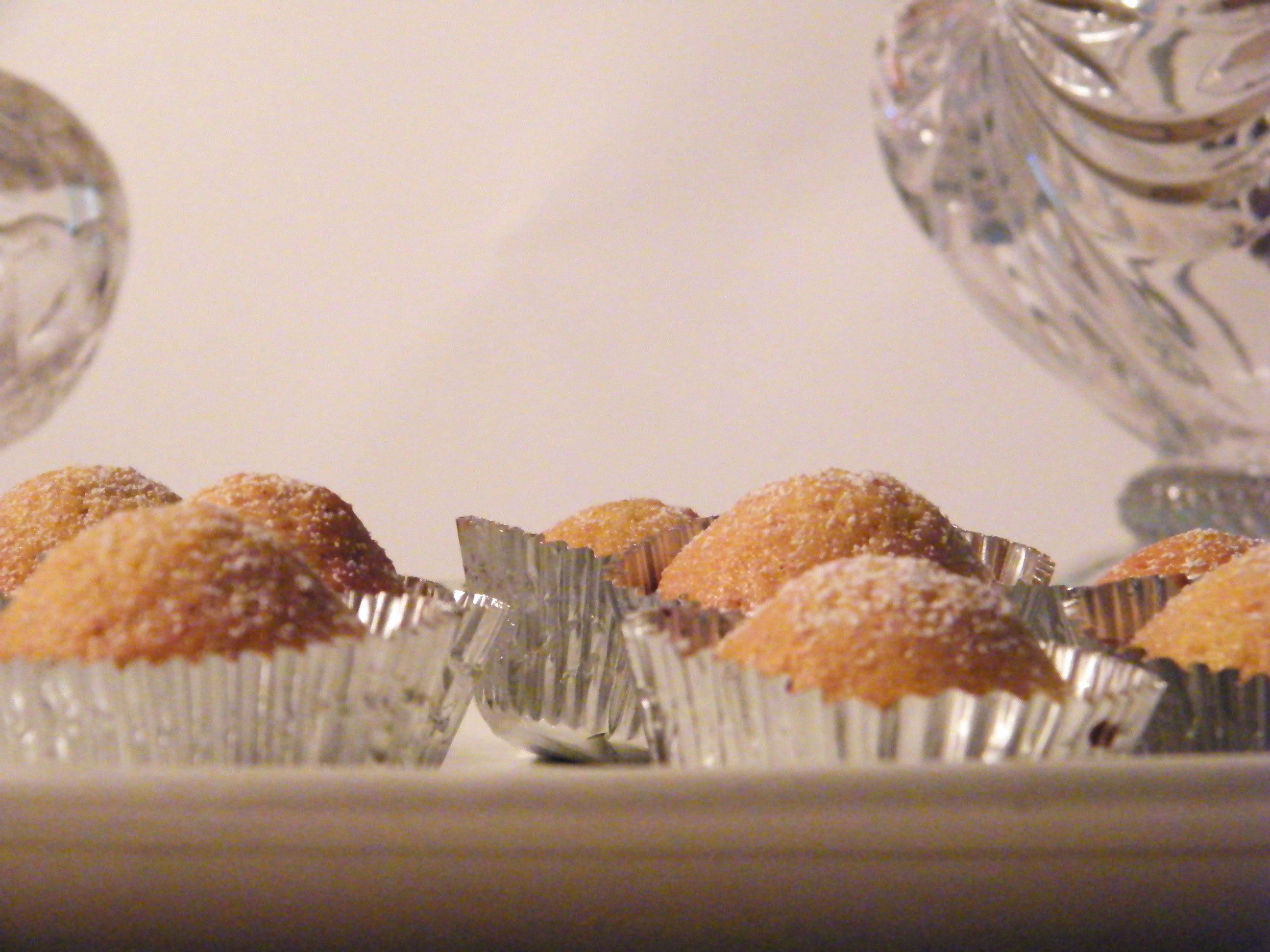
Madeleines as mini-muffins - glamour shot #1

My Madeleines aren’t Madeleines at all, since they lack the distinctive scalloped shape of the storied little cakes. I don’t have a Madeleine pan and I (surprisingly) didn’t run out and buy one in anticipation of this week’s French Fridays recipe. I tried to lend my version a little of the original’s lustre, though, baking them in silver foil miniature muffin cups. Literary lustre replaced with literal lustre.

Madeleines as mini-muffins - glamour shot #3

Dorie’s version is also a variation in flavour from the traditional lemon-zested cake, so perhaps it’s fitting that they have their own shape. These tiny domes are flavoured with orange zest, ginger, cinnamon, and cloves. They also have a surprising, mild bite from the pinch of pepper added to the batter. I chilled the batter for three hours before using it, but it continues to improve if you rest it in the fridge for even longer.

Madeleines as mini-muffins - glamour shot #4

The cakes have a little give in the centre and a little crispness around the edges. The sponge is infused with orange flavour and it’s as though the spices are suspended throughout. They’re lovely with tea and can, if you’re not careful, give you pretensions of literary greatness.

Madeleines as mini-muffins - glamour shot #2

You can find many other blogged descriptions of this week’s FFWD recipe here: Honey-Spiced Madeleines

FFWD – (Not) Cinnamon-Crunch Chicken

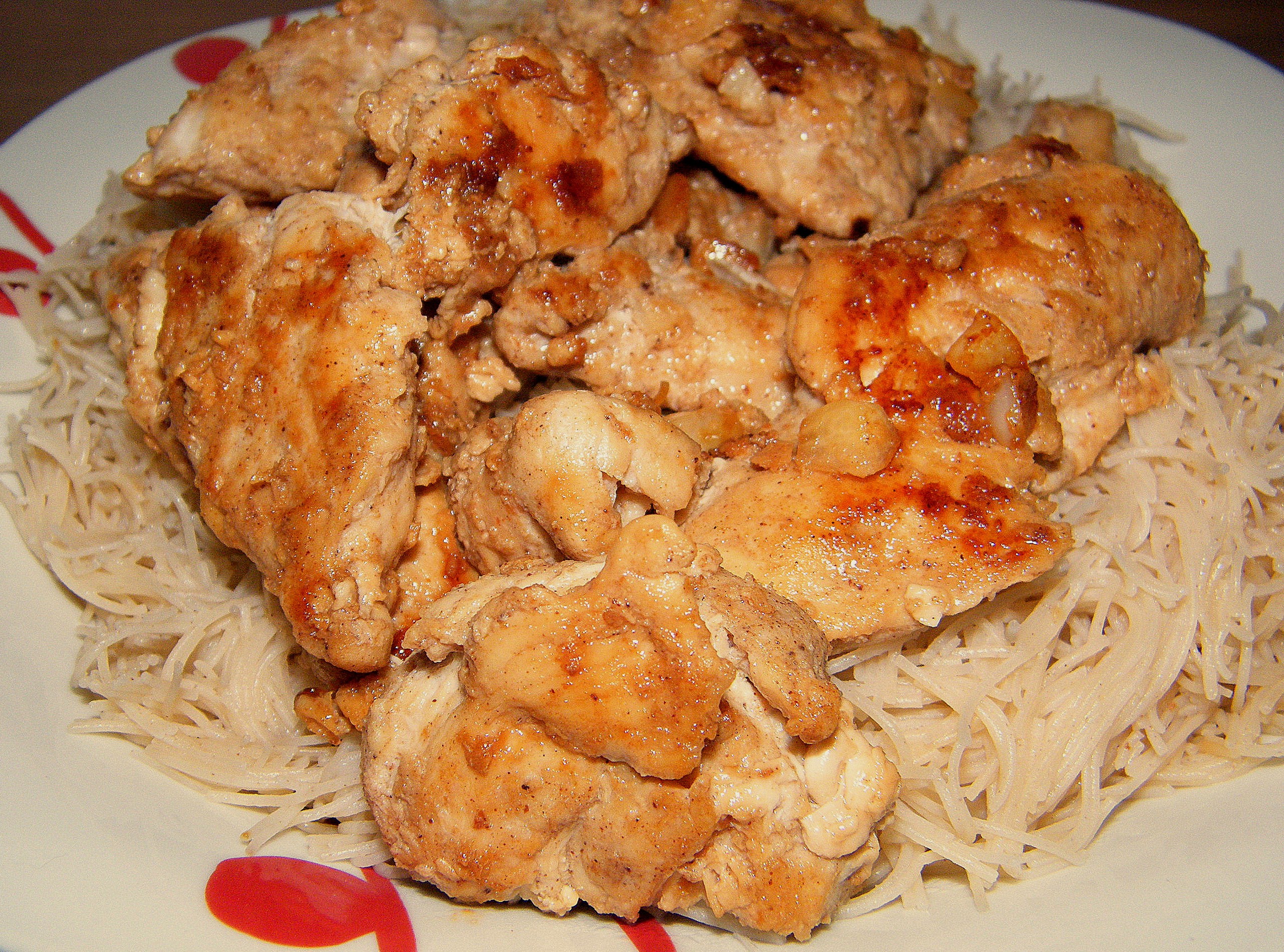
Chicken atop brown rice vermicelli.

Sometimes the stars don’t align when I’m planning to make a recipe. It’s not surprising that this might happen occasionally while participating in a weekly cooking group. This week’s French Fridays recipe, Cinnamon-Crunch Chicken, sounds like a quick, interesting, weeknight dinner choice. Crumbled speculoos coating slices of chicken breast, with crème fraiche for richness – fifteen minutes from preparation to table. Sounds good, except for one thing – I wasn’t able to get any suitable gluten-free cookies and my usual gluten-eating victims taste-testers just weren’t available.

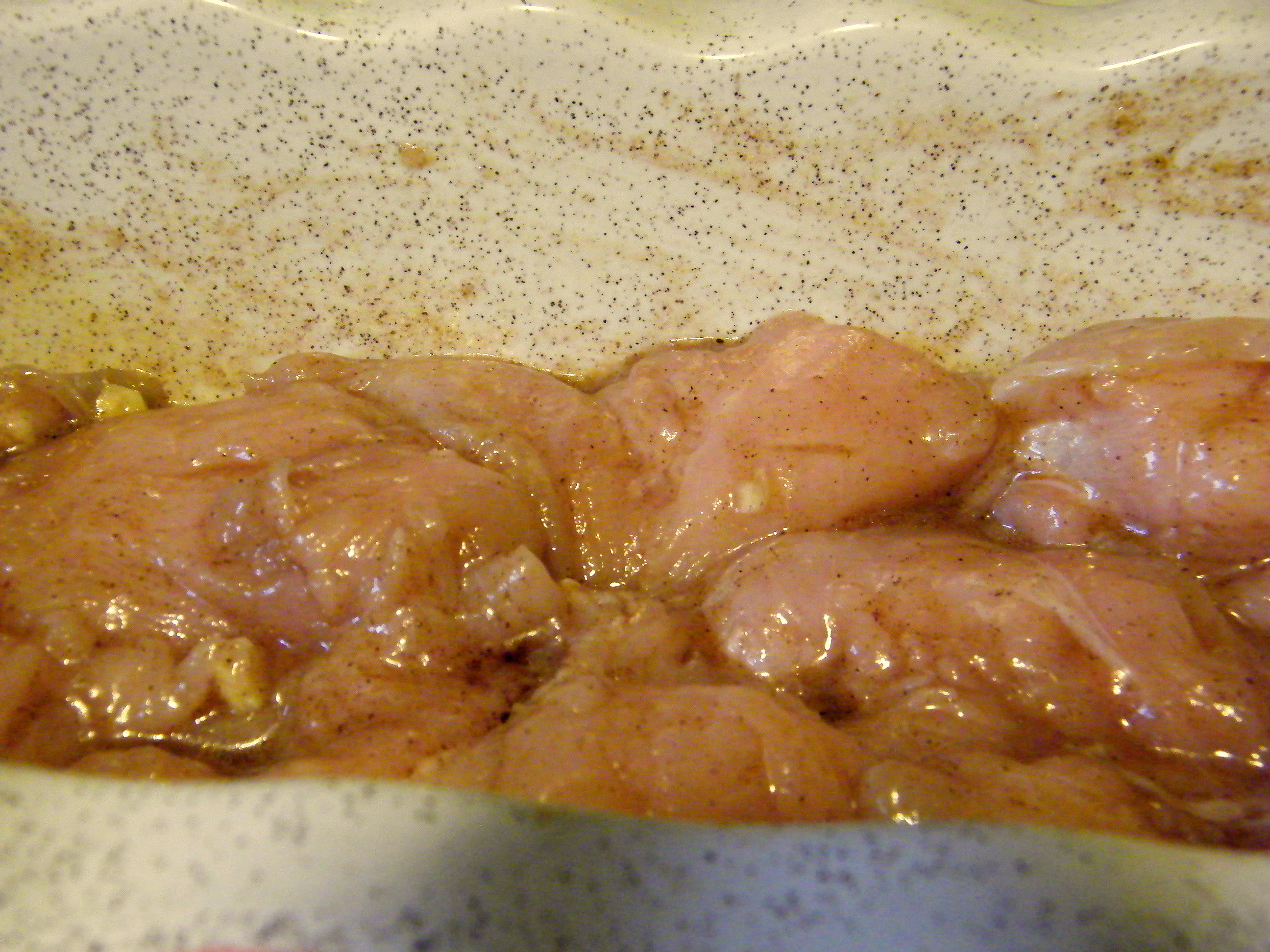
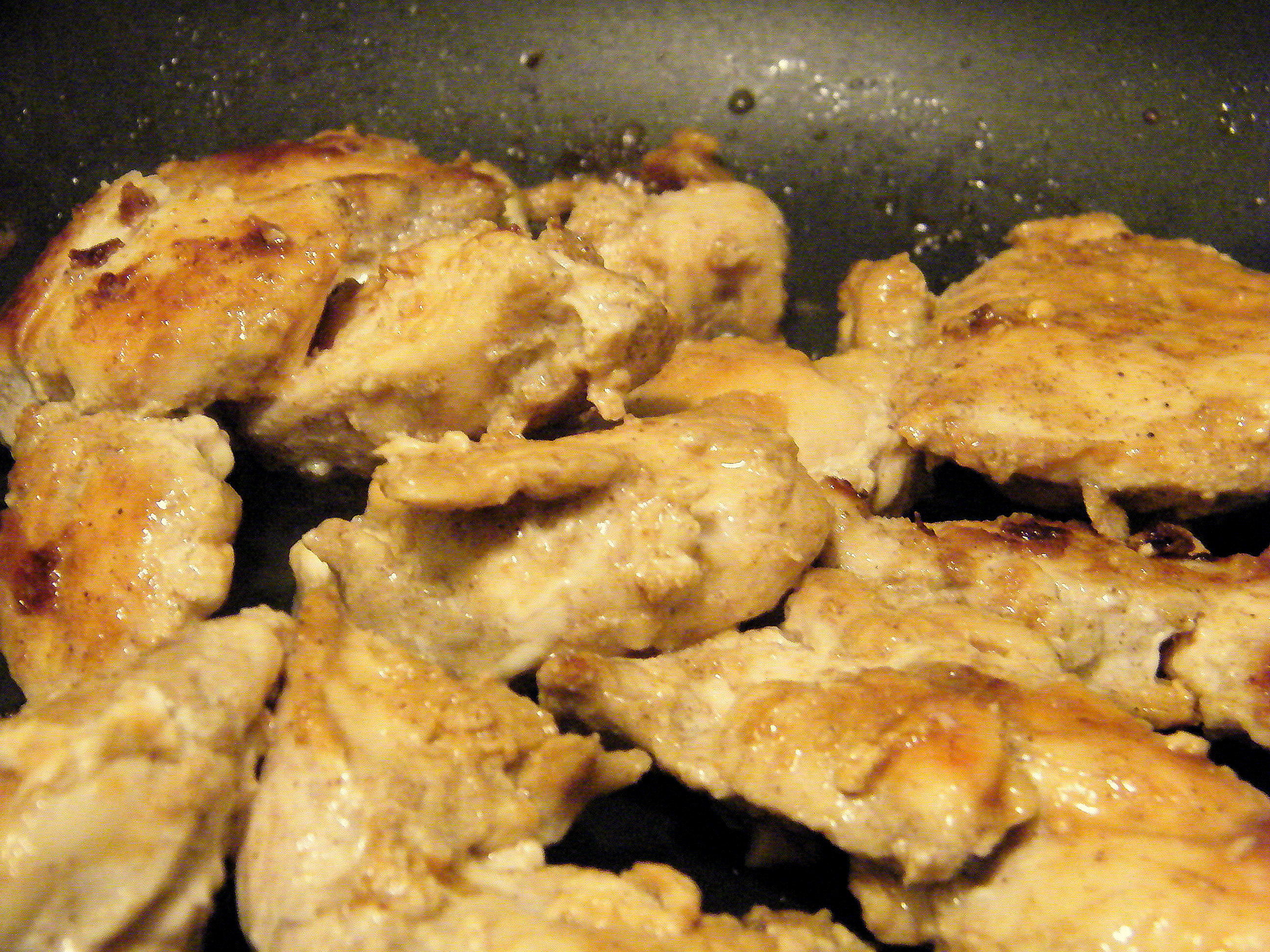
No matter. As Doristas like to say, French Fridays recipes are as much jumping off points as they are road maps. The cinnamon put me in mind of Moroccan flavours, so I marinated slices of chicken breast in safflower oil, lemon juice, cinnamon, sugar, cumin, paprika, and garlic. I left the chicken in the marinade for a couple of hours, then sautéed it in a little chicken stock. Meanwhile, I softened some brown rice vermicelli in hot water. When the chicken was done, I added a little more lemon juice to the pan and gave it a good stir. Then, I fried the vermicelli in the pan juices. Quinoa would have been a closer match for the traditional (and gluten-y) couscous, but I fancied the vermicelli tonight.

Marinating chicken.

As you can see, I’m not much of a recipe writer. I love the term au pif, which Dorie describes as cooking by instinct. It’s an everyday way of making a meal – using what’s on hand and changing the ingredients according to taste. Tonight’s chicken could easily be turned into a stew with the addition of lentils or chickpeas, vegetables and a bit more liquid. It could also be served over any number of starches or some lightly dressed greens. So, not a recipe at all, really.

Sautéing the chicken.

Sometimes, that’s what cookbooks are for – inspiration, not instruction. I learn a lot by following recipes exactly, using techniques and ingredients that are new to me, but the digressions are where creativity lies. I’m looking forward to reading about everyone’s experience with this week’s recipe proper and I’m quite sure I’ll find some other instances where things took a different turn.

You can find many blogged descriptions of this week’s FFWD recipe here: Cinnamon-Crunch Chicken.

You’ve still got a couple of days to check out my 100th post, too – I’ve got a little giveaway happening. The winners will be announced on Tuesday, September 20th.

FFWD – Creamy, Cheesy, Garlicky Rice with Spinach

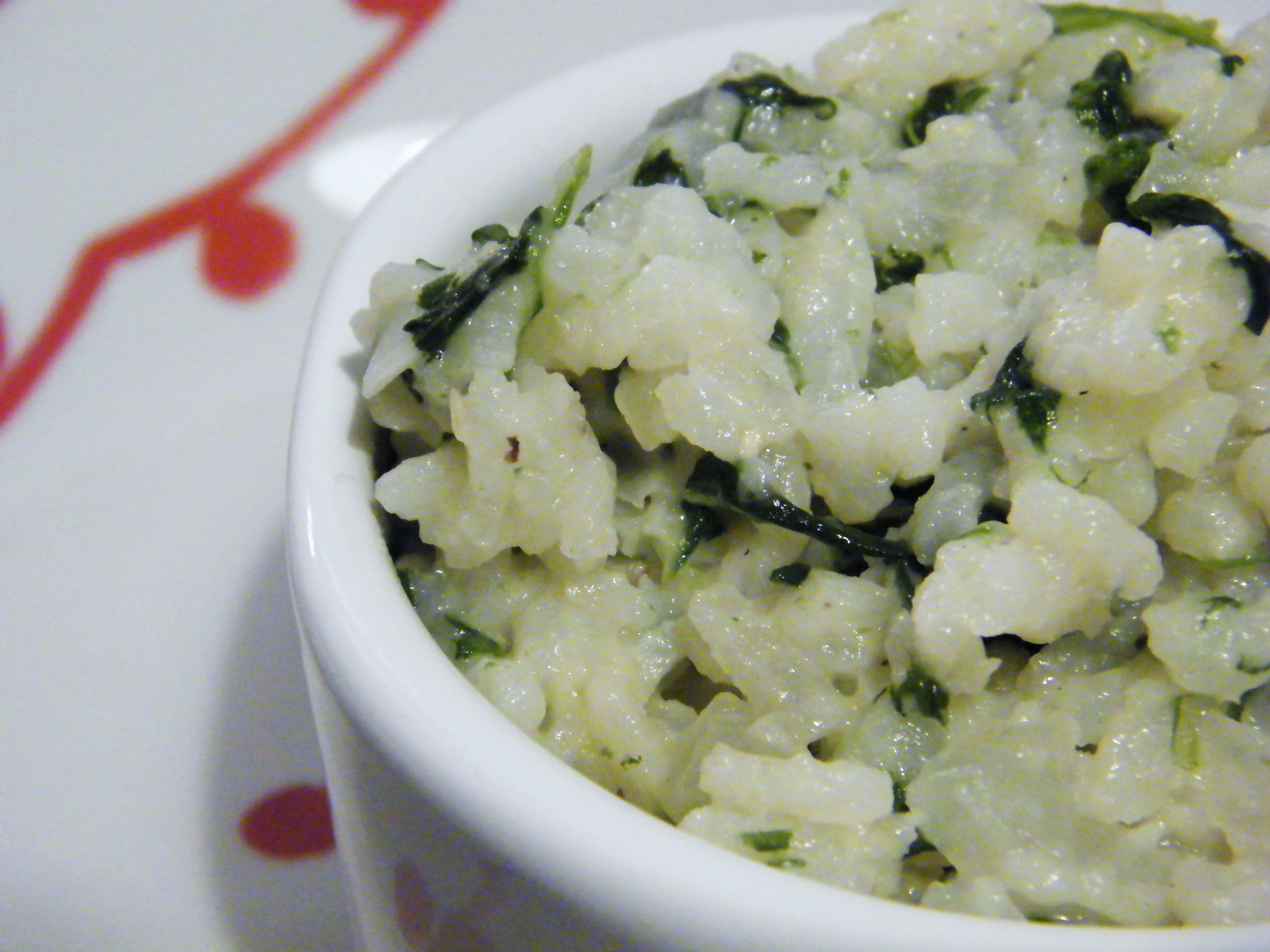
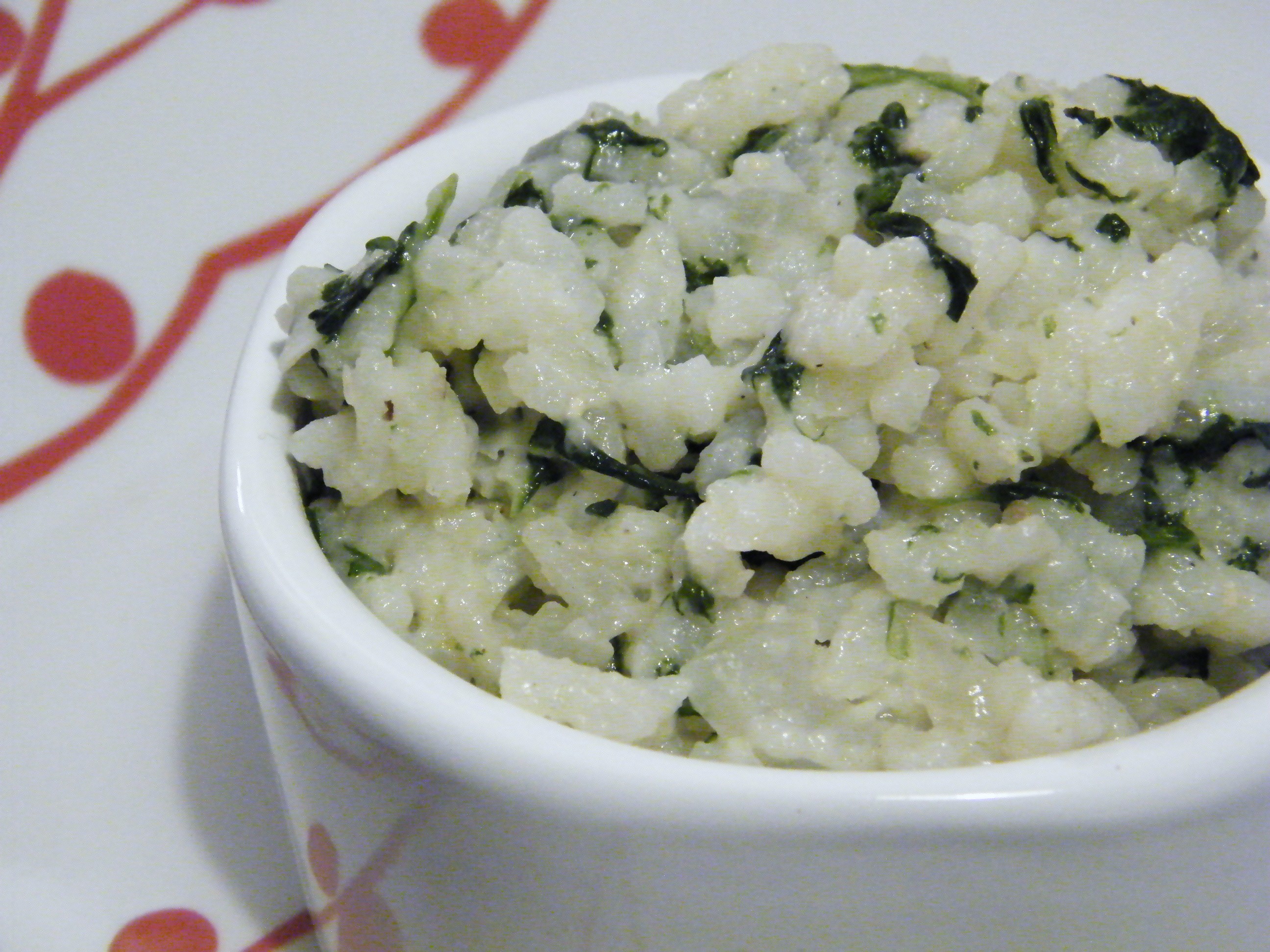
A closer view of the rice.

Comfort food is usually associated with cold winter days. Casseroles and stews, carbohydrate-rich for warmth, protein-laden for energy, meant for eating in a warm, bright room that keeps the cold and dark out. This week’s French Fridays recipe would be perfect for that sort of meal. But, it was also surprisingly good as a late summer main dish alongside some beans from the garden.

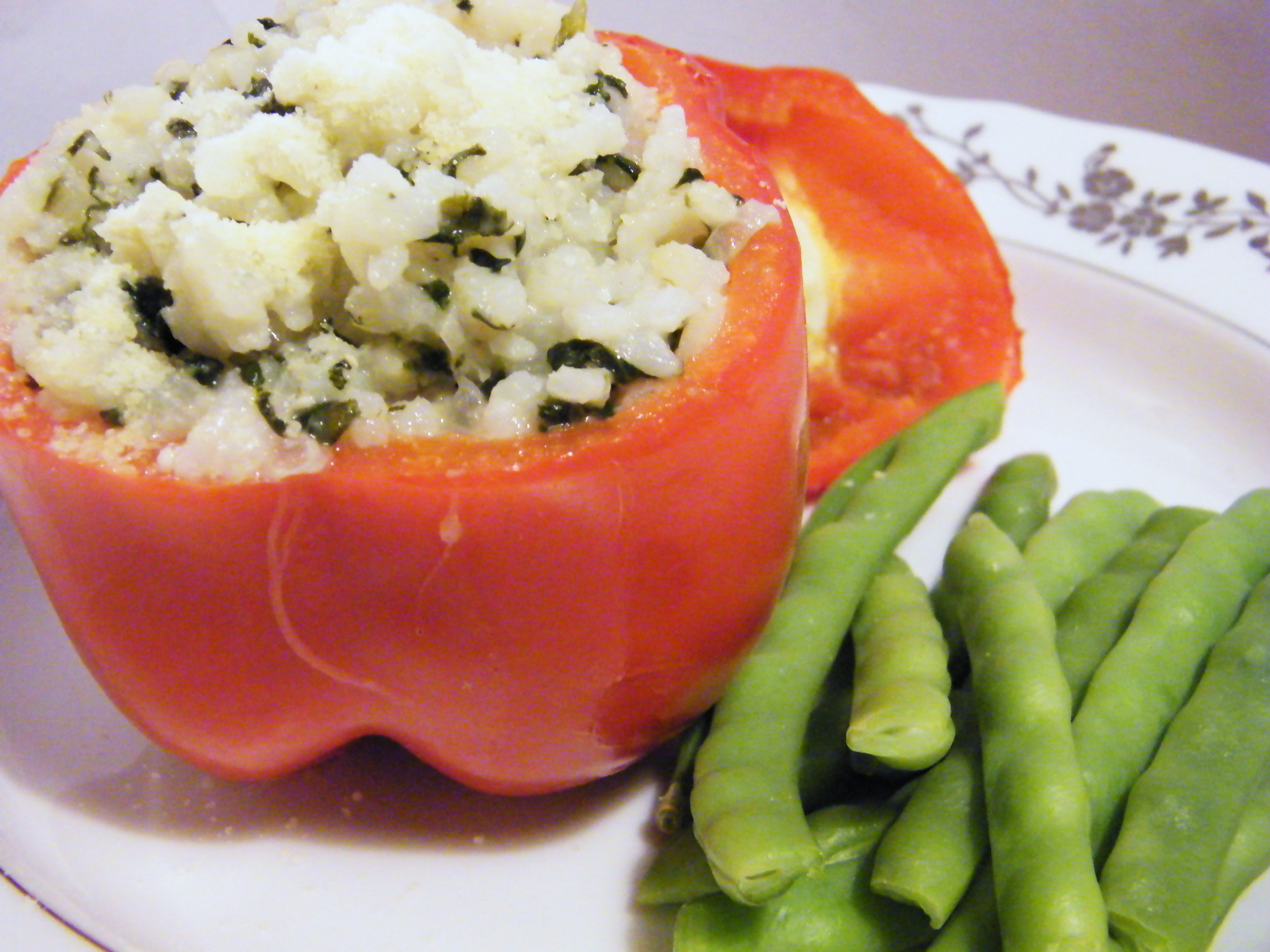
I made Dorie’s bonne idée version of the recipe, first cooking the rice as directed, then stuffing it into peppers for a nice, long stint in the oven.

A red pepper stuffed with the rice, accompanied by green beans.

The rice itself is reminiscent of risotto, though Dorie is quick to tell us that it is really a faux version. It’s certainly creamy enough to pass for risotto (even though I used 2% milk in place of cream) and it doesn’t suffer from the blandness that sometimes plagues true risottos. I don’t really need to describe the flavour to you – the title of the recipe takes care of that. I will tell you that the sweetness of bell peppers suits this rice very well.

I made a full batch, but only made a half batch of the stuffed peppers. I think we’ll have the leftovers with a little fish tomorrow night. I’ve got more beans, some cucumbers and some beets, too. I think it will make as nice a summer side dish as it did a main.

Rice, studded with pieces of spinach, in a small bowl atop a plate with red decorations,

You can find many other blogged descriptions of this week’s FFWD recipe here: Creamy, Cheesy, Garlicky Rice with Spinach I’ve also just had my 100th post and am doing a little giveaway to celebrate.

FFWD – Corn Soup

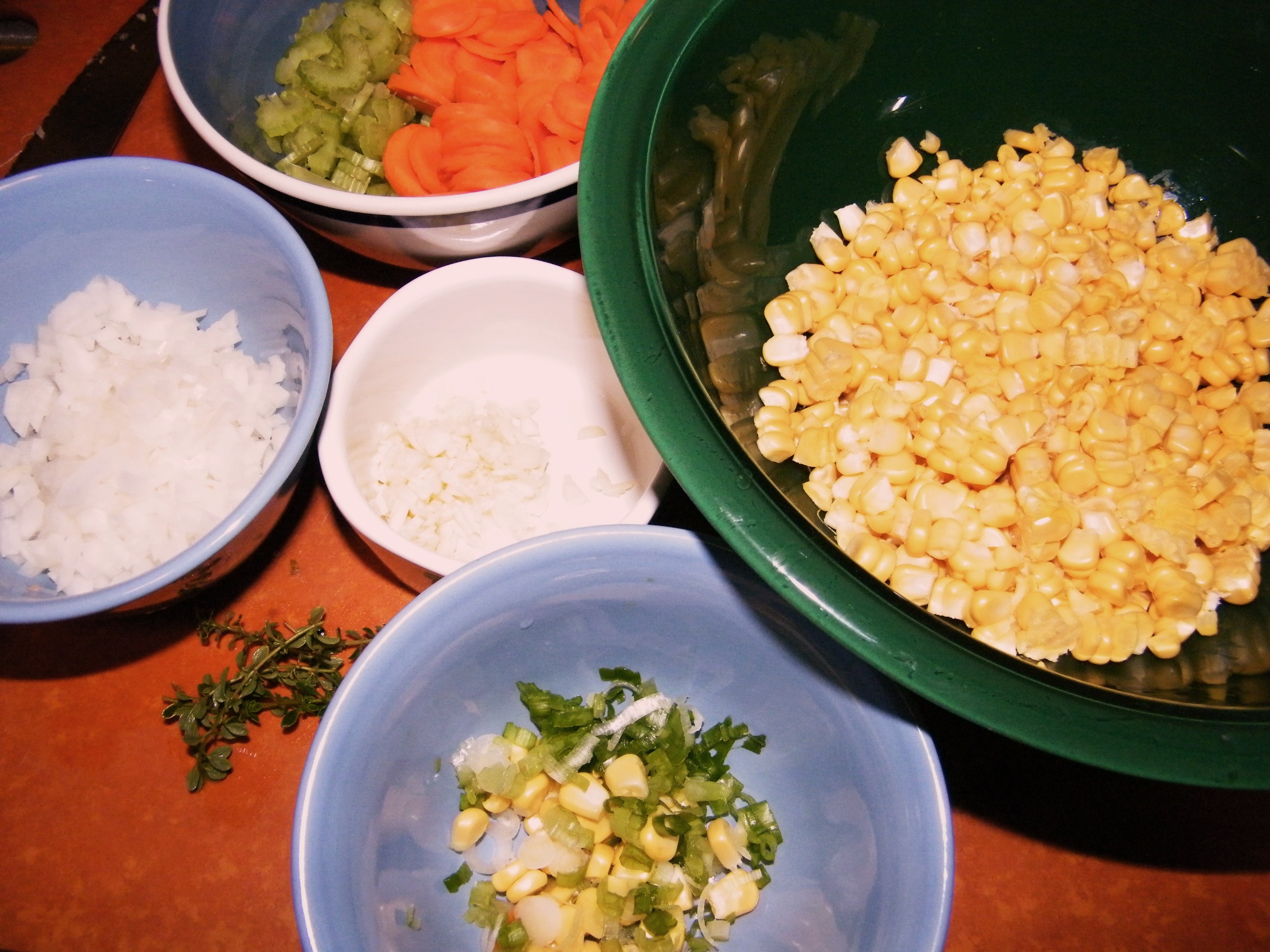
Soon to be soup.

What is the best kind of corn where you live? Here, everyone wants Chilliwack corn. It’s a town far up the Fraser Valley, about an hour and a half drive from Vancouver. Chilliwack corn is famous for its sweetness and every roadside stand claims they’re selling it, regardless of where it was actually grown. I know the corn I used for this week’s French Fridays recipe was organic, but it wasn’t labelled Chilliwack corn. It was perfect though, so it must have been, right?

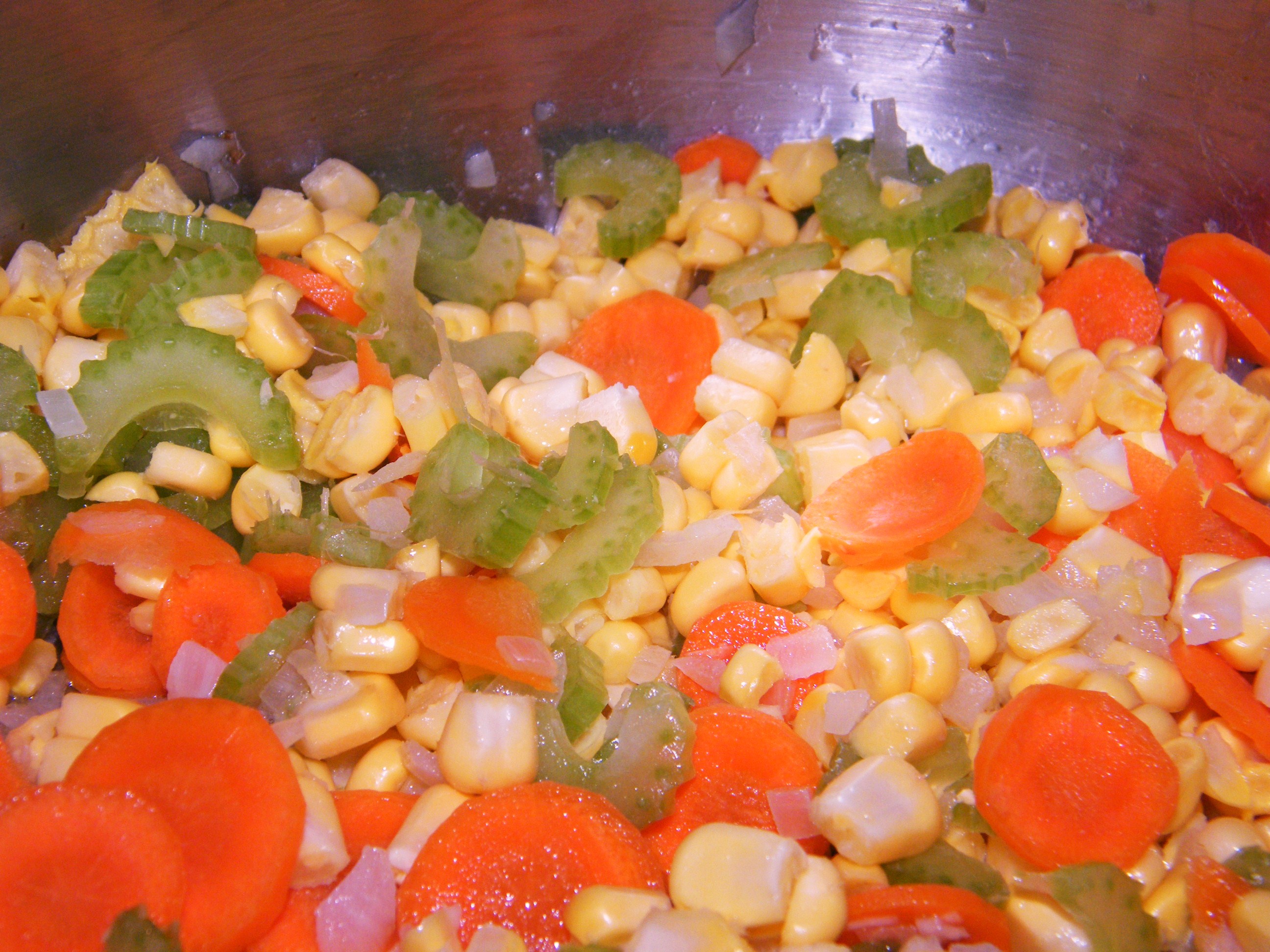
Softening the vegetables.

Dorie’s corn soup is a perfect example of why we should eat seasonally, when we can. I don’t think this soup would have been half so successful if I’d used off season or canned corn. Corn is still at its peak right now and most people are serving it on the cob, boiled or grilled, to take advantage of its sweetness. This soup is worth holding back a few cobs.

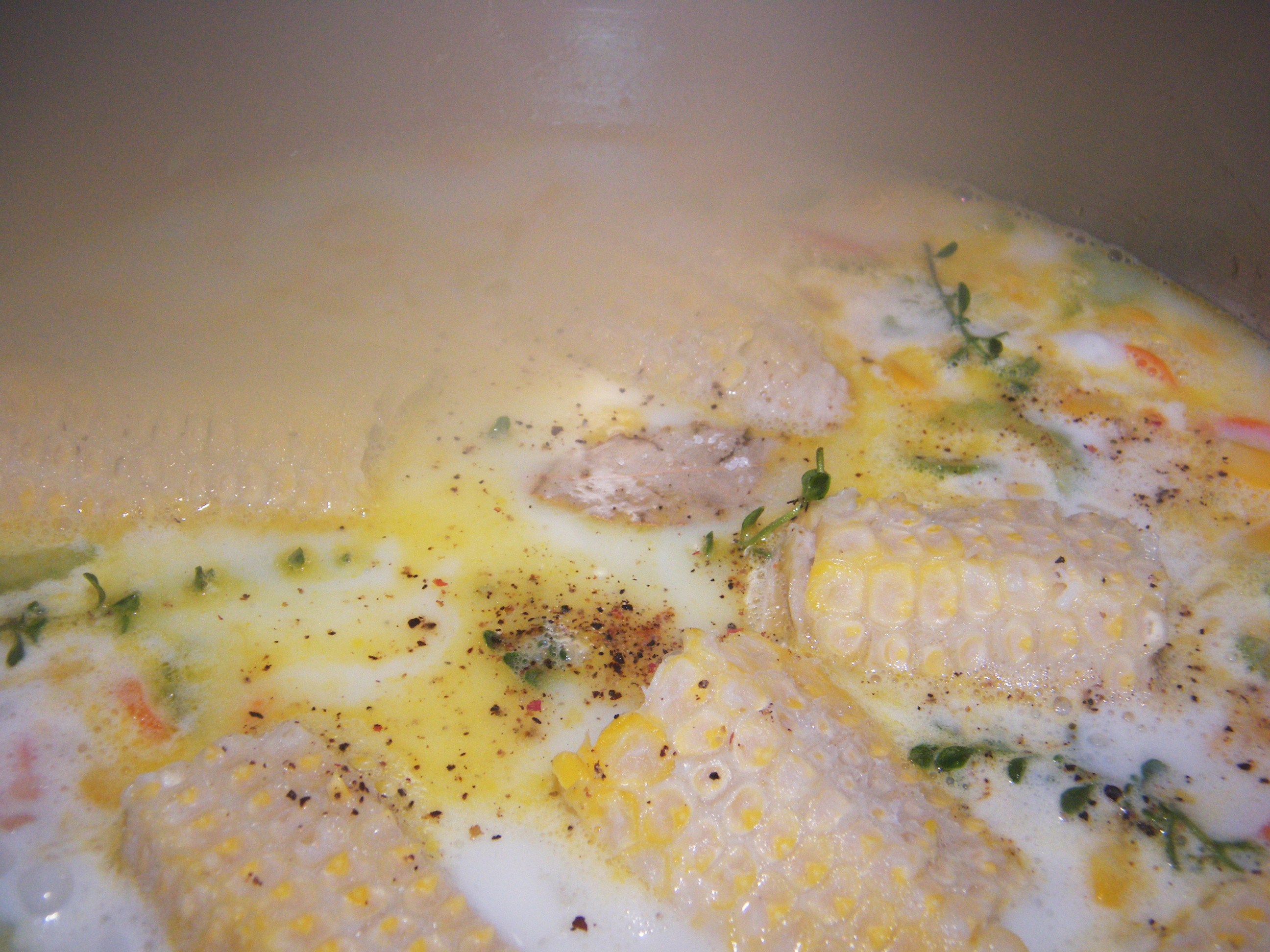
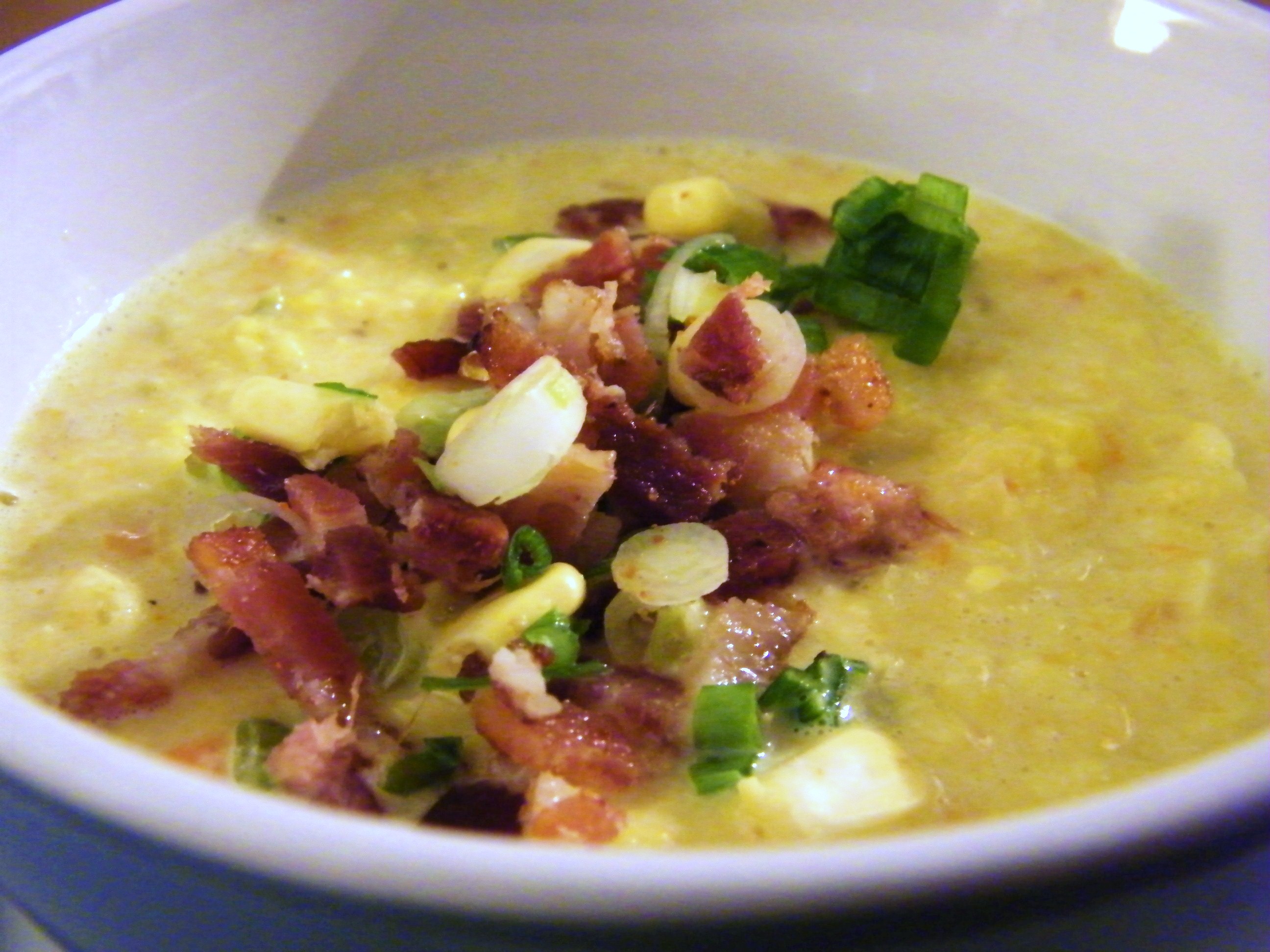
Corn sliced straight off the cob (easier than I thought it would be) is sautéed with onion, garlic, celery, and carrot, while the corn cobs are used to infuse hot milk. Seasoned with herbs, the soup is puréed, then topped with a mixture of reserved corn kernels, chopped scallions, crumbled bacon and hot pepper. You can also add a spoonful of crème fraiche, if you’re feeling decadent.

Yes, those are corn cobs you see, flavouring the soup.

I went for a lighter version, substituting 1% for whole milk and forgoing the crème fraiche altogether. It still tasted quite rich. I can imagine the full version being served in very small bowls (or even shot glasses) before a meal. The flavour of the fresh corn stands out, while complemented by the other ingredients. I suspected I would like this soup, but I was surprised by how much I enjoyed it. I think I’m going to have to put a reminder on the calendar for next year to make this soup when corn is again at its best.

The finished soup, with a garnish of green onion, bacon, corn kernels and a little cayenne.

If corn isn’t a specialty where you live, what is? Are there areas that are more famous for something than others? When I was travelling in Mexico, every ice cream stand claimed its wares were from Michoacán, which is famous for ice cream. And people from Winnipeg always go to New Bothwell for cheese curds. I have a feeling that this is a widespread phenomenon.

You can find many other blogged descriptions of this week’s FFWD recipe here: Corn Soup

FFWD – Café Salle Pleyel Hamburger

Moose mince, rather than beef, for the burgers.

I’ve eaten two hamburgers this summer, which has to be a record for me. Honestly, given the choice between a burger and a steak, I’ll choose steak every single time. Growing up, we had hamburgers at home occasionally, mostly in the summer when my Dad was in a grilling mood. (I’m leaving aside the ubiquitous fast food experience of most children of my era and location. I certainly enjoyed going to those burger joints as much as the next kid.) Since leaving home, though, I’ve rarely bought ground beef, mostly out of concern for food processing and contamination issues. Another big reason is that my parents often give me game and their own farm-raised lamb and pork. These meats easily surpass supermarket meats in taste and in healthfulness. I’ve been really lucky in that respect.

I happened to have a package of ground moose in the freezer, which I’d been planning to use in a shepherd’s pie once the weather got cooler. (I suppose purists would say I was planning a hunter’s or cottage pie, really.) Instead, I used it to make these burgers. I thought the flavours of the seasonings would go well with moose, with its slight gaminess.

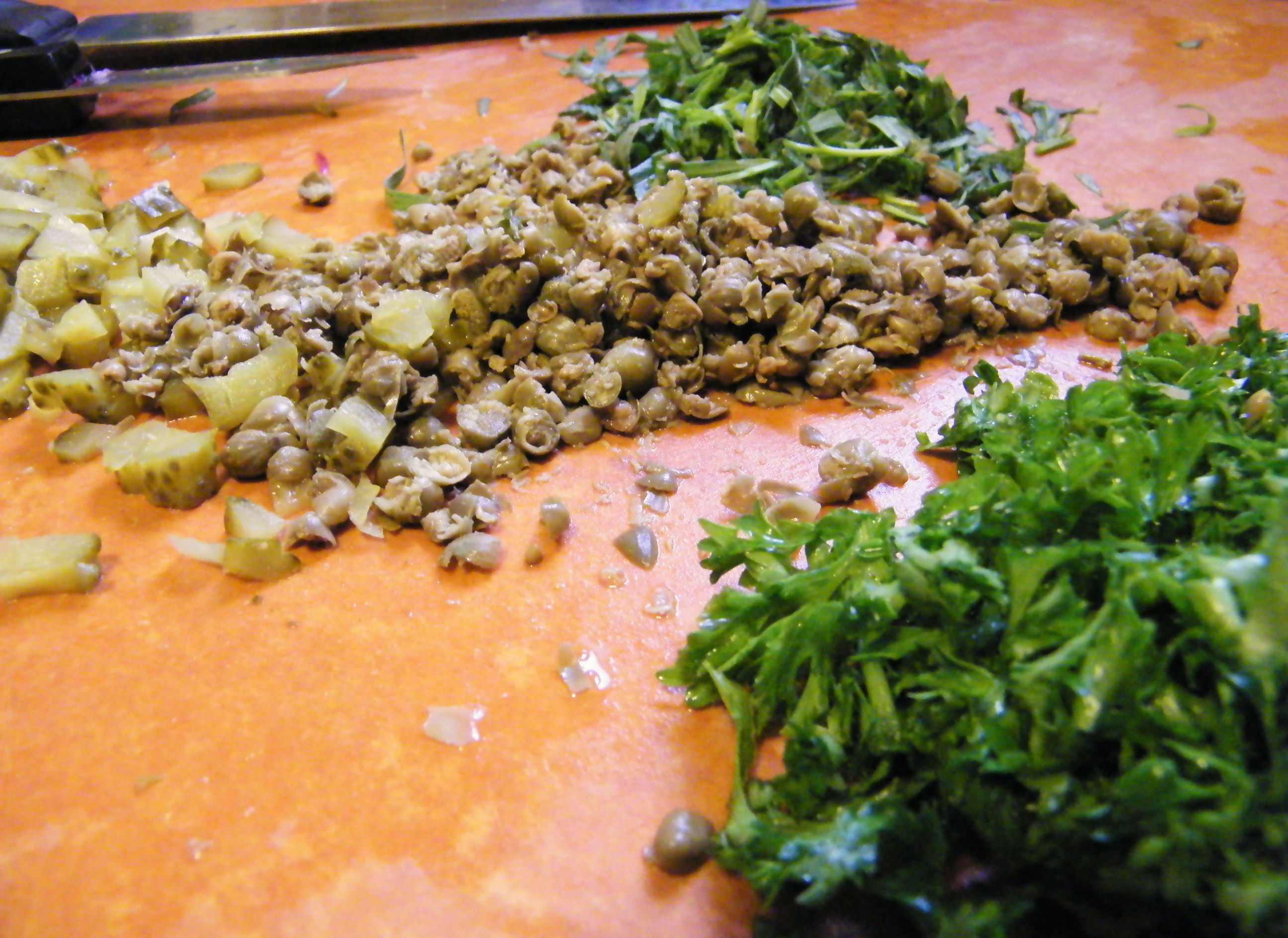
Chopping the ingredients for the burgers.

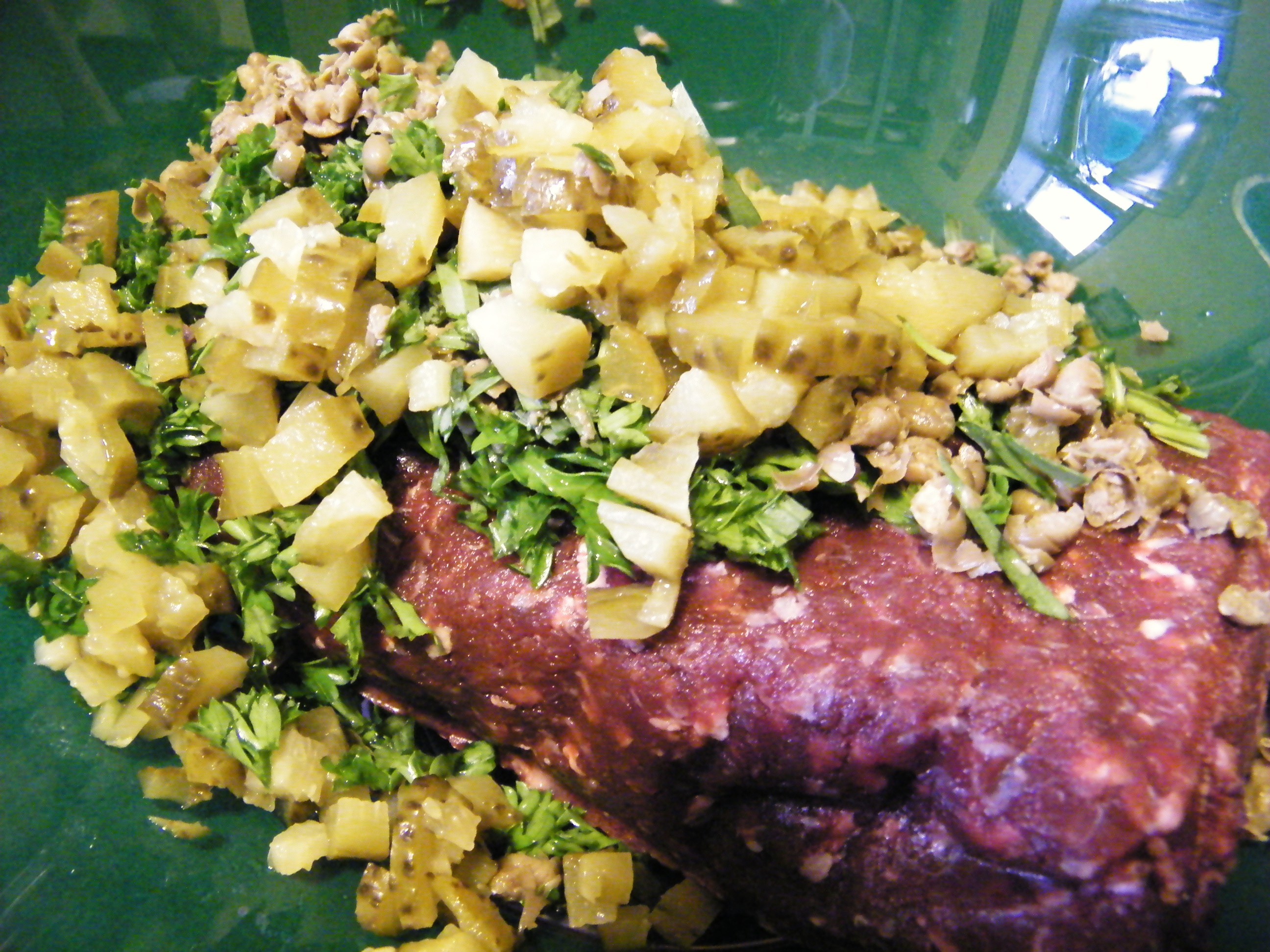
The recipe calls for tarragon, parsley, capers, and cornichons (small, crunchy, cucumber pickles) to be chopped up and mixed with the meat. Sun-dried tomatoes are also called for, but I skipped those this time. I ground some pepper into the mixture, but omitted salt, as I thought the cornichons and capers would make the burgers more than salty enough for us.

Mixing the seasonings into the moose mince.

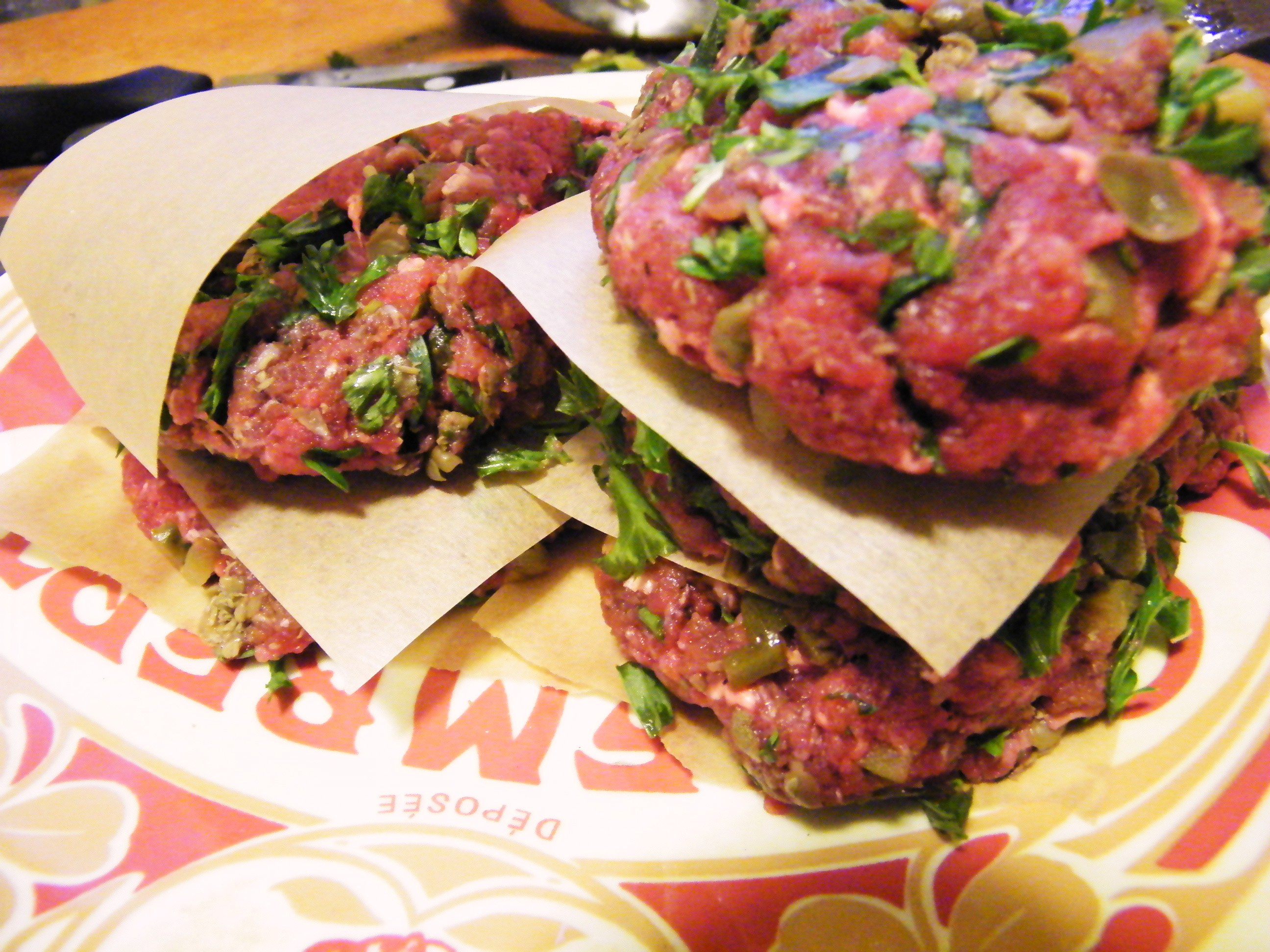
Moose meat, like most game, is very lean, so I was a little worried that it might not hold together well. If it hadn’t, I’d have added a little oil or butter. It wasn’t a problem, though I was careful to be gentle with the patties, just in case. I got seven small patties out of the recipe, kept two aside for us to eat immediately, then froze the rest.

Extra patties ready for the freezer.

Another advantage of game is that I feel much more comfortable cooking the ground version to medium rare than I do with store-bought ground meat. My parents use a small, meticulous butcher for their meat processing and I trust that there’s no contamination danger from their equipment. This is another reason I avoid hamburgers – I always cook them to well done, though I prefer medium rare. [By now, you may have realized I’m a little fearful of meat-borne illnesses.] The moose burgers were perfect at medium rare, with a nice sear on the surface and a melting, juicy tenderness in the centre.

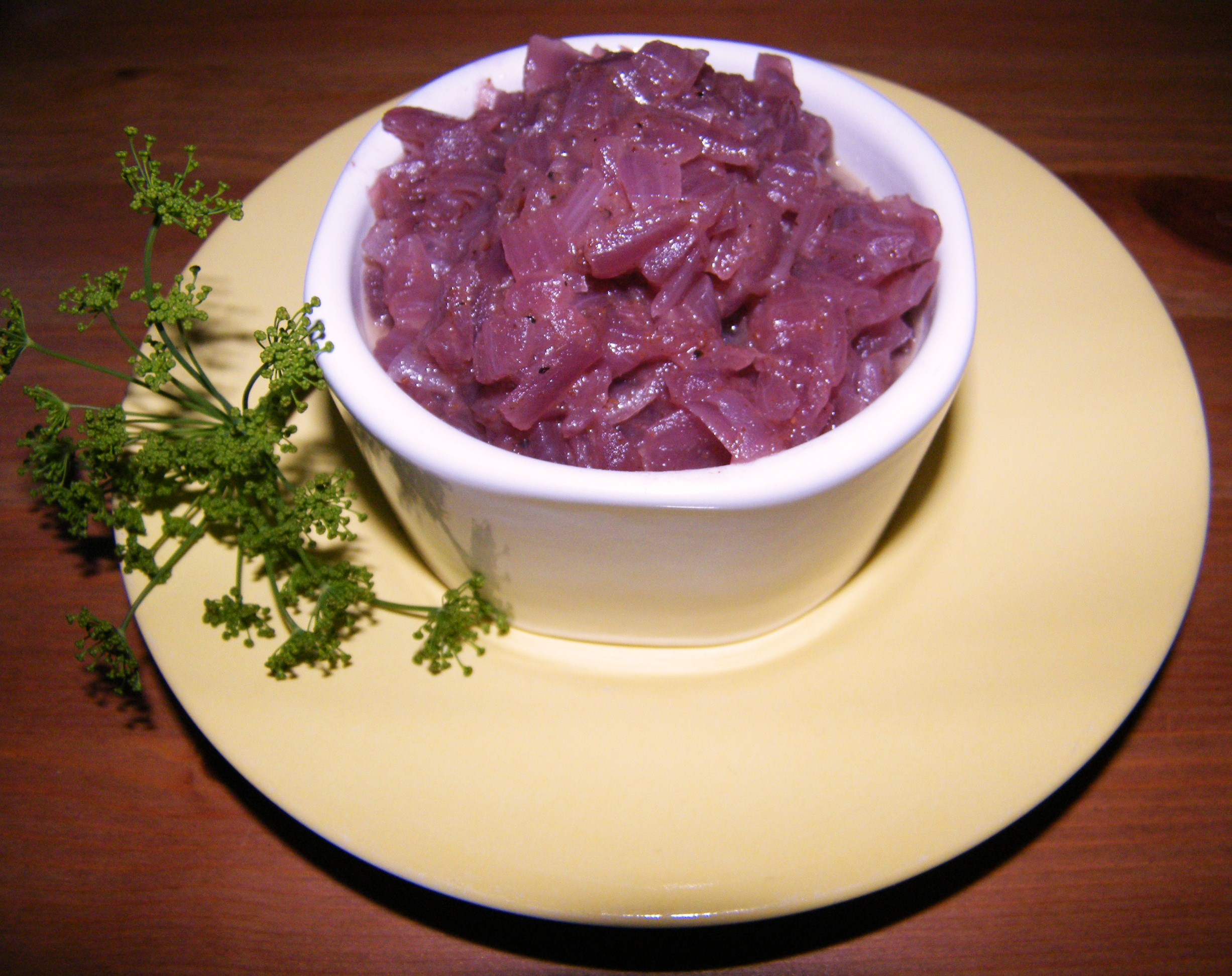
The onion marmalade.

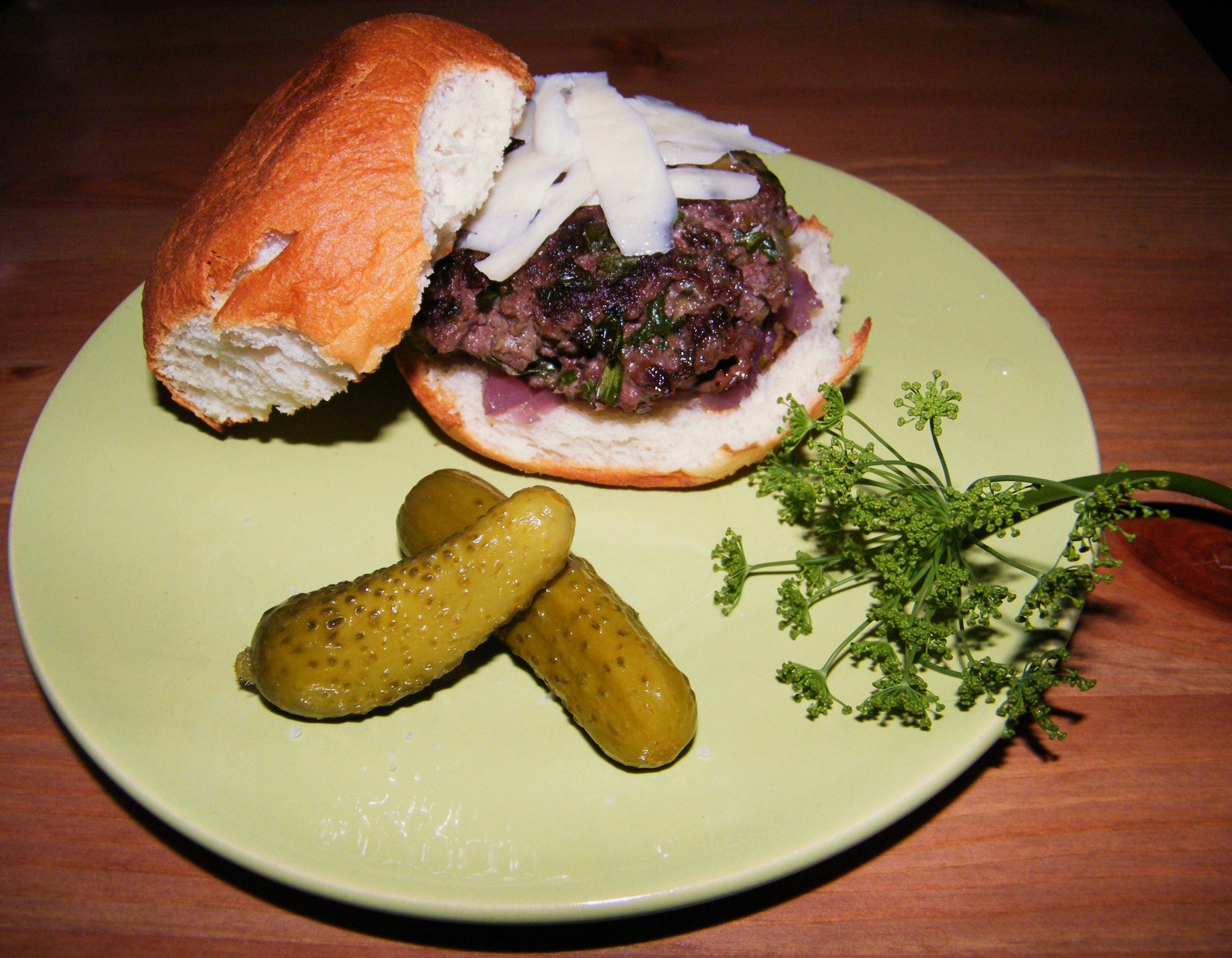
The burger is dressed with an onion marmalade, which is made by slowly cooking down minced red onion with coriander, butter and black pepper. The recipe calls for ribbons of Parmesan to top the burger, but I used Asiago instead. These dressings are more subtle than the usual mustard, mayonnaise, and ketchup, which allows the seasonings used in the burgers themselves to shine. The final touch was Udi’s gluten-free hamburger buns. I’d not tried them before, but they’re great. They’re tasty, but more than that, they don’t crumble or fall apart. It was such a treat, knowing that we could enjoy our burgers, gluten-free and without any compromise.

The finished burger, with cornichons and a dill flower for garnish.

I’m happy that we have some more of these moose burgers waiting for us in the freezer. Once they’re gone, I’m hoping that the organic meat store near my house will have opened. This recipe might mean that burgers make it onto my plate more than twice a year.

You can find many other blogged descriptions of this week’s FFWD recipe here: Café Salle Pleyel Hamburger

FFWD – Eggplant Caviar

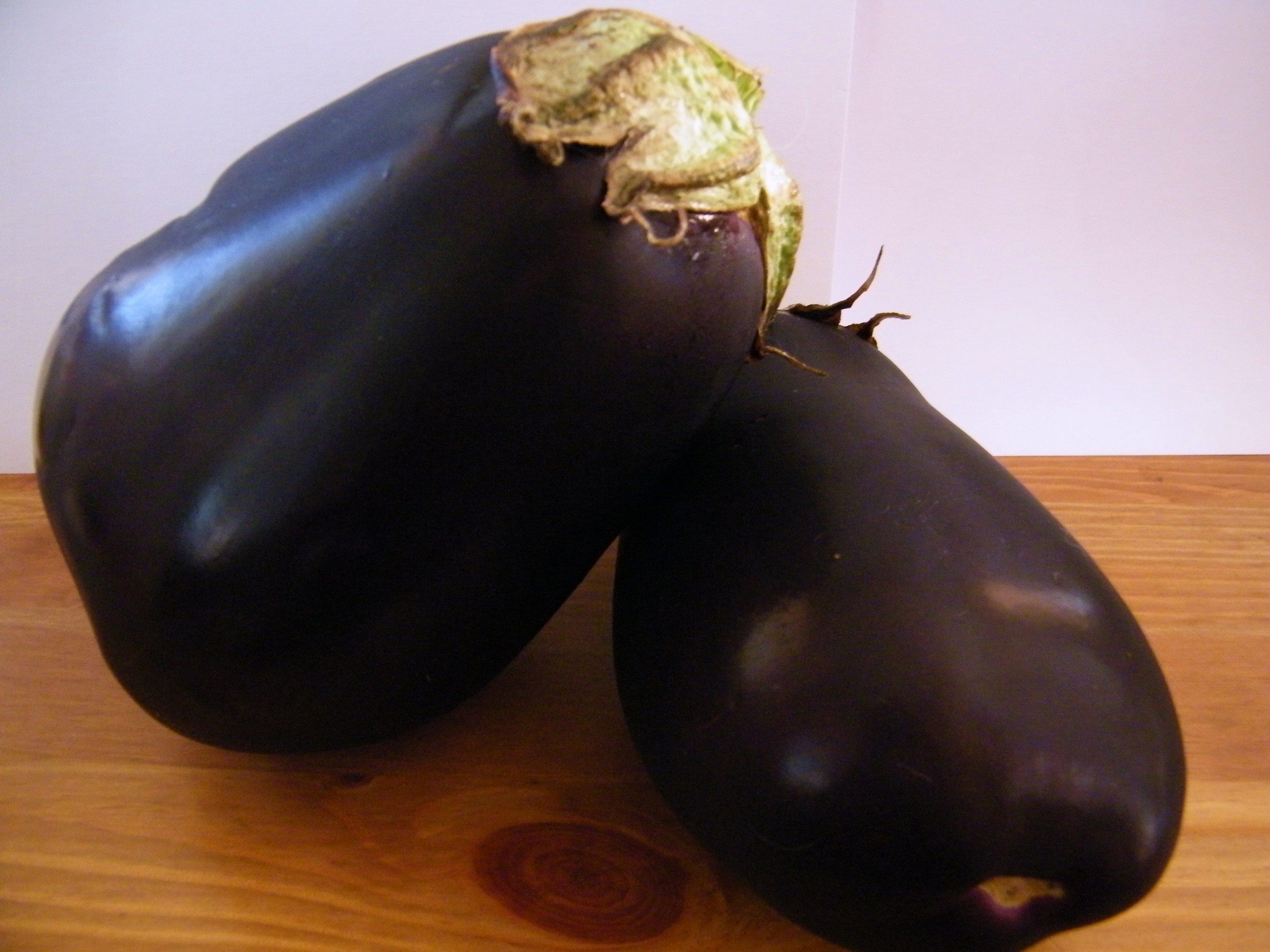
Eggplants

Roasting eggplants puts me in mind of our mortality, or at least, aging. The skin of a good eggplant is so beautiful, shining with health. Once roasted, though, it’s all crags, wrinkles and uneven tones. Sort of like what happens to us. Roasting deepens the flavour of eggplant and I hope that aging does the same for character. I think I’ll end the metaphor there.

Eggplants after roasting

All this eggplant sacrifice was in service of this week’s French Fridays recipe, Eggplant Caviar. A high-falutin’ name for a very quick and easy dip (or spread, depending on how you use it). Roasted eggplant mashed with garlic, onion, lemon, herbs and spices. Dorie recommends Piment d’Espelette, but I substituted cayenne. You may add chopped, fresh tomatoes if you like, though I didn’t. It has a bite and works well as a sandwich spread or a dip for crudités. This evening, I spread it on rye bread and added thin slices of cucumber. Tomorrow, I think I’ll use it in a chicken sandwich, on Quejos, which are gluten-free, so Kevin can have some, too.

Eggplant caviar, with rye bread in the background.

This is another recipe that would make great picnic food. It’s making me want to take a trip to the Westside beaches with a picnic basket and some sparkling lemonade.

You can find many other blogged descriptions of this week’s FFWD recipe here: Eggplant Caviar