FFWD – Sardine Rillettes

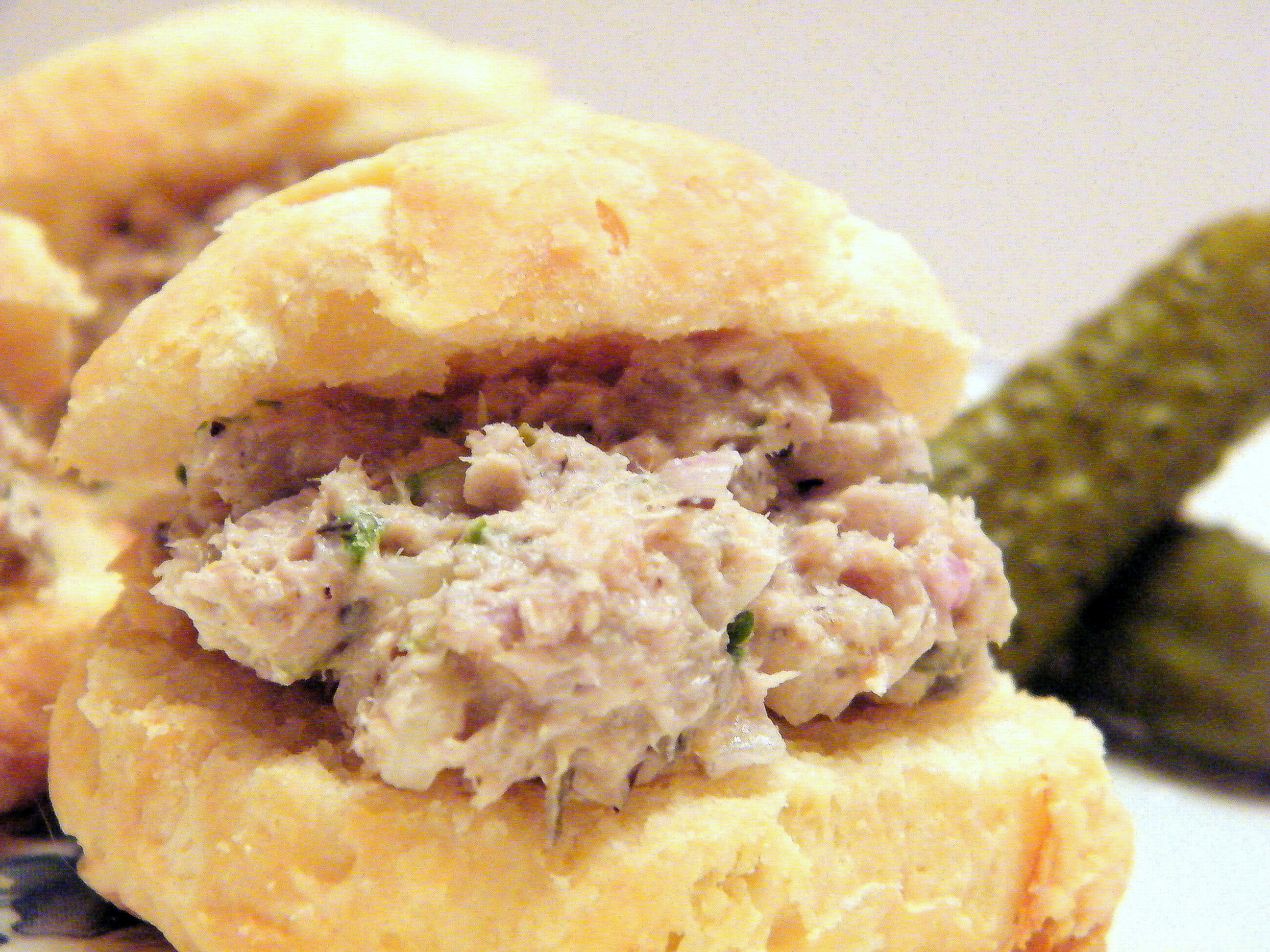
An onion biscuit stuffed with sardine rillettes, with cornichons in the background.

Every summer, my family would go on holiday for the month of August. We’d go “up country” to the lakes north of Kamloops. British Columbia is dotted with freshwater lakes and we visited many of them. We’d stay at one for a while and if the fishing wasn’t good, my Dad would hitch up the Boler trailer and the family would pile back into the car, ready to explore the next forestry campsite. My sister, brother, and I would run through the woods, swim in the lakes, read books by the shore, and at least once a day, we’d go out in the boat to troll for trout. The rule was, If You Catch It, You Clean It and when the fishing was good, we got a lot of practice.

I found myself thinking about these trips the other day, while removing the spine and tail from two tins’ worth of sardines for this week’s recipe. It’s a much easier job than cleaning trout, if a bit fussier. The process is almost as rewarding, though, because rillettes are my new best friend. Forget dip, spread, and stuffing – the only word you need, I’ve found, is rillettes.

A can of sardines, chopped aromatics, and a lime awaiting juicing.

For this recipe, sardines are mashed into a mixture of cream cheese, onions, and herbs, with lime juice and a dash of cayenne for bite. Chilled overnight, the rillettes become a thick, spreadable paste. You might spread it on bread or crackers, use it to stuff eggs or vegetables, or add it to a plate of crudités for dipping.
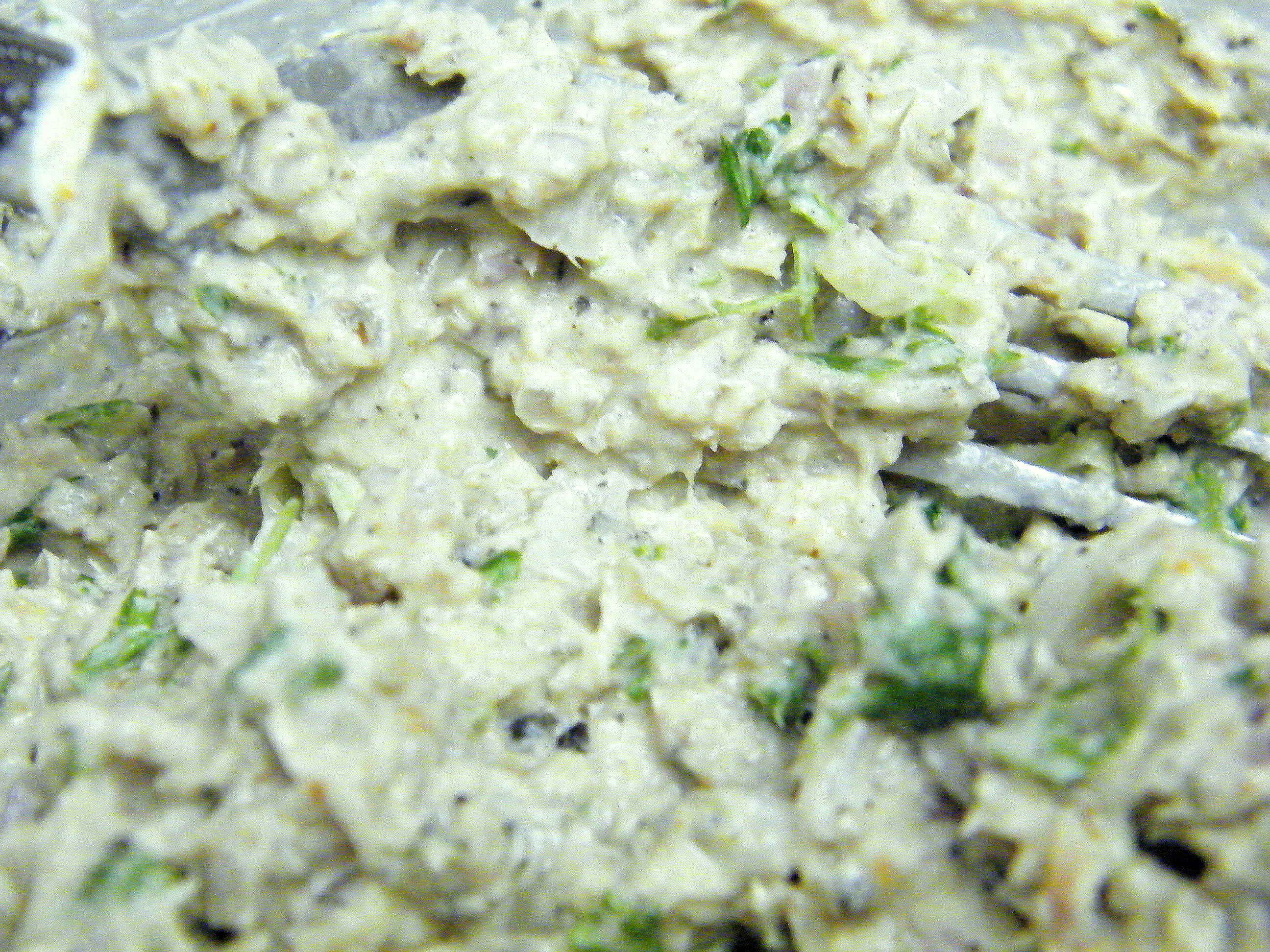
Sardines mashed into cream cheese, green onions, shallots, herbs and lime.

We still had a big bag of Saint-Germain-des-Prés Onion Biscuits in the freezer, so we baked a few and while they were still warm, filled them with rillettes, with a few cornichons on the side. The next day, we did it again. I’m going to have to make another batch if I want to try these rillettes with anything else. I think a thin layer on rye bread would make an excellent condiment for a Montréal smoked meat sandwich. For example. I might have to try Dorie’s recipe for Salmon Rillettes, first, though. And perhaps I’ll have to get my hands on some rainbow trout and work up a version for that, too. Like I said, rillettes are my new best friend.
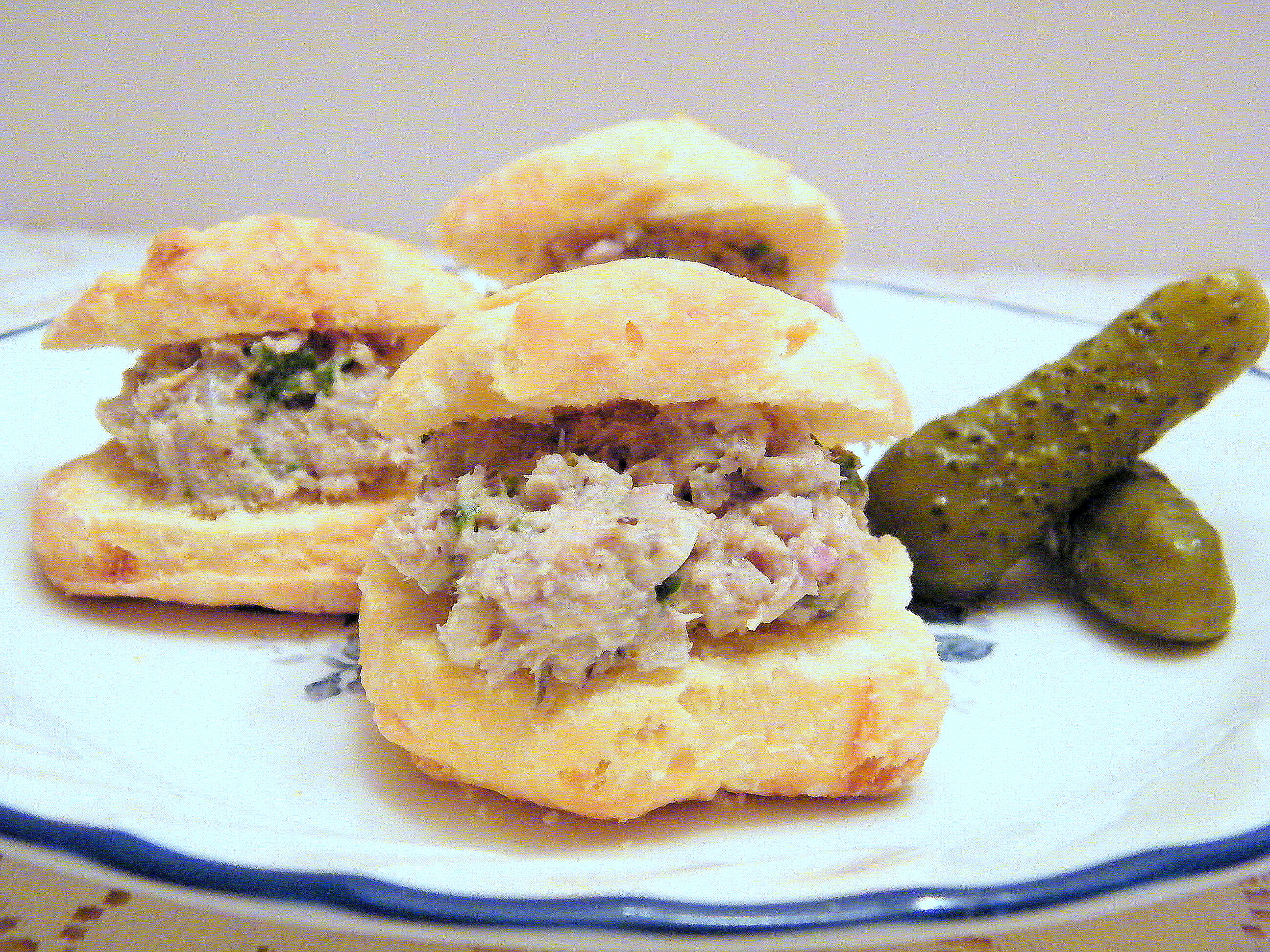
A plate full of rillettes-stuffed biscuits, with cornichons on the side.

You can find many other blogged descriptions of this week’s FFWD recipe here: Sardine Rillettes
FFWD – Crab & Grapefruit Salad

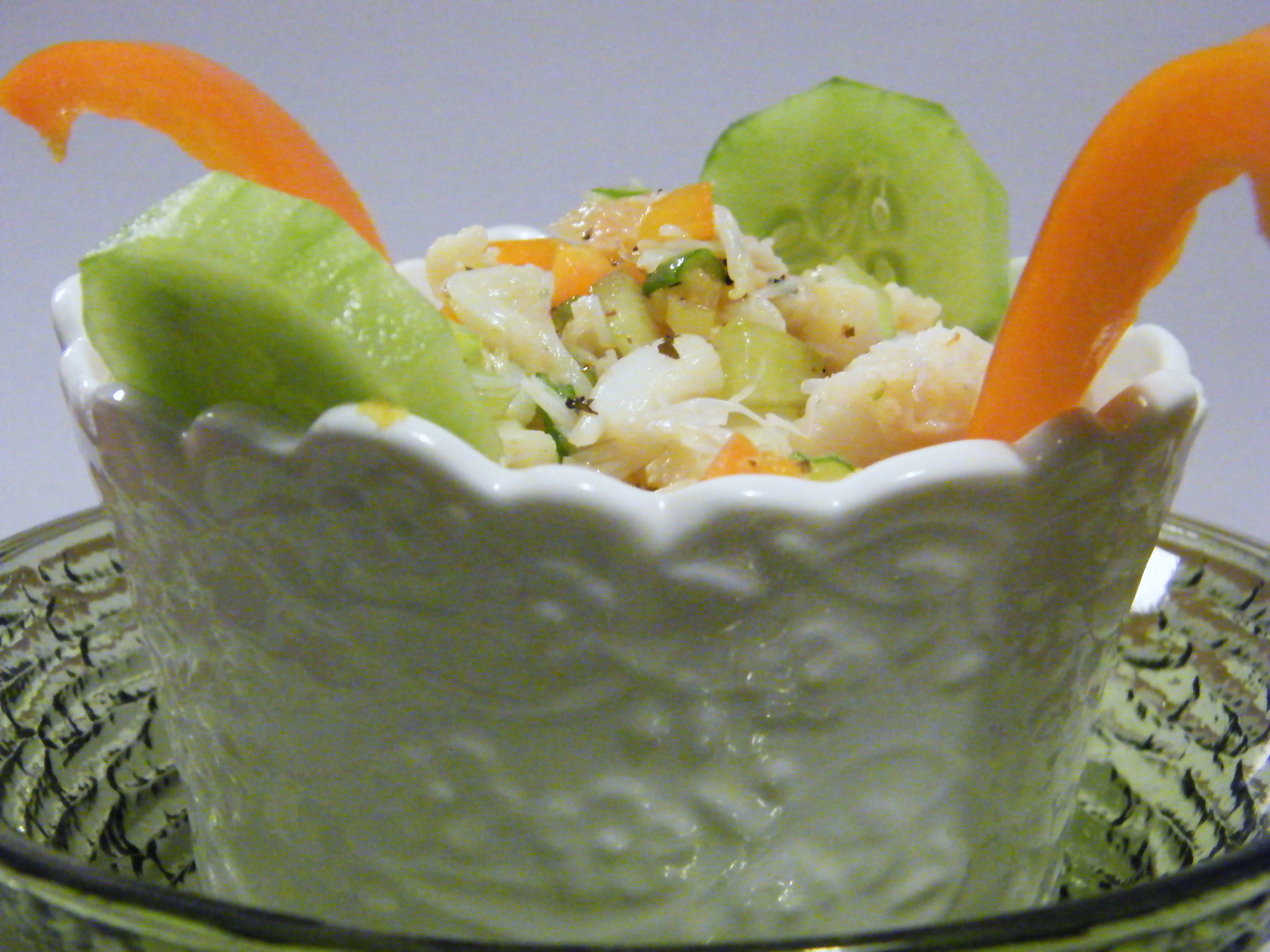
The finished salad

This is the time of year that I start getting excited about the upcoming growing season. In a few weeks, the Farmers’ Market will be moving back to its summer locations, one just a short walk away from my house. Last weekend, we got a load of soil for our garden beds and this weekend, we’re picking up some compost. I’m sketching out my square-foot gardening rotation for the vegetable beds and thinking about which herbs I’ll plant this year in containers.

One side effect of this excitement is that I have a harder time buying out-of-season vegetables and herbs from the store. This summer’s crop is so close, now. So, I didn’t buy fresh mint for this week’s recipe, but added some dried mint to the dressing, instead. I couldn’t find any ruby red grapefruit, either, so had to settle for a yellow-fleshed variety.

Mise en place

I went to our local fishmonger to pick up some real crab. It’s a little expensive, but it’s sustainable, delicious, and (unlike fake crab) gluten-free. This salad justified splurging a bit. Cucumber, grapefruit, orange pepper, and green onion complement the flavour of the crab, as does the olive oil-grapefruit dressing. I added a little cayenne to the dressing along with the mint.

I can’t decide if this salad is more reminiscent of country club fare or the sort of treat you might find on a beach holiday buffet table. Either way, it’s welcome on my plate.

A closer view

You can find many other blogged descriptions of this week’s FFWD recipe here: Crab & Grapefruit Salad

FFWD – Cocoa Sablés

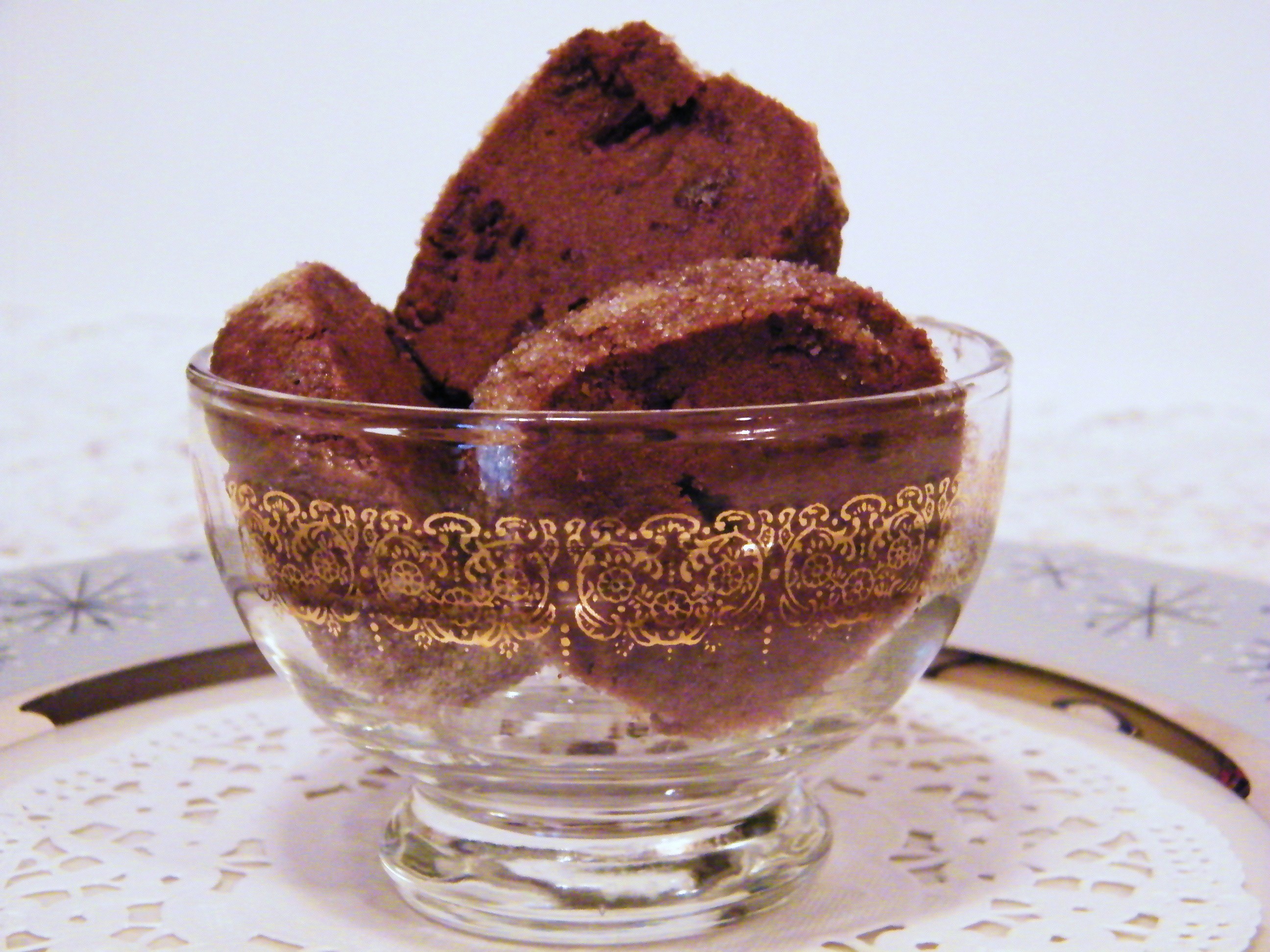
The finished cookies, in a glass dish with a gold stencil, on a doily atop a grey and silver plate.

Something I’ve been appreciating now that I’ve been participating in French Fridays for the last year-and-a-half are the benefits of taking my time. Not that I always manage it. There have been many rushed dishes, quickly photographed so that I can get a post up in time for the deadline. But, when I do take my time, it’s worth it.

This is particularly true when it comes to butter doughs. What starts as a crumbly mess turns into something rich and pliable. The flavours develop, too, when you wait. Don’t get me wrong, I love baking things that you can turn out on a whim (like this week’s Irish soda bread over at Tuesdays with Dorie), but I have a growing appreciation for the recipes in which time is one of the ingredients.

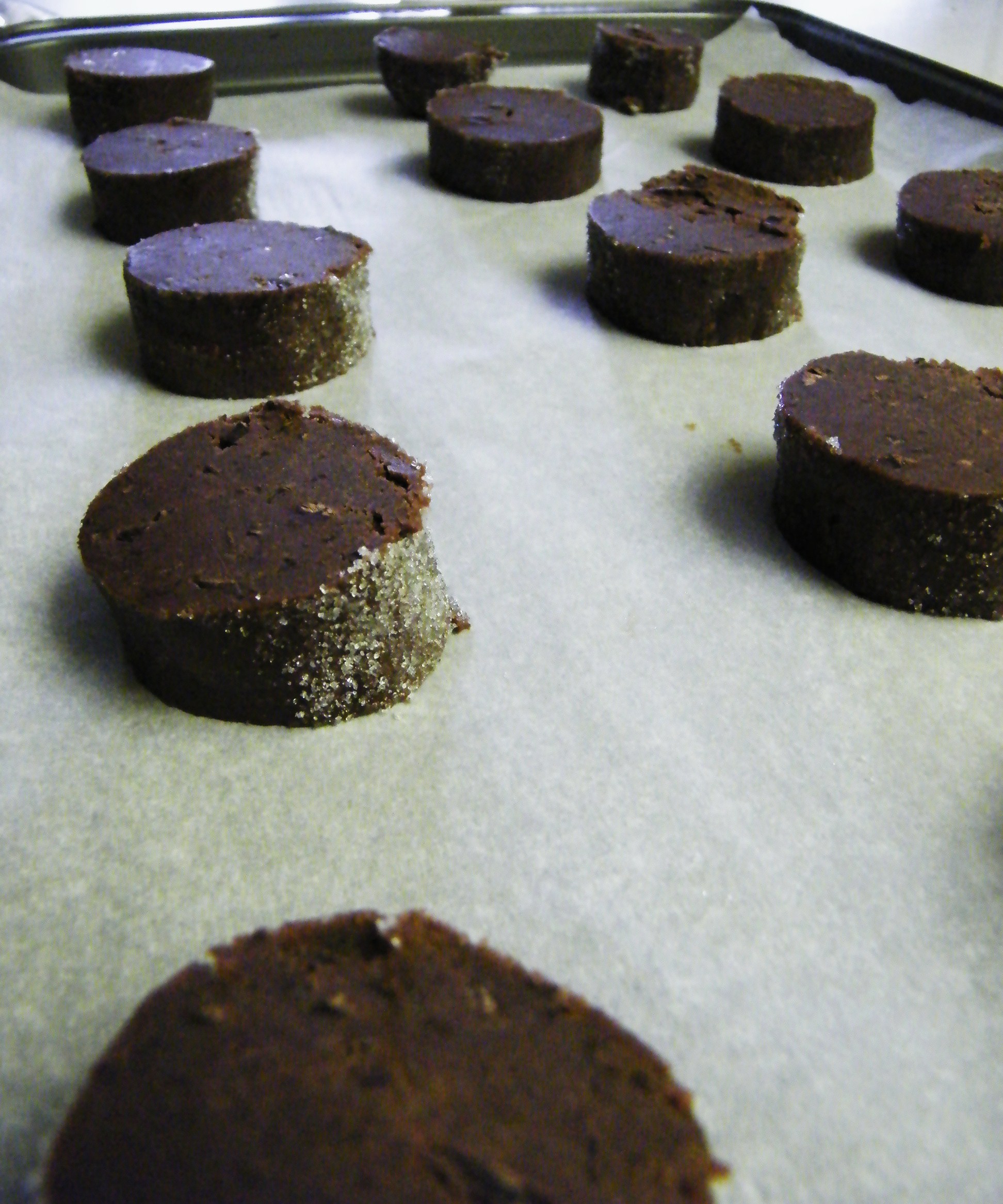
These sablés are just that sort of thing. The night before the big bake-a-thon (bake-o-rama? bakestravaganza?) with my family, I made the dough for these cookies and rolled them, with difficulty, into logs. The dough was truly sandy and I was worried that I might overwork it while trying to get the logs to stay together. But after a night in the refrigerator, the dough was fine. Easy to cut and not crumbly at all, with a denseness that made me want to get them into the oven as soon as possible. Baked, they had a lovely crumb and a satisfying thickness. They’re pretty, too. A perfect vehicle for cocoa and chopped chocolate.

Life lessons aside, I’m more willing now to explore recipes that don’t provide immediate gratification. They’ve got their own rewards.

Sliced dough on parchment paper.

You can find many other blogged descriptions of this week’s FFWD recipe here: Cocoa Sablés

FFWD – Cheese Soufflé

It rose! It rose!

I spent yesterday with my mother and my nieces, baking and cooking all day long. We started with next week’s chocolate sablés, moved on to two sorts of Irish soda bread (which you’ll be able to read about here on Tuesday), then chicken stew, and finished with this week’s French Fridays recipe, cheese soufflé.

Soufflés make a meal into a command performance. No one bakes one without requiring everyone to be at the table and ready to witness its brief apotheosis. It comes back to Earth too quickly. It’s also usually the centrepiece of a meal, or at least a course. Yesterday, I flouted that a bit. We had a sort of Franco-Irish mash-up of a meal, with Irish-style chicken stew that had been made with the leftovers of Cognac chicken (a French Fridays catch up that I’ll post about some time soon), two sorts of Irish soda bread, and this soufflé. I used aged Irish cheddar (Cahill’s Irish Monastic) in place of Gruyère or Emmenthal, in consideration of the rest of the menu. It fit right in. We ended the meal with the sablés. I have to say it was one of the best takes on both sides of my heritage that my family’s ever attemped.

Soufflé dish, buttered and crumbed.

I’m also happy to finally be in on the secret of soufflés. They’re dead easy. As long as you are scrupulous about following the steps of the recipe, only the weather or a slammed oven door can let you (or it) down. Just make sure you have witnesses. They’ll love how it tastes, but it’s important that they’re awed by its height, too.

My nieces want to try a soufflé now. Of course, they’d like to make a chocolate one. I’m going to suggest this. A meeting between chocolate and tea sounds like another great combination.

The soufflé, with a preview of Tuesdays with Dorie's Irish soda bread assignment.

You can find many other blogged descriptions of this week’s FFWD recipe here: Cheese Soufflé

FFWD – Saint-Germain-des-Prés Onion Biscuits

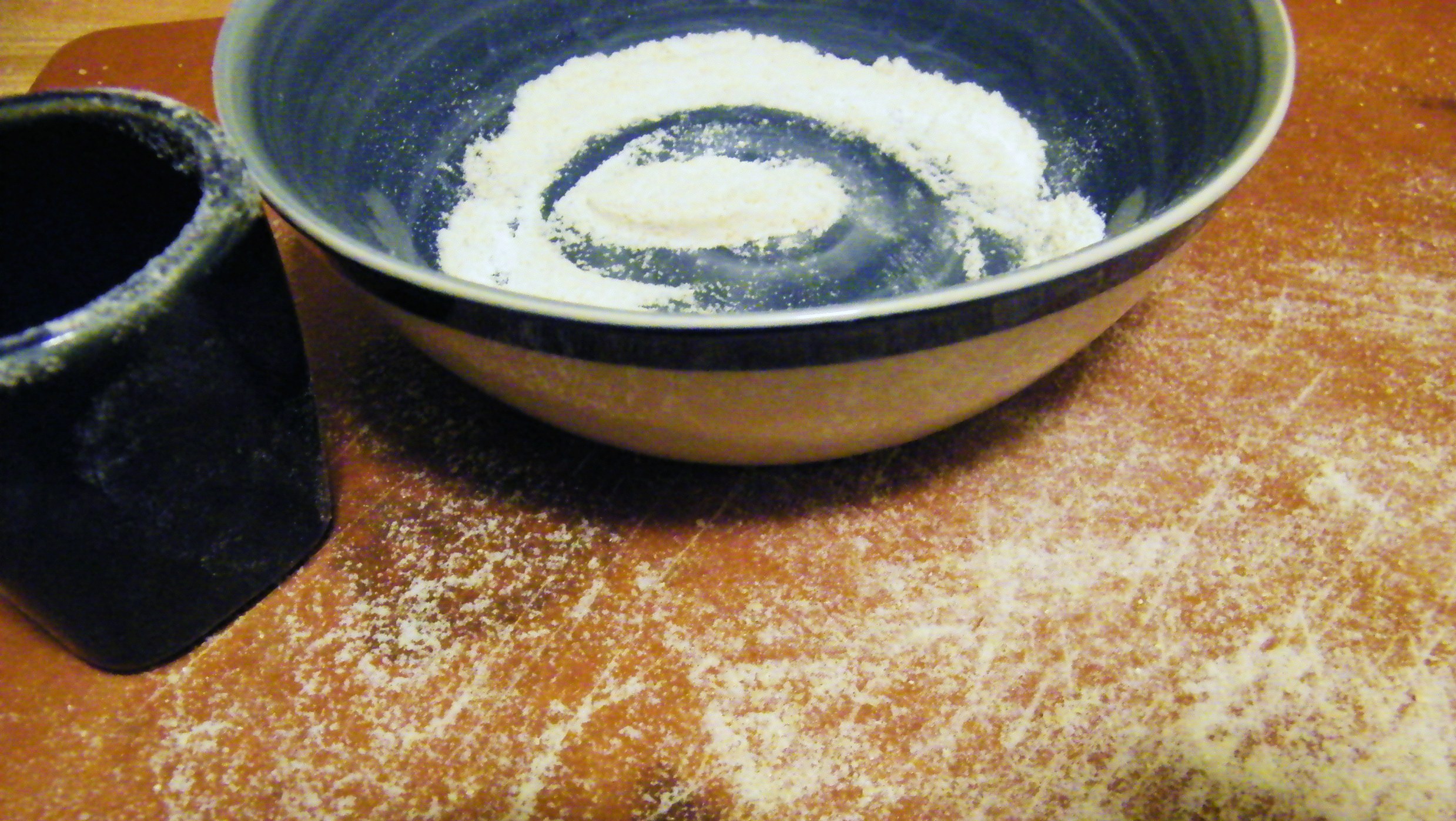
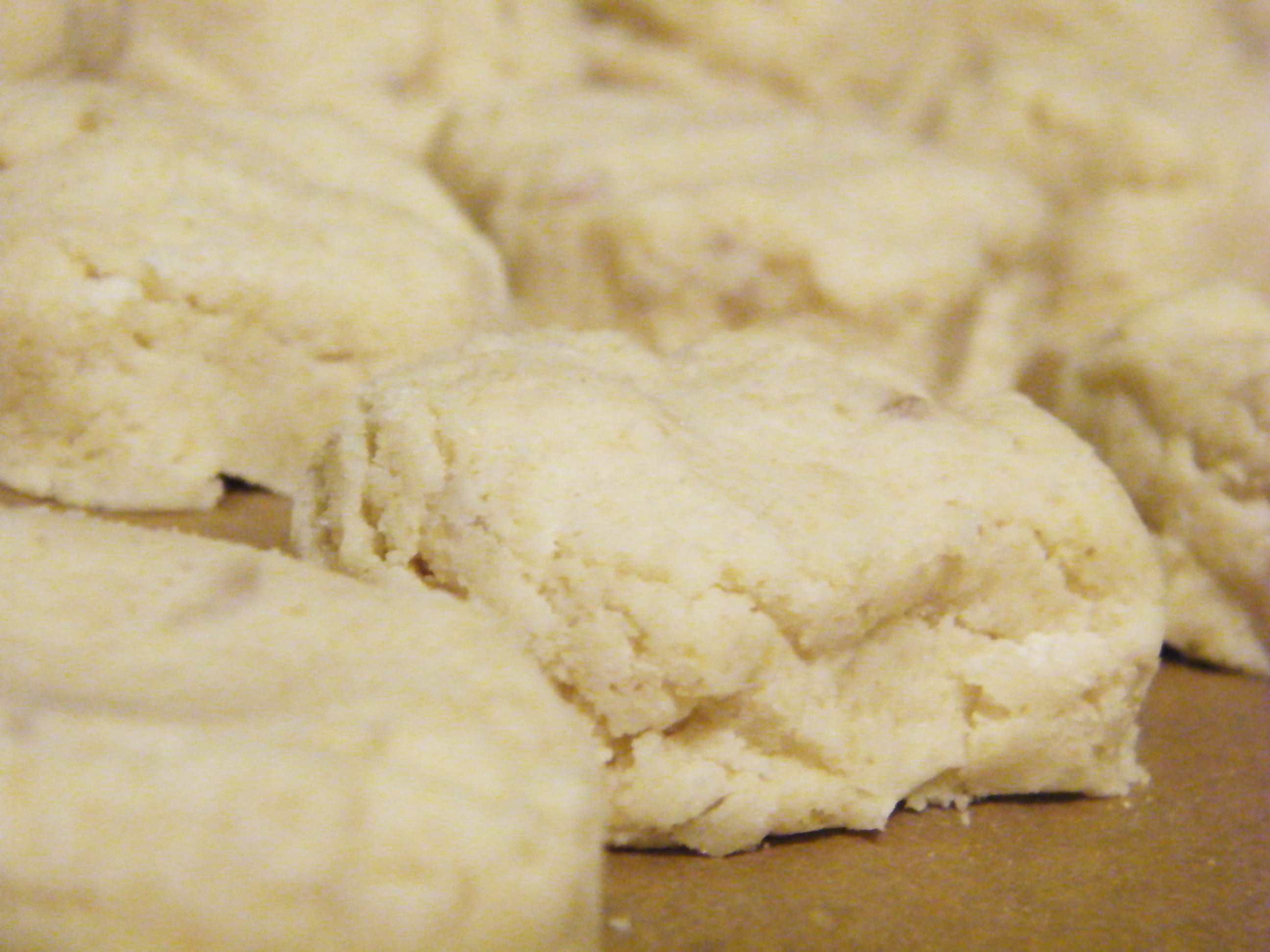
A floured board, a blue-and-white bowl with flour in it, and a Japanese tea cup subbing as a biscuit-cutter

I’ve made these biscuits three times this week. The first time, I followed the recipe exactly. The second, I replaced the milk with Greek yogurt and doubled the amount of baking powder (my niece actually did most of the work on this batch). The third time, I used gluten-free flour and added some minced garlic along with the onion.

Biscuit-cutting.

As you’ve probably guessed, I enjoyed these biscuits. I’d forgotten how much I like the process of biscuit-making and it was a pleasure to rediscover that, especially when the results were so good. Most of the biscuits have been frozen, to be pulled out a few at a time. As much as I like biscuit-making, it’s lovely to be able to pull out just what you need at a moment’s notice.

Biscuits on parchment paper, ready for freezing.

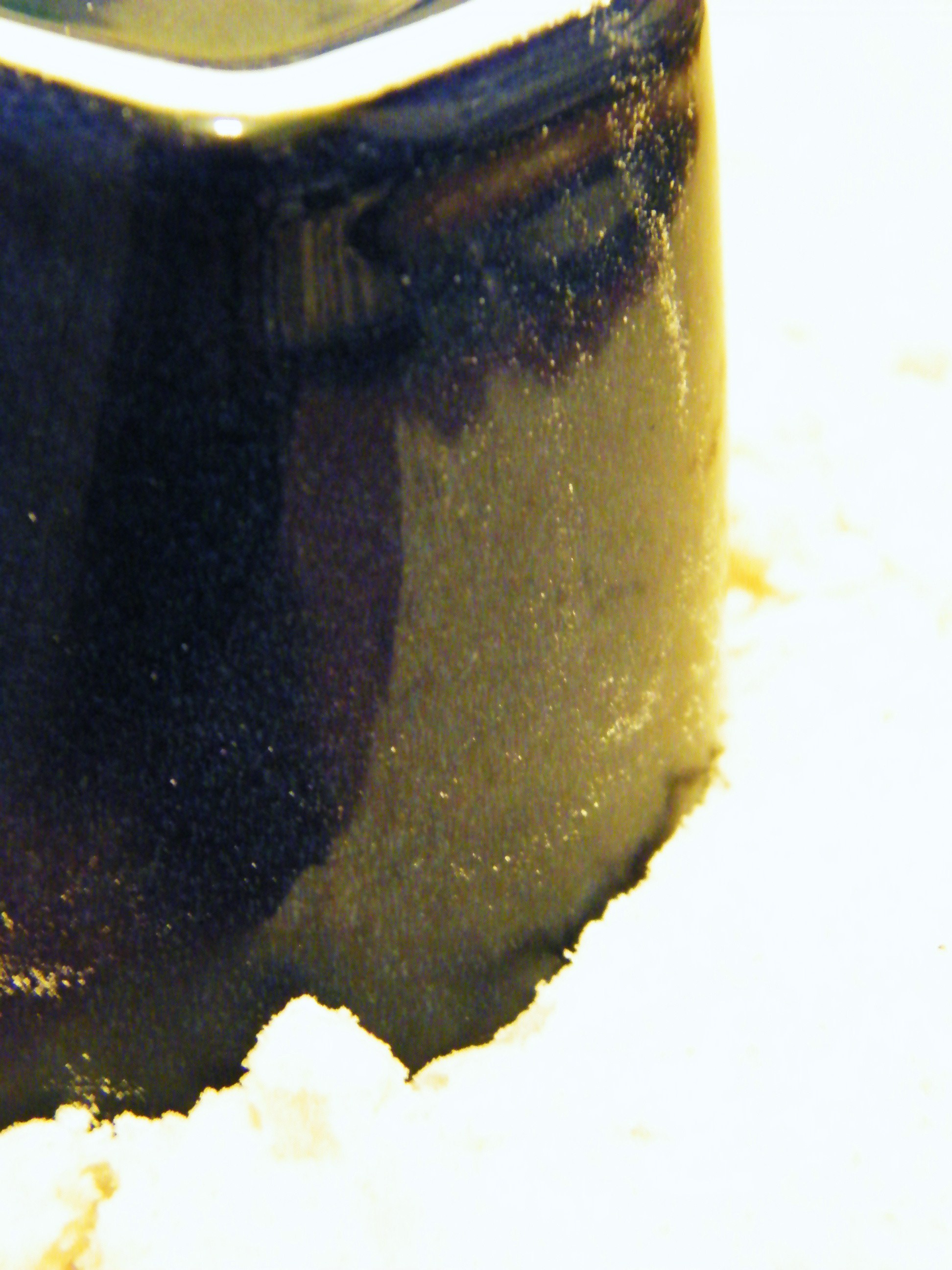
These biscuits are bite-sized, so I had to improvise when looking for something to serve as a cutter. It turns out that one of the cups from a Japanese tea set I’ve got was the perfect size and sturdy enough to rap on the board, if the biscuit was a little reluctant to remove itself.

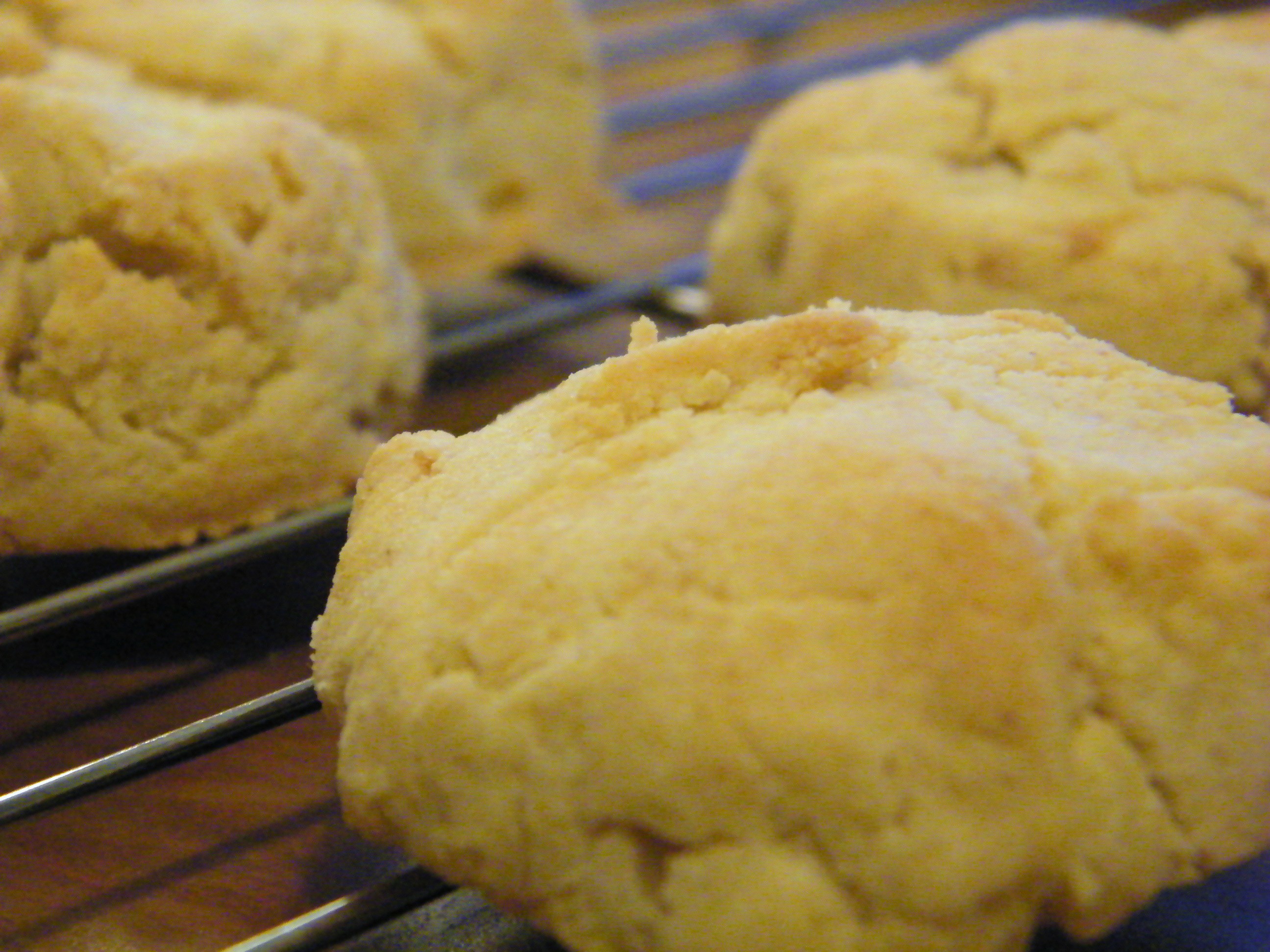
The gluten-free version, cooling.

The second batch was my favourite version – the yogurt gives the biscuits a lovely texture and richness. The gluten-free version was a little disappointing, not in taste, but in texture. They were a bit sandy and I’m beginning to understand why some folks re-grind their gluten-free flours in a Vitamix, to make them finer. Perhaps I should have used only white rice flour mixed with a little potato starch and tapioca flour, rather than my usual all-purpose mix. Next time.

I have an all-day workshop tomorrow and I think I’ll get up early and bake another batch of Version Two. It’ll be a good start to the day for the group.

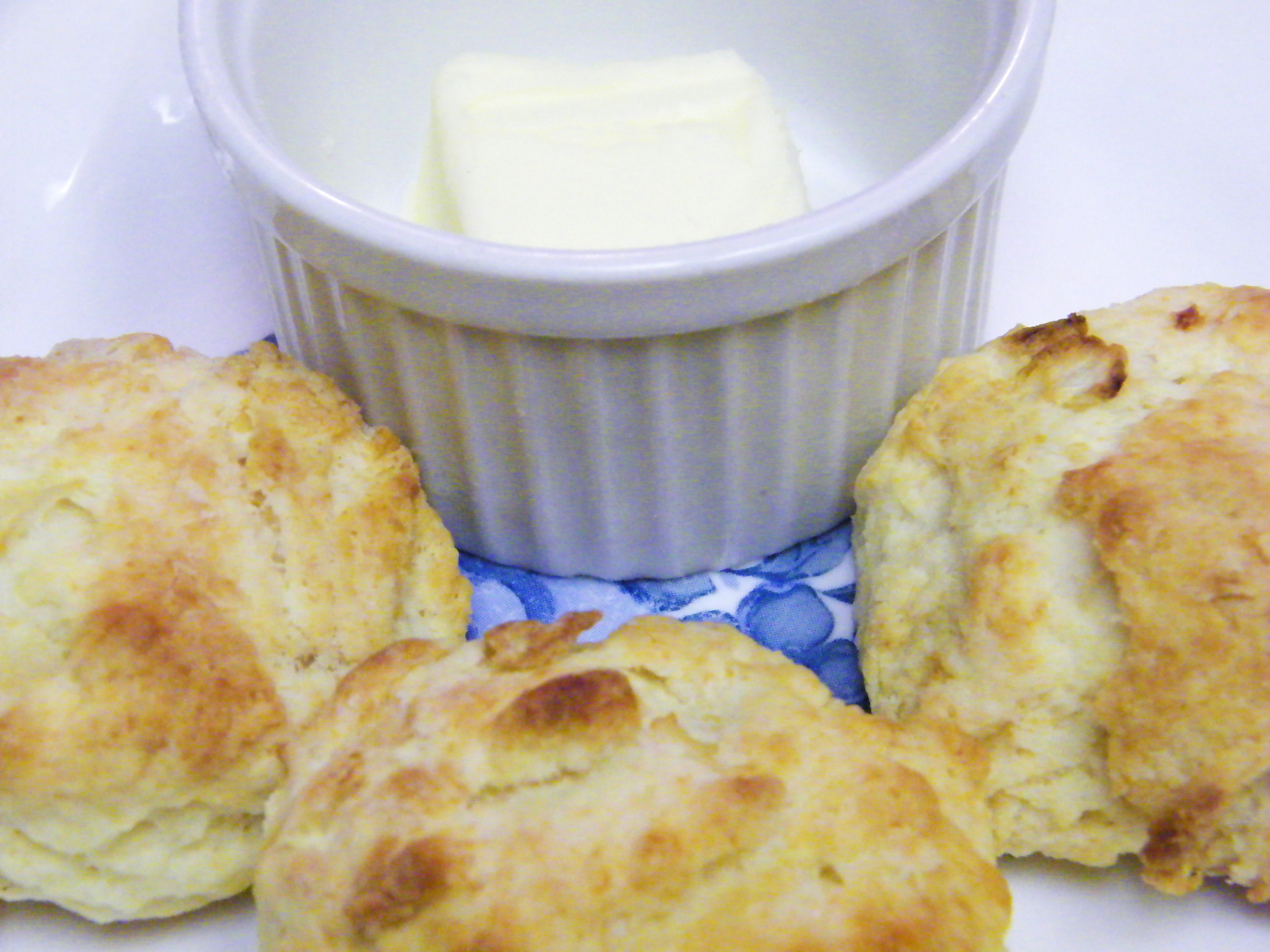
Three biscuits on a white and blue plate, with a bit of butter in a ramekin.

You can find many other blogged descriptions of this week’s FFWD recipe here: Saint-Germain-des-Prés Onion Biscuits

FFWD – Roasted Salmon and Lentils

Roasted salmon atop french lentils, with a little broccoli on the side.

Once again, I present you with a mediocre image, because we tend to eat dinner a bit late and I absolutely wanted to share this dish with Kevin. We love salmon and this simple roasted version is a wonderful complement for Dorie’s lentil recipe. I replaced a little of the chicken stock with 1/4 cup of white wine, just because its flavour goes so well with salmon. Next time, I’ll add a sprig of thyme to the lentils, too. This was an easy, bistro-style meal. I opted to discard the very soft onion, celery, and carrot that had helped to flavour the lentils and served this with steamed broccoli, instead.

This is the sort of meal I use as an example when folks ask me if it’s a hardship living with someone who cannot eat gluten. It’s hard to feel deprived when there are so many alternatives. Still, there are things Kevin misses. He just got Laura B. Russell’s The Gluten-Free Asian Kitchen from the library and I think we might have to put it on our To Buy list. There are recipes for gluten-free dumplings, tempura, and potstickers included in the book – all things he can’t have at restaurants. There’s such a wealth of gluten-free cookbooks and blogs available now and many of us are also picking up the skills to make our own conversions.

So, there’s no need to extend sympathy to me or to Kevin. We’re eating well. I hope your weekend’s full of good food, family, and friends, too.

You can find many other blogged descriptions of this week’s FFWD recipe here: Roasted Salmon and Lentils

FFWD – Cheese-Topped Onion Soup

Ready to eat, with banana walnut cake in the background.

French onion soup resides at the intersection of elegance and comfort. When I was growing up, it was ubiquitous on the menus of fine dining and family style restaurants alike. For children, it provided a little danger and frustration, too – warnings about the temperature of the bowl and its contents, the long wait to avoid burning our tongues and ruining our enjoyment of the soup (as well as everything that came after).

Breaking through the crust of cheese and bread was the beginning of our pleasure, pushing that crust piece by piece under the broth part of the ritual, and eating the sopping bits our next task, by which time the broth was finally cool enough to eat. Slowly cooked onions were a sort of miracle to me, unable to tolerate the taste of raw and lightly cooked onions well into my teens. The sweet-savoury flavour of slow-cooked onions became one of my favourites.

I was lucky enough to have a mother who took the time to make French onion soup at home, without the aid of packaged soup mixes (those were for dip, after all). I’m still lucky – it was my mother who spent an afternoon cooking these onions down. I’d started the soup at her house, then realized I’d have to leave sooner than I’d expected. She put the partly-cooked onions into the freezer, then cooked them in time for my next visit. My role in the making of this soup was much easier than it should have been, just a matter of re-hydrating the onions in broth, toasting the bread and grating the cheese.

As a sort of compensation, I baked Kim Boyce‘s banana walnut cake for dessert. It made me feel I’d really contributed to the meal. After all, it’s the slow browning of the onions that carries the flavour of this soup. Deglazing the pan with wine deepens that flavour, rather than changing it. When you add the broth, the onions plump and lighten, lending their colour and flavour to the soup. Everything else is subordinate.

We skipped the spoonful of cognac in the bottom, without feeling we were missing anything. I can see myself adding the cognac when using the soup to begin a celebration meal, though. We stuck to the comfort end of this soup’s identity on this night, following it up with some pasta sauced with pesto I made last summer and oven-roasted vegetables.

You can find many other blogged descriptions of this week’s FFWD recipe here: Cheese-Topped Onion Soup

FFWD – Mussels and Chorizo With or Without Pasta

The mussels ready for scrubbing and debearding.

I’m not sure who decided that a pound of mussels was a single serving, but this week’s dish proves it to be a generous calculation. I halved the recipe and was able to feed five people. Granted, we ate it with some lovely spinach rice pasta from Tinkyada and some even lovelier bread from one of my favourite bakeries, so I guess that helped stretch the portions. Regardless, we were all well-satisfied with the meal.

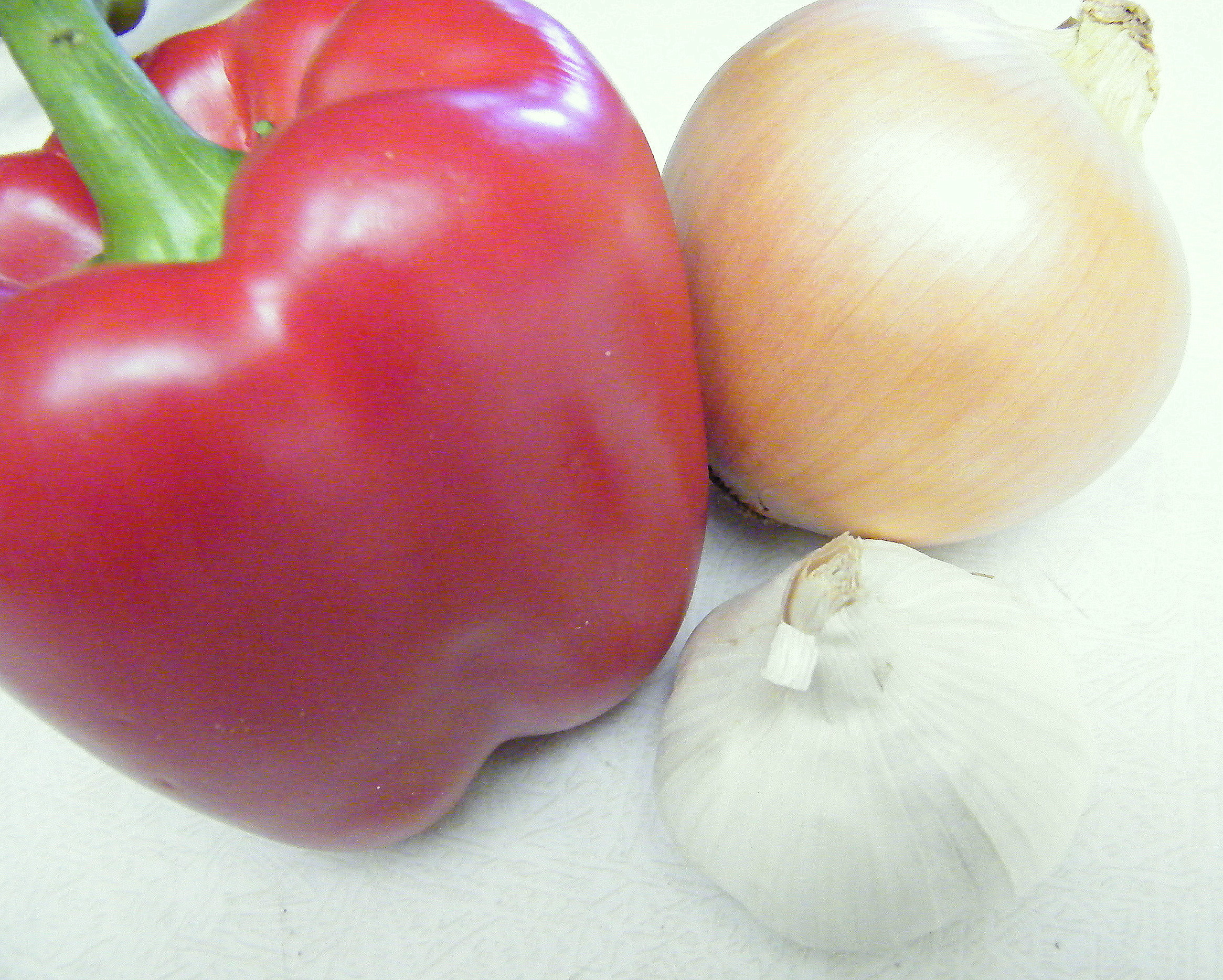
The onion, red pepper, and garlic before their introduction to the cutting board.

I’d spent the day with my nieces, providing a little back up as they attempted their first Tuesdays with Dorie recipe. They succeeded brilliantly, I must say – the chocolate truffle tart they made was a fantastic finish to our meal.

It was a great way to spend the day. Earlier, my mother shared the kitchen with us as she made a creamy lentil soup for our lunch. I provided troubleshooting advice and a little bit of hands on help for the girls as they worked their way through the stages of their tart construction. I also got them started on their first blog post, then left them together, side by side, as they chose and edited their photos and wrote the text.

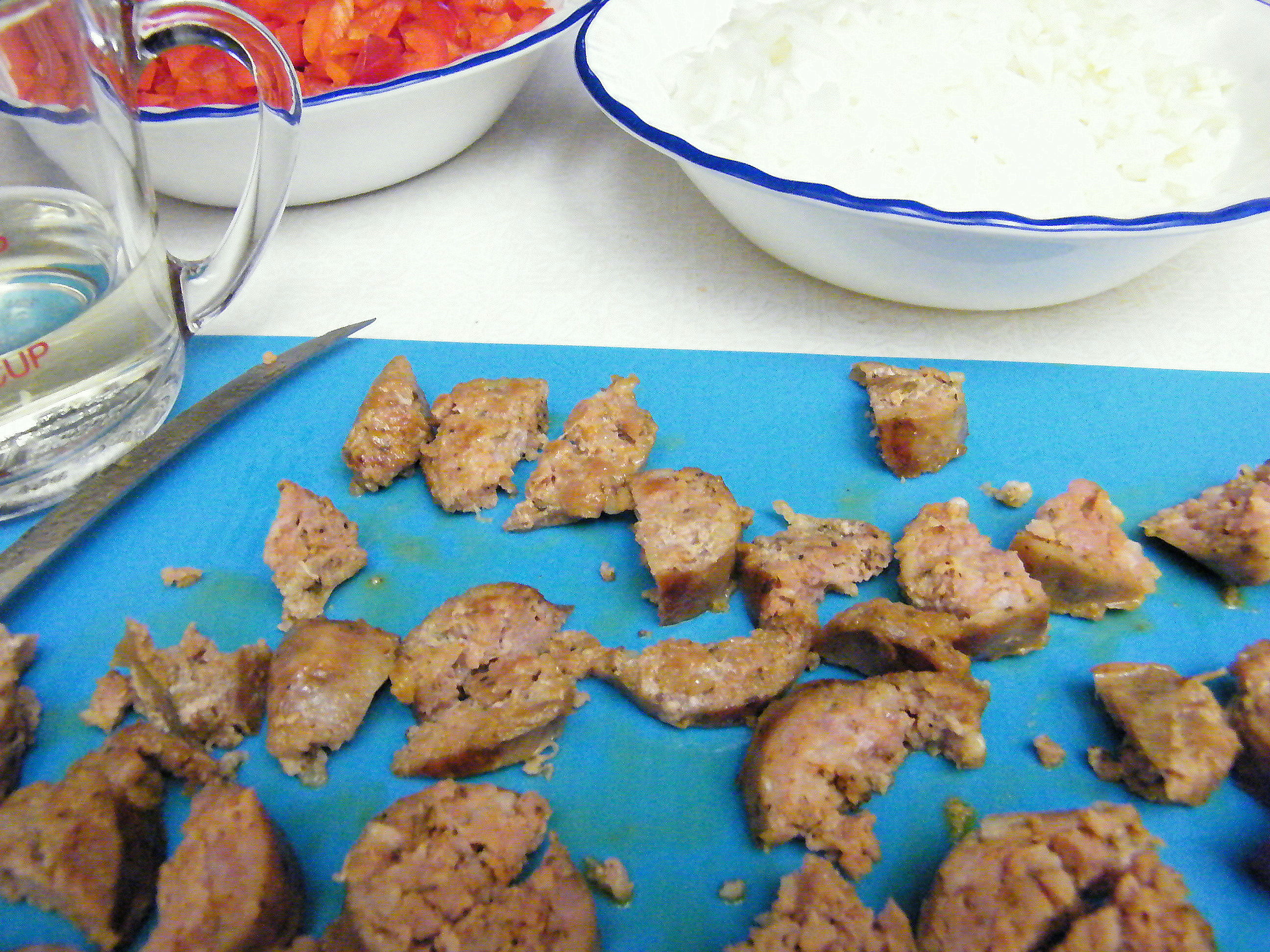
What was once a lovely, whole chorizo sausage and is now bite-sized morsels.

Later on, I started working on the mussels and chorizo pasta. This is one of those recipes where more time is taken in preparation than in the actual cooking. Chopping the vegetables, frying the chorizo, and debearding the mussels were the difficult parts of this recipe. Which is to say, there weren’t really any difficult parts. In fact, cooking the pasta – a completely hands off task – was the one thing I had to budget time for.

So, just when the truffle tart came out of the oven, I put the pasta on and by the time it was cooked, everything was ready to go into another pot for the main event. The total cooking time is about 15 minutes, from cooking down the vegetables to steaming the mussels. It’s hard to believe a meal this impressive is quick enough for a weeknight dinner.

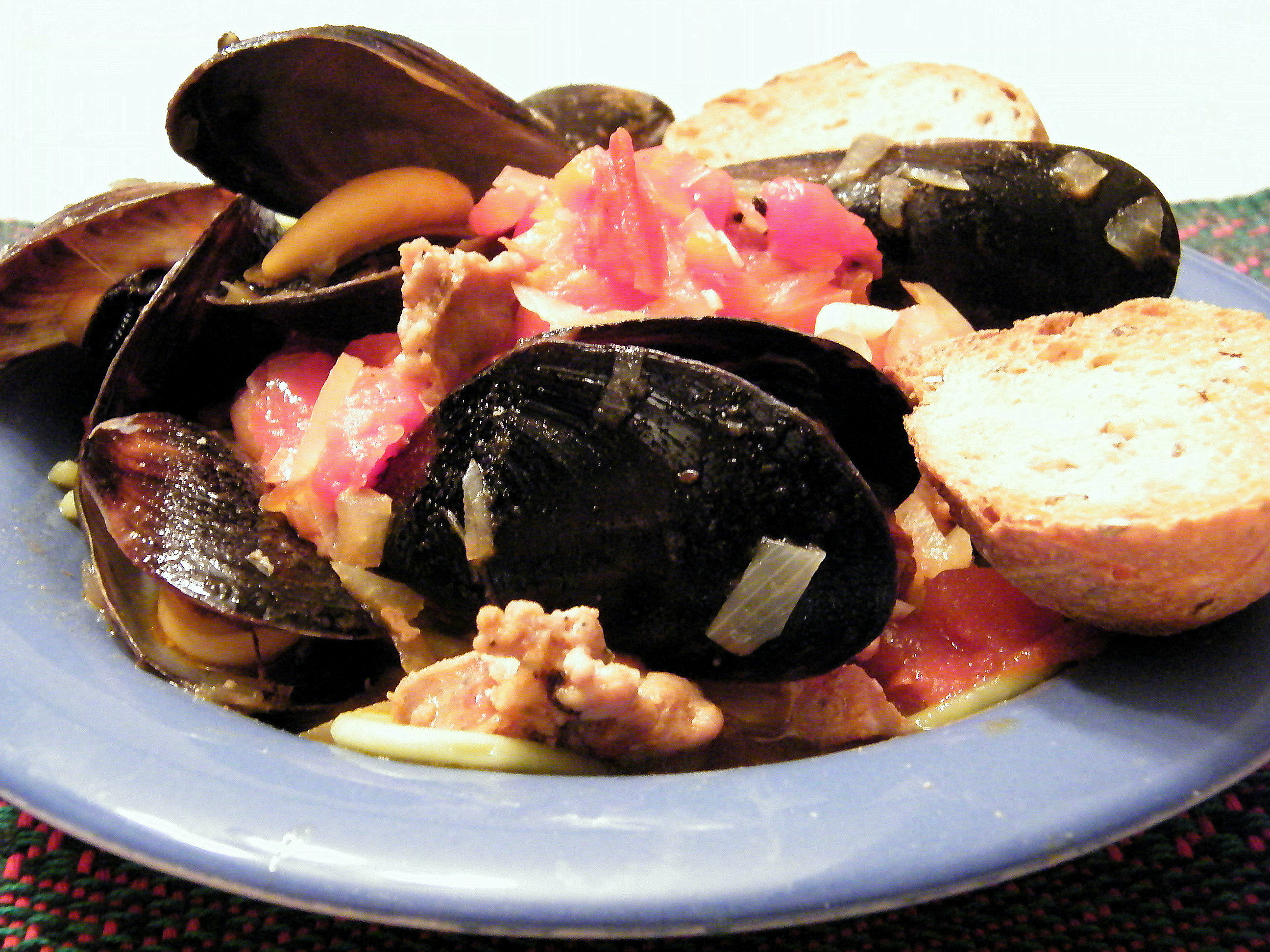
A plateful at the table.

I hadn’t cooked mussels before, but I’m definitely over that apprehension now. I’m also looking forward to baking and cooking again with family, soon.

Mussels and chorizo up close

You can find many other blogged descriptions of this week’s FFWD recipe here: Mussels and Chorizo With or Without Pasta

FFWD – Brioche and Nutella Tartine

Brioche dough, braided and ready for its final rise.

A month ago, the rest of the French Fridays gang presented their posts on Dorie’s brioche recipe. I missed out on that, but this week’s recipe turned out to be the perfect excuse to catch up. I chose to use Dorie’s bonne idée for this recipe, rather than making the bubble-top rolls. A loaf works much better for tartines, after all. I also wanted to make braided loaves, just because I think they look so lovely.

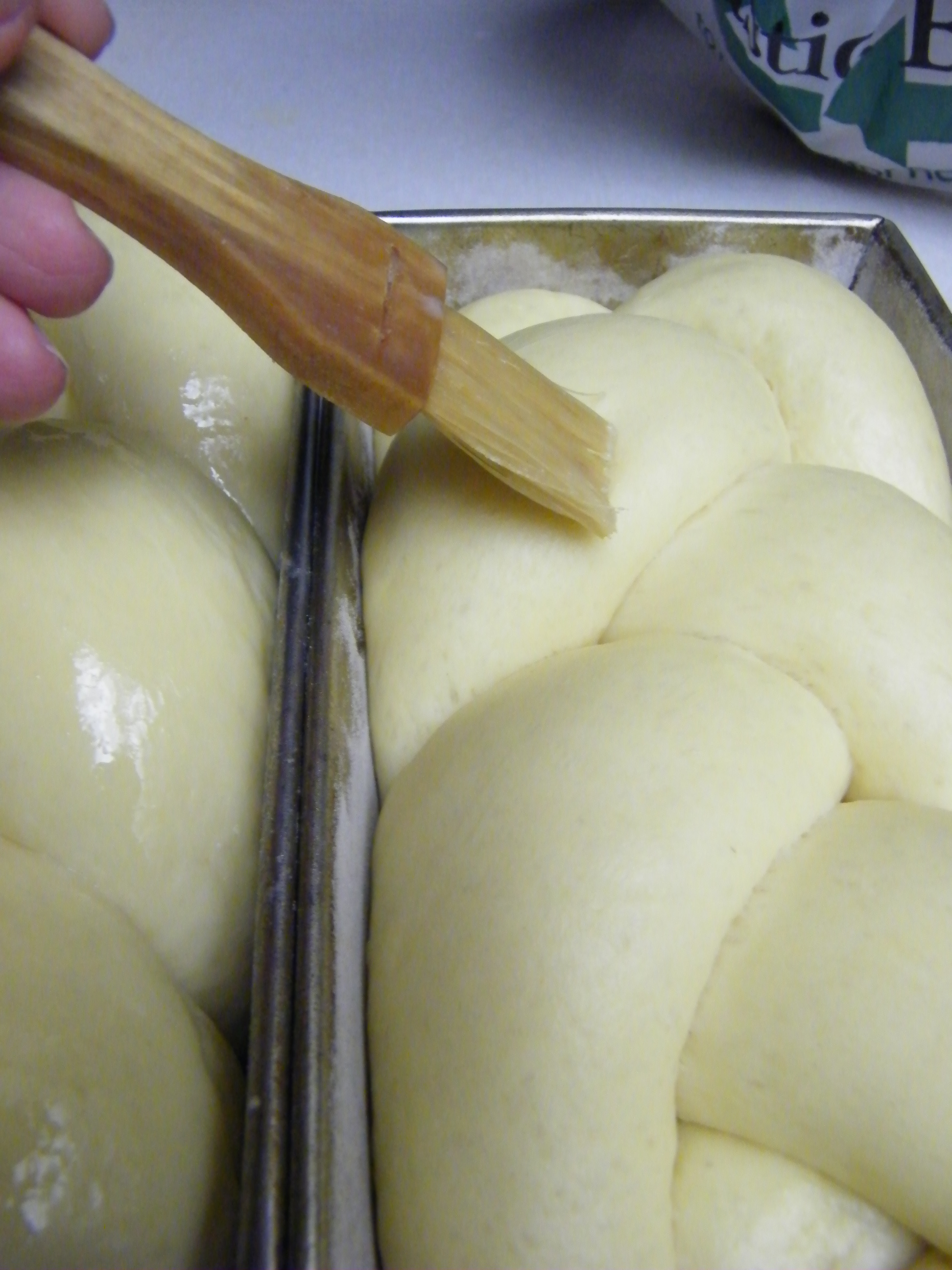
Brushing the loaves with egg wash, before sliding them into the oven.

Brioche is one of those breads that intimidate home bakers, me included. But, with the help of a sturdy stand mixer, all things are possible. When it comes to bread, anyway. The only other obstacle to brioche success is my penchant for doing things at the last minute. I’m usually one of the last to post my link on the French Fridays site and it’s not just because I’m on the west coast. This time I forced myself to plan ahead.

Making brioche, aside from the worries about overheating the stand mixer during the ten-minute kneading process, is pleasantly slow. Once the dough’s first rise is done, it’s put into the refrigerator and deflated at intervals until the yeast gives up. After an overnight rest, it’s shaped and then left at room temperature to warm enough for the yeast to become active again. After that final rise, into the oven it goes.

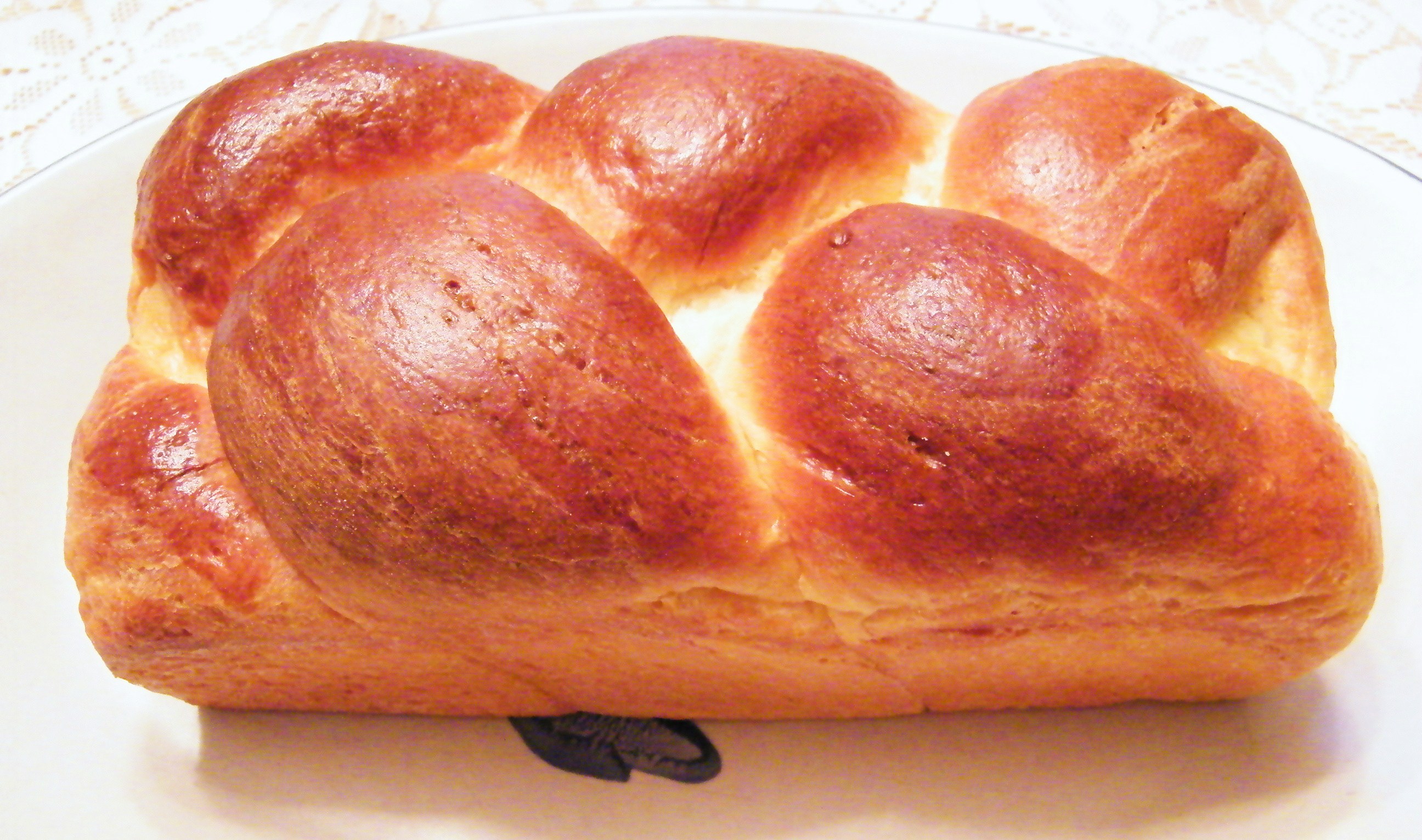
Baked, cooled, and ready to eat.

What you get for your patience is a light, eggy, buttery loaf, with a rich yeastiness that’s a result of holding back the dough’s rise for so long. It’s just made for tartines (and French toast, too).

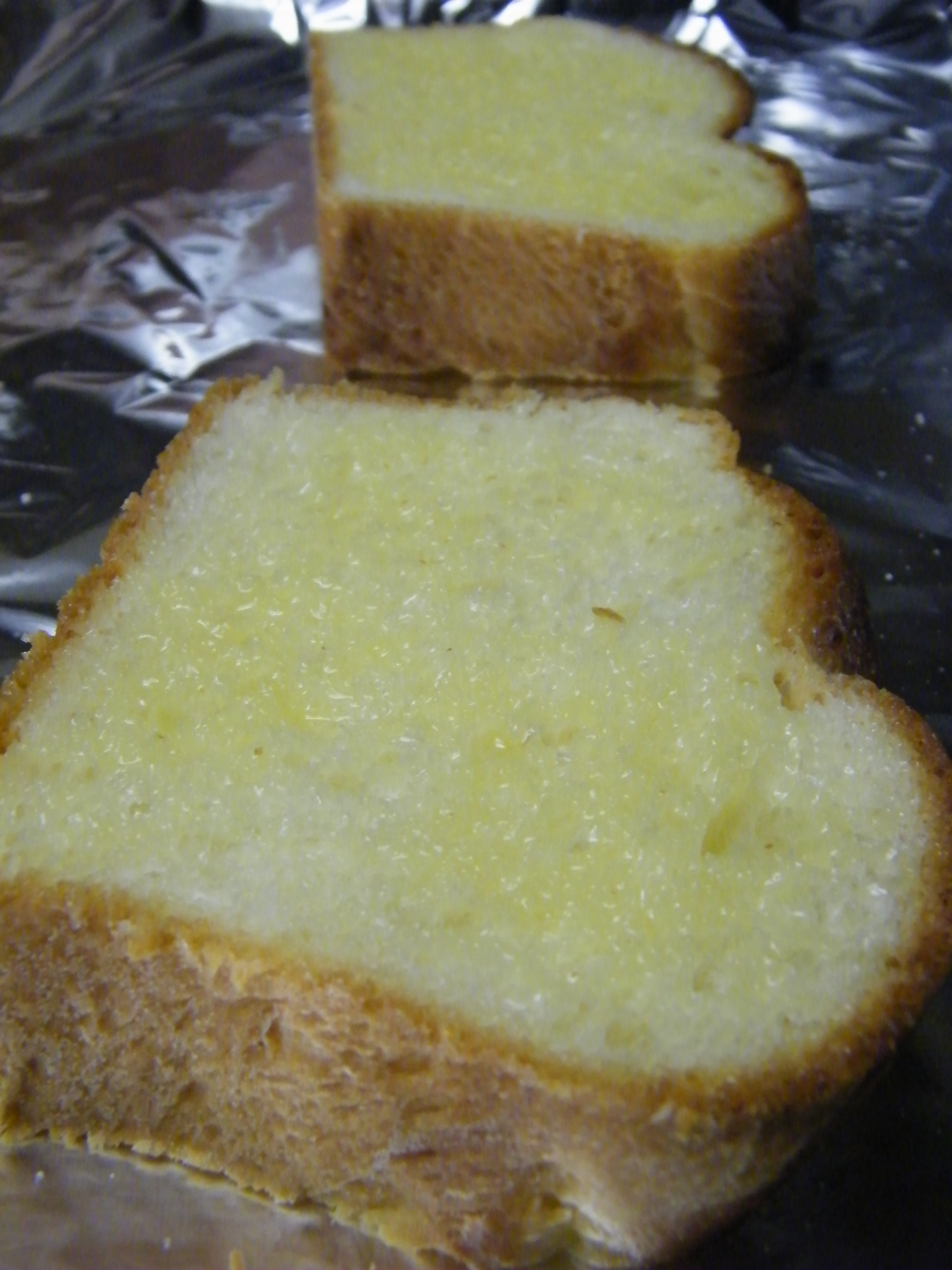
Slices of brioche, brushed with melted butter, ready to slide into the oven.

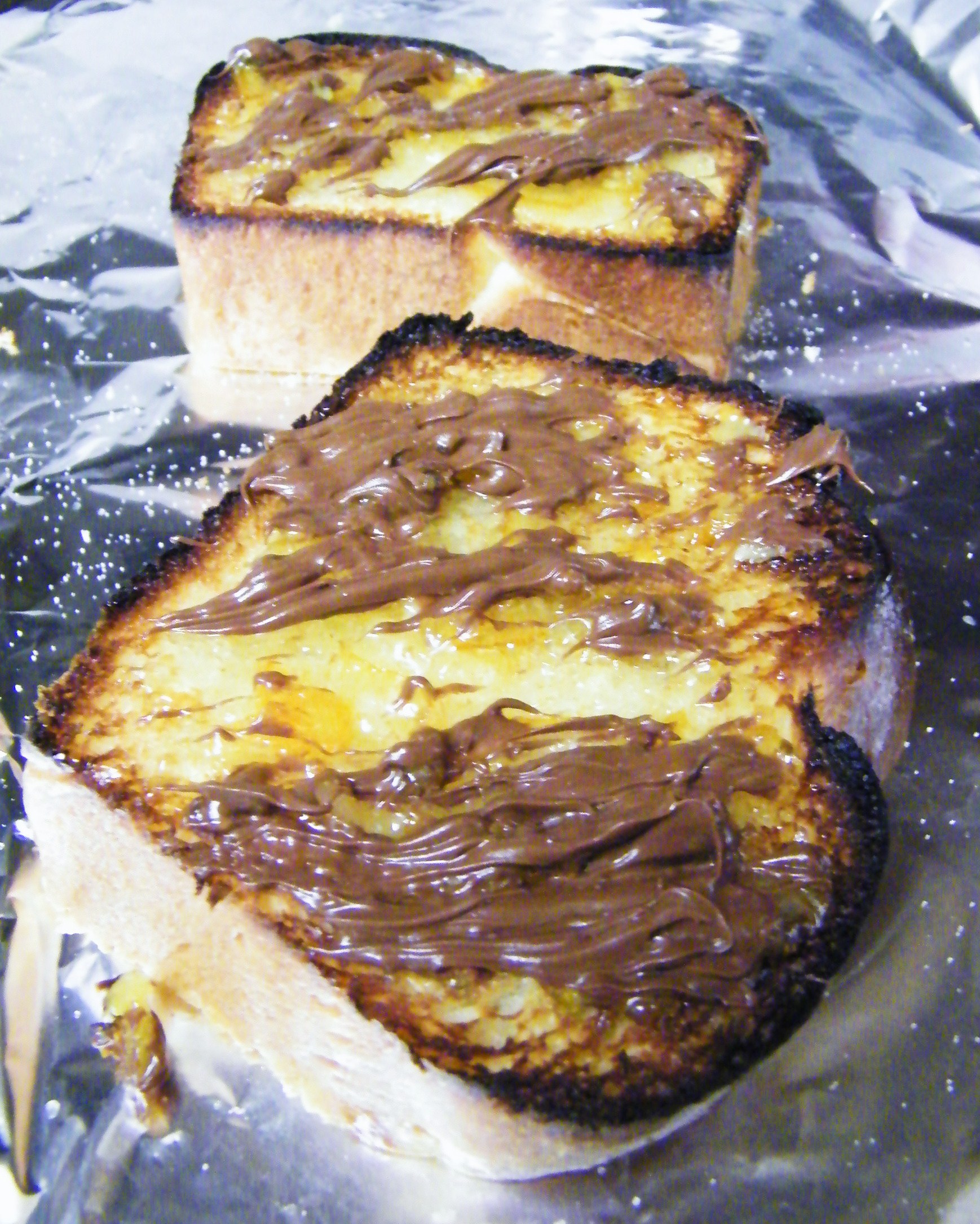
A tartine is an open-faced sandwich, usually with a decadent topping. I think this Nutella tartine qualifies. The slices of bread are brushed with melted butter, then toasted under the broiler. Mine got a little too toasted around the edges, but not enough to affect the taste.

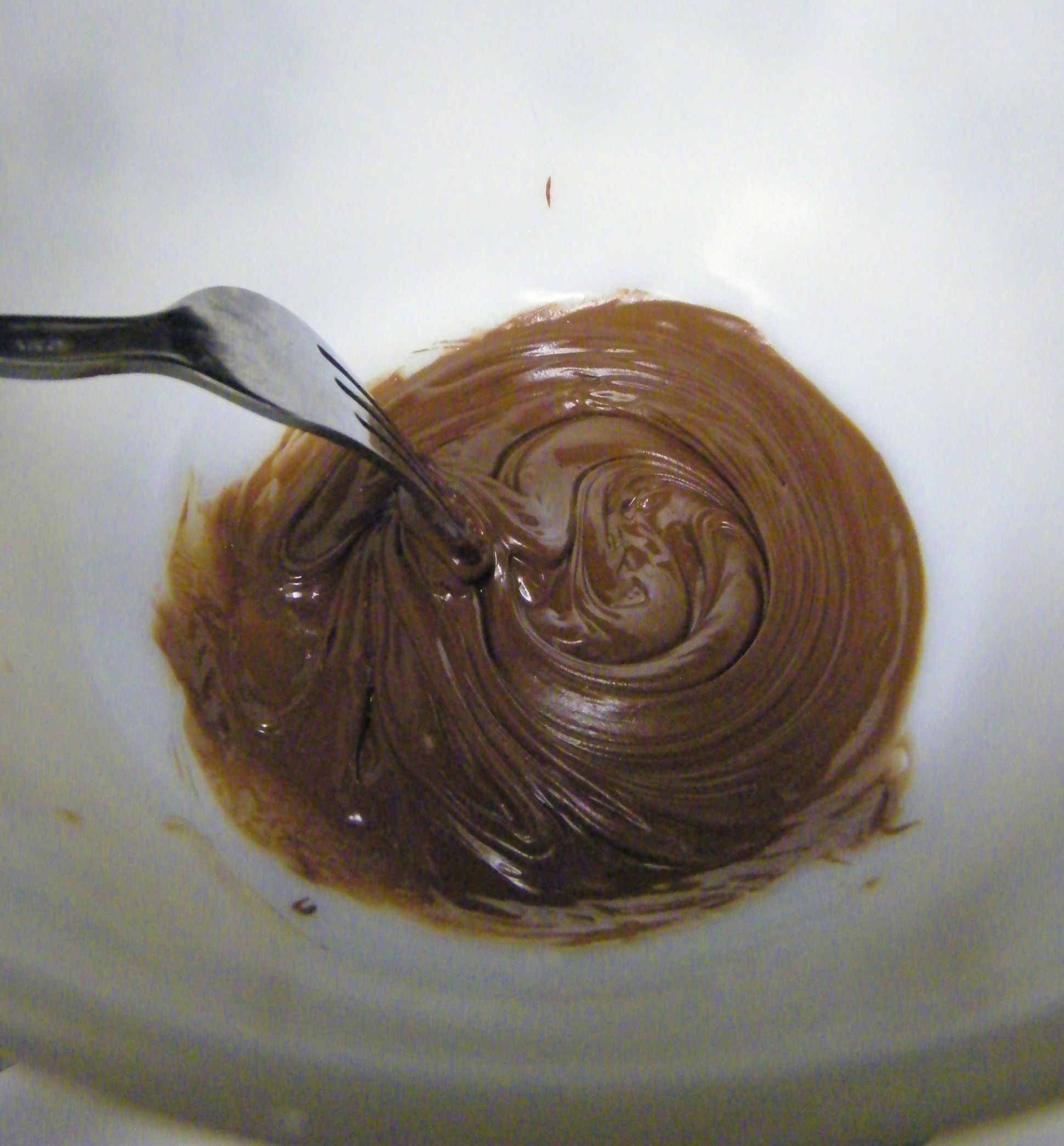
Melting the Nutella.

This tartine starts with a layer of bitter orange marmalade, then streaks of warmed, softened Nutella are added on top. It’s finished with chopped hazelnuts (which I skipped) and some sea salt.

Marmalade-d, Nutella-d, and salted.

Apparently, a slice of bread with Nutella is a traditional after-school snack in France. With Dorie’s additions, I’m sure many parents might be tempted to keep these tartines all to themselves.

On the plate, just about to disappear.

You can find many other blogged descriptions of these recipes here: Bubble-Top Brioche Rolls and Nutella Tartine

FFWD – Gorgonzola-Apple Quiche

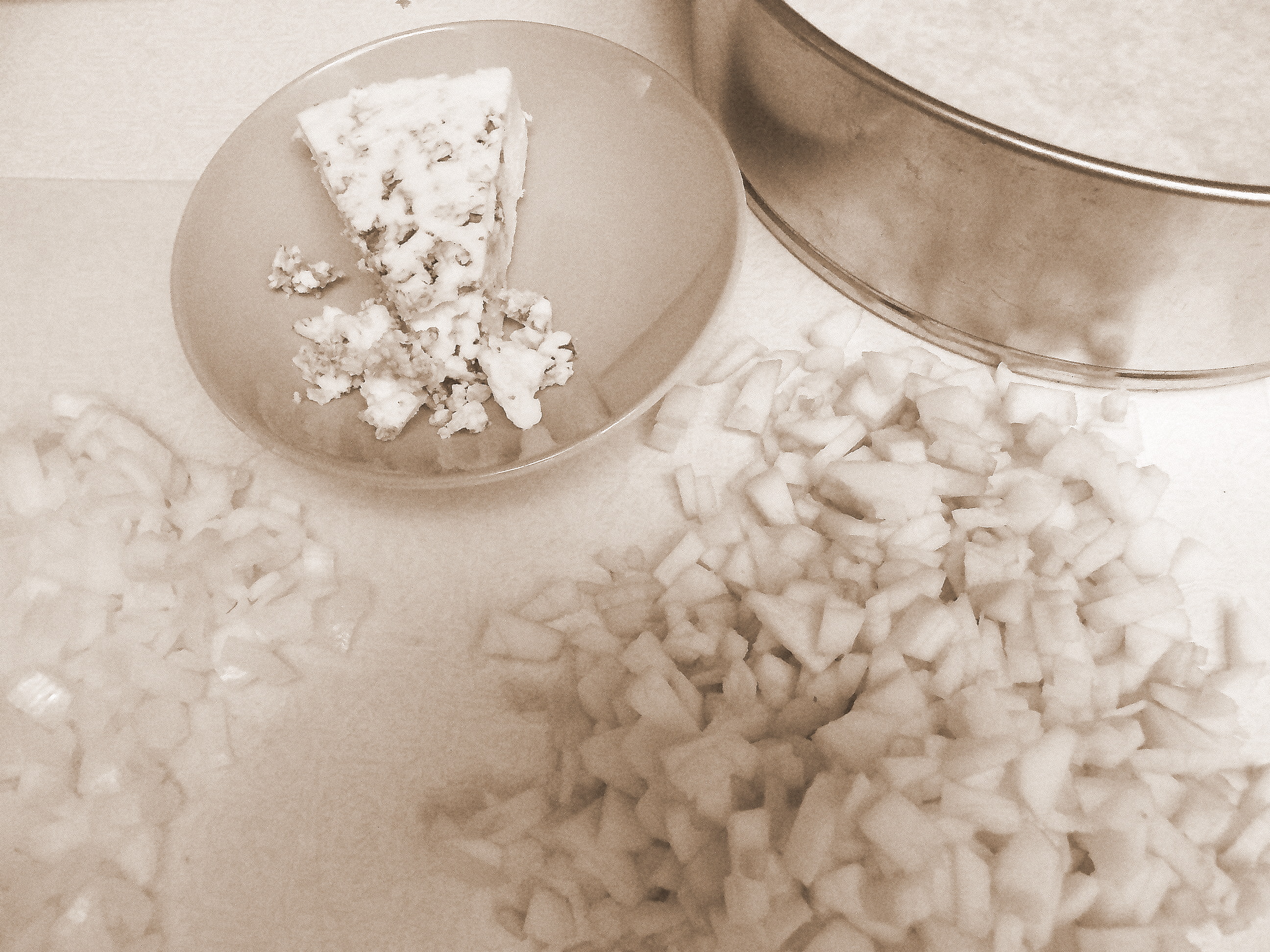
The name of this dish is misleading, in my case. I couldn’t find any Gorgonzola, so I used a Dutch blue cheese. It was nearly as mild as the Gorgonzola I usually get and it melded well with the apple and onion in this lovely quiche. Today’s post is just a quick one, as I’m away from home right now. I’ll just share some photos with you and let you know that this quiche is one worth making again – next time, I’ll have the Gorgonzola, I swear.

Ingredients

Ready for the oven

Just out of the oven

A slice of quiche

You can find many other blogged descriptions of this week’s FFWD recipe here: Gorgonzola-Apple Quiche