Cook the Book Fridays – Poulet Crapaudine

Spatchcocked chicken

This chicken took a circuitous route into my kitchen. I don’t cook a lot of meat at home, to spare the vegan and because I’ve always been comfortable with a mostly vegetarian diet. So, when this dish came up in the rotation for Cook the Book Fridays, I decided to hand off the cooking to my parents. They have some beautiful chickens in their freezer that they got from a friend’s farm. This recipe adapts perfectly to the barbecue, which they’ve already got fired up for the summer season. I thought I’d send my mother home with the harissa paste in my freezer and enjoy this dish vicariously through their photos and descriptions.

But things didn’t go as planned. First, I completely forgot about the harissa paste, so my mother settled on sambal oelek instead. My brother spatchcocked the chicken for her and she put together the marinade, bagged the chicken, and refrigerated it.

Spatchcocking and marinating the chicken

And then she remembered she was going away to a conference, so she brought the chicken over to me. It needed another day in the refrigerator, which brings us to today. I put it into my Dutch oven, weighed it down with some Corningware, and cooked it on the stovetop. I lost some of the skin, but it worked rather well. Then, I transferred it to the oven, where it took about half an hour to finish. I was happy with how it turned out in the Dutch oven, but I think I’ve got to invest in a larger cast iron frying pan. I think it would have been easier to work with and the chicken wouldn’t have taken quite so long to finish.

The results were tender and juicy, a little spicy, and very flavourful. I only had a taste tonight, but I’m looking forward to having some more tomorrow, with coleslaw and roasted potatoes. The rest is going into the freezer, so that it can travel back to my parents’ house. It wouldn’t be right to exclude them from enjoying this chicken, would it?

I’ve titled this post Poulet Crapaudine, which is French for spatchcocked chicken, but David Lebovitz calls it Chicken Lady Chicken, in honour of the woman who inspired the recipe. I hope if you try this dish, your chicken doesn’t have to commute quite as much as mine did.

You can read through everyone’s posts here. And consider joining this community of wonderful cooks and lovely people, as we work our way through David LebovitzMy Paris Kitchen.

Cook the Book Fridays – Fattoush

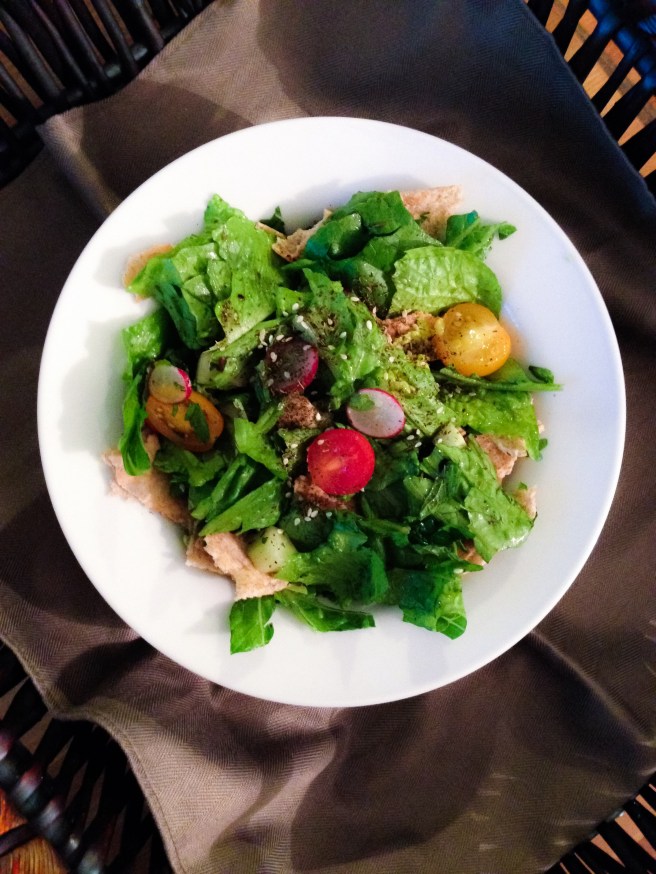
Fattoush

I don’t think of salads as diet food. It’s what I was raised to do, but the days of wan supermarket lettuce, with its limp produce aisle cohorts are long gone. These days, lettuce is early summer fare, along with freshly-dug radishes and scallions. It’s not quite time for tomatoes and cucumbers, but today’s fresh market offerings are better than the supermarket fare of yore (yore being the late 20th Century).

Salads are a broader category for me now, too. Shaved Brussels sprouts or cabbage might go into a winter salad, roasted tomatoes and eggplant into a high summer version. But right now, salads look a lot like the ones in my elementary school picture books – lettuce, tomatoes, cucumbers, peppers, radishes, carrots – they’re all fair game.

Fattoush with za'atar

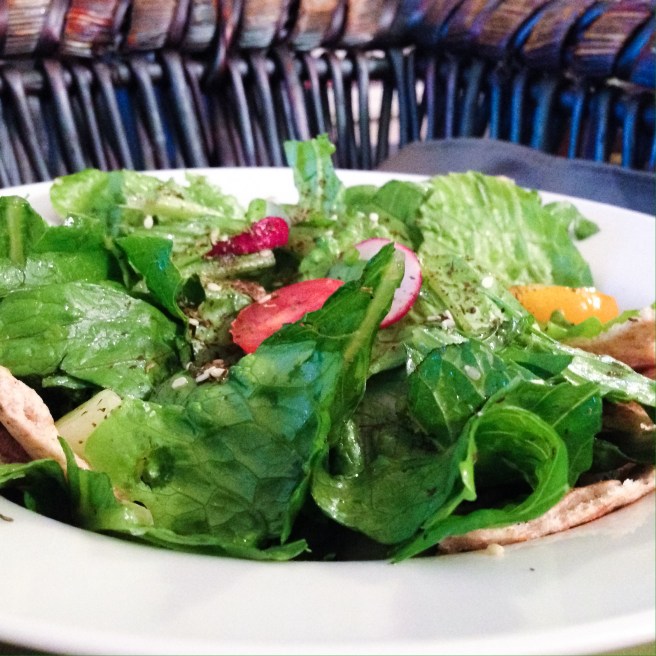
Tonight’s salad is fattoush, which adds a healthy dose of flat-leaf parsley and mint to a mix of romaine, onion, radishes, and cucumbers. It’s tossed in a lemony, garlicky, mustardy vinaigrette and finished with grindings of black pepper and a sprinkling of sumac. I’m out of sumac, so I substituted za’atar. I’m glad I did, because there’s lots of sumac, but it also adds a burst of thyme and sesame.

My bowl included pieces of pita that had been brushed with olive oil and crisped in the oven. The gluten-free version included crispy rice crackers instead. Both were full of flavour.

There will be many more summer salads this year, but I’ll be revisiting this one regularly, perhaps as soon as tomorrow.

Fattoush on a wicker tray

You can read through everyone’s posts here. And consider joining this community of wonderful cooks and lovely people, as we work our way through David LebovitzMy Paris Kitchen.

Food Revolution Day 2016

Food Revolution 2016

Since 2013, I’ve been celebrating Food Revolution Day with a group of bloggers that met when we worked through Dorie Greenspan’s Around My French Table. We’ve all moved on to other projects, together and separately, and added new blogging colleagues along the way.

Today, we’re convening again to contribute our voices to Food Revolution’s mission: to talk about how “children access, consume and understand food” and to ensure they have “access to good, fresh, nutritious food for generations to come.”

Our celebration is taking place across two cook-along groups started by alumni of French Fridays with Dorie: Cook the Book Fridays and The Cottage Cooking Club. We have one Food Revolution Ambassador in each group, Mardi of eat. live. travel. write and Andrea of The Kitchen Lioness, and each had a unique take on this year’s Food Revolution Day theme, which is #FeedtheFuture. Jamie Oliver released ten recipes to learn and share that he believes can teach you all the skills you need to feed yourself for the rest of your life. Using this as a template, each of our Food Revolution Ambassadors came up with challenges appropriate to the book their group is working with.

Cook the Book Fridays: Ham, Blue Cheese, and Pear Quiche

Ham, Blue Cheese, and Pear Quiche

Mardi has taken the lead on Food Revolution Day, first in French Fridays with Dorie and now in Cook the Book Fridays. She chose David LebovitzHam, Blue Cheese, and Pear Quiche from My Paris Kitchen for the group to prepare this week, as a “must know” recipe. Quiche is almost infinitely variable, and can accommodate gluten-free, vegetarian, and even vegan diets, with some simple ingredient substitutions.

It’s a dish that highlights a skill that’s just as important for a healthful diet as the ones covered in Jamie Oliver’s “starter pack” of healthy recipes – baking. Knowing how to make your own crusts, breads, and pastries can empower you to choose the best ingredients and use them in delicious and healthy proportions.

Quiche is also a great dish to help you avoid food waste – nearly anything in your fridge that needs using can be put into a quiche. And if you get into the habit of keeping savoury tart doughs in your freezer, it’s easily a weeknight meal option or a last minute potluck solution. I’m exemplifying this tonight – the quiche is in the oven while I’m writing this post.

I decided to follow Mardi’s lead and “minify” this recipe. I made muffin-tin servings of quiche, which are easy to share. I made the full recipe of tart dough, freezing half. My quiche crust is an interesting colour – I used organic blue cornmeal in place of yellow cornmeal, as that’s what I had on hand. It’s ground to a fine texture, which is a plus for a crust. Cornmeal can often lend a gritty texture to doughs like this.

I halved the quiche filling, though. I’ve only got so many taste-testers available this weekend. I didn’t vary David’s recipe and I’m glad. This is a rich, sophisticated quiche. Ham, blue cheese, and pear are classic flavour partners. That said, I’ll use this quiche recipe as a jumping off point whenever I have some cream cheese hanging out in my refrigerator. As I said before, a world of possibilities can be contained in the crust of a quiche.

You might notice there aren’t any photos of my quiches. It was dark by the time I finished my post, so I’ll add some tomorrow, so you can see them at their best.

Three mini quiches

You can read through the Cook the Book Fridays crew posts for this Food Revolution Day here. And consider joining this community of wonderful cooks and lovely people, as we work our way through David LebovitzMy Paris Kitchen.

The Cottage Cooking Club

Since we just wrapped up cooking our way through Hugh Fearnley-Whittingstall´s River Cottage Veg, Andrea took a different route for this group’s challenge. She asked us to choose up to ten recipes from the book that qualify as “must know” dishes and to share the techniques and skills we learned in making them.

My mind turned to categories, rather than specific dishes, so I’ll share a few of the things that River Cottage Veg helped improve in my own kitchen.

Roasting deepens flavour

Roast until fabulous

If you were brought up the way I was, most vegetables got roasted alongside cuts of meats or as a part of stews. Otherwise, they received a stove top or steamer treatment. But, roasting brings out the best in many vegetables and several of Hugh’s recipes are oven-roasted improvements on stove top staples.

Oven Roasted Roots Frittata

Oven Roasted Ratatouille and Roasted Tomato Sauce

Roasted Roots with Apple and Rosemary

Homemade sauces and condiments are easy and delicious
Dressings and Condiments

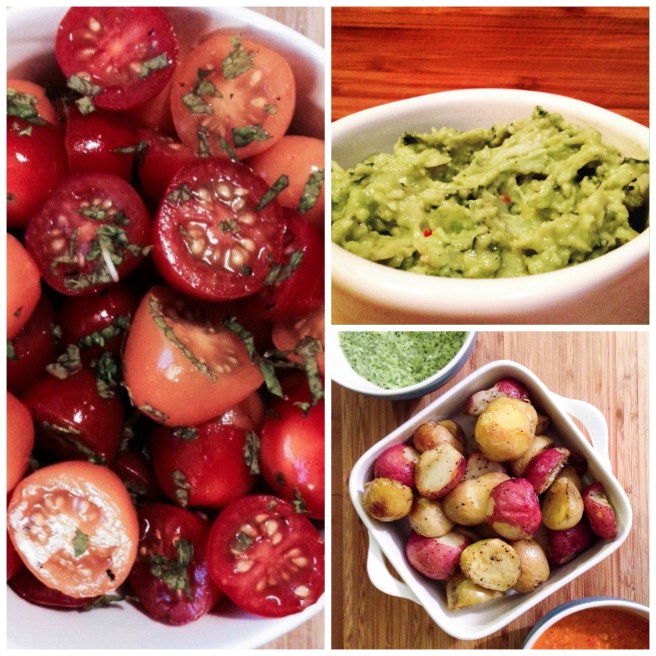
You really don’t know how good something can be until you’ve eaten it fresh out of the kitchen. Condiments and dressings are easy to make and so much better than the ones you can buy at the supermarket. Besides, you’ll improve your knife skills when you process all those beautiful aromatics.

Lemony Guacamole

Mojo Sauces

Tomatoes with Thai Dressing

Great flavour starts at the base

Depth of flavour

When you work at creating a delicious flavour base, whether that’s a scratch curry paste or an infusion of dried mushrooms, your dish will be more than the sum of its parts. It doesn’t take long to add flavour, so there’s no reason to skip steps.

Eggplant and Green Bean Curry

Mushroom “Stoup”

Over the last two years, our group picked up or refined cooking skills, encountered new ingredients, and learned new approaches to familiar ones. However, the greatest gift that working through this cookbook gave us was to reinforce the truth that vegetarian and vegan eating can be flavourful, varied, healthy, and more than enough. I think that qualifies as a Food Revolution, don’t you?

You can find the rest of the group’s Food Revolution posts, here. I encourage you to check them out – you’ll meet some wonderful bloggers and get some great inspiration for healthy, delicious eating.

And you can join in on the Cottage Cooking Club’s next adventure, cooking through one or both of Hugh Fearnley-Whittingstall´s River Cottage Every Day and Love Your Leftovers – you can find the details, here.

World food waste statistics

I believe that people need access to safe, affordable, whole foods; access to the skills and techniques to prepare foods; and access to the housing, income, and safety that will allow them to cook. This will ensure the health of future generations and the planet, reducing the waste of food, packaging materials, human potential, and environmental resources that an industrial, processed food system can enable. Participating in initiatives like Food Revolution Day can only help those goals along.

You’ll find plenty of posts, photos, videos, and more if you search the #FeedtheFuture and #FoodRevolution tags on your social media channels, encompassing a huge range of perspectives on what it means to bolster food security for coming generations.

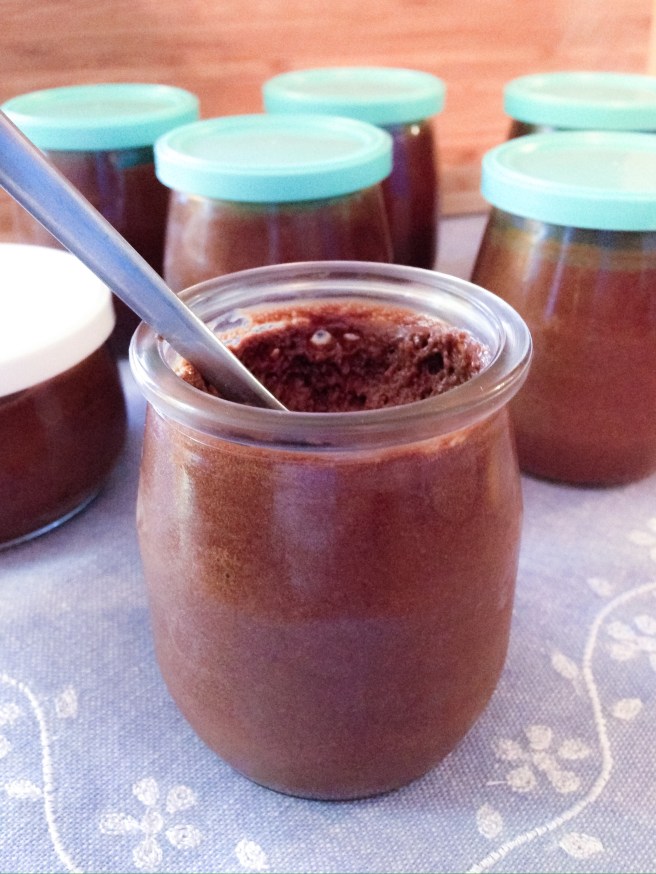
Cook the Book Fridays – Salted Butter Caramel-Chocolate Mousse

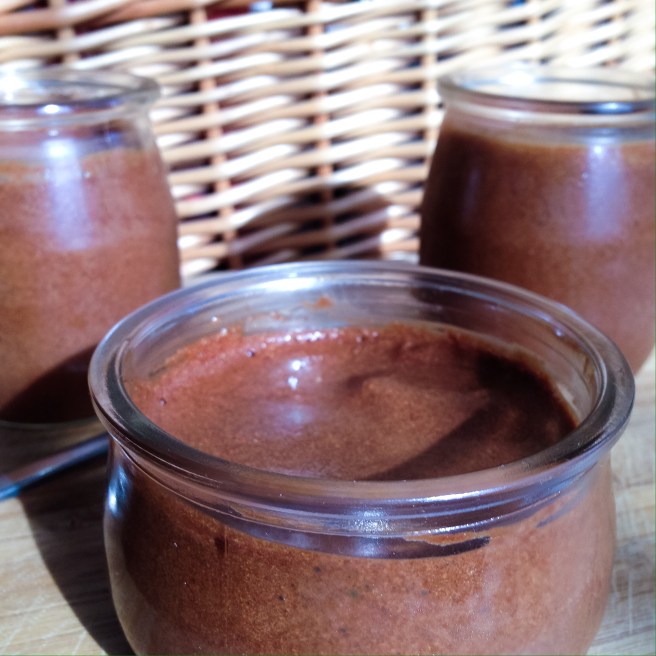
Salted Butter Caramel-Chocolate Mousse

It’s ironic that the phrase ‘piece of cake’ signifies something that’s dead easy, as our cultural image of a piece of cake is based on the layer cake, which requires multiple steps, a light touch, and at least a little bit of decorative talent. Chocolate mousse on the other hand, associated with restaurant meals and special occasions, is a piece of cake to make.

This mousse is complicated by the addition of caramel, but even that is easy, once you’ve learned the trick of it. In fact, making caramel is a lot like making brown butter. When you know how to make it, you want to add it to everything. And once you’ve added caramel to chocolate mousse, I suspect you’ll want it that way every time.

Salted Butter Caramel-Chocolate Mousse

The only thing that’s not easy about this recipe is having to wait eight hours for the mousse to set. I solved that issue by making it before bed last night. If I’d made it during the day, I wouldn’t have waited nearly that long. As it was, it took a lot of will-power not to eat it for breakfast. Which wouldn’t have been a bad idea, save for the fact that I wanted to wait for some brighter afternoon light for photographs.

Salted Butter Caramel-Chocolate Mousse

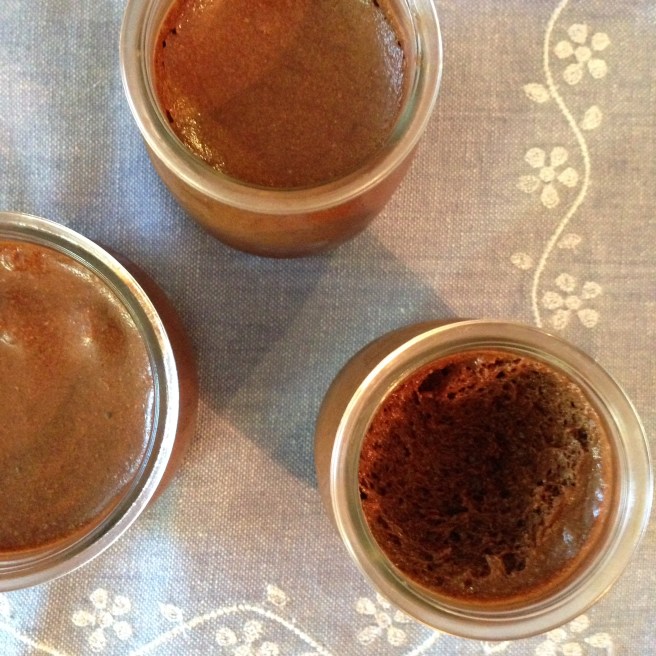
I’m so glad we’ve posted about this recipe – I’ll never have to wait for good light again. Now that I know how delicious it is, I don’t think I could have the forbearance. This mousse is wonderfully balanced in its elements – salt, sweet, bitter, and rich. It’s the sort of thing you could bring out in cocktail glasses at a dinner party, but I don’t recommend waiting for an occasion. Spoon it into little pots and enjoy it as a mid-week treat. It will look just as charming and it will be even more satisfying.

Salted Butter Caramel-Chocolate Mousse

Surprisingly, I’ve still got some in the refrigerator to enjoy tomorrow. This recipe could be halved, easily, but I recklessly made an entire batch. At least it gave me the opportunity to use the cute little lids for my Riviera Petit Pot jars. More importantly, I’ll have a decadent treat to distract me from another long day of elevating my sprained foot – an enforced rest is not as relaxing as you might think.

Luckily for you, this is one of the recipes from My Paris Kitchen that’s posted online. Head over to Epicurious and then run to the store for any of the ingredients you don’t have on hand. It takes eight hours to set, so the sooner you get started, the sooner you’ll be enjoying it.

You can read through everyone’s posts here. And consider joining this community of wonderful cooks and lovely people, as we work our way through David LebovitzMy Paris Kitchen.

Cook the Book Fridays – Croque Monsieur

Croque Monsieur

Diner food and bistro food might originate on different continents, but at the root, they’re two sides of the same coin. They’re draped in cinematic mystique, with iconic dishes that can spur argument over the smallest variation, and they both represent comfort food to locals and visitors alike.

Where they differ, at least to the North American eye, is in sophistication. What’s a steak sandwich got on steak frites? Or chef’s salad against salade niçoise? Or a ham and cheese on rye in comparison to a croque monsieur?

In general I’d say the problem is that familiarity can breed contempt, but for the last entry on the list, the answer is béchamel. And prosciutto. And lots and lots of Emmental. I’ve had wonderful versions of the croque monsieur at restaurants, but this one might be one of my favourites and it happened in my own kitchen.

I’m not sure I needed to know how easy it is to make a croque monsieur at home, but it will come in handy the next time I want to make an impression at brunch. And David Lebovitz’ version of bechamel is worth knowing, even if it leads me to less healthful eating on a more frequent basis. It’s so easy and perfectly creamy, with just a hint of heat from cayenne in place of the usual nutmeg.

Even if I can make bistro food (or diner food for that matter) at home, there’s still a place for those restaurants in my heart. Both kinds of establishments have been put on the endangered list, but they seem to be reinventing themselves at home and abroad. That’s good news. As long as they make room for classics like the croque monsieur, reinvention is the key to longevity.

You can read through everyone’s posts here. And consider joining this community of wonderful cooks and lovely people, as we work our way through David LebovitzMy Paris Kitchen.

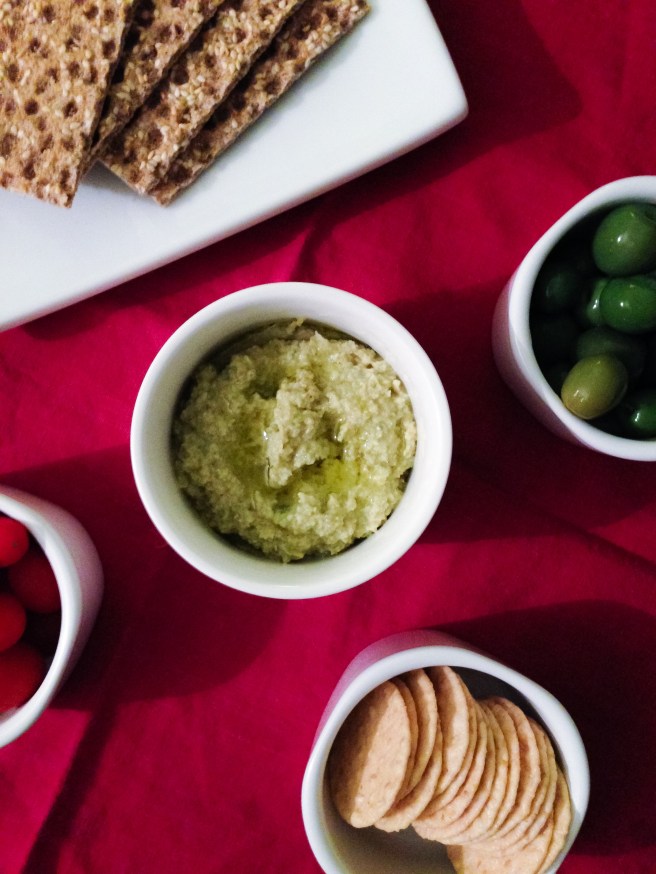
Cook the Book Fridays – Artichoke Tapenade with Rosemary Oil

img_6697

There’s a wonderful Lebanese restaurant called Jamjar on the other side of our neighbourhood. We joke that it’s a good thing it’s far enough away that we can’t run down there on the spur of the moment. If it were closer, we’d eat at home less often than is good for us.

My last meal there wasn’t in the restaurant at all, but at a working meeting. The chairperson picked up an array of their dips, salads, small plates, and sauces for us to munch on as we sifted through our list of tasks. There’s nothing bland about any of their food – there’s almost a cacophony of flavours, which manage to complement rather than compete. Eating through a spread of their dishes excites the palate with each bite. It certainly kept us all lively and cheerful through what could have been a tedious evening.

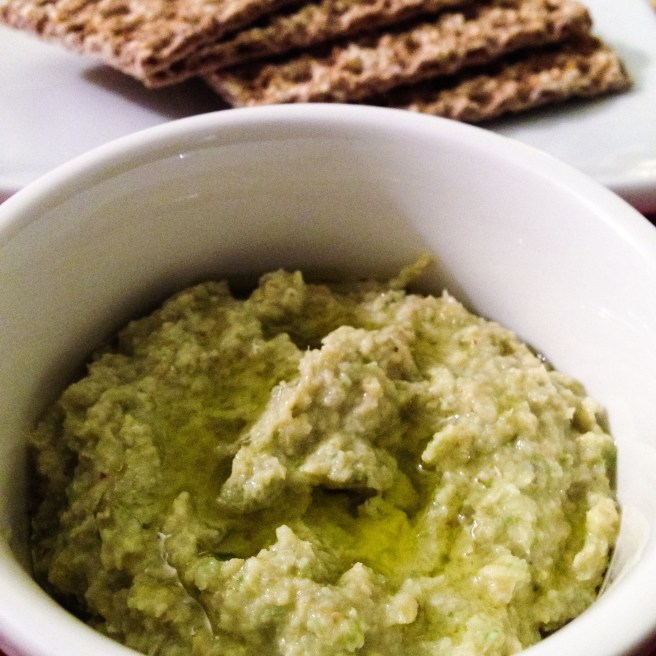
The artichoke tapenade I enjoyed this evening wouldn’t have been out of place on that table. It’s French, rather than Lebanese, but its flavours have a Mediterranean bent. Artichokes, olives, and capers provide earthy notes, lemon and cayenne brighter ones, while homemade rosemary oil finishes the dip.

img_6698

Now that the weather is getting warmer, dips like this one are perfect for my favourite way to eat through the summer – from a table full of small bowls and plates filled with different textures and flavours, all working together to create a satisfying and harmonious meal.

You can read through everyone’s posts here. And consider joining this community of wonderful cooks and lovely people, as we work our way through David LebovitzMy Paris Kitchen.

Cook the Book Fridays – Pain d’épices

img_6623

I can appreciate the variations in flavour between buckwheat honey and lavender honey, fireweed honey and blueberry honey. But I’ll take city honey over any of them. City honey’s flavour depends on the gardeners in the neighbourhoods the hives inhabit. It changes across the seasons and reflects the trends in the planted environment.

Best of all, it comes from bees with the best of all possible lives. The nectar sources might have a riotous variety, but the hives are rooted and stable. Cities like the one I live in also have pesticide bans, which is much better for bees and for their honey. And the apiarists range from obsessively careful amateurs to professionals with an interest in helping create a healthy urban ecosystem.

These are the thoughts I turn to when I’m cooking or baking with honey. I have some favourite local honeys, including Mellifera Bees and Hives for Humanity, but there’s also UrbanSweet, Lulu Island Honey, and others.

All of this is to say that this week’s recipe is well-worth using your favourite honey. Pain d’épices looks like it might be a sweet quickbread, but it’s something more elusive than that. It’s full of assertive spices like anise and cloves and is at home with pâté as it is with jam. I like it very much with cultured, salted butter.

The method, too, is fascinating. It starts out as though you’re making a caramel, cooking the honey with brown sugar (and in my case, a bit of molasses, too). Then, that mixture is cooled before it’s added to the dry ingredients and egg.

img_6624

The result is a dense and tender loaf, that has a texture somewhere between a quick loaf and a true bread. I might have to indulge in some pâté this weekend to try it in a savoury fashion, or pair it with my mother’s plum jelly for a sweet treat. Or, I might just stick to butter. It’s awfully good that way.

Now, if you’re part of the Cook the Book Fridays group, you might be wondering what happened to this week’s primary recipe, Belgian Beef Stew with Beer. This wasn’t a good week for a side trip into cooking with meat in our household, so I’ve decided rack up my very first entry on my ‘catch up’ list for the group. I’ll be glad of the excuse to make this bread again. For now, I’m just glad I have an excuse to go honey shopping, as I used up the last of my current stash with this recipe.

David Lebovitz has one version of this bread on his website, but I’d buy the book if I were you.

You can read through everyone’s posts here. And consider joining this community of wonderful cooks and lovely people, as we work our way through David LebovitzMy Paris Kitchen.

Cook the Book Fridays – Dukkah-Roasted Cauliflower

img_6523

I love my stand mixer and my food processor, my slow cooker and my blender, but sometimes I think I get the most satisfaction from the little Braun coffee grinder I picked up at a garage sale back in my university days. Now, it’s only occasionally used to grind coffee – who needs coffee at home when you’re living at the corner of java and joe? But it has produced any number of freshly ground spices over the years, along with emergency icing sugar and top ups for scant cups of oat or chickpea flours. I paid almost nothing for it and it’s brought me a wealth of flavour.

It is rather…enthusiastic, though, so I thought I’d use our mini chopper to make the dukkah for this week’s Cook the Book Fridays dish. This spice mix is meant to have a coarse texture and my spice grinder is more of an instant powder maker. In the end, though, the grinder had to come to the rescue, as the peppercorns and coriander managed to elude the mini chopper’s blade completely. I had to dig them out, grind them, and whisk them back in.

That was the only glitch in a simple and delicious recipe. There are many versions of dukkah, but this one is particularly well-balanced. The recipe made much more than I needed for the roasted cauliflower, so I’m looking forward to trying it in dip form, on other sorts of roasted vegetables, or as a crust for tofu.

img_6524

The cauliflower itself couldn’t have been simpler – slices are roasted in olive oil, the dukkah is added, and the cauliflower continues roasting until it’s tender and caramelized. In the headnote to the recipe, David tells us that this dish has been known to elicit exclamations of pleasure and that certainly happened here – the moment I opened the oven to pull it out, just as he’d promised.

That’s the second cauliflower recipe to do so in our house in less than six months. The first was Meera Sodha’s roasted cauliflower. There are other cauliflower dishes I enjoy, but I could be perfectly happy with alternating between these two indefinitely.

img_6522

There’s a version of David Lebovitz’ dukkah on his website.

You can read through everyone’s posts here. And consider joining this community of wonderful cooks and lovely people, as we work our way through David LebovitzMy Paris Kitchen.

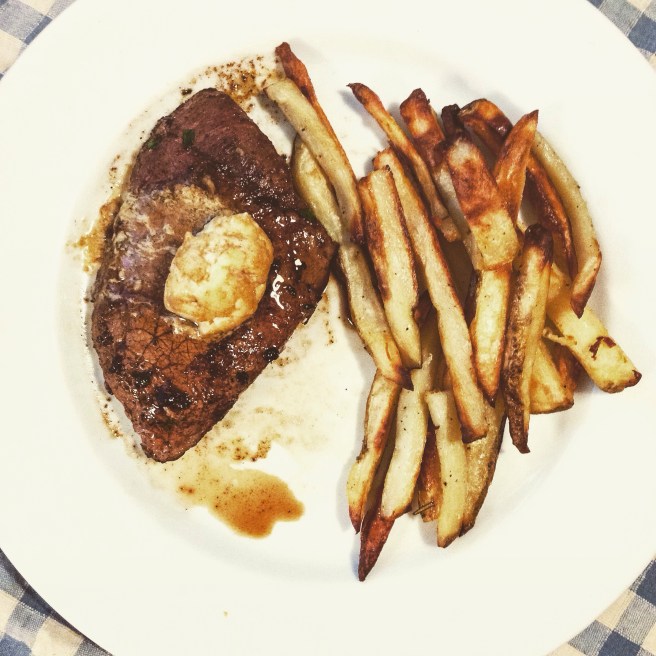
Cook the Book Fridays – Steak with Mustard Butter and French Fries

img_6474

Is anyone else excited to check out Michael Pollan’s new Netflix series, Cooked? I’m looking forward to it.

I think a lot of us follow Pollan’s advice, “Eat food, not too much, mostly plants.” Certainly, in our home that’s true. Even when I indulge in my love for things like steak, I try to limit the portion – the truth is, humans don’t need that much protein in a single meal. Mostly, I don’t regret that. Tonight was one of those occasions when I absolutely did.

I used a very small steak for my meal tonight, reasoning that it was more than enough. Really, though, I should have been following someone else’s advice. “Everything in moderation, including moderation,” said Oscar Wilde, and right now, I’m inclined to agree.

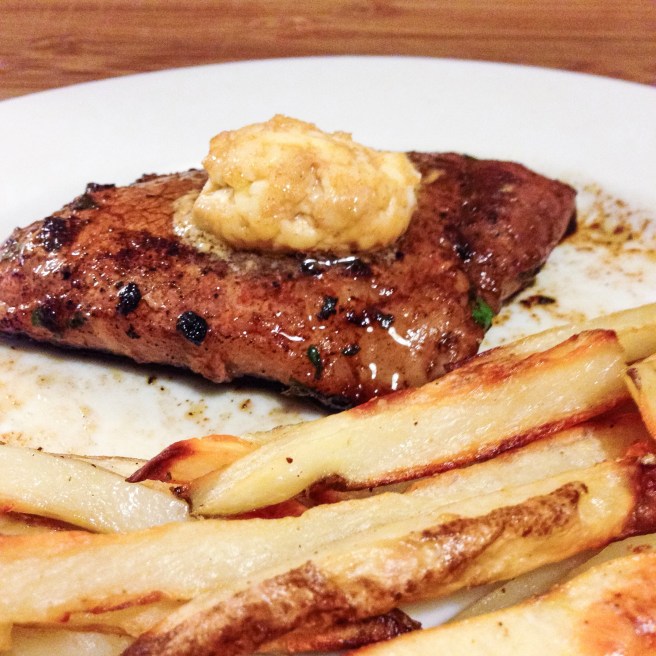
This week’s recipe from My Paris Kitchen had us slather a chipotle and smoked salt rub on our steaks, prepare compound butter pats with two forms of mustard, and oven bake hand-cut French fries tossed with olive oil and herbs. What was I thinking trying to practice moderation with that on the menu?

It may have been small, but the steak was perfectly medium rare. I savoured it as slowly as I could and made sure I swept up all the juices and mustard butter with the French fries. Next time, I won’t be skimping on portions.

img_6475

You can read through everyone’s posts here. And consider joining this community of wonderful cooks and lovely people, as we work our way through David LebovitzMy Paris Kitchen.

Cook the Book Fridays – Winter Salad

img_6382

It’s been a while now, since French Fridays with Dorie wrapped up. I’ve missed our weekly check ins, but have found myself woefully inept at keeping up with everyone’s blog posts. Some of our group joined the Cottage Cooking Club and others are working through Baking Chez Moi with Tuesdays with Dorie, both of which have provided some prompts to check in.

But, the Cottage Cooking Club meets only once a month and I don’t keep up with Tuesdays with Dorie as often as I’d like, since so many of my family and friends are avoiding sweets. So, I’m happy to say that there is a new way for us all to keep in touch.

Katie, from the Prof Who Cooks, backed up by our fabulous French Fridays admins, Betsy and Mary, has set up a website called Cook the Book Fridays, so that our group of cooking friends can work our way through David LebovitzMy Paris Kitchen together – and who knows, after that? The project is similar to the one that brought us together in the first place, cooking through a Paris-inspired cookbook, full of recipes for every course.

I’m happy that there will be another excuse to visit, virtually, and I’m hoping that these adventures will be shared by cooking friends old and new.

img_6380

Today marks the beginning of the project and we’ve started with a seasonal dish that’s simple to assemble, but full of Parisian panache. This Winter Salad, with its matchsticks of Belgian endive and roquefort and Greek yogurt dressing, is delicious. It’s also a perfect example of how salads can be much more interesting when they’re viewed through the lens of seasonal eating. There’s nothing worse than a salad of limp, out-of-season greens. But, when you realize a salad can be made from whatever looks freshest and interesting at the greenmarket, things start to look up.

My take on this included gorgonzola and red pear, as I didn’t make it to the cheese store in time for roquefort. I ran over to an Italian deli instead, and picked up a mild Canadian gorgonzola. I measured the ingredients in tablespoons, instead of cups, as I was the only one eating this salad tonight. I still ended up with enough dressing to make it again tomorrow. I have a spear of endive and half a pear waiting in the refrigerator. I’m looking forward to a repeat of this dish for lunch.

I think we’ve started off on a promising note. I’ve had the book since it came out, but haven’t cooked out of it nearly as much as I’d have liked. Now, I’ll be working through the whole thing with some of my favourite bloggers.

Join us?

You can read through everyone’s posts here. And consider joining this community of wonderful cooks and lovely people, as we work our way through David Lebovitz’ My Paris Kitchen.