

I first made gougères in October of 2010. I’d just started a blog and was looking for some structure to keep me posting, learning, and connecting. I noticed that a cooking group called French Fridays with Dorie was just about to start cooking through a book called Around My French Table. I bought the book and signed up. I liked the idea of cooking my way through an accessible French cookbook, making some old favourites while being challenged by recipes that I’d been afraid to attempt. I wasn’t sure what to expect from an online community of bloggers, but I was intrigued to find out.
Over the years that we cooked through the book together, and beyond, I’ve been grateful that I decided to cook along. It turns out that I found a group of truly lovely people from around North America and all over the world. I’ve met a few in person and kept up with others online and I’m so pleased that many of us are gathering again to cook through Everyday Dorie together.
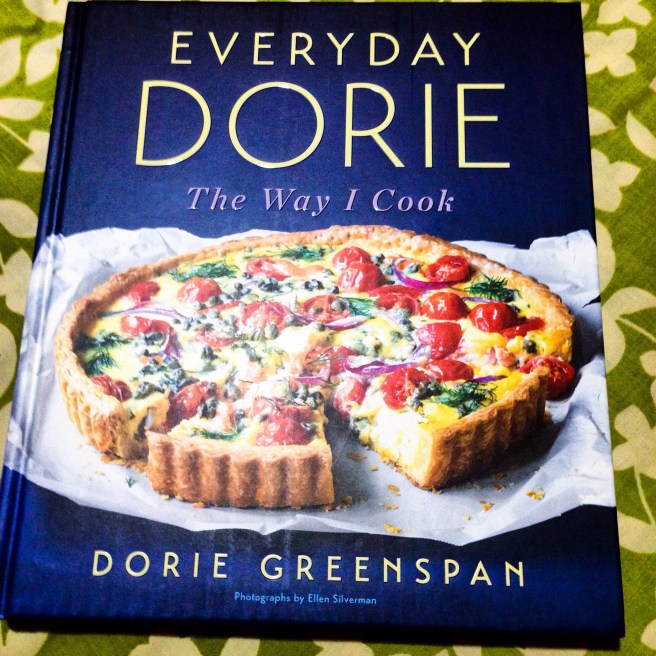
It’s not a surprise that the glue that has held us together has been Dorie Greenspan’s cookbooks. She is a lovely person, a great teacher, and an inspiring community-builder – it’s only natural that a terrific community of cooks would spring up around her work, starting with Laurie Woodward and the Tuesdays with Dorie crew.

These gougères are not just a call back to our very first recipe for French Fridays with Dorie, they’re also a perfect celebration treat, elegant, delicious, and simple. Those first gougères showcased the beautiful cheese that they were made with (Gruyère, if I recall correctly), but these new ones complicate things a bit with mustard and walnut playing against Emmental. We’ve all become a little more complex as cooks over the last eight years, too.
If you’re new to the group and to gougères, they’re still a perfect introduction to the path we’re taking, and I bet you’re just as pleased as I was to discover how easy and infinitely variable choux pastry can be. Try it for yourself – we’ve been given permission to share the recipe with you. Tonight, I’ll be toasting to cooking friends old and new, remembered and present with a glass of wine and plate of gougères.
Excerpted from Everyday Dorie © 2018 by Dorie Greenspan. Photography © 2018
by Ellen Silverman. Reproduced by permission of Rux Martin Books/Houghton
Mifflin Harcourt. All rights reserved.MY NEWEST GOUGÈRES
Makes about 60 gougères
Gougères are French cheese puffs based on a classic dough called pâte à choux (the dough used for cream puffs), and it’s a testament to their goodness that I’m still crazy about them after all these years and after all the thousands that I’ve made. Twenty or so years ago, when my husband and I moved to Paris, I decided that gougères would be the nibble I’d have ready for guests when they visited. Regulars chez moi have come to expect them. Over the years, I’ve made minor adjustments the recipe’s ingredients, flirting with different cheeses, different kinds of pepper and different spices. The recipe is welcoming.
This current favorite has a structural tweak: Instead of the usual five eggs in the dough, I use four, plus a white—it makes the puff just a tad sturdier. In addition, I’ve downsized the puffs, shaping them with a small cookie scoop. And I’ve added Dijon mustard to the mix for zip and a surprise—walnuts.
- 1⁄2 cup (120 grams) whole milk
- 1⁄2 cup (120 grams) water
- 1 stick (4 ounces; 113 grams) unsalted butter, cut into 4 pieces
- 1-1⁄4 teaspoons fine sea salt
- 1 cup (136 grams) all-purpose flour
- 4 large eggs, at room temperature
- 1 large egg white, at room temperature
- 2 teaspoons Dijon mustard (preferably French)
- 2 cups (170 grams) coarsely grated cheese, such as Comté, Gruyère and/or sharp cheddar
- 2⁄3 cup (80 grams) walnuts or pecans, lightly toasted and chopped
W O R K I N G A H E A D
My secret to being able to serve guests gougères on short notice is to keep them in the freezer, ready to bake. Scoop the puffs, freeze them on a parchment- lined baking sheet or cutting board and then pack them airtight. You can bake them straight from the oven; just give them a couple more minutes of heat.
Position the racks to divide the oven into thirds and preheat it to 425 degrees F. Line two baking sheets with parchment paper or silicone baking mats.
Bring the milk, water, butter and salt to a boil over high heat in a medium saucepan. Add the flour all at once, lower the heat and immediately start stirring energetically with a heavy spoon or whisk. The dough will form a ball and there’ll be a light film on the bottom of the pan. Keep stirring for another 2 minutes or so to dry the dough. Dry dough will make puffy puffs.
Turn the dough into the bowl of a mixer fitted with the paddle attachment (or work by hand with a wooden spoon and elbow grease). Let the dough sit for a minute, then add the eggs one by one, followed by the white, beating until each egg is incorporated before adding the next. The dough may look as though it’s separating or falling apart but just keep working; by the time the white goes in, the dough will be beautiful. Beat in the mustard, followed by the cheese and the walnuts. Give the dough a last mix-through by hand.
Scoop or spoon out the dough, using a small cookie scoop (1-1⁄2 teaspoons). If you’d like larger puffs, shape them with a tablespoon or medium-size cookie scoop. Drop the dough onto the lined baking sheets, leaving about 2 inches between each mound. (The dough can be scooped and frozen on baking sheets at this point.)
Slide the baking sheets into the oven and immediately turn the oven temperature down to 375 degrees F.
Bake for 12 minutes, then rotate the pans from front to back and top to bottom. Continue baking until the gougères are puffed, golden and firm enough to pick up, another 15 to 20 minutes. Serve immediately—these are best directly from the oven.
S T O R I N G
The puffs are best soon after they come out of the oven and nice (if flatter) at room temperature that same day. If you want to keep baked puffs, freeze them and then reheat them in a 350-degree-F oven for a few minutes.

You can read through everyone’s posts here. You can join in on the singular pleasure of cooking, writing, and eating your way through Dorie Greenspan‘s Everyday Dorie with a group of French Fridays veterans, Doristas, and lovely people at Cook the Book Fridays.


 One Wet Foot