FFWD – Pumpkin Stuffed With Everything Good

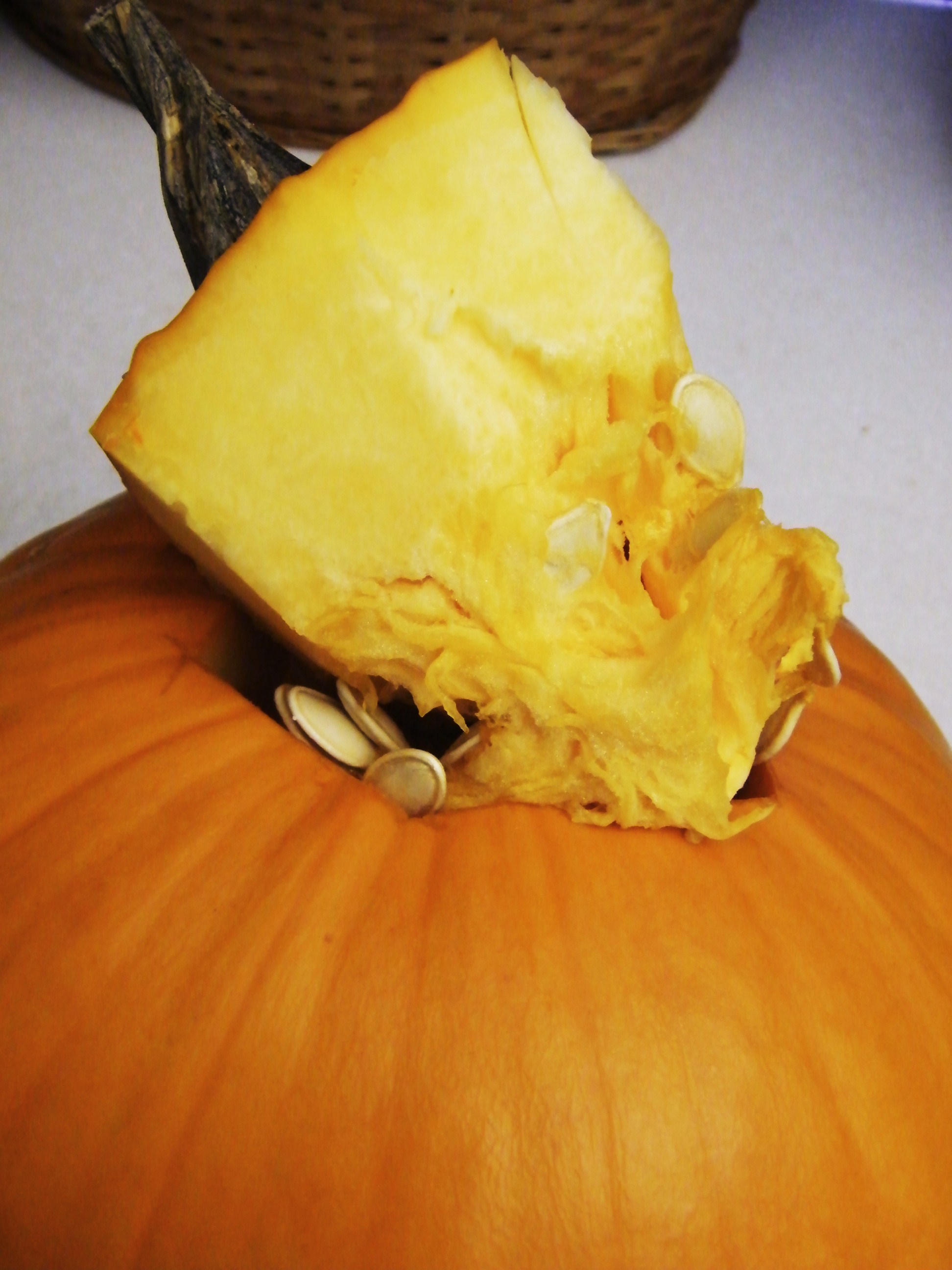
Pumpkin, with lid.

Pumpkin often gets short shrift when it comes to savoury dishes. Pumpkin pie, pumpkin cookies, and even pumpkin cheesecake show up on menus once the weather starts to turn. But pumpkin is as lovely as any other squash when it comes to appetizers, soups, or entrées. Pumpkins roasted whole make for beautiful presentation, too.
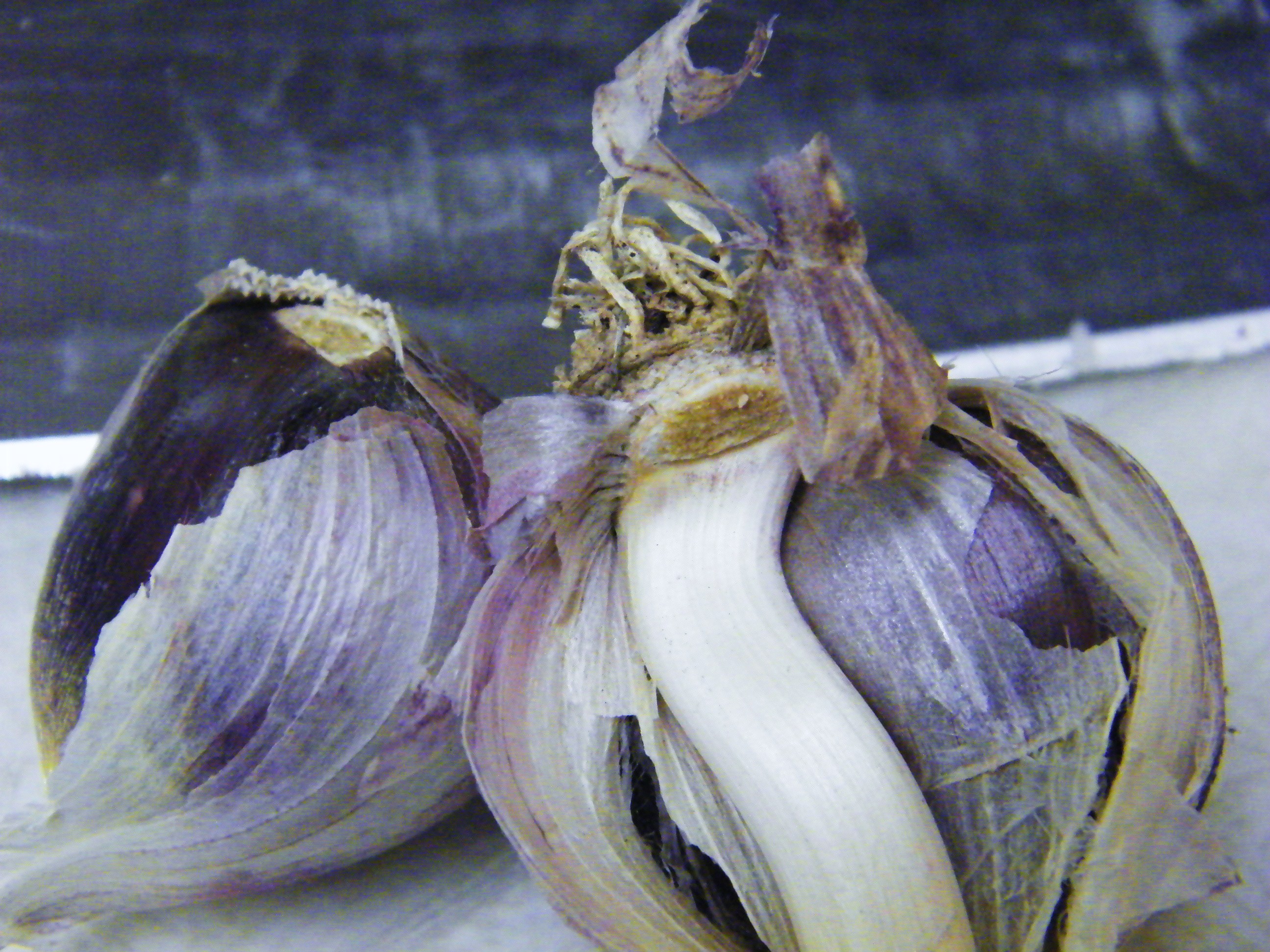
Garlic from my Dad's garden, all purple and white.

This week’s French Fridays recipe is a stuffed, roasted pumpkin that’s both beautiful and delicious. It’s a great choice for a dinner party or holiday meal. Dorie’s recipe includes cream, cheese, and bacon, but would be easy to convert for vegetarian or vegan guests. Or switch the bread cubes for rice and you have a great gluten-free version.
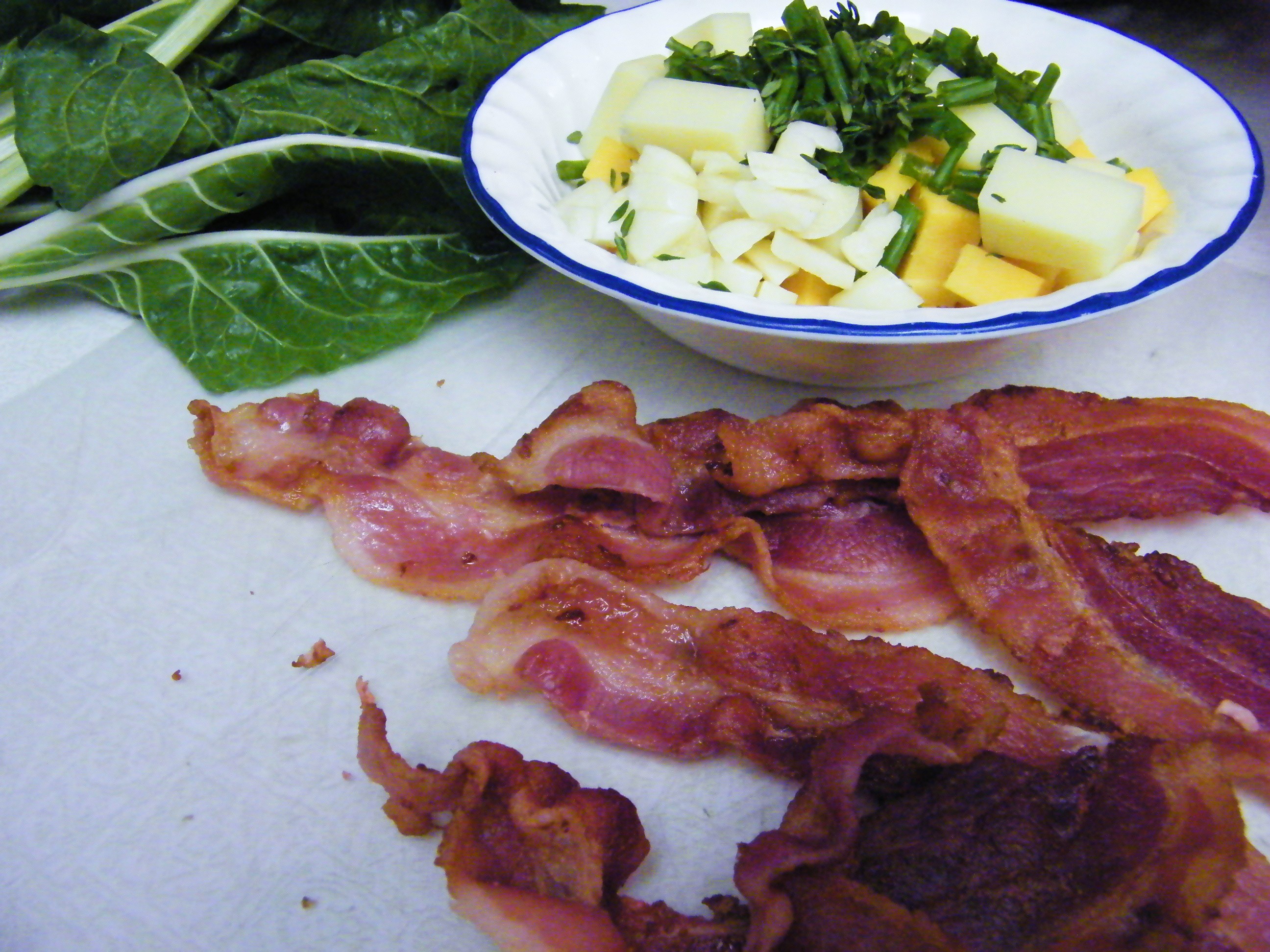
Bacon, Swiss chard, and the rest of the pumpkin filling ingredients.

The hardest part of this recipe for me was finding a small pumpkin. People are on the hunt for Jack O’ Lanterns at this time of year and the markets were filled with giant pumpkins. The smallest one I was able to find was about six pounds, twice the weight called for in the recipe, so I was generous with the filling ingredients. The basic stuffing uses bread cubes, garlic, herbs, bacon, and cheese, which is then covered in nutmeg-spiced heavy cream.
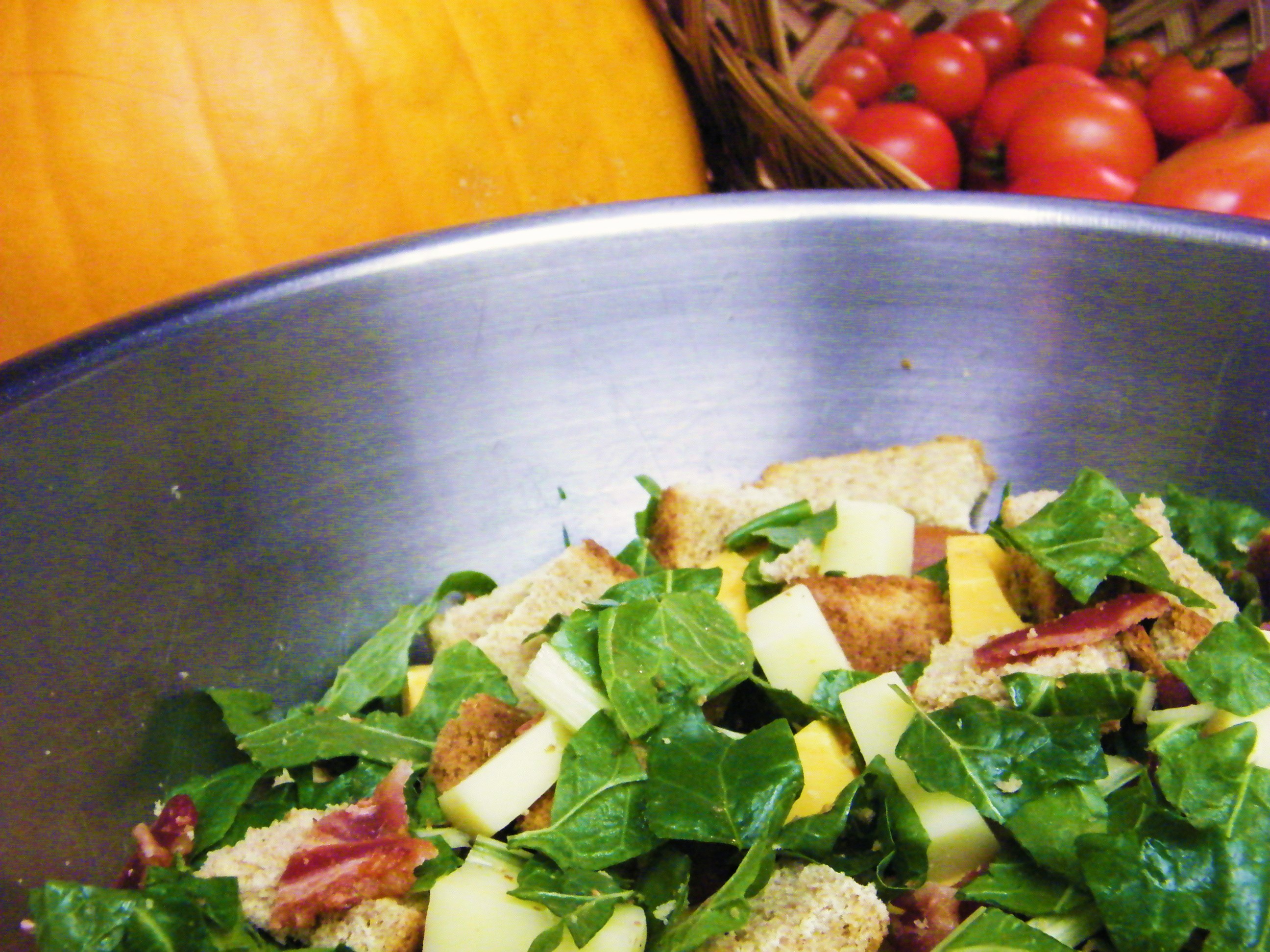
Mixing the pumpkin stuffing, with the pumpkin and some tomatoes in the background.

I was lucky enough to be able to use garlic my Dad grew, along with thyme, chives, and Swiss chard from my mother’s garden. Along with some high-fibre bread, I’m quite sure that this was a healthy dish. (Please ignore the additions of bacon, heavy cream, Emmenthal and old cheddar.)

The stuffed pumpkin, out of the oven.

It made a lovely meal beside some grilled venison steaks, which I’d marinated in oil, red wine, garlic, lemon juice, and some Montreal Steak Spice. Since the pumpkin was so big, I pulled the leftover stuffing out of the pumpkin, chopped the pumpkin meat finely, and mixed it all together. I pan-fried some for a great lunch the next day. Elegant at its first serving and good as leftovers – this recipe will be revisited, though I doubt it will ever be made the same way twice. As Dorie said, it’s more of an outline than a recipe, after all.
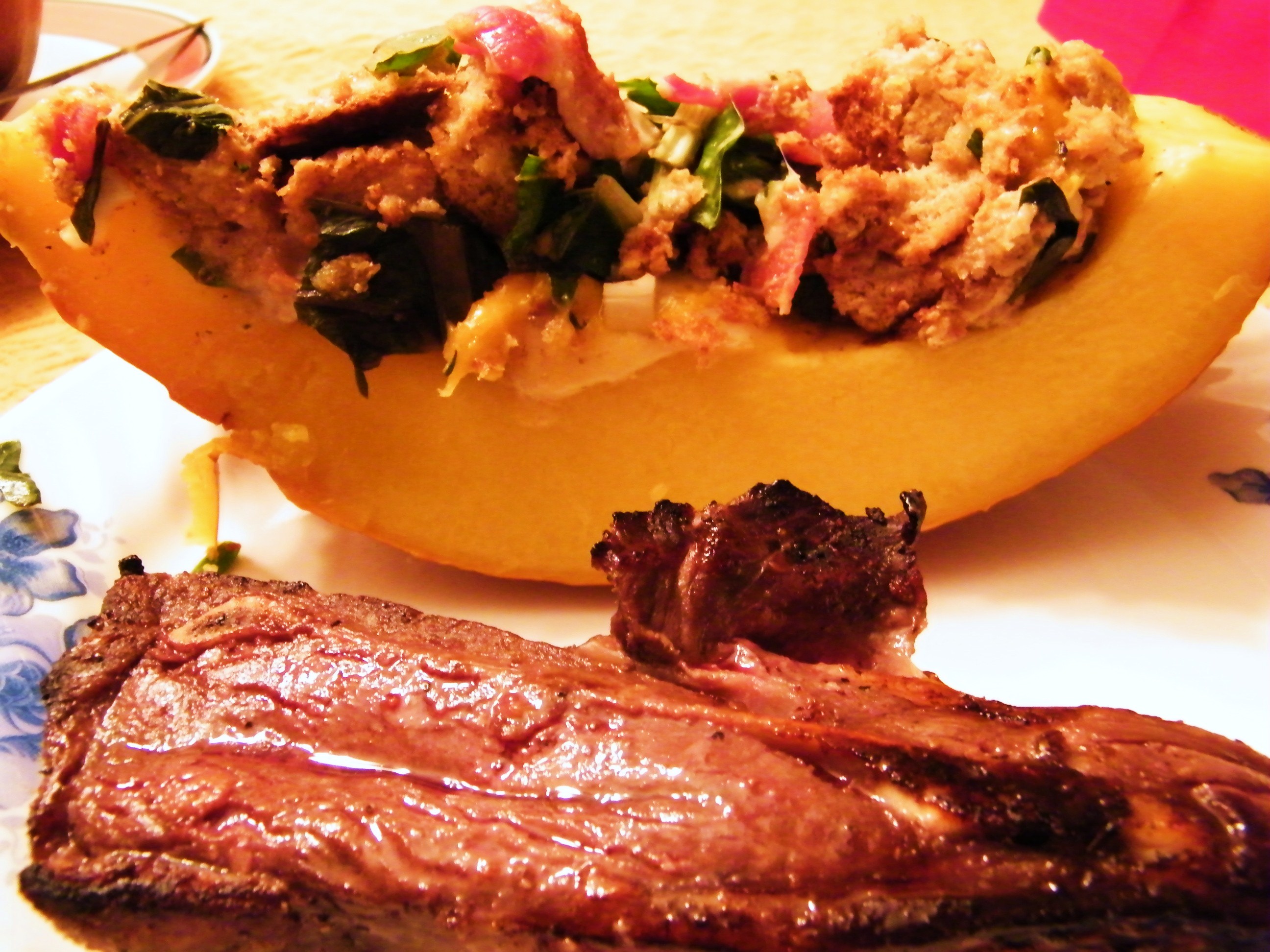
Stuffed pumpkin and venison steak.

You can find many other blogged descriptions of this week’s FFWD recipe here: Pumpkin Stuffed With Everything Good
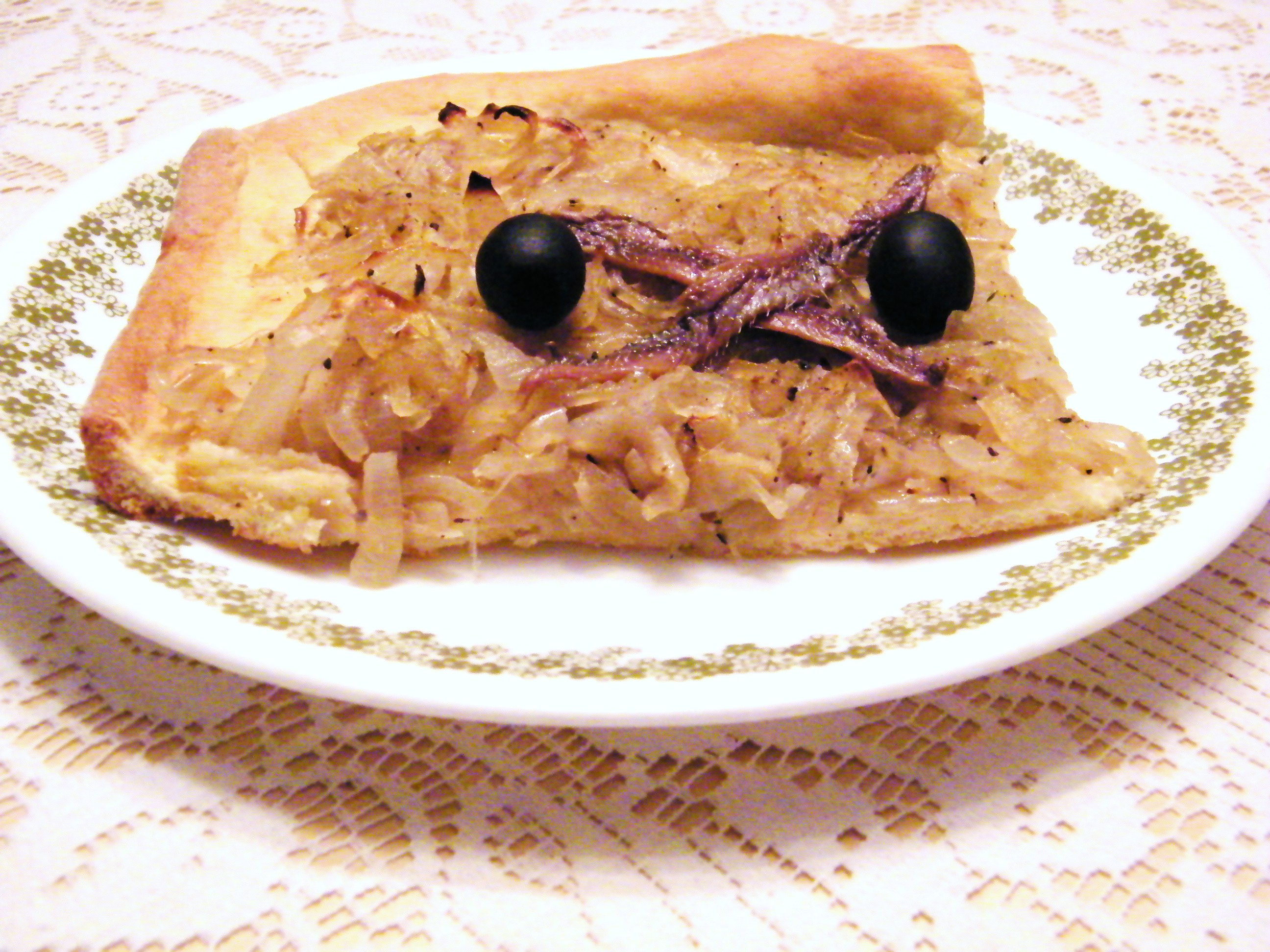
FFWD – Pissaladière

A corner slice, ready to eat.

This week, I’ve been re-reading Adam Gopnik’s Paris to the Moon, in preparation for seeing him speak at the CBC Book Club this weekend. Almost as good as going to the Massey Lectures themselves. In the opening essay, he asserts that “[t]here are two kinds of travelers. There is the kind who goes to see what there is to see and sees it, and the kind who has an image in his head and goes out to accomplish it. The first visitor has an easier time, but I think the second visitor sees more. He sees with his mind, and maybe even with his heart, or tries to.” I’m not sure that it’s entirely fair to the first sort of traveller, who may simply be keeping an open mind, but I think most of us have constructed imaginary versions of places we want to visit.

Kneading the dough.

In particular, I think French Fridays participants might be guilty of cooking a version of France into existence. I know that many of the recipes feed my fantasies of Paris bistros or countryside picnics. This week’s recipe, Pissaladière, has me imagining travelling through Mediterranean sunshine on a Vespa and picking up a slice of this French pizza before heading to the beach. Not that I would drive my scooter one-handed. Really.

Opening the can of anchovies.

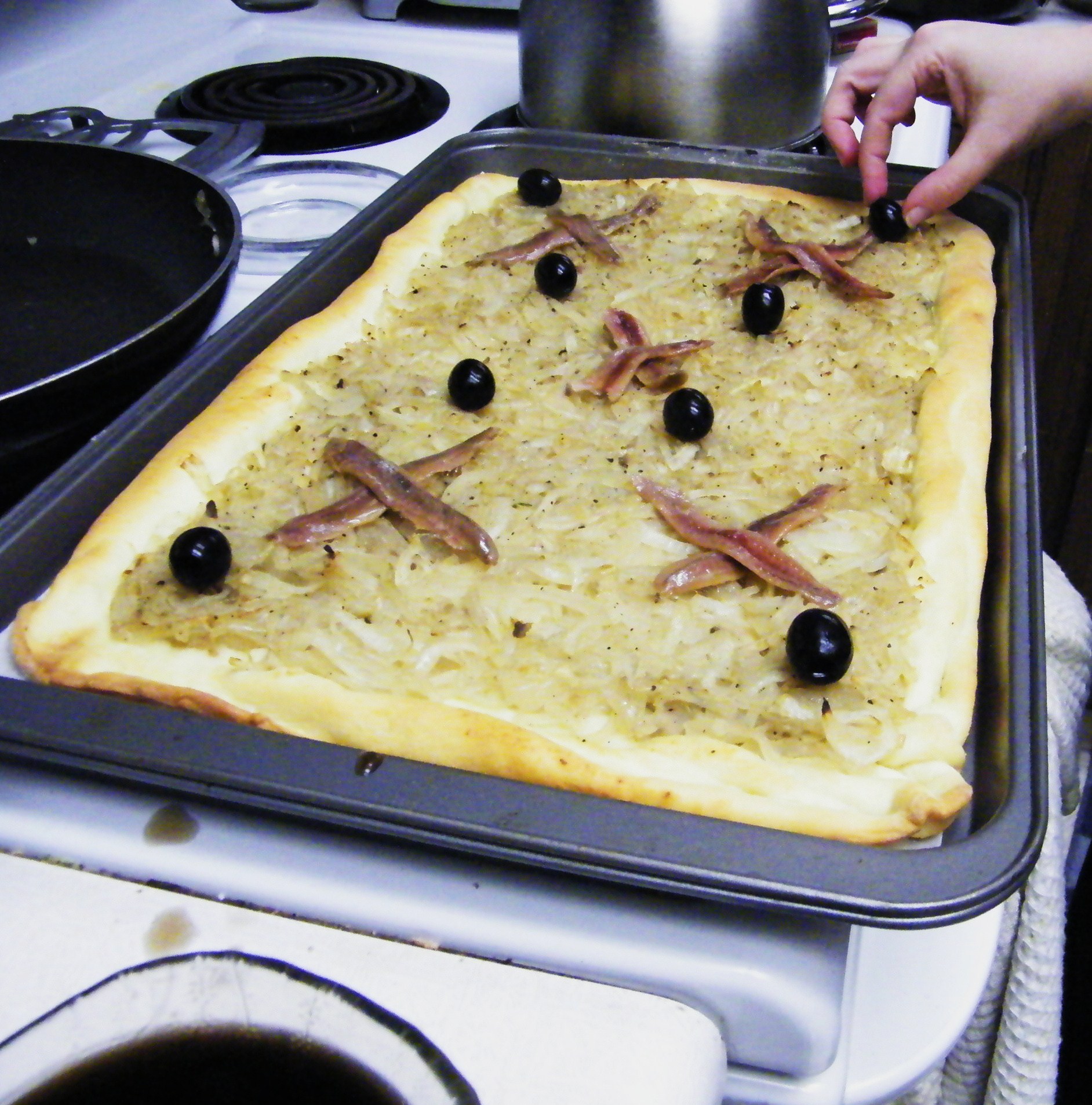
This fantasy only works if there’s someone else doing the cooking. The reality of this recipe is more like a weekend in the country, than a whirlwind trip to the beach. (Not that I’m speeding in my imagined Mediterranean trip, either.) The process of making this dish is meditatively slow. The thinly sliced onions are cooked at low temperature, so that they caramelize without colouring much. While that’s happening, the dough is mixed and set to rise in a warm room. When it has risen, it’s rolled into an extremely thin rectangle and covered with the cooked onions. Things speed up considerably here – the Pissaladière is baked for twenty minutes, then the olives and anchovies are added before sliding it into the oven for a final five minutes.

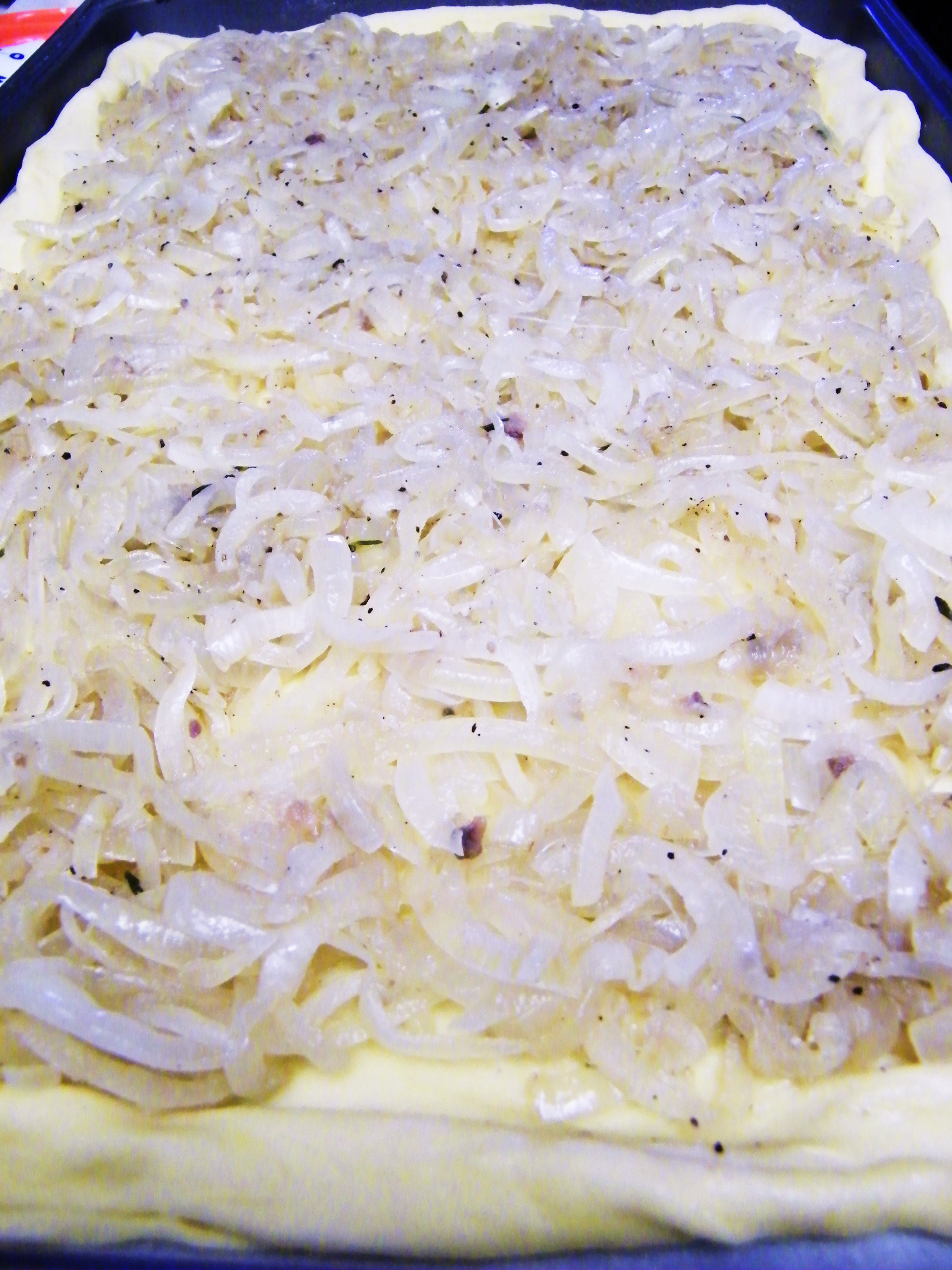
Spreading the slowly-cooked onions onto the unbaked crust.

It might seem a lot of work for a snack, but it’s worth it. The onions are meltingly sweet, which is balanced by the salt of the anchovies and onions. The plain crust is shatteringly crisp at the edges, but sturdy enough to hold the toppings. I might not be able to afford a Mediterranean vacation at the moment, but this dish provides a little compensation. It’s certainly safer eating it here, than trying to eat it while steering a Vespa on twisty Mediterranean roads at high speed.

Adding the olives and anchovies.
Photo by Jeannine McCarthy

Tell me, what sort of traveller are you? Have you taken a trip to a place you’ve fantasized about? How did it measure up?

You can find many other blogged descriptions of this week’s FFWD recipe here: Pissaladière

A Post for World Food Day

Zesting an orange.

This post is part of the Blog Action Day 2011: Food project.

Looking at the Internet, you’d be forgiven for thinking that North America is awash in gourmet food, sourced from farmers’ markets and CSA boxes. Many bloggers (myself included) like to write about experimenting with cooking, discovering new ingredients and techniques, and the pleasures of feeding family and friends. But for many people, the issue isn’t the best technique for zesting an orange, it’s whether they’ve access to oranges at all.

The issue of access of food isn’t as simple as distribution of donations, though food banks, once thought to be a temporary measure, have become a permanent part of the landscape in many communities. Food banks are structured as a stop-gap, unable to guarantee the components of the varied diet people need to thrive long-term. As food insecurity continues, more ways of fighting it have spread – like community kitchens and gardens, along with low-cost food organizations like Quest Food Exchange and affordable CSA programs like the one run by SOLEfood Farm. These initiatives move beyond stop-gaps and acknowledge something that often seems to get lost in discussions of food policy – that the poor are as much a part of their region’s food culture as are those with more resources.

So often the discourse around issues of income and access to food revolve around the choices low-income people make. Though the existence of issues like food deserts and affordability are more often acknowledged now, there’s still a moralizing aspect to these discussions. There’s also an underlying assumption that the poor don’t know how to feed themselves, at least not properly. The truth is that our culture condemns the poor for engaging in the same behaviours found in the middle and upper classes. Eating out is a vice or a virtue, depending on the name of the restaurant. Indulging oneself is okay when the chocolate is Scharffen Berger, but less so when it’s the drugstore variety. We need less judgement in our thinking about food and more justice.

It’s one of the things that resonates for me in the Occupy movements that have been happening recently. Relative access to resources gets read as relative worthiness and more and more people are finding themselves on the wrong side of this judgement. I hope it’s going to lead to a dismantling of some of the myths and inequities that exacerbate hunger.

It’s time to stop talking about local and organic food as though it’s an upper class phenomenon. After all, many of the components of today’s food movements are based on methods long used by low-income people. Back yard gardening, canning, and preserving used to be thought of as quaint or frugal. Better off folks were busy moving into apartments with vestigial kitchens and immersing themselves in restaurant culture. Most of us, regardless of income, are a generation or two away from true competence in looking after our own food needs. Let’s all work on creating healthy food systems that don’t depend on exclusivity for success.

Today is World Food Day, hence the focus on food for this year’s Blog Action Day. Conferences and discussions are taking place across the world, focusing on local and international food issues. Here in Vancouver, a youth-focused conference happened today called Food for All. I hope that the coming generation of food activists can overcome some of the stereotypes that prevent us from sustaining equitible foodways at home and abroad.

FFWD – Buckwheat Blini with Smoked Salmon and Crème Fraîche

Hello crème fraîche and smoked salmon!

Blini are small, yeasted, buckwheat pancakes that provide a platform for sumptuous toppings. Think Russian caviar and thick sour cream. This week’s recipe is a French take on this Eastern European classic. I made this for my parents, as I wanted to try the standard version before attempting a gluten-free version that I can serve at home. They have a gas fireplace in the family room and it made the room the perfect place to leave the batter to rise. We’ve has some wet, chilly weather lately and I’m not sure it would have risen anywhere else in the house.

Stirring the blini batter.

Regular pancakes rely on baking powder for a little lift, but puffy, airy blini batter relies on yeast. The smell is reminiscent of bread, but the buckwheat adds adds a nuttiness to the aroma. In the pan, though, the batter looks and acts like standard pancake batter. I used a wide frying pan, but I’d love to have a stovetop grill for these. It would be nice for party appetizers if they were all done at once, so that they could be quickly topped and served hot, without resorting to reheating.

Blini in the frying pan.

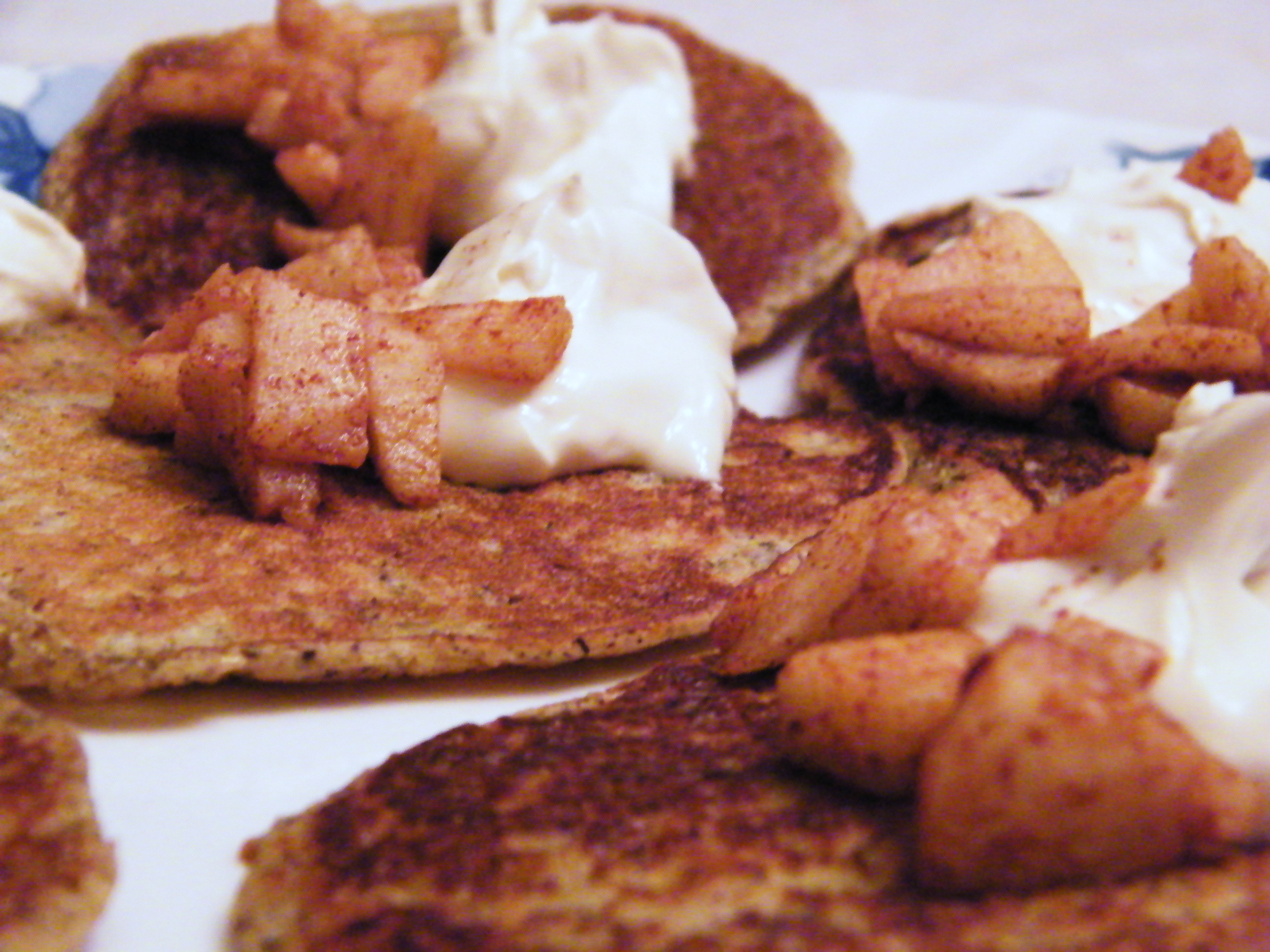
I served about a third of them as an appetizer, with smoked salmon on a dollop of crème fraîche. Another third went into the fridge, and the last of the blini were reheated, topped with more crème fraîche (this time with brown sugar whipped in) and apples that I’d sautéed in butter and cinnamon. It was a perfect dessert.

The cooked apples, with brown-sugared crème fraîche.

You can find many other blogged descriptions of this week’s FFWD recipe here: Buckwheat Blini with Smoked Salmon and Crème Fraîche

Patio’s Progress

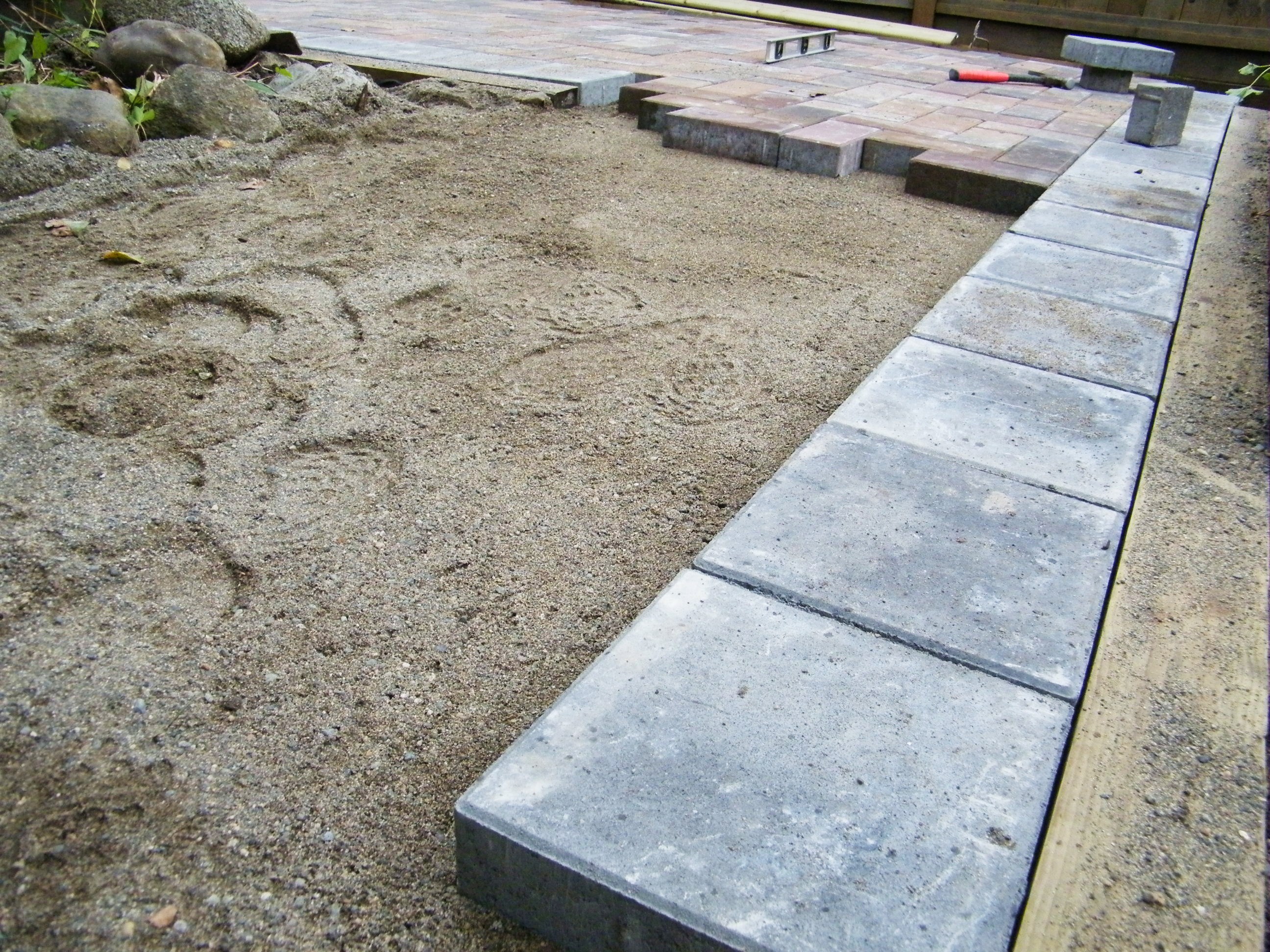
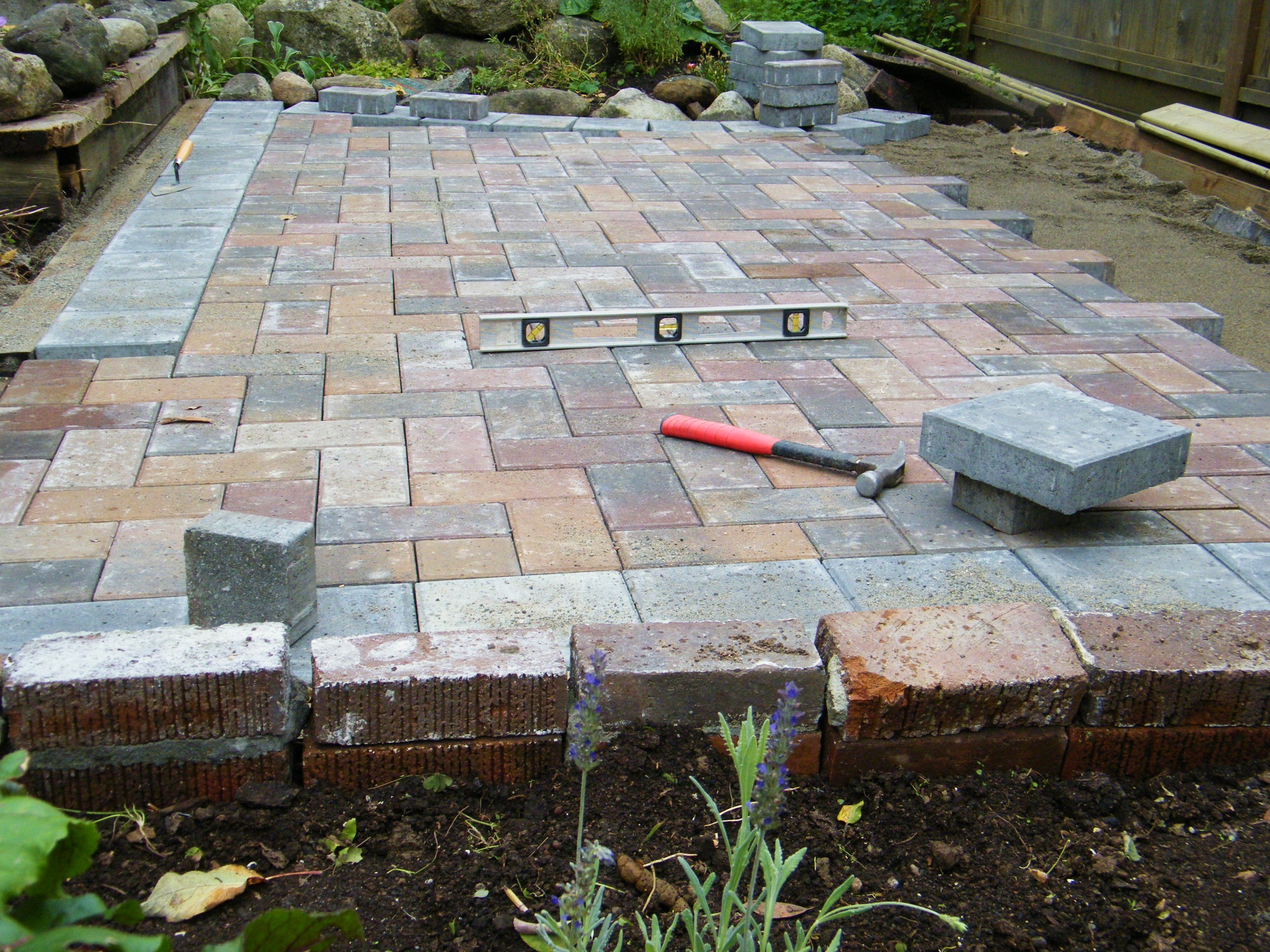
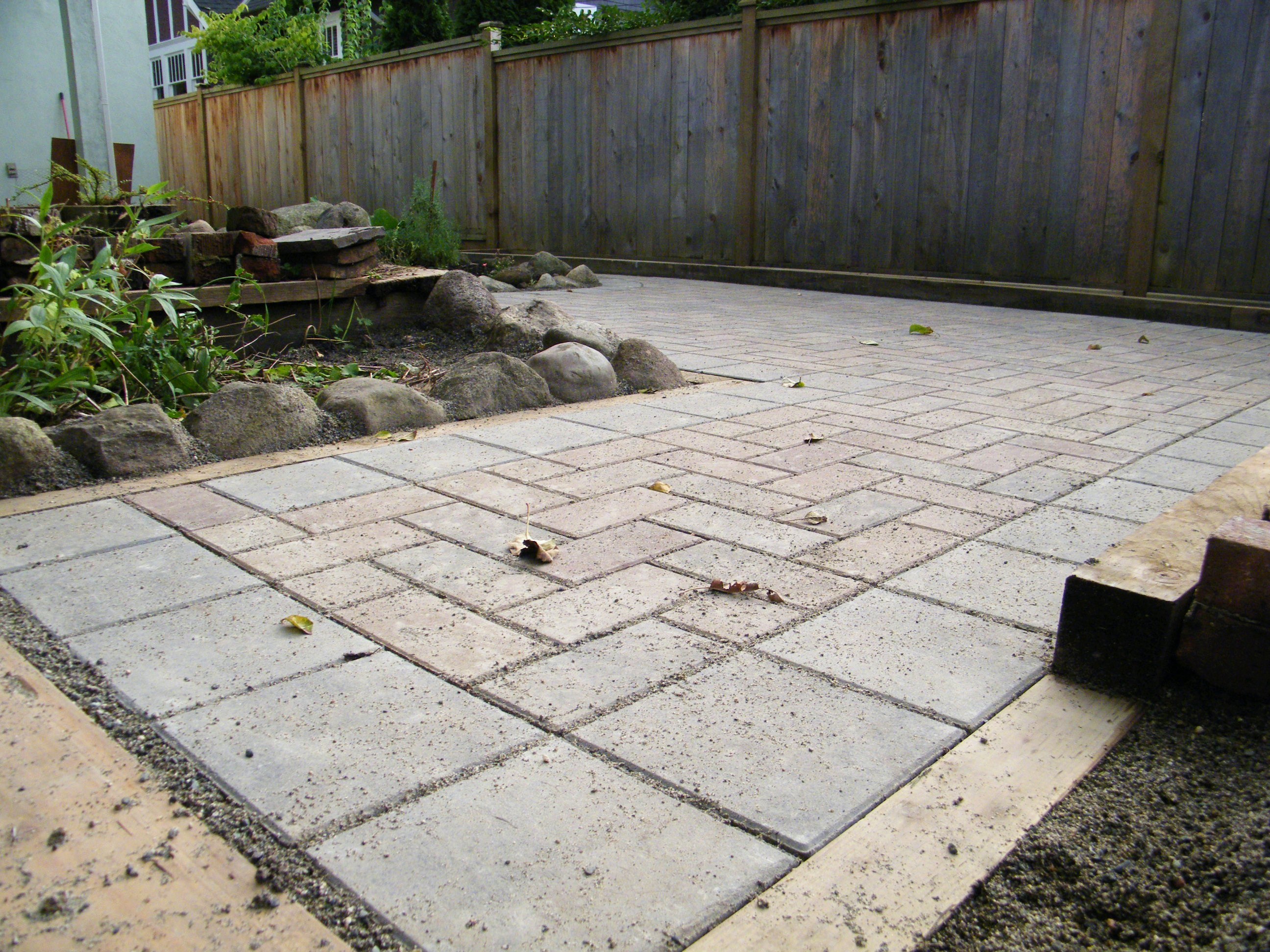
Literature students will have to forgive me the alliteration stolen from John Bunyan. I just couldn’t help it. As you may have guessed, last week we had a patio put in our backyard and I used its progress for a little photo practice. Here are the results.

Weeds pulled and ready for its transformation.


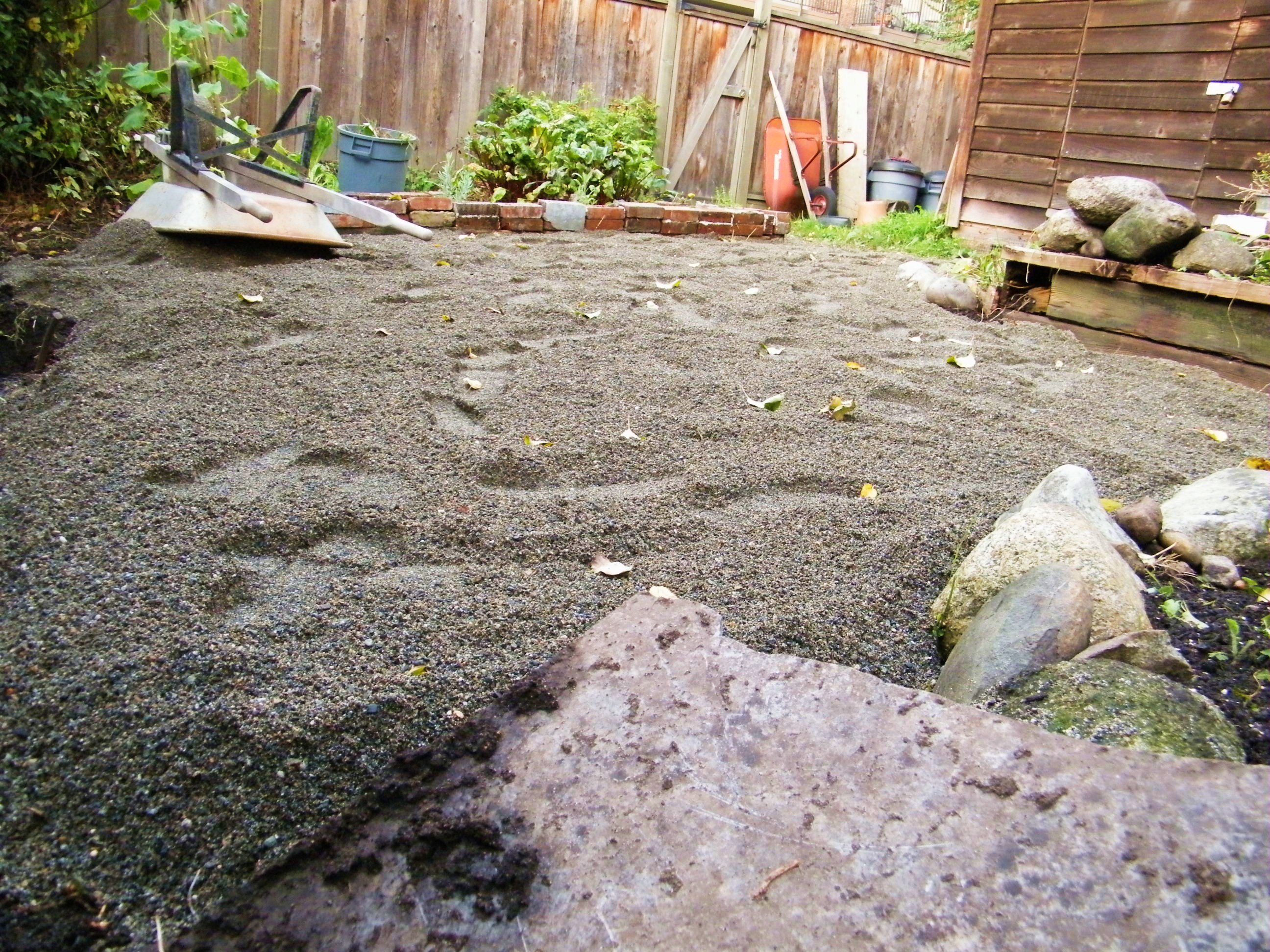
Sand laid down.


Edge tiles.


Tools


Partly completed.


Another view of the completed patio.


Closer view of the tiles.


Completed patio, with new raised beds on the side.

FFWD – Olive-Olive Cornish Hens

Finished bird.

I’ve always agreed with Linus – happiness really is a warm blanket. In fact, when we were teenagers, if my sister wanted something of me, she’d often put a blanket in the dryer and then bring it to me. If she really wanted something, she’d bring me a cup of tea, too.

Spatchcocking in action.
Photo by Jeannine McCarthy

I’ve recently revised this opinion, though – happiness can also be someone else’s kitchen equipment. This week’s French Fridays recipe would have been a lot more difficult if I hadn’t had the use of my mother’s kitchen shears. Her mini food processor came in handy, too. The Cornish hens in this recipe are spatchcocked, which entails removing the backbone and flattening or removing the breast bone, so that the bird will lie flat and cook more quickly. Though Dorie’s instructions were good, I also watched a video, just to make sure that I was doing it correctly. (I love that there are videos available online for cooking techniques, home improvement skills, dance steps, or almost anything else you might want to learn.)

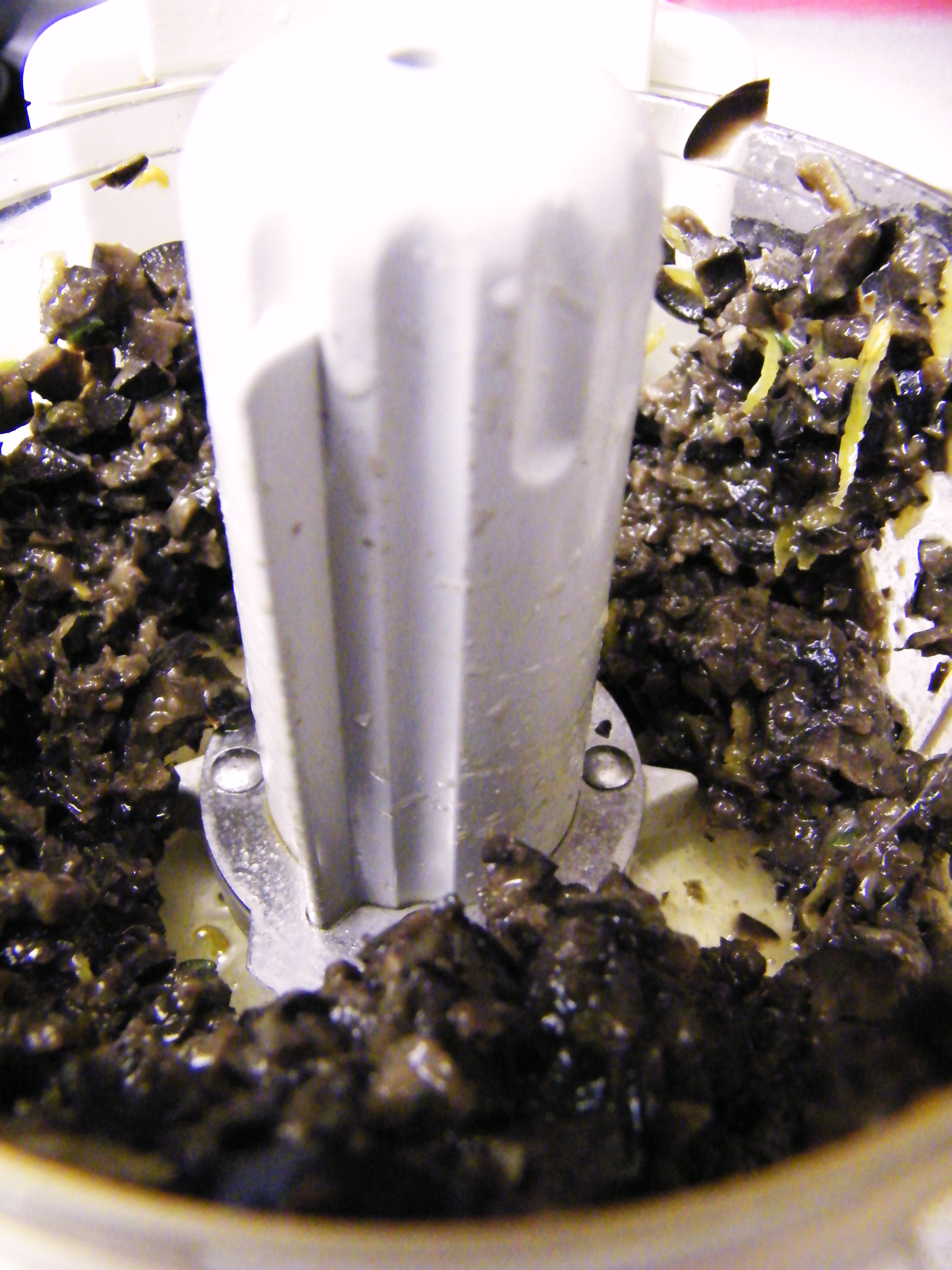
Once the birds are spatchcocked (you could also say that they were butterflied, but spatchcock is a much better word, don’t you think?), black olive tapenade is worked under the skin. The outer skin is rubbed with olive oil and seasoned with salt, pepper, and a little lemon juice. Now you can see why the double olive is not a typo. I used Dorie’s tapenade recipe, which is lemony, salty and lovely.

Black olive tapenade in the food processor.

The birds cook quickly at high heat, but the half-an-hour in the oven allows the flavour of the tapenade to permeate the meat. I served the hens with steamed vegetables, which needed no more dressing than the juicy birds provided. This dish would be perfect for a dinner party. It’s easy, but very impressive.

You can find many other blogged descriptions of this week’s FFWD recipe here: Olive-Olive Cornish Hens

The Land Where We Stand

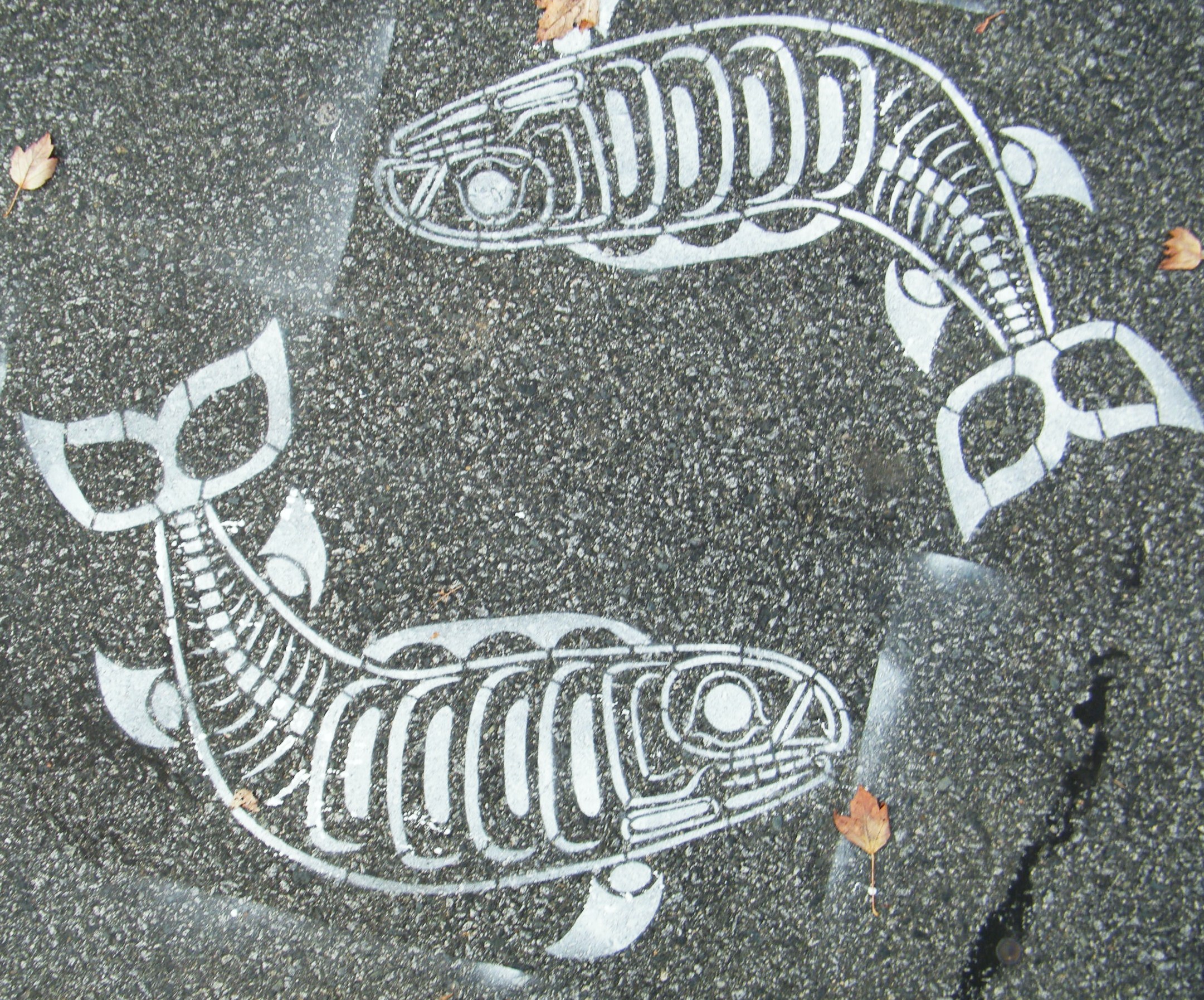
Graffiti, based on a First Nations salmon design, on a roadway.

I try to keep the land in mind. It’s easy to get distracted by asphalt and concrete, by cars and people, and by the ideas we impose upon the places that we live. It’s why I get upset when I read about politicians in the Fraser Valley trying to rezone land in the Agricultural Land Reserve for more housing developments. It’s also why I’m trying my hand at square foot gardening in my own back yard. Cycling infrastructure, wilderness protection, and development downsizing are all examples of keeping the land (specifically its health) in mind.

But keeping the land in mind goes beyond protecting its physical reality. It’s also about keeping its history in mind. There has always been settlement in the region that’s now called Vancouver. The land I live on is Coast Salish Territory and it has a history beyond its colonial one. I keep this in mind, too, whether I’m thinking about political actions or community celebrations.

The photo at the top of this post is of some graffiti on a road not far from where I live. It reminds me of lost salmon streams and of the peoples who lived here before the pavement. They’re still here and the land I’m standing on is part of their still unceded territories.