FFWD: Short Ribs in Red Wine and Port

I’ve always preferred leaner cuts of meat. When I was growing up, my family used to fight over who got to eat the chicken skin from my plate. None of them understood why I eschewed what they considered one of the best parts of roasted or fried chicken. I’d also carefully cut the fat from steak and pork chops and when I was confronted with ribs or pork roast, I stuck mostly to the vegetables on my plate. Later, one of my friends in University used to love sitting next to me at dinner, as she’d pull the pieces of fat from my plate and happily eat them.

I’ve gotten only a little more tolerant of the fattier portions of meat as I’ve gotten older, but I’ve never really become a fan. So, I was a little worried that I wouldn’t like this week’s French Fridays recipe. It uses short ribs, which are famous for their richly marbled fat. A selling point for most, I know.
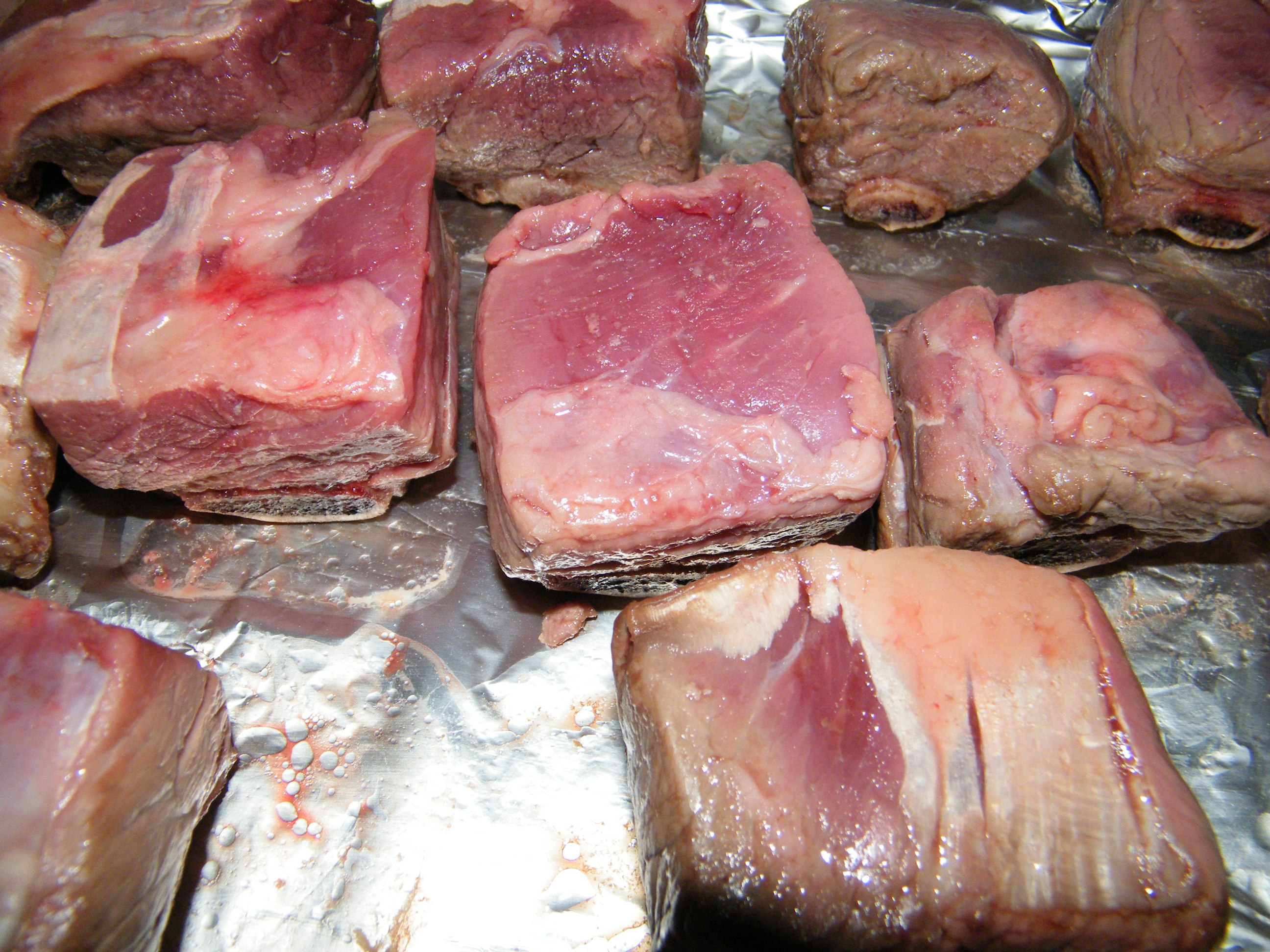
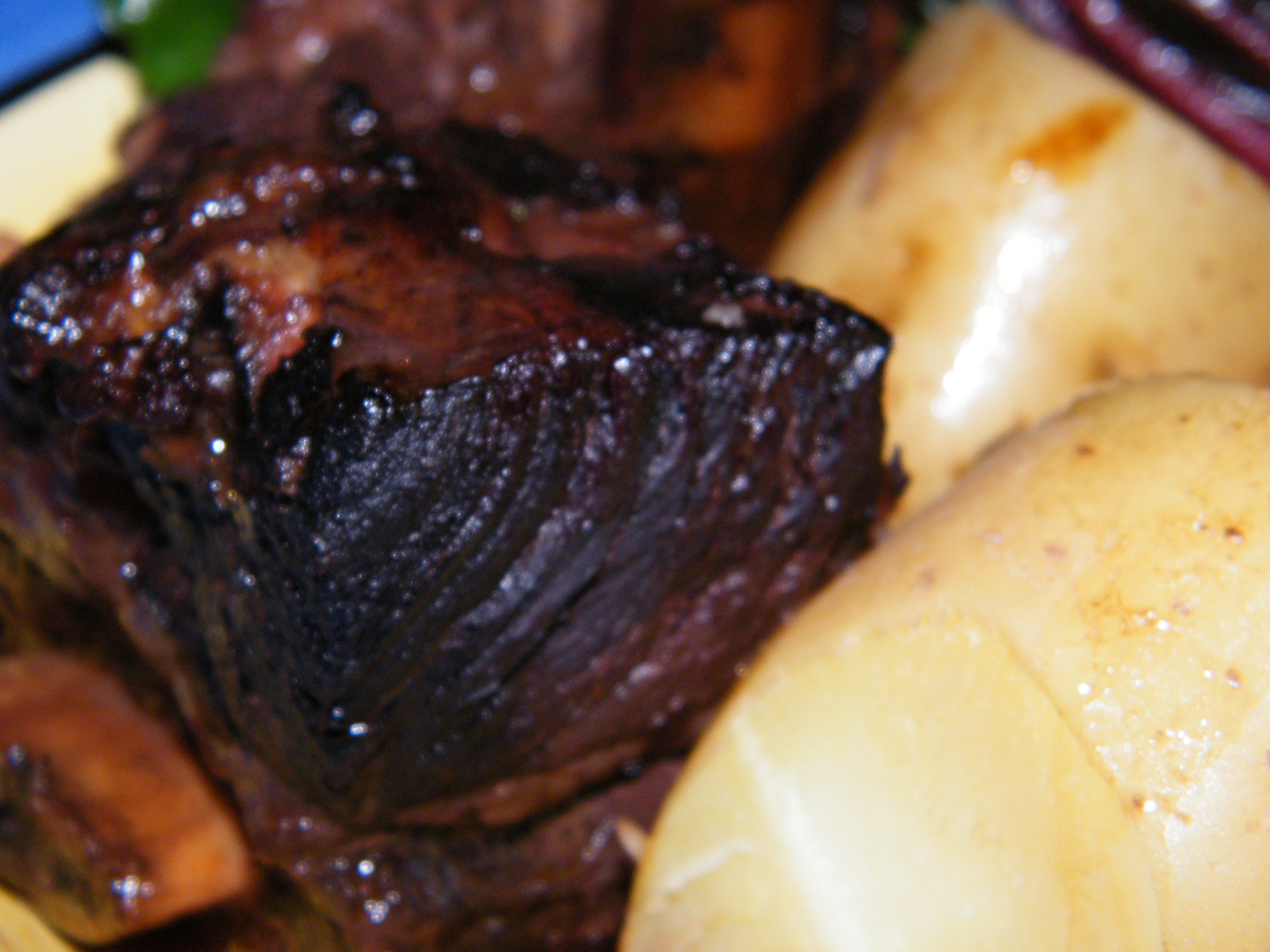
What’s brilliant about the method used in this recipe is that the meat rests overnight in the fridge, allowing you to easily skim off the fat before its final broil. The meat is first broiled before it’s braised and the broth it’s braised in is rich in exactly the way I like, fortified with beef stock, vegetables, port and wine. Then, the next day, the meat is tossed in some of the broth and broiled again. When it comes to the table, it benefits from the best of both techniques, the meat almost falling off the bone with the slightly smoky flavour of broiled bones. The braising liquid is strained and then used as a sauce, which is well worth sopping up with bread. Neither the meat or the sauce have the fattiness of barbequed ribs and the wine sauce is a nice change from the sharpness of the sauces usually used for ribs.

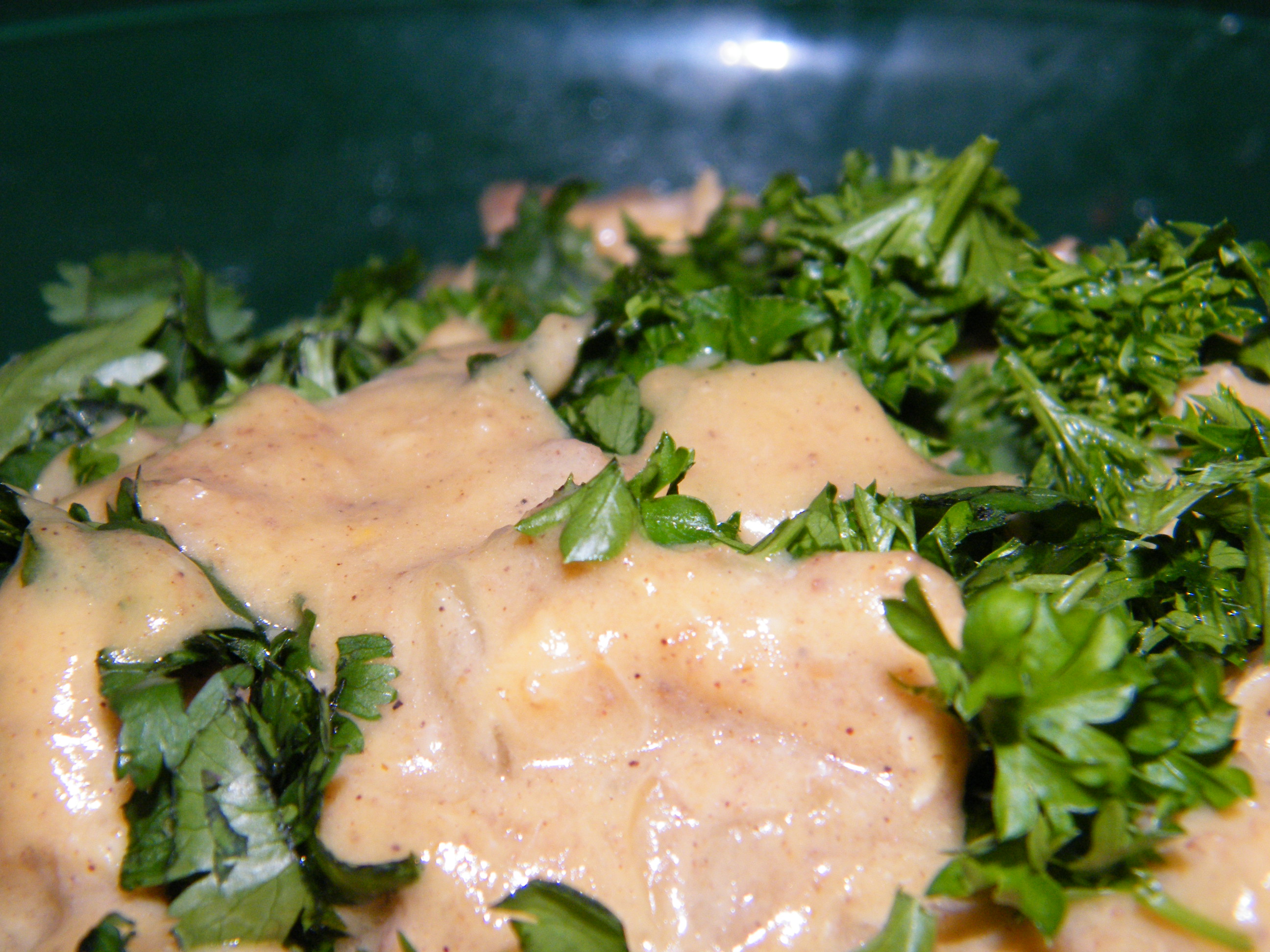
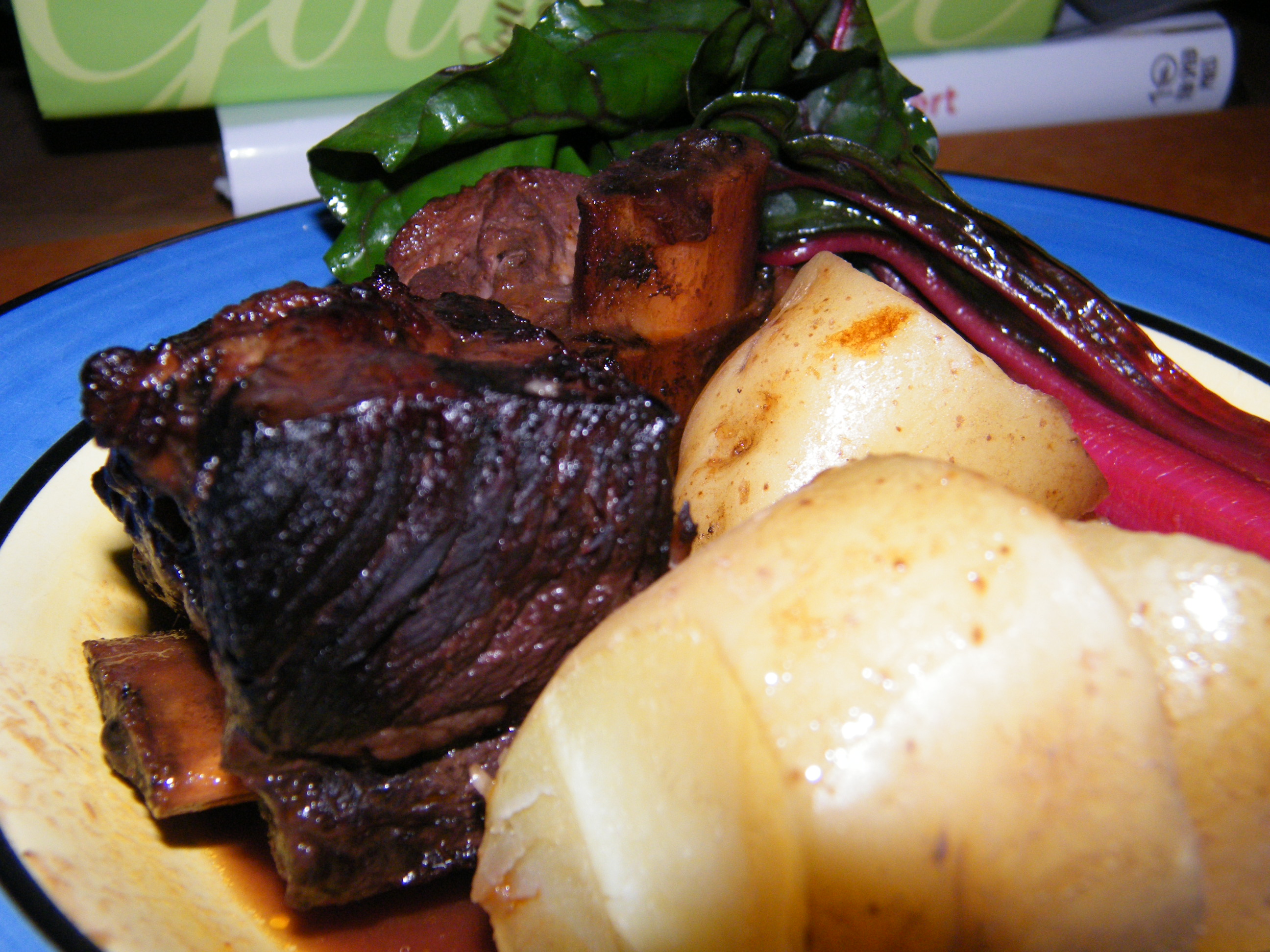
I halved the recipe and skipped the gremolata, serving it instead with boiled potatoes and steamed swiss chard. If I make a full recipe, for a crowd, I’ll definitely use the gremolata. Since it was just the two of us, I didn’t bother. The broth had enough flavour to make the meal interesting. The next day, I shredded some of the leftovers and warmed them with a little broth. Then, I toasted some spinach and onion Quejos and made open faced sandwiches. With a little salad on the side, I think I liked the short ribs even better than I did the first night.

I’m still not going to make ribs very often, but I think I’ll use this braising liquid with leaner cuts of beef – the port and syrah I used, along with the vegetables and herbs, make a wonderful broth.
You can find many other blogged descriptions of this week’s FFWD recipe here: Short Ribs in Red Wine and Port
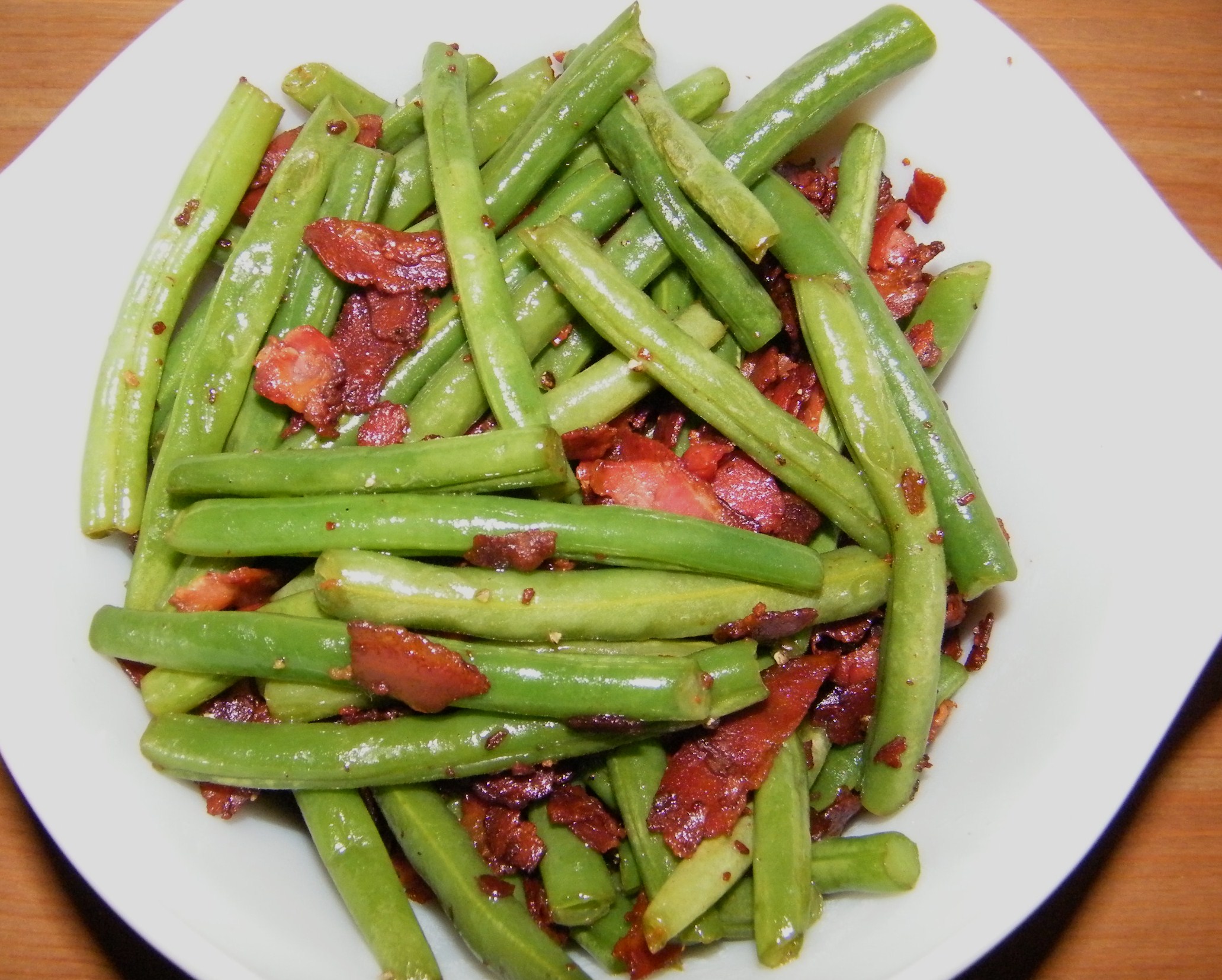
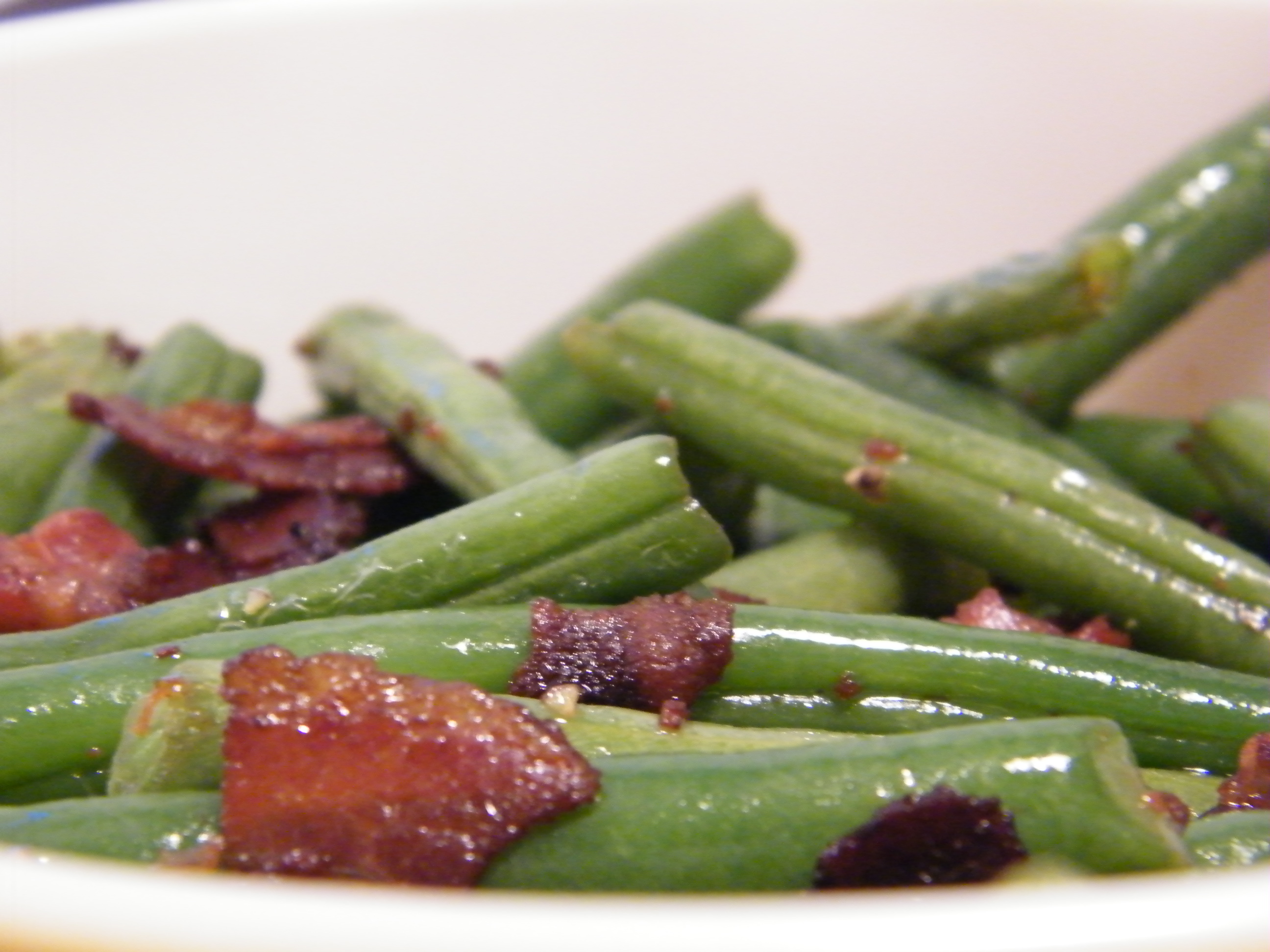
FFWD – Pancetta Green Beans

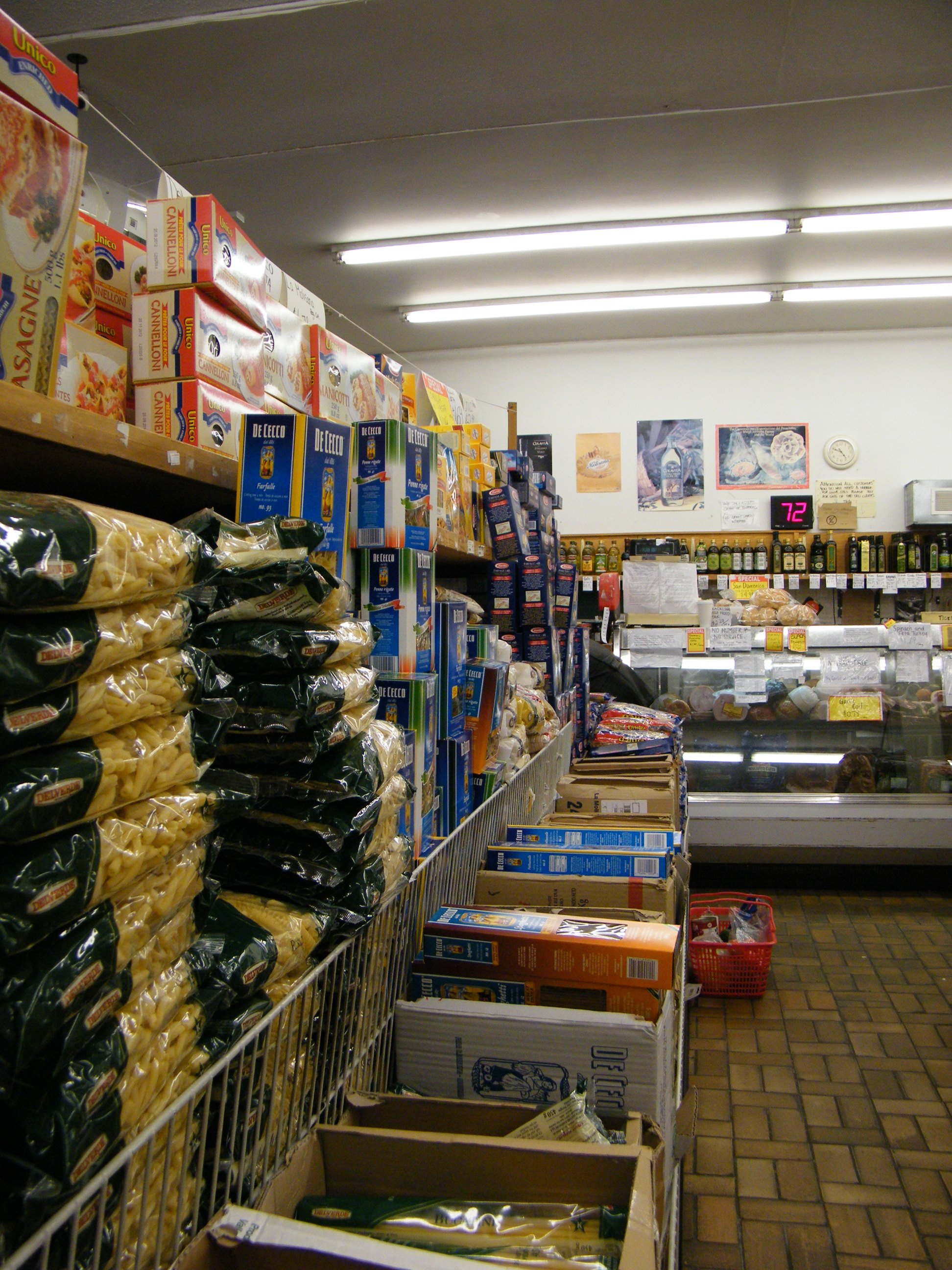
Every neighbourhood has its treasures. After living somewhere for a while, you start to realize that what you thought of as personal discoveries are often really open secrets. My neighbourhood has more than its share. Lombardo’s may be in a mini-mall, but people come from all over for its pizza and pasta. (They also quote Virginia Woolf in the header of their web page, which gives them extra points, I think.) Fratelli’s Saint Honoré is often called the East Van Birthday Cake. And everyone braves the dreaded line up at Santa Barbara Market for deals on cheeses, deli meats and olive oil. Though La Grotta Del Formaggio and Les Amis du Fromage are fancier and have more selection, you can get good quality cheaply at Santa Barbara.

Luckily, there were only four people ahead of me in line when I went there to pick up pancetta for this week’s French Friday recipe. As a bonus, the green beans at Santa Barbara were nice, so I picked those up there, too. Green beans are a staple at our house, but we usually prepare them quite simply – steamed with a squeeze of lemon, or with a dusting of herbs and a little butter. A delicious rut, but a rut nevertheless.

Enter Pancetta Green Beans. It’s a quick side dish – blanched beans are added to well-cooked chopped pancetta and finished with a drizzle of walnut oil. We had it with baked sage butter halibut and the two dishes contrasted nicely. When I finally get a small chest freezer, this would be a great recipe to use up all those green beans I’m going to blanch and freeze when they’re in season.

I have to admit, though, that I’m not a huge fan of pancetta. I agree that a sliver or two can add some punch to a meal, but any more than that is far too salty for me. Perhaps if I’d made my own, like these folks, I’d feel differently. As it is, I think next time I make this dish, I’ll use a quarter of the amount of pancetta called for in the recipe.

I am inspired to experiment a little more with green beans. One cannot live by steamed beans alone. I think I’ll start with this.

You can find many other blogged descriptions of this week’s FFWD recipe here: Pancetta Green Beans

Update – Awards


Ker-Yng at Life is Full stopped by yesterday and awarded me both the One Lovely Blog and the Stylish Blogger awards. Thanks so much! I recently wrote about awards here and I encourage you to check out all the bloggers I listed. I love the community we’re building through French Fridays with Dorie.

Thanks again Ker-Yng. And many thanks to Elaine and Betsy, for also nominating me for the Stylish Blogger award, and to Kathy for the Sisterhood of the World Bloggers award. I enjoy reading your blogs very much and I’m happy that you feel the same way about mine.

Canada Winter Games

I’m a proud aunt right now. My niece is competing at the Canada Winter Games and today she won a silver medal. Here’s a link to an interview with her (and her teammate, Erin) after their win today: Team BC Newsletter. The Games take place every four years and have launched the careers of many professional athletes. Unlike the Olympics, though, they seem more inclusive, with less damaging impact on the communities in which they take place. Many of the sports that appear in the Games aren’t part of the international sports scene and are thus truly amateur sports, pursued for the love of it.

Amateur sports are a big part of many kids’ lives, either through school or (if their families are lucky enough to afford it) as an evening or weekend activity. When I was a teenager, my sport was curling. I didn’t have any pretensions that I would ever play at the elite levels, but practices and bonspiels were an important part of my high school years. Even though curling has an international following and it’s now an Olympic sport, it has never had the flashy appeal of sports like hockey or skating. It’s one of the things I liked about it. Though it was a team sport, and competitive, manners mattered as much as precision on the ice. I thought of it as a sport for the quiet, studious kids. A kind of playground for underdogs, if you will. A place where atypical athletes can experience the kind of community that’s usually reserved for the jocks.

I think the Canada Games accommodate more kinds of athletes than the Olympics, or many of the international competitions, and for that I’ve always loved them. If you’re interested, you can watch some of the Games live online.

FFWD – Orange-Almond Tart

Just a quick post today, as it’s been a busy week.

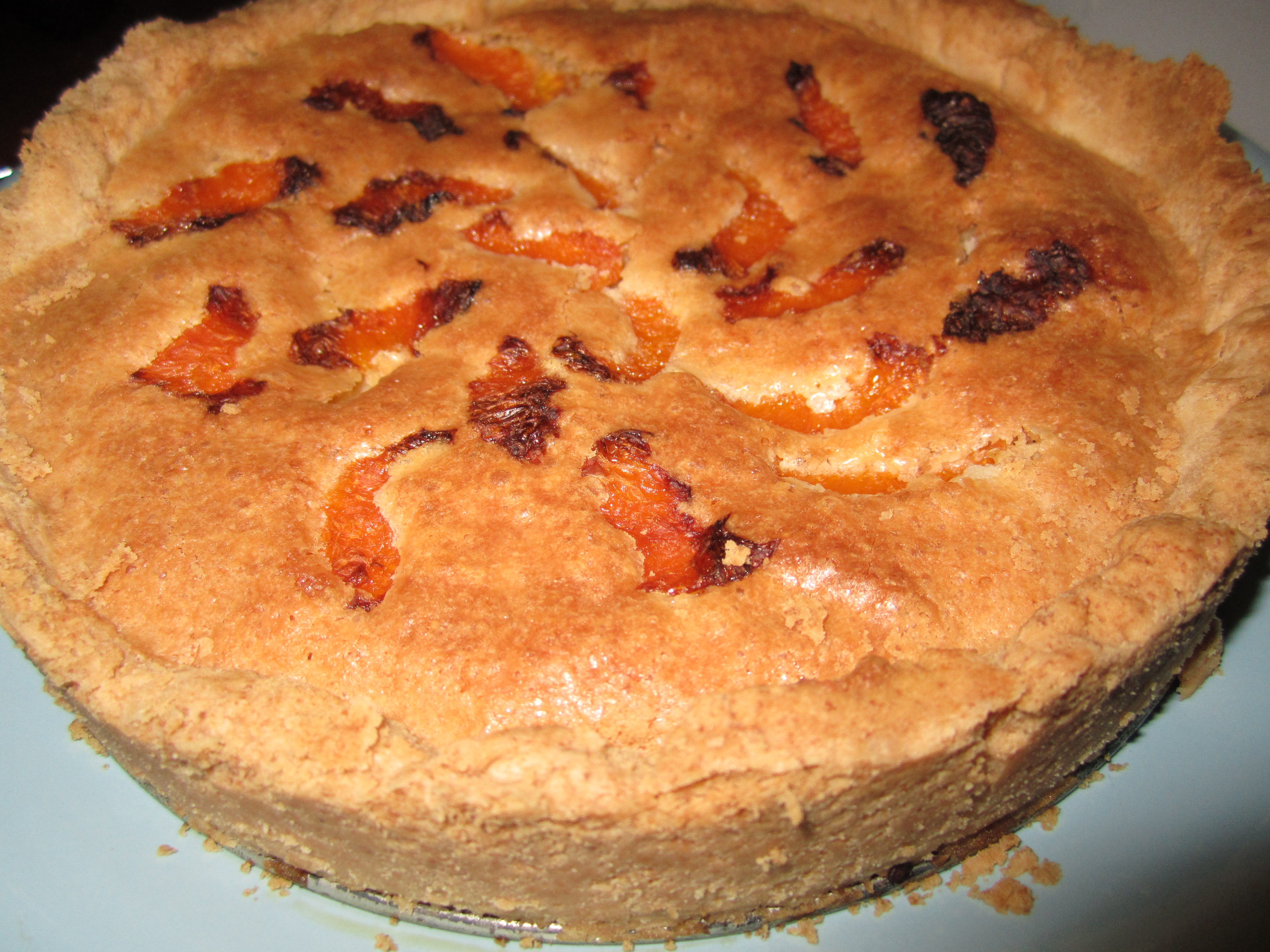
Gluten-free baking can be a little tricky, especially when converting standard flour recipes. In converting the recipe for the sweet tart dough for the Orange-Almond Tart, I chose to use an all purpose mix made of white rice flour, potato starch and tapioca flour. It’s one that they sell at my local food co-operative and I’ve had really good results with it. In this recipe, though, the dough was ultimately too crumbly, with a slightly sandy taste that detracted a little from the shortbread flavour the dough is meant to have. Next time I try this, I’ll use a different combination of flours – one that doesn’t rely so heavily on white rice flour. (For the record, I’ve made this sweet tart dough recipe as written, with conventional flour, and it turned out beautifully. The problem was my choice of flours, not a fault in the recipe. I think I should have used a touch more xantham gum, too.)

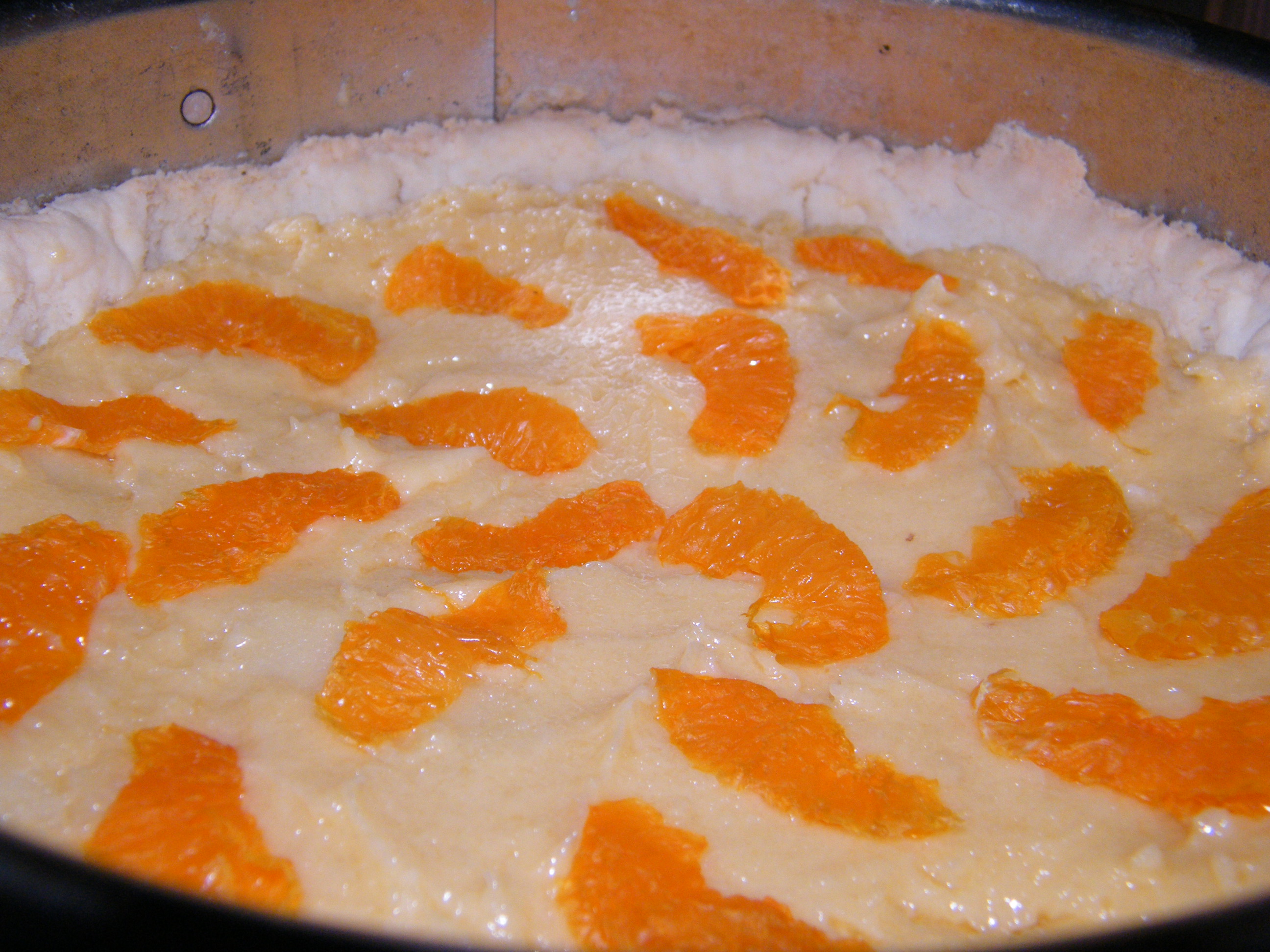
My intention was to make a tangerine version of this tart, but sectioning the tangerines did not go well. The fruit was quite soft and my knife was not quite sharp enough. In the end, I sectioned some nice, firm oranges instead, which worked out quite well.

The almond cream turned out beautifully and the same gluten-free flour mix that failed in the pastry worked really well for the filling.

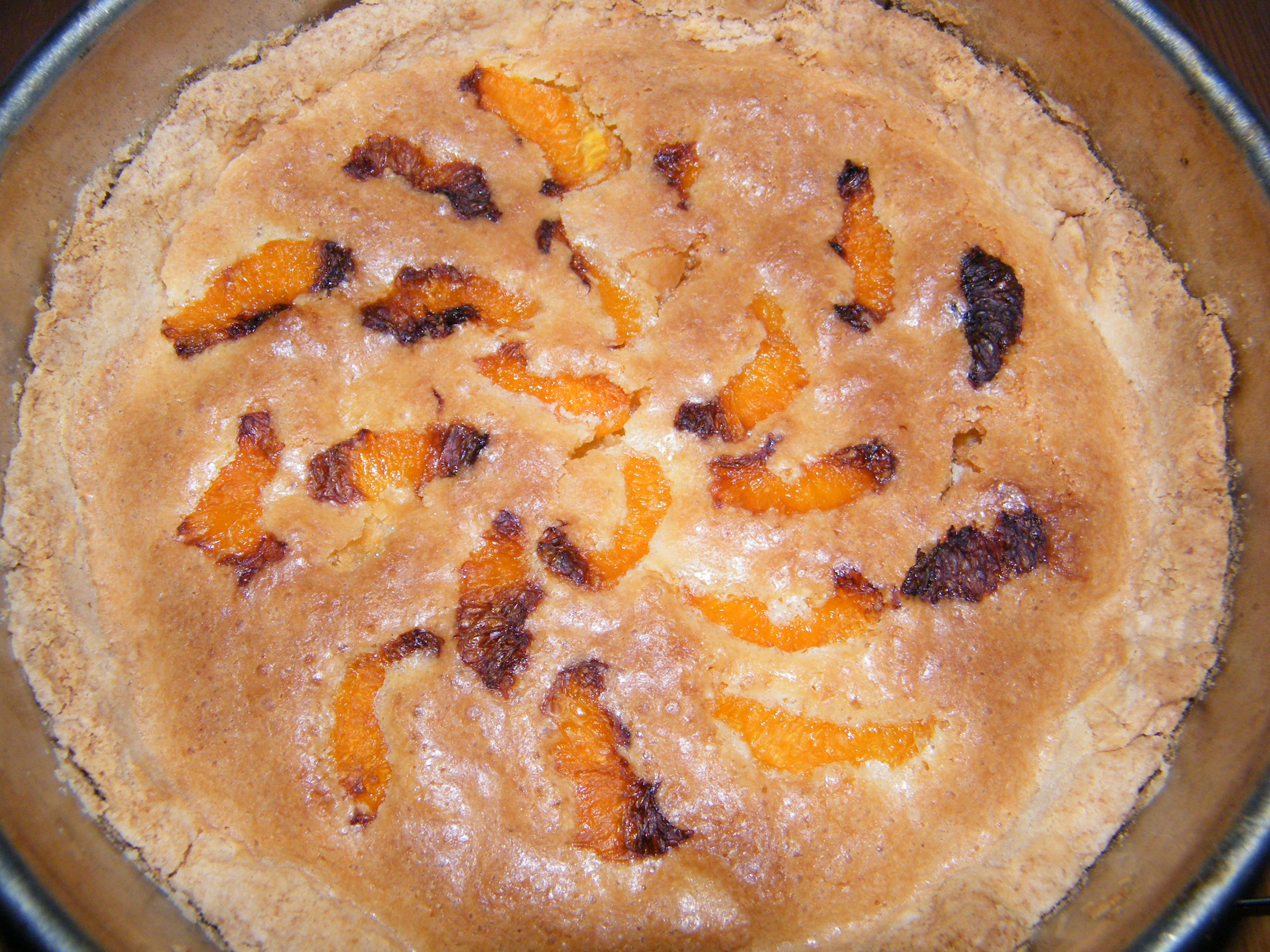
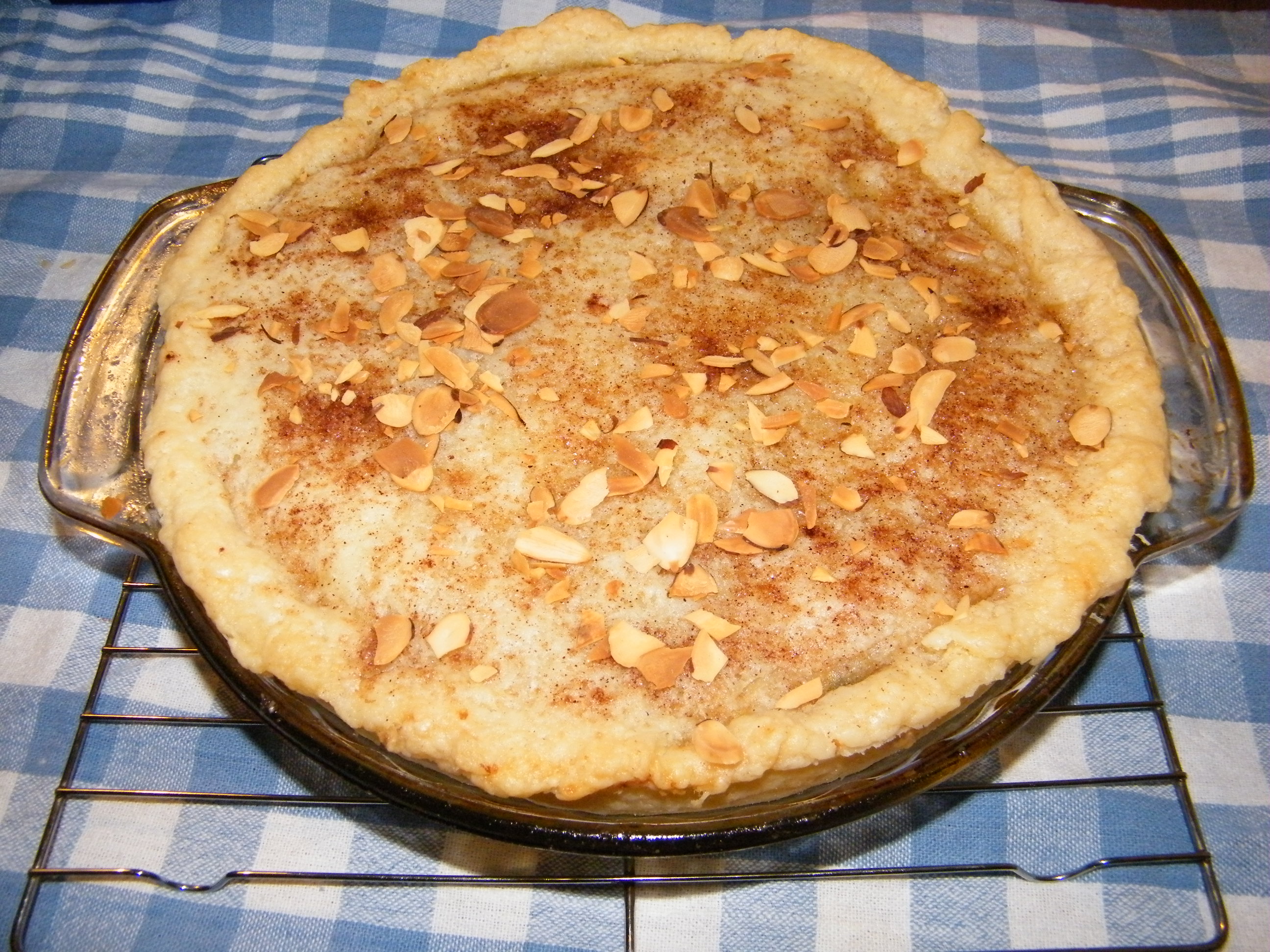
The finished product was tasty, if crumbly and with a few inexplicably over-browned oranges. The oranges also were a little swallowed by the almond cream, I think because my pan was smaller than called for. I’ll make this again, once I’ve sorted out a gluten-free version of the tart dough that works well. I hope that the next time I make this, too, that the finished product looks a little prettier. Check out the other French Friday participants if you want to see more attractive versions!

UPDATE – February 18/11 – I sent a big slice home with my parents, the day after I made it. I apologized in advance because I didn’t think they’d like my version of the crust much. Turns out, though, that they loved it. My mother phoned back to tell me so. I tried another piece and was really pleased. Refrigerated overnight, the crust had improved immensely. It was no longer crumbly and was very flavourful. The filling was still just as good as it had been the first day. When I make this again, I’ll make it ahead.

You can find many other blogged descriptions of this week’s FFWD recipe here: Orange-Almond Tart

Not Quite a Seamstress, Yet

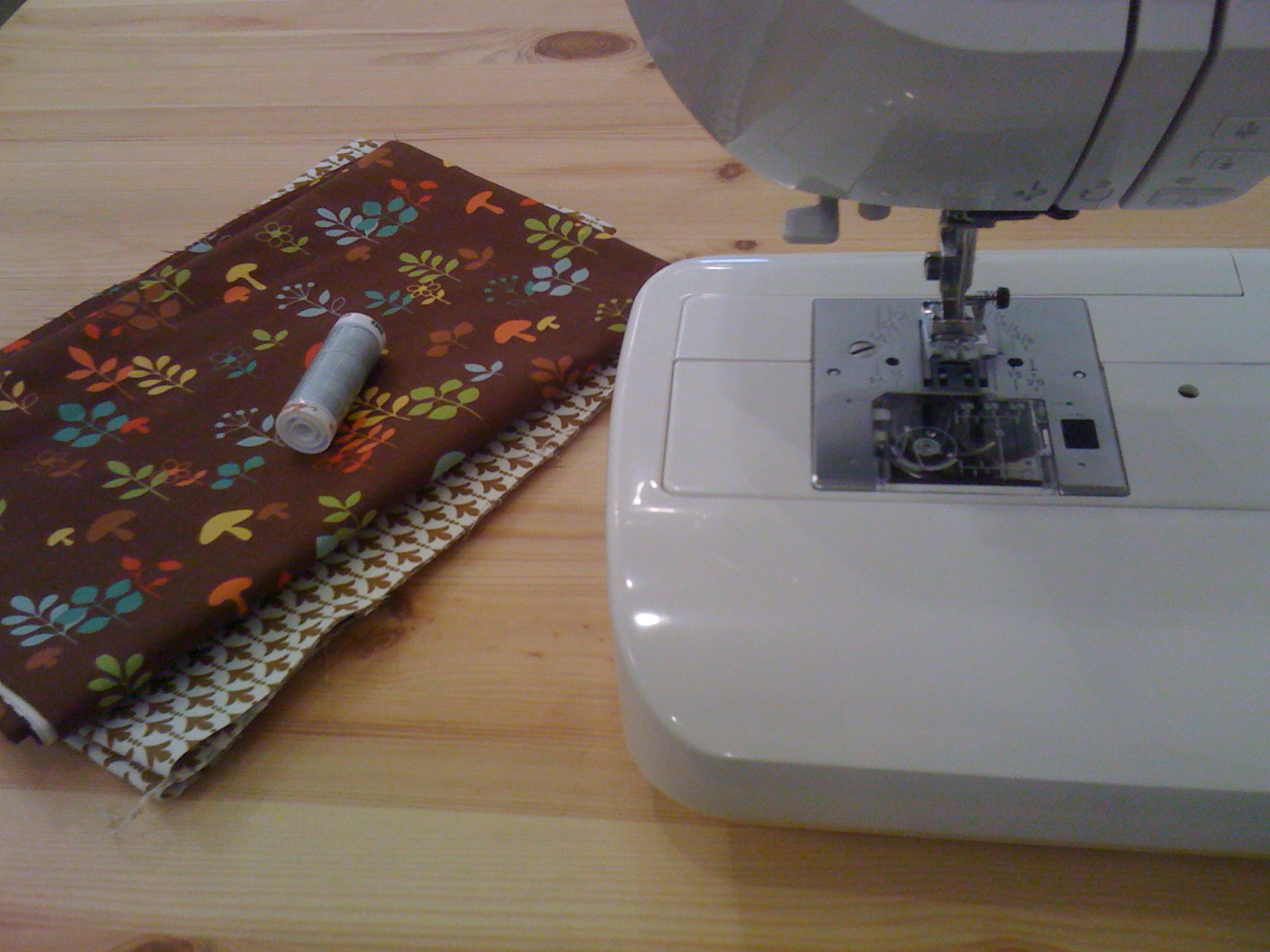
You may recall that last month I wrote about overcoming my fear of learning to sew. Well, I took an introductory sewing class at Spool of Thread and it went pretty well.

I went into Spool of Thread on a weekday evening before the class to pick out my fabric and met Henry, one half of the couple that owns the shop. Lili, who taught the class I took, is the other half. Spool of Thread carries a range of colours and retro inspired patterns, making it hard for me to decide which fabrics to choose for the double-sided totebag I’d be attempting to make in class. Henry told me that they put a lot of work into curating a collection of fabrics that you won’t necessarily find elsewhere in Vancouver. They’ll be adding more soon, including some Liberty prints. I was impressed with the large, open space, sales goods in the front and sewing machines, ironing boards and a big worktable in the back. This was intentional, as Lili and Henry wanted to make the workspace a central part of their store, where those who rent the machines can interact with the owners, customers and each other.

This welcoming ethos fits in really well with the rest of the businesses that inhabit the tiny, unprepossessing strip mall near Fraser and 15th, including Ruby Dog’s, Collage Collage and the fantastic Les Faux Bourgeois. It’s a corner of East Van that I wish I could pull a little closer to my own neighbourhood.

But, back to my adventures in sewing. The introductory class had only five members, which allowed for a lot of one on one with our instructor, Lili. We spent the first part of the class learning how to use the sewing machines and doing some test runs on scrap fabric. I noticed the speed control had a turtle at one end and a rabbit at the other. I had my suspicions about which animal I’d most resemble. We also shared our reasons for taking the class and, unsurprisingly, I wasn’t alone in having had a Home Ec. teacher scare me away from sewing.

Lili walked us through each step, thoroughly explaining everything as we went along and checking our progress at various stages. Two students, who’d never touched a sewing machine before, raced through the pattern, while the rest of us…took a bit longer. We were definitely divided into turtles and rabbits. Still, it was wonderful seeing the bag come together. My lines were (basically) straight and the finished product is actually kind of nice. It helped that Lili had developed a straightforward, forgiving pattern that hides many of the sewn edges. The sewing that shows is done late in the process, when you’ve had time to improve.

At the end of the class, I picked up a stamp card (at a post-class discount) for using the sewing lounge. I’m going to go back and make a few more tote bags before attempting anything else, which will have the added benefit of making me more prepared for Christmas that I’ve ever been before.

Spool of Thread regularly offers Sewing Machine 101 classes, along with a range of project-centred classes. They also rent on site use of their machines and equipment by the hour. They take music requests while you’re there sewing, too.

By the way, I’m going to update this post with a picture of the finished product – I forgot my camera the day of the class (go me!) and only have a couple of iPhone pictures to show for my day’s sewing.

FFWD – Basque Potato Tortilla

February is a busy month for us this year, in no small part because it’s my partner’s 40th birthday next week. We’ve got a big party lined up for the weekend at one of our favourite gluten-free-friendly restaurants, but for his actual birthday I’m making a rice pasta spinach lasagna. I’m also going to attempt a gluten-free version of next week’s FFwD recipe, Orange-Almond Tart. So, I was happy the month was starting off with a relatively easy dish. One which is naturally gluten-free, to boot. No substitutions needed.

Basque Potato Tortilla is more akin to what North Americans would describe as an omelette than what we think of as a tortilla. It’s started on the stove and finished under the broiler, requiring a close eye, but little intervention. I resisted the urge to add cheese (it’s good to break the habit of always cooking eggs with dairy), but added mushrooms, red pepper, thyme and ham to the base recipe.

Tonight, we ate slices at room temperature with lemon-dressed steamed Swiss Chard on the side. I’m curious to taste it cold tomorrow. I certainly see the appeal of slicing it into cubes or squares and serving it as an appetizer – it would go well with a red pepper salsa, I think. Though I enjoyed the tortilla, I don’t think it will be making a regular appearance in our kitchen. I’m keeping it in mind for those times when you need a simple, visually impressive main or appetizer, though, especially because it uses ingredients you’re likely to have on hand.

It’s also one of those dishes that’s infinitely variable. The Swiss Chard could have just as easily gone into the tortilla as on the side. It’s good to have a few variations on workhorse egg recipes in hand.

Thanks, Kevin, for the loan of your camera – the batteries in mine died today. Apologies to everyone for the darkness of this week’s shots. I’m not as handy with his camera.

You can find many other blogged descriptions of this week’s FFWD recipe here: Basque Potato Tortilla

FFWD – Chicken B’stilla

Slow is underrated, especially when it comes to food. I don’t just mean this kind of slow, though that’s definitely important. I’m talking about taking time with a dish, letting flavours meld and working through the steps to make something truly delicious. We’re so inundated with recipes for 30 minute, 15 minute and even 10 minute meals, that it’s hard to remember that setting aside time for cooking can have enormous rewards. Obviously, in our culture, few of us have the ability to put long hours into every dish that we make, so it’s important that when you do, the recipe is worth it. Dorie Greenspan’s recipe for Chicken B’stilla is a wonderful example of what happens when you put time into making your food.

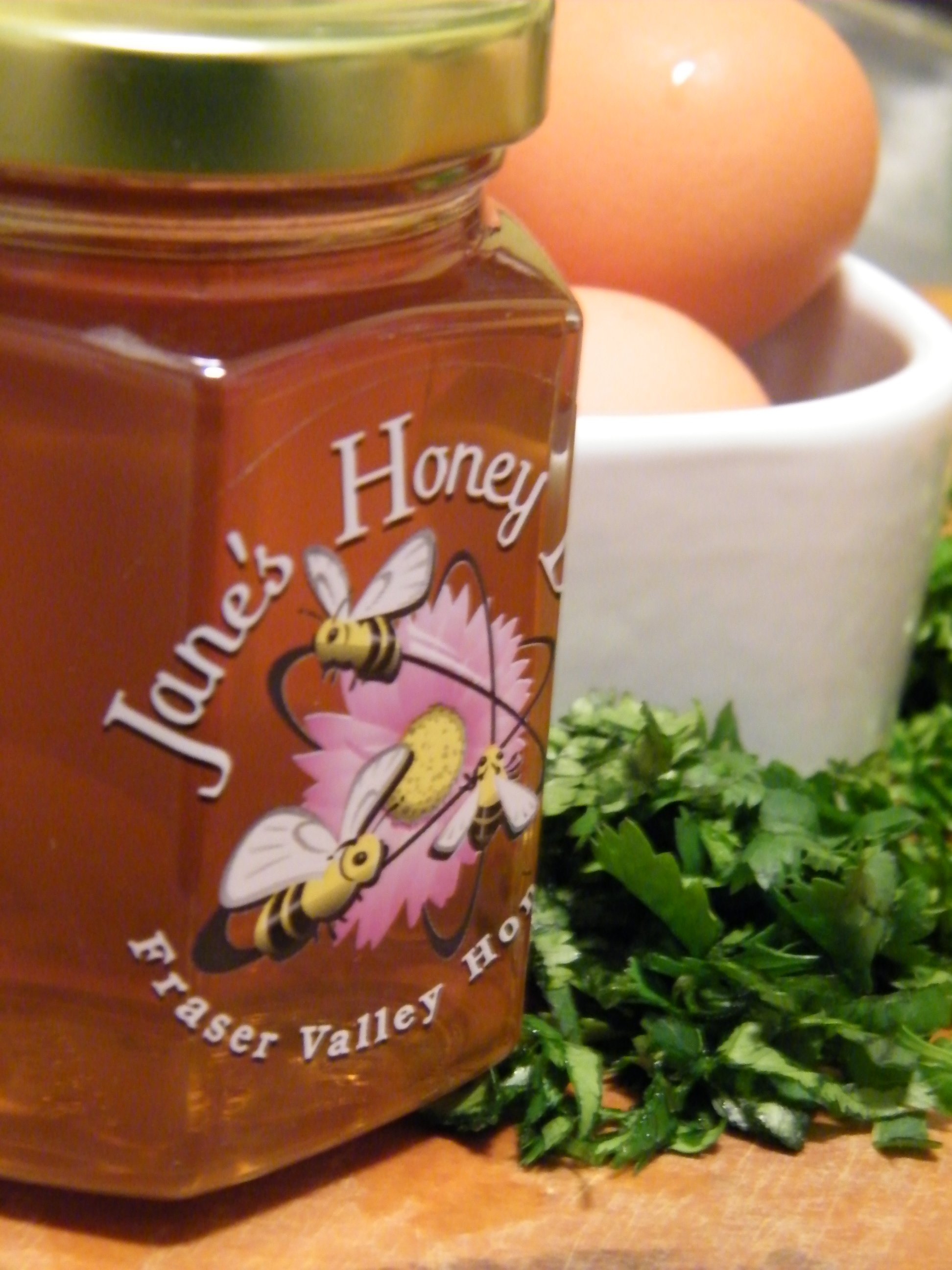
In this French take on a traditional Moroccan dish, chicken is marinated in spices, then simmered in broth until very tender. The broth is cooked down into a rich sauce, made even richer by adding eggs and honey. Finally, everything is combined, put into a phyllo pastry crust and baked. Since my partner would be eating this with me, I substituted gluten-free rough puff pastry for the phyllo, using Gluten-Free Girl’s recipe (which you can find here). I’d researched gluten-free phyllo pastry, but didn’t find a recipe I trusted. I need to do a little more exploration and some test batches, I suppose. I recommend this puff pastry recipe wholeheartedly – it comes together like magic, though you’ll likely have sore biceps the next day.

Even though you must take a little time to make this dish, none of the steps are particularly difficult. The most difficult part of this recipe is resisting the aroma of the food at the various stages of cooking. While the shredded chicken was cooling, my dog sat in front of the stove, hoping for a handout. My partner repeatedly came in asking if he could have some. I was busy with the sauce, but adding the honey and eggs just added to the wonderful smell. Anticipation ran high.

Once the B’stilla was assembled and baked, it was difficult to wait for it to cool enough to cut. It was worth the work and the wait. Kevin rarely enjoys pie, savoury or sweet, but even before we were finished our first serving, he asked when I would be making it again. I’ll be making this often for Kevin, but I think I’ll also go over to my parents’ place and make the conventional phyllo version for them, too. Not that I’m looking for excuses to make this again…

And, speaking of slow, this was actually the January 28th recipe for French Fridays with Dorie. Instead of writing this post on Friday as I’d planned, I went to a hockey game with my mother instead. I’ve finally found time to catch up today.

You can find many other blogged descriptions of this week’s FFWD recipe here: Chicken B’stilla

The Roots of Homelessness

Two weeks ago, I wrote about an investigative series that CTV British Columbia was conducting on the subject of homelessness. Today, I want to follow up on that post. The series, called Off the Streets, covered a number of issues, including drug and alcohol addiction, as well as the special problems faced by homeless youth and single mothers. Mi-Jung Lee and Jon Woodward explored a number of solutions as well, focusing on supportive housing, sobering centres and programs to keep single mothers and youth off the streets.

Throughout the series, we heard that youth who had been through the foster care system, single mothers and First Nations people are particularly at risk of becoming homeless. What wasn’t mentioned is that these groups also face a higher risk of poverty or that as poverty increases in this country, so does homelessness.

It’s not easy to discuss poverty without running up against political and ideological differences. It can be safer to stick to the necessary work of finding strategies to help the people who have already found themselves disenfranchised.

Discussions about poverty in Canada are happening though, in the context of homelessness, but also in relation to poverty’s other consequences, like the toll poverty takes on the health care system and societal productivity levels. Here are a few links to some of these discussions:

Housing and Homelessness – CCPA
Child Poverty Statistics – CCRC
Poverty in Canada – The Economist

I hope that we can, as a culture, really commit to eradicating poverty and reducing income disparity, thus attacking the roots of problems like homelessness, crime and illness.