Spring Book Reviews – Bob’s Red Mill Everyday Gluten-Free Cookbook

Amaranth Soup

I received a review copy of Bob’s Red Mill Everyday Gluten-Free Cookbook from Robert Rose Inc. Nevertheless, all opinions in the following post are my own.

A diagnosis of celiac disease can seem like an imposition of broad limitations on one’s diet. And that used to be quite true, in the days when white rice flour was made to stand in for everything from bread flour to cake flour.

These days, though, there are so many great gluten-free alternatives available to people with celiac disease or gluten intolerance. Gluten-free grains and seeds like quinoa have become widely available, along with a wide range of flours. Ingredient lists are starting to shift, too. Where once wheat or barley might be used as a filler, now products like stocks, sauces, and spice-blends are eliminating them when not necessary, or other companies are jumping into the market with their own gluten-free varieties.

Bob’s Red Mill has been a reliable source of gluten-free products for years, dedicating separate production lines to many of their gluten-free grains, seeds, and flours to avoid cross-contamination. I’ve been a fan since my youth, when I was introduced to plenty of crunchy granola vegans and vegetarians. Potluck survival meant mastering veggie cuisine and Bob’s Red Mill provided many of the grains we used.

I’ve never been completely vegan or vegetarian, but eat that way much of the time, especially since my partner has committed to veganism. He’s also the member of the family with celiac disease, so alternatives to wheat, barley, and the rest of the gluten-rich grains are a big part of our daily meals.

I’ve become very familiar with gluten-free alternatives over the years. But like many of us, I’ve got quinoa down and could use a little help making the most of the rest. Amaranth? Teff? Sorghum? Millet? I’ve made a little use of these, but not often enough. Even familiar grains like oats or buckwheat become trickier when they are ground into flours.

So, I was excited to get my hands on a copy of Camilla V. Saulsbury’s Bob’s Red Mill Everyday Gluten-Free Cookbook. It’s full of whole-grain, gluten-free recipes, but just as importantly, it includes a primer with details on how to prepare and store gluten-free grains and flours, what their nutritional properties are, and what other healthful items belong in the gluten-free pantry.

The recipes themselves range from breakfast to dessert and travel across cuisines, many of which can become off-limits to gluten-free eaters. Amaranth Tabbouleh or Sorghum Minestrone satisfy cravings for old favourites, while naturally gluten-free dishes like Persian-Spiced Lentils and Millet make use of less familiar grains to delicious effect.

Many of the recipes are vegetarian or vegan, or easily adaptable, so there are plenty for me to choose from when eating with my partner. I’m especially looking forward to trying the recipe for vegan Nanaimo bars, as I noticed that one of the grocery stores nearby sells popped amaranth.

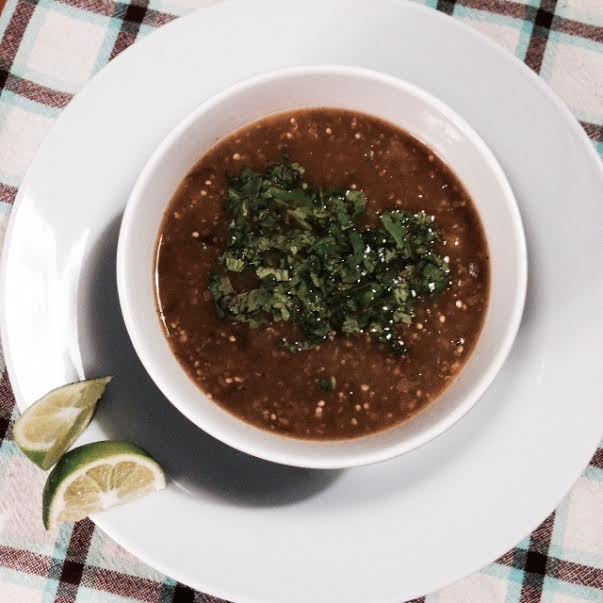
Today, though, I’ve got permission to share a recipe for a hearty, vibrant soup that reminds me of a pozole verde. It can be served with queso fresco, but we skipped that in favour of lime wedges and found it perfectly satisfying.

Tomatillo, Black Bean and Amaranth Soup

Makes about 6 servings

Equipment: Food Processor

2 cans (each 12 oz/340 mL) whole tomatillos, with juice
1 tbsp/15 mL olive oil
4 cloves garlic, minced
1 tsp/5 mL chipotle chile powder
3/4 cup/175 mL amaranth
2 cans (each 14-19 oz/398-540 mL) black beans, drained and rinsed
3 cups/750 mL ready-to-use GF vegetable or chicken broth
1 cup/250 mL packed fresh cilantro leaves, chopped
Crumbled queso fresco (optional)
2 tbsp/30 mL freshly squeezed lime juice
Lime wedges (optional)

  1. In food processor, purée tomatillos and their juice. Set aside.
  2. In a large pot, heat oil over medium-high heat. Add garlic and chipotle powder; cook, stirring, for 1 minute. Stir in tomatillo purée; cook, stirring for 2 minutes.
  3. Stir in amaranth, beans and broth; bring to a boil. Reduce heat to low, cover and simmer, stirring occasionally, for 15 to 20 minutes or until amaranth is very tender. Stir in cilantro and lime juice. Serve sprinkled with queso fresco (if using), with lime wedges on the side, if desired.

I predict this cookbook will have you stocking your pantry with more grains, seeds, and flours, whether or not you need to follow a gluten-free diet. Variety is the spice of life, but it’s also a good practice for health and a delicious one, at that.

Come back next Thursday for a review of a book that will help you make the most of each season’s bounty.

Spring Book Reviews – The Soup Sisters and Broth Brothers Cookbook

Tom Yum Soup

I received a review copy of The Soup Sisters and Broth Brothers Cookbook from Appetite by Random House Canada. Nevertheless, all opinions in the following post are my own.

It’s safe to say that soup season is a year-round phenomenon in Vancouver, even though we get long stretches of sunshine in the summer. There are gazpachos and chilled soups for hot weather, but there are also always rainclouds in our future, so stocking the freezer with comforting soups is a good practice.

One of the best ways to do that is to make a big batch of your favourite soup and then organize a soup swap with friends and neighbours. It’s a fun way to build community while providing one another with at least six meals’ worth of nourishing, delicious food.

(Inter)National Soup Swap Day is held in late January each year, but they provide great information and advice no matter what time of year you decide to hold your own swap. Next year will be the tenth anniversary, so I expect they will have even more recipes, stories, and advice to share.

Our co-op has been holding soup swaps for a number of years now. The regular participants enjoy it so much that we’re even talking about having them twice a year – once at harvest time and another in the coldest part of the year. One to celebrate late summer’s bounty and another to cheer us through winter’s last weeks.

Since I’ve been sharing soup with the same group of people over the years, I’m always on the lookout for new recipes that are delicious, reliable, and out of the ordinary. When I was given the opportunity to review The Soup Sisters and Broth Brothers Cookbook, I knew it was a book that I’d be making good use of for years to come.

The Soup Sisters and Broth Brothers Cookbook is full of flavourful soups borrowed from many cuisines and encompassing such a wide variety of ingredients that it could keep a soup swap group excited for years. The 114 soups are organized by season and the book includes stock recipes and advice on techniques and basics. The recipes come from the organization’s staff and volunteers, along with food writers, chefs, and even a sitting Mayor. Many of the recipes include stories about the soups, just as a soup swap gathering would.

But it’s more than a cookbook. It also tells the story of an organization that shares soup to help heal lives and to show support for people in crisis. The soups that Soup Sisters and Broth Brothers make together go to feed women and children who have suffered domestic abuse, or to youth exiting street life. It takes the concept of building community through sharing food beyond our personal networks and turns it into something that can be transformative.

It’s an inspiring thought. If you’d like to join them in their work, they have branches across Canada and even one in California.

In the meantime, they’ve been kind enough to let me share with you a soup for Spring, fragrant with lemongrass, galangal, makrut, and coconut milk. This Thai classic comes together quickly, but is richly flavoured. I made a vegan, gluten-free version for my partner, so traded fish sauce for a little gluten-free tamari and skipped the meat. I also used a vegan tom yum paste, versions of which are becoming more widely available now.

This soup was so good I wished I’d doubled the recipe. The only change I would make would be to add a dried chili pepper or two, for a little heat.

Tom Yum Soup

Sharon Hapton, Founder, Soup Sisters and Broth Brothers

Makes about 4 servings

4 cups (1 L) chicken or vegetable stock
2 large onions, thinly sliced
2 carrots, peeled and thinly sliced
1 shallot, thinly sliced
2 thick slices fresh ginger
2 thick slices galangal (optional)
1 stalk lemongrass, trimmed, gently bashed with a rolling pin and cut into quarters crosswise
1 to 2 tsp (5 to 10 mL) tom yum paste
3 to 4 kaffir lime leaves
1 clove garlic, minced
20 large raw shrimp, peeled and deveined, or 1 lb (500 g) cubed or diced boneless, skinless chicken (optional)
1 can (14 oz/398 mL) unsweetened coconut milk, well shaken
8 oz (250 g) cremini or white button mushrooms, sliced
2 plum tomatoes, diced
2 to 3 tsp (10 to 15 mL) fish sauce (according to taste)
1 lb (500 g) rice noodles, soaked in cold water for 2 hours then drained (optional)
Finely chopped cilantro for garnish

1. In a large pot, combine the stock, onions, carrots, shallot, ginger, galangal (if using), lemongrass, tom yum paste, lime leaves and garlic. Bring to a boil.

2. Reduce the heat and simmer, uncovered, for 10 minutes for the flavors to develop.

3. Add the shrimp or chicken (if using). Simmer, uncovered, until the shrimp are no longer pink (about 3 minutes) or until the chicken is no longer pink inside (about 10 minutes).

4. Add the coconut milk. Bring the soup back to a simmer.

5. Add the mushrooms and tomatoes. Bring the soup back to a simmer.

6. Remove the ginger, galangal (if using) and lemongrass. Season with fish sauce to taste.

7. If using rice noodles, plunge them into a pot of boiling water to heat through, then drain well.

8. Divide the noodles among the soup bowls, then ladle the soup over the top. Garnish with a flourish of cilantro.

Come back next Thursday for a review of a book that will have you stocking your pantry with long-neglected ingredients.

Vegan Easter Dinner with a Ricardo Cuisine Recipe

IMG_3621

I was provided a subscription to Ricardo Magazine for review, but received no other consideration for this post.

The best part of any holiday is sharing food with family and friends. Sometimes, that means making sure that family favourites are on the table (like my mother’s five cup salad). Sometimes, it means experimenting with new dishes that may just become favourites for the next generation. In my house, it always means making sure that everyone has enough food to enjoy, no matter what their dietary restrictions or aversions.

That can get a little tricky these days, with so many folks suffering from allergies, while others follow diets restricted for health reasons or ethical considerations. It’s not impossible, though, and today’s table offers people much better fare than that dished out when I was growing up.

Back then, a vegetarian was lucky if they got a baked potato with some vegetables on the side, unless they brought their own meal. Now, greater awareness ensures that there are staple dishes to satisfy vegetarians, vegans, and gluten-free folks, with no one thinking twice about it. Some of them are even favourites for everyone at the table.

When I was asked to review Ricardo Cuisine‘s Easter recipe collection, my thoughts naturally turned to finding ones that would work for my gluten-free and vegan partner. He has celiac disease and has recently begun eating a completely vegan diet, as well. So, finding holiday dishes that satisfy his requirements and are enjoyable for everyone is always a priority.

Right away, I landed on Ricardo’s Roasted Fennel and Fingerling Potatoes recipe. It’s the kind of dish that’s likely to become a yearly tradition, because it’s more interesting than the usual starch and vegetable sides. This roasted vegetable combination relies on the onions and fennel for flavour as well as fibre. So, it makes a good complement to other dishes at Easter dinner, then the leftovers become a great base for more meals. I like to make this sort of recipe in larger quantities than I need, for just that reason.

IMG_3623

This dish will satisfy the vegetarians, vegans, and gluten-free, but it’s also a nice choice for diabetics, because it combines the starch of potatoes with the fibre of onions and fennel, while avoiding the heaviness of many butter and milk rich potato dishes. And the unrestricted omnivores at the table will be happy it’s so delicious.

Combined with other dishes, like Ricardo’s Asparagus with Lemon Gremolata or a vegan version of his Maple-Braised Endives, you’re well on your way to happy guests. Just add a protein – like a really good slice of lentil loaf – and you’ve got a complete meal for those who aren’t partaking in the Easter ham or roast.

IMG_3622

You can find more of Ricardo’s Easter recipes here. You’ll find some to suit any of your Easter guests, from the appetizer course through dessert.

I’ve been a big fan of Ricardo since my Francophone mother introduced me to his French language television program years ago. Though I can follow along with the French instructions reasonably well, I’m happy that he’s expanding his English language presence, too.

Ricardo Cuisine was kind enough to let me reproduce their recipe here. Once you’ve tried it, I predict it’s going to become a staple at your holiday table and perhaps year-round, too.

Roasted Fennel and Fingerling Potatoes

Preparation time: 25 min
Cooking time: 1 h
Output: 6 to 8 servings

INGREDIENTS

  • 675 g (1 ½ lb) fingerling or baby potatoes
  • 2 bulbs fennel, each cut into 8 wedges
  • 60 ml (¼ cup) olive oil
  • 3 small onions, cut into 1.5 cm (½-inch) thick slices
  • Salt and pepper

PREPARATION

  • With the rack in the middle position, preheat the oven to 200 °C (400 °F).

  • In a large pot of salted boiling water, cook the potatoes until cooked but still slightly firm, about 15 minutes. Drain and set aside.

  • In a non-stick skillet, brown the fennel in half of the oil (30 ml / 2 tbsp). Set the fennel aside in a baking dish. In the same skillet, brown the onions for about 2 minutes. Add to the fennel with the potatoes and the remaining oil. Toss well. Season with salt and pepper.

  • Bake for about 30 minutes or until the fennel and potatoes are cooked tender. Serve with the Pork Roast with Maple Sauce.


Cottage Cooking Club – March 2015

Stir fry

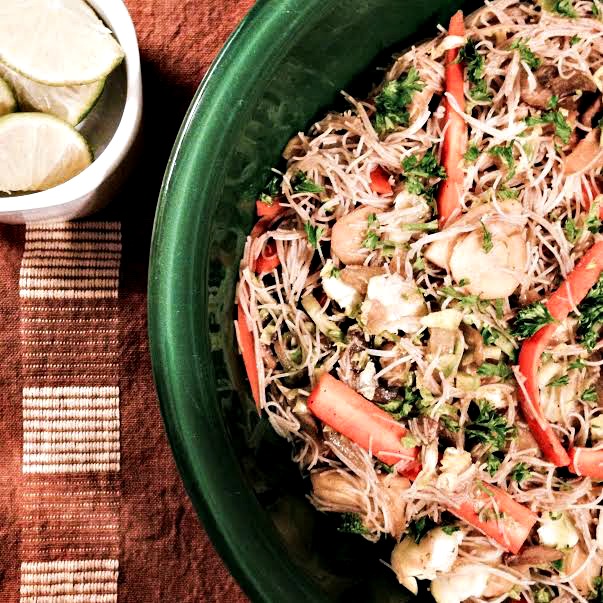
We’ve reached the halfway point of the Cottage Cooking Club’s exploration of River Cottage Veg and the group is taking this month to catch up on recipes they may have missed in previous months. As for me, I’m just glad my new copy of the book has arrived. Inexplicably, my first copy of the book disappeared during the great re-piping project in January and no amount of looking has turned it up. I suspect that I will find it, now that I’ve got another copy. At least I hope so, because I have a lot of notes in the margins of the original.

As a result, I missed last month and this month I’ve only got one recipe on deck – Winter Stir-fry with Chinese Five-spice. This is the sort of recipe I’d like to say that I make regularly, but really need a reminder to undertake. I used to make stir-fries all the time in my youth. Now I spend so much time exploring new recipes, that I forget about the kitchen skills I’ve carried for years. To be fair, in those days I also spent a lot of time on political marches, taking university courses, and dancing in clubs.

Things change, though perhaps we shouldn’t leave so much behind. There are political matters that are just as urgent today, life-long learners get more satisfaction from their lives, and those who dance into their twilight years seem happier than the rest of us. Stir-fries, too, shouldn’t become just the stuff of dinners out – they are the epitome of the healthy, well-seasoned home cooking that’s being encouraged by food advocates everywhere.

Seasoning is the key, along with paying attention to how much cooking each vegetable requires. Some of my youthful attempts at stir-fry were a little ham-fisted and needed a little more care than the lashings of soy sauce and lemon they suffered. It took time and practice to get the hang of it and I think that helped me to become a better cook overall.

This stir-fry is simple, relying on five-spice powder, soy sauce, and rice wine for flavour, with a finish of fresh lime juice. It’s also a good choice for that in-between season when spring gardens are only just being planted. Carrot, parsnip, and mushroom give substance to the dish, while shredded Brussels sprouts are nice alternative to the usual wilted greens.

Easter

I’d also like to say thank you to Andrea, our fearless and talented leader, who blogs at The Kitchen Lioness. She was kind enough to send participants an Easter gift and you can see some of the lovely ornaments she included, above. This group has been a wonderful way to connect with more talented and interesting bloggers. It’s also been a great way to explore my partner’s newly-vegan diet with him. We choose from each month’s offerings together and the group’s recipes have become staples in our everyday eating.

I’m looking forward to cooking through the rest of the book, barring any more disappearing cookbooks.

Here are the links to the rest of the group’s posts for this month. I encourage you to check them out – you’ll meet some wonderful bloggers and get some great inspiration for vegetarian eating.

Cottage Cooking Club – January 2015

Early spring

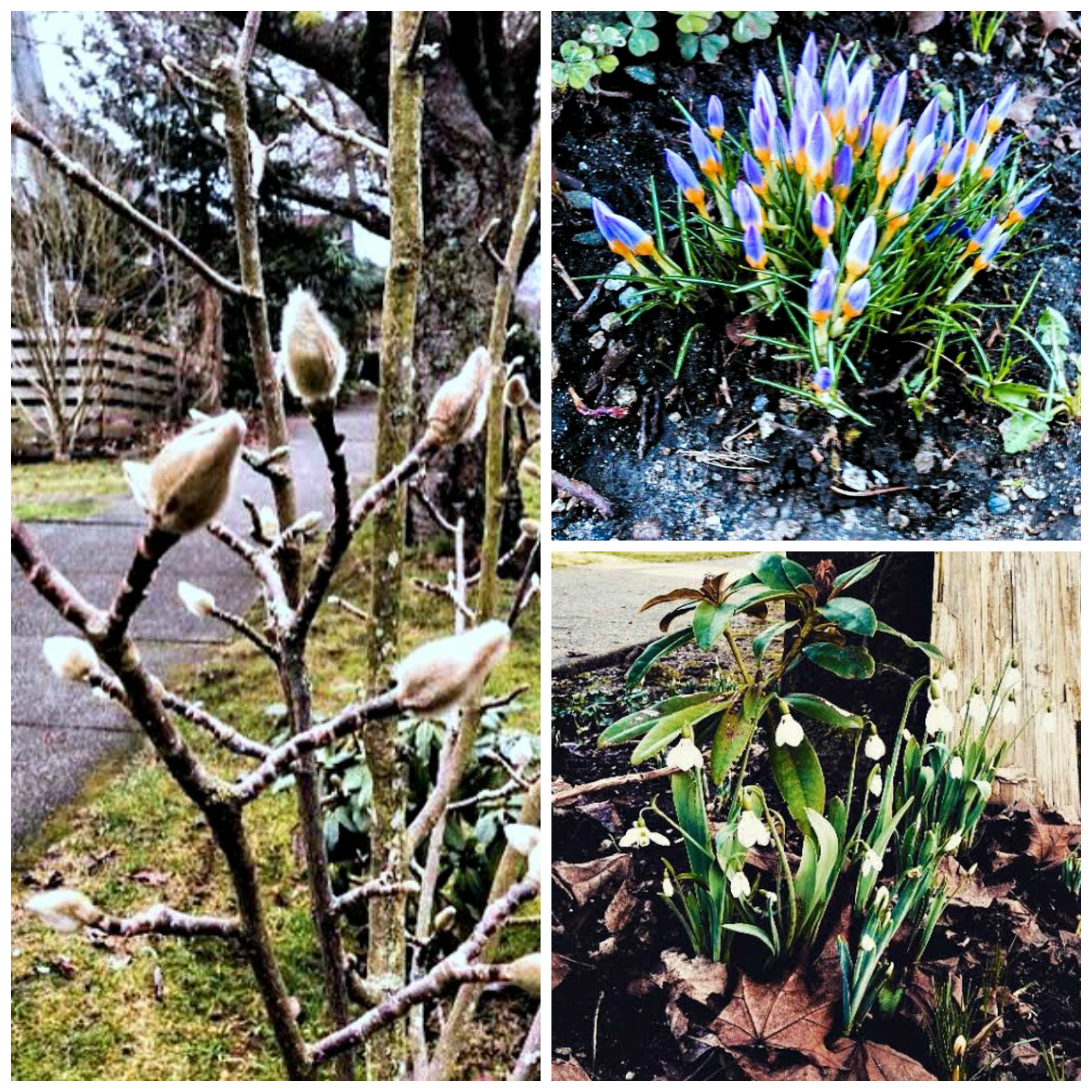
Spring is a few weeks ahead of itself here. The blooms that start popping up in February have been appearing everywhere around the neighbourhood over the last two weeks. It’s a welcome sign of renewal.

I’ve been experiencing renewal in a slightly less pleasurable way since the turn of the year. Our building was completely re-piped over the last few weeks and it was disruptive enough to throw off my blogging schedule (among other things). Half of my kitchen’s contents were piled on the other half and the rest of our place was uneasily accommodating the contents of our storage and coat closets, along with the substantial contents of a big built-in bookshelf.

There are no more holes in the wall and in their place, there are bright new coats of paint. We’re slowly organizing and putting away the things we’re keeping and working on getting rid of the rest. (One of the advantages of this sort of project is that it inspires you to purge unneeded belongings.) One of the disadvantages of work of this kind is that it saps creative energy, so we’ve been existing on some pretty utilitarian cooking lately and writing inspiration was a little hard to come by.

But that’s all over with, so I’m back in the kitchen and at my desk and will be catching up on some promised posts soon. For now, I’m glad I only committed to one Cottage Cooking Club selection this month, though all of them looked like things I’d love to try.

Curried Bubble and Squeak

Bubble and Squeak

Just before the chaos began, I made a big batch of this bubble and squeak. The traditional version has been a comfort food favourite of mine for many years, but one that I don’t often remember to make. This curried vegan version, which uses leftover cooked cabbage and potatoes, is economical and delicious. (And as a bonus, it reminded me that simply sautéed shredded cabbage is a delicious side dish all on its own.) I added chickpeas to the dish, for a little protein and fibre boost, but otherwise followed the recipe. My only quibble is that curry powder is such an imprecise description. I’m going to be playing around with curry spices as I make this dish again, until I get a combination I really love.

I also made the fennel and celeriac soup with orange zest, which was delicious, but that was when the work in our kitchen began and I neglected to get a photo. I love this sort of soup, especially when the weather is cold or rainy. Citrus and fennel have bright notes that help to make up for sunless days and celeriac has the same sort of earthy heft as potatoes, which braces against the cold. A perfect winter soup.

Now, we can move on to February. It’s a cold and dark month in many places, but here in Vancouver, it’s often full of spring.

Here are the links to the rest of the group’s posts for this month. I encourage you to check them out – you’ll meet some wonderful bloggers and get some great inspiration for vegetarian eating.

Cottage Cooking Club – December 2014

tea

One last hurrah from the year that has passed, with some deeply warming winter dishes that were a contrast from the frivolity of much of the holiday food we consumed all month. It’s the time of year for drinking endless cups of tea and thinking about healthy winter eating. These two dishes are great examples of vegan choices that will warm and nourish you.

Curried Sweet Potato Soup

Curried Sweet Potato Soup

This soup was quick and simple, perfect for a month in which I’d bitten off a little more than I could chew, while trying to fit in all the holiday fun I could manage. I usually think about Thai flavours when I use coconut milk, but this soup reminded me that it is equally wonderful with Indian spices. I skipped the yogurt (to keep it vegan) and the cilantro (because the stuff in the store was wan and unappetizing), instead dipping toast into my bowl. Kevin just ate it straight up and loved it, though he’s usually not a fan of sweet potatoes.

The sharpness of the lime and ginger, the smoothness of the coconut milk and pureed sweet potatoes, and the spiciness of the curry and chiles make for a balanced and delicious soup. There’s also a variation listed for curried red lentil soup. I think that one might be on the agenda soon.

Roasted roots

Roasted Roots With Apple and Rosemary

Roasted roots are something I always think I should make more often, so I was glad that this dish was one of the choices. I used carrots, potatoes, sweet potatoes, turnips, and parsnip, but any winter root will do. They are roasted until they are softening and starting to brown, then apple wedges and fresh rosemary are added for the final fifteen minutes or so. The results are as good as a holiday stuffing, but more substantial. It’s meant to be a side, but I ended up making my lunch from the leftovers. I won’t be forgetting about roasted roots for the rest of this winter.

I was also planning on making the Leek risotto with chestnuts, but December just got away from me and there was no more time (nor has there been since). January is going to be another hectic month and then I’m hoping there will be a little breathing room thereafter.

How is your 2015 shaping up so far?

Here are the links to the rest of the group’s posts for this month. I encourage you to check them out – you’ll meet some wonderful bloggers and get some great inspiration for vegetarian eating.

Holiday Book Reviews – Plenty More

/home/wpcom/public_html/wp-content/blogs.dir/ba0/6971813/files/2014/12/img_3269.jpg

I don’t know about you, but this is the week when my Christmas shopping always begins in earnest. So, for the second year in a row, I’m bringing you three book reviews to help you cross a few names off your list.

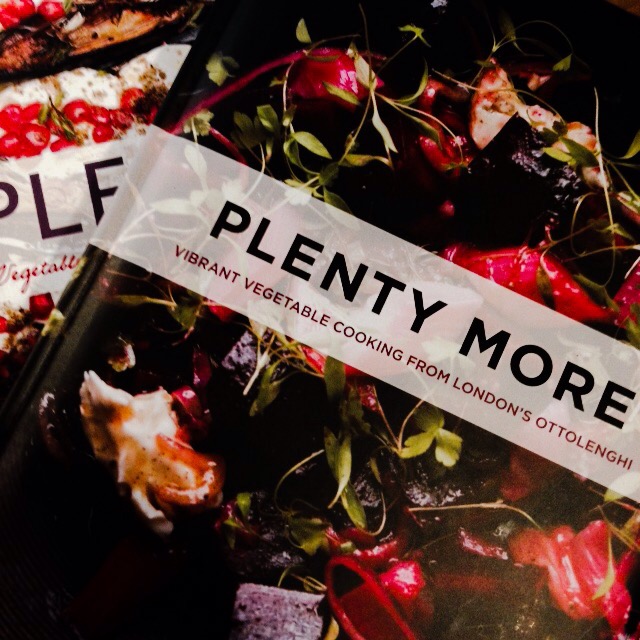
I received a review copy of Plenty More from Appetite by Random House Canada. Nevertheless, all opinions in the following post are my own.

It’s only been in the last couple of decades that North Americans have rescued vegetables from their role as either abstemious “rabbit food” or underloved sidekick. Even today, many restaurants use vegetables more as a garnish than a true part of the meal on the plate. As much as I love a good steak, I’ve always craved more than a tiny pile of over-steamed carrots to accompany them. I want vegetables to receive the same care and attention, and creativity, that is brought to the proteins and starches in my meal.

At home, there are plenty of great cookbooks that celebrate proteins, side dishes, and desserts, but until recently, scant attention has been paid to vegetables. Yotam Ottolenghi, along with writers like Deborah Madison and Barbara Kafka, has changed all that.

I’ve been a fan of Ottolenghi since I discovered his Guardian column on vegetarian cooking a number of years ago. Not only did he make vegetables the centre of attention in his dishes, but he used them as a canvas for many of the herbs and spices that were just coming to the attention of British, Australasian, and North American eaters. Middle Eastern flavours like za’atar and harissa were showing up with the proteins on restaurant menus. Ottolenghi’s column, then his cookbook Plenty, sent vegetarians and vegetable-lovers to the spice rack, too.

When I found out he was coming out with a sequel to Plenty, I was excited. My copy has seen a lot of use and I was ready for more recipes. Unlike Plenty, which is organized by vegetable type, Plenty More‘s chapters cover techniques, from tossing to roasting to baking. It’s an evolution from exploring vegetables to becoming so comfortable with them that experimentation begins.

When I got my copy of Plenty More, I took the Roasting chapter for a spin, first thing. In the cold damp of a Vancouver winter, roasted meals warm the kitchen and the belly. I started with Squash with Cardamom and Nigella Seeds, which I served with a Moroccan tagine. Then, I tried the recipe I’m sharing with you today.

One of the reasons I think people believe vegetables are boring is because we’re afraid to work with them as vigourously as we do a piece of meat. Even roasted vegetables can be a bit wan if you don’t allow them to brown and caramelize. That’s one lesson Plenty More brings home. Both the recipes I tried allow the dish to develop the smoky, jammy flavours that come only when you roast something fearlessly.

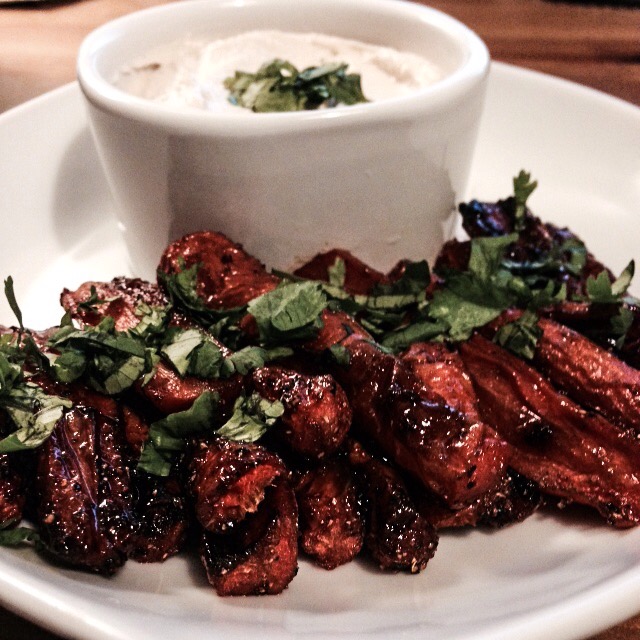
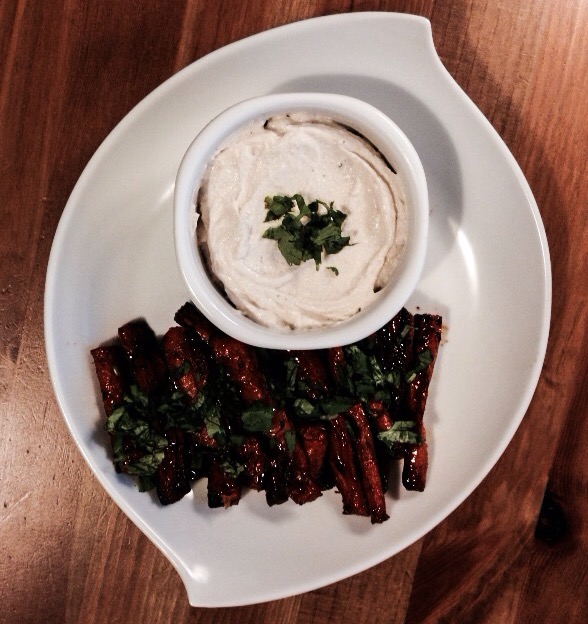
This recipe gives you perfectly tender carrots with a crust of caramelized honey and accompanies it with a fresh yogurt and tahini sauce that provides a wonderful counterpoint to the dish.

/home/wpcom/public_html/wp-content/blogs.dir/ba0/6971813/files/2014/12/img_3270.jpg

Honey-Roasted Carrots with Tahini Yogurt

Serves Four

scant 3 tbsp/60 g honey
2 tbsp olive oil
1 tbsp coriander seeds, toasted and lightly crushed
1 1/2 tsp cumin seeds, toasted and lightly crushed
3 thyme sprigs
12 large carrots, peeled and cut into 3/4 by 2 1/2-inch/2 by 6-cm batons (3 lb/1.3 kg)
1 1/2 tbsp cilantro leaves, coarsely chopped
salt and black pepper

Tahini yogurt sauce
scant 3 tbsp/40 g tahini paste
2/3 cup/130 g Greek yogurt
2 tbsp lemon juice
1 clove garlic, crushed
salt

Preheat the oven to 425°F/220°C.

Place all the ingredients for the tahini sauce in a bowl with a pinch of salt. Whisk together and set aside.

Place the honey, oil, coriander and cumin seeds, and thyme in a large bowl with 1 teaspoon salt and a good grind of black pepper. Add the carrots and mix well until coated, then spread them out on a large baking sheet and roast in the oven for 40 minutes, stirring gently once or twice, until cooked through and glazed.

Transfer the carrots to a large serving platter or individual plates. Serve warm or at room temperature, with a spoonful of sauce on top, scattered with the cilantro.

/home/wpcom/public_html/wp-content/blogs.dir/ba0/6971813/files/2014/12/img_3271.jpg

Once you’ve tried this dish, I suspect that you’ll be buying a copy for yourself as well as the person you were shopping for. I love that I can adapt most of these recipes easily for my vegan partner, while making the meat-eaters at my table forget that they’re being served a vegetarian meal.

Gift Giver’s Guide: For the vegetable lover, the curious cook, the flavour-seeker, and anyone who needs convincing that vegetables can be the star of the show.

Come back Tuesday for a review of a book that will fill your holiday sweets table with goodness.

FFWD – Orange & Olive Salad and Lamb & Dried Apricot Tagine

orange and olive salad

When it comes to the kitchen, December is a weird mix of ambition and ease for me. I make long lists of favourite dishes to make, along with new ones to try that usually involve a new skill to master. There are also many quick and easy meals, most easily forgotten, to accommodate all the rush and bustle (and more complicated works in progress) the holidays bring.

So, I was extra grateful to Santa’s Dorista elves for setting a schedule full of simple, delicious recipes. It’s been a good reminder that quick and easy doesn’t have to mean forgettable.

Orange & Olive Salad

Which brings me to this salad, almost as if I’d planned it. You can see how pretty it is in the photo at the top of the post and you can probably guess how easy it was to put together, too. What the photo won’t tell you is how delicious it was. The idea of orange, olive, and onion in a salad was a bit off-putting for a number of the French Fridays crew this week. But, one by one, almost everybody started posting that they’d loved it.

So, by the time I got around to making it this afternoon, I was pretty confident it was going to be good. Kevin, however, doesn’t get the benefit of Dorista social media chatter, so he was very skeptical when I set it down in front of him. He’s a good sport though. After assuring him that soaking the thinly sliced onion in ice water had rendered it mild and crispy, he dug in. And then ate the whole plateful, making it a hit for both of us. We’ll be having this again and I can hardly wait to introduce it to others. It’s an elegant, surprising dish that would have gone untried if it hadn’t been for this cooking group.

Tagine

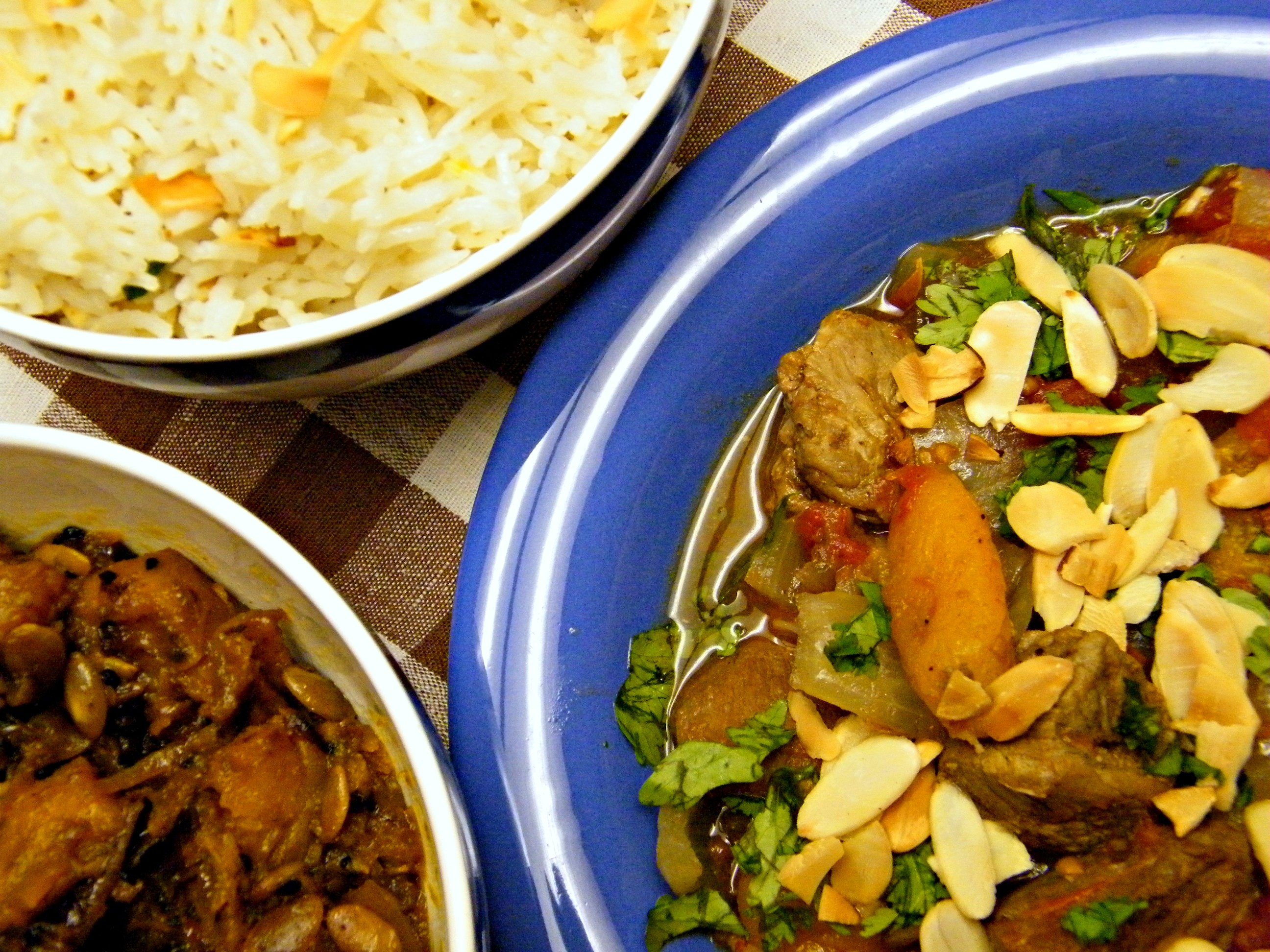
Lamb & Dried Apricot Tagine

This dish was never in danger of going untried. I’ve loved Moroccan flavours since my university days, when I discovered the recipe for Moroccan Chicken Stew in the copy of Anne Lindsay’s Lighthearted Everyday Cooking that was a moving-out-on-my-own gift from my mother. I did make it a little easier, though, by cooking it in the slow cooker overnight, then letting it rest in the fridge until dinnertime. When I heated it up, I couldn’t believe that it was even more fragrant than when it had come out of the slow cooker. I served it with saffron rice and Ottolenghi’s Roasted Squash with Cardamom and Nigella, both headily aromatic dishes themselves. It made for a fantastic meal.

The next ten days are going to see a lot of cooking and baking, family visits and celebrations. But, if you have time, drop by over the weekend – I have three last minute shopper’s cookbook reviews for you, from Saturday through Monday. And a happy Chanukah to everyone who is in the midst of celebrating it.

Find links to the rest of the French Fridays crew’s posts on this week’s recipe here: Orange & Olive Salad. Then, see how everyone fared with the Lamb & Dried Apricot Tagine.

Kevin’s Vegan Hash

/home/wpcom/public_html/wp-content/blogs.dir/ba0/6971813/files/2014/12/img_3244.jpg

The Little Potato Company provided me with the potatoes used in this recipe. The recipe and all opinions expressed in the post are my own.

When I was given the opportunity to try The Little Potato Company’s creamer potatoes, I was happy to participate. The company started in Alberta, but now has farms across Canada and the US. They produce creamer potatoes exclusively, which are bred to stay small at maturity, with a thin, tender skin. I was also happy to learn their potatoes are non-GMO.

I spent the last few weeks boiling, baking, frying, and mashing the samples of the two varieties they sent me and I’ve been pleased with them in every application.

Last week, I shared a very meat-forward recipe using Blushing Belles. This week, I’ve got a vegan recipe for you, which uses their Yellow Fingerlings.

My partner, Kevin, wanted me to recreate the kind of breakfast that he’s had at the very few restaurants in town that serve gluten-free, vegan meals. I came up with this hash and he liked it so much, he let me name it after him.

Ingredients

Kevin’s Vegan Hash

Serves 2 generously as a main, 4 as a side

2-3 tbsp olive oil
1 small onion, finely chopped
2 large cloves of garlic, minced
2 small bell peppers, cubed
6 button mushrooms, cubed
12 Little Potato Company Yellow Fingerlings Creamer Potatoes, cubed
175 g extra firm organic tofu, cubed
a pinch of cayenne pepper
2 sage leaves, crumbled (or ½ tsp dried sage)
1 sprig fresh rosemary (or 1 tsp dried rosemary)
¼ tsp smoked paprika
½ cup Daiya Cheddar Style Shreds
salt and pepper

In a large, non-stick skillet or cast iron pan, heat 1 tablespoon of the oil over medium-low heat. Add the onions and salt generously. Fry, stirring occasionally, until the onions soften and start to brown. Add the garlic and turn down the heat to low. Continue to cook until the garlic has softened and the onions are completely browned. Season with pepper (and more salt if needed). Scrape into a bowl and set aside.

Add a little more oil, if needed, then heat the pan to medium-low and add the peppers. Cook until the peppers are soft and a little browned, stirring occasionally, adding a pinch of cayenne pepper when they’re nearly done. Season with salt and pepper, scrape into a bowl and set aside.

Add a little more oil, if needed, then heat the pan to medium-low and add the mushrooms, stirring occasionally. When they begin to release moisture, stir in the sage. When the moisture is fully reabsorbed, season with salt and pepper, scrape into a bowl and set aside.

Add a tablespoon of oil, heat the pan to medium-low and add the potatoes. Season generously with salt and pepper, add the rosemary sprig (or stir in the dried rosemary). Cook, stirring occasionally, until a fork pierces the potato cubes easily. If the potatoes are not fully browned, raise the heat to medium and continue cooking until they are. Check to see if more salt and pepper is needed, discard the rosemary sprig if you used it, then scrape into a bowl and set aside.

Add a little more oil, if needed, then heat the pan to medium-low. Add the tofu and dust the cubes with the smoked paprika, frying until the cubes are cooked through and well browned. Season with salt and pepper, then add the rest of the ingredients back into the pan, stirring until everything is well mixed and heated through.

Take the pan off the heat and add the Daiya shreds, stirring until they are well distributed and melted.

Check for salt and pepper, then serve immediately.

You can visit The Little Potato Company’s website for more recipes.

Cottage Cooking Club – November 2014

IMG_3052.JPG

On this last day of November, it really feels like the holidays are approaching, with the chill in the air – there’s even snow on the ground. It’s the time of year we associate with soups and stews, but it’s also time to enjoy as much of this year’s harvest as possible, before the long wait for spring. This month’s Cottage Cooking Club selections suited this late harvest, early winter season perfectly. I made four of the selections, but you can click the link at the bottom of the post to see the rest.

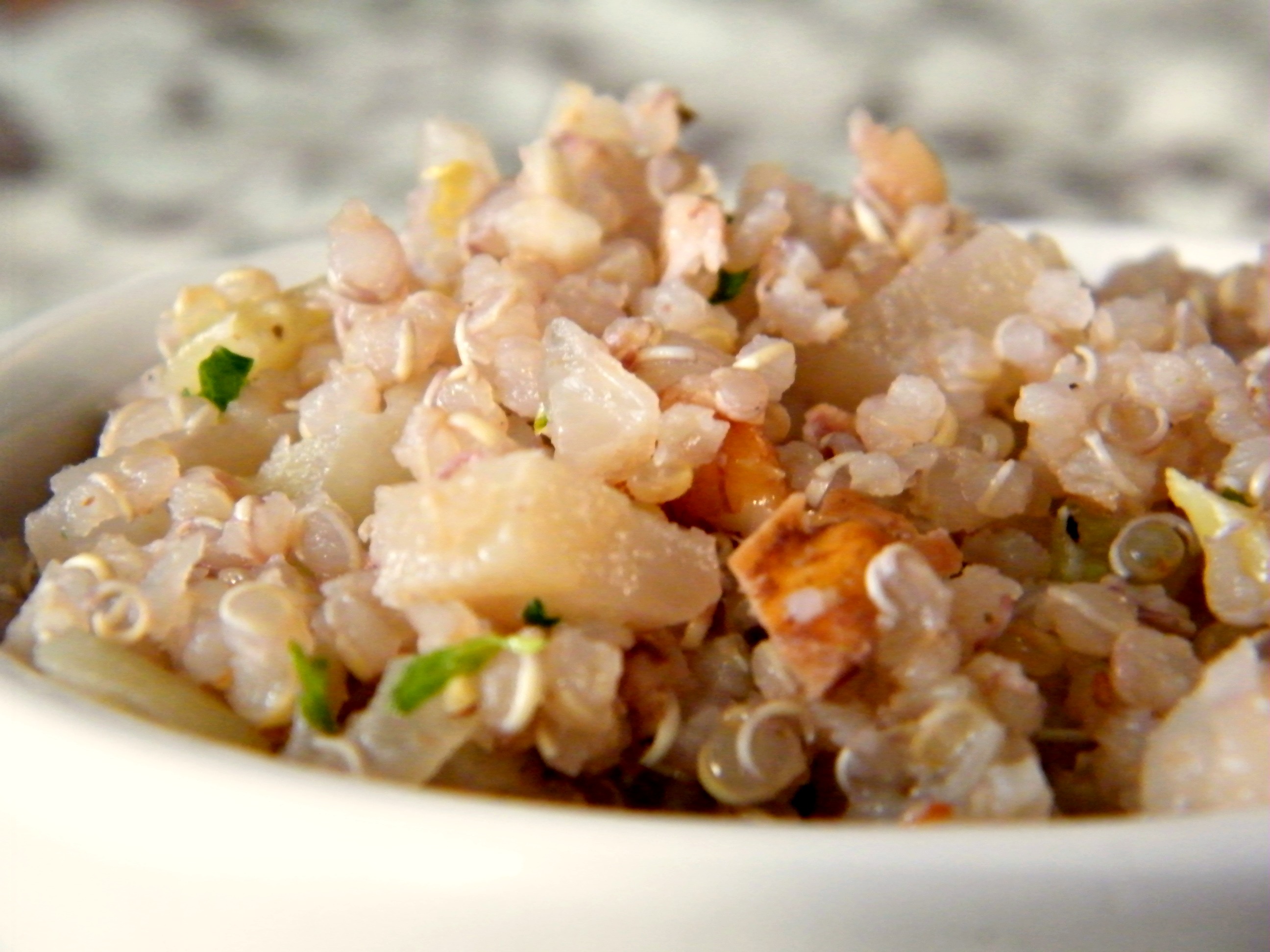
Quinoa Salad with Herbs and Walnuts

Salad

The star of this salad isn’t really the grain, in my opinion, which is a good thing, since I substituted quinoa for the Israeli couscous called for in the recipe. I think it’s the fennel that makes this salad. Its crunchy brightness makes this salad a perfect antidote for the winter rains we endured for much of this month. With toasted nuts and spices, handfuls of herbs, and a splash of lemon, this is going to be a lunchbox favourite for us all winter long.

Belgian Endive, Pears, and Salty-Sweet Roasted Almonds

IMG_3051.JPG

This simple, pretty salad could serve as an appetizer at a dinner party, but I like it better as a weekend snack. It’s got the same kind of crunchy freshness as the couscous salad, but the flavours don’t blend as much as serve as counterpoints to one another. If you’ve got the vinaigrette made up in the fridge, it’s easy enough to put together and addictive enough that you might snack yourself right out of needing to worry about dinner.

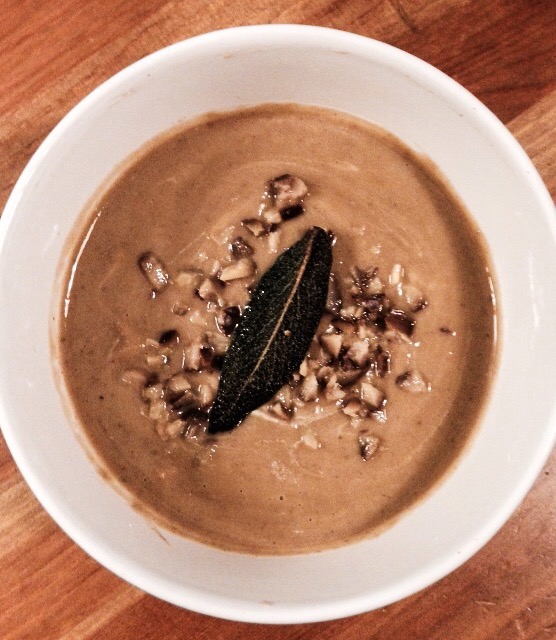
Chestnut and Sage Soup

<a href="https://onewetfoot.ca/wp-content/uploads/2014/11/img_3050.jpg"&gt;IMG_3050.JPG

I wasn’t sure I should try this one, since the Chestnut-Pear Soup from Around My French Table was such a success for us, but I’m glad I did. I think I like the flavour combination of chestnut and sage best of the two and that’s saying something, because I loved the chestnut-pear soup. I stirred a spoonful of sour cream into my bowl, but I’d made the soup itself vegan and it was really lovely without any dairy at all.

Right now, it’s time for fresh chestnuts in the market, so I’ll be taking advantage of those while I can, but I also think that vacuum-packed chestnuts are going to become a staple in my pantry, so I can enjoy chestnut soup year-round.

Swede Speltotto – Make that Rutabaga Risotto

IMG_3049.JPG

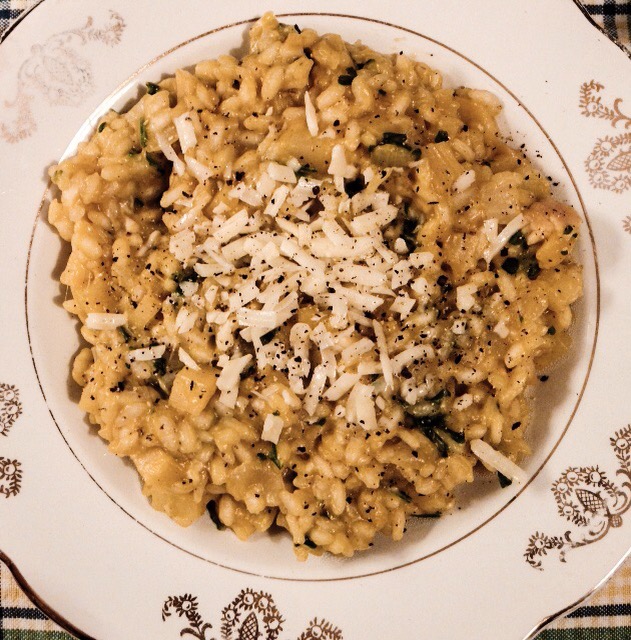
This is the only recipe this month that wasn’t entirely a success for us, simply because the rutabaga was a little bitter. I made risotto, instead of using spelt, so that I could share this meal with Kevin (since he was in a lapsed vegan, cheese-eating phase). I added a couple of Gruyère rinds along with the rutabaga and Arborio rice and used only vegetable stock for the liquid. I finished the risotto with Parmesan and parsley and it was delicious. It was a bit of a letdown that the rutabaga didn’t measure up. I think I’d substitute another root vegetable in its place next time, or roast the rutabaga cubes and add them later, to give them some caramelization and sweetness.

November was a busy, eventful month and December promises to be even more so. There will be a lot going on the blog, but I’m looking forward to seeing what our Cottage Cooking Club selections will be, because I think a little vegetarian goodness will serve as a nice antidote to the holiday feasting that’s fast approaching.

Intrigued by this month’s recipes? Buy the book and join us.

Here are the links to the rest of the group’s posts for this month. I encourage you to check them out – you’ll meet some wonderful bloggers and get some great inspiration for vegetarian eating.