Dorie Greenspan’s Double-Strawberry and Rose Shortcakes

A shortcake

I was provided with a gift certificate by Driscoll’s to purchase ingredients for this recipe and I received a copy of Baking Chez Moi for participating in the Google+ chat. However, all opinions are my own.

For me, the beginning of summer is marked by the beginning of strawberry season. And the best way to celebrate the start of summer is strawberry shortcake. No wonder June 14th has been declared National Strawberry Shortcake Day. (It might be an American holiday, but I’m choosing to apply it to Canadians, too.)

One of the things I love best about strawberry shortcake is that it can be dressed up or down for any occasion. It’s as at home at a family picnic as it is a formal tea. It’s also a dessert that comes in many incarnations, causing arguments amongst those who champion the sponge cake variety and those who staunchly support the sweet biscuit version. Although I’ll gladly accept a plate of sponge cake smothered in whipped cream and berries, it’s the biscuit version that I think of as the real McCoy.

So, I was excited to be invited to join a Google + Hangout on Air a few weeks ago, to join some fellow bloggers to talk about just that sort of strawberry shortcake with baker extraordinaire Dorie Greenspan. If you’re a regular reader here, you’ll know that I’m a big fan of her recipes and have been working through her last cookbook, Around My French Table, with a great group of bloggers for French Fridays with Dorie. I knew the recipe would be stellar, but I was also looking forward to the opportunity to ask Dorie for tips and tricks for making this shortcake as good as could be.

Dorie told us that she invented this recipe after learning that strawberries are closely related to roses. She also enjoys adding an element of surprise to her desserts, so the subtle flavour of rose and the two textures of the strawberries in this recipe add interest, elegance, and a little playfulness to these shortcakes. I also loved the hint of lemon in the biscuits.

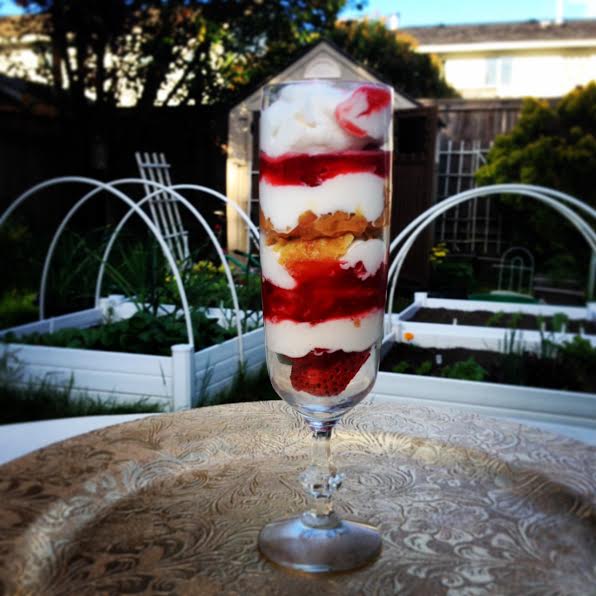
My question for her was whether or not the tops of the biscuits, and the less-than-perfect ones, could be used for a trifle-like dessert. She thought that would work well, layered in a jar, with each layer of biscuit soaked in the juices from the compote. I did a little riff on this idea when I made the shortcakes, layering biscuits, berries, compote, and whipped cream into champagne glasses for a pre-dinner parfait. I even added a layer of rhubarb curd to the middle. It was the best cook’s treat ever.
Parfaits

Here is some more of the advice she shared with us:

  • Rubbing the lemon zest into the sugar releases its oils and helps to distribute the zest’s flavour and aroma throughout the dough.
  • Buttermilk acts with baking soda to make lighter biscuits.
  • Never be forceful with biscuit dough until you begin cutting it. Gently using your hands to mix the ingredients can keep you from overworking the dough, but forceful cutting of the biscuits maintains the layers of butter in the dough that help them rise – use a straight down motion, then twist.
  • Other flavours that complement strawberries are vanilla, black pepper, citrus, or crushed pink peppercorns. Any of these could be used in place of the rose extract.
  • Add a bit of sour cream to whipped cream for an extra layer of flavour and some added stability for piping.


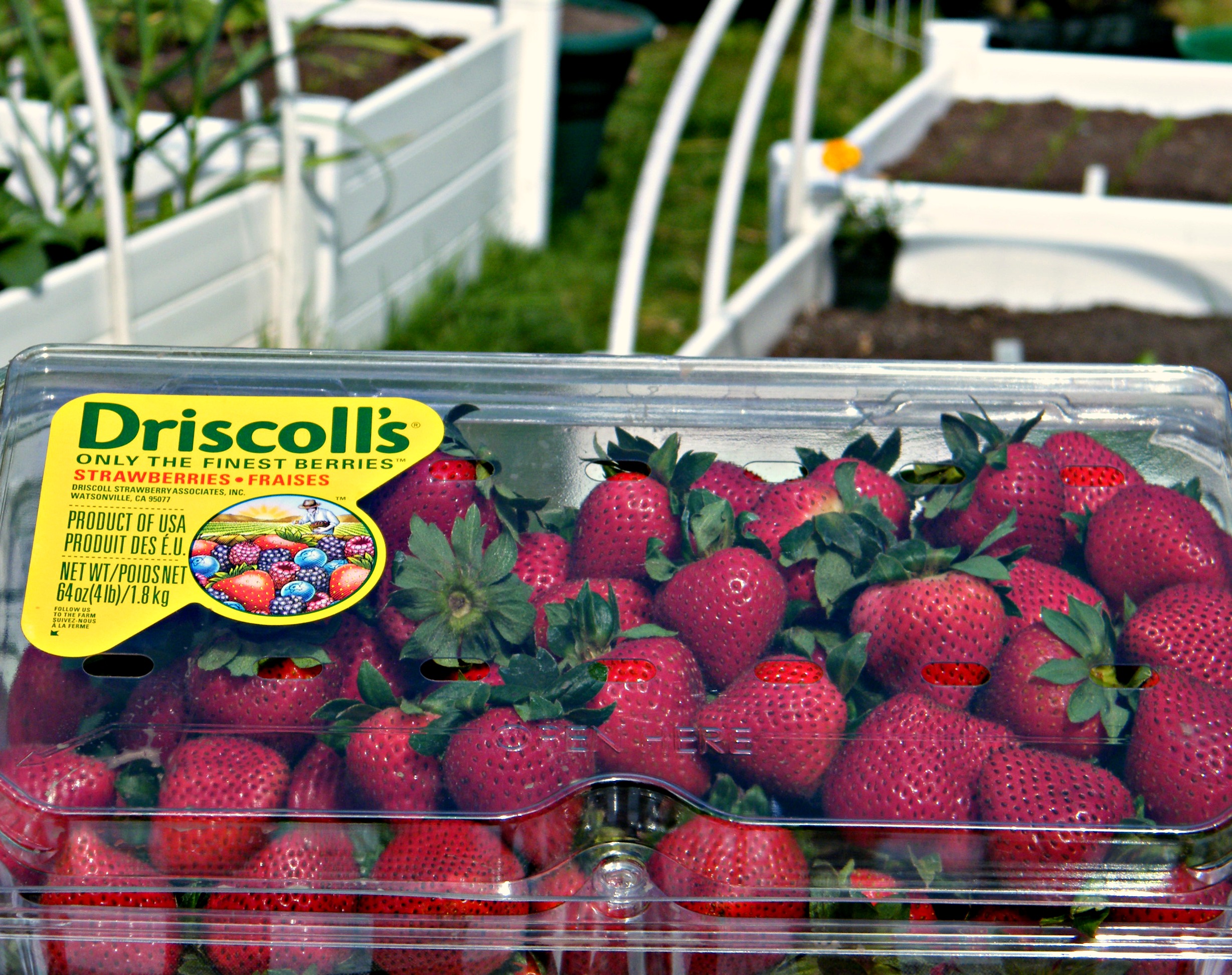
Driscoll’s, the sponsor for our Google + Hangout, kindly provided us with gift certificates to purchase the ingredients for this recipe. Their berries were large, ripe, and incredibly sweet, which sets them apart from most supermarket berries. I would happily buy them again.
Driscolls

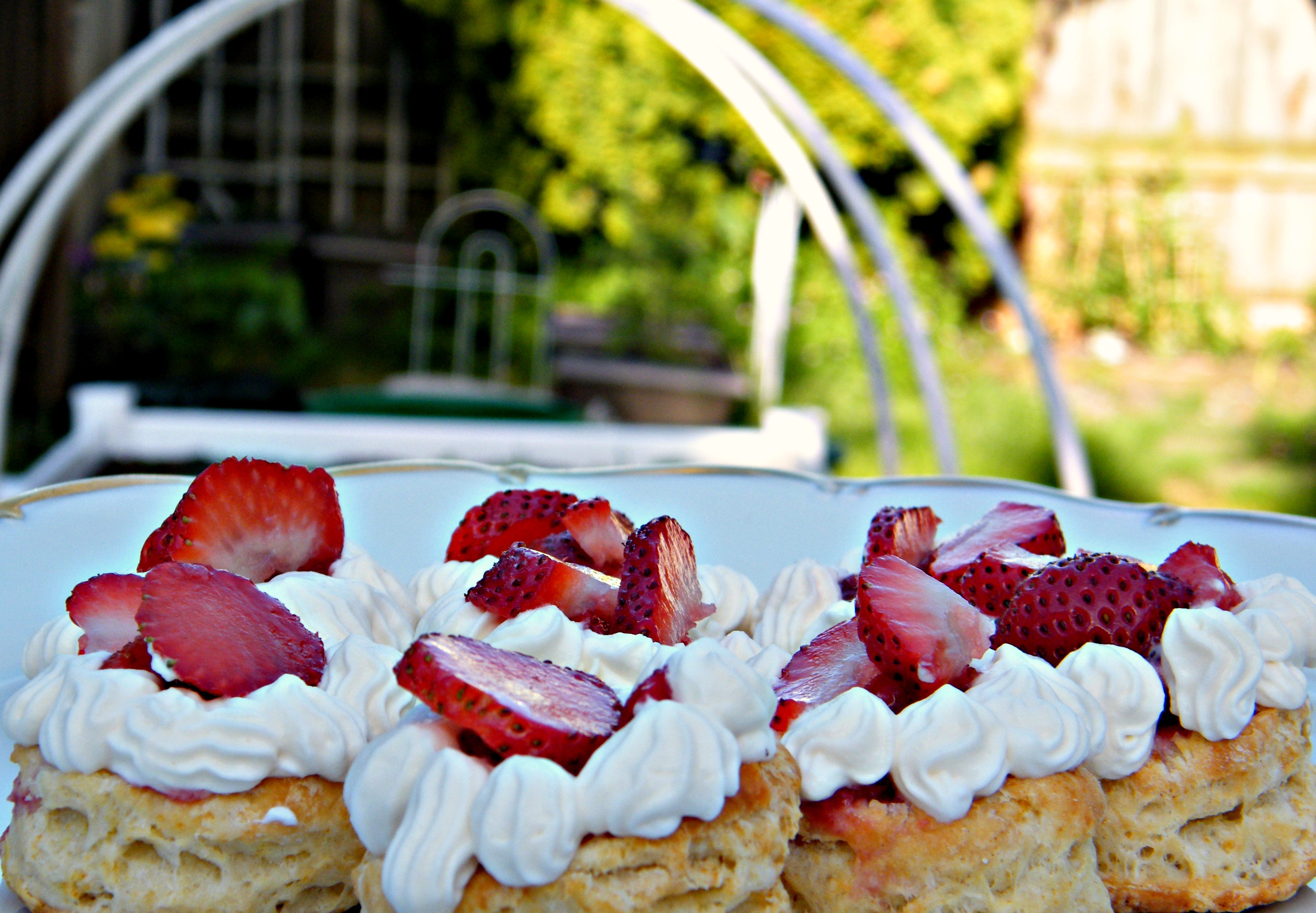
I was quite pleased with how this recipe turned out for me, with Dorie’s tips in hand. My shortcakes rose beautifully. I followed the recipe exactly, though my shortcakes were without the candied roses. My roses are only now starting to bloom, so I will be trying my hand at the candied roses soon. Because, of course, I will be making this recipe again. Dorie’s shortcakes were a huge hit with my family.
Plateful of shortcakes

You can find the recipe on the Driscoll’s website. They’ve also been kind enough to allow me to share it here.

Dorie Greenspan’s Double-Strawberry and Rose Shortcakes

Shared with permission from Driscoll’s Berries and Dorie Greenspan

INGREDIENTS

Rose petal decoration
3 unsprayed roses
1-2 very fresh organic egg whites
granulated sugar
(or store-bought candied rose petals)
Strawberry compote
3/4 pound (about 3 cups) Driscoll’s Strawberries, hulled
1 1/2 tablespoons sugar
3/4 teaspoon pure rose extract

Lemon-buttermilk biscuits
1 1/2 tablespoons sugar (plus more for sprinkling)
freshly grated zest of 1 lemon
2 cups all-purpose flour (plus more for dusting)
1 tablespoon baking powder
1/2 teaspoon fine sea salt
1/4 teaspoon baking soda
6 tablespoons (3/4 stick) cold unsalted butter, cut into
small cubes
3/4 cup cold buttermilk

Whipped Cream
1 cup very cold heavy cream
2 tablespoons confectioners’ sugar, sifted
1 teaspoon pure vanilla extract
3/4 teaspoon pure rose extract
1 tablespoon cold sour cream, optional
red or pink food coloring

Topping
1/2 – 3/4 pound (about 2 to 3 cups) Driscoll’s Strawberries,
hulled

DIRECTIONS

Rose Petal Decoration
Several hours ahead or the day before, separate the rose petals, rinse them quickly in cold water and pat them dry. Put one egg white in a small bowl and whisk until it’s foamy. (You may or may not need the second white.) Put the sugar in another small bowl and place a sheet of parchment paper or a silicone baking mat on the counter. One at a time, dip a petal into the white and let the excess drip back into the bowl. Drag the petal through the sugar to coat both sides very lightly. Dry the petals on the paper or mat in a cool, non-humid place for at least 6 hours or for as long as overnight.

Strawberry Compote
Coarsely chop the berries and toss them into a small saucepan with the sugar. Put the pan over medium heat and cook, stirring, for 5 to 8 minutes, or until the juices are slightly thickened and syrupy. Scrape the berries and syrup into a bowl, stir in the rose extract and cool to room temperature. (You can make the compote up to 3 days ahead and keep it covered in the refrigerator.)

Lemon-Buttermilk Biscuits
Center a rack in the oven and preheat the oven to 425°F. Line a baking sheet with parchment paper or a silicone baking mat.

Put the sugar and lemon zest in a large bowl and, working with your fingertips, rub the ingredients together until the sugar is moist and fragrant. Add the rest of the dry ingredients to the bowl and whisk to combine. Drop in the pieces of cold butter and, again using your fingertips, crush, rub and blend the butter in. You’ll have flakes of butter and small pieces and this is just right. Pour the cold buttermilk over the mixture, switch to a fork and toss and stir everything together until the milk is absorbed – your dough might look like curds, but that’s fine. Don’t stir too much, too vigorously or for too long and if there are a few dry spots in the bottom of the bowl, ignore them. Reach into the bowl and knead the dough gently, folding it over on itself and turning it over 6 to 8 times.

Dust a work surface lightly with flour, turn out the dough and, still using your hands, pat the dough out until it is 1/2 inch thick. (The thickness is what’s important here.) Using a high-sided 2 inch cutter, cut out biscuits and place them on the baking sheet. Pat the scraps together until they’re 1/2 inch thick and cut out as many more biscuits as you can. (The leftover dough can be cut into biscuits, but they won’t rise as high or as evenly as the others – you can keep them as your baker’s treat). Sprinkle tops with sugar.

Bake for 15 to 18 minutes, or until the biscuits have risen gloriously and their tops and bottoms are golden brown. Transfer the baking sheet to a cooling rack and allow the biscuits to cool until they reach room temperature. (The biscuits can be made up to 6 hours ahead; keep them uncovered at room temperature.)

Whipped Cream
Working with an electric mixer, beat the cream just until it mounds softly. Still beating, add the sugar, followed by the vanilla and rose extracts. When the cream is fully whipped and holds firm peaks, quickly beat in the sour cream, if you’re using it. To tint the cream, beat in just one drop of coloring; continue adding coloring a tiny drop at a time until you get the shade of pink you want. (The whipped cream can be made up to 3 hours ahead and kept tightly covered in the refrigerator; whisk a couple of times before using.)

Topping
Just before you’re ready to put the shortcakes together, stand the berries up and, using a thin-bladed knife, cut each berry into 4 or 5 thin slices.

Assembly
If you’d like to pipe the whipped cream, either spoon the cream into a pastry bag fitted with an open star or plain tip, or spoon the cream into a zipper-lock plastic bag and snip off a corner. Alternatively, you can simply spoon on the cream.

Slice off the top of the biscuit to create an even surface for piping the cream. Save the tops to nibble on later. Put a teaspoonful of strawberry compote and syrup in the center of each biscuit. Pipe (or spoon) a circle of whipped cream around the compote, leaving a bit of compote uncovered. Finish each shortcake by pressing two or three slices of strawberry together, fanning them out a little and placing them, broad side down, in the center of each cake. Add a rose petal for the finishing touch. (If you have any extra compote and/or cream, cover and keep in the refrigerator to enjoy at another time.)

Arrange the shortcakes on a platter. Scatter the remaining rose petals around the platter and serve immediately.
Seasonal Produce Anxiety

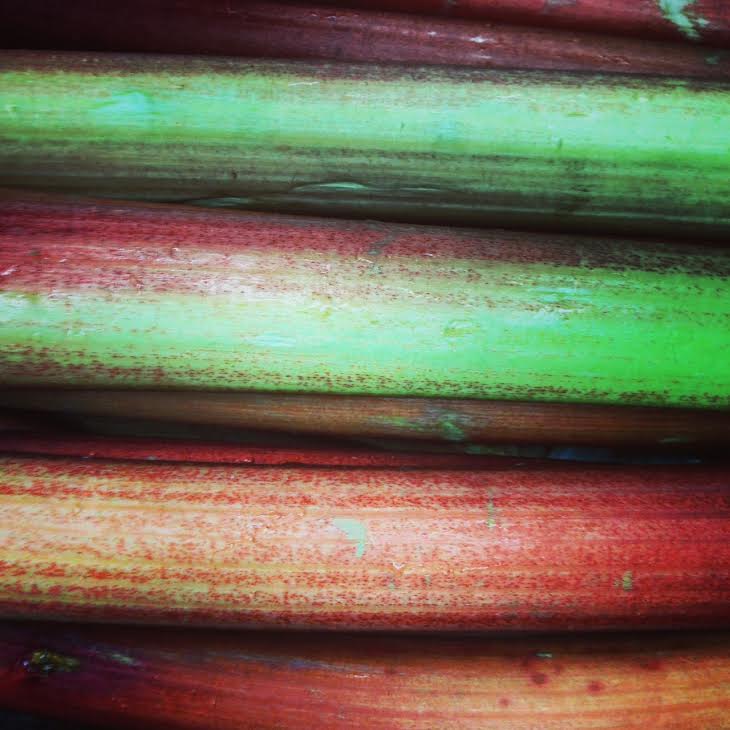
Rhubarb

I don’t know about you, but I don’t spend the winter worrying if I’ve made the best use I could of storage vegetables. As good as they are, the selection is small enough and their shelf life is long enough that I’m ready to move on as soon as spring arrives.

That’s when my anxiety begins, from peas to tomatoes, from rhubarb to peaches, warm weather produce has its short turn on the stage before retreating for another year. Every year, I make grand plans to use each of those fruits and vegetables in multiple recipes and every year my accomplishment consists of not missing them entirely. Bonus points for freezing a bag or two along the way.

I’ve meditated – I know that being present in each moment is a healthier path, but I can’t help feeling a growing sense of panic when I realize that one of my favourites (or that one I keep saying I’m going to try, year after year) is disappearing from the markets. I also seem to manage to make the recipes I’ve loved since childhood more often than experiment with the masses of new ones I bookmark each year.

This year, I’m batting above my average (at least, I think that’s what I’m doing – baseball metaphors are not my forte). One of my mother’s friends gave her an enormous bag of rhubarb and I’m crossing a few of those new concoctions off my list.

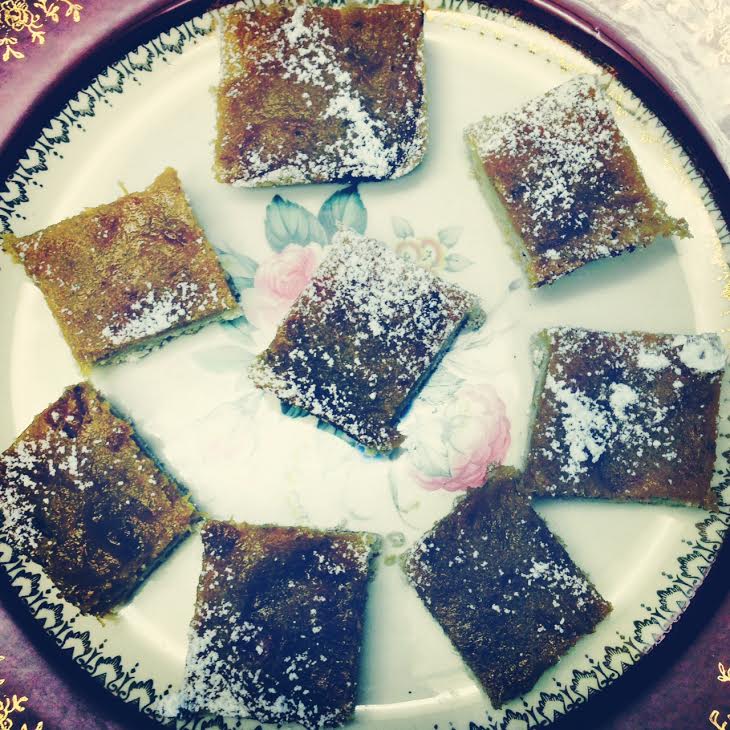
Shortbread

My favourite so far is rhubarb curd. I used Lara Ferroni‘s recipe and went ahead and made the rhubarb bars, too. The shortbread topped with baked curd is heavenly, though I think that next time I’ll have a little beet juice ready when I make the curd, to punch up the colour. The bars only used half the curd, which I’m reserving for some parfaits that are going to show up here soon. If you make this, I recommend baking a visitandine at the same time, as it uses up four egg whites. If you have any ideas for the other two, let me know.

There is still quite a bit of rhubarb left, so there’s definitely some roasted rhubarb and a strawberry-rhubarb crisp in the offing. I might try one of the savoury rhubarb recipes I’ve been eyeing, or I might revisit this recipe or this one. With a bit saved in the freezer, I’d say I’m actually making good use of rhubarb this year.

Now, if I can just stop thinking about all the things I meant to do with spring peas or the fact that strawberry season has arrived.

Green As Spring Venison Stew – A French Fridays Catch Up

Stew

Every eater has limits. It might be something simple, like avoiding raisins in other foods (unless it’s chocolate). It might be something broader, like avoiding whole categories of food for health or ethical reasons.

Though I have a few mild food sensitivities, I don’t talk about them much.They’re boring, annoying, and better kept to myself. I do talk about eating gluten-free, since that’s an absolute necessity for my partner. I’ve also talked a little bit about his movement toward eating vegan or vegetarian most of the time, since that can affect what I post for French Fridays. Some dishes, like the one I’m posting about today, have to wait until I’m cooking for meat-eaters.

Most of my decisions about what I cook and eat are based on some broad parameters, that I adjust as necessary. I try to eat fresh, local, sustainable, in season, and organic as often as I can. I try to shop at locally-owned places more often than I do at large chains. I try to eat meat less often than I eat vegetarian or vegan.

There are always exceptions, of course. There are national brands that I trust. Sometimes I shop for the items I need for a particular recipe, rather than cooking what’s in season. Sometimes a frozen vegetarian pot pie is the best option for a busy night.

There are also a few things I never budge on. Veal is one of them. I just don’t feel right about eating it. So, I don’t. Instead, I usually substitute wild venison wherever it’s called for. I’m lucky enough to have access to wild meat from hunters I trust. That said, I know that my choice is an arbitrary one in a food system that’s often broken. I’m sure that I’m ignoring other food choices I make that are equivalent to veal’s problems. I certainly wouldn’t condemn anyone else for their choices around eating. There are far too many factors that govern where each person’s choices and limits lie.

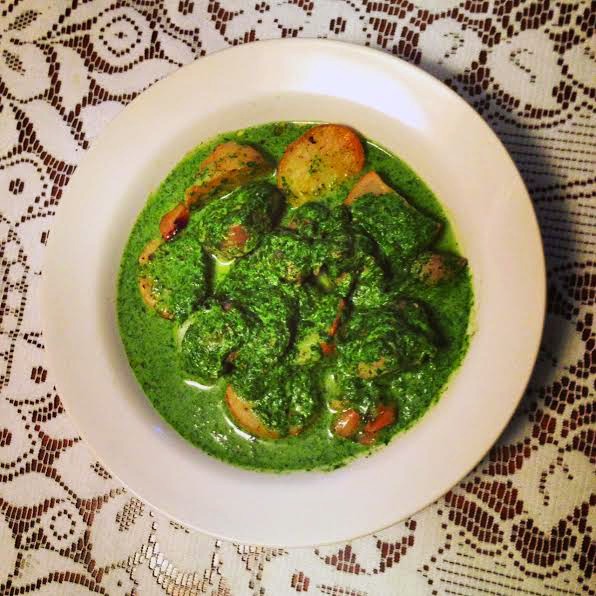
At any rate, this recipe is a winner whatever you choose to feature as your protein. It’s also at least as full of healthy vegetables as it is protein. The secret is in the sauce. The usual aromatics are cooked with the meat, but at the end, cups and cups of fresh arugula, spinach, dill, parsley, and tarragon are added to the broth, along with a little crème fraîche (or in my case, some sour cream I already had in the refrigerator).

The result is a vibrant green sauce that tastes as much of the greens and herbs as it does the broth. We had the stew over potatoes I’d roasted with garlic and rosemary the first night. The next night, the leftover sauce topped simply roasted chicken thighs, with a salad on the side. There was still a little sauce left over after that, so it went into the freezer to be used to flavour a soup some time.

I could see this sauce as an accompaniment for any number of proteins or poured over all sorts of roasted vegetables. It’s one I’m going to come back to over and over again, I can tell. Without reservation.

You can find out what the rest of the French Fridays crew got up to this week here: Smoked Salmon Waffles And here is the link to the rest of the group’s thoughts about this recipe: Green As Spring Veal Stew

Artistic Exploration – A Round Up of Public Art in Vancouver

Chair

Public art can be controversial or beloved, corporate or community-driven. At its best, it focuses the viewer’s attention on the space it occupies, contextualizing it in a new way. Now that spring is turning into summer, it’s the perfect time to explore the city, looking for these interventions along the way.

Here are a few places to start you off:

The City of Vancouver’s map of public art installations

Our City. Our Art.

Vancouver Biennale

100 in 1 Day

Tight City

The Year of Reconciliation art project

The Dude Chilling Art Exchange

Now, tell me what I’ve missed in Vancouver if you live here, or if you don’t, let me know what the public art scene is like where you live.

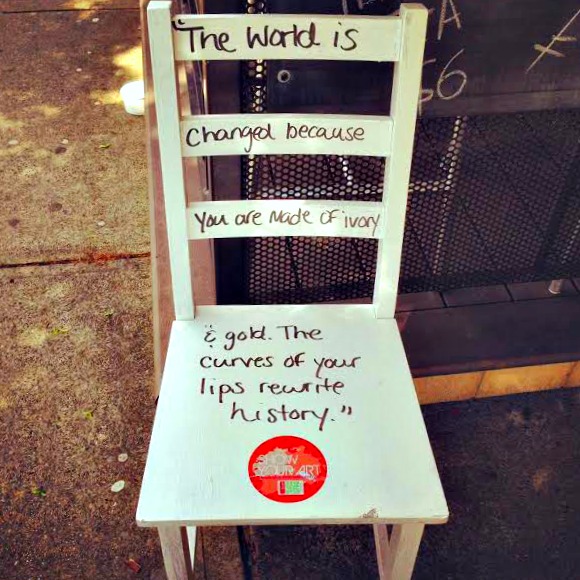
The chair in the photo at the top of the post was part of the Chair Project YVR project, which took place this spring.

FFWD – Baby Bok Choy, Sugar Snaps, and Garlic en Papillote

En Papillote

We’re having a lot of conversations in our house, lately, about what constitutes healthy eating. Kevin is convinced that going vegan is his path, but there has been considerable backsliding. My position is that moderation, in moderation, is the ticket to a well-rounded diet.

This week’s French Fridays recipe is vegan, but it’s also a side dish. I could have continued down that road, but instead, I served it with one of our favourites from Around My French Table, Roasted Salmon and Lentils. All in all, it was a very healthy meal. Low-fat, high fibre, and probably many other buzzwords besides. What stood out for me was the flavour. Like the salmon, these vegetables are simply seasoned, but surprisingly flavourful. The title gives you the recipe, but it’s the subtle addition of fresh mint and orange zest that really brings this dish together. It’s also a versatile dish, which worked as well with the French flavours of the salmon and lentils as it would with Asian cuisine.

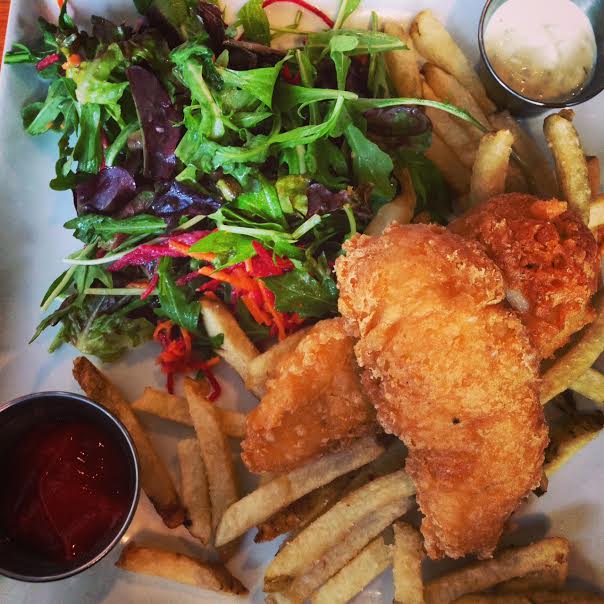
For now, we’ve agreed that increasing the number of meatless meals over time is probably Kevin’s path to success, but tomorrow will definitely be a meatless day. We went out for fish and chips with my parents yesterday and had fish again today. Whatever we end up having tomorrow, there’s still lots of bok choy and snap peas in the refrigerator, so there will be more en papillote cooking involved.

Fish and Chips

You can find many other blogged descriptions of this FFWD recipe here: Baby Bok Choy, Sugar Snaps, and Garlic en Papillote

Seedtopia

Seeds

My gardening goals for this year are concentrated on learning more about seed saving and increasing the variety of foods I grow in my vegetable garden. I’d also like to keep extending my perennial flower collection across seasons, eventually having colour in the garden year-round.

I’ll be replacing a few plants, like the thyme that died mysteriously last summer and perhaps building a vertical squash structure if I’m feeling ambitious. Mostly, though, I’m going to try and take advantage of some of the workshops and seed swaps that are happening in the next few weeks. I think it would be great to connect with some Vancouver gardeners.

Here are some of the things on offer around here this growing season:

Garden Basics

Village Vancouver offers gardening workshops across the city

VanDusen Botanical Garden has a range of courses for the budding horticulturalist

City of Vancouver workshops are affordable, basic skill-builders

The World in a Garden has great workshops throughout the season

Farm Folk City Folk‘s Knowledge Pantry is full of wonderful resources

A little farther afield, North Van has GardenSmart Workshops

There are a number of neighbourhood-specific workshops that are tied to food security and food justice: Grandview Woodland Food Connection, Renfrew-Collingwood Food Security Institute, the Edible Garden Project, and Cedar Cottage’s Seedy Saturday and Planting Workshop are a few examples

Victory Gardens’ workshops are well-regarded

Getting the Goods

Treekeepers provides $10 fruit and decorative trees to Vancouver residents

West Coast Seeds is a great source for organic seeds and their website is full of information – they also offer workshops

Salt Spring Seeds focuses on heritage and heirloom seeds

Sharing the Wealth

Plant a Row – Grow a Row

Vancouver Fruit Tree Project

Sharing Backyards

Advanced Adventures

City Farm Boy is for the ambitious urban farmer

Vancouver Urban Farming Society is a great resource if you want to make growing your business

Beekeeping courses

UBC’s Landscape & Garden Design Programs

Extending the Season

UBC Botanical Gardens’ Year Round Harvest Workshop

Winter Harvest resources

There’s a lot more, but that gives you a sense of the Vancouver gardening landscape. Now, tell me, what’s happening where you live? Are there plenty of resources, workshops, and community connections? Or do you rely on online resources to find what you need?

FFWD – Hélène’s All-White Salad

20140214-221046.jpg

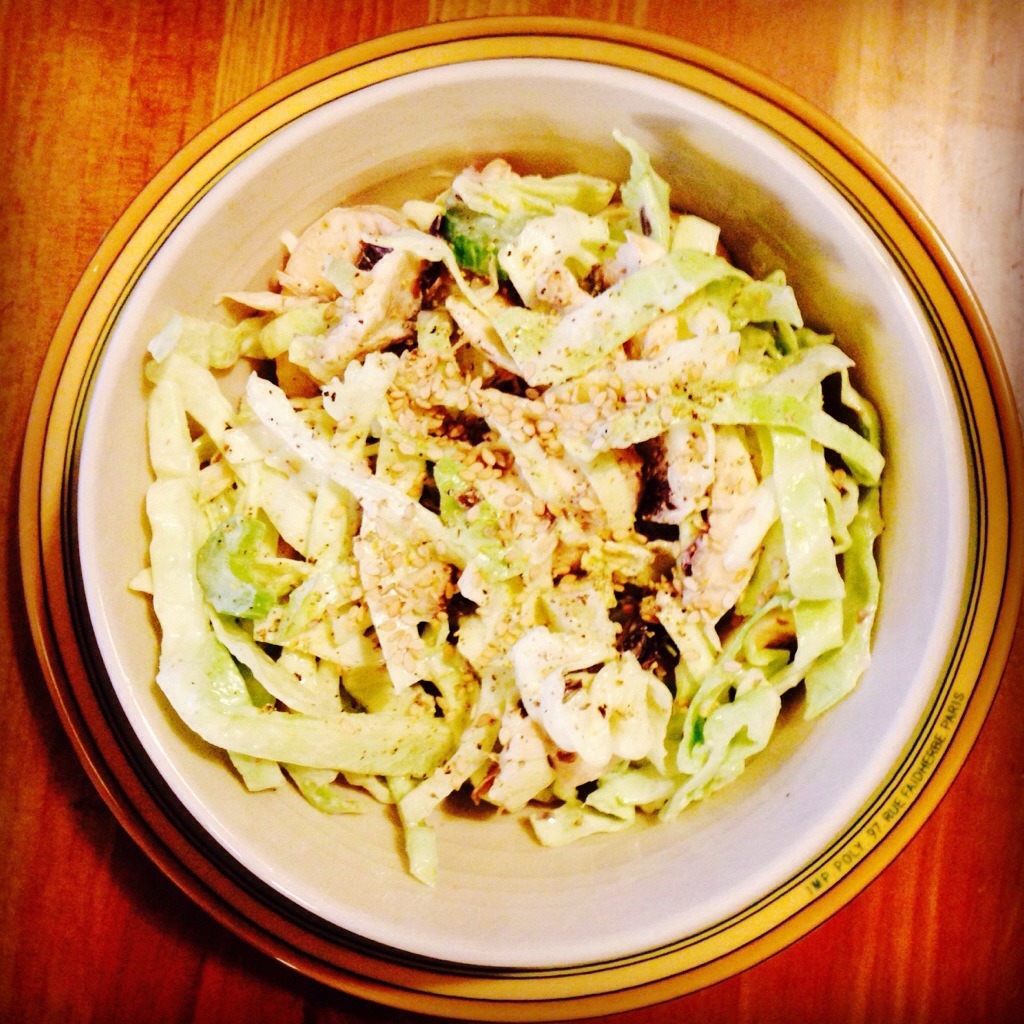
My salad for this week’s assignment wasn’t so much white as spring green, matching the turn of weather we’ve had this week. After a period of cold, damp weather that seeped into the bone, it now feels like time to put away heavy coats and sweaters until autumn rolls around.

20140214-232805.jpg

It’s also that in-between time where there isn’t much produce that’s in season, save for a few brassicas and storage fruits and vegetables. So, salad featuring cabbage and apples is perfect for this time of year. With mushrooms for meatiness and celery for extra crunch, this salad made for a surprisingly filling dinner.

I wasn’t sure about the lemon-yogurt dressing – it was entirely too tart when I tasted it. The sweetness of the apples in the salad transform the taste, though. I think if I make it again, I’ll add in a shot of apple juice to make it a little more versatile.

Kevin skipped the dressing altogether and sprinkled some lemon juice on his, instead. He’s trying to work toward becoming vegan, or at least vegan-ish, so some French Fridays assignments may get put off until I have a meat-eating audience at hand, as last week’s Boeuf à la Ficelle did. Maybe I’ll do a game version of that one for my parents some time.

If you’re looking for a meatless meal that suits this season, you can find the recipe for this week’s dish here.

20140214-221057.jpg

You can check out everyone else’s white-on-white greens here: Hélène’s All-White Salad

FFWD – Christine’s Simple Party Soups

Party Soups

I think the best thing a young person can learn before they strike out on their own is how to make soup. Not just because you’ll always be able to feed yourself, even in the days when you might only have one pot to your name, but also because it’s a great way to learn how to balance flavours. Adding a little bit of this and a little bit of that until you get it right is the essence of soup-making and that knowledge will carry through when you move on to master more complicated recipes and techniques.

Some recipes, though, don’t give you the luxury of fixing your mistakes with another ingredient or two. They depend on the flavours developed by a minimum of ingredients in the correct proportion to one another. This week’s trio of soups fall into this category. They consist of stock (or water and bouillon cubes) and a single dominant vegetable, with a little salt and pepper to bring out the flavours. Red pepper, asparagus, and broccoli are the vegetables (though the latter two have a little zucchini in them, as well, which doesn’t seem to affect the dominant flavour of the soup). Additional seasoning is added only through the garnish, which is whipped cream with Piment d’Espelette, cardamom, and curry respectively.

I tried the soups plain and they definitely need the extra flavour boost from the cream and spices. I used Greek yogurt (and this time I checked the label), which worked just as well, I think.

These weren’t my favourite soups from this book, even with the yogurt and spices. I appreciated the intensity of the dominant flavour, but it didn’t make me want to sit down for a meal. Instead, I found myself wanting to freeze these in cubes, as I think they’d make a great flavour booster when my usual soups need a little something. So, I don’t think I’ll be making these again, but the leftovers may be showing up as guest stars in future soups. C’est la vie.

You can find many other blogged descriptions of this FFWD recipe here: Christine’s Simple Party Soups

Aspiration Season

20140114-221514.jpg

Thoughts of spring come a little earlier around here than in most places in Canada. Shoots erupt and trees start to bud in January, even though we often have a final bout of cold weather (and occasionally snow) in early February. In about a month, though, it will well and truly be spring. And all that garden cleanup I procrastinated on last fall will become an urgent task.

For now, though, I’m going to enjoy my newly arrived seed catalogues, making overly ambitious lists of varieties I’d like to try growing, while studying my charts of gardens past.

Do you have space for plants where you live? Are you a balcony gardener or a backyard farmer? Do you grow for show or for food? What new plants or varieties have caught your eye this year? I’d love to hear about it in the comments.

To A New Year

Jars

Here’s to an end to the old year’s sorrow, but remembrance of the things that made it bright. Here’s to less static and more signal; fewer fights and more friendship; less holding back and more living.

I hope that 2014 brings you joy where you can find it, with love and support when you can’t.