
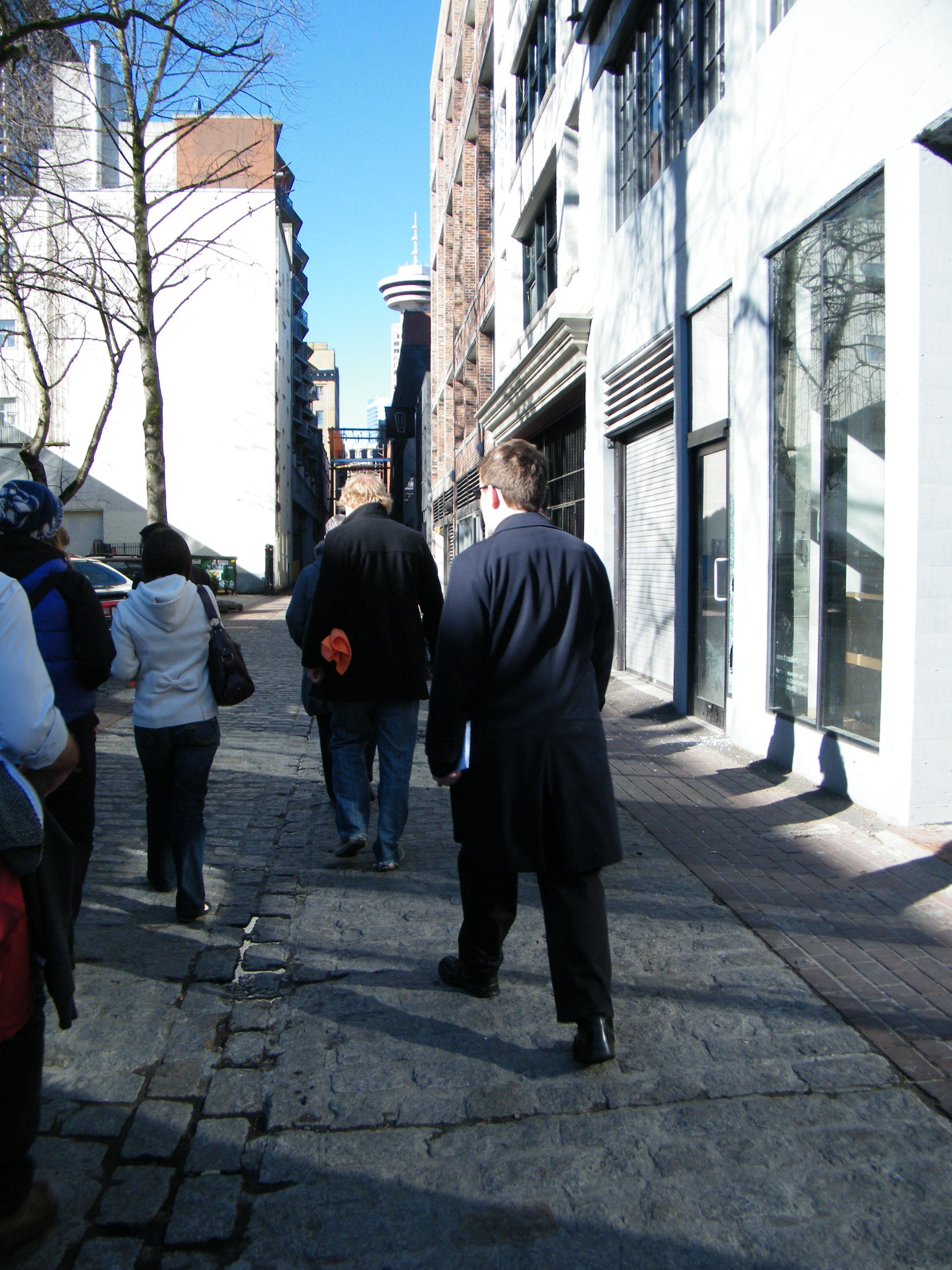
A couple of weekends ago, I took part in one of the Museum of Vancouver’s Moving Through walking tours, part of the Museum’s Not an Architectural Speaker’s Series. The three tours explored aspects of Vancouver’s built environment, topics that are especially fraught now, as the city is in a period of significant transition.
The downtown core of Vancouver has been transformed over the last twenty-five years, particularly in the last decade. What were once business districts, light industrial zones and commercial waterfront properties have become residential towers, retail districts and entertainment zones. The City has embraced the concept of EcoDensity, which is meant to create a walkable live/work cityscape that limits the environmental impact of an increasing population by concentrating utility use and reducing the distances that residents travel for work and shopping. The reality is that more lucrative residential development has eliminated much of the office space downtown and has reversed commuting patterns, as downtown residents travel to and from jobs outside Vancouver proper. This new urban environment has been described as a vertical form of the dormitory suburb.

Now that much of the development downtown is complete, the City has begun looking beyond its core. The Cambie corridor, the West End and Vancouver’s eastern neighbourhoods are all areas targeted for increased density. The eastern neighbourhoods are particularly attractive, as they’re directly adjacent to the city’s core. As I’ve described elsewhere, the travel time from downtown to my East Vancouver neighbourhood is about an hour by foot, past the viaducts and through the Downtown Eastside (DTES), Chinatown and Strathcona. Though the distance is relatively short, the character of each neighbourhood is distinct. The DTES and Chinatown, along with Gastown, have some of the oldest buildings in the city. Strathcona has the character of an old-fashioned city suburb, with houses, walk ups and corner stores. Between Strathcona and my Commercial Drive neighbourhood, there’s a light industrial zone, which is also home to the artists’ district that comes alive for the yearly Eastside Culture Crawl. Commercial Drive is like a younger version of Strathcona’s mix, with some mid-rise apartments thrown in, and anchored around one of Vancouver’s major thoroughfares. What you don’t see, with a few very visible exceptions, are high-rises in much of Chinatown or most of Strathcona and Commercial Drive.

All of these neighbourhoods have seen waves of change. The DTES, which has been described as Canada’s poorest postal code, is being transformed into a mix of residential tower development alongside social housing. Gastown was until recently primarily a tourist zone, but is now home to condominiums and upscale dining and shopping. Chinatown is becoming a hotbed for new restaurants and stores, along with controversial plans for condo development. Strathcona is now famous for its renovated houses, many of which carry heritage designations, while Commercial Drive has been transformed from a working-class neighbourhood into a mixed income cultural district. It’s not as if this is the first time that Vancouver’s neighbourhoods have dealt with demographic change. For good or ill, this is part of urban life.
What’s different about this wave of development is that the neighbourhoods targeted are already residential, the pace of change is likely to be much faster and the form of development is much more invasive than in previous shifts. In the DTES, it’s feared that social housing reform is being pushed aside in favour of expensive condominiums. In Chinatown and eastward, the fears are that mixed income housing and affordable retail space are going to be lost, along with the character of each neighbourhood’s built environment.

It’s in the context of these changes and anxieties that the Moving Through walks took place. Next week, I’ll tell you more about the walk I took part in and the discussion that took place afterward.

 One Wet Foot