Spring Book Reviews – Teatime in Paris!

Tart

This giveaway is now closed. Congratulations to Stephanie of Kitchen Frolic and Kathy of Bakeaway with Me – you’ve each won a copy of Jill’s book!

I received a review copy of Teatime in Paris! from Interlink Publishing. Nevertheless, all opinions in the following post are my own.

There’s something intoxicating about a bakery case. The aromas, of course, help. But it’s the visual feast that is dizzying. Delicate millefeuilles; macarons in all their colour-wheel glory; choux puffs and éclairs stuffed full of cream; cakes, cookies, and tarts in all shapes and flavours – how can one decide?

That’s why high tea is such a pleasure. You can fill your plate with bite-sized versions of all those pastries. The French have their own take on teatime – le goûter. However, unlike high tea, le goûter is an everyday occasion. Children go in for Nutella tartines, but adults take tea or coffee with delicate pastries.

It’s a much better habit than the to-go cups and monstrous, leaden scones that feature in North American afternoon breaks.

Jill Colonna is something of an expert on le goûter and teatime, too. A Scottish transplant to Paris, she’s explored all that city has to offer the discerning mid-afternoon pastry aficionado. So much so that she gives tours of the best pâtisseries and chocolatiers in Paris.

She started her blog, Mad About Macarons, when she began experimenting with making French pastries at home. Her first book, also called Mad About Macarons!, demystifies the process of making these quintessentially French treats. Her macaron recipes range from classic to playful, guaranteeing you’ll never get out of practice.

Her latest book, Teatime in Paris!, just released on June 1st, takes on the rest of the pastry case. There are chapters on choux pastry, millefeuilles, tartlets, and of course, macarons. Each of these begin with an illustrated, step-by-step recipe for the basic version of the pastry, then move on to all sorts of variations. The book also includes recipes for canelés, crepes, little cakes, and more. There are even recipes for a few full-sized desserts and the last chapter sets out recipes for an elegant French tea party.

My family was quite pleased to learn that I’ve got the book bristling with bookmarks and several of them have volunteered to taste-test while I master these pastries. I have to say, it’s started out very well. I made Jill’s Passion Fruit and Lemon Meringue Tartlets last week and they are everything I love about pâtisserie baked goods.

Jill’s pâte sucrée (sweet pastry or sweet tart dough) recipe yields the best pastry cases I’ve ever made. They’re sturdy enough for any filling, but just the right balance of crispy and tender when you bite into them. They also don’t get soggy over time.

Pastry

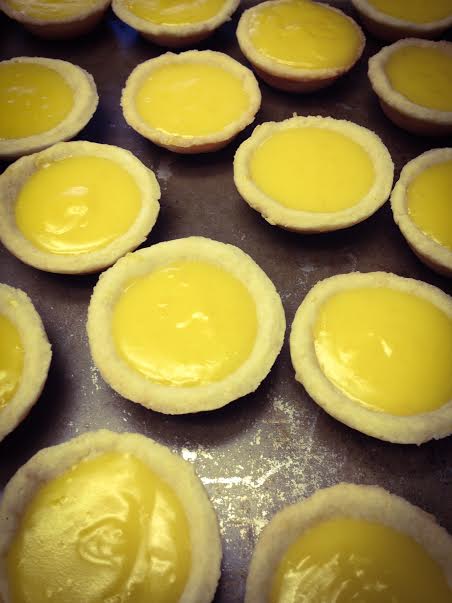
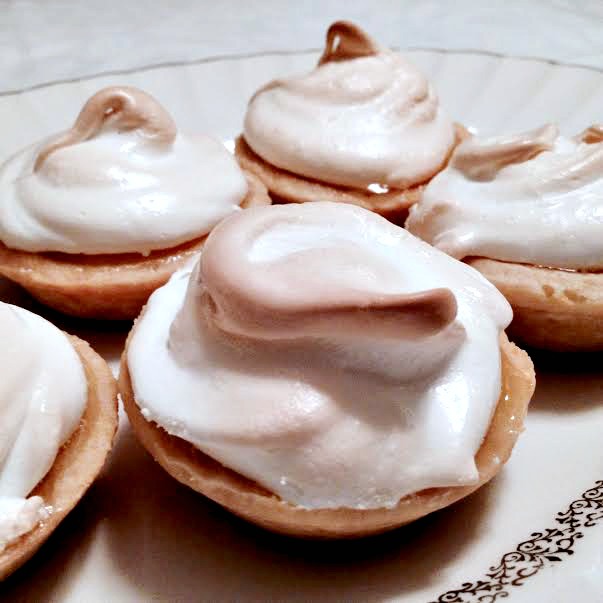
I could have stopped baking right there, I was so pleased with the pastry cases. I’m very glad I didn’t. The fruit curd filling has a little gelatin in it, giving it a sheen and substance that most homemade curds lack. The topping is a perfectly sweet French meringue that holds up in the oven and then in the refrigerator.
Filled Tarts

The tart, smooth filling contrasts so well against the texture of the pastry case and the sweetness of the meringue. They look beautiful, too. These tartlets are the closest thing to a pâtisserie sweet that I’ve ever made. I made them smaller than called for in the recipe, so that I could share them around in my extended family. It was also an excuse to use my grandmother’s butter tart pans, which are perfect for making tiny pastry cases.

Pans

Jill’s instructions guided me through the whole process easily. I’m looking forward to finally having some success with macarons under her instruction, though it’s her Chocolate-Earl Grey Tartlets with Orange-Liqueur Crumble Puffs that are next on my agenda.

I’ve gotten permission from Jill and Interlink Publishing to share the recipe with you. However, if you want the secret to Jill’s wonderful pâte sucrée, you are just going to have to buy the book. (You should.)

A note to Canadian and American bakers: if you haven’t invested in a digital kitchen scale, now is the time to get one. The ingredients are given in grams, for accuracy and an international readership. And really, what are you waiting for? You will be so pleased when your baked goods come out perfectly, consistently.

Passion Fruit and Lemon Meringue Tartlets

Makes 8 tartlets
Preparation time: 25 minutes
Cooking time: 20 minutes
Chilling time: 2 hours
Temperature: 160°C/320°F fan (Gas 4), then 200°C (400°F, Gas 7)

Ingredients

  • 500g pâte sucrée (sweet pastry)

Filling:

  • Zest of an unwaxed lemon
  • Juice of 2 passion fruits and 1-2 lemons (100g fresh juice)
  • 100g sugar
  • 2 eggs
  • 90g cold butter, cut into chunks
  • 1 x 2g sheet of gelatine

Meringue topping:

  • 60g egg whites (approx. 2 egg whites)
  • 90g sugar (normal sugar, not caster/super-fine)

Method

Tarts

  • Roll out the pastry to 3-4mm (1/8-3/16″) thickness turning regularly on a lightly floured surface. Cut out rounds that are 2cm (3/4″) bigger than your tartlet molds. Gently press each round into a tartlet mould, trimming off excess pastry. Prick the pastry all over with a fork.
  • Bake the tartlets for 10-15 minutes at 160°C/320°F fan (Gas 4). Allow to cool, remove from their moulds and set aside.
  • Soak the gelatine in cold water for 10 minutes and zest the lemon.
  • Strain the juice of two passion fruits using a sieve to remove all the seeds and make up to 100g by adding the juice of 1-2 lemons.
  • In a saucepan, whisk together the passion fruit-lemon juice with the sugar, zest and eggs over a medium heat until the sauce boils, bubbles and thickens.
  • Strain to remove the zest. Take off the heat and whisk in the butter and the gelatine (squeezed of excess water).
  • Pour directly into the tartlet shells and place them in the fridge until ready to serve.
  • To appreciate them at their best, remove from the fridge 10 minutes before serving.

Meringue

  • Whisk the egg whites at medium-high speed with an electric mixer in either a glass or metallic bowl. Just as they start to froth up, gradually add the sugar. Increase to a high speed, continuing with the sugar until the meringue forms strong, glossy, stiff peaks.
  • Spoon (or transfer to a piping bag with a large serrated or plain tip and pipe out) the meringue on top of each tartlet, spreading it as much as possible over the top. If not piping, using the back of a spoon, lift parts of the meringue up into little cones for decoration.
  • Bake in a very hot oven (200°C, 400°F, Gas 7) for about 5 minutes. Alternatively, brown with a culinary blowtorch.
  • Remove and chill until ready to serve.
Tarts

One last thing – don’t be surprised if you find yourself packing this cookbook on your next trip to Paris. One of the loveliest bonus features of the book is the illustrated appendix of Jill’s favourite sweet walks in Paris. It gives you advice about where to find sweets and pastries across a number of Paris’ famous neighbourhoods. And if, like me, you’re not going to Paris anytime soon, this chapter will help you visit vicariously.

You can see all this for yourself if you’re lucky. Interlink Publishing has been kind enough to offer two copies of Teatime in Paris! to my readers. You can enter to win one of them via the link below.

Teatime in Paris

Readers with US or Canadian mailing addresses (with the exclusion of residents of Quebec) can enter to win one of two copies of Teatime in Paris! You can find the giveaway, along with the rules and eligibility requirements, by following this link. The winners will be notified by email on June 20, 2015. Good luck!

That’s it for my Spring Book Review series. It’s practically summer now, after all. I hope you’ve treated yourself to a few of the titles I’ve told you about over the last few weeks. And if you try any of the recipes I’ve shared, I’d love to hear about it! Now, go out and enjoy all the good food summer brings.

Spring Book Reviews – Preservation Society Home Preserves

Canned

I received a review copy of Preservation Society Home Preserves from Robert Rose Inc. Nevertheless, all opinions in the following post are my own.

Canning and preserving aren’t what they used to be. It’s a lost art for many, only some of whom have memories of parents or grandparents putting up dilly beans or pickled beets, strawberry freezer jam or orange marmalade. Those recipes seemed preserved in amber themselves, passed down from one generation to the next without variation.

Not that that’s a bad thing – I love the taste of old fashioned pickles, jams, and preserves. But now, there’s been a a revival of the preservation arts and it’s come with a lot of experimentation. I may love those old school tastes, but it’s the modern flavours that inspire me to get into the kitchen and fire up the canner.

If you feel the same way, Camilla Wynne’s Preservation Society Home Preserves is the book for you.

Her whimsically heart-shaped pickled beets have a juniper berry and peppercorn kick. Her strawberries mingle with currants and rose petals or tequila and triple sec. And her marmalades travel the road from purity to downright decadence.

Many of her recipes are inspired by cocktails and she brings the same kind of attention to flavour and inventiveness that you’d see in a bar that specializes in handcrafted drinks. The range of recipes is nice, too, including syrups, refrigerator preserves, and dishes that use some of the products of the earlier recipes in the book.

Jamming

This book isn’t a comprehensive guide to canning, though. There is a chapter up front that covers canning basics clearly, but if you’re new to it you might want to have a canning reference guide (or even better, an experienced canner) by your side.

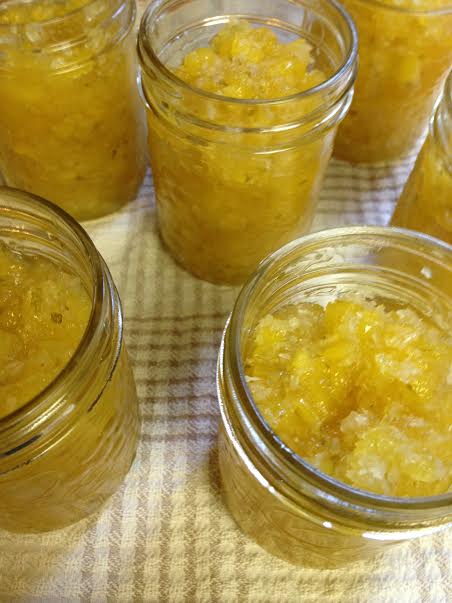
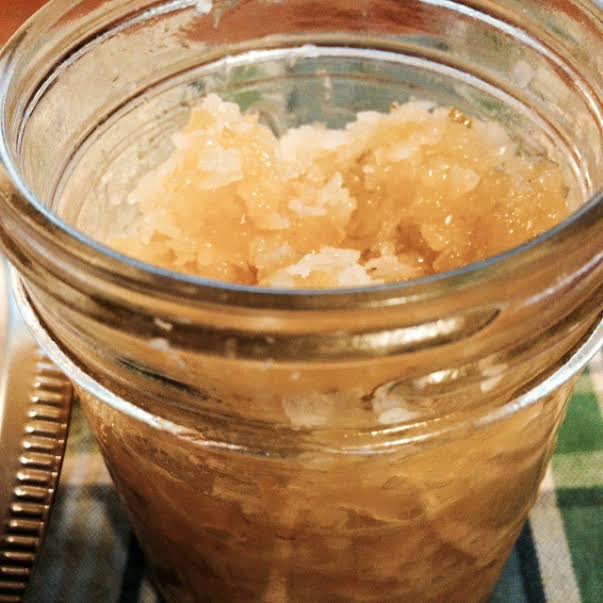
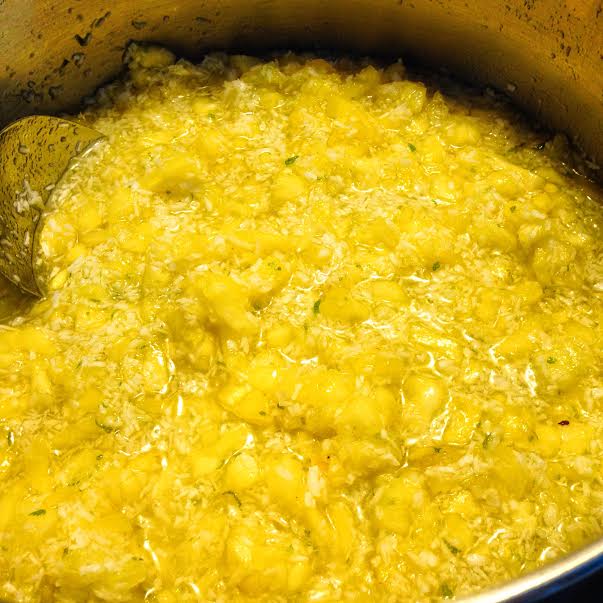
I made Wynne’s Piña Colada Jam yesterday and it filled the kitchen with the most wonderful tropical aromas. I tasted it today and it was delicious. Wynne recommends using it as a cake filling, an ice cream topping, or swirled into mascarpone. I could also see it as a surprise at the bottom of a crème brûlée or a tart like this one. To be perfectly honest, it’s great on its own. I sort of ate a small…ish quantity of it with a spoon while I was supposed to be photographing it.

Robert Rose Inc. has been kind enough to allow me to share the recipe with you. If you make it, promise me you’ll follow safe canning guidelines (you could start here, for instance) and read up about how to determine the setting point for jam.

Piña Colada Jam

Makes about five jars (8 oz/250 mL each)

2.9 lbs (1.3 kg) pineapple flesh (from 2 pineapples)
2-1/2 cups (500 g) jam (gelling) sugar
1-2/3 cups (100 g) unsweetened flaked coconut
Grated zest and juice of 2 limes
6 tbsp (90 mL) dark rum, divided

  • Chop the pineapple into fairly small dice.
  • In a large pot or preserving pan, combine the pineapple, sugar, coconut, lime zest and juice and about half the rum. Cover and let stand to macerate for 30 minutes.
  • In the meantime, prepare the jars and lids.
  • Bring the pineapple mixture to a boil over medium-high heat, stirring often. Boil hard, stirring often, until the setting point is reached. Remove from heat and let rest for 5 minutes, stirring occasionally. Stir in the remaining rum.
  • Ladle jam into the hot jars to within 1/4 inch (0.5 cm) of the rim. Remove any air bubbles and wipe rims. Place the lids on the jars and screw the bands on until fingertip-tight. Process in a boiling water canner for 10 minutes.

Canning

For me, the best cookbooks are ones that send me in directions I’d never imagined, whether it’s techniques, cuisines, or ingredients. In this case, it’s combinations and juxtapositions of flavours. Having a pantry full of these homemade ingredients will lead to a more delicious life.

Tasting

Come back next Thursday for the last book in this season’s review series. You’ll be dreaming of Paris and you’ll also have a chance to win one of two copies of Jill Colonna‘s latest book.

Spring Book Reviews – Building Community One Dish at a Time

Cookbooks

I received copies of The Sweetapolita Bakebook and Seven Spoons, courtesy of Appetite by Random House Canada, at book launch celebrations with a group of local bloggers and was under no obligation to review them. All opinions are my own.

It’s easy to think of successful food bloggers as surrounded by the communities they’ve built around their blogs, but it can be a lonely pursuit. That’s why the lovely people at Appetite by Random House Canada have been working with the equally lovely folks at Food Bloggers of Canada to hold book launch celebrations with local bloggers when food bloggers turned cookbook authors visit Vancouver on their book tours.

I was lucky enough to attend two of these gatherings this spring – one with Rosie Alyea of Sweetapolita and another with Tara O’Brady of Seven Spoons.

For those of us that were able to attend the events, it was a chance to meet successful bloggers and cookbook authors we admired, but it was also a chance to connect with local bloggers that we may only have met online. What I hadn’t realized was that the authors themselves were as happy to meet us as we were to meet them.

Authors

Rosie Alyea told us that the ten bloggers in that room were the greater part of all the bloggers she’d ever met and that it was a pleasure to meet people who were as excited as she was about baking and writing about it.

Tara O’Brady has been food blogging almost as long as it’s been possible to do so and has set the standard for the quality of writing in the genre. Even so, she was happy to connect with others who are building community and exploring their own foodways online.

The events were an opportunity to share food from the books, conversation, and a little bubbly together. The publishers, authors, and bloggers alike are passionate about food and cooking, so there was a lot to talk about.

As much as online community-building creates enriching and vibrant engagement, meeting in person feels like a solidification of those connections. Thanks again to the folks at Appetite for providing us with that opportunity.

And now that I’ve had some time to explore each of these cookbooks, I can share my thoughts about them with you:

The Sweetapolita Bakebook

IMG_3800

I’ve been baking since my age was in single digits, but the things I made (at least until I joined French Fridays with Dorie) were homey and old fashioned. I loved going through vintage cookbooks and making cookies, squares, and cakes for my friends and family, but I didn’t think I was capable of bakery-style confections.

I’m still not there, but if any cookbook can help me with that, it’s this one. Rosie Alyea’s recipes are foolproof and her instructions are detailed and precise. They are also fanciful, as it says on the cover. From chalkboard cookies to perfectly charming chocolate robots filled with Pop Rocks to an elegantly tiered cake decorated with a watercolour finish, the book is filled with desserts you’d never imagine you could make at home.

I started small, pairing Rosie’s Simple & Splendid Chocolate Cake with her Glossy Fudge Frosting and filling it with salted caramel ganache. As you can see, I didn’t do it justice. I was a little short on icing sugar. But, I’m going to be baking from this book for years to come – birthdays, anniversaries, or just about any excuse for a party that I can find. I think my decorating will improve over time.

What doesn’t need improvement is the flavour and texture of the cake and the richness of the frosting. The same could be said of the Rainbows & Sprinkles Cake Rosie served at the book launch celebration I attended. The cake uses her Super White Cake recipe and is iced with Swiss Meringue Buttercream, but transforms both with vibrant gel paste food colouring.

It’s a feat she performs over and over again in the book, taking her basic cake recipes and coming up with beautiful variations using the fillings, frostings, and techniques she includes in the book, along with an array of sprinkles, edible papers, and garnishes that she makes herself or sources at baking supply stores. Once you’ve worked your way through all the recipes in the book, you’ll be confident enough to bring your own flights of fancy to life.

Seven Spoons

Blueberry Cake

Everyday cooking sounds a little uninspiring and it certainly can be, if it’s left up to an unadventurous or inexperienced cook. But in the hands of Tara O’Brady, it’s a sumptuous exploration of everything the markets have to offer.

Tara’s blog began not long after taking charge of her own kitchen and trying to incorporate the foodways of her family with that of her partner (now husband), Sean. Hers included the south and north Indian foods her parents grew up with, along with dishes from many other cuisines that her food-loving family explored. His were dishes with Irish and English roots, the kind that filled mid-Century community cookbooks, like the butter tarts that inspired the Walnut Cherry Oat Butter Tart Pie Tara served at her book launch celebration.

Seven Spoons represents their own foodway, the one that they’ll pass on to their children. It includes dishes from each of their heritages, along with ones adapted from the flavours that excite cooks today.

There are dishes for every meal and a selection of staples to spur your own creativity in the kitchen. The flavours come from Indian and British Isles classics, but also from the Middle East, Continental Europe, Latin America, and Asia. The ingredients will take you out of the standard supermarket and to the farmers’ market and international grocery stores, reflecting the cosmopolitan food scene today and its emphasis on eating widely and in season.

For new cooks, it’s a good place to start the explorations that will lead to the creation of their own foodways, while experienced cooks will appreciate the depth of flavour and variety of the recipes.

In my own family, my gluten free and vegan partner quickly marked off several recipes, including the Trail Mix Snack Bars and the Green Beans with Mustard Seeds. I was intrigued by the Rhubarb Rose Gin Gimlet and Halloumi in Chermoula. My mother commented that it’s almost the right time to try the Pickled Strawberry Preserves, then opened the book up to the recipe for Blueberry Poppy Seed Snacking Cake and asked if I’d make it for them to take on the trip they’d planned for the weekend.

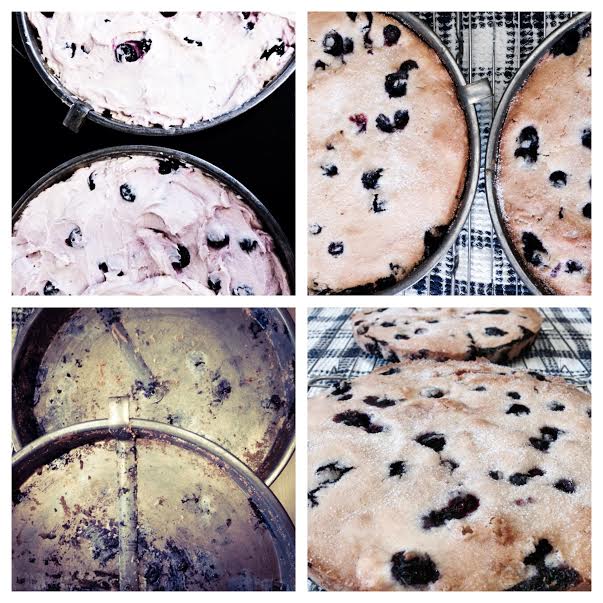
I was happy to oblige, though I had to omit the poppy seeds (I put in a bit of ginger, instead). It turned out beautifully and the quarter of a cake I kept for myself disappeared quickly – I just couldn’t keep myself from snacking on it. The rest was eaten just as quickly, by all reports.

I’m glad the binding on this book is sturdily stitched, as it’s going to undergo a lot of wear and tear, stains and creases. I’ll be working my way through its recipes over and over again.

Come back next Thursday for a book that combines the homespun goodness of preserves with the pizazz of the cocktail hour.

Spring Book Reviews – Vanilla Table

Custard

I received an electronic copy of Vanilla Table, for review from Natasha MacAller’s publicist. Nevertheless, all opinions in the following post are my own. 

The single subject cookbook is a trend that’s becoming as important as cookbooks focused on a single cuisine. Whether the focus is a dish or an ingredient, a meal or a piece of equipment, home cooks are seeking out cookbooks that will allow them to dig deeper than the generalist cookbooks they started with.

Natasha MacAller’s Vanilla Table is a perfect example of why this trend is taking off. Vanilla is an ingredient most cooks take for granted, adding it to their sweets and baked goods to enhance the flavours that are the real stars of their dishes. As MacAller says in her introduction to the cookbook: “Vanilla is often used to describe something that is just ordinary, nothing special, no extras — however, vanilla is anything but plain.”

MacAller sets out to make vanilla not just the focus of many of the dishes in the book, but also to provide the tools for home cooks to use vanilla, in all its forms, more creatively and daringly. There’s a short “Vanilla 101” at the beginning of the book that guides the reader through the four varieties of vanilla and their characteristics, then discusses the forms of vanilla that are sold, from pods to powder. At the end of the book, she devotes a whole chapter to staple concoctions that are used in recipes throughout the book, but could serve as a jumping off point for your own ideas. The Vanilla Candied Bacon Bits alone could keep me busy finding savoury and sweet uses for them.

The chapters of the book read like the sections of a restaurant menu and the recipes lean toward haute cuisine. Though there are a few homey recipes, this book is perfect for planning dinner party menus. The recipes in the book are MacAller’s own, along with a selection of recipes from well-known chefs and bakers around the world, including Rose Levy Beranbaum, David Lebovitz, Yotam Ottolenghi, and Nancy Silverton.

MacAller herself became a chef after a career as a professional dancer, learning that she loved working with food when she began catering in her dance companies’ off seasons. She became known as The Dancing Chef and her recipes reflect a cosmopolitan and global perspective on food.

What I especially like about this cookbook is the way that its recipes make use of flavour combinations and layering. It’s something that’s often missing from cookbooks and is especially suitable for bringing a sense of fine dining to the home dining room.

The book also introduces a cornucopia of ingredients and a wealth of techniques, making the most of vanilla while tempting the reader to stretch their palates and practices. Huckleberry gastrique, lychee lime relish, fennel vanilla sausage, homemade labneh – the parts and flourishes of these recipes are as interesting as the whole.

Though the recipes and instructions might be challenging for more inexperienced cooks, this book has more than enough to teach cooks who are comfortable in the kitchen and want to extend their skills. I’d recommend it especially to cooks who like to entertain on an elegant scale.

I’m looking forward to working through the sweets and baked goods chapters, but I thought a good test of the book would be to choose recipes from the savoury section. There are classic vanilla pairings like lobster or dishes set off by a fruity sauce, but there are also some surprising combinations.

I was intrigued by the idea of garlic and vanilla, so I’m sharing MacAller’s recipe for a starter that combines the mellow savoury flavour of caramelized garlic with cheeses and a vanilla-infused custard. It’s a sneaky dish, with a strong vanilla aroma that initially reads as dessert. When you taste it, the garlic, ricotta and Parmesan are at the forefront of its flavour, but then the nutmeg and vanilla come through. It’s complex and delicious, a good starter for an adventurous meal or a classically French one. I served it plain, but I suspect it would be even more interesting with a garnish of green pea pesto (from her recipe for Heirloom Tomato Bisque, which pairs tomato and vanilla to good effect).

Garlic and ricotta custard

Caramelized Garlic & Ricotta Custard Cups

Serves 6

  • 1 garlic head (recipe needs 6 caramelized cloves)
  • 2 tsp (10 mL) oil
  • 1 tsp butter, to grease cups
  • 1 vanilla pod
  • 1 Tbsp (15 mL) apple sauce (or ¼ apple, peeled and grated)
  • ½ cup (120 mL) whipping cream
  • 1 cup (240 mL) milk
  • ½ tsp superfine sugar
  • ½ tsp fine sea salt
  • ¼ tsp white pepper
  • 3 large eggs
  • ½ cup (90 g) ricotta
  • ¼ cup (20 g) Parmesan, finely grated
  • a pinch of ground nutmeg

Caramelized Garlic

Preheat oven to 350 F/180 C.

Cut top off garlic head to expose cloves. Peel away just the outer layer of the garlic bulb skin, leaving the skins of the individual cloves. Wrap loosely in foil and drizzle over the oil. Pinch the foil closed at the top, place in a baking pan and cook in oven 30–35 minutes until squishy, caramelized and golden brown.

Custard Cups

Butter 6 small (4 fl oz/120 ml) custard cups. Set inside a baking dish large enough to hold the cups.

Cut the vanilla pod in half but don’t split and scrape it, to keep the custard ivory colored. Squeeze 6 caramelized garlic cloves into a saucepan and add apple sauce, vanilla pod, cream, milk, sugar, salt and pepper. Bring just to a simmer, turn off heat and cool about 20 minutes.

Turn the oven to 325 F/160 C.

In a large jug, whisk the eggs well, then add ricotta. Place a sieve over the jug and strain the milk mixture into the eggs, pressing the garlic through with the back of a spoon. Discard the vanilla pod or rinse, dry and save for another use. Add Parmesan, salt, pepper, a pinch of nutmeg and whisk together.

Pour custard into cups. Lift pan into the oven, then fill with very hot water to come halfway up the outside of the cups. Bake for 20 minutes until custard has browned and set but is still jiggly in the center.

Serve warm as is or top with a spoonful of green pea pesto.

Vanilla Table shows just how complex and varied its titular ingredient can be, while proving that limiting cookbooks to a single subject doesn’t limit the scope and breadth of its recipes.

Come back Thursday, May 21st for a discussion of two books I was excited to celebrate.

Spring Book Reviews – Mrs. Wheelbarrow’s Practical Pantry

Quickles

Today’s review is for a cookbook from my own shelves, Mrs. Wheelbarrow’s Practical Pantry, and no consideration was received for this post.

I first came across Cathy Barrow’s blog when she started Charcutepalooza with Kim Foster. I followed along, fascinated by the accomplishments of the group of bloggers working their way through Michael Ruhlman’s Charcuterie: The Craft of Salting, Smoking, and Curing. There’s no way meat-curing is going to happen in this apartment, between the tiny dog and M. Vegan, so experiencing charcuterie-making vicariously was just my speed.

I was particularly happy to find Cathy’s blog, Mrs. Wheelbarrow, because she makes better use of the best of each season than just about anyone else. Charcuterie might be the high-wire act of home preserving, but she also engages in earthier pursuits like canning, baking, and cheese-making – well, cheese-making is a bit on the wild side for most of us, too. I know it was pretty exciting territory for me, when I tried it.

I especially liked the way she demystifies home preserving and cooking for people who didn’t grow up with those traditions. My mother made pickles and jams, but home cheese-making and meat-curing weren’t on the radar of anyone we knew. The most exotic thing she made was canned trout, with my grandmother. Reading Mrs. Wheelbarrow made all these things seem possible and even part of a routine in the kitchen. This sensibility follows in Cathy Barrow’s cookbook, too.

In her introduction, she explains that it was a growing concern with food systems, waste, and health that led her first to canning, then to home preserving on a broader scale. Preserving has become a part of her everyday life and her cookbook is filled with the kind of information that makes it seem possible to accomplish that, too.

There are sections on safety, technique, and troubleshooting, but what really makes me want to get into the kitchen are her bonus recipes and her suggestions for using the preserves, pickles, cheeses, and charcuterie you’ll produce. There’s nothing worse that looking at a shining row of freshly canned preserves and wondering what you’re going to do with it all now.

Her base recipes for jams and pickles are worth the cost of the book, alone – they aren’t merely repeats of traditional ones. And once you have the book in hand, who knows? You may work through the meat-curing and cheese-making sections eventually. The gorgeous photos and intriguing descriptions might have you experimenting with gravlax and ricotta, then finding yourself setting up a smoker out back or creating a cheese cave.

At the very least, you can get some nice bacon from the butcher’s and try her Bacon-Onion Jam.

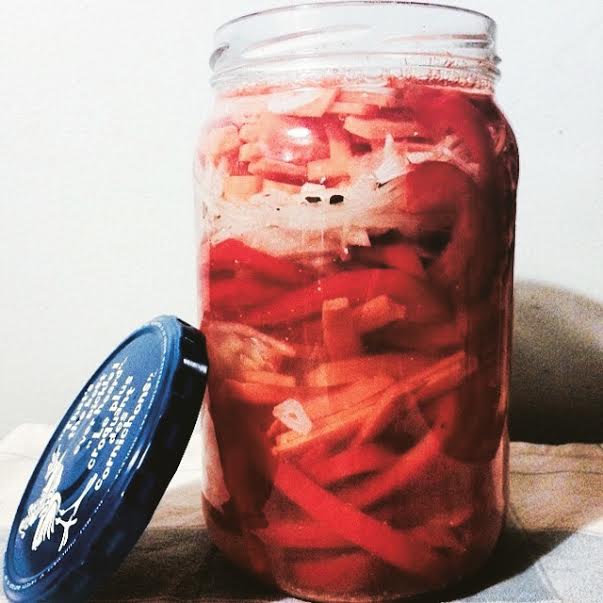
I’m looking forward to trying more of her jams, preserves, and pickles over the course of the summer. And I know I’ll try a simple recipe or two from the other sections. For now, though, I’m anxiously awaiting tomorrow, when I can start dipping into the jar of carrot, red pepper, and onion Quickles I made tonight (a version of which you can find here).

Come back next Thursday, May 7th for a review of a book full of heavenly aromas.

Spring Book Reviews – Bob’s Red Mill Everyday Gluten-Free Cookbook

Amaranth Soup

I received a review copy of Bob’s Red Mill Everyday Gluten-Free Cookbook from Robert Rose Inc. Nevertheless, all opinions in the following post are my own.

A diagnosis of celiac disease can seem like an imposition of broad limitations on one’s diet. And that used to be quite true, in the days when white rice flour was made to stand in for everything from bread flour to cake flour.

These days, though, there are so many great gluten-free alternatives available to people with celiac disease or gluten intolerance. Gluten-free grains and seeds like quinoa have become widely available, along with a wide range of flours. Ingredient lists are starting to shift, too. Where once wheat or barley might be used as a filler, now products like stocks, sauces, and spice-blends are eliminating them when not necessary, or other companies are jumping into the market with their own gluten-free varieties.

Bob’s Red Mill has been a reliable source of gluten-free products for years, dedicating separate production lines to many of their gluten-free grains, seeds, and flours to avoid cross-contamination. I’ve been a fan since my youth, when I was introduced to plenty of crunchy granola vegans and vegetarians. Potluck survival meant mastering veggie cuisine and Bob’s Red Mill provided many of the grains we used.

I’ve never been completely vegan or vegetarian, but eat that way much of the time, especially since my partner has committed to veganism. He’s also the member of the family with celiac disease, so alternatives to wheat, barley, and the rest of the gluten-rich grains are a big part of our daily meals.

I’ve become very familiar with gluten-free alternatives over the years. But like many of us, I’ve got quinoa down and could use a little help making the most of the rest. Amaranth? Teff? Sorghum? Millet? I’ve made a little use of these, but not often enough. Even familiar grains like oats or buckwheat become trickier when they are ground into flours.

So, I was excited to get my hands on a copy of Camilla V. Saulsbury’s Bob’s Red Mill Everyday Gluten-Free Cookbook. It’s full of whole-grain, gluten-free recipes, but just as importantly, it includes a primer with details on how to prepare and store gluten-free grains and flours, what their nutritional properties are, and what other healthful items belong in the gluten-free pantry.

The recipes themselves range from breakfast to dessert and travel across cuisines, many of which can become off-limits to gluten-free eaters. Amaranth Tabbouleh or Sorghum Minestrone satisfy cravings for old favourites, while naturally gluten-free dishes like Persian-Spiced Lentils and Millet make use of less familiar grains to delicious effect.

Many of the recipes are vegetarian or vegan, or easily adaptable, so there are plenty for me to choose from when eating with my partner. I’m especially looking forward to trying the recipe for vegan Nanaimo bars, as I noticed that one of the grocery stores nearby sells popped amaranth.

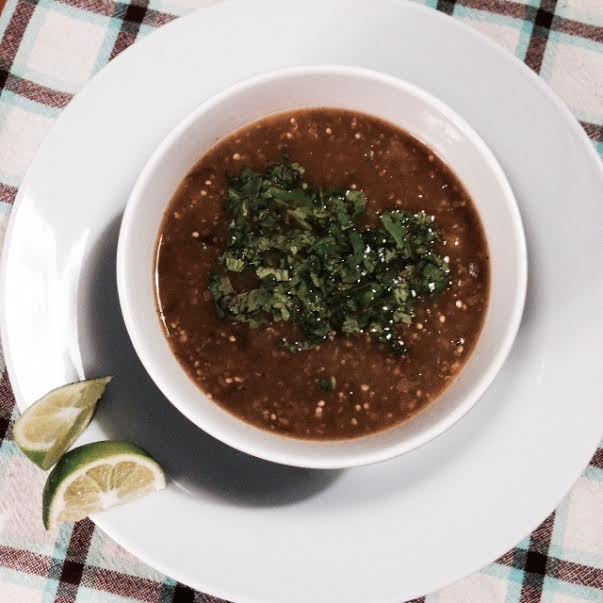
Today, though, I’ve got permission to share a recipe for a hearty, vibrant soup that reminds me of a pozole verde. It can be served with queso fresco, but we skipped that in favour of lime wedges and found it perfectly satisfying.

Tomatillo, Black Bean and Amaranth Soup

Makes about 6 servings

Equipment: Food Processor

2 cans (each 12 oz/340 mL) whole tomatillos, with juice
1 tbsp/15 mL olive oil
4 cloves garlic, minced
1 tsp/5 mL chipotle chile powder
3/4 cup/175 mL amaranth
2 cans (each 14-19 oz/398-540 mL) black beans, drained and rinsed
3 cups/750 mL ready-to-use GF vegetable or chicken broth
1 cup/250 mL packed fresh cilantro leaves, chopped
Crumbled queso fresco (optional)
2 tbsp/30 mL freshly squeezed lime juice
Lime wedges (optional)

  1. In food processor, purée tomatillos and their juice. Set aside.
  2. In a large pot, heat oil over medium-high heat. Add garlic and chipotle powder; cook, stirring, for 1 minute. Stir in tomatillo purée; cook, stirring for 2 minutes.
  3. Stir in amaranth, beans and broth; bring to a boil. Reduce heat to low, cover and simmer, stirring occasionally, for 15 to 20 minutes or until amaranth is very tender. Stir in cilantro and lime juice. Serve sprinkled with queso fresco (if using), with lime wedges on the side, if desired.

I predict this cookbook will have you stocking your pantry with more grains, seeds, and flours, whether or not you need to follow a gluten-free diet. Variety is the spice of life, but it’s also a good practice for health and a delicious one, at that.

Come back next Thursday for a review of a book that will help you make the most of each season’s bounty.

Spring Book Reviews – The Soup Sisters and Broth Brothers Cookbook

Tom Yum Soup

I received a review copy of The Soup Sisters and Broth Brothers Cookbook from Appetite by Random House Canada. Nevertheless, all opinions in the following post are my own.

It’s safe to say that soup season is a year-round phenomenon in Vancouver, even though we get long stretches of sunshine in the summer. There are gazpachos and chilled soups for hot weather, but there are also always rainclouds in our future, so stocking the freezer with comforting soups is a good practice.

One of the best ways to do that is to make a big batch of your favourite soup and then organize a soup swap with friends and neighbours. It’s a fun way to build community while providing one another with at least six meals’ worth of nourishing, delicious food.

(Inter)National Soup Swap Day is held in late January each year, but they provide great information and advice no matter what time of year you decide to hold your own swap. Next year will be the tenth anniversary, so I expect they will have even more recipes, stories, and advice to share.

Our co-op has been holding soup swaps for a number of years now. The regular participants enjoy it so much that we’re even talking about having them twice a year – once at harvest time and another in the coldest part of the year. One to celebrate late summer’s bounty and another to cheer us through winter’s last weeks.

Since I’ve been sharing soup with the same group of people over the years, I’m always on the lookout for new recipes that are delicious, reliable, and out of the ordinary. When I was given the opportunity to review The Soup Sisters and Broth Brothers Cookbook, I knew it was a book that I’d be making good use of for years to come.

The Soup Sisters and Broth Brothers Cookbook is full of flavourful soups borrowed from many cuisines and encompassing such a wide variety of ingredients that it could keep a soup swap group excited for years. The 114 soups are organized by season and the book includes stock recipes and advice on techniques and basics. The recipes come from the organization’s staff and volunteers, along with food writers, chefs, and even a sitting Mayor. Many of the recipes include stories about the soups, just as a soup swap gathering would.

But it’s more than a cookbook. It also tells the story of an organization that shares soup to help heal lives and to show support for people in crisis. The soups that Soup Sisters and Broth Brothers make together go to feed women and children who have suffered domestic abuse, or to youth exiting street life. It takes the concept of building community through sharing food beyond our personal networks and turns it into something that can be transformative.

It’s an inspiring thought. If you’d like to join them in their work, they have branches across Canada and even one in California.

In the meantime, they’ve been kind enough to let me share with you a soup for Spring, fragrant with lemongrass, galangal, makrut, and coconut milk. This Thai classic comes together quickly, but is richly flavoured. I made a vegan, gluten-free version for my partner, so traded fish sauce for a little gluten-free tamari and skipped the meat. I also used a vegan tom yum paste, versions of which are becoming more widely available now.

This soup was so good I wished I’d doubled the recipe. The only change I would make would be to add a dried chili pepper or two, for a little heat.

Tom Yum Soup

Sharon Hapton, Founder, Soup Sisters and Broth Brothers

Makes about 4 servings

4 cups (1 L) chicken or vegetable stock
2 large onions, thinly sliced
2 carrots, peeled and thinly sliced
1 shallot, thinly sliced
2 thick slices fresh ginger
2 thick slices galangal (optional)
1 stalk lemongrass, trimmed, gently bashed with a rolling pin and cut into quarters crosswise
1 to 2 tsp (5 to 10 mL) tom yum paste
3 to 4 kaffir lime leaves
1 clove garlic, minced
20 large raw shrimp, peeled and deveined, or 1 lb (500 g) cubed or diced boneless, skinless chicken (optional)
1 can (14 oz/398 mL) unsweetened coconut milk, well shaken
8 oz (250 g) cremini or white button mushrooms, sliced
2 plum tomatoes, diced
2 to 3 tsp (10 to 15 mL) fish sauce (according to taste)
1 lb (500 g) rice noodles, soaked in cold water for 2 hours then drained (optional)
Finely chopped cilantro for garnish

1. In a large pot, combine the stock, onions, carrots, shallot, ginger, galangal (if using), lemongrass, tom yum paste, lime leaves and garlic. Bring to a boil.

2. Reduce the heat and simmer, uncovered, for 10 minutes for the flavors to develop.

3. Add the shrimp or chicken (if using). Simmer, uncovered, until the shrimp are no longer pink (about 3 minutes) or until the chicken is no longer pink inside (about 10 minutes).

4. Add the coconut milk. Bring the soup back to a simmer.

5. Add the mushrooms and tomatoes. Bring the soup back to a simmer.

6. Remove the ginger, galangal (if using) and lemongrass. Season with fish sauce to taste.

7. If using rice noodles, plunge them into a pot of boiling water to heat through, then drain well.

8. Divide the noodles among the soup bowls, then ladle the soup over the top. Garnish with a flourish of cilantro.

Come back next Thursday for a review of a book that will have you stocking your pantry with long-neglected ingredients.

Holiday Book Reviews – 300 Best Homemade Candy Recipes

Fudge

I don’t know about you, but this is the week when my Christmas shopping always begins in earnest. So, for the second year in a row, I’m bringing you three book reviews to help you cross a few names off your list.

I received a review copy of 300 Best Homemade Candy Recipes from Robert Rose Inc. Nevertheless, all opinions in the following post are my own.

My mother’s aunts were tiny women with very strong arms. That’s because they were raised in an era without stand mixers or food processors to help them in the kitchen. One of the things they used their strength to make, in quantities great enough for the whole extended family, was the French Canadian specialty sucre à la crème. This simple fudge was something we looked forward to at Christmastime and my great-aunt Leona taught me how to make it when I was a teenager. Until very recently, sucre à la crème and truffles were the only candy recipes in my repertoire.

Enter Jane Sharrock’s 300 Best Homemade Candy Recipes. I’ve been curious about candy making for some time now, so when I got the opportunity to review this book, I jumped at it. Sharrock’s cookbook covers most of the categories of candy you can find in a kitchen and some, like lollipops, that I never dreamed you could make at home.

Sharrock began collecting candy recipes when her mother gave her a treasured pressure cooker that was perfect for making candy, along with a small booklet of candy recipes. Sharrock went on to try to preserve the candy recipes from earlier generations, which lends her cookbook an air of nostalgia. Reading through the recipes, I get the sense that these candies populated the tables at church bazaars and community potlucks, in the days before mass-produced sweets took their place.

This means that for the most part, the recipes use ingredients that you’d easily find at the supermarket. The few specialty items, like candy coating, can be found at baking supply stores. But, just because these recipes are old fashioned, doesn’t mean that they’re all unsophisticated. The pralines, divinity, and nougats would make a sweets table shine and even recipes that were thought of as homey, like taffy, seem very impressive these days. You won’t learn skills like tempering chocolate or making marshmallows from scratch, but once you’ve mastered this book, taking your candy making to the next level will be a breeze.

What I like best about this book is that it teaches you a wide range of candy making skills, includes troubleshooting advice and photo demonstrations, and even guides you through the steps you’d need to take if you were trying to recreate a favourite candy without the recipe.

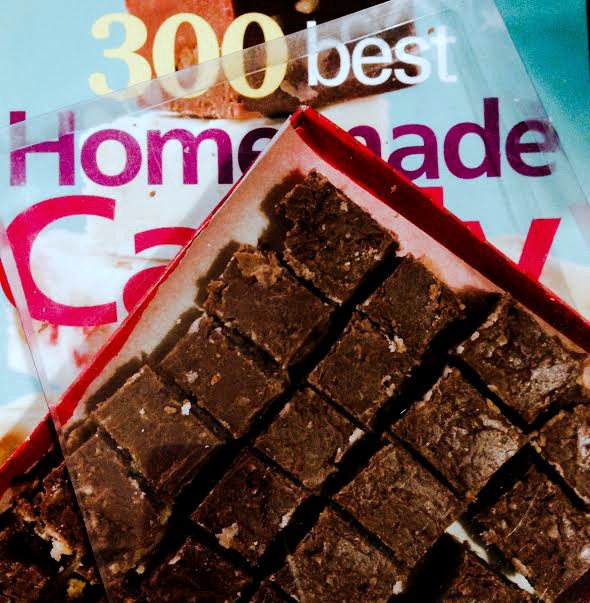
I think after working through some of Sharrock’s categories of sweets, next year’s holiday treat boxes will be the best they’ve ever been. In the meantime, I’m going to give Sharrock’s tuxedo fudge another try. I forgot to put the coconut into the bottom layer and added it to the top, instead. As a result, the bottom is creamy, but the top is a bit dry. Following the instructions should make my next attempt perfect. Thanks to Robert Robert Rose, Inc., I’m sharing the recipe with you. If you’re still on holidays next week, it would be a great way to start filling your freezer with goodies before the New Year’s resolutions set in.

Boxed

Tuxedo Fudge

Makes about 3 1/2 lbs (1.75 kg)

8- or 9-inch (20 or 23 cm) square pan, lined with parchment or buttered
2-quart heavy saucepan
Candy thermometer

Coconut Layer
2 cups (500 mL) granulated sugar
Pinch salt
1/2 cup (125 mL) butter or margarine
1/4 cup (60 mL) light (white) corn syrup
1/2 cup (125 mL) milk
1 tsp (5 mL) vanilla extract
1/2 cup (125 mL) sweetened flaked coconut

Chocolate Layer
2 cups (500 mL) granulated sugar
2 tbsp (30 mL) unsweetened cocoa powder
Pinch salt
1/2 cup (125 mL) butter or margarine
1/4 cup (60 mL) light (white) corn syrup
1/2 cup (125 mL) milk
1 tsp (5 mL) vanilla extract
1/2 cup (125 mL) pecans, in large pieces (optional)

1. To make the coconut layer: In heavy saucepan over low to medium-low heat, bring the sugar, salt, butter, corn syrup and milk to a boil, stirring until the sugar dissolves and the mixture begins to boil. Cover and cook 2 to 3 minutes to dissolve the sugar crystals on the sides of the pan. Remove the lid. Cook, stirring only as needed to prevent scorching, to the soft ball stage (234°F to 240°F/112°C to 116°C, with 236°F/113°C recommended).
2. Remove from the heat. Cool slightly, about 10 minutes. Add the vanilla. Beat by hand until the candy begins to thicken and lose its gloss. Stir in the coconut. Spread the candy into the prepared pan. Cool at room temperature while making the chocolate layer.
3. To make the chocolate layer: In a clean saucepan, combine the sugar and cocoa until well blended. Add the salt, butter, corn syrup and milk. Bring to a boil over low to medium-low heat, stirring until the sugar dissolves and the mixture begins to boil. Cover and cook 2 to 3 minutes to dissolve the sugar crystals on the side of the pan. Remove the lid. Cook, stirring only as needed to prevent scorching, to the soft ball stage (234°F to 240°F/112°C to 116°C, with 236°F/113°C recommended).
4. Remove from the heat. Cool slightly, about 10 minutes. Add the vanilla. Beat by hand until the candy begins to thicken and lose its gloss. Stir in the pecans, if desired. Spread the chocolate layer over the coconut layer in the pan. Cool and cut into squares. Store in an airtight container.

Gift Giver’s Guide: For the sweet tooth, the nostalgic, and the cook who wants to extend their gifts from the kitchen beyond cookies and squares.

You can find the rest of this year’s reviews here and here..

Holiday Book Reviews – Plenty More

/home/wpcom/public_html/wp-content/blogs.dir/ba0/6971813/files/2014/12/img_3269.jpg

I don’t know about you, but this is the week when my Christmas shopping always begins in earnest. So, for the second year in a row, I’m bringing you three book reviews to help you cross a few names off your list.

I received a review copy of Plenty More from Appetite by Random House Canada. Nevertheless, all opinions in the following post are my own.

It’s only been in the last couple of decades that North Americans have rescued vegetables from their role as either abstemious “rabbit food” or underloved sidekick. Even today, many restaurants use vegetables more as a garnish than a true part of the meal on the plate. As much as I love a good steak, I’ve always craved more than a tiny pile of over-steamed carrots to accompany them. I want vegetables to receive the same care and attention, and creativity, that is brought to the proteins and starches in my meal.

At home, there are plenty of great cookbooks that celebrate proteins, side dishes, and desserts, but until recently, scant attention has been paid to vegetables. Yotam Ottolenghi, along with writers like Deborah Madison and Barbara Kafka, has changed all that.

I’ve been a fan of Ottolenghi since I discovered his Guardian column on vegetarian cooking a number of years ago. Not only did he make vegetables the centre of attention in his dishes, but he used them as a canvas for many of the herbs and spices that were just coming to the attention of British, Australasian, and North American eaters. Middle Eastern flavours like za’atar and harissa were showing up with the proteins on restaurant menus. Ottolenghi’s column, then his cookbook Plenty, sent vegetarians and vegetable-lovers to the spice rack, too.

When I found out he was coming out with a sequel to Plenty, I was excited. My copy has seen a lot of use and I was ready for more recipes. Unlike Plenty, which is organized by vegetable type, Plenty More‘s chapters cover techniques, from tossing to roasting to baking. It’s an evolution from exploring vegetables to becoming so comfortable with them that experimentation begins.

When I got my copy of Plenty More, I took the Roasting chapter for a spin, first thing. In the cold damp of a Vancouver winter, roasted meals warm the kitchen and the belly. I started with Squash with Cardamom and Nigella Seeds, which I served with a Moroccan tagine. Then, I tried the recipe I’m sharing with you today.

One of the reasons I think people believe vegetables are boring is because we’re afraid to work with them as vigourously as we do a piece of meat. Even roasted vegetables can be a bit wan if you don’t allow them to brown and caramelize. That’s one lesson Plenty More brings home. Both the recipes I tried allow the dish to develop the smoky, jammy flavours that come only when you roast something fearlessly.

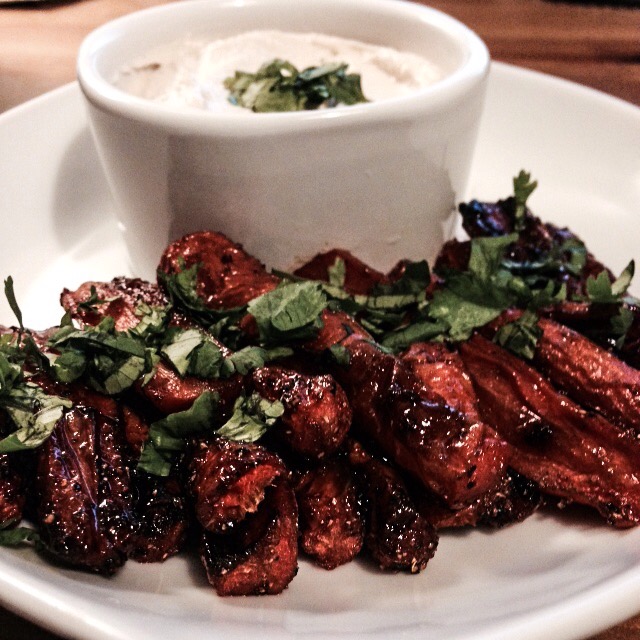
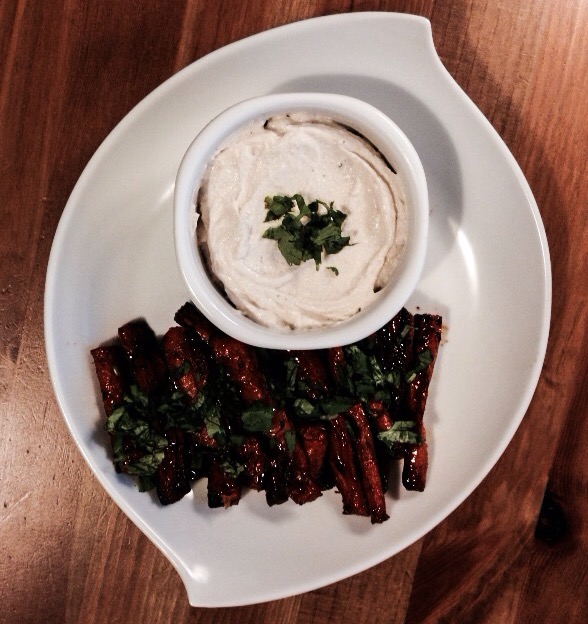
This recipe gives you perfectly tender carrots with a crust of caramelized honey and accompanies it with a fresh yogurt and tahini sauce that provides a wonderful counterpoint to the dish.

/home/wpcom/public_html/wp-content/blogs.dir/ba0/6971813/files/2014/12/img_3270.jpg

Honey-Roasted Carrots with Tahini Yogurt

Serves Four

scant 3 tbsp/60 g honey
2 tbsp olive oil
1 tbsp coriander seeds, toasted and lightly crushed
1 1/2 tsp cumin seeds, toasted and lightly crushed
3 thyme sprigs
12 large carrots, peeled and cut into 3/4 by 2 1/2-inch/2 by 6-cm batons (3 lb/1.3 kg)
1 1/2 tbsp cilantro leaves, coarsely chopped
salt and black pepper

Tahini yogurt sauce
scant 3 tbsp/40 g tahini paste
2/3 cup/130 g Greek yogurt
2 tbsp lemon juice
1 clove garlic, crushed
salt

Preheat the oven to 425°F/220°C.

Place all the ingredients for the tahini sauce in a bowl with a pinch of salt. Whisk together and set aside.

Place the honey, oil, coriander and cumin seeds, and thyme in a large bowl with 1 teaspoon salt and a good grind of black pepper. Add the carrots and mix well until coated, then spread them out on a large baking sheet and roast in the oven for 40 minutes, stirring gently once or twice, until cooked through and glazed.

Transfer the carrots to a large serving platter or individual plates. Serve warm or at room temperature, with a spoonful of sauce on top, scattered with the cilantro.

/home/wpcom/public_html/wp-content/blogs.dir/ba0/6971813/files/2014/12/img_3271.jpg

Once you’ve tried this dish, I suspect that you’ll be buying a copy for yourself as well as the person you were shopping for. I love that I can adapt most of these recipes easily for my vegan partner, while making the meat-eaters at my table forget that they’re being served a vegetarian meal.

Gift Giver’s Guide: For the vegetable lover, the curious cook, the flavour-seeker, and anyone who needs convincing that vegetables can be the star of the show.

Come back Tuesday for a review of a book that will fill your holiday sweets table with goodness.

Holiday Book Reviews – The Healthy Slow Cooker

Closeup

I don’t know about you, but this is the week when my Christmas shopping always begins in earnest. So, for the second year in a row, I’m bringing you three book reviews to help you cross a few names off your list.

I received a review copy of The Healthy Slow Cooker, Second Edition from Robert Rose Inc. Nevertheless, all opinions in the following post are my own.

I know that I post a lot about French food and desserts around here, but most of the time I try to cook healthy meals. It might seem challenging to do so when trying to balance the needs of an omnivore with a vegan-ish, gluten-free eater, but it isn’t really. We never ate very much bread with our meals and there are plenty of great grains that can satisfy our carbohydrate requirements. As for protein, I’ve always been of the mind that meat and dairy shouldn’t be the primary focus of weekly meals, so we were already eating a largely plant-based diet before my partner started his move toward veganism.

What can be challenging is making sure we have enough variety in our diet, so that we’re covering all the nutrient groups as we eat across the week. It’s easy to get into a routine, making the same few dishes over and over, with a little experimentation on the weekends. Much better to find ways to change things up more frequently.

One of my favourite ways to do that is to make use of my slow cooker. Not only can I fill it and forget it for the workday or overnight, having a large slow cooker means that I can make recipes in quantities that allow me to package and freeze several meals’ worth.

Unfortunately, a lot of slow cooker cookbooks focus on heavy meals that cycle through a limited roster of protein-starch-vegetable combinations. So, I was happy to find The Healthy Slow Cooker has a variety of recipes, both meat and plant-based, with a focus on using nutrient-dense ingredients. The best part is that all the recipes are gluten-free.

Judith Finlayson is well-known to Canadians as a writer and editor, but has become especially famous for her prolific publication of useful cookbooks. Many of them are slow cooker cookbooks, focusing on different health needs or dietary practices. The Healthy Slow Cooker is in its second edition, which came out earlier this year. This means that the recipes are updated, but more importantly, the nutrition tips and health information are more current now, too.

Those tips and information boxes, called “Mindful Morsels” and “Natural Wonders” are a welcome feature of Finlayson’s book. There are the kinds of information you might expect, like the sections breaking down the nutritional benefits of mushrooms or bell peppers, which help bring home the reasons for eating a wide variety of foods. But there are also sections that go into more depth, explaining the role of elements like fatty acids and micronutrients in our diets, why some foods which should always be bought from organic sources, or shopping with environmental concerns and sustainability in mind.

The recipes come from a number of culinary traditions, including Caribbean, Indian, Middle Eastern, and Asian flavours. They also make use of common ingredients, without ignoring some of the ingredients (think edamame or sunchokes) that have been showing up more and more in markets. There are lots of vegan or vegetarian dishes, while many of the recipes that weren’t explicitly vegetarian or vegan could easily be converted, like her Sweet Potato Coconut Curry. And most of the truly meat-based meals are freezable, ready for those times when I’m eating solo.

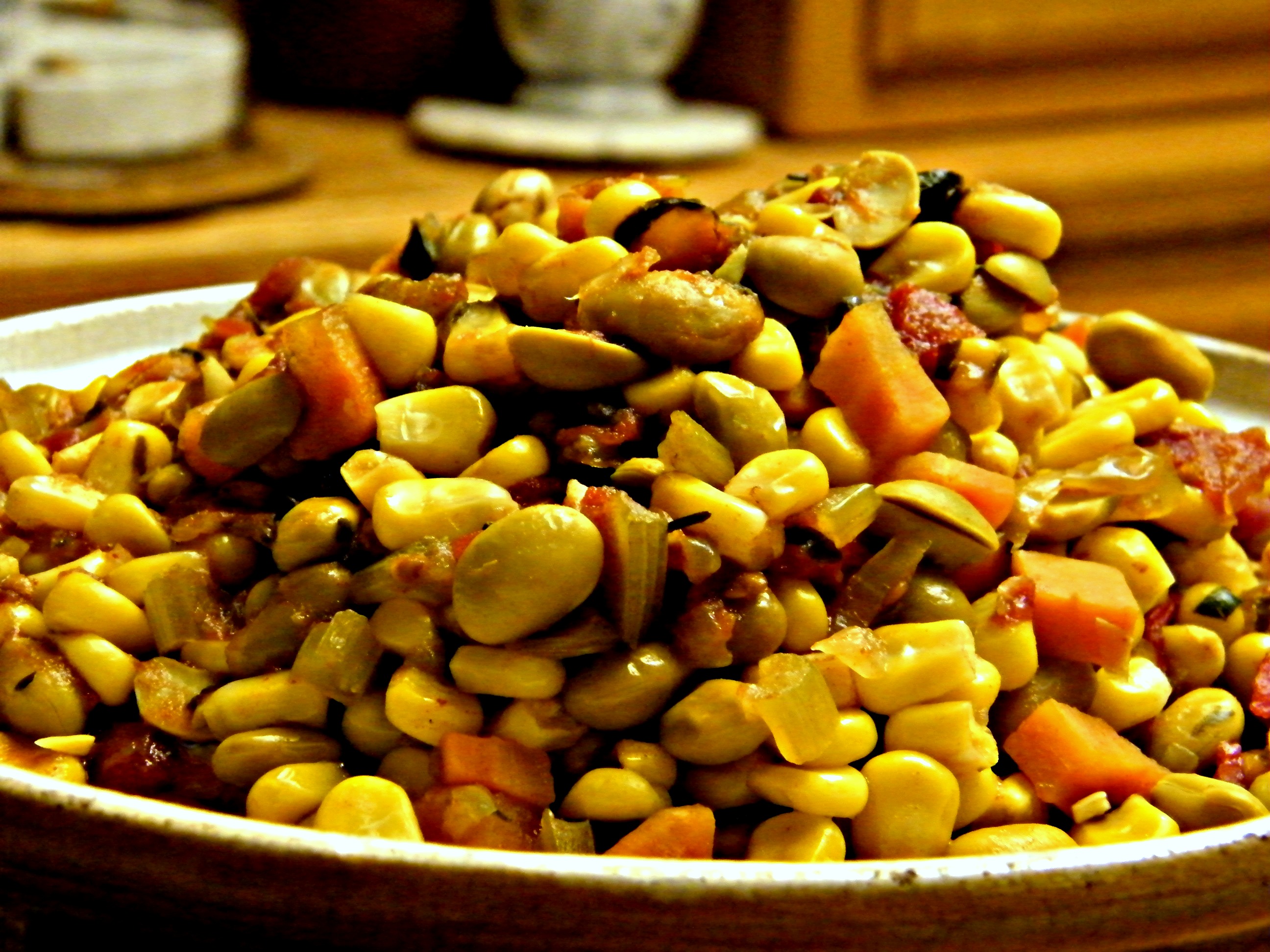
When I was deciding which recipe to share with you, I thought about how much of a boon fresh, vibrant food is on the winter table. Even though summer vegetables are long gone, many of them are available frozen, almost as nutrient-rich as when they were picked. Finlayson’s take on succotash was exactly what I was looking for, incorporating corn, roasted red peppers, tomatoes, and edamame with the warmth of paprika. It’s bright on the table, filling, and a good match for many different main courses. Best of all, it’s freezable, letting you enjoy it across the coldest months. (If you make it in summer, you can use garden-fresh ingredients and freeze some of it for winter.)

New Age Succotash

reprinted with permission from Judith Finlayson’s Healthy Slow Cooker

Serves 8

1 Medium to large (3 1/2 to 5 quart) slow cooker

1 tbsp (15 mL) olive oil
2 onions, finely chopped
4 stalks celery, diced
2 carrots, peeled and diced
4 cloves garlic, minced
1 sprig fresh rosemary or 2 tsp (10 mL) dried rosemary leaves, crumbled
1/2 tsp (2 mL) salt
1/2 tsp (2 mL) cracked black peppercorns
1 can (28 oz/796 mL) no-salt-added tomatoes, including juice, coarsely chopped
1 1/2 cups (375 mL) vegetable stock
4 cups (1 L) frozen shelled edamame
2 tsp (10 mL) paprika, dissolved in 2 tbsp (30 mL) water
4 cups (1 L) corn kernels, thawed if frozen
2 roasted red bell peppers, diced
1/2 cup (125 mL)finely chopped parsley leaves

In a skillet, heat oil over medium heat. Add onions, celery and carrots and cook, stirring, until softened, about 7 minutes. Add garlic, rosemary, salt and peppercorns and cook, stirring, for 1 minute. Stir in tomatoes with juice and vegetable stock and bring to a boil. Transfer to slow cooker stoneware.

Add edamame and stir well. Cover and cook on Low for 8 hours or on High for 4 hours, until mixture is hot and bubbly. Stir in paprika solution. Add corn, roasted red peppers and parsley and stir well. Cover and cook on High for 15 minutes, until corn is tender and mixture is heated through.

Variation
Spicy Succotash: For a livelier dish, stir in 1 can (4.5 oz./127 mL) mild green chiles along with the red peppers.

This is a terrific side for a braised tofu dish, or more traditionally, for a big platter of ribs. Finlayson includes a recipe for a corn and chile polenta in the cookbook, which would be a nice addition to either of these meals. Really, though, this dish would fit whenever you’d otherwise consider serving the usual boiled, steamed (or canned) vegetables.

I’ll be coming back to this cookbook often, both for the recipes and the information.

Gift Giver’s Guide: For the busy, the gluten-free, and those who want variety and flavour in their healthy menus.

Come back tomorrow for a review of a book that brings vegetarian eating to a new level.