I was provided with a gift certificate by Driscoll’s to purchase ingredients for this recipe and I received a copy of Baking Chez Moi for participating in the Google+ chat. However, all opinions are my own.
For me, the beginning of summer is marked by the beginning of strawberry season. And the best way to celebrate the start of summer is strawberry shortcake. No wonder June 14th has been declared National Strawberry Shortcake Day. (It might be an American holiday, but I’m choosing to apply it to Canadians, too.)
One of the things I love best about strawberry shortcake is that it can be dressed up or down for any occasion. It’s as at home at a family picnic as it is a formal tea. It’s also a dessert that comes in many incarnations, causing arguments amongst those who champion the sponge cake variety and those who staunchly support the sweet biscuit version. Although I’ll gladly accept a plate of sponge cake smothered in whipped cream and berries, it’s the biscuit version that I think of as the real McCoy.
So, I was excited to be invited to join a Google + Hangout on Air a few weeks ago, to join some fellow bloggers to talk about just that sort of strawberry shortcake with baker extraordinaire Dorie Greenspan. If you’re a regular reader here, you’ll know that I’m a big fan of her recipes and have been working through her last cookbook, Around My French Table, with a great group of bloggers for French Fridays with Dorie. I knew the recipe would be stellar, but I was also looking forward to the opportunity to ask Dorie for tips and tricks for making this shortcake as good as could be.
Dorie told us that she invented this recipe after learning that strawberries are closely related to roses. She also enjoys adding an element of surprise to her desserts, so the subtle flavour of rose and the two textures of the strawberries in this recipe add interest, elegance, and a little playfulness to these shortcakes. I also loved the hint of lemon in the biscuits.
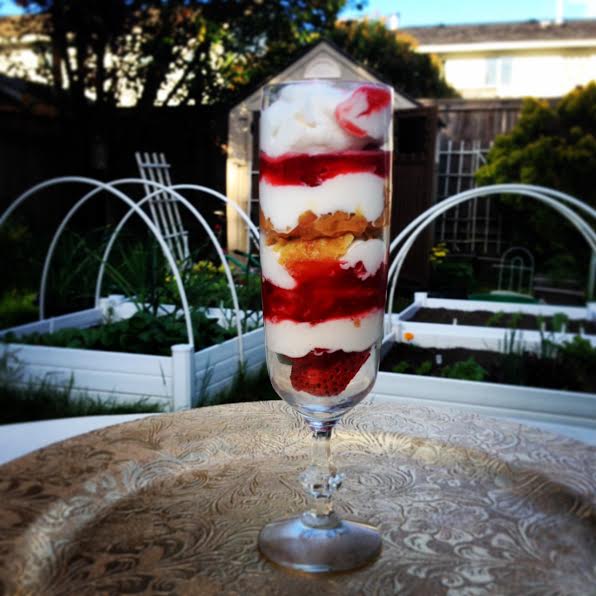
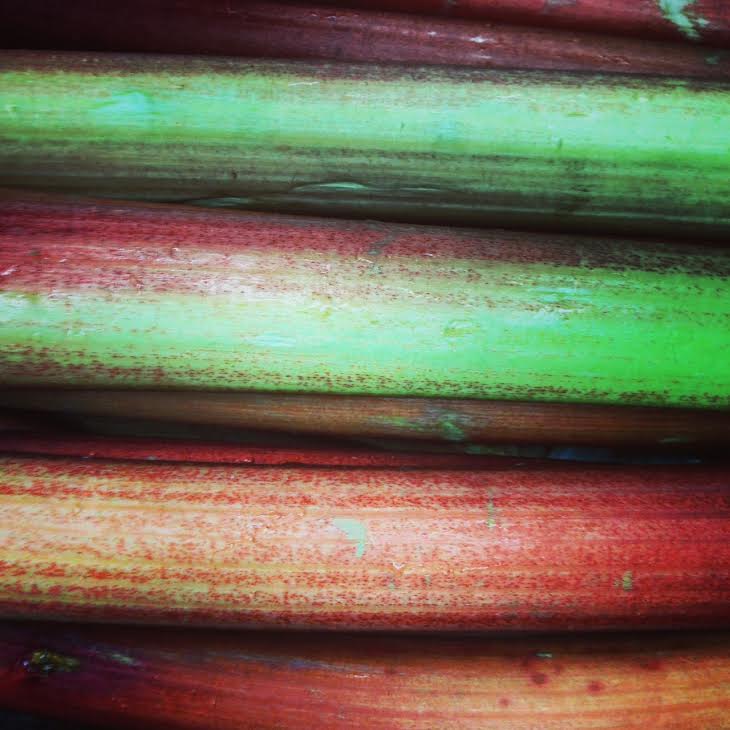
My question for her was whether or not the tops of the biscuits, and the less-than-perfect ones, could be used for a trifle-like dessert. She thought that would work well, layered in a jar, with each layer of biscuit soaked in the juices from the compote. I did a little riff on this idea when I made the shortcakes, layering biscuits, berries, compote, and whipped cream into champagne glasses for a pre-dinner parfait. I even added a layer of rhubarb curd to the middle. It was the best cook’s treat ever.

Here is some more of the advice she shared with us:
- Rubbing the lemon zest into the sugar releases its oils and helps to distribute the zest’s flavour and aroma throughout the dough.
- Buttermilk acts with baking soda to make lighter biscuits.
- Never be forceful with biscuit dough until you begin cutting it. Gently using your hands to mix the ingredients can keep you from overworking the dough, but forceful cutting of the biscuits maintains the layers of butter in the dough that help them rise – use a straight down motion, then twist.
- Other flavours that complement strawberries are vanilla, black pepper, citrus, or crushed pink peppercorns. Any of these could be used in place of the rose extract.
- Add a bit of sour cream to whipped cream for an extra layer of flavour and some added stability for piping.
Driscoll’s, the sponsor for our Google + Hangout, kindly provided us with gift certificates to purchase the ingredients for this recipe. Their berries were large, ripe, and incredibly sweet, which sets them apart from most supermarket berries. I would happily buy them again.

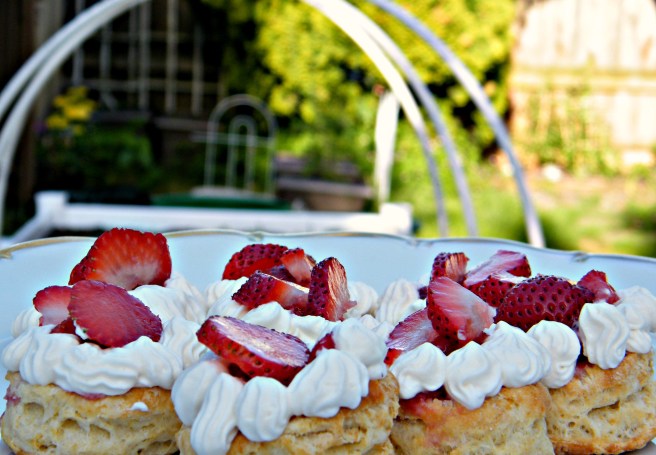
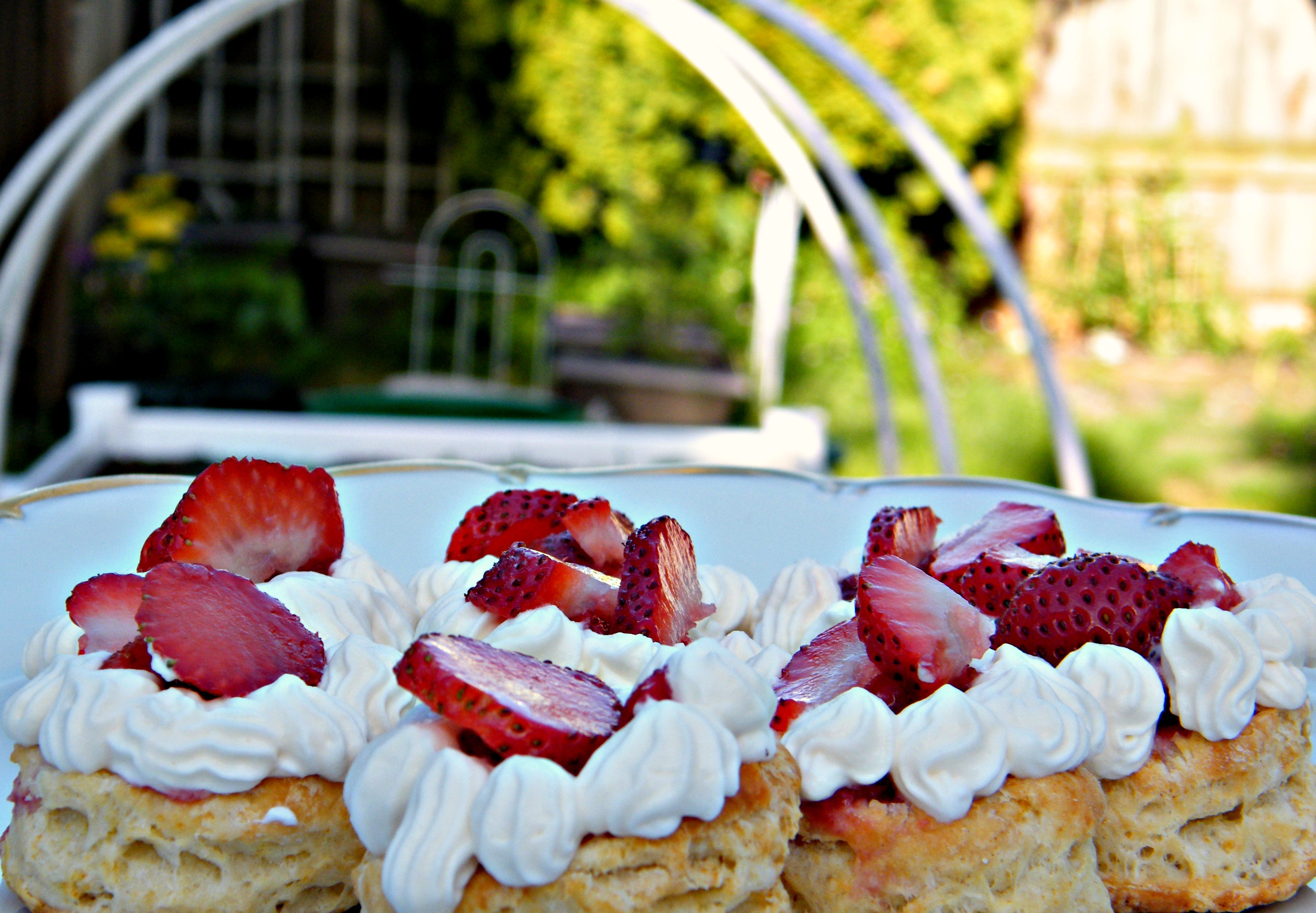
I was quite pleased with how this recipe turned out for me, with Dorie’s tips in hand. My shortcakes rose beautifully. I followed the recipe exactly, though my shortcakes were without the candied roses. My roses are only now starting to bloom, so I will be trying my hand at the candied roses soon. Because, of course, I will be making this recipe again. Dorie’s shortcakes were a huge hit with my family.
You can find the recipe on the Driscoll’s website. They’ve also been kind enough to allow me to share it here.
Dorie Greenspan’s Double-Strawberry and Rose Shortcakes
Shared with permission from Driscoll’s Berries and Dorie Greenspan
INGREDIENTS
Rose petal decoration
3 unsprayed roses
1-2 very fresh organic egg whites
granulated sugar
(or store-bought candied rose petals)
Strawberry compote
3/4 pound (about 3 cups) Driscoll’s Strawberries, hulled
1 1/2 tablespoons sugar
3/4 teaspoon pure rose extract
Lemon-buttermilk biscuits
1 1/2 tablespoons sugar (plus more for sprinkling)
freshly grated zest of 1 lemon
2 cups all-purpose flour (plus more for dusting)
1 tablespoon baking powder
1/2 teaspoon fine sea salt
1/4 teaspoon baking soda
6 tablespoons (3/4 stick) cold unsalted butter, cut into
small cubes
3/4 cup cold buttermilk
Whipped Cream
1 cup very cold heavy cream
2 tablespoons confectioners’ sugar, sifted
1 teaspoon pure vanilla extract
3/4 teaspoon pure rose extract
1 tablespoon cold sour cream, optional
red or pink food coloring
Topping
1/2 – 3/4 pound (about 2 to 3 cups) Driscoll’s Strawberries,
hulled
DIRECTIONS
Rose Petal Decoration
Several hours ahead or the day before, separate the rose petals, rinse them quickly in cold water and pat them dry. Put one egg white in a small bowl and whisk until it’s foamy. (You may or may not need the second white.) Put the sugar in another small bowl and place a sheet of parchment paper or a silicone baking mat on the counter. One at a time, dip a petal into the white and let the excess drip back into the bowl. Drag the petal through the sugar to coat both sides very lightly. Dry the petals on the paper or mat in a cool, non-humid place for at least 6 hours or for as long as overnight.
Strawberry Compote
Coarsely chop the berries and toss them into a small saucepan with the sugar. Put the pan over medium heat and cook, stirring, for 5 to 8 minutes, or until the juices are slightly thickened and syrupy. Scrape the berries and syrup into a bowl, stir in the rose extract and cool to room temperature. (You can make the compote up to 3 days ahead and keep it covered in the refrigerator.)
Lemon-Buttermilk Biscuits
Center a rack in the oven and preheat the oven to 425°F. Line a baking sheet with parchment paper or a silicone baking mat.
Put the sugar and lemon zest in a large bowl and, working with your fingertips, rub the ingredients together until the sugar is moist and fragrant. Add the rest of the dry ingredients to the bowl and whisk to combine. Drop in the pieces of cold butter and, again using your fingertips, crush, rub and blend the butter in. You’ll have flakes of butter and small pieces and this is just right. Pour the cold buttermilk over the mixture, switch to a fork and toss and stir everything together until the milk is absorbed – your dough might look like curds, but that’s fine. Don’t stir too much, too vigorously or for too long and if there are a few dry spots in the bottom of the bowl, ignore them. Reach into the bowl and knead the dough gently, folding it over on itself and turning it over 6 to 8 times.
Dust a work surface lightly with flour, turn out the dough and, still using your hands, pat the dough out until it is 1/2 inch thick. (The thickness is what’s important here.) Using a high-sided 2 inch cutter, cut out biscuits and place them on the baking sheet. Pat the scraps together until they’re 1/2 inch thick and cut out as many more biscuits as you can. (The leftover dough can be cut into biscuits, but they won’t rise as high or as evenly as the others – you can keep them as your baker’s treat). Sprinkle tops with sugar.
Bake for 15 to 18 minutes, or until the biscuits have risen gloriously and their tops and bottoms are golden brown. Transfer the baking sheet to a cooling rack and allow the biscuits to cool until they reach room temperature. (The biscuits can be made up to 6 hours ahead; keep them uncovered at room temperature.)
Whipped Cream
Working with an electric mixer, beat the cream just until it mounds softly. Still beating, add the sugar, followed by the vanilla and rose extracts. When the cream is fully whipped and holds firm peaks, quickly beat in the sour cream, if you’re using it. To tint the cream, beat in just one drop of coloring; continue adding coloring a tiny drop at a time until you get the shade of pink you want. (The whipped cream can be made up to 3 hours ahead and kept tightly covered in the refrigerator; whisk a couple of times before using.)
Topping
Just before you’re ready to put the shortcakes together, stand the berries up and, using a thin-bladed knife, cut each berry into 4 or 5 thin slices.
Assembly
If you’d like to pipe the whipped cream, either spoon the cream into a pastry bag fitted with an open star or plain tip, or spoon the cream into a zipper-lock plastic bag and snip off a corner. Alternatively, you can simply spoon on the cream.
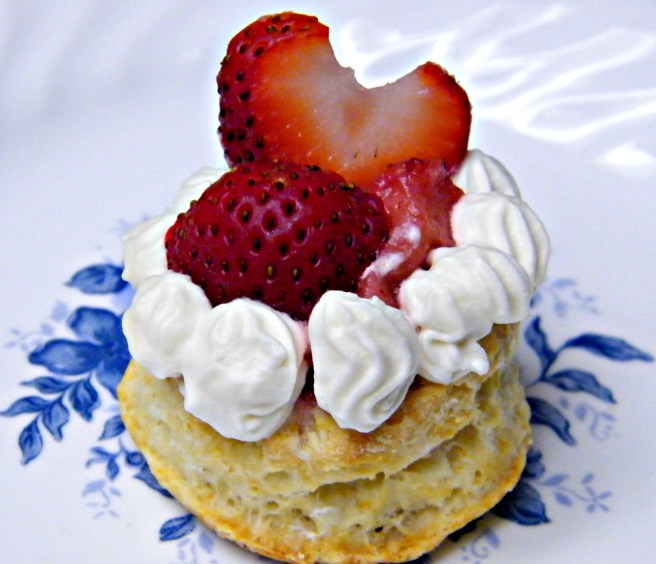
Slice off the top of the biscuit to create an even surface for piping the cream. Save the tops to nibble on later. Put a teaspoonful of strawberry compote and syrup in the center of each biscuit. Pipe (or spoon) a circle of whipped cream around the compote, leaving a bit of compote uncovered. Finish each shortcake by pressing two or three slices of strawberry together, fanning them out a little and placing them, broad side down, in the center of each cake. Add a rose petal for the finishing touch. (If you have any extra compote and/or cream, cover and keep in the refrigerator to enjoy at another time.)
Arrange the shortcakes on a platter. Scatter the remaining rose petals around the platter and serve immediately.



 One Wet Foot